Seeing Rabbits

Last winter, a rabbit lived in our backyard, sheltering under our neighbor’s shed. We’d awaken in the morning, shuffle downstairs and take a look out our window on the landing where we could see the back yard. More often than not, there she crouched, a brown cottontail, nibbling what grass wasn’t already covered by snow.

Since both of our dogs died, we’ve been petless. We saw this rabbit so much, it just seemed natural to start becoming a little attached. I began leaving her offerings of dried orchard grass, remnants of our deceased guinea pig. I also initiated a naming contest for the bunny on Facebook. My friend June won with the moniker of “Tater Tot.” It fit – the shape and coloring were approximately right.

Tator Tot survived the winter and this spring we noticed several Tiny Tots scampering around the backyard – her children, no doubt. They didn’t seem to be doing any damage to my hostas, just hiding under them instead of eating them, so we welcomed these new additions to the yard.

I suspect that Tator Tot eventually left our yard for the forest at the end of our road. We sometimes saw a rabbit fitting her description during our woods walks. Her Tiny Tots hung around for several weeks and then seemed to disappear. I hope they, too, found their way to the forest. But they could have easily been eaten by a neighborhood cat or a fox.

I rather miss these foster pets. They were easy to take care of. No fuss, no muss.

I recently read Linda LeGarde Grover’s book “Gichigami Hearts.” LeGarde is a former neighbor of mine; we grew up in on the same street on the other side of Duluth. Her book offers a Native American perspective of our old neighborhood. In one chapter, “Rabbits Watching Over Onigamiising,” she describes how seeing rabbits reminds her of the Native spiritual being, Nanaboozhoo. Now, if you’ve read my book, “Eye of the Wolf,” you know that Nanaboozhoo is a trickster – part rabbit, part human. He embodies the best and the worst of humans and the supernatural.
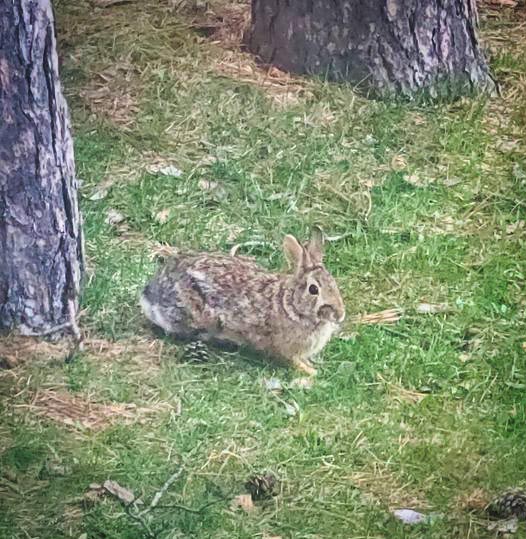
Tator Tot

LeGarde’s backyard bunnies savored her tulips, necessitating a change the next spring to planting marigolds, which she says the “rabbits nibbled on, but not much.” LeGarde writes that planting different flowers rather than trying to eradicate the bunnies was a good compromise. “We are all here to live our lives . . . We know from traditional teachings that all animals are important to the earth, that no animal is ranked higher or lower than any other in the eyes of the Creator, and that all have a contribution to make.”

She recounted a conversation she had with a friend about seeing rabbits on clear nights in the moonlight in winter, sitting with their legs folded under them like a cat – like they were waiting for something. LeGarde’s friend told her, “When we see them like that at night it is because the rabbits are watching over us, over a sleeping world and our dreams.”

Here in the north, we have two kinds of rabbits: cottontails like Tator Tot and snowshoe hares, which are larger and turn white in winter. Rabbits in the moonlight reminded me of one of my favorite chapters in northland author Sigurd Olson’s book, “The Singing Wilderness,” about the Boundary Waters Canoe Area Wilderness. It’s the chapter called “Moon Madness,” where he recounts seeing hares on his moonlight walks.

“If, when the moon is bright, you station yourself near a good rabbit swamp and stay quiet, you may see it, but you will need patience and endurance, for the night must be cold and still. Soon they begin to emerge, ghostly shadows with no spot of color except the black of their eyes. Down the converging trails they come, running and chasing one another up and down the runways, cavorting crazily in the light.”

Olson concluded that moonlight “made animals and men forget for a little while the seriousness of living; that there were moments when life could be good and play the natural outlet for energy.”

It’s comforting to think of rabbits or hares cavorting crazily in the darkness or quietly keeping watch. I never saw Tator Tot or the Tiny Tots at night because I was, well, sleeping. Perhaps I never saw them because the magic they worked was so effective.

When I emerged from my office building in Superior yesterday evening, I was thinking about all this. As I walked, who scampered across the parking lot pavement not ten feet from me? A big fluffy cottontail. She looked suspiciously like Tator Tot.
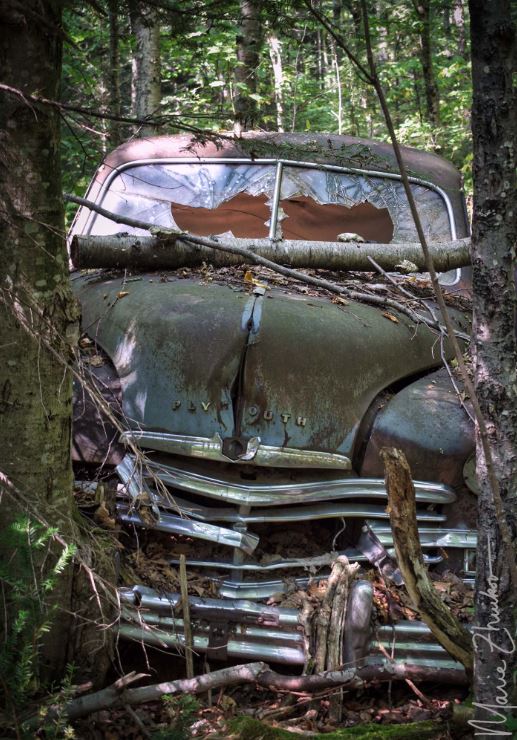
Lullabye Lumber Camp, a Bedtime Story

Once upon a time on Outer Island in Lake Superior, a lumber company cut much of the remaining old growth hemlocks and other trees to make baby furniture. The lumberjacks lived in a camp near sandstone ledges on the shore. They used a railroad built by previous loggers through the middle of the island to haul the heavy logs to a dock for shipping to shore. Eventually, the crew built an air strip so they could go home on weekends.

The company that used the wood was Lullabye Furniture of Steven’s Point, Wisconsin. By the 1960s, logging on the island cost too much, so the men left their camp. They also left behind the buildings, old trucks, a stove, a water tank.

Slowly, the forest took its revenge. Snow knocked down the buildings, the trucks rusted, animals carried away seat cushion stuffing for their nests. The forest regrew, swallowing the lumber camp and reclaiming the land as its own.

The End

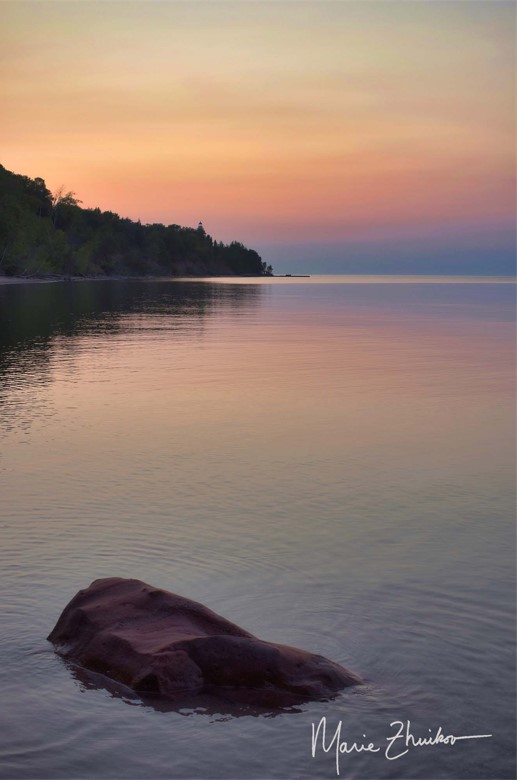
Outer Island Sunset

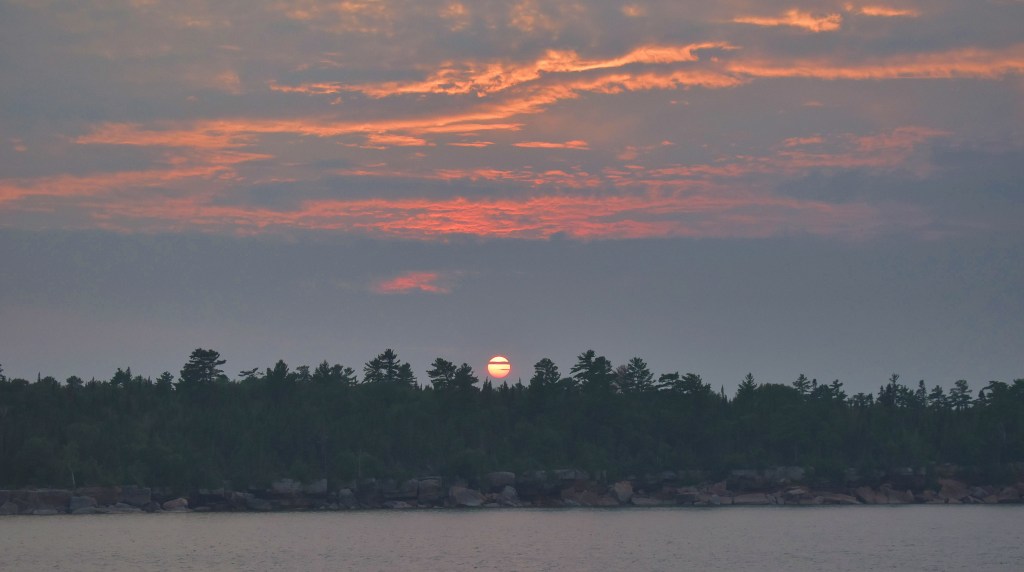
Russ and I meandered to the Apostle Islands National Lakeshore last month. We had the privilege of camping on Outer Island for two glorious, warm nights. Lake Superior was so calm, we could hear ore boat engines quietly throbbing even though they were dozens of miles away as they passed the island.

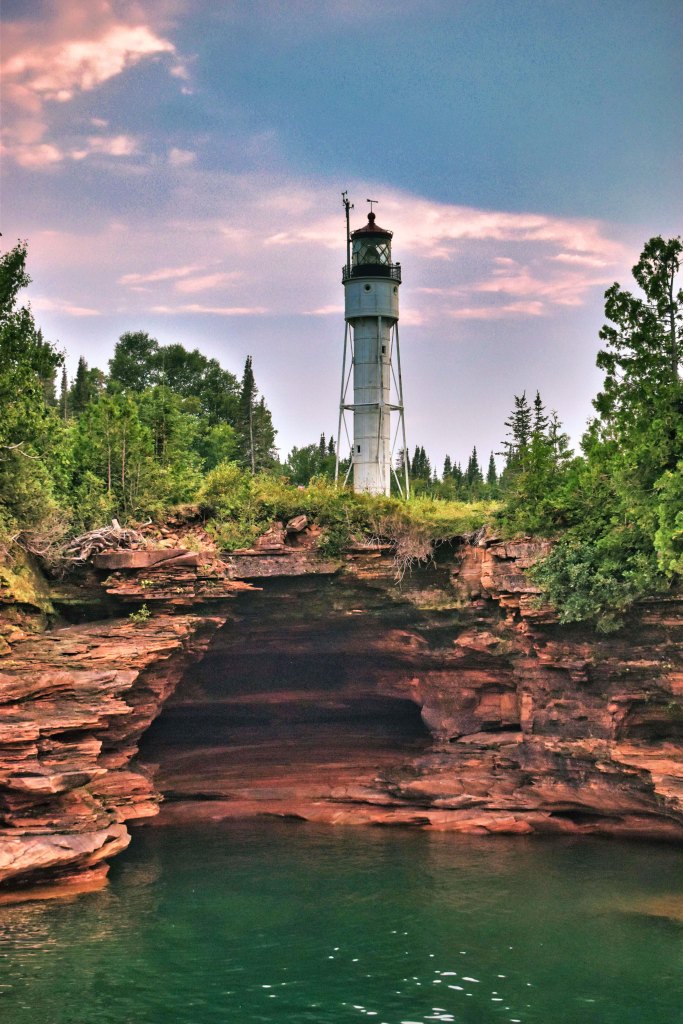
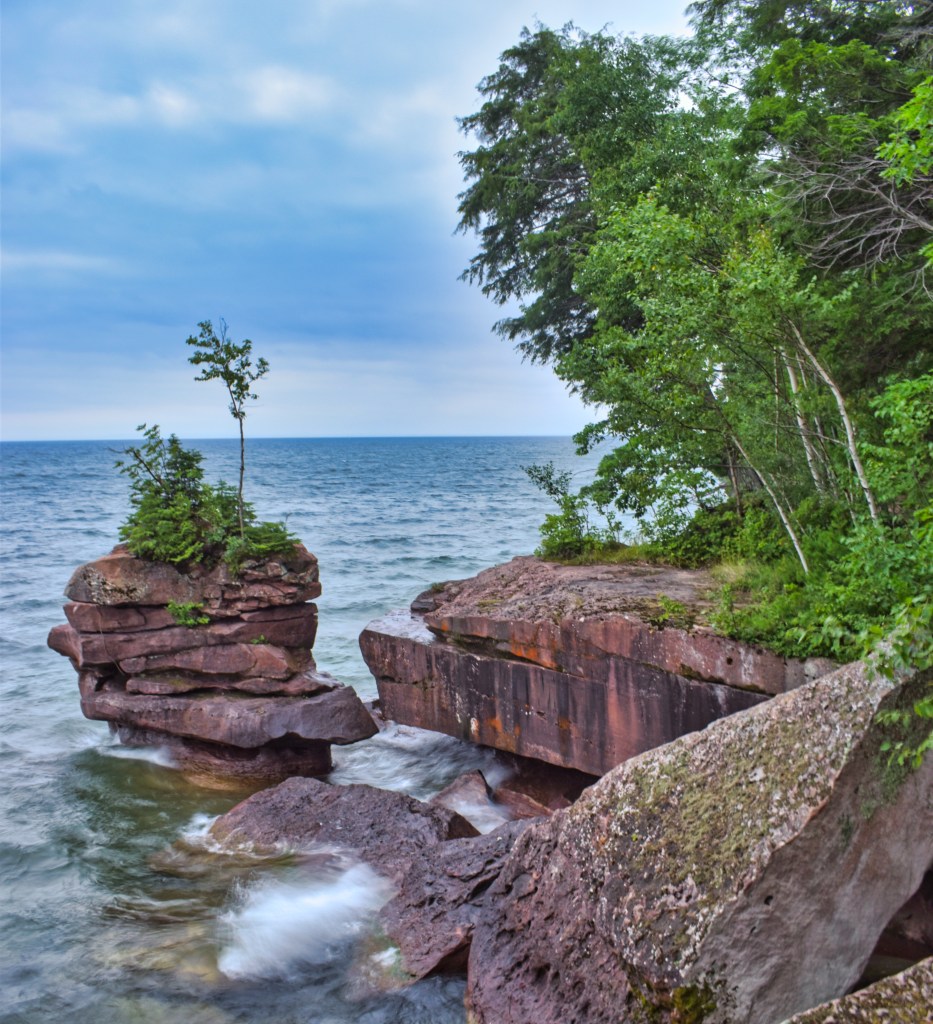
I took this shot from the beach near the lighthouse. You can just see the lighthouse over the tops of the trees by the dock. A wave-worn rock provided a perfect foreground. Can you feel the peace?

A Time for Photography: Madeline Island

I’ve never had time to just hang out somewhere and take photos for a week. That’s what I was able to do (thanks to my awesome workplace) earlier this month. I took a landscape photography class at the Madeline Island School for the Arts.

Madeline Island lies off the Bayfield peninsula in northern Wisconsin. It’s adjacent to (but not part of) the Apostle Islands National Lakeshore.

The class focused on sunrise and sunset photography. This made for long days, but it was worth it. The class was life-changing and life-affirming. I knew I had a good eye — I told my fellow students I learned photography “by osmosis” from my mother — but I’ve never had any formal training in it. An F-stop? ISO? What are those? I got a crash course and affirmative feedback, but am still learning.
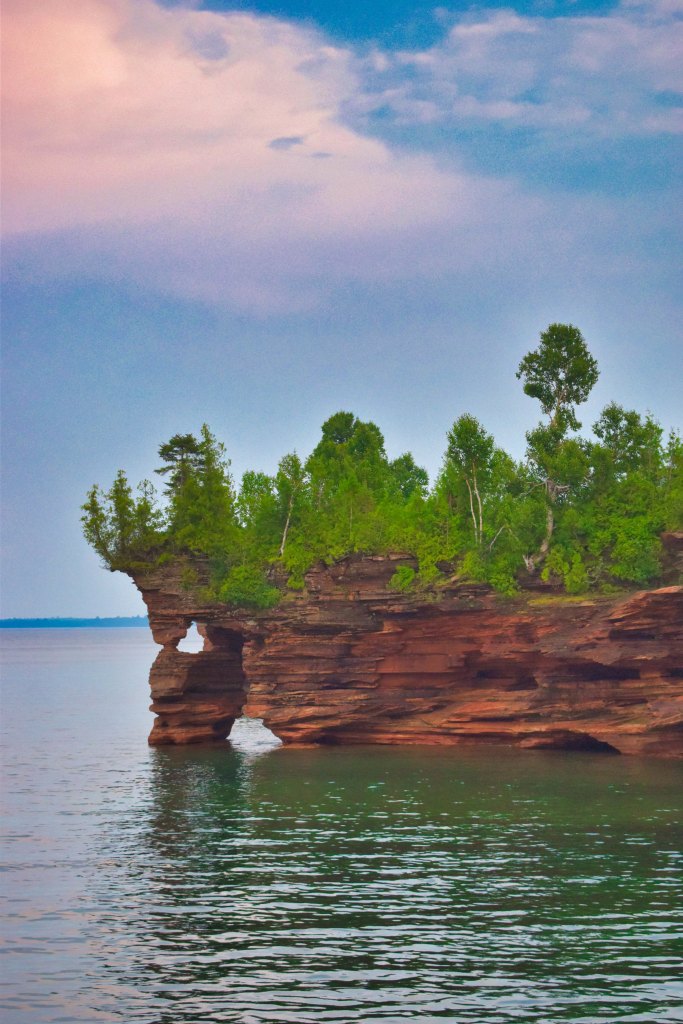
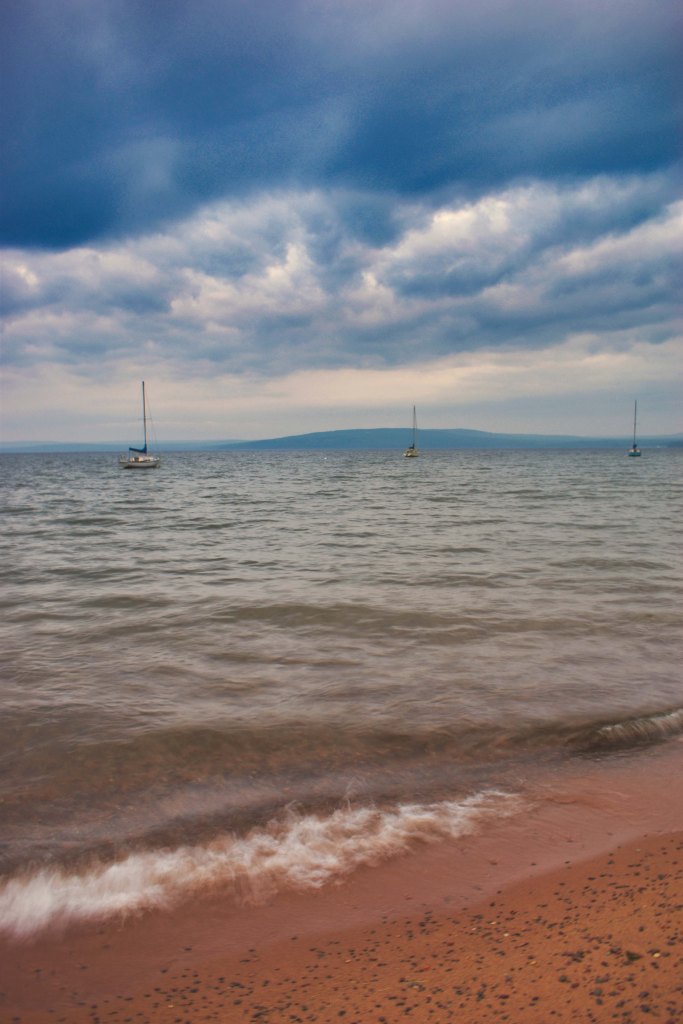
I’d like to share some of my favorites from the week with you. Locations include Joni’s Beach, Grant’s Point, Big Bay State Park, Black Shanty Road wetlands, the art school grounds, and Devil’s Island.

As always, feel free to use my images, but please give me (Marie Zhuikov) credit.

Enjoy the show!

Theodore Roosevelt National Park

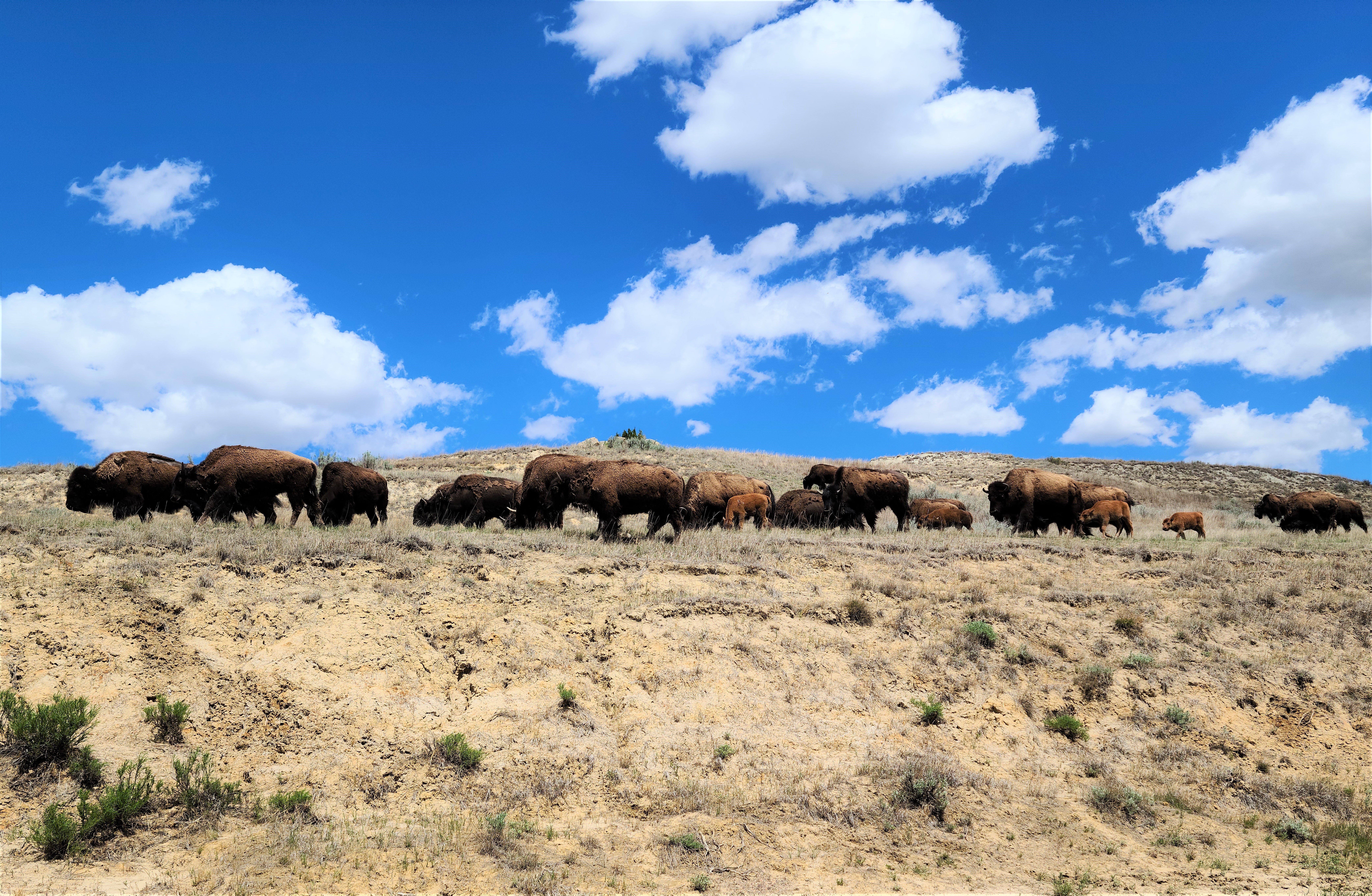


Russ and I spent three full days in North Dakota over Memorial Day Weekend. I’d passed through the park on my way West several times in the past and decided it was worth more time. I’m so glad we did it. Even though not many touristy things were open yet, we kept busy exploring the natural wonders of the park and area surrounding the town of Medora.

For my next few posts, I’ll be sharing photo stories as inspiration strikes. This first is about “concretions.” These were a highlight of our visit to the North Unit of the park.

These cannonball-shaped formations are made of sand grains from an ancient river that were cemented together by minerals dissolved in groundwater. That’s the official word. Unofficially, I’d say they remind me of Godzilla eggs.

Concretions and sky.
Godzilla egg in a nest.
An eroded clay/sediment deposit found near the concretions.

A “River of Poems” spans the world

We expected only a few local poets would be interested. We thought they’d offer poems about the St. Louis River on the Minnesota-Wisconsin border.

That was our mindset when the River Talk planning team at my workplace first developed the theme for the public poetry reading to be held in conjunction with the St. Louis River Summit as an evening program in March 2021. We were mistaken, but in the best possible way.

In reality, our call for river poems through the literary submission management platform Submittable garnered interest from 76 poets from across the U.S. and around the world. They submitted 148 poems for consideration.

“As it turns out, a lot of people like to write about rivers. That’s because they are really important in our communities and in our lives,” said Deanna Erickson, director of the National Lake Superior Estuarine Research Reserve, which co-sponsors the River Talk series with Wisconsin Sea Grant.

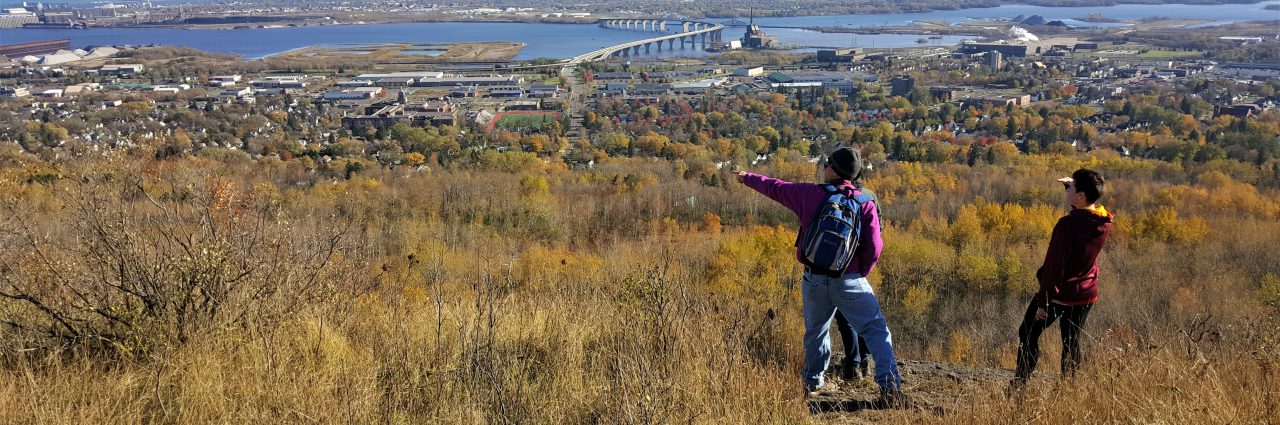
An overlook above the St. Louis River in Duluth, Minn.

We quickly realized we were going to need more judges. In the end, we gathered six who represented a good cross-section of the audience we expected to attend the summit.

The judging was “blind,” which means the poets’ names were not associated with their poems. After two rounds, the judges narrowed the number of poems down to a dozen, with a few for backup in case any of the chosen poets could not be reached.

Although communication was sometimes a challenge, all 12 poets were enthusiastic about participating in the reading. They represented a wide diversity of ages and ethnicities.

The River Talk was a couple of weeks ago, but the warm fuzzy feelings it engendered remain with me. I could use many adjectives to describe it: powerful, beautiful, stark, raw, funny — but it’s really best if you listen to the poems and feel all the feels for yourselves. The reading drew 85 Zoomers, a record attendance.

The Lake Superior Reserve, our partner in the talks, recorded the reading and it’s available on their YouTube channel. Here’s a list of the poets (in the order they read) and the names of their poems:

Tyler Dettloff (Michigan) “My Stars”
Heather Dobbins (Arkansas) “I Held us on for 36 Hours after the Levee Broke to hell”
Ben Green (New Mexico) “Immersion: A Prayer of Intent”
Lorraine Lamey (Michigan) “Catching Your Drift”
Joan Macintosh (Newfoundland) “The Current Feels”
Kate Meyer-Currey (England) “Timberscombe”
Rebecca Nelson (California) “Of the St. Louis River”
Stephanie Niu (New York) “To the Beaver’s Eyes”
Diana Randolph (Wisconsin) “Knowing the Way”
Ron Riekki (Florida) “It Took a Long Time to Discover”
Derold Sligh (South Korea) “Rouge River”
Lucy Tyrrell (Wisconsin) “Talking Water”

Ironically, the one poem specifically about the St. Louis River was written by someone who had never visited it. Rebecca Nelson said her poem, “Of the St. Louis River” was inspired by the spiritual experiences she’s had while watching water. She grew up in the Midwest and said she wrote the poem thinking of the rivers she knew from childhood. “I would love to visit sometime after the pandemic!” Nelson said.

Barb Huberty, St. Louis River Area of Concern coordinator for the Minnesota Pollution Control Agency, offered this comment in the Zoom chat, “I never knew that poetry could unite people across the globe.”

Sharon Moen, Eat Wisconsin Fish outreach specialist for Wisconsin Sea Grant, offered, “Thank you to all the poets and organizers! I am inspired by the depth of your thoughts and stories.”

Remaining River Talks will be held on April 14 and May 12. For more information, visit the River Talks page: go.wisc.edu/4uz720.

The Horses Nobody Knows

If you didn’t get a chance to see my article in “Lake Superior Magazine” about the rare and endangered Ojibwe Horses, the same story has been reprinted in a different magazine: “Equine Monthly.” Click here to read it online.

An Ojibwe Horse, also known as a Lac LaCoix Pony. These horses are well-adapted to life in the northern wilderness.

If you’d like to hear the story behind my story, read my blog post here. These animals are so special. I felt privileged to be introduced to them.

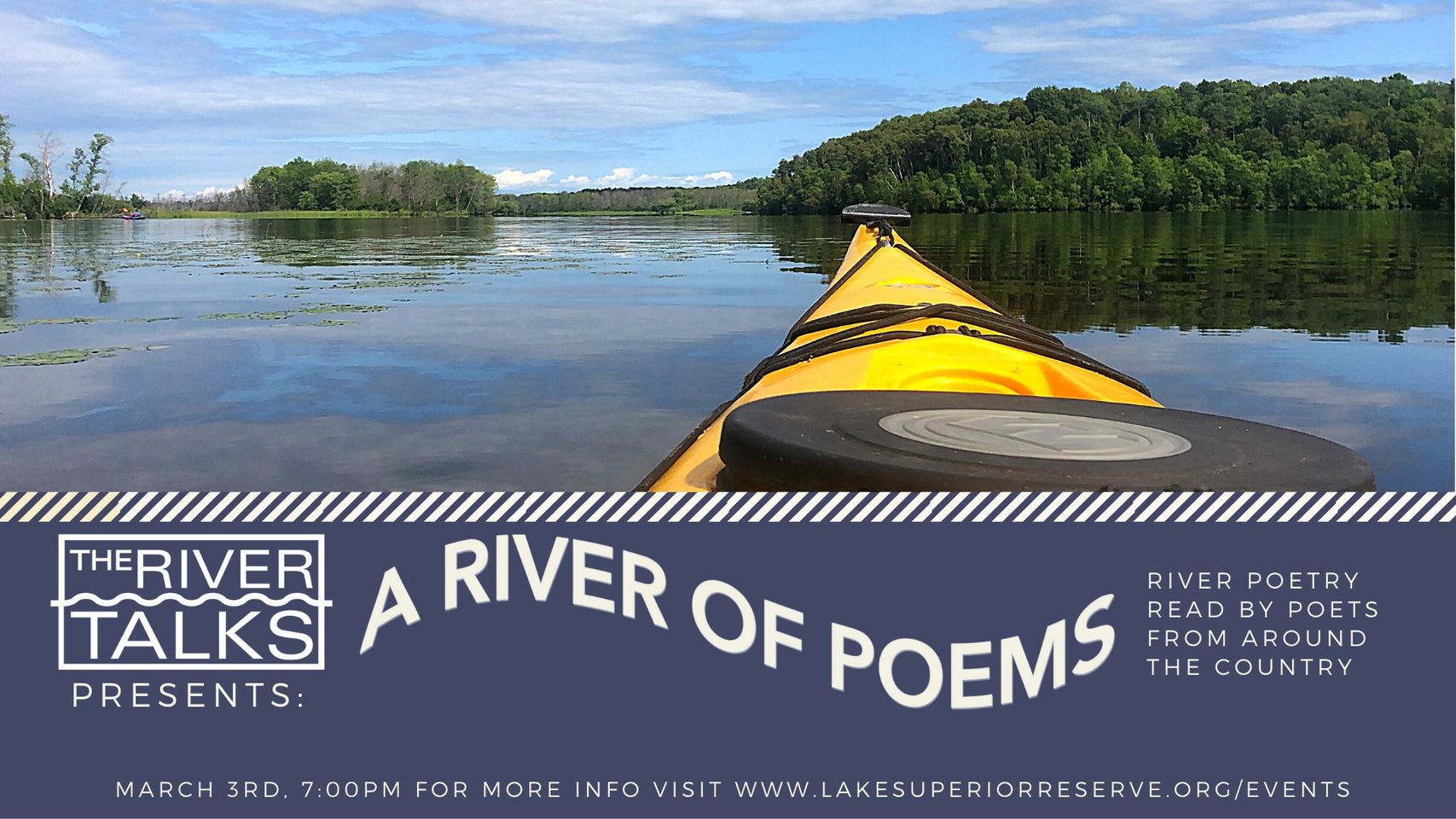
A River of Poems

This Wednesday at 7 p.m. Central, I’m co-hosting a Zoom event that will showcase a dozen poets from around the world and across the country reading their powerful, evocative and beautiful poems about rivers. The March 3, 2021 reading is an evening program of the annual St. Louis River Summit, which brings together hundreds of people who work on and care about the St. Louis River in Minnesota and Wisconsin. It’s also part of our monthly River Talk programs, which are free and public-friendly. Details are below. Come experience different perspectives on our waterways!

Here is the Zoom link:
https://uwmadison.zoom.us/j/93264788373?pwd=amRqSWgvT1ZxNW03WFBnU2ZYclZUQT09
Meeting ID: 932 6478 8373
Passcode: 776905

The selected poets are:

Tyler Dettloff (Michigan) “My Stars”
Heather Dobbins (Arkansas) “I Held us on for 36 Hours after the Levee Broke to Hell”
Ben Green (New Mexico) “Immersion: A Prayer of Intent”
Lorraine Lamey (Michigan) “Catching Your Drift”
Joan Macintosh (Newfoundland) “The Current Feels”
Kate Meyer-Currey (England) “Timberscombe”
Rebecca Nelson (California) “Of the St. Louis River”
Stephanie Niu (New York) “To the Beaver’s Eyes”
Diana Randolph (Wisconsin) “Knowing the Way”
Ron Riekki (Florida) “It Took a Long Time to Discover”
Derold Sligh (South Korea) “Rouge River”
Lucy Tyrrell (Wisconsin) “Talking Water”

The reading will last an hour and will include time for comments and questions. The talk will be recorded and posted afterward on the Reserve’s Facebook page and YouTube. A summary will also be posted on Wisconsin Sea Grant’s blog.

River Talks are sponsored by The Lake Superior National Estuarine Research Reserve and the Wisconsin Sea Grant Program.