Wilderness Sailing in Canada, Eh?

DSC05356Russ and I had the privilege of crewing on the sailboat Neverland on a Lake Superior cruise during the 4th of July week. We sailed from Grand Marais, Minnesota, to Red Rock, Canada, which is as far north as you can go on the lake.
I learned more, not only about sailing, but about my feelings for my country. Before we left Duluth for Grand Marais, we happened to see a beat-up pickup truck driving around town with two American flags stuck behind its cab. Instead of inspiring feelings of patriotism, the sight of the flags struck me as aggressive, pugnacious, and a little redneck.

I have never felt that way before about the flag, and suspect it has something to do with our current president and the political/cultural climate in which we find ourselves. Suddenly, missing Independence Day fireworks because we’d be in Canada didn’t seem so bad. But I brought along several old packages of sparklers I had just so we’d be able to celebrate a little bit on the boat.

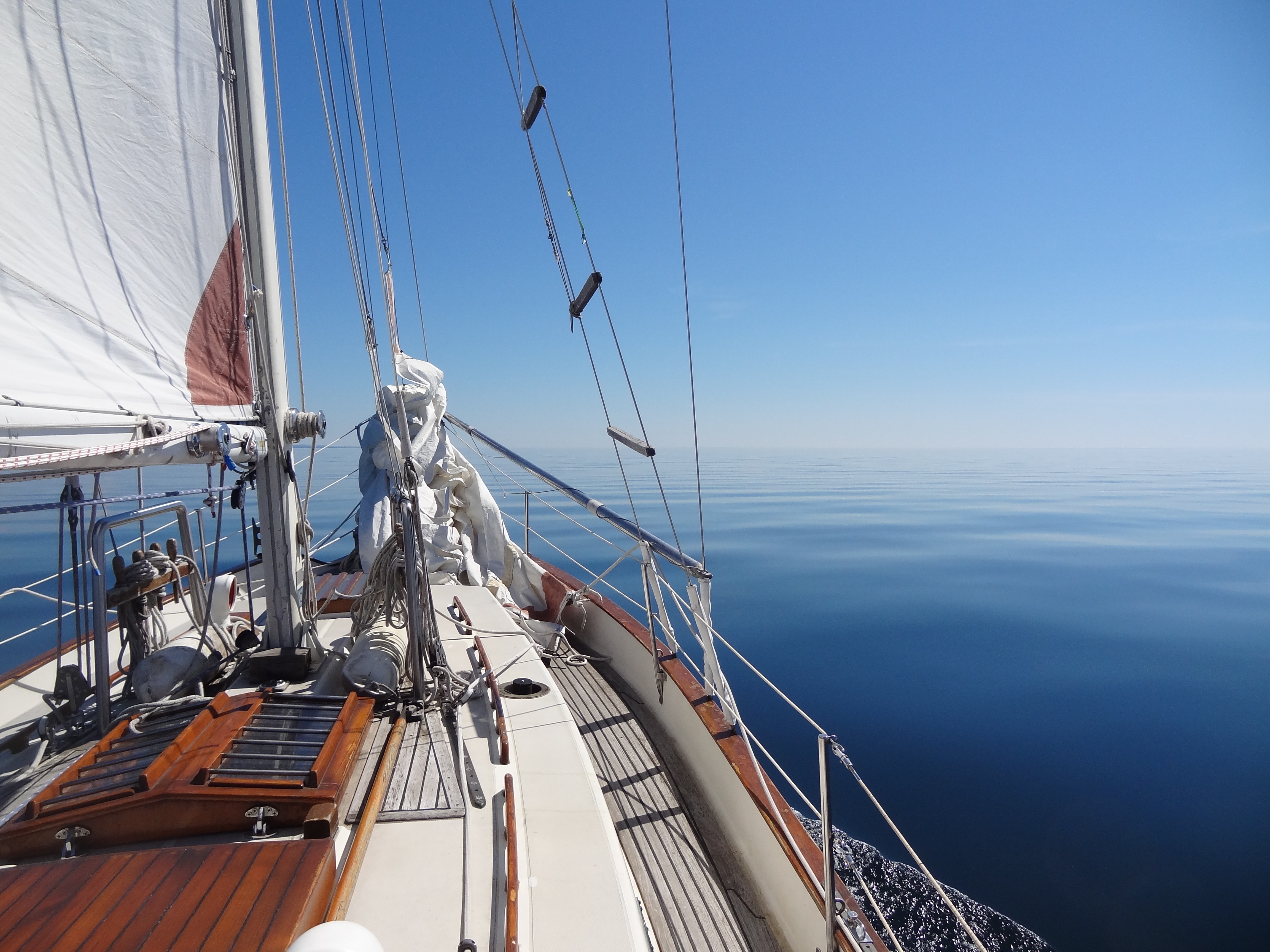
The Neverland left Grand Marais on a calm, cool morning. Although the air temperature was in the 60s, the Lake Superior water temperature was around 40 degrees. Brrr! Plunk yourself down in a boat in the middle of it, and it feels like fall in July.

Calm weather means poor sailing, so we motored for most of the day across the Canadian Border. You may be wondering how one can cross the border if there are no customs stations in the lake. Well, you need to fill out a remote border crossing permit beforehand. The permits cost around $30 and you have to provide copies of your passport along with it. Allow a month for processing.

If all goes well, your permit will arrive in the mail a few days before your trip. You need to bring the permit along with you just in case your craft gets stopped once you’re over the border. Thankfully, we never got stopped, but it was good to know we had the proper permissions with us, just in case.

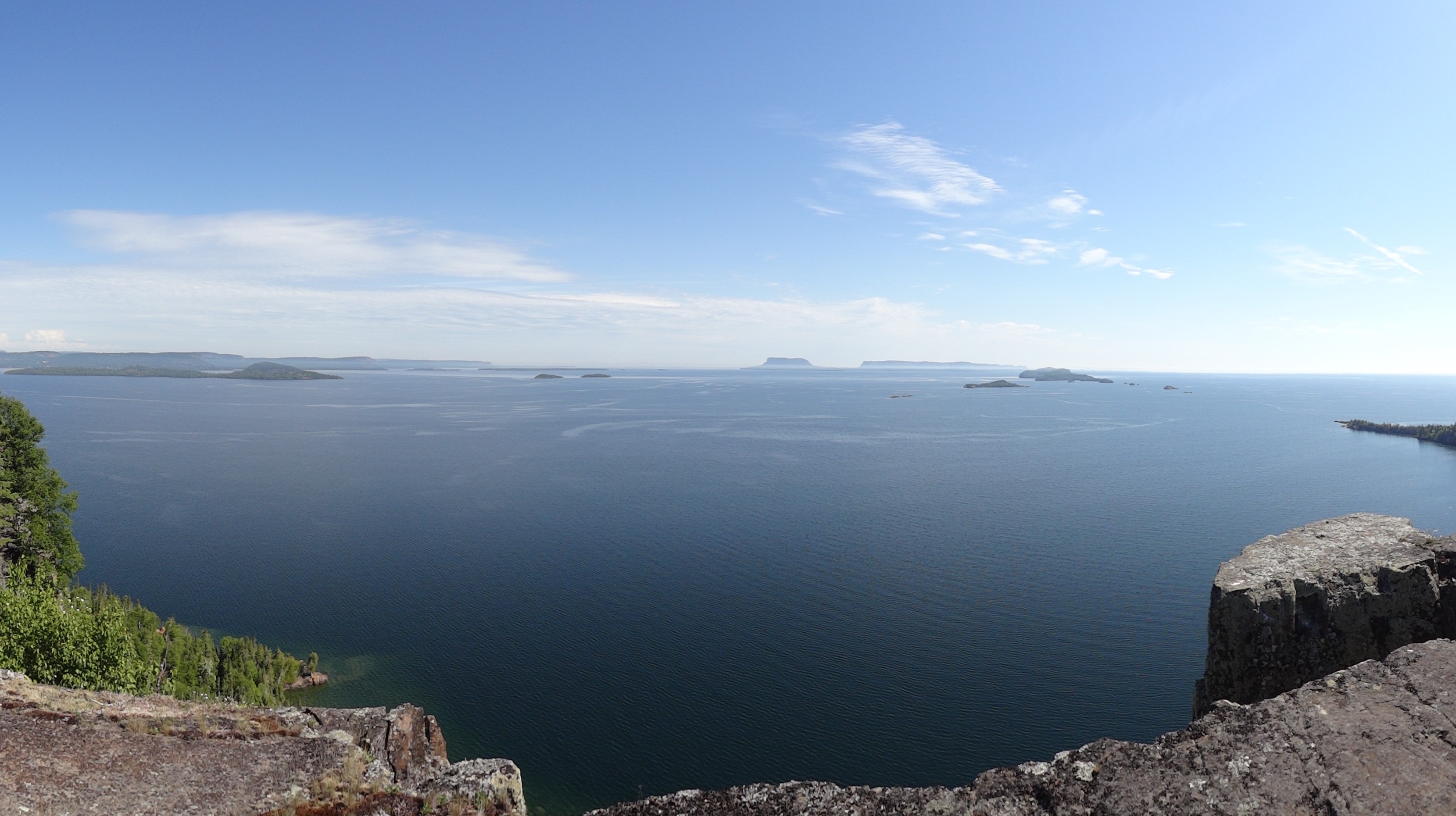
Our first anchorage was at Spar Island, near the entrance to Thunder Bay. This craggy, piney island has a protected cove, which provided for tranquil waters all night. In the morning, we rowed Tinkerbell, the dinghy, to a campsite on shore and found a trail that leads to the “top of the world,” which is a tall bluff that offers stunning views of the lake and nearby islands.

DSC05366

View from the “top of the world” on Spar Island.

Ever observant, Russ found a metal mailbox nestled in a pine tree. It held a logbook and we added our names to it. After enjoying the view, we hiked back down.

DSC05369

Looking down from the top of the world.

After another cold, calm crossing (we could see our breath!), we anchored at Porphyry Island. We began the Fourth of July with a breakfast of luscious banana walnut pancakes courtesy of Captain Dave. Then we rowed Tinkerbell over to Prophyry Island Cove. We were met by a volunteer who gave us a tour of the new sauna and boat house at the cove. The island also features a lighthouse. I’ll describe our tour of that in a separate posting later.

Our afternoon sail took us to Chapleau Island, which is off the Black Bay Peninsula. Cell phone service is nonexistent here, and would be until the end of our trip. We shared our cove with a bunch of kayaker boys who were using the campsite and sauna opposite our anchorage. It was fun to see them whooping and hollering as they ran from the sauna and jumped into the frigid waters.

We celebrated our successful arrival with gin and tonics below decks, enjoying the music of hermit thrushes, winter wrens, white-throated sparrows and loons from the surrounding forest.

DSC05428

Fourth of July sunset.

Russ cooked us THE BEST maple butter chicken I have had in memory. Maybe it was so good because of the holiday, but maybe it was because we were so hungry from a long day of activity.

DSC05435After dinner, Russ and I went on deck and took out the sparklers. We were heartened to see they still worked. We had our own little private fourth of July celebration as the sparklers quietly hissed and threw their light into the Canadian evening.
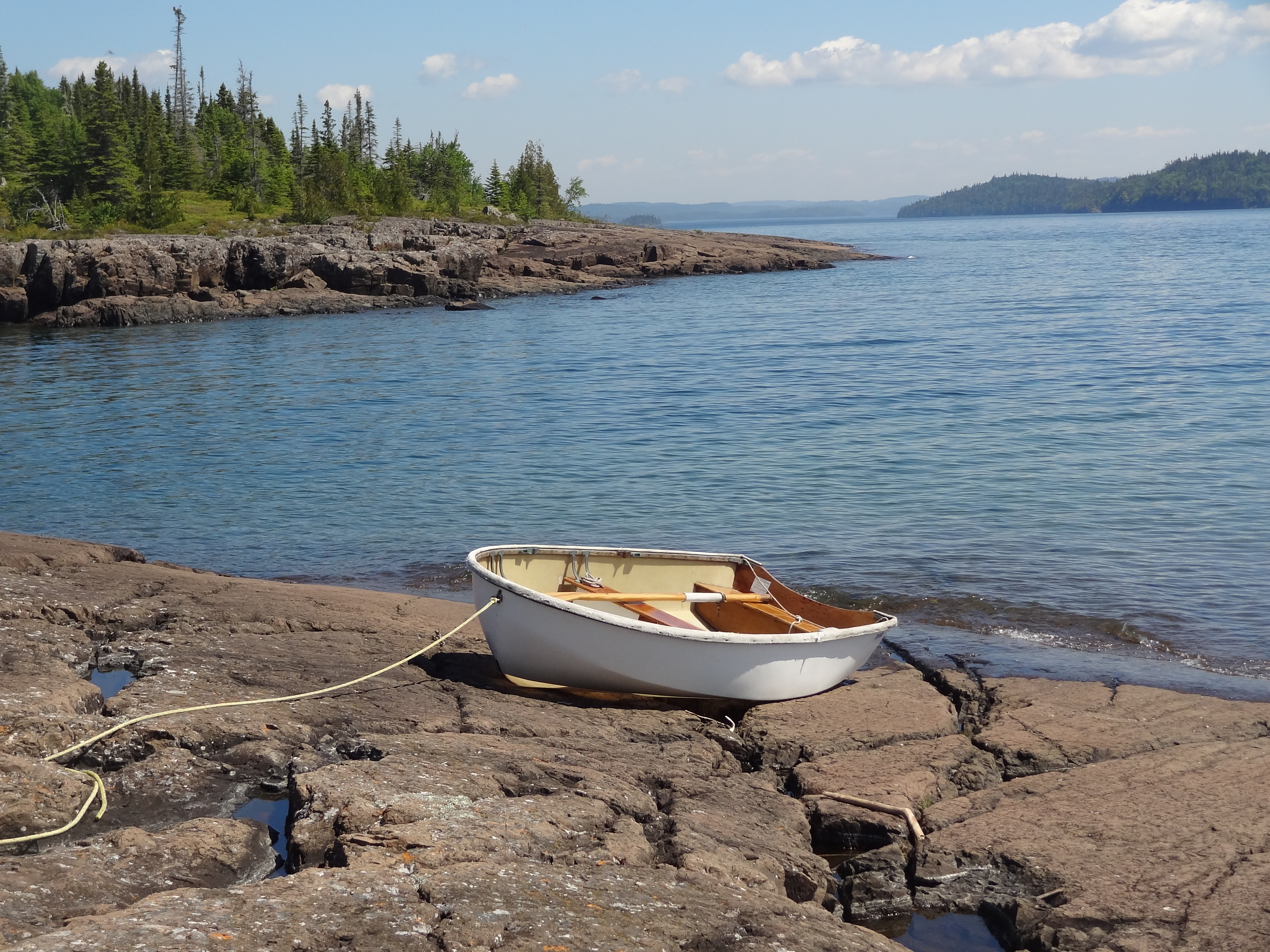
The next morning, I practiced rowing Tinkerbell by myself in the quiet cove. I will admit I did it perfectly backwards, but was soon corrected by my sail mates and got myself turned around in the right direction.

We rowed quite far to explore an unnamed island that Russ and Capn Dave had seen on their last trip here. The island was half rock and half trees, sloping down into the lake gently on one side, with a steep cliff on the other. Pools of fresh water collected in depressions on the shore, featuring tadpoles and mysterious shrimp-like creatures. On the way back to the boat, I even rowed. I can’t say that I am proficient, but at least nobody drowned.

In the afternoon, we finally had good sailing weather. We reached 6 knots on the way to Moss Island, which is at the beginning of the Nipigon Straits. However, good wind means a lot of cold – I had to wear four layers on top and two on the bottom, but at least I didn’t need to use hand and feet warmers like last year. The air was beginning to smell like wildfire smoke and the sky was getting hazy.

A flock of half a dozen white pelicans greeted us and flew by several times during our stay. The weather warmed enough that I could wear shorts, finally – as one should during July!

The next morning, we motored up the straits to Nipigon Bay. In the bay, the wind picked up enough to sail. We made it to Red Rock Marina, our final destination, in time for supper and most-welcome showers.

This is my third trip aboard the Neverland. I am finally getting the hang of what “port” and “starboard” mean. I can steer the boat well while it’s motoring, but not so well with sails. That will take more practice. I am learning the boat’s quirks and how everything works. I would not call myself a sailor, though. I still have a long way to go before that happens.

As we drove home the next day, we saw plenty of Canadian flags, since Canada Day was July 1. I marveled at the different emotions that flag elicited within me: happiness, friendliness, and peace – similar to the feelings the wilderness islands and lake stirred within.

Now, I realize that Canada is not perfect (for instance, their treatment of native peoples is deplorable) but on the whole, their displays of the flag seemed glaringly different compared to the displays in my home town.

I can hear the haters now: If you hate America so much, just move to Canada! I don’t hate America. I’m just pointing out that the 4th of July doesn’t feel the same as it used to, but it took time away on a sailboat for me to realize that.

I hope this time next year our culture will have changed enough that I can be proud of our flag again.

DSC05448

Tinkerbell on the unnamed island near Chapleau Island.

Forest Bathing: A Secret to Better Health

20190622_135935A recent New York Times article described results from a study that quantified how much exposure to nature people need to impact their health in a positive way.

The researchers found that people who spent about 120 minutes per week in nature (like a park or a forest) were less stressed and healthier than people who didn’t get outside at all. Spending less time (60-90 minutes) did not have as significant an effect. Even spending more time (5 hours) offered no additional benefits.

From this post’s title, perhaps you thought I was going to describe how to get nekkid and take a bath in the forest. Sorry, “forest bathing” just means immersing yourself in nature.

The study’s results made sense to me. As a species, we evolved in the outdoors. It’s what we’re made for. Spending time by water is also beneficial.

20190622_133733I am happy to report that I spend at least 140 minutes in nature per week. I am lucky to have a huge city park by my home where Buddy the Wonderdog and I walk every day.
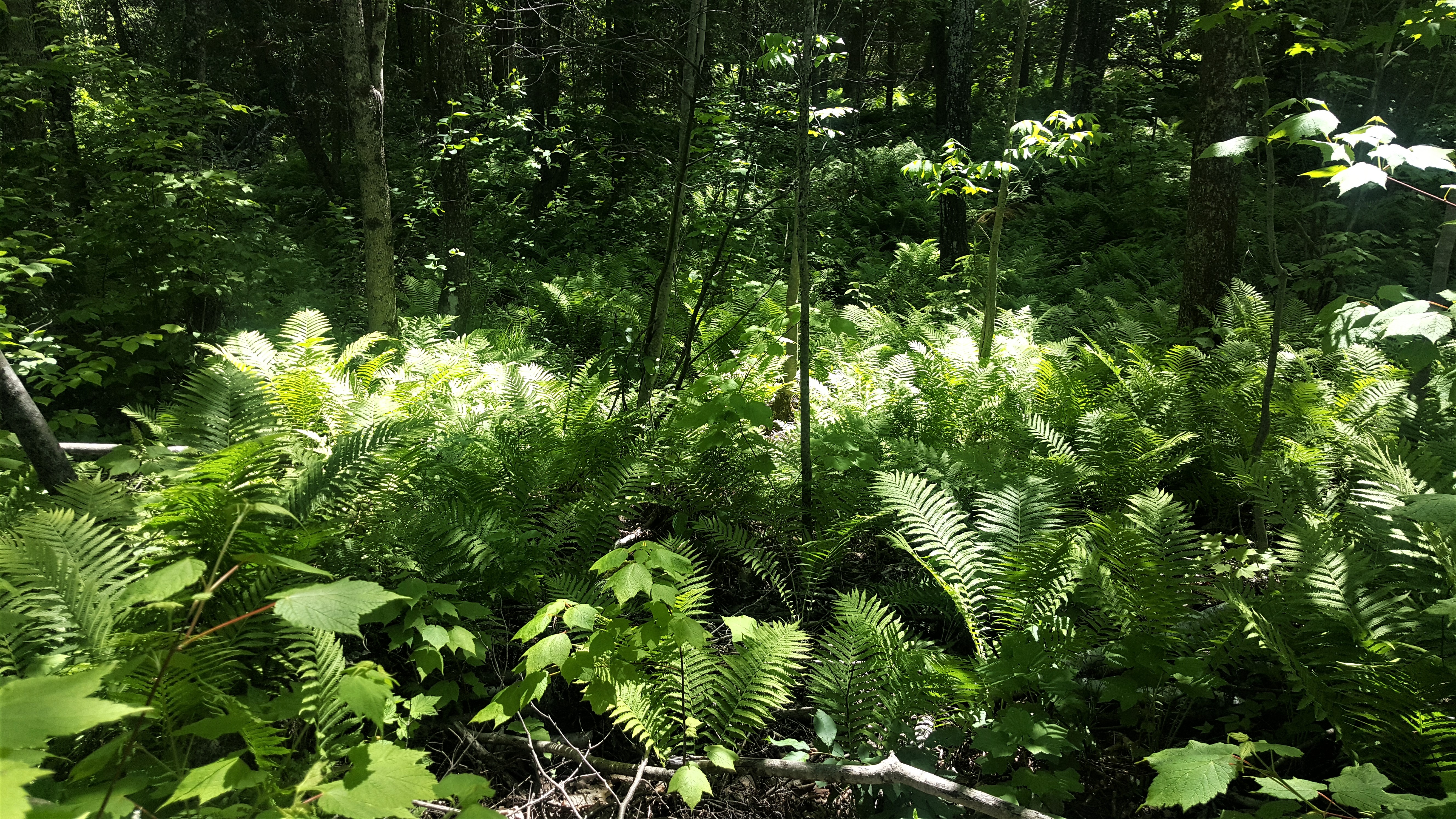
I took some photos from my last walk through the park. At 640 acres, the park is large enough that you’d never know you were in the middle of a city while walking its trails. Signs of civilization are few, even from the rocky knob that features a view of Lake Superior.

My photo walk was longer than usual – over an hour. I returned home feeling serene, indeed. Have you had your dose of nature today?

20190622_132014

Calendar Girl

WI DNR Calendar

I am happy to announce that two of my poems will be featured in the Wisconsin Department of Natural Resource’s 2019-2020 Calendar. The DNR holds an annual contest for photos and takes writing submissions for their 16-month Great Waters calendar, which is designed to show the ways that people connect with the state’s lakes and rivers.

My poem, “Stockton Island” graces the month of August 2020. I wrote the piece decades ago after my first stay at Quarry Bay on the island for a summer science program. My second poem, “Lake Superior Auntie” made the December 2020 page. This poem looks back on my career with organizations that are working to understand and preserve lakes Superior and Michigan.

The calendar will be distributed for free beginning August 1 at the Wisconsin State Fair, Wisconsin DNR offices, state and national park visitor centers, and through partner organizations.

The DNR has just posted the calendar on their website, too. If you’re interested in checking out information about the submission process, take a look here. Your work could be in their next one!

In Which My Writing Inspires Theft

45400919_10155548206416386_4915007419303591936_nHere’s a peek into the glamorous life of a local author. I was at the mirror in my church bathroom today when a lady going into a stall stopped and said she enjoyed reading the cover story on American martens that I wrote for Lake Superior Magazine recently.

She saw the magazine in her doctor’s office and since she knew a new issue of the magazine was coming out soon, she thought it would be okay to take the magazine so she could send it to her grandchildren in Japan who love learning about northern wildlife.

I thanked her and told her that there are martens in Japan, too.

Afterward, the more I thought about it, the more tickled I became that she valued my story enough to steal it. Although, perhaps she needs to listen harder to the moral messages during the church service!

The Case of the Headless Bunnies

bunny1naturehaven

A cottontail rabbit. Image courtesy of naturehaven.com.

Almost every day, I walk Buddy the Wonderdog in the woods by my home. This past summer, I was creeped out to see two dead rabbits on the edge of the woods. The incidents happened at separate times but in almost the same locations. The rabbits’ heads were gone, but much of their bodies was still there.

Then yesterday, I saw a headless rabbit again along a different edge of the woods. It lay in the snow with its fur ruffled at the beginning of the trailhead — almost as if someone had placed it there on purpose. A bloody mangled mess of muscle marked where its head and one of its legs had been. No animal tracks led to or from the body. It was as if the rabbit dropped from the sky.

Mysterious.

I finally got curious enough to investigate. I searched the internet for “animals that eat rabbit heads.” I came up with a story from the Toronto Star in Canada that described the horror some schoolchildren felt when they found headless bunnies near their schoolyard. The children thought a person with evil intentions decapitated the rabbits.

However, people familiar with the ways of wild animals responded that the bunnies were the work of an owl, not a Satanic Cult. They explained that owls can’t carry the whole rabbit, so they only take the head.

That’s the same explanation my woods-wise friends gave me when I described the gruesome scene from my dog walks. Also, brains are made out of fat, so I suppose owls get more energy from eating them than from eating other parts of a rabbit.

Similar to the situation mentioned in the news article, the rabbits’ bodies I saw this summer were near the same location each time. I think that makes sense. Animals tend to hang out in the same places. If an owl found a rabbit in a certain place one time, it must be a good place for rabbits, so they are likely to hunt there again.

The lack of tracks also makes the case for an owl doing the killing (or some other type of raptor) versus a human or an animal. The owl attacked from above, so of course it wouldn’t leave tracks.

I am glad to learn that the headless bunnies are just a case of nature taking its course, and not the work of twisted humans. But I am still sorta creeped out.

Marten Mania

DSC05086Edited

A marten carving graces the post of a Keweenaw Bay Indian Community pow wow shelter in Michigan’s Upper Peninsula. The marten is one of the Ojibwe clan symbols.

I’m in the planning stages for my third eco-mystic-romance novel. In my previous novels I’ve focused on endangered animals from the Lake Superior region, like the wolves of Isle Royale or piping plover shorebirds.

During a trip I took to the Apostle Islands a few years ago, the American marten (also referred to as the pine marten) came to my attention. It’s the only endangered mammal in Wisconsin and has mysteriously started showing up on Lake Superior islands where it was once thought extinct.

Sounds like a good topic for an eco-mystic-romance novel, right? To beef up my knowledge about martens (Martes americana), I attended the 7th International Martes Symposium in Bayfield, Wisconsin, this past fall. I was able to speak with marten researchers from all over the world and to interview ones who are doing local projects. I also took a field trip out to the Apostle Islands with the Wisconsin researchers and learned more about their methods.

45400919_10155548206416386_4915007419303591936_nTo cover the cost of the symposium and field trip, I wrote two magazine articles about martens. They are both out on newsstands now. The first ended up as the cover story for the December/January issue of Lake Superior Magazine. It focuses on the Apostle Islands martens and other populations found around the lake.

The second is in the “Around the Shore” section of the November Northern Wilds Magazine (on page 6). It focuses on the Isle Royale martens.

Take a read about these magical and mysterious animals of the north!

thumbnail_IMG_0294Cat Is

A marten climbs a tree on Cat Island of the Apostle Islands National Lakeshore. Trail cam image courtesy of Northland College, the University of Wisconsin-Madison, and the National Park Service.

Wolf Reintroduction on Isle Royale

ISRO wolves MI tech

The last two resident wolves on Isle Royale National Park. Image courtesy of Michigan Technological University.

People keep asking me what I think about the latest efforts to reintroduce wolves on Isle Royale National Park. I suspect their questioning has something to do with the novel I wrote about the topic. (Do ya think?!)

Well, my novel “Eye of the Wolf” was more about the wolves saving themselves than human efforts to save them. But I wrote it because of my interest in the wolves’ real-life plight: the packs on the island were dying out due to long-term inbreeding and disease. This continued until only two wolves, a male and a female father/daughter combo were left.

My past blog posts about the wolves may have also spurred peoples’ questions. So I suppose I should share my thoughts.

I haven’t done so sooner because my interests have moved on to other endangered animals in the region. Nevertheless, I have been following the wolf reintroduction effort just for old time’s sake, and to see how the real story plays out.

Okay, enough caveats. Here we go.

I wish the National Park Service had waited to reintroduce new wolves until the two resident wolves lived out their lives. My fear is that the new, younger wolves will rip apart the old ones. It just seems disrespectful, and it could look bad for the park service. I can see the headlines now: Resident Isle Royale Wolves Slaughtered by New Wolves.

This fall the park service released four wolves on the island that were captured nearby in Minnesota. Their genetic rescue plan is to release at least 15 (and up to 25) more in the next three years. I just don’t think the old wolves stand a chance.

When this concern was voiced at one of the public meetings I attended about the reintroduction, the park biologist dismissed it, saying the resident wolves know the best hiding places because they’ve lived on the island longer than the newcomers. Somehow, that answer wasn’t comforting.

My other concern is that the new wolves, which are from the Grand Portage Ojibwe Reservation, will leave the island this winter if an ice bridge forms, thus wasting all the effort and taxpayer expense of transporting them there. Research has shown that transplanted wolves do try to find their way back home once they’re released.

I understand that the park service wanted to restock the island with wolves that are used to hunting moose, but I question whether having the first ones come from an area so close to the island is a good idea. It might have been better to get wolves from farther away, especially for these initial efforts. I fear another headline that reads something like: Reintroduced Wolves Leave Island for Home on Ice Bridge.

I also feel bad for the transplanted wolves. They are basically kidnapped from their packs and home territories, and dropped someplace strange on an island in the middle of Lake Superior. Is keeping wolves on Isle Royale worth that kind of disruption? I don’t know. It just seems kind of extreme.

Drugging wolves is also dangerous – one wolf slated for the reintroduction died in the process. [Update on November 13: one of the transplanted wolves was reported dead, cause unknown.] Is keeping wolves on Isle Royale worth that risk? The park service and the wolf researchers obviously think so.

Let me just say that although I’m supportive of reintroducing wolves to the island, I’m not optimistic things will work out as planned. Life and Mother Nature seem to find ways to mess up the best-laid human plans.

The story continues….

Isro female wolf 9-26

A female wolf — one of the first reintroduced to the island this fall. National Park Service image.

* * *

Update: In early February 2019, one of the wolves reintroduced to the island (the female pictured above) walked back home to Grand Portage, Minn., on an ice bridge that formed on Lake Superior during cold weather. I hate to say it, but one of the headlines I feared happening has come true!

Foraging for Wild Pizza

20181023_190519I took a class this week at my local Whole Foods Coop to learn how to make a pizza from foraged ingredients. The crust ingredients included wild rice flour, which is relatively easy to find and make, and acorn flour, which takes more work because you need to soak the nuts to remove the tannins.

Earlier, when I signed up for the class, I was psyched by the idea of making some acorn flour myself. However, the oak trees in my neighborhood do not seem to be cooperating this year. Last year, gobs of acorns were everywhere – so many littered the ground that walking on my neighborhood trail was hazardous — like walking on a bunch of marbles.

Our instructor, Gil Schwartz from Seasonally Sourced Foods in Washburn, Wisconsin, explained that oaks go through boom and bust cycles when it comes to producing acorns. Apparently, in my neighborhood, this year is a bust cycle, and all the trees are busting at the same time. Perhaps next fall I can indulge in my acorn-flour-making fantasy.

Anyway, I digress. While the crust cooked in the oven, we worked on the sauce and processed the other ingredients for toppings. I don’t want to hurt Gil’s business, so I’m not going to divulge his recipe. But I will say that the sauce involved simmering black nightshade berries (which are edible and taste tomatoey), sliced wild leek blubs (also known as ramps), and apple cider vinegar, with salt and dried bergamot (which tastes like oregano) for spices.

The toppings included wintercress (a spinachy-mustardy tasting plant also known as yellow rocket), cooked black trumpet and hen of the woods mushrooms, “cheese” made from the insides of young milkweed pods (boiled), and ground roasted hazelnuts.

After the crust and sauce were cooked, we assembled everything onto the pizza and cooked that for about ten minutes.

Although I only got to eat a small piece of the pizza (we had to divide the pan into twenty pieces since twenty of us were in the class), it was tasty and filling. It made me glad to know that if our society collapses and Domino’s Pizza disappears, a pizza of sorts could still be had.

My classmates joked that with all the work that went into finding and prepping the gourmet ingredients for this pizza, it would cost at least $150 to order off a menu. It made me realize that spending $20 for a class and only getting a small piece of pizza to eat wasn’t such a bad deal, after all!

20181023_194504

End of Season Sail

DSC05076

Basswood Island dock, Apostle Islands National Lakeshore in Wisconsin.

I had the privilege of another sailing trip on Lake Superior this year. The season is ending — the wind cold, the sky gray, and the leaves turning.

We sailed from a marina outside of Bayfield, Wisconsin, and went to Oak Island in the Apostle Islands National Lakeshore. We anchored off its shore and hiked a long loop on the island among giant hemlocks and oaks, and then spent the night offshore. The next day we traveled to Basswood Island for a hike to the quarry there before sailing back to the mainland.

The sailing season is short, but oh so worth it!

DSC05070

Oak Island sandspit, Apostle Islands National Lakeshore

DSC05063

Guess which island we found these on?

DSC05081

Basswood Island brownstone quarry pond.

Lean Into Your Fear: Whitewater Rafting on the St. Louis River

pebd794cc-6d1a-4b89-a8a0-43eaca9722a7_c41a24d2-f4b0-4067-a203-838e20a4a2f3_m

Me (on the left in the red helmet) leaning into my fear on the St. Louis River.

When I write a travel post, because my blog’s name has the word “meander” in it, I usually open by saying I “meandered” here and there.

Well, I can’t use that term this time. It’s more accurate to say that I reluctantly agreed to go on a whitewater rafting trip down the St. Louis River this past weekend, and promised to scream all the way!

It all started when my friend Russ, who is an experienced kayaker, won a silent auction item at a fundraiser for the St. Louis River Alliance a few months ago. He won two tickets for whitewater rafting through Minnesota Whitewater Rafting, a local company that operates out of Scanlon, Minnesota.

Upon my insistence, we agreed to wait for the trip until the water was warm, to make it a more comfortable experience. Now it was August, month of warm weather and water, and I was out of excuses not to go. We gathered everything the company’s information sheet instructed rafters to bring: a dry change of clothes, snug-fitting footwear, windbreaker, towel, etc. And off we went.

Once we arrived, I was surprised by the number of other people who wanted to fling themselves into an inflatable raft at the mercy of the river – twenty-eight of us, to be exact, of all ages and fitness levels.

We started our three-hour journey by choosing one of the seven blue-and-yellow rafts lined up on the shore. Russ and I ended up paired with a young couple from St. Paul. A guide was assigned to each raft. Ours was named Logan.

To us oldsters, all of the guides looked like they were about twelve, but we hoped they knew what they were doing or they wouldn’t have been hired. Thankfully, this proved true!

The ensuing safety talk by the operations guy, named Blu, included instruction to ignore your instincts and “lean into” whatever fearful obstacle the raft encounters. He explained that if you lean away from the rock or high wave, you are more likely to lose your seat and fall out of the raft. Not that falling out of the raft is the worst thing that can happen, but most people like to stay with their group.

The other useful instruction was to keep your feet up if you fall overboard. This is helpful in avoiding sharp rocks and logs, etc., that are on the bottom. Plus, most people aren’t strong enough to withstand the current standing up, so you might as well just go with the flow until one of the kayak patrollers (who go with every trip) retrieve you.

Blu said that in a group our size, it’s common for at least one person to fall overboard. I sure hoped it wouldn’t be me.

I thought the “lean into” rule was particularly deep. Psychologically speaking, sometimes facing your fears is the best way to overcome them. Also, it reminded me of the book “People of the Lie” by M. Scott Peck, who says that most people’s psychological problems arise from trying to avoid emotional pain instead of addressing (leaning into) it.

I decided then and there to change my attitude about the trip – to stop seeing it as something fearful, and instead see it as something to relish, and an opportunity to know the river better. I mean, I’ve lived by it most of my life. I’ve canoed on it, paddleboarded it, boated on it, but I’d never immersed myself in it.

As the company’s website and instruction sheet promised, you will “see the river, feel the river, ride the river,” and you will get wet! On this sunny warm day, I was up for that.

Blu explained we’d encounter six sets of rapids ranging from Class I to III, and two sets of riffles. Each set of rapids would get more challenging along the four-plus-mile stretch until we reached the quiet-water reservoir formed by the Thompson Dam.

Safety talk over, we set out upon the water. Our first task was to run through a “slalom” course between the pylons of the freeway bridge that goes across the river. This let us practice paddling different directions and experience what it feels like when the raft bumps into things.

Then we paddled through a set of riffles called “Warm-Up Rapids.” Everyone came through unscathed and, after stopping for an orientation, we continued to a set of surfing waves at “First Hole” rapids.

Have you ever seen standing waves that form behind an underwater rock in a river? That’s what we surfed on – if your idea of surfing involves your raft filling with water, which ours did. We surfed several times, bailing out between sessions with the handy bailers provided in each raft.

p9091eedc-1216-426c-9429-98f3600b2324_671929cc-bda5-4d31-b3db-2344e2e28a00_m

Surfing the hole and having fun!

After another group orientation session, we were onto “Two Hole” rapids. I think it was this one that had a big rock in the middle of it. Logan, our guide, thought it would be a good and fun idea to smash our raft into the rock.

On purpose.

Why he thought this was a good idea, I’ll never know! I always thought the whole idea of river rafting was to avoid the rocks. I guess I’ve been wrong all this time.

Granted, he did give us a choice, so we were complicit in the decision. I blame it on the adrenaline rush.

Paddling as hard as we could, our raft went up and over the rock, then started sliding sideways. I was on the outside side – the tippiest side – and remembered to lean into the rock to avoid falling out of the raft. I almost floated out, but managed to stay in by the skin of my teeth. Rather like dental surgery, it felt so good once it was over!

Our next stop was a canyon that featured a couple of small beaches in a slow section of the river. We grounded our rafts and had the chance to swim for a while, clothes, lifejackets and all.

Russ went all the way in. I was fine going waist deep, not because I was worried about polluted water or anything, but because the water was rather chilly to me even for a warm day.

At this point I realized I had never been this far into the river before; me—who had even worked for the St. Louis River Alliance whose sole purpose is to protect the river. I marveled at the brown water – tea stained from the many wetland plants steeping at its headwaters and along the way. The white pines and bare rock faces along the shore looked primeval, like we could have been miles into a wilderness. The beauty filled me  and gave me a new sense of appreciation for the river.

Our rest stop over, it was time for the big guns in terms of rapids. We made it through “Hidden Hole” just fine, then it was onto “Electric Ledge,” which is a Class III rapids that consists of a four-to-six-foot drop.

I had heard the name of this rapids whispered in awe among my kayaker friends for years. Now we were about to go over it! And we were about to go over it before any of the others. Logan explained that our raft had the first aid kit in it, and we needed to go first in case the other rafts needed assistance once they ran the ledge.

Not only were we in the first raft, but Russ and I were sitting in the FRONT of the first raft. Oh, lucky us.

We didn’t have much time to wonder at our luck as the ledge was approaching. I repeated all the rules: lean into your fear, keep your feet up. Then we slid over it, sideways and steep. Russ grabbed onto my arm for support.

Luckily, that steadied him and we both stayed in the boat. So did the rest of our crew, but I can’t say that for one of the other rafts, which did indeed lose one person over the ledge. The person remembered the rules, however, and they were uneventfully picked up not far downriver.

The final set of rapids, “Little Kahuna,” is more technical than terrifying. After some twists and turns, we made it through just fine. From there, a somewhat longish paddle across peaceful water (known as the Boundary Waters to the staff) took us to the end of our journey and a bus that was waiting to drive us back to our starting point.

So, in summary, I did scream as initially promised, but it was from fun, not out of fear. I think this was due to the great job the staff did at letting us know what to expect from each set of rapids. I hadn’t had that on other rafting trips.

I would totally do it again on some warm day (although they do provide wet suits if it’s cold and you want one). And I would totally bring family members on such an adventure. Don’t let a little fear stop you if you have a hankering for some whitewater!

pb4537e2e-9595-42bc-b3f2-dbdd9d761701_cddf1de5-0eef-4962-8d2c-b16f78487c4b_m

Yee haw!