Good Enough for Jazz

I sent the text for my second novel off to the publisher last week, a few days earlier than the January 1 deadline they had given me. Why early? I just couldn’t look at it any more. There comes a point where editing fatigue sets in and no additional amount is going to make a difference.

Line art drawing by Pearson Scott Foresman, Wikimedia

Line art drawing by Pearson Scott Foresman, Wikimedia

After reworking it with the input of my writer’s group during the two-and-a-half years it took to create, incorporating comments from several reader friends, and then a two-month concentrated bout of editing once the story was finished, I had reached the editing-point-of-no-return.

In high school, my best friend was a saxophone player. I played French horn, and we sat next to each other in band. My friend was also in the jazz band, and when we were out gallivanting on the town or at home without our instruments, she used to sing the jazz songs to me that she was learning. That’s how I gained an appreciation for Count Basie, Woody Herman, and the like. She also shared a phrase that the conductor used to say when the musicians were tuning their instruments: “It’s good enough for jazz.”

So maybe the instruments weren’t perfectly in tune. For jazz — home of individuality and improvisation — perfect technique is eclipsed by style and feeling. Have an instrument not perfectly in tune? That’s cool, that’s all right. It’s good enough for jazz.

Of course, that would never fly in concert band. And the phrase struck the young me – who was ever striving for perfection and straight “A” grades. Not aiming for perfection went against everything I had been taught up until that point. It instilled in me the idea that sometimes, things are as perfect as they are going to get. Any additional amount of effort isn’t going to make a difference, and, in fact, it can detract from whatever you’re trying to do.

That’s what it’s like with my novel. I’ve made it as perfect as I can at this point. I am happy with it, but not overjoyed. Some parts of it I read and love, but other parts I’m not so keen about. Don’t get me wrong, I’m sure it’s better than a lot of published writing out there, but if I waited until I had the text in a form I was totally, outrageously happy with, I’d never get it off my computer and onto my publisher’s.

So it’s off. It’s gone. Another eco-mystic romance will be unleashed upon the world in June. It was so much fun to write, and I got to include some of my favorite topics, like music (although a more symphonic sort). The setting is in my home town, which I saw through new eyes during the writing, and it deals with issues dear to my heart, like climate change and endangered species recovery.

I’ll still have opportunities to tweak it (not to be confused with twerking it) before publication. But for now, it’s good enough for jazz.

Pride & Prejudice & Snickering

empty chair

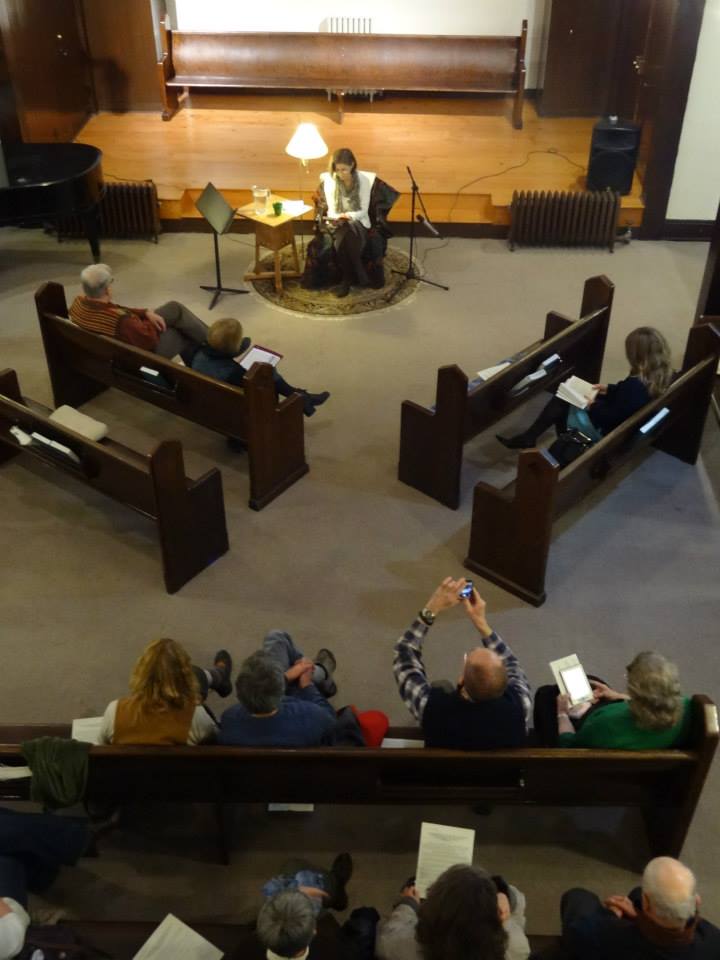
An empty chair awaits readers of the Duluth, Minn., public rendition of Pride and Prejudice.

Last weekend, I took part in a marathon public reading of “Pride and Prejudice,” by Jane Austen. The event, hosted by a local writers group, was a celebration of the novel’s publication two-hundred years ago. The reading began on a Friday evening, stopped for the night, and spanned the next day from 9 a.m. to 9 p.m.

The sanctuary of a local church provided a great venue for the event.

The sanctuary of a local church provided a great venue for the event.

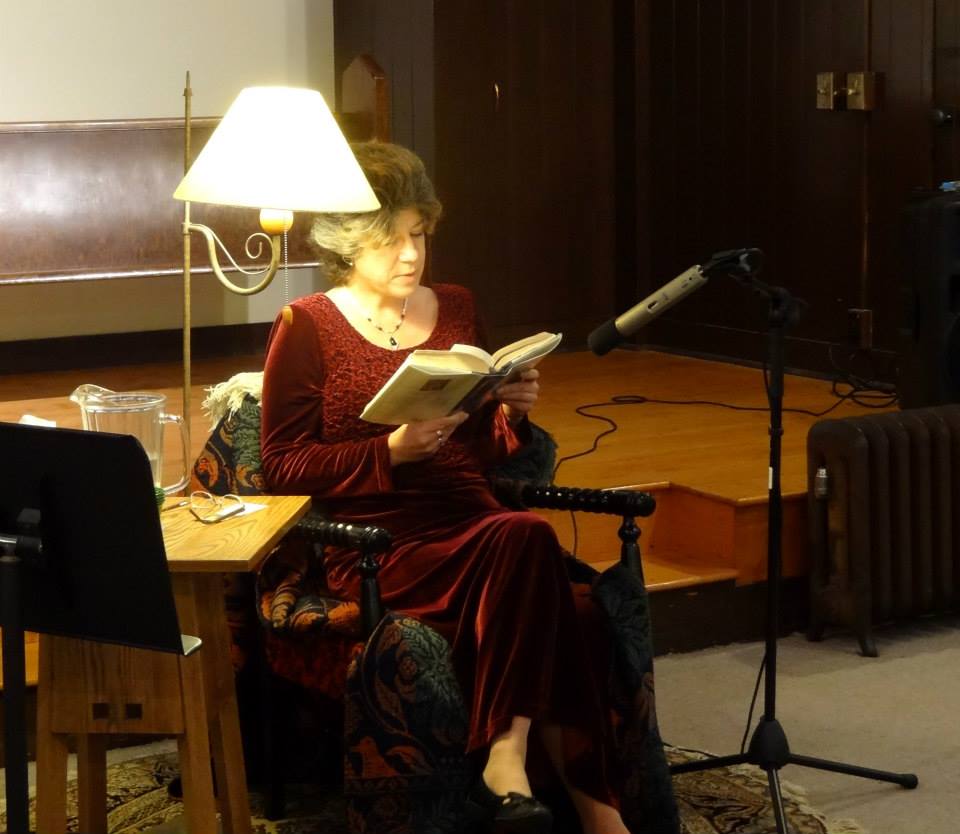
You might think that the atmosphere would have been staid, literary, and slightly pompous, but there was actually a lot of snickering – at least when I read. While that could have been the result of my poor attempts at voicing characters with English accents, I’d like to think it was from the subtle humor employed by Austen two centuries ago, which still resonates today.

The sanctuary of a quaint stone church served as an atmospheric venue. For those requiring refreshment, tea and cucumber sandwiches were served in the basement. About twenty-five readers each took turns reading aloud for twenty-five to thirty-five minutes. They were a diverse group — ranging from the Mayor of Duluth, actresses, poets, English teachers, Jane Austen-lovers, and me – who had never read the book, but I’d seen the movie.

I hadn’t read aloud from someone else’s writing in many years – since reading bedtime stories to my sons. And I was amazed at just how funny Austen’s writing is. It didn’t strike me that way when I read my section silently. But when I practiced it aloud at home, the irony of the passages was clear. It made me wonder if Austen wrote the book to be read aloud as entertainment on long evenings before the invention of television.

A respectable crowd gathered for the reading.

A respectable crowd gathered for the reading.

The section I read featured a clergyman who had originally wanted to marry Elizabeth — the narrator of the story (played by Winona Ryder in the movie version). Elizabeth visits him and his new wife, who was Elizabeth’s best friend, and who won the minister by “default” after Elizabeth turned him down. The scenes are set in their home and then move to the mansion where the minister’s patroness, the condescending and imposing (to everyone but Elizabeth), Lady Catherine de Bourgh (played by Judith Dench).

I was heartened that the irony of Austen’s portrayal of the clergyman and Lady de Bourgh was not lost on the small audience gathered to listen. My reading was punctuated by quiet laughter in several appropriate places. It just goes to show that although many years have passed and our lives are very different from those who lived when the story was written, human nature is similar enough that we can still relate.

Me reading (amid snickers).

Me reading (amid snickers).

Who Knew Science Writing was Such a Hotbed of Intrigue?

Light Bulb

Light Bulb (Photo credit: CraftyGoat)

I recently returned from a National Association of Science Writers (NASW) Conference. I’m not sure of the exact count, but my guess is that it drew about 300 writers from across the country, and even a few from overseas.

An example of the kind of people who attend these annual conferences: on the short leg of my trip from Orlando to Gainesville, FL, there were only three of us on the plane. The flight attendant made us sit in the tail section, “to balance things out,” since the crew was in the front. We all sat together and got to talking. I was in the company of a co-founder of the online science magazine, “Matter,” who was flying in from London, and an editor for a new magazine in New York City called “Nautilus.” Myself, I write about Wisconsin water science for my day job. In the evenings, I write eco-mystic romance novels that are science-inspired.

The conference was great and informative, but it was overshadowed by a scandal, of which I was blissfully ignorant until the final session, which was entitled, “The XX Question.” The description made it sound like the session was about the role of women in science writing – how influential are they even though they are a prominent part of the profession compared to the past, how does their pay and recognition compare to that of male science writers?

While the standing-room-only session touched on those things, it was really about sexual harassment of women in the profession by sources and editors, and it offered an opportunity for discussion of the aforementioned “scandal.”

The scandal was that the blog editor for “Scientific American” magazine, and a prominent speaker at past NASW conferences, was accused of harassing several women who wrote for him. No overt details were given during the presentation, but from later research, I learned the accusations consisted of sexual conversations and unsolicited touching. Basically, his shtick was that he was in an asexual marriage and he wanted these women to take pity on him and have sex with him — never mind that he was in a position to publish or decline their work.

The ironic thing was that the issue came to light indirectly, when a woman biologist claimed harassment by an editor of another publication on Scientific American’s blog. The magazine’s treatment of the blog post prompted some women writers to name people involved in other instances of perceived harassment.

Now I realize the following might sound really insensitive and crass, but I found myself wondering why the Scientific American blog editor targeted science writers instead of prostitutes. I suppose the draw was that the science writers were legal and cheaper, plus maybe he knew he had some power over them, whether he consciously acknowledged it or not.

The discussion panel featured four female writers and editors, most of whom described experiences they’ve had with sexual harassment on the job. Their experiences ranged from men being mean and dismissive of them, presumably because of their gender, to men being WAY too friendly and imaginative. Most of the harassment seemed aimed at freelance writers, since they are in the vulnerable position of begging for work from multiple (often male) sources. The panelists and audience members did a good job of venting and not ranting, and it was heartening to see some metaphorical light bulbs turning on over many male heads in the audience.

After hearing the panelists’ experiences, I felt fortunate that I have not been harassed in my work as a science writer. However, I’ve mainly worked for organizations that are funding researchers, and, if I am to think crassly again, the researchers didn’t want to piss off the organization that is funding them. But I have experienced harassment as a member of a Forest Service trail crew and as a wildland fire fighter. So it is not unknown to me, and I found some creative (and highly effective) ways to deal with it, that I will perhaps get into in a different post.

But those were situations where I was basically outnumbered and living with men, out in the wilderness where civilized modes of conduct often seem distant and a bit silly. That harassment occurred was not that surprising to me. But these were women working in cities and offices, meeting with men in suits and ties. I guess it goes to show that respectful modes of conduct can disintegrate anywhere, and also that science writing has many more challenges than simply figuring out the right word to use in a story.

A Book Signing with Heart

Eye of the Wolf, Marie ZhuikovIn contrast to my previous rant about book signings, I’d like to share the story of an unusual thing that happened at my first public signing for “Eye of the Wolf.”

My eco-mystic romance novel deals with the plight of the dwindling wolf population on Isle Royale National Park in Lake Superior. About two years ago, I had just begun sitting outside the Bookstore at Fitger’s Mall in Duluth, trying to hawk my wares to the holiday shopping crowd when a tall, thin, bearded man approached.

It soon became apparent that he was deaf and could not speak. Through a combination of gestures and lip movements, he managed to convey that he didn’t have any money to buy a book but that he liked the topic. Then he pointed to the part of the description on the back of my novel about the wolves on the island being in trouble. He put his hands over his heart and made a breaking motion. Clearly, it broke his heart that the wolves were dying out. He shook my hand twice, thanking me for writing about the issue, and left.

Thinking about the short encounter during the rest of my signing caused mixed feelings. The cynical part of me wondered if he was just trying to get a free book. The innocent part berated myself for not giving him a free book. In the end, my heart fell out of my chest and writhed around on the hallway floor in a fit of sentimentality, but it was too late to do anything about it.

I’m hoping the sequel to “Eye of the Wolf” will be published in about a year. If I see that guy again, I’m giving him a free book. Maybe one of each.

Are Book Signings Worth Risking Your Personal Safety?

I almost got attacked over this book!

I almost got attacked over this book!

My writing group met today and we got on the topic of book signings and how some big-name authors seem to dislike them. Perhaps you’ve experienced authors who barely look at you while signing your book and who seem unhappy to be doing so. My writer friends and I supposed it could get tiresome writing one’s autograph all those times, and perhaps the authors were only doing signings because it was in their contract – but come on! All the dozens of people in line are your fans. You are getting money from them. Is it too hard to give them back a bit of appreciation?

Apparently, it was too much to ask for prehistoric romance writer Jean Auel when I saw her in Minneapolis in the mid-1980s. She looked like she would rather be anywhere than the B. Dalton Bookstore downtown. I decided to go to her signing of “The Mammoth Hunters,” after work one dark winter evening even though two months before when I last left work late, I had gotten robbed at knifepoint while scraping the ice off the back window of my car.

After that incident, I had switched parking lots, but it soon proved too expensive on my student’s wages and I returned to the lot where the robbery occurred. I figured as long as I left work at 5 p.m. when everyone else did, I was less likely to be a target.

Returning to the lot at around 7 p.m. from the unsatisfactory book signing, I was vigilant. I walked purposefully and locked my car door as soon as I entered, a habit I’d gotten into after the robbery. As I started the car, I looked into the rearview mirror. A man was approaching, wearing a ski mask. Even though his face was covered this time, he looked very similar to my robber and he was wearing the same jacket.

I froze in terror. The robber had stolen my spare car key along with my wallet before. What if he remembered what my car looked like and he happened to have the key with him? I clutched the door handle, trying to keep it shut in case he had the key. The man walked up to my car, jiggled my door handle, and when it wouldn’t open, kept walking as if nothing had happened.

Relief flooded me. Then I got mad. There were no cars parked between me and him. My car was already running. I raced the engine and took off toward him. Was I going to scare him or run him over? I know I wanted to run him down for what he put me through, but at the last moment, I swerved. I couldn’t do it.

And apparently, I didn’t scare him very much either. After filing my police report, I found out later that he ended up attacking and raping another woman in the parking lot that night. A few nights later he got picked up. Eventually, there was a trial. Of half a dozen of his victims who filed police reports, I was the only one who saw his face, so I was the “star” witness. He got five years in jail.

Although almost thirty years have passed, my hands are shaking as I type this entry. See what trouble being a book fan can get you into? Seems the least an author can do is to smile and say “thank you” to their admirers. You never know what they went through to get to your signing or what might happen to them afterwards.

Stay tuned for a more pleasant book signing story coming next!

Rounding Off the Rough Edges of Torment and Desire

Kevin Kling

Kevin Kling

I didn’t mean to start taking notes during the keynote speech at the Northeastern Minnesota Book Awards when they were held last week in Duluth, but I couldn’t help it. When a speaker quotes Johnny Cash: “Talent is God-given; style comes from our limitations,” and starts talking about writing, well, it’s hard not to . . . start writing in every open space on the back of the program.

But I also need to let you know that there was pie at this event; five kinds of free pie provided by the Rustic Inn up the North Shore of Lake Superior. I wrote my notes under the sugar-rush influence of a raspberry cream variety, so keep that in mind as you read this.

The speaker was Kevin Kling, noted playwright, speaker, author and storyteller who I am ashamed to say, I’d never heard of before. But hey, I live in Duluth. That’s my excuse and I’m sticking to it. Kling is almost as cool; he hails from Minneapolis. He talked a lot about why people write and how the process helps people deal with emotions, tensions and physical difficulties.

Kling’s physical differences are more apparent than most. Although he was born with a short left arm that has no wrist or thumb, audience members couldn’t help but notice it because it’s the only arm he can use. His right arm (which he used to depend on) was rendered pretty much inoperable by a motorcycle accident over a decade ago.

Kevin Kling as a Minnesotan.

Kevin Kling as a Minnesotan.

Despite a shorter than usual appendage with which to make his point, Kling made his point clear, even to the sugar-impaired. He told us a condensed story about his accident and used it to illustrate how, when he tells a story, it doesn’t control him anymore. “By the telling and the asking, we know we’re not alone.” Kling was in therapy after the accident and described how retelling the story of his accident so that he didn’t crash lessened the hold the experience had on him. By rewriting it in his mind, he took away its power.

Other notes I scribbled include: stories are tension – things that need to be worked out. And, “God loves stories so much; he created people so there would be an endless supply.” (Love that quote!) And Kling discussed how stories “round off the rough edges of torment and desire.” Now, as an eco-mystic romance writer, I know a bit about desire and torment. I lived with it for the 17 years it took to write my first novel, and I’m living through it now while writing the sequel (which I hope will take me less than two years). I suspect the thing that kept me going that long on the original (other than to eventually prove I could finish it) was to work out the feelings that inspired it. Did all that writing help? Yes, I think so. The feelings aren’t locked inside me anymore. They are loose upon the world, for better or worse.

By the way, my novel was not up for consideration in the competition, since it was set on Isle Royale, which is technically an island in Michigan (not Northeastern MN), and it was published in 2011. The stories under consideration for this ceremony were published in 2012. I attended the event to just to enjoy hob-knobbing with bookish folks in hopes it would help me stay inspired.

My first novel did not have a happy ending for the human protagonists. I’m a sucker for a happy ending, so I’m working to find them one in the sequel – so that some of their desire and torment can be lessened; and in doing so, lessen mine.

But right now, I’m desiring more of that pie. . . .

God loves stories so much; he created people so there would be an endless supply.

Kevin Kling – author, storyteller, playwright
Northeastern Minnesota Book Awards ceremony, May 23, 2013 in Duluth, MN