The Year in Blogging, 2018

OLYMPUS DIGITAL CAMERA

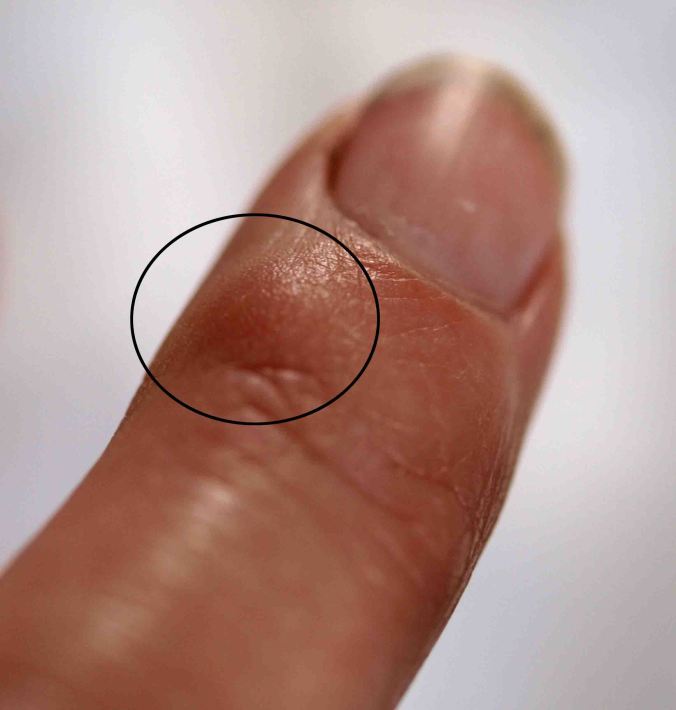
The image from my most popular post of 2018. No, I am not flipping you off! Photo by Jak of the Mast Cells & Collagen Behaving Badly blog.

Traffic to my blog continues to grow slowly. Part of the slowness is because I don’t have a lot of time to visit other blogs and court their owners’ readership of mine. I am too busy living life and writing about it! But at least my readership isn’t shrinking.

In 2018, more than 7,100 people visited my blog and it had over 8,900 views.

Here are the three most popular stories I wrote this year, plus the most popular overall:

#1 Writer’s Bumps: An Endangered Condition? – My, my, my, but many people have mysterious bumps on their hands! I had no idea. I wrote this post as a joke because I thought that the cushioning bump that grows on writers’ middle fingers when they hold a pencil was going out of style in this age of computer keyboards. Apparently not! Almost every day someone finds my story because they are wondering what the heck that thing is on their finger.

#2 Echoes of the Past: A Sneak Peek Into the Hotel Chequamegon – I had the chance to stay in an historic hotel in Ashland, Wisconsin, for a writing contest reading I gave last winter. I wrote a review of my stay. Hardly anyone else has written reviews, so I suspect that’s why people who are interested in the hotel are finding it.

#3 A Visit to the Tallest Waterfall in Minnesota – A friend and I visited High Falls in Grand Portage State Park last winter and lived to tell the tale, which involved slippery footing and some harmless trespassing.

The most popular post during my six years of blogging is one I wrote in 2017 about a bad experience my dog had with his food. It involved some sleuthing and label reading on my part. To think, I almost didn’t write it, but then went ahead because I hoped others might find the information useful. I guess my hunch was correct.

Iams Dog Food Alert!—This story’s popularity is unfortunately because many dogs other than mine have had bad reactions to the sneaky changes this company made in the recipe of their dog food. I wish it wasn’t so popular, but more and more people keep finding it though searches. I am glad the story is providing them with answers, but sorry to hear that their dogs are having problems.

Thank you again for meandering with me, and Happy New Year wherever you may be . . .

Tips from Outdoors Writer Sam Cook

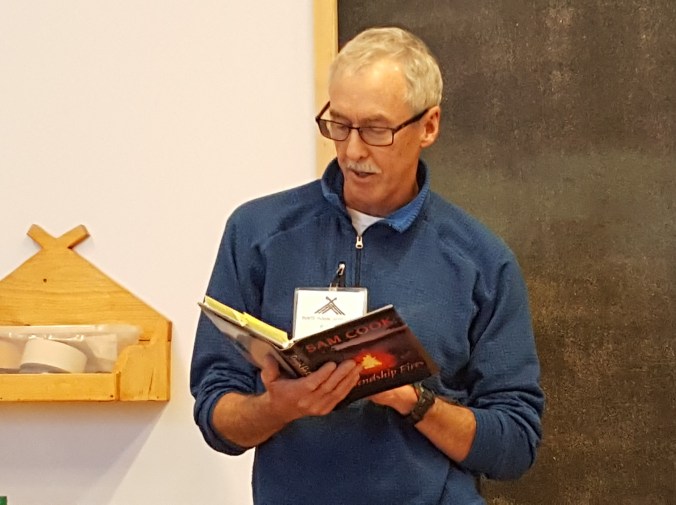
20181116_152952CropI meandered up the North Shore of Lake Superior last month for a writing workshop offered by Sam Cook, noted book author and outdoors writer for the Duluth News Tribune. The workshop was offered by North House Folk School in Grand Marais, Minnesota.
As he stood in front of us in the classroom, Sam’s eyes grew misty as he read this passage from Aldo Leopold’s “A Sand County Almanac:”

A dawn wind stirs on the great marsh. With almost imperceptible slowness it rolls a bank of fog across the wide morass. Like the white ghost of a glacier the mists advance, riding over phalanxes of tamarack, sliding across bogmeadows heavy with dew. A single silence hangs on the horizon.

Out of some far recess of the sky a tinkling of little bells falls soft upon the listening land. Then again silence. Now comes a baying of some sweet-throated hound, soon the clamor of a responding pack. Then a far clear blast of hunting horns, out of the sky into the fog.

High horns, low horns, silence, and finally a pandemonium of trumpets, rattles, croaks, and cries that almost shakes the bog with its nearness, but without yet disclosing whence it comes. At last a glint of sun reveals the approach of a great echelon of birds. On motionless wing they emerge from the lifting mists, sweep a final arc of sky, and settle in clangorous descending spirals to their feeding grounds. A new day has begun on the crane marsh.

“Sometimes it makes you depressed to read really good writing,” Sam said. However, I suspect he was moved by Leopold’s writing, and just wanted to hide how sentimental he truly is.

Sam was talking to us about the power of details in writing and how they can draw a reader into your story. Other writers he quoted from included Leif Enger, Barry Lopez, John McPhee and Dennis Olson.

I won’t give away all of Sam’s secrets, but I would like to share a few bullet points from his class that you might find useful.

  • Good writing makes people feel like they’re in the experience with the author. Incorporate all the senses into your writing (taste, touch, smell, etc.) Be a sponge, soak it all in when you’re gathering information.
  • Read your story aloud during the editing process to smooth out awkward wording.
  • In bad weather, pencils work better outdoors on paper than pens (or electronics!)

Sam passed around a stack of his reporter’s notebooks to show us how he processes information for his stories. He also read from some of his own works, notably, a story about how he – a Kanas native – became a true northerner by sticking his tongue on metal in the middle of winter.

I learned new ideas for writing story openings from Sam. If you ever get a chance to take a class from him, don’t miss it!

Marten Mania

DSC05086Edited

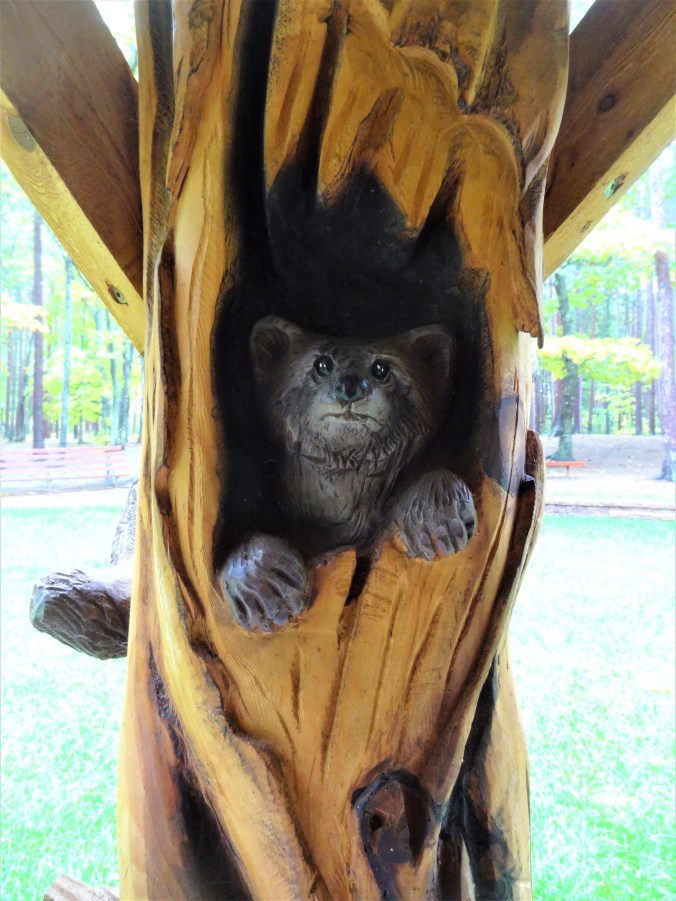
A marten carving graces the post of a Keweenaw Bay Indian Community pow wow shelter in Michigan’s Upper Peninsula. The marten is one of the Ojibwe clan symbols.

I’m in the planning stages for my third eco-mystic-romance novel. In my previous novels I’ve focused on endangered animals from the Lake Superior region, like the wolves of Isle Royale or piping plover shorebirds.

During a trip I took to the Apostle Islands a few years ago, the American marten (also referred to as the pine marten) came to my attention. It’s the only endangered mammal in Wisconsin and has mysteriously started showing up on Lake Superior islands where it was once thought extinct.

Sounds like a good topic for an eco-mystic-romance novel, right? To beef up my knowledge about martens (Martes americana), I attended the 7th International Martes Symposium in Bayfield, Wisconsin, this past fall. I was able to speak with marten researchers from all over the world and to interview ones who are doing local projects. I also took a field trip out to the Apostle Islands with the Wisconsin researchers and learned more about their methods.

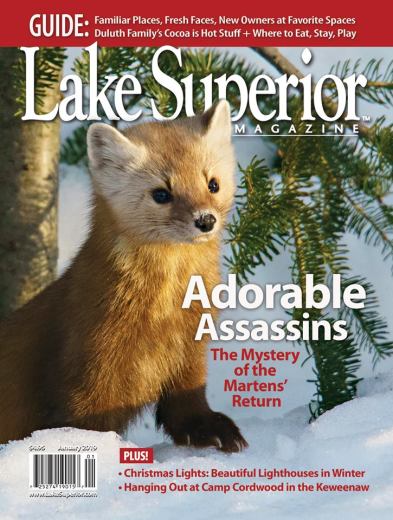
45400919_10155548206416386_4915007419303591936_nTo cover the cost of the symposium and field trip, I wrote two magazine articles about martens. They are both out on newsstands now. The first ended up as the cover story for the December/January issue of Lake Superior Magazine. It focuses on the Apostle Islands martens and other populations found around the lake.

The second is in the “Around the Shore” section of the November Northern Wilds Magazine (on page 6). It focuses on the Isle Royale martens.

Take a read about these magical and mysterious animals of the north!

thumbnail_IMG_0294Cat Is

A marten climbs a tree on Cat Island of the Apostle Islands National Lakeshore. Trail cam image courtesy of Northland College, the University of Wisconsin-Madison, and the National Park Service.

“Virgil Wander” Debuts in Duluth

Leif Enger

Duluth scored a literary coup yesterday when award-winning, multimillion-copy bestselling author Leif Enger launched his new book, “Virgil Wander,” here.

One of the reasons we were able to get him here versus, say, Minneapolis or New York or San Francisco, is because, as of seven weeks ago, Enger and his wife Robin live in Duluth. What a boon for our (relatively) remote city on the shores of Lake Superior!

Most news stories will say it took the Minnesota-born Enger, who is best known for his debut novel “Peace Like a River,” ten years to write his new novel. During questioning after his reading at Zenith Books, he said it actually only took him four years to write “Virgil” and that he spent the previous years writing 400 pages of something else that didn’t work out – it didn’t have the vital combination of character, setting, and story.

Enger said another thing that delayed his writing was a “dark patch” due to the failing health of his and his wife’s parents. Plus he contracted meningitis, which I suspect is is a good excuse to delay just about anything.

The novel’s setting is the mythical town of “Greenstone, Minnesota,” which he said is an amalgam of Silver Bay, Beaver Bay and Grand Marais – small towns along Lake Superior’s North Shore. It’s the story of Virgil Wander, a movie house owner who survives a plunge in his car into Lake Superior. He loses his memory and language, awakening to an unfamiliar world. He pieces his life back together with the help of “affable and curious locals.”

The promotional blurb about the book on Goodreads says, “With intelligent humor and captivating whimsy, Leif Enger conjures a remarkable portrait of a region and its residents, who, for reasons of choice or circumstance, never made it out of their defunct industrial district. Carried aloft by quotidian pleasures including movies, fishing, necking in parked cars, playing baseball and falling in love, Virgil Wander is a swift, full journey into the heart and heartache of an often overlooked American Upper Midwest by a master storyteller.”

During his reading, Enger said the owner of an Art Deco movie house in Florida inspired the main character of Virgil. The passion of the owner to restore the theater stuck with Enger and emerged when he was fishing his subconscious for ideas for his new novel.

20181002_200515A hike on a hill above Beaver Bay with one of his sons inspired Enger to set the novel on the North Shore, and then the story came to him.

When a member of the audience commented about his use of humor in the book, Enger said he wanted to write something he would enjoy because he’d be “spending a long time with it.”

Before and after the reading, audience members feasted upon snickerdoodle cookies and brownies made by Robin. I even took a photo of them. Why? Must be because I am so affable! No, really, I thought that was cute, supportive, and very Minnesotan.

“Virgil Wander” is now in my pile of books on my bedside table. Can’t wait to read it!

“Going Coastal” Wins Honors

20180524_201802

The “Going Coastal” anthology sporting its snazzy Northeastern MN Book Awards seal.

An anthology of Lake Superior short stories that contains one of my tales was awarded an honorable mention in the fiction category of the Northeastern Minnesota Book Awards competition. “Going Coastal” contains stories written by nine writers who live around the lake in Minnesota and Wisconsin.

Here’s what the awards committee had to say about the book:

The stories in Going Coastal are all deeply personal, and reflect the lake as a source of beginnings and endings-a source of inspiration, loss, and renewal. The anthology contains a variety of very different stories, touching us in many ways, and connecting us to the power of Lake Superior.

The award was established to recognize books that substantially represent northeastern Minnesota in the areas of history, culture, heritage, or lifestyle. For a list of other winning books for 2018, check here.

To learn how this book project happened, read this previous blog post.

Writers’ Bumps: An Endangered Condition?

OLYMPUS DIGITAL CAMERA

Photo by Jak of the Mast Cells & Collagen Behaving Badly blog.

The picture above of the middle finger is not me flipping you off. It’s not even my finger. I found it on this blog (which has now gone private). I am featuring it here because it shows a writer’s bump, which is something I, and many other writers have.

These bumps are formed from the pressure of a pen or pencil pushing against the middle finger when a person is writing. If you’re right-handed, it will form on your right hand. If you’re left-handed, it will form on your left.

I once asked a manicurist if she could ever tell what profession a person has from looking at their hands. She had never considered it. Then I told her about how to spot a writer from their bump. I’m sure she was edified forever by this information and it changed how she approached her job.

I realized the other day that my writer’s bump is much smaller than it used to be, presumably because I hardly ever use a pen anymore, opting instead for a computer keyboard. This caused me some dismay since I rather like my writer’s bump and the distinction it gives my profession.

Then, I realized in horror that most young people probably don’t have a writer’s bump. They might not even know what one is since they all use phone and computer keyboards.

Truly, writers’ bumps are endangered. We just can’t stand by and let them disappear. They have been with society for hundreds of years. Somebody should do something about this. We need a public information campaign to “Save the Writers’ Bumps!”

Where is the outrage? Why are we complacent with the disappearance of this badge of honor earned by hours of slaving over paper with a writing utensil?

Cast aside your computer keyboards and your phones my friends. Start a movement!

(Smirk. I think not. I actually love the convenience and speed of typing.)

* * * 

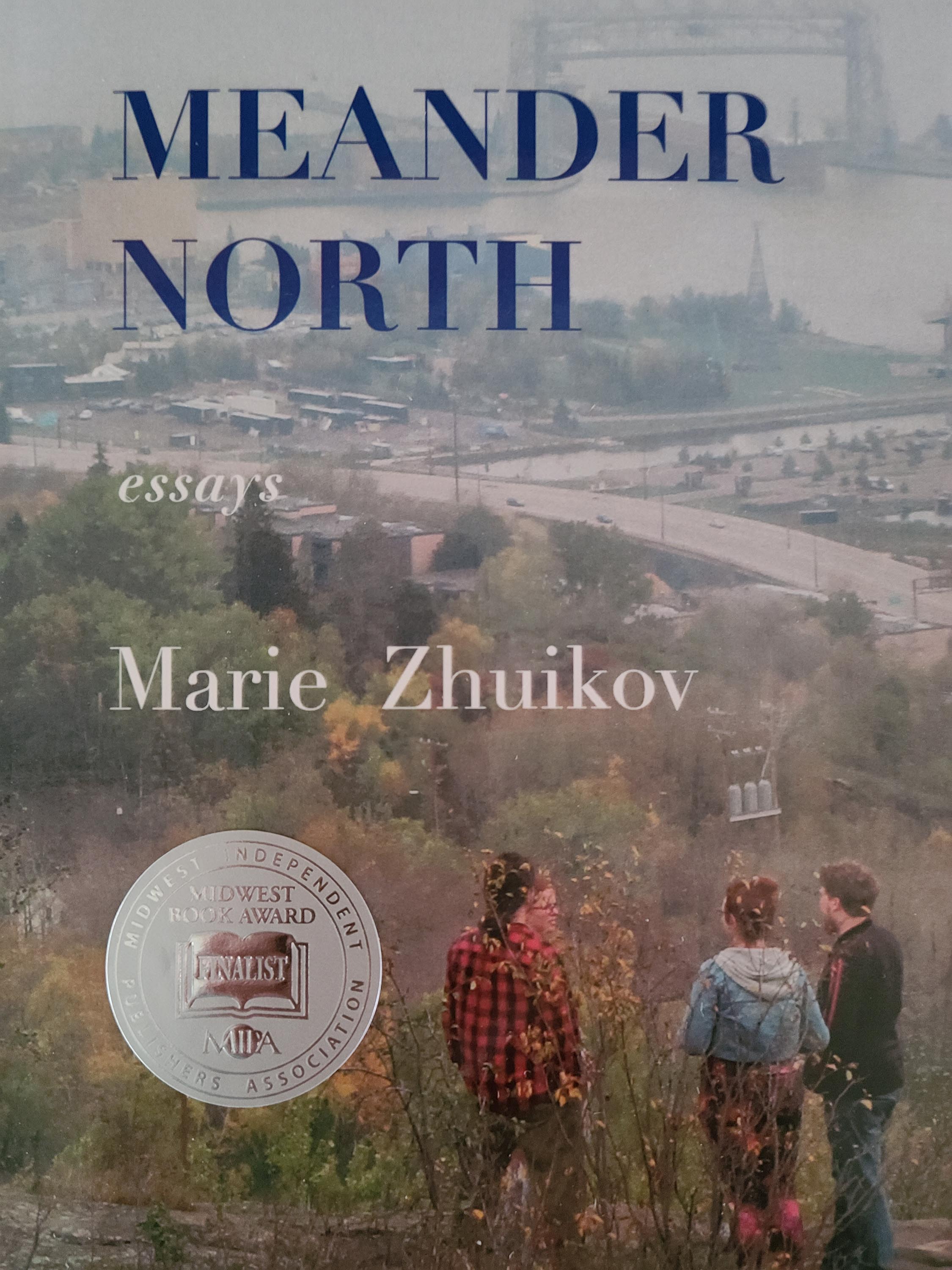
If you enjoy my blog, you’ll love my book! Meander North showcases 51 of the best stories from this blog about my quirky life in northern Minnesota and my writerly pursuits. It earned a silver Midwest Book Award in 2023 for nature writing and was published by Nodin Press in Minneapolis. It is available for $19.95 through their distributor at this link.

How a Print Writer With a Lisp Turns to Radio

20180318_080010

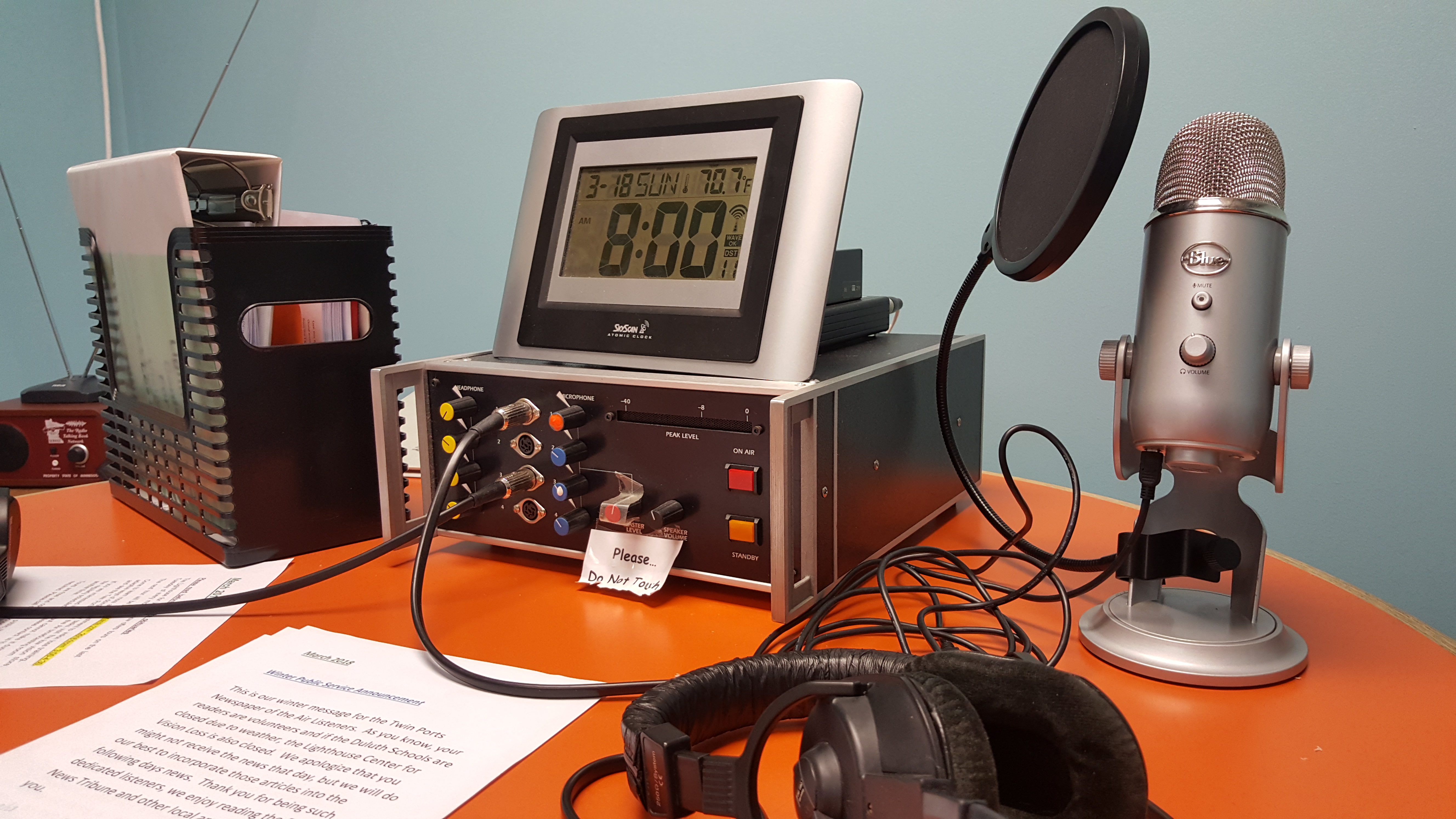
Tools of the trade for the Twin Ports Newspaper of the Air.

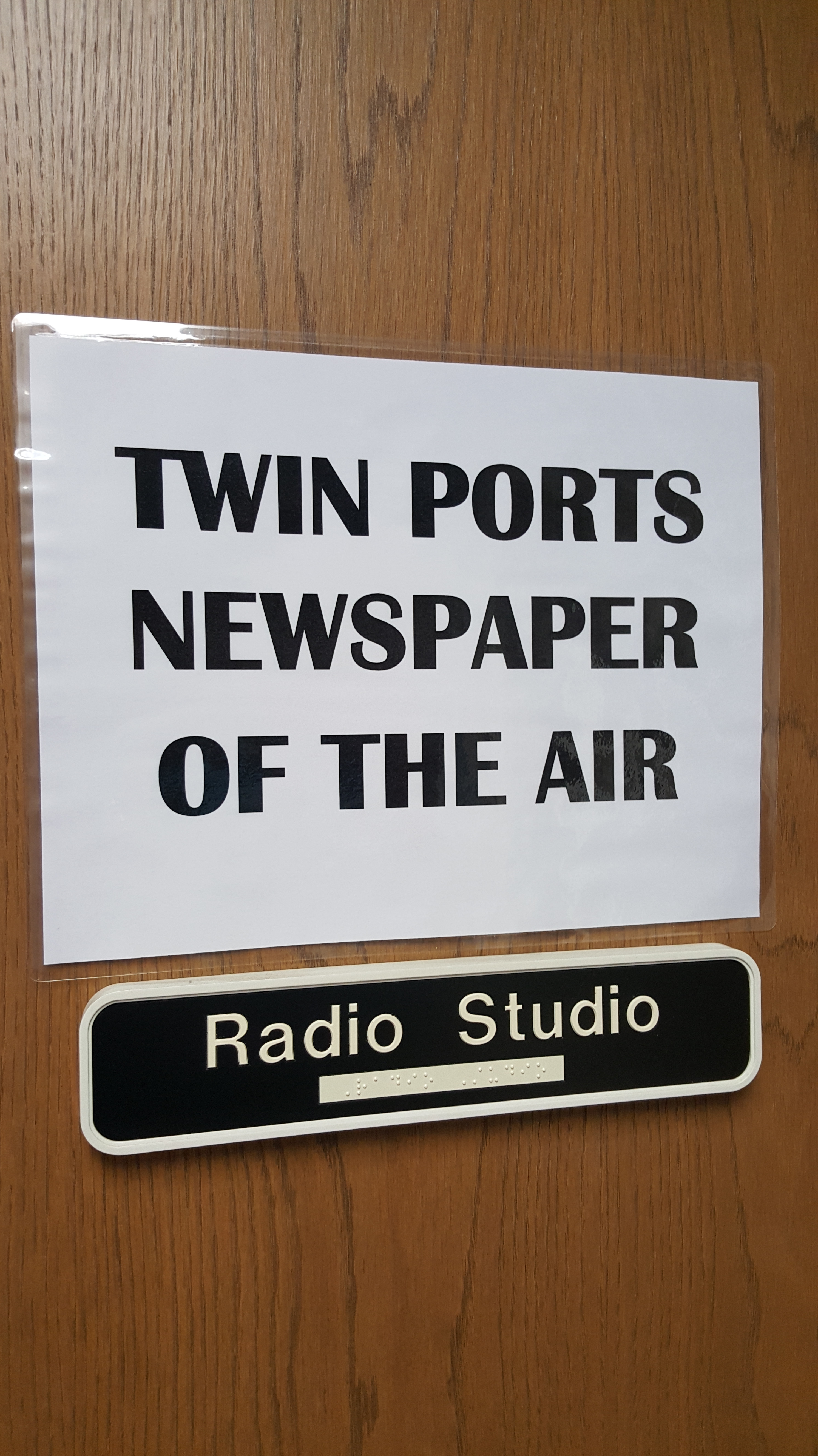
On a recent Sunday morning, I faced a test of my skills when I led a radio broadcast for the Twin Ports Newspaper of the Air (TPNA) for the first time. This is a service of the Lighthouse Center for Vision Loss in Duluth. I am one of about seventy volunteers who read local newspapers every morning for two hours over a closed-circuit radio system for people who can’t read the newspaper themselves. Some are blind and some have had strokes and can no longer hold a newspaper.

Now, if you know me, you realize that getting up early on a weekend morning is definitely not in my character. But I enjoy reading the Sunday paper. I was looking for an organization to volunteer for, and because I have a background in audio work, this just seemed sort of fun.

Once a month, I haul myself out of bed at 6 a.m. and head down to the Lighthouse Center. We have two copies of the newspaper and read in teams of two, switching off every other story. The leader opens the broadcast, keeps track of time, reads public service announcements and the weather forecast, and has final say on which stories get read.  All the other person needs to do is read their assigned stories. It’s much easier not to be the leader!

We don’t have time to read everything in the paper, so we concentrate on news listeners can’t hear elsewhere – the local stories. Other broadcasts focus on national stories, so we don’t need to read those. The obituaries are a big draw, so we are required to read them at the top of the hour. Some people tune in just for those.

It’s tricky because the broadcast is live. If you mess up something, you need to muddle through the best you can. If you have a coughing fit, you need to run out of the room and cough outside, with your partner taking over instead. If you need to pee, you have to hold it until it’s your partner’s turn to read a longer story so that you have enough time to go.

20180318_080050None of these things have happened to me yet, although I did lose track of a story once. With all the story page jumps in the newspaper, it can be confusing to know which page to find it on. Thankfully, my partner noticed my confusion and handed me his copy of the article.

Besides having to overcome my natural weekend laziness, another reason this volunteer job is a challenge is because of the speech impediment I had as a child. In elementary school, while my classmates were out playing during recess, I was sitting in a room with four or five other children, practicing my “s”es.

I wasn’t aware I had a lisp until I got singled out for Speech Class. In fact, when I first heard about the class from my teacher, I thought it involved learning how to stand up in front of people and give speeches. I imagined that might be sort of fun.

It wasn’t until I started going to the class that I understood it involved the drudgery of practicing how to speak correctly. Once a week, we would sit around a table, concentrating on how our tongue moved in our mouths. I needed to learn to redirect the tip of my tongue to the roof of my mouth when speaking, instead of thrusting it forward against the back of my front teeth.

We practiced tongue-twisters and were drilled on certain sounds over and over again until we got it right. I don’t recall how many weeks I was in Speech Class, but I must have made progress because I was able to rejoin my classmates full-time.

My foray into audio began years later in graduate school, when I decided that learning how to do a radio show would be a more interesting capstone project than writing yet another article.

Some nice ladies at KUMD Radio (Thanks Christine Dean! Thanks Lisa Johnson!) were willing to show me how to record and work with the files, and I produced a pre-recorded series called Listening to the Lake, which had public health and environmental themes.

I found my “radio voice,” and this led to a later series called Superior Science News on KUWS Radio, which was produced by Dani Kaeding. Lo and behold, nobody complained about my “s”es.

Along the way, I got to see these radio professionals at work, and always marveled at their ability to simultaneously load CDs, remember to announce the time, and find the day’s weather forecast to read.

Now here I was, groggy on a Sunday morning, put to the test to see if I measured up to my radio lady role models.

I’m happy to report that everything came off without a hitch. They, and my speech teacher, would have been proud.

Creativity, Motherhood and Rats: How They All Go Together

Mom rat and baby

Image by Howcast.com.

I was asked to give a short talk today on creativity and motherhood for a local organization. Here’s the result:

When I became pregnant with my first child 26 years ago, I started to panic. It wasn’t that I was afraid something would be wrong with my baby or that I was afraid of the labor process — although these are justified fears and I did think about those things.

The real issue was, I was afraid that the idea I had for a novel would be subsumed by the demands of a newborn. Having a child would strike a death-knell for my creative dreams. My story would never see the light of day. I had floundered around with writing it, and had come to the realization that I needed help. This fear was foremost in my mind when I signed up for a novel-writing correspondence course offered by Writer’s Digest Magazine soon after I found I was pregnant.

I had heard all the cultural messages that tell women that being creative and having children are incompatible, and I believed them.

The novel-writing course provided me with structure that saw me through the rest of my pregnancy and motivated me to keep working on the story once I had my baby boy. The instructor’s encouragement also helped.

Even so, it took me a long time to finally finish my novel and to get it published — as long as it takes to grow a child into adulthood.

The thing that held me back wasn’t motherhood, it was waiting for the right moment to feel creative – the moment when I wasn’t busy, stressed, or emotional. I was too much at the whim of my outside life. I hadn’t learned yet how to control my inner life and allow room for the creativity to flow no matter what was happening “outside.”

A recent article in The Atlantic Monthly magazine backs up the premise that having children does not harm creativity. In fact, it can change the biology of the mother in ways that can allow for even greater creativity.

Kelly Lambert, a professor of behavioral neuroscience at the University of Richmond, studies the maternal brains of rats. Yes, on Mother’s Day, I am going to talk to you about rats, and their brains, no less. Lambert found that when rats become mothers, their brains, which are closer in structure to a human’s than even those of mice or dogs, start reprogramming themselves.

Their sensory and motor systems sharpen. Their circuitry becomes more efficient. Maternal rats are more direct and lethal hunters, catching their prey four times faster than non-mom rats.

Even after having their babies, the changes persist. Lambert found that the mother rats experience less memory decline in old age and have quicker navigation skills than non-mothers, outsmarting them in mazes.

Although neuroscientists do not yet understand what direct impact pregnancy and childbirth have on the human maternal brain and creativity, I am here to testify that, yes, it is possible to be a mother and be creative, too. And I’m sure plenty of other women can testify to this. It’s just that sometimes when you’re a parent, you have to find more creative ways to allow for that creativity.

If you have a partner, have them take care of the kids for a while so that you can go on a writing retreat. Don’t allow your creativity to take a back seat to the other demands of life. Try different things until you find something that works for you.

I learned how to make this inner creative space while I wrote my second novel. Even though I had a second child by this time, after reading a story about right-brain, left-brain thinking and how to make both sides of your brain work together to foster creativity, I learned how to put myself in that elusive creative mind zone, instead of waiting for the zone to come to me. Thanks to this, it only took me two years to write and publish the second one.

You don’t need to be superhuman to have children and to be creative. Mothers have been doing it forever. As the magazine article said, creativity takes time and periods of reflection, and a willingness to let go of ideas that don’t work and move on to better ones.

Learning to look at the world through the eyes of your children, be they yours biologically or children of your heart, is not a bad way to make your own thinking more flexible.

A Funny Thing Happened at Bent Paddle Taproom . . .

20180424_203354

Laura Mullen, co-owner of Bent Paddle Brewery, introduces Deborah and James Fallows to writers in Duluth, Minnesota. James holds up their new book, “Our Towns.”

Yesterday, I meandered over to the new taproom of one of Duluth’s noted microbreweries, Bent Paddle, even though I don’t like beer (I know, gasp).

Amongst other local literati, I listened to a panel discussion in the brewery’s back room about how to apply for arts grant funding. The event was hosted by Lake Superior Writers, a group that fosters the literary scene in these parts.

The panel was sooooo interesting. Four writers and one person from an arts granting agency shared their experiences and insights. I now feel less intimidated by the idea of applying for one of these grants, should I ever be so inclined.

During the intermission, the coolest thing happened. Just by chance and happenstance, James Fallows, a long-time writer for The Atlantic Magazine was in the taproom, filming a segment for CBS News Sunday Morning. The segment will promote a new book he wrote with his wife Deborah, called “Our Towns: A 100,000-Mile Journey into the Heart of America.”

Deborah was with him, too, and when they heard from the owner (Laura Mullen) that a bunch of writers were in the back room, they HAD to come speak with us. Although it was hard to hear them over the din of the taproom, here’s what I gleaned.

James first came to Duluth to do a story about Cirrus Aircraft, a local company that makes private planes, which deploy their own parachute in times of peril. He also became familiar with Bent Paddle Brewery, which was just starting up at the time. Then he and Deborah had an idea for a book project that would allow them to take the social pulse of America as it stands now. In their own Cirrus plane, they flew to a dozen cities for their research, concentrating on ones that weren’t too large like Greenville, South Carolina; Columbus, Missouri; Burlington, Vermont; Fresno, California; and Duluth, of course.

When asked, James and Deborah said their favorite cities on their tour were the ones with “heart.” They included Duluth in this list. And they said they were so glad to see that the brewery was thriving. James offered us intel on what the Atlantic is publishing these days and even gave us his email address in case we have story ideas to pitch.

How cool is that?!

In preparation for the book’s release on May 8, they had decided to come back to Bent Paddle to film the promo segment. They also filmed in Greenville. The segment will air on CBS Sunday Morning on May 6.

I suspect I unwittingly got filmed for it earlier in the evening when I followed another writer to where the taproom offers three different kinds of water on tap (sparkling, ambient and chilled). We were talking about short stories. When we turned around from the water taps, we were met with the glare of camera lights and shadowy cameramen behind them.

We didn’t think much of it, continuing on our writerly ways, trying to look nonchalant. But after the event was over, I excitedly told my writer friend that our backs might be on national television! Can’t wait to see if we made the cut.

It just goes to show, you never know what can happen when you follow your passions, and that good things can happen in a brewery, even for people who prefer wine over beer.

An Evening Dog Walk

30652332_1830086060345225_9037091204918935552_n

I had the honor recently of reading an excerpt from a creative nonfiction story that was published in a local literary journal, the Thunderbird Review. The event took place at the Fon du Lac Tribal and Community College in Cloquet, Minnesota, and the story is called “An Evening Dog Walk.” It’s a poignant tale of a neighborhood dog walk and dating at 50.

Here’s what I read:

We lived a block and a half away from each other in a northern Minnesota town on the shores of Lake Superior.

When I first saw him in my old neighborhood, he was lying on the kitchen floor of his home, puttering with a repair under the sink. I spoke with his wife, a freelance graphic designer, about a publication project I had for her.

From differing heights, he and I exchanged hellos, and that was it.

About five years ago, we met for the second time in our new neighborhood. I was walking my dog past his house, which was a block and a half away from mine again. His house was recently built, and I had been wondering who lived in the impressive structure. While he was taking envelopes out of his mailbox, I reintroduced myself.

During the next five minutes, he spilled his woes to me: his wife had died from some awful form of cancer, a relative died yesterday, he was experiencing mechanical failures at home, and he had just recovered from the flu.

Stunned by his outpouring, I wished him well, and my dog and I continued our walk.

About a year later, I turned around in my church pew and he was sitting behind me. I reintroduced myself. His sparkling blue eyes and Joe Biden smile told me he was doing better.

He asked me to stay for coffee after the service, and our friendship began. He admitted he didn’t remember our previous encounter because he had been so upset. But he was excited to meet someone who knew his former wife and had lived in both of his neighborhoods.

It wasn’t long before we started dating. Even though he was 14 years older, we shared similar philosophies, the same neighborhood, and he loved my dog – a golden doodle too friendly for his own good.

I felt I could trust him. I felt the stomach butterflies.

Kissing didn’t come easy for him. I was the first woman he had kissed since his wife died. We were on my back porch after a dog walk and I could tell he wanted to kiss me, but after some fumbling, he ended up kissing my cheek instead. We joked about it the next time we met, and on his subsequent try, he hit the lip bullseye.

He took me flying in his small private plane, showed off the audio system in the living room of his comfortable home – a home that still contained his deceased wife’s decorating touches in every room – and he solicited my help in fixing his leaky sailboat. He even kept up with me hiking and biking around the neighborhood.

As a twice-divorcée struggling to recapture some sense of normalcy and connection, he was just what I needed. And he seemed happy to have someone to do things with once again . . . .

*

If you’d like to find out what happened in the rest of the story, please support the journal and purchase a copy for $5. You can find info on how to do that here.