The Gaia art exhibit in Trinity College’s Long Room Library.
I can’t believe how much Russ and I meandered around Dublin on this day! We certainly felt grateful for our good fitness and working legs. Also, we learned that the buses in Dublin require exact change. You can put extra in, but you won’t get change back.
Taxi Driver Wisdom
The times we took cabs in Dublin, most of the drivers were talkative and friendly, but some weren’t, and that was okay, too. From them, we learned such gems as:
Although Guiness is seen as Irish, it’s actually an English-owned company. But that’s okay because the beer is so good!
Although the Irish band U2 is seen as lead singer Bono’s band, it’s actually the drummer’s band. The drummer is who hired Bono.
Dublin is synonymous with Las Vegas for the British. What happens in Dublin stays in Dublin.
One way to relieve arthritis knee pain is to soak a rag in whiskey and wrap it around your knee.
I have not fact-checked these claims, so take them as you will. We truly enjoyed our conversations with cab drivers both here and later in Scotland.
Molly Malone
The Molly Malone statue, Dublin
In my previous post, Russ and I had just finished visiting the Temple Bar. From there, we walked to Trinity College to fulfill our reservation to enter its famous Long Room and view The Book of Kells. We had plenty of time before we needed to be there, so we took a short side trip through the ever-present drizzle to see the Molly Malone statue.
Molly is a semi-historical, semi-mythical lady commemorated in the song “Cockles and Mussels,” which has become an unofficial Dublin anthem. Molly worked as a fishmonger but also as a working girl. She died in one of the outbreaks of Cholera that regularly used to sweep the city. The statue of Molly and her cart is affectionately nicknamed “The Tart with the Cart” by Dubliners, no doubt due to her highly visible cleavage. About ten years ago, someone got the bright idea that rubbing her aforementioned cleavage would lead to good luck. Now the patina on that part of the statue has been rubbed off and brightened by the hands of hundreds, if not thousands, of people. Currently, there’s been some talk of trying to protect the statue from this practice.
Trinity College
Shelves that still contain books in the Long Room. It also features busts of many great historical minds — mainly men, but a few token women have recently been included.
In the heart of Dublin, Trinity College is home to the legendary Book of Kells – a 9th-century gospel manuscript famous for its illustrations. We reserved the Book of Kells and Old Library experience, but there are also other tour options that interpret the Book of Kells more. We were more interested in seeing the library based on amazing images I’ve seen online and in other’s blogs.
I have to admit the Book of Kells was rather underwhelming, since it’s in a glass case and you can only view a few pages. I guess that’s why they’ve developed the additional tour experiences that offer digital views of more of it.
The long view of the Long Room, Trinity College.
The Long Room in the library, however, lived up to the hype! Currently, an art exhibit called “Gaia” is featured in it: a floating illuminated globe of the Earth that looks like it’s in outer space. Ironically, many of the books in the library are off the shelves. They’re being restored (and dusted, I suppose !)
We spent a lot of time in the Long Room, just soaking up the literary silence and beauty of it.
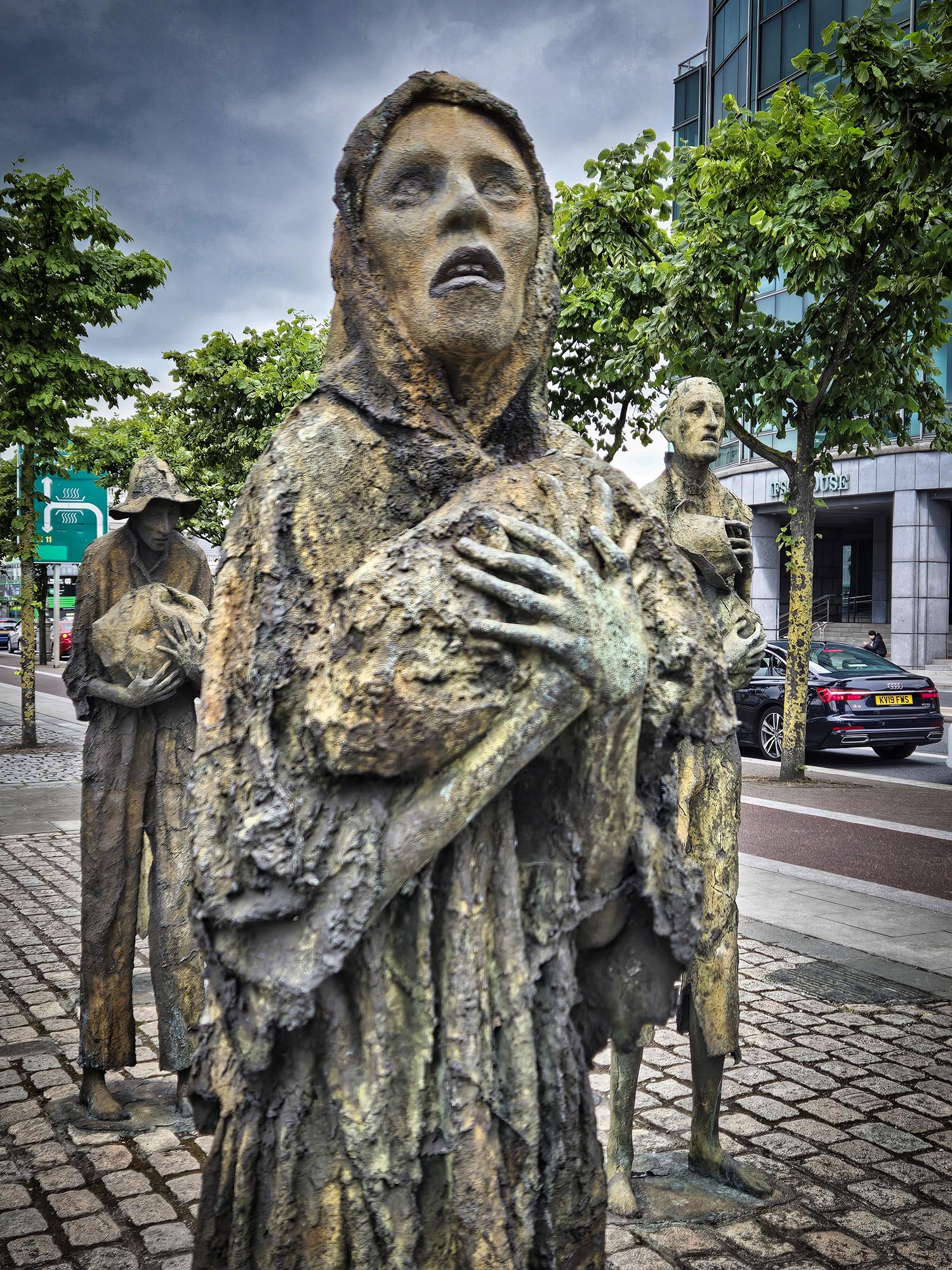
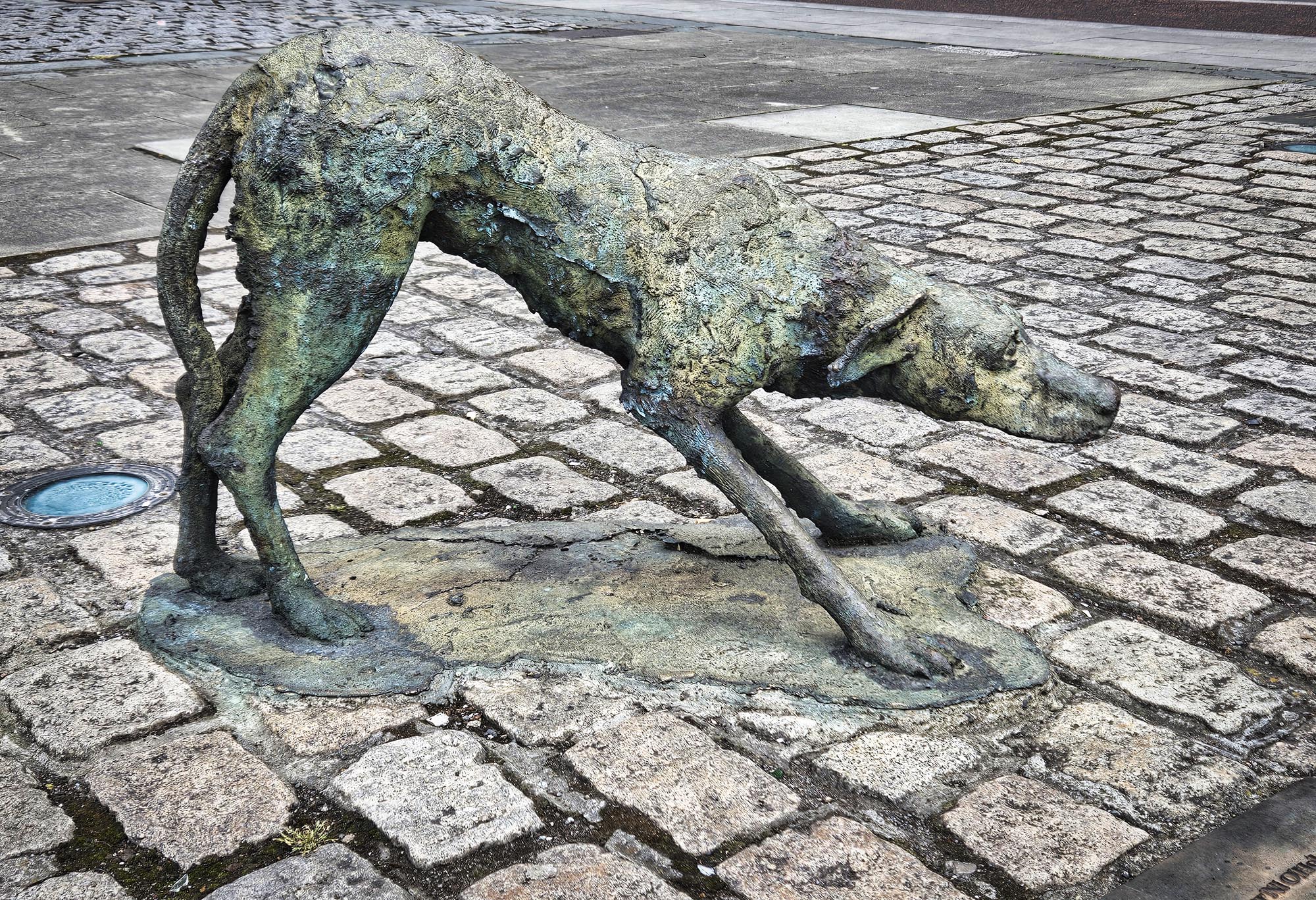
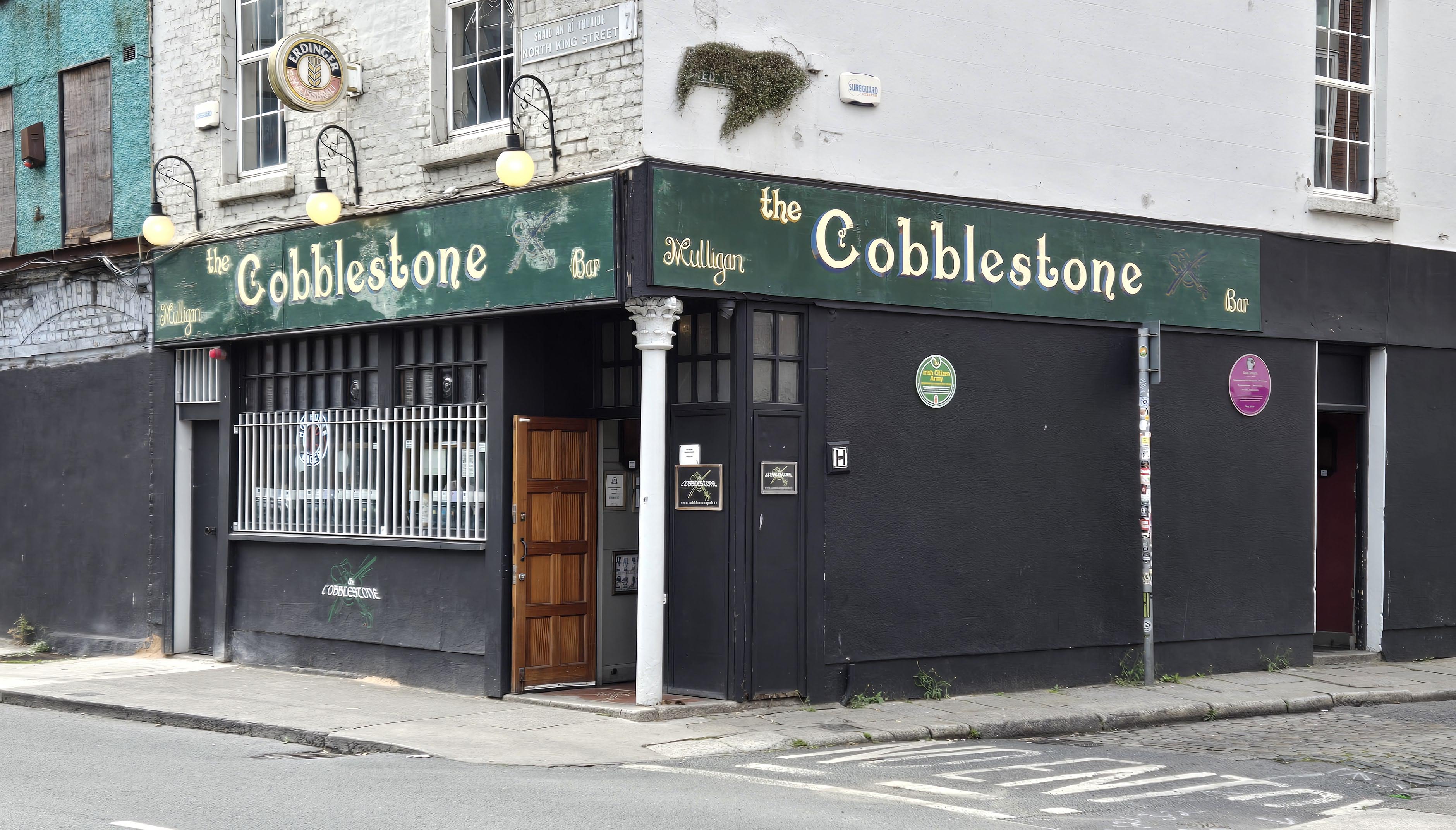
Day 5 found us still in Dublin. Next up: the famine statues, the emigration museum, and Cobblestone Pub.
We explored Dublin, feeling more connected to this land after our previous day’s adventure seeing where Russ’s ancestors lived. Our first stop was the National Museum of Archaeology. We saw golden artifacts and a huge dugout canoe crafted over 4,000 years ago (the Lurgan canoe). But the things I most wanted to see were the bog bodies.
Gallagh Man
If you’re not familiar, bog bodies are the corpses of unfortunate people who were either murdered or ritually sacrificed and buried in the boglands of Ireland and other countries. There are five bodies (or parts of bodies) on tasteful display in the (free to enter) museum. I’d only seen photos of them in magazines before. I wanted to see the bodies in person because I wrote a short story about a bog body, which will be featured in my book that’s slated for publication this fall. I’m in the middle of editing the manuscript and wanted to see if this museum experience would give me any new ideas.
I only took photos of two of the bodies: Gallagh Man and Clonycavan Man. Gallagh Man was a six-foot-tall, healthy man with reddish hair who lived sometime between 470-120 BC. He was found in County Galway, Ireland, in 1821 by laborers digging peat for fuel. The twenty-five-year-old was most likely strangled before being buried in the bog.
Clonycavan Man
Clonycavan Man was found in County Meath in 2003, also by peat harvesters. Alas, they were using a machine that cut the body in half, and only the upper torso and head remain. He was between 20 and 40 years old when he died sometime between 392-201 BC. At five-foot-two, he was shorter than Gallagh Man. One of Clonycavan Man’s most distinguishing characteristics was his hair. He had what may have been the first man bun! Perhaps it made him look taller. Scientists even discovered an ancient form of hair gel in his hair, made of plant oil and pine resin. The presence of this gel indicates he was fairly wealthy during his lifetime; it was made from materials found in France and Spain. His injuries suggest a grisly death, which may have been the result of torture. I’m not going to go into them here!
One theory proposed is that these men were failed kings or failed candidates for kingship who were killed and placed in bogs along tribal boundary lines. Their bodies served as offering to the goddess of the land to whom the actual king was “wed” in his inauguration ceremony.
I was particularly excited to see Clonycavan Man’s hair bun, since I gave the bog body in my short story a similar attribute. Seeing the bodies did not give me new ideas; rather the experience enforced what I’d already written. But it was very interesting to see them up close.
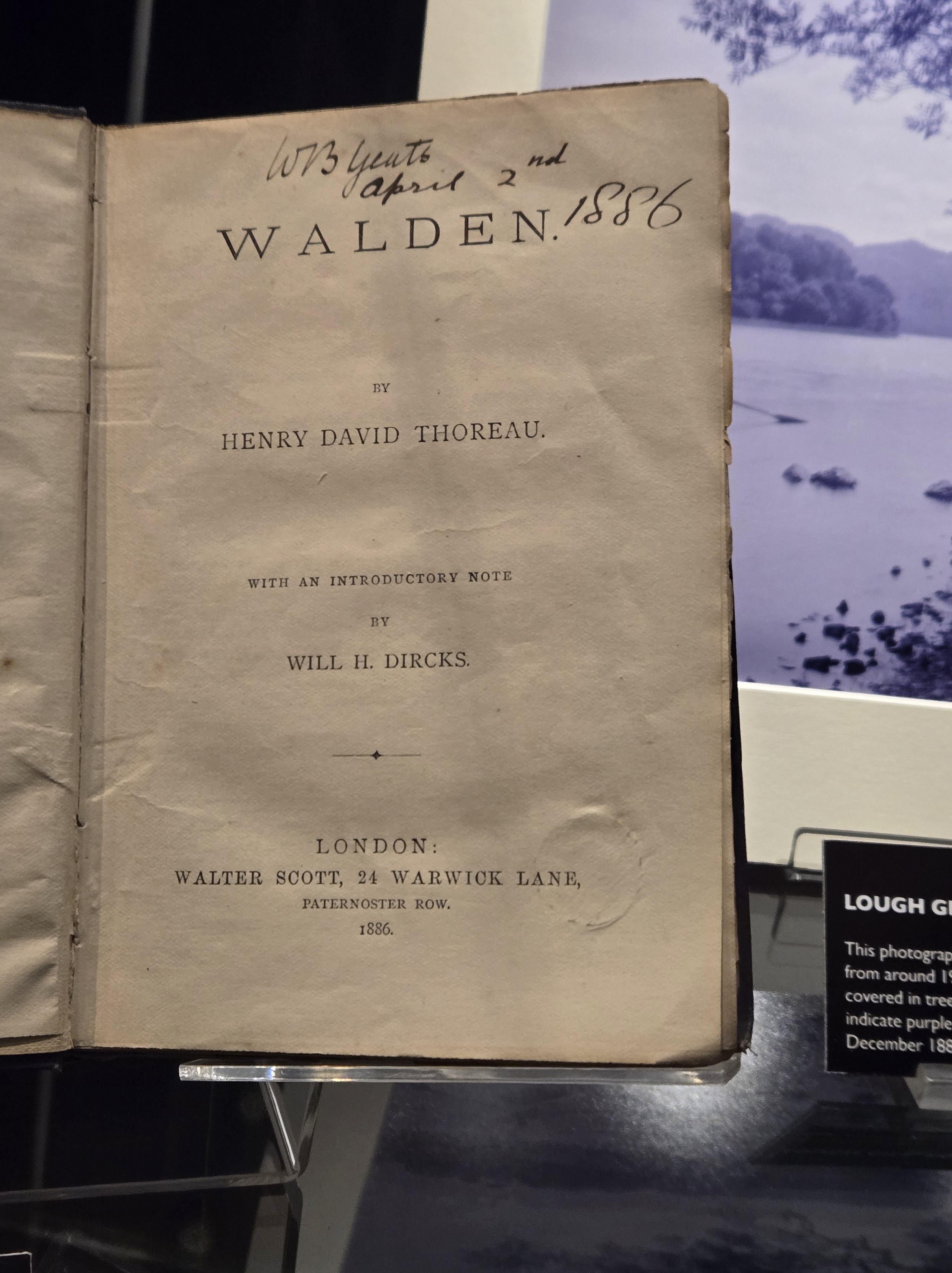
Next door to the museum is the National Library, which offered a free exhibit on William Butler Yeats, one of my favorite writers. We saw his copy of “Walden” and learned more about Maud Gonne, his muse who refused to marry him several times. I also learned that Yeats was heavily into spiritualism (think seances). I had not known that before.
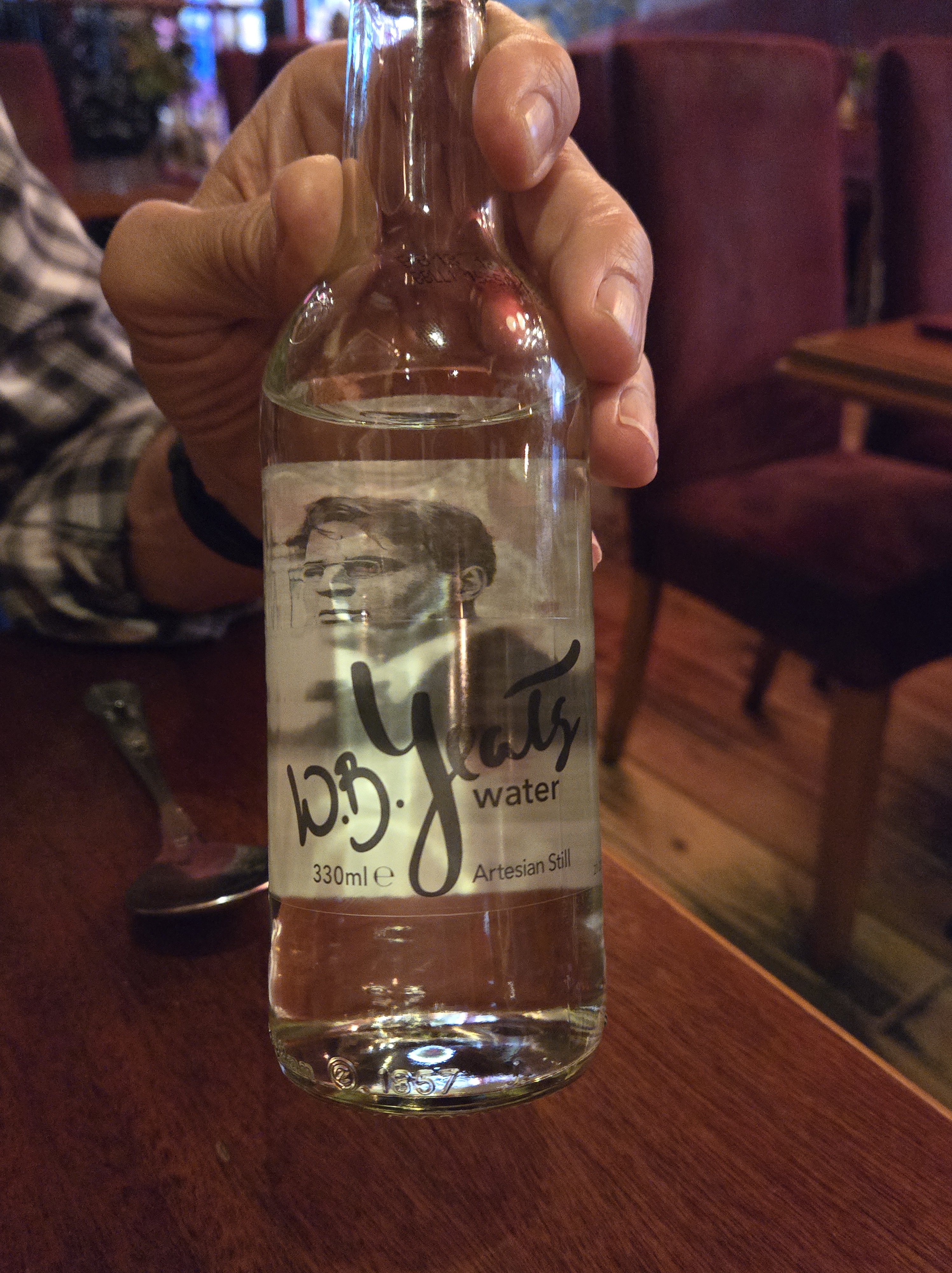
In an interesting coincidence, later that day, I ordered water at a restaurant. It came in a bottle sporting Yeats’s photo. The brand name was W.B. Yeats water. Imagine, naming a commercial brand after a writer! We don’t do that enough in the U.S. I will happily sell my name and likeness to anyone who wants to use it for commercial purposes. 😊
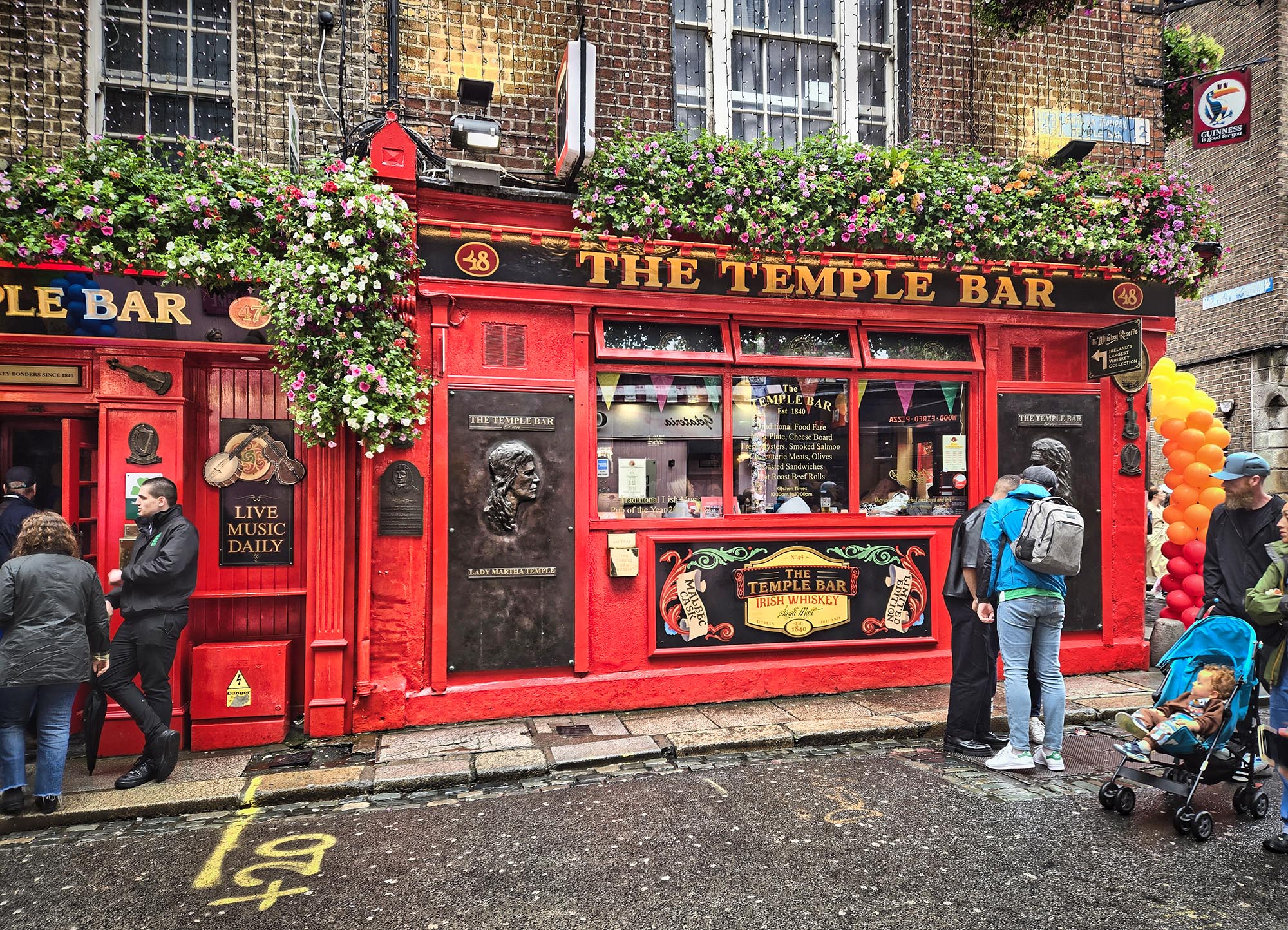
After touring the library, we walked through a drizzle to the famous Temple Bar. It’s known for its live music, ambiance, and large whiskey collection. It was too crowded and noisy, so we satisfied our curiosity with a mere stroll through it.
We had more Dublin adventures that day, but I’ll save them for the next post.
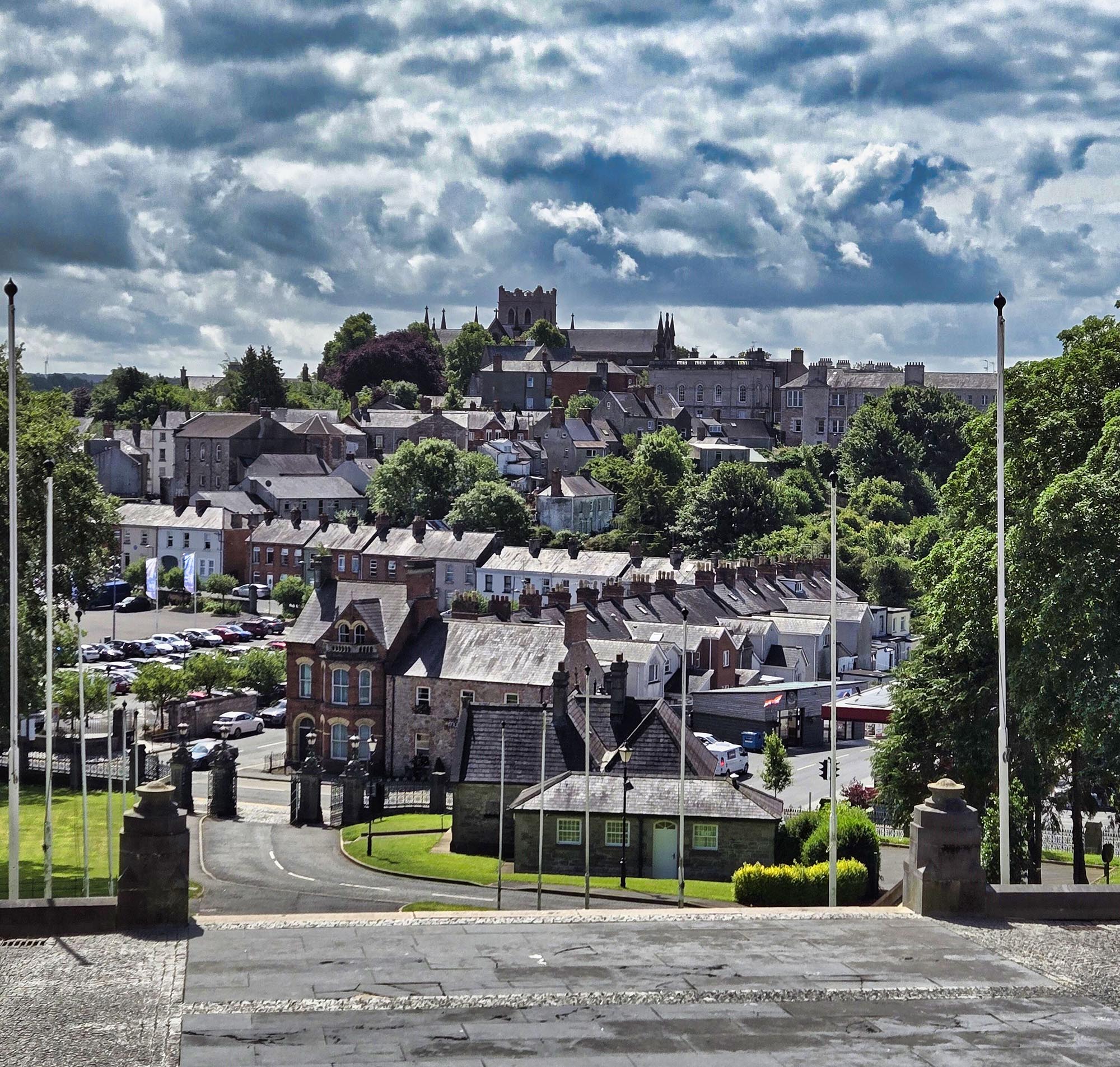
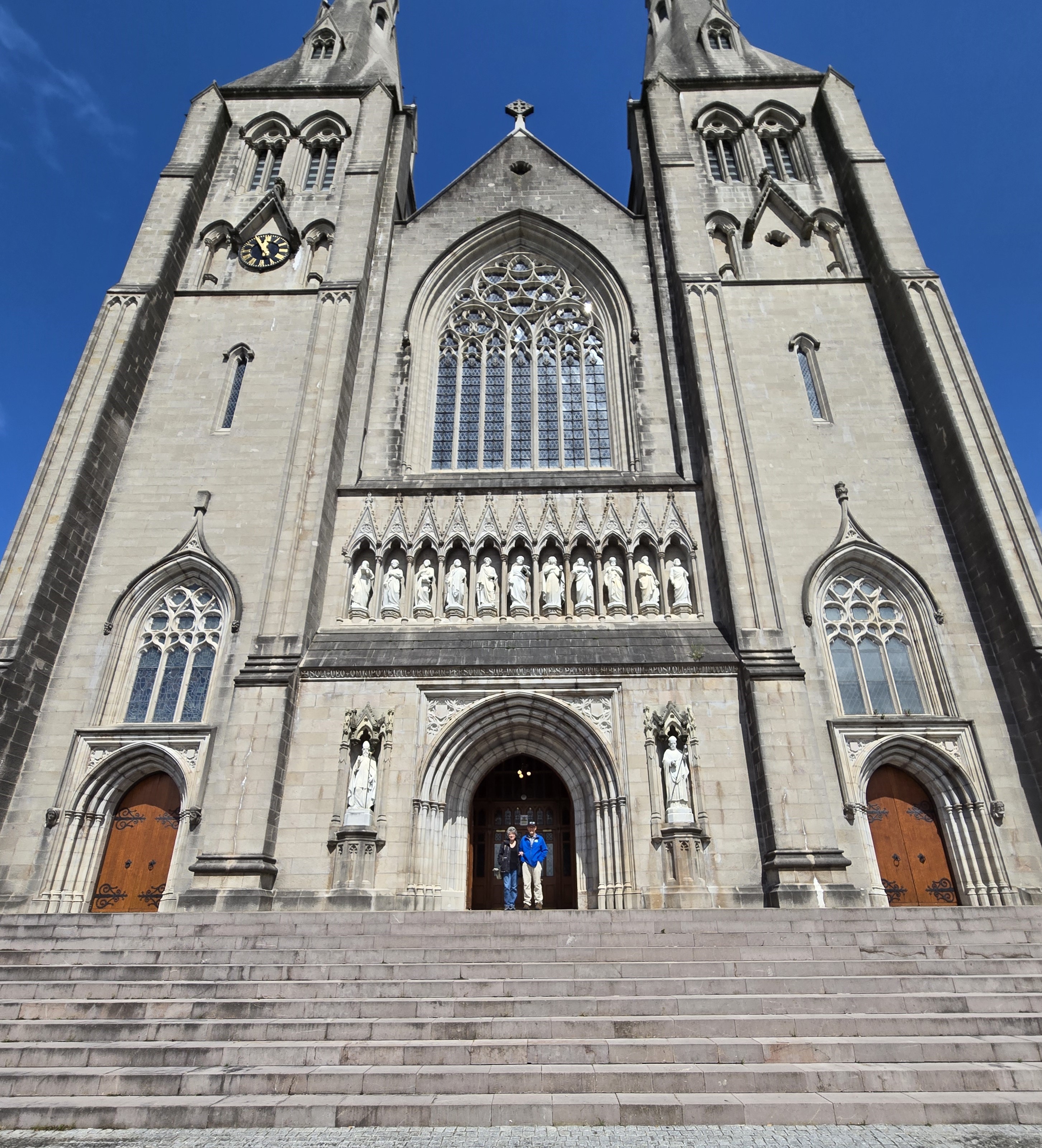
The town of Armagh and St. Patrick’s Church of Ireland Cathedral as seen from the steps of St. Patrick’s Roman Catholic Cathedral.
This day was a big deal for us. We’d been working for six months with My Ireland Family Heritage, a small, family-owned company that does genealogy research and tours. This was the day for our tour of the lands of Russ’s ancestors!
Our guide, Ian, picked us up from our hotel in Belfast. Our first stop was the small town of Armagh near where Russ’s ancestors lived. We had requested a visit to St. Patrick’s Cathedral there, but once we reached the town, we were surprised to learn that there are two of them! The oldest one (year 445) is Protestant and the more recent one (1840) is Catholic.
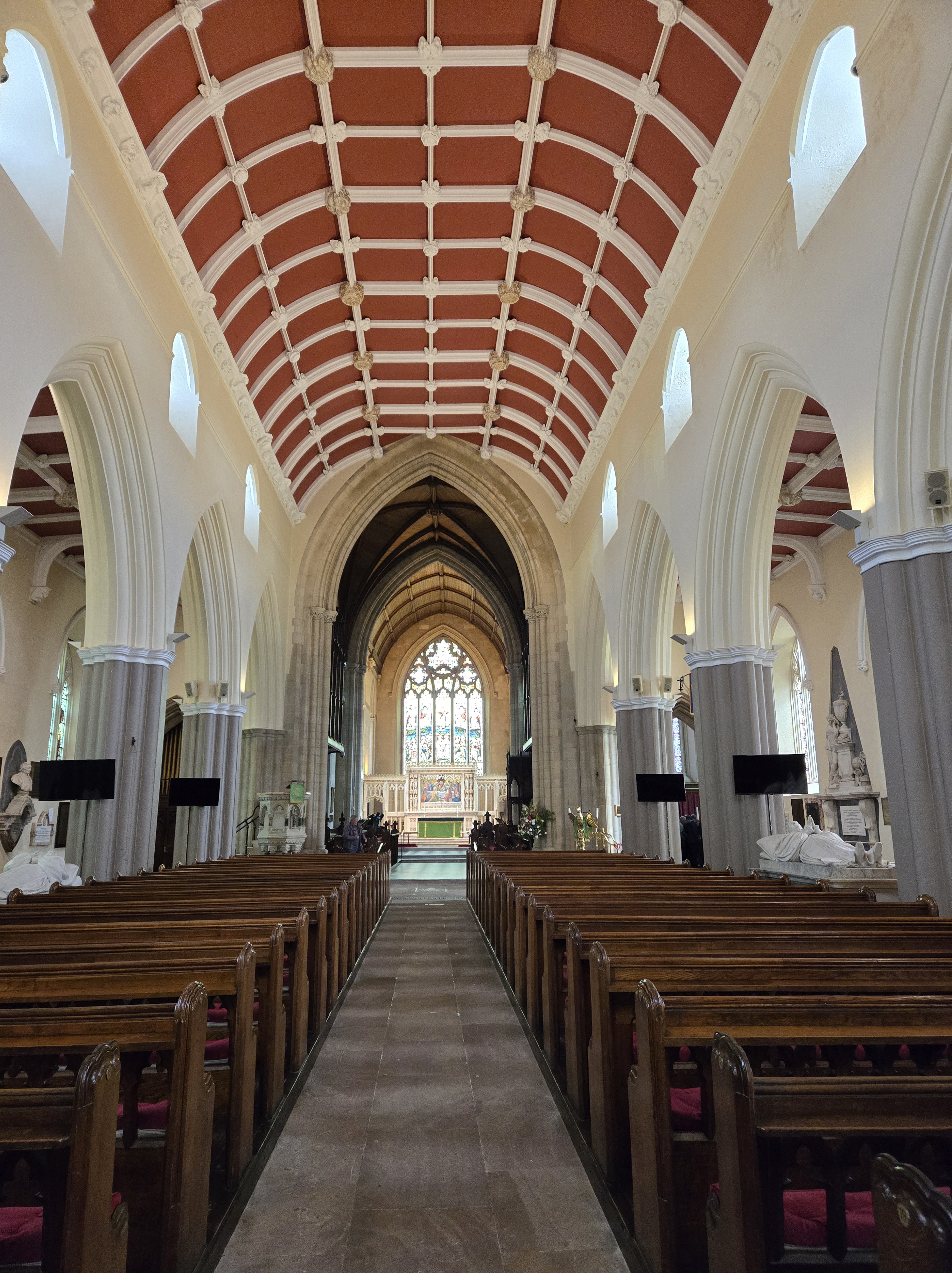
Armagh owes its association with St. Patrick to the old church, which is named St. Patrick’s Church of Ireland Cathedral. It stands on a hill overlooking the town. The hill (Ard Mhacha or Height of Macha) is where the city (Armagh) got its name. Before the church was built, it was a major ritual site and an ancient royal center. The Book of Armagh states that St. Patrick decreed that the Armagh church should have pre-eminence over all other churches and monasteries in Ireland, a position it holds to this day. The present structure was built in 1268 but it has been restored several times due to fires and worship needs.
Inside St. Patrick’s Church of Ireland Cathedral, Armagh.
Across the way atop another hill is the other church, St. Patrick’s Roman Catholic Cathedral. It’s the seat of the Catholic Archbishop of Armagh. We could easily see it from the steps of the Protestant church. Of the two, the Catholic one is the fanciest, probably owing to its more modern construction.
Us at St. Patrick’s Roman Catholic Cathedral, Armagh.
Russ’s great-great-great grandfather James Henry Thornton lived just outside of Armagh in the small township of Foybeg. He came to Ireland from England with the unenviable job as a tax collector for Lord Lurgan (Charles Brownlow or Baron Lurgan), an Anglo-Irish politician who represented Armagh in the U.K. Parliament.
James Henry was married twice, but we didn’t know the names of either of his wives. James Henry had two sons, James and John, one with each wife. Besides being a tax collector, his occupation is recorded in church records as a farmer. Ian told us that Foybeg is known for the growth and weaving of flax into linen. It was the “cash crop” of the time, much like coffee is for Brazil today. So, he could have been a flax farmer.
His son James eventually moved to Australia. Russ is related to John, who was his great-great grandfather. He is described in family records as at least six feet tall. He loved horses, hunting and good whiskey, but hated work. He always carried a cane and had at least two dogs following him at all times. He was educated to teach school in Northern Ireland.
John married Jane Berry and they had eleven children. One of them was Russ’s great-grandfather, William John Thornton, who went by the name John Jr. After he emigrated to America, he married an Irish woman, Sarah J. Fox. She grew up near Foybeg.
Ian, our tour guide, outside St. Paul’s Church.
After lunch, Ian took us to St. Paul’s Church, which was where Sarah’s family worshipped and were buried. We saw lots of graves with familiar family surnames (Fox, Johnston, Berry) but did not come across anything significant. Inside, there was a “new” baptismal font on display. The old one was shoved underneath a spiral staircase. Could that have been used for Sarah Fox or her family?
The old baptismal font in St. Paul’s Church.
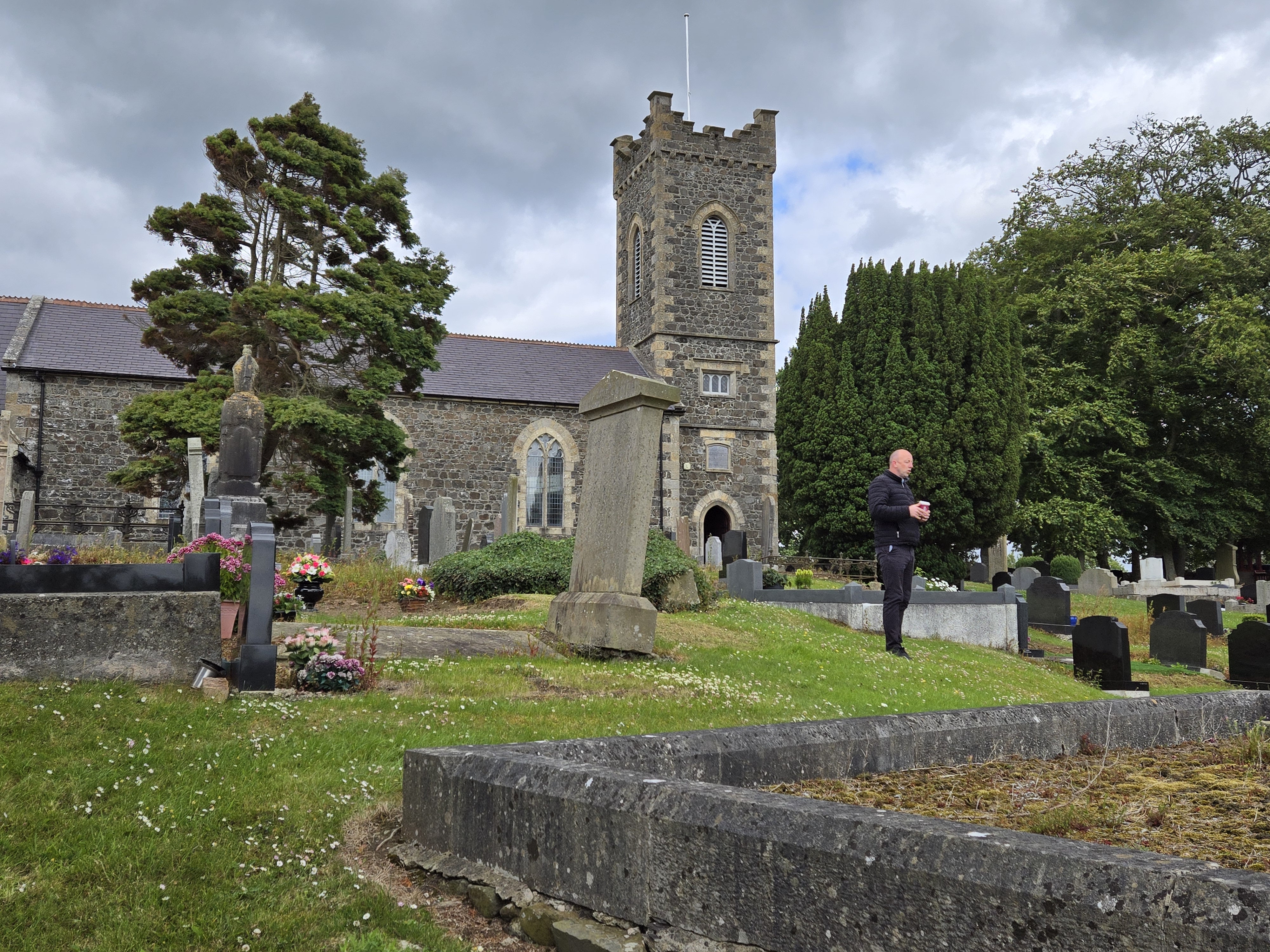
Our next stop was the Drumcree Church of the Ascension, where we hit the jackpot! This was the church (Church of Ireland denomination) where the Thorntons worshipped and were married/buried. The church is surrounded by cow pastures and apple orchards and even has an apple tree depicted in a stained-glass window.
The apple tree stained-glass window in Drumcree Church.
Besides the ancestral connection, Drumcree Church was significant during Ireland’s “troubles.” For several years in the 1990s, this Protestant church drew international attention as the scene of the Drumcree standoffs. Each year, the Protestant Orange Order marched to-and-from a service at the church on the Sunday before the 12th of July. Residents in the nearby Catholic district prevented the march from continuing through their neighborhood. Thousands of Orangemen and British loyalists gathered at Drumcree and violently tried to force their way through, but were held back by security forces, who built large steel and barbed wire barricades. These yearly “sieges” of Drumcree ended in the early 2000s.
Drumcree Church and graveyard
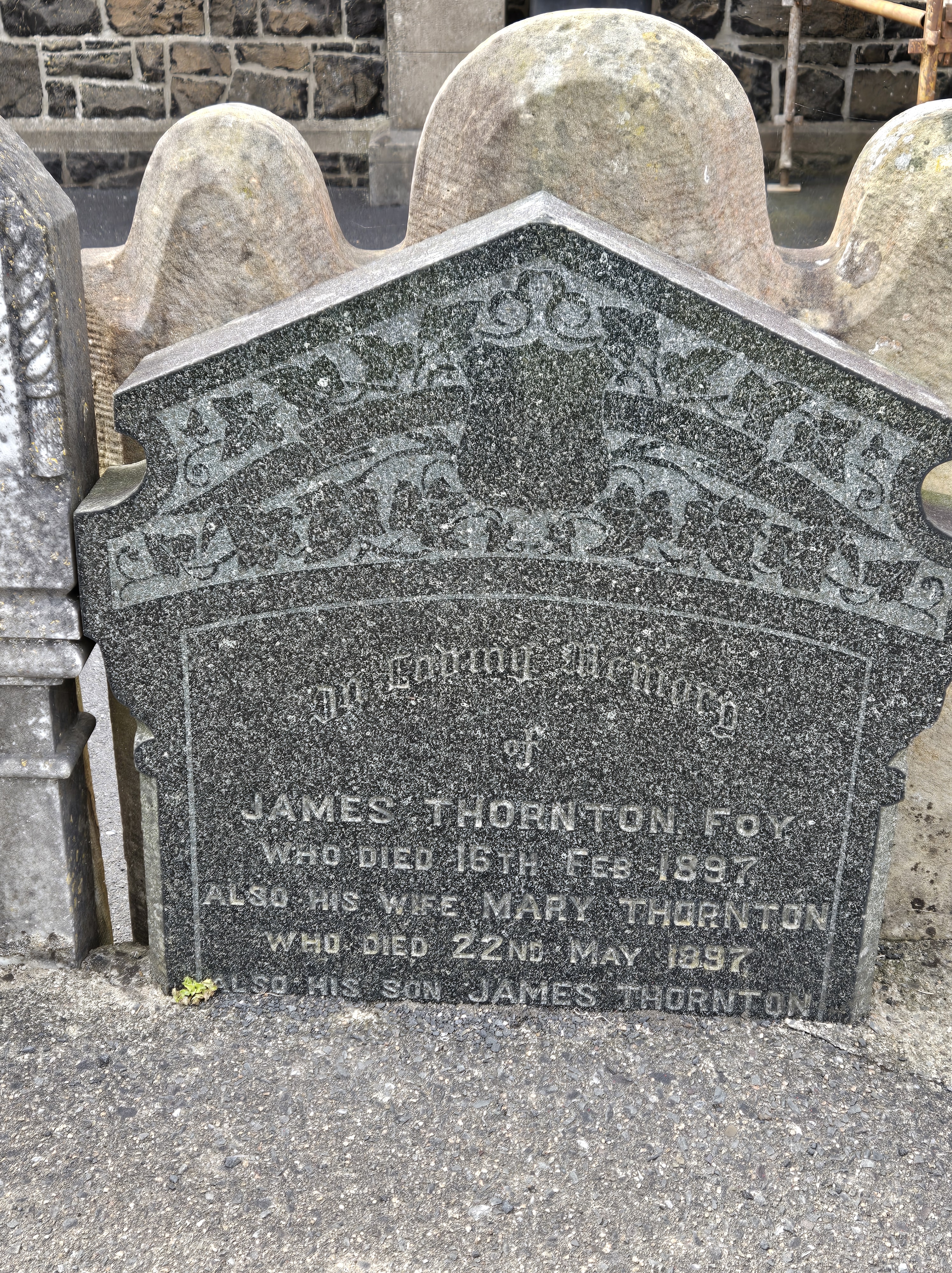
As we strolled around the graveyard, which smelled of manure from the cows nearby, we noticed a broken headstone propped up against the low stone wall that borders the yard. It was the headstone for JamesHenry Thornton and Mary. Mary must have been James Henry’s second wife! The last line on the tombstone says something about their son James Thornton, who was thought to have lived in Australia. Maybe he returned home to Ireland, eventually? The church member who let us into the building for a tour said that the stone must have been broken in the past, so that’s why it was leaning up against the wall and not over their gravesite. He said they do that instead of just getting rid of the broken ones.
Our exciting graveyard find!
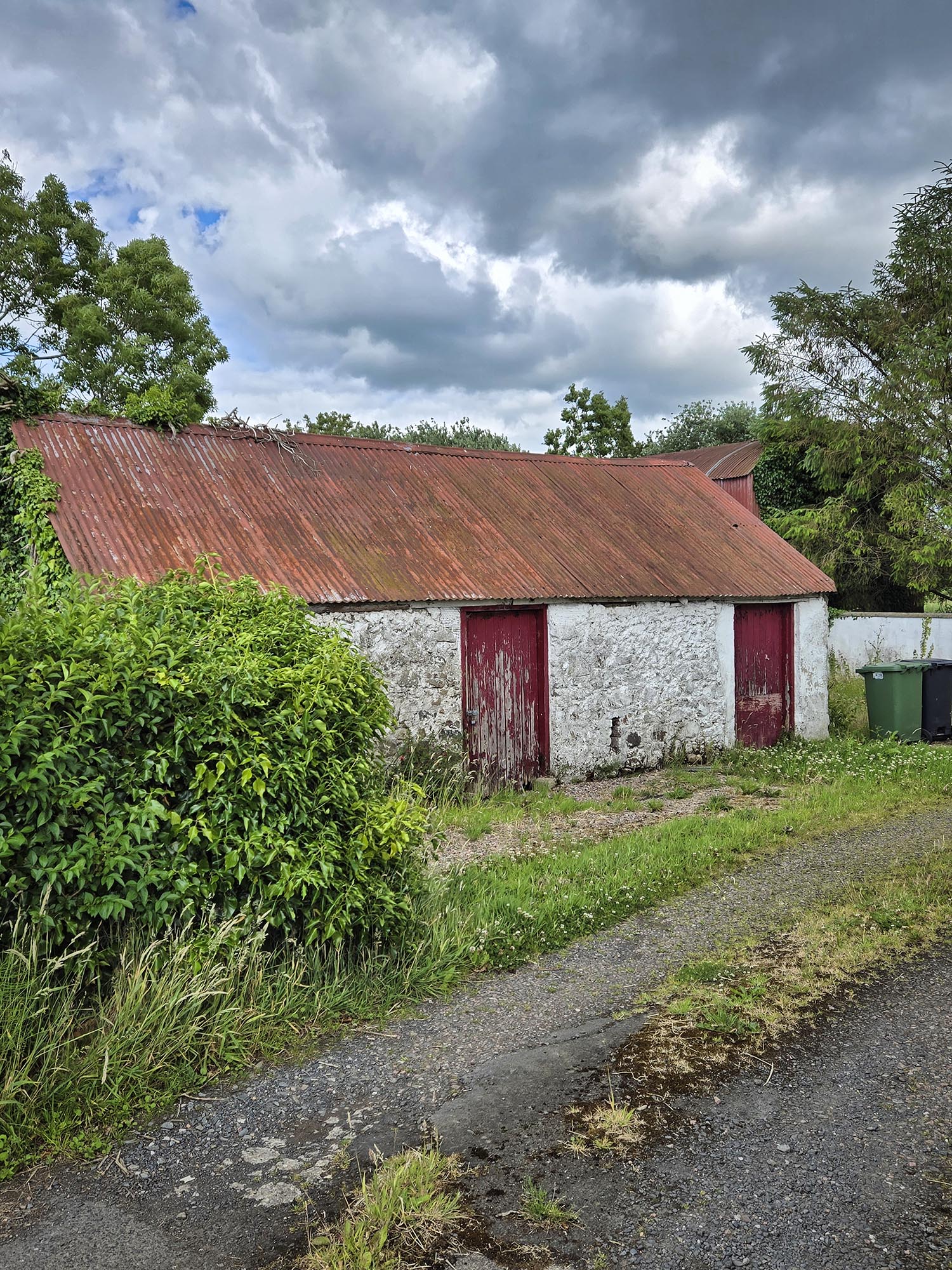
As if discovering this significant gravestone wasn’t enough, our talkative guide Ian next took us to the homesites of Russ’s ancestors. Two out of three weren’t accessible or there was nothing to see but an orchard, but the Thornton homesite was different! We peered down a driveway that led to a modern house. Between the driveway and the house was an old white building with red doors and a rusting metal roof. This was where Russ’s Thornton ancestors lived! It looked more like a shed or a barn now than a home.
The Thornton Family home in Foybeg Township, Ireland.
We only had time to take a few photos before Ian wanted to leave. You see, he is a Catholic from the Republic of Ireland to the south. We were in Northern Ireland, which is mostly Protestant. He did not feel comfortable hanging out in rural areas for fear of a confrontation. (People can tell where he’s from by the license plate on the van.)
Once we were back in the van driving away, Russ said a lady had been out in the yard. I would have loved to have had the chance to speak with her to see if she knew anything about the past inhabitants of her place, but I did not see her when I was taking pictures of it. Russ took the geographic coordinates of the location, so perhaps, if we ever return, we will have more time to explore and chat. Russ said that this was his favorite part of the tour.
As the ancestry book that the tour company put together for us says,
What was once a home where children played a hive of activities stands quiet now, a home for spiders and field mice. In the corner of the eves an owl hoots every evening . . . People lived and died in this cottage. Its walls could tell you stories, happy and sad. Children grew up here, some stayed near, and some traveled far and wide to the other side of the world. They packed their memories to start a new life, new beginnings, and new memories, leaving this little cottage to nature.
Russ’s great grandfather, William John Thornton emigrated to the U.S. He settled in Manchester Connecticut and married Sarah. They had four children. At the time of his marriage, William John was employed as a “velvet finisher.” He also worked as a coachman and a laborer later. Unfortunately, William John was an alcoholic. He died in 1917 from freezing to death in a drunken state in a roadside ditch. Sarah lived until a ripe old age, dying in 1964.
Tour over, Ian drove us to Dublin, the site of our next adventures!
Belfast was where the Titanic and its sister ships, the Olympic and Britannic, were built. We’d heard that because of this, the Titanic Museum was mainly about how the ship was built and not so much about the sinking, but we found this not to be true.
I was thankful for that because, of course, the sinking is what the Titanic is known for. Although I don’t care to watch the movie version of the sinking ever again (all that death made me ill!) I was interested in seeing the museum version of the tragedy.
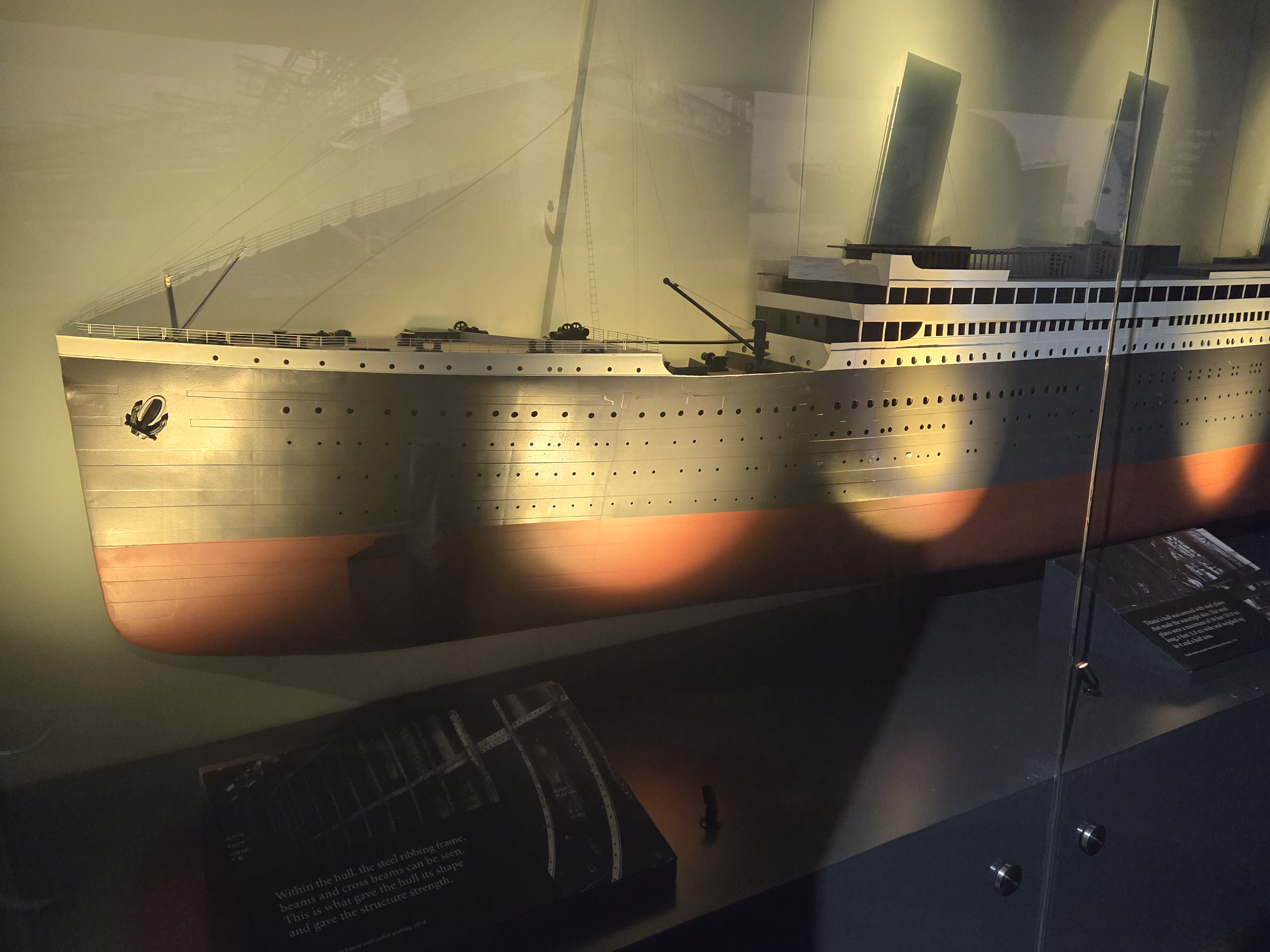
A model of the Titanic in the Titanic Museum
The museum was well worth the entry price. Pre-booking of tickets is required. The displays were built in various ways that appeal to all types of learning: audio, visual, reading, entertainment, experiential, and probably a few others I don’t know about. Talking holograms of passengers and crewmembers offered interpretation along the way. There were models of the Titanic, and even a ride in these funky, boxy cars that took visitors through the experience of building the ship. Outdoors, the yard where the Titanic and other ships were built is visible from the museum.
A replica of a first-class state room on the Titanic, complete with hologram passenger and staff member.
My favorite part were the displays that dealt with discovering the ship’s resting place at the bottom of the North Atlantic. Visitors can walk over a glass floor that simulates walking above the wreckage on the ocean’s bottom. That was so cool!
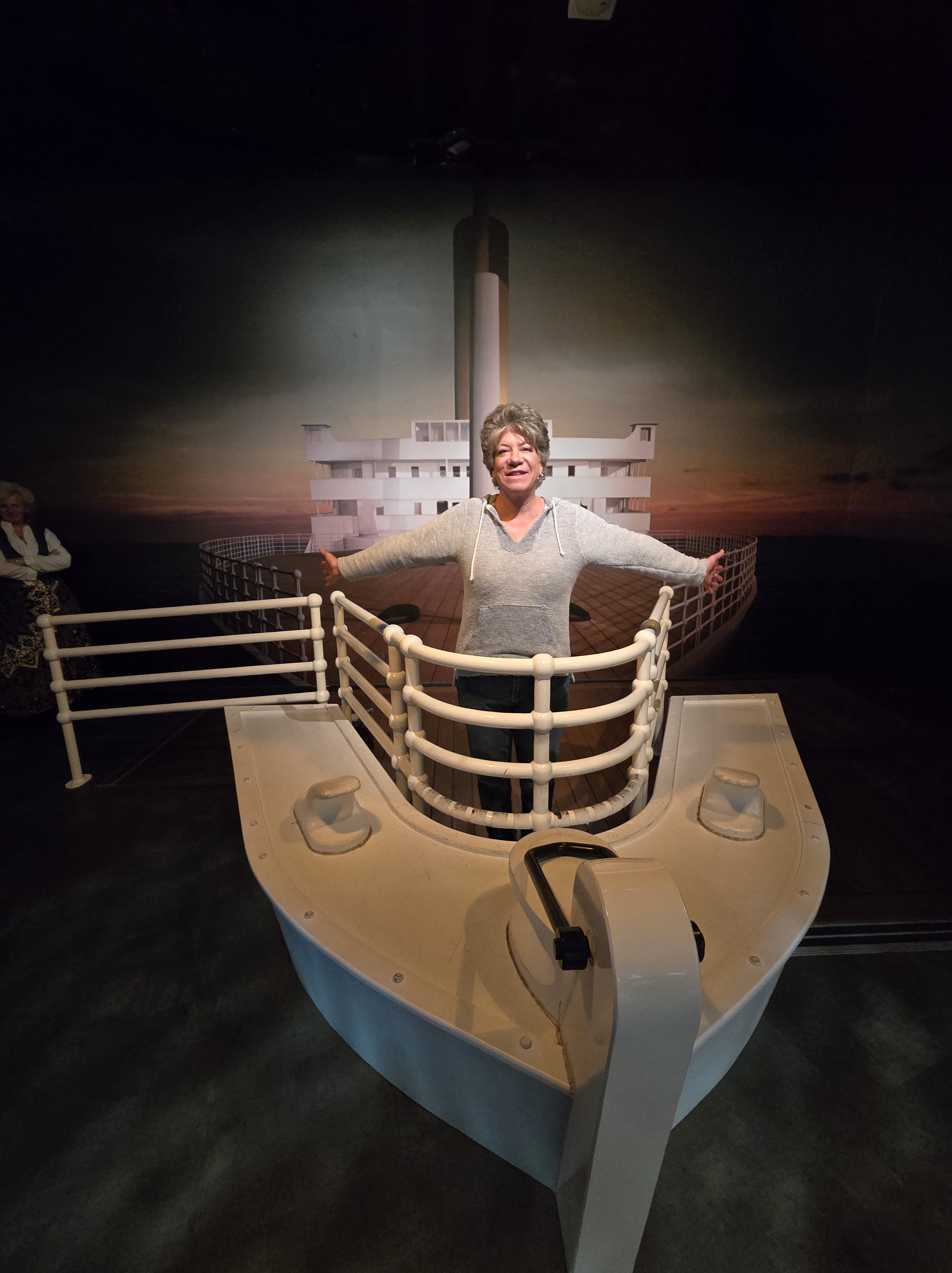
Marie, striking a typical Titanic pose.
After our tour, we popped into the museum’s Galley Café, which had food just about a delectable as a first-class passenger’s on the Titanic. I ate a wonderful chowder and topped it off with trifle for dessert. Trifle is a parfait made with cake cubes, vanilla pudding combined with whipped cream, and interspersed with berries and peaches. The café’s trifle was not as good as the one I make, but I wasn’t going to complain. I was impressed that they even offered it as I’d never seen it on a menu before (especially in the U.S.).
Afterward, we meandered outside and toured a ship in dry dock called the Nomadic. Like the Titanic, it was built by the White Star Line and was the tender ship for the Titanic. This means it ferried passengers and supplies to it. The Nomadic is the only surviving White Star Line ship left. Entry onto it was included in our ticket price for the museum. That was fascinating to see, especially a few pieces of original oak paneling that are left in the women’s bathroom sitting room, and how the various classes of passengers were kept separated.
The Nomadic, Titanic’s tender ship.
After that, we hopped onto the Maritime Trail in a light drizzle. It goes right past the museum, so a stroll along it was a no-brainer. In addition to interpretive signs about the city’s maritime history, there were “Game of Thrones” stained glass displays. The TV series was filmed in Ireland.
A cute seal that was on the Maritime Trail.Look at those eyes!
As the drizzle increased and our feet got sore, we tried to order a cab to take us back to our hotel but had no luck. The problem was Shania Twain. The singer was in town and all the cabs were booked by her fans. We trudged back to the Titanic Museum and were able to nab a cab that was waiting in front for passengers. Our driver said that Shania is of Irish descent, along with Taylor Swift and Mariah Carey, so they’re all big deals in Ireland.
The main reason we decided to visit Ireland was to explore Russ’s heritage. Like the famous singers, Russ is of Irish descent (as well as French and German). His great-great-great and great-great grandfathers and grandmothers lived there, and the female line goes back even farther. In the next post, I’ll describe what happened on Day 3, which involved a genealogical tour to his ancestral homelands outside of Belfast.
Also, one of the main reasons we were visiting Scotland later on our trip was to investigate my ancestral heritage. Since the last time I was in Scotland eight years ago, I discovered (thanks to my cousins) that we’re related to Robert the Bruce, first king of Scotland. (He is my great-grandfather to the 21st power.) While we were backtracking to the museum in the rain, one of our plans on that account came to fruition. I’d been trying for months to book a tour of Broomhall House outside of Edinburgh, which is the family home of the Bruces, and it was only recently opened for public tours.
We got news that those plans were a “go!” That lightened the misery of walking with tired feet in the rain. We only hoped that our luggage would finally arrive so that we’d have something nicer to wear than blue jeans and stinky underwear to Broomhall.
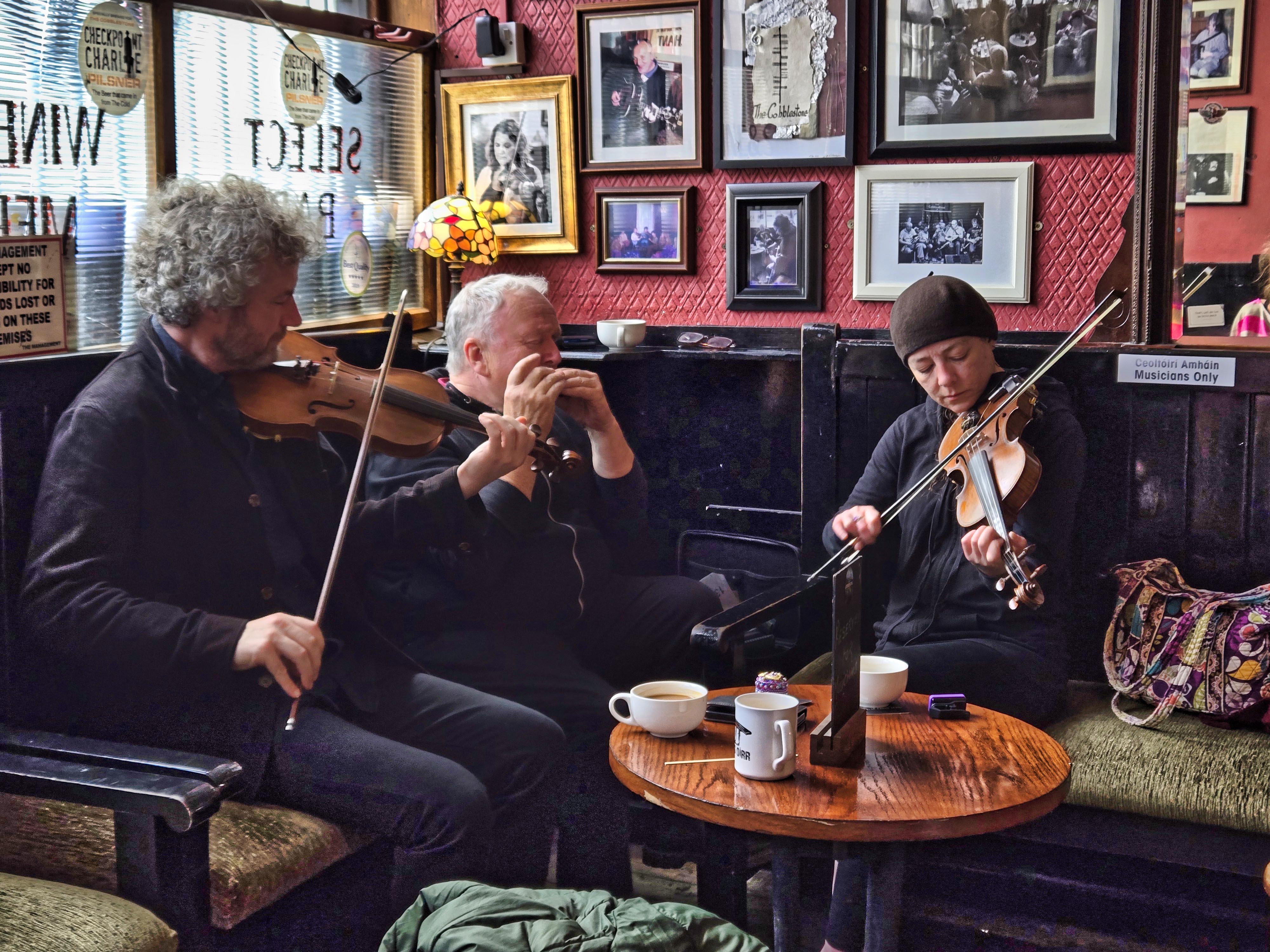
We capped off our evening with supper at Ryan’s Pub. This was a second visit for us because it was within walking distance of our hotel and the food and drinks were grand! I was introduced to a whisky sour there (topped with a sprig of mint), and it has quickly become one of my favorites. As if that weren’t good enough, when we arrived back at our hotel, our luggage was waiting for us!
To travel hopefully is a better thing than to arrive, and the true success is to labor. — Robert Louis Stevenson
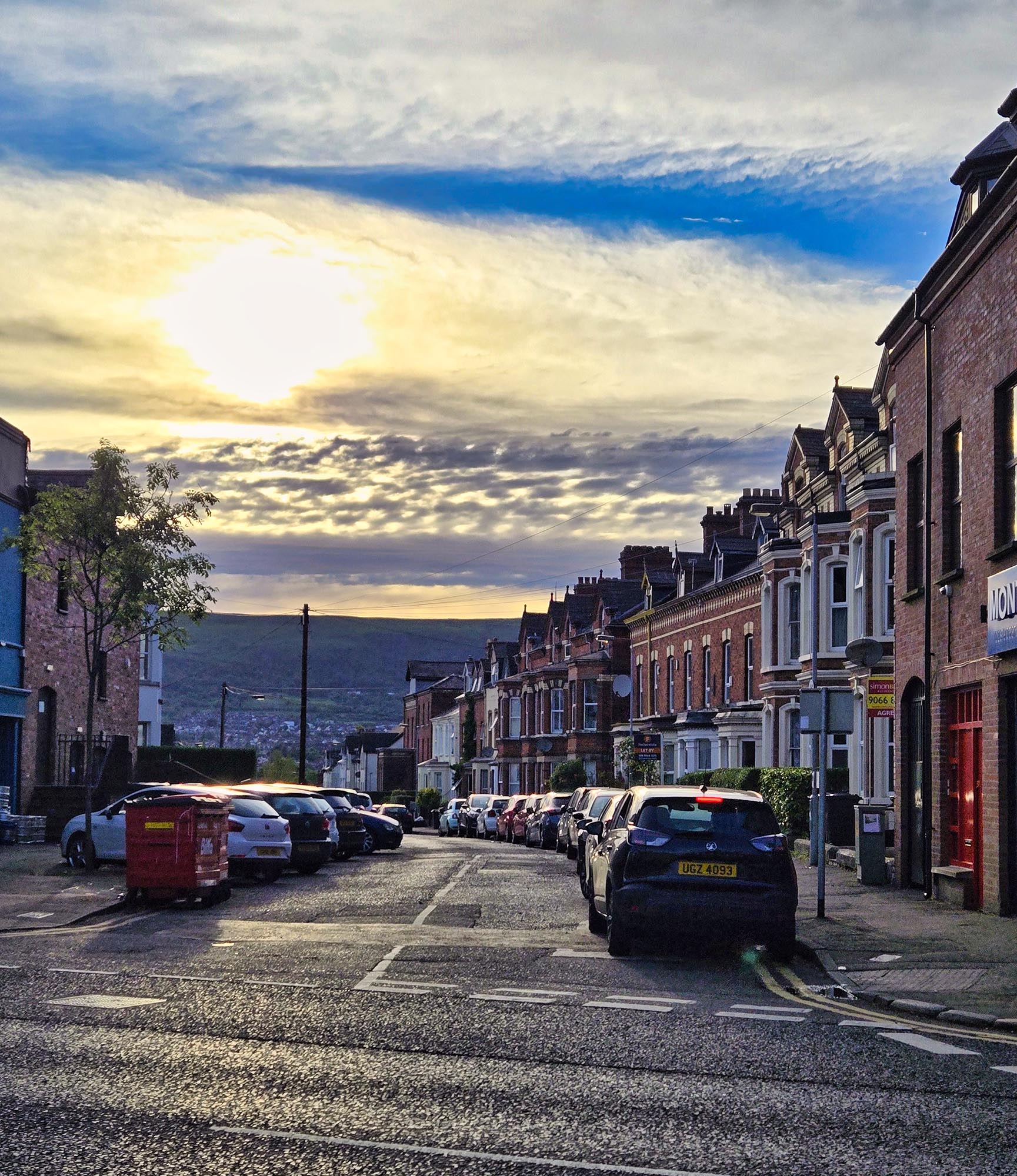
A typical street in Belfast
I’ve been radio silent for a while. That’s because Russ and I have been meandering around Ireland and Scotland for three weeks. Like Stevenson’s quote above (which I came to learn on this trip), our travels involved a lot of labor and lost baggage, but we remained hopeful and didn’t let it get us down. The good experiences we had far outweighed the difficult.
Belfast was the goal of our first travel day. Alas, we only made it from Duluth to Minneapolis. We boarded our Belfast-bound connecting Delta flight in Minneapolis, giddy that our long-awaited trip was finally happening.
After we backed away from the gate, the pilot announced that one of the engines was doing something weird. He ran some tests and then needed a new part or a sensor, so we got off the plane until that arrived. The clerks kept saying we’d reboard in the next half hour, then it was the next half hour, then the next. By this time, it was past midnight. Suddenly, the announcement came that the flight crew had timed out, so we weren’t going anywhere.
After spending an hour in line to get rebooked for the same flight the next evening, making a reservation at one of the hotels Delta recommended, and then being denied our luggage because the baggage handlers had all gone home, we caught a hotel shuttle. We flopped into bed, bedraggled and bemused at 2:30 a.m.
The next day, we arrived back at the Minneapolis Airport in plenty of time. We explored the shops and probably walked down every gate there was just for some exercise. We even discovered we could have slept overnight in the airport had we wanted. On the second floor, there’s a “Quiet Room” with sleeping pads and cushions. Good to remember should we ever find ourselves in a similar situation! But I’m glad we had a hotel room.
Once we arrived in Belfast, our luggage was missing. After filing a report, we made our way to our hotel, even more bedraggled and more sad than bemused. Little did we know, it would be two more days before our luggage showed up.
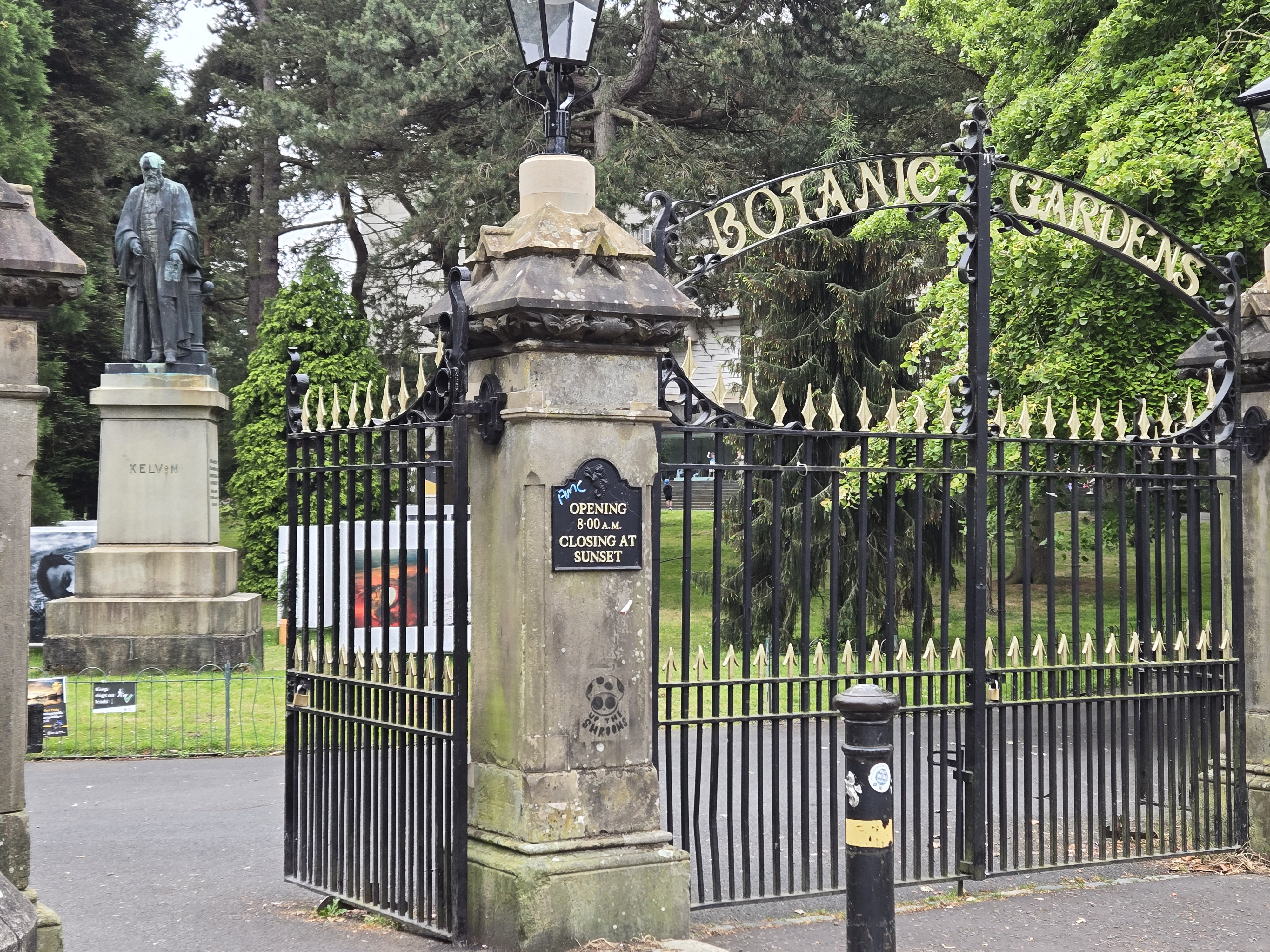
We felt like we needed to make up for lost time, so our first day in Belfast was very active, despite jetlag. Our first stop was the Botanic Gardens, a free activity that we could walk to from our hotel. A statue of Lord Kelvin greeted us once we passed through the gate. He was born in Belfast and is best known for his discovery of absolute zero. The gardens have a Victorian feel to them and offer several greenhouses to walk through, and even a Ferris wheel to ride.
On the edge of the gardens is the Ulster Museum, another free venue. If you’re not aware, the term “ulster” translates as ‘Land of the Ulaidh,’ the ancient kings and their people that ruled over most of the north of Ireland in pre-Norman times. The region of Northern Ireland is known as Ulster. Its proximity to Scotland made it relatively easy for many Scots to migrate there.
The museum explores the past, present, and future through art, natural science and history. It sported huge wicker dragons, a replica of an extinct Irish elk, and two famous paintings by Caravaggio. Apparently, pick pockets patrol the room where patrons are distracted by these paintings. The docents asked us to put our backpacks on the front of our body to discourage theft.
Back at our hotel, we booked a cab to Belfast Castle, which is situated high on a hill overlooking the city. Unfortunately, we couldn’t go inside it because the castle was booked for a private event, but we were satisfied to walk around the grounds and eat scones for lunch in the cellar café.
Belfast Castle
One of the blogs I follow offers great information about the castle, if you’d like to learn more. It also features a photo of the interior. We loved the cat-themed garden.
Back at our hotel again, we asked the concierge about booking a Sectarian taxi tour. These tours take you into the heart of the parts of Belfast where “the troubles” erupted in the late 1960s and lasted until the late 1990s. Both Russ and I had read, “Say Nothing,” a book about the troubles and were interested in seeing the areas described in it.
The concierge said she knew someone who could take us and that he had “a very nice van.” And that he would answer all our questions. He did, indeed, have a very nice van (a Mercedes) but his presentation was a bit jumbled. It didn’t help that he had a food smudge on his cheek the whole time and that spit balls gathered on his lower lip. That made it hard to listen to him, but he did tell us many personal stories about growing up in those times and he took us to all the different areas: Protestant, Catholic, and Loyalist. He also told us that everything he said was “deniable,” so, it was hard to know how seriously to take him.
The Peace Wall in Belfast, one of the sights on our sectarian taxi tour.The wall separates Protestant and Catholic neighborhoods in the city.
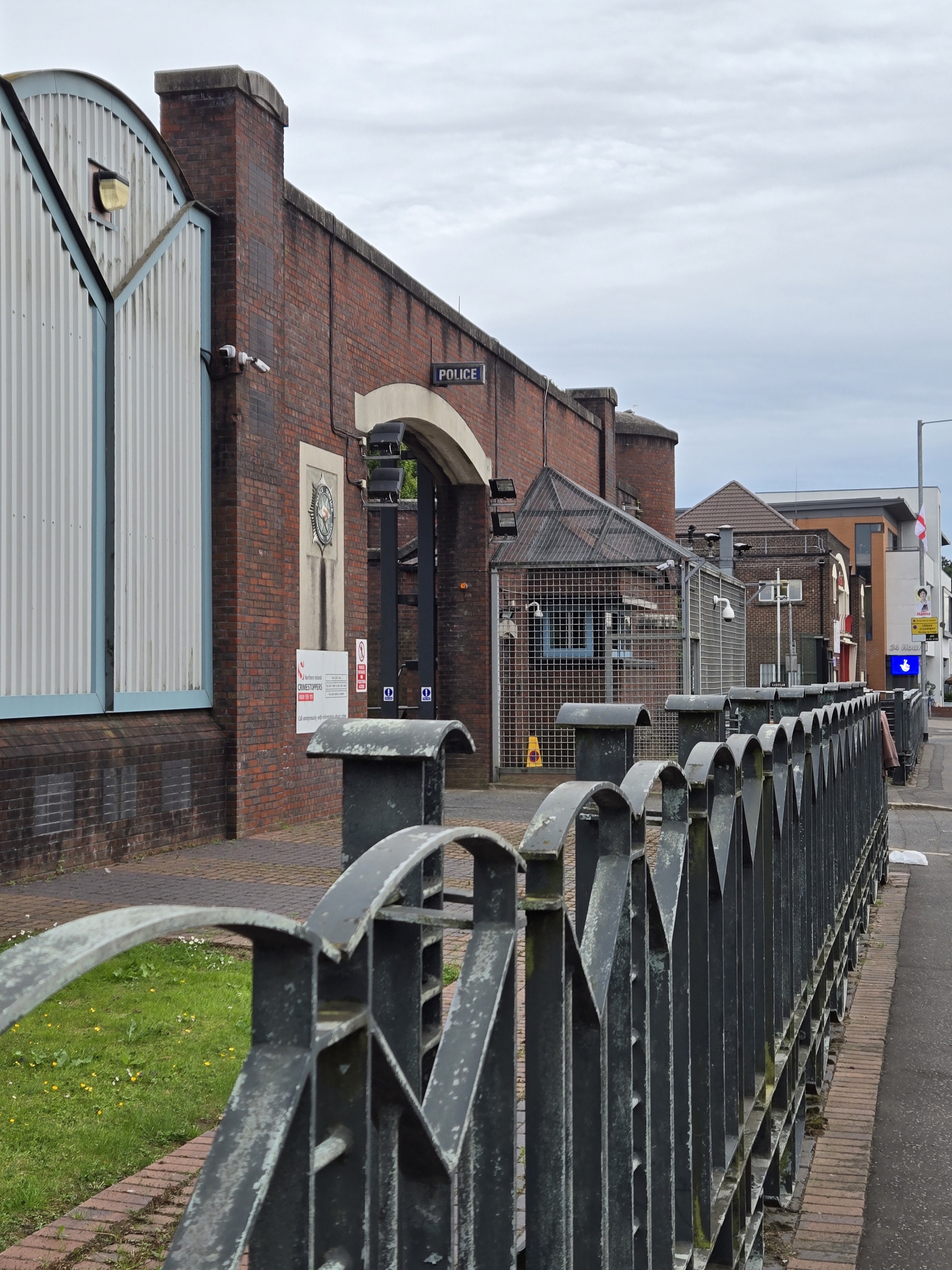
Back at the hotel again, we walked down the street in search of some supper. The place we chose was right across from the Belfast Police Department. The police are housed in a very impressive structure. All it lacks is a moat. I’ve never seen such a well-fortified modern building! But, of course, they’ve needed the security with all the conflicts of the past. There’s peace now, but as our tour guide and several other people told us, it’s an uneasy peace.
Whew! That was quite a first day in Ireland. Next up: The Titanic Museum and the Maritime Trail.
Painted turtle photo by Andrew Patrick on Pexels.com
I usually take two walks every day. Recently, on one of my walks, I saw a painted turtle crossing the gravel road. It was headed in the direction of a small lake and had already made it across most of the road. But was now it had stopped. I worried it might get run over by an inattentive driver. I was tempted to pick it up and move it in the direction it was traveling, yet didn’t want to overly disturb it.
Luckily, as I stood behind the turtle, pondering, it began to move closer to the road’s edge. I slowly stepped forward and kept encouraging it to move in this way until I was sure it would be safe.
I wondered whether it was a late hibernator emerging from an inland pond or if it had laid its eggs somewhere and was now making its way back to the lake. I often see multiple painted turtles hanging out on a log at the end of the lake or swimming with their noses just above the water on quiet evenings.
After I walked a few more yards, a drizzle began. Then the drizzle became a shower. I wasn’t wearing a raincoat, so I cut my walk short and began quick-stepping my way back home. About a hundred yards past the first turtle, I saw another one that was almost the entire way across the road. It was moving quickly, so I didn’t worry about it like I had the first turtle.
Curious at seeing the two turtles crossing the road at nearly the same time, once back inside, I searched online for a possible explanation. Google said: “Every year, in mid to late spring, turtles start to move. The males are looking for partners and the females are looking for a good place to make a nest for their eggs. Unfortunately, for a lot of them, this means crossing busy roads and many don’t make it.”
In addition, Mississippi State University said that in the South, a legend says that rain is on the way any time you see a turtle cross the road. They continue, “There’s very little truth to this myth, even though it does seem like rain is in the forecast after we see one of these creatures slowly making its way across the street.”
Given my experience that day, I’m inclined to believe this legend!
Then I looked up the spiritual meaning of a turtle crossing your path. Google said it’s a sign of good fortune to come. Turtles are also omens of good health and symbolize a long, prosperous life.
If that ends up true, I’ll let you know in about thirty years.
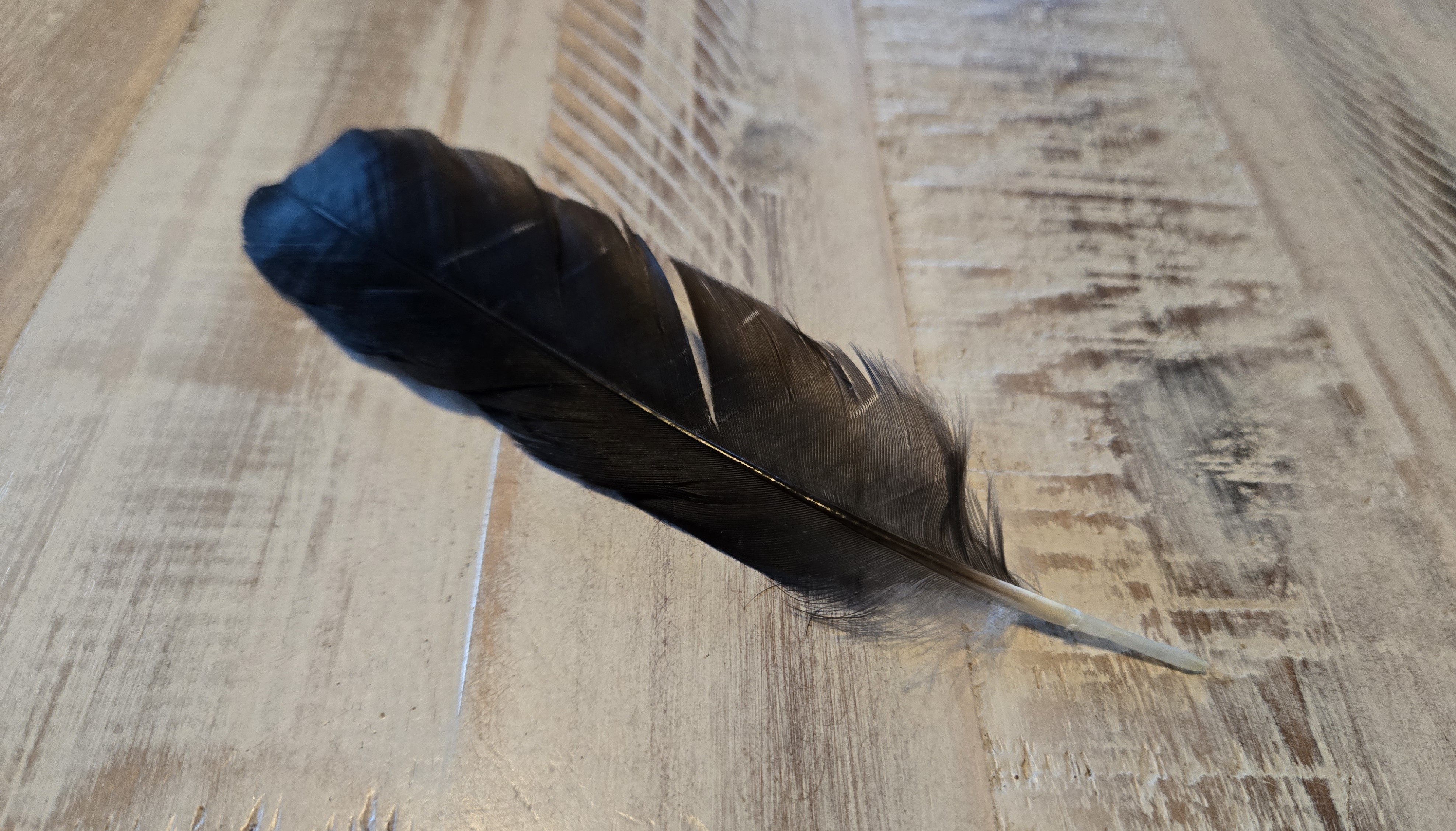
My second wildlife encounter happened the next day. The moment I stepped out the door for another walk, I felt something land in my hair. I thought it was a bug and tried to brush it away. Out fell a five-inch black feather!
I looked around but whatever bird had lost the feather was long gone. However, a crow sat in a tree not far away. The feather certainly looked like it could be a crow feather.
While I’ve come across feathers on the ground before, I’ve never had one actually fall on me. The event was rather surprising and noteworthy (thus this blog post).
The feather that fell on my head.
I seemed to be a roll with interesting animal encounters. Once again, I consulted the wise and wonderous internet for interpretation. I searched for “meaning of crow feather falling on your head.”
Nothing came up under that specific heading, but there were lots of entries about the “meaning of coming across a crow feather in your path.”
Apparently, like with the turtles, this is a good omen. A woo-woo yoga site said, “When a crow feather lands at your feet, it is a positive omen, meaning your calls have been heard and answered. If a feather comes to your path magically or surprisingly, it means a spirit is supporting or guiding you.”
Since the feather fell on my head, I must really be protected and supported!
Another site said it can also signify a visitation by a male loved one who has passed.
For several months, I have been working on a nonfiction story about a male relative. Although I was not born when he died (tragically and suddenly), I’ve found myself wondering if I haven’t conjured up his ghost with all my recent attention.
If he is watching over me, I’m okay with that. He was a good guy and I wish I would have had a chance to know him. Even if he’s not, these natural encounters have been interesting.
When I told Russ about the mysterious crow feather atop my head, he said, “At least it was a feather and not something else that birds usually let drop!” That’s my guy.
I think I’ll take another walk and see what happens next.
I don’t think I’ve mentioned this, but I write a monthly newspaper column for the “Cotton Chronicle,” a nonprofit newspaper in a small community in northern Minnesota, population 437. I got hooked up with it because that’s the community where our cabin is and it inspires some of the fodder for this blog.
My column began as a way to promote my blog-memoir, “Meander North.” I received a grant to publish it in several local media outlets, including the Chronicle. Once my grant ended, my column ended. Shortly after, I received an email from the editor. She’d heard good things from readers and asked if I would consider continuing my column.
I was like, “Well, would you pay me for it?” She was, like, “We’re not that kind of a newspaper.” We reached a compromise where I would write a column as long as I could mention of my book at the end of it.
Recently, I ran out of stories from my book that I thought would work for columns. I have plenty of blog posts that aren’t in the book that could substitute, but I’d recently read “Wild and Distant Seas,” a fiction book based around columns that Herman Melville used to write for a Boston newspaper. I recalled that Dickens did that, too.
Although I am no Melville or Dickens, the thought of doing a serial fiction column in the Chronicle intrigued me, and I had the perfect completed story in mind. I ran the idea and a few pages of it past the editor, and she said yes!
Now, instead of being titled, “Meander North,” my column is called “Through the East Door,” which is the name of my story. Well, it’s more like a novella. The piece is over 20,000 words long. My columns are only supposed to be around 1,200 words. This is going to be a long serial!!
The tale centers on a young woman reeling from the death of her husband. She retreats to her cabin (in the Cotton area) to heal. Along the way, she comes across a wounded animal. Caring for it takes her mind off her troubles. But is the animal real or is it imaginary? Readers will have to make up their minds themselves.
The first installment was published earlier this month. Except for some cute husky puppies, the plot is dark – focusing on sudden death. The Chronicle also has another columnist named Tom. I’ve never met him. Don’t know who he is or what his background is. But I was chagrined to see that his column also dealt mainly with death.
In it, he mentioned his wife said he’s stuck in a “groove” about writing about dying. He ignored her criticisms for several months until he read some of his recent past columns and realized she had a point. He’d rather think of his writing as being more of a “senior groove” than a death groove and said that it would be disingenuous to write about being a senior (elder) without including some element of death. He continued, relaying several stories about people dying or talking about dying and ended by saying he’s working on his tendency to write about death. However, he left readers with the final image of a male dragonfly being eaten by its mate.
Other than for community committee, town board, and fire department reports, the “Cotton Chronicle” this month was sure a downer! I felt sorry for its readers, overdosing on death. I want them to know that my story gets less depressing as it progresses (until the very end). And it sounds as if Tom is trying to get less depressing, too. I am interested to see how it all goes.
This post probably isn’t the best marketing technique, but if you want to follow my story and see if Tom can jump into a different groove, or just learn about small-town Minnesota life, you can subscribe to the newsprint version of the Cotton Chronicle for a year for a mere $12. It’s not available online. (P.O. Box 126 – 9087 Hwy 53, Cotton, MN, 55724-0126)
Inspired by mishearing the song “Cardinal” by Kacey Musgraves. Thought it was funny. Hope I don’t get sued.
I saw a sign or an omen In the garden, in the morning Right after I Lost a friend without warning
Words unsaid Nose of red
Garden gnome Are you bringing me a message from the other side? Garden gnome Are you tellin’ me I’m on somebody’s mind? Don’t leave me behind
I took a walk in the ‘hood To clear my head Turned my collar to the wind On the street, it was blowin’
And there he was By the shed
Garden gnome Are you bringing me a message from the other side? Garden gnome Are you tellin’ me I’m on somebody’s mind? Don’t leave me behind
Are you just watching and waiting for spring? Do you have some kind of magic to bring? Are you just watching and waiting for spring? Do you have some kind of magic to bring? Are you just watching and waiting for spring? Do you have some kind of magic?
Garden gnome Are you bringing me a message from the other side? Garden gnome Are you tellin’ me I’m on somebody’s mind? Garden gnome Are you bringing me a message from the other side? Garden gnome
The beginning of the Mesabi Trail in Mountain Iron.
In our continuing quest to bike different sections of the Mesabi Trail in northern Minnesota, Russ and I meandered over to the small mining town of Mountain Iron last weekend. We planned to pedal a 6.5-mile stretch between there and the neighboring town of Kinney. (Round-trip, the distance is a little over 13 miles.)
Mountain Iron is known as “The Taconite Capitol of the World.” It’s the site where iron ore was first discovered on Minnesota’s Iron Range. The mine is no longer in operation, but during the 30 years it was open, 52 million tons of iron ore were shipped to various steel mills in places like Michigan and Illinois.
The landscape and town bear the scars of this industry. A huge mine pit filled with turquoise water is visible from the small city park where the trail begins. As we biked toward Kinney, we passed ghostly remnants of homes and businesses that had been moved to make room for mining operations. Cement house pads and neglected lilacs provided testament to the abandoned homesteads.
The open pit mine in Mountain Iron. You can almost make out the wind turbines on the hill to the right.
These days, instead of iron ore, Mountain Iron is known for wind energy. Several turbines spin on far hills. They are part of the Taconite Ridge Wind Energy Center – the first commercial wind center in northeastern Minnesota. An interpretive sign in the park says, “In ideal wind conditions, 10 turbines can collectively capture the wind and convert it into 25 megawatts of electricity – enough to power 8,000 homes on an annual basis.”
A typical section of the Mesabi Trail.
Compared to other sections of the trail we’ve biked, this was more civilized. Once we passed the abandoned neighborhood, a few occupied homes lay along the trail. Huge grassy piles of mining tailings lined the horizon. Although a sign along the way says that tailings are not a health hazard, I don’t believe it! We saw a lined basin where it seemed like water was being pumped from the base of the piles. I couldn’t find any info about that online, but I am hoping it’s so the water can be collected and treated before being released into the environment. For much of the way, the trail parallels a highway, although it’s often hidden from view by trees.
A couple of hills dot this section of trail, but nothing too onerous. When you first near the highway, there is a hill with a curve at the bottom. Bikers coming the other way also have a downhill before the curve, so beware of that. Two downhills lead over small bridges with culverts underneath them. The culverts each form a bump. I almost caught air on one of them!
We saw one bicycling family and a few other small groups. When we reached the turn off to Kinney, we did not feel the need to explore. But now, after reading more about the town, I wish we would have. Kinney once voted to secede from the United States and become a foreign country. This bold yet tongue-in-cheek action was taken to draw attention to the small city’s dire water system situation.
According to an account on the Mesabi Trail website (linked above via “Kinney”), the system was “failing so badly that the fire department had to watch buildings burn to the ground due to lack of water pressure. That year the term ‘The Kinney Brown Shirts’ was coined because all clothing washed with detergent that included bleach turned brown because of mineral deposits in the water.
“Replacing the water system far exceeded the budget of the small town, so the city exhaustively searched locally and nationally for assistance. The resulting volume of paperwork led to the city’s motto of ‘File in Triplicate.’ The city attorney commented that it would be easier to get money if the city seceded, waged war with the union, quickly lost, and then asked for foreign aid. The joke took root, and the council voted unanimously to secede on July 13, 1977, and a certified letter was sent to U.S. Secretary of State Cyrus Vance.”
A sign with the new name of the town of Kinney after it seceded from the USA and declared itself a foreign republic. Image courtesy of the Mesabi Trail website.
The secession gained international publicity and from that, the city eventually received grants to replace their water system.
Our way back to Mountain Iron seemed easier than the ride out. I’m not sure if that was from the tailwind or the topography, but biking back was a breeze. Ride over, we spent time exploring the various pieces of mining equipment in the park. This included an old locomotive, which, no doubt, used to haul taconite to ships waiting for it on Lake Superior’s shore. Another group of bikers that we passed on the trail arrived and we chatted a bit. They were from St. Paul and were biking the entire trail, staying in hotels overnight.
Downtown Mountain Iron.
That’s it for our experience with this section of the Mesabi Trail. Maybe next time, we’ll start from Kinney to experience this plucky little burg.
The locomotive engine in the Mountain Iron city park where the bike trail begins.
Update: 8/31/25
Well, it took a while, but we did start cycling from Kinney. This hardscrabble town is composed mostly of trailer homes. Not that there’s anything wrong with trailer homes. I’m just not used to seeing so many of them near the center of town.
We biked from Kinney to Buhl, which is only 4K. From there we rode toward Chisholm, a section we’ve ridden in the past, but I don’t think I blogged about it. The most scenic spot was the Stubler Mine Pit Beach, which looked like a good spot for swimming. A bunch of folks were doing just that during our Labor Day Weekend ride.
The beginning of the trail was wooded, but then much of it follows an abandoned roadway. The most scenic part of the section past Buhl was the City of Chisholm sewage plant. Thus, this addendum and not an entire blog post.