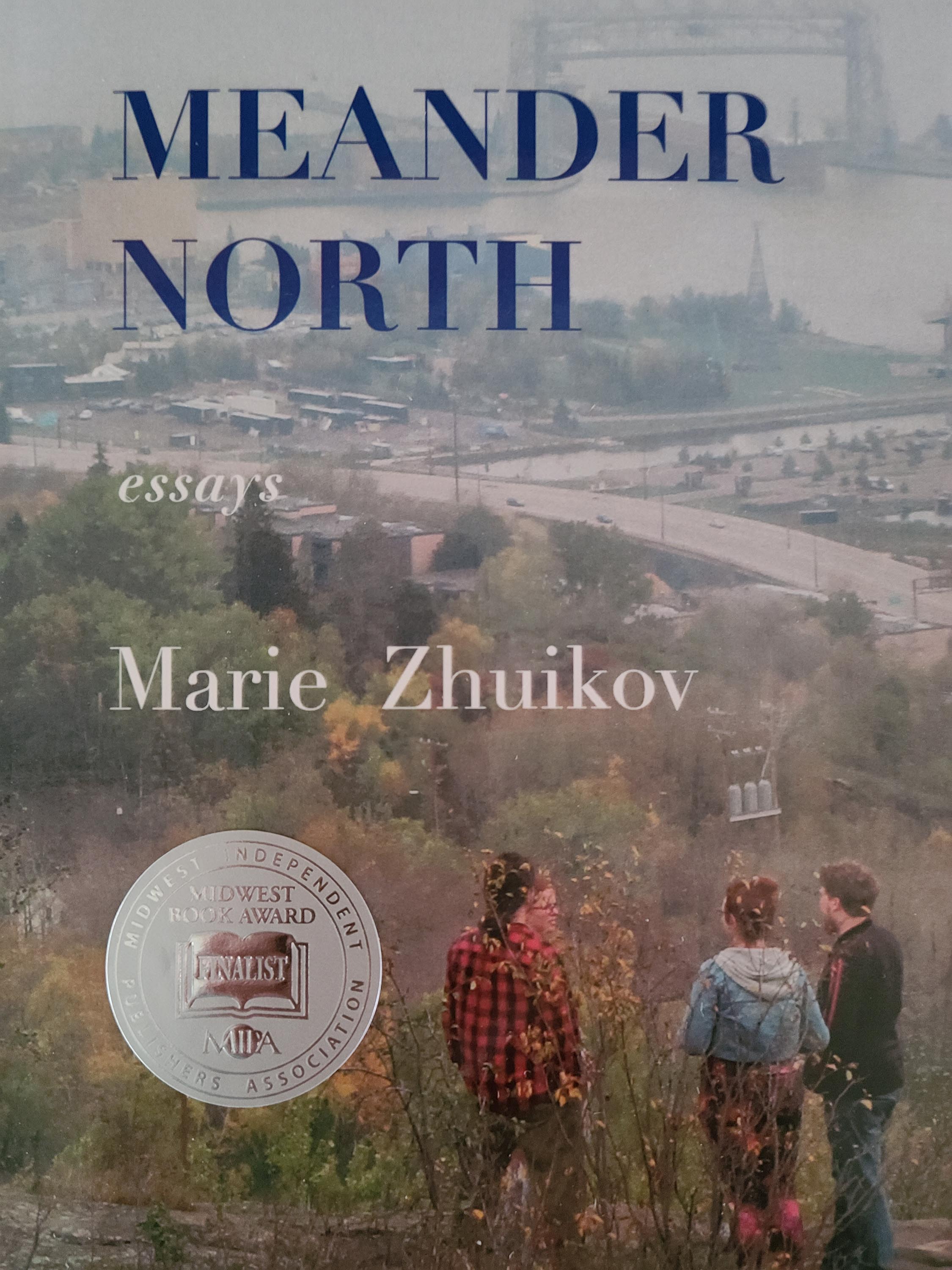
I made my Minnesota-themed blog-memoir, “Meander North,” which features essays from this very blog, into an e-book. My publisher didn’t offer that service, so I did it myself over holiday break. It took quite a while because of formatting issues. I grumbled, but I did it!
It’s now available on Kobo, Barnes and Noble, and Amazon. It sells for about half the price of the print version. But if you’re a fan of print books, that’s still available, too, through distributor Itasca Books.
If you like this blog, you’ll love the book. It earned a Midwest Independent Publishing Association book award last year for nature writing, so it’s not just me saying that it’s good. It’s all your favorite posts gathered into one place.
Thank you for reading and thanks for your support!
I received a text from my trash and recycling company the other day, telling me their schedule had changed for the week due to the New Year holiday. From nowhere, a motto popped into my head: “We’re at your disposal.”
If you own a trash company and need a motto, please feel free to use this one. 😊
Phoenix’s Musical Instrument Museum. Image courtesy of the Musical Instrument Museum
During our recent meanderings in Arizona, we visited the Musical Instrument Museum in Phoenix. Russ and I enjoy music, both listening and playing, so the museum naturally intrigued us.
This musical museum offers two floors filled with 4,200 instruments from across the world. The CEO of the Target department store corporation founded it to highlight more than just western classical instruments (which are found in many other museums). Robert Ulrich wanted to focus on instruments played by everyday people across the globe. The museum’s motto is: Music is the language of the soul.
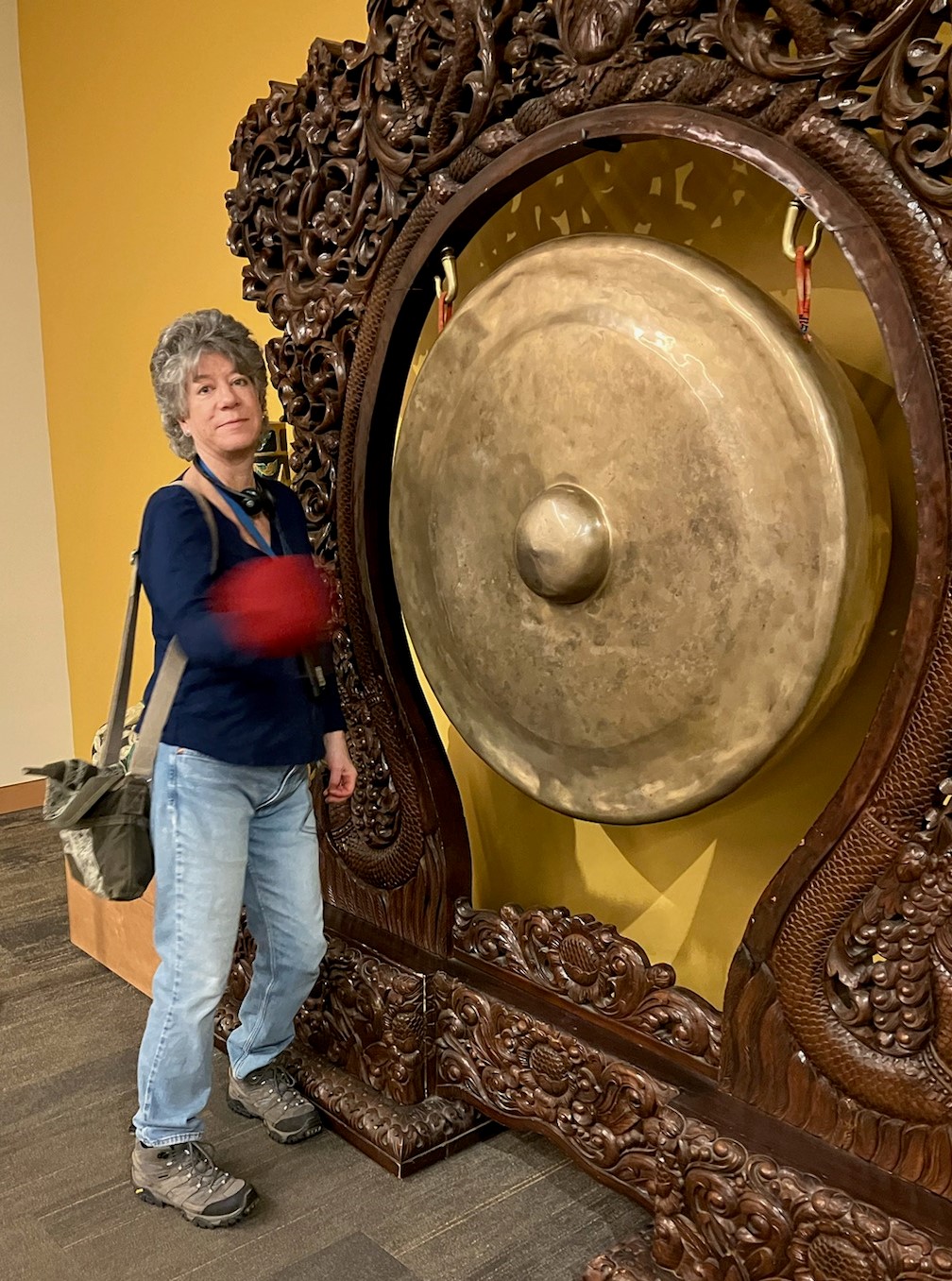
Marie getting it on, banging a gong.
The museum delivers on its mission and motto in spades! We could have easily spent an entire day perusing the exhibits. The upper floor has instruments from different geographic regions such as Asia, Europe, and Latin America. Tours are self-guided with an audio headset.
The lower level contains two of my favorite galleries. The Artist Gallery highlights famous musicians past and present, such as Prince and Johnny Cash. Each display features photos, music audio, and memorabilia. Prince’s had a purple piano from one of his tours. One unusual exhibit focuses on the theremin, an eerie electronic instrument played without any direct physical contact by the performer. Clara Rockmore was a theremin “virtuoso” featured.
My other favorite was the Experience Gallery. We were allowed to unleash our inner musicians in this room, which offers banjos to pluck, drums to beat, and gongs to gong.
The museum’s Mechanical Music Gallery shows self-playing pianos and the like. We arrived just in time for a demonstration of a wall-sized instrument called an orchestrion. It’s powered by compressed air and is like having a whole orchestra at the ready.
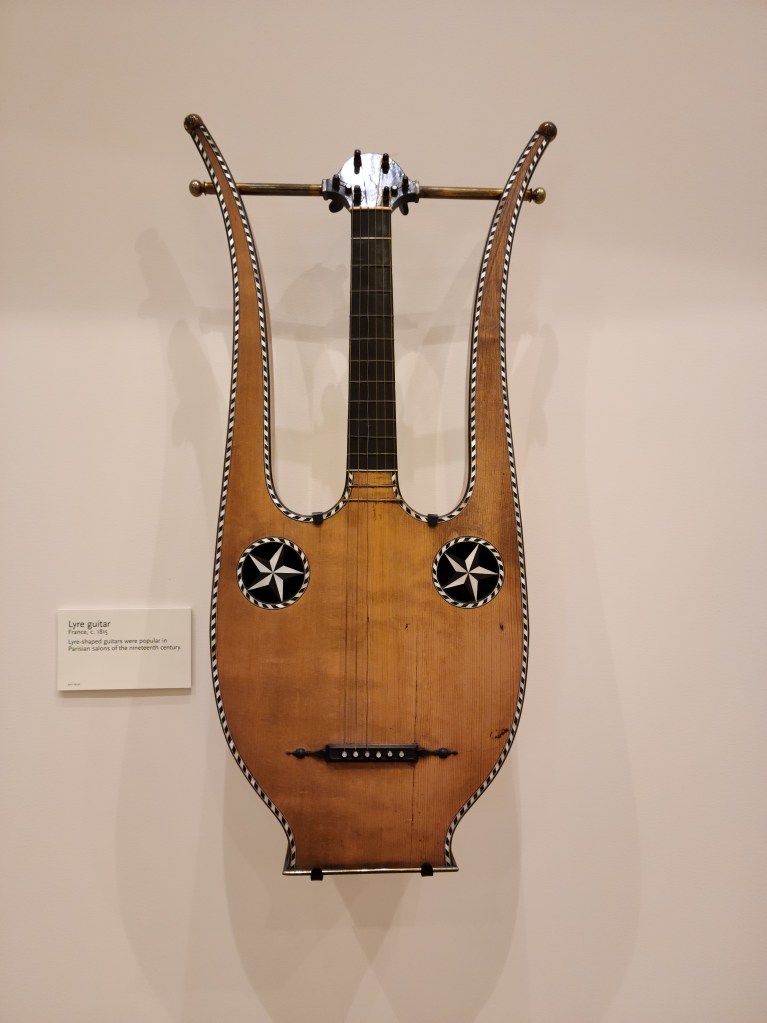
Until fall of 2024, the museum has a special exhibit called Acoustic America, which displays 90 iconic guitars, mandolins, and banjos that shaped American music since the Civil War. If you’re a stringed instrument-lover, you’ll have to check that out.
If you can’t just pick up and head to Phoenix, the museum provides this virtual tour.
We left the Musical Instrument Museum with many songs in our hearts.
True to my prediction last year, during my eleventh year of blogging, I was not as active as in the past. I posted the same number of stories, but I didn’t have time to interact as much with other bloggers as I would have liked.
One reason is that a collection of short stories I wrote was accepted for publication this year but it’s not going to press until 2025, so I spent a lot of energy ensuring the stories are well-written. I also had a long (68-page) “short” story to finish, which I accomplished, as well as a (surprise bonus!) horror story. As if that weren’t enough in addition to my day job for Sea Grant, I am turning my blog-memoir, “Meander North,” into an e-book. It’s almost ready!
For the posts I wrote this year, social media sharing by others continues to be an important factor in their popularity.
Without further ado, here are the top posts from 2023:
“How Hallmark’s Rescuing Christmas Movie Made my Tree Ornament Famous” – This post describes a Hallmark movie that was shot in my hometown of Duluth. I was surprised to see a Christmas tree ornament during a major scene in the movie that’s the same as one I have in my own collection. After writing the post, I discovered that the local artist who made the ornament didn’t know it was featured in the movie. She was delighted by the news. I’m not sure if she shared my post on Facebook or if others did, but it got a lot of views through social media accounts other than my own.
“Saying Goodbye to my 102-Year-Old Aunt” – This is my tribute to my Aunt Marguerite Pramann, who died this year after a rich life. I suspect this post was shared and accessed by other relatives, which accounts for its popularity, besides the fact that my aunt was an outstanding person.
“A Lake Superior Survival Story” – This is another movie review I recently wrote about a true story set on what is now Isle Royale National Park. Many of my friends were unaware of the movie. They commented on it and shared it via Facebook, so it received more interest than usual.
Hmmm. Maybe I should turn this into a movie review blog??
In other news, a notable story from 2019 continues to receive many (1,200) hits through Google searches and social media shares. “The Case of the Headless Bunnies” describes a disturbing sight I happened upon during my dog walks in my neighborhood woods. Several headless rabbits appeared in the same location on different days. I did some research to determine if it was perhaps a natural thing or the workings of a satanic cult! Turns out, it was natural.
Apparently, others have happened upon similar situations and turned to Google for help and found my blog, sharing their insights on social media. I am happy to have put minds to rest on this grisly topic.
I still find things to blog about and plan to continue “Marie’s Meanderings” for yet another year. I appreciate your continued readership.
The skating rink/trail and light display at Enchant in Phoenix.
Russ and I meandered down to Phoenix, AZ, to visit relatives. One of our festive outings was to an outdoor baseball stadium (Salt River Fields) in the suburb of Scottsdale to a walk-through light display, called “Enchant.”
I must admit, I was a bit skeptical about the likelihood of experiencing a magical Christmas experience without snow and the cold, but I came away impressed by the scope and organization of the event.
We entered the gates and spent time wandering through a “village” with food vendors and booths selling Christmas wares. A trip down the stadium stairs took us to the light maze on the field. The maze’s theme is “mischievous.” One of Santa’s elves and his reindeer pal have misplaced toys meant for children on Christmas. The goal is to find all the missing toys in the maze so that children will receive them as presents.
We were delighted by the scenes around every corner in the maze. A gigantic Christmas tree dominates the center, surrounded by huge lighted up presents. There’s even a multi-colored “disco” floor where the light squares change color when stepped upon.
People enjoying a warm fire and one of those light bulb drinks by the skating trail.
Although it was about 45 degrees out, everyone was dressed like it was twenty below. Many people were walking around with drinks in lighted clear containers that resembled light bulbs. I asked one person what was in the drinks and they said something about vodka and strawberry juice.
The more adventurous in our party signed up to rent skates and try out the ice-skating trail. You need to sign up for a specific time so that the rink doesn’t get too crowded. I haven’t skated in about 7 years, but I was game to give it a try with my sixty-year-old legs. The skates were made of sturdy black plastic and are available in a huge variety of sizes. After signing accident waivers, we snapped on our skates and hit the trail with dozens of other people, many of whom had probably imbibed those light bulb drinks. Vodka and inexperienced skaters – probably not the best combination?
I was intrigued to see how Arizonians skate. You see, in Minnesota, most children learn to skate about the same time that they learn to walk. If their fathers are speedskating coaches like one of my children’s was, they are out on the ice even before they learn how to walk. That son was with us and he had no problem skating. His Arizonian girlfriend was another story, but she gave it a good try.
Elves having fun on the changing-color disco floor.
After a few wobbly steps, my skating instincts returned, and I was good to go. My main worry was avoiding out-of-control skaters. We witnessed many butt thumps on the ice and many people turning in circles when they wanted to skate forward. But everyone seemed to be having fun.
After skating around for about 20 minutes, we emerged unscathed from the trail. We spent more time exploring parts of the light maze we’d missed before. Afterward, we made our way back up the stadium stairs and visited more of the vendors.
There are other activities at Enchant as well. I think there’s a play, and there are various levels of tickets that people can purchase. Enchant is not only in Phoenix. It’s offered at six other cities, including Milwaukee and Las Vegas. The show goes on until December 31, so there’s still time to go if you haven’t already.
The main characters in “Rescuing Christmas.” Image courtesy of Hallmark.
Russ and I watched “Rescuing Christmas,” a Hallmark movie this weekend that is set in my home of Duluth, Minnesota. The movie is available on the Hallmark Movie Now Channel. If you have an Amazon Prime membership, you can get a week-long free trial membership, which we opted for to view this movie.
I know, I’m so cheap!
Hallmark shot another Christmas movie in my fair town last year. It was called “Merry Kiss Cam” and dealt with a Christmas romance between a bar owner and an artistic painter. I don’t recall that “Merry Kiss Cam” ever specifically mentioned the setting was Duluth, but that was refreshingly clear in “Rescuing Christmas.” This was one reason I liked it better.
I also liked it better because it didn’t try to make Duluth look like something it’s not. There were plenty of local landmarks included in the shots, from OMC Smokehouse (a restaurant whose name stands for oink, moo, cluck – very meat-centric, but vegetarians can find something to eat there, too), and other Lincoln Park businesses including the Dovetail Café and Frost River, which is an outdoor clothing and equipment store. Those familiar with Duluth will also recognize the Aerial Lift Bridge, Bayfront Festival Park, the train Depot, and one of the red brick mansions that are frequent sights in the eastern part of town.
The movie follows several days in the life of Erin, a talented photographer whose Christmas spirit has been ruined by a past breakup. She’s granted three Christmas wishes, her final wish being that Christmas would just disappear. To her bewilderment, it does! Can Sam, her potential (and rather generic-looking) suitor who is a wood-carving lawyer, help her bring back Christmas to the world?
Other things I liked about the movie are that it wasn’t too smarmy and that it attempted a bit of diversity. Get this, there was a Black Santa. Plus, a Black Santa overlord, who had Star Trek tendencies. She was rather like a combination of Captain Kirk and Lieutenant Uhura. Good for Hallmark to at least try for some diversity.
My now-famous Christmas tree ornament.
Yet another thing I liked about this movie is that an ornament similar to one we happen to have on our own Christmas tree plays a pivotal role! The ornament is a birch tree slice that features a painting by Kate Kebbekus, a local artist. It depicts a grove of white birch trees with a red heart etched into one of them. (What the movie doesn’t show you is that there’s another painting on the back that features a red Christmas ornament.)
I bought the ornament at a local Christmas fair a couple of years ago. I could not believe it when a similar ornament showed up in the movie! Sam gives the ornament as a present to Erin when they celebrate their first Christmas together. Sam said that the ornament was one his family used to hang, and it was his favorite. Erin reacts favorably, giving him a big smooch in front of all their relatives and friends.
It’s a Hallmark movie, so, of course, everything ends happily for all.
If you’re a “Marie’s Meanderings” devotee, you may remember that I created my own Hallmark Movie Drinking Game during the pandemic. The rules involve imbibing varying amounts of alcohol depending on what formulaic scenes occur in the movie.
In the case of “Rescuing Christmas,” there are not as many formulaic scenes as usual, but there are a few. The Christmas kiss between the main characters is the biggest one. According to my game, that is on the highest level and involves a whole shot of liquor.
Lessor imbibing results from the scenes where “a cynic is filled with the Christmas spirit” and “a Christmas-themed food is mentioned.” In this movie, the food are pizzelles, or Italian cookies. In my game, these require finishing your drink.
One sip is required whenever the town mayor appears, hot chocolate is on screen (lots of those scenes are in this movie, usually with a peppermint stick), mistletoe makes an appearance, and a character makes a deal with Santa or one of his minions.
Russ and I did not play the drinking game during this movie, but if you do, there’s probably enough for a proper buzz.
Even if you don’t play the drinking game, the movie could help you get into the Christmas spirit. We watched it after a day of decorating amidst a gentle snowfall that provided the required ambiance but did not amount to enough to shovel. Now that’s something everyone can get behind.
Angelique and Charlie Mott. Image courtesy of “Abandoned: Angelique’s Isle”
We recently watched the movie “Abandoned: Angelique’s Isle,” which is a based on a true story set on Isle Royale in Lake Superior. I’d heard of the movie before but never had an easy way to view it until it turned up for free in my Redbox feed. Can’t get much easier than that!
Longtime readers are probably well-aware of my love for this wilderness island. I had a chance to revisit this national park this summer and fulfill longtime dreams. As wonderful as the Isle Royale is in the summer, I can’t imagine spending a winter out there.
A sketch of the actual Angelique, courtesy of Michigan Technological University archives.
But that’s just what happened to a French voyageur and his Metis wife during 1845. Charlie Mott met 17-year-old Angelique and they lived at LaPointe on Madeline Island – although the movie makes it look like they were in Sault Ste Marie. Looking for work, Charlie is persuaded by some bigwigs from Detroit to visit Isle Royale on a mission to find copper.
Despite Angelique’s grandmother’s concerns, Angelique accompanies him and ends up being the one to discover copper – a huge mass. In the movie, the copper boulder is up on the shoreline but in reality, it was in the water. It’s summer and the Detroit men convince Charlie and Angelique to stay on the island for a few weeks so that the men have time to stake a claim. They said they’d send a supply boat and then they’d return for the copper and take them off the island before winter.
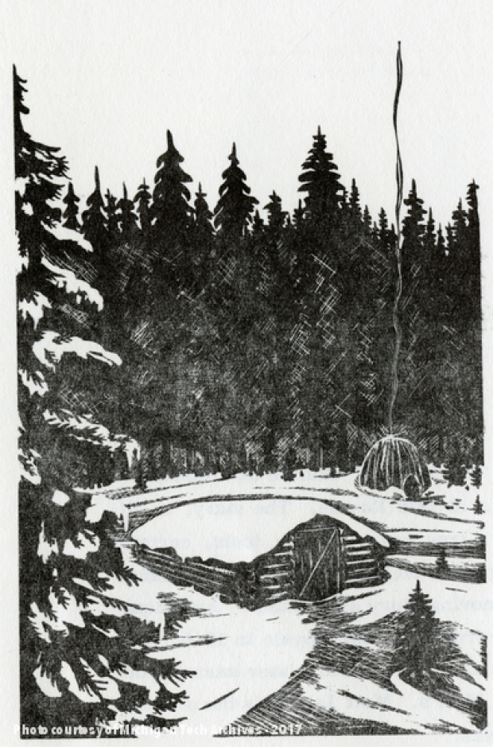
The couple agree and find shelter in an old fishing cabin on the island. They fix it up along with a birchbark canoe that’s there with it.
As you can guess from the movie title, the supply boat never comes, and the men don’t return before winter. What follows is a tale of perseverance, emotional strength, ingenuity and heartbreak. The themes revolve around being true to one’s roots and also (tongue in cheek), if your grandmother is having bad dreams about your impending trip, maybe you shouldn’t take it! I won’t give away any more of the plot in case you want to watch it.
An illustration from “Wolf’s Eye” Vol. 5, No. 4a. “Charlie and Angelique Mott: A tragic but true story of Isle Royale.” It depicts the living quarters of Charlie and Angelique Mott while they were staying on Mott island.
Isle Royale is not the easiest location to film a movie, so the film was shot in Terrace Bay (near Rossport) and Fort William in Ontario, Canada. The sand beaches are a dead giveaway – I don’t know of any sand beaches on Isle Royale. It’s all rock and cobble. I also don’t know of any rivers with huge rapids on the island like are in the lead photo for this post, but the stunted trees and rocky shoreline found in Canada are quite similar.
In all my time on Isle Royale, I never knew that Mott Island was named in their honor. It’s a small island where the National Park’s island headquarters are located off the main island. I was excited to see Native actress Tantoo Cardinal in the movie. She plays Angelique’s grandmother. I was in a movie with Tantoo and actually got to touch her arm in a scene! So, it was like seeing an old acting buddy, ha ha.
According to Mikel B. Classen’s blog, Angelique’s story was first written down as a footnote in the book, “The Honorable Peter White: A Biographical Sketch of the Lake Superior Iron Country.” That, combined with original research, inspired the book, “Angelique Abandoned” by James R. Stevens. His book was turned into a screenplay by Michelle Desrosier, an Indigenous woman from Canada.
Although some of the storytelling could have been smoother, I found the movie a meaningful tale of the power of women, the power of love, and belief in the forces of the universe.
Not much has been going on lately in my mind or in my personal life, thus the paucity of posts. But I have been blogging for work. I attended a two-day wild rice symposium recently in northern Minnesota and learned all sorts of useful tips for harvesting this wild delicacy. Plus I learned more about efforts to restore it to lakes where it has disappeared. Read more here.
You may recall my recent “immersive experience” into ricing. I heard many similar tales of tipped-over harvesting canoes, so felt in good company.
Gobs of people attended the symposium — well over 200. It was good to see so much interest in the topic!
One of the small docks along the shore of Bear Head Lake.
Russ and I had only used our Scamp trailer once this summer (to Pictured Rocks National Lakeshore), so, we decided to get one more trip in before the snow began to fly. We chose Bear Head Lake State Park in northern Minnesota for several reasons: it was nearby, and we had passed the turnoff for it several times and wondered what it would be like to stay there. We were also intrigued because we’d heard that in 2010, it won the America’s Favorite Park contest. It must have something going for it!
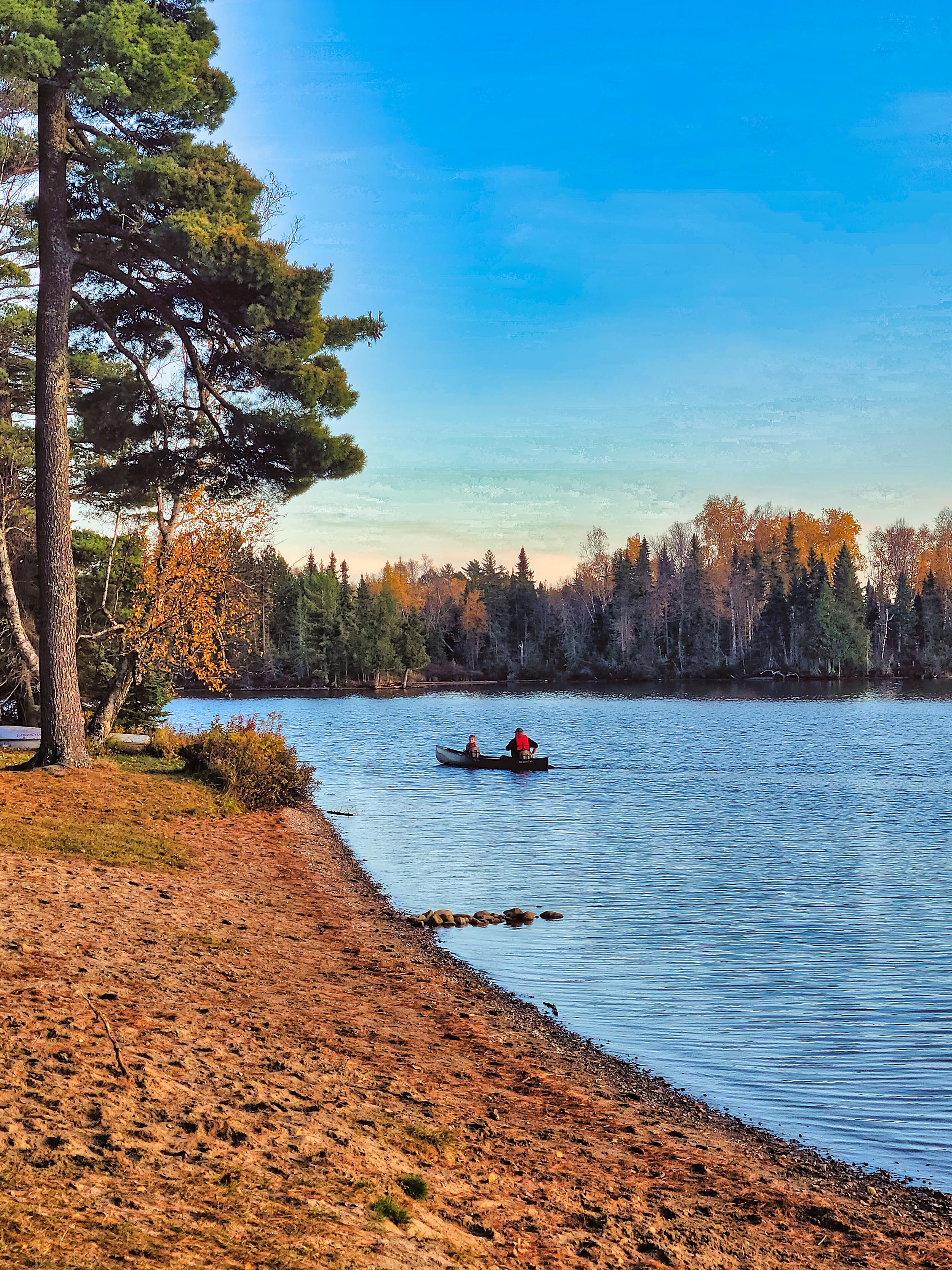
We pulled into our site on a Friday evening. We chose a site on a loop that bordered the lakeshore. One thing that impressed us was that all campers have equal access to the shore. No sites are directly on the lake (they’re across the road from it), but there are several trails off the road that lead down to small docks that are perfect for fishing or lake-gazing.
The beach at Bear Head Lake State Park.
The air was warm for mid-October and the wind was calm. After our Spam and eggs supper, we took a walk on trails along the lake. The tamarack trees and aspens were still clothed in their splendid yellows. The trail ended at a beach surrounded by tall red pines. We’d find out later that these pines were spared during logging times because they were too small to be of interest. Good thing the place is a state park because they’d certainly be of interest to loggers now!
A Trail Center building nearby offered bathrooms and a warm place for hikers to gather before heading out on any one of the park’s 13 miles of paths. I discovered later that the impressive center was built thanks to the park’s standing in the 2010 contest, which was sponsored by Coca Cola. The park won $100,000, which they spent to build the center.
At the time, the park staff credited their win to Facebook and the power of social media because a popular bear frequented the park and people wanted to help draw attention to the bear’s home. The bear is no doubt long gone, but the Trail Center stands as a testament to the good will of social media strangers.
After our hike we enjoyed a fire (firewood is for sale at the park office). Our plans to hike the next day were disrupted by a steady drizzle. We opted to drive to Ely, Minnesota, instead. One of our stops was the Dorothy Molter Museum, which I described in my previous post. We also ended up getting a private tour of the Pioneer Mine Museum. Like the Dorothy Molter Museum, it was also open past Labor Day, contrary to its publicized operating season.
We didn’t intend to visit the Mine Museum. We began walking on a paved trail around Miner’s Lake but the steady drizzle and my failing health (I was catching the flu or something from Russ) made us turn around after a short jaunt.
As we neared our car in the parking lot of the Mine Museum, a man called to us from a building atop a nearby hill. He said the museum was open and he’d gladly give us a tour. Having nothing else better to do on a rainy day, we took him up on his offer.
The Pioneer Mine closed in 1967 and its payload was iron ore. The museum featured a plethora of artifacts and photos from its hey day. Our guide was Seraphine Rolando whose grandfather and other relatives had worked in the mine. Seraphine was a great storyteller and regaled us with tales of memorable rescues and descriptions of what it was like to work in the mine. Unlike the nearby Tower-Soudan Mine, the Pioneer Mine was wet, dirty, and much more hazardous.
Seraphine is a legend in his own right. I found this profile of him in the local Ely paper after I returned home. I easily remembered his name because one of my ancestors was named Seraphina, which must be the female version of his name.
Seraphine Rolando in the mine museum. Image courtesy of Trip Advisor
After our tour, we stopped at the Evergreen Restaurant in the Ely Grand Lodge for lunch. Interestingly, the lodge is built on a pile of mine tailings. The restaurant featured a beautiful view of Shagawa Lake and more golden trees.
Rain featured heavily on our next camping day, too. We ended up leaving for home a few hours early because I was now fully engulfed by the flu. But I recovered and am now ready for more meanderings.
Staying at Bear Head Lake State Park is like staying on a lake in the Boundary Waters Canoe Area Wilderness, but with more conveniences. Electric sites are available but not water hookups. A pump well is in the park and civilized toilet facilities are also available. They were closed during our visit, however, so we had to make do with an outhouse.
A final thing I wanted to mention was that one of our camping neighbors employed was using a leaf blower as they were packing up to leave. I suppose they were cleaning leaves off their outdoor carpet, or something. That was a new one on us – hearing a leaf blower at a campground. It’s bad enough hearing them at home, much less in a natural space. I sure hope this doesn’t become a trend!















 Marie's Meanderings