A Visit to the Judy Garland Museum

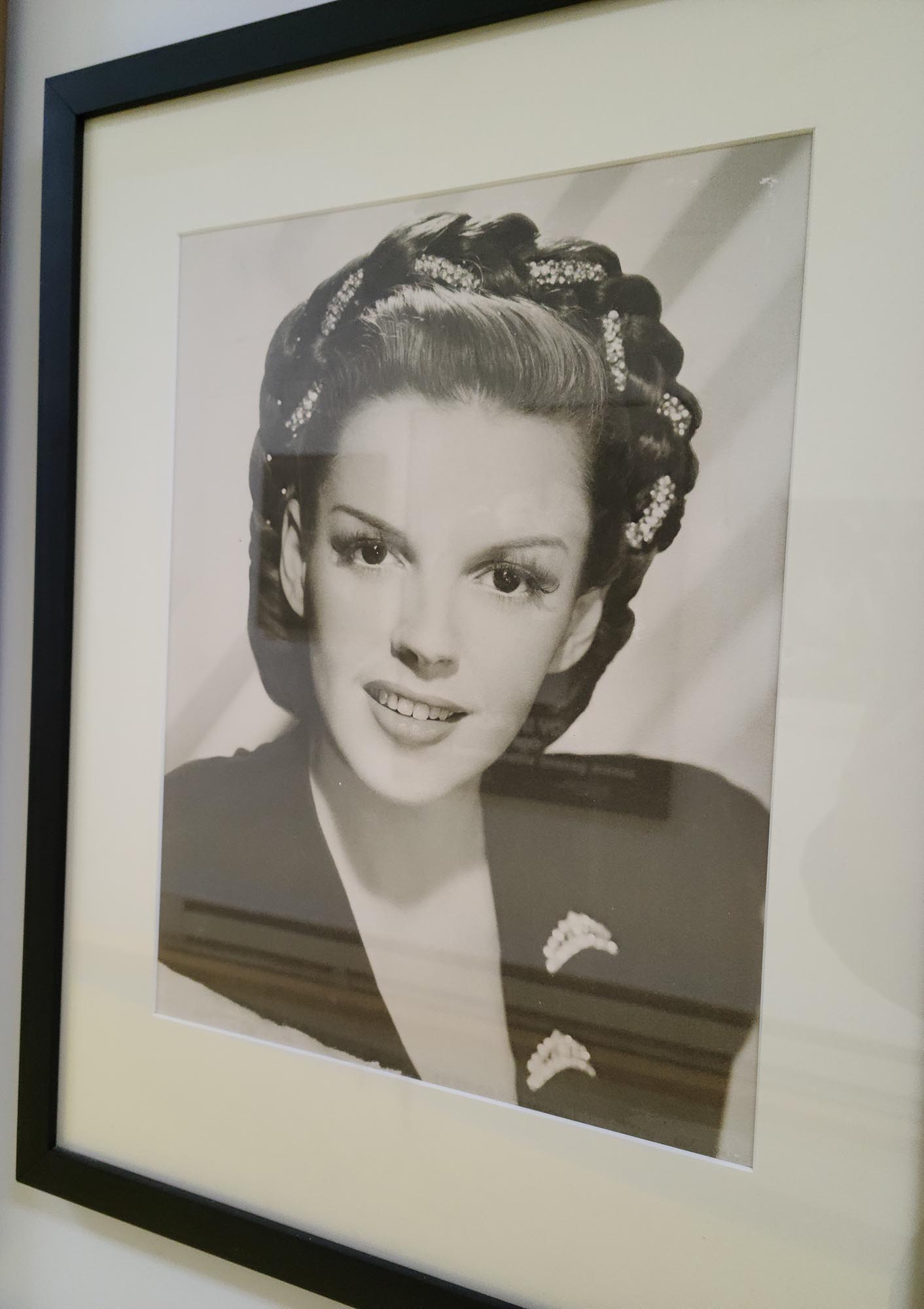
Judy Garland. Image courtesy of the Judy Garland Museum

When I was a child, I used to run around the neighborhood on certain summer evenings, letting my friends know that “The Wizard of Oz” movie was going to be on television that night. I’d hear a promo for the show during the network news or something, and out the door I’d go. I enjoyed the movie so much, I wanted to make sure my friends didn’t miss it.

Our television was black and white until I was almost a teenager, when we got a color set. Imagine my surprise when I watched the Wizard movie and saw everything change to color once Dorothy reached the land of Oz! Nobody had ever told me that happened until I experienced it myself.

Although the Judy Garland Museum opened in 1975, I didn’t know it existed until about a decade ago. I made a mental note to visit one day, and that one day came a few weeks ago when Russ and I meandered north. The museum in Grand Rapids, Minnesota, is composed of a 13,000-square-feet building that’s attached to Judy Garland’s childhood home. Her house has been moved twice, so although the building is original, its location is not. It currently has a scenic view of an Applebee’s Grill and a Home Depot store.

Judy Garland’s Grand Rapids Home

Visitors enter the museum building first to pay and look at the exhibits, and then can access Judy’s home from a covered ramp inside.

We enjoyed seeing the Lincoln Carriage – the carriage that Dorothy and her friends take into the Emerald City. Of course, there’s also the ruby slippers. You may have heard that the slippers, one of at least four pairs, were stolen from the museum in 2005 and then found recently by the FBI. Although they were recovered, they haven’t been returned to the museum and the perpetrators have not been brought to justice.

There are ruby slippers on display at the museum, but they are obvious replicas, not the originals. (Although, the podium is the original podium the stolen slippers rested upon, according to a somewhat amusing sign.)
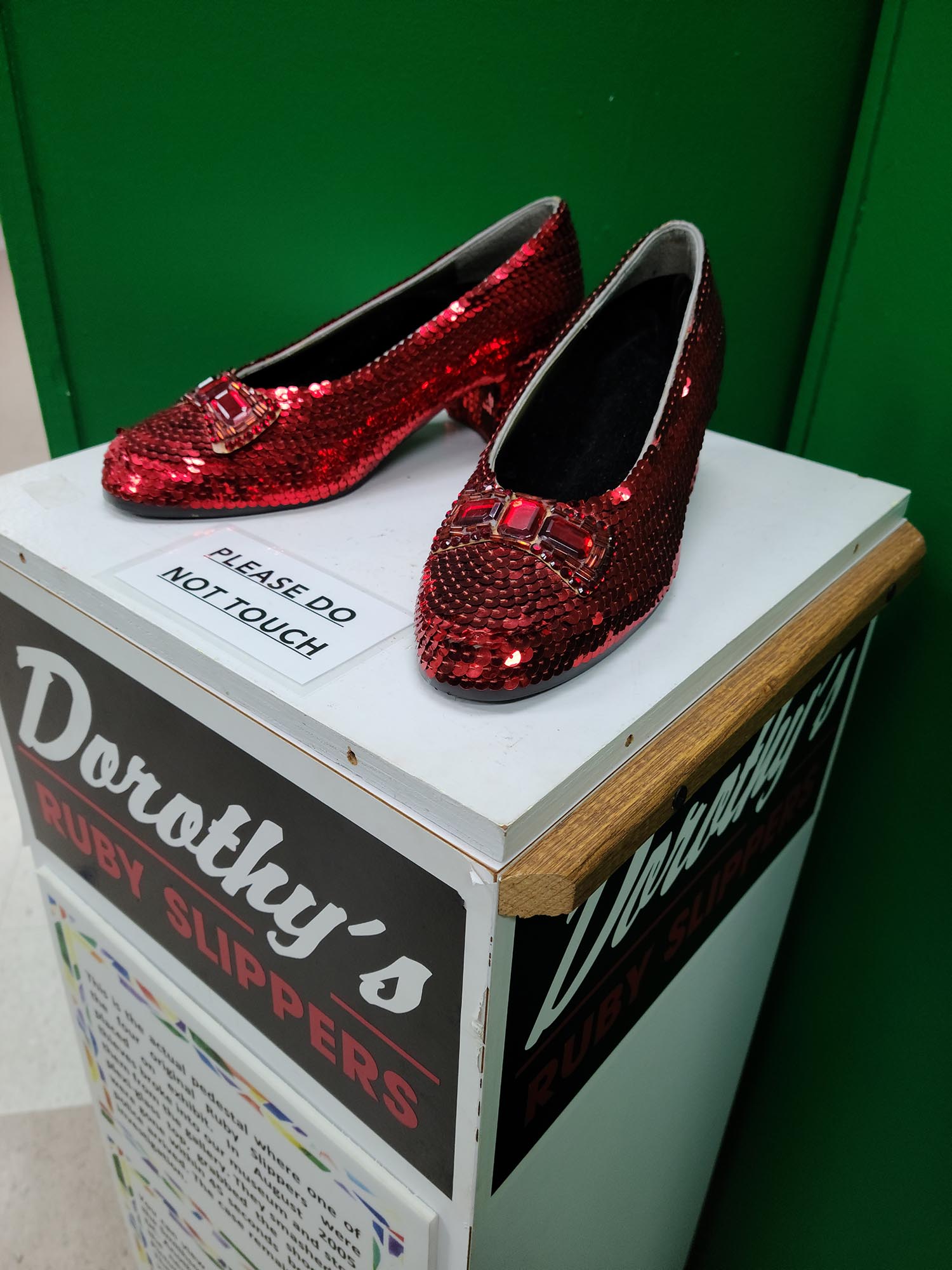
The infamous ruby slippers.

One thing I found strange was that the COVID arrows in the museum direct visitors on a path through Judy’s life backwards. You first see all the memorabilia from her death and when she was famous, and the displays end with her beginnings in Grand Rapids. I’m not sure if that route was due to COVID requirements or if that’s the way the displays were planned.

The chance to look inside Judy’s home was fascinating. The structure was originally built in 1892 by a steamboat captain and his wife. Judy’s parents Frank and Ethel Gumm purchased it was their first family home in 1919. They moved out in 1926 to California. The house was first transplanted in 1938 to make way for a hotel, which was never built. It was brought to its current site in 1994.

While touring the house, visitors are treated to piped-in Judy Garland music. I found that was what I was missing in the museum. Judy’s voice was her claim to fame and it felt weird up to that point not to hear it.

“Judy’s crib” in her parents’ bedroom.

Some pieces of the house are original and some contain carefully curated replicas. One thing you might not know is that Judy didn’t have her own bedroom. She slept in a crib in her parents’ room and her two older sisters shared the bedroom next door. Although the bedrooms were much smaller than we’re used to today, the lower level of the house seemed spacious and similar to present-day homes.

On our way out of the museum, we passed the Children’s Discovery Center, where a raucous birthday party was in the works. There’s also a gift shop that I’m sure will meet all your Judy Garland memorabilia needs.
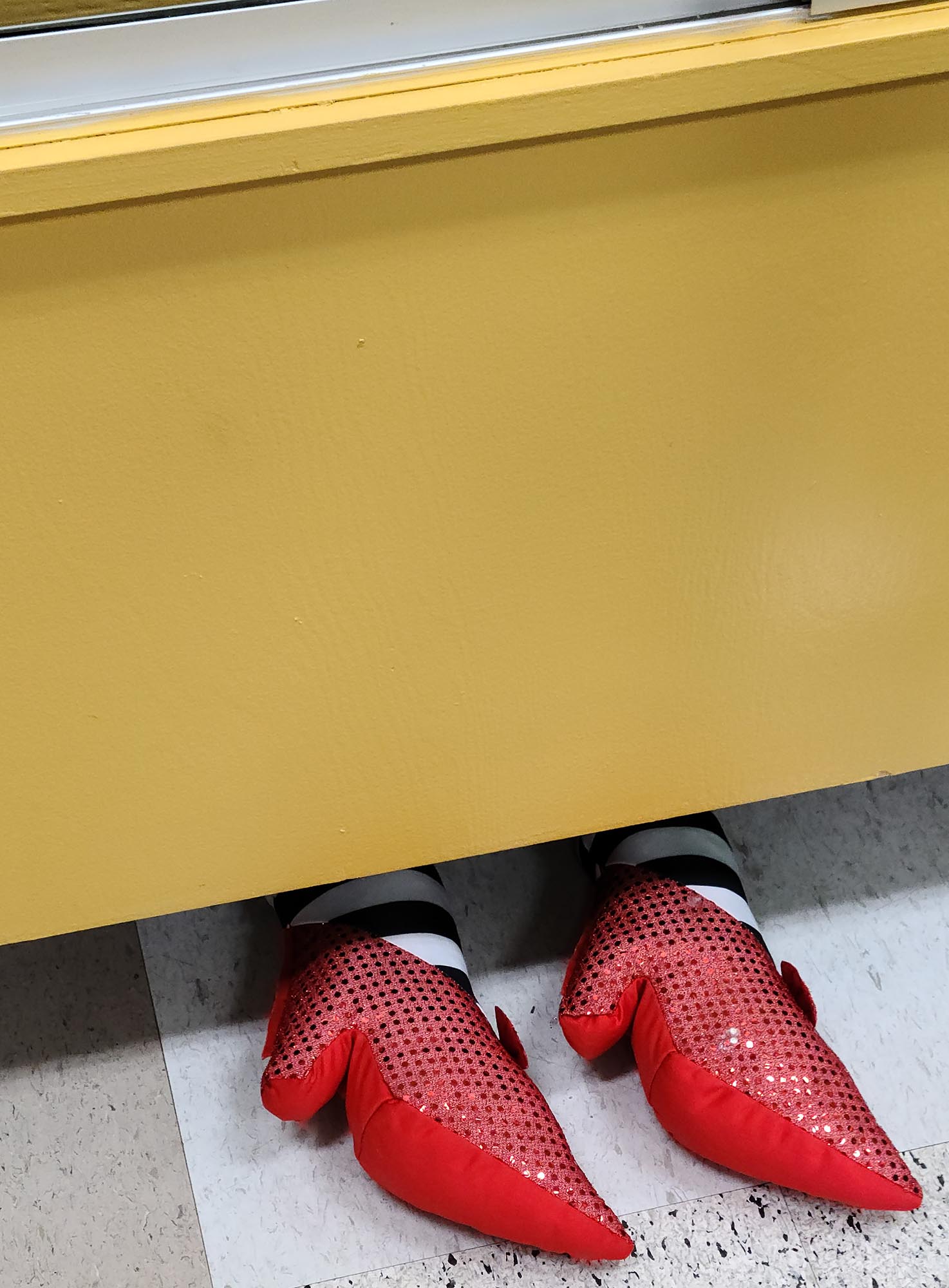
I appreciated the humor in this particular museum display.

I left the museum feeling a bit weirded out and sad for Judy. Imagine having your personal items all out for display to the public! You also get the feeling that she was all too used to having her talent used to make other people money. But I was glad I visited, and feel the museum is a good tribute to this outstanding Minnesota girl.

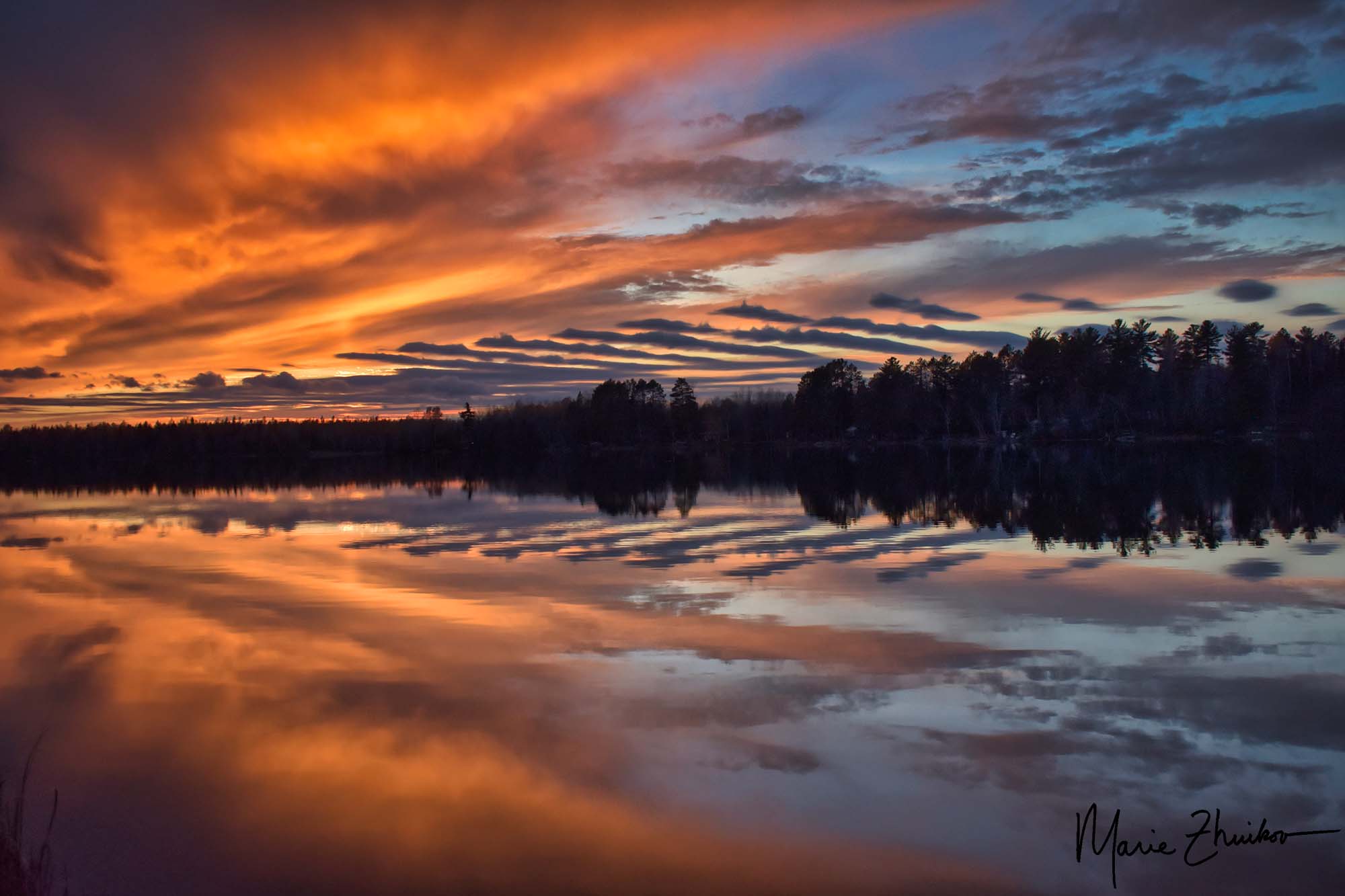
Evolution of a Sunset

I was supposed to be helping Russ cook supper, but the sunset over our cabin lake was too distracting. At first, I thought it couldn’t possibly get any better. I ran outside to the shore with my camera and started clicking away.

Feeling neglectful of my supper duties, I went back inside to help with the chicken recipe, which involved at least 20 cloves of garlic and wine. Then I made the mistake of looking out the window. The sunset was growing even more brilliant. I grabbed my camera and ran to the lake again.

The orange was intensifying. The purple clouds near the horizon were separating into a zebra-stripe pattern. I clicked away some more. Then I remembered we were supposed to cook veggies with our chicken, so I traipsed back inside.

After taking care of the veggies, my gaze drifted back to the window. Doh! Now the zebra stripes were growing and the clouds were turning pink. You guessed it. Russ just laughed when he lost me to the outdoors yet again.

Since Russ was handling most of the cooking by this point, I had time to enjoy the view without my camera viewfinder in front of my eyes. I felt grateful and priviledged to be in this place at this time, thankful that we own this little slice of shoreline.

Inspired to lofty thoughts by the sunset, I wondered how anyone can really “own” land. It’s such a strange concept, but we’ve made an art out of real estate and all its intricacies. Owning land is as artificial a thing as owning water, or air, space, or stars. We may think we own it. We may have paperwork that says so. But it’s really just a figment of our imagination.

Kind of like owning a sunset.

Seeing Rabbits

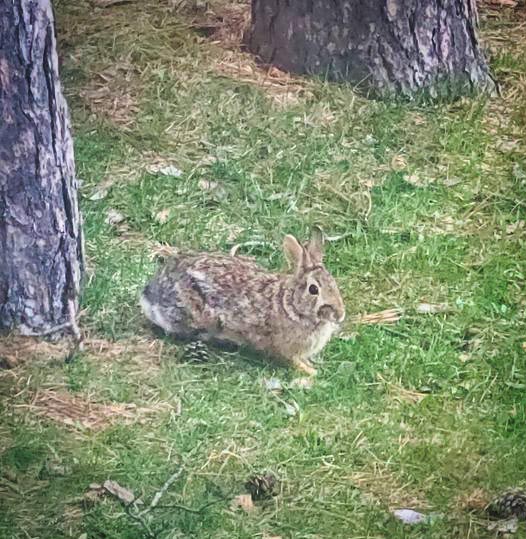
Last winter, a rabbit lived in our backyard, sheltering under our neighbor’s shed. We’d awaken in the morning, shuffle downstairs and take a look out our window on the landing where we could see the back yard. More often than not, there she crouched, a brown cottontail, nibbling what grass wasn’t already covered by snow.

Since both of our dogs died, we’ve been petless. We saw this rabbit so much, it just seemed natural to start becoming a little attached. I began leaving her offerings of dried orchard grass, remnants of our deceased guinea pig. I also initiated a naming contest for the bunny on Facebook. My friend June won with the moniker of “Tater Tot.” It fit – the shape and coloring were approximately right.

Tator Tot survived the winter and this spring we noticed several Tiny Tots scampering around the backyard – her children, no doubt. They didn’t seem to be doing any damage to my hostas, just hiding under them instead of eating them, so we welcomed these new additions to the yard.

I suspect that Tator Tot eventually left our yard for the forest at the end of our road. We sometimes saw a rabbit fitting her description during our woods walks. Her Tiny Tots hung around for several weeks and then seemed to disappear. I hope they, too, found their way to the forest. But they could have easily been eaten by a neighborhood cat or a fox.

I rather miss these foster pets. They were easy to take care of. No fuss, no muss.

I recently read Linda LeGarde Grover’s book “Gichigami Hearts.” LeGarde is a former neighbor of mine; we grew up in on the same street on the other side of Duluth. Her book offers a Native American perspective of our old neighborhood. In one chapter, “Rabbits Watching Over Onigamiising,” she describes how seeing rabbits reminds her of the Native spiritual being, Nanaboozhoo. Now, if you’ve read my book, “Eye of the Wolf,” you know that Nanaboozhoo is a trickster – part rabbit, part human. He embodies the best and the worst of humans and the supernatural.

Tator Tot

LeGarde’s backyard bunnies savored her tulips, necessitating a change the next spring to planting marigolds, which she says the “rabbits nibbled on, but not much.” LeGarde writes that planting different flowers rather than trying to eradicate the bunnies was a good compromise. “We are all here to live our lives . . . We know from traditional teachings that all animals are important to the earth, that no animal is ranked higher or lower than any other in the eyes of the Creator, and that all have a contribution to make.”

She recounted a conversation she had with a friend about seeing rabbits on clear nights in the moonlight in winter, sitting with their legs folded under them like a cat – like they were waiting for something. LeGarde’s friend told her, “When we see them like that at night it is because the rabbits are watching over us, over a sleeping world and our dreams.”

Here in the north, we have two kinds of rabbits: cottontails like Tator Tot and snowshoe hares, which are larger and turn white in winter. Rabbits in the moonlight reminded me of one of my favorite chapters in northland author Sigurd Olson’s book, “The Singing Wilderness,” about the Boundary Waters Canoe Area Wilderness. It’s the chapter called “Moon Madness,” where he recounts seeing hares on his moonlight walks.

“If, when the moon is bright, you station yourself near a good rabbit swamp and stay quiet, you may see it, but you will need patience and endurance, for the night must be cold and still. Soon they begin to emerge, ghostly shadows with no spot of color except the black of their eyes. Down the converging trails they come, running and chasing one another up and down the runways, cavorting crazily in the light.”

Olson concluded that moonlight “made animals and men forget for a little while the seriousness of living; that there were moments when life could be good and play the natural outlet for energy.”

It’s comforting to think of rabbits or hares cavorting crazily in the darkness or quietly keeping watch. I never saw Tator Tot or the Tiny Tots at night because I was, well, sleeping. Perhaps I never saw them because the magic they worked was so effective.

When I emerged from my office building in Superior yesterday evening, I was thinking about all this. As I walked, who scampered across the parking lot pavement not ten feet from me? A big fluffy cottontail. She looked suspiciously like Tator Tot.

Two Sides of the Same Lake

A few blocks down a gravel road near our cabin in northern Minnesota sits a tiny lake, easily seen from the road. It’s so small that a football player with a good arm could throw the ball from one end to the other.

On a bright fall day a few weeks ago, I stopped to admire this lake. While the lake our cabin sits on was rocked with waves, this lake was calm in the shelter of trees. Only one cabin hunkers along its shores. Those folks own the land all around it, so it’s likely no other dwellings will appear in the future. Although small, the lake is deep – up to thirty feet – making it a favorite of local anglers. I almost always see wildlife when I visit: mink, muskrats, turtles, osprey.

I had my camera along and snapped several images in sequence, pointing to opposite sides of the lake. I was amazed by how such a small lake could look so different on either side. Below are two of my favorite images from that outing. They got me thinking about how people can be multi-faceted, too.

Ghost Birches
Tranquil Tamaracks

The Fish Dish: New Podcast Mixes Friends, Fun and Food

I’ve been busy at work lately, giving birth to a new podcast. If you want the latest “dish” about Great Lakes fish, you’ll want to listen to “The Fish Dish.” I host it with longtime coworker and friend Sharon Moen, Sea Grant’s Eat Wisconsin Fish Outreach Specialist. Besides introducing you to the people behind Wisconsin’s fishing and aquaculture industries, each episode includes a “Fish-o-licious” section where we cook a new fish recipe.

The first episode features Craig Hoopman, a sixth-generation commercial fisherman from Bayfield, Wisconsin. Hoopman shares his beginnings in the business, current challenges, plus his dreams for the future. Also, Sharon and I share our backgrounds in fishing and introduce listeners to the Eat Wisconsin Fish campaign. During the “Fish-o-licious” part of the show, we cook Greek-Style Lake Whitefish at Hoopman’s recommendation.

Tying it all together is ska music by Twin Ports band, Woodblind. Take a listen — let me know what you think!

A New Venture

Hello Dear Readers

Like the photos you see on my blog? I’m starting a new venture selling my photos. Visit my personal website http://www.mariezwrites.com/photography.html to see my galleries and make a choice!

The way it works is, once you’ve decided on a photo, contact me throught the Contact page on my blog (http://www.mariezwrites.com/contact-1.html). Let me know if you’d like the image as a print, canvas-wrapped frame, or fine art metal (aluminum) print. Let me know what size you want and I will send you a quote. Payment will be through Paypal.

Other photographers — I’m looking for a service that will process photo orders for me. Which one do you use? How do you like it?

Mini-Minnesota Vacation #5: Grand Marais and Oberg Mountain

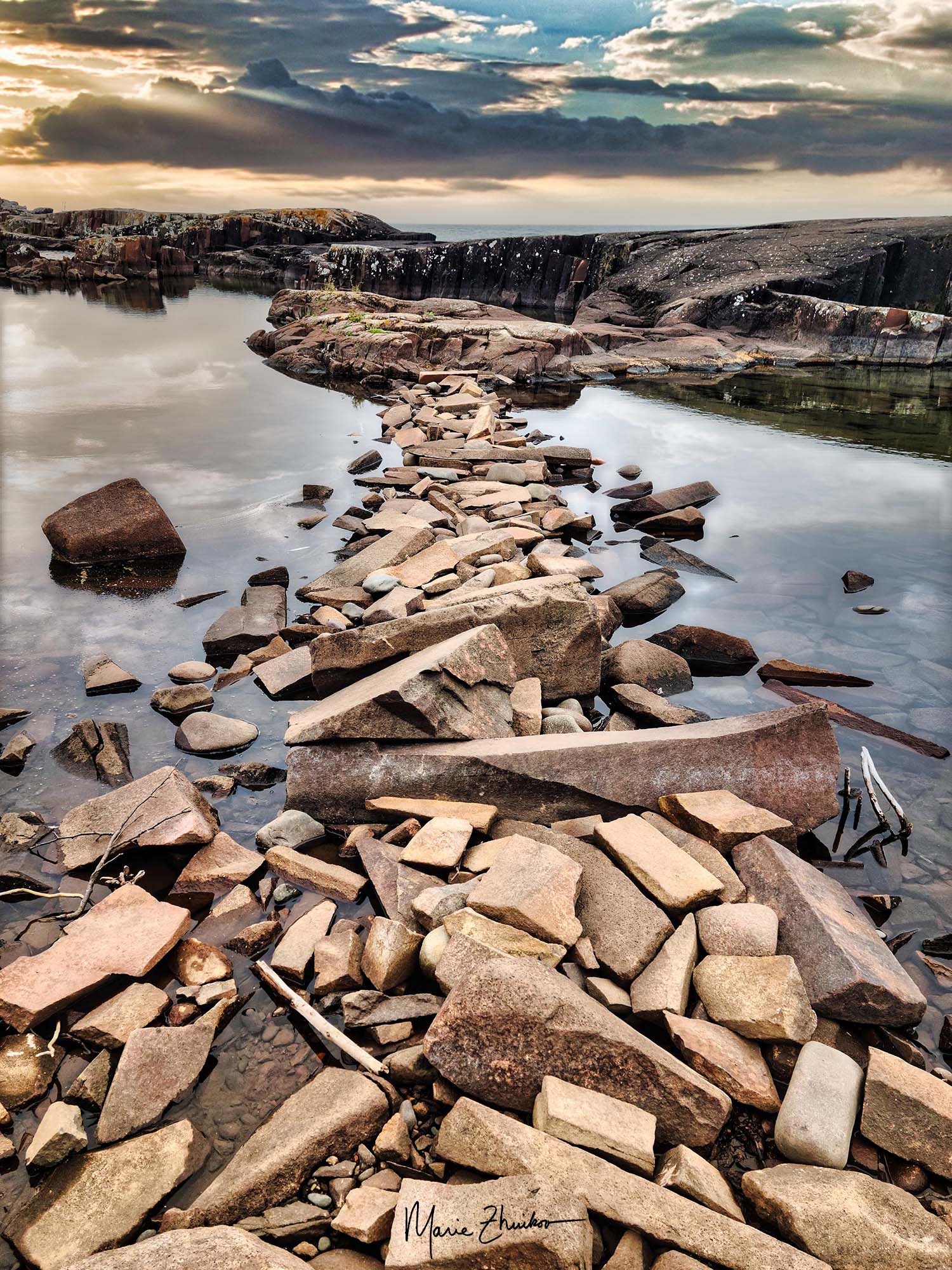
The Path to Enlightenment, Grand Marais, MN

Sometimes you can visit a town many times for decades but still discover new places in it. That’s the way Grand Marais, Minnesota, was when Russ and I meandered north for a weekend in our Scamp.

We were too slow on the uptake to get a reservation at the municipal campground, which is right on the shores of the harbor. But half of the sites (the ones closest to Lake Superior) are first-come, first-served, and there are a lot of them. We figured if we arrived early in the afternoon, we might have a good chance of finding an open site. We didn’t have the option of travelling during a different weekend because we had reservations for a concert that wasn’t happening any other time. We made backup plans to camp in a friend’s driveway and headed out.

I’m sure the suspense is killing you. Did they find a campsite? Yes, we did. In fact, we had five to choose from, thanks to the shortness of our Scamp (13 feet). After we got situated, we had several hours before supper and the concert. We meandered around the campground, getting the lay of the land. We walked into town and along the way, checked out the fishing museum that’s on the shore of the harbor. It features an old fish house complete with fisherman mannequins, a fishing boat, and a smoke house.

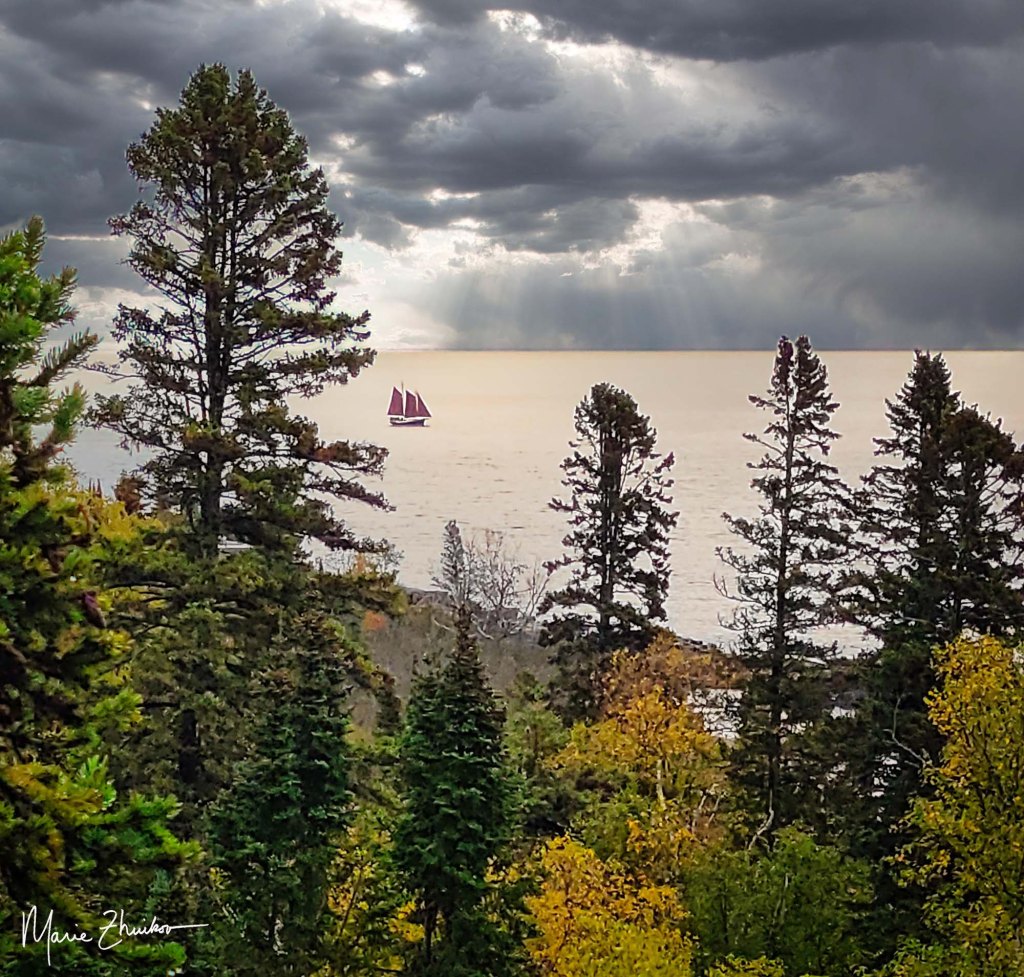
Sailboat Layercake. The Hjordis sailing out of the Grand Marais Harbor.

In town, we visited the Johnson Heritage Post Art Gallery, one of the places I’ve never been inside, despite coming to Grand Marais periodically for fifty years. Unbeknownst to us, the town was hosting a plein air (outdoors) painting festival and competition that week. The artists’ works were displayed in the gallery – a most impressive and inspiring collection!

No visit to the town is complete for us unless we stop in at the Ben Franklin Department Store. The owners are friends who we don’t get to see nearly enough. We also had time to visit the Sivertson Art Gallery, which I think I’ve only been inside once – another notable collection of local artists and photographers.

After supper at the Angry Trout Cafe, which features local foods (note, the Trout is open all year now but is closed sometimes in November), we headed north just outside of town for the concert. The artist is Michael Monroe, an acoustic guitar, ukulele and glass flute musician who’s popular in Minnesota (and other parts of the country, I’m sure!) He offers log cabin concerts. I signed up for our concert months in advance and was dismayed to learn along the way that Michael and his partner Deb sold their log cabin. But they found a friend who was willing to host the concert in their cabin right on the shore of Lake Superior, literally eight feet away from the water.

Musician Michael Monroe

With the sound of waves as a backdrop, we enjoyed an intimate concert in a home environment. Michael’s music makes a person feel all warm and fuzzy inside. If you like Cat Stevens, Paul Simon, and Joni Mitchell, you’ll love Michael’s music.

After a peaceful rainy night’s sleep (we were impressed by how quiet the campground was), the following day, we pursued more natural activities. Right next door to the campground is the Sweetheart’s Bluff Nature Area. An easy, wheelchair-friendly trail begins on the end of one of the campground loops, offering lake and woodland views. If you’re up for a challenge, take the definitely not wheelchair-friendly black diamond-level trail up the bluff. Be prepared to clamber! But the views of the lake and harbor are worth the effort.

The view of Grand Marais from Sweetheart’s Bluff.

Soon, it was time to vacate our weekend home. One place I wish we would have stopped in Grand Maris is the Gunflint Mercantile. They make THE BEST maple chocolate truffles on Earth. Maybe next time!

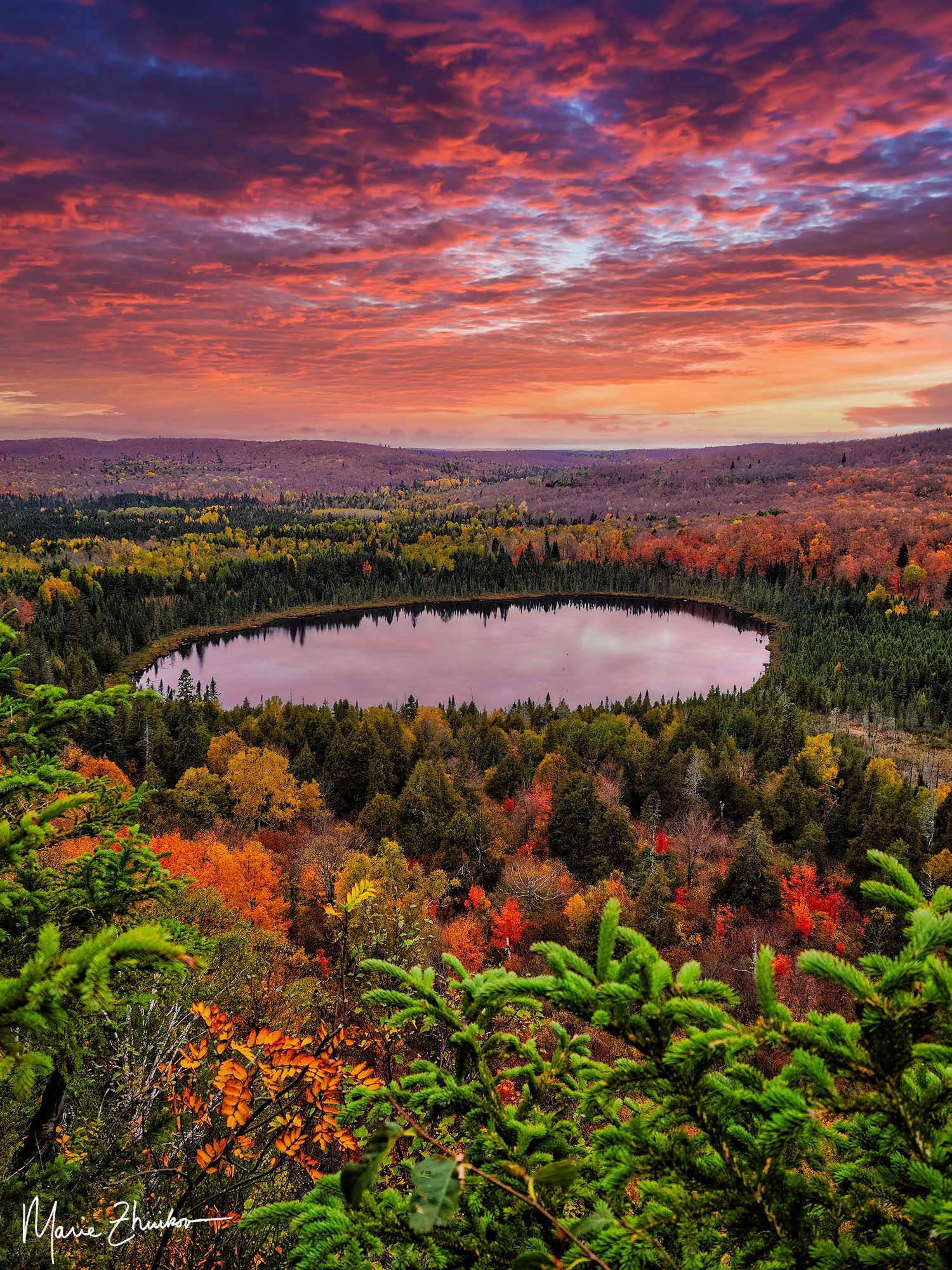
On our way home, we stopped just outside of Tofte to hike the Oberg Mountain Trail.  This fairly easy three-mile loop is known for stellar views of the Superior National Forest and Oberg Lake. The Forest Service says the trail gets “medium” usage, but when we were there on a colorful fall day, I would classify the usage as extreme. There were tons of people there and parking was at a premium. It felt more like a major national park attraction than a national forest.

As we hiked through the cedars and maples, fog began to roll in off Lake Superior. The first few overlooks we reached were totally shrouded. So much for stellar views. But we persisted and were rewarded by fog-free views on the other side of the mountain.

Easter Egg Fall. Oberg Lake as seen from Oberg Mountain.

The wildlife seemed used to people. I was able to get a close look at a hairy woodpecker working on a birch. The red squirrels seemed to delight in racing across the trail just steps away. A ruffed grouse took noisy flight nearby.

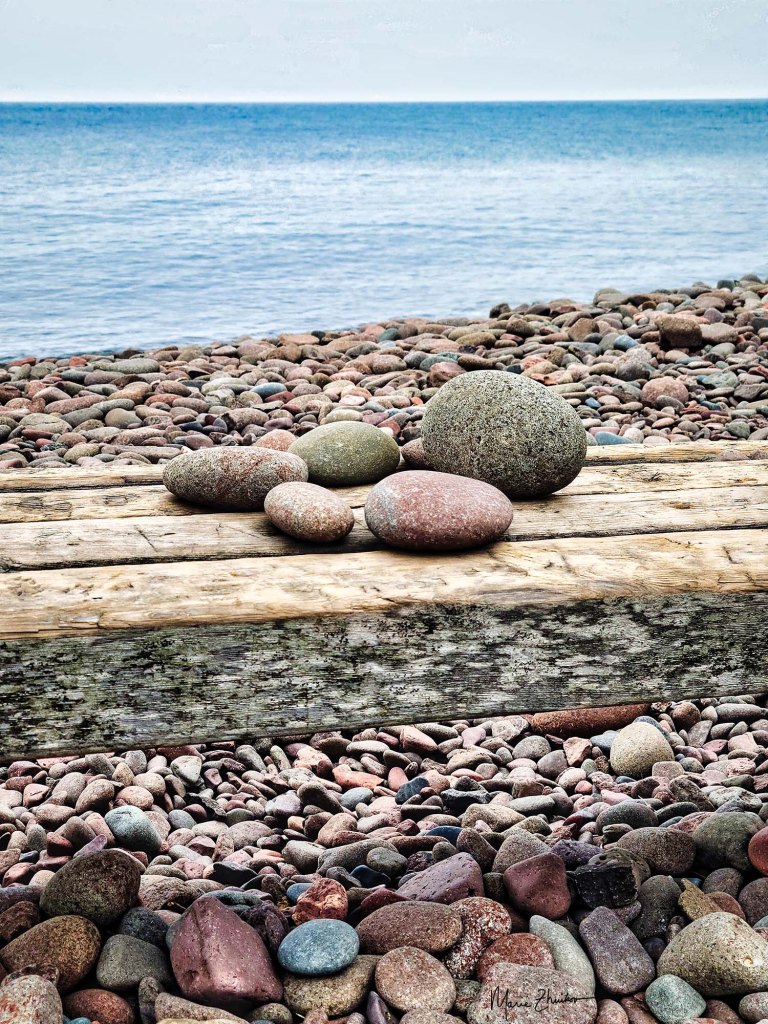
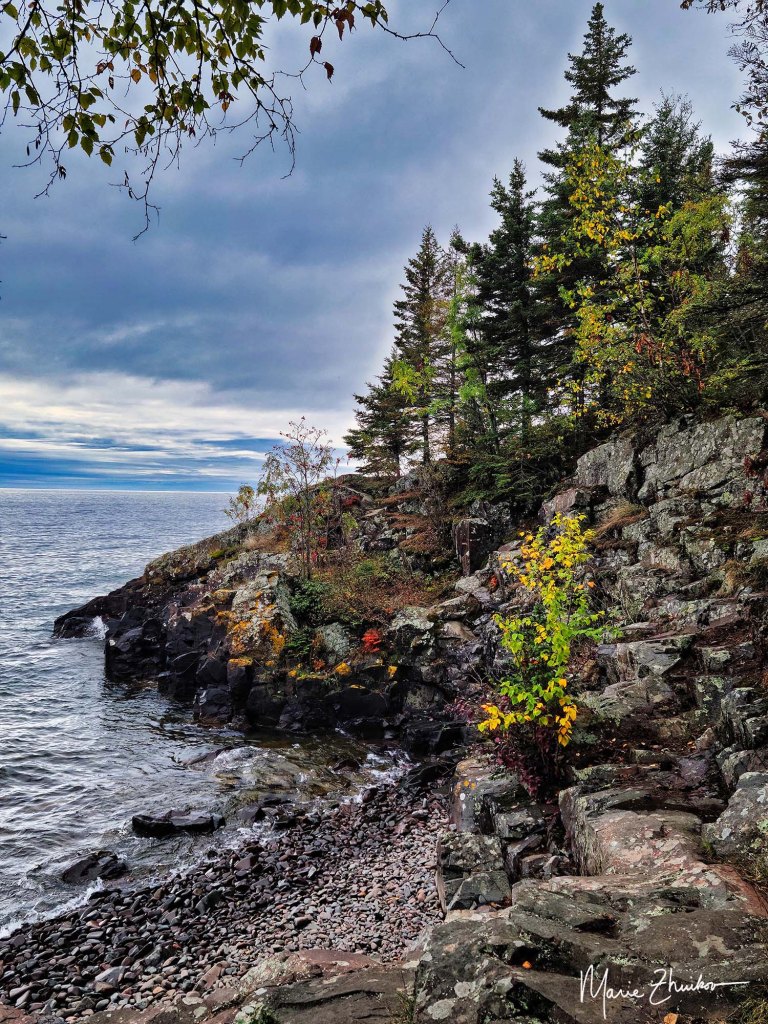
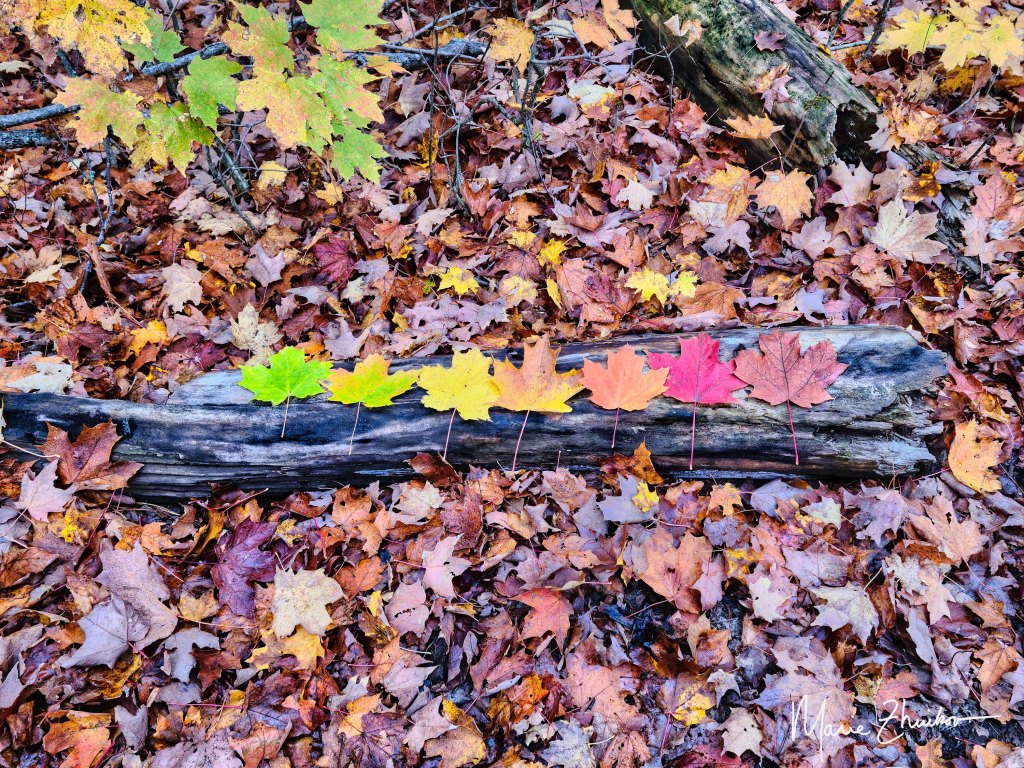
All the good art we saw must have rubbed off, because I took some pretty darn good photos. Here’s a show of the ones I haven’t already shared.

I hope everyone’s having a good fall. Stay safe, my friends.

Lawn Mower Races: Cutting-Edge Excitement

The grand marshal of the Thunder Valley Lawn Mower Races, Maine. Image credit: Mark Haskell, Courier-Gazette

Apologies for the bad pun in the title, but I wanted to let you know that you truly haven’t lived until you’ve witnessed this phenomenon. Lawn mower races happen all across America, from Idaho to Maine. I received my first taste in late summer when I meandered into Cotton, a small town in northern Minnesota.

Grown men (and in other places, women) clamber aboard riding lawn mowers that they have modified for racing. In Cotton, the circular racing track was an actual lawn situated behind what used to be the town’s high school but is now a community center.

The races are a cultural highlight of the season. Families gather to sit on the grass or on haybales to watch the festivities. Kids eat cotton candy. Some folks even back their jacked-up pickup trucks along the track. Sitting in folding lawn chairs in the cargo bed, they have a prime, elevated view.

Engines rev. The starting gun cracks, and they’re off! The machines tilt as they round the corners, wheels lifting off the ground. The drivers likewise tilt, leaning into the movement. Around and around they buzz, neck and neck. After a few turns around the track, one man’s mower putters out and he pulls into the center, defeated.

Cotton, MN, lawn mower racers lean into the turn.

According to the U.S. Lawn Mower Racing Association, this quirky form of racing began in the early 1970s – touted as a perfect way to use a machine that many people already have, and to let off steam. It became official when the makers of a fuel stabilizer came up with the idea of using a lawn mower race to promote their product on April Fools’ Day in 1992.

I had no idea this pastime had been around for so long! There’s even such a thing as lawn mower ice racing in winter.

With a wave of a checkered flag, the race ends. The crowd applauds. The winners strut over to claim their prizes and pose for the local newspaper photographer.

In Cotton, racers competed in two events, “modified” and “stock.” I felt culturally enriched for having watched these events. But it all seemed like such a waste. You see, the racing mowers don’t have their blades engaged. All that noise and hype, and in the end, the grass on the track is just as long as before. 🙂

Author Appearance this Weekend

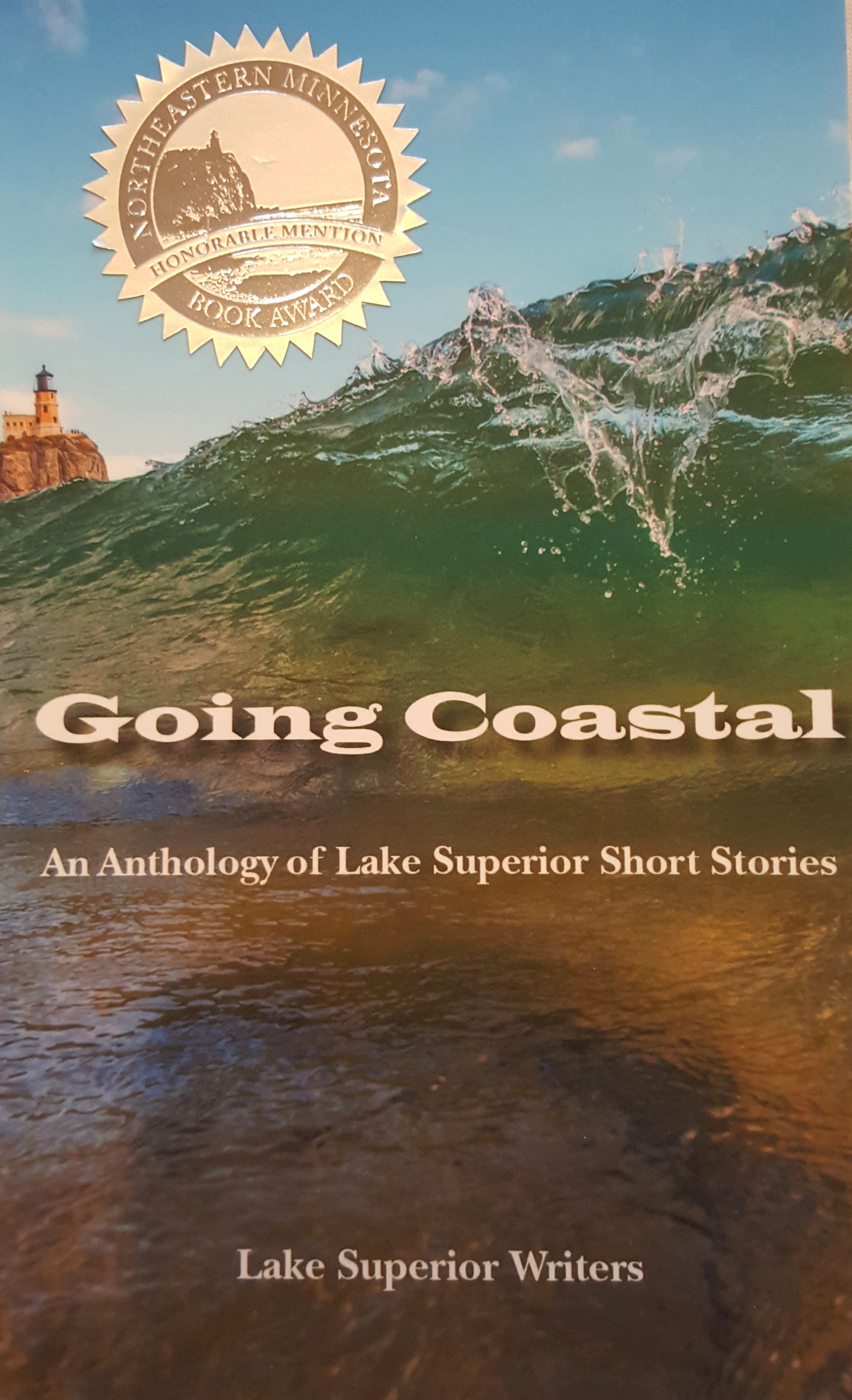
The “Going Coastal” anthology sporting its snazzy Northeastern MN Book Awards seal.

Hi – this Saturday (10/16) I’ll be selling books at the Twin Cities Book Festival from noon-2 p.m. Look for me at the Metropolitan Library Service Agency table. I’ll have copies of “Going Coastal” (a Lake Superior short story anthology written by Lake Superior locals, including me) and “Plover Landing,” my eco-mytic-romance novel.

Free Halloween Story!

My creepy short story, “A Night in the Tower-Soudan Mine,” was published on the Twin Ports Terror website. You can access it for free by clicking on the linked text above. Eventually, it will be published in their printed book, which is distributed for free around the Twin Ports of Duluth and Superior.


The storyline was inspired by several trips I’ve taken into the mine, a half-mile underground on Minnesota’s Iron Range, since I was a youngster. My latest trip was just a few weeks ago, taken to refresh my memory. The sections about the mine tour are factual (other than the character getting knocked out thing), but the latter parts about the safety tunnel are figments of my imagination, informed by research.

Iron ore, which is used to make steel.

I began writing the story as part of a fiction workshop by the indomitable and inspirational Felicia Schneiderhan, where she challenged us to write two short stories that follow the same “rules” and feature the same random object in them.  If you read the story, I’d be interested in hearing what you think is the random object.

The second story I wrote for the workshop is part of a collection for which I’m currently trying to find an agent. So far, I’m striking out, but I just received some good tips, so we’ll see if they are helpful.

Enjoy and Happy Early Halloween!

Marie in the mine.