The Five Top Stories of 2020 on Marie’s Meanderings

If you’re reading this, you survived the year that was 2020. I won’t offer any inane or overused platitudes about this year. We all know how it went. While I did write a few posts about the coronavirus and other 2020 disasters, everyone else was, too. So, I tried to keep my topics unique and personal. My most-popular list reflects that. Here are the five top posts from this year, along with a couple of overall popular posts since I started this blog seven years ago.

But first – a couple of more numbers: views almost doubled again this year, with 27,960. My blog has about 520 followers. Thank you, followers. I value you all!
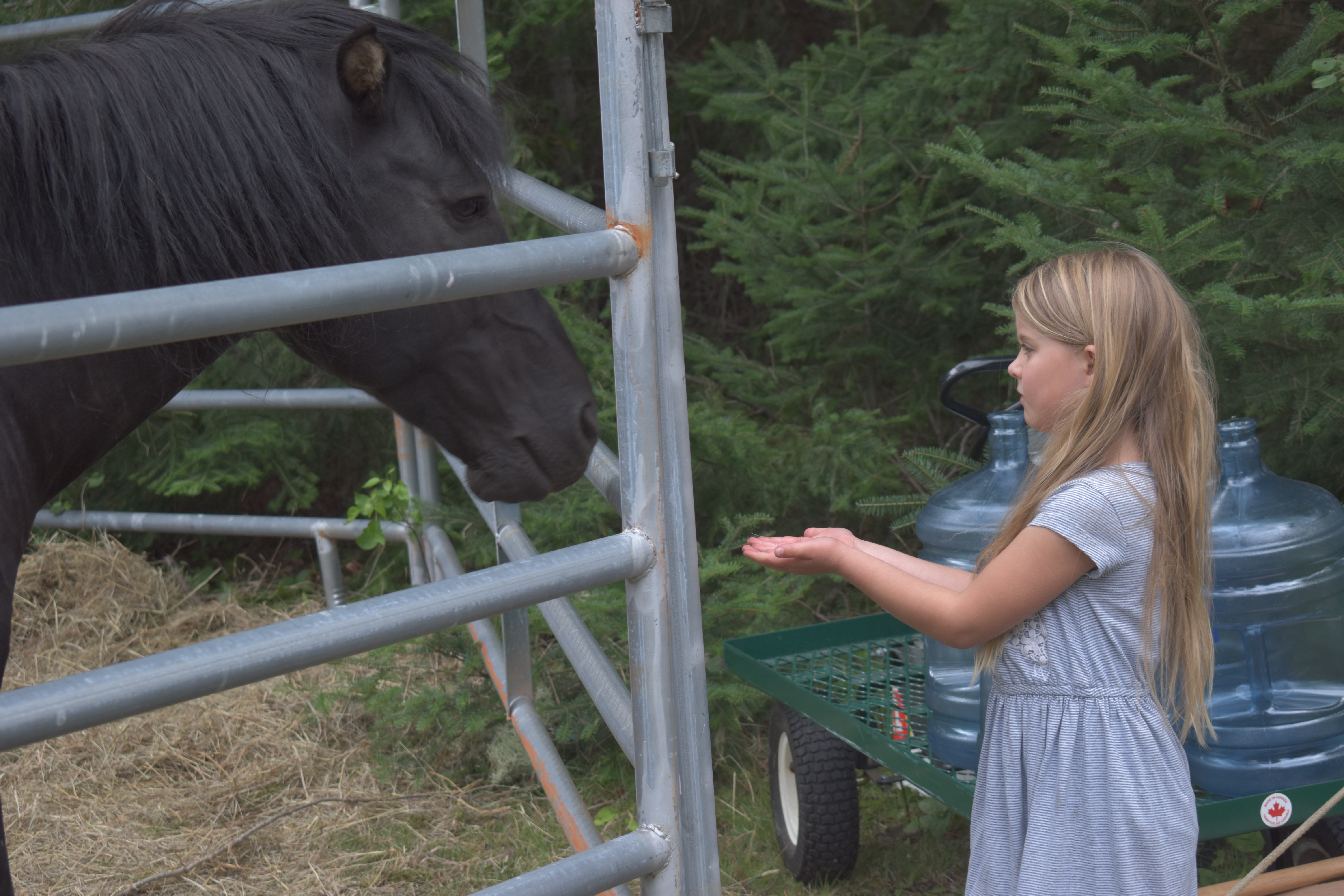
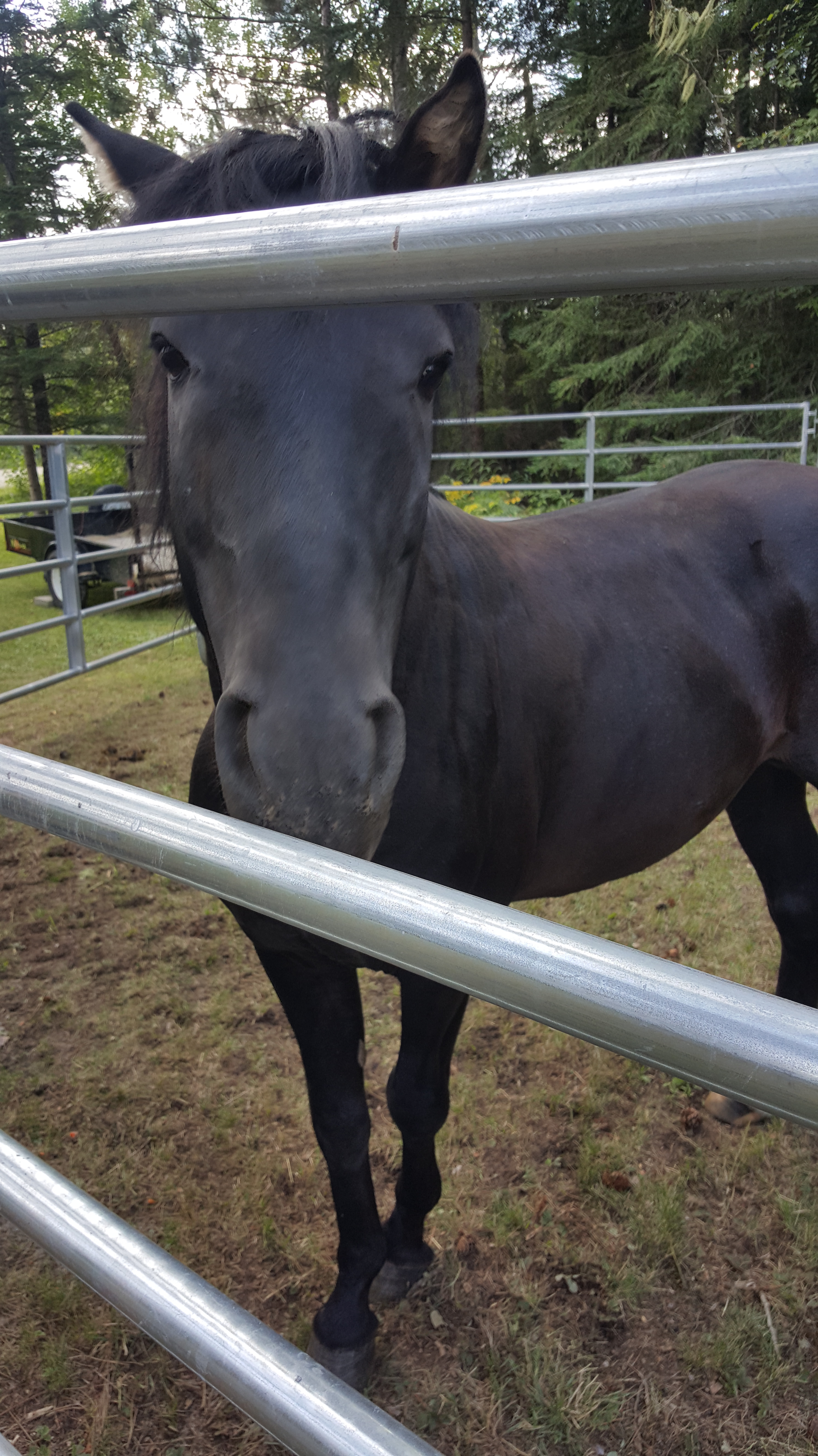
A girl makes friends with an Ojibwe horse at Quetico Provincial Park in Canada.

#1 Revisiting my Horse Mania – This is a relatively recent post (from November) where I reminisce about the love of horses I developed a child. I was able to revisit my passion as I researched and photographed a story in Canada for Lake Superior Magazine about a rare and endangered breed, the Ojibwe horse (also known as Lac La Croix Indian Ponies). My story, “The Horses Nobody Knows” describes how the breed was saved from extinction in the 1970s, and what the horses mean to the Ojibwe people today. The story is only available in the printed magazine (Dec-Jan issue) right now, but the magazine intends to post it online in Feb 2021. I’ll try to remember to post a link here once it’s up.

#2 Bog Birding Bust – This story’s high ranking surprised me because it’s about something that DIDN’T happen. After years of anticipation, I finally went to a local bog that’s a legendary birdwatching site. I hardly saw anything! So, this post was a lesson in the worst time to see birds in the Sax-Zim Bog in northern Minnesota. I guess failure is sometimes much more interesting than success.

#3 That Time I Organized a Sea Lamprey Taste Test – This was a trip down memory lane from when I worked for Minnesota Sea Grant in the late 1990s. We received funding for a demonstration project to determine whether there was an overseas market for a Great Lakes invasive pest – the sea lamprey. To promote the project, I organized a media event, which included a taste test by local luminaries, including the university chancellor, the mayor, etc. The event was a hit – leading to national and international stories. The project was also a hit, until further testing showed the lamprey were too high in mercury for safe consumption. So, it turns out, despite my concerns at the outset, I did a darn good job of promoting something that can contaminate people.

#4 The Many Faces of Buddy – As if this year wasn’t sucky enough, my dog (who was a frequent contributor to this blog) died. To know Buddy was to love him. We still keenly feel his sudden loss.

#5 A Mini-Minnesota Vacation: Lake Vermilion State Park – Despite travel restrictions, Russ and I were able to meander around a bit, close to home in our Scamp trailer. One of the first trips we took was to a new state park in northern Minnesota. Read my post for some pros and cons.

Overall, my blog’s most popular posts continue to be a tongue-in-cheek story I wrote about writer’s bumps (17,300 views this year!) and another about how crappy Iams dog food is.

Best wishes to you all in 2021. May your coronavirus vaccinations come quickly and with few side effects.

Please, stop showing the needles!

Professor Gottfried Kremsner injects a vaccination against the coronavirus disease (COVID-19) from German biotechnology company CureVac to a volunteer at the start of a clinical test series at his tropical institute of the university clinic in Tuebingen, Germany, June 22, 2020. REUTERS/Kai Pfaffenbach/File Photo

I don’t know if it bothers you, but I’ve about had my fill of seeing news reports showing needles poking into people’s arms and giant q-tips being shoved up their noses. Yes, I am happy that a COVID-19 vaccine is being distributed, but do we really need to see people getting shots multiple times during every evening newscast?

Maybe it’s my empathic nature, but it hurts me to see people getting vaccinated. I am not afraid of needles. I would just rather not see them. Even when I get vaccinated, I look the other way. I know it’s going to hurt. I know it will be over quickly. But I’d just rather not see the giant pointy thing approaching my arm.

I saw enough news footage of people getting nasal swabs for COVID testing that I realized I would not enjoy that, either. I am lucky that my community has a large-scale spit testing facility available – one of the first in Minnesota.

I had some symptoms a few months ago, so I took the spit test. Thankfully, it was negative. I plan to get another one even though I don’t have symptoms because we are going to try and have a small family gathering over Christmas. I would much rather spit into a tube than have my brain scraped by a giant q-tip.

Maybe I should just stop watching the evening news. But I would much rather vainly complain about needle footage in hopes some ABC News executive will read my blog and find some other visual to use instead. What would that footage be? I don’t know. Just show the vaccine vials or a smiling person with a temporary bandage on the vaccinated arm. Anything but the NEEDLES!

The Hallmark Christmas Movie Drinking Game – Marie’s Version

Greetings! I hope all my dear readers made it through Thanksgiving in a healthy and happy way. But if you are getting COVID-isolation crazy and want to let off some steam, I humbly suggest you try the Hallmark Christmas Movie Drinking Game. I heard about this from a coworker and it sounded too fun to pass up.

I got together with two people from my COVID bubble and we watched “Christmas at Grand Valley,” available for streaming from Amazon Prime. In this scintillating saga, which is cast in the Hallmark Movies and Mysteries series, Kelly returns to her Wyoming hometown (from Chicago) and becomes involved in an effort to save the town’s beloved lodge. In the process, she falls for a handsome widower sent to decide the fate of the lodge.

I’m not sure why this movie is considered a mystery. The only inkling of mystery comes in the form of, “WHEN ARE KELLY AND WIDOWER MAN EVER GOING TO KISS?”

Whenever certain things happen on screen, viewers must take a sip of their drink, or two sips, down the whole thing, or take a shot. I *think* (memory is fuzzy) I ended up drinking a whole bottle of wine between supper and the movie. It was great fun, plus I thought up some new rules, which are the ones posted in red.

Happy Holidays everyone!

RULES

Take one drink whenever:

  • A reference is made to a dead relative
  • The “Mayor” appears on screen
  • The main character’s name is related to Christmas (Holly, Nick, etc.)
  • Anytime someone disses fake Christmas trees
  • A newcomer partakes in an old family or town tradition
  • Hot chocolate, apple cider, or eggnog is on screen
  • A big city person is transplanted to a small town
  • Christmas caroling, a tree farm, or baking cookies appears
  • Mistletoe is on screen
  • A character makes a magic deal with Santa or an angel
  • Any time you hear “Jingle Bells”
  • The town is named something Christmas-y

Take two drinks whenever:

  • Characters experience a ‘near-miss’ kiss
  • An obvious product advertisement appears
  • A snowball fight or ice skating happens
  • An ugly sweater or tie appears
  • The characters are snowed in
  • A “Pride and Prejudice” reference is introduced (a character is named Darcy, a place named Pemberly)
  • Someone with slicked-back hair expresses their hate for Christmas

Finish your drink whenever:

  • The cynic is filled with the Christmas spirit
  • It snows on Christmas
  • Someone selects a Christmas tree
  • The main characters bake/cook something together, or Christmas-themed food is mentioned
  • Bad art appears or a literary reference is made
  • Dissonant architecture appears (for instance, a lighthouse in Wyoming)
  • Accordion music happens, especially if it’s playing Jingle Bells

Take a shot whenever:

  • The movie stars Candace Cameron-Bure, Lacey Chabert, or Andrew Walker appear
  • The main characters fall in love
  • The main characters kiss

Snowshoe Moon


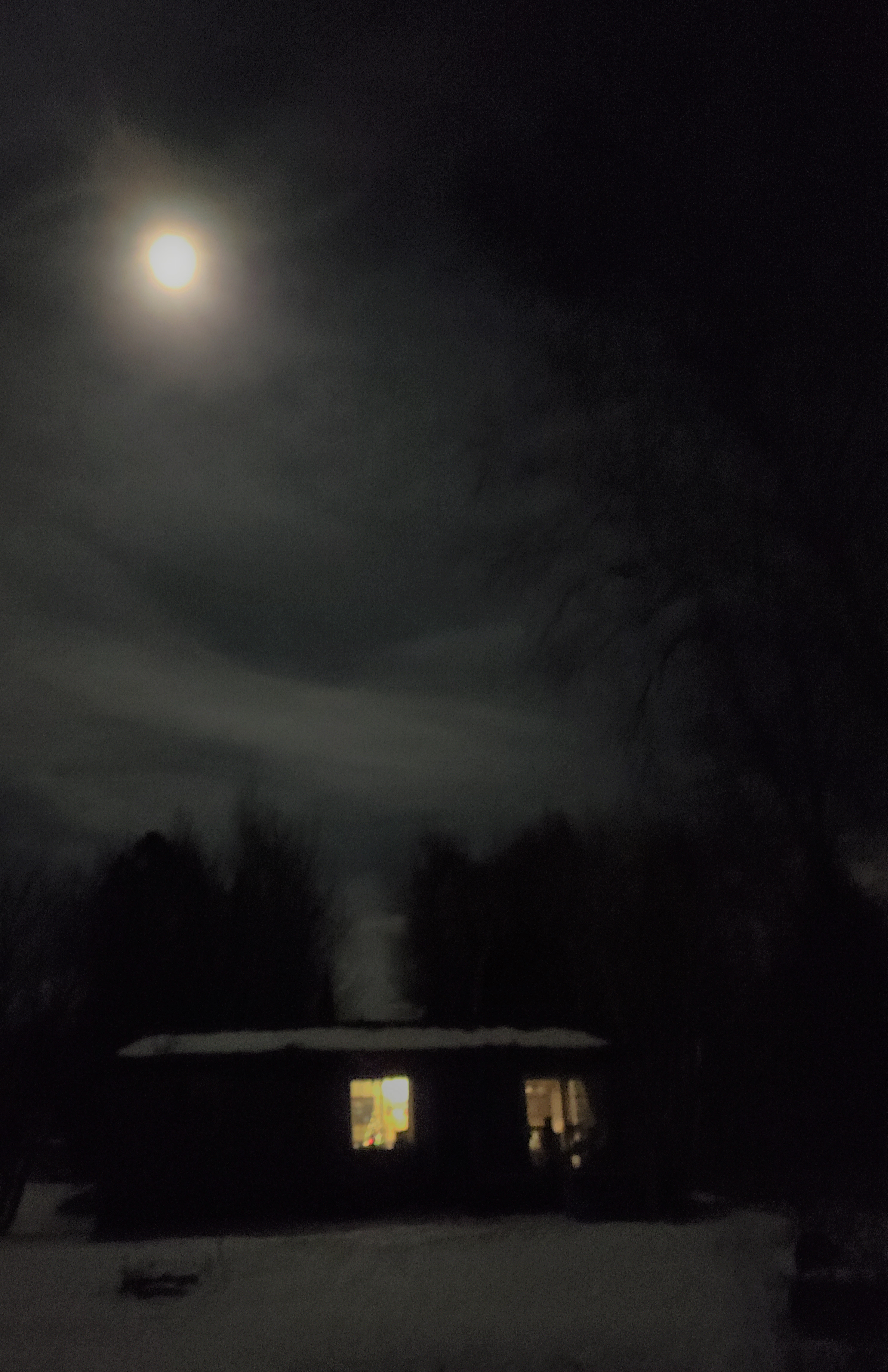
The moon was too gorgeous to be denied. We went out to greet it on a frozen lake.

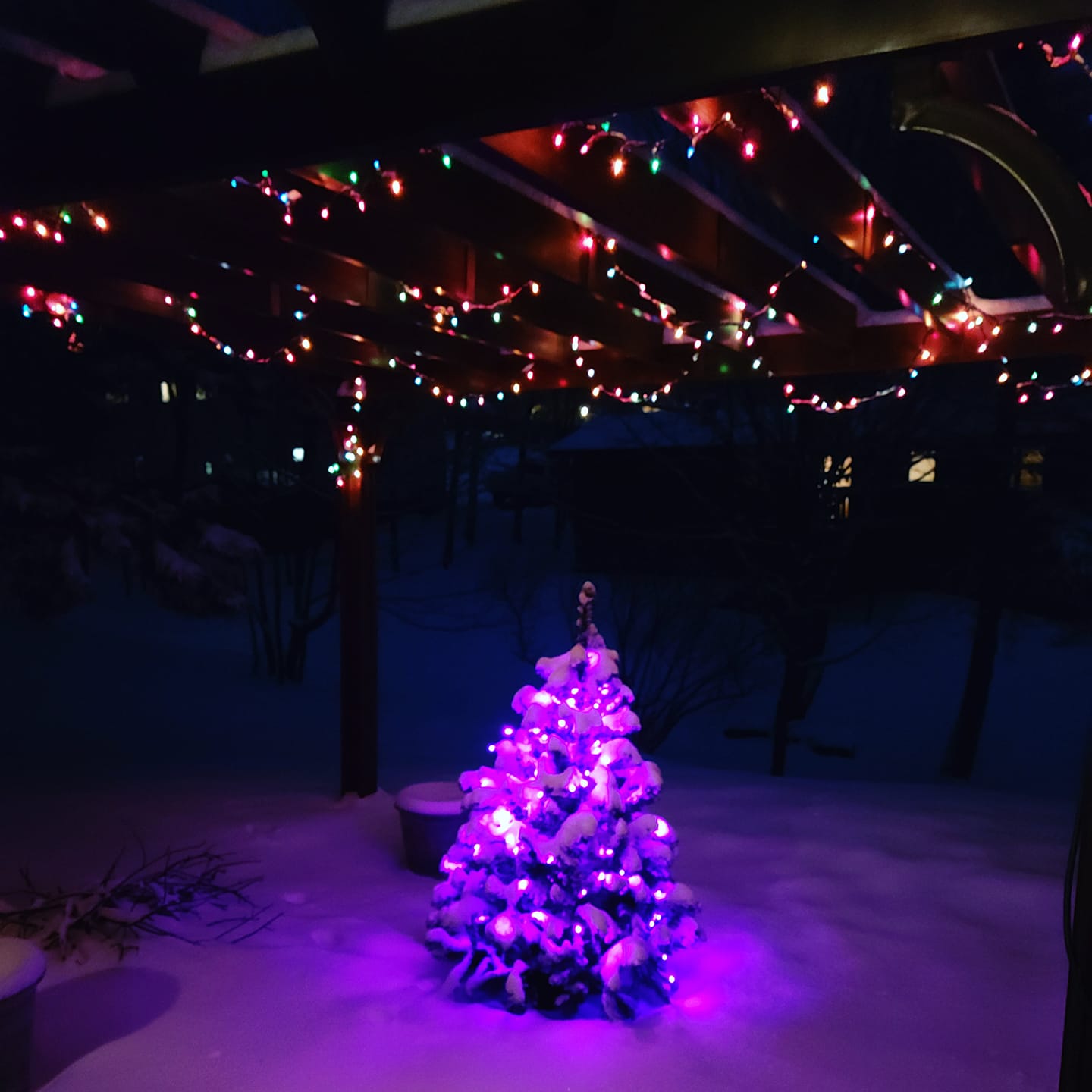
We snowshoed past this cozy cabin with a little Christmas tree in the middle window. You can almost see the tree in in this night-blurry photo. Silent night. Inspiring night….

Revisiting My Horse Mania

An Ojibwe horse makes friends with a girl at Dawson Trail Campground in Quetico Provincial Park, Canada.

When I was a girl, I was horse crazy. My best friend, Jody, lived in my neighborhood and we collected every different breed of plastic toy horse we could get our hands on. (Or that we could convince our parents to buy.)

I had galloping horses, standing horses, rearing horses, trotting horses; Palominos, greys, Morgans, Appaloosas, Paints, you name it.

Jody and I enjoyed many imaginary adventures with our steeds. Enraptured, we watched movies like “The Miracle of the White Stallions,” “Justin Morgan had a Horse,” “The Black Stallion,” and “National Velvet.” I must have read all the Beverly Cleary horse books and Walter Farley books. During winter, we didn’t build snowmen, we made snow horses (which are basically snowmen lying down).

The highlight of my year was summer YWCA camp where I could ride a horse, although at a plodding pace. (Spatz, I miss you!)

It didn’t help that my grandfather raised horses (and mules, donkeys, ponies) and had his own Western store. He had a mule named Hubert (after Hubert Humphrey, a Minnesota politician) and a dapple-grey pony named Daisy that he let me ride on my rare visits. My grandfather trained Palominos for show. The back of his store housed saddles, which were propped on rows of sawhorses. The heavenly aroma of leather filled that back room. I climbed up on the saddles, pretending I was riding.

Jody and I begged our parents for a horse, coming up with outlandish plans about how they could be kept in the garage of our city homes, promising we would take care of them and exercise them every day.

When we were in sixth grade, Jody’s parents caved. She got her own horse, a paint named Friskie. She kept it at a stable just outside of town. I spent many Saturdays there, joining her as she exercised Friskie around the indoor arena. I rode a different horse that needed a workout.

Sometimes, Jody would trailer her horse, once even bringing it to my back yard (see photo below). Her family had a cabin outside of town and I also I recall riding Friskie bareback on the gravel roads around Island Lake.

Having a girlfriend with a horse wasn’t quite as good as having my own horse, but it must have helped assuage my passion somewhat. I’m sure my parents breathed a sigh of relief. My horse love didn’t totally go away, though. At the end of junior high, I attended a horse camp in central Minnesota with another girlfriend. It was the kind of place where you were assigned your own horse for the week and were responsible for its care. We learned how to brush a horse properly, feed it, etc. We were assigned to different groups based on our riding proficiency. I was proud to be in one of the upper levels. The week culminated with a trail ride and campfire, where we had the thrill of galloping the horses.

These memories resurfaced because a magazine story I wrote (and photographed) about horses was published recently. Not just any ol’ horse, however. Quietly, over the centuries, the Ojibwe people developed their own breed, now known as the Lac La Croix Horse (or Lac La Croix Indian Pony). Once roaming in the thousands over northern Minnesota and Ontario, Canada, these horses were semi-feral and community owned. Tribal members only brought them into enclosures during the winter to ensure their safety and health.

In the late 1970s, the horses almost went extinct for a number of reasons, including systematic efforts by European settlers to destroy them, and the rise of motorized technology.

In my story for Lake Superior Magazine (“The Horses Nobody Knows”), I describe how the breed was saved from the brink of nonexistence and what they mean to the Ojibwe today. It’s the longest article I’ve ever written. I had to wait a year for it to get published, which was extremely hard, because, you know, horse mania.

Learning about an unknown part of my home state’s past was exciting. I thought I knew every breed. As it turns out, there was a unique breed almost in my back yard, so to speak, that needed help.

I was more than happy to resurrect my horse crazies and put my writing talents to use to help raise awareness about the Ojibwe horses’ plight. If you’d like to donate to Grey Raven Ranch to help these special horses, they have that option on their website.

Anyone got a ranch they want to sell me?

“Plover Landing” Featured in Culture x Climate Exhibit

Getting my novel and an excerpt ready for the exhibit.

This week in downtown Duluth, an exhibit is being installed in the Zeitgeist Arts Café lobby windows. The effort is spearheaded by Tone Lanzillo and Phil Fitzpatrick to highlight how the creative arts can help people gain a deeper understanding and appreciation for the various impacts that climate change has on our lives. It’s part of a global campaign, “Culture x Climate 2020” organized by the Climate Heritage Network in France.

Although my novel “Plover Landing” may look like it’s all about shorebird restoration, it’s about climate change in equal measure. Besides being cute as a button, the character of young Demitri has mysterious powers related to climate. Much of the story revolves around Demetri and his friends figuring out his role in the world.

When Phil approached me about submitting poems for the Culture x Climate project, I had to decline, saying I had none, but that I did have a whole novel about climate change. He encouraged me to submit an excerpt and to provide a copy of the book for the display.

Tone and Phil are putting the finishing touches on the exhibit today and it will be up all week, possibly longer. Other activities are happening, too. Zenith Bookstore and the Duluth Public Library will present books on climate change for adults and children on social media. KUMD Radio and PACT-TV will be interviewing artists and poets who are participating in this project. The Duluth/365 climate initiative, as well as other climate and environmental groups, will be posting information about various poets, artists, musicians and photographers on social media. There is a Facebook event and discussion about the creative arts community and climate change on Nov. 17. And there will be a new blog providing information on the creative arts and climate change.

As Tone said in his Duluth Reader article, “This project will hopefully illustrate how important the creative arts are to the quality of life in Duluth. And just as significantly, show how the creative arts can be used as a very valuable and meaningful tool to engage, educate and empower our citizens to address climate change.”

I am happy to be part of this. I hope you get the chance to check it out!

Biking Along the Giant’s Ridge

Russ biking across the 3/4-mile floating bridge on the Mesabi Trail.

The Mesabi Bike Trail website offers a rather hokey legend about how this part of northern Minnesota came to be named “Mesabi.” Basically, it describes how native peoples thought of the glacier(s) that covered the far north during the Ice Age. The story says the area was “guarded by this great white giant, so large that he could not be seen over. He could not be walked around.” The early people named him Mesabi, which means “a great and stout giant man.”

When the weather warmed and the giant grew weak, he retreated, uncovering a land of abundant forests, lakes, and farmland. The Mesabi Bike Trail traverses 135 miles (of a planned 155 miles) through this terrain.


Russ and I had the opportunity to bike several sections of the trail this summer. Thanks to unseasonably warm weather on a weekend earlier this month, we had the chance to pull on our biking shorts and explore more. We took the Giant’s Ridge Spur, which we reached from the parking lot of the Giant’s Ridge Recreation Area near Biwabik, Minnesota.

Our goal was to make it across an extensive floating bridge that crosses a bog near the end of the spur, a 16-mile round trip. This goal was no big deal to Russ, a retiree who routinely bikes 50 miles at a pop, but for me, a person whose life is still ruled by working for a living, it would be the longest trip of the season.

I’ll cut to the chase: we made it! The trail runs through remote country, passing regrown timber lands and beaver ponds, and crossing cabin driveways. A relatively new section climbs up a rather large ridge – high enough that it sports cell phone towers on top. The trail on other side of the ridge features at least a half-mile downhill stretch that you can just blast down. The metal floating bridge is at the bottom; it runs ¾ of a mile through a wetlands in the Darwin Myers State Wildlife Management Area (WMA). The trail turns to gravel at the end of the bridge for a short stretch through the rest of the WMA.

Of course, going downhill means you have to go uphill on the way back. I needed to walk my bike a couple of times, but the fun I had during the downhill runs on the way out were totally worth it.

Soon after our bike trip, Old Man Winter returned with snow, so we put our bike shorts away for the season. Unlike those who lived during the Ice Age, at least we can look forward to taking them out again on the other side of winter.

Seeing snow on the runs at Giant’s Ridge while we were biking in shorts was strange.

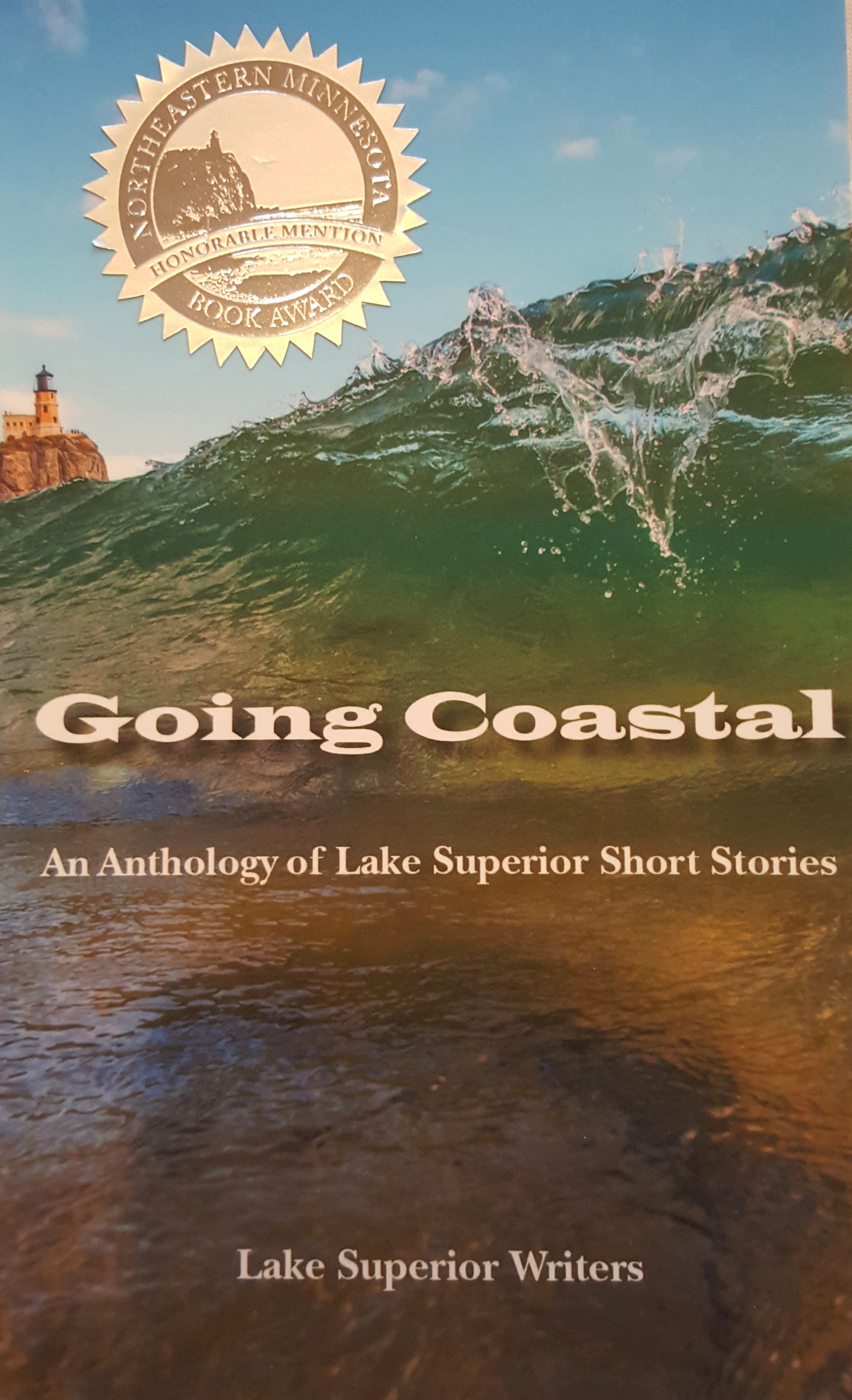
Book Review: Going Coastal

This review is not by me, but was written by a poet friend of mine, Jan Chronister. She reviewed “Going Coastal: An Anthology of Lake Superior Short Stories.” One of my short stories is in the book and I helped shepherd the project to life.

The “Going Coastal” anthology sporting its snazzy Northeastern MN Book Awards seal.

Full disclosure: we exchanged books for honest reviews. You can find my review of “Decenia,” Jan’s book of poetry, on Goodreads.

*

I’m a poet and rarely write poems longer than a page, so I find short stories intimidating. The stories in Going Coastal proved to me what I have been missing as a reader. Not only am I awed by the talent and craft it takes to create such prize-winning stories, but the time I invested in reading the anthology has rewarded me with new knowledge and insights.

Especially impressive are two young authors, Teresa Allison-Price and Maxwell Reagan, whose stories are their first published pieces. Without reading their bios, I would never have guessed this fact. After reading Johnna Suihkonen’s “What a Fire Weighs,” I will never look at an agate the same way again. Her metaphorical piece with its poetic feel reached out to me. Marie Zhuikov’s “Water Witch” kept me mesmerized with its well-paced narrative and intriguing subject matter. “The Urge for Going” should be required reading for anyone planning a trip up the North Shore. Following in the steps of Phil Fitzpatrick’s protagonist will deepen the experience and give every stop special meaning.

Two stories brought me to tears. I have always felt the natural world was where we should worship and Evan Sasman’s “The Painting” reinforced my belief. “Superior Mordant” by Judy Budreau pulled me in and had well-developed characters I could relate to.

Eric Chandler’s “The Heart Under the Lake” could only be written by someone who loves Lake Superior and the lands around it. It is a satisfying, well-crafted coming of age story that blends science with verbal artistry and maritime history. It was a delight to read.

I sensed autobiographical elements in many of these stories. That, admittedly, is one reason writers write. Another reason, perhaps not always acknowledged, is that they hope to enable readers to discover (or rediscover) thoughts and emotions that are often hidden under the cares of daily living. I’m glad I spent time with this collection that fosters self-reflection through superb short stories.

The Lake That Speaks: Mini-Minnesota Vacation #3

Lac Qui Parle, viewed from the Upper Campground

Russ and I have been sticking close to home lately, but not that close. Our last mini-Minnesota trip with our Scamp took us to the western prairies. We visited Lac Qui Parle State Park, which in French means “the lake that speaks.” (Or “lake which speaks.” But I can’t bear to use a “which” when a “that” will do.)

We lucked out, launching our weekend trip on a couple of the last unseasonably warm days of the season. We arrived at our Scampsite (in the Upper Campground – better view of the lake) on a Friday evening. We ate our supper on a picnic table overlooking this natural impoundment of the Minnesota River, formed by glaciers long ago. The lake earns its name because it’s a migratory stopover for thousands of birds in the spring and fall. A better name for it, perhaps, would be “the lake that sings.” During those times, visitors will hear a chorus of quacking and honking. Not many birds were around during our stay, but we did hear some Canada geese and murmurations of starlings.

Watching the orangey sunset in the big sky, we felt like we were stealing the last warmth before fall. Unlike our previous mini-trips to Lake Superior’s North Shore, trees were scarce at this campground – only a few, since we had crossed over into prairie country. We awoke in the morning to the sounds of gunshots – pheasant hunting season.

Our Scamp makes friends with one of the only trees near our site.

Saturday was forecast for warmth, so we planned to visit a farm where Russ’s daughter works and spend a few hours canoeing down the Chippewa River with her. I must admit I am spoiled by northern Minnesota Rivers. The Chippewa, which flows through agricultural land, looked a bit murky, but the cloudy water was overshadowed by the brilliant golden fall colors of the trees along its banks. The park offers canoe rentals if you want to explore the lake or the river. We were lucky enough to score our watercraft from the farm.

Water levels were low, so we needed to be on the lookout for shallows. We navigated many rapids – most Class I, which would have been more fun in higher water. Eagles visited us on the way, along with some mysterious waterfowl we never got close enough to identify.

The Chippewa River

On our last morning, we hiked the mown trail from the campground down to the lake. Then we walked up to the road and crossed it to see the largest cottonwood tree in Minnesota. One would expect a tree like this to be near the water, but it was up a hill and down the other side, many hundreds of yards away from the lake.

This grandmother tree is truly impressive. My pictures do not do it total justice. I thought I had seen large cottonwood trees before, but they pale compared to the girth of this one.

Just part of Minnesota’s largest cottonwood tree.

Here are some pros and cons of the Upper Campground at Lac Qui Parle.

PROS

  • The campground was quiet during the day and night.
  • Sites are spaced far enough apart to feel private.
  • Hiking trails are nearby and so are towns, if that’s your thing.

CON

  • There are hardly any trees in the campground, but this is a prairie, after all!

That’s it for our mini-vacations. Snow has arrived and we’ve stored the Scamp for winter, resting up for future adventures.

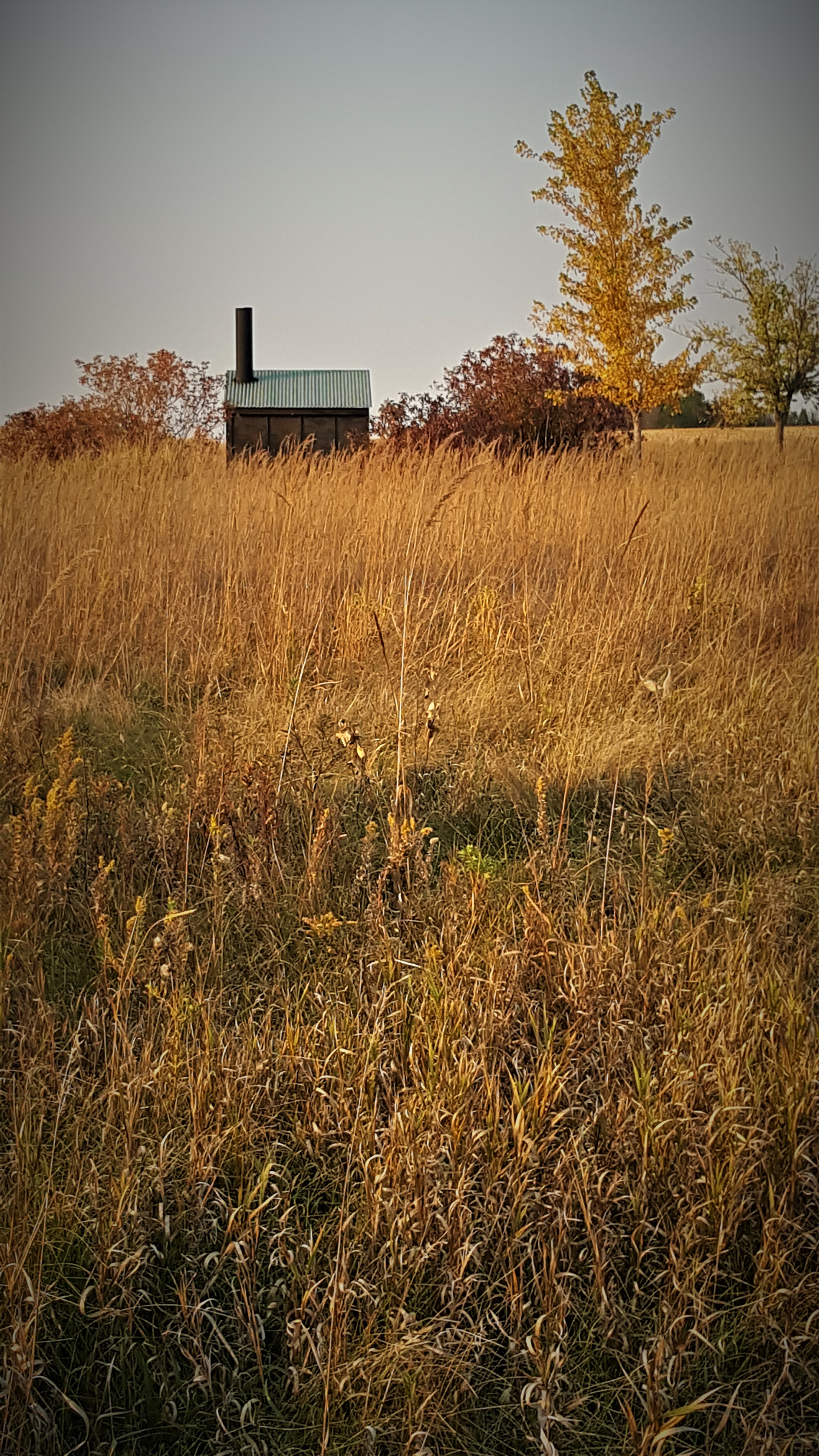
You would be hard-pressed to find a more scenic outhouse anywhere.