Vegan Shoes, Who Knew?

Vegan shoes

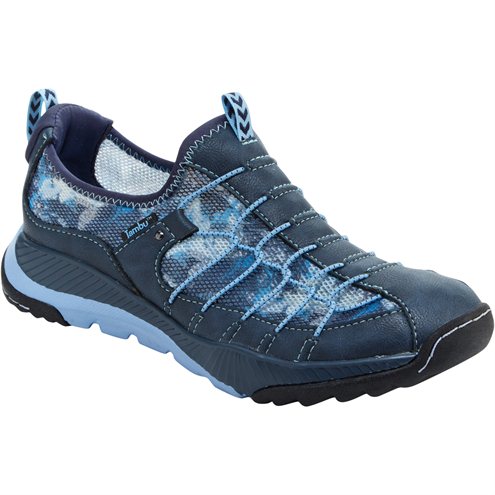
Did you know there’s such a thing as vegan shoes? I didn’t either, until I bought these, and the veganism came as an unexpected side benefit. They feature “microbuck vegan leather uppers,” whatever those are.

Does this mean I can eat them if I get hungry?

Communing with Vultures on Ely’s Peak

20180428_180725

One of the views from Ely’s Peak.

Last weekend, a friend and I meandered up 200-300 feet in elevation to the top of Ely’s Peak near Gary-New Duluth. I don’t have a more specific elevation to give you because the different trail guides that I consulted are inconsistent on that point. But I can say that for my 50-something-year-old legs, it felt more like 300 feet. Also, some of the guides say it’s a 1.5-mile round-trip hike. Others that it’s 1.8 miles. I vote for the latter.

20180428_181031We chose the trail to see a new place and because the crisp and sunny spring air seemed to demand it. We didn’t go seeking a vision quest like Native Americans are said to have done on the peak, nor to seek our spirit animals, but we just might have had a dose of both of those things along the way, too.
The trailhead is off of Becks Road. On this particular day, the trailhead parking area was easy to find from the many other cars gathered there.

I followed the directions given on this website, although I would argue that the “beginner” level trail classification is not accurate. I would rate it as “moderately hard” because near the peak, I found myself thinking it would have been helpful to be part mountain goat. And a young mountain goat at that.

(I would say that this trail is not for 80-year-old mountain goats, but for all others it should work as long as you are reasonably fit and coordinated.)

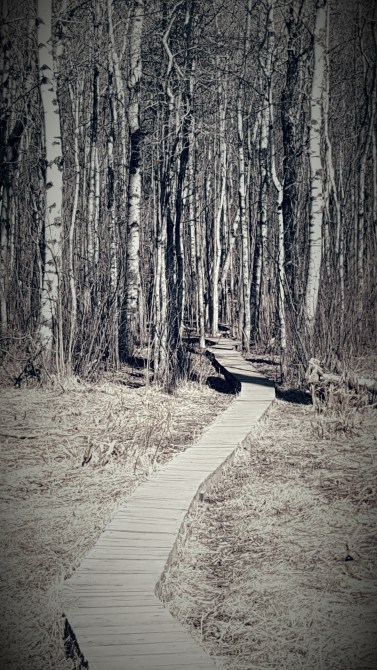
At the start, a boardwalk invites you into a spindly birch forest. The boardwalk gives way to a muddy climb up an incline to an old railroad bed for the Duluth, Winnipeg and Pacific Railway.

20180428_155924

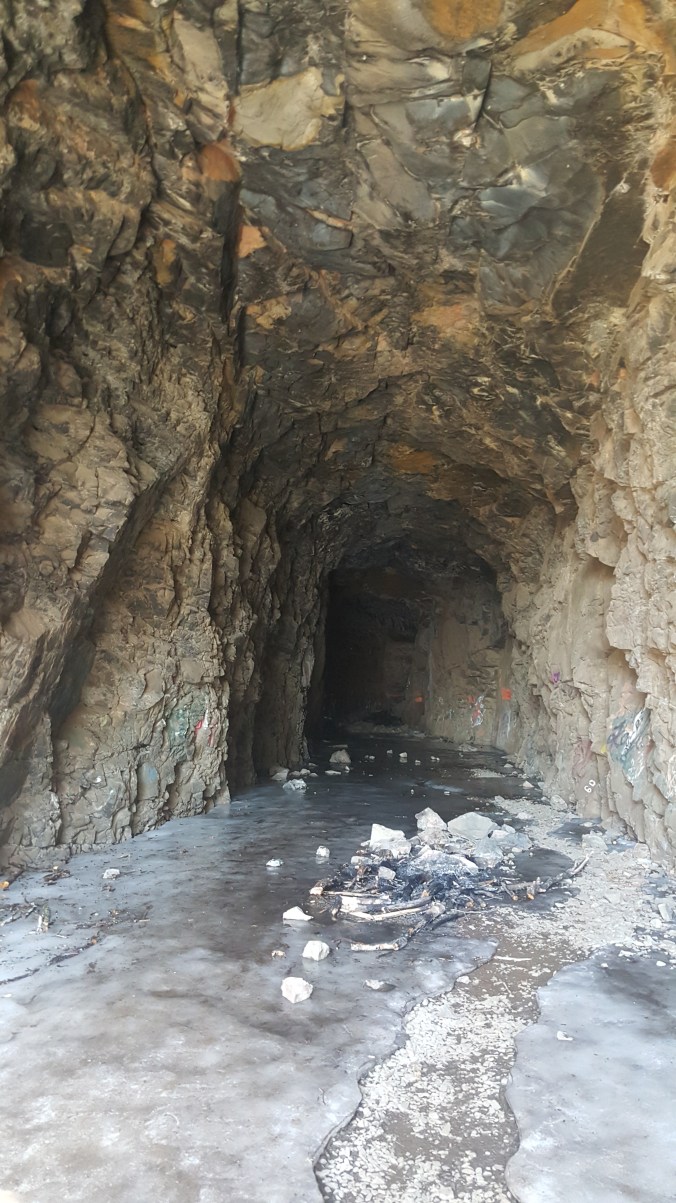
Inside the railroad tunnel.

Follow the railroad bed to the right until you come to a rocky tunnel. The tunnel was built for the railway in 1911. There are trails on the other side of it, but we did not attempt to go through the tunnel because of the sheet of ice layering the way. You may run into some rock climbers, who practice on the craggy basalt in the tunnel.

Although it may seem counter-intuitive, from the tunnel, you should follow the main trail, which goes down the hill to the right. Don’t take the spur that goes up along the side of the tunnel, unless you really are a mountain goat and want to test your mettle.

Don’t be impatient, you will come to an incline soon enough. You are now on the Superior Hiking Trail, which is marked by blue blazes on the trees and rocks. Keep to the left and follow the blazes up the blazing &!*()%$ hill.

Soon enough, wide vistas will offer views of the St. Louis River and the Gary-New Duluth neighborhood.

20180428_162157(0)

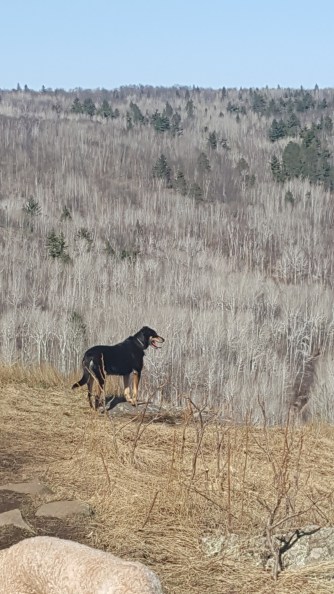
Dogs like the Ely’s Peak Trail, too.

No leaves were out on the trees yet – everything looked stark and clean.

The peak offers breath-taking 360-degree views. It was named after Edmund Ely, a Presbyterian missionary from Massachusetts who began teaching the Fond Du Lac Native American community in 1834. Local lore says that this was one of his favorite spots.

As we sat, resting, we noticed several turkey vultures lazily circling the thermals below us. The more we watched, the more vultures seemed to appear from nowhere. Eerily quiet and patient, they circled and circled. We joked that they were probably looking for hapless hikers who fell down the trail.

There’s a school of thought that says if you sit out in nature long enough, an animal will appear that has a lesson to impart. Were the vultures trying to tell us something?

Once back home (and safely out of a vulture’s gullet), I looked up what vultures symbolize. Here’s what I found: the vulture is considered a symbol of cleansing, renewal, and transformation. Vultures are viewed as fearless of death – they stare it in the face and eat death for breakfast (literally)!

I did feel cleansed after that hike. It was like the sunshine and clear air burned off all the old gunk. Perhaps it’s only to make way for more new gunk (ha ha), but I’d like to think I’ll have some time before I get clogged up again.


A Funny Thing Happened at Bent Paddle Taproom . . .

20180424_203354

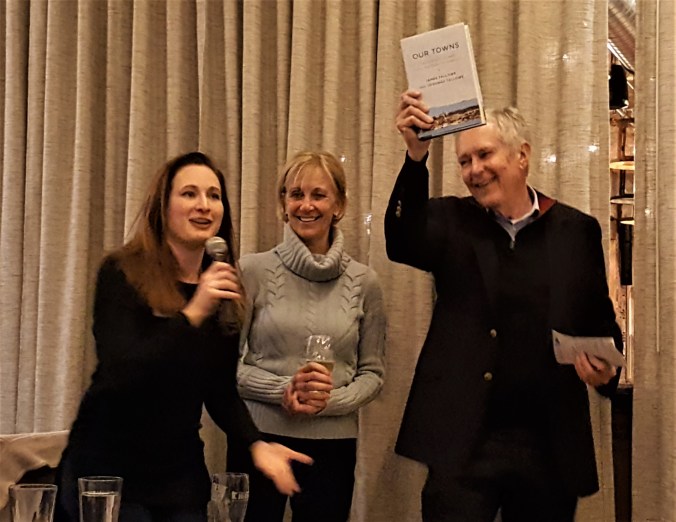
Laura Mullen, co-owner of Bent Paddle Brewery, introduces Deborah and James Fallows to writers in Duluth, Minnesota. James holds up their new book, “Our Towns.”

Yesterday, I meandered over to the new taproom of one of Duluth’s noted microbreweries, Bent Paddle, even though I don’t like beer (I know, gasp).

Amongst other local literati, I listened to a panel discussion in the brewery’s back room about how to apply for arts grant funding. The event was hosted by Lake Superior Writers, a group that fosters the literary scene in these parts.

The panel was sooooo interesting. Four writers and one person from an arts granting agency shared their experiences and insights. I now feel less intimidated by the idea of applying for one of these grants, should I ever be so inclined.

During the intermission, the coolest thing happened. Just by chance and happenstance, James Fallows, a long-time writer for The Atlantic Magazine was in the taproom, filming a segment for CBS News Sunday Morning. The segment will promote a new book he wrote with his wife Deborah, called “Our Towns: A 100,000-Mile Journey into the Heart of America.”

Deborah was with him, too, and when they heard from the owner (Laura Mullen) that a bunch of writers were in the back room, they HAD to come speak with us. Although it was hard to hear them over the din of the taproom, here’s what I gleaned.

James first came to Duluth to do a story about Cirrus Aircraft, a local company that makes private planes, which deploy their own parachute in times of peril. He also became familiar with Bent Paddle Brewery, which was just starting up at the time. Then he and Deborah had an idea for a book project that would allow them to take the social pulse of America as it stands now. In their own Cirrus plane, they flew to a dozen cities for their research, concentrating on ones that weren’t too large like Greenville, South Carolina; Columbus, Missouri; Burlington, Vermont; Fresno, California; and Duluth, of course.

When asked, James and Deborah said their favorite cities on their tour were the ones with “heart.” They included Duluth in this list. And they said they were so glad to see that the brewery was thriving. James offered us intel on what the Atlantic is publishing these days and even gave us his email address in case we have story ideas to pitch.

How cool is that?!

In preparation for the book’s release on May 8, they had decided to come back to Bent Paddle to film the promo segment. They also filmed in Greenville. The segment will air on CBS Sunday Morning on May 6.

I suspect I unwittingly got filmed for it earlier in the evening when I followed another writer to where the taproom offers three different kinds of water on tap (sparkling, ambient and chilled). We were talking about short stories. When we turned around from the water taps, we were met with the glare of camera lights and shadowy cameramen behind them.

We didn’t think much of it, continuing on our writerly ways, trying to look nonchalant. But after the event was over, I excitedly told my writer friend that our backs might be on national television! Can’t wait to see if we made the cut.

It just goes to show, you never know what can happen when you follow your passions, and that good things can happen in a brewery, even for people who prefer wine over beer.

Jazz at the “O”

oldenburg

Patty Peterson sings during a jazz evening at the Carlton Room in the Oldenburg House. (Note their logo on the ceiling!)

If you like jazz in an intimate setting paired with great food, the Oldenburg House in Carlton, Minnesota, is for you. One weekend each month the homeowners turn their living room into a jazz club called the Carlton Room, pulling in talent from Chicago, the Twin Cities, and other far-flung places.

They don’t ignore local talent, either – including one guy who lives right in the house. Co-owner Glenn Swanson is a leading drummer in his own right, and he performs during the sessions.

When I attended earlier this month, brother/sister Ricky and Patty Peterson from Minneapolis were performing. Ricky is best known for his twenty-year association with saxophone legend David Sanborn and for having produced, written and played keyboards for Prince. Patty is an award winning vocalist, live jazz radio host, and inspirational speaker; she has received the coveted Minnesota Music Award seven times for best vocalist.

We sat at a round table with several other couples. The food was great. The music even better. There’s no better way to spend a snowy spring evening. Someday, I would like to go back during the summer to see the grounds of the house. Under all that snow lie fountains and gardens among the rocky outcroppings that are a signature of the small town of Carlton.

The house itself is on the National Register of Historic places. The owners have oodles of other things going on besides jazz. A blogger friend of mine, Ed Newman, has written many stories about the place. Check out this one for a good overview.

An Evening Dog Walk

30652332_1830086060345225_9037091204918935552_n

I had the honor recently of reading an excerpt from a creative nonfiction story that was published in a local literary journal, the Thunderbird Review. The event took place at the Fon du Lac Tribal and Community College in Cloquet, Minnesota, and the story is called “An Evening Dog Walk.” It’s a poignant tale of a neighborhood dog walk and dating at 50.

Here’s what I read:

We lived a block and a half away from each other in a northern Minnesota town on the shores of Lake Superior.

When I first saw him in my old neighborhood, he was lying on the kitchen floor of his home, puttering with a repair under the sink. I spoke with his wife, a freelance graphic designer, about a publication project I had for her.

From differing heights, he and I exchanged hellos, and that was it.

About five years ago, we met for the second time in our new neighborhood. I was walking my dog past his house, which was a block and a half away from mine again. His house was recently built, and I had been wondering who lived in the impressive structure. While he was taking envelopes out of his mailbox, I reintroduced myself.

During the next five minutes, he spilled his woes to me: his wife had died from some awful form of cancer, a relative died yesterday, he was experiencing mechanical failures at home, and he had just recovered from the flu.

Stunned by his outpouring, I wished him well, and my dog and I continued our walk.

About a year later, I turned around in my church pew and he was sitting behind me. I reintroduced myself. His sparkling blue eyes and Joe Biden smile told me he was doing better.

He asked me to stay for coffee after the service, and our friendship began. He admitted he didn’t remember our previous encounter because he had been so upset. But he was excited to meet someone who knew his former wife and had lived in both of his neighborhoods.

It wasn’t long before we started dating. Even though he was 14 years older, we shared similar philosophies, the same neighborhood, and he loved my dog – a golden doodle too friendly for his own good.

I felt I could trust him. I felt the stomach butterflies.

Kissing didn’t come easy for him. I was the first woman he had kissed since his wife died. We were on my back porch after a dog walk and I could tell he wanted to kiss me, but after some fumbling, he ended up kissing my cheek instead. We joked about it the next time we met, and on his subsequent try, he hit the lip bullseye.

He took me flying in his small private plane, showed off the audio system in the living room of his comfortable home – a home that still contained his deceased wife’s decorating touches in every room – and he solicited my help in fixing his leaky sailboat. He even kept up with me hiking and biking around the neighborhood.

As a twice-divorcée struggling to recapture some sense of normalcy and connection, he was just what I needed. And he seemed happy to have someone to do things with once again . . . .

*

If you’d like to find out what happened in the rest of the story, please support the journal and purchase a copy for $5. You can find info on how to do that here.

Getting my Blue Mind on — Part 2 of 2: Stuck Inside a Psychedelic Washing Machine

20180328_185852

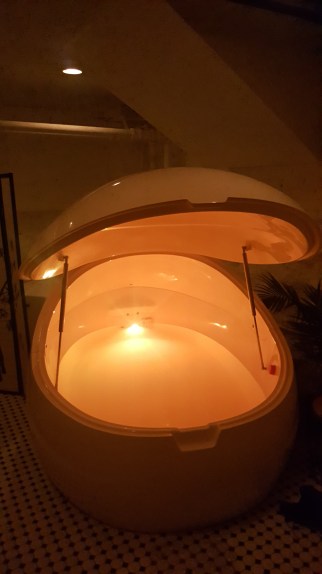
The float pod in purple. Would you get in this thing?

At the suggestion of Wallace Nichols, I made an appointment for a sixty-minute session at my local flotation pod. The pod was in a room in the basement of a yoga studio, and it’s the only one in these here parts of northern Minnesota.

The pod technician led me to the room, which contained the pod and a shower. He gave me the choice of silence for my impending pod experience or four types of music. I chose piano music. He explained that he would have to program that into the computer, which was upstairs in the reception area.

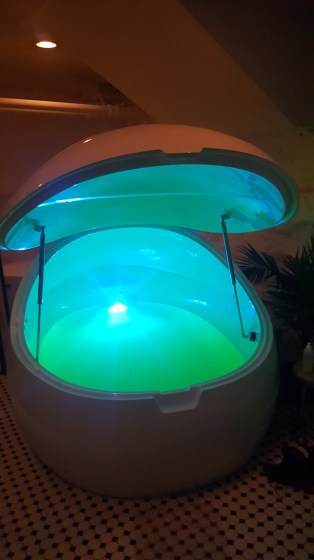
The pod was about ten feet by eight feet. It featured a large hatch, which was open, and rotating, pulsating colored lights that illuminated the ninety-eight-degree water.

The technician explained that all the Epsom salt in the six inches of water is what makes a person float. A bottle of fresh water stood nearby to rinse the salt out of your eyes in case some happened to get in, plus a towel, and a small floaty tube if a person wanted it for head and neck support in the water. Earplugs were also available, to keep the excessively salty water out of one’s ear canals.

20180328_185838

The float pod in its yellow phase.

I asked the technician how I would know when my session was over. He said that the music would stop and a voice would say, “It’s time to exit the pod.” (Somehow this struck me as funny, and I almost giggled.) Then the filtration system would come on, which he said was rather loud and was bound to wake me up if, by chance, I fell asleep in the pod.

He mentioned that after the session, since it was late in the evening, he probably wouldn’t be at the desk once I finished, so I could just get out and head out on my own. I asked him how I should pay for my session because I hadn’t done that yet.

This seemed to surprise him and I ended up giving him my credit card, which he was going to process while I was in the pod. He said he’d leave the receipt and card for me on the front desk and I could get it on my way out. (Damn, why did I say something? I could have had a free session!)

Details done, he left me to my experience.

I was expecting soft piano music during my pod float. I expected to emerge totally blissed out. That didn’t quite happen.

After showering and putting in the ear plugs, I entered the pod wearing only my birthday suit. I wondered when the music would start. It never started. I suspect the technician was so distracted by processing my payment that he forgot to turn on the music.

I laid there in the water (which is weirdly buoyant), and decided I didn’t need no stinkin’ music. I even got brave and turned out the psychedelic lights. As I lay there in the silent dark, suddenly a jet of water came on. My body started spinning slowly around in the pod.

20180328_185825

The float pod in green.

The filtration system! Hey, I thought that wasn’t supposed to come on until my session was over. Surely, sixty minutes hadn’t passed yet? It only felt like ten minutes. Now what to do?

I could push the red button in the pod, which the technician said would cause an annoying sound to come from the computer in the reception area. But would that work since the music wasn’t working? Would anyone even be there to hear the annoying sound?

I didn’t feel like getting out of my warm pod and running upstairs in a towel to complain to the technician. Besides, that wouldn’t be very Zen.

So I stayed where I was, getting pushed in slow circles by the filtration jets. At some point, I turned the lights back on because it was just too weird having all this stuff happen to me in the dark.

Then I started giggling. This was like being stuck inside a giant psychedelic washing machine. Yes, I could always raise the hatch and get out if I wanted. But I didn’t want to. Besides, that wouldn’t make for a good story.

After about five minutes, the filtration system turned off. Although I wasn’t sure when it would strike again, I was finally able to relax and get into the floatation groove. It was very blissful. I could hear my heartbeat and my breathing.

Pods are supposed to inspire creativity and help with pain management. I didn’t have any pain. Mostly, what I thought about during my session was how to describe it in this blog post.

My bliss was shattered after about a half hour when the filtration system came on again. I floated around and around in more slow circles. As before, the system eventually shut off. I laid there until I thought my session was over and I emerged from the pod, checking my watch. I was only about ten minutes over my time.

I took another shower to rinse off the salt and got dressed. My credit card was waiting for me at the reception desk. Nobody was there. I debated again whether to find someone to complain about my expectations not being met.

Nah, that just didn’t seem very Zen. Besides, it was all kind of fun.

Would I try it again? Maybe, if I was really stressed out. But I don’t see it as something I would need regularly.

I picked up my card and walked into the night, peaceful.

***

Update: The owner heard about my experience and offered me a free float as compensation for my interrupted experience. I told him that I wasn’t dissatisfied at all by the experience and didn’t feel like I really needed another float. But I have a friend who is very stressed out lately. I asked him if my friend could have the float instead, and he said yes. How nice of him! Bliss all around.

Getting my Blue Mind on: Part 1 of 2

J Nichols ORIGINAL Headshot_c_JeffLipsky_preview

Wallace Nichols

I had Dr. Wallace Nichols, author and marine biologist, captive in my car for forty minutes over the course of two days. Far from kidnapping him, he was in my car willingly because I was his morning chauffeur for a local science conference about the St. Louis River (the one in Minnesota, not the one in Missouri).

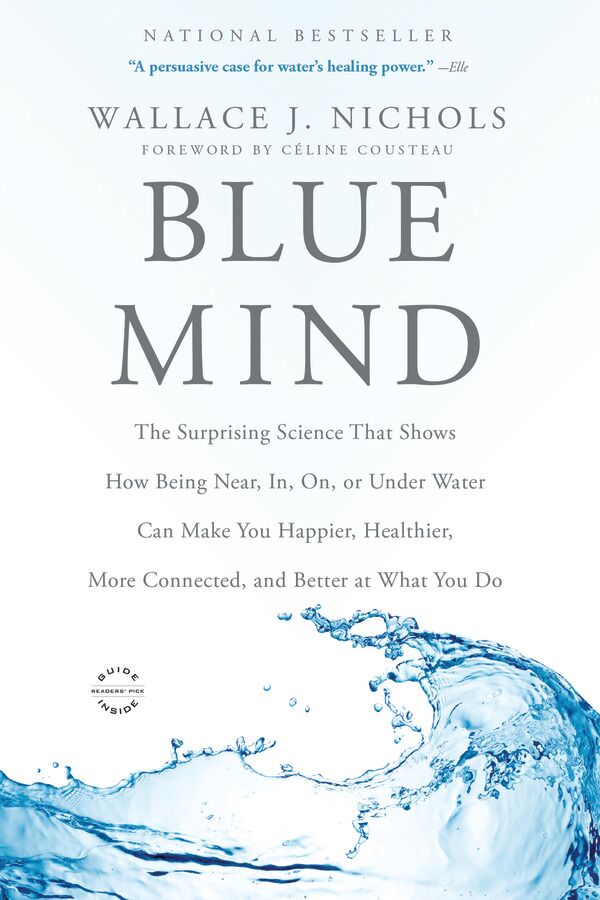
Nichols was the conference keynote speaker, talking about concepts described in his book, “Blue Mind: The Surprising Science That Shows How Being Near, in, on, or Under Water can Make you Happier, Healthier, More Connected & Better at What you do.”

As a watery kind of person myself, I relished this opportunity to learn more about the whole Blue Mind thing. Basically, it’s this: Being by or in water can calm people down and make them more creative. This idea is nothing new, it’s just that now it has a champion in the form of a Kevin Costner-esque man with a Ph.D. And it’s a nice side benefit that this man seems very humble and down-to-earth (down-to water?).

Book CoverThis is my rather jumbled account of things I quizzed him about in my car, things he said at the conference, and things I recall from reading his book. I tried to separate all the information out according to when I heard him say it, but it was useless. I guess I’m too holistic for that.
Although Nichols’s ideas may seem rather surfer-dude-ish — like they come from California, which indeed is where he lives — Nichols refers to himself as a Native North American. He grew up on the East Coast, but has lived various places in the Midwest and Southwest while on his eventual way to the West Coast.

In fact, Nichols credits the Apostle Islands National Lakeshore for focusing his love of water and inspiring his career as a sea turtle biologist. He visited the area for ten days when he was in high school.

I wish I would have had time to ask him exactly what happened during his experience to inspire him, but in his speech he said his time in the Apostles led to his realization that water was, “. . . Where you feel like the best version of yourself. You are surrounded by nature, you’re in the elements. You’re where you should be.”

Something he didn’t mention in his speech was that he used to stutter as a child. I would expect that being in the water helped with that. “Just to be quiet in or near the water. To learn a new activity, learn to surf or to swim – those are very often the highlights of our childhood or adulthood,” he said.

His goal at the conference was to encourage the audience to bring science and emotion together in their work. He used a mixture of personal stories and research results to highlight how important water is to people from emotional, psychological and spiritual standpoints.

I read the Blue Mind book a few months ago. What struck me was that Nichols cited many studies, but most of them were associative – there weren’t many you could point to that were specific to how people react in and near the water.

I asked him if he was doing any more specific studies or if he was cooperating with any neuroscientists who were. He said that since his book was published in 2014, other studies have been published, and in his conference speech he described them.

Also, to the audience he said, “We talk a lot about the ecological, the economic and educational benefits of our work. We’re pretty good at quantifying this stuff, these 3 Es. We’re not so good at talking about or even including this emotional connection, the emotional benefits of healthy waterways. I would say, that should be switched to the top of the list. These are the benefits that grab people and bring them into the conversation.

”From a strategic perspective, first let’s not leave them out, and second, let’s prioritize them so that we’re fulfilling a larger movement. The emotional connection supercharges our understanding of ecological, economic and educational benefits of healthy waterways. By the way, emotion is something we can study. It can be as quantitative as you want it to be. It is hard science. Increasingly, organizations are using emotions as a tool to advance their advocacy work.”

Nichols offered this criticism and advice for environmental groups: “The environmental movement has used fear and anger to communicate about their issues. Guilt and shame are other motivators, and lots of facts — until they are confused. We talk about ecosystem services, we talk about the crisis. We blame you. It’s your fault. It’s terrible. The future is bleak. And by the way do you want to join my club? Sound familiar?

“Is that effective? We think it is. But we’ve proven time and time again, not so much. Maybe gratitude is another tool we can use. Love, what about that as a motivator?”

He left the conference attendees with this thought: “Water is life that makes life worth living as well. When we undervalue water, we lose that. When we undervalue anything or anyone, bad things happen. Water is our first medicine, for both physical and mental health. Bring the science of emotion to your conversations, do not ever leave it out.”

If you’d like more information, please check out his book. You can also read this blog post I wrote for my job.

Think about your own life. Are you stressed out? What helps you deal with that? Is it working for you? If not, remember the water. Remember music. Remember nature in general. Get out there. And don’t forget to breathe.

*

Another conversation I had with Mr. Nichols dealt with floatation tanks. You know, those are the tube tub things you can go in that are filled with warm salt water and silence.

They strike me as sort of scary, but Nichols He recommended them for dealing with stress or to inspire creativity.

A business in my town recently opened a flotation tank. I decided to live on the wild side and give one a try. My appointment is tonight. That’s what Part 2 will be about.

Spending Time in Front of Minnesota’s Largest Stone Fireplace

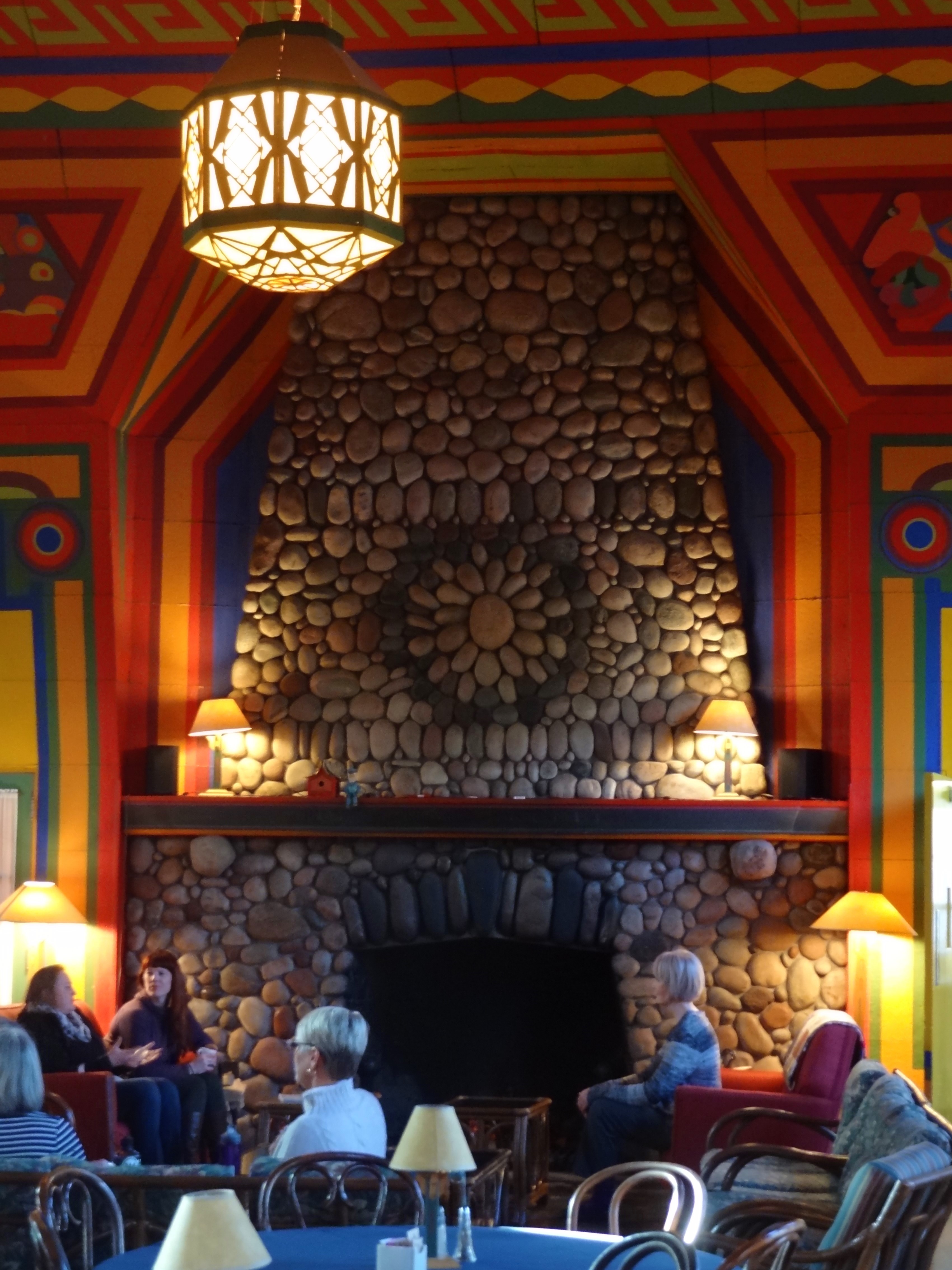
DSC04597In conjunction with my trip to see Minnesota’s Tallest Waterfall, I also got to spend time with the state’s largest stone fireplace, or so the claim goes. The structure is located inside the dining room of Naniboujou Lodge on Lake Superior, near the Canadian Border.

Now, if you’ve read my novel, “Eye of the Wolf,” the lodge’s name might sound familiar. That’s because I describe Native American stories about Nanabozho in it. Naniboujou or Nanabozho is the trickster god, the god of chaos and practical jokes, a mythical figure of the outdoors and even creation itself.

DSC04602The trickster god myth “belongs” to more than just one tribe. The lodge gets its spelling and images from the Cree version. In my book, I concentrate on the Ojibwe version. Nanabozho’s mother was human and his father was the west wind. He’s a shapeshifter, often appearing as a rabbit or a human with rabbit ears and legs.
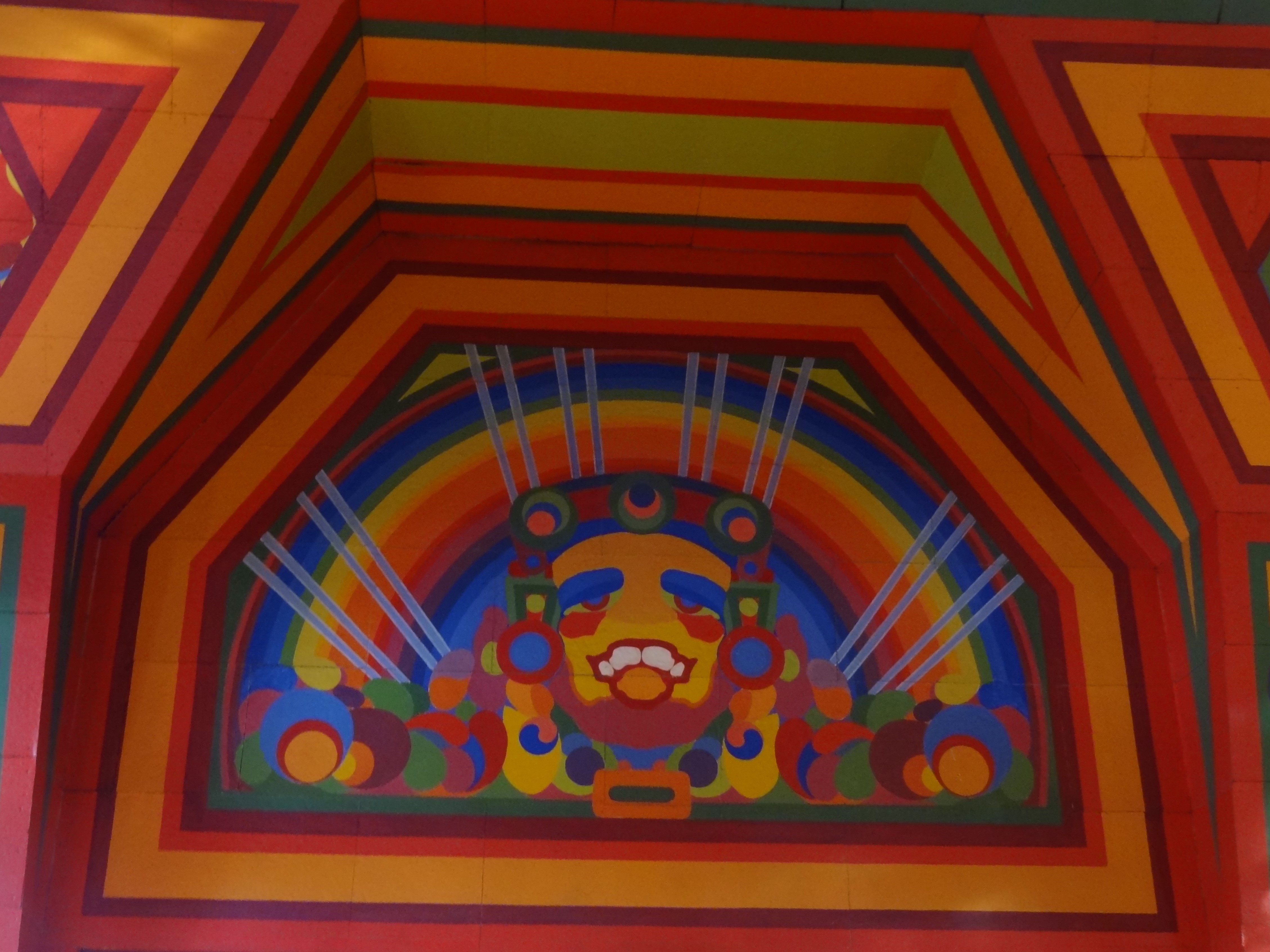
A wonderful local painter, Rabbett Before Horses Strickland, centers his work around Nanabozho. You MUST see his work if you ever get the chance!

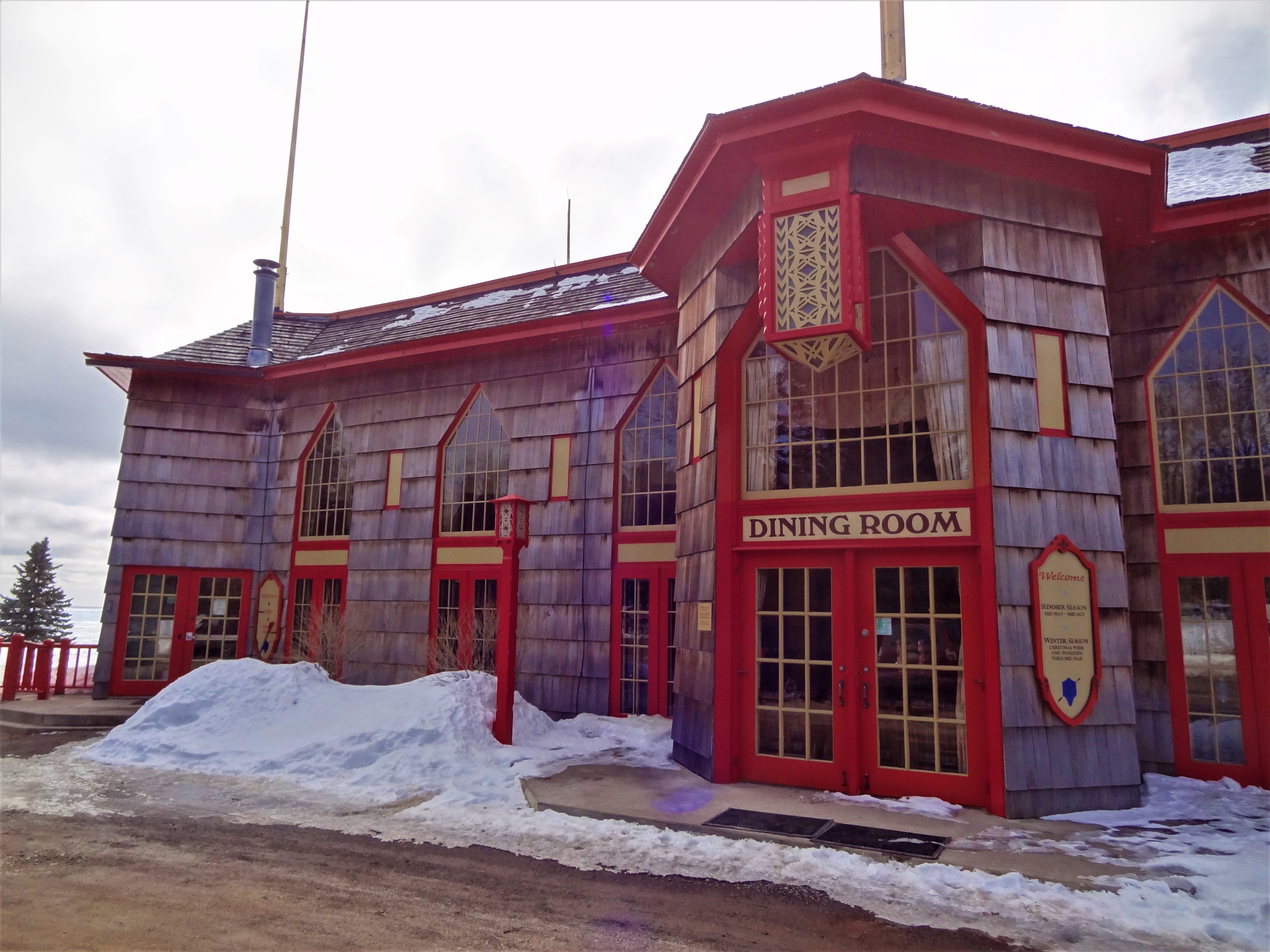
Anyway, back to the lodge. You know you’re in for something different when first setting eyes upon it. Only two stories high, the building is long and low, covered in shaker shingles with windows outlined in bright orange red.

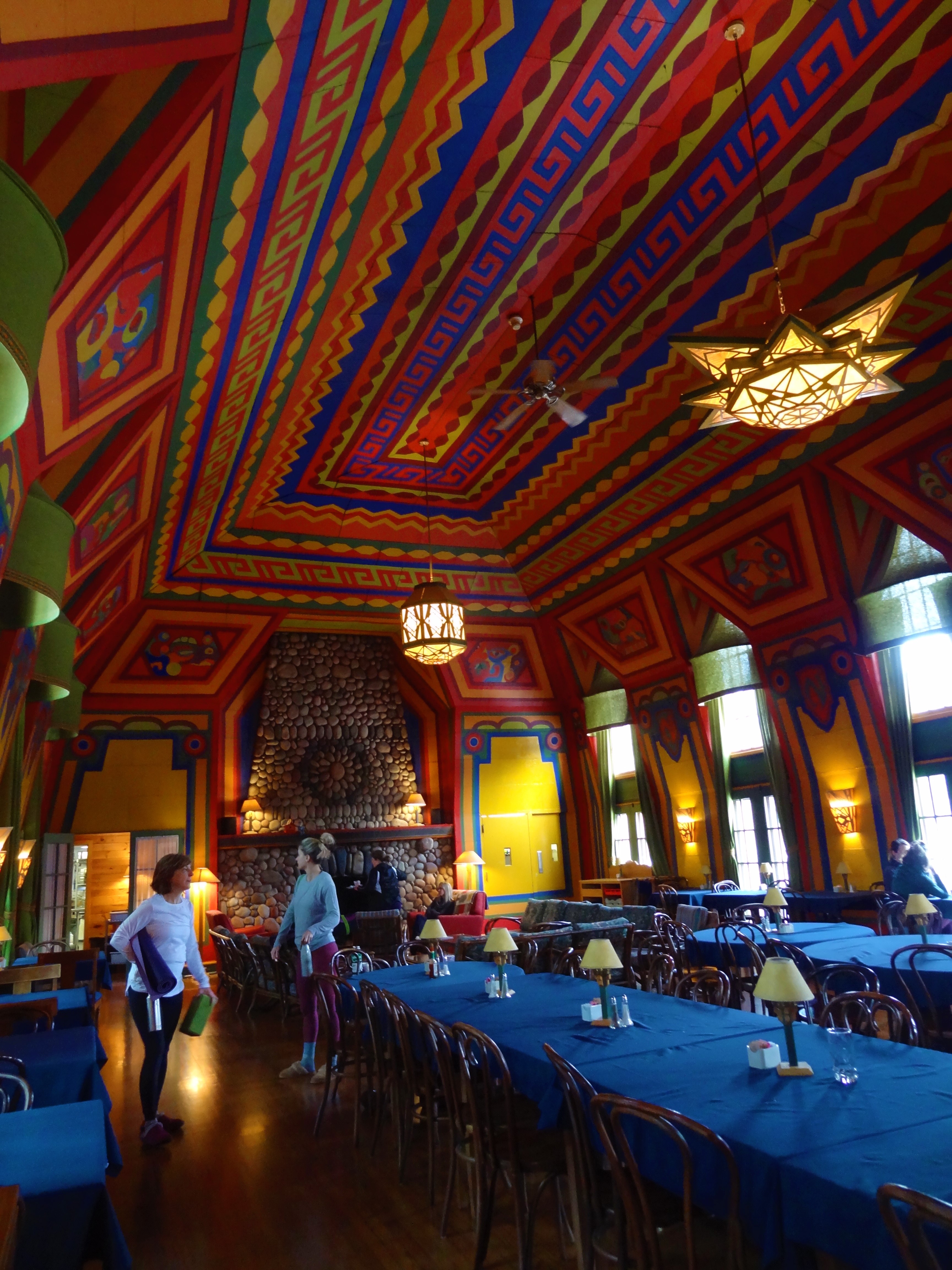
After checking in at the lobby, your eye will be immediately drawn to the adjacent dining room, which features a high ceiling and walls painted iridescent red, yellow, orange, and blue designs.

DSC04636

The record-breaking stone fireplace anchors the end of the hall, its neutral colors providing a respite for the eye. It looks like the stones could have been collected from the rocky Lake Superior beach, which lies only a few yards away.

The lodge, which is on the National Register of Historical Places, was built in the 1920s as a private hunting club, just before the stock market crash. The club was sold and the building became a public hotel, owned by a series of different people and organizations.

Although the lodge is closed to the public during the winter, it is open for private group events, and that’s how I had the opportunity to see it for a weekend stay. One thing to note is that alcohol is not sold on the premises, but you can bring your own.

The lodge will open back up in the third week of May, when guests can once again experience the dreams of the lodge’s founders, which were to:

Live and learn. Learn why the raspberry follows the fireweed; learn how the fern seed clings to its fronds; learn the ways of the kingbird, the haunts of the wood thrush; learn the pasturage of moose and deer and the home life of the beaver.

If you ever meander up Lake Superior’s North Shore, be sure to check it out!

DSC04594

French artist, Antoine Goufee, painted the lodge’s dining room. This is his version of the lodge’s namesake, Naniboujou.

A Visit to the Tallest Waterfall in Minnesota

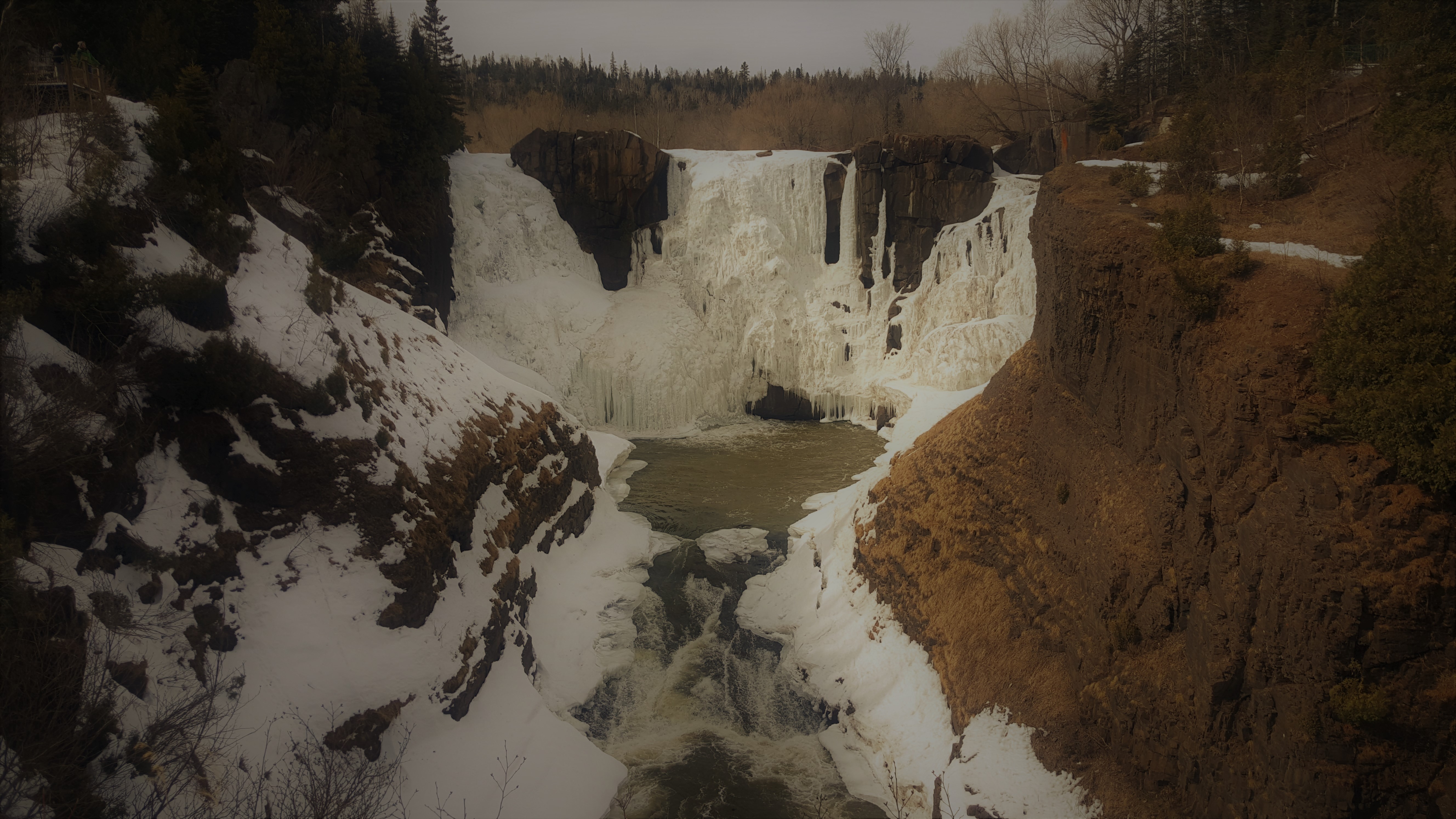
20180324_155408Filtered

The High Falls in Grand Portage State Park, Minnesota.

My traveling companion and I meandered north along Lake Superior with migrating bald eagles toward the Canadian Border last weekend. Although temps are still freezing, the long spans of daylight and slackening snows have a feel of spring about them.

We decided to cover some new territory by visiting the High Falls at Grand Portage State Park along the border. The 120-foot falls are the highest in Minnesota, so, in order to be proper Minnesota residents, we figured it was about time we saw them.

A short and slippery hike (wear your Yak Trax!) brought us to a giant white-frosted wedding cake of a waterfall. Most of the falls were encased in ice, but underneath, the Pigeon River flowed with unstoppable abandon. A large crack across the middle foretold of the eventual cutting of the cake once temperatures rise.

Once done with this quest, we drove back south to our resort (the Naniboujou Lodge, which I will write about separately). We vowed to stop at the intriguing and picturesque harbors we had seen on our way up, but were too goal-oriented to explore.

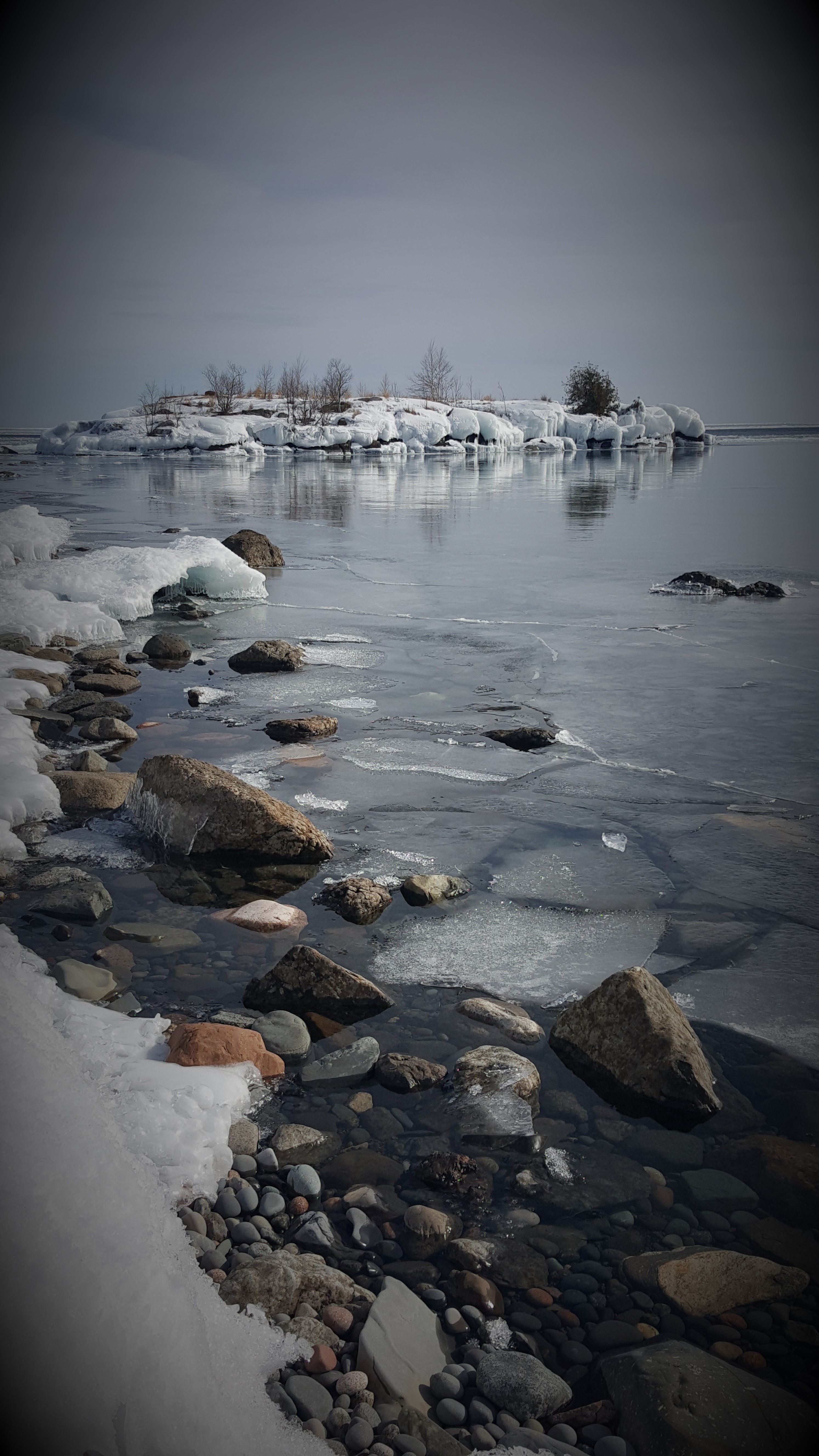
20180324_160746VignetteWe stopped several times along the highway, but the best place was one without a ready-made scenic parking lot. We glimpsed a bay that whispered of Norway and ice and stillness. We drove back and forth, looking for the best access road. There were no roads, only private driveways.
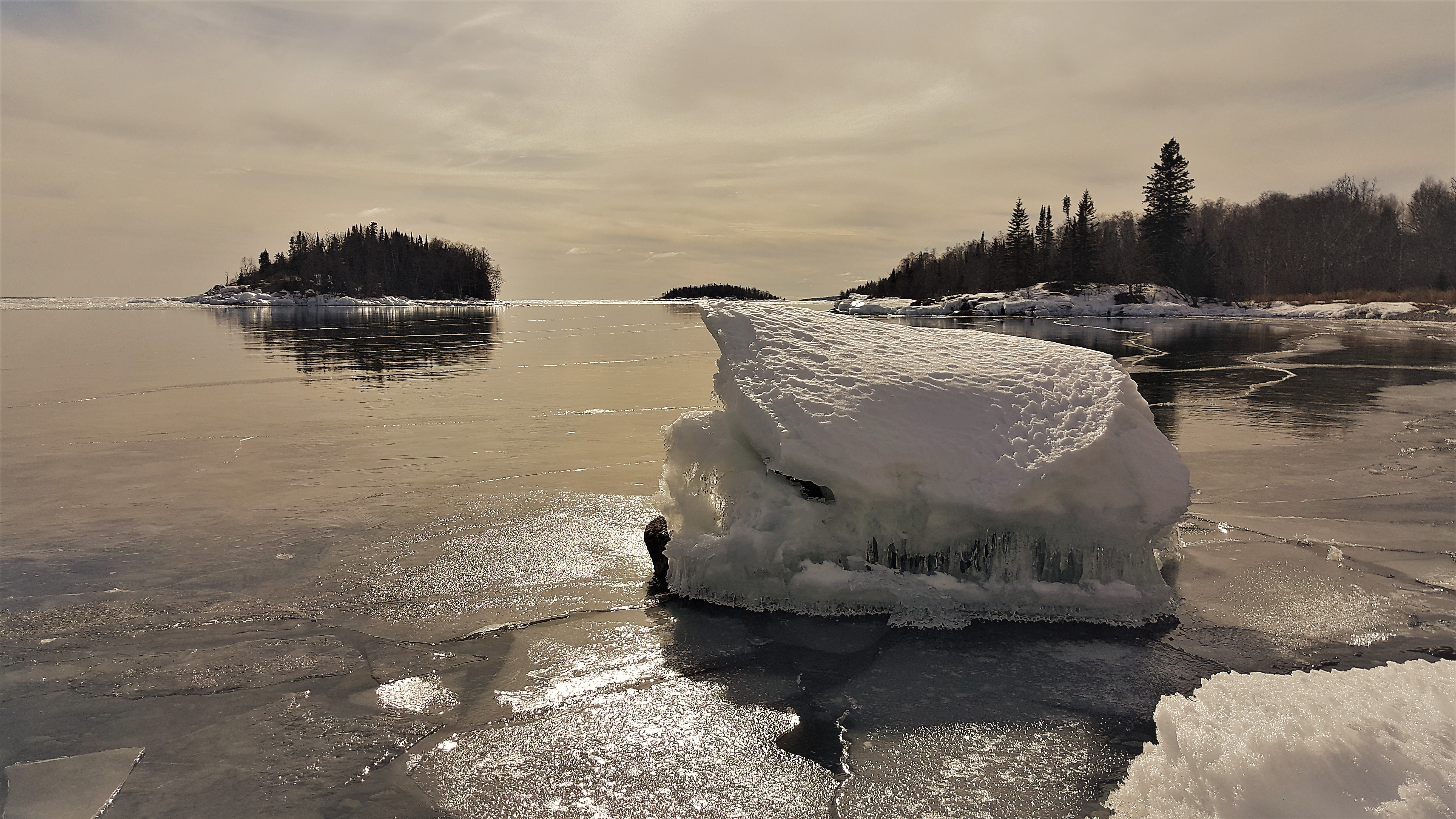
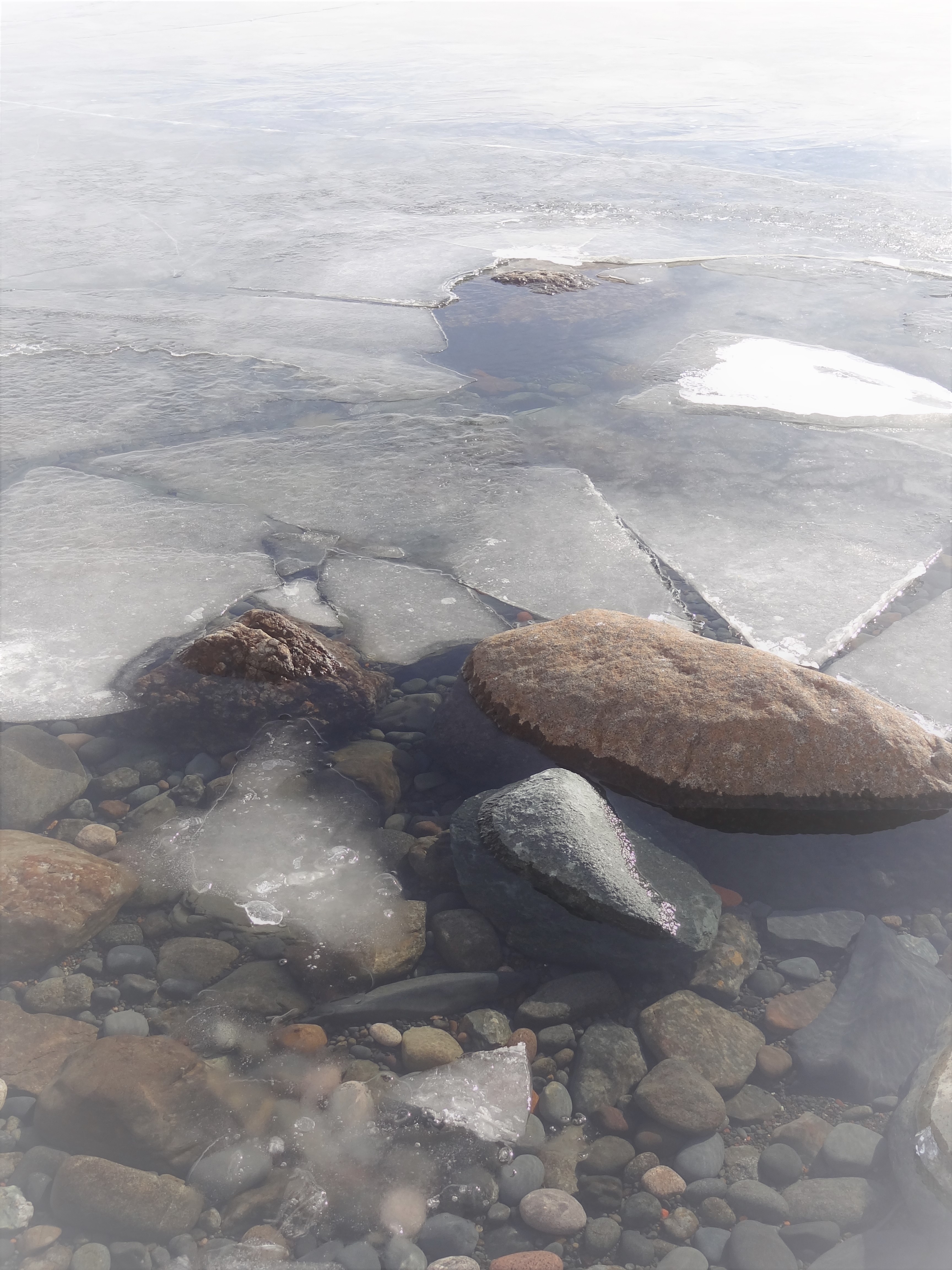
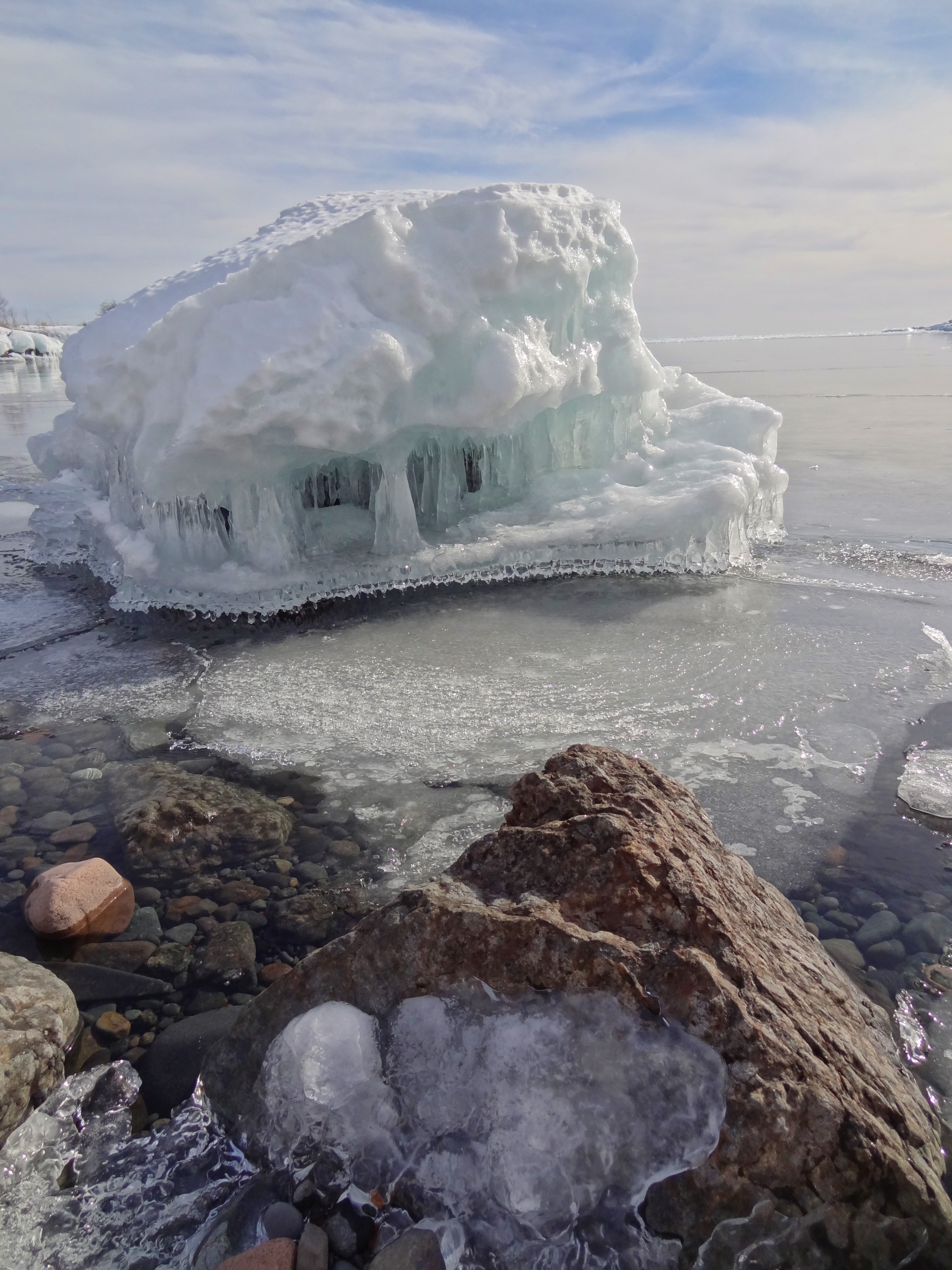
Finally, we chose one that looked the closest to the bay. As we pulled in, we could see from the untrammeled whiteness of the driveway that no one had driven on it for most of the winter. However, there was a foot trail through the snow that we could follow. So, after some hemming and hawing, and getting out of the car, we did.

A short crash through the underbrush brought us out to the view, which now SHOUTED of Norway and ice and stillness. Oh, it was gorgeous and well-worth a little harmless trespassing! Please enjoy these images of our “Secret Cove.”

20180324_160813Zekefilter

DSC04625Soft

DSC04628