I’ll be doing a readings from my short story collection, The Path of Totality and my blog memoir, Meander North at this book fair, which is held just south of Superior, Wisconsin. I’ll also be selling copies of these and my other books, plus puzzles made from my photos. If you’re in the area, please turn out and support local authors!
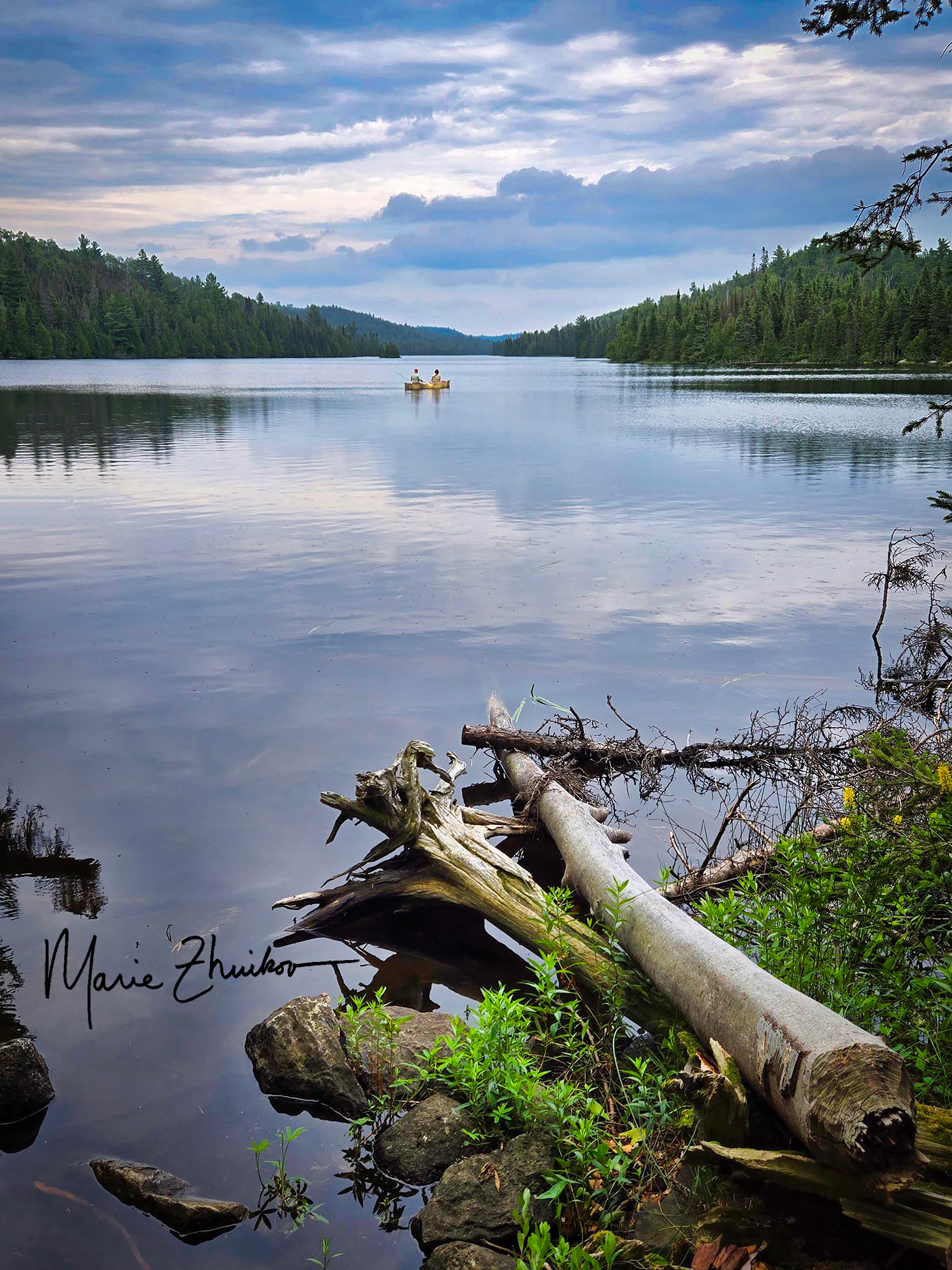
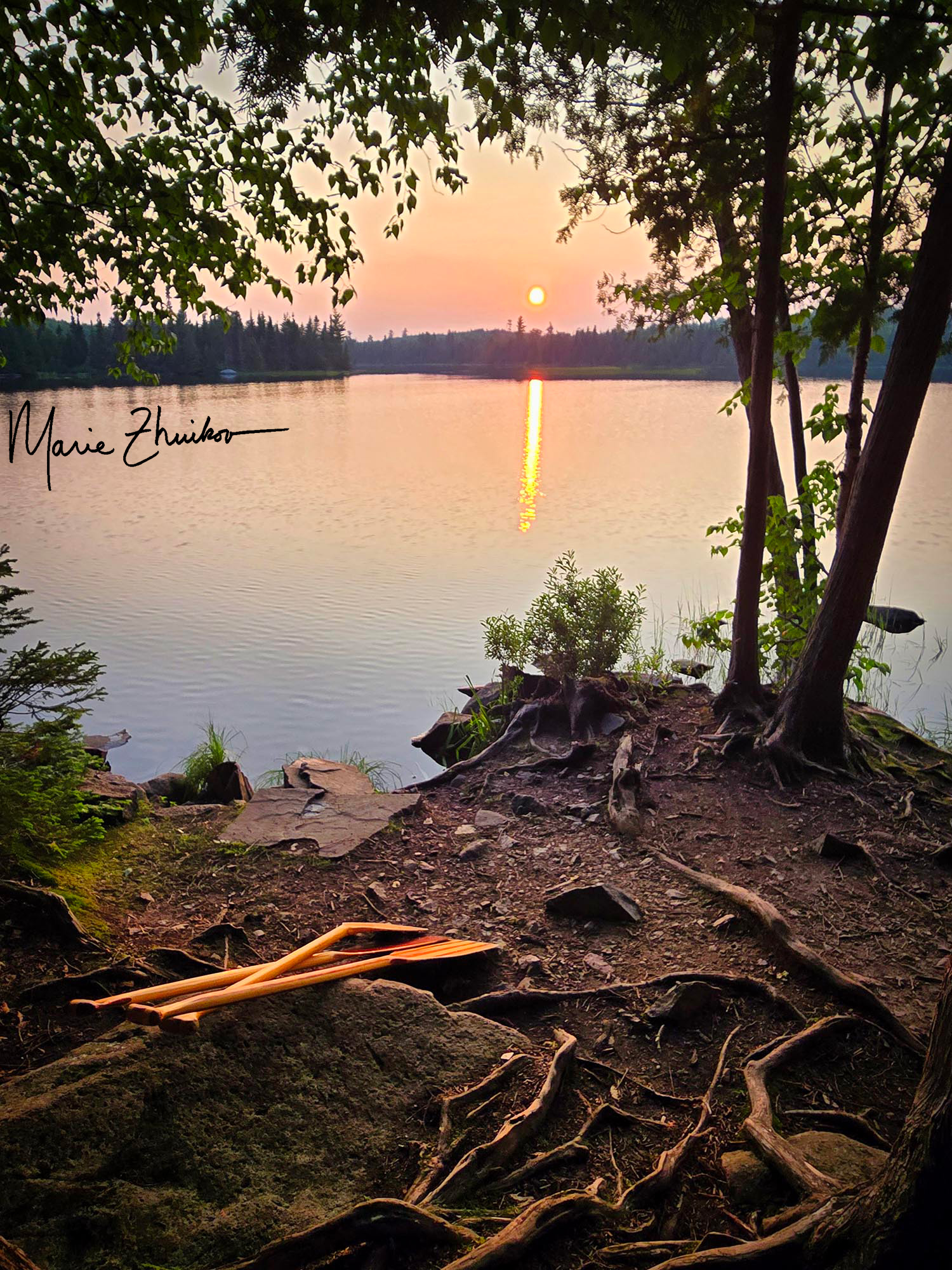
Russ and I sacrificed a 40-day winning streak on the NY Times Connections word game to head to the Boundary Waters Canoe Area Wilderness where there is no phone or internet service. We traveled with our friends Sharon and Mike to Brule Lake – a place I last visited 35 years ago.
To go easy on our aging bodies, we decided to do a canoe trip without any portages. (Portages are where you carry your canoe overturned atop your shoulders on a rugged trail to the next lake.) Brule Lake is large enough to spend several days there without needing to go anywhere else.
We were partially successful in meeting our goal. The only “failure” came on our third day of tent camping when Sharon and Mike decided to portage to a small lake for better fishing. We hiked the portage without our canoe to see if the lake was worth the effort of hauling it there. With forested hills and a cute island, the beauty of the new lake and the short length of the portage convinced us to bend our no-portage rule. It was a true wilderness lake with no campsites or other signs of human habitation.
To share the pain of portaging, we opted for a two-person carry, where we carried the canoe over the portage with one of us on each end of the watercraft – no hefting it up onto one person’s shoulders.
We were glad we did; canoeing on the lake offered views of a loon and its baby. We found the loon’s nest on the small island, where we ended up eating lunch much to the delight of the ants there. Our presence was probably the most exciting thing to happen to them in years! Sharon and Mike caught enough fish to feed us all dinner that night.
After we spent several hours on the lake (which I am purposefully not naming because Minnesotans don’t do that with good fishing lakes), the sky began to darken. We decided to head back to our campsite on Brule Lake. We couldn’t relay this to Sharon and Mike because they were at the far end of the lake.
We made it across the portage and out into the bay when the storm broke. The first drops of rain were huge and cold. We were wearing our swimsuits because we expected rain, so we didn’t mind being wet. What we did mind was the wind and the thunder/lightning! Yelling through the gale, we briefly considered riding out the storm on land, but we were so close to our campsite and the lightning was far away enough that we decided to power through and hope we didn’t get struck. (That was reckless of us, I don’t recommend staying on the water in a thunderstorm. Don’t try this at home!)
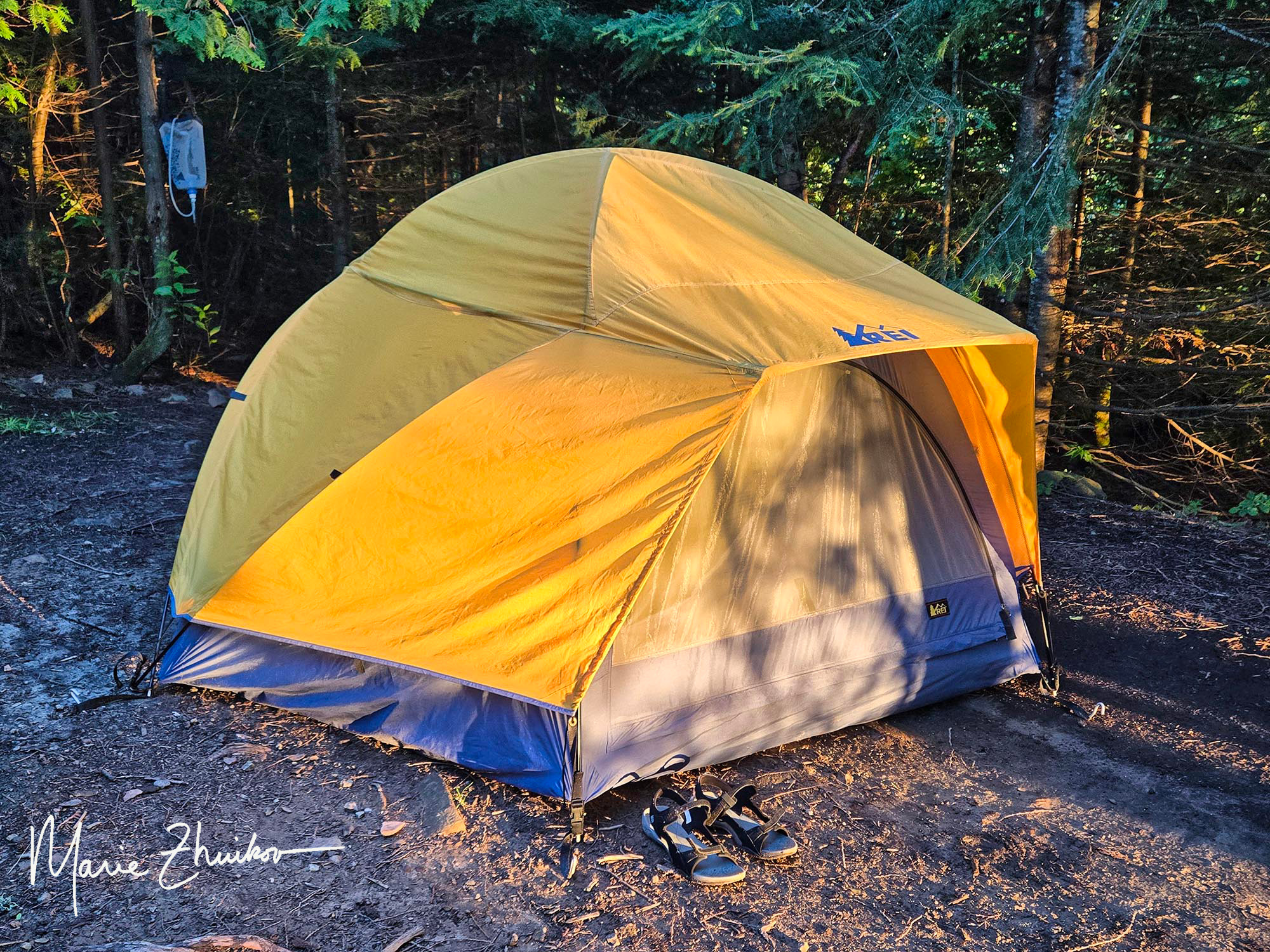
Our cute tent in dryer times.
We made it to camp and I quickly climbed into the tent to get into dry clothes. Russ was already so wet, he stayed outside. Once I changed clothes, the wind picked up even more. Russ had to tie down our lightweight Kevlar canoe to keep it from blowing away. From inside the tent, I held down the side the wind was hitting so that the stakes wouldn’t pull out of the ground. After what seemed like hours, the storm abated.
Our tent bottom (and a sleeping pad), drying out in the sun after the storm.
We were a little worried about Sharon and Mike, but this wasn’t their first BWCA Wilderness trip, so we assumed they’d be okay. But as the hours ticked by and the sun lowered, we began to discuss how long to wait until beginning a search for them. Not long afterwards, we heard them paddling back to our campsite. We greeted them with shouts of “You’re alive!”
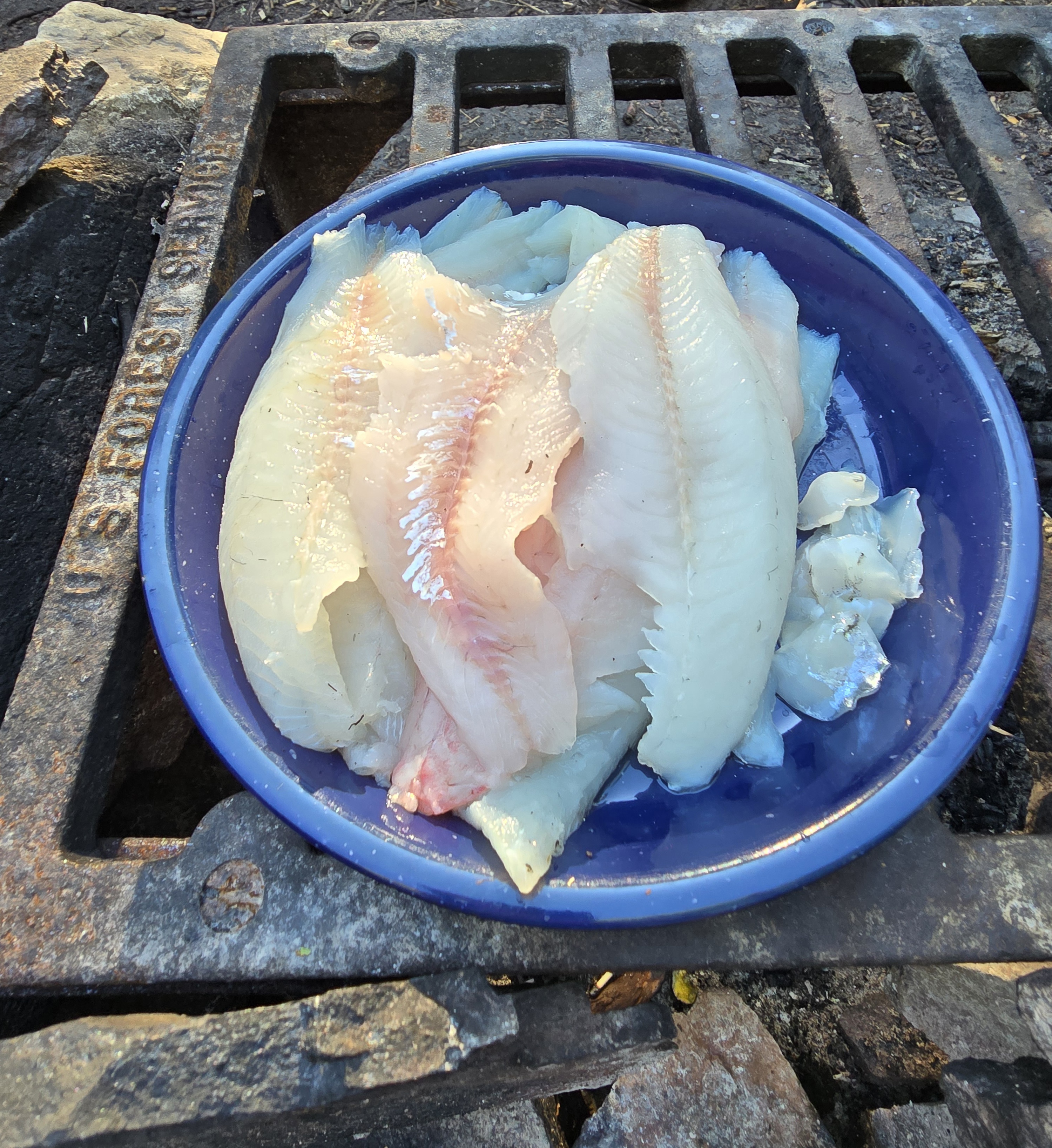
They explained that they also stayed on the water during the storm, riding it out next to shore. (That was reckless of them, I don’t recommend staying on the water in a thunderstorm. Don’t try this at home!) Then they stayed on the unnamed lake to fish more. We ate the fruits of their efforts with relish that night – the first non-freeze-dried dinner Russ and I had eaten in days.
Mmmmm, wilderness walleye filets!
The next morning, our final morning, another thunderstorm rolled through, but it wasn’t as strong as the previous one. Once it stopped, we packed up our soggy gear and headed to the canoe landing, wanting to cross Brule Lake as quickly as possible in case another storm was gathering. Sharon and Mike planned to leave later.
We made it back to the landing. Driving home, we appreciated the gradual return to civilization. Backwoods gravel roads gave way to pavement that led us past homes and eventually to the small town of Lutsen. The day turned hot and muggy, so we stopped for ice cream on the way home to Duluth.
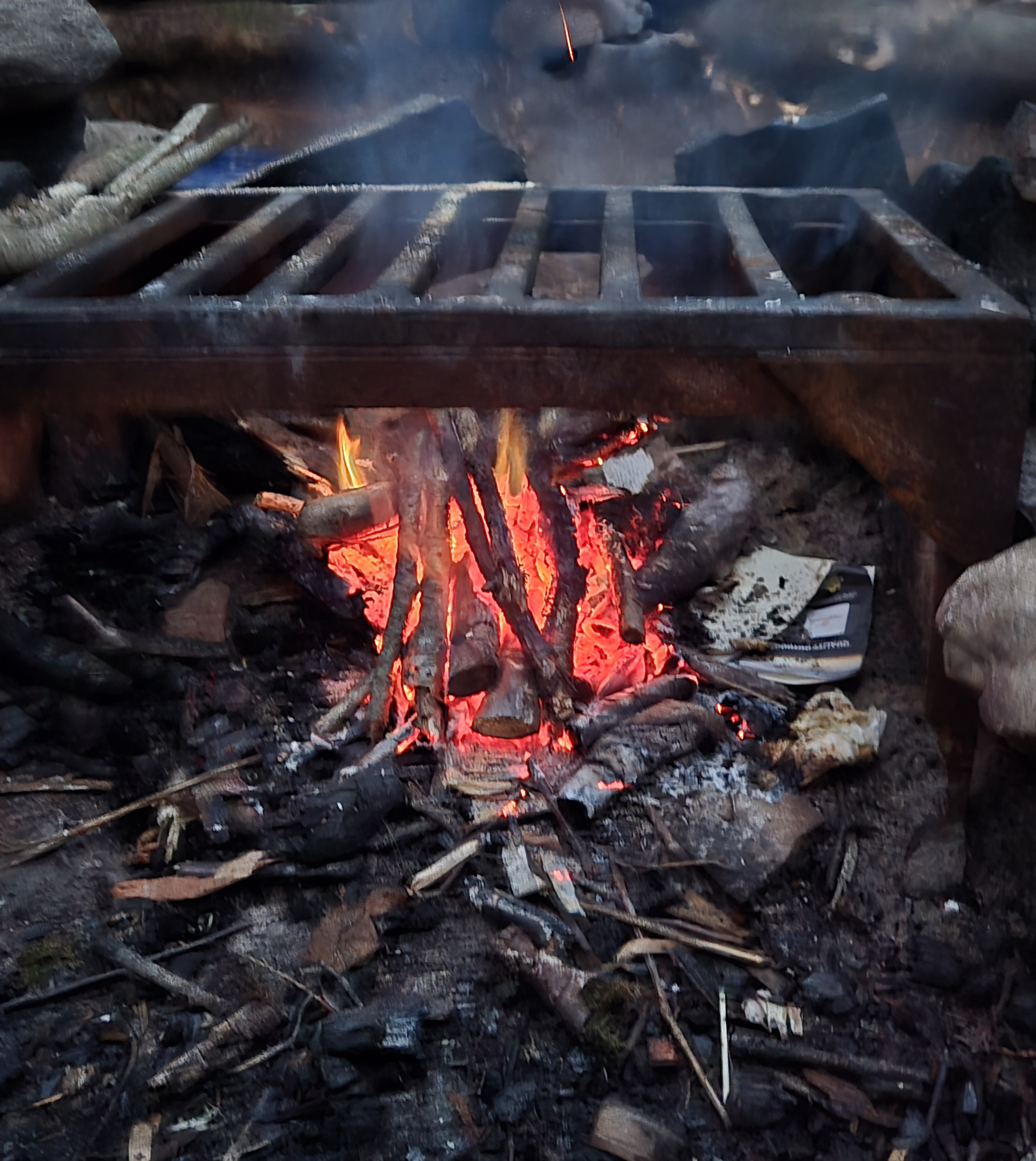
Our campfire on Brule Lake.
Now we’re back winning Connections again: 6 games so far. But we both agree this wilderness trip and the memories of spending time with good friends, listening to loons yodel, telling stories around the fire, and surviving thunderstorms were more than worth breaking our streak.
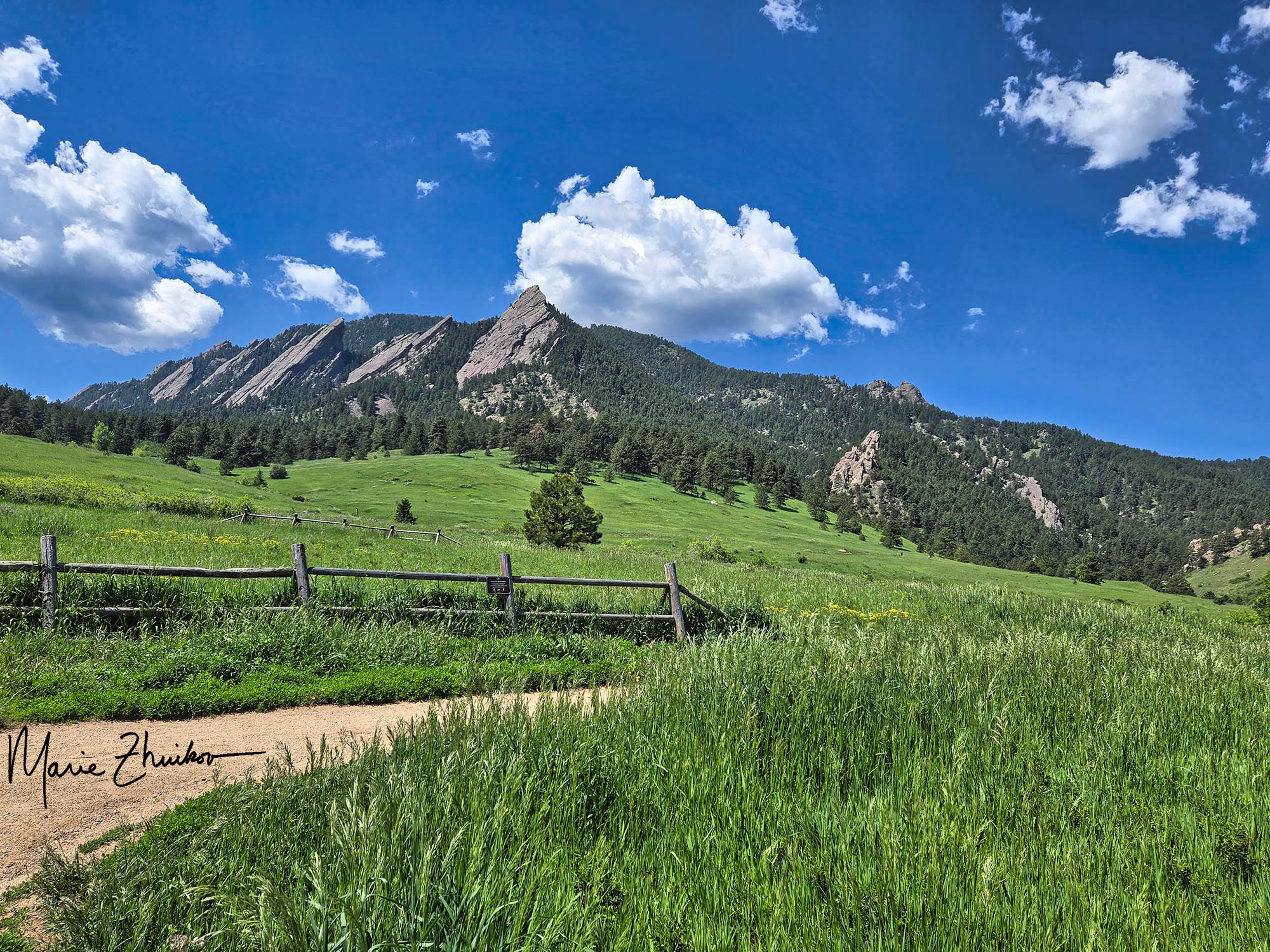
The Flatiron Mountains as seen from Chautauqua Park in Boulder.
When Russ and I were Scamping in Colorado last month, we visited Boulder with my son and his friends. One site was a local park that’s home to the Flatiron Mountains, which are a series of five impressive flat-sided peaks. The destination is popular with hikers and climbers.
I almost went to college there at the University of Colorado in Boulder, so that was one reason for our visit. Back then (and maybe even now) its biology program had a good reputation, which attracted me. I was even assigned a roommate. But at the last moment, I decided to attend the University of Minnesota instead for financial reasons. The university wasn’t far from the park we visited, and as we drove past, it was fun to ponder how my life might have been different if I’d stuck with my first choice of college.
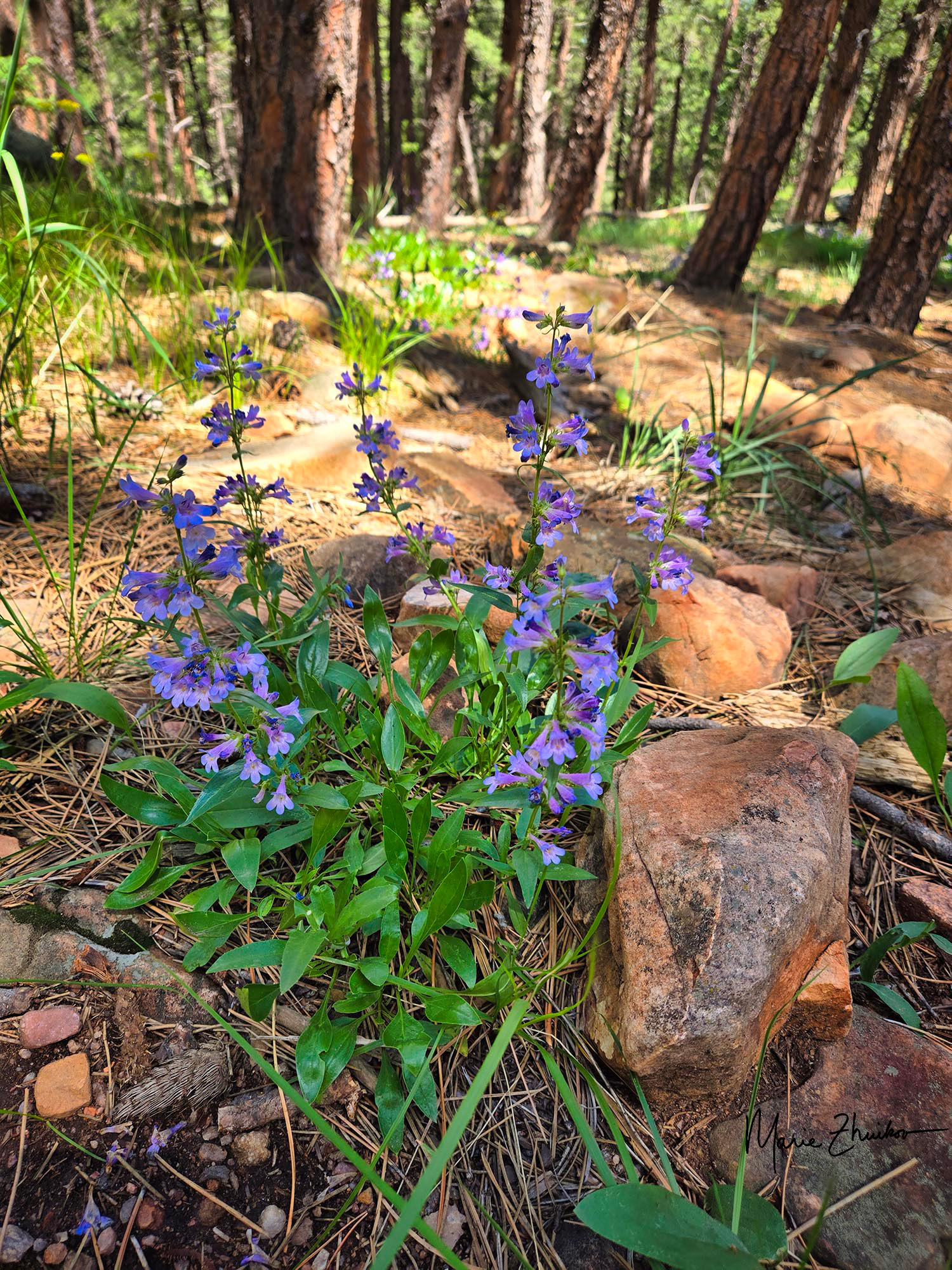
Anyway, back to Chautauqua Park. We hiked 1-1/2 miles UP and DOWN the base of the Flatirons. The spring flowers were out, which added cheerful color to our high-altitude breathlessness. My son’s friend went to college in Boulder and had climbed the mountains and he regaled us with tales of his adventures.
Afterward, we ate lunch at a Vietnamese restaurant. As our meal wrapped up, we discussed the agenda for the rest of our day. Originally, we’d planned to shop at the Pearl Street Mall in downtown Boulder, but nature won out when we decided we didn’t have enough time and would rather stop at Golden Gate Canyon State Park for a short hike. As we rose from the table to leave, emergency vehicles raced down the road. We wondered what was going on, but didn’t give it much thought until the next day when we learned about the Pearl Street Mall hate-crime attack.
Every Sunday since the Hamas-led attack on Israel in the fall of 2023, pro-Israel people have walked at 1 p.m. through the mall toward the courthouse to remind people of the hostages taken. Sometimes they sing the Israeli national anthem. It’s a peaceful demonstration.
On the day of our visit, a man yelled “Free Palestine” and threw a Molotov cocktail into the crowd of demonstrators. You can read national news accounts for a description of what happened next. In the end, eight people were badly burned and four had to be airlifted to Denver. One later died. The suspect (a recent transplant from Egypt) was quickly arrested and now faces a possible death penalty.
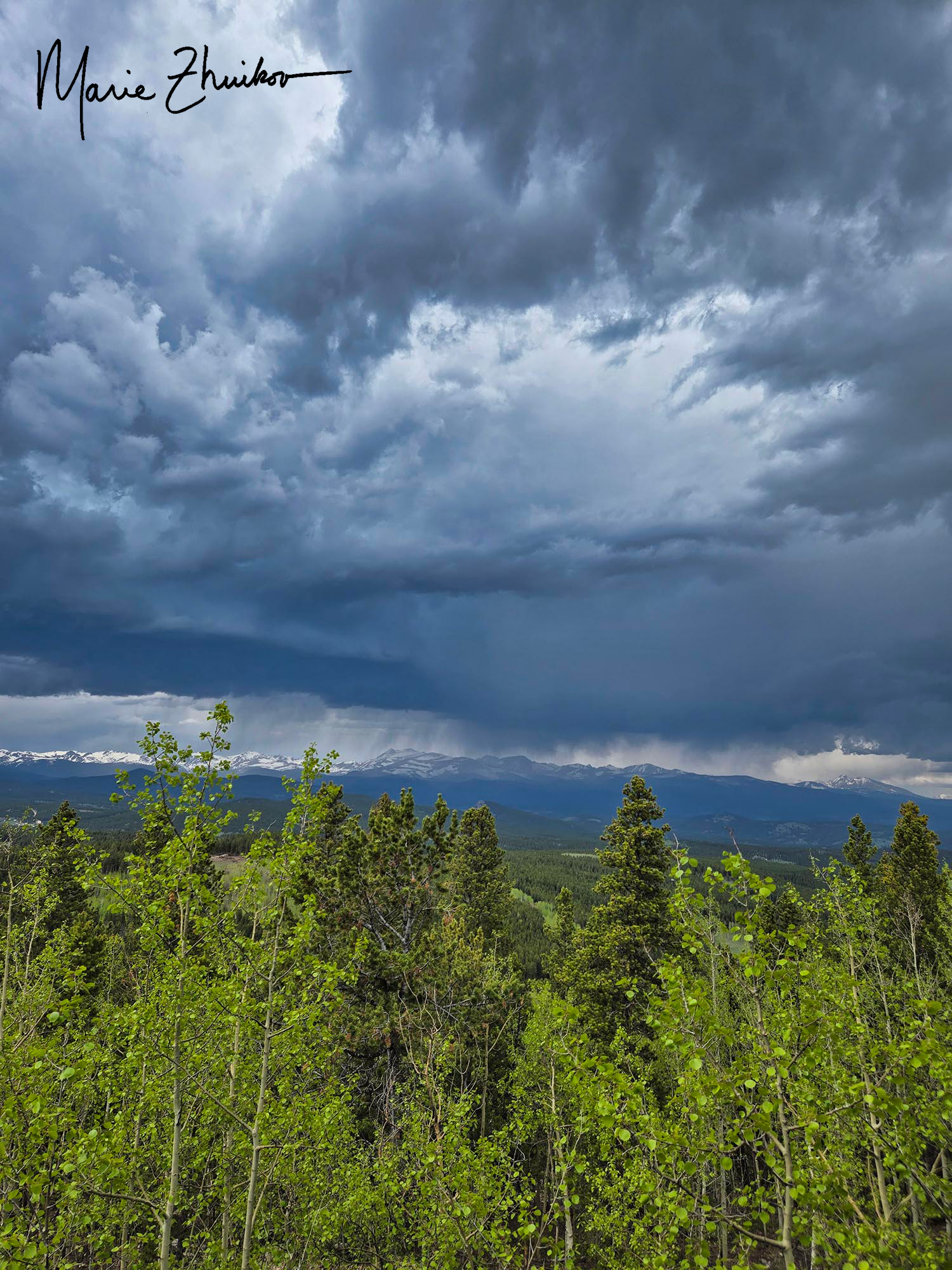
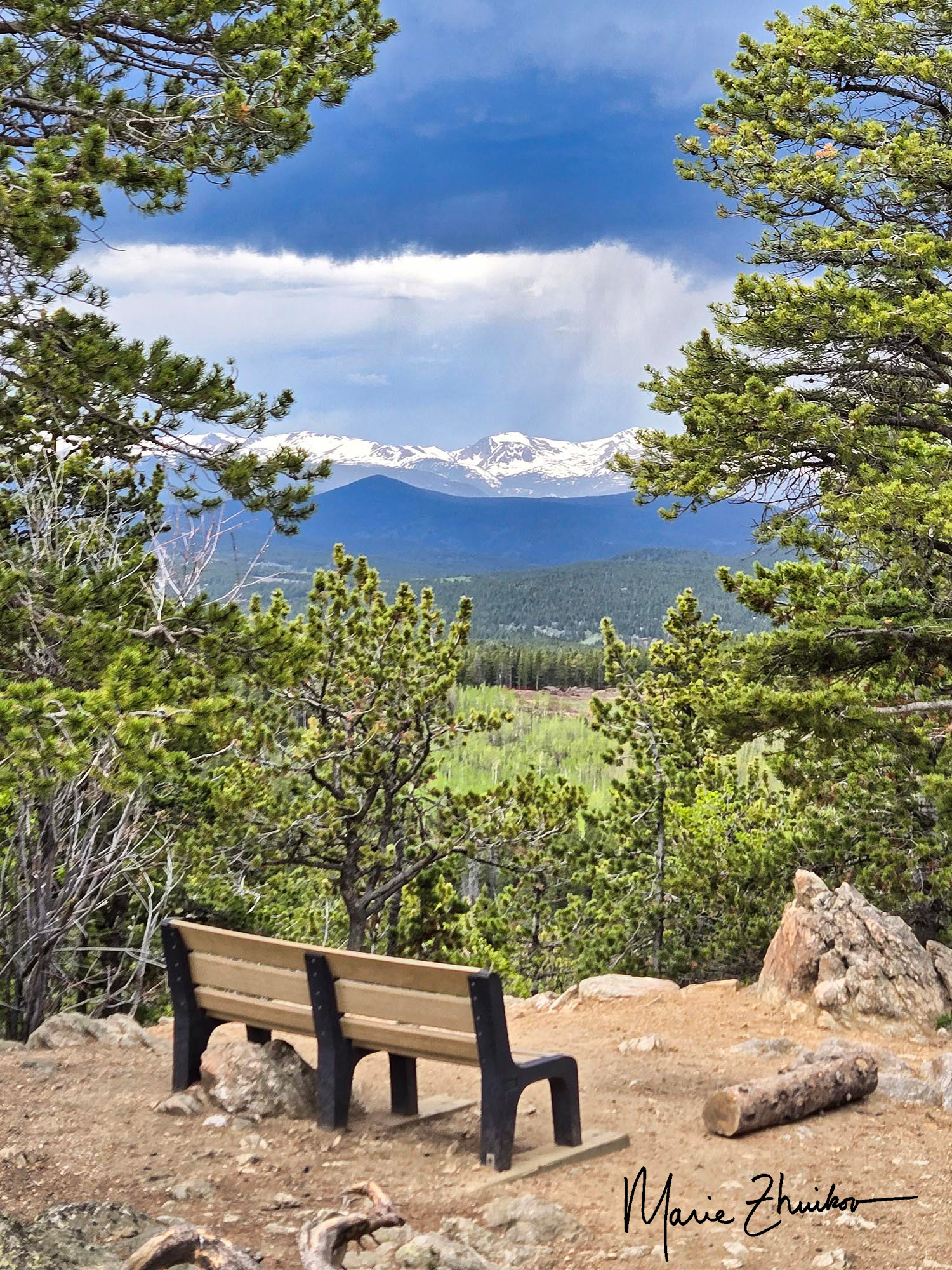
The view from Panorama Point, Golden Gate Canyon State Park, CO.
Blissfully unaware of these circumstances, and as more emergency vehicles passed us going the other direction toward downtown, we drove to Golden Gate Canyon State Park on our way back to Denver. The park was recommended for hiking by my cousin who lives in Golden. We stopped at Panorama Point and enjoyed watching a dramatic thunderstorm roll past. As the storm turned toward us, we parted ways.
The next day when we learned about the Pearl Street Mall attack, we felt for the injured people, but also felt lucky that we had changed our minds about a mall visit and didn’t end up as collateral damage. The restaurant where we had lunch was only 10 blocks away from it.
What if I had gone to Boulder for college? What if we had eaten our lunch faster and decided to visit the Pearl Street Mall? I guess we’ll never know answers to the questions raised by these two close calls.
I dedicate this post and these images to the victims of the Pearl Street Mall attack.
I’ll be talking about how I weave science into my fiction stories, with a focus on my science background and my latest book, The Path of Totality, which is a collection of short stories. If you’re in/near Duluth MN, come have a pint and a listen!
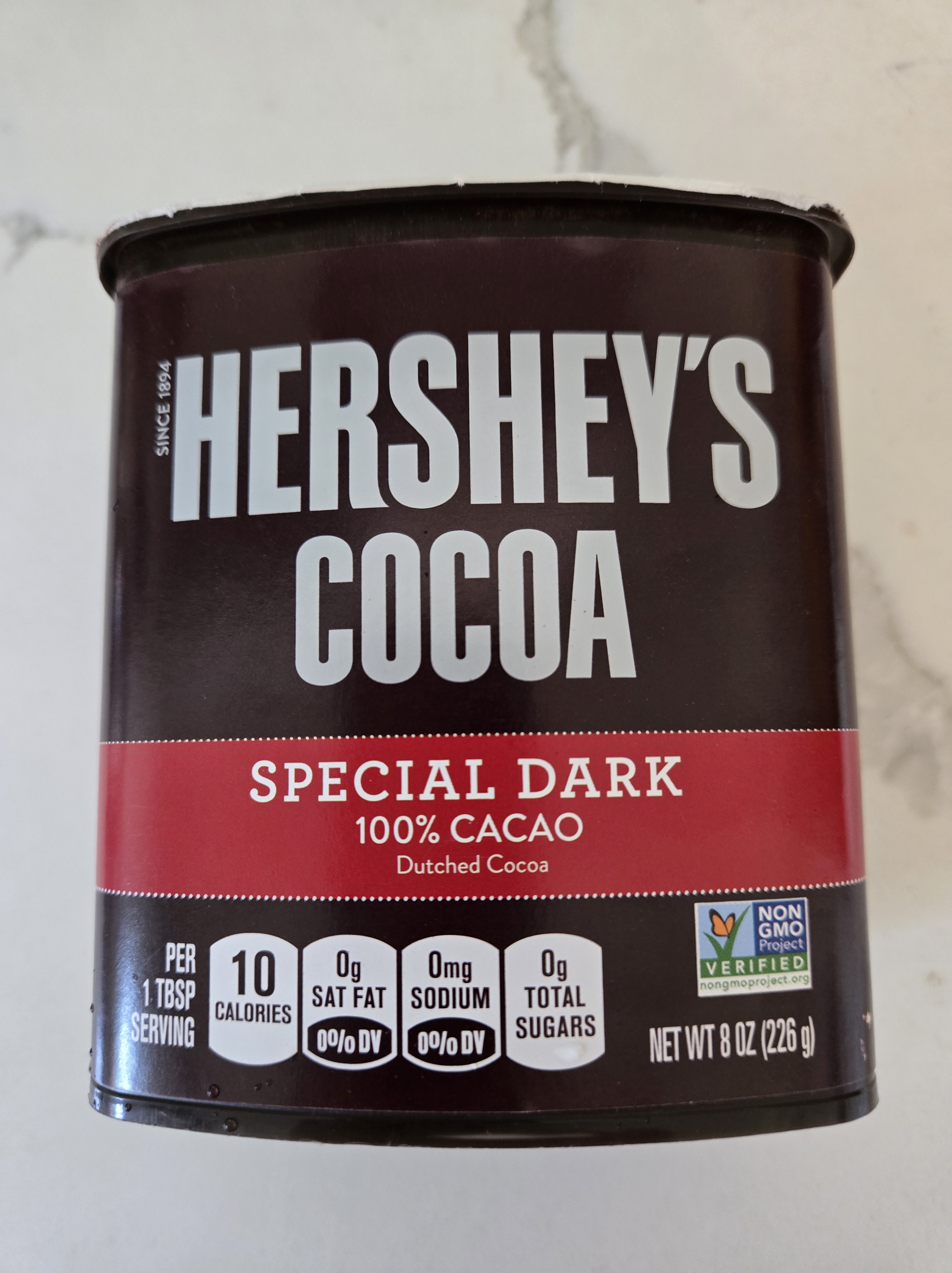
I discovered recently that conditions half a world away have disrupted my morning routine. Instead of drinking coffee like many of you out in the blogosphere do, I drink cocoa. I make it myself because most of the commercial brands have ingredients I can’t tolerate. I use dark cocoa, pure cane sugar, milk, some decaf coffee crystals for extra flavor, plus cinnamon and nutmeg for zip. I drink it hot in winter and iced in summer.
However, for the past few months, I haven’t been able to find dark cocoa on the grocery shelves anywhere in my town. I can only find regular cocoa, but not much of that, either. I finally turned to the internet to discover why.
I learned there’s a global cocoa shortage that’s affecting the entire chocolate industry. I was aware there was a chocolate shortage, but I never thought of that affecting cocoa, for some strange reason. Cacao crops in Ghana and the Ivory Coast of Africa (which produces 60% of the world’s cocoa) are being destroyed by weather and an insect-borne disease with the worrisome name of Cacao Swollen Shoot Virus Disease (CCSVD). This and other factors are causing shortages of cocoa and chocolate, increases in prices, and supply chain issues. According to one blog, it’s even encouraged a cocoa smuggling business.
I began drinking dark cocoa because I thought it was “healthier” – containing more antioxidants than regular cocoa, just like dark chocolate contains more antioxidants than regular chocolate. Later, I discovered this is not true! Regular Hershey’s cocoa actually contains more antioxidants. But I kept drinking dark cocoa for the taste.
I guess that for now, I’m forced to drink regular cocoa and be “healthier.” I’m just glad I can find that on the shelves.
Here’s what AI suggests for finding Hershey’s dark cocoa if you just can’t live without it:
Check online retailers: While some stores may be out of stock, it might be available on websites like Amazon.
Consider other brands: If you can’t find Hershey’s, you might consider other brands of cocoa powder.
Use product locators: Some retailers may have online tools to help you find stores that have the product in stock.
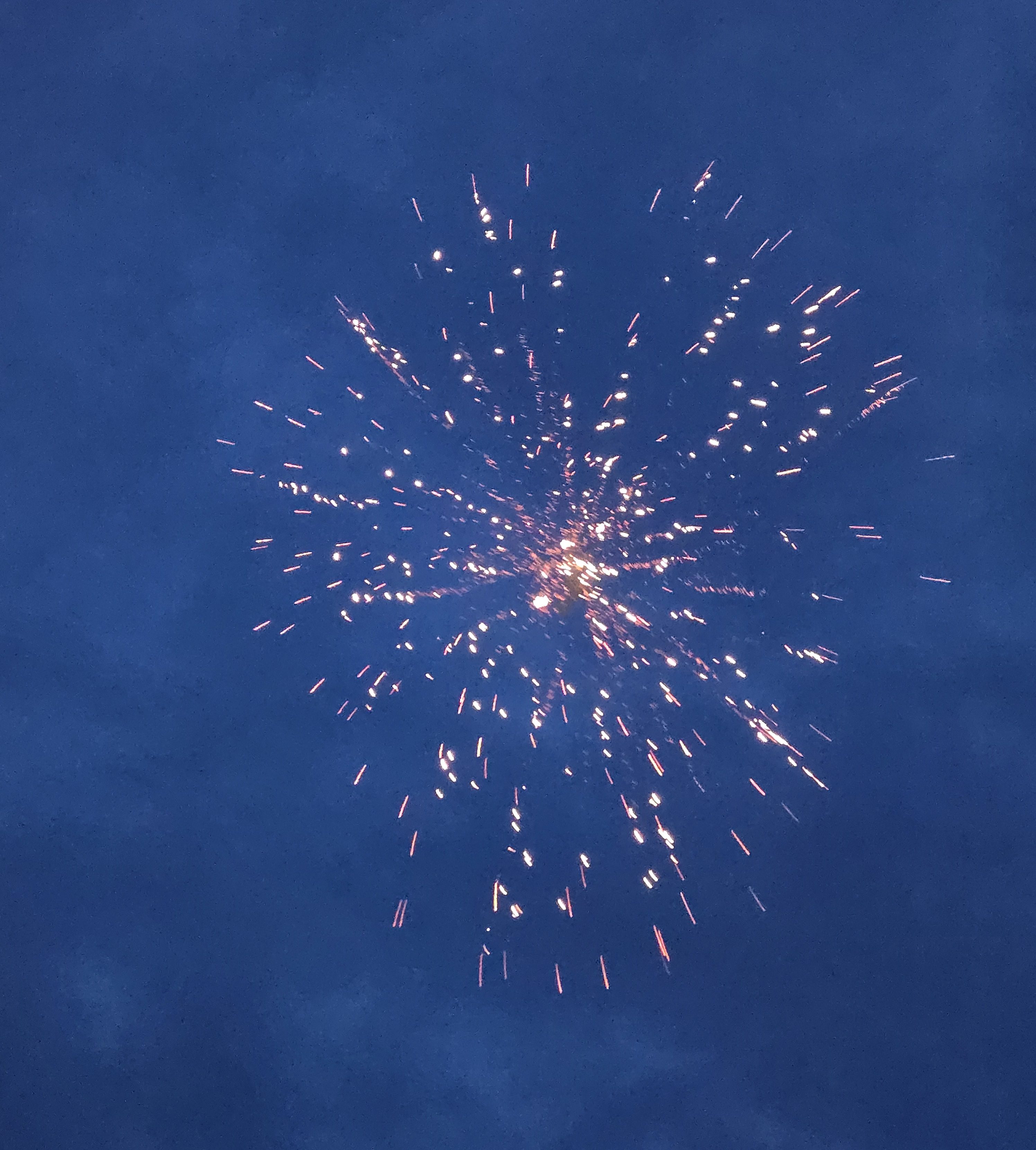
The weather for Independence Day in northern Minnesota was perfect: hot and sunny. I thought I’d share some images from it.
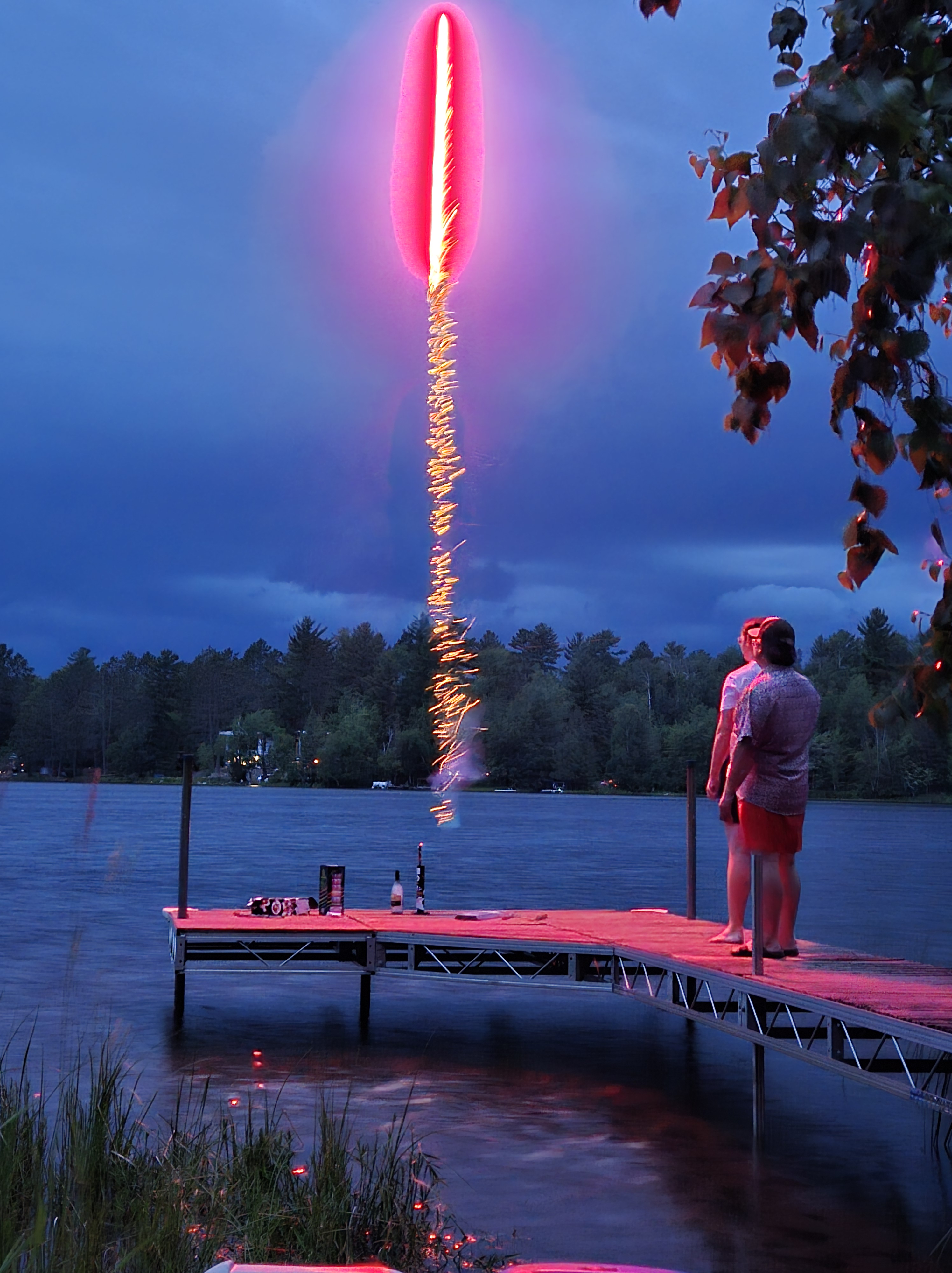
I can’t believe that my phone camera caught this firework on its way into the sky, looking like a space rocket. An empty brandy bottle served as a fine launch pad.
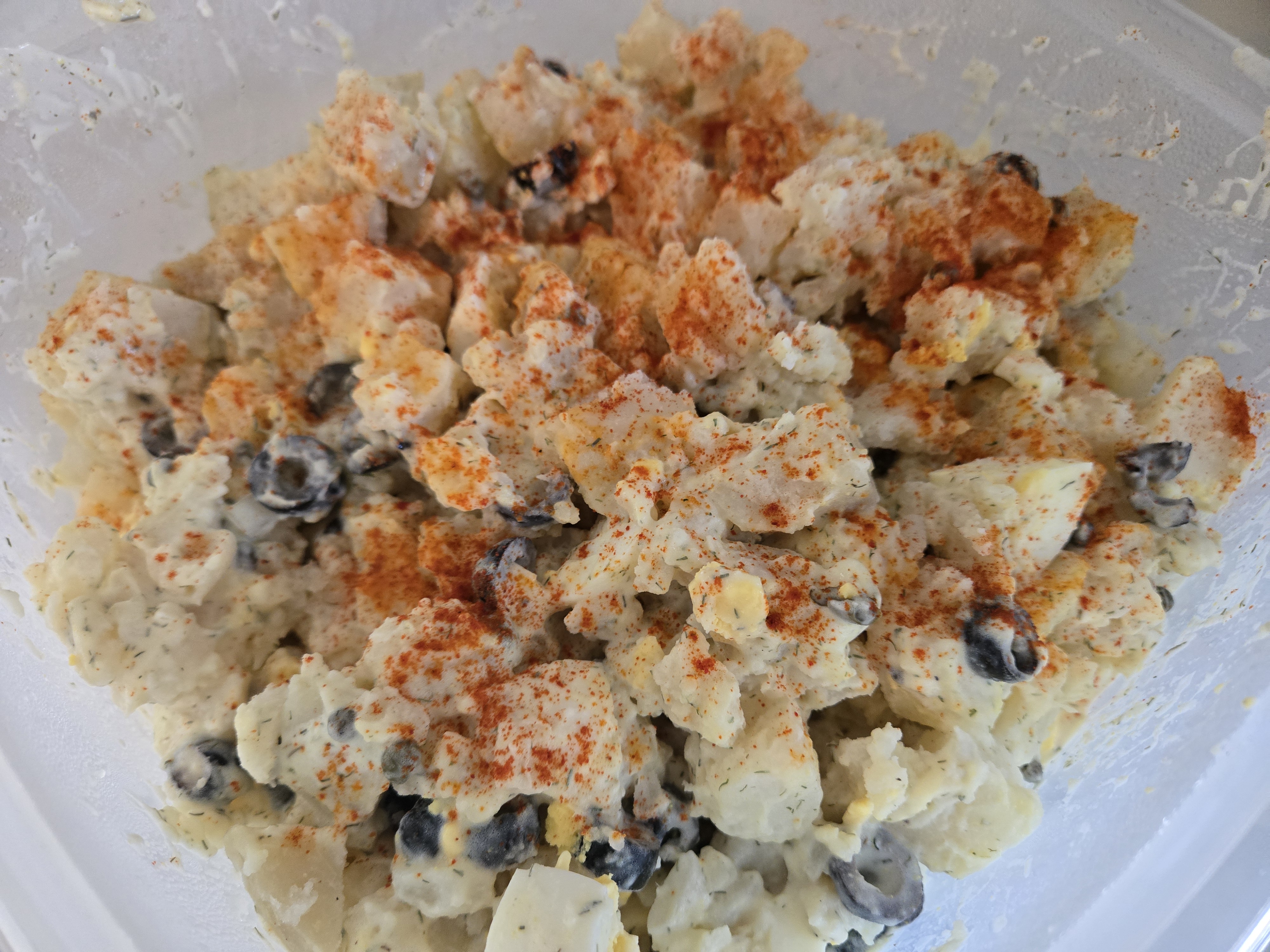
No 4th of July is complete without my mother’s potato salad recipe. It features extras like black olives, hard-boiled eggs, mustard, onion, dill, and paprika. I made enough to last our crew for several days!
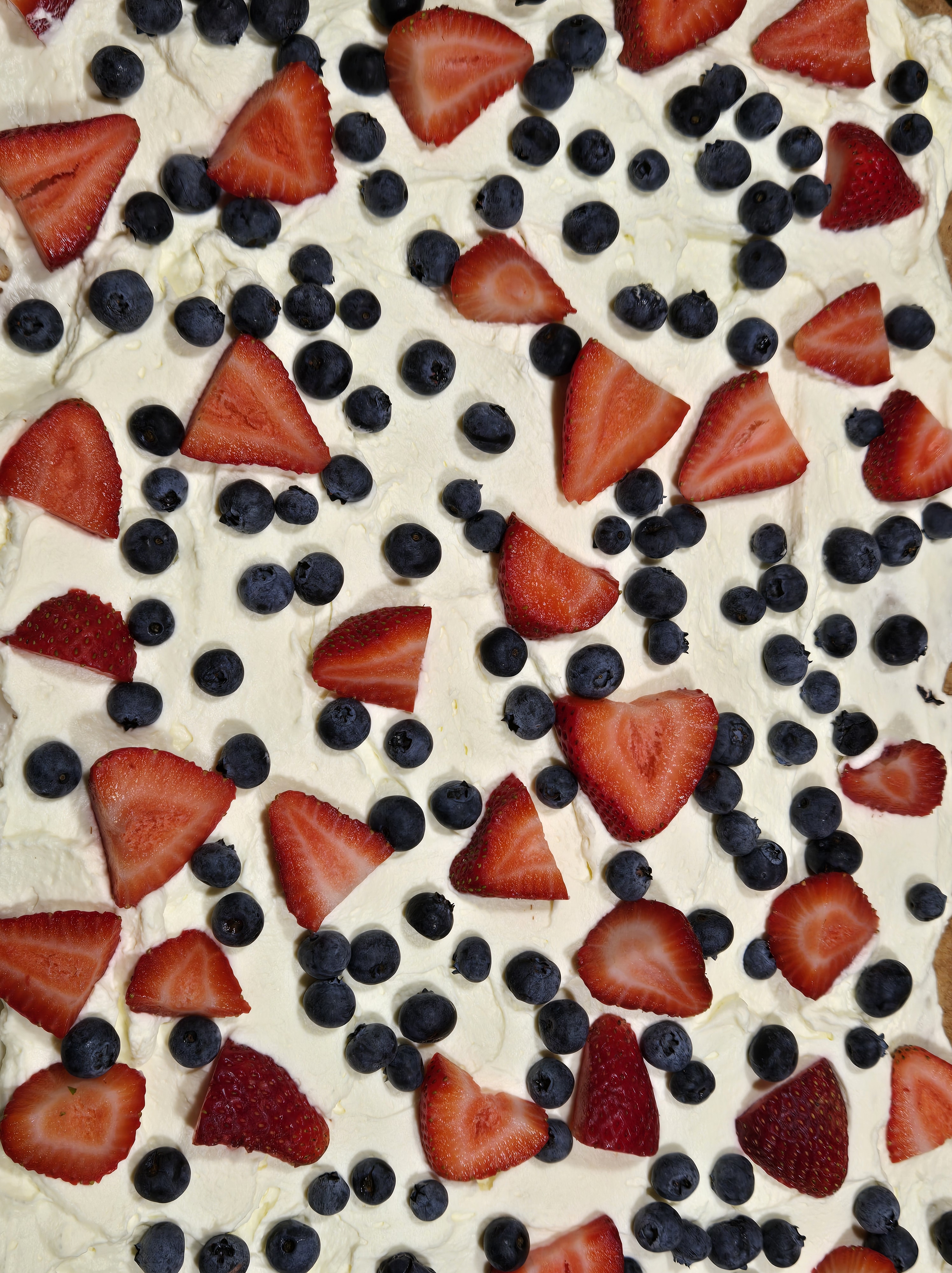
Back in Colonial days, cakes used to be a “thing” for Independence Day. As for us, we devoured a fruit pizza, which is basically a huge sugar cookie covered in cream cheese, whipped cream and fruit that matches the day’s color scheme (red, white and blue).
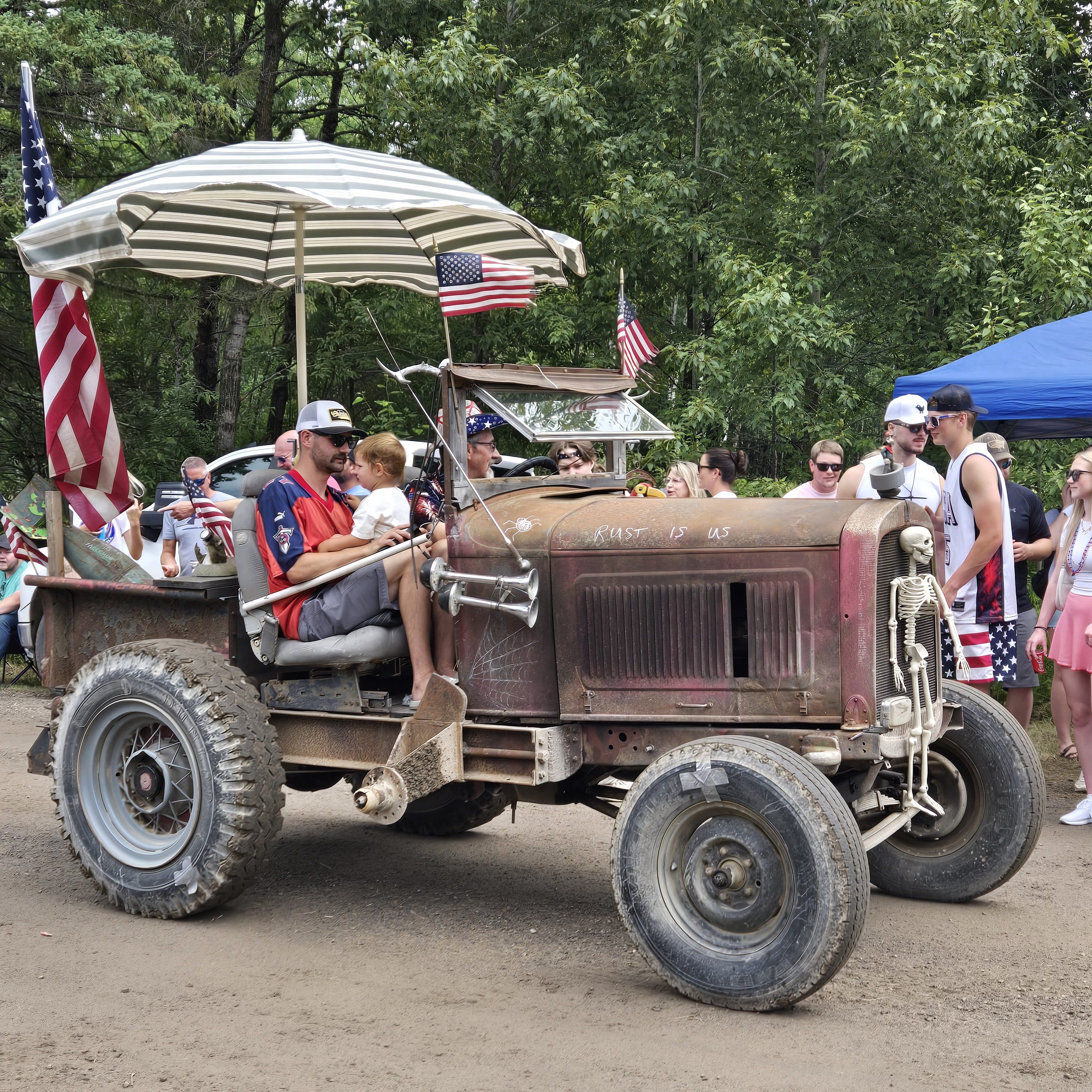
We ended the day at a community parade. I’d never been to it before and was surprised by the number of people who attended, especially since there aren’t that many people who live in the area. The parade was filled with ATVs, floats from local businesses, and people tossing candy to children. One guy was even handing out fireball whisky shots! There were also a few disturbing “Don’t Tread on Me” flags on the ATVs (a symbol for the alt-right) and much Trump paraphernalia in sight, but that’s the politics of this rural area, as it is in many small towns across the country.
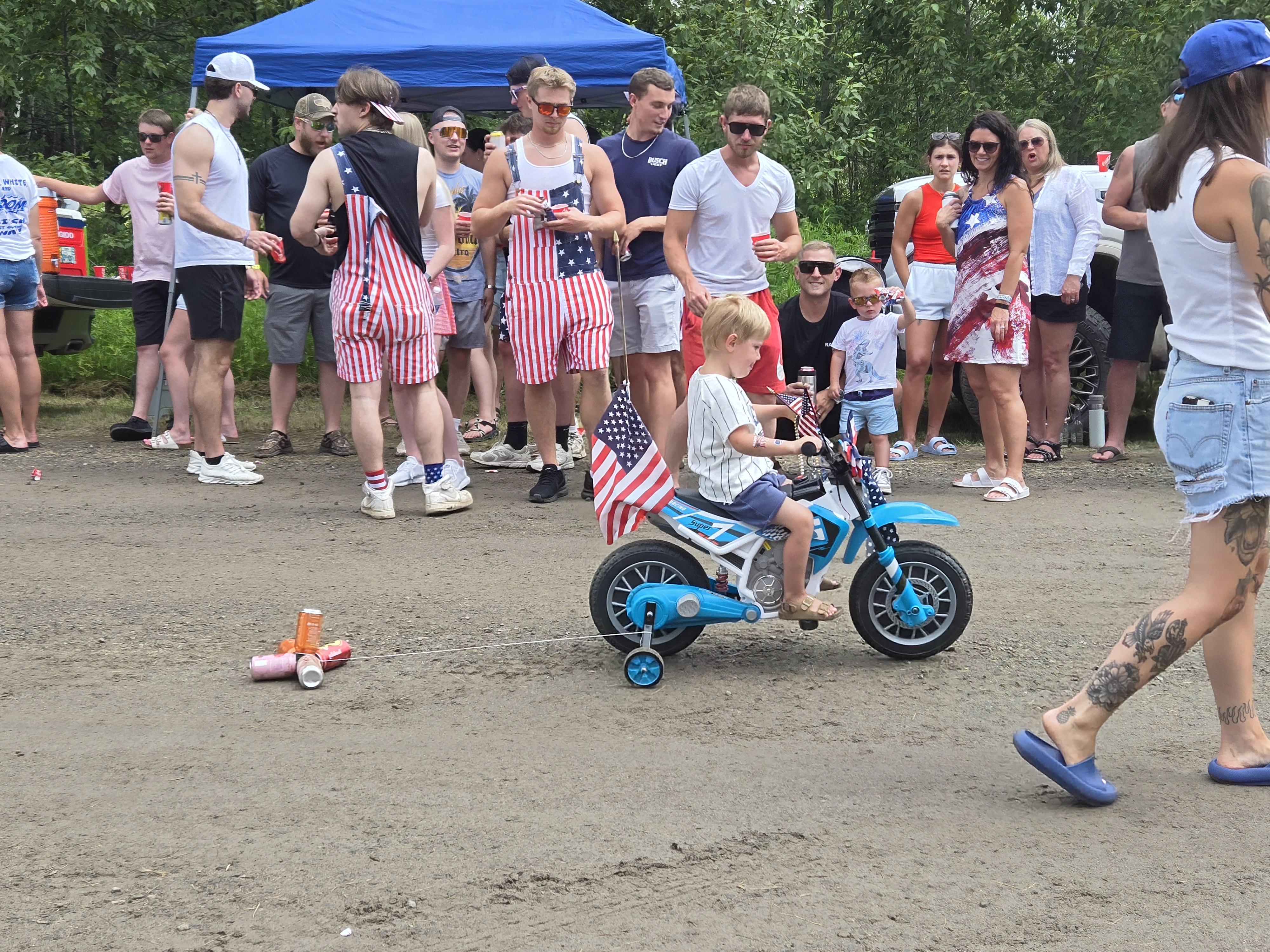
This was the cutest float in the parade. While many of the ATVs were trailing beer cans, he chose pop cans. Note the patriotic dudes in the background.
We had a great time with family and friends. I hope your 4th was memorable, as well. What are your traditions?
The lure is more than scenery, varied vistas and magnificent lookout points; it is the consciousness of being at the threshold of the unknown. – Sigurd Olson, Listening Point
Finding a good view of the landscape in Minnesota is a challenge. So many trees and shrubs block the way. You have to work to see an unencumbered horizon – climb a rock ledge, climb a tree, climb a tower.
Duluth is an exception. Growing up here, I always knew where I was. The skinny, long city is built on the side of a hill on the shores of Lake Superior. You are either looking at the hill or the lake. Even with all the trees, you can tell where you were.
When I moved to the flatland of Minneapolis for college, I lost those landmarks and had a hard time orienting. Finally, in frustration, I took an elevator to the top of the fifty-seven-story IDS building in downtown. From that viewpoint, I could see the horizon and the major landmarks: the Mississippi River, the University of Minnesota, the Metrodome, and I finally began to sense the landscape despite all the trees.
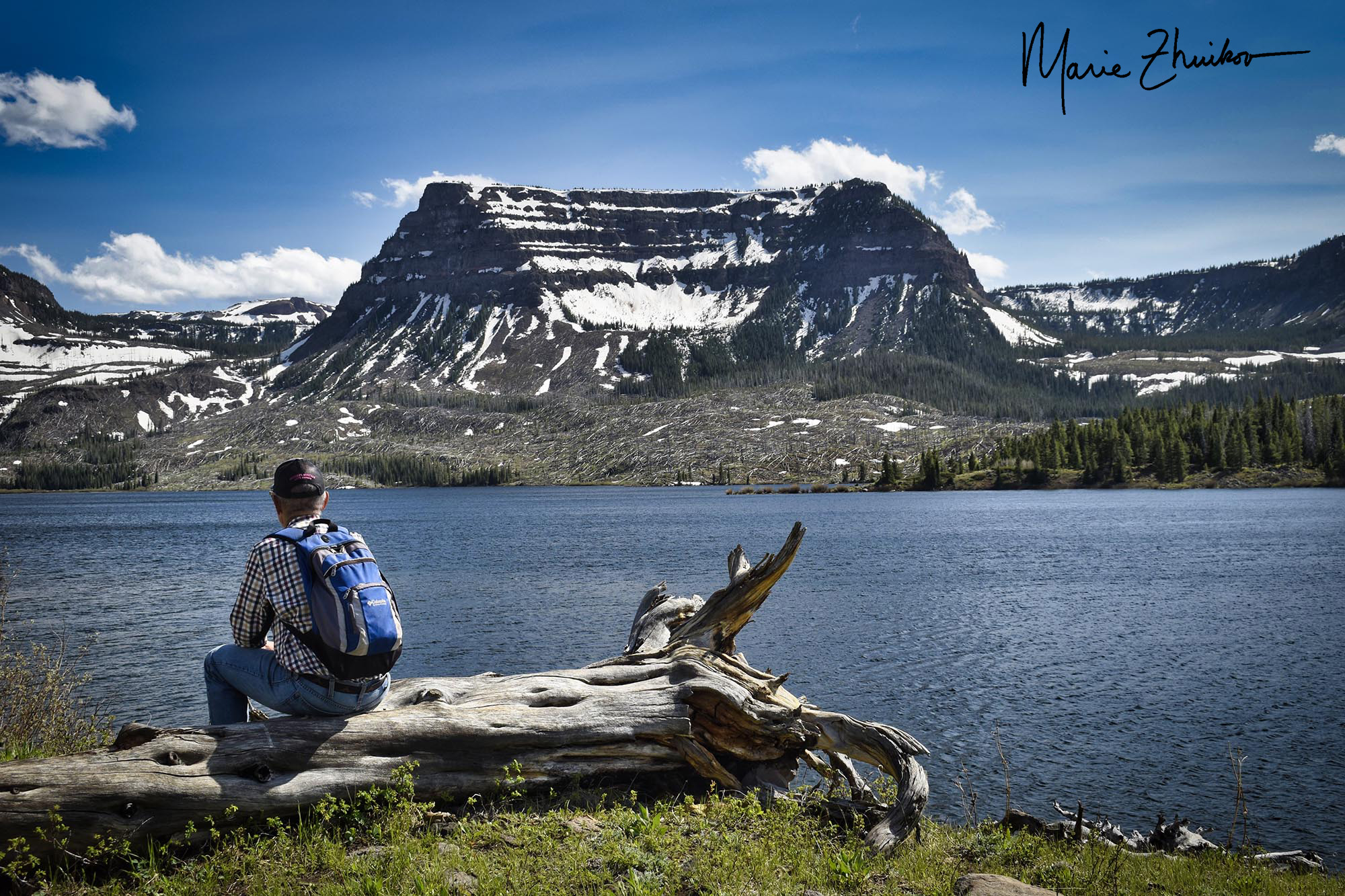
Trappers Lake, Flat Tops Wilderness. Image by Russ.
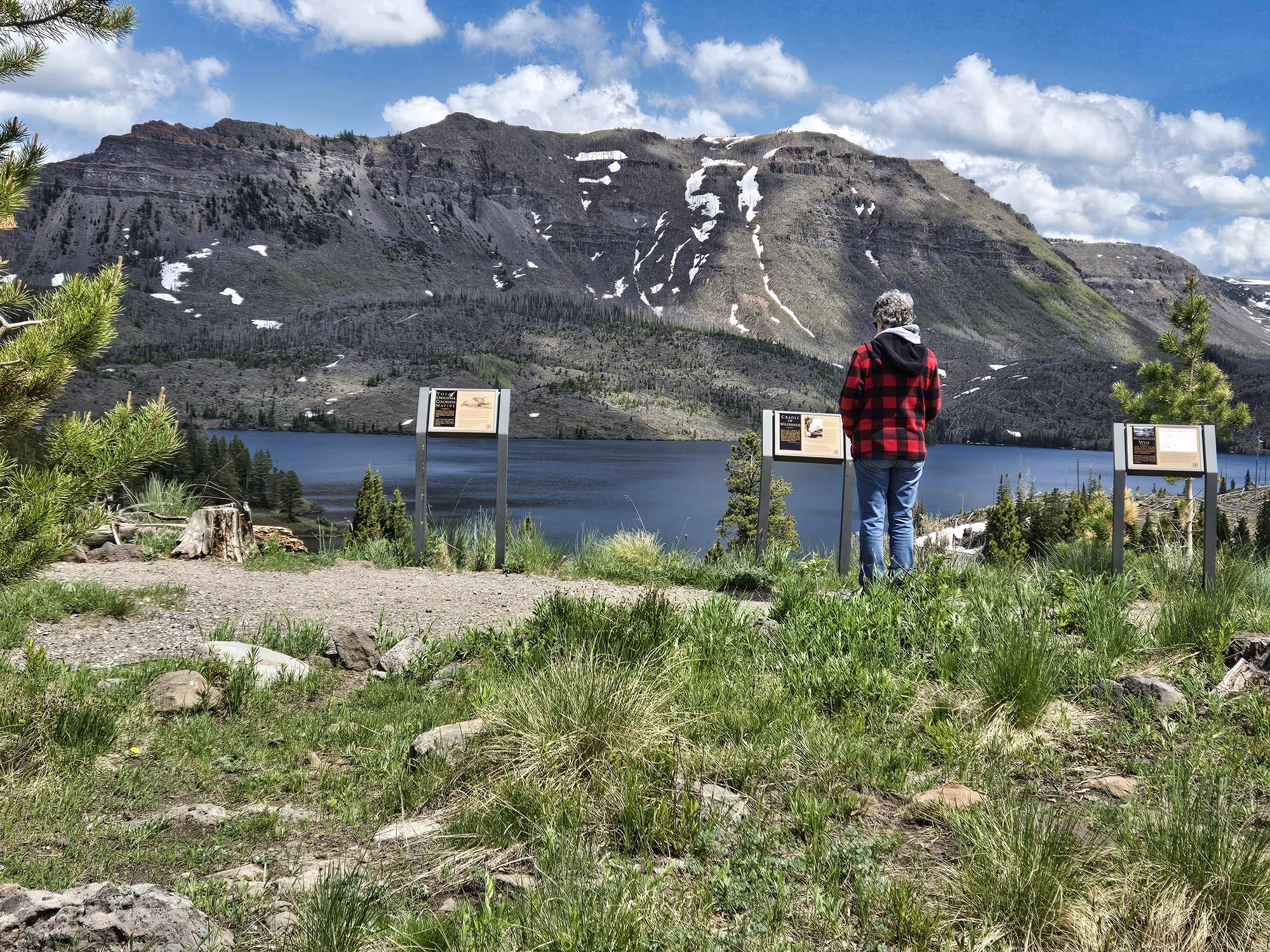
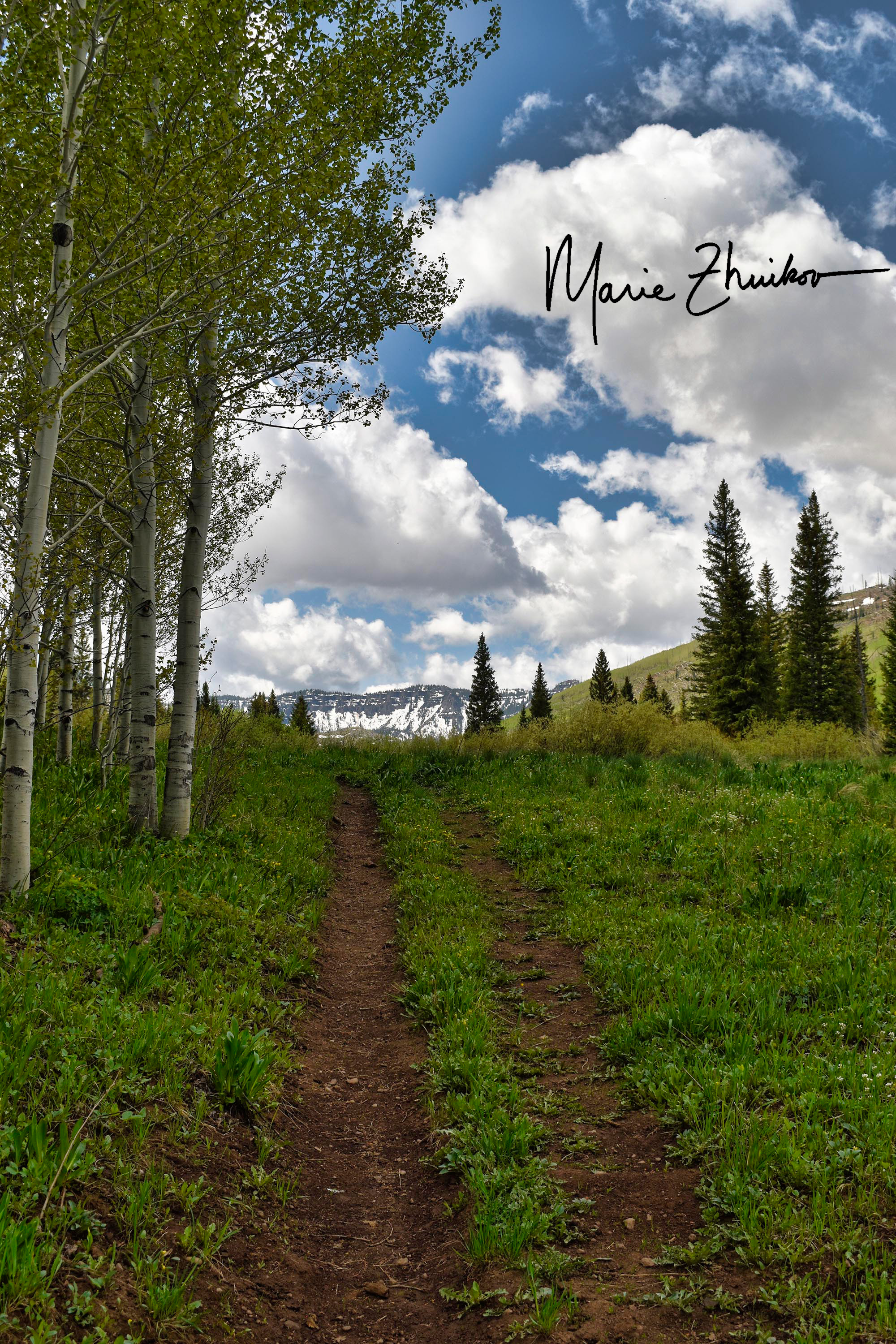
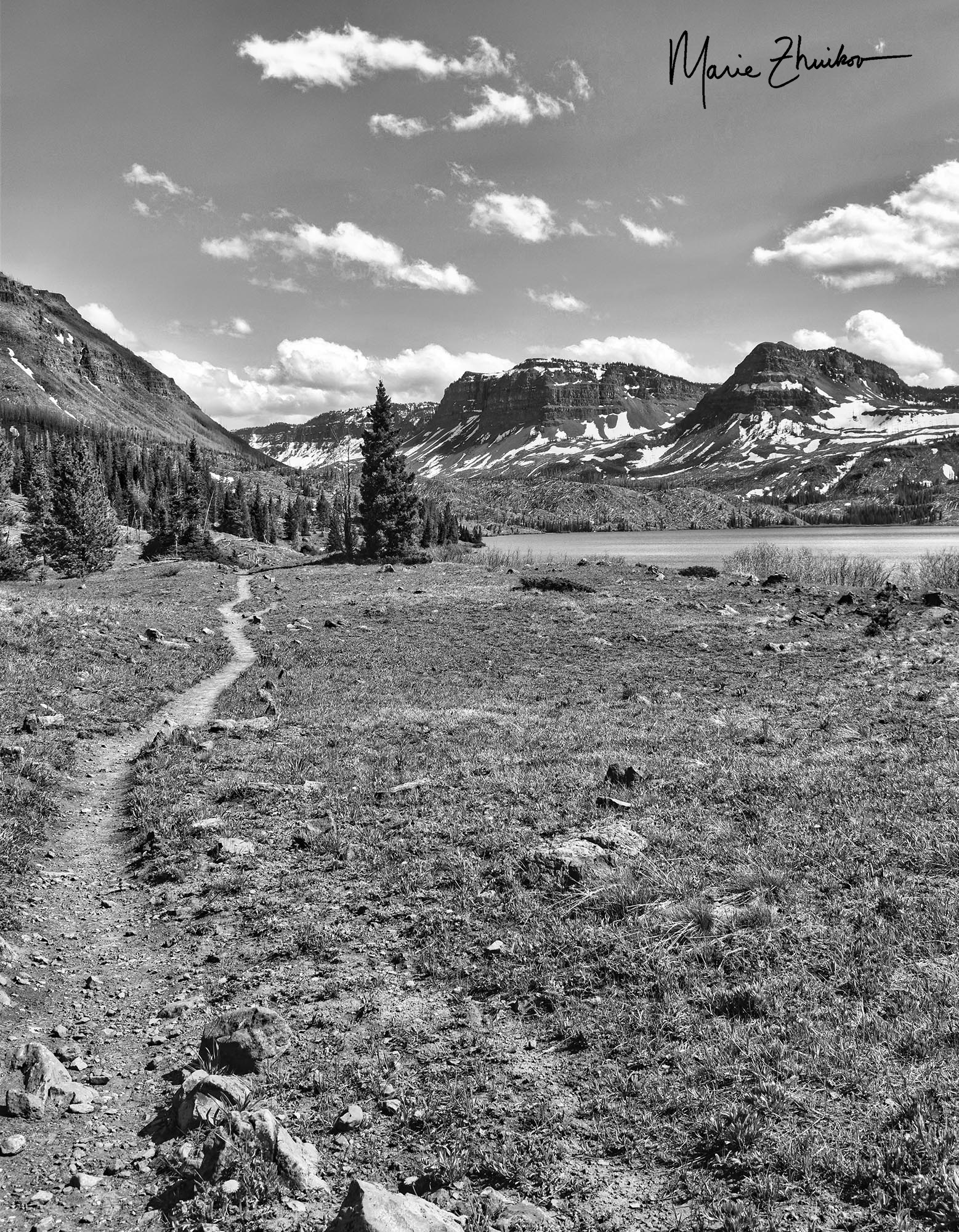
Russ and I recently meandered to a place where the views come easy: Denver, Boulder, and the Flat Top Wilderness of Colorado. Walk down any trail and you’ll see mountains, lakes, valleys, ridges. I adore the feeling of looking a long way without any houses dotting the landscape. Sleeping in our little Scamp trailer at 9,000 feet, the only ones in a campground with no water, we were as alone and as much a part of the wilderness as we have ever been.
Big Fish Trail, Flat Tops Wilderness
Although in our homes we have all the modern conveniences and comforts, it’s hard to be truly happy without a connection to nature. In those far horizons, wherever they might be, is a partial answer to the hunger and unrest within us.
To paraphrase Sigurd Olson from Listening Point, “Some find their wilderness in the grandeur of snow-capped peaks and high flowering meadows. To mountain people, this is the primeval on a noble scale, a timelessness and immensity they seem to find nowhere else. They come down from the hills refreshed and ready once more for life among their kind.”
We are back among our kind now, refreshed and ready for whatever life may bring.
What is it about possessing things? Why do we feel the need to own what we love? And why do we become such jerks when we do? We’ve all been there. You want something, you possess it – and by possessing it, you lose it. – Chris Stevens (Chris-in-the-Morning), “Northern Exposure” TV series
When we returned home from Grand Cayman, northern Minnesota was on fire. Three wildfires from natural causes were burning, adding to the smoke from Canadian fires. During our vacation, the smoke blanketed Duluth, causing air quality warnings. Thankfully, we missed that, but once we were home evacuation warnings sounded for areas near our cabin.
What could we do against a wildfire if it chose to overrun our cabin? We live an hour away and weren’t sure how worried we should be. One of my relatives called me and suggested we stand outside our cabin with garden hoses. Luckily, a cabin neighbor was fighting the fire and was able to give us a clue about the conditions. He thought we’d be okay. But out of an abundance of caution, a few days later when the fire had crept within two miles of our cabin, we decided to evacuate some belongings “just in case.”
Deciding what to evacuate was an interesting exercise. It wasn’t easy, but we were thankful that we weren’t like many people who only had minutes to evacuate. Eventually, we decided on bringing our Scamp trailer camper home, which was stored in our cabin garage. We needed it in the next few weeks for a trip to Colorado, and it would have been very inconvenient to have it burned to a crisp!
My photos were the other things we saved. We decorated the cabin with many canvases and metallic prints of images that you’ve probably seen in past blog posts. I have a photo show coming up in July, and it would have been a bummer to have those all burned up. Not to mention, expensive to replace. (To see my online photo collection, visit my website.) We decided to leave the furniture until a more imminent threat arose. Some of our good friends volunteered the use of their truck if we needed it and we felt lucky to have such support.
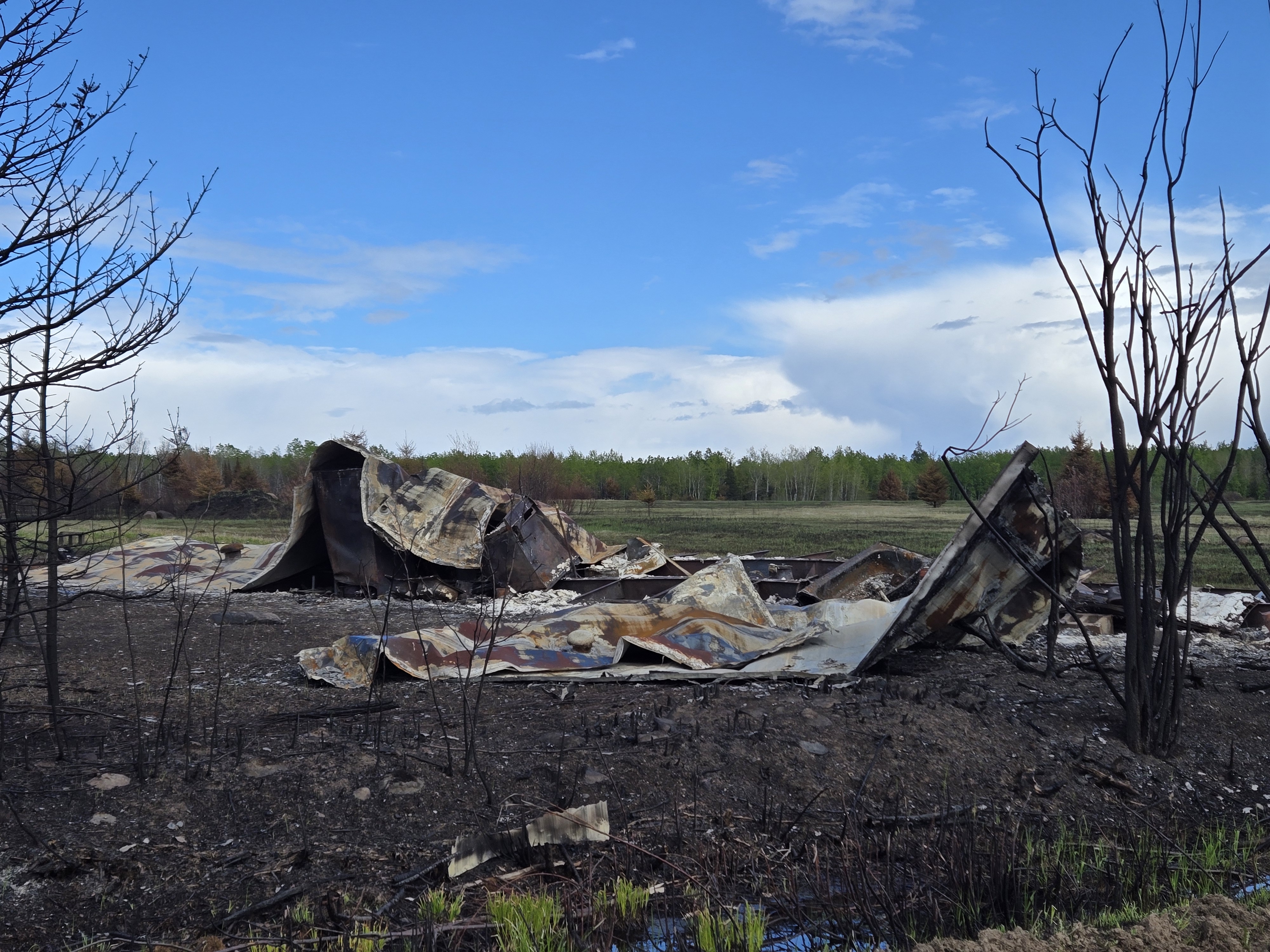
I think this used to be a mobile home, located near where the fire began.
Thankfully, we didn’t need their help. Due to the efforts of state and local fire folks, the blaze was stopped soon after we evacuated our belongings. I’m glad our cabin survived and I’m glad no lives were lost in the blaze. Our firefighter friend told us the fire began due to a spontaneous combustion of a hay bale on a farm.
Once it was over, we drove down the road that flanked the fire. Several trailer homes were lost and possibly one “regular” home, plus many trees. The damage was sobering, and I was glad that we took the measures that we did. However, we would have been much more nervous if the fire had threatened our primary home.
Besides people and pets, what would you save if a fire came for your home? It’s something to consider.
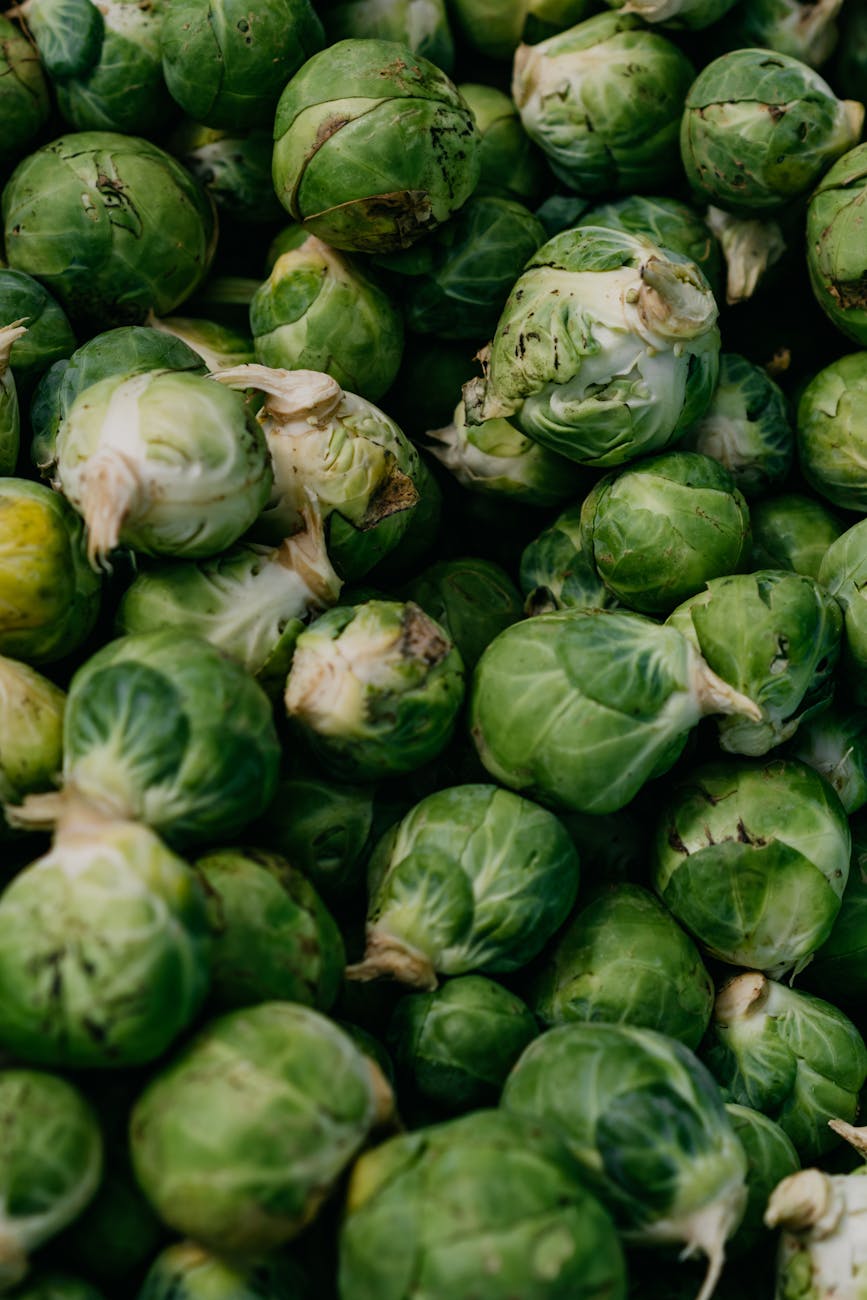
My husband’s nickname is Russell Brussel. He has a fondness, some might call it an obsession, with Brussels sprouts. We were cooking supper the other night: caramelized Brussels sprouts pasta with toasted chickpeas – a great vegetarian meal that we’ve cooked before – and I noticed a curious thing. The day was warm, so we had the kitchen windows open. Gradually, gobs of large black flies collected on the screens. They not only collected, they swarmed. In a spontaneous, miniature airshow, they divebombed the screens, as if trying to get inside.
Curious about whether this was happening elsewhere around the house, I checked other windows. No. The phenomenon was only happening at the kitchen windows. Thank god for the screens or we would have had an invasion on our hands!
We were busy cooking and then eating, so I didn’t think much more about it, although I noticed that the flies dispersed once the cooking was done.
The next morning, I did an internet search about whether flies are attracted to the smell of cooking Brussels sprouts. As you can probably guess, YES, they are!
Here’s why:
Odor Amplification:
Cooking can intensify the smells of food, making them more noticeable to flies, which have a highly developed sense of smell.
Volatile Compounds:
When heated, Brussels sprouts release various volatile organic compounds, some of which might be similar to those produced during decomposition, a known fly attractant.
Opportunistic Feeders:
Flies are attracted to a variety of food sources, including those that are decaying or decomposing.
The process of cooking, especially when done with heat, can amplify the odors of food and make them more appealing to flies. Brussels sprouts, like other vegetables, can release volatile compounds when cooked that are similar to those found in decaying organic matter, which is a common attractant for flies. This is due to the presence of methyl eugenol, which is also found in other fruits and vegetables such as cherries, raspberries, and basil. When this compound is present in high concentrations, it can be intoxicating to flies and other insects.
Now you know! Plus the next time we have Brussels sprouts I can joke to Russ that he’s cooking carrion again.
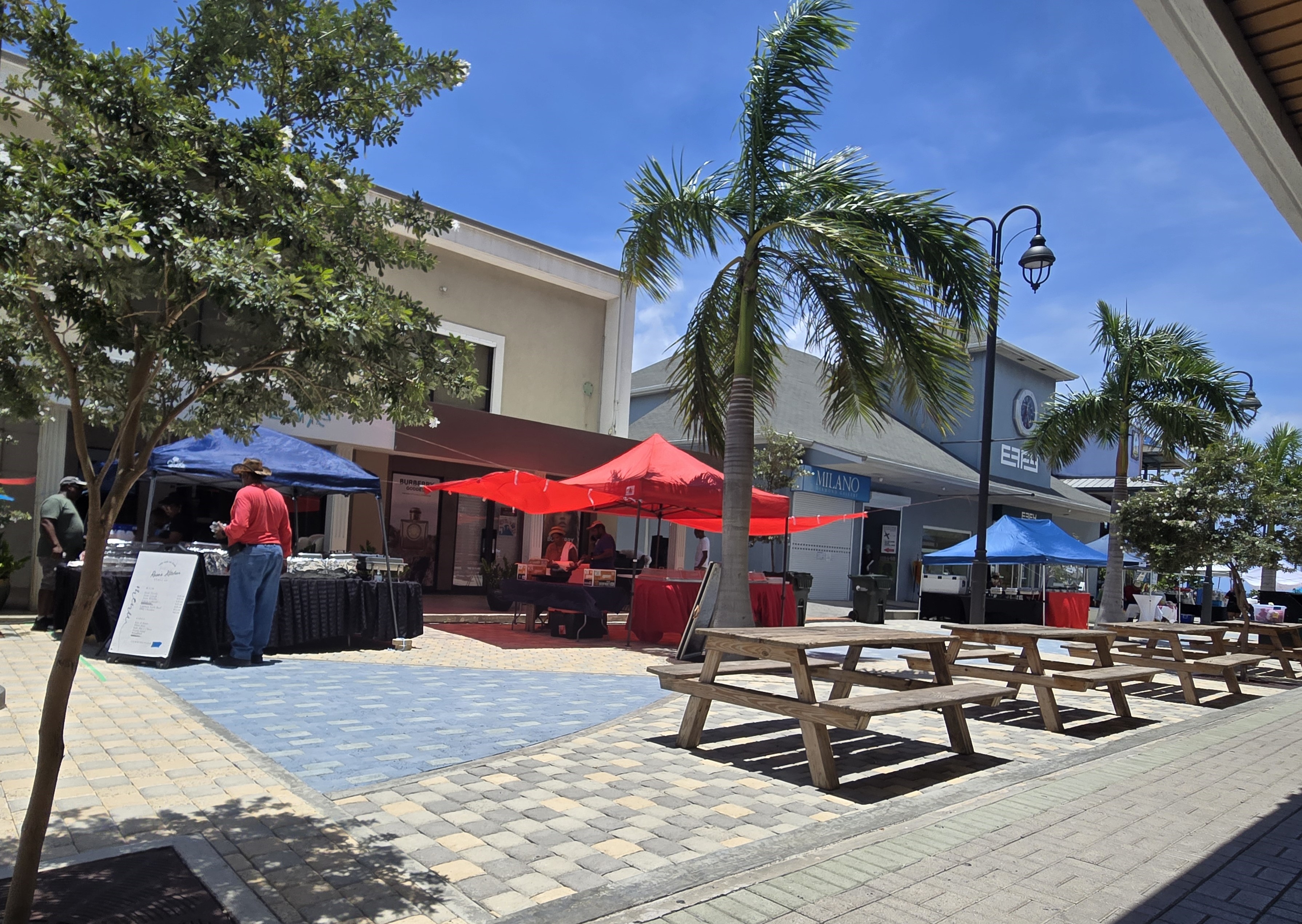
Batabano Carnival Food Festival gets set up in George Town.
Our last full day on Grand Cayman Island dawned sunny and beautiful, as usual. We planned to drive to George Town on the opposite side to further explore the capital city’s pleasures. Although it only takes about 30 minutes to get there from the island’s East End, we girded our loins for its numerous roundabouts and heavy traffic. With Google, we scoped out a public parking lot and hoped for the best.
Some of our plans this day worked out better than others.
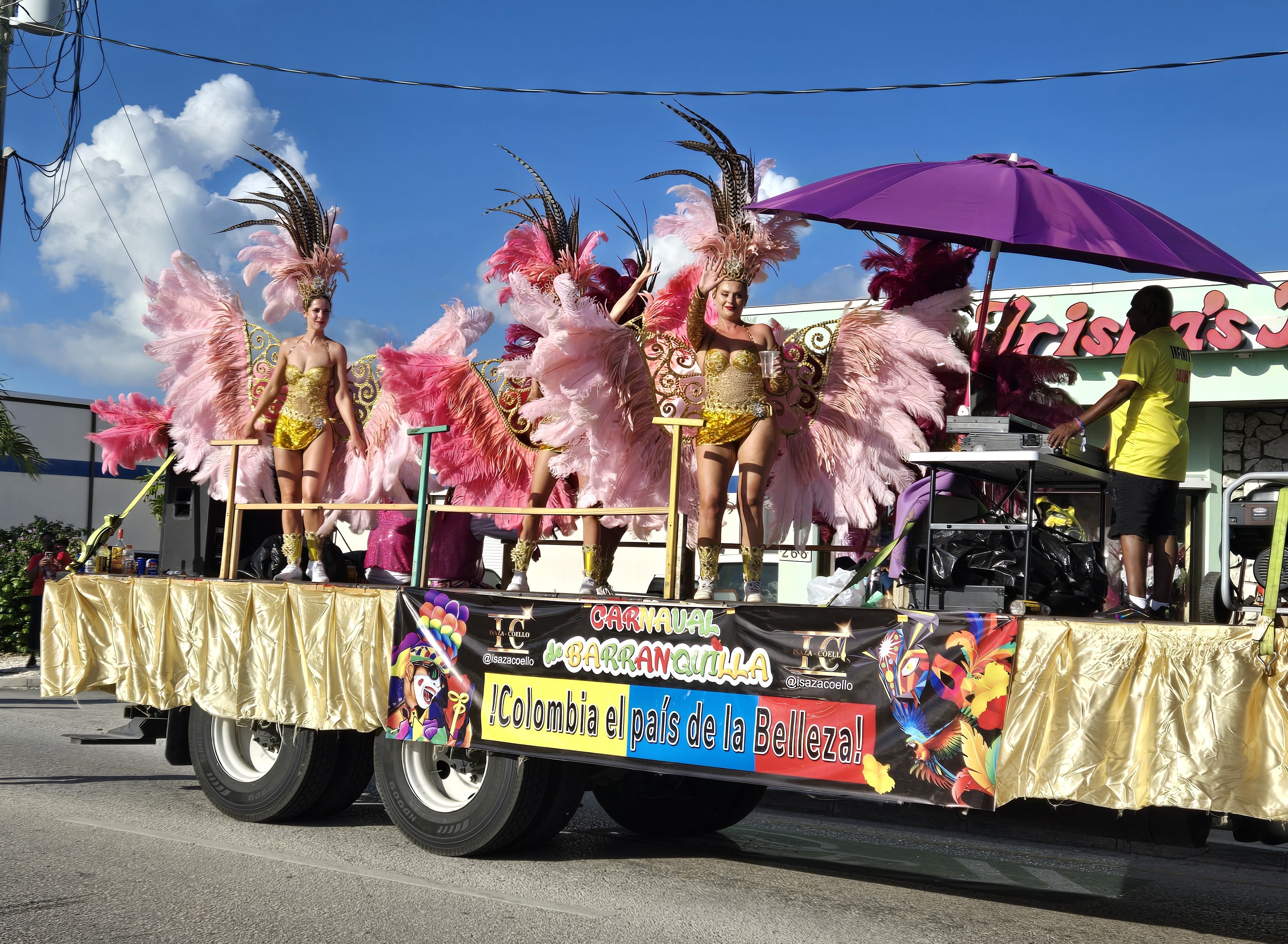
What drew us to George Town was Batabano. This annual carnival, usually in the first week of May, is named for the tracks that sea turtles leave in the sand when they come to shore to nest. In essence, it’s a celebration of spring and fertility. As such, there are family-friendly events and adults-only events.
This was the last day of the carnival, and we wanted to sample local cuisine for lunch at the outdoor food festival and catch part of the closing parade before dinner at The Wharf restaurant on the seashore. In between we’d shop or do whatever caught our fancy.
The first glitch in our plans occurred when the parking lot that Google said existed, didn’t. So, we circled aimlessly until we found a spot along the road not far from the food festival. When we arrived at the festival, the booths were just setting up, so we decided to wander around.
A holograph of a Caymanian woman speaks to us at the Cayman Islands National Museum.
We found the Cayman Islands National Museum, a cute little place that tells the story of how the island was settled and its influential people. There’s a gift shop, displays, art, and an introductory video. Like many other cool places on this trip, once again, we were the only people there! The lower level features on old jail, complete with graffiti by prisoners.
When we were done with the museum, the festival food was ready. I had conch stew with breadfruit on the side. I’d never had breadfruit before. Alas, I was not impressed – it was mealy and bland. I’d seen this fruit for sale in Minnesota for an exorbitant price, so I guess I was expecting more. Breadfruit was more like a potato than a fruit. Let’s just call it a learning experience.
The carnival parade was supposed to end at the square where the food festival was located. We waited for it, but some helpful shop keepers told us that the parade got a late start (island time, of course). We walked about a half-mile up the parade route to try and see it sooner, but still no parade. We waited around as long as we dared before we needed to walk back to our car to drive to the restaurant for our dinner reservation. The Wharf was along the route, so we hoped we’d be able to see the parade somehow along the way.
When we were about a half mile away from the restaurant, we ran into a road closure sign due to the parade. I took this as my cue and jumped out of the car with my camera, telling Russ I’d meet him at the restaurant.
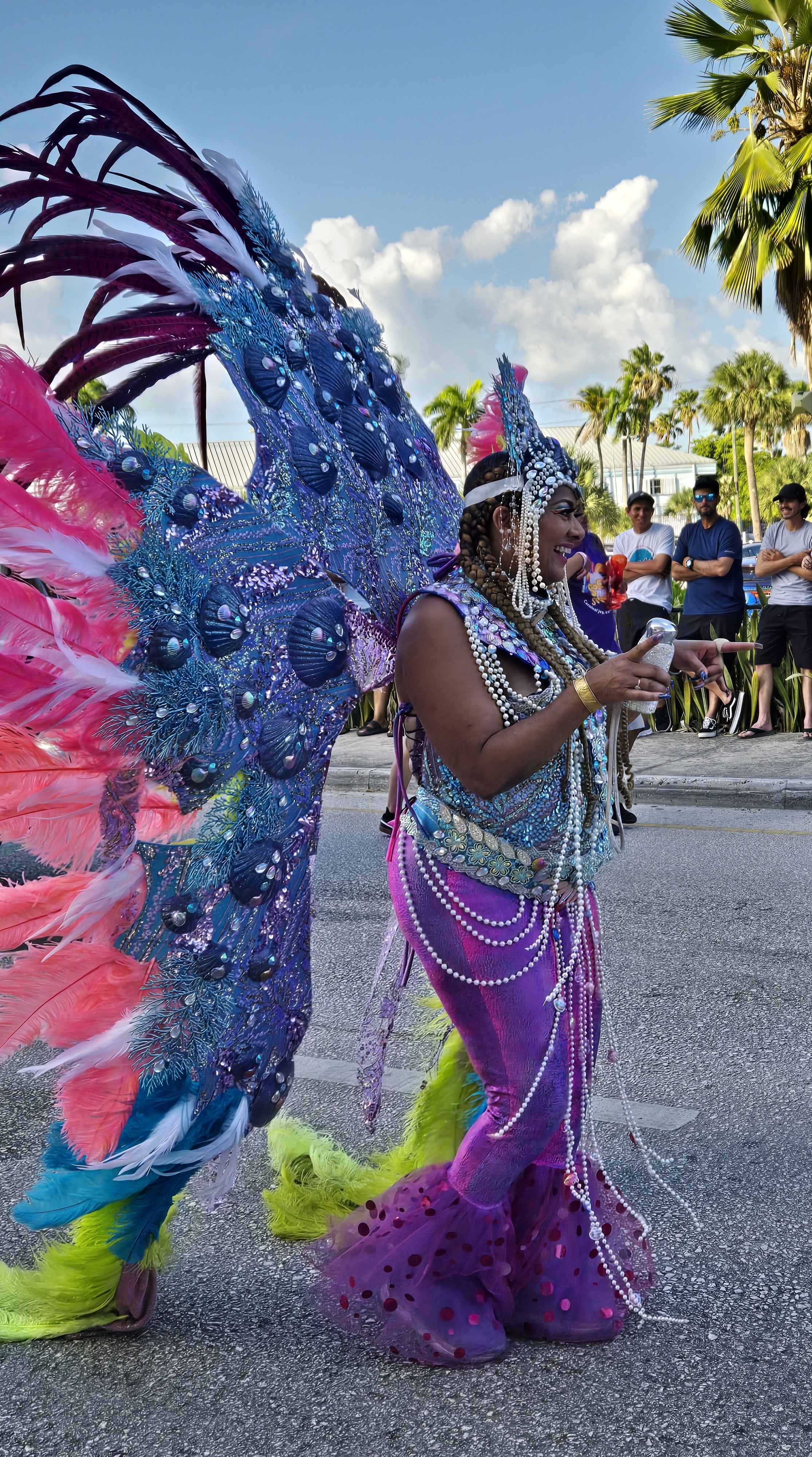
I was expecting a parade like the one I’d seen on St. Martin – lots of people in regalia and live music. Some people wore costumes, but most were in T shirts and shorts. And remember what I said about the theme of fertility? I discovered there’s a reason why this is an “adult” parade. Picture well-fed people grinding on each other in the street. That’s all I’ll say. 😊
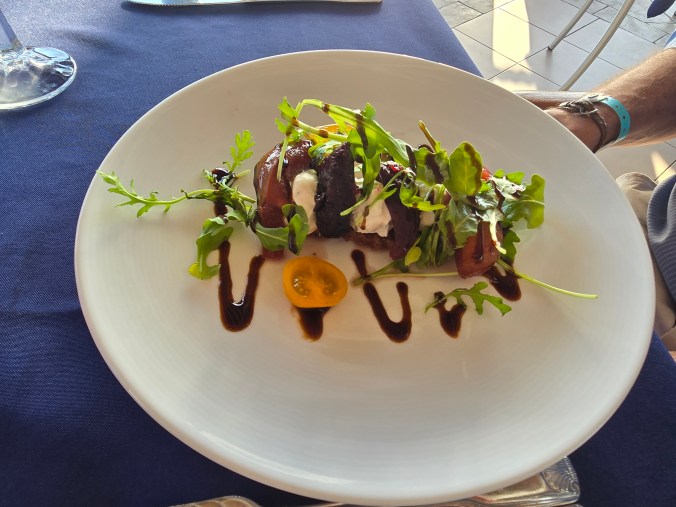
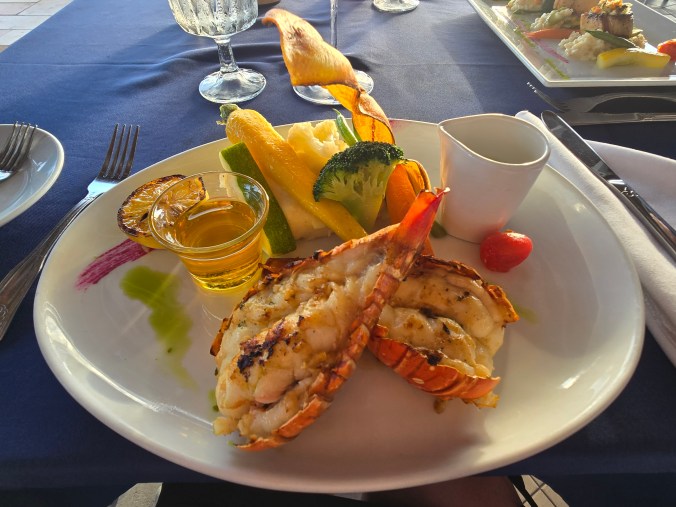
However, on the walk to the restaurant, I recovered my appetite in time for our special dinner. Although I felt like our 6th anniversary dinner was the one we had at the Czech Inn Grill, this was to be our official anniversary and our traditional, fancy, end-of-trip dinner.
Roasted pear, goat cheese and beet salad
Lobster!
Seared sea scallops over risotto
Other diners feeling the romance.
We chose The Wharf due to its location on the waterfront, its varied menu, and because diners can feed the tarpon that gather off the dining room dock. Russ had scallops and I had lobster as the sun set. It tickled me to “recycle” my lobster shells back into the sea by tossing them to the leaping tarpon once we were done. It was a good and romantic end to a somewhat stressful day.
That’s it for our trip! If you’re thinking of visiting Grand Cayman, I developed a set of tips to share.
Rental car speedometers are in kilometers per hour, but the road signs are in miles per hour. (It took us about a day to figure this out, during which we were driving way too slowly!) A sign that says 50 mph means about 80 kph on your car speedometer.
Driving is on the left side of the road. Many rental cars have steering wheels on the left, which is helpful for Americans and others who are used to this.
The East End of the island is perfect for introverts. The George Town/Seven Mile Beach area is perfect for extroverts, especially if you like roundabouts.
The weather is hot with high humidity. Wear sunscreen!
Do outdoor activities in the morning when its cooler.
Watch out for chickens and blue iguanas crossing the road.
Due to transportation costs, food is more expensive.
Grocery stores are closed on Sundays.
Grand Cayman is in the same time zone as U.S. Central. No jet lag!
If you want to see the bioluminescence, schedule your trip around the new moon. We didn’t know this and so were unable to get a tour to see this phenomenon.
The best time to visit Starfish Point is in the morning before conditions get wavy.
Don’t miss the frigate bird feeding at Tukka Restaurant every evening at 5 p.m.









 Marie's Meanderings