The Hardest Thing I Do All Day

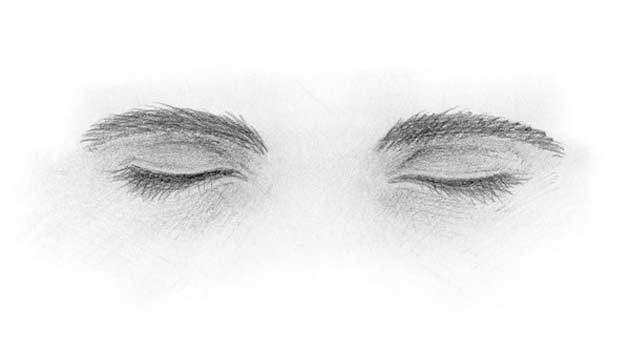
closed-eyesruiizu-chan

Drawing by Ruiizu-Chan.

I have an eye condition that requires me to put drops in them every morning and evening. To help the drops work better, I’m supposed to keep my eyes closed for about two minutes each time.

Being a good rule-follower and because I really do want relief from my condition, I do it, standing in my kitchen with the oven timer on. But I’ve come to think of it as the hardest thing I do all day (after getting out of bed, that is).

How can standing still with eyes closed for two minutes be so bad, you ask? Because it requires mind control. During those two minutes I think of at least a dozen things I should be doing rather than standing still: I should turn on my computer. I should unload the dishwasher. I should write a check for my son’s lunch money. I need to write down that appointment in my calendar. I need to change a word in one of my stories to something better. I wonder what the weather’s going to be like this week?

At first, I often gave into into these impulses and turned on the computer or wrote in my calendar. I’d close my eyes again later, but it felt like cheating. It wasn’t long before I took the two-minute task as a challenge. Let’s see if I can keep my eyes closed the whole time this time.

You know what happened . . . I tried to do all those same things with eyes closed. This had mixed results along with some bumps and bruises. (Smile.)

So, taking a cue from author Elizabeth Gilbert’s first experiences with meditation in “Eat, Pray, Love,” I challenged myself to keep my mind quiet so that keeping my eyes closed wasn’t such a hardship.

If you’ve ever tried mediation, you know it’s hard. An untrained mind is an unfettered being. It resists control. It wants to float around at will. You, dear blog readers, know how my mind loves to meander.

But by practicing twice a day, every day for a huge total of four minutes, I’m getting better at it. When I feel the urge to do something, I recognize it and deflect it. I give myself permission to do nothing. I concentrate on my breathing or on the sounds around me. I file away impulses for action until after my time is up. I try to be present.

I’d like to think the practice not only helps my eyes, it’s helping me master myself.

So if you ever want to try something really hard, try standing still with your eyes closed for two minutes. I dare you!

The Gathering of the Orbs

dsc03811b

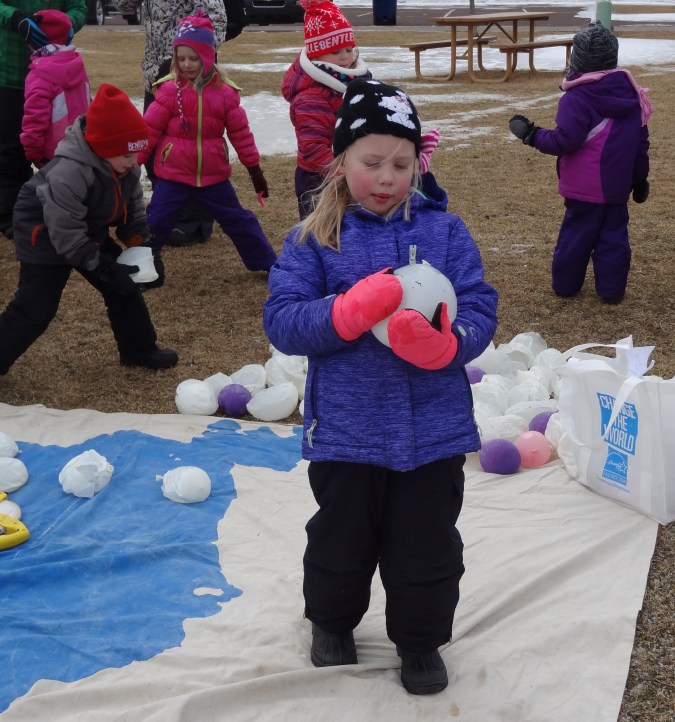
A girl and her orb.

Today is the time when all the ice orbs for the Lake Superior Ice Festival are gathered. The orbs I contributed are the colored ones in the photos (and in the bucket).

The water is frozen in water balloons, and the balloons are removed later. A group of Headstart children from Superior, Wis., participated in this community art collaborative, and it was so fun to see them enjoying the outdoors and learning about water and ice.

dsc03803City of Superior staff are arranging the orbs in the shape of Lake Superior in the city park on Barker’s Island to highlight the importance of fresh water. Each orb represents a day that water is important to us. The goal is to create 365 of them to represent a year.
Take a moment to consider how important fresh water is to you!

dsc03802

My bucket o’ orbs.

Snow Boat

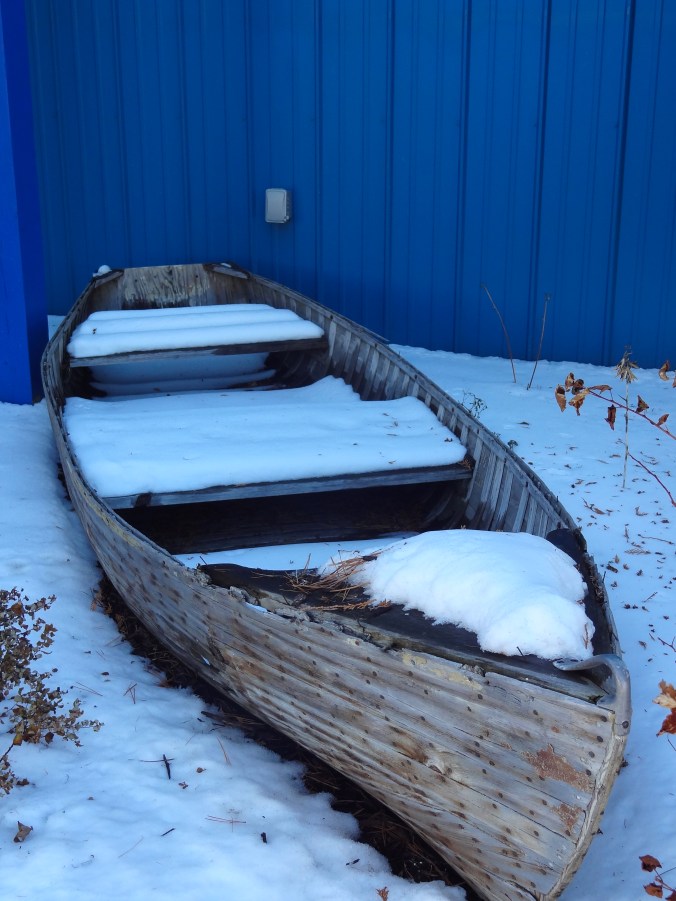
christmas-2016-030

It’s funny how having a camera in your hand makes you see things differently. I walk by this boat on an island in northern Wisconsin every day but didn’t really SEE it until I was wandering around with my camera.

Skiing (and Waxing) Nostalgic

korkkinordic1977

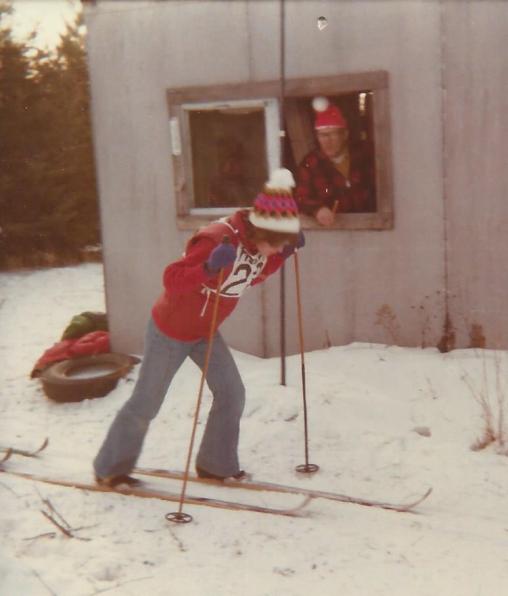
Marie at the start of her first cross-country ski race, waiting for Charlie Banks to signal the start.

Last weekend, a friend and I revisited the Korkki Nordic Ski Trail, where I competed in my first cross-country ski race forty years ago. The year was 1977 and I was in eighth grade, part of my junior high school’s ski team. My equipment included wooden skis and bamboo poles with black rubber baskets. Clad in bell-bottom jeans and a ‘fashionable’ down vest, my head protected from the cold by a knit hat with a huge ball atop it, I ended up winning the race and the city championship for my grade.

Winning the first race I ever entered – you would think it would be a good experience and I’d return to the same trail dozens of times to relive the glory. But I didn’t. Why did it take me four decades?

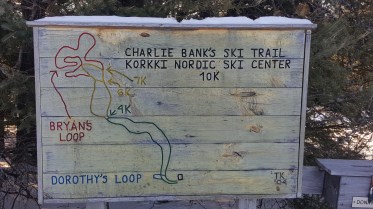
20170116_145524That’s what I was trying to figure out as I shooshed down the trail on my fiberglass skinny skis (waxable ones) last weekend.

Now, the thing you need to understand is that Korkki Nordic is Old School. Only one track winds its way through pines on land tucked in the highlands along Lake Superior’s North Shore. And the trees are close enough to lean over and kiss as you go by – not ten feet away on either side like most ski trails. Classic skiing only; none of that fancy-schmancy skate-skiing.

20170116_143519

My friend, on the trail.

The trail system is maintained by a nonprofit organization and was started by the very man who kept time during my first ski race. Charlie Banks is no longer with us, but his legacy lives on.

The trail is sort of out of the way. With so many good ones in Duluth, that could be one reason why I didn’t come out here. It wasn’t a place my parents usually skied, and they were the ones driving the car when I was young. But still, why didn’t I come here when I was older?

As my friend and I started skiing, I noticed the timekeeping house was still near the trailhead. After we traveled down the trail a ways, I recalled how clueless I was during my race. Our “coach” didn’t even ski himself, and he did little to prepare us. I only knew that racing meant going as fast as you could until you reached the finish line, so that was my strategy after the staggered start. This led to overtaxed lungs and leaden arms and legs. But I kept going, although I was alone and scared by this new experience and unfamiliar trail. Finally overcome, I paused a time or two to catch my breath on the uphills, terrified that another skier would pass me, but I never saw anyone.

My friend and I continued skiing and I recognized the feel of the trail – lots of small hills, nothing too scary — especially if you take the easy route options, which I did, having nothing left to prove. We skied four kilometers, which I suspect was the same distance as the race. The finish line banner we crossed under looked suspiciously like the exact same one from my stressful race.

Was that it? Even though I won the race, was the stress of it so unpleasant that I had no desire to return to the scene until forty years later? Could be. I recall that in subsequent ski races, somehow I learned more about pacing and didn’t get as burned out.

As I crossed under the banner last weekend, I realized that whatever kept me away for so long, I’m finally over it!

I’m gonna return soon to this little woodland ski trail gem.

Two other local writers have written about their memories of Korkki Nordic, read here for Eric’s and here for Eddy’s.

20170116_145545_001

Marie’s Meanderings in Review – 2016


SCOTLAND! 058

My favorite photo of the year: The Moray Coast of Scotland.

Hello blogging friends. As I complete my fourth year of blogging, I am still amazed by the geographic reach of the visitors to Marie’s Meanderings. It tickles me to start the day knowing that someone in Swaziland or Moldova read my blog.

The reach of my stories continues to slowly grow. In 2016, more than 4,000 people from 100 countries viewed my blog. My homeland of the U.S. had the most viewers, with the United Kingdom second, which may have something to do with my series of stories about my trip to Scotland this year.

Here are the five top posts for 2016:

Invisible Gold Medals for Mom
Maybe I should feel insecure that my most popular post was not written by me. It was a posthumous guest post written by my father as a tribute to my mother for their fiftieth wedding anniversary. I lost both my parents this year, and telling their story in my father’s words was much more comforting than writing something myself. The story was shared among my relatives, which accounts for some of its popularity.

How I Fought for my Mole
I suspect this 2015 story about a skin care treatment I underwent is so popular because people are actually searching for information on how to rid themselves of fuzzy moles – not on their faces, but in their back yards. (The animal kind of moles.) The story describes how I decided to keep my facial mole, despite the best efforts of the skin care technician to dissuade me. (I’m still glad I kept it, BTW.) But the story could also be popular because a lot of people are considering having the same facial treatment I had.

The World’s Largest Freshwater Sandbar
This is where I use science to explode the popular myth that Minnesota Point and Wisconsin Point in Duluth make up The World’s Largest Freshwater Sandbar. Close, but no cigar. And I guess a lot of other people need the facts about this one because it pops up in searches a lot.

How I got a Job at Mayo Clinic
The venerable Mayo Clinic is one of the largest employers in Minnesota. I worked for them for a year a few years ago, and this story describes how I got the job. The story was shared among my former Mayo colleagues, and many people find it through searches. I suppose they want a job at Mayo, too.

The Rachel Files: Week 7 and the Real Cost of Toilet Paper
This is a perennial favorite that’s been a top story since I began blogging in 2013. It’s popular mostly for its image: a sad-faced toilet into which someone is throwing toilet paper. The toilet paper has a big red X across it. But it’s also popular among people searching for information about excessive toilet paper use. I once lived with a roommate who had this problem, and the story is about how we addressed the issue and how much it cost to have my plumbing repaired. I have mixed feelings about the popularity of this tale, but will keep it up as a service to the world and for people who need an image to post in their bathrooms.

I plan to continue blogging in 2017 as long as the ideas keep coming. Thank you for meandering with  me!

Gingerbread House Catastrophe

20161231_123313

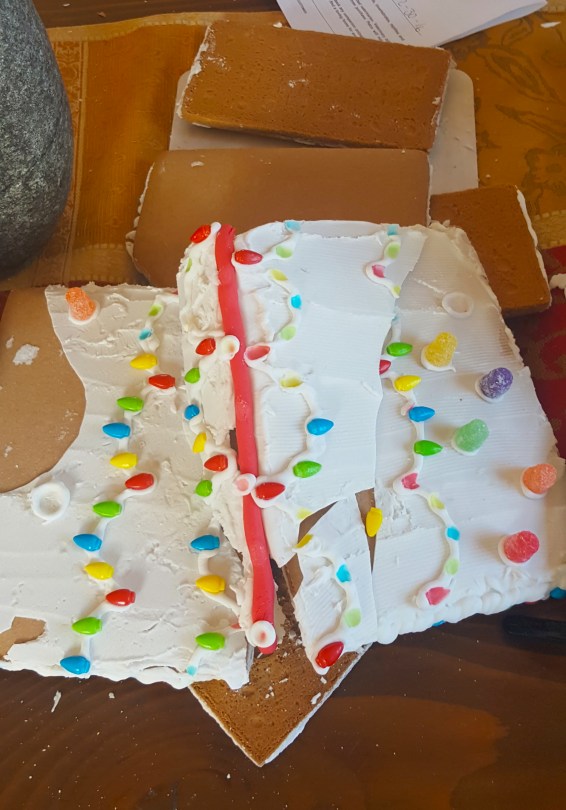
Tragedy struck the Marie household yesterday with the total and spontaneous collapse of a gingerbread house.

“I was in the kitchen doing something at the sink when behind me I heard this terrible crunching sound and a thud,” said Marie. “When I turned around, I saw the gingerbread house that my son and his girlfriend made spread flat out on the kitchen table. I swear, I didn’t touch it!”

Emergency responders on the scene reported that no people or animals were injured in the collapse. Damages estimated at $10.

Marie said that when she told her son about the incident, he instructed her to throw away the sides of the house, which had already been picked clean of frosting and candy, and to save the roof, which still contained candy.

“I sure hope this isn’t a harbinger of doom for 2017,” she quipped.

Lost Lights

christmas-2016-034

My grandchildren
will never see
the lighted tunnel
with the penguin for wishing.
(Rub its head.)

15665867_10154826364384841_4860803215423004416_n

Image by Amanda Jo Dahl.

They will never see
the sugarplum fairy
high in the tree;
the unicorn that changes colors;
Cinderella’s carriage
bedecked with white lights.

They will never walk
the driftwood path
to the dark and quiet lake;
the stars overhead
dimmed by green laser lights on the sand;
city lights pulsing on the hillside beyond.

15672628_10154826364169841_9077664158330475617_n

Image by Amanda Jo Dahl

They’ll never drink hot cider
in the garden house;
never roast marshmallows
in the outdoor fire here;
never laugh at their reflections
in the low slung, slanting mirrors.
When they are older,
they will never kiss that special someone
under this frosted mistletoe.

My grandchildren
will never know this tradition
unless
I spark the light
behind their eyes
with words.

10262099_1156722037690434_5622356832139128331_n

This is a tribute to a Christmas lighting display on Park Point in Duluth, Minn. Marcia Hales (seen lighting a wish lantern in my photo from 2015) has invited the public to enjoy the display in her yard for years. She recently announced that 2016 will be the last year for her display. I wrote this poem very quickly after spending last evening in her lights.


UPDATE: Jan. 7, 2107 was proclaimed Marcia hales Day in Duluth. It was supposed to be the last day for people to visit her light display, but after the proclamation reading, Marcia announced the lights will go on! She’s getting a lot of community support to keep them glowing into the future.

Wisconsin Public Radio Interview – Holiday Reads

love-books-1Greetings! I had the privilege of being interviewed last week on the local Wisconsin Public Radio affiliate, along with Julie Gard, a poetry professor at the University of Wisconsin-Superior, and Julie Buckles, the public relations person for Northland College in Ashland, Wis.

The show is hosted by Danielle Kaeding, now a full-fledged reporter for KUWS Radio (91.3 FM), who assisted me when she was but a college student and I had a radio show for work. Danielle hosts “Hear Me Out,” an hour-long show every Friday morning. She asked us what books we recommend for holiday gifts and holiday reading. (During all that spare time you have during holiday break – right!?)

In my role on the board of Lake Superior Writers (a local writers’ group), I always like to feature our member writers and other local authors when the topic of books comes up. And this interview was no exception. Between the three of us, we hit many of the most recent books produced locally. I only wish we would have had more time to highlight even more authors.

Our interview is featured in the first half-hour of the show. You can listen here.

Oh, and if you need a little romance during your holiday, don’t forget about my books.

Happy Reading!

Just Your Average Winter’s Day Walk and Squirrel Attack

attack-squirrel

Image credit: DailyMail.com

My daily noon dog walk yesterday began like many others. Buddy and I took off down my street, heading toward the woods. Snow was falling with a few inches accumulating on the ground. As we neared the intersection at the end of my street with the forest beckoning beyond, I noticed what looked like a pile of brownish-gray leaves on the curb.

Buddy immediately perked up, and before I knew it, he was running at the leaf pile. His retractable leash played out its full fifteen feet, and my shoulder jerked in its socket as Buddy kept trying to run at the leaf pile, which had unfurled into the form of a gray squirrel.

I have learned the hard way that when it comes to my dog and squirrels, the health of my shoulder muscles is more important than trying to save the squirrels from his hunting instincts, so I let the leash go. By this time, Buddy was behind the squirrel, which came running out into the snowy intersection.

One would think that the squirrel would run anywhere but toward another threat (me). But this squirrel headed right at me, my dog on its heels. The squirrel hopped through the snow sluggishly. Whether this was because of the snow depth or because there was something wrong with it, I couldn’t tell.

As the squirrel came closer, its course stayed true — right toward me. I remembered a time when I was young and a wild squirrel climbed up my leg to get my peanut butter sandwich.

I spread my legs a bit wider to discourage the squirrel from any leg-climbing ideas. Did it think I was some sort of stumpy tree? The squirrel kept coming, passing directly between my boots. Buddy was a few feet behind, his leash dragging through the snow.

Uh-oh. Buddy was headed directly between my legs, too. He is a very tall, eighty-pound dog. I lifted up one leg so he could pass under.

Then I heard the tires of a vehicle slowly crunching through the snow. I looked away from Buddy and saw a white pickup truck approaching. More chaos. Just what we needed!

The squirrel continued its sluggish trajectory to a tree in a neighbor’s yard. In the meantime, I was able to grab Buddy’s leash and command him to “Leave it!” (As in leave the squirrel alone.) The command actually worked. He stopped and I grabbed up the slack in his leash, holding him tight and out of the truck driver’s way. The squirrel was now high in the tree.

The driver, seeing that all was under control, eased into the intersection. Beneath my scarf I began laughing at the scene that must have confronted him. Through his frosty window, I saw that he was laughing, too.

We waved at each other and he continued on his way.

How I got into a Fight with Carol Bly

PS3552.L89.M9.2000, author

Carol Bly. Image courtesy of the Minnesota Historical Society.

For those of you not familiar with the literary scene in Minnesota, Carol Bly is a literary legend in the state who has passed on to the great beyond. She is best known for her nonfiction essays about rural life compiled into the book “Letters from the Country.” She was born in Duluth and lived not too far away for most of her life. She was divorced from poet Robert Bly and they had four children. Carol’s writing had a strong moralistic and socialist voice. In her later years, she started teaching writing.

That’s where I come in. In the 1990s, I was one of about a half-dozen local writers selected to take a workshop with Carol. At the time, I was working on my first novel, “Eye of the Wolf,” and I was looking for all the literary education I could get.

I entered the workshop with trepidation because I had heard how forthright and brutal Carol could be with her critiques. Little did I know that her feedback would turn me off from writing for two years and that we would have a literary argument that would even be reflected later in Carol’s relationship with one of her daughters.

Most of the several-day workshop was great. I enjoyed Carol’s quick wit and literary experience. We had group discussions and writing exercises, which culminated in a one-on-one review of our work by Carol. As you know, my work is fictional and romantic and Carol was a nonfiction writer. I expected some differences just based on our genres, but I didn’t expect the depth of those differences.

Through her critique, I became aware of how much more work I needed to do with my novel to better incorporate descriptions of the settings into the story. I could see how much more time that was going to require, which was depressing and overwhelming at that point because I felt like I’d already put so much time into the story.

Then came the comment that cut the most. She wrote on my manuscript that she was a “serious creative writing teacher, not a hack manuscript-assister.” She hoped I would take on a sincere personal narrative instead of the story I was writing.

Our resulting one-on-one discussion, which was as polite as two Minnesotans can be who disagree with each other, centered around whether one can reflect real-life issues in fiction (vs. nonfiction). Carol argued that it was impossible to address true-life themes in fiction, especially the clap-trap kind of fiction that is romance writing. I strongly begged to differ.

Creative differences aired, we left it at that.

After two years of being overwhelmed by the thought of all the rewriting I needed to do, I pulled up my big-girl coveralls and got to it. And I finished my gosh-darned novel, and I got it published. Take that, Carol! My ego felt better, and I’m sure my novel was better for the extra work I put into it.

Imagine how much more happy my fragile writer’s ego was when I discovered years later that one of Carol’s children was a published fiction author (Mary, who wrote under the pen name of Eloisa James). Even “worse,” she was a romance fiction writer! Carol was quoted in one news article I read saying she wished her daughter’s efforts were “focused more towards more literary works.” After my exchange with Carol over the value (or lack thereof) of romance writing, I could totally see why her daughter felt like she needed to write under a pseudonym.

Imagine that same vindication magnified by one-and-a-half when, a couple of more years later, I discovered that Carol’s last book (she was terminally ill) was to be a work of fiction (“Shelter Half”). I bought the book as soon as I had a chance. It was pretty good, I admit, and it reflected many of the social issues she addressed in her nonfiction works.

I had to wonder though, if her final work was an apology to her daughter. Did Carol have the same argument with her daughter that she had with me so many years ago? I have a sneaking suspicion that she did. I suspect she wrote her book in part as a consolation to her daughter, and maybe to all the other fiction writers to whom she caused angst.

It made me feel good that I stuck to my guns during our discussion about the value of fiction writing. And it made me feel good that I discovered the strength within myself to work on my book because I thought it had value, even if Carol wasn’t so sure.

Writers – remember this story. If you truly believe in your work and your talent, don’t let a teacher dissuade you. Learn from them, yes, but keep going if what you’re working on rings true to you. And then do your damndest to make sure your work gets shared with the world. Because if you find it of value, no doubt others will, too. Even if it is a smarmy romance novel.