A Technological Leap

Old vs. new technology.

Old vs. new technology.

Last week at work I made the leap from my thirty-year-old tape cassette recorder to a digital voice recorder. What took me so long, right? The thing was, my cassette recorder worked just fine. I bought it for my first job as a reporter when I was in college (for the Minnesota Daily – best college newspaper in the nation! Smile.)

I bought it at a Radio Shack store on campus for $40, which was a lot for a poor college student. My trusty Panasonic has captured the voices of so many people – I can’t even begin to count them: wolf researchers, medical researchers, the MN law team that represented the government of India in the Bhopal poison gas lawsuit, tall ship captains, animal behaviorists, state legislators, water scientists, and guys who just wanted to sell fitness equipment.

What prompted my foray into this century’s technology was the need for a digital sound file for a project I’m working on. I suppose I could have figured out how to do that with my cassette recorder, but it seemed like it was time to switch. Besides, cassette tapes are getting hard to find and the digital recorder is so small and easy to carry around.

I admit – it took me several tries to get up enough energy to read the instructions (yes, I actually did that) and to make the switch. The recorder sat on my desk for about a week with several aborted attempts before I got serious about figuring it out. I suppose that’s a function of age. Young people seem to absorb new technology by osmosis. For us oldsters, it takes the right mood and amount of energy. We’ve updated so many things in our lives, we run out of steam and enthusiasm – at least I do.

But I’m excited to imagine how many interesting people this digital recorder will have in its files, and hopefully, I won’t have to upgrade again in this respect during the rest of my career. But the way things are going, I’m sure there will be some other form of technology that will require a similar effort.


Jersey Shore Sojourn

Did you know that the United States has a national historic elephant landmark? It's in New Jersey, and her name is Lucy.

Did you know that the United States has a national historic elephant landmark? It’s in New Jersey, and her name is Lucy.

My impression of New Jersey turned inside out last week when I traveled there. Before that, my main experience with the state was gained through several extended stays in the Newark Airport (one overnight on a hard plastic chair) and from brief, accidental, distasteful viewings of the “Jersey Shore” TV show.

What I learned:

Hydrangeas are my new favorite flower. Two varieties are pictured here.

Hydrangeas are my new favorite flower. Two varieties are pictured here.

  • New Jersey is not an industry-strewn state. Nature abounds in the pine barrens, designated natural areas, wildlife sanctuaries, and even in the tangle of forest along the highway.
  • Hydrangeas are obviously New Jersey residents’ favorite flowers.
  • It can get hot there! My Minnesota blood was thinned by the 80- to 90-degree days. There’s even a native cactus.
  • Drivers are not allowed to pump their own gas at service stations according to state law.
  • Liquor is sold as “packaged goods” (which provides easy fodder for jokes among the dirty-minded).
  • The state is home to Lucy, a human-made, six-story elephant that serves as a national historic landmark.
  • Palm trees can grow in New Jersey. Although they are not native, certain species can survive, providing the last word in tropical ambiance for its beach-going residents.
  • Beach culture is alive and well on the Jersey Shore. Several times I had to shake myself and remember I wasn’t in California.
  • Although people can be crass by Minnesota standards, at least one person in New Jersey was pretty darn nice (ahem).
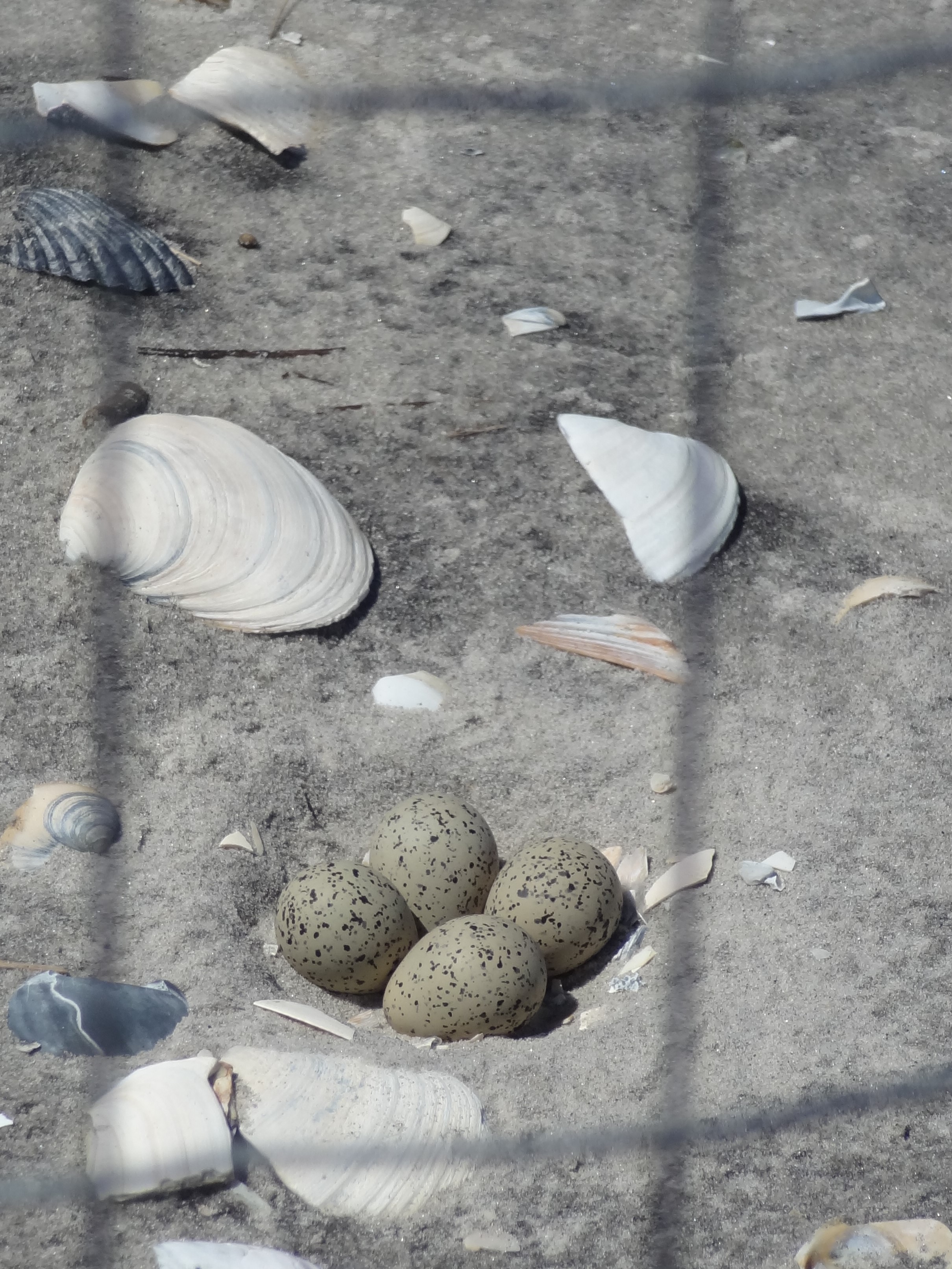
A clutch of four piping plover eggs seen through the fence that protects the nest.

A clutch of four piping plover eggs seen through the fence that protects the nest.

The highlight of the trip for a piping plover novelist like myself, was seeing plover nests, chicks, and adults. While my home of northern Minnesota hardly has any, the beaches of New Jersey are home to about 100 pairs of breeding plovers. These endangered shorebirds (reminiscent in looks to a killdeer, but much cuter) are monitored and protected by the New Jersey Division of Fish and Wildlife and conservation groups like Conserve Wildlife Foundation of New Jersey.

I also saw frolicking dolphins, horseshoe crabs, diamondback terrapin turtles returning to the sea from laying eggs, and bunches of other birds unusual to me.

If you ever get a chance to visit the Jersey Shore, don’t be scared off by its television-show namesake!

Why did the terrapin cross the road? To lay its eggs, of course! Here's one on her way back to sea.

Why did the terrapin cross the road? To lay its eggs, of course! Here’s one on her way back to sea.

Farmers’ Market Find

bacon jam spread

I have been quiet for a while because I have been meandering. And what did I find during my jouney? Bacon jam! I made the discovery at a farmers’ market in Brigantine, New Jersey. At $15 a jar, it’s a bit pricey, but as the seller lady said, each jar contains a half pound of bacon. I couldn’t resist. I have a bacon-lover in my family, so the purchase was a foregone conclusion.

It’s made in Pennsylvania and according to the product’s website this bacon spread makes a great topping for scallops, cheese-based appetizers, sandwiches, and as a mix-in for sauces. Although there are different varieties (black pepper, red chili & garlic), I opted for the original, which features just plain bacon.

Who knows what other wonders await in the world?

My Favorite Tree is Gone

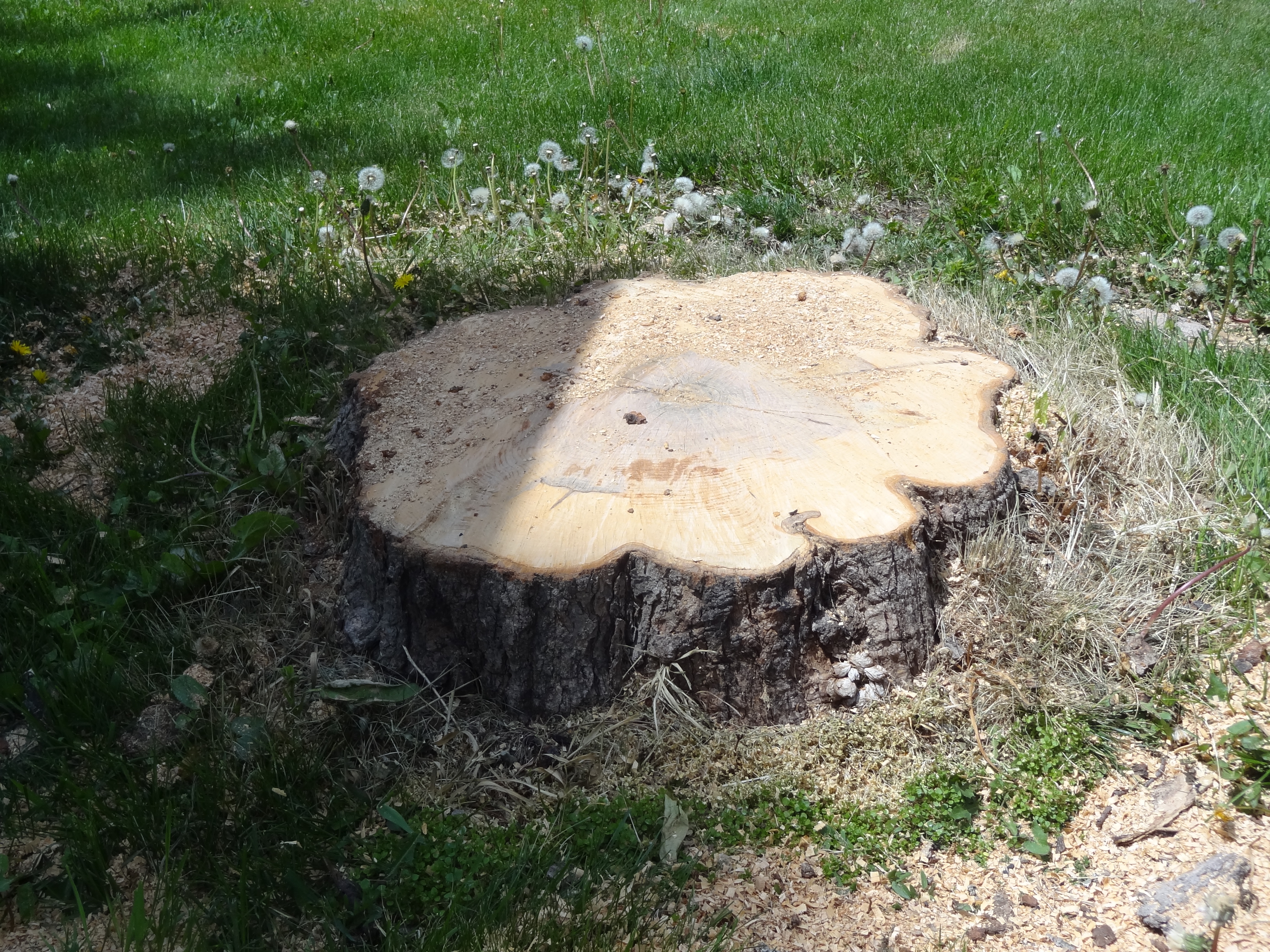
My favorite tree is now a stump.

My favorite tree is now a stump.

It took a long time for me to come to terms with cutting down a maple tree in my yard that was dying (see “Tribute to a Tree” from 2013), but I did it. The pileated woodpeckers had continued their pounding until the branches sported several foot-high holes (which, by the way, were not used for nesting). This spring, its leaves were sparse.

My tree was suffering and it was time to go before a strong wind or ice storm broke its limbs and endangered my shed, garage, or house. After procuring several price quotes, I chose a local company, which came sooner than I expected. I arrived home one day for lunch to see chunks of it carted away on a flatbed truck, the core of it as brown and rotten as a criminal’s heart.

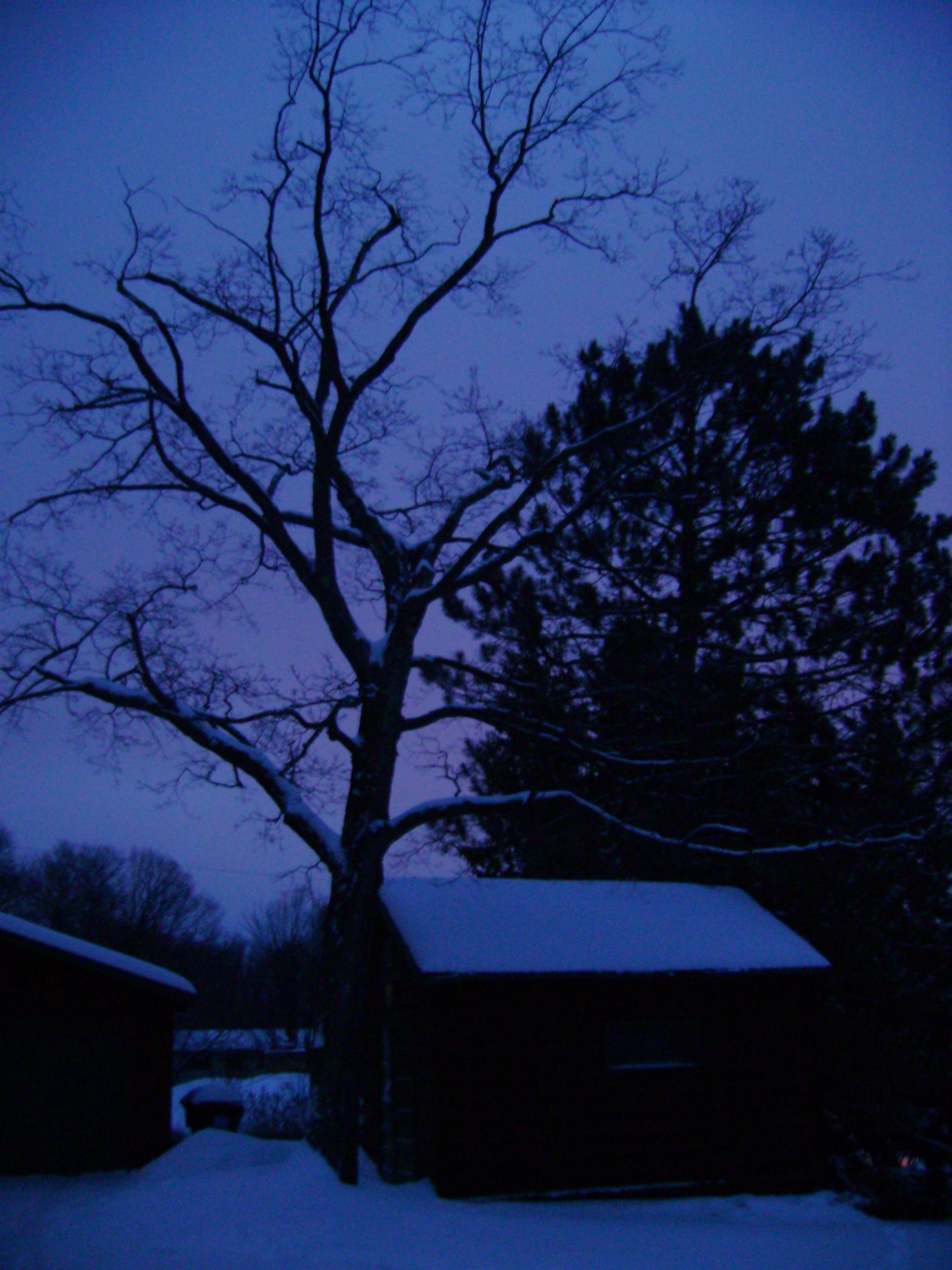
What my tree used to look like.

What my tree used to look like.

I thought about making the trunk into some sort of statue or using the wood for a memento, but just the disposal of the tree was so expensive, I couldn’t think of doing anything so fancy. Plus the wood was rotten, so whatever was made from it probably wouldn’t have lasted. I counted the rings on the stump before it was ground up. The tree was at least 90 years old. I said a few words over the stump in remembrance.

Good-bye, favorite tree. I’m going to plant two young trees in the yard in your honor.

The Moon Lodge

MoonLodge

I often think the Native American practice of separating women who were having their periods from the tribe for four days or a week in their own tent was misguided. They should have separated them the week BEFORE their periods to limit the emotional carnage caused by PMS!

Then again, can you imagine what things would be like inside a tent of PMS-ing women? All closed in, together?

Maybe that’s not such a good idea.

The Rachel Files: Final Entry

This weekend, my temporary housemate who moved out a year and a half ago came to pick up the rest of her stuff that I was storing in my garage. “Rachel” was finally able to get her own apartment (after moving in with another, more suitable housemate).

I was happy to have the space in my garage back, and I was happy that she hadn’t been living with me for that whole time. Can you imagine how insane I would be by now? (To read the beginning of the three-month saga from 2013, start here –Half-Empty Nest Syndrome— and read onward.) As it is, we were able to hug and wish each other well.

I sure hope her building has a good plumber!

A Glimpse Into the Northern MN Inner Sanctum

The "Pioneers."

The “Pioneers.”

I spoke with THE most delightful group of fifty elders yesterday about my books. They meet monthly along the shore of Lake Superior north of Duluth. For the sake of anonymity, I’ll call them the “Pioneers.” I spoke in a church basement after their business meeting but before lunch. The rituals and small-town nature of the event made me feel like I was in an episode of the Red Green Show or Northern Exposure, which are some of my favorite television shows, so this was a good thing.

The meeting began with the pledge of allegiance. O.M.G. I haven’t said the pledge since grade school. I was surprised I still remembered it. Then came opening jokes. Several were shared, including a priest/rabbi joke and an Ole and Lena joke (a Minnesota favorite). The latter dealt with Lena reading “one of dem romance novels,” and the former dealt with “the pleasures of the flesh” – all of which provided perfect unintended lead-ins to my presentation.

But it wasn’t time for that yet. After introducing visitors (which was only me — introduced as a writer of “one of dem romance novels”) the meeting moved onto birthday announcements (complete with song), anniversaries, minutes of the last meeting, a moment of silence for the deceased, a treasurer’s report, and committee reports. At this point we learned which of the Pioneers were absent due to recent heart attacks. Much discussion ensued about next month’s picnic meeting and how to procure and handle the industrial-sized cans of baked beans.

The formal part of the meeting ended with a prize drawing. I don’t recall what the prize was because I was getting ready to talk, which induced momentary panic and a memory lapse, but I’m sure the prize was fabulous.

This was the first opportunity I’ve had to talk about both of my novels at the same time, so it was good practice. And I was surprised by how many Pioneers had heard about recent sightings of piping plovers on a local beach. (Plovers are the topic of my second novel.) The audience asked lots of questions. In the tradition of “Minnesota Nice,” we managed not to get into any fights over wolf management or the existence of climate change (other novel topics).

Afterwards, people were almost throwing their money at me to buy books – another good thing. We ate “a little lunch,” which consisted of finger foods like homemade pickled devil eggs, half sandwiches, and dessert bars. LOTS of bars.

The event was punctuated with much laughter and good humor. The structure reminded me of my family reunions, which are conducted every two years in central Minnesota. While we don’t have jokes or prizes or as much laughter, we do have ice cream, which makes up for a lot.

Although this glimpse of northern Minnesota social heaven was a privilege, I left the church feeling bittersweet. In our current era of online meetings and cyber conversations, I fear that social groups like the Pioneers are a dying tradition. Will the teenagers of today gather in church basements or town halls on a regular basis when they are senior citizens? Or will they invent some new form of support group? If they do, will it be as fun? More important, will they have bars?

Only time will tell.

In Broad Daylight

Fishing Field Trip 2012 017 (2)I don’t like to admit this, but I yell at the TV sometimes — usually during newscasts when it comes to word usage (or over usage). You may remember my rant about shallow graves. My latest rant regards crimes committed “in broad daylight.”

It’s not that the news writers are using the term incorrectly. One of the less common definitions of “broad” is “open or full.” So to commit a crime in broad daylight means to commit a crime in full daylight.

What I object to is the value judgment surrounding the phrase. The newscasters say it as if crimes committed during the day are so much more serious or brazen than crimes committed in the dark of night. A hint of admiration tinges the announcer’s voice because goodness knows, all proper criminals wait until the cover of darkness to do their dastardly deeds. To commit a crime during the day goes against the rules and expectations of society. And it’s funny, but you never hear about crimes being committed in narrow daylight – like evenings or mornings. It’s either “under the cover of darkness” or “in broad daylight.”

Call me an old fuddy-duddy if you will, but to me, a crime is a crime, no matter what time of day it is committed. Crimes are not to be admired, even massive jewelry heists in broad daylight. They are assaults on businesses and persons. When crimes happen doesn’t matter as much as the fact that they happened at all.

I’d rather the news writers stopped making a big deal over when crimes occurred and paid more attention to the true impact of the offenses. But I suppose that’s too much to ask.

Okay. Latest rant over.

Writing at Dream Speed

The Northeastern Minnesota Book Awards ceremony was held a few days ago in Duluth. I attended in because my novel, Plover Landing, was nominated in the fiction category, and because it’s fun to hob nob with other writers. Although any hope of an award was futile (sniff, small sob), the event always has inspiring speakers (see last year’s blog story), and poet Barton Sutter provides entertaining emceeing.Layout 1

This year’s speaker was Duluth Poet Laureate Jim Johnson, who offered a tongue-in-cheek look at the writing process. Regarding the importance of writing rituals: “The muse can only find you at the same place and same time every day. The first step in writing is to be there . . . . While you are waiting for the muse to appear, you might as well write.”

Is the writing process about hard work or inspiration? “Yes,” is Johnson’s answer. “You can’t write if your ritual doesn’t work right. Don’t skip over the details!” Then he went into a long explanation of the importance of exact paper and pen placement on the desk, having all your pencils sharpened, your computer programs updated, etc.

Is all this preparation and procrastination worth it? “Trust me,” Johnson said. “Something will happen. When it does, it’s magical. The words will come out at dream speed . . . . This is its own reward. Writing isn’t about money, awards, or publication. Sometimes we’re rewarded, sometimes not. The odds are not good.”

DSC02240

The crowd gathers for the Northeastern Minnesota Book Awards presentation.

Basically, he was saying that writers need to trust in whatever process they’ve developed, and that the key is to persevere despite rejections from publishers or awards judges. There’s nothing better than when the words seem to come of their own accord and you get into that “flow.”

Keep flowing, my friends. Keep writing at dream speed.