How I Left My Appendix in London

My hospitalmates in London: Steve, red-haired Steve, and little Robert. I'm pushing red-haired Steve's chair.

My hospitalmates in London: Steve, red-haired Steve, and little Robert. That’s me pushing red-haired Steve’s chair.

When I was ten, my parents took me and one of my older brothers on a two-month trip to the U.K. and Europe. It was going to be my first plane ride. I was bit apprehensive about the whole flying in the air thing, but looked forward to the trip. We were going to camp most of the time in a rented Dormobile – it’s like a Volkswagon campervan. My mom was planning to meet her Welsh pen pal of thirty-five years for the first time, and we were searching for relatives.

About three months before we left, I started having trouble with my guts. I ended up having a proctoscopic exam, which, by the way, was extremely traumatic because the medical personnel did not explain what was going on, and I was awake during it. The findings were inconclusive and I was sent on my merry ten-year-old way.

A Dormobile, circa 1972 - about the same time we used one to travel Europe. Image credit: By Charles01 (Own work) via Wikimedia Commons

A Dormobile, circa 1972 – about the same time we used one to travel Europe. Image credit: By Charles01 (Own work) via Wikimedia Commons

My intestines, perhaps too freaked out by the exam, laid low until we landed in London. But I don’t blame them for acting up when they did. The plane ride was rather stressful.

The first leg of our journey was fine. We flew from Minnesota to Detroit, where the plane picked up additional passengers. I got the window seat in our row of three. My mom sat next to me, and next to her in the aisle chair was an elderly man who boarded in Detroit.

The pull of gravity on takeoff and the feel of the breaks upon landing impressed me. There were a few air bumps, but nothing too bad. I was enchanted by the “cloud castles” we passed – the tops of storm clouds reaching high in the air above the other clouds.

We continued to England. When we neared London, air traffic was backed-up and we had to circle Heathrow for two hours. All the circling proved too much for the gentleman from Detroit, who started moaning, turning green, and throwing up. I was left alone with him while my mom searched for a doctor.

It seemed to take forever for someone to attend to the man. In the meantime, I resorted to plugging my ears and closing my eyes to escape the scene. I had never seen anyone turn green before. Eventually, a doctor who happened to be on the plane helped the poor man. I don’t recall my mother returning to her seat – perhaps she stayed away to allow the doctor room to work.

Like the proverbial three monkeys who see no evil, hear no evil, speak no evil, I kept myself blind, deaf and mute. We heard later that the Detroit man had a heart attack, but that he survived and was able to return to the U.S.

Once we landed, although I was glad to be on the ground again, I didn’t feel so well myself. We were scheduled to camp for several days outside of London. I don’t recall much else except lots of bathroom visits (and being impressed that the toilet water tank was on the wall above the toilet, not attached to the toilet bowl like back home.) After maybe two nights, I was throwing up green bile and I was out of it. I told my parents I thought I was dying. They called a doctor, who called for an ambulance. I was whisked away to Sydenham Children’s Hospital (which I hear is no more.)

I passed out in the ambulance. When I awoke in the hospital, I threw up again. I remember my mom sitting outside the exam room, crying. I don’t remember anything else until I woke up after surgery, feeling much better. They had taken out my appendix and explored around the rest of my intestines, which made for a larger scar than usual. The doctor said my appendix probably didn’t need to be removed, but that my intestines were inflamed. The pain was gone – that’s all I knew.

I spent the next two weeks in the hospital, screwing up my parent’s travel plans and pen pal visit. I was in a ward with maybe ten other children, and made great friends with Steve, red-haired Steve, and little Robert. We talked a lot from our beds and I tasted my first orangeade and learned British phrasing for food. With no television for distraction, we children shared what our home lives were like.

One phrase endures, which I have passed to my children. Little Robert would talk about how he’d say to his mum, “I have to go pee.” She would answer back, “Go on then, I’m not stoppin’ ya!” We would all laugh, so he would repeat it again, and again. What can I say? There wasn’t much else to do.

I developed a crush on red-haired Steve. I don’t recall why he had casts on both of this legs, but he seemed the nicest. Alas, we parted when I was well enough to travel again.

My parents managed to salvage the pen pal meeting. I missed travelling to Loch Ness, but hope to make up for that someday. Eventually, we crossed the English Channel to Amsterdam and visited Germany, Belgium, and Switzerland. The flight home was uneventful, and I appreciated the familiar foods and smells of home.

That, my friends, is the story of how I left my appendix in London. Want to see my souvenir? (Grins and lifts shirt.)
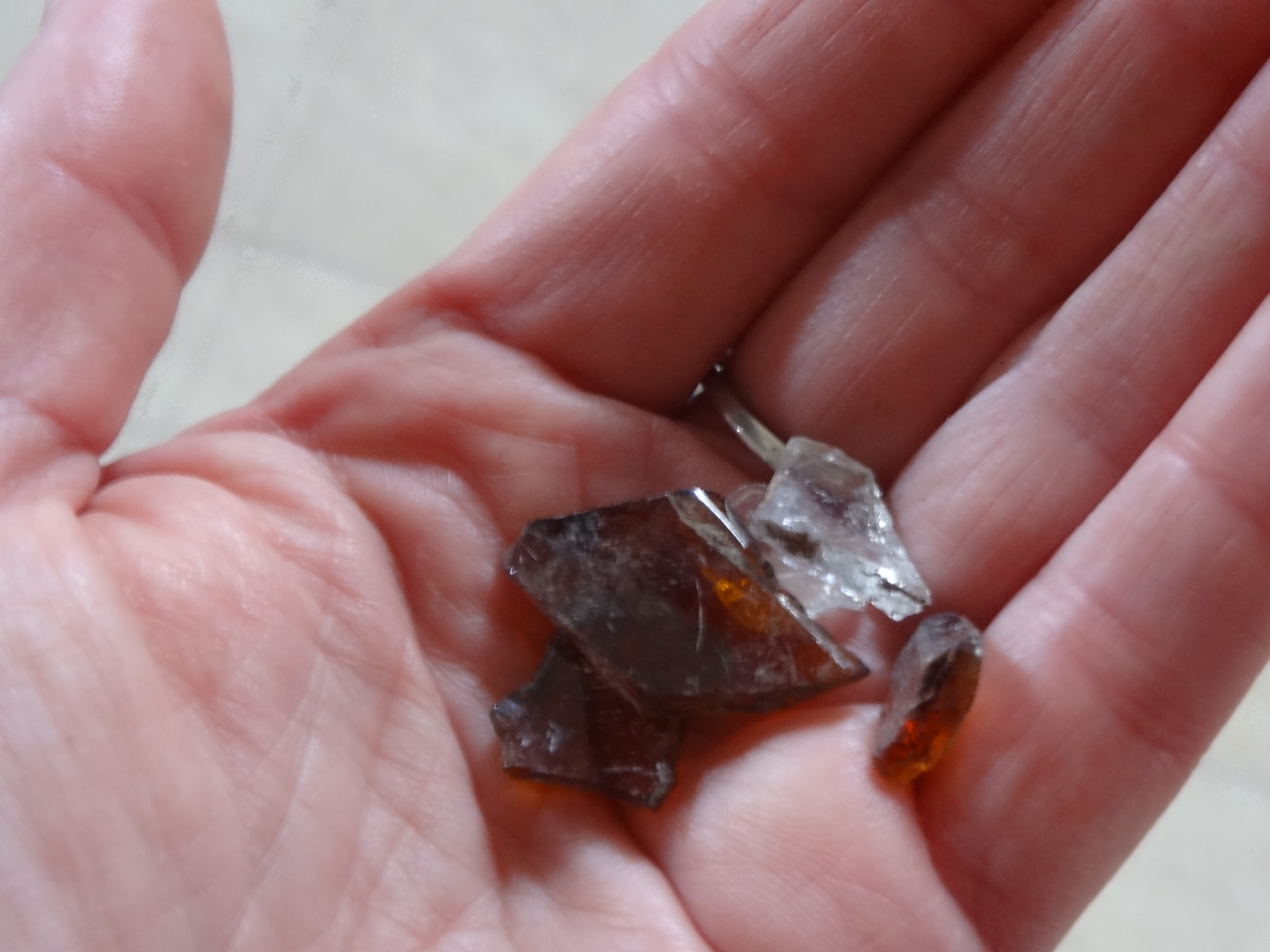
Five Pieces of Glass

Today's five pieces of glass.

Today’s five pieces of glass.

As my youngest son and I walked our dog in the woods near our house, he noticed me picking up pieces of glass that litter part of the trail. Neighbors who have lived in the ‘hood longer than I told me the glass pieces are remnants of an abandoned car that used to rest there.

My son asked me what I was doing. I explained that for years, I’ve pick up five pieces of glass every time I walk the trail in a long-term effort to clean it up. I do it as long as the trail’s not covered by snow. My son said something like, “You should get an award for that.”

“I’m not doing it for recognition,” I told him. “I’m doing it to make our neighborhood a nicer place to live.”

That gave him something to think about.

So it is with interest I read the story circulating in the news lately about a man from the Netherlands who is doing something similar for a river that he walks along on his way to work. He picks up one bag of trash there every day.

He took photos of his progress and made a Facebook page about it (Project Schone Schie – which means the project to clean the River Schie). Eventually, neighbors noticed and began to help. The project went viral and he started a movement where other people are cleaning up trash on their daily routes. The news stories say people all over the world have been inspired.

I’m glad people are caring about the environment and their neighborhoods. As a kid, I used to organize neighborhood clean-ups of the vacant lot across from my house. A budding public relations professional, I even had a name for the campaign – the Kit Kat Kleanup Klub. I’m not sure my parents appreciated the increased garbage bill, but the work felt good and it was fun. Throughout my career, I’ve organized annual beach sweeps and helped with other clean-up efforts.

But now that I am older, I am content with quietly picking up my five pieces of glass. It’s meditative. It’s slow. It takes discipline to limit myself to only five pieces. I guess I don’t want the job to be over too soon.

Mushroom and Wild Leek Risotto

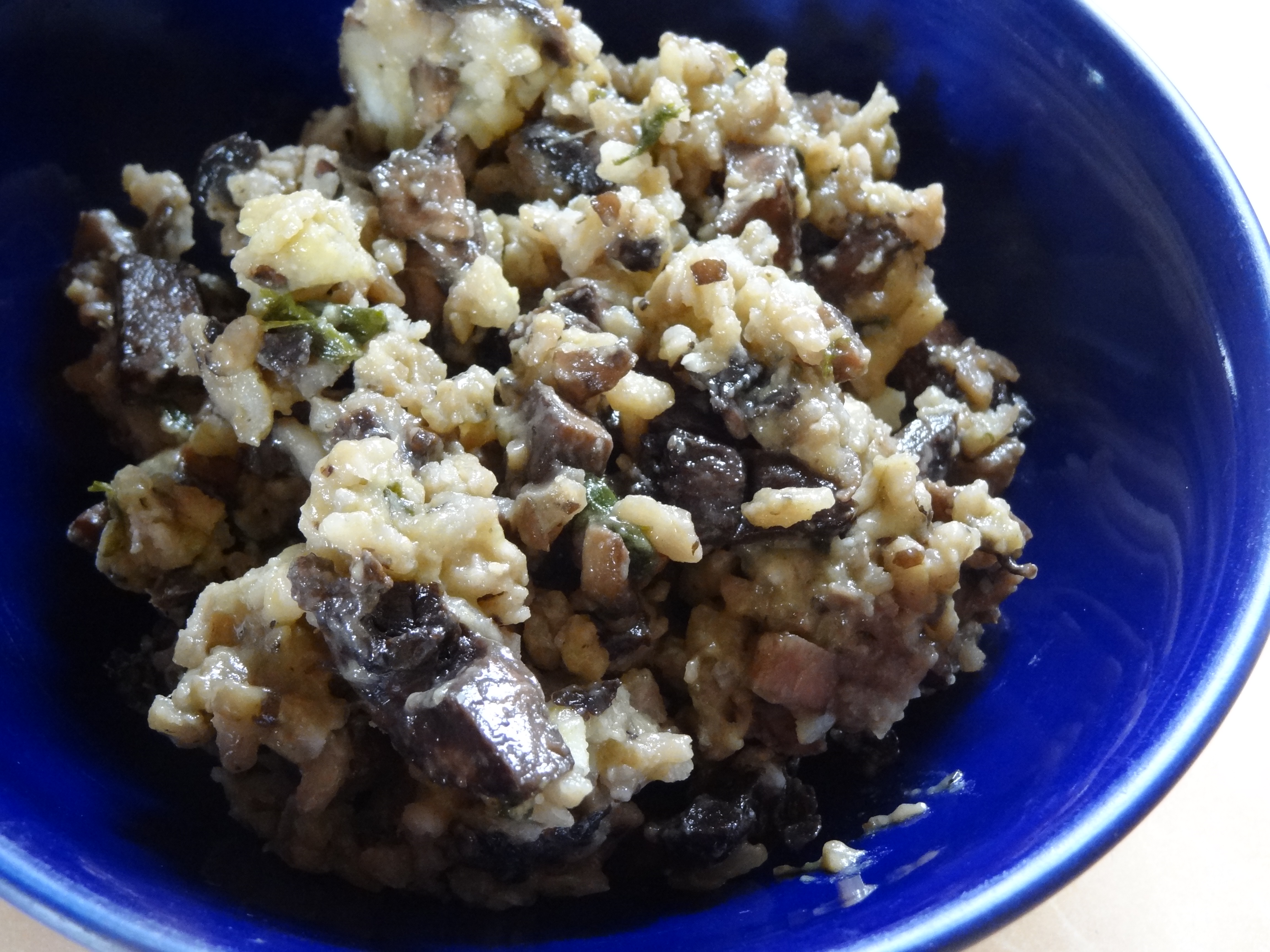
DSC02171
I usually don’t blog about recipes, but my first attempt at cooking risotto is an accomplishment I just have to share. The outcome was superb (if I do say so myself) and I learned that creating risotto is not a privilege reserved for exalted chefs in high-end restaurants. I also want to share it because, if you live anywhere near a natural area, you might be able to gather one of the ingredients yourself. (Never fear, however, there is a non-foraging ingredient option.)

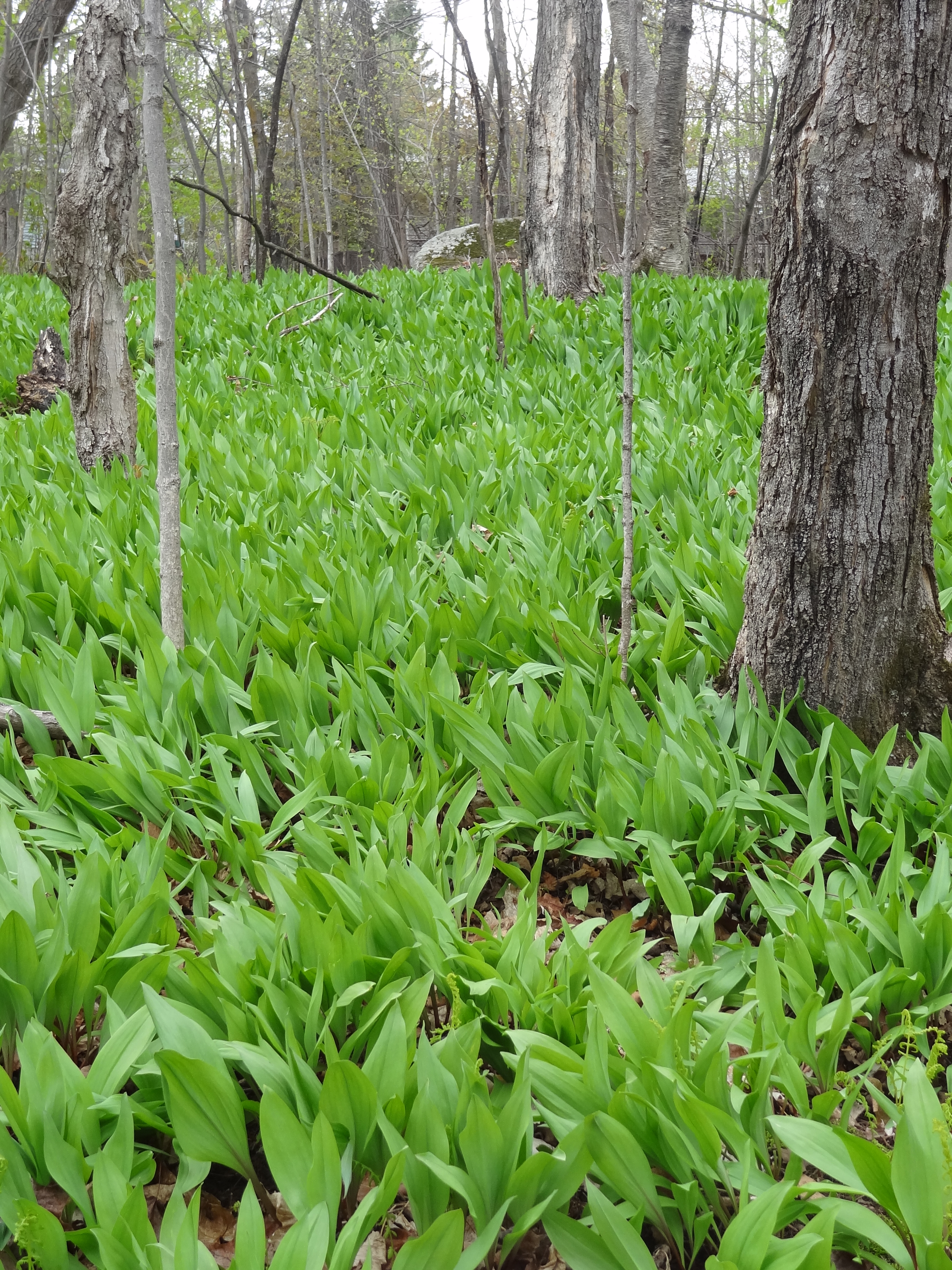
A carpet of wild leeks in my local woods.

A carpet of wild leeks in my local woods.

I wanted to learn how to make risotto because I had a divine offering of it a few months ago in a restaurant. As the daughter of a college home economics major who taught me everything she knows (thanks mom!), I am handy around the kitchen. But risotto seemed daunting – not anything mere mortals could cook.

Alas, I missed that restaurant risotto – had dreams about it – so I decided to give it a shot and searched the internet for recipes. I found one for mushroom risotto, but I changed it a bit to my preferences and to include the wild leeks currently growing in “my” local woods in abundance.

If you live south of Minnesota, you might know wild leeks as ramps. They look like small scallions and have the same oniony taste. Of course, I don’t expect you, dear readers, to scour the woods for an ingredient if you’re not sure what it is. Please only use leeks/ramps if you are sure they are leeks/ramps. You can always use chives or scallions instead. And you don’t have to rip the whole plant from the ground. You can just use the leaves. That way, the plants will regrow next spring.

Obligatory public safety message aside, this recipe turned out great – Nirvana reached! It takes A LOT of mushrooms, though, so be forewarned. This version makes six servings. I am still eating leftovers, which aren’t as good as the freshly cooked batch, but you won’t hear me complaining too loudly.

Mushroom and Wild Leek Risotto

4-1/2 cups chicken broth (or vegetable broth)
4 T olive oil, divided
1 pound Portobello mushrooms, thinly sliced
½ pound white mushrooms, thinly sliced
A handful of wild leek leaves (10-12), coarsely chopped (or 3 T chopped chives)
1-1/2 cups Arborio rice, uncooked
½ cup white cooking wine (or rice cooking wine, white)
1 teaspoon sea salt
Black pepper, to taste
4 T butter
1/3 cup grated Parmesan cheese

Warm the broth in a large saucepan over low heat.

Warm 3 T olive oil in large saucepan over medium-high heat. Sir in the mushrooms and cook until soft, about 4 minutes. Remove the mushrooms and their liquid. Set aside.

Add 1 T olive oil to skillet and stir in the leeks. Cook 1 minute. Add rice, stirring to coat with oil for about 2 minutes. When the rice has taken on a pale golden color, pour in the wine, stirring constantly until the wine is fully absorbed. Add a ½ cup of broth to the rice and stir until the broth is absorbed. Continue adding broth ½ cup at a time, stirring continuously, until the liquid is absorbed and the rice is al dente – about 20 minutes.

Remove from heat, stir in mushrooms and their liquid, butter and parmesan. Season with salt and pepper. Makes 6 servings. Perfect complement for grilled meats and chicken dishes.

Some wild leeks, close up.

Wild leeks, close up.

The Case of the Disappearing Wolves

Only three wolves are thought to remain on Isle Royale National Park. These are them. The deformed pup is on the left. Photo by Michigan Technological University.

Only three wolves are thought to remain on Isle Royale National Park. These are them. The deformed pup is easy to spot on the left. Photo by Michigan Technological University.

Every winter for the past 57 years, researchers have visited Isle Royale National Park – a remote island in Lake Superior – to study its wolf and moose populations. From a high of 50 wolves in 1980, the pack has dwindled from disease, inbreeding and accidents to a low of nine last year. This dwindling has caused much discussion among the scientists, park service, wildlife-lovers, and news media about what to do – should the wolves be saved or allowed to die out? In the meantime, the moose population (upon which the wolves prey) has increased to over a thousand animals, although it’s nowhere near its highest point.

I worked on Isle Royale as a waitress at the Rock Harbor Lodge in the mid-1980s when wolf numbers plummeted, and was privy to the arguments and discussions about the wolves back then. I paid attention because I am fascinated by wolves and I was minoring in biology in college at the time. The situation literally sparked a novel idea in me: what if the wolves knew they were in trouble and decided to do something to help themselves? To heck with management by the scientists. To heck with the park service. What would the wolves do?

I let the question ping around in my brain for a few years and I took some novel writing classes. Then, for 17 years as the wolf population slowly rebounded, I worked on writing the story and finding a publisher. I combined the real issue of the wolf population decline with Native American myths and a little steamy romance between the human and wolf characters.

My first novel, Eye of the Wolf, was published in 2011, just in time for the wolf population to take another dip and all the old arguments to return. Suddenly, I became a local wolf expert, giving talks on the issue and my book to local conservation groups and the news media. As the population rose slightly again, the issue died down. But the park service recognized they needed to develop a policy about the wolves. They held open houses to gather public input on what should be done.

I attended one of the open houses and provided my input, which was that the park service should let the wolf story play out on its own without interference. That’s what makes national parks special – they’re places where people don’t have their fingers into everything, messing it all up. I am a wolf-lover, but I feel like the wolves might have something to teach us in this situation, even if they die out. If they die out, then perhaps new wolves could be brought in, but I prefer a hands-off approach to this situation.

After all that effort, the park service announced a plan to develop a plan. (Don’t you just love the bureaucracy of that?!) They intended to convene a panel of experts to discuss the issue and to recommend the best course of long-term action. That hasn’t come to pass yet.

Well, guess what? The Isle Royale researchers just came back from their latest winter trip, and report that the wolves number only three now. They found two adults and a yearling. They are not sure if the adults are the pup’s parents, or even if they are different genders, but they are pretty sure the other is a young wolf.

Unfortunately, this new wolf is not a cause for rejoicing. It has problems – it’s small, with an arched back, pinched waist, and a hunched tail. Researchers don’t expect it to live much longer, and they despair that the chance for a genetic rescue of the wolves (introducing new wolves that can interbreed with the island population) is past. If this pup dies and the other wolves are a mated pair, there’s little chance for breeding with new wolves. With the lack of predation, the moose population has increased to 1,250, which is stressful for the moose (lack of food) and the island’s plants (because the moose eat the heck out of everything).

All this begs the question: what happened to the six wolves that have disappeared since last winter? The researchers know that one died. It had a radio collar on it, which started emitting a mortality signal. Did the five others die, did the researchers just not see them, or did they escape somehow? The researchers will learn more about whether they didn’t see the wolves by examining the DNA in the fresh wolf scat they collected this winter.

There is a good chance the five wolves escaped the island across an ice bridge to the mainland in Minnesota, which is 14 miles away. An ice bridge was in place for 20 days last winter, which would allow plenty of time. However, life is not easy for wolves on the mainland. One wolf did escape across the ice in 2014. Unfortunately she was killed by some #$%&@! person brandishing a BB gun who shot her in just the wrong place.

Then there’s the more literary possibility that the wolves knew they were in trouble and tried to get humans to help them escape. In my novel, a wolf pack tries to escape the island on a tour boat with the help of a boat pilot and his girlfriend. There were five wolves left in this pack. Hmmm. There are five wolves missing on the island now. Coincidence? You decide! (Smile.)

True to my novel, I hope the five missing wolves saved themselves instead of waiting for the park service or the researchers to do something. Let’s hope they genetically rescued themselves by escaping to Minnesota or Canada, and that they are happily romping with their new friends (if they haven’t been torn apart by them!)

The novelist in me also suspects the three remaining wolves are a family, and that the two adults stayed on the island because they knew their pup could not survive the journey across the ice. If their pup dies this summer, maybe the adults will have a chance to save themselves next winter unless it’s too warm for an ice bridge.

In any event, the Isle Royale wolf situation is a quiet long-term drama that’s been playing out for years. What we, as humans, decide to do about it will tell a lot about our relationship with nature and how we think about wolves.

Aaaaaaaroooow!

My First Blogger Award!

liebster-award

I guess I have arrived. My blog got nominated for its first award by another blogger – the Liebster Award. Thank you Nimi, blogger for Simple Moments in Life!

One of the things I love about blogging is the opportunity to read personal stories from people living all over the world. Although Nimi lives in India, even U. S. readers might be surprised at how much they can relate to her world.

I remember enough college German to know that liebe is the German word for love. I assume a Liebster Award means a person loves the blog (or the blogger!) The process of this chain-mail-letter-like award is to answer questions posed by your nominator and then to nominate ten other bloggers for the award. The goal seems to be to increase readership for the nominee. Here goes with the questions:

  1. Define yourself in a sentence.

You would go and make the first question impossible, wouldn’t you? I’m much too complicated for definition in one sentence.

  1. Who’s your favorite author?

This question is impossible, too. I have several favorite authors and poets, and I read a wide range of books. My favorites include: Terry Tempest Williams, Diana Gabaldon, Margaret Atwood, Sigurd Olson, Mary Oliver, Billy Collins, Louise Erdich, and myself. (Yes, I like my own books, too!)

  1. What kind of music do you like?

Again, I will give a plural answer, because I like several kinds: alternative rock, classic rock, classical, jazz, folk. Stop asking such hard questions!

  1. What gives you the greatest happiness?
    Oh shoot. Just kill me now, will you? No one thing gives me happiness. It’s a combination of things. And mostly what gives me happiness is giving other people happiness.
  2. What’s your dream holiday destination?

Lately I’ve been thinking about Bermuda and Scotland/Ireland. Maybe the Jersey Shore.

  1. To you, blogging is __________________

. . . Like publishing my own newspaper. I’m a journalist by training, so that appeals. It’s also an outlet for a different kind of writing than I am able to do during my day job as a science writer or my night job as an eco-mystic romance writer. Mostly, I blog just for fun and to share.

  1. Whom do you draw inspiration from?

Argh — there you go again! I get inspiration from more than one person – my friends, other authors and poets, my dog, nature. The trick is to be open to the inspiration.

  1. What’s your favorite snack?
    Ooooh, this one I can answer in the singular! Chocolate. Hands down. Oh, but it pairs well with wine. Okay, wine and chocolate. Sorry, two answers.
  2. Your all-time favorite movie?
    Okay – this one I can truly answer with one thing, no fooling or sneaking necessary: The Princess Bride.
  3. Two things about yourself that you love.
    What?! I just got used to answering with one example, now you want two! I would say I love my indomitable humor and my ability for compassion. Oh, but then there’s my creativity. Shoot. Sorry, that’s three.

I would like to nominate the following blogs for the Liebster Award:

Jennifer’s Journal https://jenniferkellandperry.wordpress.com/

Spiral Visions https://lisaspiral.wordpress.com/

I would nominate Writer in Soul, but she only accepts cash awards (Smile) https://writerinsoul.wordpress.com/

10 Years a Single Mom http://10yearsasinglemom.com/

Things my Ex Said http://thingsmyexsaid.com/ (although it has more followers than the Liebster rules allow, and so do some of the others I’ve listed, I’m sure.)

Travelling the World Solo https://wwellend.wordpress.com/

Joshi Daniel Photography http://joshidaniel.com/

Northern Visions Media https://northernvisionsmedia.wordpress.com/

Kwentokoto https://jehanforro.wordpress.com/

Notes from the Coulee https://bobnellis.wordpress.com/ (Although he hasn’t posted anything in a while. Get on it, Bob! You were my inspiration to begin blogging.)

I enjoy reading your blogs and seeing your photos, and look forward to more. There is no compulsion to accept if you have a no-award policy, or if you’ve already won this award from someone(s) else.

Here are my 10 questions for you:

  1. Why did you decide to start blogging?
  2. What gives you comfort?
  3. Do you have any pets?
  4. What’s a recent book you read that you liked and why?
  5. What’s your favorite meal?
  6. Does the current place you live in feel like home or is there someplace else that feels that way for you?
  7. Where do you find your inspiration?
  8. What makes you laugh?
  9. What haven’t you done in your life yet that you’d like to do?
  10. If you were a tree, what kind would you be?

Rules: Once you are nominated, make a post thanking and linking the person who nominated you. Include the Liebster Award sticker in the post, too.

Nominate 10 other bloggers who you feel are worthy of this award. Let them know they have been nominated by commenting on one of their posts. You can also nominate the person who nominated you.

Ensure all of these bloggers have less than 200 followers.

Answer the ten questions asked to you by the person who nominated you, and make ten questions of your own for your nominees.

Lastly, COPY these rules in the post.

ALL THE NOMINEES ARE FREE TO ACCEPT OR REJECT THE NOMINATION.

The Neanderthal in Me

Neanderthal image from Wellcome Images, a website operated by Wellcome Trust, a global charitable foundation based in the United Kingdom.

Neanderthal image from Wellcome Images, a website operated by Wellcome Trust, a global charitable foundation based in the United Kingdom.

I figure a birthday is a perfect excuse to discover more about myself, so I sent my spit in the mail to 23andMe, a company that tests DNA. Each person’s DNA contains 23 pairs of chromosomes, thus the company’s name. And if you order one DNA test kit, you can get additional kits at a discount, so I requested one for my son, too.

Although several companies provide personal DNA testing, I’ve been watching this company for a while. They first came to my attention when I worked for a major medical center and one of the founders gave a presentation there. Back then, their DNA test cost too much for me: $500. But now the price is only around $100.

The doctors at this major medical center (which shall remain nameless) expressed concern that 23andMe was providing medical genetics results but no genetics counseling. They thought it was irresponsible to give people possibly alarming information without giving them a means to interpret it.

Turns out, the U.S. Food and Drug Administration thought the same thing in 2013, prompting the company to no longer provide medical results. Instead, they have limited their offerings to ancestry DNA and, as an exciting added bonus, you can discover if you have any Neanderthal DNA lurking in your family tree. If you wish to share your information with others who have used the service, there’s also the chance you could find relatives you didn’t know you had. And you can participate in research surveys.

So my son and I sent our saliva samples off. The company said it could take six weeks for results, but we started receiving ours in about two weeks. I’m still waiting for the final round of info, but here’s what I’ve learned so far:

  • I have more Neanderthal DNA in me than 66% of the population. Most people of European descent have a smidgeon of Neanderthal DNA, a relic of when our ancestors migrated out of Africa and mixed with the Neanderthals living on what eventually became the European Continent. My son has more caveman DNA than 98% of the rest of the population. Hmmm, what does that say about my ex? (Smirk.) And if you’re really enthused about your inner Neanderthal, you can buy a T-shirt on the company’s website proclaiming your Neanderthal DNA percentage.
  • There were rumors of Native American blood on my mom’s side of the family, and this test confirmed it. There’s not as much Native American DNA in my genes as we thought, but it’s fun to know that its there. There’s even a tinier bit of Middle Eastern DNA in me.
  • The biggest chunk of my ancestry is from English/Irish/Scottish stock. This must be why I feel I have a Gaelic soul (see previous blog post about this). The next largest chunk is German/French. A tiny bit of Scandinavian rounds it out.
  • Singer/author Jimmy Buffet (who is Wastin’ Away Again in Margaritaville) is a distant relative on my mom’s side. I hear he has a thing for islands. I am an isle-o-phile, too. Maybe it’s in our genes. (I also like margaritas!)

As I am a bit of a science nerd, this was all very fun to learn.  I hope that someday the company will be able to provide medical DNA results again. I gave them permission to store my sample in hopes that they can test it later for this purpose.

Yes, it is rather scary that this company now has genetic information on gobs of people, and although customers can sign off on how much of that info they are willing to share, in the end, the company has it and could do whatever they wanted, I guess. In my case, curiosity won out over paranoia.

Mother’s Day is coming up. Maybe dear old mom would like to embrace her inner Neanderthal?

Marie Versus the Cockleburs

An ant receiving honeydew from an aphid. Image credit: Wikipedia.

An ant receiving honeydew from an aphid. Image credit: Wikipedia.

I’ve been in a fifteen-year war against cockleburs and deadly nightshade in my back yard. After my latest experience today, I fear the weeds are winning.

At least once or twice each summer, I take to the terraced land in my back yard to rid it of the worst weeds. The area isn’t mowable, so I’ve just let it grow. It’s held together by rotting railroad ties that I intend to replace with brick walls someday when my ship comes in. My ship is far out to sea yet, so I just do what I can to control the weeds.

I can live with tansy, but because young children live in the neighborhood, I pay particular attention to the nightshade, which grows bright red poisonous berries alluring to small children. And because my dog Buddy has hair that attracts burs with an unnatural magnetism, I hack the heck out of the cockleburs. Being averse to herbicides, I do the work by hand — except for one summer when I was lazy and wanted to see if chemicals were more effective. They weren’t.

Last summer, something halted my rampage against one cocklebur plant. I was just about to cut the five-foot tall stem when I noticed black ants and green aphids all over it. I was transported back to fourth grade when my class watched a black-and-white science movie about how ants farm aphids on certain plants.

Here was an ant-aphid farming operation going on in my back yard! How could I destroy it? Yes, I know that aphids are also considered pests. But the ants milk the aphids and live off their nectar (also called honeydew). How could I obliterate such ingenuity? Such industriousness? I couldn’t. I let the plant stand, intending to chop it down in late fall once the ants went into hibernation or whatever ants do.

But I didn’t chop it down. I forgot about it, until I saw the plant today, standing tall and prickly in my back yard, burs just itching to reach Buddy. Guilt-free now that no ant farms were involved, I chopped it down, plus the remnants of a few neighboring plants that I missed last year. I disposed of them in my yard waste container and went into my house, feeling satisfied at a job well done. I had completed my war on noxious weeds and was ready for another round with the coming summer.

Any feelings of victory were short-lived, however. As I sat down to take off my shoes, something prickly and round was lodged under my butt. You guessed it, the cockleburs had the last say.

Yo, Dorcas!

Some of my female ancestors.

Some of my female ancestors.

My ancestors had weird names. I was looking through a genealogy book for my mom’s side of the family recently, and came upon gems like “Experience.” Actually, there are several “Experience”s, and they were women who lived in the 1700s. Tell me, how can you make a nickname out of “Experience?” Spiery? Expy? It just doesn’t work. Maybe they didn’t use nicknames in the 1700s.

I know that names of virtuous traits were popular then – such as Prudence, Virtue, Hope, but Experience? Maybe it meant the opposite of Chastity? (Smirk)

Then there was Dorcas. And there are several of those poor women in my tree from the 1600s and 1700s. The name connotes whiffs of Dork and Doofus. I was so curious and disturbed by this name that I had to look up its meaning on several baby name websites.

One said: Dorcas — Derived from the Greek dorkas (gazelle). The name was borne by a Christian woman of Joppa who devoted herself to works of charity. She was raised from the dead by the Apostle Peter and converted many to Christianity.

Another said the name was used in America. The Aramaic version is “Tabitha” and that it means gazelle. In the bible, Dorcas was called Tabitha by the Jews.

Personally, I like Tabitha better, too.

With names like Ephraim, Menzies and Ruben, my male ancestors didn’t fare much better. There’s even an Ebenezer.

I suppose in the far future, should I be so lucky to still have descendants, they can laugh at my name, Marie. The urban dictionary (my favorite dictionary!) says it’s the French version of Mary. It’s a universal middle name. Also that it’s “the name for that irresistibly mysterious girl whom you see around often, yet know nothing about. An outrageously cute spontaneous person. Lovable, extremely intelligent, and slightly eccentric. Often resembling a nymph of sorts. Beautiful and trustworthy.”

Yeah, a nymph. That’s me! Actually, my mother told me I was named after a Catholic nun who took care of her when she was in the hospital having me. Sister Marie later left the order. Maybe because she was such a nymph.

Rockin’ the First Day of Kindergarten

Five-year-old me wearing my cowgirl outfit from my Grandpa. I suspect the card is from him, too.

Five-year-old me wearing my cowgirl outfit from my Grandpa. I suspect the card is from him, too.

Last night, I attended a performance of “Love, Loss, and What I Wore” – a play about the associations between women’s clothing and emotions. It reminded me of how my childhood friend and I rocked the first day of kindergarten.

When I was young, my grandfather owned a western goods store in southwestern Minnesota. He sold saddles, boots, and clothing. When we visited, I loved the smell of leather in his store, and riding the ponies, mules, and horses he kept on his land.

For my fifth birthday, he sent me and my neighborhood best friend, Jody, cowgirl outfits – shirts, short skirts lined with white fringes, cowgirl boots and western hats. Mine was blue and Jody’s was red. We were both horse crazy and loved those outfits — so much so that we decided to wear them the first day of kindergarten together. We wanted to be stylish, yes, but we also wanted to catch the attention of the boys by twirling our short skirts so they could see our underwear. We must have been pretty provocative five-year-olds!

Our first day of kindergarten went as planned, including the twirling. I don’t recall if it garnered any male attention, but for me, the cowgirl outfit was the first of many favorite clothes yet to come. And it made what could have been an intimidating experience into one of confidence and fun. Do you have any favorite clothing memories?

North Shore Spring

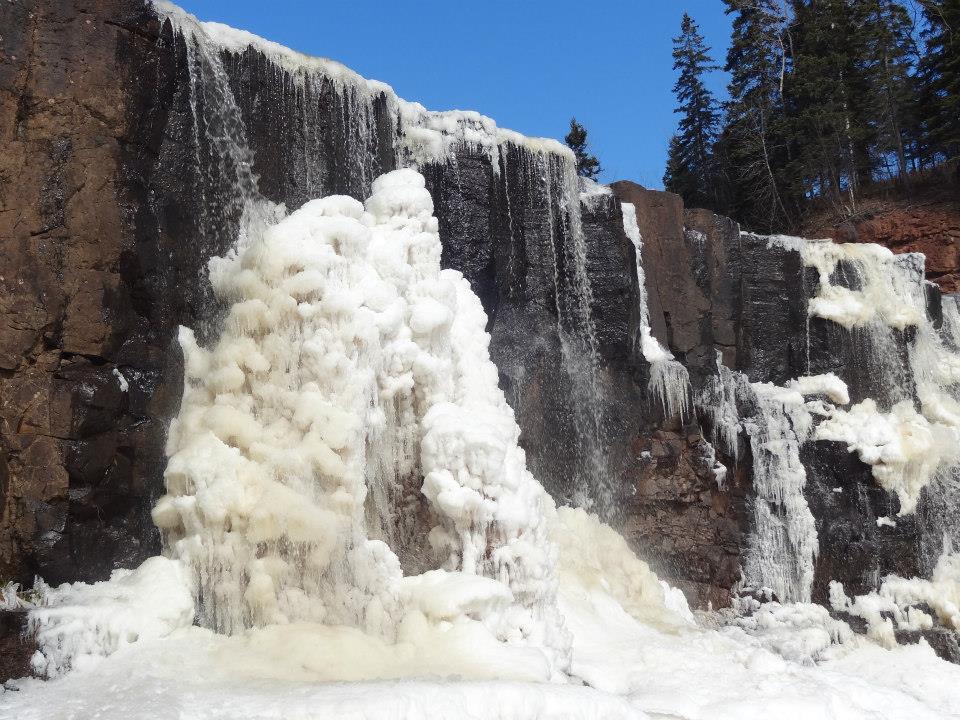
A frozen/melting waterfall in Gooseberry Falls State Park.

           A melting frozen waterfall in Gooseberry Falls State Park.

I meandered up the North Shore of Lake Superior last weekend, looking for signs of spring. Although no tree buds are out, the snow is all but gone (except in the shade) and the ice is melting on the rivers. I hope you enjoy these photos from the trip. Click on a photo below to see a larger image.