How I Fought for my Mole

Cindy-Crawford Style Noted

Cindy Crawford and her mole. Image from Style Noted website.

I have a skin condition (rosacea) that, if left untreated, will turn my face into a vein-strewn red mess. Years ago, I had an elective skin treatment to eliminate the broken veins that had snaked their way onto my cheeks and nose. It was a light laser treatment, which they said would “feel like a rubber band is being snapped on your face.” Let me tell you, it was a heck of a lot more painful than that! But the treatment worked well. Since some veins and other assorted age-related globules were beginning to appear on my face, I decided it was time to subject myself to more elective self-torture.

I went to a local plastic surgery clinic that has a skin care specialist. She took one look at me and gave me a facial to remove about seven years of dead skin. We discussed options for removing my globs and decided on the lamprobe, a device that uses high-intensity something or ruthers to zap the veins and bumps into oblivion. This option was cheaper than the laser treatment I had before, so I was all for trying it.

We discussed what she would remove on my face next week, once my skin recovered from the shock of the facial. Things were fine until we talked about the big juicy mole I have on my right cheek. Well, it used to be a mole until a couple of years ago when its color began mysteriously disappearing. Now it’s just a big bump.

I swear I could hear the saliva collecting in the skin care specialist’s mouth as we discussed zapping my mole. She wanted it to add to her collection of dead skin tissue that I’m sure she keeps on a shrine in a hidden room inside her home.

I panicked. Unlike the other unwanted spots on my face, my mole had been with me for as long as I can remember. It had become part of my identity. Sure, it wasn’t as sexy as Cindy Crawford’s mole, but I was uncomfortable at the thought of parting with it.

The specialist said I should think about it during the coming week, and let her know when I came back for the procedure. So I did. The more I thought, the more I knew my mole had to stay. But that old crone’s bump alongside my nose? That could go. All those bumps on my forehead? Those could go, too. Good riddance.

The day of the procedure the specialist showed me a small device (like a pen) that had a pencil-lead thin metal probe on the end of it. This is what she would stick into my skin, firing the high-intensity whatevers to zap my face.

Would it hurt? She wouldn’t answer that directly, instead saying how some patents “got tired” after the worst blemishes were zapped and sometimes decided to leave the rest for another time. That did not bode well.

She washed my face and we discussed again what would go. The mole? “It stays,” I said. I gave her the whole Cindy Crawford argument.

She countered with “But Cindy Crawford’s mole has color to it. Yours doesn’t. It’s just a bump!”

After further negatory comments on my part, she begged, “Are you sure you don’t just want it made smaller? I can do that.”

“We’ll see once we get to that point,” I said.

She began on my forehead and worked her way down my face. It @#$%^&*! hurt. Not as much as the laser, but enough that my back arched several times while the probe did its nasty work. Specialist Lady said I was doing wonderfully.

Somewhere in our conversation punctuated by small moments of intense stinging – like a wasp was having its way with my face — I asked her if anyone had ever tried to hit her because of the pain. She said a woman raised her arm once, but put it back down after the specialist called the woman’s attention to it.

When Specialist Lady arrived at my mole terrain, I knew by that point how much more it would hurt than the other things she’d removed. I turned a hard heart to her pleas and said no again. But I did let her take off a mole on my lower neck as a consolation prize.

However, it’s been a few days now, and my neck mole has turned into a colorless blob. I’m a bit worried it will stay that way and am regretting giving Specialist Lady even this bit of turf. Well, I guess if it stays a colorless blob, it will match the one on my cheek! Who knows? Maybe I’ll even become attached to it.

* * *

P.S. My  neck mole did eventually disappear, so the treatment worked!
A Sign of Spring

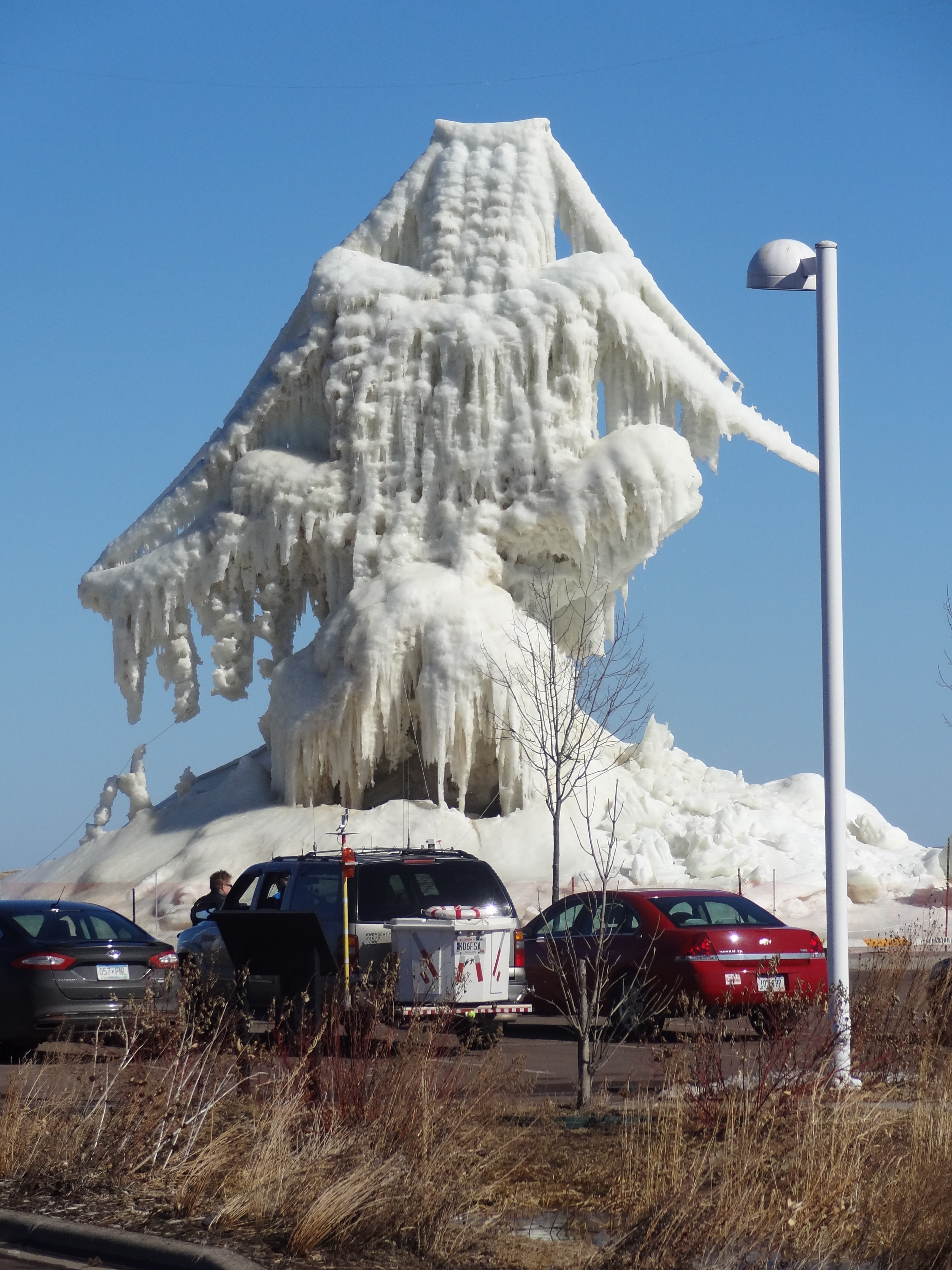
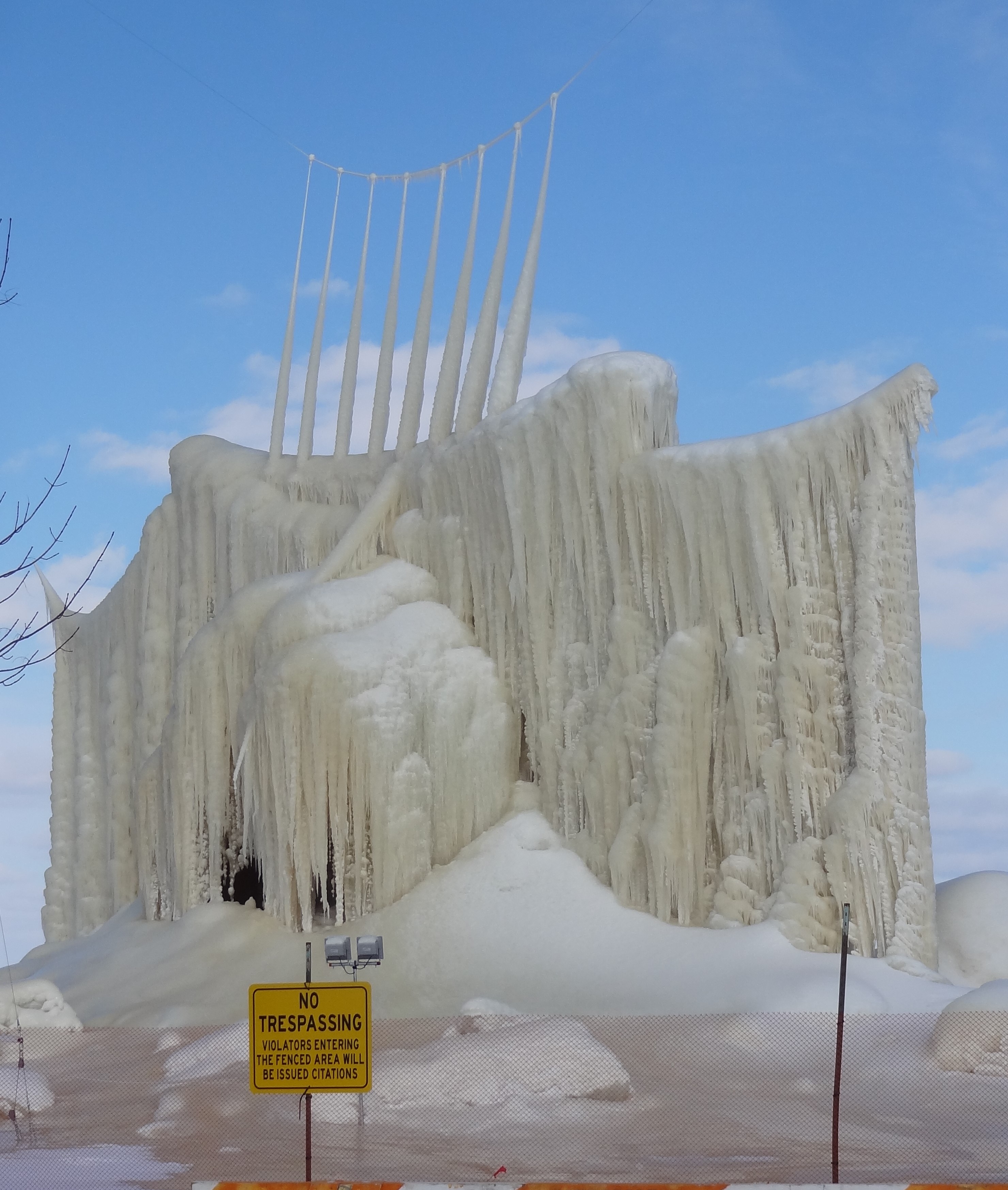
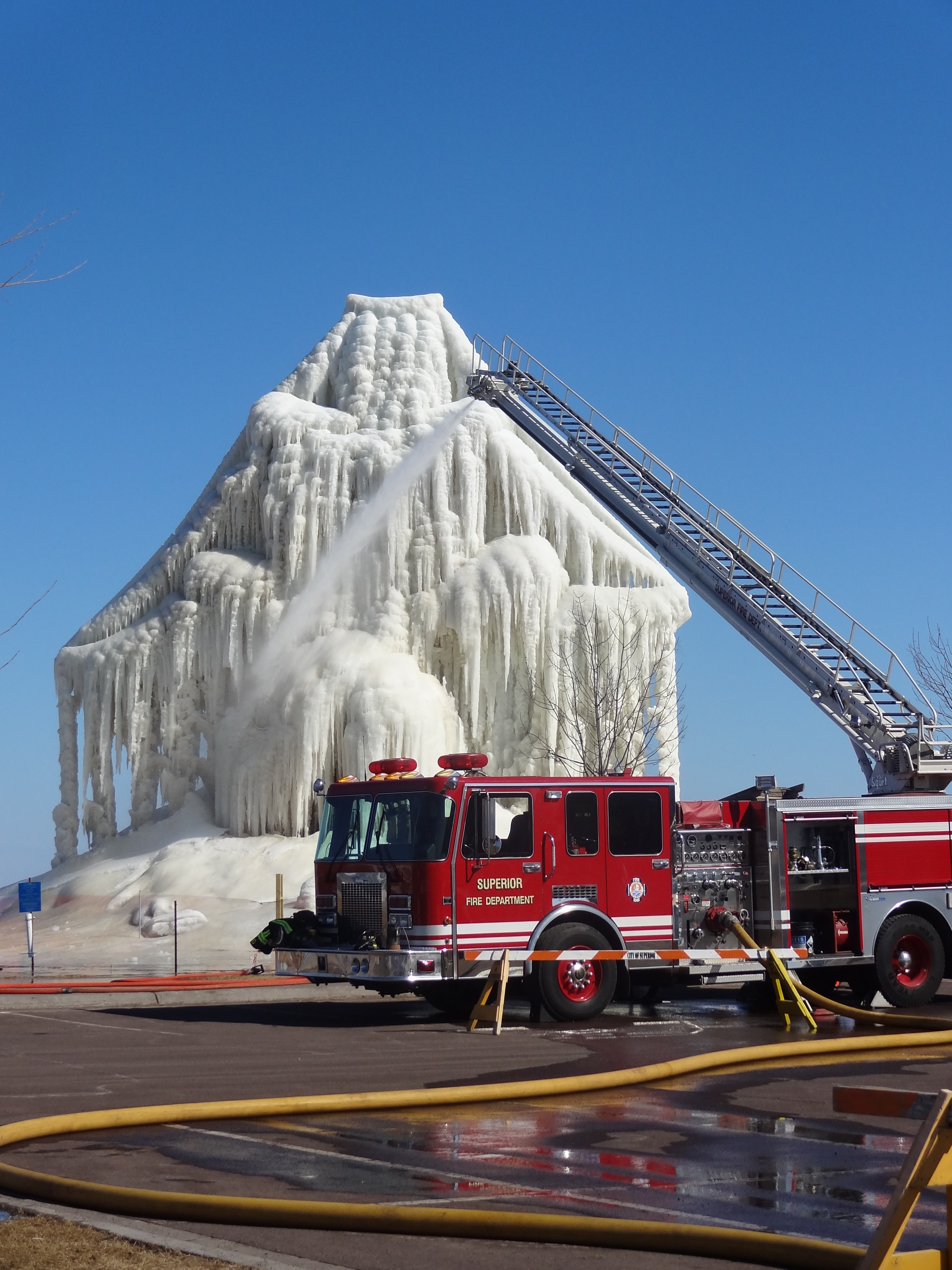
The Lake Superior Ice Project yesterday.

The Lake Superior Ice Project yesterday.

I’ve been chronicling the rise and fall, and rise again of the Lake Superior Ice Project on Barker’s Island in Superior, Wis. Efforts have now begun to dismantle it for the season. I suspect this was spurred a bit earlier than planned due to the high temperatures (40s and 50s!) we are experiencing and that are in the forecast for the next week.

Yesterday, crews from the Superior Fire Department sprayed the formation with a hose to knock it down. Funny thing was, although the formation seemed to get skinnier, no knocking occurred. Ice Man Roger Hanson apparently did his rebuilding job too well, and now his creation can’t be destroyed!

The Lake Superior Ice Project today.

The Lake Superior Ice Project today.

However, this morning, the lower sides of the thing have disappeared, so it’s on its way to destruction. The shape reminds me a bit of a Madonna, spreading her robed arms in a benediction upon the parking lot.

The snow is melting fast. Between the sculpture dismantling and the Apostle Islands Ice Caves closing for the season, dare we hope that spring is coming?

Help, help! I can’t find my dog.

Oh, there he is.

Oh, there he is.

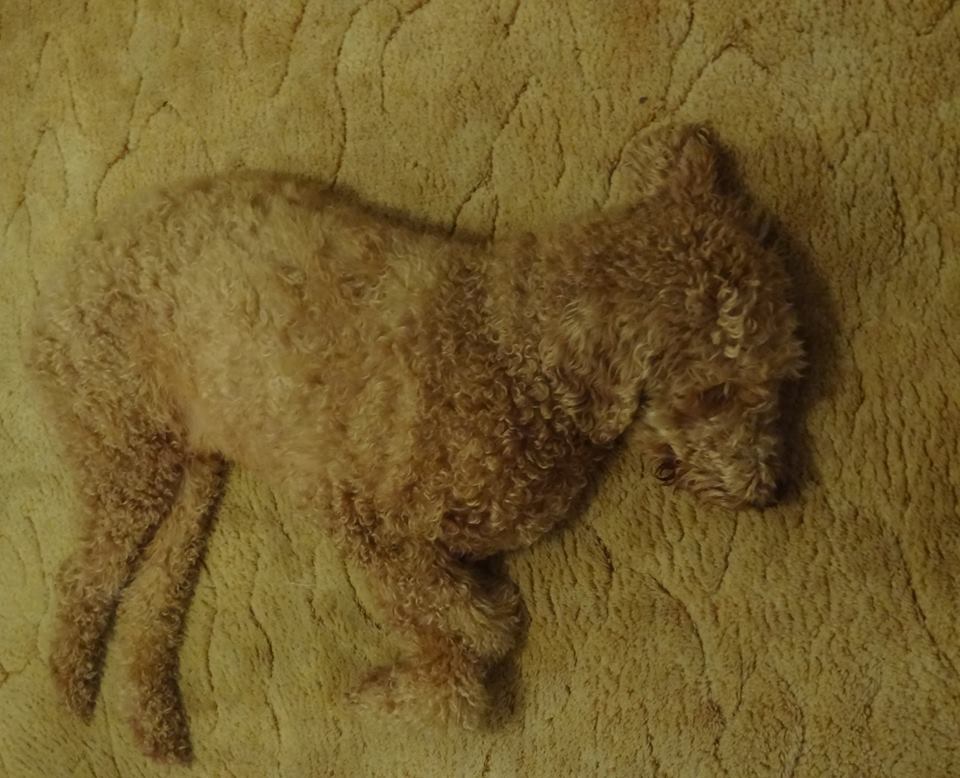
Having nothing profound to say, I am posting photos of my dog. You haven’t heard from Buddy for a while – not since Christmas 2013. Oh yes, and when he shat upon my exercise room fantasy . In the meantime, he’s been perfecting the art of camouflage.

A highland cow. Courtesy of Wikipedia.

A highland cow. Courtesy of Wikipedia.

The photo above was taken last week. Buddy looks a lot different now, after a visit to the groomers. Buddy is a goldendoodle (half standard poodle, half golden retriever). He has actual hair that needs to be cut. This means he doesn’t shed (thank goodness!) But it also means he needs a haircut every six weeks or so.

DSC02511

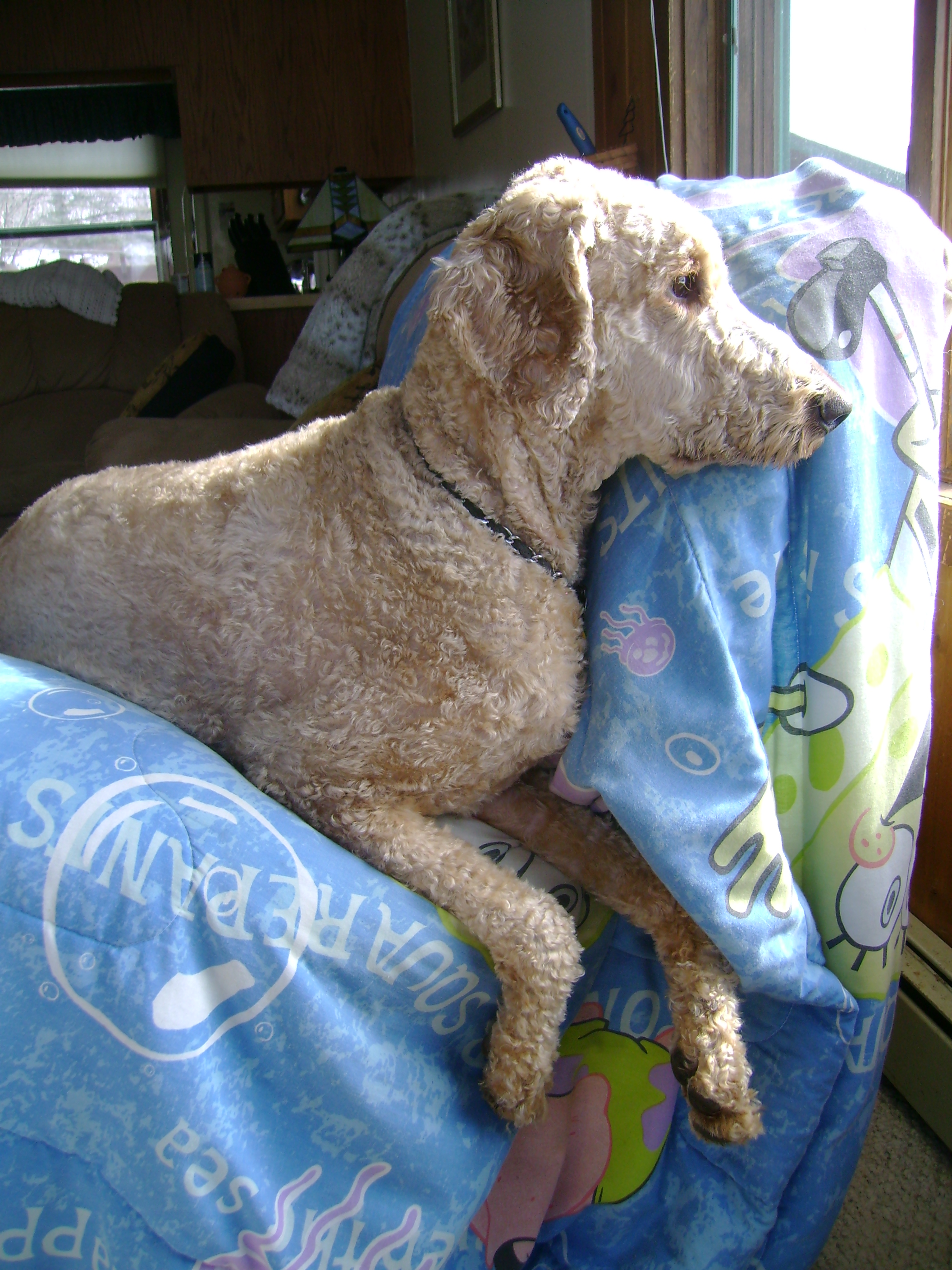
Buddy after a haircut.

I always think he looks like a Scottish highland cow before his groomings. Some of my friends think he looks more like a sheep. Whatever the impression, afterwards, he looks more like a doe-eyed African gazelle. Although he weighs 75 pounds, he looks about 20 pounds lighter with all that hair gone. And he’s less likely to disappear into the carpet.

The Dolphin Who Ate Fish at my Feet

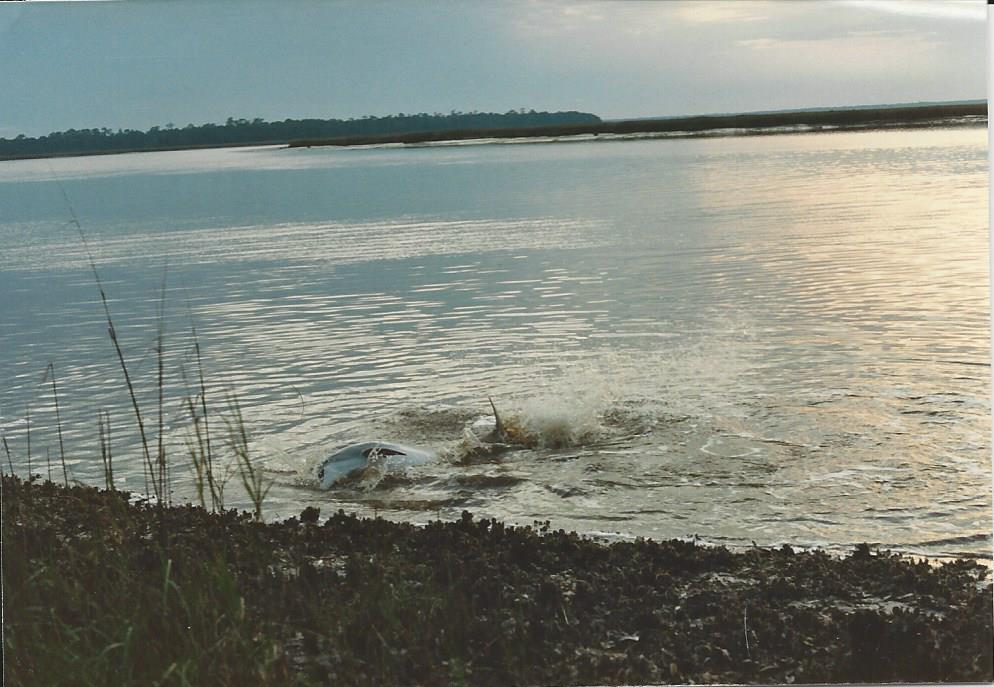
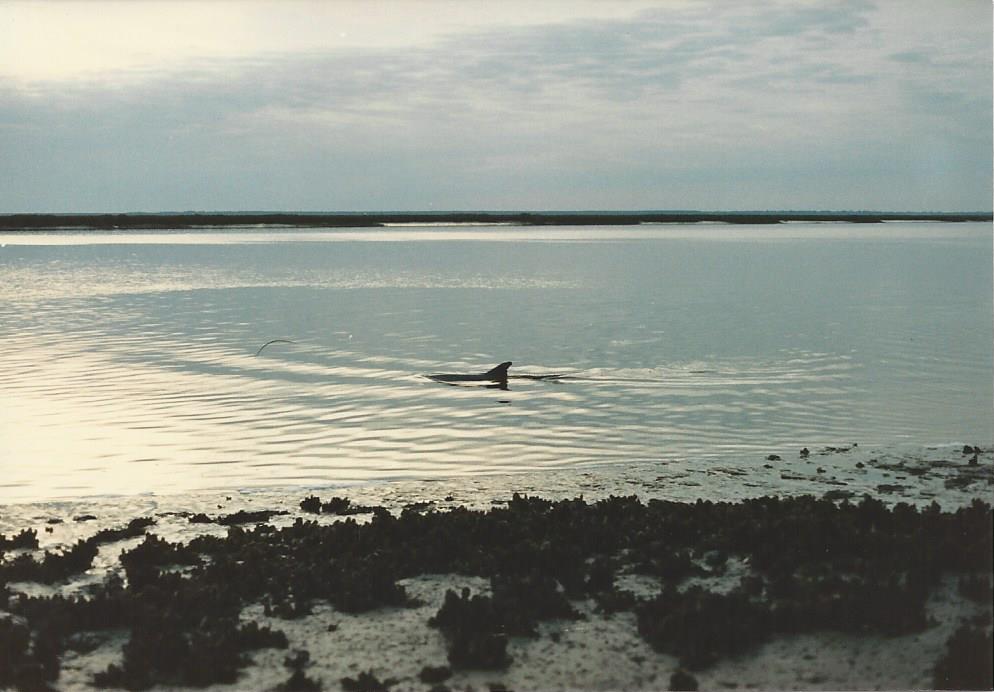
A dolphin beaching itself to catch fish it has pushed ashore. Cumberland Island, Georgia.

A dolphin beaching itself to catch fish it has pushed ashore. Cumberland Island, Georgia.

I once lived outside for nine months (September – May), traveling North America. The experience was through the Audubon Expedition Institute and I was working toward a graduate degree in environmental education.

While on the trip I learned I was not there for the academics but for the adventure. And there certainly was a lot of adventure. It was 1986-87 and we travelled from New York City up the East Coast to Maine and Nova Scotia, Canada. Then we took the ferry to Newfoundland. We went all the way to the northern tip (you can see Labrador and icebergs from there) and then headed back south, eventually reaching all the way to Key Largo, Fla. From there we headed West, making it to Canyonlands Utah before the yellow school bus that was our home had a fatal break down.

Along the way we tented and cooked our meals over campstoves. We sometimes lived for a week in a fishing village, or among Buddhist monks or uranium miners. We visited with local experts, learning about environmental issues and how the locals thought about the land and sea. We took hikes, canoe trips, and snorkeling excursions; swam with manatees; danced contra dances; joined pow wows and local organic fairs; and were privy to Native American ceremonies.

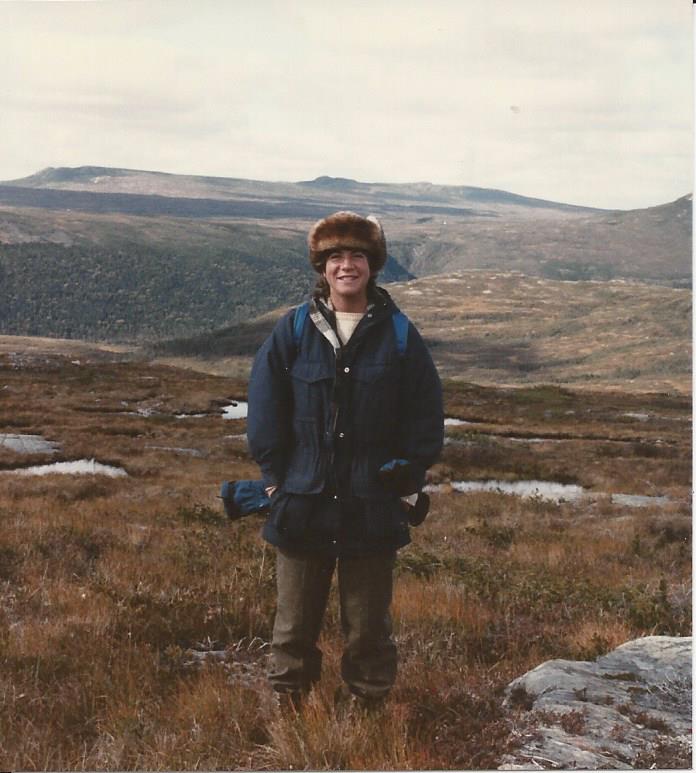
Me on the moors in Newfoundland, looking for caribou, circa 1986.

Me on the moors in Newfoundland, looking for caribou, circa 1986.

I got so acclimated to living outdoors that when I came home to my parents for breaks, I slept in the backyard, even when it was twenty below. My body was so used to revving up with heat at night, that I got too hot sleeping indoors. I also remember when we visited a medicine man in Boston (Slow Turtle). Twenty of us crowded into a skyscraper conference room to speak with him. That, combined with being in a heated space, made me feel faint. I had to go outside to cool off for a while.

The experience was like a combination of “Survivor” and one of those bachelor/bachelorette reality TV shows. We began with twenty-four people, but through a process of mostly self-elimination, ended up with twenty.

All this is a long preamble to what I really want to write about, which is an experience I had during the expedition with a dolphin on Cumberland Island National Seashore in Georgia. We spent several days on the island among wild horses and armadillos, hiking from one end to the other, mostly along the beach on the Atlantic side. On the other side of the island, a salt marsh and river separate it from the mainland. One evening, we camped on the mainland side. We had eaten dinner and several of us were hanging out by the water as the sun started to set.

Then the dolphins came. Two of them swam alongside the muddy banks of the river, peeling off into circles. We didn’t realize it until later, but the dolphins were corralling fish with their bodies. When enough were captured in their water circle, they rushed toward the bank. The fish were stranded on the bank, easy pickings for a dolphin who doesn’t mind a little air time itself. . I learned later that this behavior is indeed called strand feeding. Here’s what I wrote in my journal:

We run down to the Brickhill River like lunatics, insatiable for a rare glimpse into the workings of nature. We try not to get too close and scare the dolphin away, but it’s hard. We follow the dolphin as it swims along the shore, the deep mud sucking at our shoes.

The mammal tips on its side and looks at us with a dark gray eye – two, three times. It corrals the fish and rushes the bank, its whole body breaching again. We go mad. Paul jumps up and down, saying he’s seen God. I click photos like I’ve got a roll of thirty-six instead of only four photos left. Our oohs and ahhs echo across the sunset.

The dolphin wriggles its body back into the water comfortably. It swims back upriver and down. Its companion across the way breathes five times in quick succession, and with that signal, they depart.

Despite the shortage of film in my old-fashioned 35mm Olympus, I managed to snap a good picture of the dolphin doing its work. And it was just a few feet away from me – close enough for us to see eye-to-eye. It’s an experience I’ll never forget. It filled us with wonder and awe, and we felt a connection beyond time, beyond words to the place and each other.

Bye bye dolphin!

Bye bye dolphin!

It’s Aliiive!

The Lake Superior Ice Project.

The Lake Superior Ice Project.

The ice formation on Barker’s Island in Superior, Wis., is slowly “regrowing” after its collapse a few weeks ago. I took this photo yesterday. The formation (which reminds me a bit of the Crazy Horse sculpture in the Black Hills) is functioning as a tourist attraction, and is the subject of weekend light and music shows.

Fun With Words

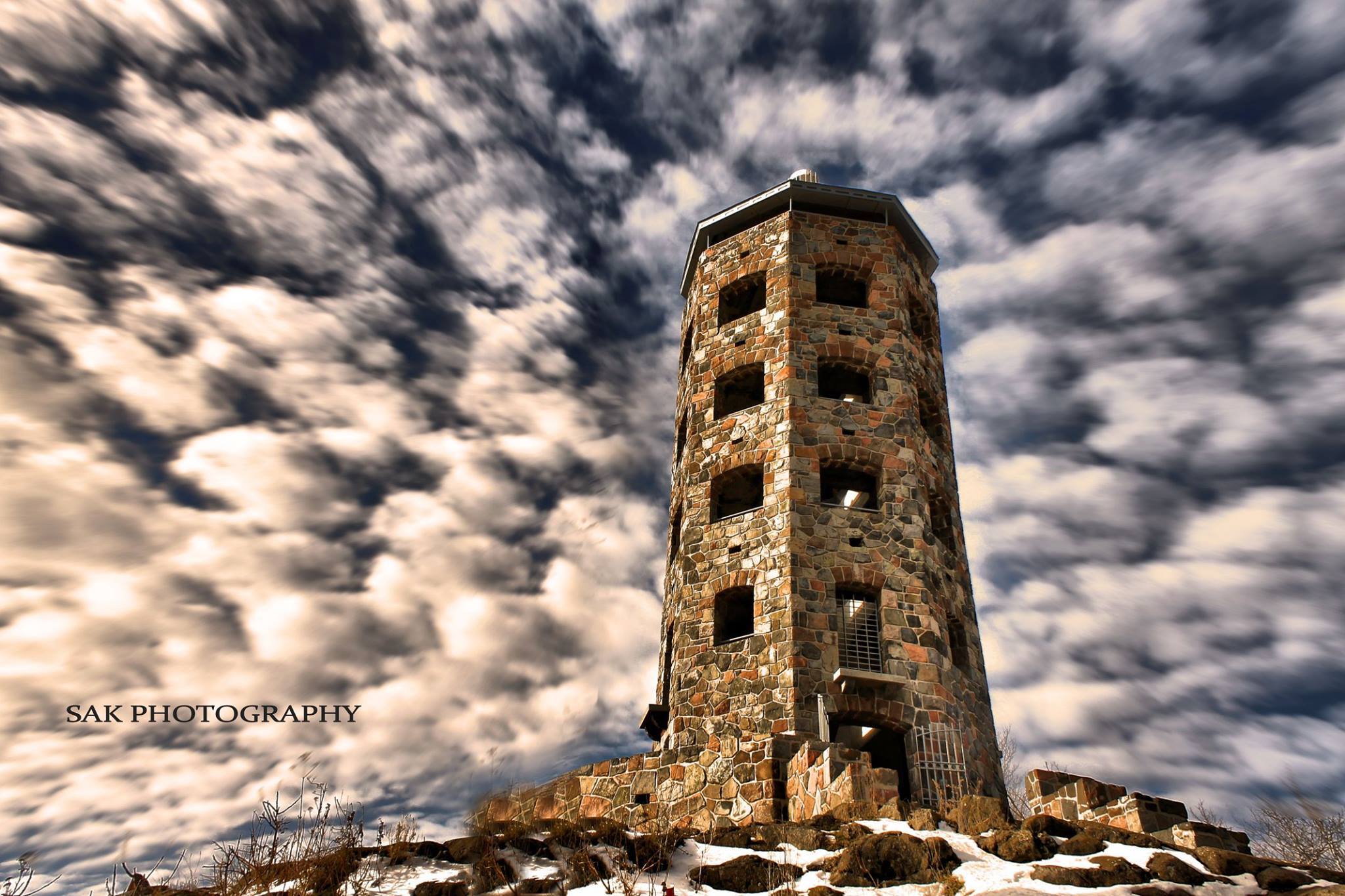
“Anger Tower” in Duluth, Minn. Photo by Sak Photography.

I bought my teenaged son a piece of furniture this weekend, and realized to my horror, that I had been mispronouncing the name of it in my head forever. I bought him a chest of drawers, which I had been thinking of as “chester drawers” since I was young. The salesman tactfully corrected my pronunciation.

Chester drawers — that’s what we called it in my house. I can blame my parents, I guess. Somehow, I’d made it into adulthood without ever needing to buy this particular piece of furniture because there were always plenty of chester drawer hand-me-downs from relatives.

This incident reminded me of two other tricky words. When I was in elementary school, I used to call the library a “liberry,” until some neighbor kid corrected me. Although I went to the liberry a lot, apparently it wasn’t often enough to learn its true name.

Then there’s the iconic local landmark of “Anger Tower.” The foreboding dark stone tower was built atop one of Duluth’s tallest hills. We could see it from my neighborhood before the trees grew and blocked the view. Because it seemed the kind of place where a person would be locked up if they got others angry, it made total sense in my child’s mind to call it Anger Tower. Or maybe it was where angry people lived. But I learned later in junior high school that its real name was Enger Tower after a local business man.

I don’t know. Enger Tower just doesn’t have the same ring. Sometimes real names aren’t as good as the made-up ones. Are there any word pronunciations that surprised you as you grew older?

Laskainen – An Enduring Finnish Phenomenon

Laskiainen Festival wear, in both camo and fluorescent orange. Perfect for deer hunting.

Laskiainen Festival wear, in both camo and fluorescent orange. Perfect for deer hunting.

Last weekend I meandered a desolate, snow-blown road about an hour north to attend the cultural phenomenon known as the Laskiainen Sliding Festival in Palo, Minn. It’s the 78th year for this event, which celebrates all things Finnish. I sold my novels at a table. I had such a good time when I was invited to sell books there a few years ago that I went back.

Laskiainen is a bring-your-own-sled experience that is held at a community center on the shores of a lake. It provides the perfect place for thousands of Fins from far and wide to slide down the hill in the back of the center onto the lake ice. The farther one slides, the taller one’s flax will grow next summer, or so the story goes.

No Finnish festival is complete without Art, the accordion guy.

No Finnish festival is complete without Art, the accordion guy.

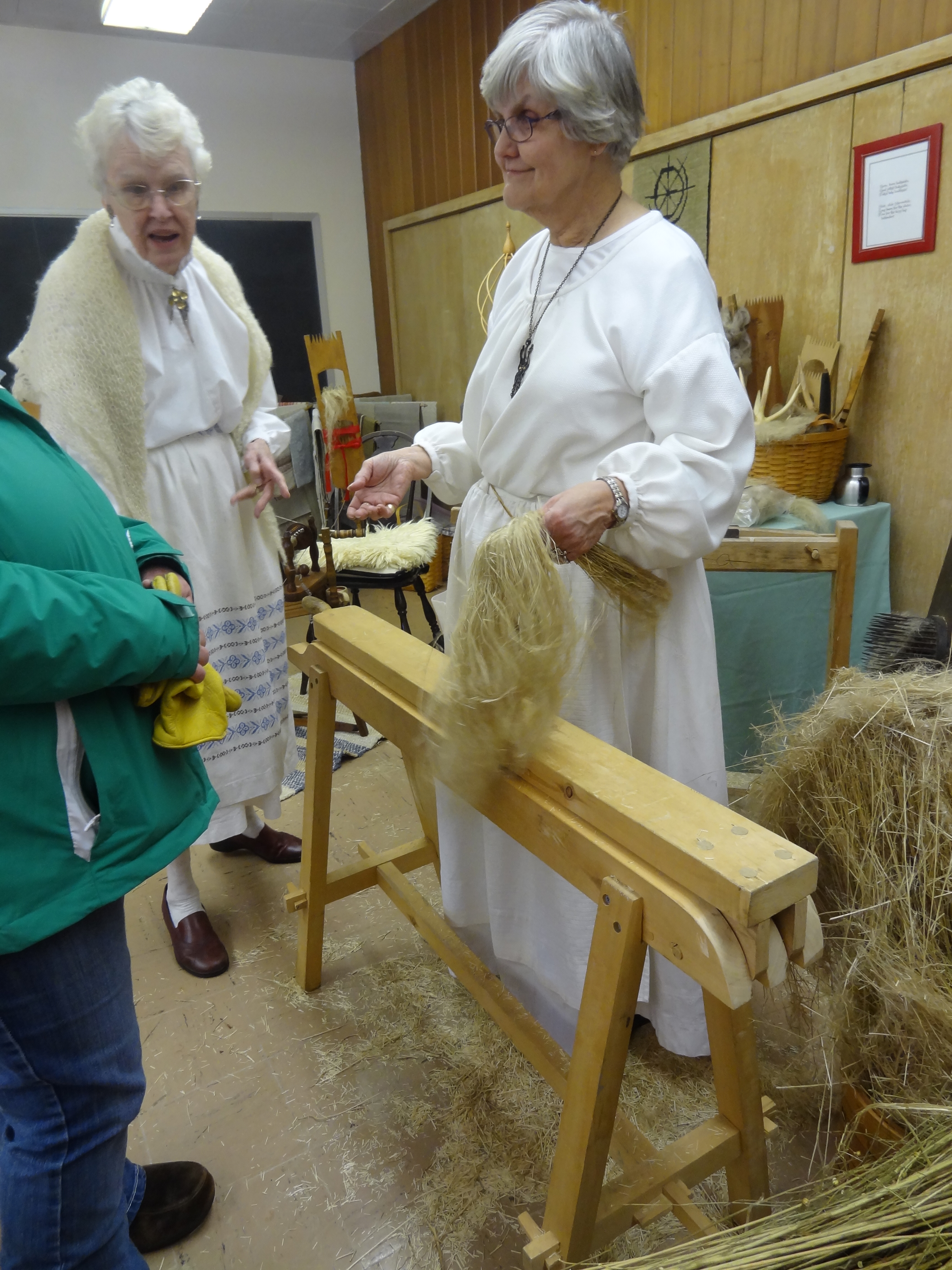
Inside the center are rooms filled with vendors, food providers, and a Finnish museum. I got into the event late, so my table was out in a hallway, but it was great for people watching. Rosy-cheeked cherubic children in snowmobile suits passed by along with a plethora of adults, dressed mainly in camouflage (pink camo for the ladies), plaid, fur hats, fur trooper hats, plaid trooper hats, and Carhartt gear (a brand of heavy cotton work clothes). There were even several plaid snowmobile suits. A few people passed my table wearing North Face jackets, but you just know they were visiting relatives.

My table was next to some folks who sold furniture (rustic benches and tables) made of cedar, ash, and other heavenly smelling wood. I sold a few books and had lots of conversations with people who live in the forest and hadn’t talked to anyone in a week, maybe two. An elderly yet sprightly lady from a Finnish newspaper booth a few tables down spoke Finnish-English to me for about half an hour, and we did our best to communicate — about what, I’m still not entirely sure, but she did seem to like the cover of my “Eye of the Wolf” novel, which sports – you guessed it – an eye of a wolf.

The weavers of the flax.

The weavers of the flax.

Talk about Minnesota Nice – it was the type of event where a vendor can leave their table for a potty break and not worry about anyone stealing their wares; an event where the organizers write vendors thank you notes for attending and don’t ask for any payment; where old friends meet and high school classmates reconnect.

The event organizers assure me it is the longest-running Finnish festival in America. May it run (or in this case, slide) for many more. And may their flax grow tall.

The princess of sliding (one of several).

The princess of sliding (one of several).

Oops!

The Lake Superior Ice Project came crashing down on Tues., Feb. 3 at 10:06 a.m.

The Lake Superior Ice Project came crashing down on Tues., Feb. 3 at 10:06 a.m.

An attempt at a world-record-tall ice sculpture came crashing down a few days ago on Barker’s Island in Superior, Wis. Of all times – it happened right when the “sculptor,” Roger Hanson, was being interviewed and photographed by the New York Times. In fact, because Roger is hard-of-hearing, the reporter had to alert him that something was amiss. Roger turned around from the interview just in time to see his creation fall in upon itself.

What his creation looked like before the collapse was a point of discussion between me and my office mates, who work in a nearby building. Before the crash, it rose 66 feet and had wing-like protrusions coming off either side (see my previous blog posting for photos). It struck me as vaguely menacing, so I called it the “ice wraith.” Others thought of it more benevolently and called it a “sentinel” – they thought it was guarding the estuary and harbor. Others called it a “blob.” Calling it a “sculpture” like the news stories do, just seems wrong. It is a creation, but it’s not like Roger is carving it. He’s squirting it.

Well, it’s clear that it is a pile now.

The crash is blamed on a thaw we had a while back. Although the temperatures dropped again enough for ice formation, I suppose the structure got brittle at that point. Roger started adding more water to the top of it instead of making it wider. Even to my unschooled ice sculpture eyes, it seemed precarious – like it needed more width instead of height. (But I speak from the benefit of hindsight.)

Although some are rejoicing at the crash of this hubristic endeavor, others in the community are upset. The project was drawing a crowd and even sported a gyros stand, and people seemed to enjoy watching the progress. Roger is such an earnest man, you can’t help but feel sorry for him. The city of Superior planned light and music shows, presentations, and even a fireworks display around the project for the next three weekends. (Feb 14, 21 and 28 at 6, 7, and 8 p.m.)

After the crash, the big questions were whether to build again and whether to hold the celebratory events. The answer? YES! Roger says he is going to rebuild, and has already started doing so upon the pile that was once his “sculpture.”

Poor Superior always seems the underdog next to the more populous and tourist-friendly Duluth across the bridge. This is yet another example of how the city just can’t win. But perhaps it’s also an example of perseverance and making lemonade out of lemons.

In my first blog entry about this project, I asked, “What could possibly go wrong?” Well, now we know! But at least nobody got hurt. And it makes for a good story. And looking at an ice pile IS sort of interesting. Especially when it’s lit up at night. (Grin.)

A Spirited Reflection of One Watershed

SignDuluth, Minn., has a new attraction for tourists and residents alike. What is it? Gin!

Vikre Distillery opened this year in Canal Park, right next to the famed aerial lift bridge. It’s one of several local brewing operations new to town due to the lowering of licensing fees. But it’s the only gin distillery. I recently had the chance to sample their spirits and take a tour courtesy of Caleb Wendel, the distillery’s sales manager. Plus I talked to the co-founder/CEO/distiller, Joel Vikre, a few months ago at a public event. So here’s what I know.

Joel was living in Boston when he and his wife got the idea to open a distillery in Duluth. After all, the area has all the requirements: good water, peat, and a source of grain. Nine months later, his family moved to Duluth and his dream became reality.

One of the stills.

One of the stills.

Vikre (pronounced veek-ruh) Distillery markets its gin as “A Spirited Reflection of One Watershed.” Producing each bottle takes seven gallons of Lake Superior water combined with barley and various botanicals. Joel explained that, unlike in some distillery operations, no reverse osmosis is required with Duluth water. They just run it through a charcoal filter.

“It’s impossible to overstate the importance of water for our business,” Joel said. “We live in one of the great distillery locations in the world.”

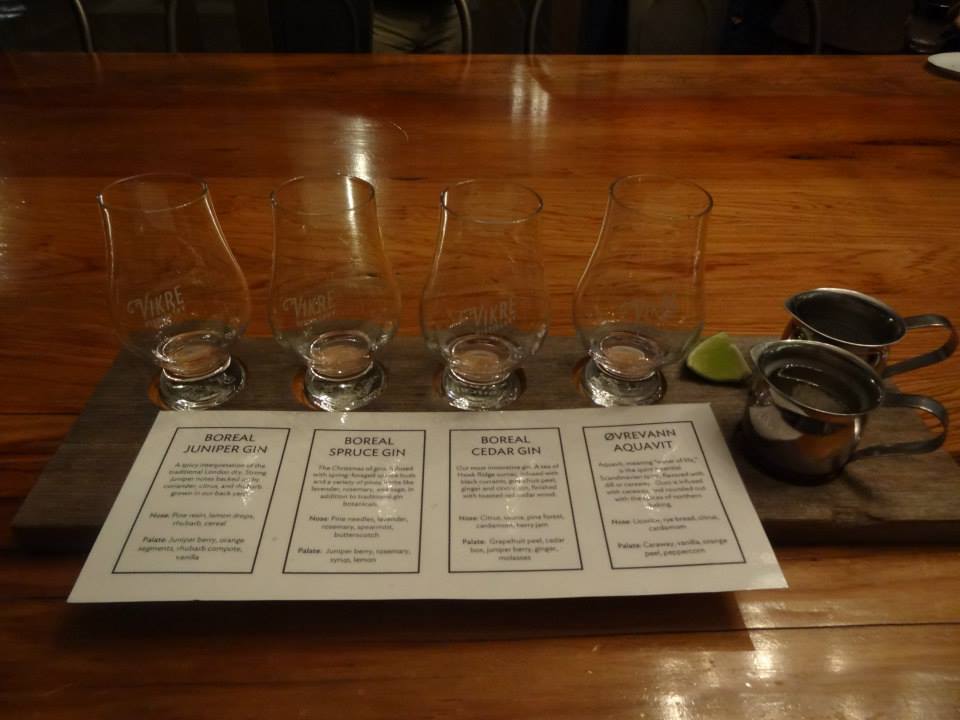
A flight of gin.

A flight of gin.

Caleb said their gin is about 90 proof and that it comes in three flavors: the traditional juniper (made with organic juniper berries from a supplier plus a few local ones thrown in for good measure), spruce (made from soft new spruce buds that sprout in spring), and cedar. They also produce aquavit (Mikael Blomkvist’s favorite drink in “The Girl with the Dragon Tattoo” book series), which is flavored with caraway.

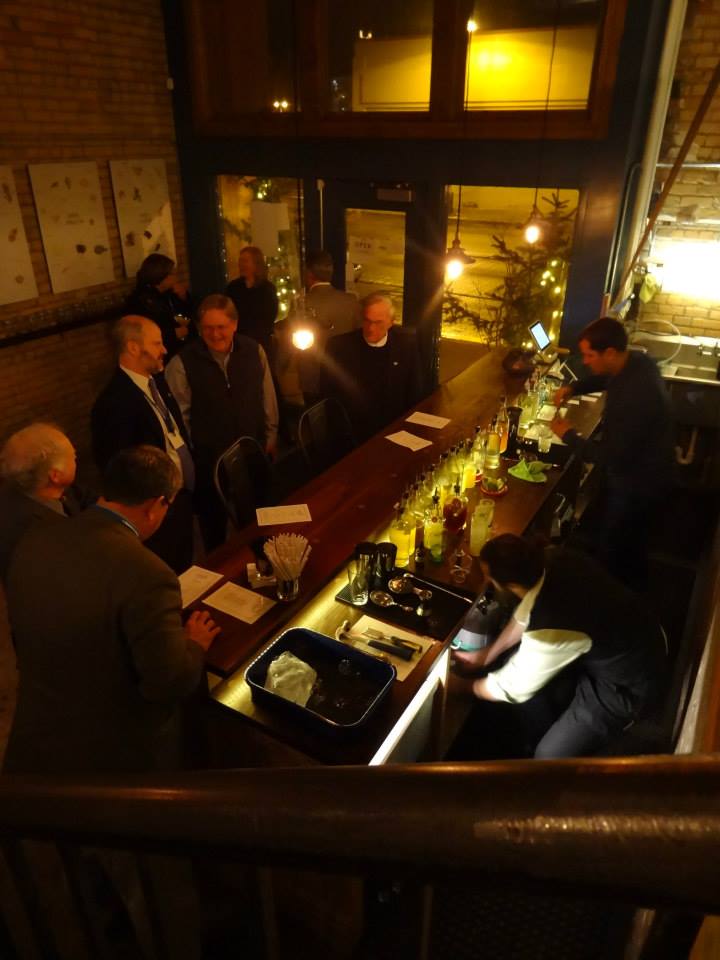
The bar at the distillery offers a flight so that you can sample each one. The glasses are presented on a rustic wooden platter along with two small metal pitchers of tonic and soda, and a slice of lime. Unless I heard him wrong, the bartender told me to taste first, then smell the gin, which is different from how one samples wine. But after my first try, I saw (or smelled) why. Gin tastes much better than it smells! If a person smelled it first, they are likely to get scared off by the turpentine-y aroma. Perhaps there’s some more sophisticated reason, but that’s my impression.

The bar.

The bar.

I’m more of a wine and hard cider drinker. In fact, I don’t think I’ve had gin since my college days. But this was good. With its woodsy flavors, my favorite was the juniper gin. The bar also offers mixed drinks made from their products. Because I liked the name, I tried a “Lumbersexual,” which was made of aquavit, orange liquer, lingonberry syrup and lemon.

OMG! It was so good; Nordic and not too sweet, but not too sour, either. The bad news is you can’t buy bottles of their gin at the distillery. Caleb says this is due to distributor laws, but that their products are available “everywhere” locally. I quizzed him about the small liquor store by my house, and sure enough, he said they carried it (which I confirmed later through a purchase). Almost all of their distribution is in Minnesota, but if you look at the handy-dandy map on their website, you will see they also distribute in San Francisco. And Caleb tells me they just received their Wisconsin sales license, so watch for it there.

At $30 per bottle, their gin is not cheap. But it’s worth it knowing where it comes from and to support a local enterprise.

A Lumbersexual.

A Lumbersexual.

Caleb says that whiskey is on the horizon for the distillery. It’s in process now and will be coming not-so-soon (it’s better that way). They also hope to sell their own tonic someday. And for you corn-intolerant people, it’s made with cane sugar, not corn syrup. They do offer a cane-sugar tonic for sale that’s made by a different company, however, along with glasses and other gin-drinking paraphernalia, including clothing.

If you’d like to visit Vikre, be sure to check their website for hours. They are open on a limited basis in winter. The distillery is located in the Paulucci Building. There’s no sign for it on the outside of the building at this point. Look for the sidewalk easel sign instead.

Author Reading from “Plover Landing”

Layout 1A community radio station, KUMD, featured my most recent novel on their “Women’s Words” show last weekend. My novel is called “Plover Landing” and it’s an eco-mystic romance set in Duluth, Minn., that highlights the plight of an endangered shorebird, the piping plover.

You can listen to the six-something minute show here. My novel is available for sale in the usual places (Amazon, Barnes and Noble, etc.) or you can contact me through my website to receive an autographed copy. My online store isn’t working at the moment, but if you send me a message from my site, we can work something out!