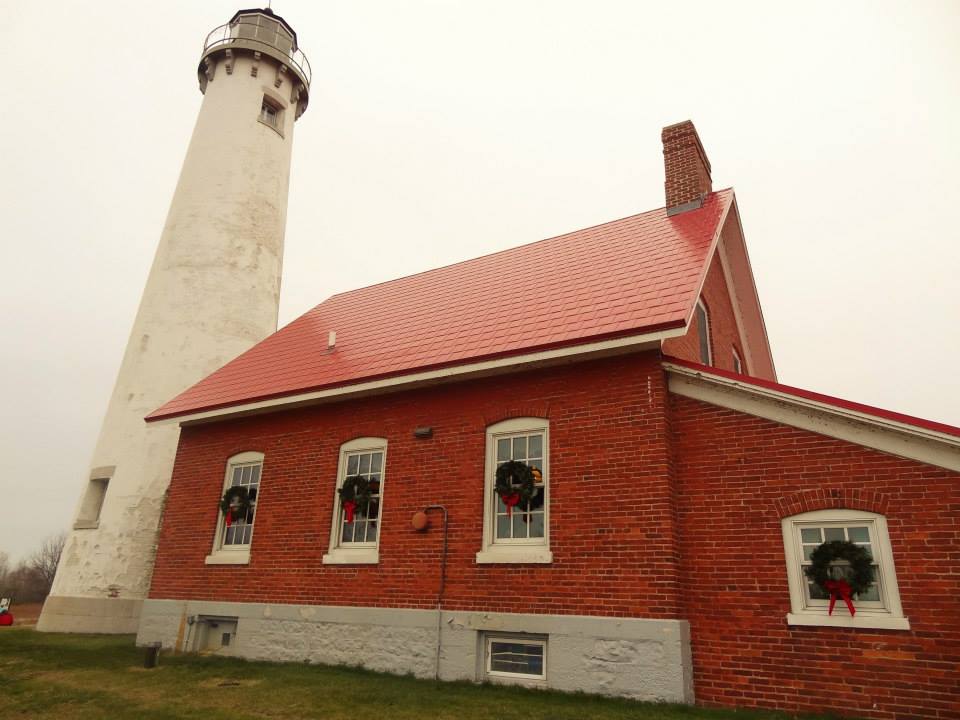
I had the privilege of spending some time on Lake Huron not long ago. After spending five days in meetings, my co-workers and I were primed to run amok along the shore at Tawas Point State Park in Michigan. The deserted lighthouse was decorated for Christmas — we felt like it was waiting just for us!

Tawas Point State Park Lighthouse, MI.

Tawas Point State Park Lighthouse, MI.

Here’s my favorite view:

DSC01907

I guess it makes sense to keep the flammable oil for the lighthouse light in a separate building:

The oil building.

The oil building.

Happy holidays, everyone!

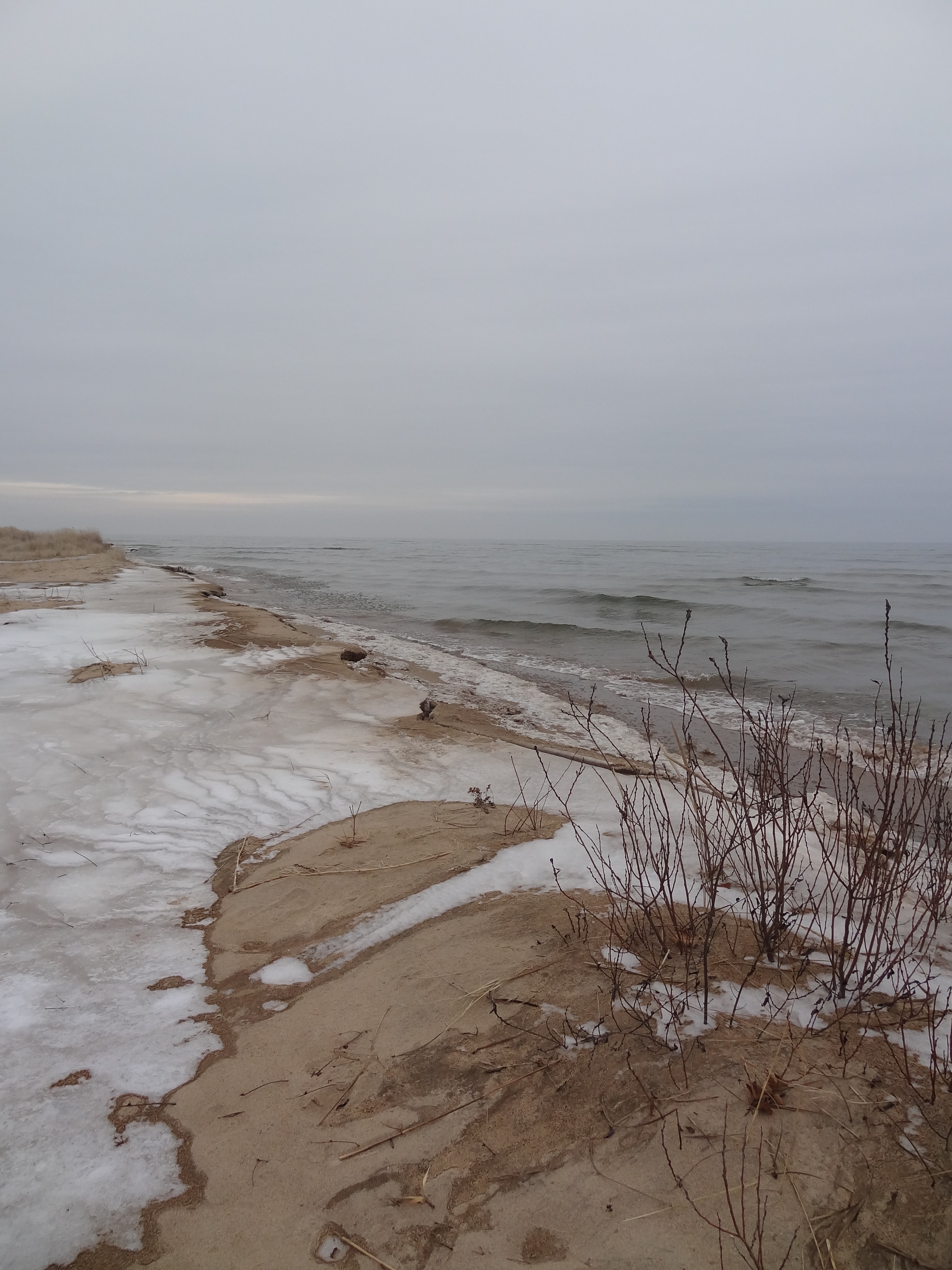
Lake Huron imitates an infinity pool.

Lake Huron in December.

Lake Huron

Challenge: Describe Your Community in One Word

Duluth city lights as seen from the water at night.

Duluth city lights as seen from the water at night.

In a short chapter in Elizabeth Gilbert’s Eat, Pray, Love, (Chapter 33) Gilbert and her friend discuss how every city and its inhabitants can be defined in a single word, and that each community is different. For instance, their word for New York City was ACHIEVE. Their word for Stockholm, Sweden, was CONFORM. For Naples, Italy, it was FIGHT.

During a lunch outing a few years ago, my girlfriend and I decided that the word REMOTE fit our city of Duluth, Minn., not only for geography but for the people. Duluth is often the butt of jokes from the rest of civilization as being at the end of the world. This since it is so far north, and it serves as the end of the line (or beginning?) for highways, railroads, and shipping routes. If traveling north, we are a last bastion of goods and services before one reaches our friends in Canada.

As for the people, although we are “Minnesota Nice,” we can be hard to get to know. Some of us have lived here for several generations and we have our own cliques – like in the state of Maine, there are those from “here” and those from “away.” And you’re not really from “here” unless your grandparents were born here.

The harshness of the long winter can also make Duluthians seem remote – it’s too damn cold to shoot the breeze when you meet someone on the sidewalk, or we’re too tired from shoveling snow to have energy to socialize. It can take time for new residents to break through and find connections.

Imagine my interest when I saw an article, “Remote Minnesota: Where is the most far-away spot in Minnesota?” in the latest Minnesota Conservation Volunteer magazine (produced by the Minnesota Department of Natural Resources). The author describes his quest to find the most remote and primitive spots in the state. He defined remote as a place farthest from any type of road, including Forest Service roads and private driveways.

Of course, with so many roads and driveways, it wasn’t Duluth. With the help of a Geographic Information System specialist, the author finds the spot on the shores of Knife Lake in the Boundary Waters Canoe Area Wilderness in northern Minnesota — twelve miles from a road.

The most primitive spot in the state is the bog country north of Red Lake. The author and his wife visited both places and described their experience. They found these wild spots “places where our imaginations can simmer.”

Now that the most-remote place in the state is official and it’s not Duluth, maybe I should change the defining word for the city. Also, several years have passed since my girlfriend and I defined it, and in the meantime, Duluth has earned national accolades, such as “Best Outdoors City” to live in. Not to mention all the microbreweries popping up everywhere. Perhaps we are getting too hip for REMOTE.

Duluthians, what do you think our defining word should be now? Readers outside of Duluth, what word would you use to define your community? I’d be interested to hear!

The Christmas City of the North Parade: Socially Sanctioned Child Abuse or Festive Community Event?

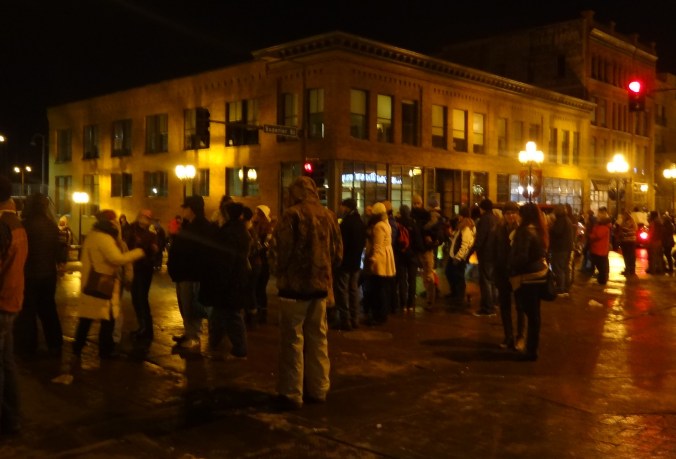
Huddled masses watch the Christmas City of the North Parade.

Huddled masses watch the Christmas City of the North Parade.

It only took me fifty years to figure out how to stay warm while watching Duluth’s local winter parade in person. One could watch it on the television and stay warm, but that doesn’t count. I needed to watch the parade in-person because my son was marching in it for the first time as part of the high school band. This Northland rite of passage requires parental attendance. I did so for my oldest son, thus for my youngest, too.

It’s almost always below freezing for the parade, which challenges both marchers and spectators. I marched in the parade myself for at least four years for various school bands, and due to this, have little love for it. I recall the numbness of cold appendages, frozen valves on my French horn (which my boyfriend thought could be solved by pushing down hard on all the keys, thus breaking the strings and rendering the instrument tuneless) miserable school bus rides to and from the staging area, and the pain of thawing fingers and toes. (This was before the time of hand warmers.)

But we band rats didn’t have it as bad as the cheerleaders. Back then, before someone got wise and invented flesh-colored thermal tights, they danced in short skirts and skimpy nylons. I am half serious when I say that I thought then and still think now that the Christmas City of the North Parade, far from being an event that brings the community together, is just a case of socially sanctioned child abuse.

Truly, most of the participants are children — from dance schools, high schools, and community groups. Only in Duluth does it seem like a good idea to make our progeny travel a mile-and-a-half down a frozen road, performing for our amusement and joy. Even the television anchors from the station sponsoring the event stay indoors now, much to the disgust of the hardy spectators.

Pleasant parade memories aside, this year, I did it right. The parade route changed so that it passed several eating establishments. I met some friends (thanks Charlotte and Katie!) at an arts café over an hour before the parade began. That way there was still plenty of parking (found a nearby free spot on my first try) and ample time to eat before the parade. I had eaten at home, so I just drank some wine.

Wine! Silly me. Why had I never thought of combining alcohol with parade watching before? The beverage filled me with warmth and goodwill toward this thinly veiled community child abuse event.
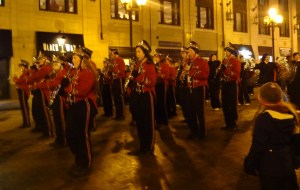
Our kids are in there somewhere . . . .

Our kids are in there somewhere . . . .

When the parade started, we stood outside on the curb, waving to the passing floats, facing the cold wind blowing down the street. When we got chilled, we went inside the café lobby and watched the event on television and through the café windows, which fronted the street. All of us had sons in the same band, so once we saw the band approaching on the television, we worked our way to the curb to see it pass by in person, and to wave vigorously to our sons.

Then I headed for my car. Why stay and watch the whole event if I didn’t have to? As I passed the café windows, I noticed an empty table in a prime parade viewing spot. I thought, “Next year, that’s where I will sit.” Although my son will be in the parade then, too, since his maiden voyage is over, I can get by with even more comfortable viewing arrangements in the future. Just look for me and my friends at the center table, sipping our wine and staying warm, while the rest of the world marches by.
Yooper Duane

My friend Duane.

My friend Duane

My meanderings last week took me Michigan’s Upper Peninsula, also known as “da UP.” Residents of the U.P. are affectionately known as Yoopers, and I visited a long-time Yooper friend, Duane.

Duane and I met thirty years ago on Isle Royale National Park (abbreviated in Park Service talk as ISRO). The island is one of the most isolated national parks in the country – only accessible by boat or sea plane. Duane was a carpenter for the park service and we became friends over coffee and doughnuts in the snack bar when I was a waitress on ISRO.

I’ve kept in touch with only a few people from my time on the island. Even Duane and I had long stretches where we lost track of each other. I managed to track him down a few years ago when I knew I’d be driving by his town for a book tour.

During my trip last week, we only had time for lunch. I wish our visit was longer, but I had to press home to a long list of responsibilities. But the time we were able to spend was vintage Yooper. Duane took me to Buck’s Café in downtown Ishpeming, and he wore the requisite Yooper regalia (see photo).

I expected to reach home by nightfall, but car issues forced an overnight stay at the edge of Yooperland (the MI/WI border). I found a mom and pop hotel complete with mouse droppings on the bedspread. But the mice stayed hidden, I slept well, and was able to successfully continue my journey home the next day.

Anyway, I just wanted to say thanks for the short taste of Yooper heaven, Duane!

Something Pumpkin-y This Way Comes

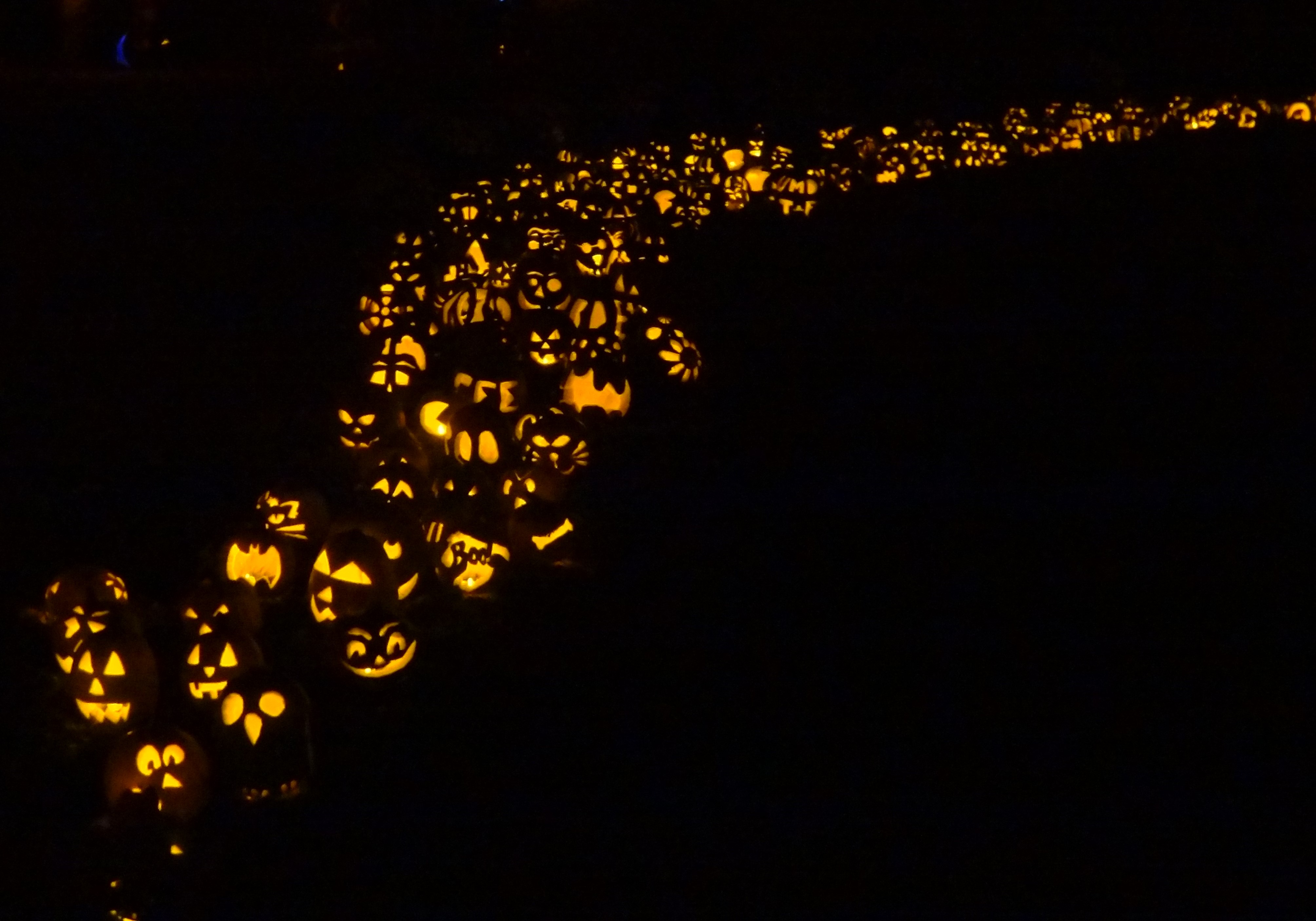
A river of jack-o-lanterns on the grounds of Glensheen Mansion in Duluth, MN.

A river of jack-o-lanterns on the grounds of Glensheen Mansion in Duluth, MN.

Dozens of volunteers carve what must be hundreds of pumpkins that decorate the grounds of a local mansion on the shores of Lake Superior that is open for public tours. I checked it out last night and brought my camera along. Happy Halloween!

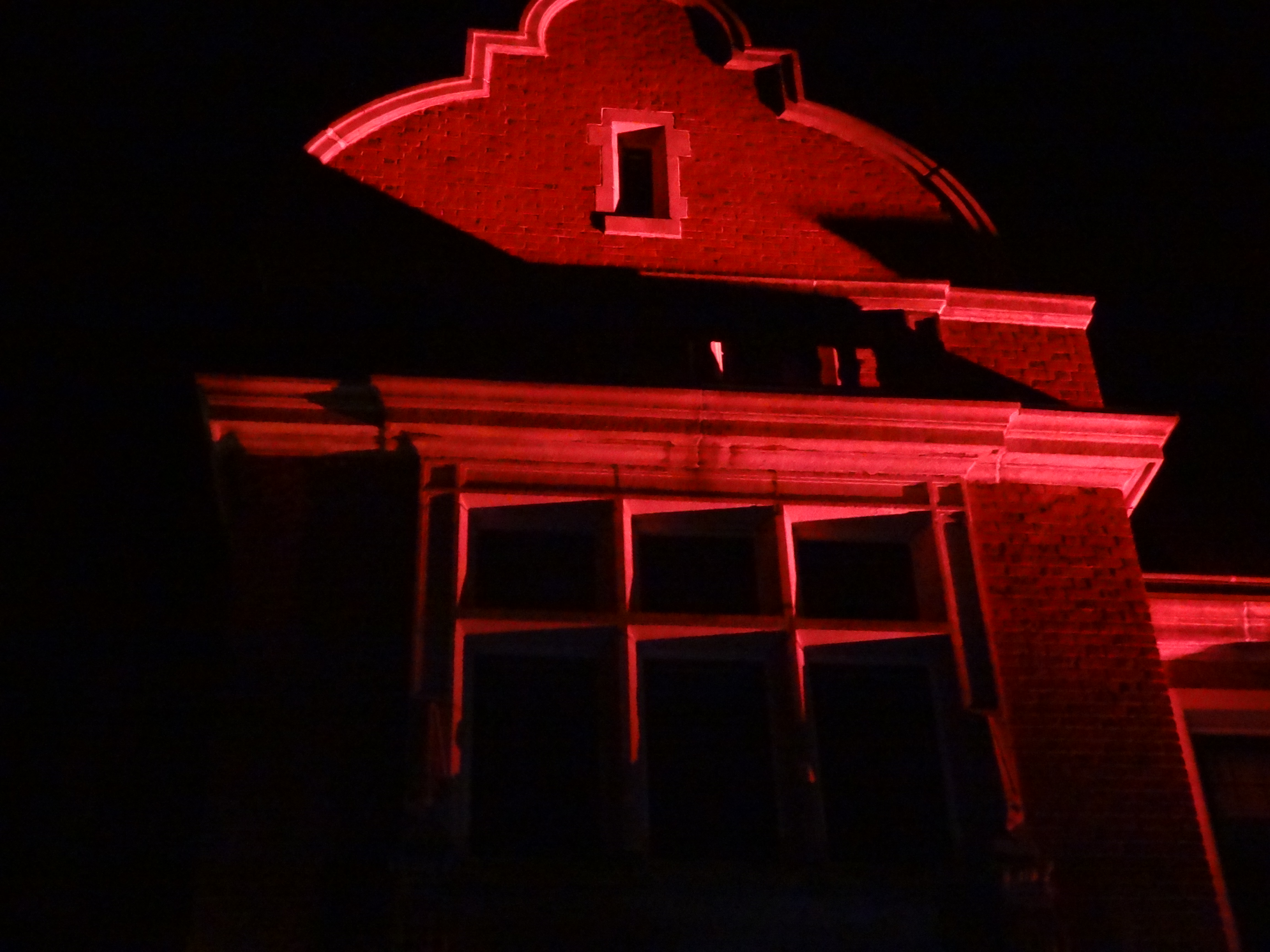
Glensheen Mansion.

Glensheen Mansion.


An eerie blue light illuminates the room where the murder of the last owner occurred in the mansion.

An eerie blue light illuminates the room where the murder occurred of the last owner of the mansion.


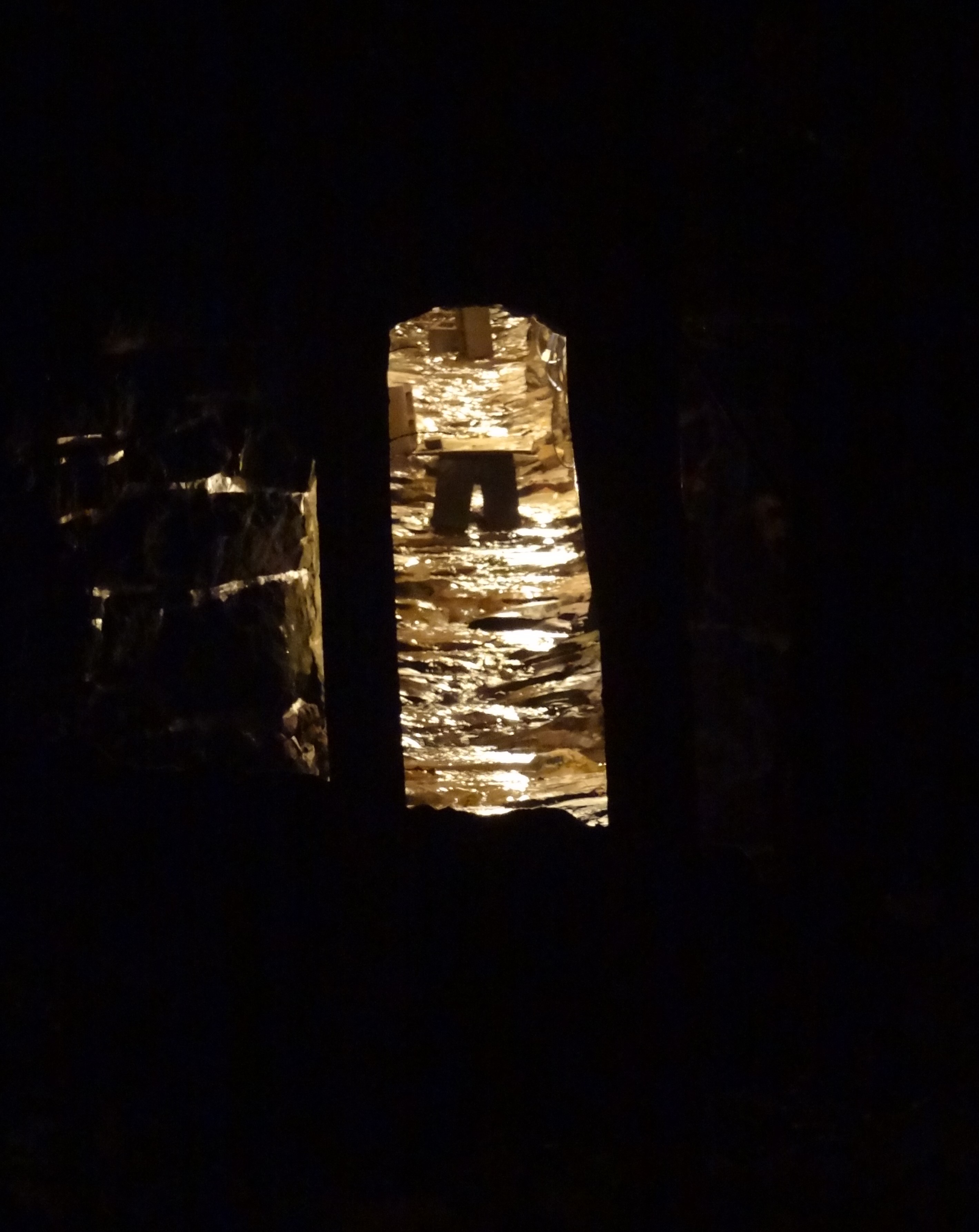
I don't think this was part of the  tour, but I thought it was spooky: looking into a tunnel that runs under the road. Who is the bench for?

I don’t think this was part of the tour, but I thought it was spooky: looking into a tunnel that runs under the road. Who is that bench for?

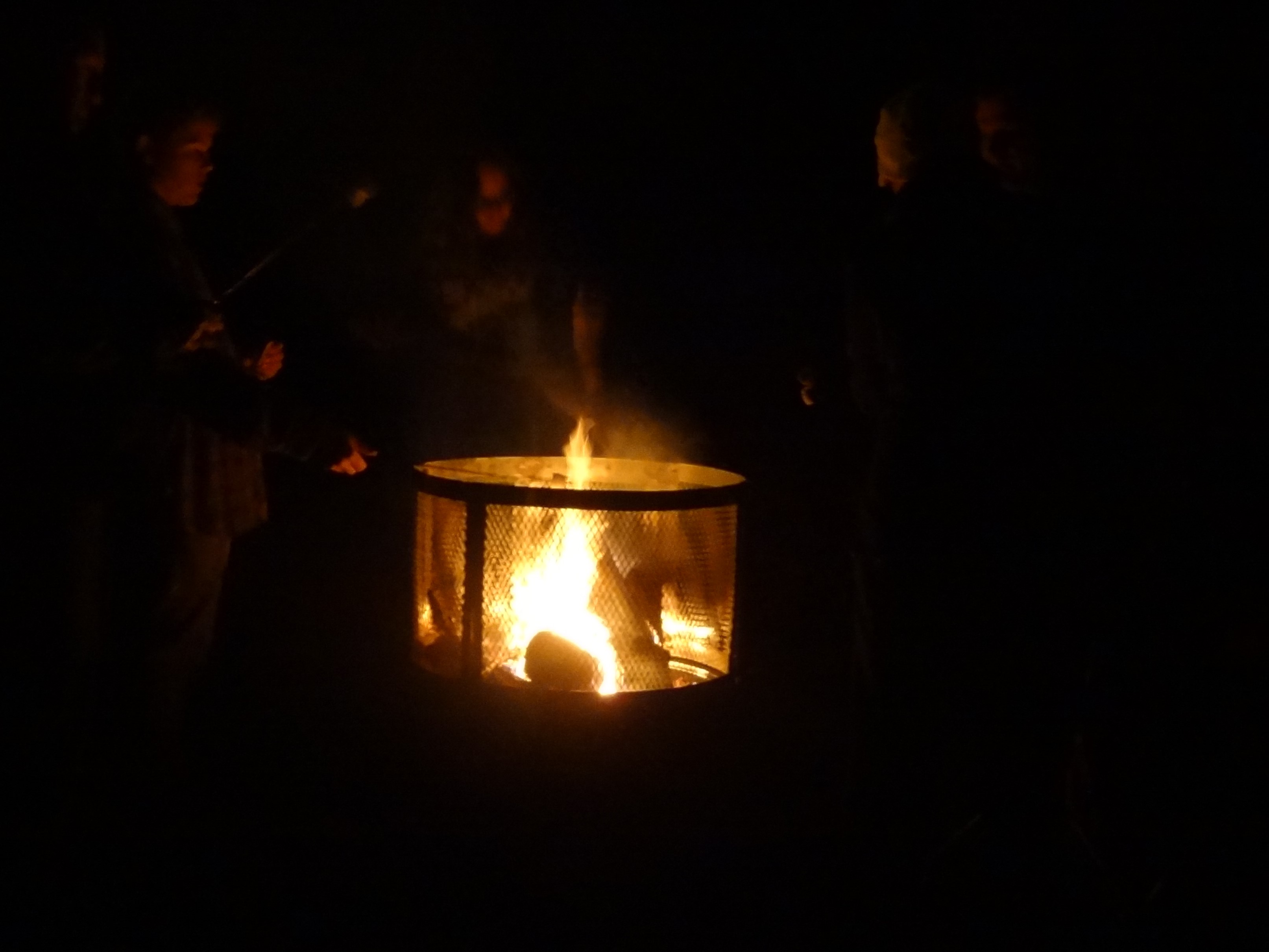
Ghosts making s'mores.

Ghosts making s’mores.

The Book Signing and the Viola Player

This weekend I had my first book-signing events in the metropolises of Minneapolis and Maple Grove, Minn. One was a reading at a small indie bookstore; the other was a signing event with a bunch of other authors at a big box chain bookstore.

Moon Palace Books in south Minneapolis.

Moon Palace Books in south Minneapolis.

I did the indie bookstore reading first, at Moon Palace Books in south Minneapolis. The audience was intimate and mostly genetically related to myself. (Grin.) But it was fun and I sold a few books. The owner was wonderful and, with thirty bookcases that were only two years old, the place smelled good — like freshly cut lumber.

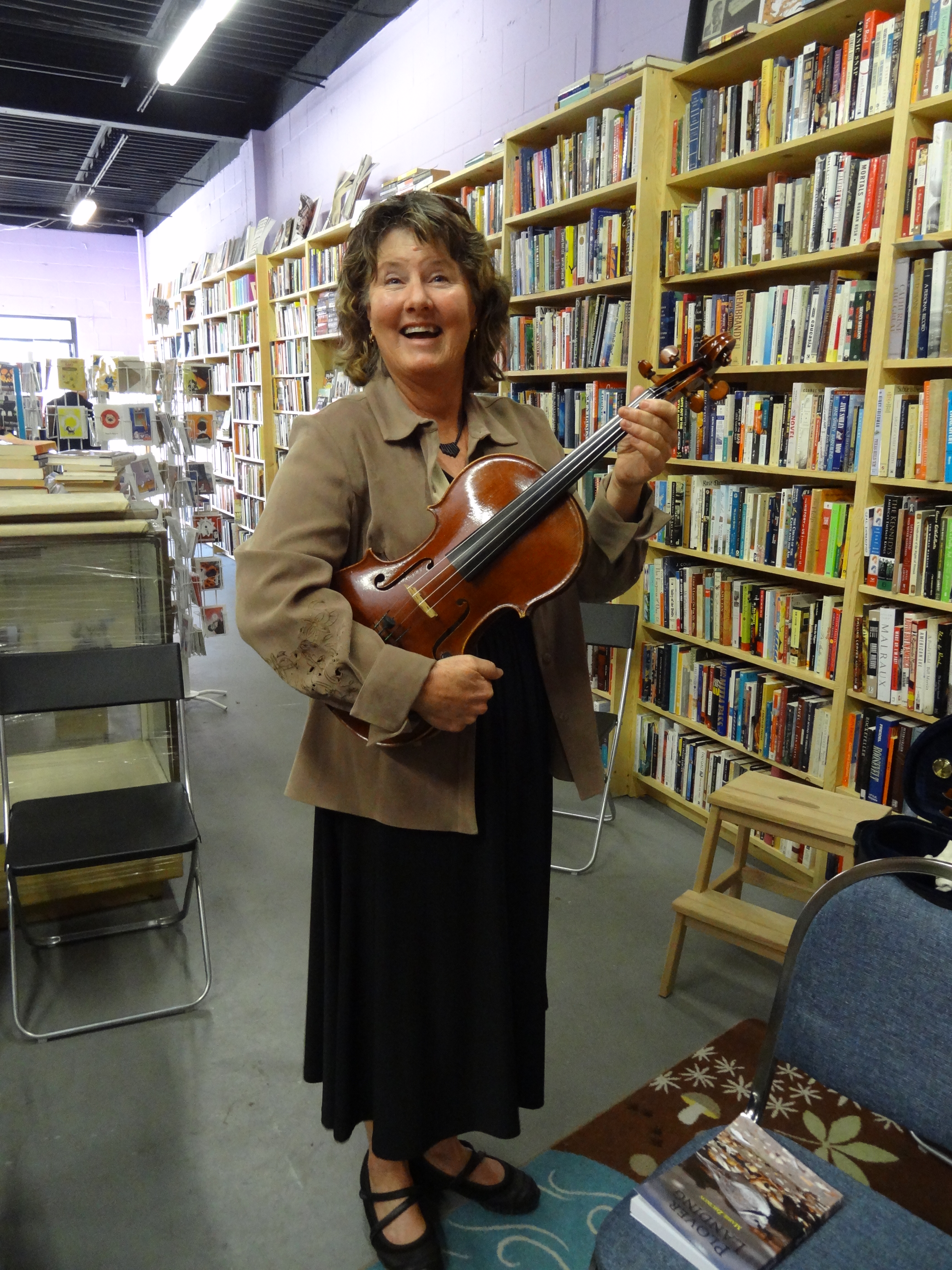
We were just wrapping up when the Viola Player arrived. Or rather, she swooped in. Judy with the Duluth-Superior Symphony Orchestra (DSSO), is not the type to enter any other way. I experienced her vivaciousness first-hand when I had lunch with her as research for my novel “Plover Landing.” A viola player figures prominently in the story, but I needed to learn more about the life of this type of musician. I brought my plight to the DSSO and they hooked me up with Judy.

I chose the instrument because it’s the one I would have wanted to play if I hadn’t already been a French horn player in the high school band. I just love how it sounds, and the introvert in me loves how it’s a background instrument. From Judy, I learned about the underdog, scrappy culture of violists.

Judy, the vivacious violist.

Judy, the vivacious violist.

I didn’t know she was planning on attending my reading, so her swooping entrance was a surprise. A nice one, however! She even had her viola strapped to her back, and with little coaxing, treated us to several tunes. That’s one reading I won’t soon forget, and I’m sure the bookstore owners will remember it, too.

The big box chain bookstore event was a bust. Hardly anyone attended. If it had been my only event, I would have driven home in the dark of night feeling like the five-hour round trip was not worth it. I learned two lessons from this experience that I would like to share, especially with new authors who are responsible for their own marketing:

  1. If you’re traveling more than an hour or two from home, try to have more than one signing event scheduled to hedge your bets on feeling successful. In other words: Don’t put your book signing eggs all in one basket.
  2. The book signing ain’t over until the viola lady plays!

The Bench

A sailboat off Park Point Beach in Duluth, Minn.

A sailboat off Park Point Beach in Duluth, Minn.

I saw the bench in passing as I was hauling a box of my novels into a local community center where I was to take part in a local arts sale and book signing. My first thought was that the bench offered a nice place to sit if someone got tired on the walkway up to the center.

On my second trip, I noticed the red crabapples that had fallen onto the weathered wooden slats of the bench from the tree that sheltered it. On my third trip, I saw the small sliver plaque that had tarnished beyond readability and how the main metal support on the bottom of the seat was hanging askew. That bench had been there for a while, and no one was taking care of it.

On my fourth trip, I realized I was having all these reactions to the bench, and that I should pay attention. It’s funny and sad sometimes how intent we get on what we are doing (in this case, setting up my book table) that we miss creative fodder that’s right along the path.

Where will the path of life take you? To the beach!

Where will the path of life take you? To the beach!

After I was done hauling books and moving my car across the street to allow arts sale patrons the best parking spots, I took time to appreciate the bench. I unpocketed my camera and shot some photos of it and the surrounding beach. The bench photos don’t do it justice. I think my words describe it better, but I got some good beach shots.

I’ve been thinking a lot about mortality lately, what with “shallow graves” occupying my mind, and attending a visitation for a fallen media comrade. This bench spoke to me of a life remembered. It served as a token of respite and peace in a busy world, but a token now forgotten and in disrepair. How fragile human memory is! How fleeting! Yet the bench stands in testament that someone once cared.

Like any good, self-absorbed artist, I wondered if anyone would care enough about me to dedicate a bench in my name, and if they did, how long the intent would last to keep it in good repair. And in the big scheme of things, does it really matter? Dust to dust, ashes to ashes, and all that.

I suppose a poem is in that bench somewhere. I wonder if I will have the opportunity to step off the path of my busy life and write it.

Okay, I changed my mind. Here's the bench.

Okay, I changed my mind. Here’s the bench.

A Review of “The Goldfinch”

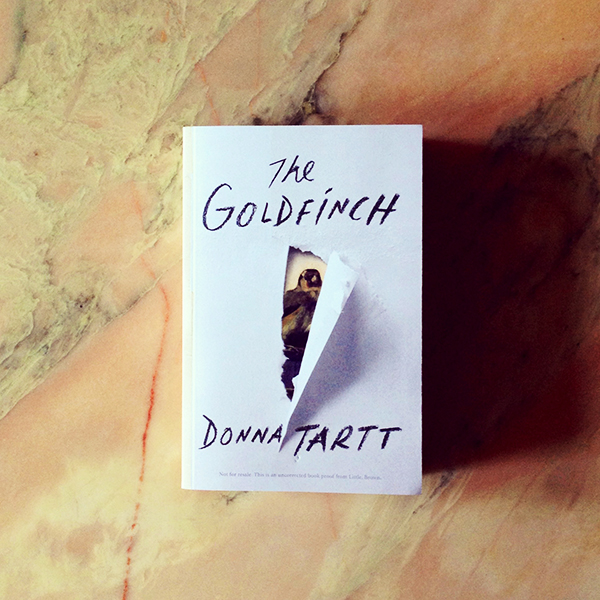
The Goldfinch“The Goldfinch” is an ambitious book, dealing with questions like: what is art? What is love? Is fate more due to relentless irony, divine providence, or a mix of the two? Just simple questions like that. (Smile.)

I found myself comparing this novel to “Extremely Loud and Incredibly Close” because they both have boy narrators who lost a parent to terrorism. In the case of Extremely Loud, it’s the World Trade Center crashes. In this book, it’s the bombing of an art museum. I like “The Goldfinch” better because the narrator isn’t as unreasonably anxious. He’s anxious yes, but in a calmer, more reasoned way, if that’s possible. And the timeline is more straightforward, which makes it easier to follow.

The story follows the life of Theodore Decker from age thirteen until his late twenties, exploring his longing for his dead mother, his relationship with his dead-beat father, adjustments (or lack thereof) to his new living conditions, and his attachment to a famous painting.

I liked how the author shows feelings of emotional displacement through descriptions of the characters’ surroundings – furnishings, food – and not only through human interactions. She incorporates a huge amount of detail, which makes the story real. Unless one is a writer, it’s hard to appreciate how difficult this is to do well. I also enjoyed the author’s fresh metaphors. There’s a reason “The Goldfinch” won the Pulitzer Prize for fiction this year.

Toward the end, I started getting impatient with Theo’s inarticulateness and inability to function. And when he does function, it’s like he’s outside of himself. He’s so inactive, it’s like he’s the opposite of a protagonist. He just stands there saying, “Ummm… ahh…” and things happen to him.  Theo’s Russian friend Boris takes over as protagonist at this point, and I ended up with a fondness for him despite his bad influence on Theo. I learned more about drinking and drugs than I ever wanted to know. Also, the author has the Russian soul down.

Some readers complain that the ending paragraphs aren’t worth all the angst in the previous parts of the book, but I don’t agree. The ending starts several chapters before the last chapter. I was listening to it on CD, so I’m not entirely sure of the organization of the book, but to me, the summation starts with Theo’s “coming clean” discussion with his mentor Hobie (I love Hobie!) and continues through the remainder of the novel. I thought it was cohesive and worth the wait. In fact, it was so worth the wait that I incurred my first library fine in recent memory so that I could complete the story. So beware: “The Goldfinch” is a bad influence – it could encourage you to incur library fines without remorse for the rest of your days.

A Shallow Grave

Does it bug anyone else when television news makes a big deal about the body of murder victim being found in a “shallow grave?” As if a deep grave would make any difference. Oh yes, so-and-so was killed, but at least they were buried in a deep grave, so everything’s cool. Gah!