The Planet Where They Don’t Give Christmas Presents

"Mars Hubble" by NASA and The Hubble Heritage Team. Licensed under Public domain via Wikimedia Commons.

“Mars Hubble” by NASA and The Hubble Heritage Team. Licensed under Public domain via Wikimedia Commons.

I wrote this poem about two years ago after a break up with a manfriend. I performed it at a public reading earlier this year. I didn’t know it going in, but the reading was judged. I was just performing the poem for practice. Although I didn’t win, if there had been an applause-o-meter on the premises, I would have won the popular vote based on that.

Caution: this entry contains mild profanity. Read at your own risk. It’s really best not to make me angry. I get my revenge in the most dangerous way: through poetry.

The Planet Where They Don’t Give Christmas Presents

This planet is mainly populated by men
who think it’s OK to date a woman for ten months
and NOT give her a Christmas present.

What is the name of this planet?
Planet Idiot.
Planet Asshole.
Planet I don’t want to live on this planet.

The inhabitants of this planet often
don’t want to spend New Year’s Eve
with their ladyfriend.
Or introduce them to their families.
Or sleep over at her house.
Or play with her dog.

I don’t want to live on this planet.

©2012 Marie Zhuikov

Powerless

By Arlington County (Downed Power Lines Pole, uploaded by AlbertHerring) [CC-BY-SA-2.0 (http://creativecommons.org/licenses/by-sa/2.0)], via Wikimedia Commons.

By Arlington County (Downed Power Lines Pole, uploaded by AlbertHerring) [CC-BY-SA-2.0 (http://creativecommons.org/licenses/by-sa/2.0)%5D, via Wikimedia Commons.

A recent article in the journal “Science,” which garnered national news attention, found that most people (especially men) would rather endure electric shocks than sit alone with their thoughts.

When a storm took the power out in my neighborhood for ten hours this weekend, I didn’t even have the option of an invigorating zap. Talk about being alone with one’s thoughts. I couldn’t drive anywhere that had power because my garage door opens via electricity, and the double-wide door is too heavy to open manually by myself.

The article, led by Timothy Wilson of the University of Virginia, described the results of eleven studies, which found that when left alone in a room by themselves for six to fifteen minutes, people would rather do mundane tasks than sit and think, and that many preferred to administer electric shocks to themselves given the alternative of being alone with their thoughts.

Sixty-seven percent of men gave themselves at least one shock during the thinking period. On average, study participants zapped themselves 1.47 times in a fifteen-minute interval, not including one “outlier” who administered one hundred ninety shocks to himself. (!)

The authors contend the problem is that thinking is too complicated and our minds are too unruly. Without the training offered by meditation and other techniques, they say that the “untutored mind does not like to be alone with itself.” I think this is true, and it’s something that Elizabeth Gilbert learned in her book, “Eat, Pray, Love.” Since reading her book a few years ago, I’ve been dabbling in some meditation and mind-focusing techniques. But given my peri-menopausal-messed-up-hormonal-state at times, these attempts can be challenging.

But the attempts seemed to have served me well during the power outage. Had I been desperate, I could have biked somewhere, but truth is, I rather enjoyed living without electricity for a while. As if it were all planned, I had plenty of no-cook food available, an 800-page book (“Written in My Own Heart’s Blood” by Diana Gabaldon) and an outdoors painting job to keep me occupied. Sure, I went through Facebook and Email withdrawal, but when the power finally came back on, I found I didn’t miss much.

In fact, unlike the study participants, I wasn’t afraid to sit and think (and better yet, feel!) The lack of distractions helped me piece together an emotional puzzle I’ve been working on for four years. I can’t say that I liked what I discovered, but at least the picture on the puzzle is much clearer.

Dinner on Lake Michigan

My boss commissioned me to write a poem about Lake Michigan for our biennial report. I hesitated a moment before saying yes, not because I have any qualms about getting paid to write poetry (grin), but because I have mixed feelings about Lake Michigan. I know Lake Superior much better — having lived there most of my life. Lake Michigan I’ve only visited about a dozen times. I am sad to say that the pollution and development around that lake depress me.

I agreed to write the poem. I tried to let my feelings come through but have some fun, too. It’s much easier to accept sorrowful topics if there’s humor mixed in. But enough explaining!

Dinner on Lake Michigan

Sitting at a table at the end of the world,
or the end of Door County,
whichever comes first,
I bite into the tender white flesh of the lake.

Before the net,
this fish swam in the shallows
over Petosky stones,
through waving green hair of algae,
above sharp striped shells of zebra mussels;
eating its fill of midges, minnows, shiners, snails,
fingernail clams.

Perhaps it fought rip currents,
avoided dead zones,
dodged ore boats,
resisted shiny lures,
mouthed and spat out cherry pits from across the lake
where you sit
at the end of the world,
or the end of the Old Mission Peninsula,
whichever comes first.

In the sunset, you watch gulls,
the souls of lost sailors, or sky rats — take your pick —
as they skim over lawns cropped like emerald felt to the shore’s edge
where wetlands used to grow in spiky abundance.

You listen to the whistle of the lighthouse,
cutting through the sooty tangerine sky,
across the lake,
over the ferries,
above the lakers,
past the power plant chimneys,
through the dunes,
into the restaurant,
to the table
where I sit
alone
at the end of the world.

©2014 Marie Zhuikov and the University of Wisconsin Sea Grant Institute

A Cross Between Christmas and Childbirth

Plover Landing Novels
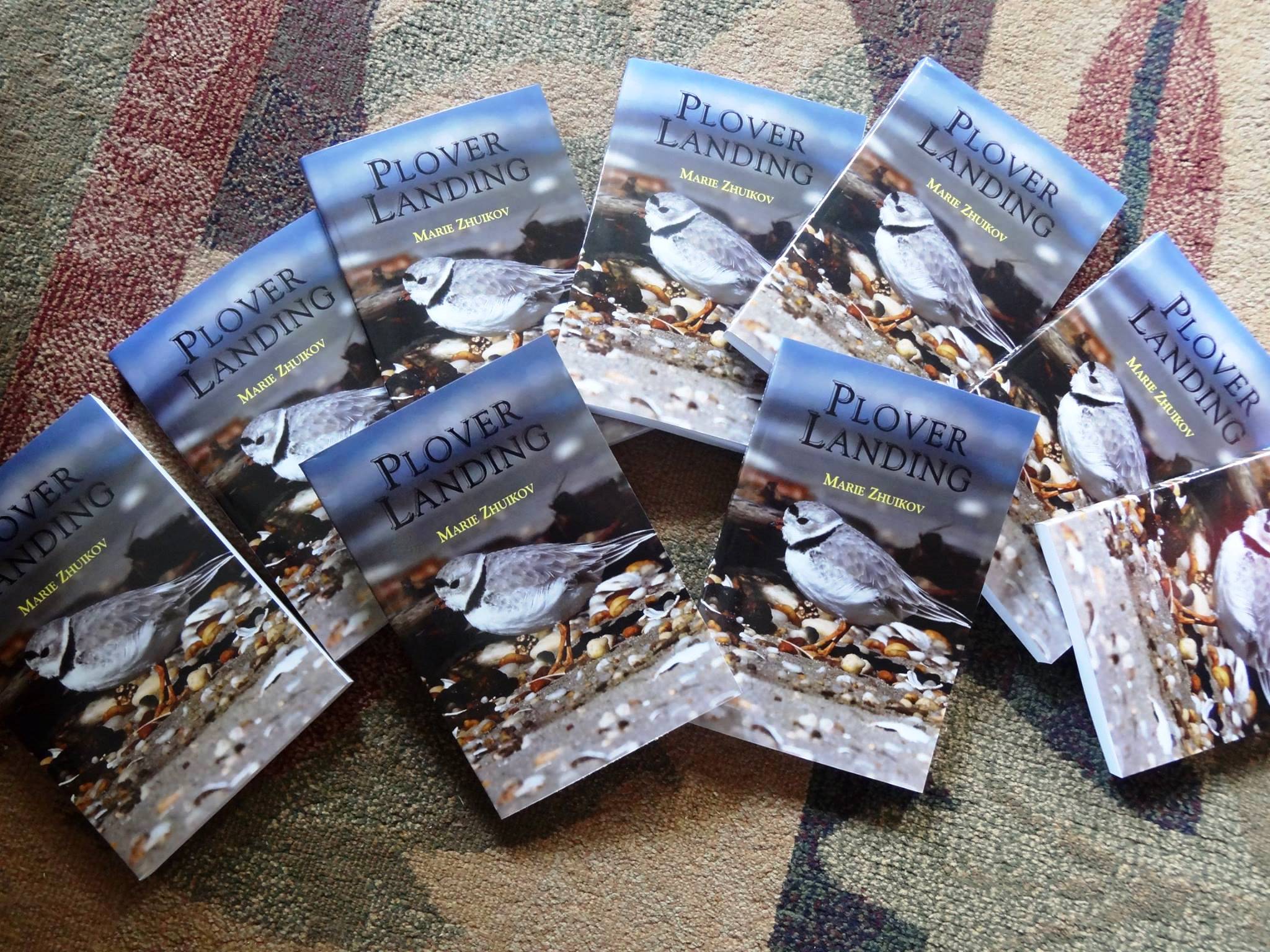
My books are here! My books are here! It’s so fun to open those boxes and see what’s inside – kind of like a cross between Christmas and childbirth. I don’t think they’ve been distributed to Amazon or Barnes and Noble, etc., yet. So if you can’t wait and you’d like an autographed copy, by all means, feel free to order one from me!

I have copies of both “Plover Landing” and “Eye of the Wolf” available. You can find out more and order them here. I ship them via media mail, which is fairly cheap. Slow, but cheap.

So I’m gearing up for my book launch party tomorrow night and a reading at a local bookstore this weekend. I can’t wait to see everybody and introduce them to “Plover Landing” and the characters within.

Received some great press in a local paper . They called it a “breezy beach read.” Start your summer right and pick one up!

Revisiting 9/11

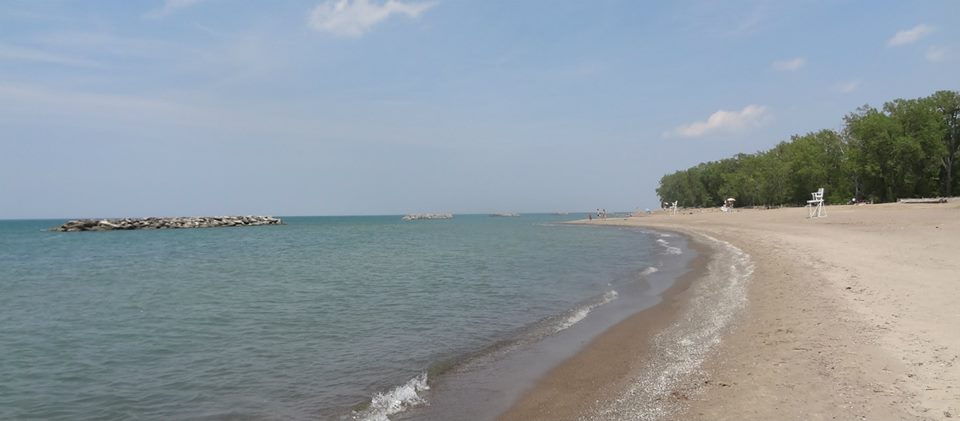
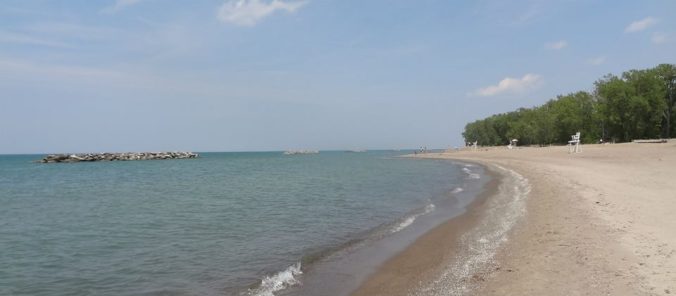
Presque Isle Beach in Erie, Penn.

Presque Isle Beach in Erie, Penn.

This week, I travelled back to the place I was thirteen years ago when 9/11 happened. I didn’t have much of a choice – the travel was for a work conference – the same event I was attending on Sept. 11, 2001. It was a regional conference held in Erie, Penn. At least we are at a different hotel this time. Even so, the idea of going back there made me irrationally worried that a similar disaster would happen.

Back on 9/11, we were in the middle of our three-day conference when the first plane crashed into the World Trade Center building. The organizers stopped the meeting. Some of us watched news reports in the hotel bar and lobby. Others went to their rooms. Several colleagues from New York made frantic calls to their loved ones back home.

I was in my room with my roommate watching TV when the second plane hit the second tower. After the horror subsided and our brains started functioning, we thought about the implications. Not having loved ones in New York, our worries revolved around “How are we going to fly home tomorrow?” Realizing that flying was going to be impossible, I got on the phone to see if we could rent a vehicle. They were already all reserved.

We had five people from Minnesota who needed to get home. I had young sons and a husband who needed me. Intermixed in the newscasts was the report of the Pentagon plane crash. Then came the news of the downed plane in Stonycreek Township, Penn., only 200 miles south of us. That made us much more nervous – the site was so near.

The moment I heard about the Pennsylvania plane crash, something clicked in my head, and I told my roommate that the passengers must have heard what had happened to the other planes. They weren’t going to let the hijackers crash their plane into some significant national site. Turns out, that’s indeed what happened.

Like everyone else, we ran through a lot of feelings in the next few days: incredible heaviness of heart, fear, and a sense of desperation mixed with the desire to help others and make it through. (I find myself shaking just writing this.)

We made it home the next day, with the help of some colleagues from Ohio who drove us to Cleveland, where a rental van was available. Then came the long haul home (15 hours? 17?)

During those first few days after 9/11, I felt like I was living in an apocalyptic Stephen King novel – no planes in the sky, gas at a premium, uncertainty running rampant among the populace. It’s not fun living in a Stephen King novel. Things eventually got back to “normal,” but of course, we and the rest of the country were changed. But here I was, thirteen years later, going back to Erie for a conference again.

It didn’t help that I watched the movie “Gravity,” the night before leaving for Erie this time. If I had known beforehand about the sense of desperation and peril that pervades that movie, I would not have watched it. A woman alone, trying to make it back “home,” hit too close to home. (Pun intended.)

Things went well at the conference, and I thought the new events were erasing the 9/11 strangeness until it came time to go back home. Like Sandra Bullock in “Gravity,” it took me several tries and different modes of transportation to compete the feat, which put me right back into those 9/11 feelings. However, unlike Bullock, at least I had a breathable atmosphere.

The weirdness started after the conference when a group of us decided to spend several free hours at a nearby beach on Presque Isle. A friend and I separated from the rest of the group to hike to a bird observation platform. The hike through the woods was hot and muddy. Once reaching the platform, we decided to return to the others by walking on the beach. We soon discovered that Lake Erie beaches are not like the beaches we are used to in Minnesota, where you can often walk unimpeded. This beach was eroded in many spots. Fallen trees and brush blocked our path, which necessitated inland bushwhacking forays — sometimes following deer trails, sometimes left to our own devices. The bushes had thorns, and our progress was slow.

We began to worry that we wouldn’t make it back to the others by the appointed time to leave. Having no map, we weren’t exactly sure how far we had to go or where we were in relationship to any civilized outposts. We started second-guessing our decisions, but that subsided once we saw familiar landmarks. Bramble-scratched, we made it back to the group in time to head for our respective planes.

The group dropped me off at the Erie Airport and went their merry way to Cleveland to catch their plane. As I stood in the ticketing line and looked at the flight departure schedule, I noticed the word “CANCELLED” next to my flight. Not good.

The ticketing agent explained the flight had been cancelled due to bad weather. They couldn’t get me out that day or the next from Erie, but if I could make it to Cleveland, I could take a flight tomorrow. I called my colleagues who turned around and rescued me from being stranded in Erie. With four of us smooshed in the back seat, we made the 100-mile journey to Cleveland.

Dropped off at the Cleveland Airport, my next goal was to find a place to stay the night. Because my flight was cancelled due to weather, the airlines said they were not required to pay for my extra night’s stay, so I was on my own. Like Sandra Bullock, trying to reach the Chinese space station on the radio, I desperately called different numbers, trying to find a hotel. No luck. The city was booked for the night (if one can believe the five places I reached).

By this time, it was 7:30 p.m. I was tired and hungry, having only an apple to eat since breakfast. Unable to reach my home office for help with a reservation due to tornados knocking out the phone system, and with my cell phone battery dying, I made a reservation with a place about 40 miles away in Cuyahoga Falls, Ohio.

After a $90 cab ride, I sank into a soft bed and ordered room service. I awoke at 4:15 a.m. to catch a cab back to Cleveland. My flight left with no problems, until we got to Minneapolis. Lightning strikes kept us from taxiing to the gateway for about 20 minutes – the very time my connecting flight home was supposed to leave. After sprint through the airport (okay, more like a computer-and-book-laden trot), I discovered my home flight was still at the gate, also delayed by the storm.

I made it home, and better yet, so did my baggage. Will I ever return to Erie again? Did Sandra Bullock’s character ever go into space again? I don’t think so.

Making Piping Plovers Sexy

My second novel is coming out later this month. I’m happy to unveil the cover for you:

Layout 1

Plover Landing is an ecological-mystical-romance that I wrote for college-age readers and older. What’s an ecological-mystical-romance, you ask? It’s a genre I’d like to think that I created, which deals with endangered species, Native American mythology, and human-human, human-animal romance and connections.

Plover Landing is set in my hometown of Duluth, Minn., in 1995, and it’s a sequel to Eye of the Wolf. Novelists who haven’t been published yet might hate me for what I’m about to admit, but when my publisher suggested a sequel, I wasn’t that enthused. That’s because, between life’s distractions, the first novel took me seventeen years to write, then another couple years to publish.

The thought of doing that all over again was exhausting, although at least I wouldn’t have to spend time looking for a publisher. I was also exhausted from seventeen years of thinking about wolves, which are the animals I focus on in Eye of the Wolf. If I was going to survive a sequel, I needed to focus on a different endangered animal and environmental topic.

It just so happens I was working on a project to restore habitat along the shores of Lake Superior in hopes of encouraging an endangered shorebird to nest. Through that process, I had already learned a lot about piping plovers, so that became the focus of my sequel. Granted, plovers are not as sexy as wolves and they don’t have a handy supernatural being associated with them (like the wolves have werewolves), so I had to ponder how to work the mysticism into it. (But never fear, wolf aficionados, the wolves come into the story at the end.)

My writer’s group joked that I should write about plover zombies, but I did not take them up on that idea. (Smirk) Instead, I researched myths about plovers. While I couldn’t find any local myths, I did find an interesting and sexy Hawaiian myth about plovers, and I discovered a way to use it as the foundation of the story.

Even so, that wasn’t quite supernatural enough, so in addition to the heroine and hero from Eye of the Wolf (Melora St. James and Drew Tamsen), I introduced a new character, a boy named Demetri, who both helps the plovers and focuses readers’ attention on the issue of climate change. I feel strongly that the more integrated that issue is into mainstream media, especially through the use of storytelling, the more people will come to accept it as real.

Because I’d learned ways to encourage myself to write with my first novel, even though I had just as many distractions, Plover Landing only took two-and-a-half years to write. My publisher thinks it’s an even better story than the first and has hinted about the desire for another in the series. I created the ending of Plover Landing with openings for another story or so that it works as a finale. I don’t know. I’ll have to think about that one.

In any case, let the marketing begin! Speaking of which, if any of you are active on Goodreads, I have a giveaway for Plover Landing that’s active until July 15.

Night Bird

Graduation
As I watched my oldest son walk across the stage and pick up his college diploma last weekend, an image from memory flashed through my mind. It was a tiny sparrow, fluttering outside a window in the middle of the night at the attic apartment where we lived when my son was born.

If you’re squeamish, you might not want to read this next part because it deals with things that new mothers do. One last chance not to read. Okay: I had arisen to pump milk for my son, who, after a difficult birth, lay in an incubator in the intensive care unit. He had experienced some “dusky” episodes, where he turned bluish due to lack of oxygen. After a long (and screaming) labor, he had been born about ten days before his due date – just early enough that his systems needed extra time to kick in. I had recovered enough to be sent home, but had to leave the hospital without him.

The night of the sparrow was my first one home — my first away from my new son. As I pumped, the bird hovered outside in the dark, pecking at the window as if trying to come in. In my post-partum midnight haze, I felt like the bird was the spirit of my son, trying to come home. I can’t explain how that made me feel except to say it was a strange mixture of desolation and joy.

I was an emotional wreck for the next few days. Eventually, our son came home, but not before we learned infant CPR and how to attach the tentacled wires of a heart monitor to him, which he would wear for several months. Even though I was awake with him many other times in the night, I never saw another bird behave like the one that first night home.

Twenty-one years later, as I watched my son walk across that stage, I thought about all we’ve been through. He’s come so far from being a helpless infant in an incubator. He’s grown so tall and strong, smart and stubborn, determined and thoughtful.

I couldn’t be prouder of him, my little night bird.

Happy International Migratory Bird Day from a Recovering Birder

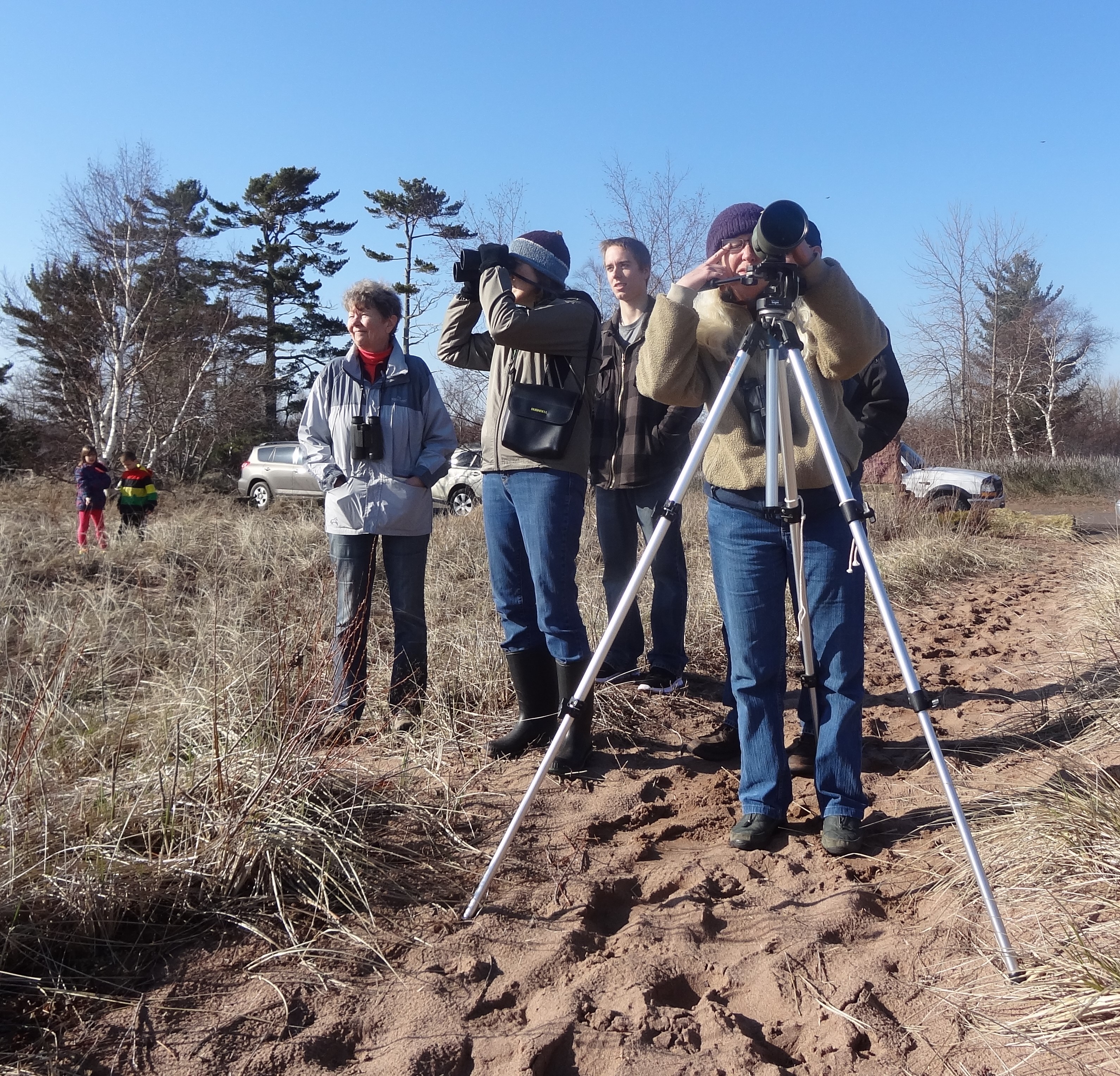
Birders on the shore of Lake Superior, Wisconsin Point.

Birders on the shore of Lake Superior, Wisconsin Point.

No, I’m not writing about Mother’s Day, but about a lesser known and newer commemorative event that celebrates birds. Yesterday, I participated in the second annual International Migratory Bird Day, held in Superior, Wis.

White pines on Wisconsin Point.

White pines on Wisconsin Point.

I haven’t been to a birding event in years, partly on purpose and partly due to other demands in my life. I like to think of myself as a recovering birder. I took up bird watching in seventh grade and was active in the birding community through my twenties – even participating for a year on the Audubon Expedition Institute, where I travelled across the country in a yellow school bus for a year with 24 other people interested in birding and the environment for master’s degree studies.

It was during that experience that I overdosed on birding. I came to realize that people stopped looking at birds once they had identified them. I rebelled against the obsession to name everything with feathers that I saw or heard. I rebelled against using eyesight aids like spotting scopes and binoculars – wanting to view the birds instead as part of their surroundings.

But I still feel an affinity with birds. My upcoming novel is about them, after all, and this event seemed a good excuse to get outside on a rare warm spring day. We met at Wisconsin Point, a long sandbar just outside the city. A small group of us spent three hours birding. We didn’t see very many birds but there were bald eagles, chickadees, scaups, red headed ducks, lots of blue jays passing through, and the requisite ring-billed gulls. I do admit to looking through a spotting scope (and the world did not end!), but I tried to keep it to a minimum to allow others the opportunity. After birding, we went to a local inn to listen to some presentations about migration.

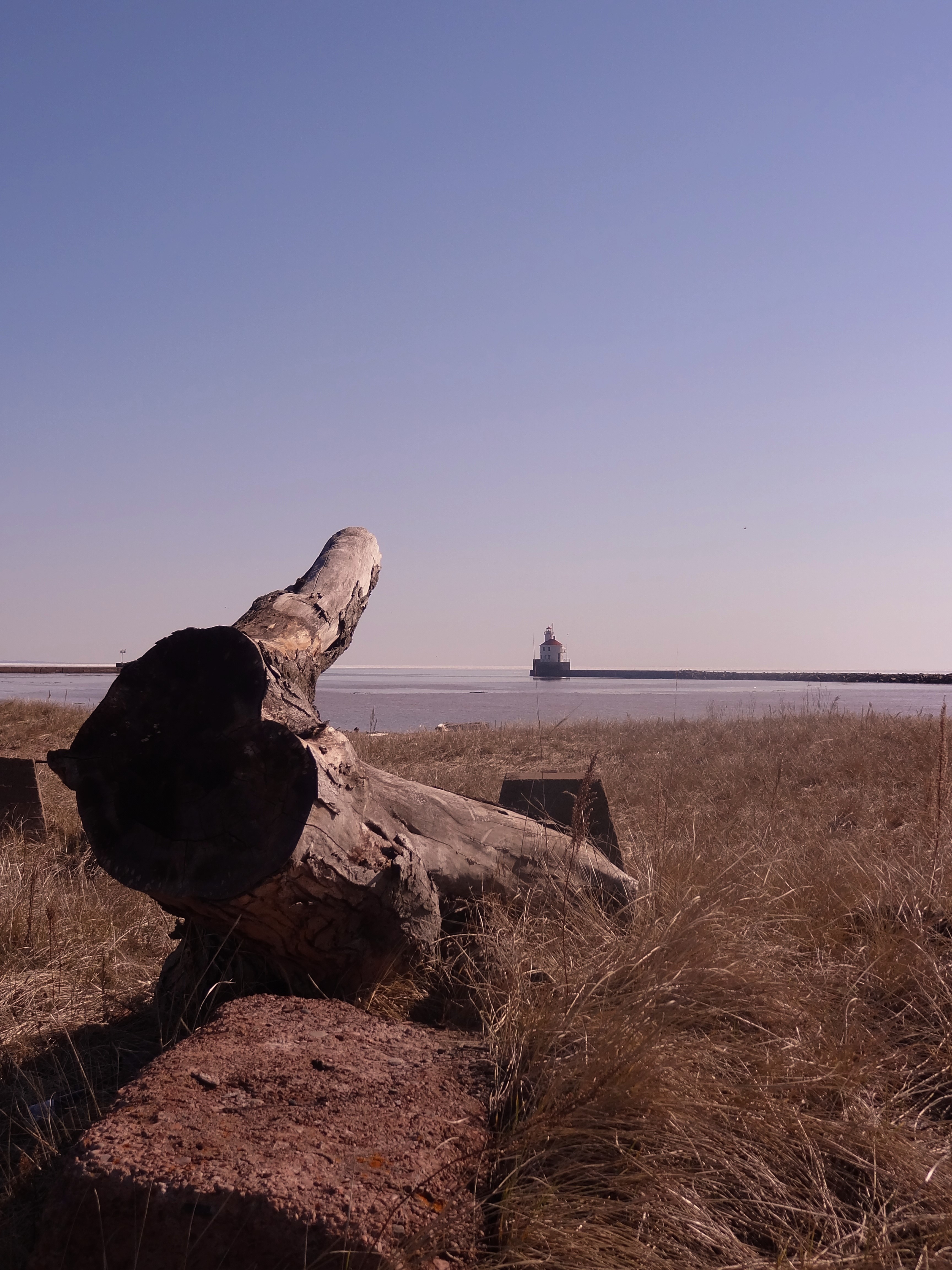
My camera isn’t built for bird pictures, but I do love the lighthouse and the white pines on the point, so I thought I’d share photos of them with you.

Wisconsin Point Lighthouse

The Wisconsin Point Lighthouse.

Wisconsin Point Lighthouse and log

Connecting (or not) with Pets

RIP Sparky, 2007-2014.

RIP Sparky, 2007-2014.

Sparky the Guinea Pig died a few days ago. Actually, I had her euthanized. Her back legs stopped working. She didn’t seem in pain or anything – was still eating and drinking as usual. She just couldn’t move very well.

Sparky is a girl piggy that we bought almost seven years ago at the insistence of my youngest son, who wanted another pet. She’s been healthy and sweet for all that time, except for her recent development. Since Sparky was ancient for a guinea pig, and because I am the one who has been caring for her all that time, I wasn’t keen on going to heroic measures to save her. I did spend time doing Internet research on her condition and discovered it could be caused by many factors but a calcium deficiency was the most likely in our case. By the time I discovered that, she had been ill for about four days — it took a while to figure out what was going on because she didn’t move around much to begin with.

The instructions described use of a liquid form of calcium designed for human consumption. I called around all the local pharmacies, but couldn’t find any available. I found some through mail order, but that would have taken several days to arrive, and I wanted something soon. I described Sparky’s plight to a friend and she found that Pet Co had liquid calcium, so I went there the same day. But when I got to the store, the supplements they had for guinea pigs didn’t have any calcium in them, so I ended up buying one designed for lizards. I mean, calcium is calcium, right?

We did the three-day course of treatment, but it didn’t seem to make a difference. And now, Sparky was moving around even less, so that she wasn’t getting enough water to drink unless I moved her over to her bottle. That’s no way for her to live, so, call me heartless, I made the appointment to have her euthanized.

When the time came, I packed her in a box filled with a deep comfy layer of bedding and went to the vet. I filled out the paperwork and handed her over without a fuss or any desire to see her through the procedure. The experience was markedly different from when I had to have my cat of 14 years euthanized. For that, I was a blubbering pile of Marie goo. It got me thinking about what made the difference.

I suspect one reason is that I never really connected with Sparky. I’ll be the first to admit, I don’t “get” guinea pigs. I had never had one before, and although we read books about them, the emotional connection wasn’t there. The cute “popcorn” jumps they do just seemed spastic. In the beginning, we took Sparky out to cuddle and let her roam around, but she had a habit of peeing in one’s lap and she nipped hard with her beaver-like teeth. So that didn’t help. About a year after we got Sparky, we got our dog, Buddy. We were worried about his reaction to her, so we took Sparky out less often after that.

Another reason is that she was my son’s pet, so I felt like it was his responsibility to connect with her more than mine. And he did try, but as he got older and busier, that fell by the wayside and Sparky’s care fell to me. She became an obligation, not a joy.

I feel bad that I never connected with Sparky. I can connect to dogs, cats, birds, and even fish. (I taught my catfish to wink at me.) We had a hamster once, and I never connected with him, either. Maybe I’m just not a rodent person. Have you ever had a pet you didn’t connect with? Do you think there are just some types of pets you aren’t designed for? I’d be interested to hear.