Remembering Larry Oakes

Larry Oakes

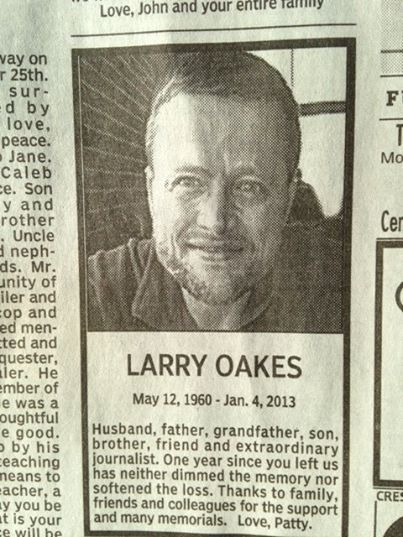
A few days ago, when most of the rest of the world was watching the Olympic opening ceremonies, I joined about seventy other people at an evening tribute for a noted Minnesota journalist. Larry Oakes was a reporter for the Minneapolis Star Tribune and before that, the Duluth News Tribune. He covered the crime beat and northern Minnesota stories.

Back in the 1980s, he was a few years ahead of me in journalism school. By the time I became the environmental reporter for the college newspaper (the Minnesota Daily), he had already moved on to an internship with the Minneapolis paper, and his name was legend among the Daily staff.

I didn’t meet Larry in person until I ended up back in Duluth working as a water science writer for the university’s Minnesota Sea Grant program. I was on the other end of the journalism profession now – a public relations hack who was trying to convince journalists to write about my organization’s research. We had lunch a few times as colleagues to talk over story ideas. Every time, I came away bowled over by his experience, not to mention his square-jawed good looks.

Some of my story ideas worked for him, some didn’t. That’s the way it goes. I do recall that Larry and a local radio news director, Mike Simonson, were especially helpful with one of the most popular stories of my career (so far!), which involved organizing a taste testing event for Great Lakes sea lamprey. We got the mayor together with the university chancellor and some other notable locals to taste dishes prepared by a volunteer gourmet chef who cooked lamprey several different ways for ratings.

After Larry married, he showed up at the same birthing class that my former husband and I were taking. Unfortunately, his wife was too sick from her pregnancy to attend, so I never met her. I felt sorry for him going through the classes alone, so I stood in as his partner sometimes when the activities required one. As the years passed, we also met at funerals and other local events. I recall thinking that Larry looked really rough at some of these events. I wondered if he had an illness or some other problem.

As it turns out, he suffered from depression and he also ended up having a stroke. Although he recovered enough from the stroke to resume his writing career, friends say he was never the same after it. In the end, the combination of factors and other things that perhaps only he knows were too much, and he took his life a year ago.

A journalism scholarship was created in his name at the University of Minnesota Duluth. The event I attended (instead of watching the Olympics) was to celebrate the creation of the scholarship and its first student recipient. I had mixed feelings watching the recipient (who wore the requisite gray vest of a journalist for the event). I was excited that he has this opportunity to help with his schooling, also scared for him. Starting out in anything is so hard. There’s always the conflict between what you want and what society will let you do. The process of figuring out your place can be terrifying, and well, depressing. But society has given him this chance, and hopefully, it’s what he really wants to do with his life.

The weird thing about the event was that I ended up sitting next to Gail, who was Larry’s hairstylist of over twenty years. I didn’t recognize her at first until I remembered I sat next to her at Larry’s funeral, also. It says something about Larry’s character that he went to the same stylist for so long — something about loyalty, friendship, and respect. Gail was lovely to talk to, and she and her friend kept me company until my friend for the evening arrived.

The world lost a great writer when depression took Larry. Although he sought help, it didn’t work for some reason. The heavy hands of depression have molded my family, my friends, and me. I lost my adopted sister to it; my father suffers from it and even at ninety-five is on depression medication. I have experienced bouts of situational depression, mainly tied to the impossible personal relationships that seem my specialty.

For me, depression is a signal that something needs changing, and that I either need to figure out how best to do that, or I need to let things run their course and just hang in there until they change. Some things I can handle myself. Some things the world needs to handle, and I need to have the wisdom to let it happen. It’s sort of like starting out in your career. There are things you want and things society wants. Finding the balance between the two is the trick.

I can’t stress how much reaching out for help is important if you have depression. It doesn’t necessarily have to be help from a professional. Sometimes friends can be better. Don’t worry about burdening them. Keeping it all locked up inside you is what kills. Sharing the burden makes it lighter – spreads it around. The world has lost too many talented people to depression. Please don’t let yourself be the next one.

Watching Philomena

Actor Steve Coogan and the real Philomena Lee speak at the Golden Globe awards ceremony. Photo by the Los Angeles Times.

Actor Steve Coogan and the real Philomena Lee speak at the Golden Globe awards ceremony. Photo by the Los Angeles Times.

I gave into the temptation to hibernate from the cold this weekend by going into the cave of a movie theater and watching “Philomena.” The lure was too strong – the movie stars one of my favorite actresses, Dame Judith Dench (think “M” from the James Bond movies), the setting is Ireland, and the story involves journalism, Catholicism, and a mother’s search for her child.

For those of you who haven’t seen it yet, I will try to refrain from spoilers, but I feel it’s only fair to warn you that the movie is not about what the trailer would lead one to expect. The trailer conjures thoughts of the mother finding her child, and a happily-ever-after future for all. This is not exactly the case. But that makes the story stronger and more real. Since the movie is based on reality, this is a good thing!

I had tried to see the movie three times with other people, but each fell through for one reason or another, so I ended up going alone before it could disappear from the theater. I was especially intrigued to see it after watching the woman the story is about when she appeared on the Golden Globes.

The acting is wonderful, the story is true, and thus, I give the movie my highest rating of 5 Kleenexes. This is the number of tissues that would be required during the movie if I were brave enough to actually take them out of my purse and use them. As it was, I just let the tears run down my face and surreptitiously wiped them off in casual gestures.

You won’t be sorry if you see this movie, but, unless you are as heartless as the nuns in the story, you may cry. Remember to bring Kleenexes. And don’t be afraid to use them.

Sea Cave Pilgrimage

sea cave icicles

Icicles hanging down from the ceiling of a sea cave.

Icelanders resembled Minnesotans (at least of the last generation) in this regard: if nature has condemned you to life in a continuously foul climate, you have no choice but to ignore it and proceed with your plans. If you wait for the weather to improve before doing anything, your bones will have crumbled to fine dust. – Minnesota author Bill Holm

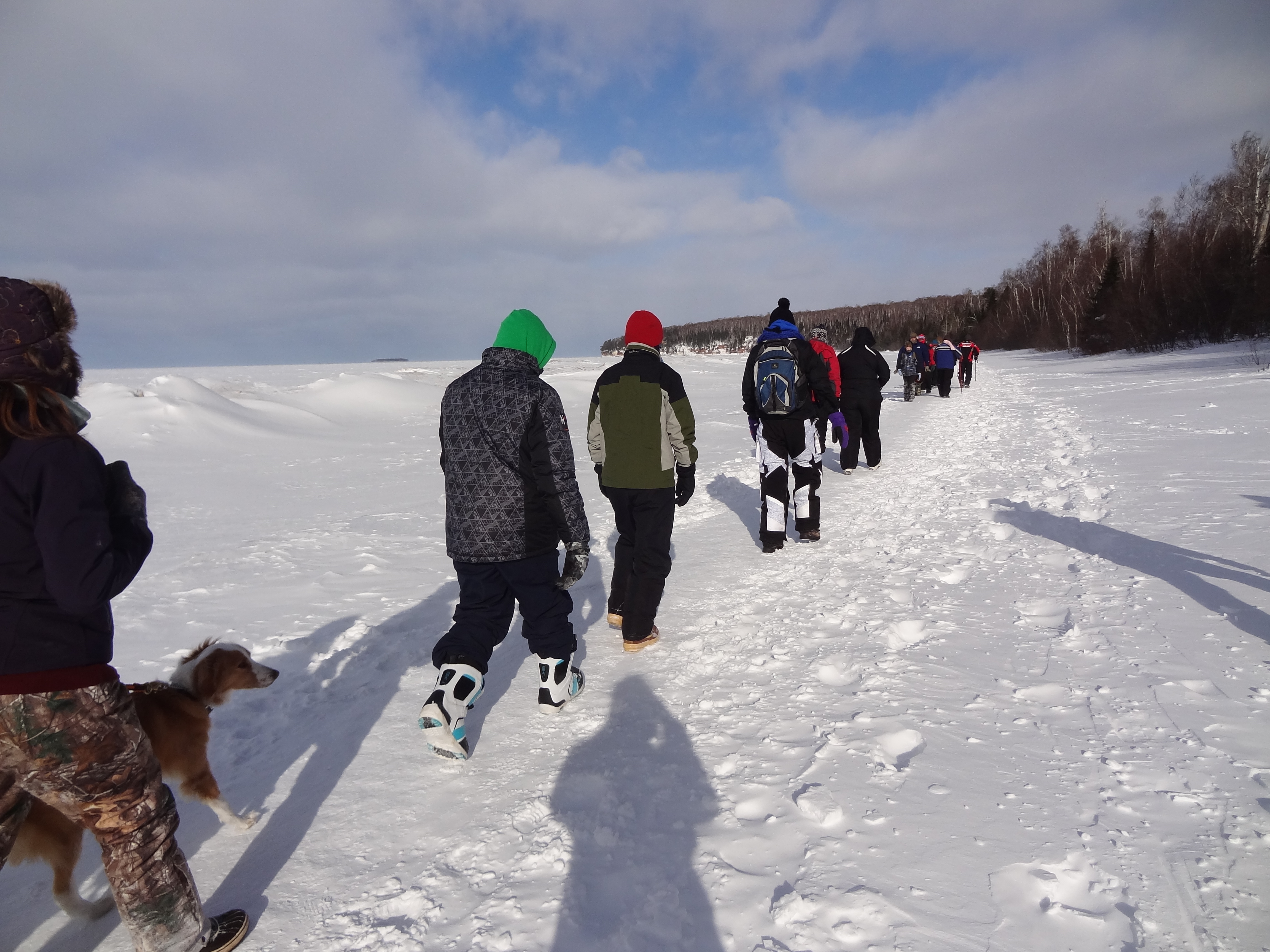
Despite the National Park Service urging people to visit another day because the wind chill was twenty-five below, my son and some friends traveled to the sea caves in the Apostle Islands National Lakeshore last weekend. We weren’t the only ones disobeying the feds to see this natural wonder on the south shore of Lake Superior. Since the parking lot was full, a line of cars was already parked on the main highway. This added ten minutes to the twenty-minute walk we were expecting across the ice to the sea caves.

Apostle Islands mainland sea caves.It was no mean feat just to get this far. My son, who is a teenager, and his friend, would have much rather stayed home on the couch, little balls wrapped in comforters, playing computer games. “Why do we have to go?” They challenged more than once. After about the fifth round of such questioning, I was reduced to, “Because you’ll have fun, dammit!”

Once they were off the couch came the trial of getting them to wear more than one layer of clothing. Exhortations about how cold it was were met with more, “Then why do we have to go?” Somehow, the mother of my son’s friend (Charlotte) and I got the boys dressed and into the car. The wind direction made the walk from our car to the lake the coldest part of the trip. Charlotte and I were surreptitiously looking at each other, questioning whether this adventure was wise, and, although they would never admit it, I could tell the boys were happy they had been forced to wear so many layers.

Once we got to the lake, we joined the others on a hard-trodden snowy path along the shore. With the wind at our backs, the sunshine helped us feel warmer in spirit than perhaps in body. After about half-a-mile into the mile-long walk, I marveled at how warm my feet were. I thought my toes would be the first to go.

DSC01358 We were joined by snowshoers, skiers, dog walkers, and people pulling sleds containing mounds of blankets, which, from the hats sticking out of them, must have contained children. For the most part, it was too cold to talk, so we walked in silence – pilgrims on our way to see a natural wonder denied us for five years due to poor ice conditions.

Walking on the winter ice is the easiest way for most people to see the caves. In the summer, it requires kayaking or canoeing skills, or paying the price for a tour boat. A hiking trail runs along the top of the caves, but the view is nowhere near as spectacular as from the water.

I had seen the caves from water level, but never in winter. This year, the formations were more intricate and extensive than most, prompting widespread media coverage that piqued interest by the masses, including Charlotte and me.

Before you venture to the caves, it’s a good idea to check with the Lakeshore’s Facebook page and check the Sea Cave Watch website, a Wisconsin Sea Grant project. The site features real-time images of the ice conditions at the caves, although the wave sensor has been pulled for the season.

frozen waterfall

A frozen waterfall.

When we reached the start of the caves, the boys were quickly taken in by opportunities to explore. Icy nooks, frozen waterfalls, tunnels, slides, and hidden alcoves proved irresistible. When it came time to go due to a commitment back home, they protested, saying they wanted to stay longer. I couldn’t help but smile, noting their change in attitude. Nature had worked its subtle magic.

I hope the lesson is lasting and that next time, it will be easier to tear my son or his friend away from their comfortable couches and computers to experience real life.

One thing I want to mention if you go: please don’t break off the icicles from the caves. The conditions that formed them are not likely to happen again this winter, and it ruins the formations for those who will come after you. Take away memories, not icicles!

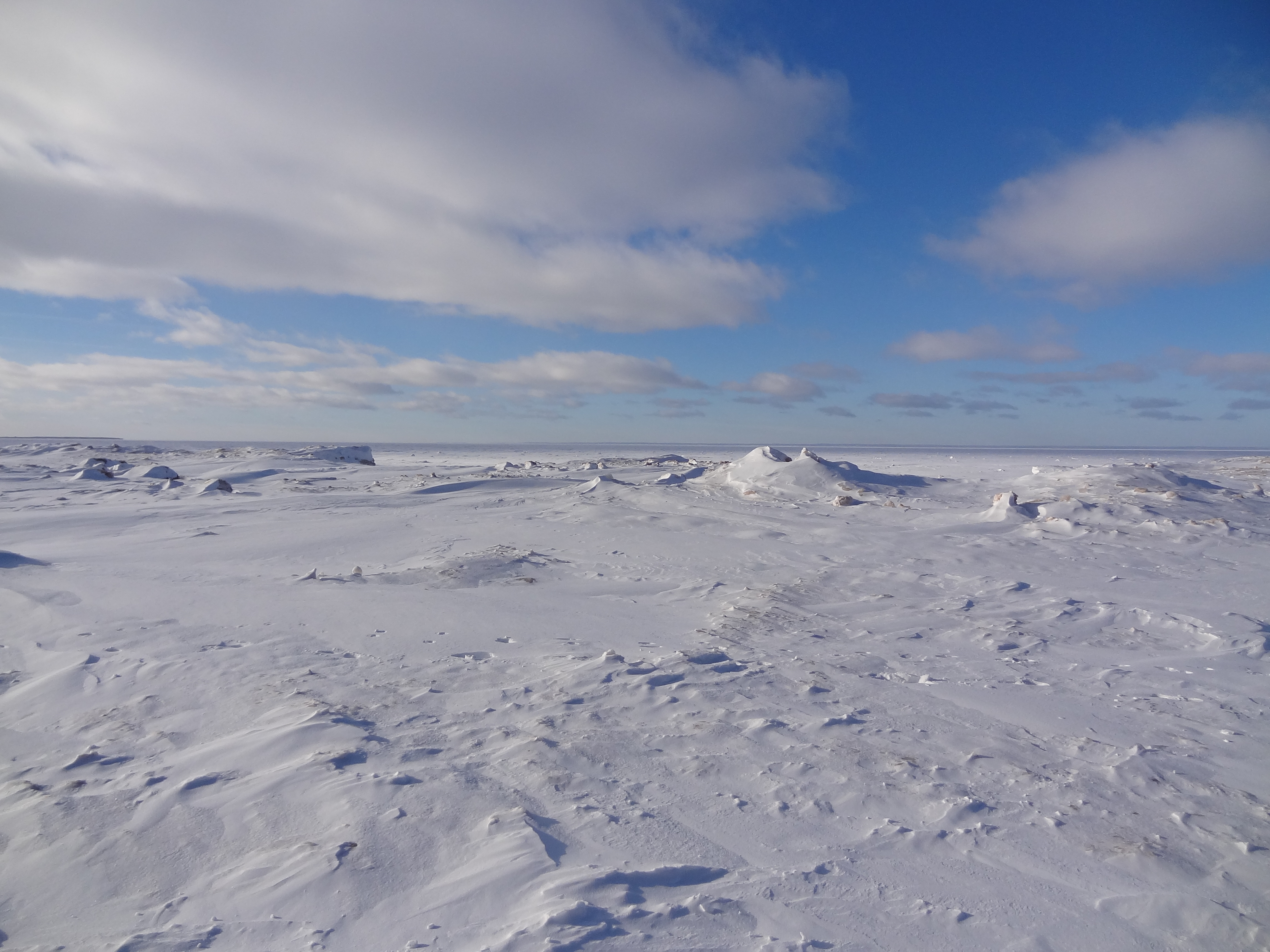
frozen Lake Superior

The view of Lake Superior when you turn away from the caves.

To Mine or Not to Mine?

Native copper. Image by Jonathan Zander, Wikimedia.

Native copper. Image by Jonathan Zander, Wikimedia.

That was the question I pondered along with about 1,500 other people and lots of rent-a-cops at a public meeting in Duluth last week. The project up for comments is an open-pit copper-nickel mine (a.k.a. sulfide mine) farther north near Ely, Minn., on the border of the Boundary Waters Canoe Area Wilderness. I have followed the development of this Polymet Corp. project for several (five?) years, trying to learn as much as I can to make informed comments as a concerned member of the community.

True to my blog’s name, this post is going to meander quite a bit as I try to gather my thoughts, so please bear with me. The problem is that copper sulfide mining has never been done successfully (from an environmental standpoint) in the U.S. These mines have a bad track record of long-lasting pollution. Even with all the new technologies the mining company proposes using with it, this mine will require 200-500 years of water treatment once its 20 years of life is over.

I was heartened to see so many people involved in the public meeting. It was well-organized and moderated. As is typical for public meetings about contentious issues, the open house portion of the meeting was designed to divide up the audience. The organizers provided tables staffed by people conversant in different specialties such as air quality, water quality, mercury, and wetlands. I had questions about how the acid-rain producing gasses from the waste rock were going to be handled, and ended up having conversations at four tables. I spoke with a consultant at the water quality table, who referred me for more information to the air quality table. They couldn’t answer my question, so referred me to the Polymet table. I also stopped at the “cultural resources” table (which was really the tribal table) just because I knew the people staffing it.

The public comment period followed, with everyone filling up a huge ballroom of the conference center. Guidelines for giving verbal comments were clearly spelled out in the meeting packet, and speakers (whose names were drawn at random) were given three minutes to say their piece. Groups of mining supporters in the audience sported royal blue round stickers (curiously, the same color as the Polymet staffers’ polo shirts), and environmental supporters wore round green stickers.

The thoughtfulness and thoroughness of people’s comments impressed me, as did the polite applause following each talk, no matter what viewpoint the speaker espoused. I heard that the applause got rowdier as the hours-long comment period progressed, but I had a dog to let out back at home, so I didn’t stay for the whole thing.

This is the mining company’s second try at an Environmental Impact Statement (EIS). The Draft EIS they released in 2009 was deemed inadequate by the state and federal agencies involved, so they issued a Supplemental Draft EIS. This version addresses some water quality concerns and waste tailings disposal issues. It also adds a necessary land exchange with the Superior National Forest, since the mine will impact National Forest lands.

If this EIS gets shot down, I’m not sure if the Polymet Corp. will get another do-over or not. What would that be called, I wonder – an Additional Supplemental Draft EIS? (Grin.)

But I have a feeling that even if the mining companies are required to add more details before the project can begin, they will complain, but they will do it. There’s a lot of money and profit riding on this project. And it’s not just this one mine – several others are in line behind it. The corporations are salivating over this copper-nickel vein, which is one of the richest untapped sources around.

As the Polymet project stands now, the mining company wants to use northern Minnesota as a guinea pig for some new techniques. Call me selfish, but I’d rather they practiced their techniques somewhere else first and proved them effective before using them here. The natural environment in that part of Minnesota is the most precious thing we have. It’s what gives the BWCA Wilderness the status of the most-visited wilderness in the lower 48 states. And this is not your grandpa’s iron ore mine — the type of pollution sulfide mines can produce is orders of magnitude different than the types an iron ore mine can produce, and this mine would be right near the wilderness.

I think that 500 years of maintenance for 20 years of jobs is too steep a price to pay for some copper. I thought it when I first heard about the project, and even with all the research and listening I’ve done that remains unchanged. Yes, I know that copper is vital for the functioning of society. Heck, I’m writing this on a computer, which I assume must have copper in it somewhere. But if we can’t extract copper without having to clean up the pollution from the operation for five centuries afterwards, maybe now is not the right time to be doing it. Maybe we should wait until mining methods improve enough that a legacy of pollution is not what’s left once the project is done.

Although the people I spoke with at the open house tables were all respectful and knowledgeable, I must admit, I trusted the folks at the tribal table the most. They are the ones that have the land and the environment as their number one priority. They are not pulled in as many competing directions as are the agency and corporate staffers.

The tribal comments are contained in Chapter 8 of the Supplemental EIS in a section reserved for “major differences of opinion.” One (of several) issues they raise is that an underground mining operation was not adequately considered. If the operation was kept totally underground, it would eliminate the impact to wetlands and surface waters, and it could limit the sulfide gas (acid-rain-producing) emissions from the site. The tribes argue that underground mining is technically feasible, “leaving only the lack of economic feasibility as the rationale used by the co-lead agencies to eliminate the alternative.”

I found the response by the co-lead agencies about underground mining arrogantly dismissive, and it backs up the tribal complaint: “The co-lead agencies believe that adequate consideration was given to the Underground Mining Alternative prior to eliminating it from further consideration . . . . “ Although they concede that an underground mine would offer “certain environmental benefits,” they contend that the “tonnage/volume and grade (amount of metals) of rock would not generate enough revenue to pay for all the costs associated with underground mining. Therefore, underground mining would not be economically feasible.”

But they offer no numbers. If I was grading this response on a school test paper, I would give it a “D” for “not showing your work.” I guess we’re just supposed to trust them on this. NOT. They also did not do a good job of “showing their work” on the details for the perpetual water treatment system that would need to be put into place.

Would Polymet find a way to make an underground mine feasible if that was the only alternative? I suspect so. If this copper mine is going to happen now with the technologies we have, this is the only alternative I would support, but this EIS gives no adequate justification for not taking that route other than “it costs too much.” I fear it will cost society and the environment too much if we don’t pursue an underground mine. Please, Minnesota Dept. of Natural Resources, send Polymet back to the drawing board!

Beware: X-C Ski Starvation Can Lead to Impaired Judgment

DSC00738

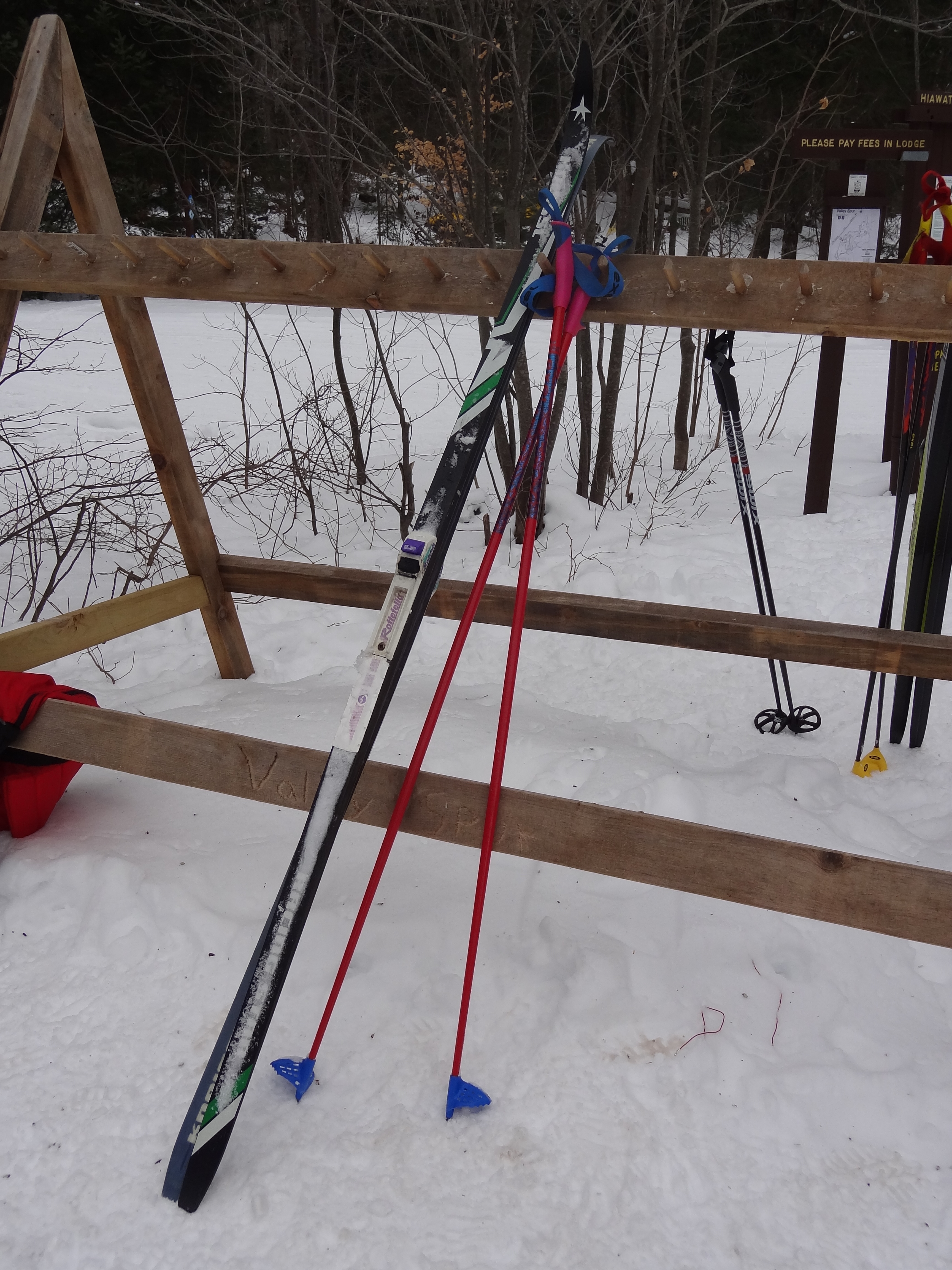
I went cross-country skiing for the first time this season today. All the stars aligned this morning and pointed me in the direction of my favorite trail in the neighborhood where I grew up. I left my teenage son and his sleepover friend with some cinnamon rolls in the oven, waxed my skis, and took off in the car for the trail. I wanted to go alone because usually, my first seasonal ski is not pretty. There’s wheezing and fumbling, and it takes a while to work out the kinks and get back into the rhythm.

A few blocks from my house, I noticed sprinkles of rain on the windshield. Rain? It’s 25 degrees, how can it be raining? Come to think of it, the weather man said something about warmer air traveling over the snow and causing a chance for fog this weekend. I hoped it would just stay a misty sprinkle, because rain wreaks proverbial havoc on x-c ski trails.

As I continued driving, the rain gradually increased from a sprinkle to scattered rain drops. This is the point where a sensible person would have turned around and gone home. I was not sensible, however. I was cross-country ski starved.

For weeks, the beautiful snow had been beckoning, but other commitments caused me to ignore the beckoning. Our recent sub-zero temps also made my fingers not too keen on outdoor activities, especially after my snowblowing frostbite incident. But I love skiing. I grew up with it and desperately needed to do something to raise my heart rate above 70 bpm after falling into winter slothfulness.

So I kept going. When I arrived at the trailhead, I was heartened to see two other vehicles parked in the lot. I’m not the only crazy one. Plus, another car pulled in right behind me. A couple of snowshoers got out of one car, deflating my sense of joint craziness just a bit. Snowshoeing is much more sensible in this weather than skiing, after all. But it was re-inflated when another skier got out and started carrying her equipment to the trailhead. All right! A fellow crazy person.

I unloaded my skis and walked over to where she was putting on her skis. She had white hair and looked about ten years older than me — old enough to have much better judgment. We discussed the bad conditions but both agreed we wanted to try skiing anyway. I tested the conditions with one ski and quickly realized I needed to put on softer wax. As I was doing that, the lady skied down the trail but quickly returned, explaining her wax was not going to work in these conditions. I offered her the use of mine, but she declined, saying it was too slippery. She was going to give up and go home.

So maybe I am the only crazy one. Undaunted, I put on my skis and took off. It was slippery – I had to duck walk up the smallest of inclines. But I did have enough kick to get into a good rhythm on the flats. I snowplowed down the hills until I felt safe enough to get into the icy track for a slick ride down. I saw one other person going the opposite way and we both grinned at each other like ski-idiots.

I skied far enough to feel winded. When I returned to my car, it was coated in a layer of ice, and the rain had become heavier. No mistaking it for a sprinkle, now. I pried open the door and headed home. On the way, my car skated through one red light (at a thankfully empty intersection). I passed two cars that had crashed into snowbanks, and everyone was crawling along at half-speed.

But I survived and made it home. I can say I finally went skiing . . . and lived to tell about it.

Good Enough for Jazz

I sent the text for my second novel off to the publisher last week, a few days earlier than the January 1 deadline they had given me. Why early? I just couldn’t look at it any more. There comes a point where editing fatigue sets in and no additional amount is going to make a difference.

Line art drawing by Pearson Scott Foresman, Wikimedia

Line art drawing by Pearson Scott Foresman, Wikimedia

After reworking it with the input of my writer’s group during the two-and-a-half years it took to create, incorporating comments from several reader friends, and then a two-month concentrated bout of editing once the story was finished, I had reached the editing-point-of-no-return.

In high school, my best friend was a saxophone player. I played French horn, and we sat next to each other in band. My friend was also in the jazz band, and when we were out gallivanting on the town or at home without our instruments, she used to sing the jazz songs to me that she was learning. That’s how I gained an appreciation for Count Basie, Woody Herman, and the like. She also shared a phrase that the conductor used to say when the musicians were tuning their instruments: “It’s good enough for jazz.”

So maybe the instruments weren’t perfectly in tune. For jazz — home of individuality and improvisation — perfect technique is eclipsed by style and feeling. Have an instrument not perfectly in tune? That’s cool, that’s all right. It’s good enough for jazz.

Of course, that would never fly in concert band. And the phrase struck the young me – who was ever striving for perfection and straight “A” grades. Not aiming for perfection went against everything I had been taught up until that point. It instilled in me the idea that sometimes, things are as perfect as they are going to get. Any additional amount of effort isn’t going to make a difference, and, in fact, it can detract from whatever you’re trying to do.

That’s what it’s like with my novel. I’ve made it as perfect as I can at this point. I am happy with it, but not overjoyed. Some parts of it I read and love, but other parts I’m not so keen about. Don’t get me wrong, I’m sure it’s better than a lot of published writing out there, but if I waited until I had the text in a form I was totally, outrageously happy with, I’d never get it off my computer and onto my publisher’s.

So it’s off. It’s gone. Another eco-mystic romance will be unleashed upon the world in June. It was so much fun to write, and I got to include some of my favorite topics, like music (although a more symphonic sort). The setting is in my home town, which I saw through new eyes during the writing, and it deals with issues dear to my heart, like climate change and endangered species recovery.

I’ll still have opportunities to tweak it (not to be confused with twerking it) before publication. But for now, it’s good enough for jazz.

Have Yourself a Very Lazy Christmas

Have yourself a very lazy Christmas.

Have yourself a very lazy Christmas.

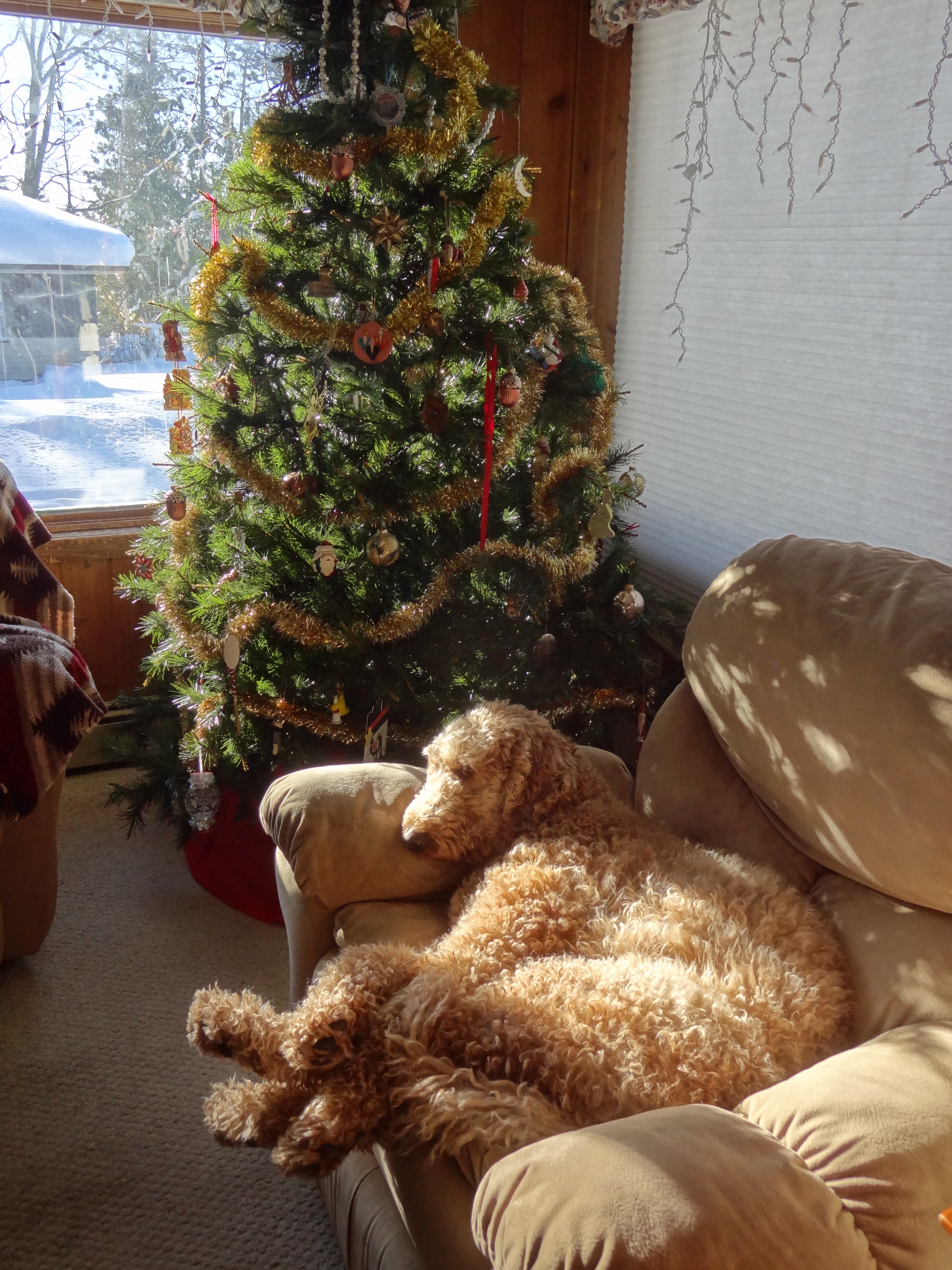
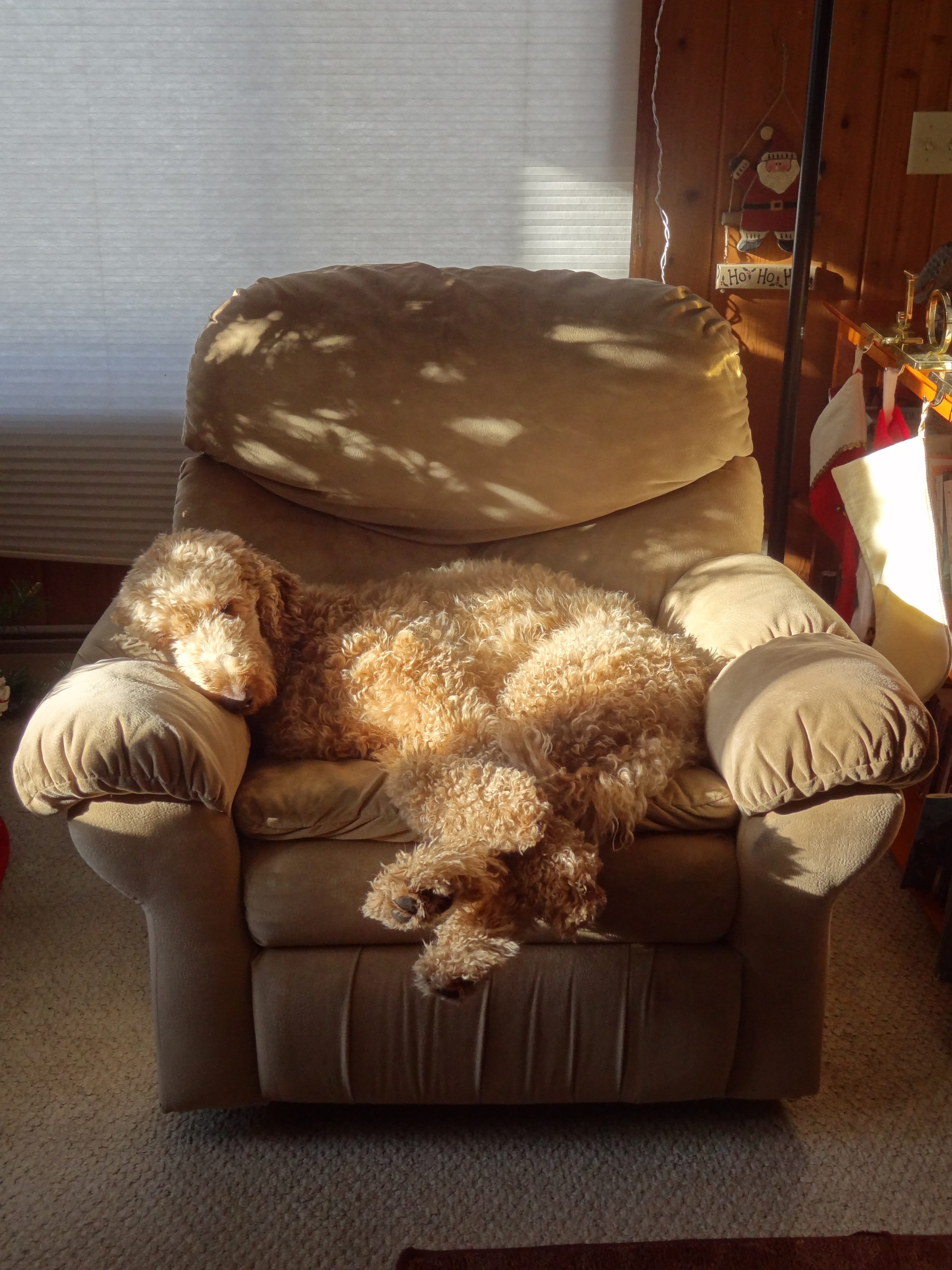
Marie is too busy wrapping presents, running errands and finishing up her novel to write her blog during Christmas break, so I, Buddy the Wonderdog, am doing it for her. I hope you enjoy these photos, which contain my wishes and thoughts for you this season, wherever you may be.

Now, if I could only get Marie to take my advice…

Wishing you warmth.

Wishing you warmth.

Wishing you cuteness.

Wishing you cuteness.

Let Santa do all the work!

Let Santa do all the work!

May the new year be bright with hope.

May your new year be bright with hope.

Ding, Dong, Rachel’s Gone! The Rachel Files: Weeks 12-14

English: George Clooney at the 2009 Venice Fil...

Sorry George. I wouldn’t even live with someone like you until I recover from my last roommate. (Photo credit: Wikipedia)

I drove my temporary roommate, Rachel, to the airport at 5:45 this morning, to visit her ailing mother in another state. She’ll return in three weeks, but plans on moving somewhere else then. The separation has taken much longer than I hoped, but it’s finally happening!

I will miss her help walking my dog, doing dishes, and assisting with housework (except when she was overzealous). But I will not miss her clogging up my plumbing (which happened again during this most recent time period), and the general weirdness that goes with her condition. I will also not miss finding her used floss on my living room floor, and, I hate to say it, she was starting to ruin my furniture with her bulk.

On the way to the airport, she apologized for her “inconsiderate and inconsistent” behavior. I tried not to discount her statement (because it’s true!) but I didn’t want her to leave feeling bad. I told her it was a learning experience for me and my son. It helped open our eyes to the challenges that some people face.

After I took Rachel’s suitcase to the ticket counter, I gave her a hug and wished her a good trip. I’m so glad she found a way to make her trip happen. I hope it will be a good experience for her, and that it will provide some closure for her with her mother.

I figure three months is a very respectable amount of time to share one’s home on a volunteer basis. My son and I are looking forward to having our home back to ourselves. I think it’s given us a new appreciation for one another, and, as I mentioned in previous entries, the experience totally cured me of the half-empty nest feelings I was having when my oldest son moved out.

Now I am likely to enjoy and guard my privacy much too fiercely. One of my girlfriends asked me if I would let George Clooney live with me if he wanted. I replied, “Not even George Clooney.” Sorry guys! (Smirk)

Marie Versus the Post Office

Mailbox In The Snow

Mailbox In The Snow (Photo credit: slgckgc)

I’ll cut to the chase, the post office wins. But let me tell you the (long) story.

Earlier this month, my neighborhood received the second-largest snowfall in local recorded history: 28 inches over two+ days. My new snowblower came in extremely handy – I am so happy to have it. But they do have their limits.

Most northerners know that snow clearing is a two-part process. You first clear the snow that nature provides, then you clear the giant five-foot snow wall that the city snowplow provides at the end of your driveway. Now, I’m not complaining. Plowed streets are important, and snow walls are just an inconvenient by-product of having passable streets.

You can try leaving the wall, but unless you drive a Hummer that can break through it, that doesn’t work so well. And if your vehicle does manage to break through it, a large speed bump or ramp is created at the end of your driveway, which tends to launch one skyward upon exit for the rest of the winter. (I know, I’ve done that.)

So after the storm, I cleared my driveway (several times), and the snow wall. That left the mailbox, which sits on a post at the edge of my property facing the street. Only the top of the box was peeking out of the aforementioned snow plow wall. I was too tired to clear it that day, so I left it until the next day. Most northerners know that the cold comes after a snowfall. I know this, too, but my faith in my new snowblower was complete. I thought it could tackle anything.

Apparently, it can’t tackle a five-foot snow plow wall that has cemented together overnight in sub-zero temperatures. After a vain attempt with the snowblower, I tackled it with a plastic shovel. Ha. Silly me.

After another day to regroup, and with no mail delivery because the mailman couldn’t drive his truck directly up to my mailbox, I got the bright idea to use a metal shovel. I have a garden spade, so I attacked the wall on a 20-below-with-windchill day. I managed to clear ten feet in from the road to the box, and about five feet up to the bottom of the mail box. Fifty square feet of clearing snow cement was enough for me. Although I knew the mailman probably couldn’t fit his truck in there, surely, he could tell a clearing attempt had been made and he could take three steps out of his truck to reach my box and deliver my mail. I had Christmas cards to send, so I plopped them in the box and put up the flag.

NOT. Those Christmas cards stayed in their lonely box for two days. I gave up and dropped them in a postbox at a local grocery store. Then, the next day, mail somehow made its way into my box. Much rejoicing ensued. But it was short-lived because it stopped after that. A few days later, I made a foray to the local post office to see if I could collect my mail there, and they informed me that my mail is handled by a more distant post office. So I drove there and told the female clerk my problem. I was pleasant enough, but I made it clear that there was no way I could clear any more of the cement snow than I already had.

After leaving me standing at the counter for ten minutes, she came back with a pile of mail and began sorting through it, taking out only the mail in my name. I let her know that mail for three other people comes to my house (my roommate’s mail and my parents’ mail). The clerk chewed me out for not telling her that in the first place, saying something like I’m lucky she brought all the mail to the counter; otherwise she would have had to go back wherever she had been for ten minutes to get the rest. I explained to her that I am not familiar with the process, but besides, what’s the big deal? She had the mail right there. She was chewing me out over something that didn’t happen.

The clerk did not appreciate my astute observation. She wouldn’t give me the other people’s mail even though the clerk working next to her said I could have it. I then told her I had power-of-attorney for my parents, so that she needed to at least give me their mail. So she did, but she wouldn’t give me my roommate’s mail. She said my roommate would have to come there in person and pick it up.

After exposure to the postal clerk’s nasty attitude, I returned home swearing war on the postal service, and to never bust my butt to clear any more snow in front of my mailbox. Ever.

My roommate has no car, so the next day I drove her to the distant post office. This clerk, who was much more reasonable, said there was no mail for us – it must be out on the truck for another delivery attempt. So we went home, empty-handed. Did we get mail delivered that day? No.

The next day (today), I’m lying in my cozy bed on a Sunday morning, hazily coming to consciousness, when I hear a snowplow go by. You know what that means, another snow wall. I rise and pull on my snowpants and jacket over my pajamas, and decide to have at it with the snowblower before the wall has a chance to settle into cement. The thermometer says 13 below, but the wind says it’s more like 36 below.

The plow wall is only about two feet high this time. My snowblower is handling it fine, but my hands are getting cold, despite two pairs of gloves covering them. I contemplate stopping and going back in the house to warm them, but that would mean driving the snowblower at least 30 feet back to my garage so I could plug it in to restart it. That seems like too much extra work, and I’m on a roll, so I just bang my hands together to encourage blood flow and keep working.

I clear my driveway, then I look at the mailbox. The plow has pushed enough cement, er . . snow, out of the way that a person could actually clear a truck-sized spot in front of the mailbox if they had the inclination.

Conceding defeat in my war with the postal service, I decide to go for it. Using a combination of the garden spade and the snowblower, I clear what darned well better be a large enough space for the mailman’s #$$%%$#& truck. My hands are getting numb, but they still function on the controls, so I just swing them around to get the blood flowing and keep going.

After 45 minutes outside, I go back inside, feeling pleased with the accomplishment — that is, until my fingers start warming up and I take off my gloves. Now, I’m no stranger to cold hands. I don’t know if it has to do with the metal controls on the blower, but this is a new kind of cold.

The tip of my middle finger on my left hand is white. If digits could scream, each one would be emitting a high shrill as the blood starts circulating again. I walk around the mudroom, bare hands in the air, breathing like I’m in a Lamaze Class. My dog is so concerned, he starts howling. Eventually, my wobbly legs suggest that I sit down. The pain is so intense, if I had eaten breakfast that morning, it would have been all over the floor. I put my head between my knees, hands still raised to slow the blood and the pain, and try not to faint.

This pain is only rivaled by the feeling of my son’s head repeatedly jamming into my inner hip during his trip down the birth canal several years ago. The dog calms down, the white tip of my finger turns pink. My hands function well enough for me to remove my boots and outer clothing.

I go lay on the couch in my pajamas, my face white as a wall of newly plowed snow, but at least the postman has no excuse now not to deliver the mail.

Close Call in a Tunnel – Guest Post

My dad

My dad

My arms and hands are so tired from shoveling and snowblowing during our recent three-day snowstorm (love my new snowblower, though!), that I thought I’d take it easy and post a story I typed up for my dad earlier this year. My dad, 95, is a retired electrical engineer (you can tell that from his writing). If he had succumbed to the incident he describes below, myself and about seven other relatives would not have been born.

This is an experience I had in about 1945 when I worked on the Great Northern Pacific Railway. My paycheck came from Great Northern but I also was assigned to work on the SPIS Railway, the Burlington Railroad and Northern Pacific.

For Great Northern, we tested rails from St. Paul to Seattle. My experience occurred while testing rails in the Cascade Tunnel in Washington. The tunnel is about eight miles long. On a clear day, a person can see the length of the tunnel, it is so straight. Our work train consisted of a gas-electric locomotive and a testing car.

Our train had three gasoline engines in service: one for the locomotive, one for the air brakes, and one for turning the 3-volt electric DC generator that was used to magnetize the track. We tested for fissures using a multi-volt meter and measuring the voltage drop along the 39 feet of rail while running 3,000 amperes through each rail.

The tunnel slanted a few degrees up to the west. The day of our test, the wind was blowing from the west, preventing natural ventilation. We were over half-way through it when the engineer let us know he needed help because of carbon monoxide gas poisoning. We had some beds in the car and he lay down in the bed. The other three other operators started passing out, too.

We decided the only choice was to keep going and run out of the tunnel. Only the conductor and I were still on our feet. The conductor didn’t know how to drive the train, so I had the job of running the locomotive to the west end of the tunnel. We made it all right and then continued onto the next town, where we got medical attention.

The doctor gave me some pills for carbon monoxide poisoning. Afterwards, I had the all-time worst headache, but recovered okay. The whole situation would have been serious if I had passed out. The conductor wouldn’t have known how to operate the locomotive, and we could have been stuck in that tunnel and died.