A Book Signing with Heart

Eye of the Wolf, Marie ZhuikovIn contrast to my previous rant about book signings, I’d like to share the story of an unusual thing that happened at my first public signing for “Eye of the Wolf.”

My eco-mystic romance novel deals with the plight of the dwindling wolf population on Isle Royale National Park in Lake Superior. About two years ago, I had just begun sitting outside the Bookstore at Fitger’s Mall in Duluth, trying to hawk my wares to the holiday shopping crowd when a tall, thin, bearded man approached.

It soon became apparent that he was deaf and could not speak. Through a combination of gestures and lip movements, he managed to convey that he didn’t have any money to buy a book but that he liked the topic. Then he pointed to the part of the description on the back of my novel about the wolves on the island being in trouble. He put his hands over his heart and made a breaking motion. Clearly, it broke his heart that the wolves were dying out. He shook my hand twice, thanking me for writing about the issue, and left.

Thinking about the short encounter during the rest of my signing caused mixed feelings. The cynical part of me wondered if he was just trying to get a free book. The innocent part berated myself for not giving him a free book. In the end, my heart fell out of my chest and writhed around on the hallway floor in a fit of sentimentality, but it was too late to do anything about it.

I’m hoping the sequel to “Eye of the Wolf” will be published in about a year. If I see that guy again, I’m giving him a free book. Maybe one of each.

Are Book Signings Worth Risking Your Personal Safety?

I almost got attacked over this book!

I almost got attacked over this book!

My writing group met today and we got on the topic of book signings and how some big-name authors seem to dislike them. Perhaps you’ve experienced authors who barely look at you while signing your book and who seem unhappy to be doing so. My writer friends and I supposed it could get tiresome writing one’s autograph all those times, and perhaps the authors were only doing signings because it was in their contract – but come on! All the dozens of people in line are your fans. You are getting money from them. Is it too hard to give them back a bit of appreciation?

Apparently, it was too much to ask for prehistoric romance writer Jean Auel when I saw her in Minneapolis in the mid-1980s. She looked like she would rather be anywhere than the B. Dalton Bookstore downtown. I decided to go to her signing of “The Mammoth Hunters,” after work one dark winter evening even though two months before when I last left work late, I had gotten robbed at knifepoint while scraping the ice off the back window of my car.

After that incident, I had switched parking lots, but it soon proved too expensive on my student’s wages and I returned to the lot where the robbery occurred. I figured as long as I left work at 5 p.m. when everyone else did, I was less likely to be a target.

Returning to the lot at around 7 p.m. from the unsatisfactory book signing, I was vigilant. I walked purposefully and locked my car door as soon as I entered, a habit I’d gotten into after the robbery. As I started the car, I looked into the rearview mirror. A man was approaching, wearing a ski mask. Even though his face was covered this time, he looked very similar to my robber and he was wearing the same jacket.

I froze in terror. The robber had stolen my spare car key along with my wallet before. What if he remembered what my car looked like and he happened to have the key with him? I clutched the door handle, trying to keep it shut in case he had the key. The man walked up to my car, jiggled my door handle, and when it wouldn’t open, kept walking as if nothing had happened.

Relief flooded me. Then I got mad. There were no cars parked between me and him. My car was already running. I raced the engine and took off toward him. Was I going to scare him or run him over? I know I wanted to run him down for what he put me through, but at the last moment, I swerved. I couldn’t do it.

And apparently, I didn’t scare him very much either. After filing my police report, I found out later that he ended up attacking and raping another woman in the parking lot that night. A few nights later he got picked up. Eventually, there was a trial. Of half a dozen of his victims who filed police reports, I was the only one who saw his face, so I was the “star” witness. He got five years in jail.

Although almost thirty years have passed, my hands are shaking as I type this entry. See what trouble being a book fan can get you into? Seems the least an author can do is to smile and say “thank you” to their admirers. You never know what they went through to get to your signing or what might happen to them afterwards.

Stay tuned for a more pleasant book signing story coming next!

Whaz SUP? Stand Up Paddleboarding in Duluth

Stand Up Paddleboarding

Proof that a 50-year-old can learn new tricks!

It all started so innocently. I was biking on the end of Duluth’s Park Point Recreation Area when I noticed the sign for Stand Up Paddleboard (SUP) rental. I’d been wanting to try SUP for a couple of years so I stopped and spoke with the attendant. The price was right ($15 for an hour) so I made a reservation for the next day.

The day dawned with perfect SUP weather – calm waters and gorgeous sunshine. But I wondered what I’d gotten myself into. Despite being half-mermaid, I’m a warm-water mermaid. The harbor water was 73 degrees – pretty warm for these parts, but what if I fell in? It would be shocking. And what if I made a fool of myself? Leave it to me to practice Fall Down Paddleboarding. Okay, this last one was only a slight fear. I’ve been on the planet long enough and made myself a fool several times over and survived. But still . . .

I went anyway. At the boat access, I met Heather with North Shore SUP. She had me sign a waiver (“SUP is an inherently dangerous sport,” blah, blah, blah) and read some rules, the first of which was, “Always SUP with a partner.” Guess I broke that one right off. I’d tried to find someone to join me during the past 24 hours, but my friends were all otherwise occupied. Heather let me go anyway.

Next, Heather’s partner Garrett gave me some cursory instruction. I could tell he’s given the spiel many times; he went a little fast for a newbie like me, but the other issue was that he was instructing me on land. I learn better by doing. But I must have absorbed enough because I’m still alive to write this. And, by the way, he’s one of the few certified SUP instructors in the country, so he knows what he’s talking about.

Heather introduced me to my board and instructed me how to get on it and stand up, and what to do if I fell. Then she cast me adrift. I’m thinking, Shouldn’t there be more to this? You mean no one’s going to come out with me for a few minutes to make sure I stay alive? Nope.

I kneeled on the board for a few moments until I got a feel for how it handled, then I took a big breath and stood. My first impression was one of tallness. I’m used to seeing the water from sitting in a canoe or kayak. My second impression was that it takes a lot of leg and core body power to make the board move. My legs began shaking in no time. BUT I didn’t fall.

Accompanied by distant cheers from a different paddling event across the way (the Dragon Boat Festival on Barker’s Island), I tooled along the shore, going into a bay where several sailboats were moored. I had this sudden sense of freedom. I could go over and see the sailboats more closely if I wanted, which I did. After a while circling the bay and enjoying the bright stands of purple loosestrife (a pretty, but invasive plant), I reversed direction and headed toward a nearby seaplane base.

Two balance challenges presented themselves along the way. One was a rock that my board scraped against and the other was the wake of a boat. Although not the most graceful, I remained upright. I made it part way to the base when my legs told me it would be a good idea to turn back and stop soon. So I did, enjoying the feeling of walking on water along the way.

Once I beached the board, I got to talk to Heather. She said that SUP can burn 500-800 calories per hour and that she is also a yoga instructor. She even teaches a yoga SUP class – imagine that! Both of my new interests combined. With the strength required for yoga poses combined with the workout of balancing on water, I bet a person must burn about 1,000 calories doing SUP yoga.

Heather mentioned she and Garrett used to run a whitewater rafting business out West. I didn’t get the chance to ask her what drew them to Duluth because another customer was waiting to buy one of their end-of-the-season boards.

Once home, my mom called me to be sure a storm didn’t blow me and my board away.

I guess the lesson is: don’t let your fears hold you back. Use common sense, but don’t sit out life!

Half-Empty Nest Syndrome, Part II

English: a bird nest Français : un nid d'oiseau

A bird nest  (Photo credit: Wikipedia)

Here’s an update for those of you just dying to know. The lady I’m thinking of helping looked at my son’s former room last week. She liked it, but even more important, she liked my dog, so she’s planning to move in sometime in the next week or two.

We both disclosed our quirks so that we shouldn’t be too surprised by each other. I also explained to her my youngest son’s worries, and we discussed those. I’m sure other things will come up as we go along (don’t they always?) but I feel fairly confident that it will be an okay thing on a temporary basis. I have yet to speak with the people she is currently living with – I’m sure they’ll have some useful insights – but the move is a “go.”

I don’t intend to turn this blog into a blow-by-blow account of the experience, but I will write about any pertinent issues that arise. To protect my roommate’s privacy, I shall hereby call her by the name Rachel.

In the meantime, the weather here in northeastern Minnesota is wonderful. Hope you can get out and enjoy it wherever you are!

Half-Empty Nest Syndrome

An Osprey landing in the nest at Boy Scout Cam...

Osprey nest (credit: Wikipedia).

My oldest son moved out a few weeks ago. Although I’m happy that he’s fledged from the parental nest, it happened a bit sooner than I was expecting and it’s left me adrift, floundering, unanchored, if you will.

My youngest son is with me every other week, which leaves me alone (except for my dog) during those times. The thing is I have not been alone on a regular basis for 21 years. Just like becoming a parent takes adjustment, becoming an un-parent takes adjustment, too. And both seem to happen just as suddenly.

I am finding that I don’t like being alone at home. I am too used to helping other people and having someone around. Granted, I like my privacy and I am an introvert, so I don’t usually seek out crowds, but family is different. They are meaningful people and I like to surround myself with meaning.

So I’ve decided to open my home to a stranger. “Okay,” you’re saying, “does not compute.” How is opening my home to a stranger like living with a family member? Well, it does have some meaning. We both go to the same church so we have the same philosophy in that respect. And she is in a bind. She needs a temporary place to stay while awaiting a place of her own.

Will it work? I hope so. I rented a room in someone’s house once for 8 months, so I am familiar with the logistics. It was not a harmonious home – the mom was not a happy person and liked to criticize the teenage daughter harshly. And I found out toward the end that the house wasn’t even hers. She was renting it from somebody else. Yuk. I could not wait to get out of there after a while.

I’d like to think that my home is pretty mellow and happy. And this lady likes big dogs, so that part should work out well. But I suppose there are all sorts of opportunities for disaster and conflict. This person is coming to look at my son’s room later this week. If she doesn’t like it, so be it. If she does, my nest will no longer be half-empty. And if we end up disliking each other, it’s only temporary. Stay tuned . . . .

Touring the Tall Ships on a “Short” Ship

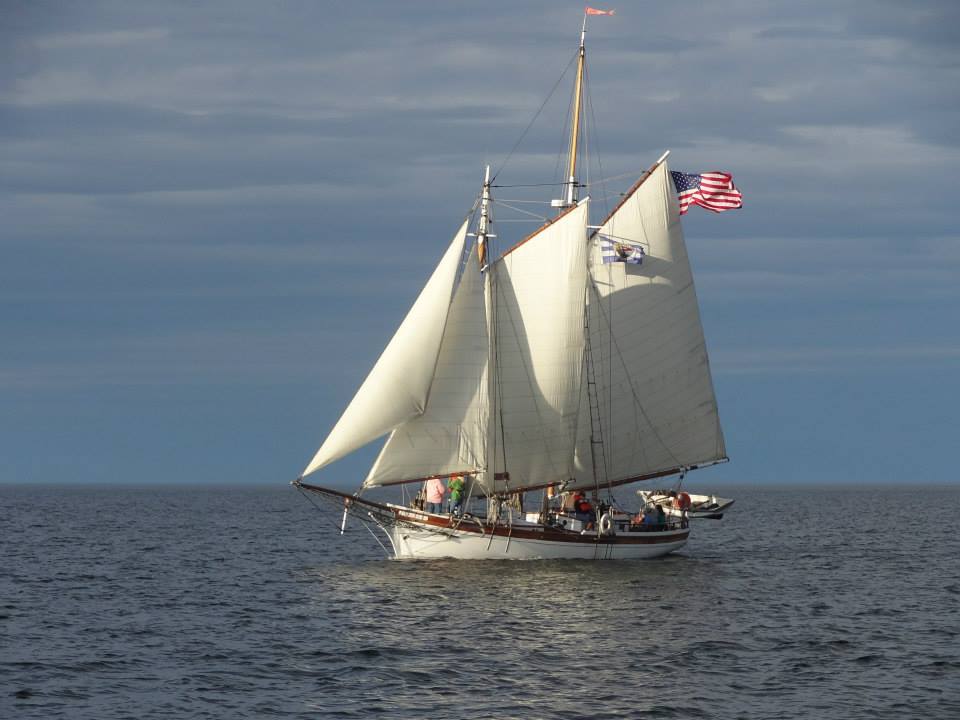
The Schooner Coaster JJ

The Schooner Coaster JJ

I arrived at the Duluth Tall Ships Festival just when it was closing. Workers were pounding and pulling stakes out of parking lot asphalt once covered by tents, and festival T-shirts were being offered for half-off by a desperately vocal vendor.

But the nine tall ships were still in port and that’s what I was after. I was looking forward to a close-up view of the tall ships via a short, regular sailboat berthed in the ship canal in downtown Duluth. However, the craft was neither short nor regular but a gorgeous 42-foot Beneteau with cabin floors varnished so thickly it was like walking on water, and a nimbleness of handling that belied its more than adequate size. Named the Makena, the craft was one of two in the Moon Shadow Sailing fleet, which offers tours of Lake Superior and the harbor.

Joining me were a couple from Rochester, Minn., and a couple from Duluth who were friends of the captain. The sun finally smiled upon the festival, a light breeze blew; it was a perfect night for sailing. With a warning ring, the Canal Park pedestrian bridge raised and we were off.

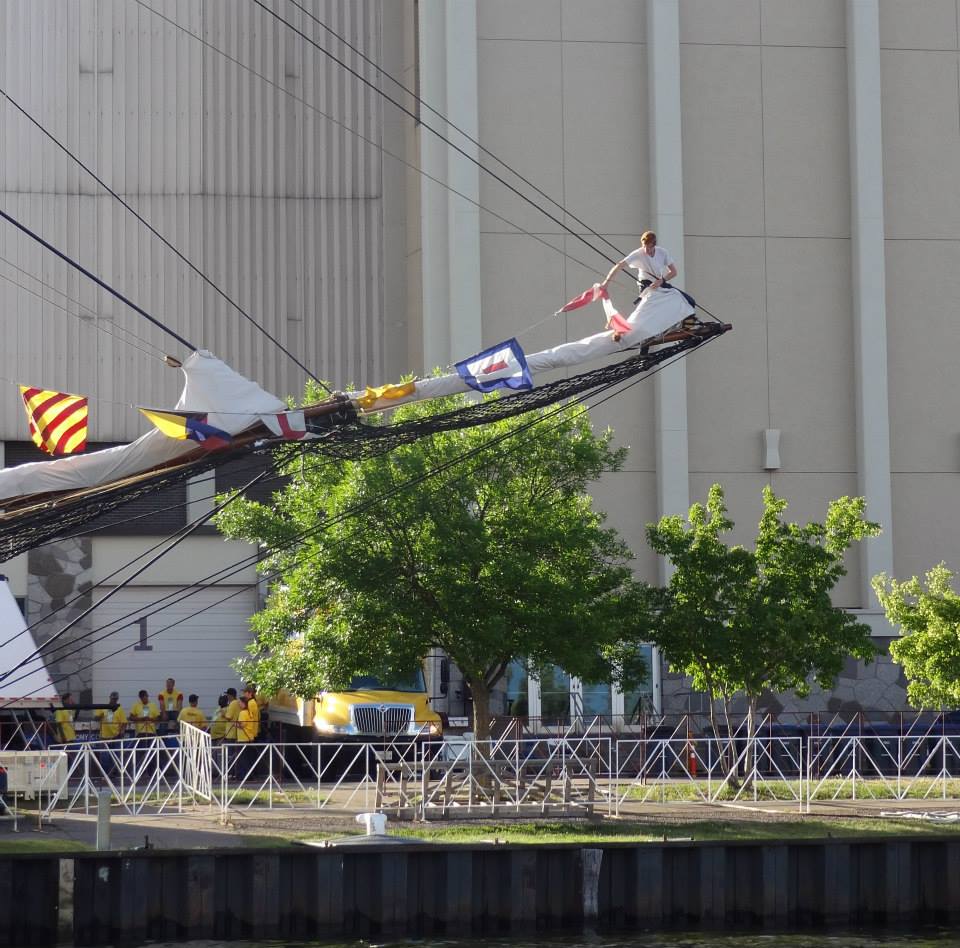
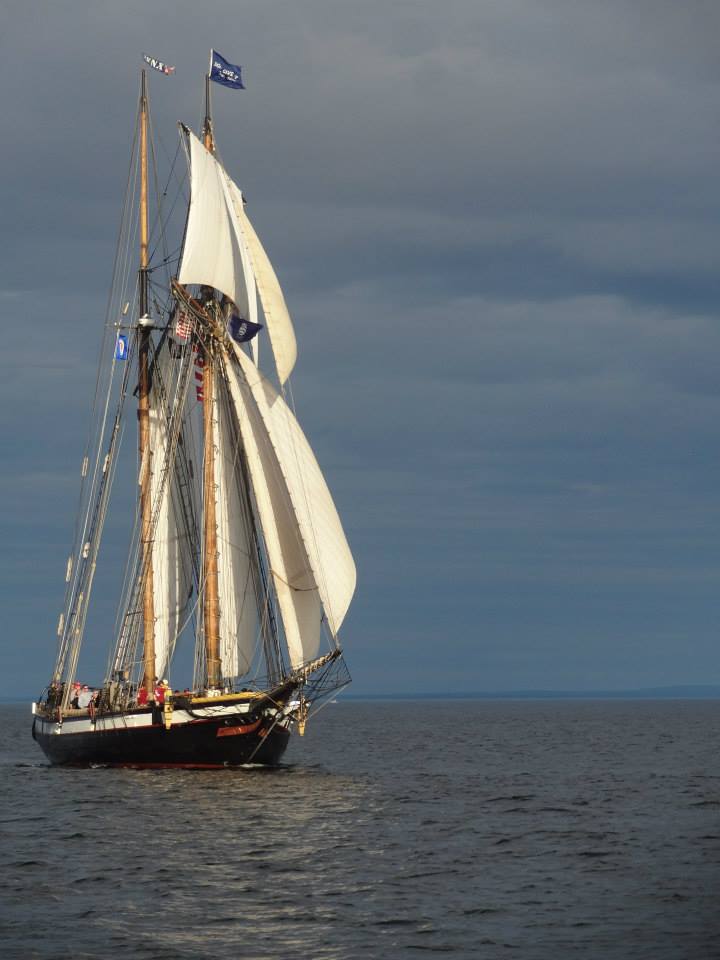
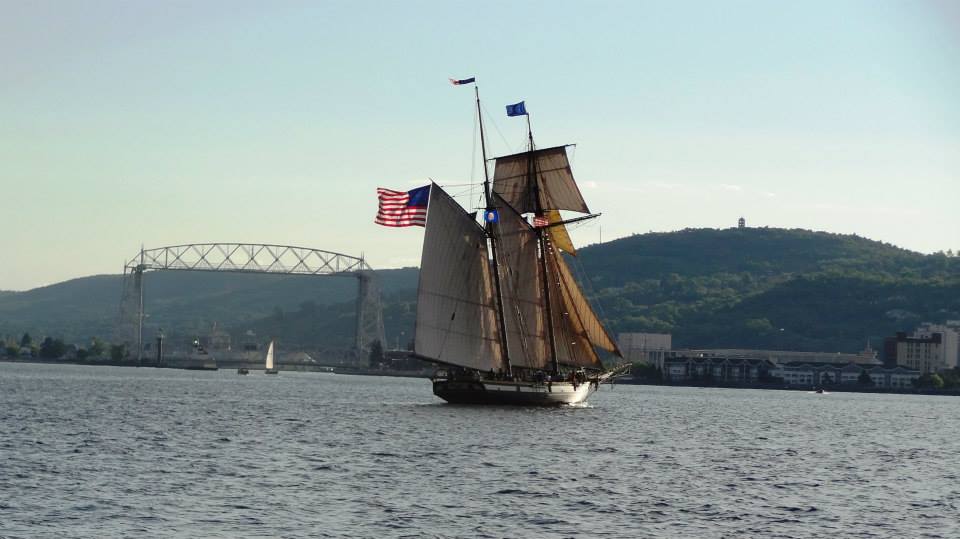
Pictures will probably do more justice to the experience than words. Let me just say that the company was outstanding and it was an experience I won’t soon forget. Happy Sailing!

A sailor out on a (sailing) limb.

A sailor out on a (sailing) limb.

The Privateer Lynx


The Privateer Lynx and the Aerial Lift Bridge

The Privateer Lynx and the Aerial Lift Bridge

Captain Marie (and friend)

Captain Marie (and friend)

The Aerial Lift Bridge welcomes us back.

The Aerial Lift Bridge welcomes us back.

The Lark Descended

This is a quick update to my previous post about the Lark, a replica of a 1913 sea plane that was built in Duluth and celebrated recently with a weekend festival. I am sad to say that the Lark crash-landed in the Duluth-Superior Harbor yesterday as its builders were testing its flight capabilities. News reports say the craft was “totaled,” but that no one was hurt in the crash.

I do believe yesterday was one of the first times the Lark was airborne. So the good news is that the builders know it can fly now. The bad news is that the landing needs some work! A small group of dedicated aviation enthusiasts labored over 5 years to build the replica, which attracted attention nationwide. I sincerely hope the crew takes time to mourn the damage but then gets back to work to rebuild it again. I’m sure the community will gather behind the effort and will want to help in some way.

The Lark Ascending

The Lark of Duluth
The Lark, a “flying boat” that first took off in Duluth, MN.

I wanted to share some photos I took this weekend at the “Lark O’ the Lake” Festival, which was held in Duluth. The Lark is a replica of a seaplane that was first flown in Duluth 100 years ago. It was called a flying boat back then. During the winter the original Lark was transported to Florida where it served as the world’s first airliner – transporting passengers between St. Petersburg and Tampa.

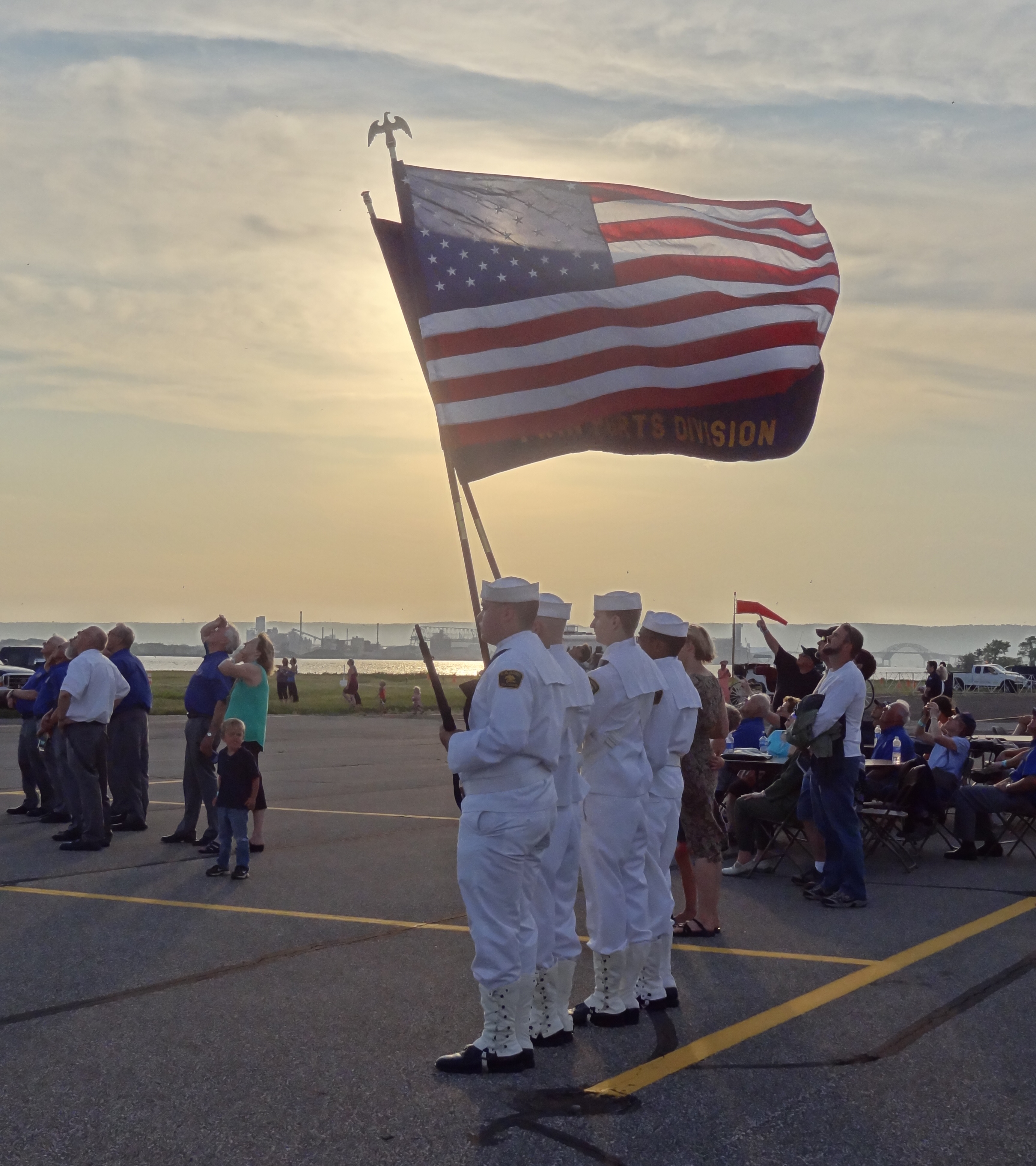
The Color Guard at sunset, Sky Harbor Airport, Duluth, MN

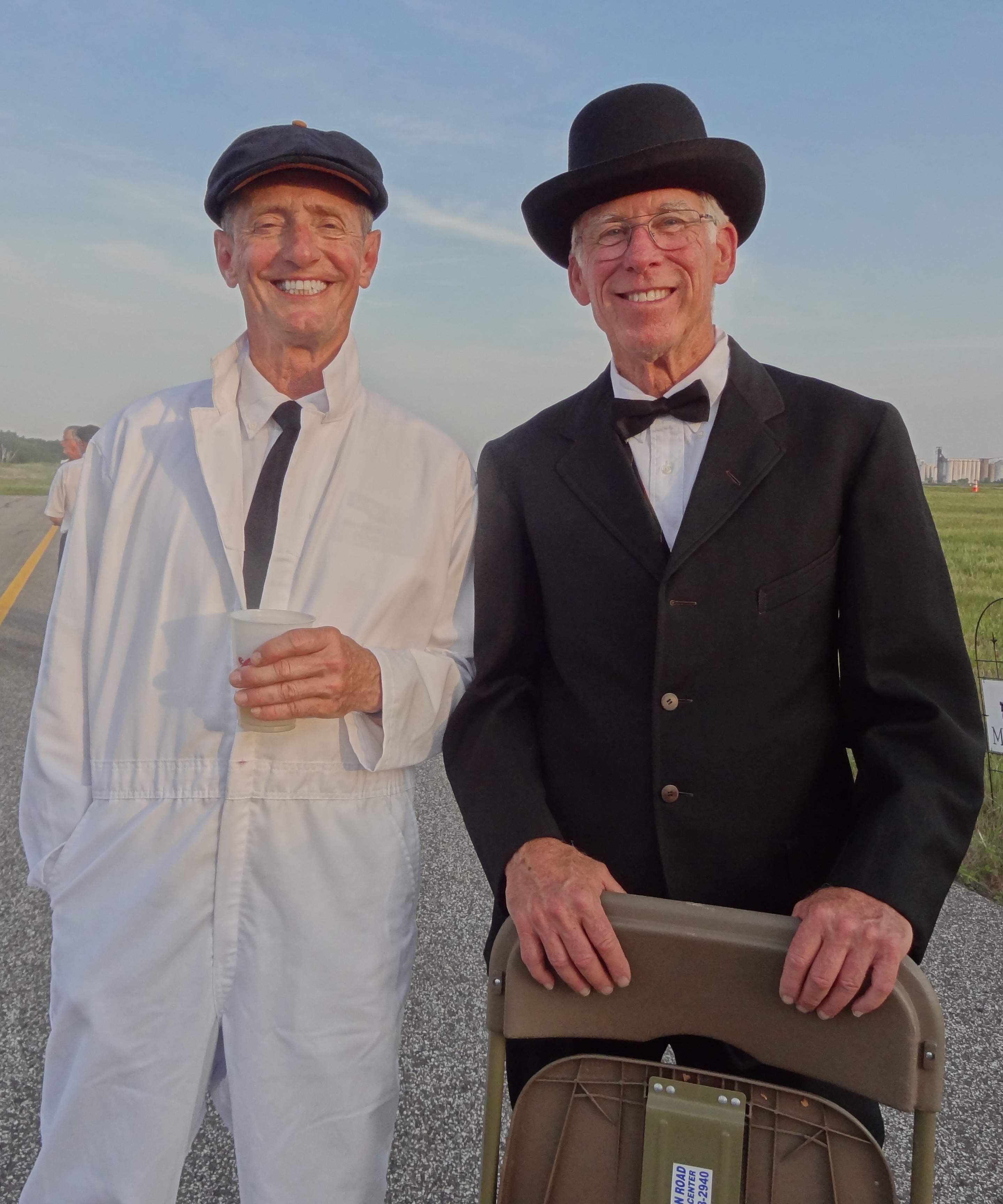
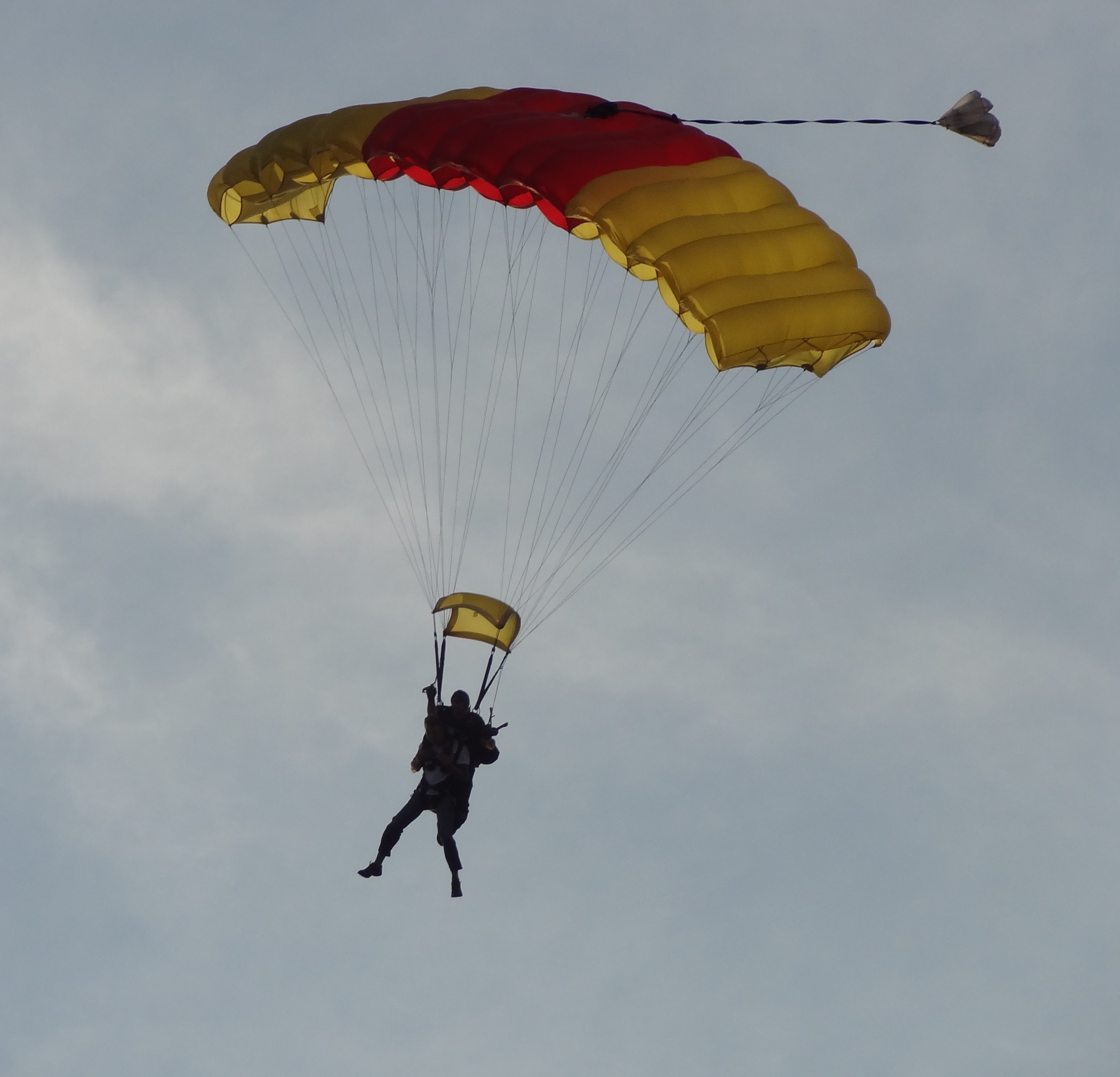
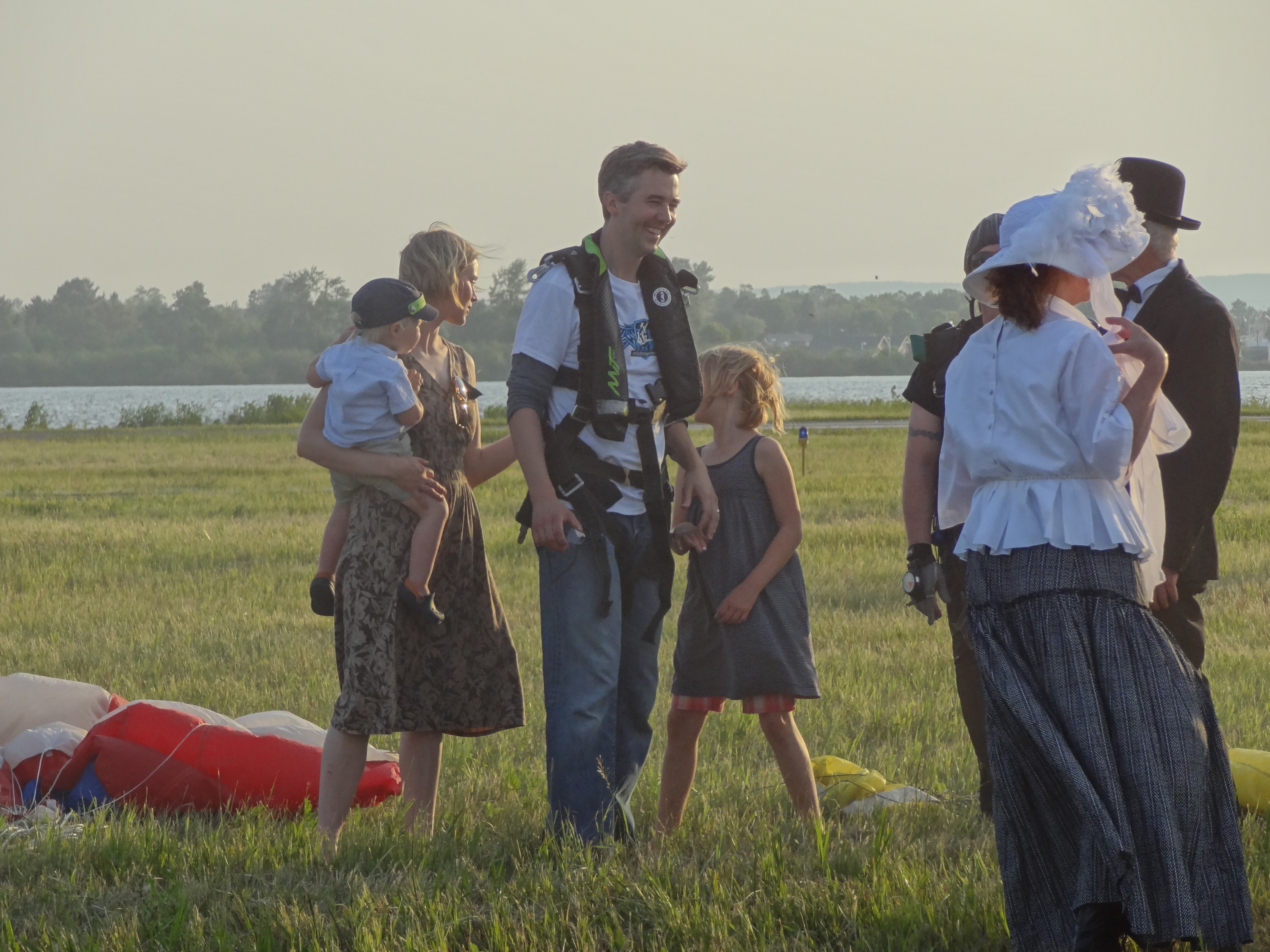
Several of my friends were involved in rebuilding the Lark, a labor of love and ingenuity. The builders worked from photos, written descriptions and studying other similar seaplanes. Last weekend’s festival was held to remind Duluthians of their place in aviation history and to show off the flying boat. I attended the opening ceremony of the three-day event, which was complete with skydivers (including the intrepid Mayor of Duluth), spectators in vintage clothing, a band, and carriage rides. The skydivers in my pictures all landed safely, however, later in the weekend, a couple of them ended up landing in Lake Superior. Only in Duluth!

Michael Gardonio, Thomas Betts

Mr. Gardonio and Mr. Betts were among the builders of the Lark.


Duluth Mayor Don Ness in a tandem sky dive for the opening ceremonies of the Lark O'the Lake Festival.

Duluth Mayor Don Ness in a tandem sky dive for the opening ceremonies of the Lark O’the Lake Festival.

Duluth Mayor Don Ness skydive

Duluth Mayor Don Ness, glad to be alive after his skydive. His family is behind him.

Why I Miss Wildland Fire Fighting

Me getting ready to go to Yosemite National Park to fight fires, 1990.

Me getting ready to go to Yosemite National Park to fight fires, 1990.

The tragedy of the Prescott hotshot crew has me remembering my short stint as a wildfire-fighting “hero.” It started when I worked for the U.S. Forest Service (Superior National Forest in MN). I began my Forest Service career as a volunteer, first on the ranger district in Grand Marais (wilderness trail crew) and then on the district in Cook (photojournalist).

When I was in Cook, I got my first taste for what wildland firefighters do by delivering lunches from town to the fire camp as a driver. I enjoyed the obvious camaraderie of the camp and hearing the fire fighters’ stories. A few years later when I got a paying job with the Forest Service and the annual call came out for Fire Guard School, I was eager to sign up. I attended a week-long training camp conducted by Forest Service and Minnesota DNR staff. Notable among my classmates was Minnesota-based writer Peter Leschak, who went on to write several books about his later experiences. We learned how to dig trenches and sat in a lot of classes about fire behavior and the function of the fire organization.

We also learned how to deploy our ‘shake-and-bake’ fire shelters. These are the devices that every fire fighter carries in case they get caught by the fire and have no other options. You shake it open, climb into it, and drop to the ground on your stomach with the shelter over you (at least that’s how we were taught back then, it might be different now). If the fire passes over you, that’s where the baking begins. The shelters are better than nothing, but truthfully, not by much.

A few months later Yosemite National Park in California started burning. It was my first, and only, on-the-ground firefighting experience. Our first job was to allay the fears of the residents of Foresta, Calif., whose town had been partially burned by the fire. Several trees still smoldered on a blackened hillside above the town and it was our task to put them out . . . at night in the dark, despite the possibility of hidden mine shafts and unexploded dynamite. After a few hours of hiking up the 90-degree incline, we found the snags and put them out. We “skied” down the loose dirt only to hear that the day crew had been called off the mountain because conditions were “too dangerous.” Maybe the fire conditions were worse during the day, but we found it ironic.The crew and I resting during our stint in a spike camp in Yosemite. I'm to the right.
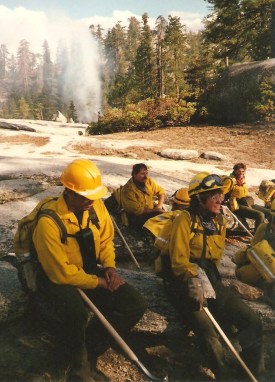
 
The crew and I resting during our stint in a spike camp in Yosemite. I’m to the right.


My recollection of most of the rest of the experience centers around trudging through a foot of soot, which collected under my fingernails, in my pores, and despite wearing a bandanna — in my nose, and more worrisome, in my lungs. Morning in the fire camp was a cacophony of coughing and hacking. A few days later, I ended up in a clinic with a fever and a racing heartbeat. I was diagnosed with bronchitis and instructed to rest for a day and take medication. I rested in a spike camp that my crew was helicoptered into, high on the mountainside. Wouldn’t you know it, that was the day our crew built a fire line right next to the flames, and I missed it.

We worked out of the spike camp for a few more days (I did get to see some flames) and then we were ‘coptered back to the main camp, where we got a day of R & R (rest and relaxation). We took our first showers in 5 days and got a bus tour of Yosemite, which had been closed because of the fire, but recently reopened for tourists.

As we walked around the park attractions in our distinctive yellow and olive green fire clothes, people shouted their thanks to us for working on the fires. They wanted to shake our hands and pat us on the backs. With a start, I realized they considered us heroes. We certainly didn’t feel like heroes, we were just doing the job we were trained for.

Because I’m susceptible to pneumonia, I figured I’d have trouble with my lungs if I kept fighting fires directly, so after Yosemite, I started training to be a fire information officer. These are the people who work with the media and local organizations to get news about the fire out to the public. That way, I had all the fun of the fire camp but none of the soot. I ended up helping with fires in Colorado and Minnesota, but when I left the Forest Service for another job, my fire career ended.

I miss it. I like working in small groups to get things done. And I’ll probably never be recognized as a hero again. But the hero thing is not why I, or I assume, the Prescott hotshot crew fought fires. You do it because you like it, you do it to be part of a team, it’s exciting, a bit dangerous, and sometimes even fun. You wouldn’t want to be anywhere else. Rest in peace, guys.

Me and the flames. I'm smiling behind my bandana.

Me and the flames. I’m smiling behind my bandanna.

It’s Climate Change, Stupid!

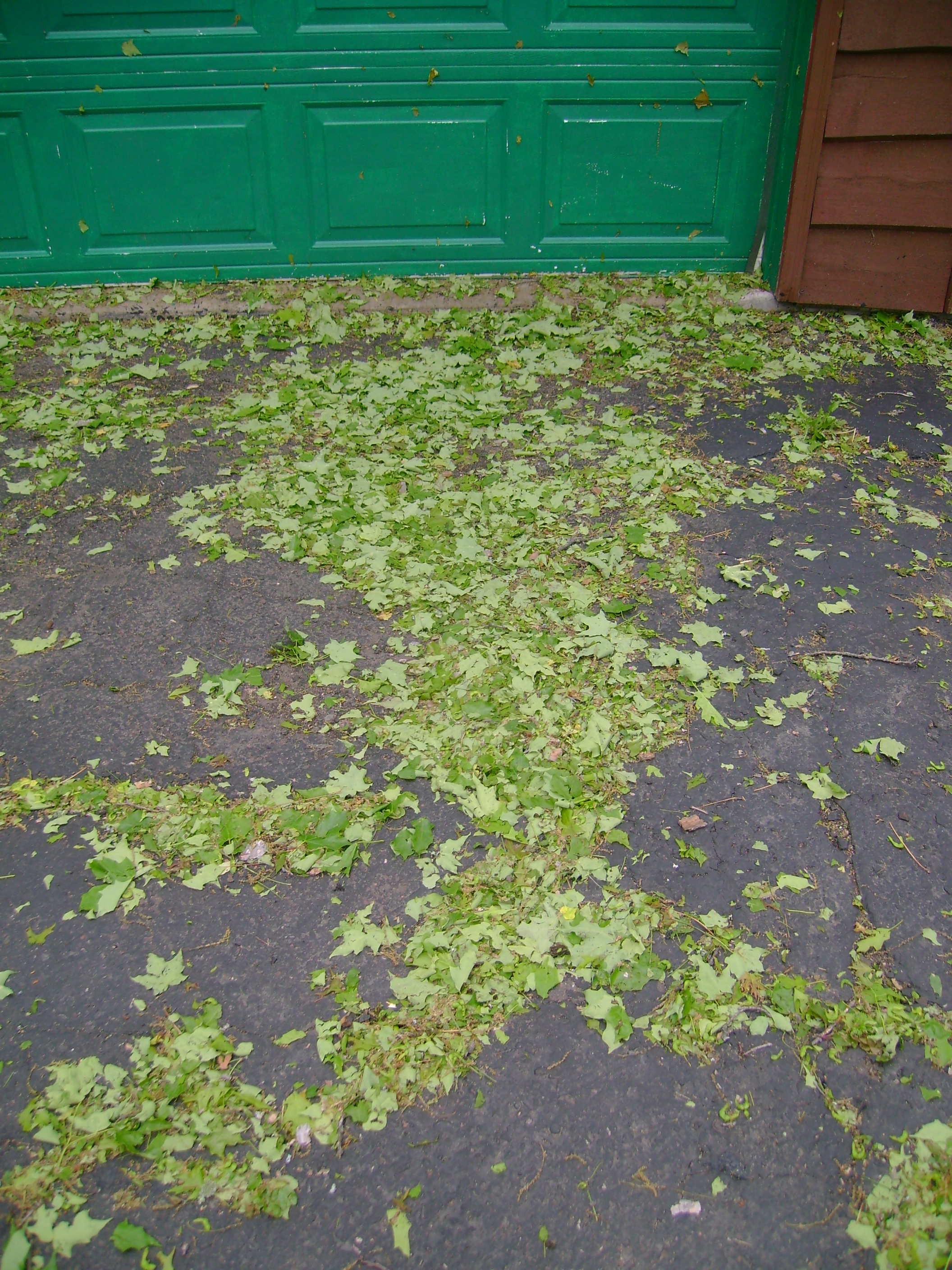
Shredded leaves from a hail storm litter my driveway.

Shredded leaves from a hail storm litter my driveway.

Even though it only lasted a few minutes, the hail squall that passed through my neighborhood earlier this week did a respectable amount of damage. Winds up to 70 mph toppled stately trees, people lost power – some for up to 22 hours (I lost power for about 12), and hail shredded the leaves that had finally popped out on the trees, creating a green carpet over people’s driveways and the roads.

Loss of power and loss of my routine reminded me of just how vulnerable we are to even the littlest whims of nature. I would have had to eat a cold supper but for the propane-fueled camp stove tucked away in my basement. With all our experience with snowstorms, perhaps northerners are more used to weathering weather disruptions than those in lower regions of the country, but we are far from immune. With no televisions and computers for distraction, my neighbors all took to the street to compare notes and make sure everyone was okay.

Unfortunately, violent storms like this are only likely to increase in the future. A few days after the storm, I attended a public forum called “A Flood of Options – Adapting to Climate Change,” which was hosted by the St. Louis River Alliance and the Izaak Walton League, and sponsored by the Minnesota Coastal Program and Freshwater Future. Speaker Mark Seely, the Minnesota State Climatologist, said that one of the things we can expect with climate change (and it’s happening now) is an increased amount of moisture from violent storms. There’s already been a 31 percent increase in this type of precipitation for the Great Lakes.

Higher temperatures are another thing that are happening, especially in the northern latitudes. The number of warm nights is increasing and so it goes that the number of cold nights is decreasing. Other lovely things to ponder are that mean monthly temperatures across the U.S. in 2012 were the highest since 1895 (I am guessing this is when stable record-keeping started). Not just by a little bit. Seely said they, “Obliterated all other year’s” temps. The same was true for Canada last year. Also, the value of economic losses due to weather/climate disasters has increased since 1980 due to hurricanes, floods, drought, etc. Seely said this is a motivator for communities to talk about climate adaptation. “Our climate vulnerability is becoming more and more clear to us.”

Other consequences include a longer mold and allergy season, increased frequency of freeze/thaw cycles, shorter time of ice cover on lakes (which leads to an increase in winter evaporation), and a longer growing season (which might not be all bad for northern Minnesota). The goal of the workshop was to inform participants about the impacts of climate change and provide ideas about how communities can adapt to it. It is a precursor to later workshops that will get more into advocacy and more specific adaptation measures.

During the question and answer session after his talk, Seely said, “Doing nothing is not an option. We’re obligated to think about this and to do something in our roles as citizens.” Chris Kleist, stormwater manager for the City of Duluth, also spoke, outlining the impacts of last year’s “500-year-flood” on the city. He estimates that long-term restoration will cost $12.6 million and the city has received about $2 million so far.

A look around the audience of 25 made it clear to me the presenters were preaching to the choir. Most of the others are already active in the environmental community. The guy seated next to me was so into the topic, he quoted from notes he wrote on a napkin. The type of approach used in the presentations wasn’t going to change anyone’s mind who wasn’t a climate-change believer. I know enough about behavior change theory to understand that.

Please forgive my Bill Clinton-esque title to this piece. I hope use of the word “stupid” does not offend, but I could not resist! It gets frustrating sometimes reading/hearing some of the refutations to climate change produced by nay-sayers. One of the problems is that those involved in climate change research and education do not employ effective communication techniques to get their messages across.

Spouting facts does not spur people to action. What does spur action and advocacy is storytelling, emotion, and spontaneity combined with some key message pre-testing and removing barriers to action. One of my favorite proponents to this approach is Randy Olson, a marine biologist-turned-filmmaker. He produced a movie about climate change (“Sizzle: A Global Warming Comedy), and wrote a book that tries to help scientists get their message across more effectively to the public (“Don’t Be Such a Scientist”). Seely did introduce a bit of emotion, but it wasn’t until the end of his talk, in the question and answer session. By then, an hour after his presentation began, it was too late.

It’s my sincere hope that the later climate workshops in this series integrate more effective communication techniques. And if you have a scientific message to get out to the public, please, consult with a trained communicator. It can only help! I’ll get down off my soapbox now.