She Sings Sea Shanties Down by the Shore

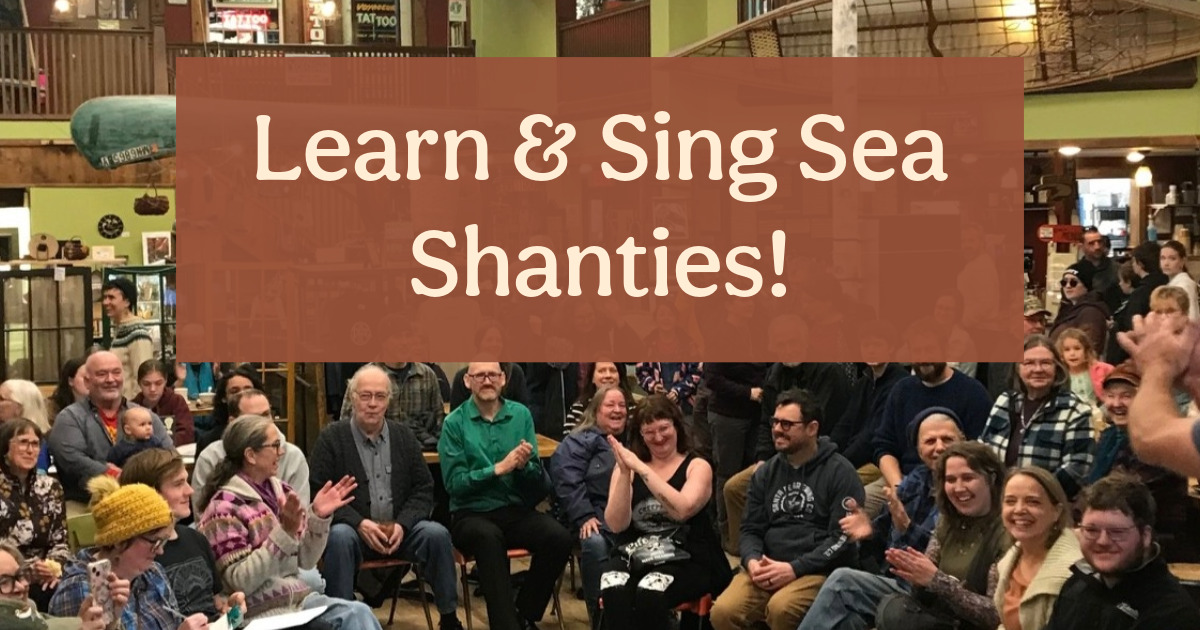
The Duluth, Minnesota, All Hands sea shanty group. Image courtesy of the Duluth Folk School.

At the end of 2025, a Duluthian named Paul Webster revived a sea shanty singing group in town. The group originally began during COVID when a bunch of friends (around 10) would gather outside in parking lots and sing together (to allow for social distancing, etc.) As conditions improved, the group disbanded, but Paul wanted to breathe life back into it.

In a story in Northern Wilds magazine, Paul said, “We realized there are not enough places around Duluth where adults can make music together in a casual, informal way.” He and the other founders of the group partnered with the Duluth Folk School to hold singing sessions every first and third Sunday afternoon (3 – 4 p.m.), where people can explore the stories behind the music as well as sing.

Before the first session, the local newspaper did a story about the gathering. That, and perhaps the maritime history of our area, led to a turnout of over one hundred people! I was one of those people. Besides, it just sounded like a stupidly fun thing to do on a Sunday afternoon, I am familiar with many shanties from my time on the Audubon Expedition Institute. While we were traveling around North America on a yellow school bus learning about environmental issues, we often sang shanties to pass the time. I missed that and welcomed this opportunity to revisit my past. It’s also a nod to my Maine privateer ancestors.

Paul seemed a bit overwhelmed by the large turnout, which has not diminished as the sessions continued. Jumping from 10 to 100 people is a big leap! I think it indicates he found the right audience through the folk school and is meeting a pent-up demand for socialization.

At the first meeting, Paul asked for ideas for a group name. We ended up voting in “All Hands,” which I love because it’s inclusive and is the same name we used to call our staff meetings at Wisconsin Sea Grant, where I used to work.

As the name implies, all are welcome to the sessions. There’s no cost, although a donation basket is passed during the sessions. Singing is optional, but I don’t know how a person could resist joining these catchy working and drinking songs. The school’s café is open during the sessions, so people can have refreshments while they sing. I recommend their hard cider.

Sea shanties (American) or chanties (British) are a genre of traditional folk songs that aided in the timing of various tasks on sea-faring vessels. Many reference a task at hand or life at sea, including missing loved ones or dangers of the job. Some of my favorites are “Barrett’s Privateers,” “Leave Her Johnny,” and “Rolling Down to Old Maui.” People take turns leading the shanties, but Paul leads most. People can suggest their favorite shanties, as well. I’m hoping we get nimble enough as a group to sing “Hoist up the Thing,” someday (a comical modern shanty about a know-nothing captain).

I haven’t missed a session since they began. Ironically, I’m missing one today because Russ and I are going to a concert. But I’ll be at the next session, fate willing. I feel good after singing and it’s something fun to do during the bleak midwinter. The songs offer a good perspective on hardships, both historical and present.

Reflecting on my experience with this group, I am struck by how music can transform a simple gathering into a source of strength and belonging. Singing together, whether with friends or strangers, reminds me that even in challenging times, we can find joy, solidarity, and shared purpose. As our voices blend in harmony, the tradition of sea shanties continues to connect us not just to the past, but to each other.
The Dolphin Who Ate Fish at my Feet

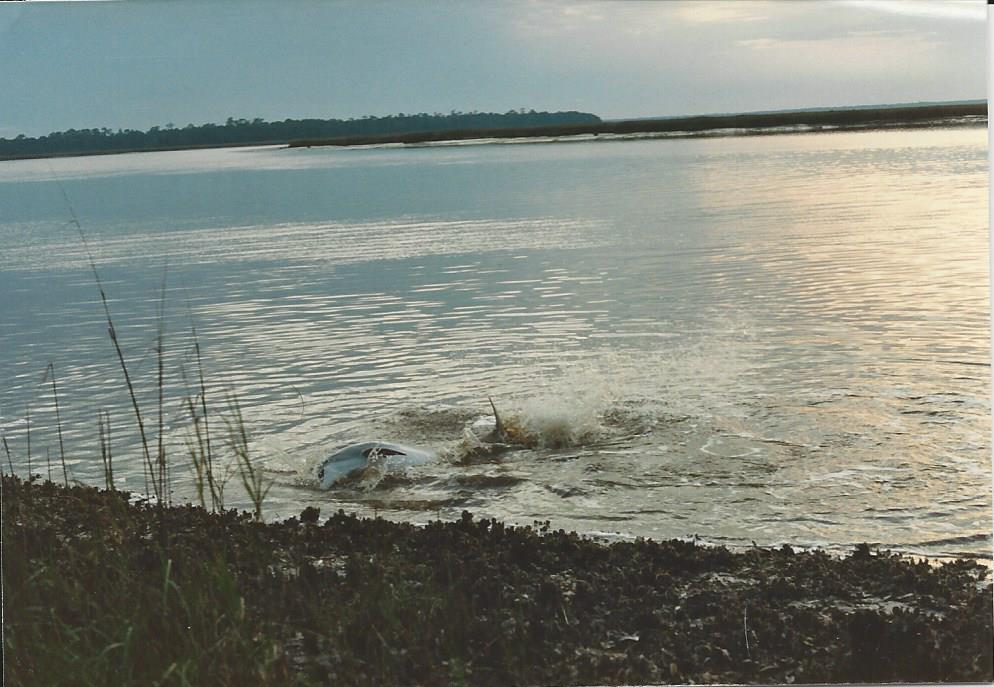
A dolphin beaching itself to catch fish it has pushed ashore. Cumberland Island, Georgia.

A dolphin beaching itself to catch fish it has pushed ashore. Cumberland Island, Georgia.

I once lived outside for nine months (September – May), traveling North America. The experience was through the Audubon Expedition Institute and I was working toward a graduate degree in environmental education.

While on the trip I learned I was not there for the academics but for the adventure. And there certainly was a lot of adventure. It was 1986-87 and we travelled from New York City up the East Coast to Maine and Nova Scotia, Canada. Then we took the ferry to Newfoundland. We went all the way to the northern tip (you can see Labrador and icebergs from there) and then headed back south, eventually reaching all the way to Key Largo, Fla. From there we headed West, making it to Canyonlands Utah before the yellow school bus that was our home had a fatal break down.

Along the way we tented and cooked our meals over campstoves. We sometimes lived for a week in a fishing village, or among Buddhist monks or uranium miners. We visited with local experts, learning about environmental issues and how the locals thought about the land and sea. We took hikes, canoe trips, and snorkeling excursions; swam with manatees; danced contra dances; joined pow wows and local organic fairs; and were privy to Native American ceremonies.

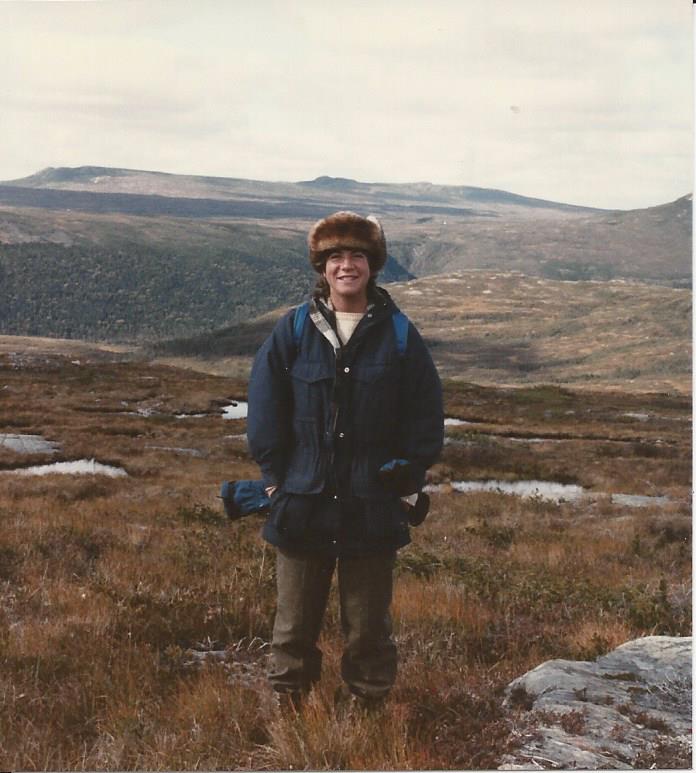
Me on the moors in Newfoundland, looking for caribou, circa 1986.

Me on the moors in Newfoundland, looking for caribou, circa 1986.

I got so acclimated to living outdoors that when I came home to my parents for breaks, I slept in the backyard, even when it was twenty below. My body was so used to revving up with heat at night, that I got too hot sleeping indoors. I also remember when we visited a medicine man in Boston (Slow Turtle). Twenty of us crowded into a skyscraper conference room to speak with him. That, combined with being in a heated space, made me feel faint. I had to go outside to cool off for a while.

The experience was like a combination of “Survivor” and one of those bachelor/bachelorette reality TV shows. We began with twenty-four people, but through a process of mostly self-elimination, ended up with twenty.

All this is a long preamble to what I really want to write about, which is an experience I had during the expedition with a dolphin on Cumberland Island National Seashore in Georgia. We spent several days on the island among wild horses and armadillos, hiking from one end to the other, mostly along the beach on the Atlantic side. On the other side of the island, a salt marsh and river separate it from the mainland. One evening, we camped on the mainland side. We had eaten dinner and several of us were hanging out by the water as the sun started to set.

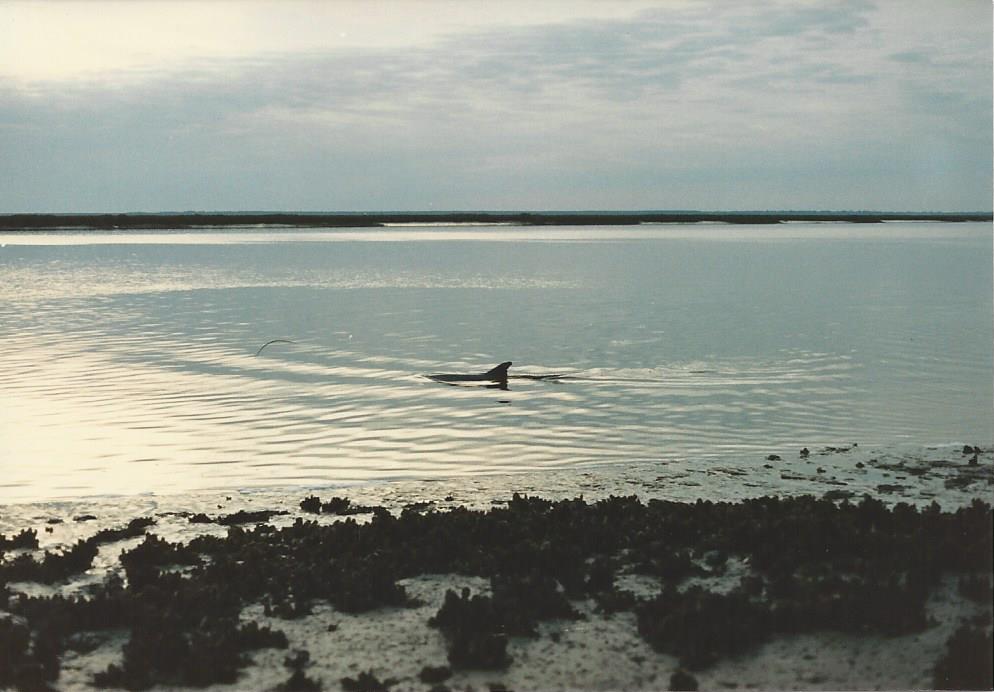
Then the dolphins came. Two of them swam alongside the muddy banks of the river, peeling off into circles. We didn’t realize it until later, but the dolphins were corralling fish with their bodies. When enough were captured in their water circle, they rushed toward the bank. The fish were stranded on the bank, easy pickings for a dolphin who doesn’t mind a little air time itself. . I learned later that this behavior is indeed called strand feeding. Here’s what I wrote in my journal:

We run down to the Brickhill River like lunatics, insatiable for a rare glimpse into the workings of nature. We try not to get too close and scare the dolphin away, but it’s hard. We follow the dolphin as it swims along the shore, the deep mud sucking at our shoes.

The mammal tips on its side and looks at us with a dark gray eye – two, three times. It corrals the fish and rushes the bank, its whole body breaching again. We go mad. Paul jumps up and down, saying he’s seen God. I click photos like I’ve got a roll of thirty-six instead of only four photos left. Our oohs and ahhs echo across the sunset.

The dolphin wriggles its body back into the water comfortably. It swims back upriver and down. Its companion across the way breathes five times in quick succession, and with that signal, they depart.

Despite the shortage of film in my old-fashioned 35mm Olympus, I managed to snap a good picture of the dolphin doing its work. And it was just a few feet away from me – close enough for us to see eye-to-eye. It’s an experience I’ll never forget. It filled us with wonder and awe, and we felt a connection beyond time, beyond words to the place and each other.

Bye bye dolphin!

Bye bye dolphin!