The next day of our Road Scholar trip took us from our base in Bayeux on a bus ride to the beaches of Normandy. The beaches used to be a vacation area, but due to WWII, are forever known as places of conflict and, ultimately, victory for the Allies.
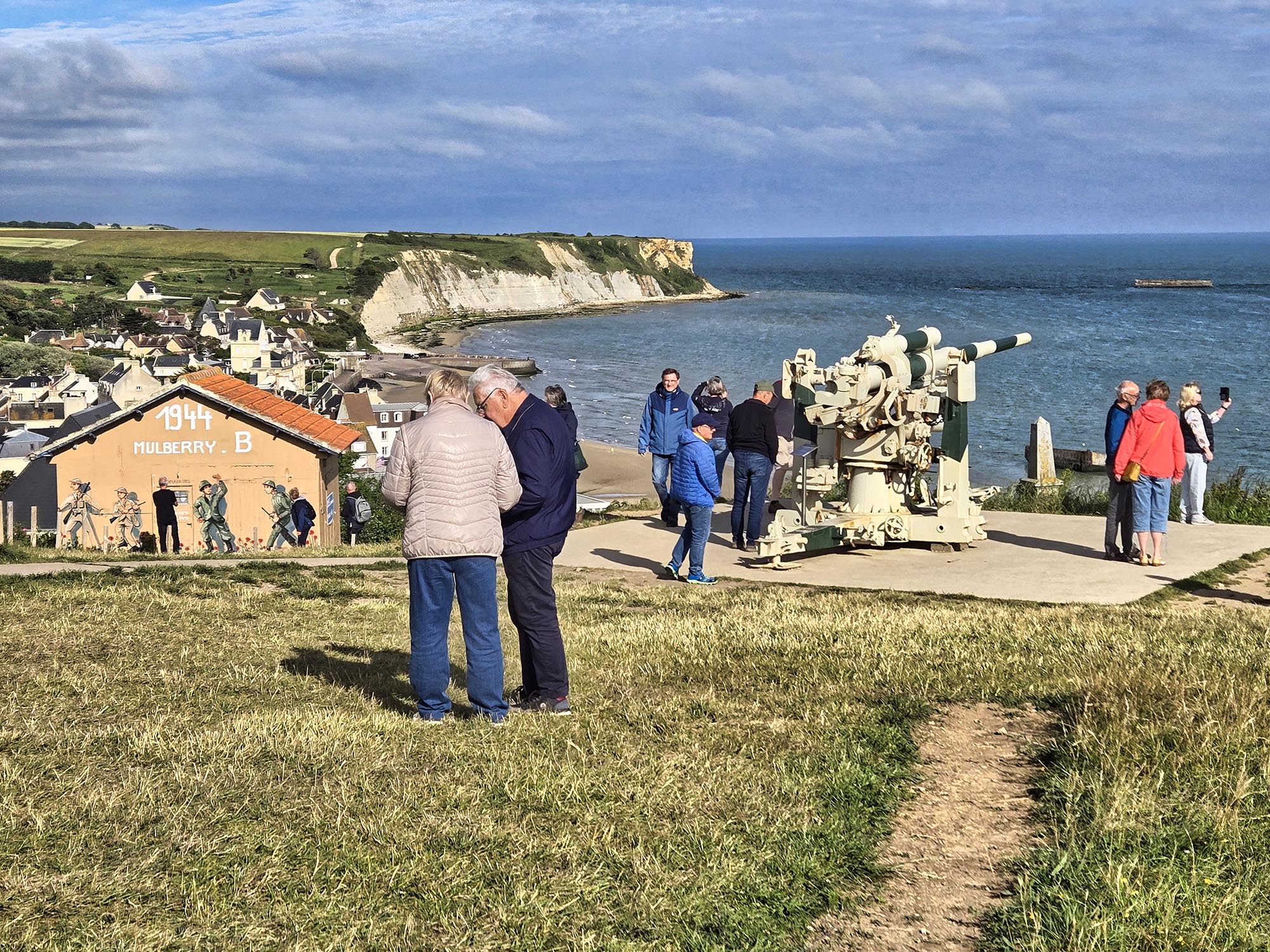
Our first stop was a bluff above Omaha Beach. This is where most of the casualties occurred, earning it the nickname of bloody beach. We viewed the remnants of an artificial harbor known as Mulberry A. Our local guide explained that the floating breakwaters, pontoons, and piers for the harbor were secretly built over six months in England and then towed across the English Channel. The components were put into place to protect Allied supply ships from storms and enemy fire while allowing them to dock and unload cargo close to the shore.
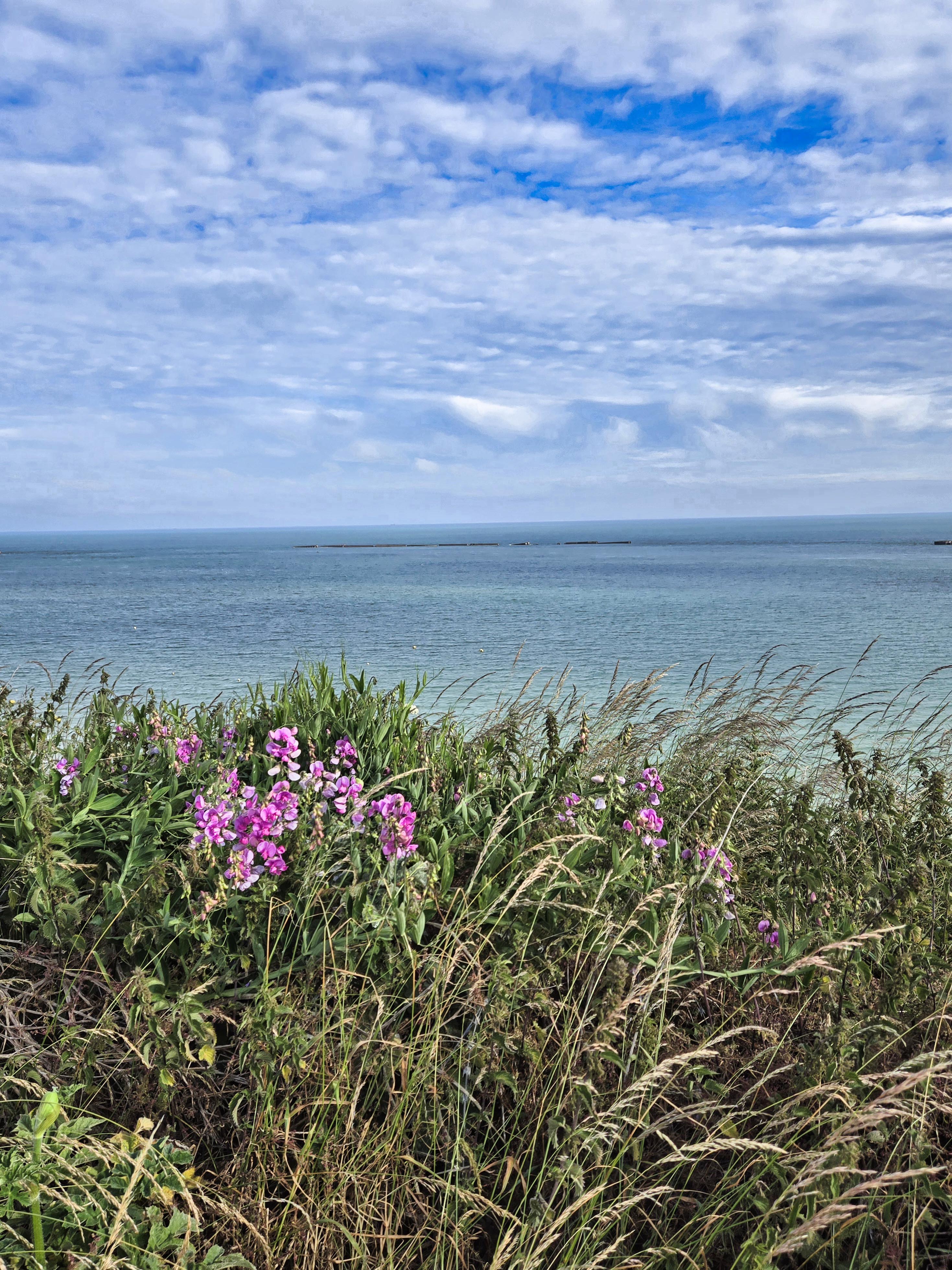
Mulberry A was built soon after the June 6, 1944, D-Day landings. However, a violent storm on June 19–22, 1944, damaged the four-mile-long harbor severely, forcing the Allied forces to rely on open-beach landings on Omaha Beach for the rest of the campaign. Another artificial harbor was built at Gold Beach (Mulberry B), and it lasted longer.
There really wasn’t that much left of the harbor – just thin broken lines of concrete offshore. Although the view may have been unimpressive, the thought of all the effort and planning that went into constructing them was impactful.
The American Cemetery was our next stop. More than 9,000 soldiers are buried on immaculate grounds. We walked the grounds and visited another bluff that overlooks Omaha Beach. As we gazed at the now-peaceful scene, it was hard to imagine the violence that occurred on D-Day.
Our group then gathered around the “Spirit of American Youth” statue for a ceremony. One of our tour members, David, did the honors of laying a bouquet of flowers at the base of the statue. David is a U.S. Army veteran. During WWII, his father was stationed in Scotland in the Navy. He was part of a highly classified small team of men who worked on a top-secret project that involved developing reconnaissance film used in preparation for D-Day. David said he was thrilled and humbled to be part of the ceremony and to celebrate his father’s contribution.
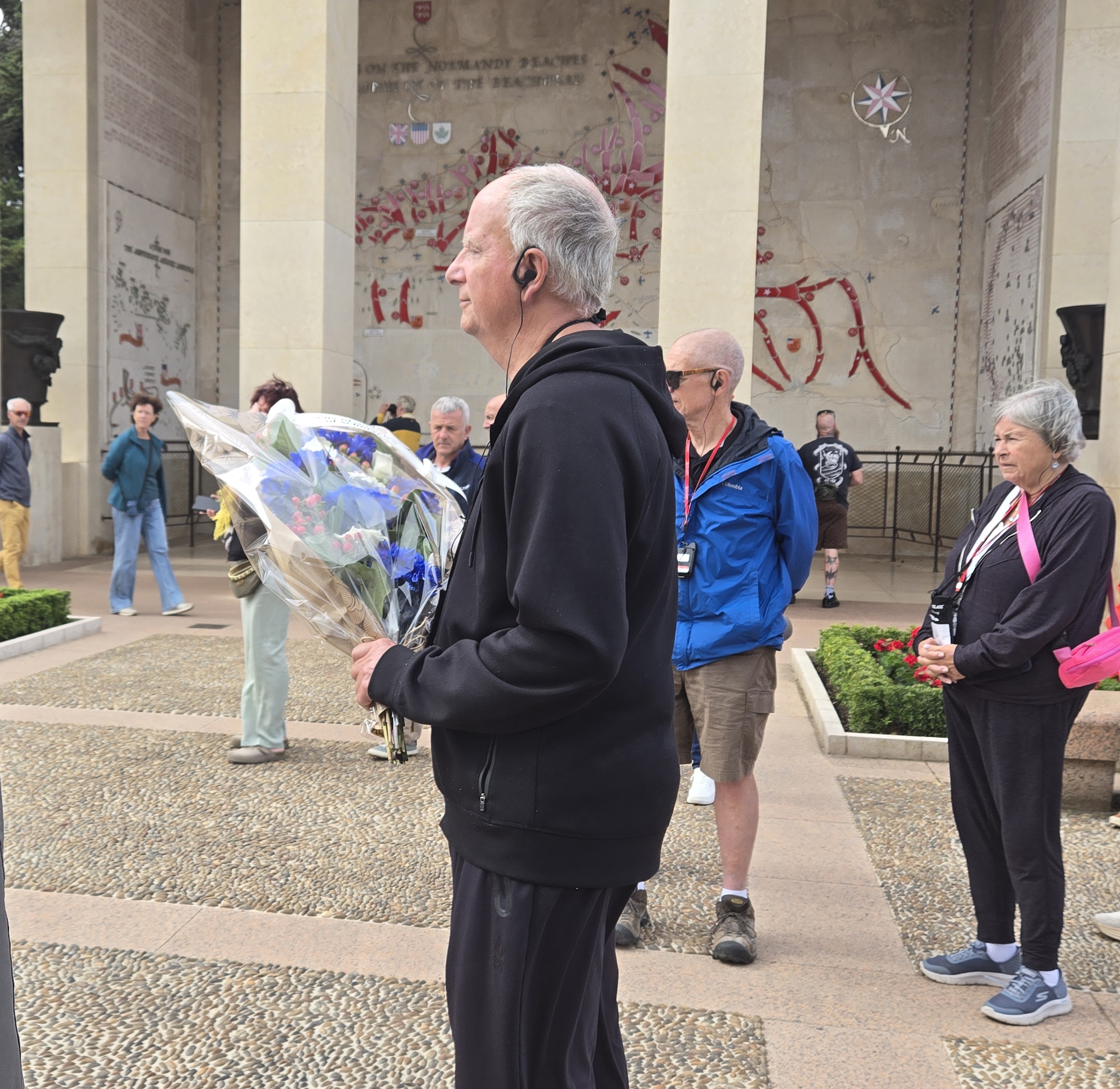
I don’t have any direct connection to D-Day, but as the bugle call of Taps played, even I teared up by the end. David’s wife Robin videoed the ceremony (except for the Taps part). You can watch it on YouTube. (Link provided with permission.)
One thing to note if you visit, is that no eating is allowed in the cemetery. Somehow, I missed that memo. I took out a granola bar because I was getting hangry. One of the cemetery staff members saw me, got a horrified look on her face, and indicated in French that I should put my granola bar away.
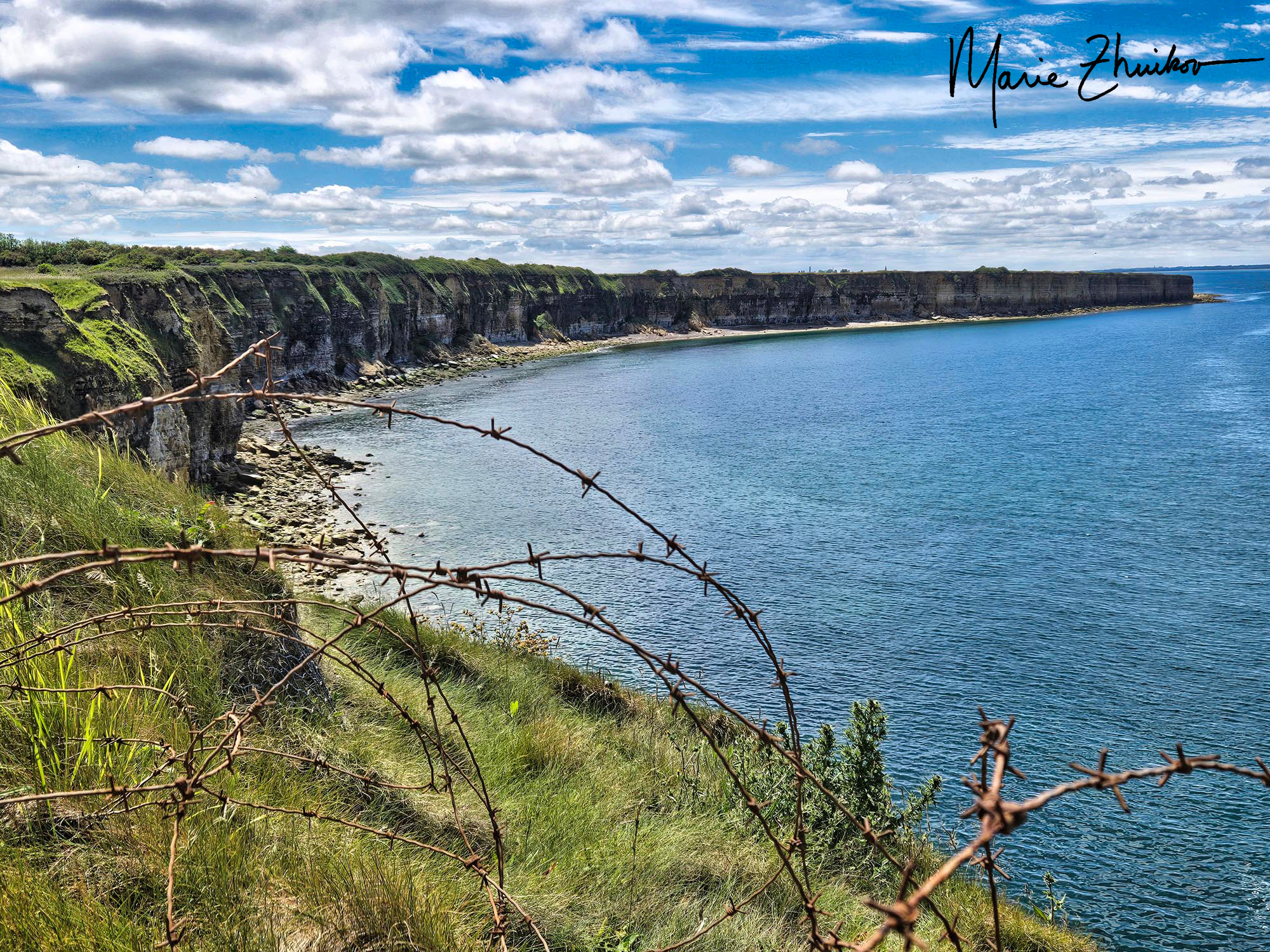
Omaha Beach was next on our agenda. We were able to walk the sands. I took off my shoes and felt the cool ocean while our guide explained that the beach has five ravines that allow access past the bluffs to the interior. These were the focus of the troops on D-Day. The bluffs above the beach and the ravines were full of machine gun and mortar nests.
Imagine being an inexperienced soldier dropped onto a beach under enemy fire and having to climb the bluffs. More than 4,000 soldiers were killed and wounded on D-Day, many of whom drowned after being hit. Any beachy enjoyment I felt faded as our guide described the happenings of that fateful day.
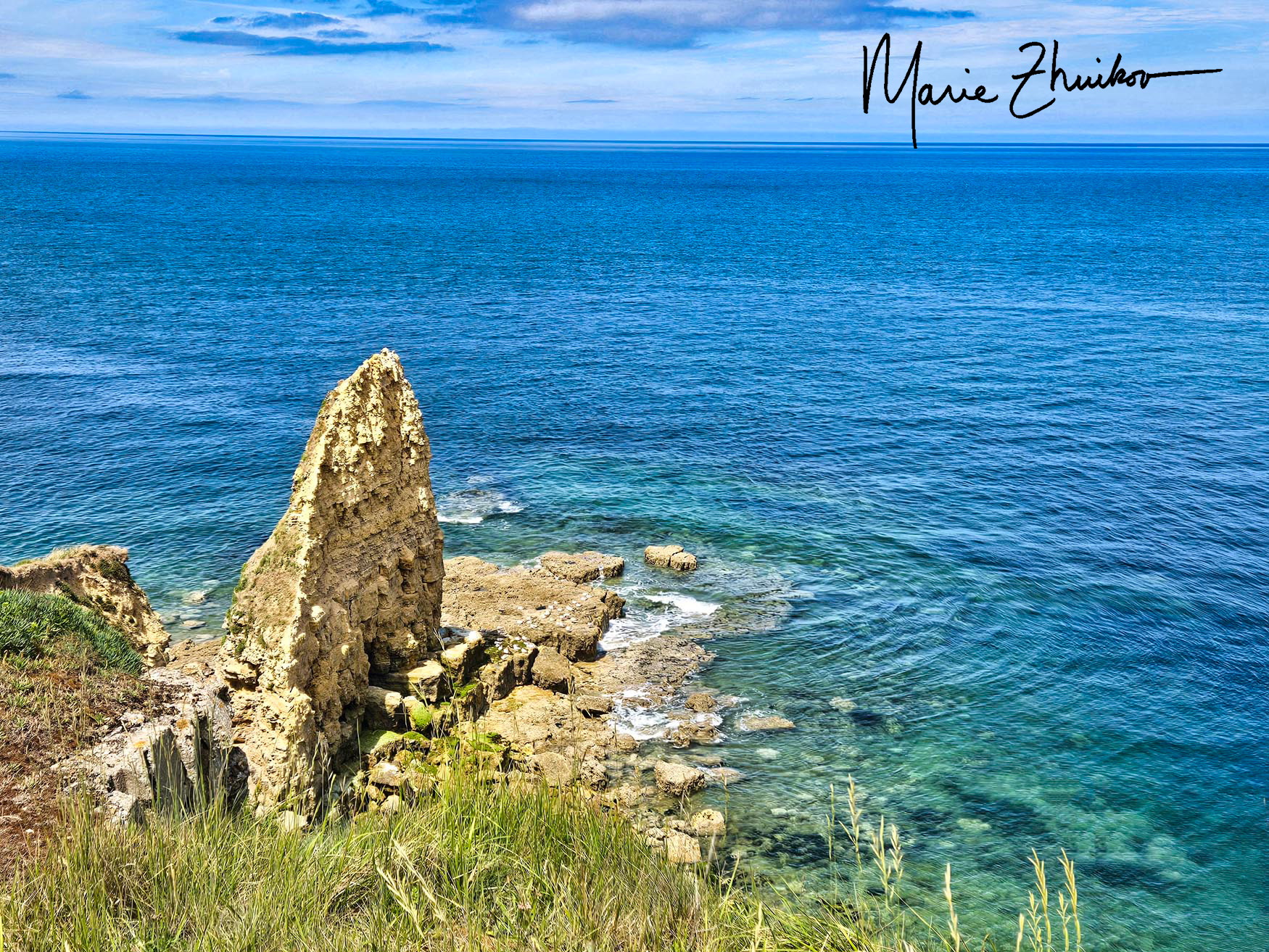
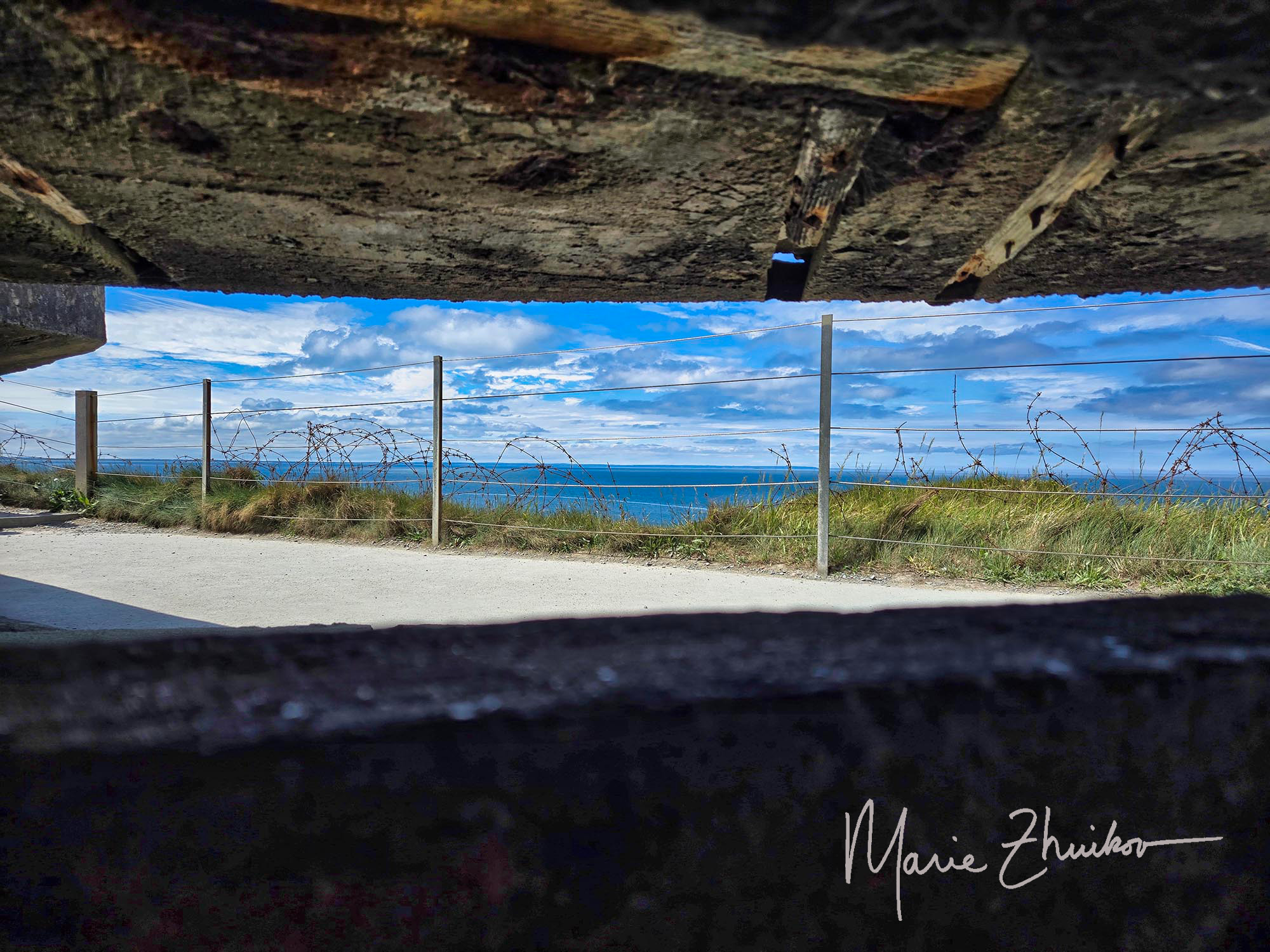
Next, we visited Pointe du Hoc, which features a German “pillbox” observation bunker that we could go inside. These concrete guard houses made of reinforced concrete were home to several soldiers. The narrow openings (loopholes) toward the sea allowed the soldiers to fire on the enemy. The path to the pillbox was pocked by several deep craters where bombs impacted.
After all the heaviness, I guess it was time for a drink! Our next stop was Chateau d’Englesqueville to sample Normandy’s renowned calvados apple brandy and regional cheeses. But first, owner Bernard Lebrec showed us his farm’s monument, which honors American soldiers who fought in Normandy during WWII. It’s thought to be the first erected in France.
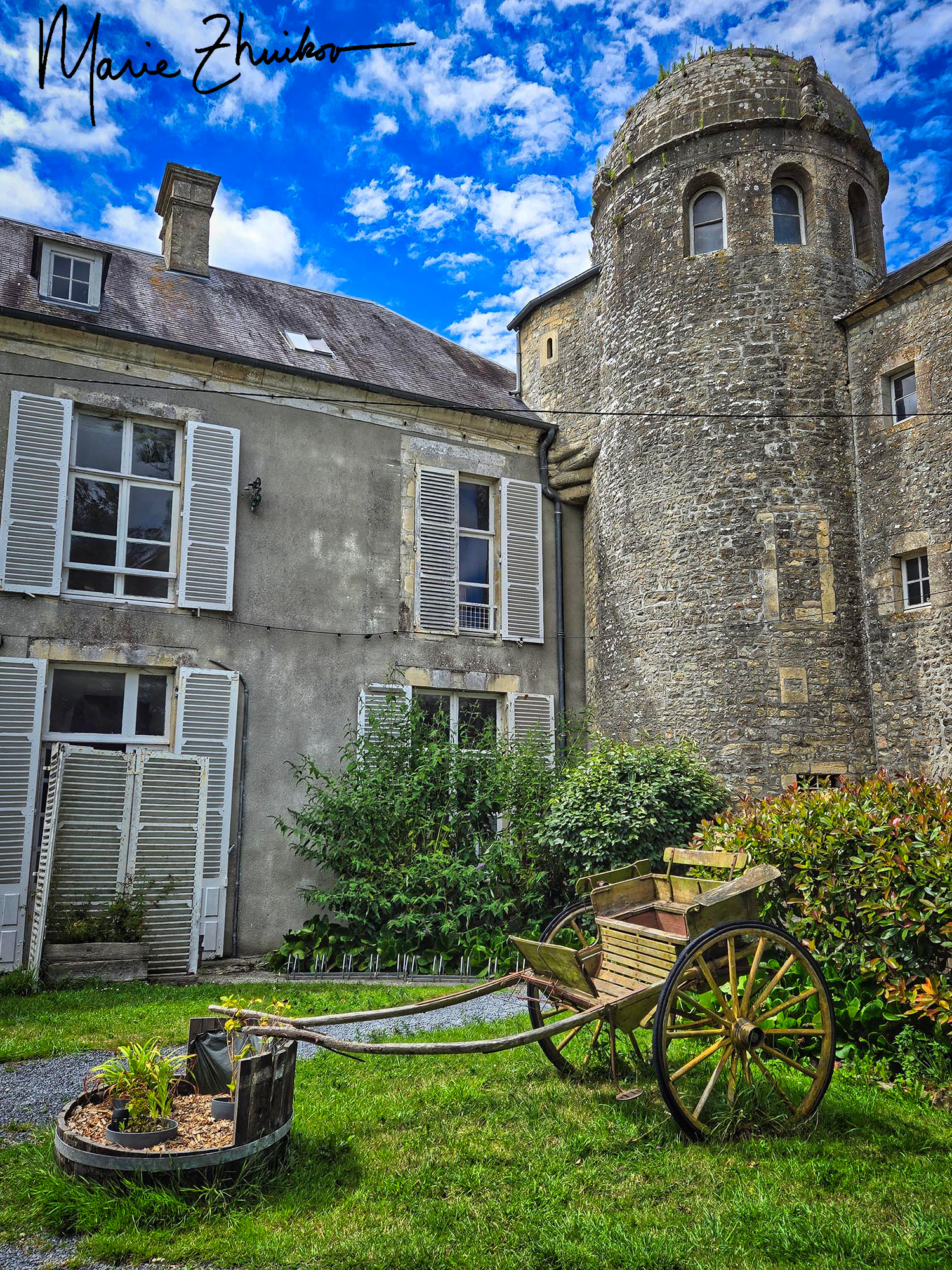
Bernard (with cider stains on his shirt) explained that Germans took over the farm at first, but after D-Day, Americans (the 147th Combat Battalion) used the farm as their headquarters and built an airfield across the way. The house (chateau) was built in the 17th Century, and the farm buildings still sport a tower from the 14th Century.
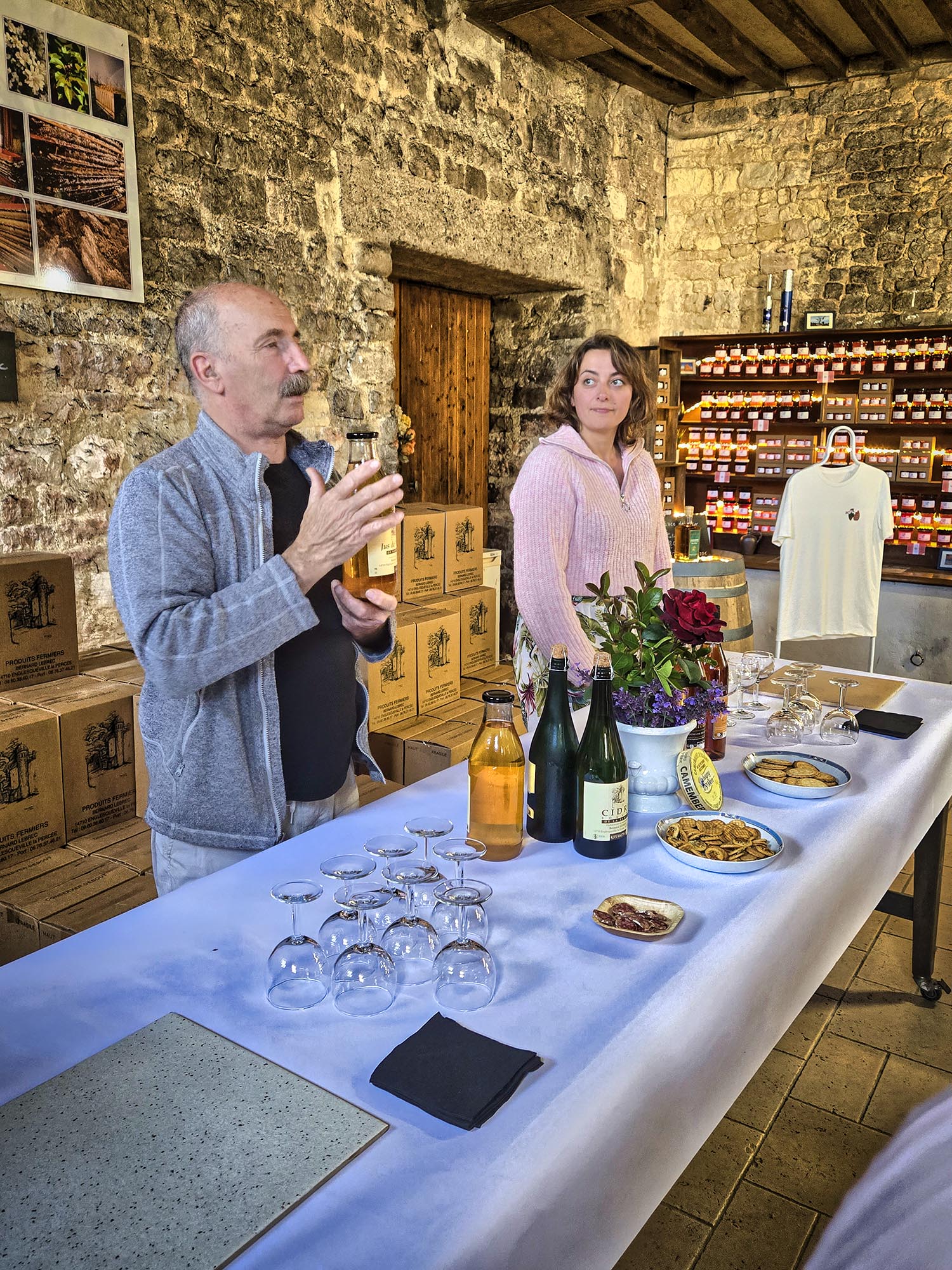
The charming Bernard then invited us inside for a tasting. His daughter Marie helped (an easy name for me to remember), along with their two English cream retrievers. The calvados was 84 proof – really strong! It tasted like French moonshine to me. I preferred the aperitif, which was milder, and bought a small bottle to bring home. We also bought some of their apple jellies: plain, vanilla, and cinnamon. By now, the aperitif is long gone, but we’re still working on the jellies.
Besides calvados, Normandy is known for flax, dairy, lace, wheat, artichokes, apples, pears, and seafood. It’s like the Wisconsin of France.
The chateau also offers a restaurant run by Bernard’s nephew. Restaurant L’Ephemere was closed when we visited, but looked like a nice place. Travel author Rick Steves says, it’s a “laid-back, all outdoors, tres French, well-run café-restaurant serving delicious meals, salads, or just drinks with a smile.”
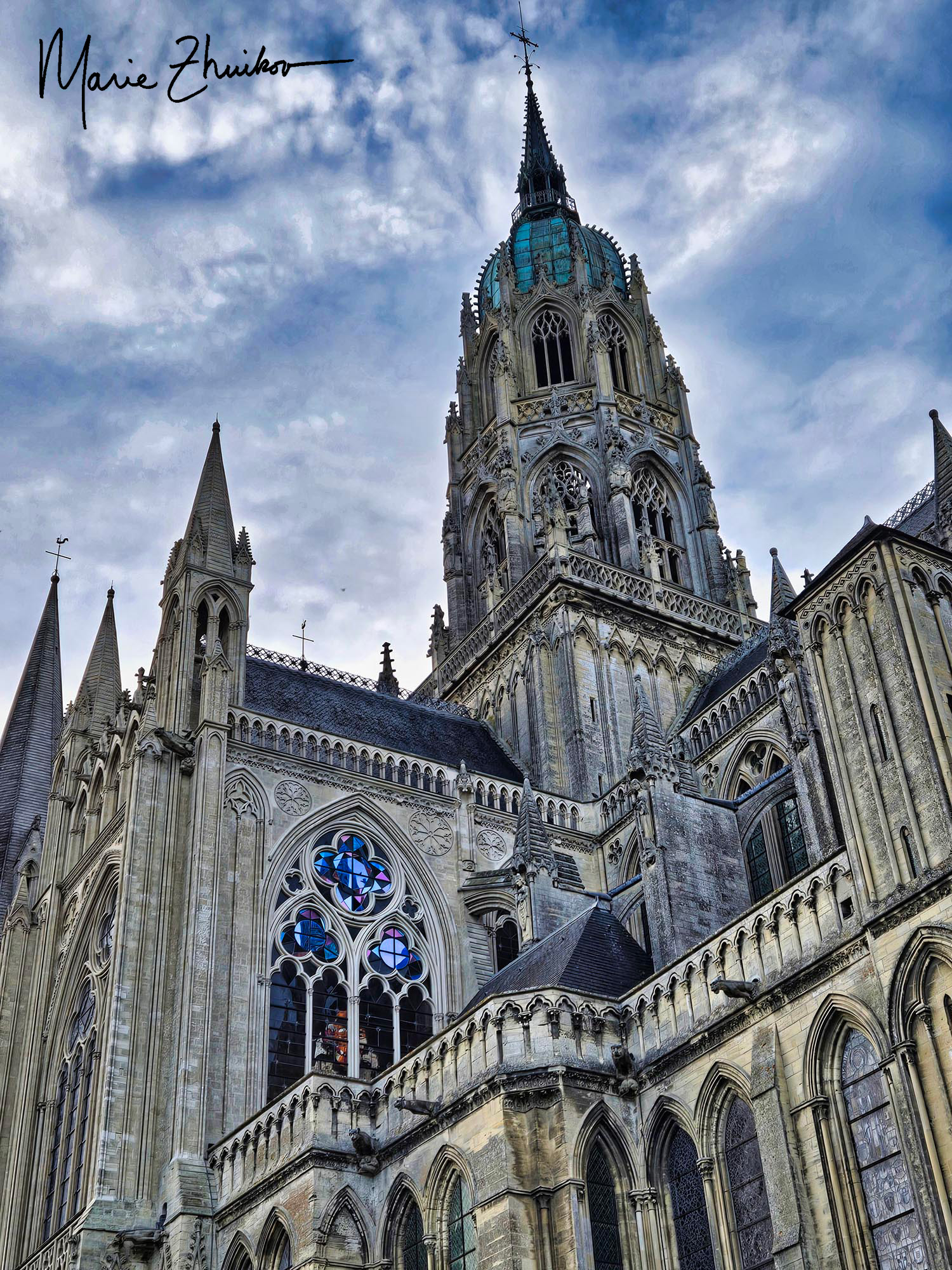
Our bus took us back to Bayeux, where we had time to meander around the town. We walked to the Cathedral of Our Lady of Bayeux, which was consecrated on July 14, 1077, in the presence of William the Conqueror, making it a site of great historical importance. It is believed that the famous Bayeux Tapestry, which depicts the Norman Conquest of England, was originally housed in the cathedral. The tapestry was later moved to a nearby museum. We couldn’t see it, however, because the museum is undergoing renovations and the tapestry has been temporarily relocated to England.
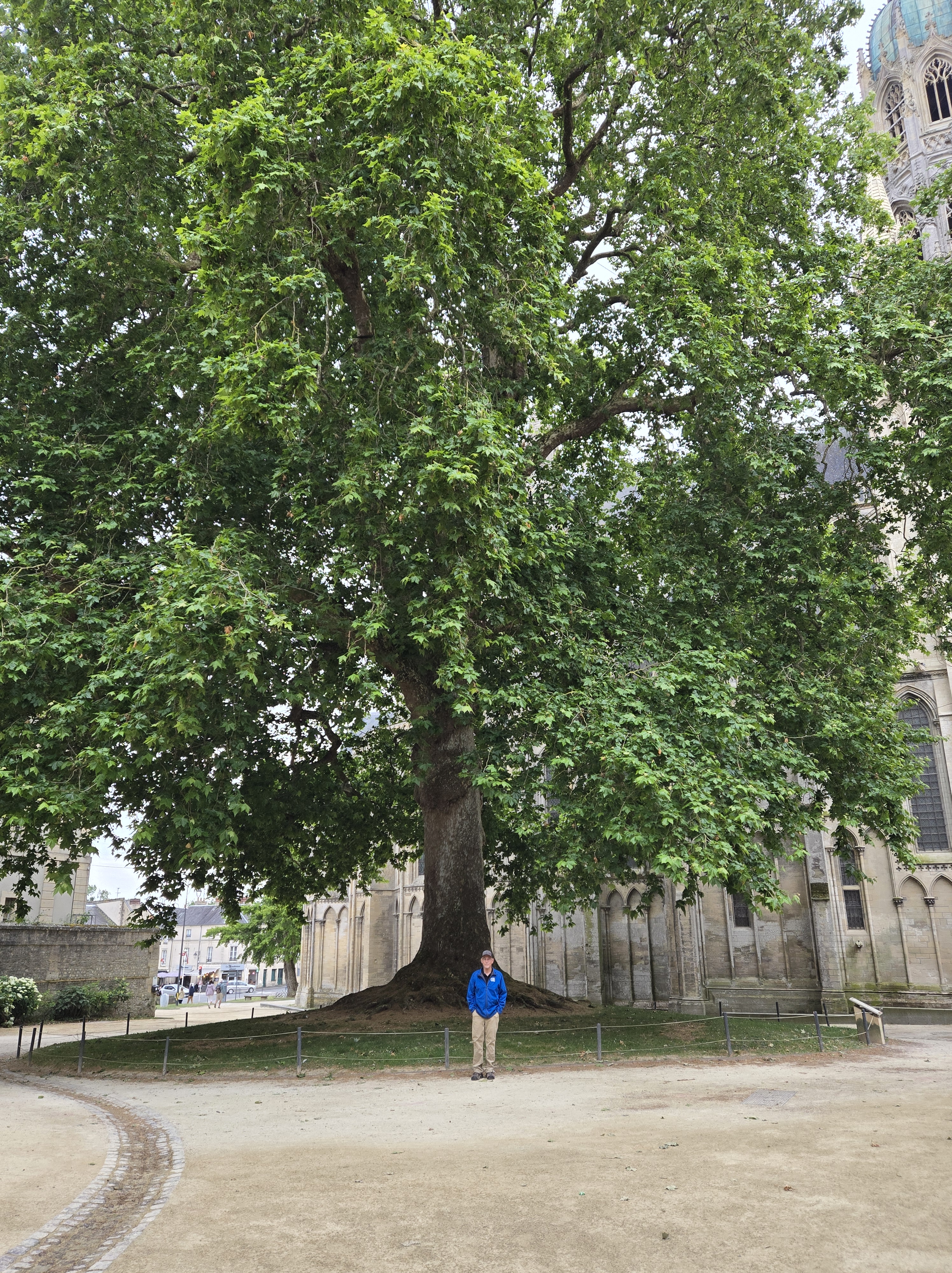
Behind the cathedral stands a HUGE “Liberty Tree.” These trees were planted across France after the Revolution to celebrate the end of the monarchy. The scale and age of the Plane Tree (species) was difficult to comprehend. (See the photo above with a teeny tiny Russ beside the tree.)
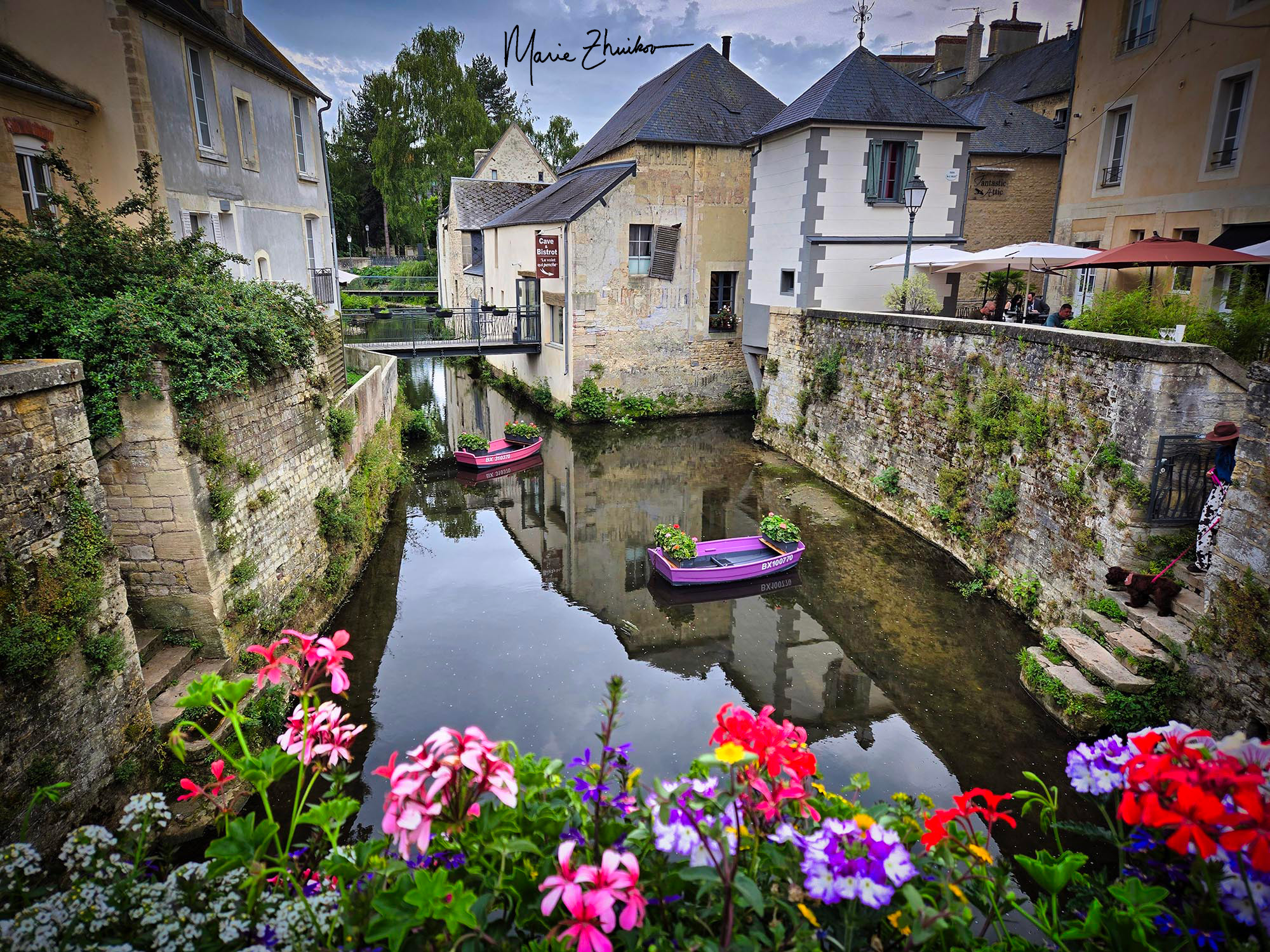
The town is known for its creperies. The most popular one (Le Moulin de la Galette) was booked solid during our stay, so we could not eat there. But we walked past it, and it was hopping! The restaurant is housed in a charming former oil and flour mill along the Aure River that has been transformed. An outdoor terrace allows guests to savor their meals while enjoying picturesque views of the river and historic buildings in Old Bayeux.
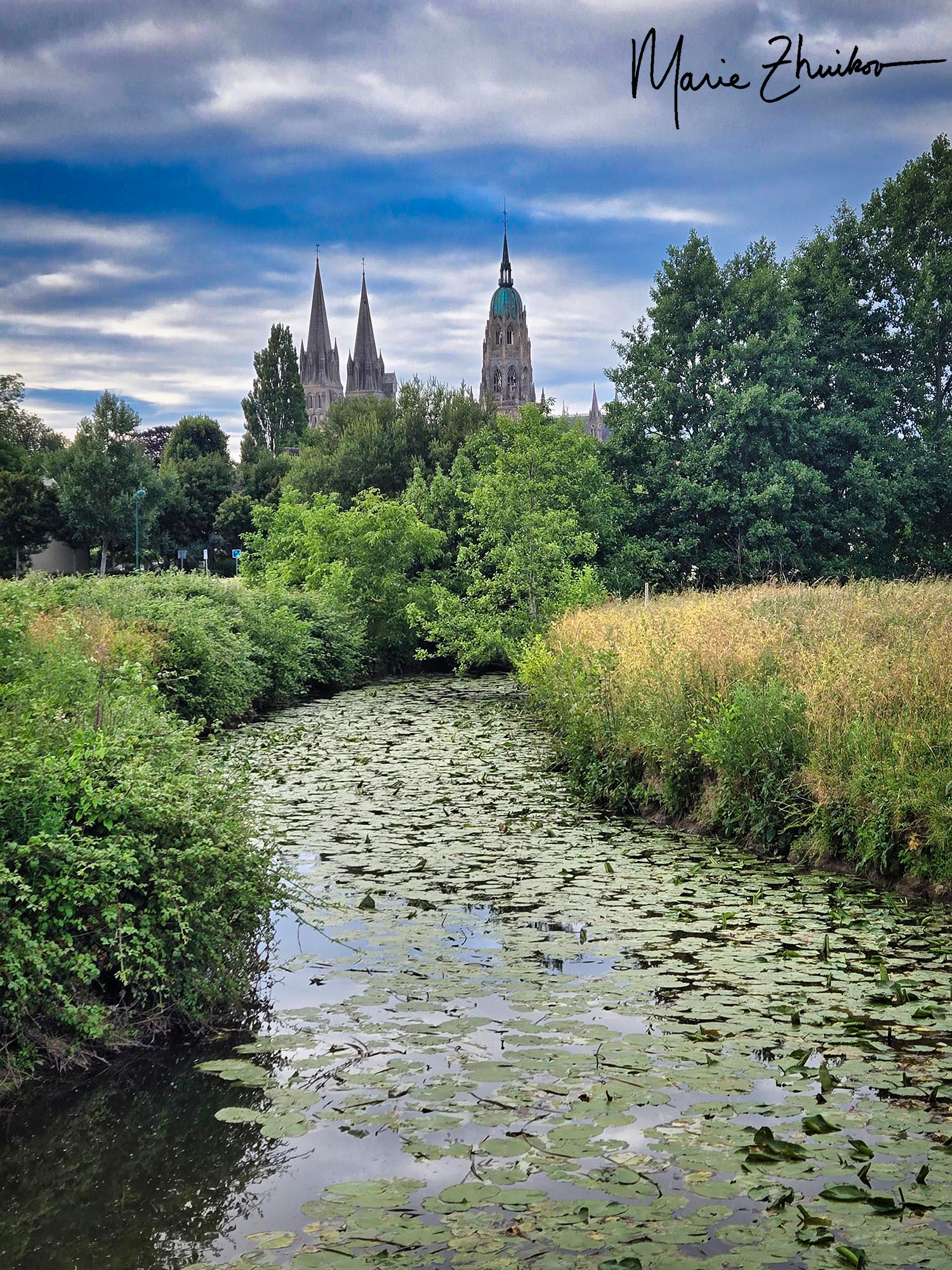
We kept following the river on a paved trail that led to a boardwalk across a wetland. The boardwalk offered a great view of the cathedral, and I took a few photos.
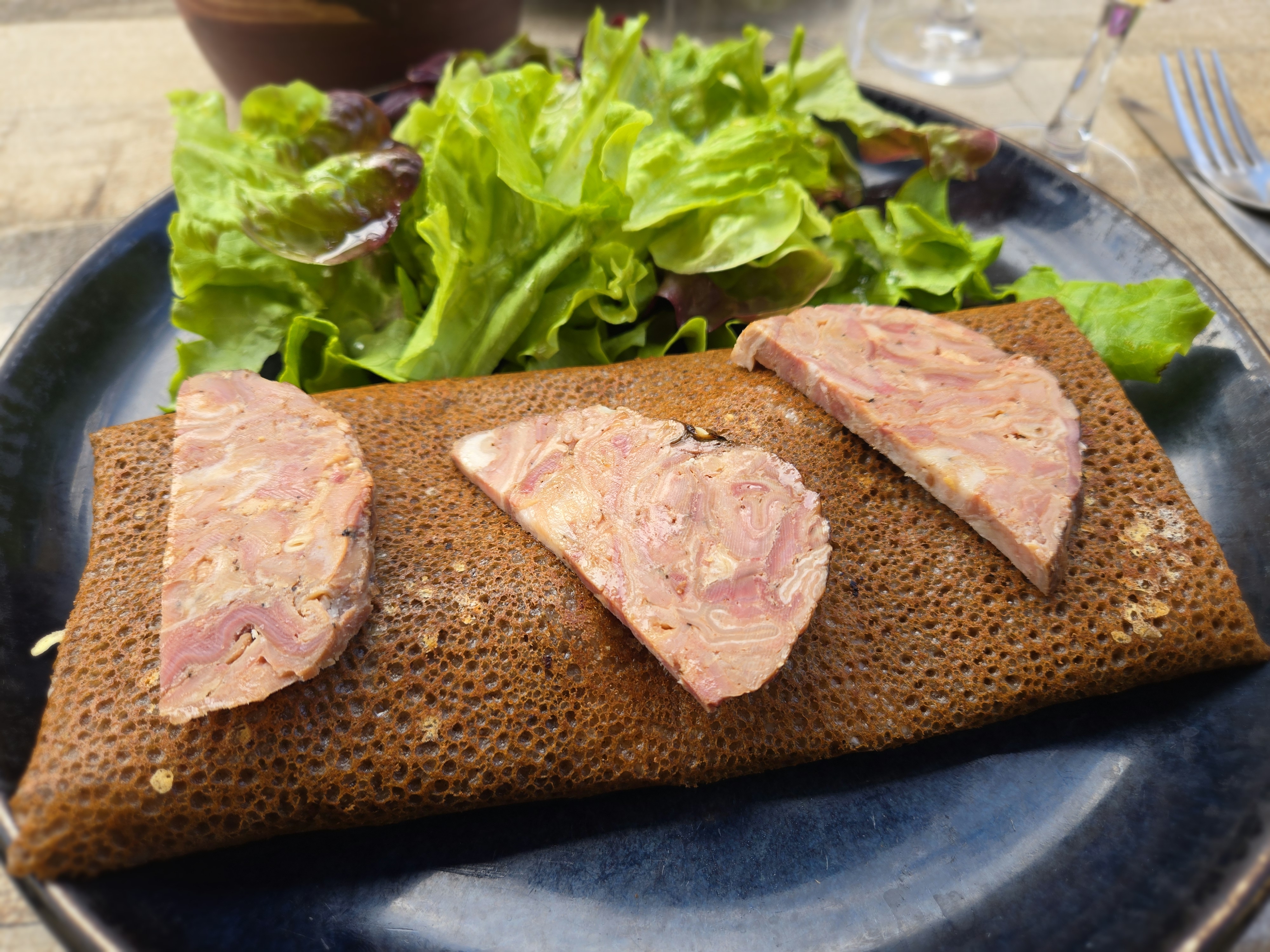
Our Plan B for a crepe dinner was Au Louis d’Or. On the sidewalk, we dined all frescos for dinner on galettes (savory crepes made from buckwheat) with crepes for dessert. With camembert cheese, apples, and sausage, my galette was pure Normandy. My dessert crepe was filled with chestnut cream. Both were outstanding, and the price was very reasonable.
Whew! And so, Day 4 of 6 of our tour came to a close. We really enjoyed being in a smaller French town after the crowds of Paris. I would love to revisit Bayeux someday, perhaps once the tapestry returns. I’m not much for following military history, but I gained a greater appreciation for the machinations of WWII and the sacrifices of the soldiers after seeing the D-Day beaches and cemetery.
Next Up: Mont St. Michel and another great dinner in Bayeux