Our fourth day on Grand Cayman Island dawned hot and beautiful, just like all the previous days. Our first adventure was a visit to Queen Elizabeth II Botanic Park on the island’s North Side. Besides lush and gorgeous foliage, what drew us to the park was its unique mix of culture, natural history, and endangered blue iguanas.
You heard me: blue iguanas. This special species is only found on Grand Cayman Island. The park has a conservation facility where they breed iguanas – some for release in other parts of the island. If I would have been quicker writing this post, I could have had it done on May 8, which is National Blue Iguana Day on the island. As it was, we were still traveling around the island with no time to write!

We bought our tickets and then meandered toward the Orchid Boardwalk. Not far down the path, I spied a small humpbacked brown animal that looked somewhat like a prehistoric horse. As it ran into the undergrowth, I realized that I had the good luck to see an elusive agouti. These rodents were introduced to the island years ago and eat fruit, leaves, and roots. That was worth the admission, right there.
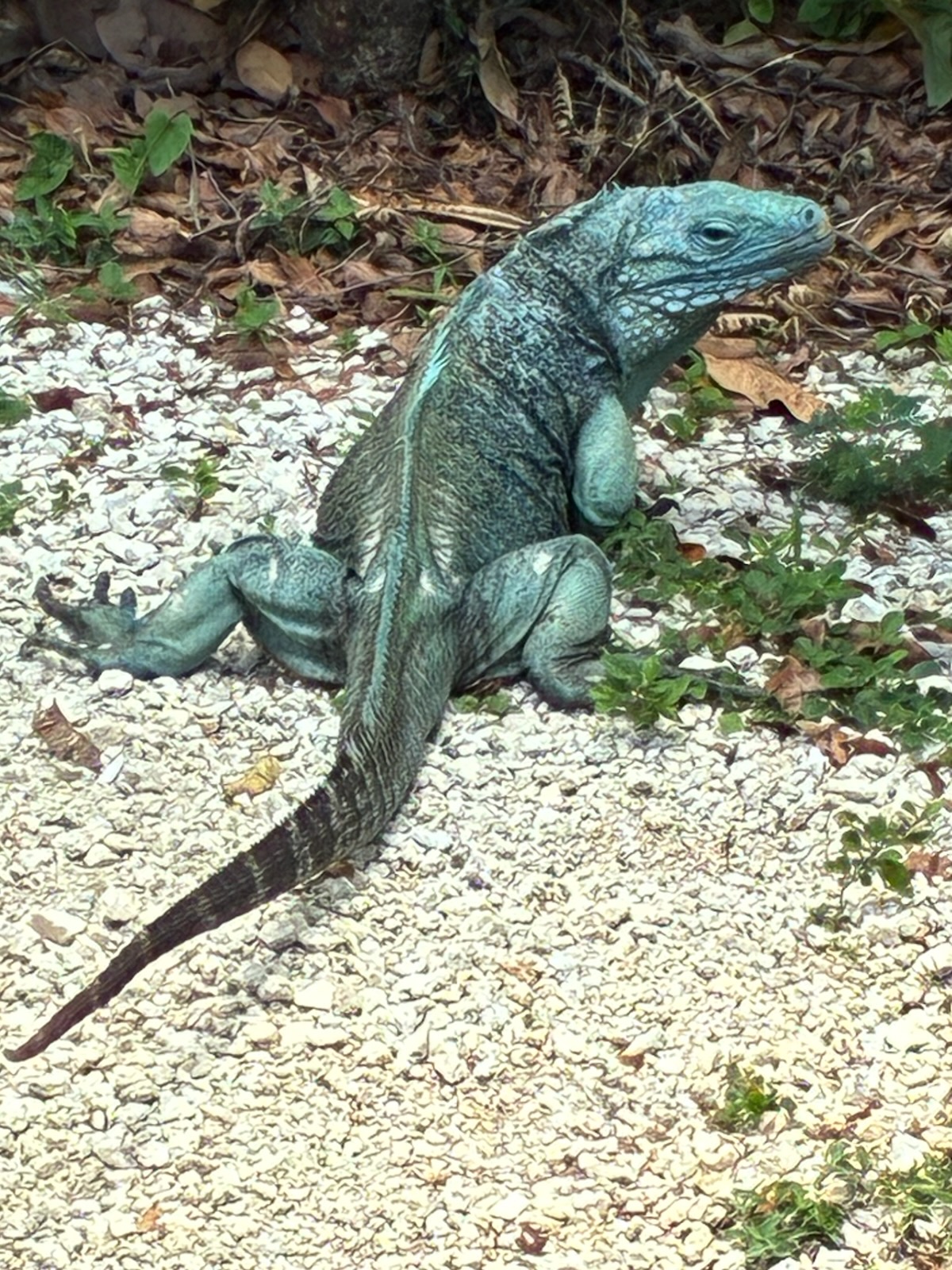
When we arrived and walked toward the park visitor center, a wild blue iguana greeted us on the lawn. We joked that it had been placed there just for us, or that maybe it was a statue. But no, it had moved by the time we finished our visit, so I guess it wasn’t fake.
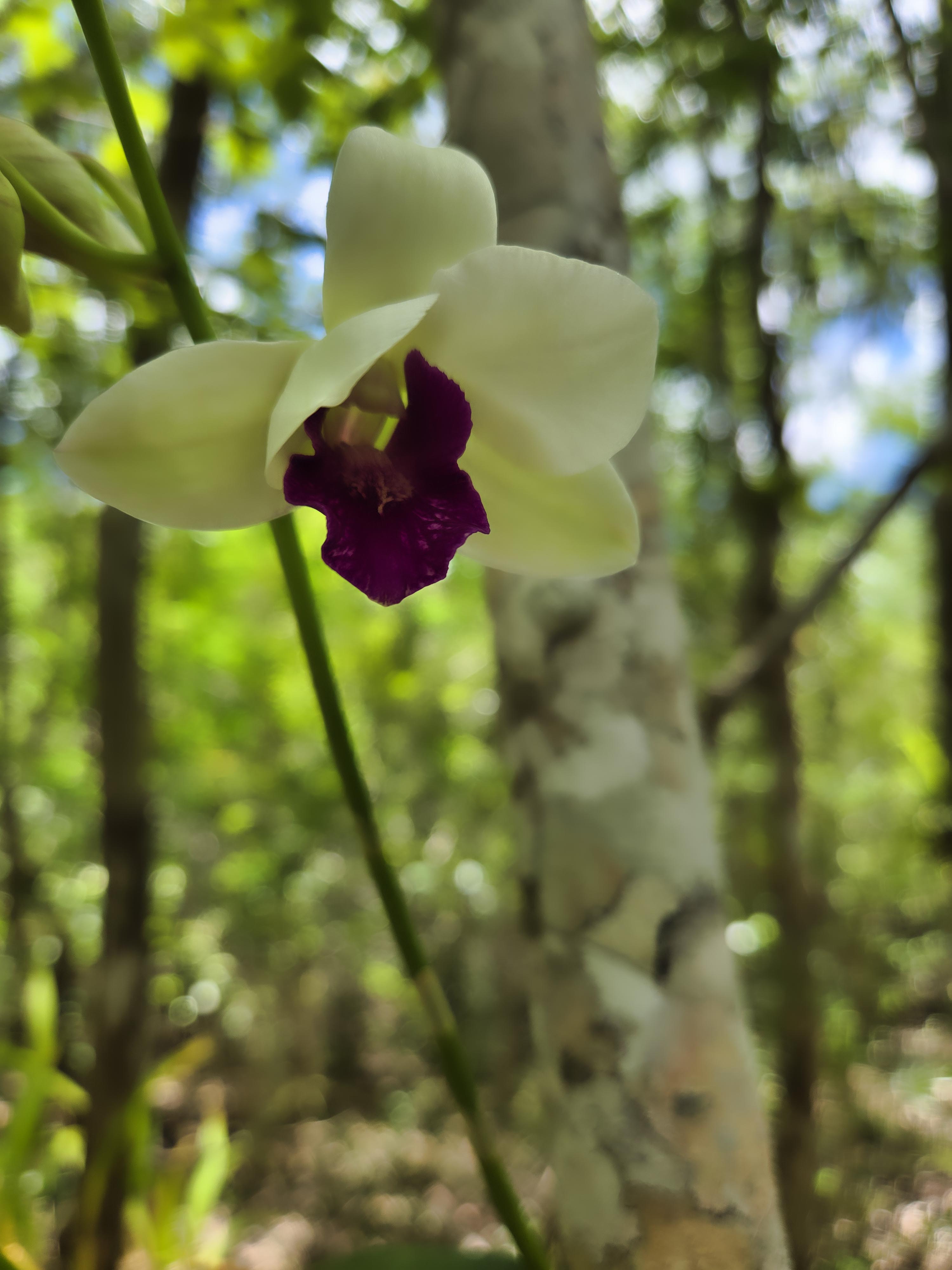
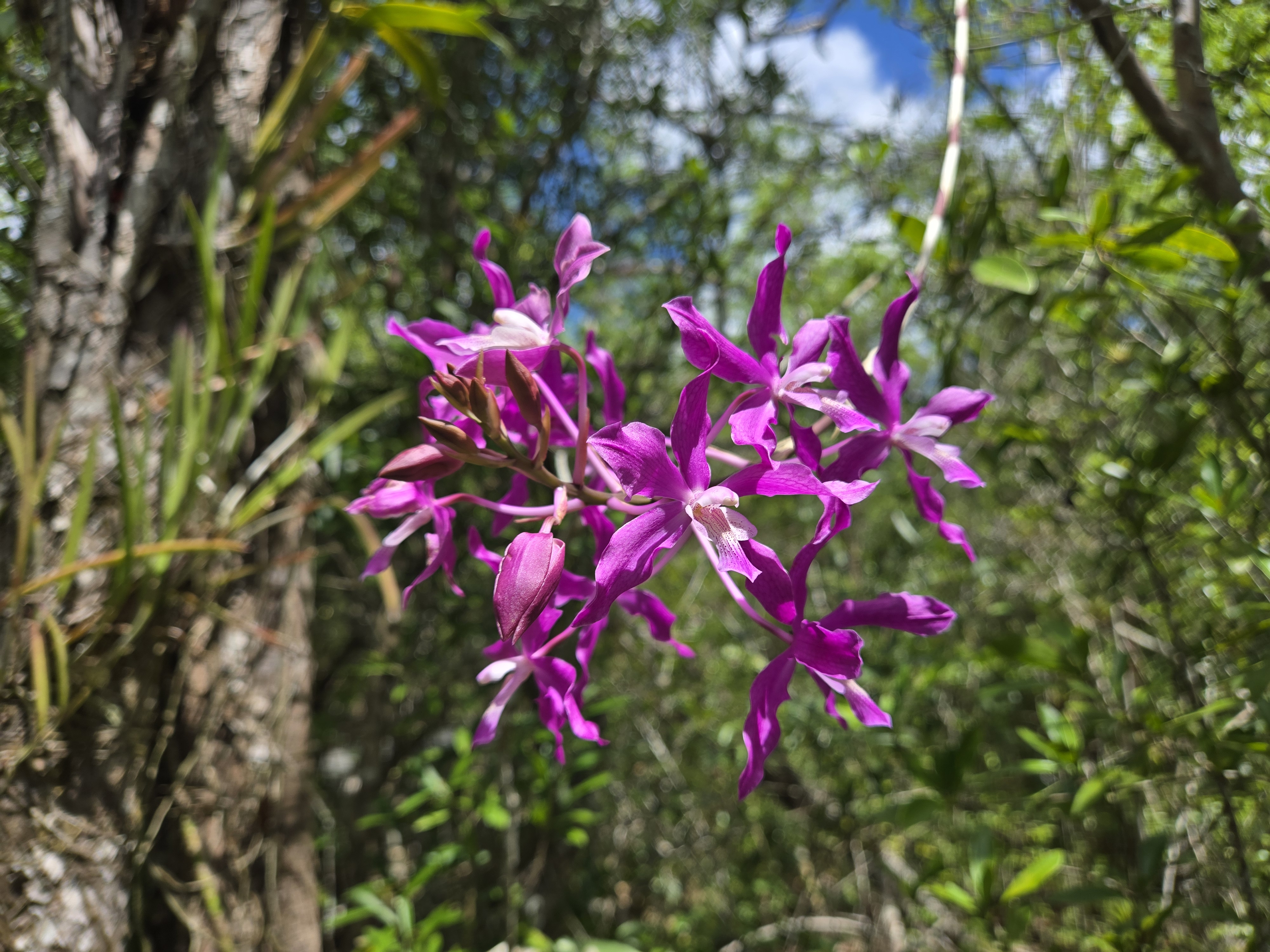
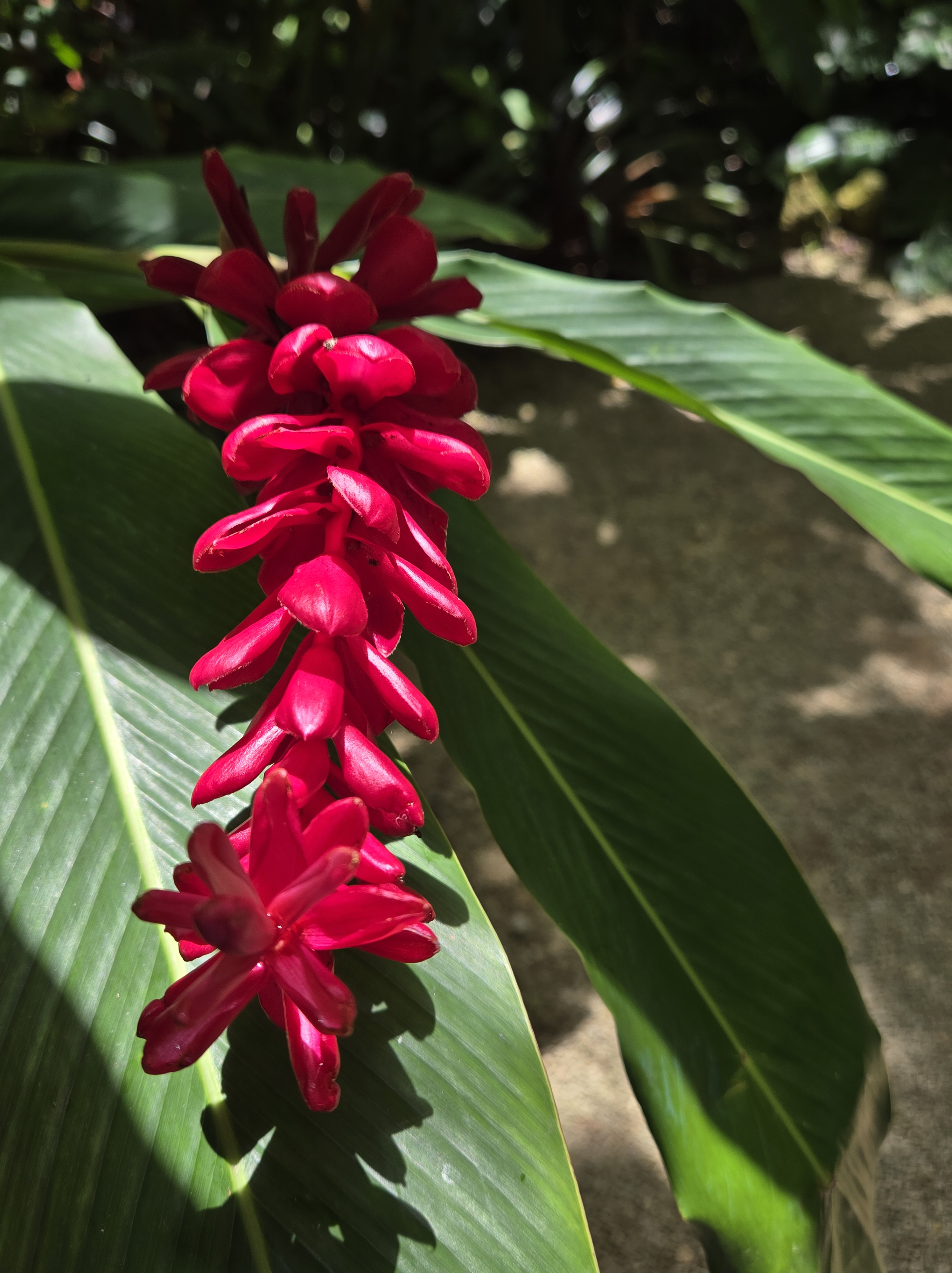
The park’s Orchid Boardwalk takes you through a jungle of epiphytes (air plants) and orchids, some of which are only found on the island. Our next stop was the Heritage Garden, which sports a traditional homestead and garden. By this time, we were pretty hot, so we hung out in the shade of the home for a while. Across from that was a Xerophytic Garden, which features plants that require little water. We also toured a Lily Pond and a Palm Walk. My favorite was the Color Garden, which offers flowering plants arranged by color.
Our final stop after a long (and hot) walk on a woodland trail was the iguana conservation area. Here the blue iguanas are housed in outdoor natural habitats and cages. Most of the captive iguanas were hiding but a large wild iguana wandered the pathways, and Russ was able to get a good picture of it without fencing in the way. From the interpretive signs, we learned that blue iguanas can live for 50 years, that 1,000 have been released into protected areas on the island, and that they only turn blue during mating season. Apparently, it was mating season because many of them were blue.

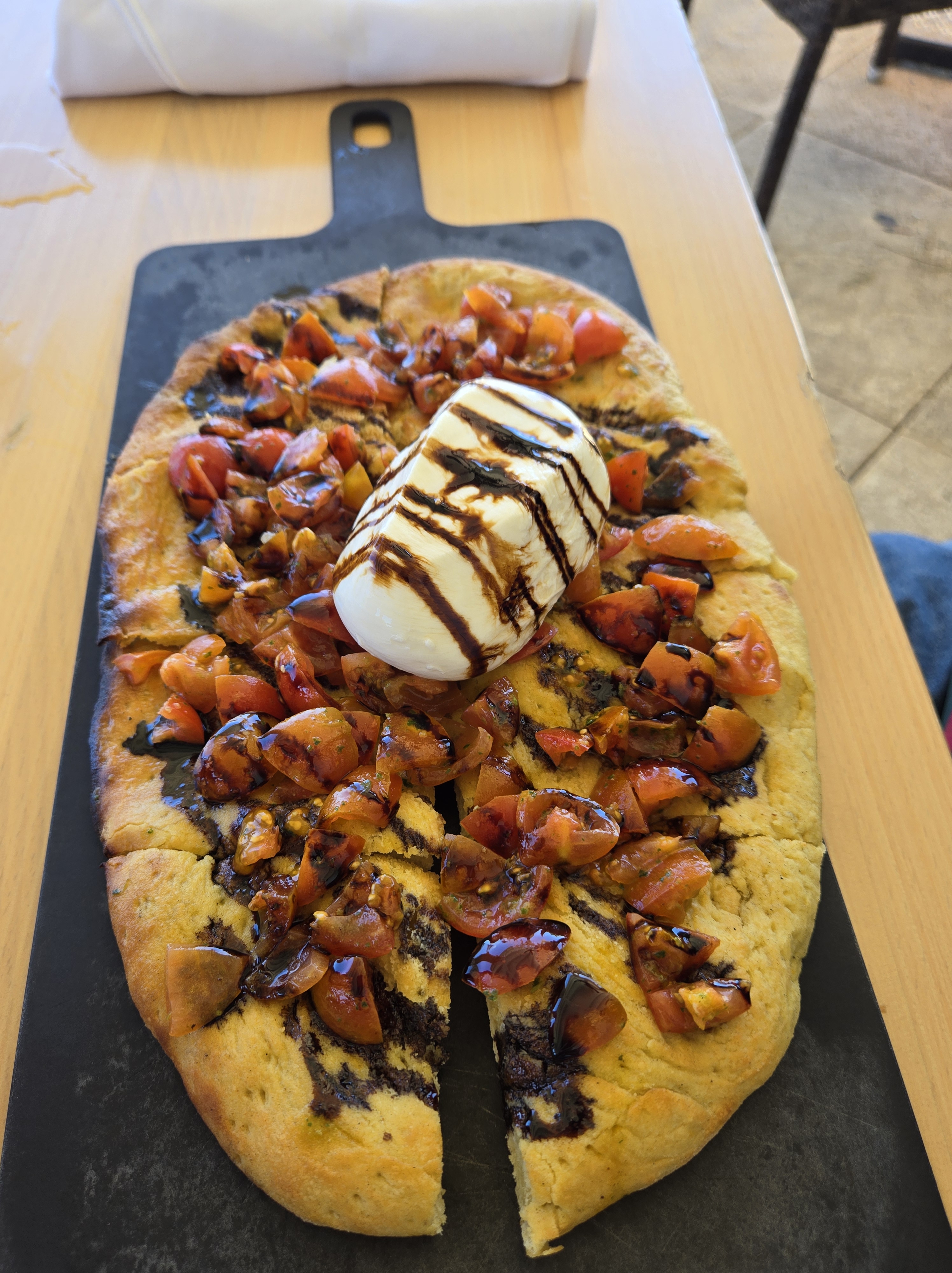
Pedro St. James Mansion was our next destination but before we toured it, we enjoyed lunch and a view of the sea at its Thatch and Barrel Restaurant. Russ had bruschetta burrata flatbread, with tomato, burrata cheese, garlic, and a scotch bonnet pepper-infused balsamic reduction that looked outstanding! The restaurant is known for its locally sourced ingredients and cocktails that use 1780 rum, which is blended onsite. I had a refreshing 1780 colada and a luscious castle burger, which featured onion jam, brie, local red pepper jelly and greens, garlic jalapeno aioli, and truffle fries.
Thus fortified, we bought our tickets to the mansion. The docent led us into a multimedia theater for an orientation. We were the only ones enjoying the show! The theater uses creative lighting, wind, water, and vapors to transport viewers into the early lives of Caymanian settlers. After that, we were free to wander the grounds and tour the three-story mansion. You can opt for a guided tour, but we chose self-guided.
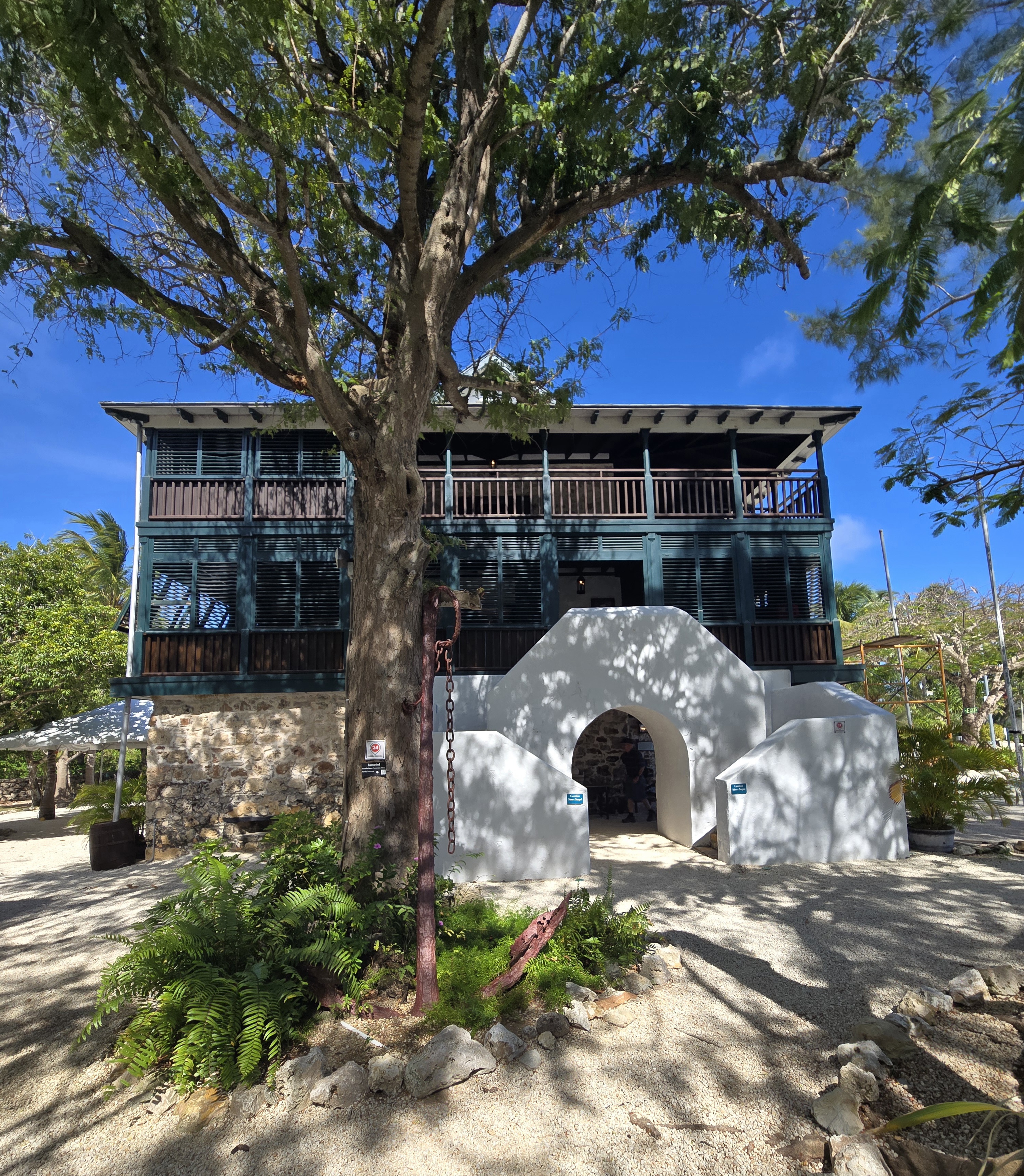
Pedro St. James is the oldest surviving stone structure in the islands. Its verandas and shuttered windows reminded me of Earnest Hemingway’s house in Key West. The elaborate construction made it the Caymanian equivalent of a European castle, so locals often refer to it as Pedro Castle. The mansion has had its ups and downs and has seen its share of historic events. The first island parliament was held inside, and a proclamation ending slavery was read from its front stairs (somewhat ironic, since the mansion was built with slave labor). Once again, we were the only people touring the mansion.
There’s also an interesting International Scuba Diving Hall of Fame at Pedro St. James. It’s worth a look.
On the way out, I bought a small bottle of the 1780 rum to bring home. I’m here to tell you, it’s gone all ready! I’ve never tasted a rum so smooth – dark and rich, almost root beer-y. If you get the chance, buy this rum.
On our way back to our resort, we stopped at the Blowholes. These are holes in the rock along the ocean shore where the water sprays high into the air. There are only a few blowholes, but they were fun to see; kind of like the Grand Cayman version of Old Faithful.

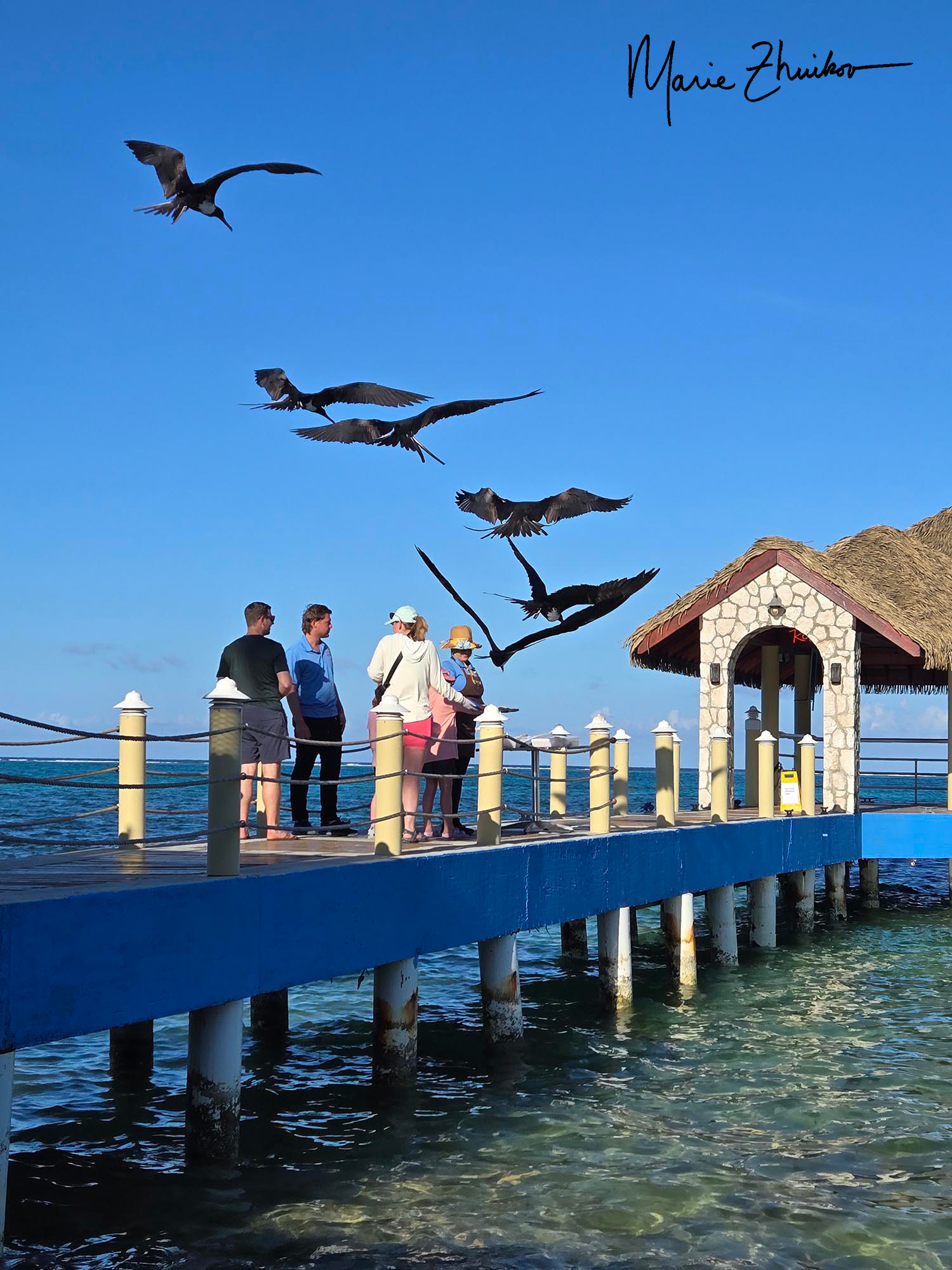
We happened to be passing Tukka Restaurant (where we ate the previous day) at 5 p.m., when they feed the frigatebirds. We hung out in hammocks on the shore and watched the large and acrobatic black birds swoop down for restaurant scraps. Recycling at its finest!
We cooked our own dinner that night in our resort room kitchen. We purchased king mackerel steaks, which I had never cooked before. But I found a simple recipe online and they came out pretty good – reminded me of a cross between tuna and shark – a firm, oily meat.
Next up: Art, Turtles, Hell, and Leaving our Mark
 Marie's Meanderings