Boundary Waters Adventures

Our canoe at our campsite on Brule Lake.

Russ and I sacrificed a 40-day winning streak on the NY Times Connections word game to head to the Boundary Waters Canoe Area Wilderness where there is no phone or internet service. We traveled with our friends Sharon and Mike to Brule Lake – a place I last visited 35 years ago.

To go easy on our aging bodies, we decided to do a canoe trip without any portages. (Portages are where you carry your canoe overturned atop your shoulders on a rugged trail to the next lake.) Brule Lake is large enough to spend several days there without needing to go anywhere else.
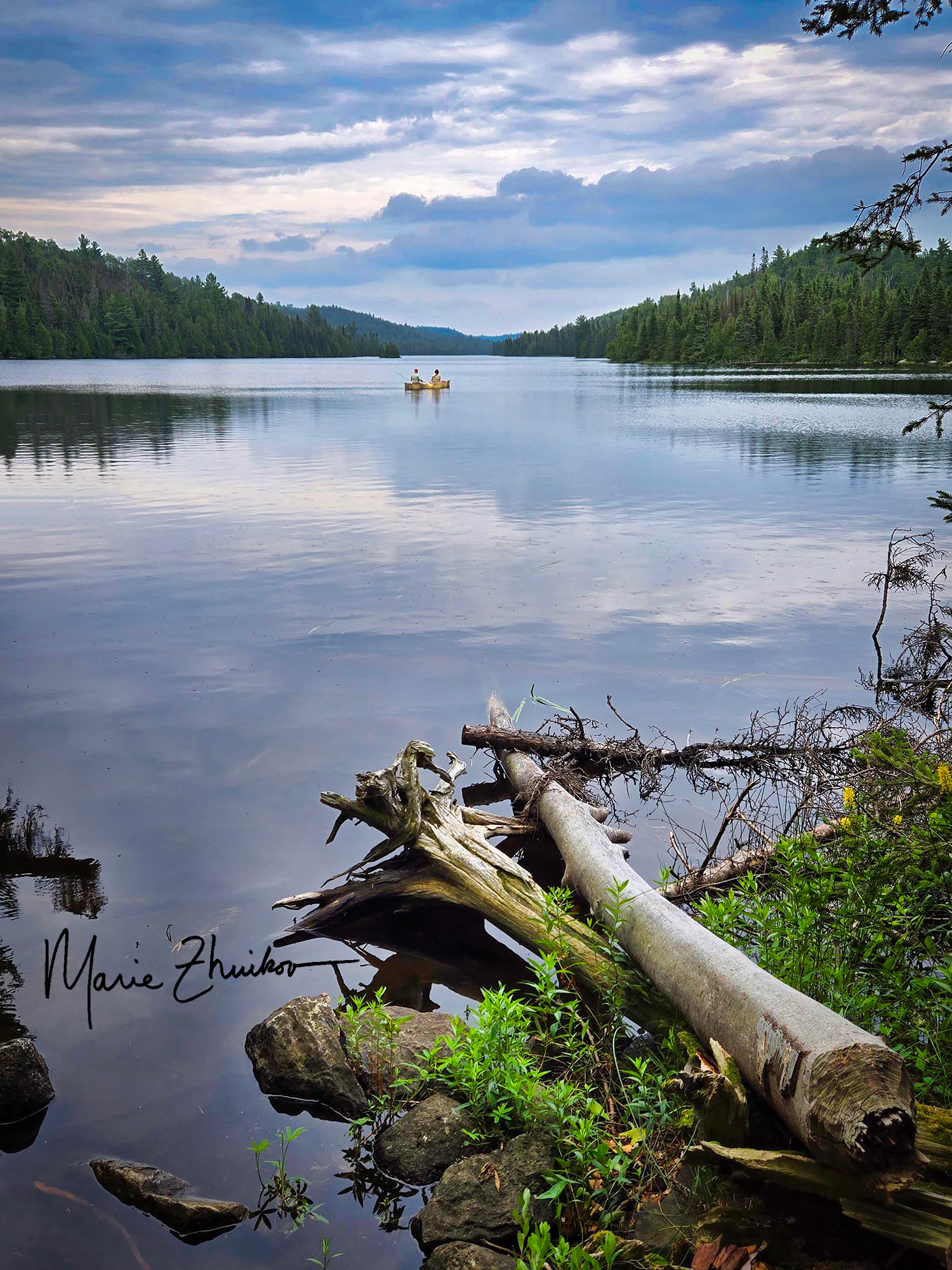
We were partially successful in meeting our goal. The only “failure” came on our third day of tent camping when Sharon and Mike decided to portage to a small lake for better fishing. We hiked the portage without our canoe to see if the lake was worth the effort of hauling it there. With forested hills and a cute island, the beauty of the new lake and the short length of the portage convinced us to bend our no-portage rule. It was a true wilderness lake with no campsites or other signs of human habitation.

To share the pain of portaging, we opted for a two-person carry, where we carried the canoe over the portage with one of us on each end of the watercraft – no hefting it up onto one person’s shoulders.

We were glad we did; canoeing on the lake offered views of a loon and its baby. We found the loon’s nest on the small island, where we ended up eating lunch much to the delight of the ants there. Our presence was probably the most exciting thing to happen to them in years! Sharon and Mike caught enough fish to feed us all dinner that night.

After we spent several hours on the lake (which I am purposefully not naming because Minnesotans don’t do that with good fishing lakes), the sky began to darken. We decided to head back to our campsite on Brule Lake. We couldn’t relay this to Sharon and Mike because they were at the far end of the lake.

We made it across the portage and out into the bay when the storm broke. The first drops of rain were huge and cold. We were wearing our swimsuits because we expected rain, so we didn’t mind being wet. What we did mind was the wind and the thunder/lightning! Yelling through the gale, we briefly considered riding out the storm on land, but we were so close to our campsite and the lightning was far away enough that we decided to power through and hope we didn’t get struck. (That was reckless of us, I don’t recommend staying on the water in a thunderstorm. Don’t try this at home!)
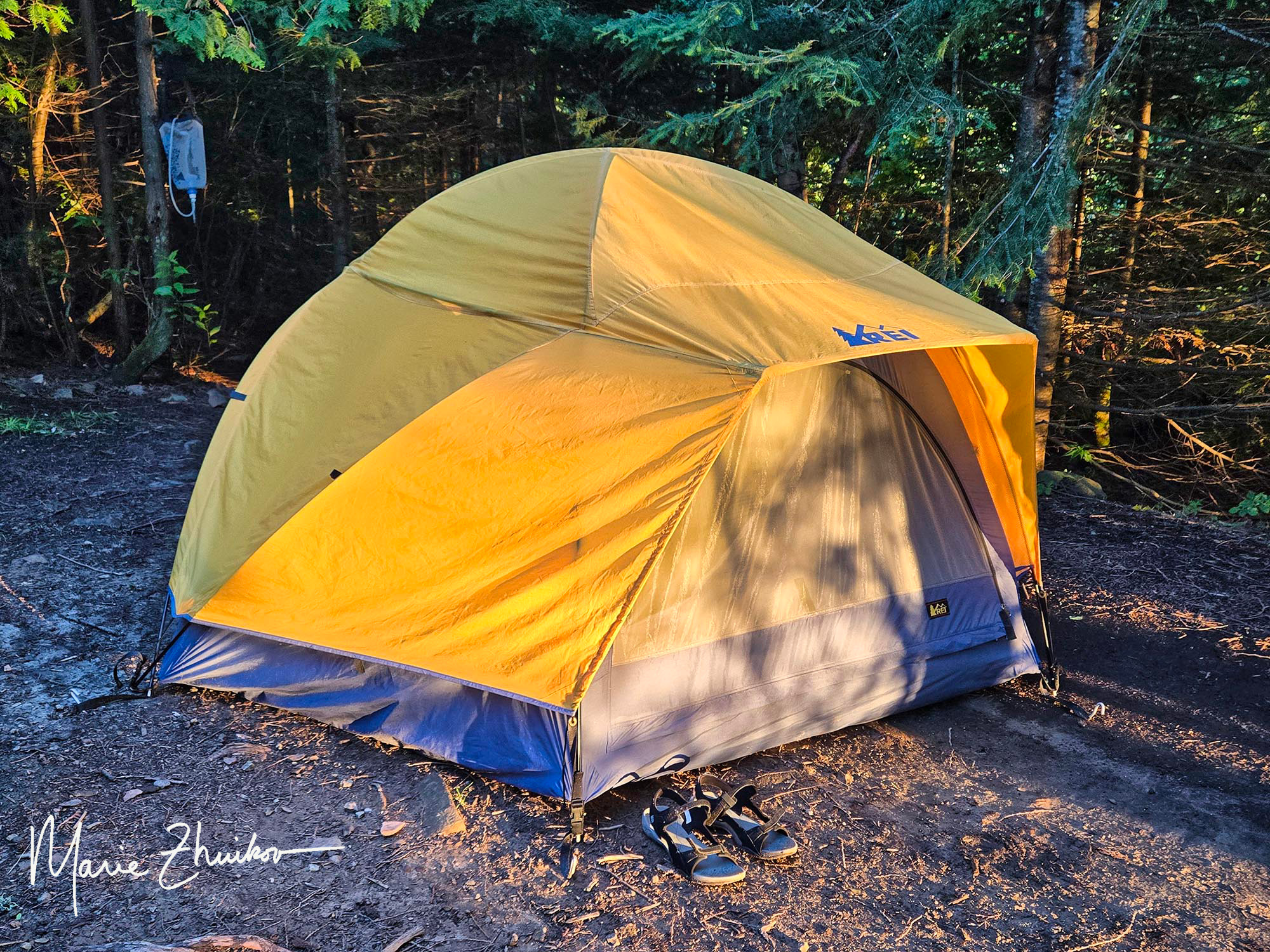
Our cute tent in dryer times.

We made it to camp and I quickly climbed into the tent to get into dry clothes. Russ was already so wet, he stayed outside. Once I changed clothes, the wind picked up even more. Russ had to tie down our lightweight Kevlar canoe to keep it from blowing away. From inside the tent, I held down the side the wind was hitting so that the stakes wouldn’t pull out of the ground. After what seemed like hours, the storm abated.

Our tent bottom (and a sleeping pad), drying out in the sun after the storm.

We were a little worried about Sharon and Mike, but this wasn’t their first BWCA Wilderness trip, so we assumed they’d be okay. But as the hours ticked by and the sun lowered, we began to discuss how long to wait until beginning a search for them. Not long afterwards, we heard them paddling back to our campsite. We greeted them with shouts of “You’re alive!”

They explained that they also stayed on the water during the storm, riding it out next to shore. (That was reckless of them, I don’t recommend staying on the water in a thunderstorm. Don’t try this at home!) Then they stayed on the unnamed lake to fish more. We ate the fruits of their efforts with relish that night – the first non-freeze-dried dinner Russ and I had eaten in days.
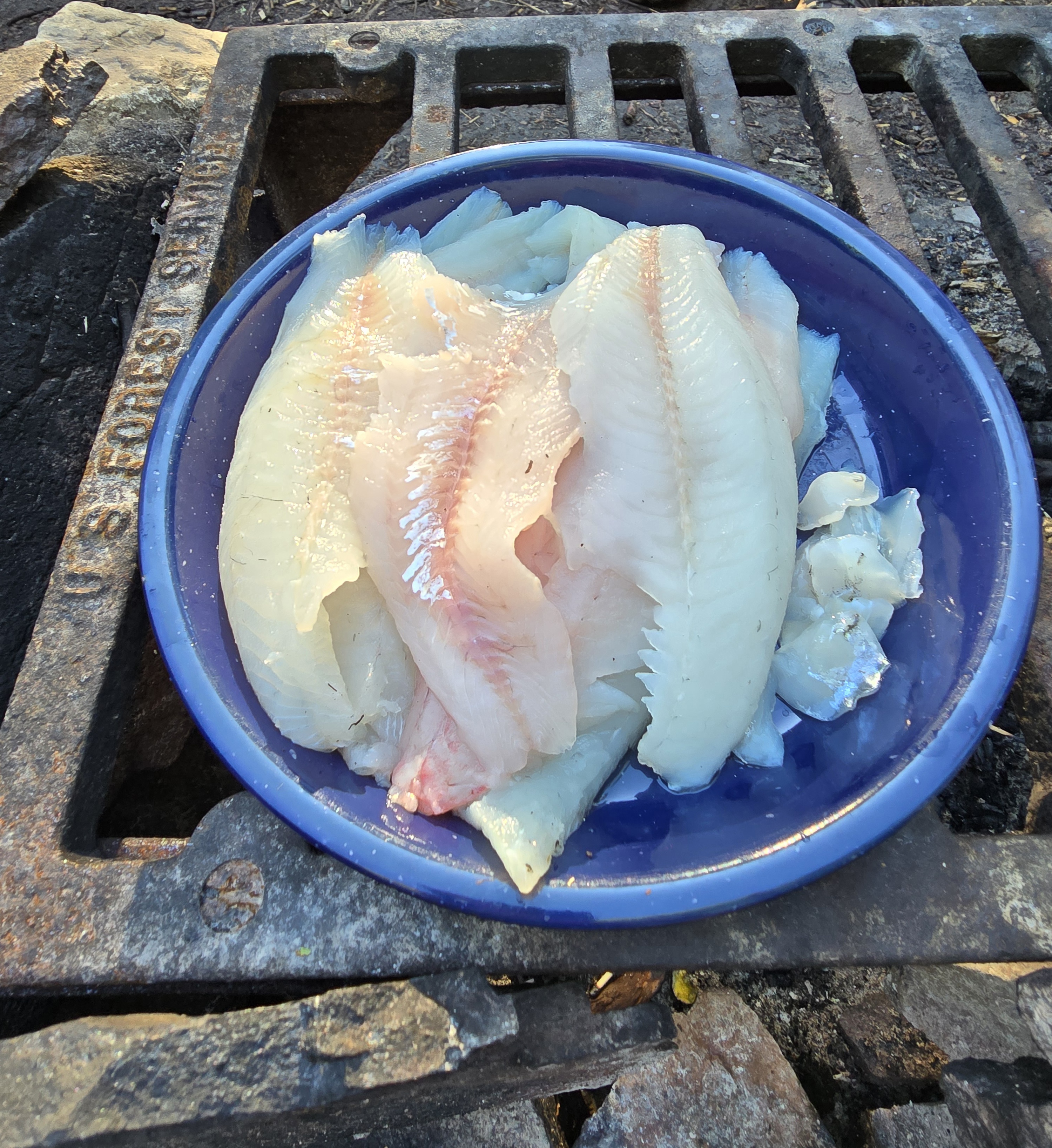
Mmmmm, wilderness walleye filets!

The next morning, our final morning, another thunderstorm rolled through, but it wasn’t as strong as the previous one. Once it stopped, we packed up our soggy gear and headed to the canoe landing, wanting to cross Brule Lake as quickly as possible in case another storm was gathering. Sharon and Mike planned to leave later.

We made it back to the landing. Driving home, we appreciated the gradual return to civilization. Backwoods gravel roads gave way to pavement that led us past homes and eventually to the small town of Lutsen. The day turned hot and muggy, so we stopped for ice cream on the way home to Duluth.
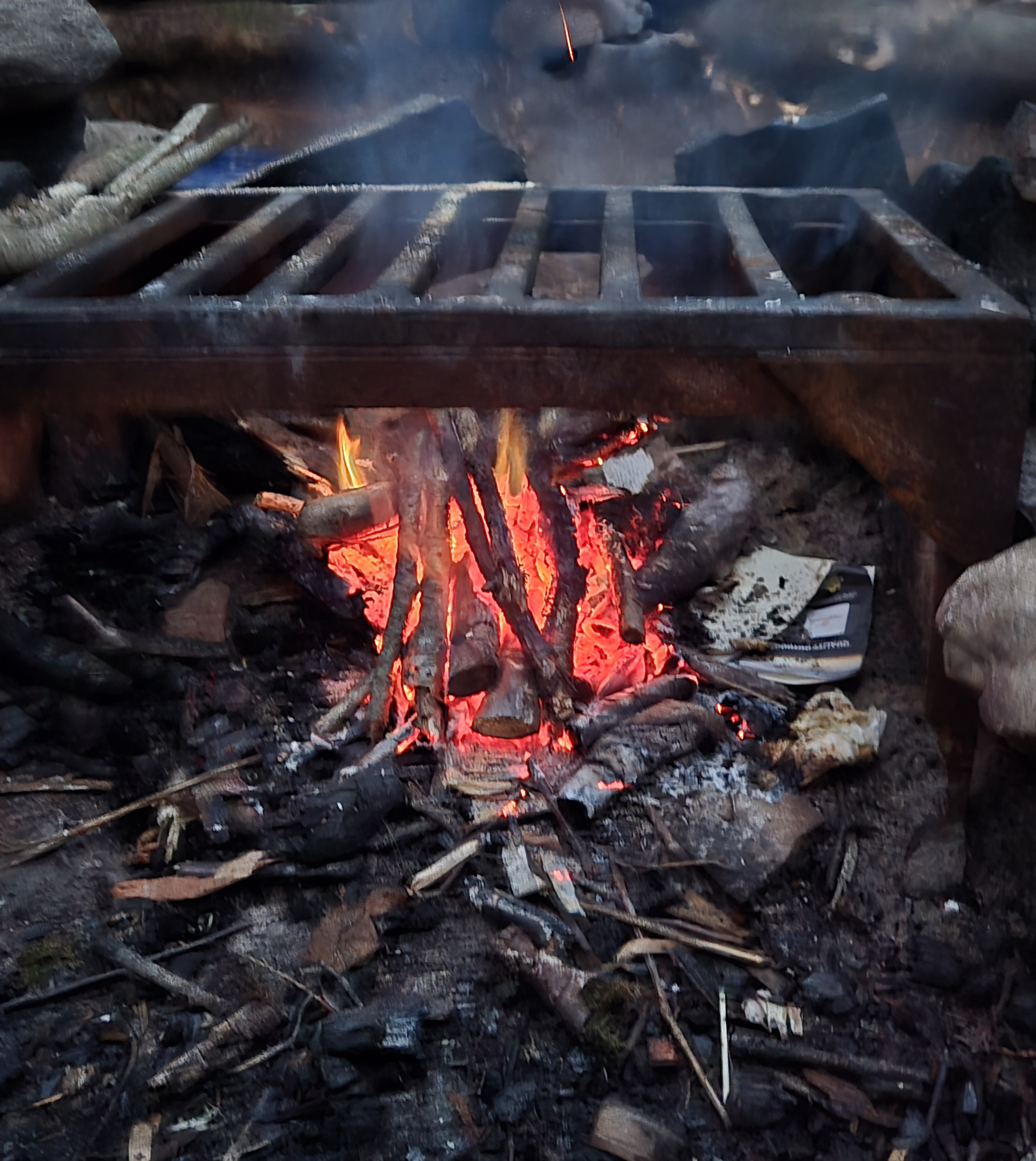
Our campfire on Brule Lake.

Now we’re back winning Connections again: 6 games so far. But we both agree this wilderness trip and the memories of spending time with good friends, listening to loons yodel, telling stories around the fire, and surviving thunderstorms were more than worth breaking our streak.
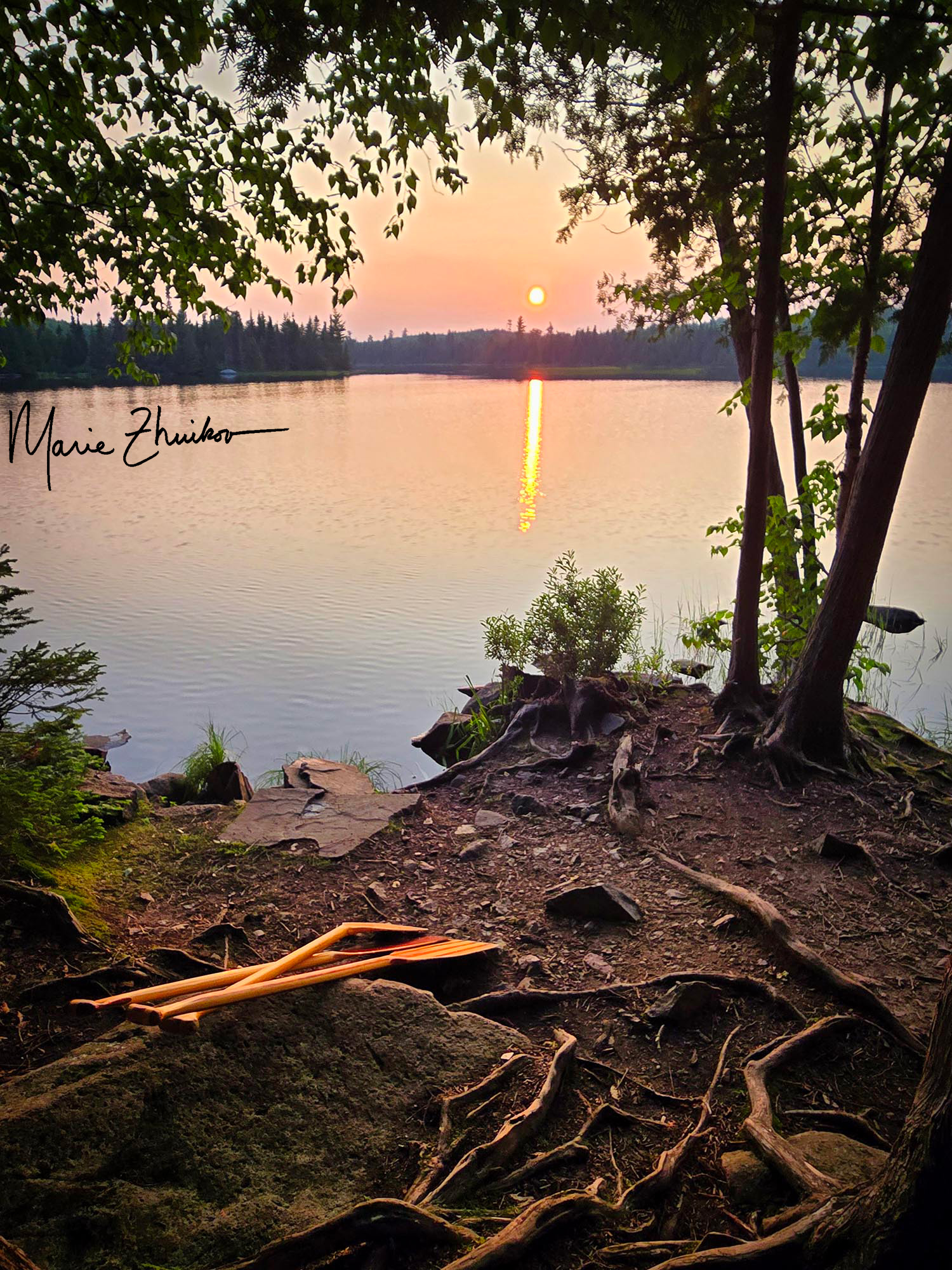
Paddles and sunset on Brule Lake.

That Time I Lost a Canoe in the Wilderness

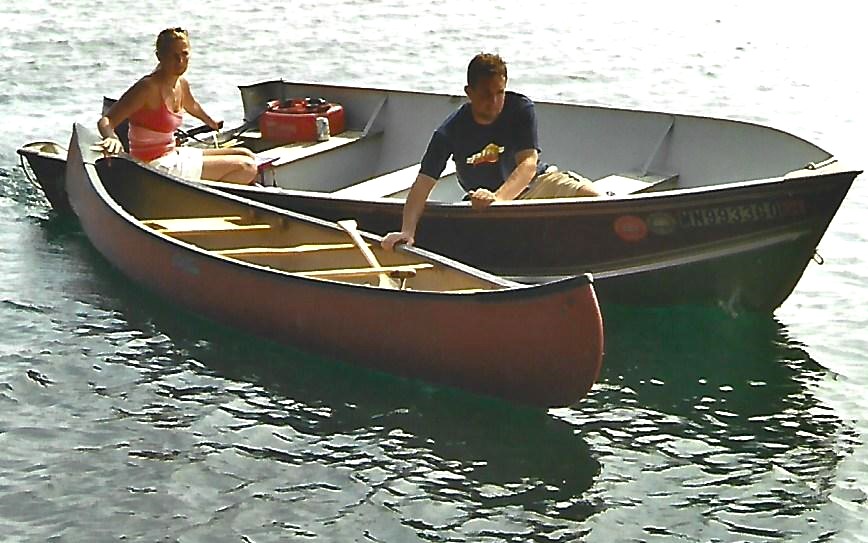
Me and my boys in our Old Town canoe, Clearwater Lake. Photo by Sharon Moen.

It was August 2003 and my friend Sharon and I decided it would be fun to do a mother/children canoe trip in Minnesota’s Boundary Waters Canoe Area Wilderness. At the time, my boys Hunter (4 yrs) and Logan (11 yrs) had been camping but I don’t think they’d been in the wilderness yet.

We planned to stay on Clearwater Lake, which I became familiar with years ago when I was a volunteer wilderness trail crew member for the Forest Service. I had fond memories of the clear water and impressive rock ledges on the campsites there. I used to work for the Forest Service and had been in the wilderness many times, so I was quite comfortable taking my children there in our red Old Town canoe without their dad.

Marie, Hunter, and Logan. Photo by Sharon Moen

Sharon brought along her two girls, Sierra and Savannah, and their dog. I can’t recall exactly how many days we camped – maybe two or three. The weather was great, and the water was warm enough for swimming. A submerged log lay not far offshore from our campsite and provided endless hours of entertainment for our children as they swam. They could stand and bounce on it, which made it seem like a wilderness theme park ride. A downed tree near our campsite also fascinated them.

Marie camp cooking. Photo by Sharon Moen

We spent evenings around the fire regaling each other with tales of our wilderness exploits and prowess. One afternoon, we decided to canoe to a campsite farther down the lake that I recalled was a good fishing spot. A large rock ledge with a deep drop off was also the perfect place for a picnic lunch. We beached our canoes on the small sandy beach at the empty campsite and the festivities commenced.

Sharon about to help Logan unhook his fish.

Later, Logan caught a fish. As Sharon was trying to unhook it for him, the hook went into her finger. I performed minor surgery to get the hook out and all was well. That was, until I noticed a red canoe floating across the lake.

“Huh, that canoe looks the same as mine,” I said to Sharon.

She looked at the beach where her canoe sat all by itself. “That IS your canoe!” she said.

What I, Miss Wilderness Expert, didn’t count on was the wind switching. Part of my canoe had still been in the water, enough so that it floated away.

I panicked. Losing a canoe in the wilderness is like losing your car in the city; maybe worse than losing your car because there’s no public transportation in the wilderness. I was ready to swim out and grab it. I’m not sure why I didn’t think of paddling to it in Sharon’s canoe with one of my children and having them hold onto the canoe so we could tow it back. Anyway, swimming was what made sense at the time. And time was of the essence before the canoe drifted farther away.

I was ready to jump into the lake when a couple in a motorboat happened by. Although motors are not allowed in most of the wilderness, there are a few lakes like Clearwater where they are allowed. I think it’s because there’s a resort on this lake.

“That your canoe?” One of them asked. When we responded in the affirmative, they followed up with: “Want us to get it?”

That earned an enthusiastic “Yes, please!”

Helpful motorboaters return my canoe. Photo by Sharon Moen

They grabbed the canoe, no problem, and brought it back to us. We thanked them profusely and I made sure that sucker was totally out of the water when I beached it this time.

Over the years, Sharon has made sure I don’t forget this incident. We trotted it out just last week when having lunch with a new coworker who wanted to know how long we’d been friends.

Although it was incredibly embarrassing at the time, losing my canoe was a good lesson about not getting too complacent in the wilderness or in life. You never know when the wind might switch.

The whole crew.

The Root Beer Lady: A True Story

Once upon a time, a woman lived alone in the northern Minnesota wilderness. Except, she wasn’t really alone. Birds and otters kept her company. Canoeists stopped by her island on Knife Lake near the Canadian Border. At one time, she even ran a resort there.


Image courtesy of the Dorothy Molter Museum.

But after the land was designated as an official roadless area and then a Wilderness with a capital W, making a living became more difficult for the woman, not to mention getting supplies. Rogue sea plane pilots tried to help her, but they were arrested. The only thing the woman could do was haul in the supplies she needed by canoe, portaging five times over the 33 miles to civilization.

In 1952, a writer with the Saturday Evening Post visited her and wrote a story about “The Loneliest Woman in America.” The article turned her into a national legend – a woman living alone among wolves and braving minus 50-degree winter temperatures. But the woman always contended the writer got it wrong, she was never lonely, even in winter.

One day, she was cleaning and found dozens and dozens of glass bottles left from when her resort served pop (as we call it in Minnesota). Rather than haul out the bottles and discard them, Dorothy Molter (as was her name) got the idea to make root beer for passing canoeists in the Boundary Waters Canoe Area Wilderness.

Dorothy Molter’s root beer cooler.

She hit the jackpot. If there’s one thing most wilderness campers appreciate, it’s a fizzy cold drink after days away from civilization. Dorothy made her drinks with root beer extract, sugar, yeast, and water from Knife Lake. They were cooled on ice cut from the lake in winter. Canoeists donated a dollar per bottle.

Dorothy made root beer for years. At the height of her business, she produced 12,000 bottles and still couldn’t keep up with demand. She was trained as a nurse and aided any canoeists who needed help by sewing up cuts and removing fishhooks from various body parts. She once saved the lives of a father and son who got hit by lightning in a sudden summer storm. Dorothy also nursed wild animals, including a crow and a mink.

A strong and plain-spoken woman, Dorothy didn’t swear or curse, but she didn’t mince words either. Her philosophy for surviving in the wilderness could be summed up in the sign she posted at her home on the Isle of Pines. “Kwitchurbeliakin,” it advised.

Dorothy continued living in the wilderness until she was in her late 70s. She kept in touch by radio, checking in with Forest Service staff daily. One winter day she didn’t check in. Then another day passed with no contact. A wilderness ranger made the trek and found her dead of a heart attack from hauling wood.

The Dorothy Molter Museum, Ely, MN

Although Dorothy’s time passed, her memory is preserved in a museum named after her in Ely, Minnesota. The fame and good will she garnered through her lifestyle prompted its formation.

Russ and I had heard of Dorothy over the years but never had a chance to meet her or visit her museum. We thought we were out of luck on a recent camping trip to Ely because a brochure we happened upon said the museum was closed after Labor Day.

With drizzly weather forecast, Russ and I ditched hiking plans and meandered into Ely to see what struck our fancy. We had driven though the whole town with no fancies struck, when we passed the sign for the Dorothy Molter Museum on the outskirts. The sign read “Open.” So, we turned in, hoping the sign wasn’t just the product of end-of-season-forgetfulness on somebody’s part.

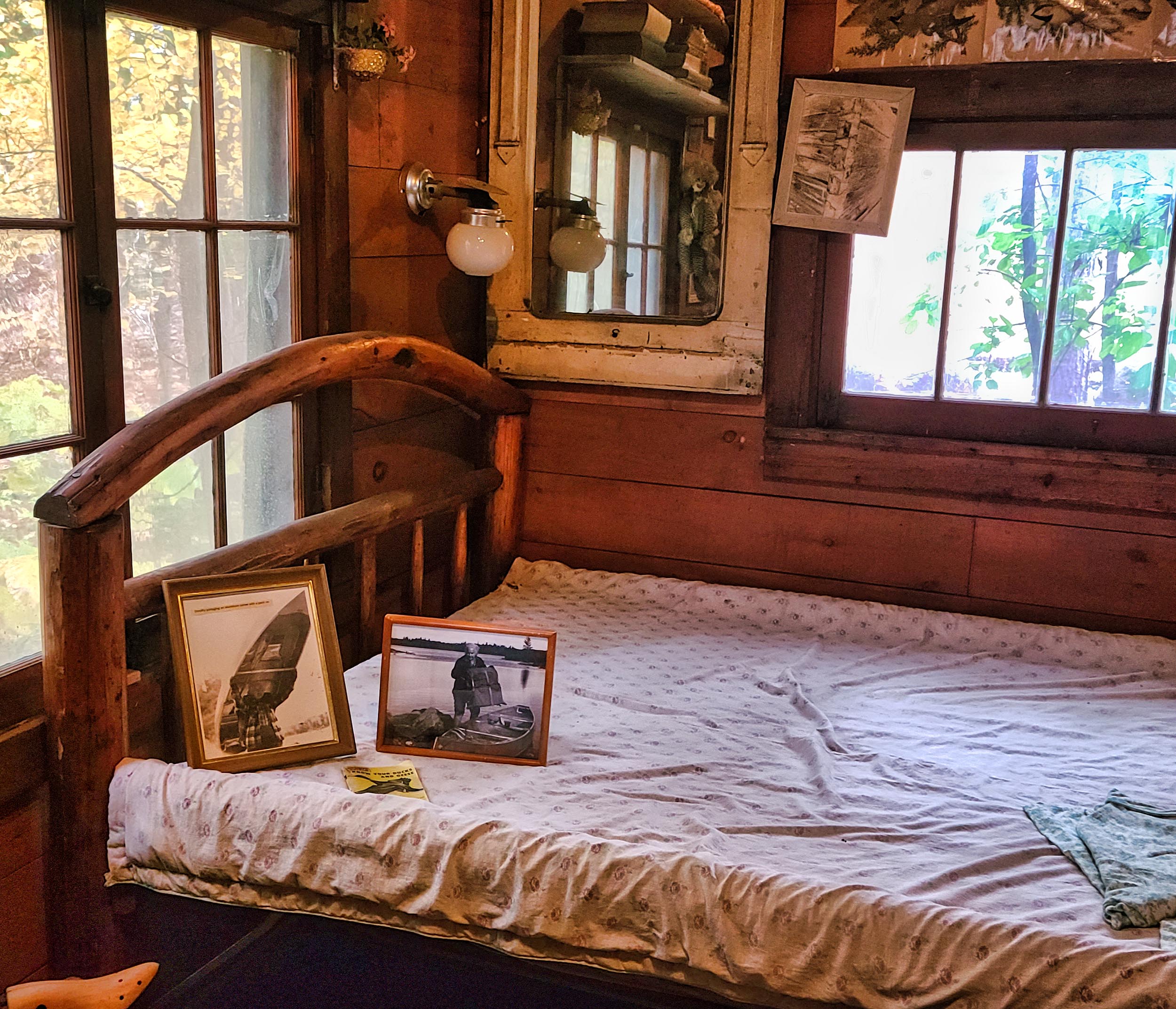
The museum really was open! We spent a couple of hours touring Dorothy’s cabins, which volunteers had hauled out of the wilderness to house her artifacts. We enjoyed watching excerpts from a video about Dorothy’s life. We viewed her root beer-making equipment and perused the gift shop, where visitors can buy a bottle of Dorothy’s root beer. Despite the drizzle, we also got a bit of hiking in on the quarter-mile trail in the pine plantation surrounding the museum.

We left glad to see Dorothy’s memory preserved.  As one of the museum signs says, “Although Dorothy  has been gone from Knife Lake for over 30 years, we hope that you find inspiration to live your lives like she did, in harmony with the environment, with integrity, helping humankind, and making a contribution toward a better world.”

Dorothy’s winter boots