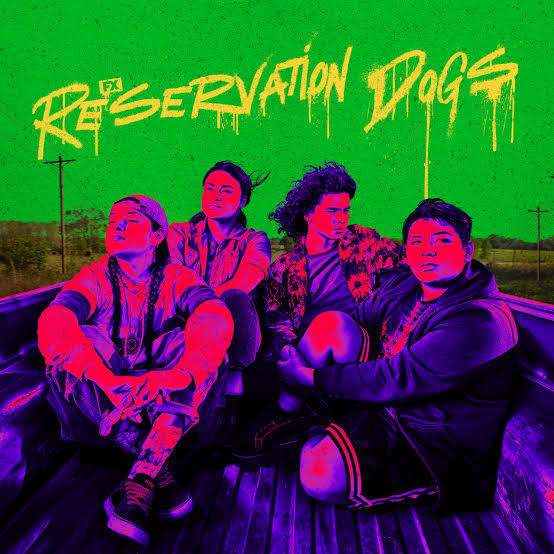
Russ and I just finished watching the Hulu television series “Reservation Dogs.” It’s about four teens who live on the Muscogee reservation in Oklahoma. The gang’s dead friend’s wish was to travel to California and see the ocean, so the teens try to raise money for a commemorative trip any way they can, including via crime (i.e., stealing a flaming-hot potato chip truck). During their adventures, they are guided by spirits and tribal elders.
The three-season series is classified as a comedy, but it’s so much more than that. I think it’s the best thing currently on television. Even better than “Outlander.” (Gasp!! I can’t believe I just said that, but it’s true.) Although there are supernatural happenings, the series is the most real thing around. The acting is totally believable and the situations the young ones find themselves in could happen anywhere, but especially on a Native American reservation. I’ve spent a few weeks living on reservations, enough time to soak up the atmosphere, and recognize an accurate representation when I see one.
The funniest character is probably William “Spirit” Knifeman, a self-proclaimed warrior who died at the Battle of Little Big Horn, even though he didn’t actually fight. He had Custer in his sights but before he could do anything, his horse stepped in a gopher hole, fell, rolled over, and squashed him. He’s a spirit guide for one of the teens (Bear), and always shows up at the most embarrassing times and places, including bathrooms. In one such scene, Bear complains to Knifeman about his new construction job. He doesn’t know what he’s doing and nobody’s showing him anything. Knifeman says, “That’s the Native way of learning. We have this traditional pedagogy of ‘just get out there and learn, fu*cker.’”
I also noticed that, like the Ojibwe in Minnesota, the Muscogee point with their lips, not their fingers. That’s not something you’d ever see if the series was produced by non-Natives.
My favorite episode is called “This is Where the Plot Thickens” (Season 2, Episode 8). A smallish tribal cop named Big investigates several stolen shipments of catfish that never made it to a local restaurant. His ensuing adventure involves LSD, running around in the woods, bigfoot, and a “take back the land” cult of white supremists. The episode is a combination of movies like “The Wicker Man” and “Midsommar.” Besides its humor, what I appreciated is that it combined Natives and sci-fi/horror themes. That seldom happens and is something I know that Native authors are working to rectify. It also has bigfoot in it, which I love because I recently finished a story about him. Hint – you need to watch this episode all the way to the end to fully appreciate it.
Anyway, I love the humor in this series. It’s the humor of the oppressed. My Native acquaintances call it survival humor. Their experiences of cultural oppression have made them sympathetic to other oppressed cultures, as well, such as the Irish. When we were recently in Ireland, one of our tour guides told us that the Choctaw Nation donated money to help the Irish during the Great Famine. There’s even a statue in County Cork to honor the Choctaws.
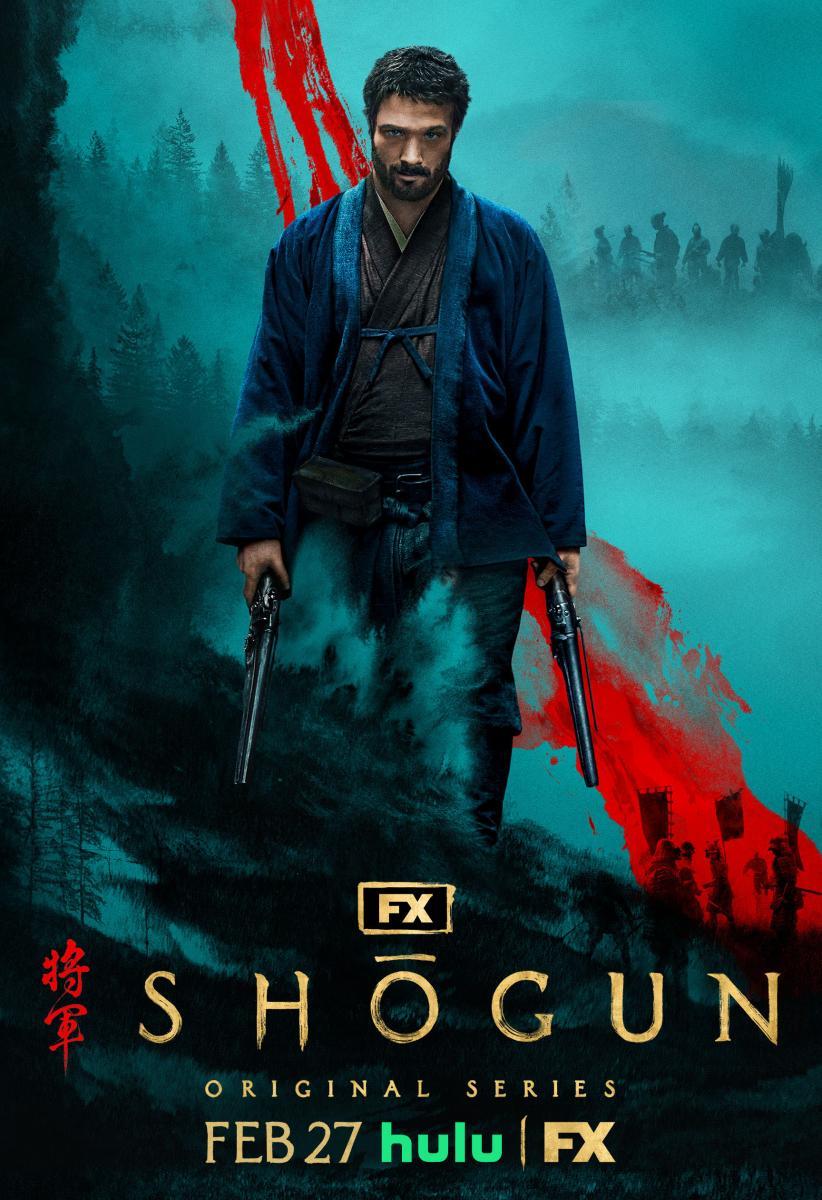
“Shogun” is another Hulu series we recently watched. It’s about an Englishman who is one of the first to make it to Japan in 1600 during the start of a civil war there. I watched the original series years ago. Although the current actor who plays John Blackthorne is no Richard Chamberlain, he won me over by the end.
A cultural connection that struck me about this series was the similarity of the Japanese clan system and politics to that of the Scots. Alliances were formed and battles fought along the lines of the clans in a manner like the Scots. The clan that Blackthorne was taken in by was oppressed like the Scots were by the English.
I’m not sure why I’m paying attention to oppression across cultures. Maybe it’s due to the power shift occurring in the U.S. right now. Perhaps I’m looking for clues on how to survive it myself.
 Marie's Meanderings