I named this place Listening Point because only when one comes to listen, only when one is aware and still, can things be seen and heard. Everyone has a listening point somewhere. It does not have to be in the north or close to the wilderness, but some place of quiet where the universe can be contemplated with awe. — Sigurd Olson, Listening Point
Those of you who have read my blog for a while may recall a quote or two from one of my favorite nature writers and conservationists, Sigurd Olson. He lived a couple of hours north of me in Ely, Minnesota. I never met him (he died while out snowshoeing in 1982 when I was in college), but over the years I’ve read most of his books and I admire his way with words and his way of being in the wilderness.
Olson’s home and cabin have been preserved by The Listening Point Foundation. It was formed to preserve his legacy and to advance his wilderness philosophy. During summer, they offer tours of Olson’s cabin and house.
One day last month, Russ and I booked a tour and meandered up to Ely with some visiting friends. It was a drizzly fall day, but that didn’t stop our excitement at finally seeing the places that helped shape Olson’s books.
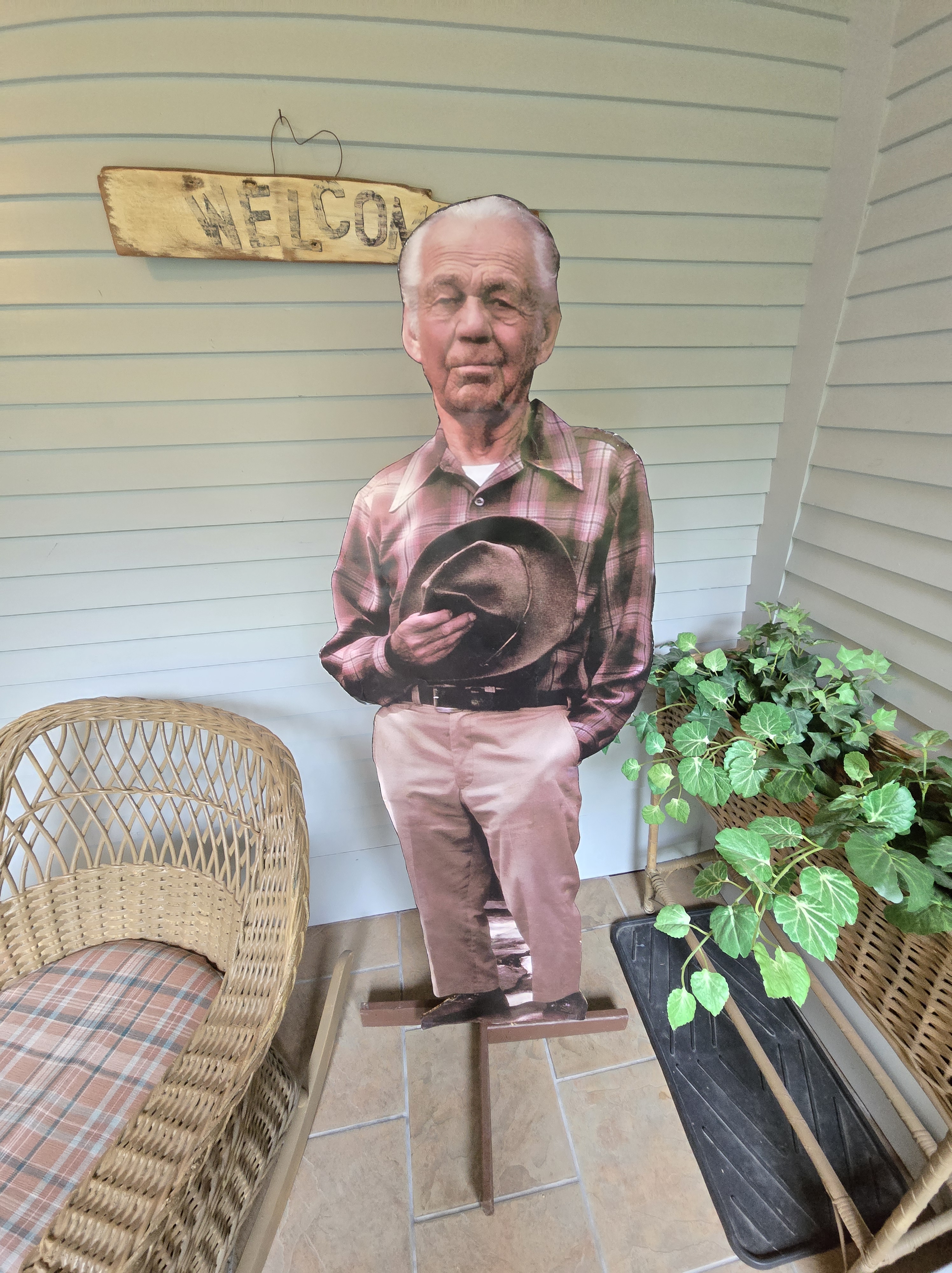
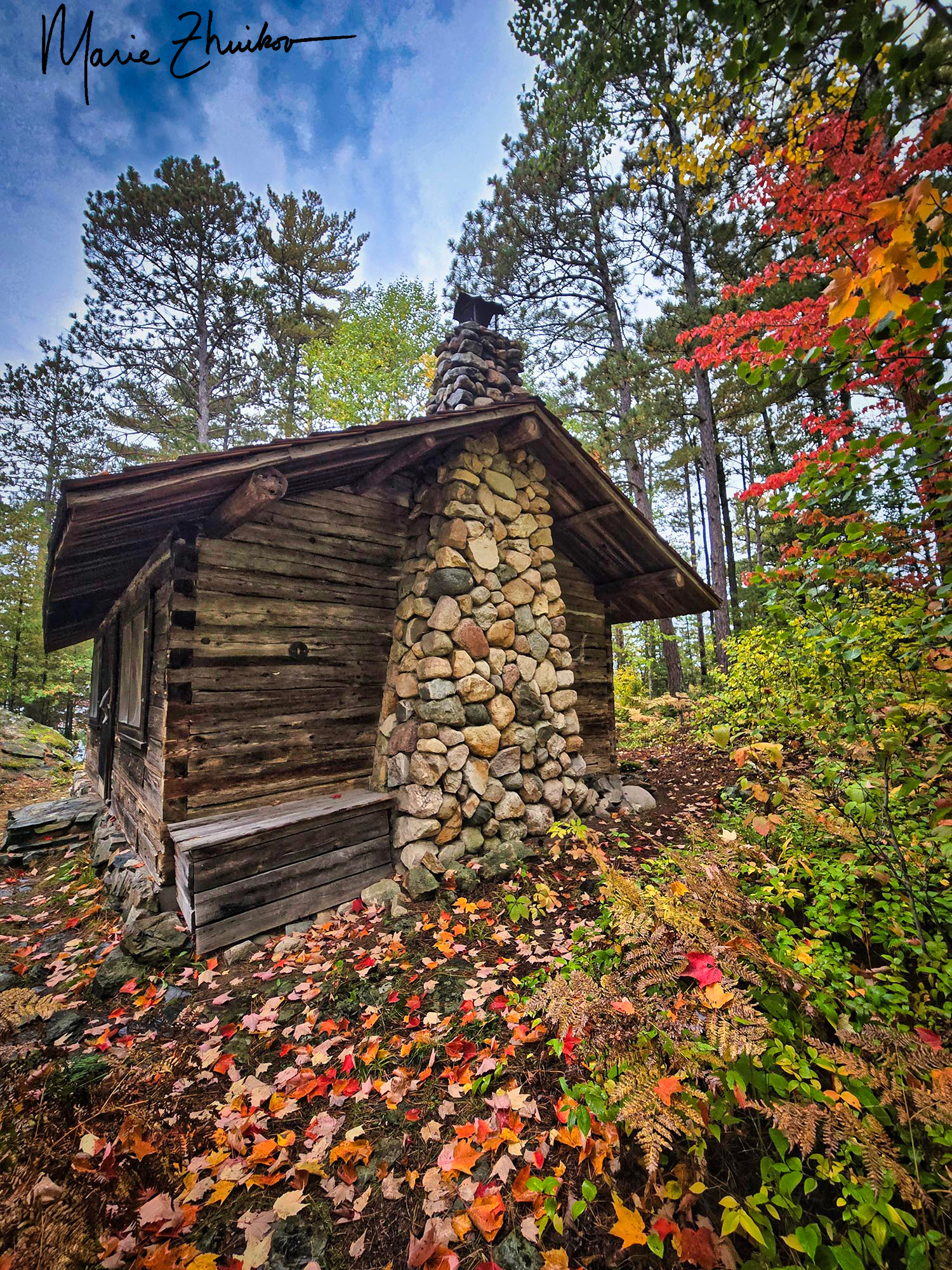
We met as a small group for the tour of Sig’s cabin at Listening Point just off the highway and caravaned into the cabin parking lot. Our guide was a colleague of Olson’s from when he taught at Vermillion Community College. He gave us an orientation and some background information while standing in the lot, then we hiked a short trail to the cabin, passing Sig’s handcrafted sauna along the way.
You would think the cabin would be on the rocky tip of the point that juts out into Burntside Lake. Instead, it sits sheltered behind a huge boulder dropped by the glacier eons ago, with views of the bay. Sig wrote about his decision to locate the cabin in that spot in his book, Listening Point. Essentially, he wanted the protection and stability of that site, and to preserve the end of the point for contemplation, not living.
The one-story, one-room cabin was originally two stories. It was located elsewhere and moved to the site. There’s no indoor plumbing, only an outhouse. A fieldstone fireplace graces one side of the room. There’s a table for eating and two single beds for Olson and his wife, Elizabeth.
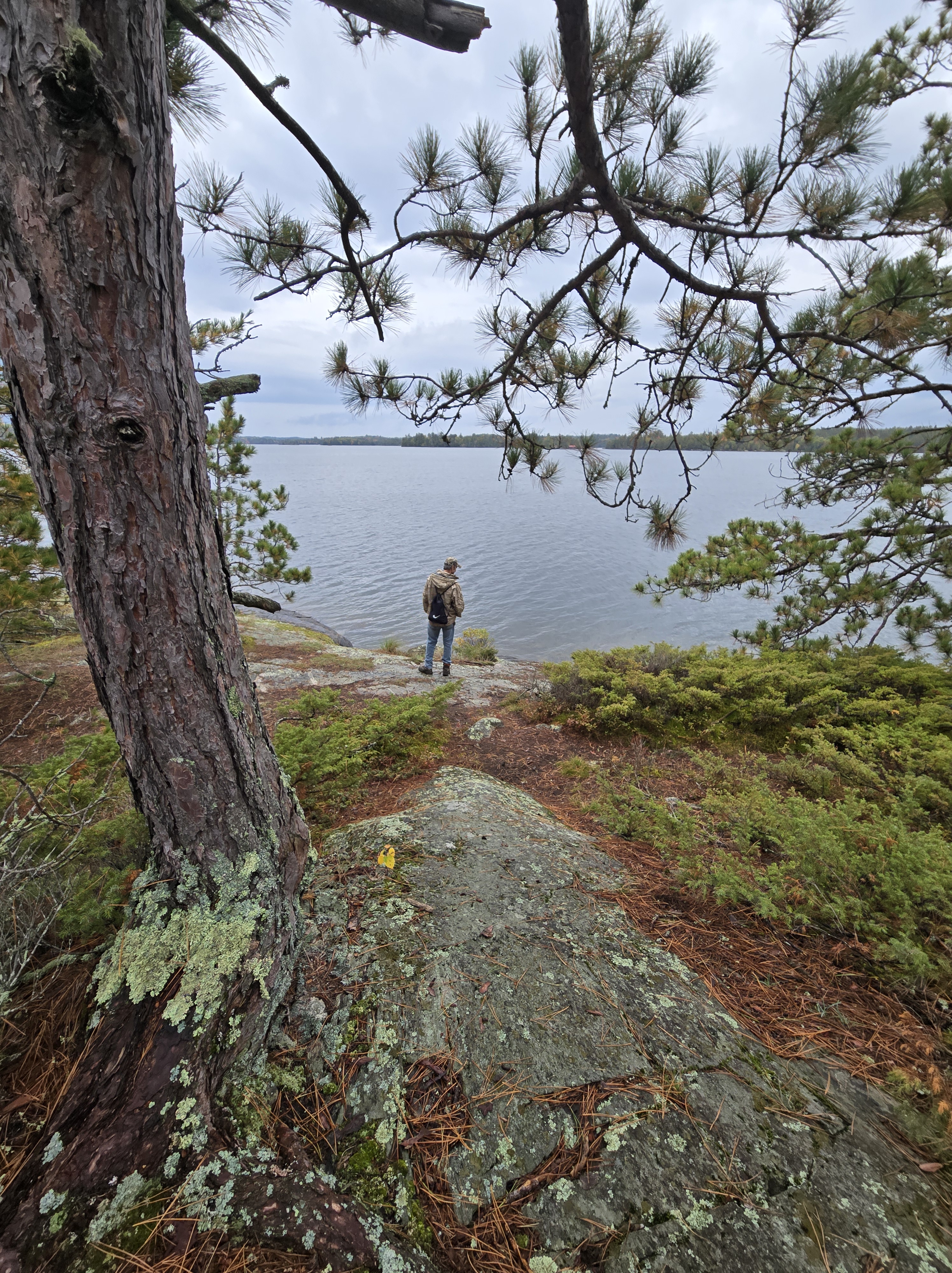
I was surprised to learn that Olson did not write at the cabin. He saved that for his backyard writing shack at his Ely house. You’d think the cabin would be the perfect place for that! Instead, he used it to gain experiences that he could write about.
After we toured the cabin, which is on the National Register of Historic Places, we wandered out to the point. A breeze whispered through the white pines, and I could almost hear the spirits. A low log bench sits atop a rock that offers a good view of the lake. Below it, a bronze plaque commemorates Olson.
We spent many minutes soaking in the peace. Soon, it was time to go. Although we didn’t sign up for it, our guide invited us to visit Olson’s house since he was going there to lead another tour, anyway. We readily agreed!
Ely was about a 20-minute drive away. We parked near a modest gray house with white trim. Upon entering, we were struck by how civilized the house was compared to Sig’s cabin. No wonder he needed a second place to get away. The kitchen has been remodeled since Sig’s time, but the rest of the place is much the same.
The living room serves as an informal museum to Sig’s life and accomplishments. The dining room looks out on his writing shack.
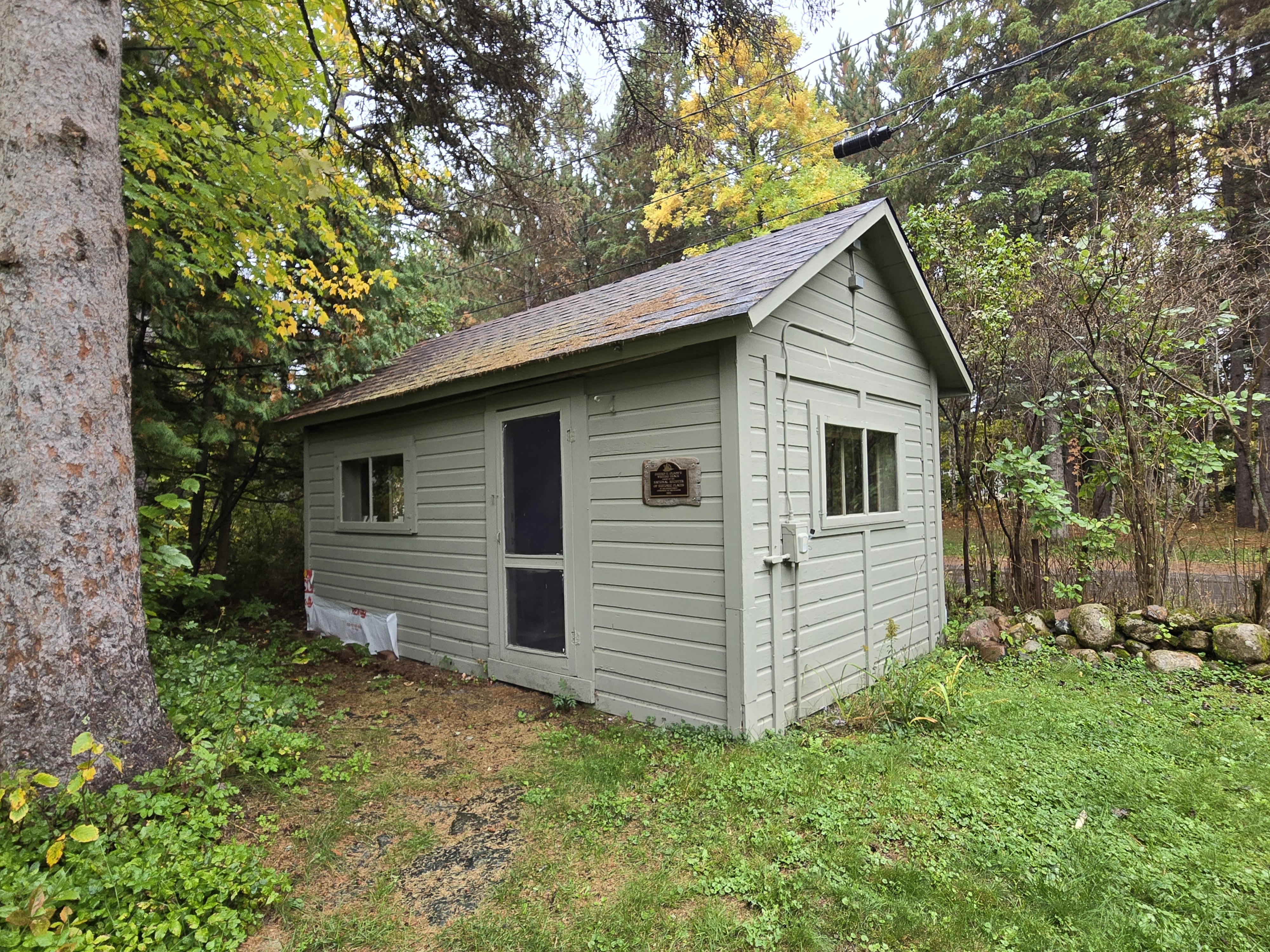
We toured the shack, which is also on the National Register of Historic Places. In addition to being a writer and conservationist, Sig was a naturalist. Besides a typewriter and books, the shack is filled with finds from his wilderness travels. Rocks and animal bones line almost every available surface.
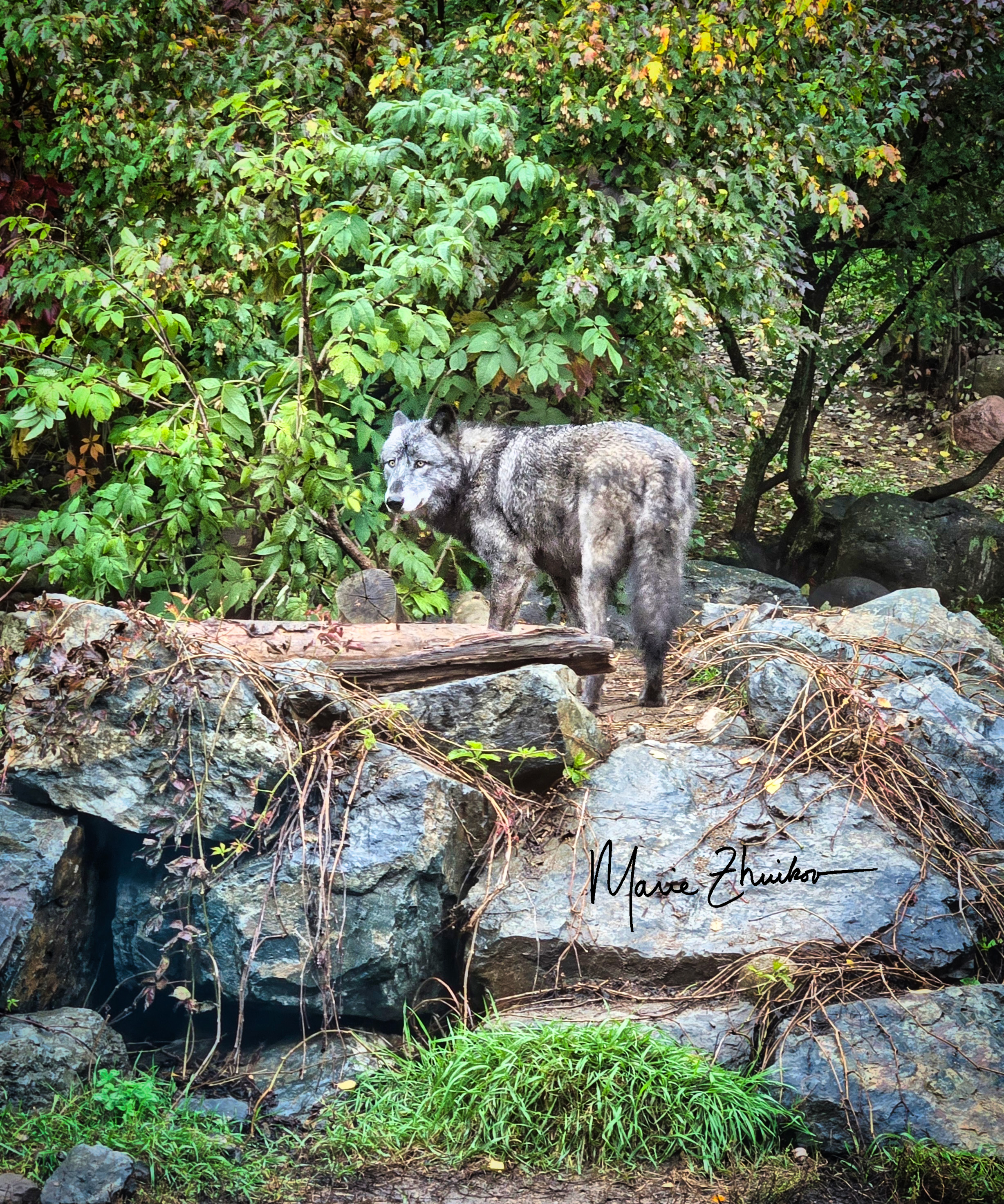
We came away with greater understanding and appreciation for this noted author and the land where he lived. We had some time to kill, so after lunch at the Evergreen Restaurant (highly recommended!), we visited the International Wolf Center. I’d been to the center a couple of times (most notably when I was doing research my Eye of the Wolf novel), but it had been many years, so I was interested to see their new educational exhibits and the new wolves in the captive pack.
Now, wolf-lovers, don’t get all up in arms about the term captive. The wolves in this pack have plenty of room to roam, and they aren’t taken from the wild. They function as ambassadors for their species, helping people learn about and appreciate wolves.
During a naturalist program about wolves, we watched in awe as several pack members appeared like ghosts out of the woods. We could see them through the large observation windows. That was truly magical!
We returned home from Ely feeling peaceful and just a bit wilder, with a strange impulse to howl on the next full moon. 😊