Scotland: Days 3 & 4, Gardenstown and Banff

The town square in Banff, Scotland.

After breaking my ankle during a hike from Gardenstown, we laid low the next day. I sat in the window seat, watching boats and the tide come in and go out of the harbor with ankle iced and elevated. “Losing” a day of adventures was frustrating, especially after losing a day in Ireland due to our flight getting canceled. But I really had no choice but to be sensible. Sigh.

Gulls were nesting on the slate roofs in the nearby courtyard, squawking loudly and bringing food to their half-grown babies. With their calls in the background, I boned up on my Scottish genealogy in preparation for our meeting with a distant cousin at Broomhall House near Edinburgh. I mentioned in one of my posts about Ireland that, according to some less-distant cousins, I’m related to Robert the Bruce, the first king of Scotland. He was my great-grandfather to the 21st power. Someday I plan to get a genetics test to prove this, but I hadn’t had time or opportunity to do that just yet.
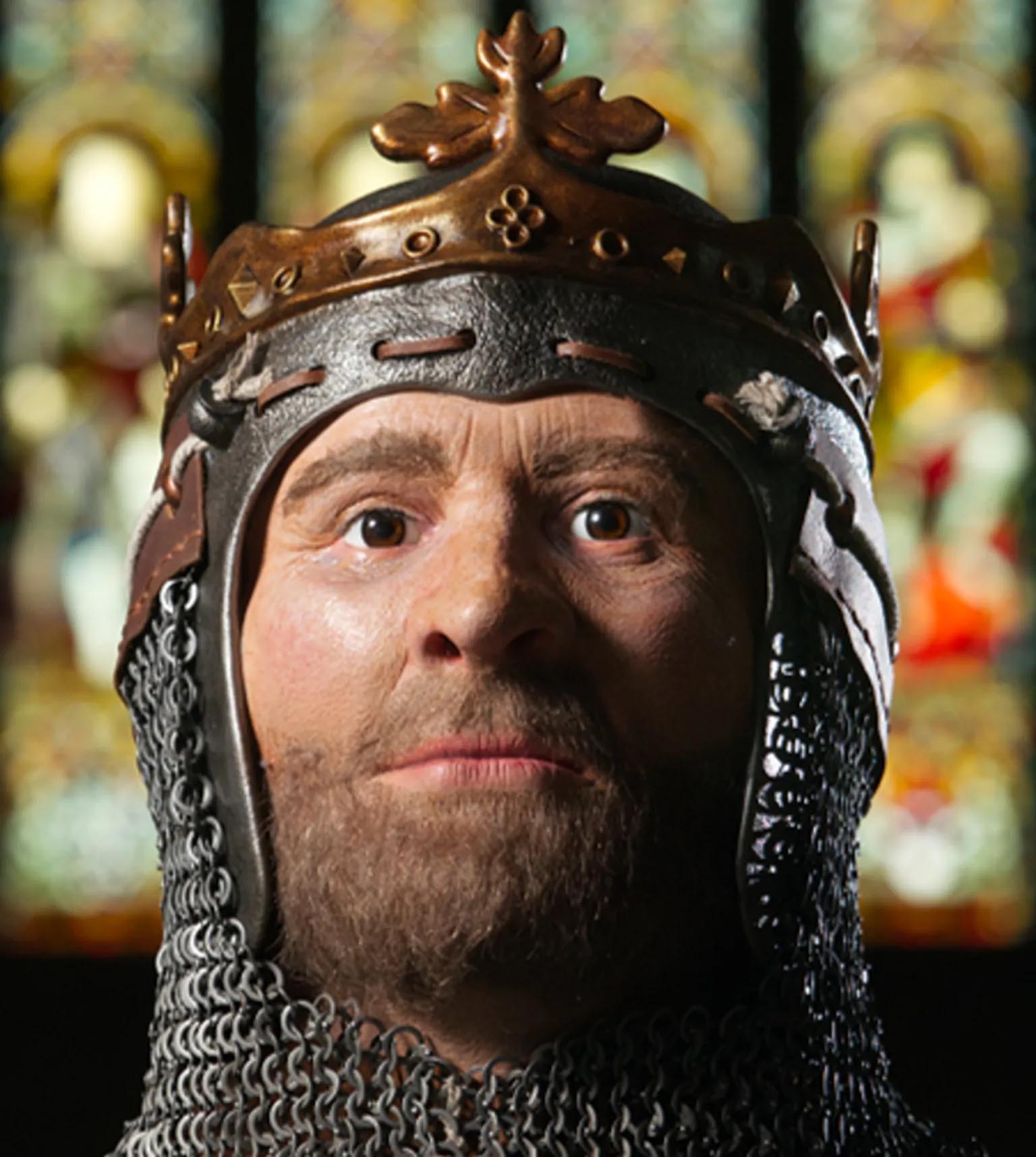
A reconstruction of Robert the Bruce’s face. Image courtesy of the BBC.

As I perused the genealogical chart, I was impressed by some of the sir names that popped up, including Stuart and Wallace. Apparently, our cab driver the other day might be a Stuart relative of mine! No wonder we became buddies so quickly. Also, there were six Barons of Clackmannan in my line. Thanks to some internet searches, I discovered that the barons lived in a tower and mansion in the town of Clackmannan and that the tower still stands. I thought it would be great to go there some day and filed that in the back of my mind. It wasn’t too far away from Broomhall House. Hmmmm.

The next day we decided to brave a bus trip to Banff, the nearest large town, to take in some of the sights. The bus stop was nearby, and it ran every hour or so, so it looked very convenient. And it was! Hobbling to the stop with my hiking pole, we caught the bus. Our goal was to wander around Banff for a while, then catch a taxi in the afternoon to Huntley and the Glendronach Distillery, one of our favorite brands of whisky.
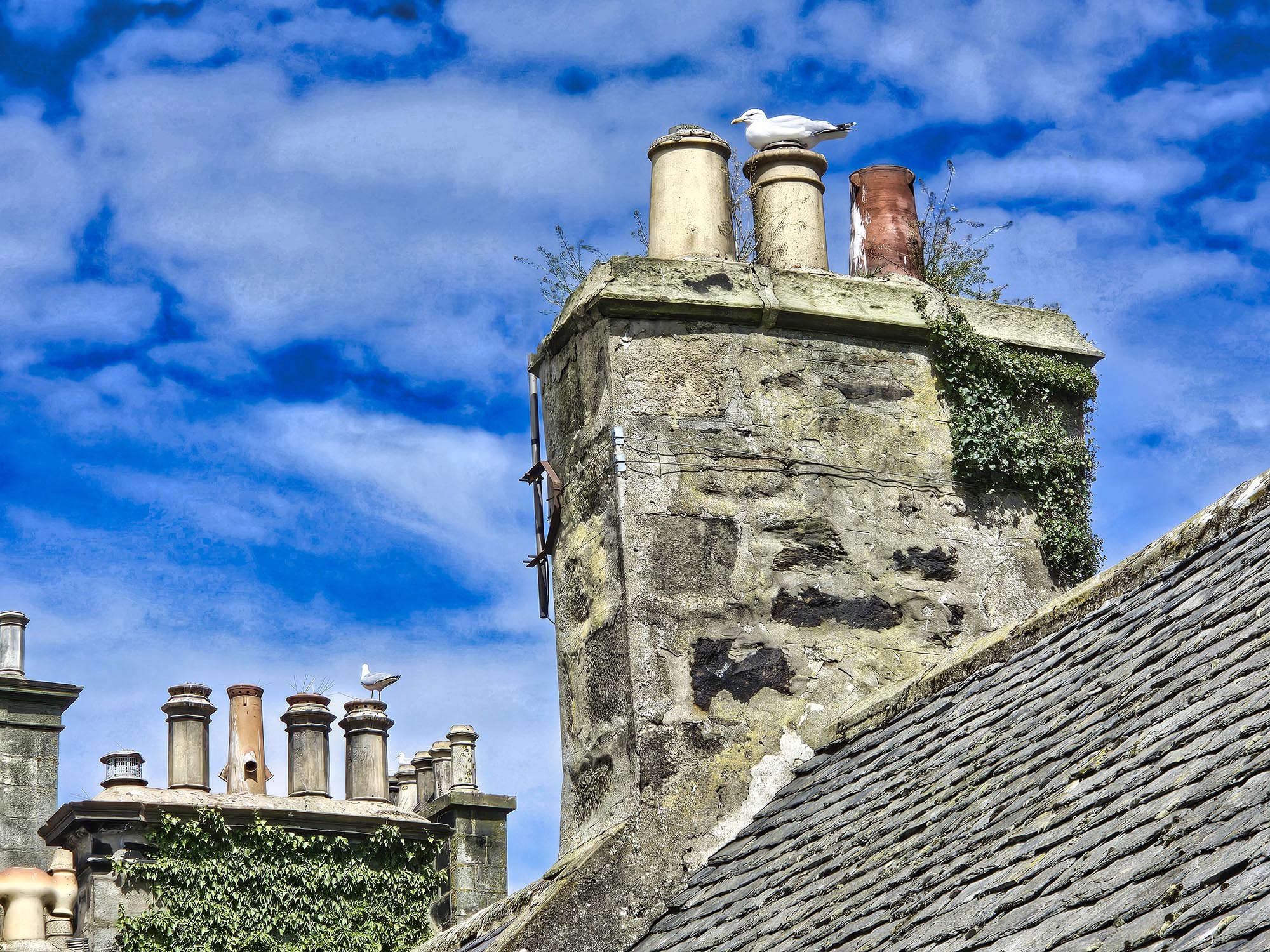
Chimney gulls in Banff.

We were dropped off in the central town square of Banff. Mind you, this is the original Banff that Banff, Canada, is named for, or so the locals say. (I checked, and Banff Canada was named by the president of the Canadian Pacific Railway who grew up in Banff, Scotland.) An internet search told me that a local mansion called Duff House was open for tours. The walk wasn’t too far, so off we (I) hobbled.
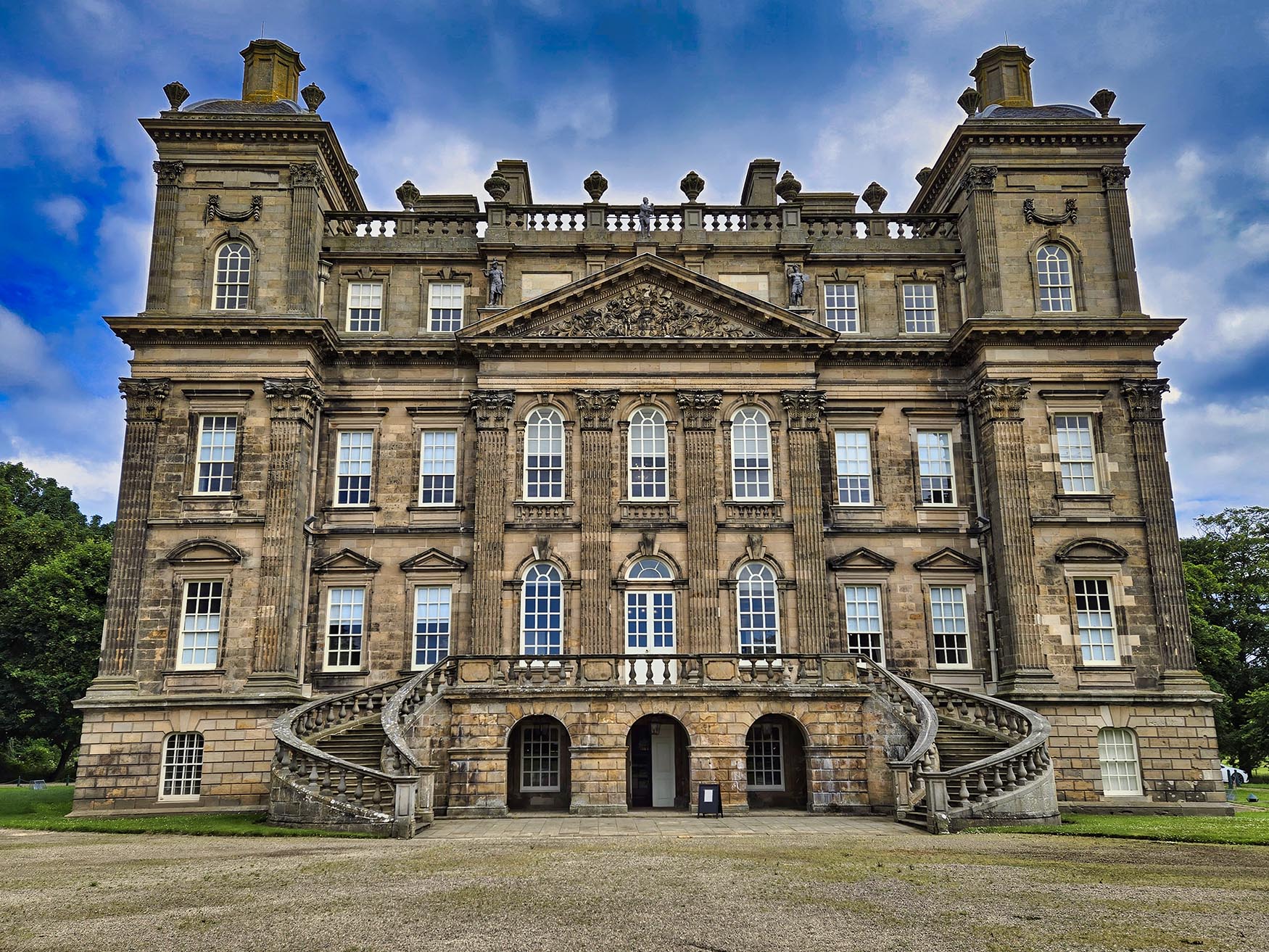
Duff House in Banff.

The building was designed in the 18th century by Scottish architect William Adam for the local lord. However, before the interior was finished, work on the house stopped due to cost overruns. Apparently, the local lord’s (William Duff) plans were larger than his wallet. A court case ensued, which found in favor of the architect. Unfortunately, he died before the case was finished and never collected his payment. The lord was so disappointed by the whole thing, he never spent a night in the house and its completion was left to his heirs. During its life, the house has served many uses, including a hotel, sanatorium, and POW camp. If you’re interested in more history about the house, visit this site.
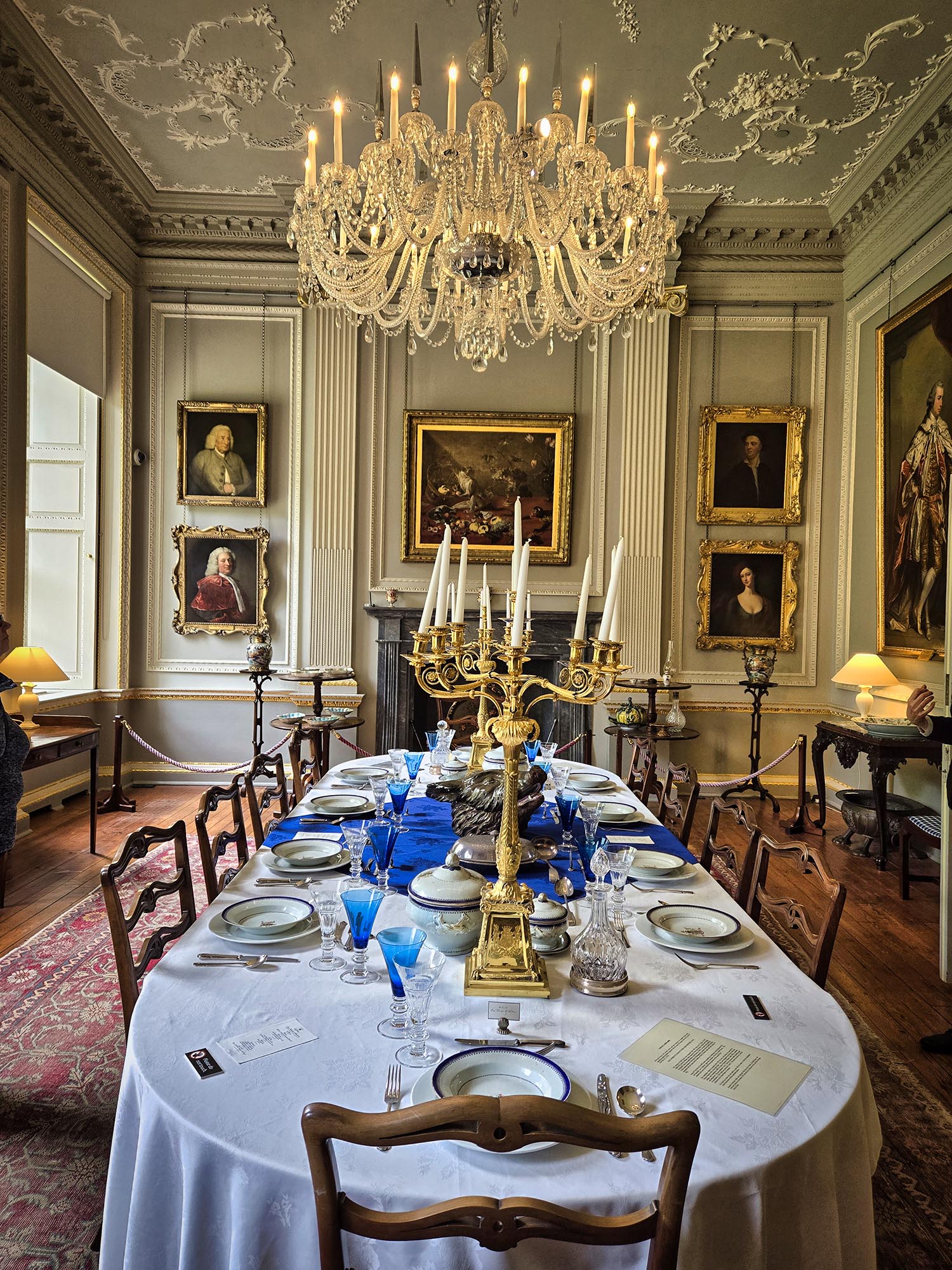
The dining room in Duff House, with a crooked candelabra.

The house is several stories tall. Rather than have a woman with a broken ankle hobble up and down stairways, the tour guides led me to elevators between floors, something I was thankful for! We enjoyed viewing the notable paintings and relics in the mansion.

By then, it was lunch time, so we walked back to the town square to a café we noticed earlier. Sated, we went back to the town square to see if we could connect with a cab. There are five cab companies serving Banff. Much to our dismay, we discovered that all of them were booked and there was no way we could make our distillery tour reservation time. We planned to leave for Edinburgh the next day, so we were out of luck for a tour later. We discovered the hard way that we should have made advance reservations with a cab. We learned that many school children in the area use cabs to get to and from school and that’s why none were available for us.

What was really lovely is that a woman who was walking by noted our plight and tried to help us. She even went across the street to a travel agent and asked his advice. Unfortunately, his advice was to spend time in the café where we had just had lunch and get a cab later. That wasn’t going to work for several reasons. So, we made the best of it and walked to the harbor to see more of the town.
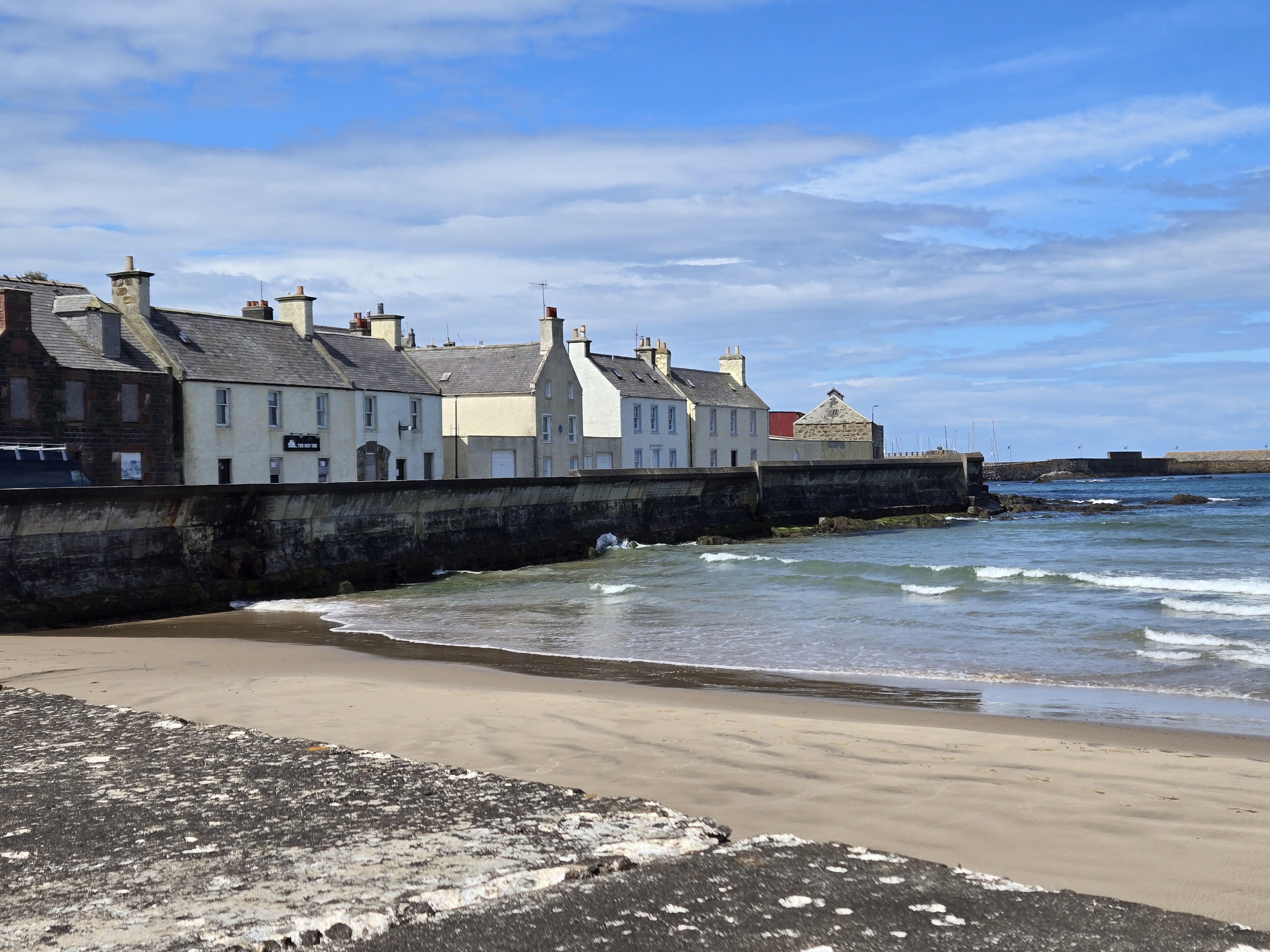
Banff Harbor

We also stopped at The Market Arms Pub, which is rated the best in Banff. A bunch of guys were sitting at the bar. We grabbed a nearby table and had a pint while we waited for our bus ride back to Gardenstown. After about an hour, and older bespectacled gentleman turned to us and said, “Aye, do ye know who Mellors is then?”

It took me a beat to place the name, but I was soon able to tell him that Mellors was the gamekeeper in “Lady Chatterley’s Lover.” He said something about the other guys at the bar being too young to know who Mellors was. I told him it was one of my favorite books, and he agreed that it was beautifully written. That was the extent of our conversation. Where else in the world would a person in a bar ask you about a D. H. Lawrence book? I feel like something like this could have only happened in Scotland! This conversation made up for missing our distillery tour and is just one reason why I love this country.
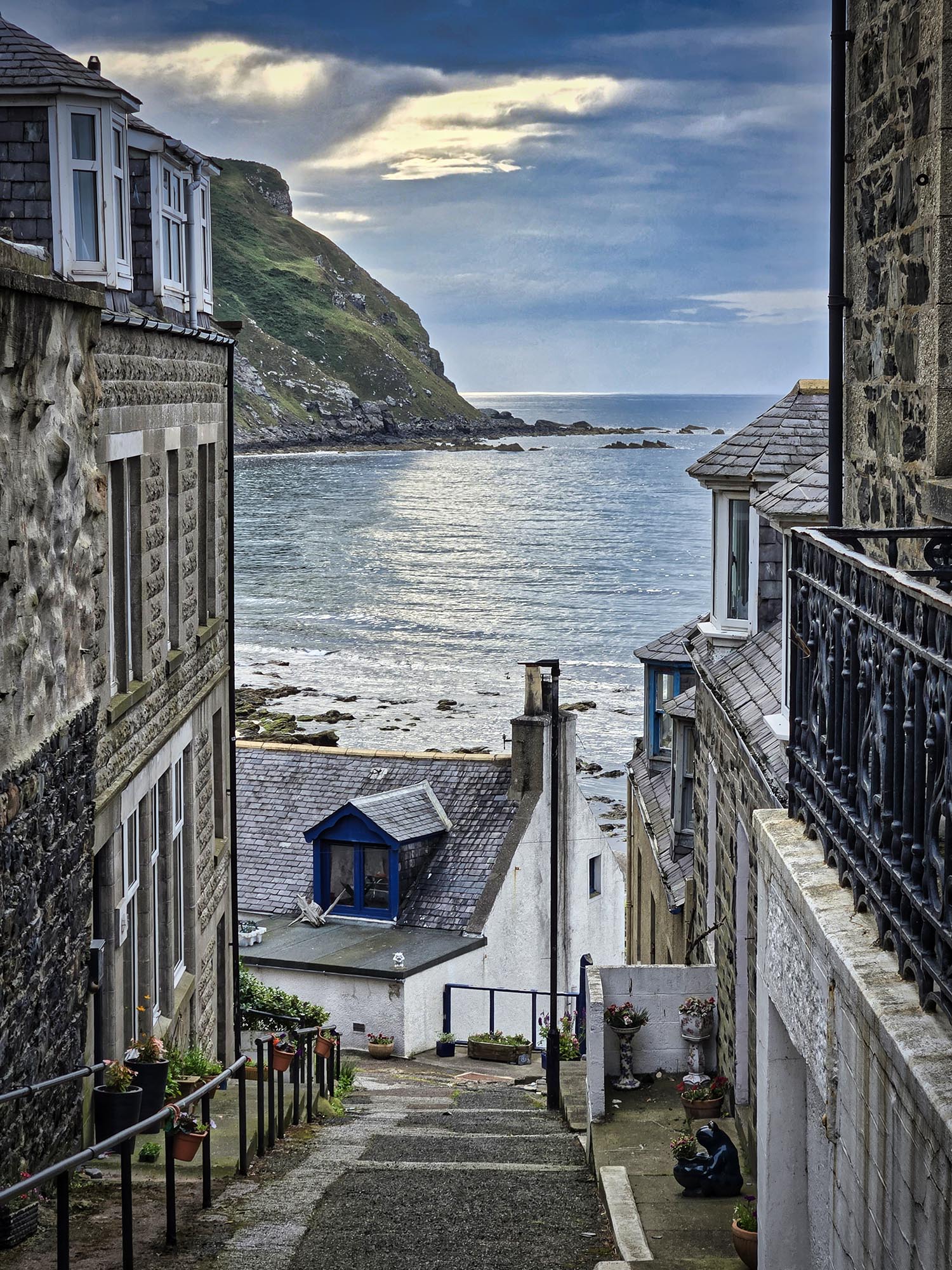
A Gardenstown evening.

We caught the bus back to Gardenstown. Everyone on the bus was very friendly, both coming and going, and seemed to know each other. One man even tried to give us advice on where to sit. His advice would have separated me from Russ, however. I told him that just wasn’t happening. He huffed in a way that said, “Suit yourself. I tried!” As with my previous trip, I was so impressed by the community spirit of this area of Scotland and the helpfulness of the people. They’ve got their noses all up in your business, but they mean well by it.

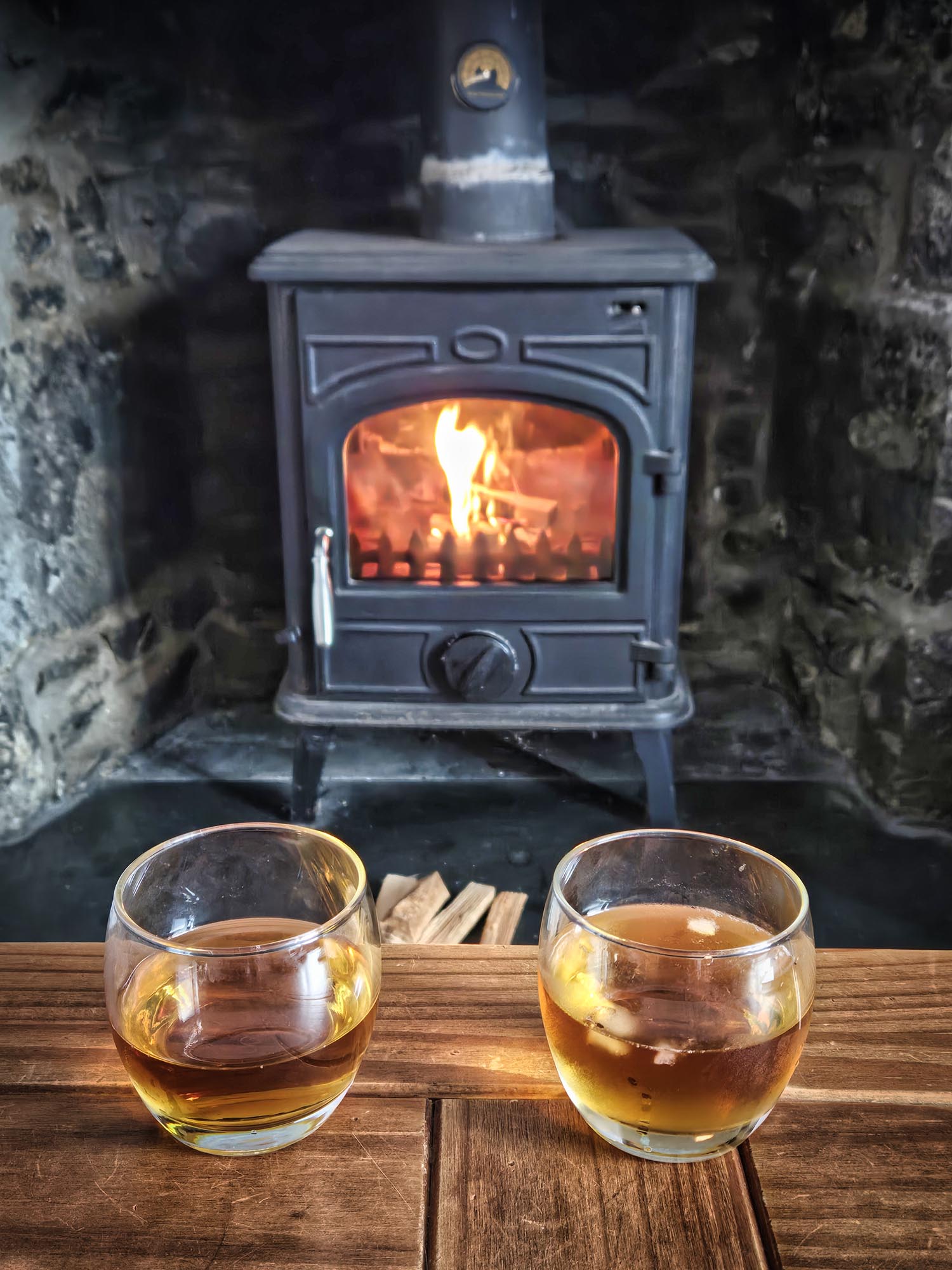
We capped off our night with another meal at the Garden Arms Hotel. I had langoustine nuggets (they’re a kind of shrimp also known as Norwegian lobster) and tiramisu for dessert. They were superb! We spent the rest of the evening at our AirBnB in front of the fire sipping scotch. The next day, our destination was Edinburgh, by train.
Lake Superior Skink Soup

Cullen Skink soup, homemade bread and tea served at the Laird’s Kitchen in Delgatie Castle (2016).

I know what you’re thinking – that is an unappetizing name for a soup! But there’s a reason behind it.

Back in 2016, when my friend Sharon and I traveled to Scotland, we became acquainted with Scotland’s version of chowder, thanks to some friendly people in a café in Gardenstown. The soup is called Cullen Skink and they said the best place to find it was Delgatie Castle, which was not too far away.

We took them up on the advice and ate lunch at the café in the basement and then toured the pinkish castle. We tried the soup, which is made with smoked haddock, potatoes, and onions – thus, a very white dish. It was served with homemade white bread slathered with butter. More whiteness!

Delgatie Castle, Scotland, where I had my first Cullen Skink.

The soup was very creamy and good. I am a chowderholic, so I loved it. The café is also known for its scones, which were lovely. The soup was invented in the Scottish town of Cullen. It was created from deprivation and want. The skink part of the name is usually reserved for soups in Scotland with ingredients like a shank of beef or ham. Having none of these on hand, smoked fish was used instead, but the name of “skink” stuck to it.

Cullen Skink has been described by The Guardian newspaper as “smokier and more assertive than American chowder, heartier than classical French bisque.” I agree.

The Scottish are proud of their skink, holding an annual Cullen Skink World Championships competition. The most recent event was just a couple of weeks ago in a hotel in Aberlour.

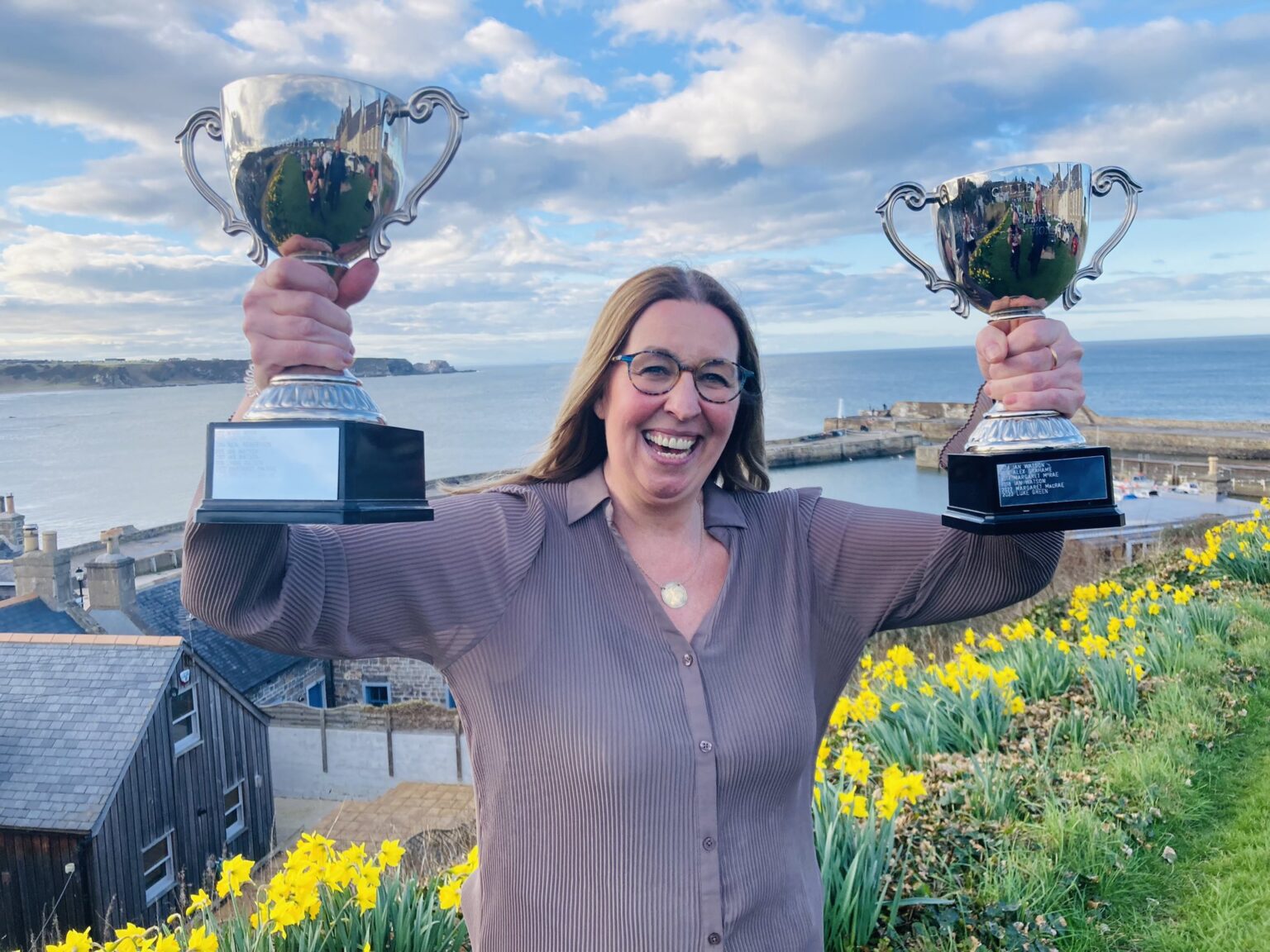
Kellie Spooner, excited winner of the 2024 Cullen Skink World Championships. Image courtesy of NE Scotland BBC.

During our trip, Sharon found a recipe in a travel guide and took a photo of it. I recently came across the image and decided to follow up on my long-ago plans to make the soup at home. The only problem is that smoked haddock is impossible to find in my neck of the woods. So, true to the original nature of Cullen Skink, I had to make do with what was at hand, and that was a Lake Superior smoked whitefish.

To make the soup even more white, I substituted white pepper for black pepper. For the milk, I used Carnation brand evaporated milk because it was on sale. But I had forgotten I can’t have it due to my intolerance to corn and any ingredients derived from corn. Carnation contains dextrose, which is derived from corn.

I had migraines for two days as I ate the soup and its leftovers, until I figured out the culprit. So, if you have a corn intolerance, keep that in mind! The generic brand of evaporated milk at my store is free of dextrose, so I will use that next time.

If you want to introduce a bit of color into the soup, I suggest using B-sized (new) red potatoes and not peeling them. The parsley also adds color.

I forgot to soak the smoked fish overnight in the milk beforehand, but it still came out tasting great! If you love chowder but are looking for something different, this is the soup for you.

Here’s my version, which I have named Lake Superior Skink to honor the fish from Lake Superior that I used. If you use a local fish species, feel free to call this recipe your own geographic version of skink. For instance, a version containing catfish could be called Mississippi River Skink. Yet another appetizing name!

For a another version of chowder, see my steelhead and clam chowder recipe.

Lake Superior Skink

(Inspired by Scottish Cullen Skink Soup)

Lake Superior Skink with red potatoes

Serves 4, wheat- and corn-free, gluten-free

2 Tablespoons butter
1 onion, diced
2 pints evaporated milk (approx. 3 cans) or whole milk
1-1/2 lbs potatoes, peeled and diced
1 lb smoked Lake Superior whitefish or lake trout
2 teaspoons dried parsley
sea salt and white pepper, to taste
lite sour cream

Soak fish in milk overnight to infuse extra smoky flavor into the broth.

Melt butter in a pan, add the onion and cook gently for 7-8 minutes until it is soft but not browned. Pour in the milk and bring to a simmer. Poach the smoked fish for 3-4 minutes until it is cooked and will flake easily.

Carefully lift the fish out onto a plate and leave it to cool slightly. Add the diced potatoes and simmer for about 20 minutes until soft. Blend some of the potatoes with a stick blender to thicken the soup a little. If you have a regular blender, put about a quarter of the soup into it, blend, then return to the pan.

When the fish is cool enough to handle, break it into flakes, discarding the skin and bones. Return the fish to the pan and stir in the parsley and spices. When serving, add sour cream as desired.

Cullen Skink and Scones: Adventures in Scotland, Part 2

SCOTLAND! 037

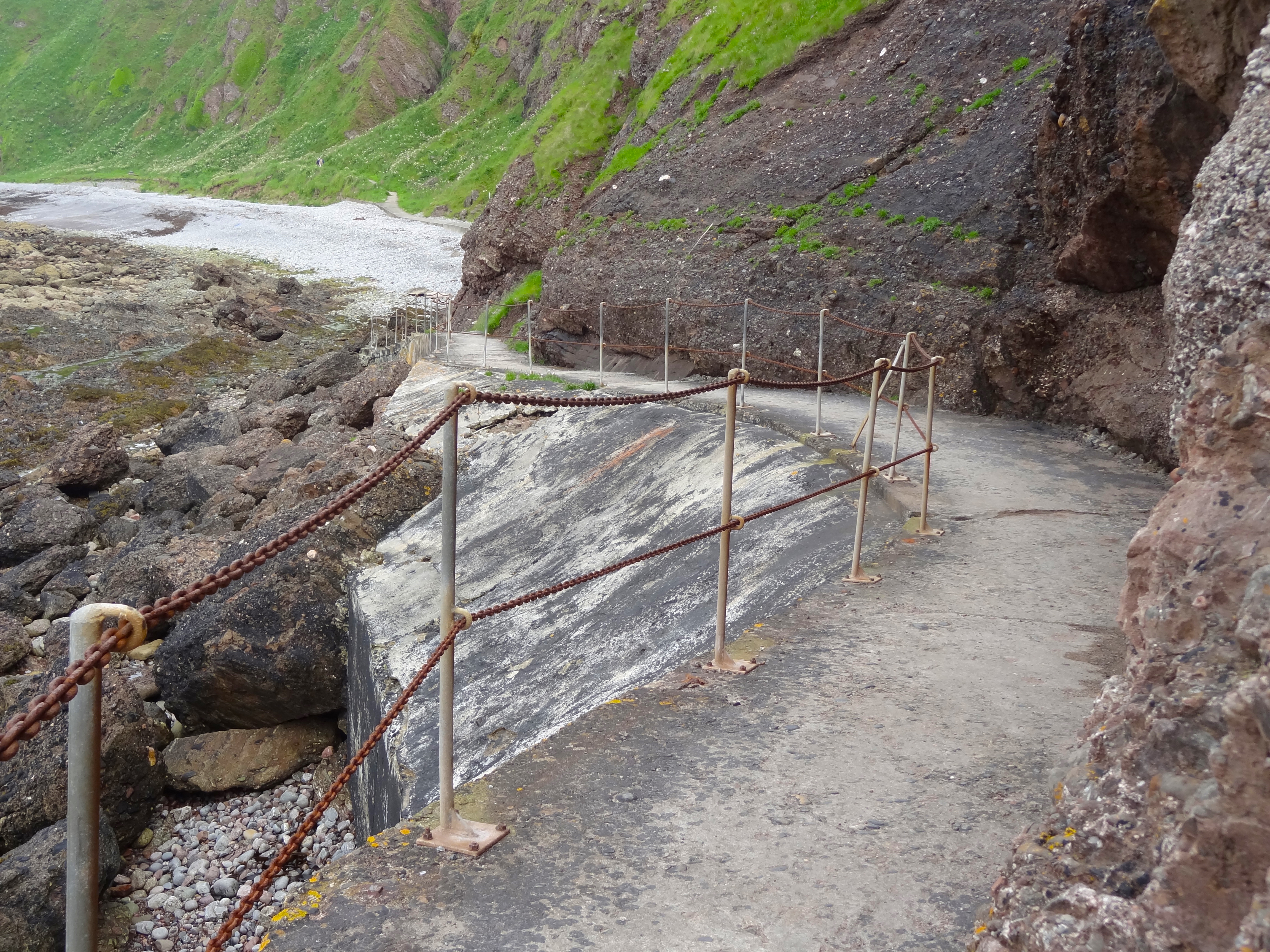
The non-rocky part of the trail to Gardenstown.

We spent our first day at Crovie Cottage #13 on the Moray Coast exploring the small fishing village and hazarding the “Danger! Falling Rocks!” trail that leads along the sea to neighboring Gardenstown. Eventually, we stopped at a café for lunch.

The Tea Pot Cafe is the kind of place where everyone notices when somebody new walks in. Your table neighbors will advise you on menu choices, ask where you’re from, and if you’re lucky, will tell you the best places to visit.

SCOTLAND! 053

The rocky part of the trail.

We were advised to visit Delgatie Castle for the best scones and Cullen skink in the land. Scones need no explanation. Cullen skink, however, is a chowder made from smoked haddock. It was invented in the nearby town of Cullen, and is apparently all the rage. Certain restaurants along the coast even boast chefs who have won Cullen skink soup honors. The “Cullen” part of the name of this dish sounded okay to us. The “skink” part, not so much, but we were game to try it.

026

Delgatie Castle

So, the next day, after a visit to a nearby gannet colony at the Troup Head Nature Reserve, we were off to the castle. Delgatie Castle is no longer inhabited, but is run by an organization. As we approached on the dirt road and the pink tower loomed through the trees, we were stuck by the feeling we were in a fairytale.

Hungry again, we opted to visit the Laird’s Kitchen first and tour the castle later. We were not disappointed by either the scones or the soup, although as you can see from the photo below, the meal was a bit, er . . . white. The bread was homemade and the scones were meltingly hot.

The castle is primitive compared to others I’ve been in but it was interesting to see how the rooms were arranged around the large central tower staircase. There’s also a creepy story in one of the rooms about a monk being buried behind a wall.

So that was our introduction to local fare and Delgatie Castle. Next, it’s on to whisky!

SCOTLAND! 067

Cullen skink soup, homemade bread, and tea – of course.