Grand Cayman Day 7: Batabano Carnival, Grand Cayman National Museum, a final fancy dinner, and visiting tips

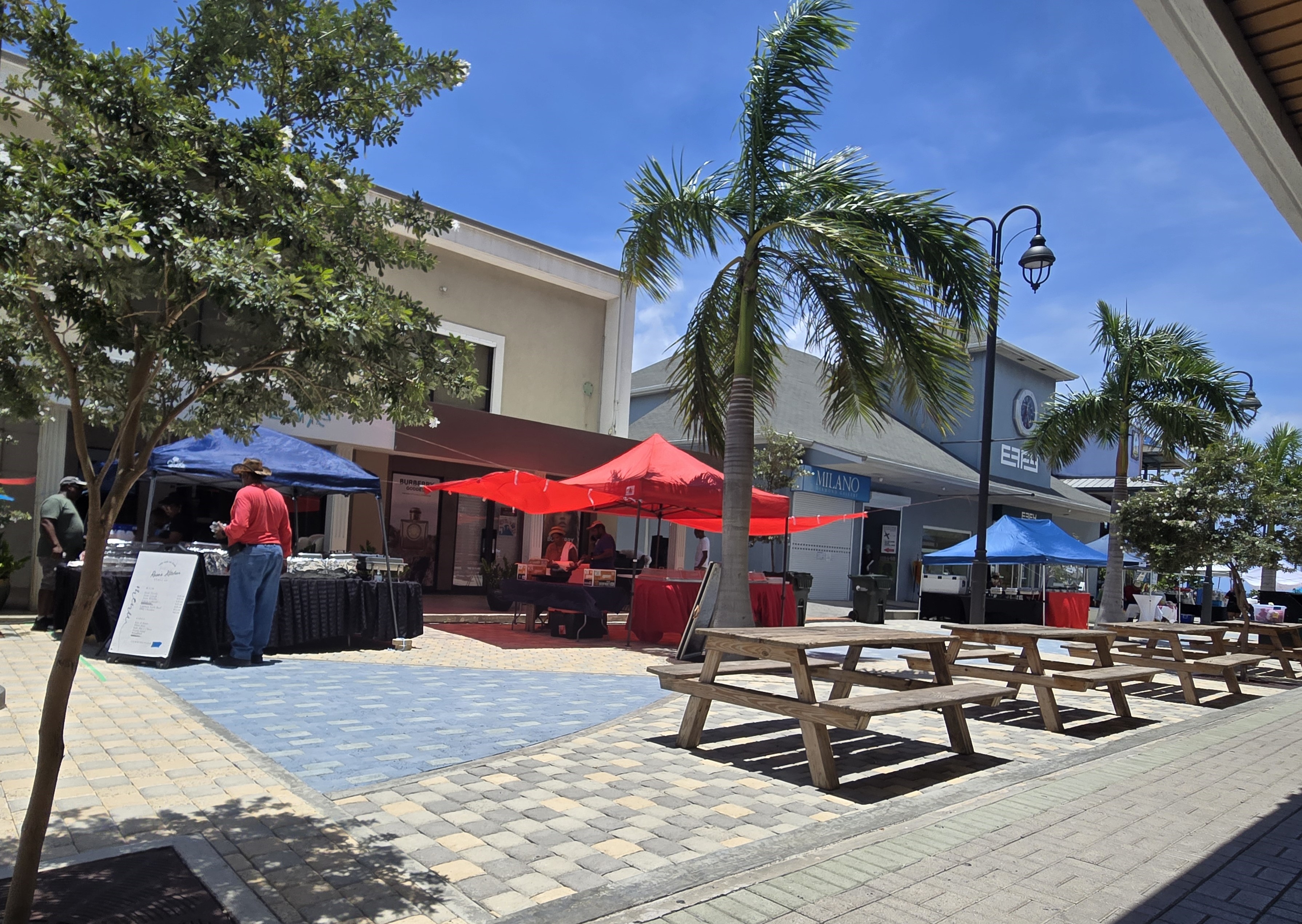
Batabano Carnival Food Festival gets set up in George Town.

Our last full day on Grand Cayman Island dawned sunny and beautiful, as usual. We planned to drive to George Town on the opposite side to further explore the capital city’s pleasures. Although it only takes about 30 minutes to get there from the island’s East End, we girded our loins for its numerous roundabouts and heavy traffic. With Google, we scoped out a public parking lot and hoped for the best.

Some of our plans this day worked out better than others.

What drew us to George Town was Batabano. This annual carnival, usually in the first week of May, is named for the tracks that sea turtles leave in the sand when they come to shore to nest. In essence, it’s a celebration of spring and fertility. As such, there are family-friendly events and adults-only events.

This was the last day of the carnival, and we wanted to sample local cuisine for lunch at the outdoor food festival and catch part of the closing parade before dinner at The Wharf restaurant on the seashore. In between we’d shop or do whatever caught our fancy.

The first glitch in our plans occurred when the parking lot that Google said existed, didn’t. So, we circled aimlessly until we found a spot along the road not far from the food festival. When we arrived at the festival, the booths were just setting up, so we decided to wander around.

A holograph of a Caymanian woman speaks to us at the Cayman Islands National Museum.

We found the Cayman Islands National Museum, a cute little place that tells the story of how the island was settled and its influential people. There’s a gift shop, displays, art, and an introductory video. Like many other cool places on this trip, once again, we were the only people there! The lower level features on old jail, complete with graffiti by prisoners.

When we were done with the museum, the festival food was ready. I had conch stew with breadfruit on the side. I’d never had breadfruit before. Alas, I was not impressed – it was mealy and bland. I’d seen this fruit for sale in Minnesota for an exorbitant price, so I guess I was expecting more. Breadfruit was more like a potato than a fruit. Let’s just call it a learning experience.

The carnival parade was supposed to end at the square where the food festival was located. We waited for it, but some helpful shop keepers told us that the parade got a late start (island time, of course). We walked about a half-mile up the parade route to try and see it sooner, but still no parade. We waited around as long as we dared before we needed to walk back to our car to drive to the restaurant for our dinner reservation. The Wharf was along the route, so we hoped we’d be able to see the parade somehow along the way.
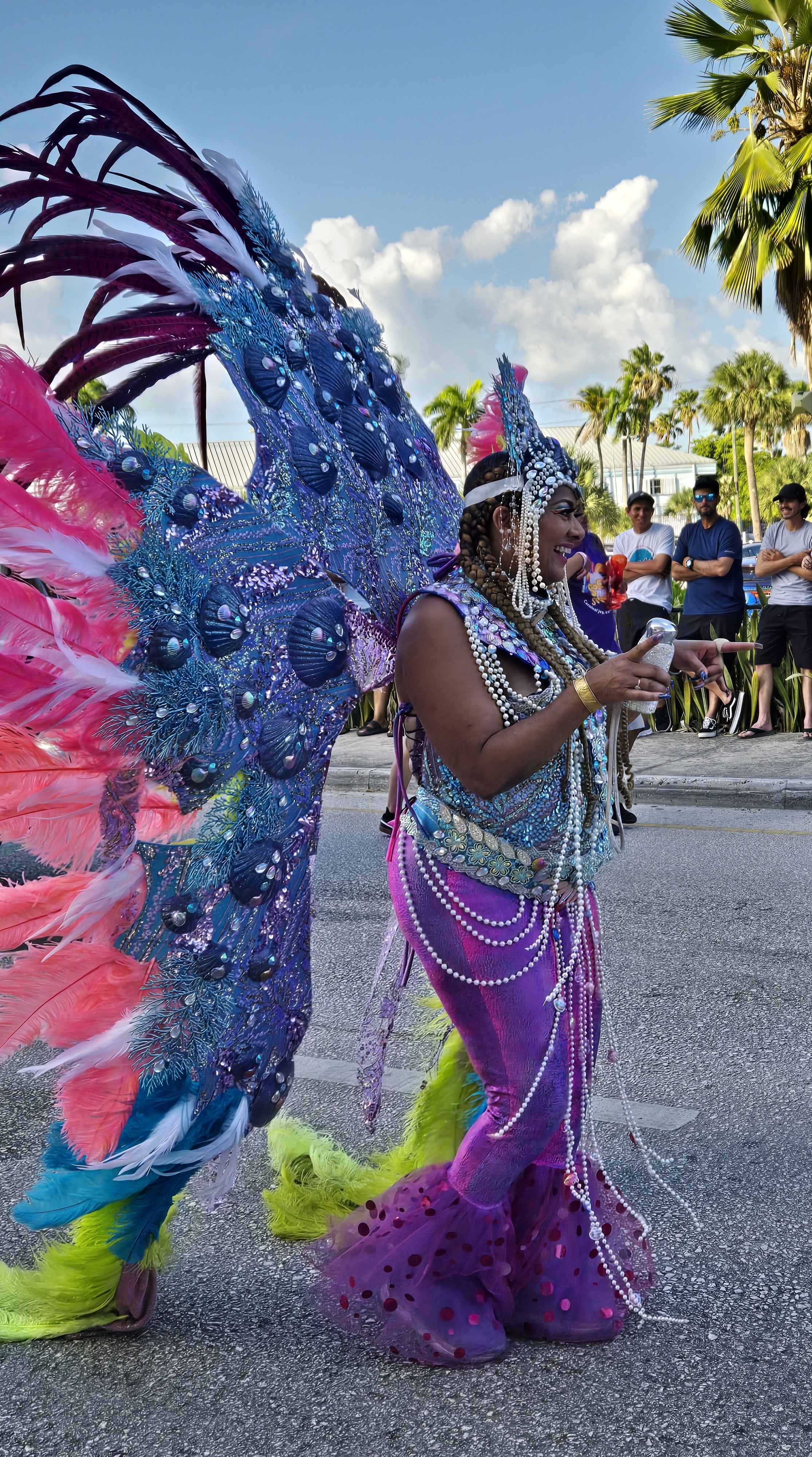
When we were about a half mile away from the restaurant, we ran into a road closure sign due to the parade. I took this as my cue and jumped out of the car with my camera, telling Russ I’d meet him at the restaurant.
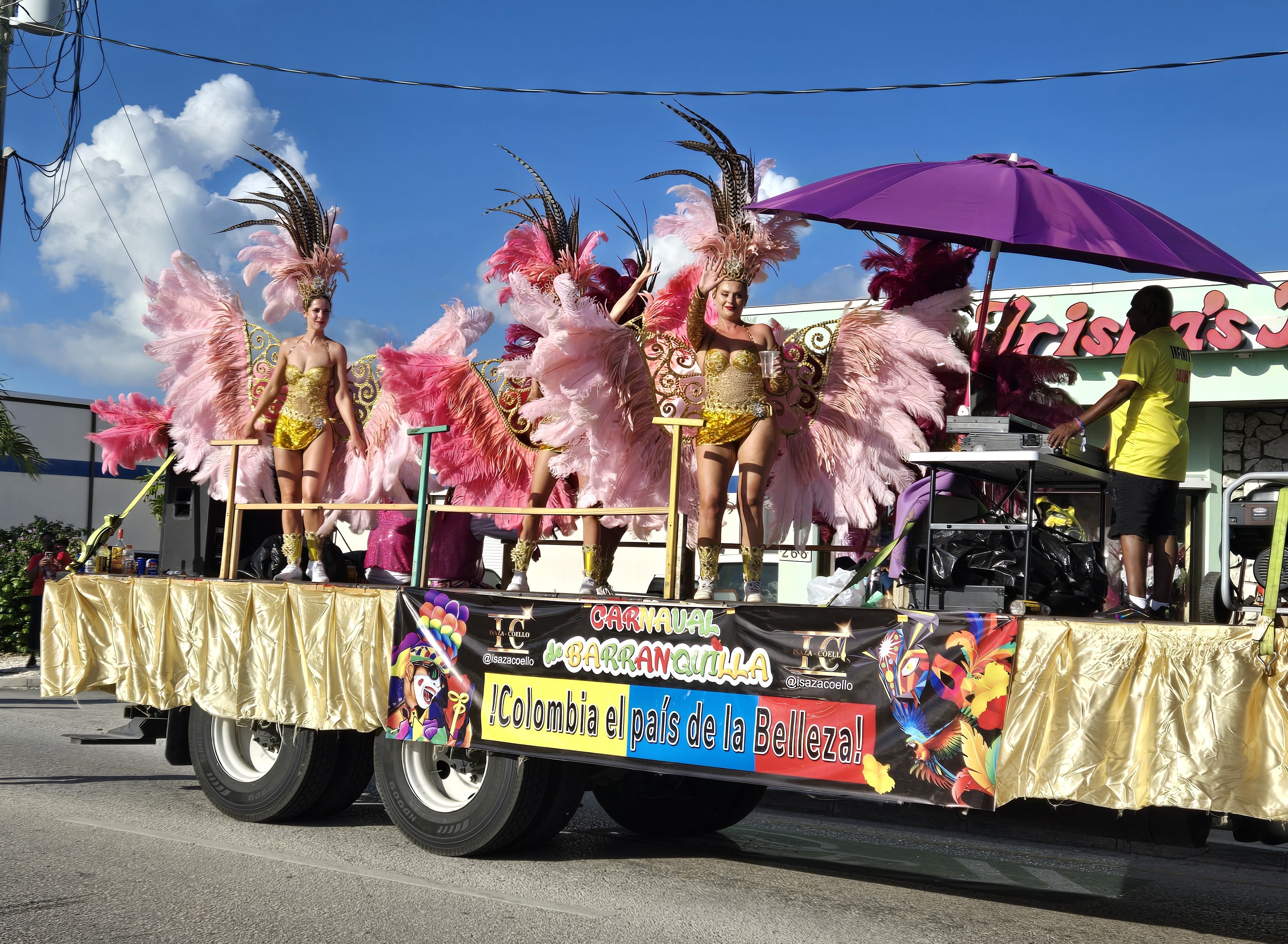
I was expecting a parade like the one I’d seen on St. Martin – lots of people in regalia and live music. Some people wore costumes, but most were in T shirts and shorts. And remember what I said about the theme of fertility? I discovered there’s a reason why this is an “adult” parade. Picture well-fed people grinding on each other in the street. That’s all I’ll say. 😊

However, on the walk to the restaurant, I recovered my appetite in time for our special dinner. Although I felt like our 6th anniversary dinner was the one we had at the Czech Inn Grill, this was to be our official anniversary and our traditional, fancy, end-of-trip dinner.
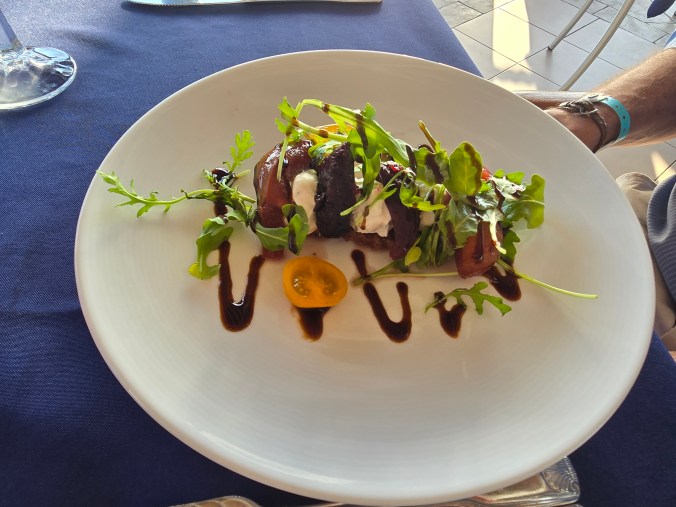
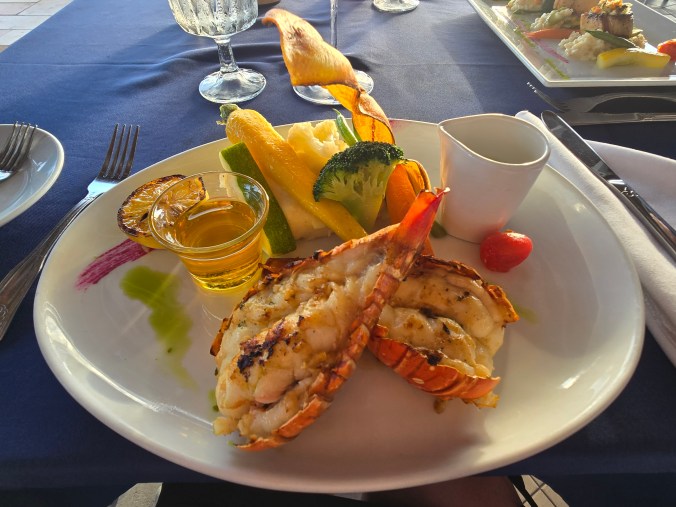
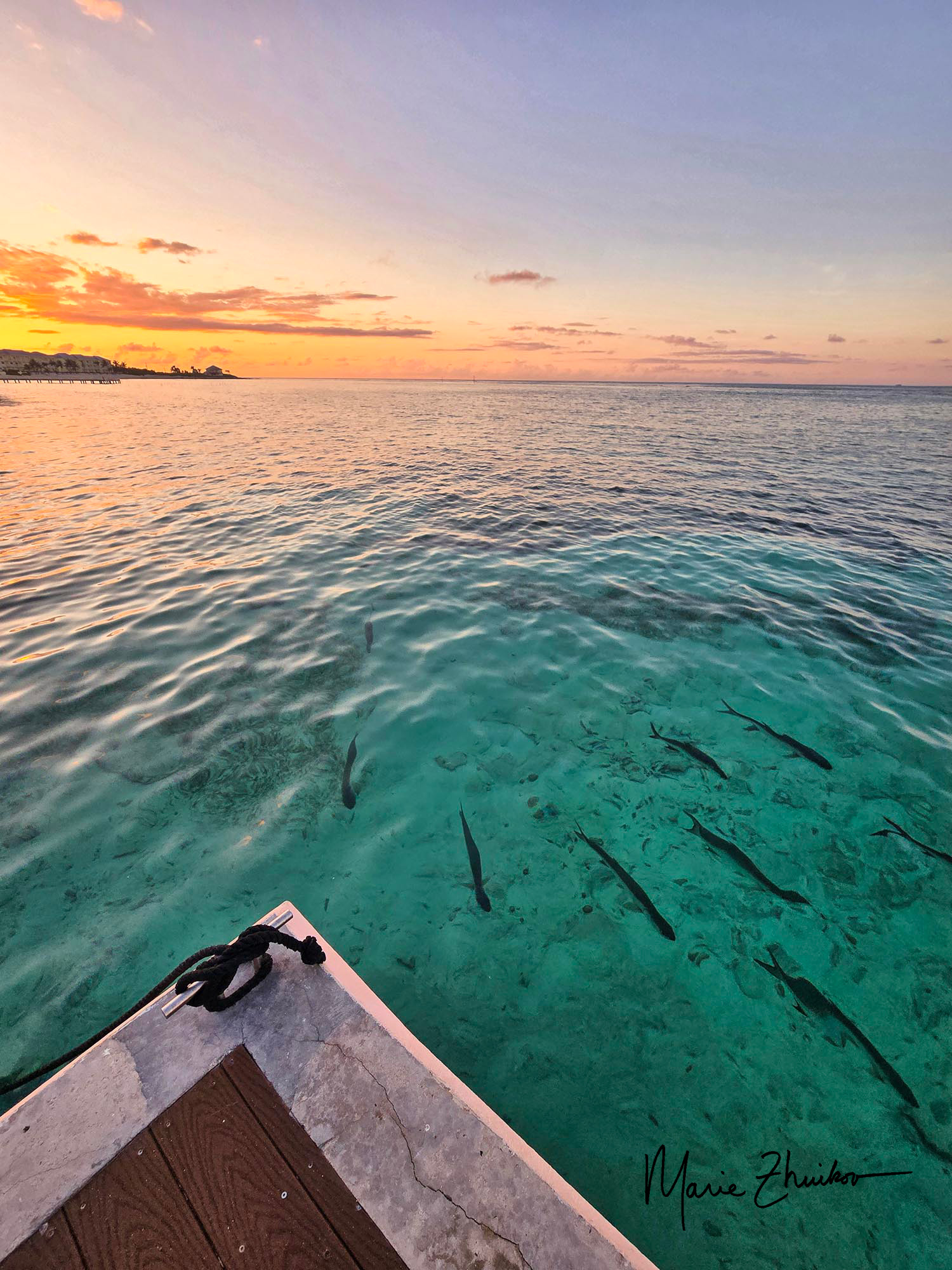
We chose The Wharf due to its location on the waterfront, its varied menu, and because diners can feed the tarpon that gather off the dining room dock. Russ had scallops and I had lobster as the sun set. It tickled me to “recycle” my lobster shells back into the sea by tossing them to the leaping tarpon once we were done. It was a good and romantic end to a somewhat stressful day.

That’s it for our trip! If you’re thinking of visiting Grand Cayman, I developed a set of tips to share.

  • Rental car speedometers are in kilometers per hour, but the road signs are in miles per hour. (It took us about a day to figure this out, during which we were driving way too slowly!) A sign that says 50 mph means about 80 kph on your car speedometer.
  • Driving is on the left side of the road. Many rental cars have steering wheels on the left, which is helpful for Americans and others who are used to this.
  • The East End of the island is perfect for introverts. The George Town/Seven Mile Beach area is perfect for extroverts, especially if you like roundabouts.
  • The weather is hot with high humidity. Wear sunscreen!
  • Do outdoor activities in the morning when its cooler.
  • Watch out for chickens and blue iguanas crossing the road.
  • Due to transportation costs, food is more expensive.
  • Grocery stores are closed on Sundays.
  • Grand Cayman is in the same time zone as U.S. Central. No jet lag!
  • If you want to see the bioluminescence, schedule your trip around the new moon. We didn’t know this and so were unable to get a tour to see this phenomenon.
  • The best time to visit Starfish Point is in the morning before conditions get wavy.
  • Don’t miss the frigate bird feeding at Tukka Restaurant every evening at 5 p.m.
  • Don’t expect breadfruit to taste like a fruit.
Marie in her happy place.

Grand Cayman Day 6: Green Parrots and Starfish

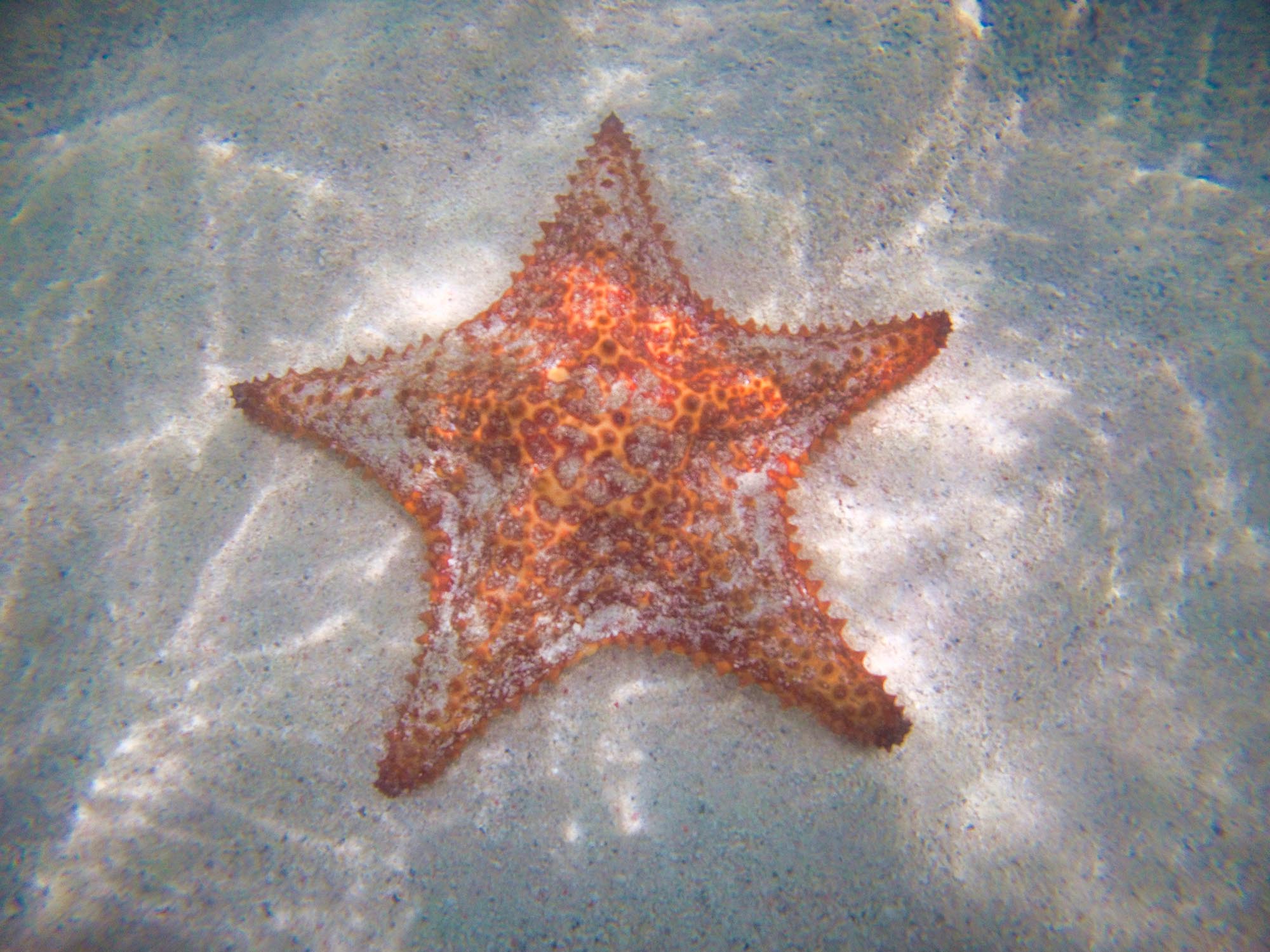
The one good photo I took of a starfish on Starfish Point.

Nearing the end of our seven-day stay, we tried to slow down and relax more. On this sixth day, Russ and I vowed to only do activities near the East End resort and to spend time in the ocean. We mostly succeeded. We stayed true to our vow, but there was just so much to see that we didn’t spend much time relaxing!

Our first stop was the Cayman Parrot Sanctuary, which is dedicated to protecting the endangered green parrot, the island’s national bird, and to provide children with an up-close look at island wildlife. Kids at heart, that sounded good to us.

The sanctuary was begun by the head chef at Tukka Restaurant. You might recall them from my posts on Day 3 and 4 (this is the place where you can feed frigate birds). The chef wanted a playground and a mini zoo for his children and neighbors while he watched over his restaurants, but the idea caught on and grew so that now the sanctuary is one of the island’s major tourist attractions. Besides several species of parrots, there are turtles, snakes, guinea pigs, rabbits, and hermit crabs. There’s also a zipline and playground. The star of the show is an agouti named Lil’-bit. Unlike wild agoutis, this one is highly social and enjoys interacting with people. Lil’-bit was otherwise engaged while we were there, so we didn’t get that experience.

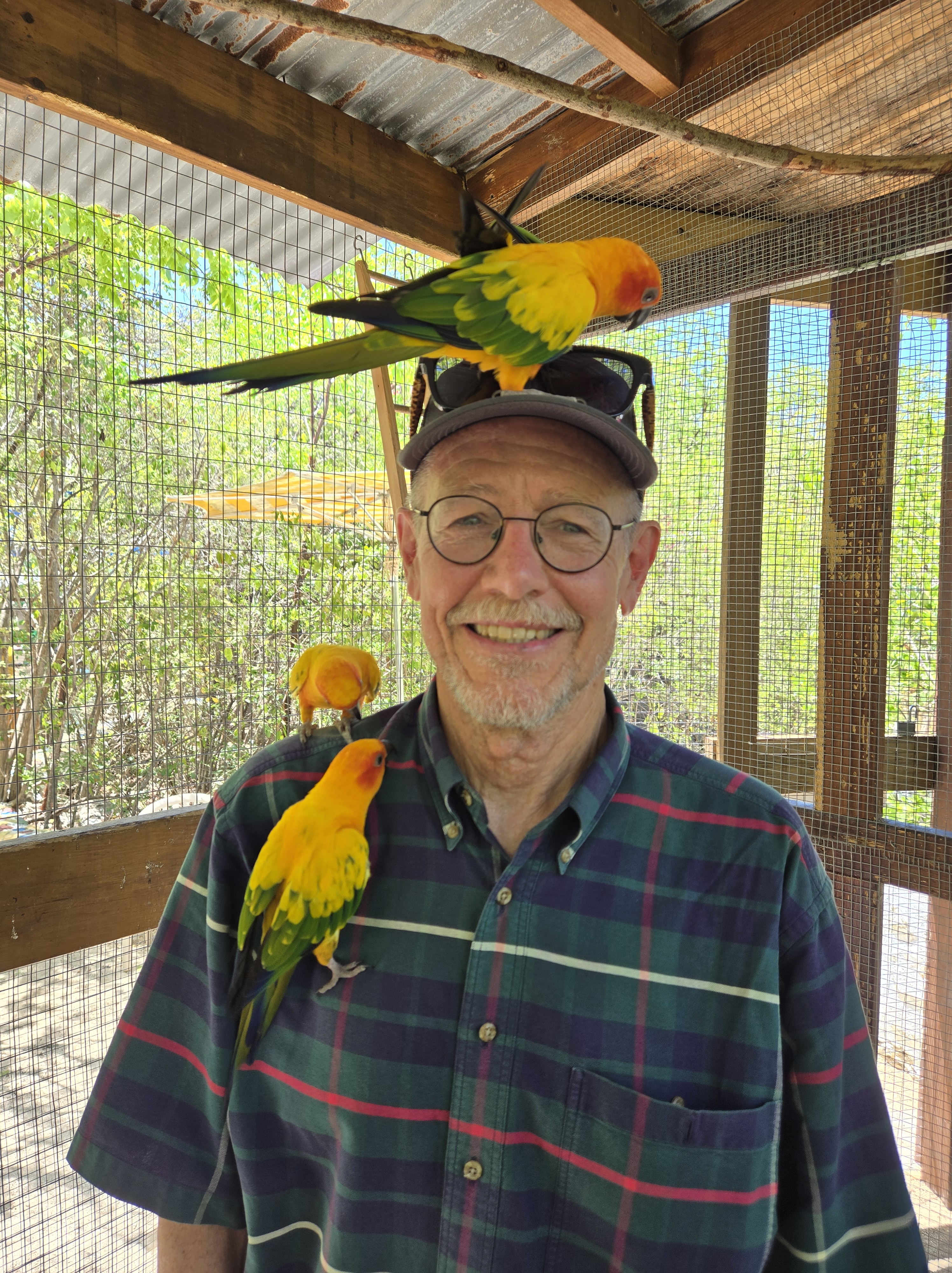
Russ interacting with sun conure parrots.

Our favorite adventure there was going into the sun conure aviary. These parrots are brightly colored and super-curious. They were all over Russ’s head from almost the moment we entered. (My thick hair must have deterred them but that was okay. I was able to focus on taking photos of Russ.) The birds seemed to like picking on anything that was plastic, including Russ’s glasses, hat, and bracelet. The attendant gave us seeds to feed the birds. Some liked to pinch while they ate, ouch! But we soon learned which birds those were and avoided them.
The sanctuary provides homes for Cayman Parrots that have been injured or ones their owners can no longer care for. Each parrot had a back story posted on their cage.

We returned to our resort for lunch and then headed toward Starfish Point, Go Pro in hand. Visitors can book a tour for the point, or they can simply go there themselves for free. The best time of day to see the starfish, which are red cushion or West Indian species, is in the morning before the ocean waves kick up. We wished we had followed that advice because by the time we arrived, it was wavy and the water was murky. The point has a shallow sand shelf that drops off into deeper water. It’s possible to simply wade around on the sand shelf to see starfish or you can don a snorkel to see more in the deeps in the seagrass (which they eat).

The crowds on Starfish Point.

That’s what I did. I saw some starfish in the deep water, but they were too far away to get good pictures, so I joined Russ on the sand shelf. We took care not to accidentally step on any starfish while looking for them. Also, it’s illegal to remove the starfish from the water. It introduces air into their bodies and kills them. Our Stingray City guide told us that there used to be many more starfish on the point – hundreds. But now, due to people lifting them out of the water for photos, there are only about a dozen to be seen on the sands. Needless to say, we did not touch the starfish in any way! There are signs on the point to this effect, but it really seems like there should be some sort of starfish police patrolling the area because I saw people not following the rules. I was sorely tempted to become a starfish cop myself but refrained. Getting into a fight with another tourist did not fit my idea of relaxing. But seriously, something needs to be done to protect the starfish more. Ironically, one island tourism company webpage about the point features promotional images that show the exact wrong things to do with the starfish! I DID just build up enough gumption to complain to the tourism company. We’ll see if they do anything with the images. Their text was okay, however.

Disappointed by the crowds and the murk at Starfish Point, we retreated back to our resort to snorkel. Ironically, I saw a HUGE (like two-feet-across) starfish hiding under a grassy ledge off the dock at our resort. But sorry, no picture. I wanted to just relax and watch the fish this time. Then we spent the rest of the afternoon reading by the pool.

We ate dinner at the rooftop sports bar at our resort. We ended up being the only ones there, so enjoyed a private dining experience under the rising moon. I highly recommend the coconut shrimp appetizer with mango sauce. We capped off our evening with a round of mini golf on the course near our unit.

Next up: Batabano Carnival, Grand Cayman National Museum, a final fancy dinner, and Grand Cayman visiting tips

Grand Cayman Island Day 5: Art, Turtles, Hell, and Leaving our Mark

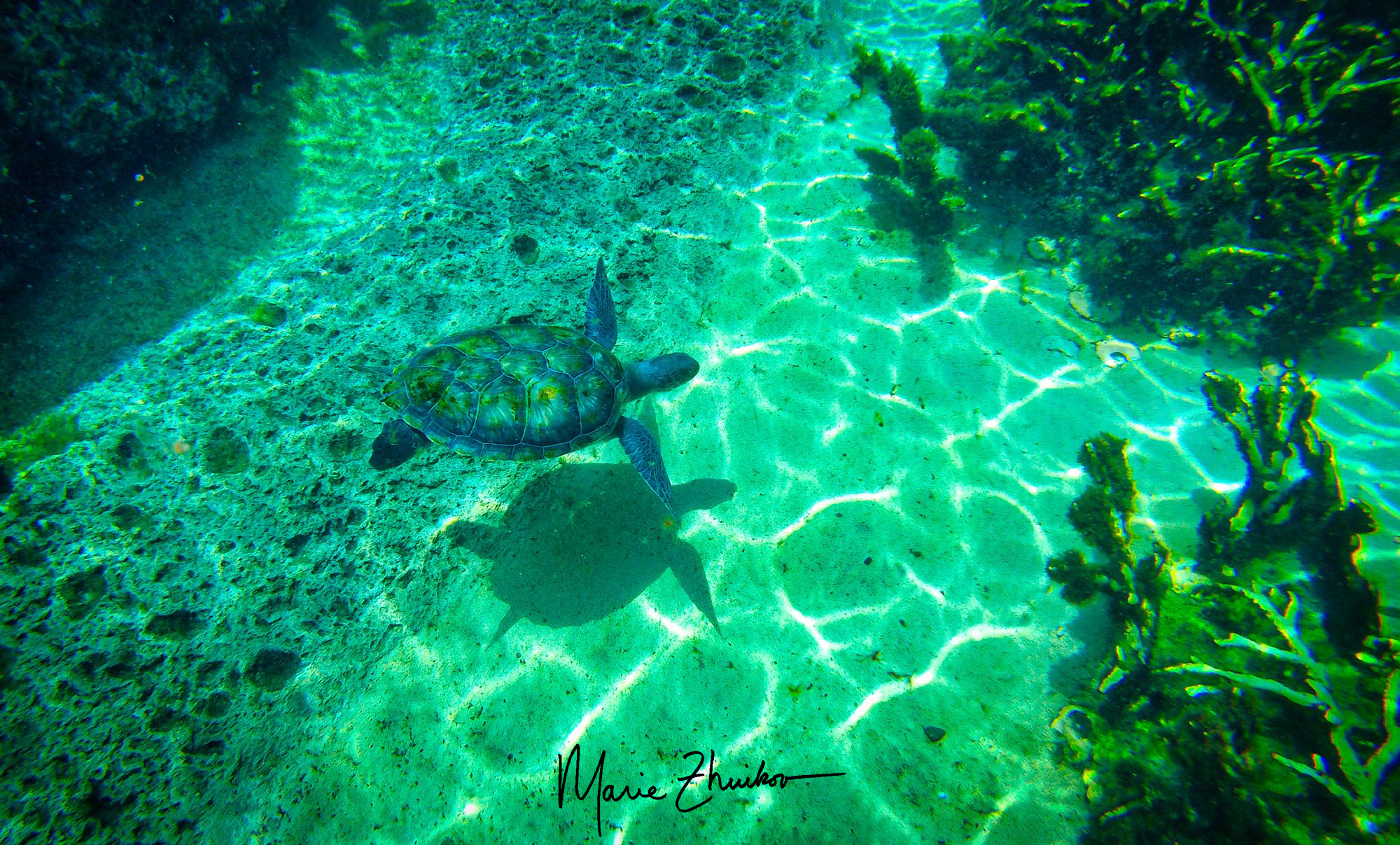
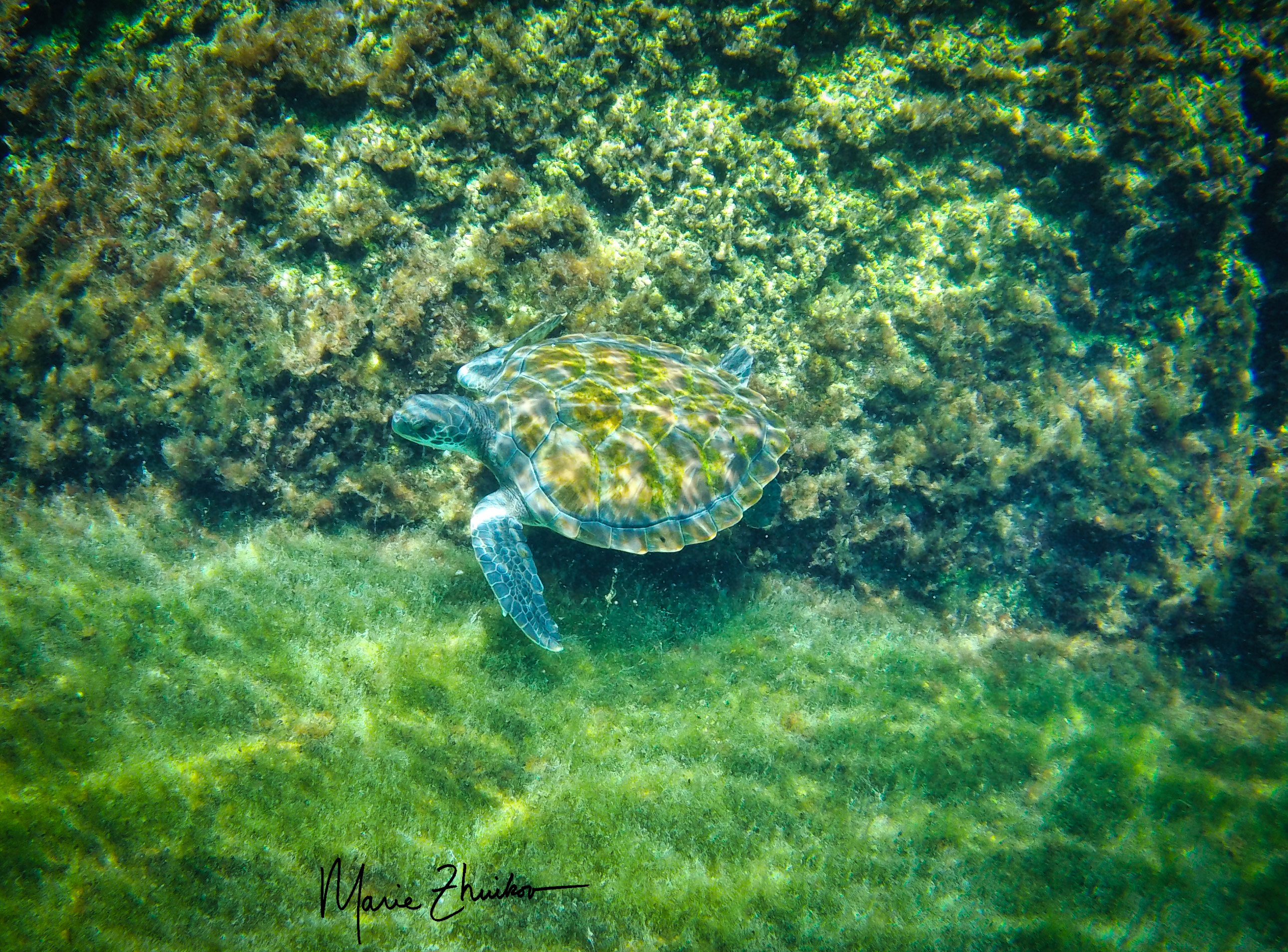
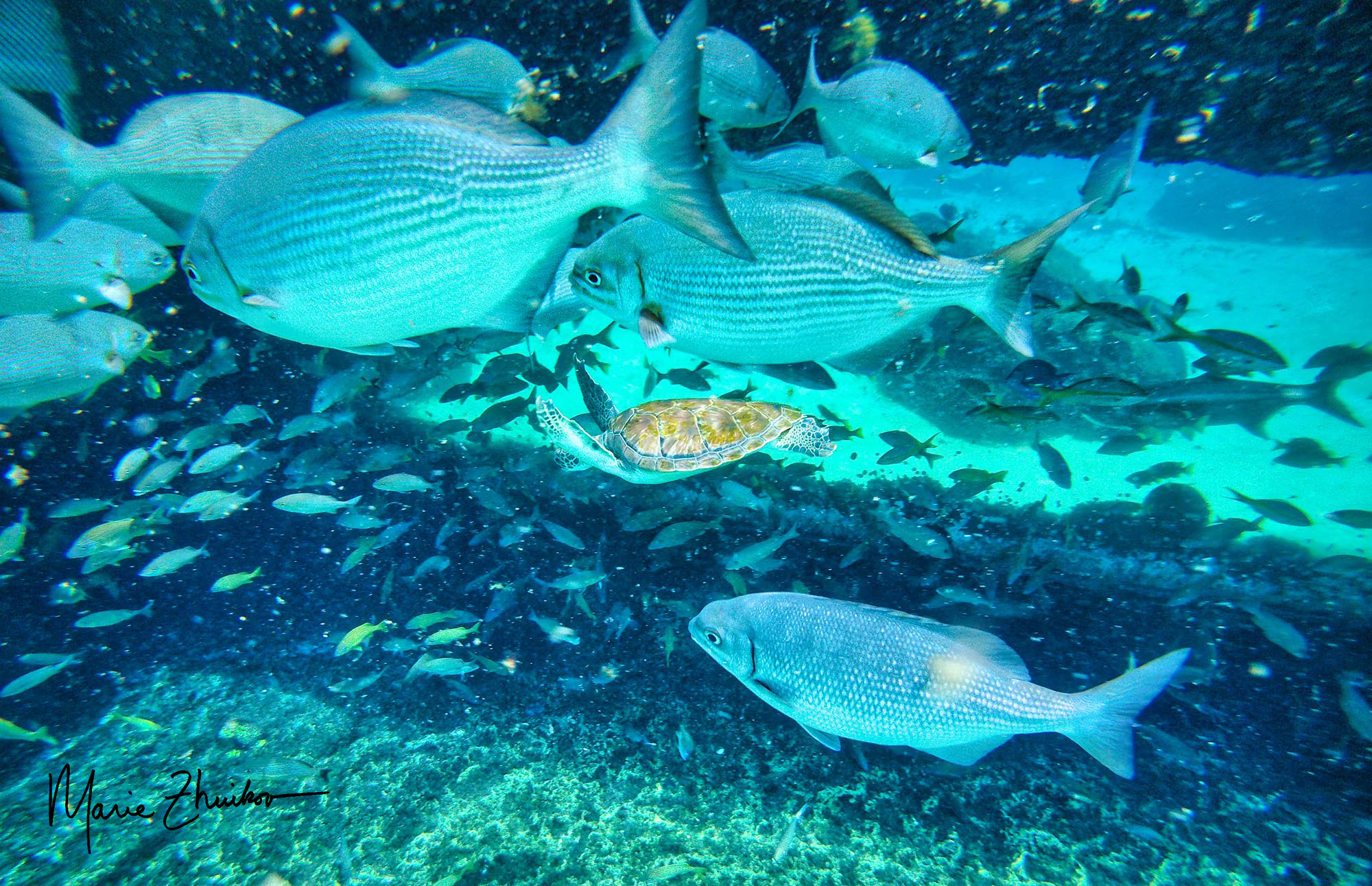
An endangered green turtle glides through the lagoon at the Cayman Turtle Center.

I’ve been offline for a while. Russ and I meandered to Colorado. We were disconnected from internet reality for a few days in the wilderness. I’m trying to catch up with your blogs but may never be able to do that. Sorry if I missed anything important. I’ve got a couple more Grand Cayman posts to write before I can move onto Colorado.

Back on Grand Cayman, our next adventure took us to the more populated side of the island and the city of Georgetown. Our first visit was to the National Gallery of the Cayman Islands. Once again, we were the only ones at the venue. Is no one else on this island interested in art?? But it was nice not to feel rushed while perusing the interesting offerings there. Entry is free, so what’s not to like?

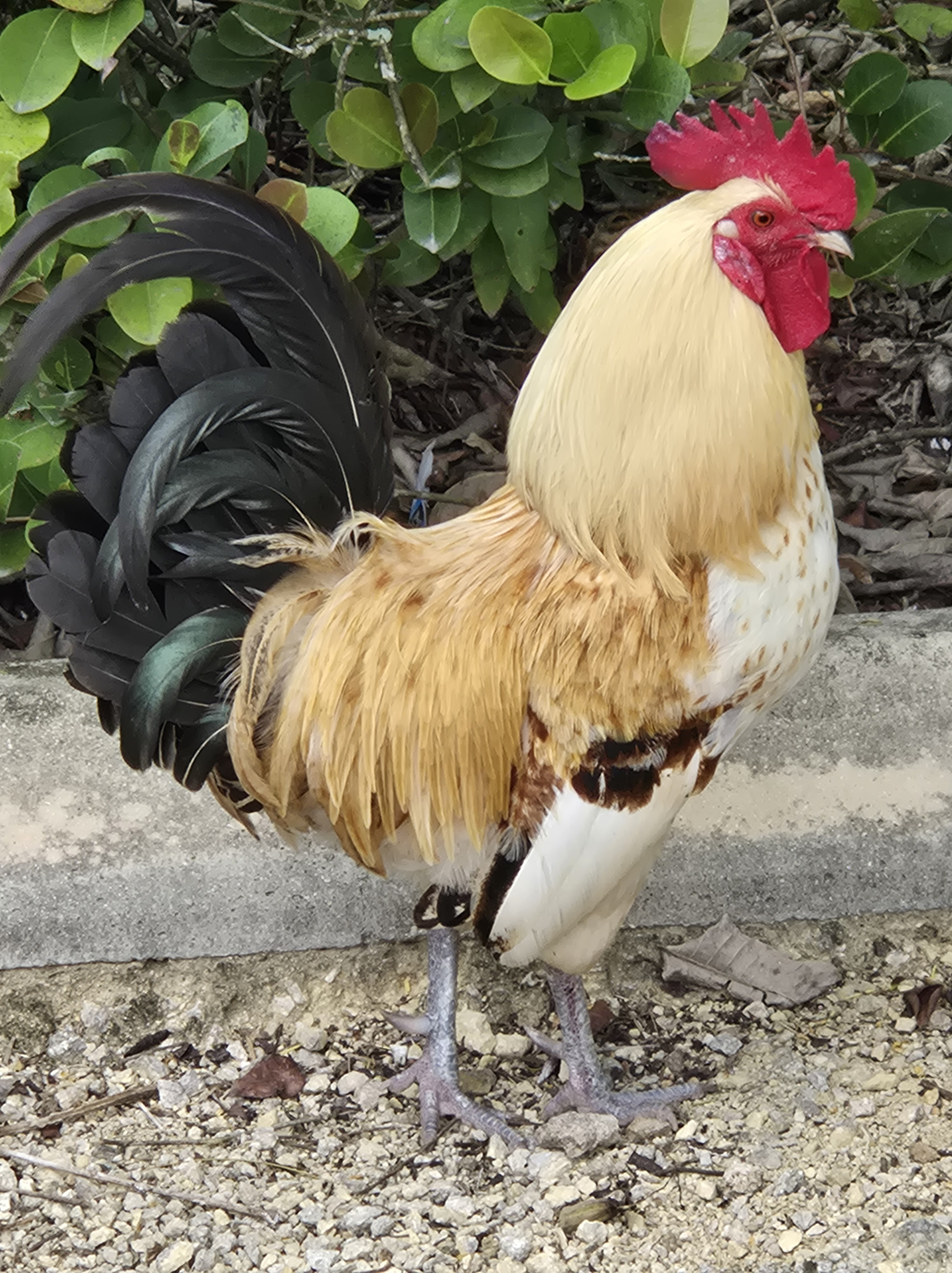
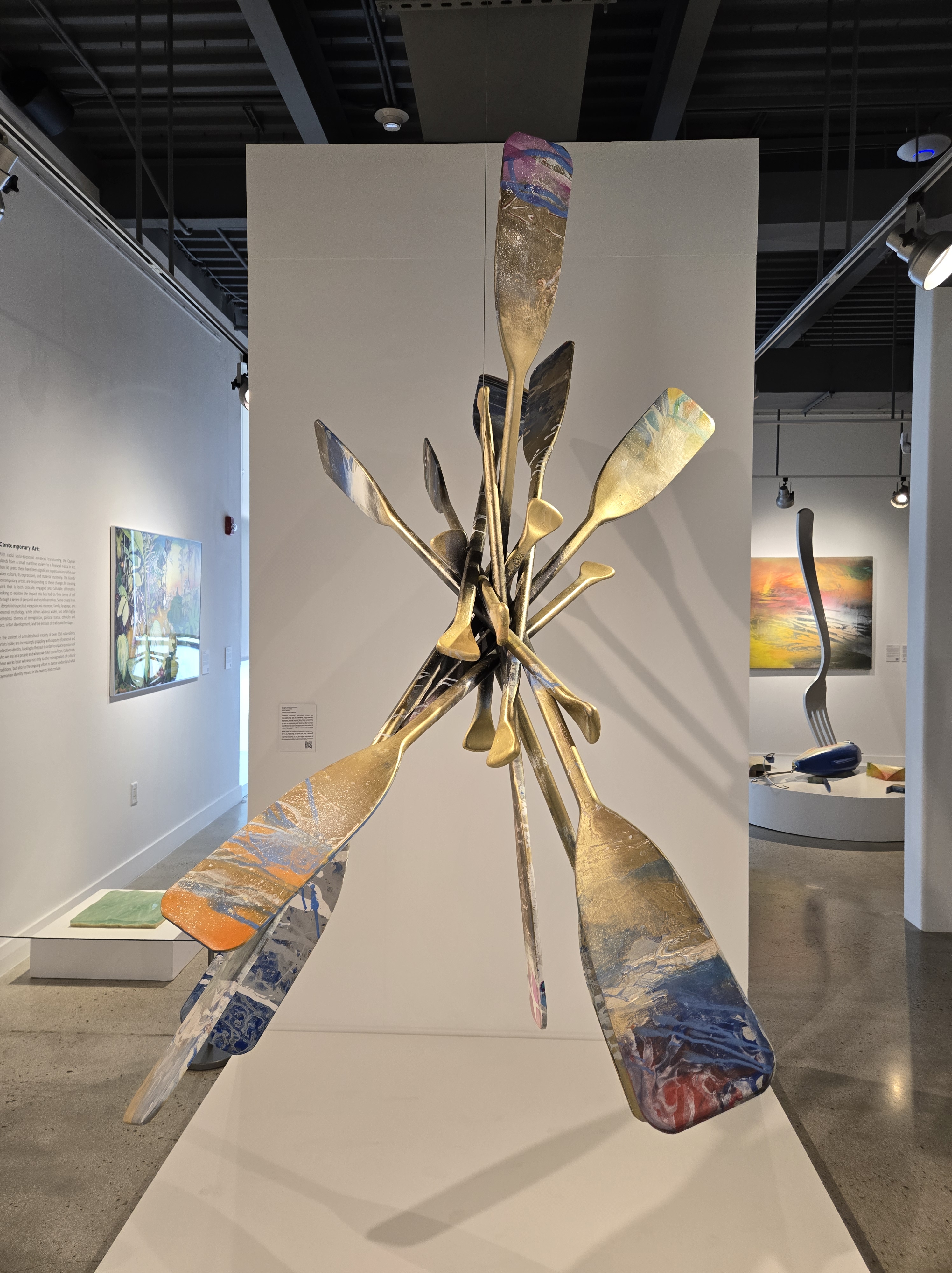
On the way inside, we passed a beautiful rooster strolling the grounds. I must say it was the most handsome rooster on the island, perhaps a work of art himself? We saw many pieces inside the gallery that inspired and provoked. Some of my favorites: Confluence, a mixed media sculpture made of painted paddles that were historically used by Caymanian turtle fishermen. The artist used washes of oil paint on the paddles to create an atmospheric depiction of light and water, transforming the paddles from utility into relics of a bygone era.

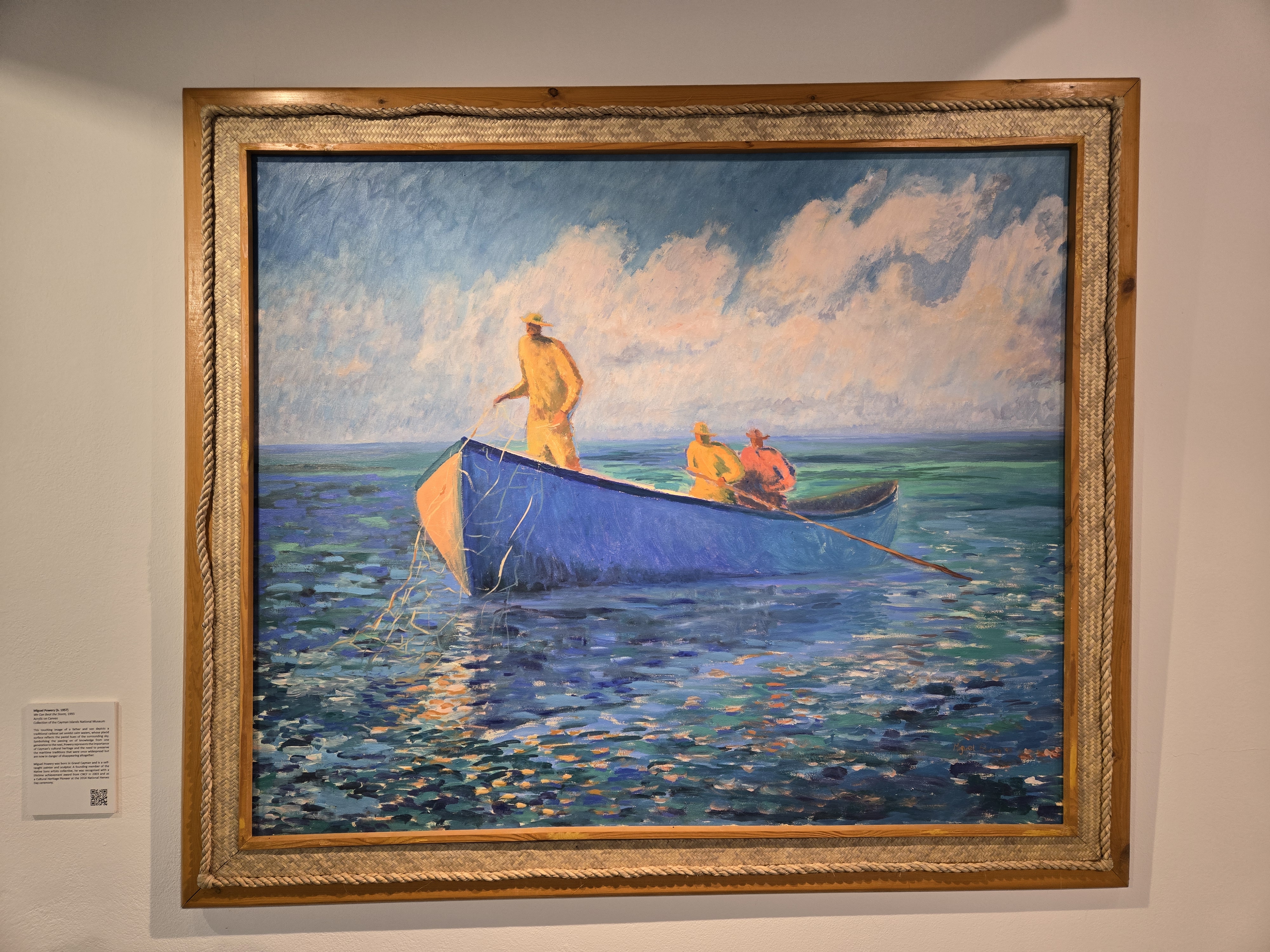
Another favorite was We Can Beat the Storm, an acrylic painting that depicts a father and son in a traditional catboat (Caymanian traditional fishing boat) set amid calm waters. It symbolizes the passing of knowledge from one generation to the next.

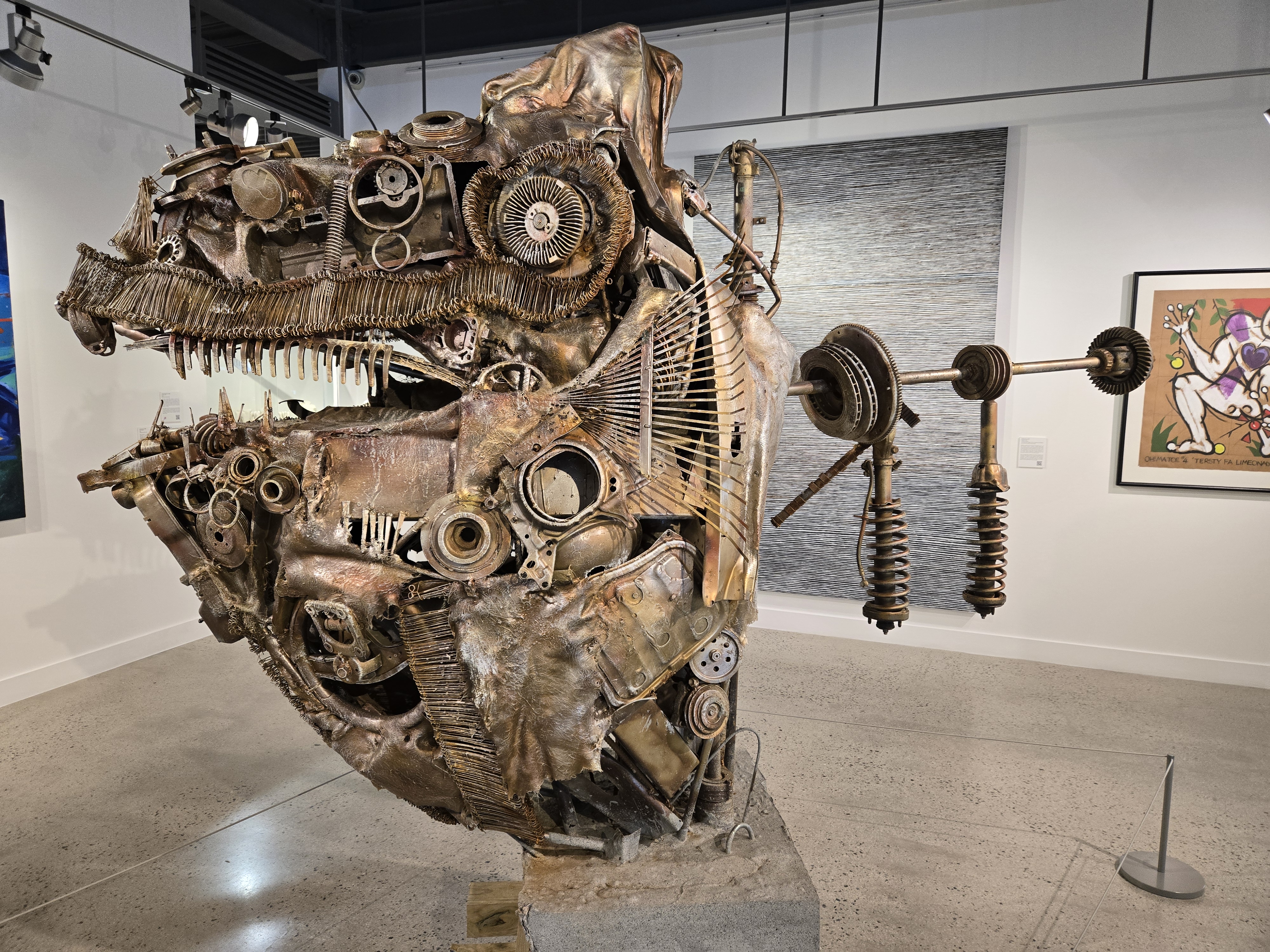
Then there was Fish Skeleton, a mixed-media sculpture made from recycled materials and used car parts, recalling the mountain of debris left by Hurricane Ivan on the island. The artist wants to draw attention to the islands’ longstanding reliance on the oceans for sustenance and the increasing environmental pressures that threaten this relationship today. All I can say is I’m glad we didn’t run into this creature while snorkeling!

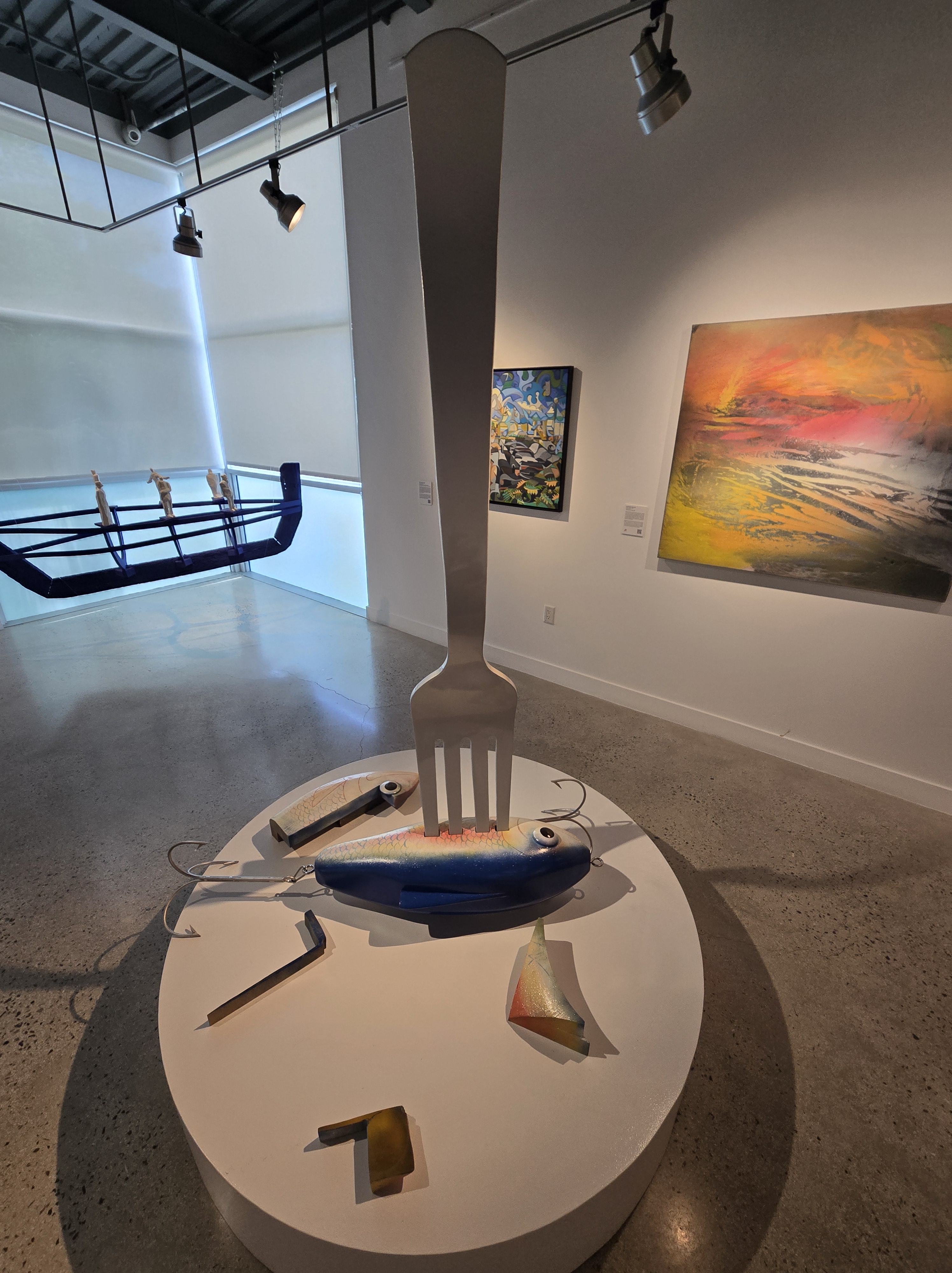
Indulge me with two more artistic offerings. Bon Appetit! is a sculpture that shows a giant fork stuck into a fishing lure. It raises issues of unsustainable fishing habits and the depletion of global fishing stocks. But it does so with a touch of humor and hubris.

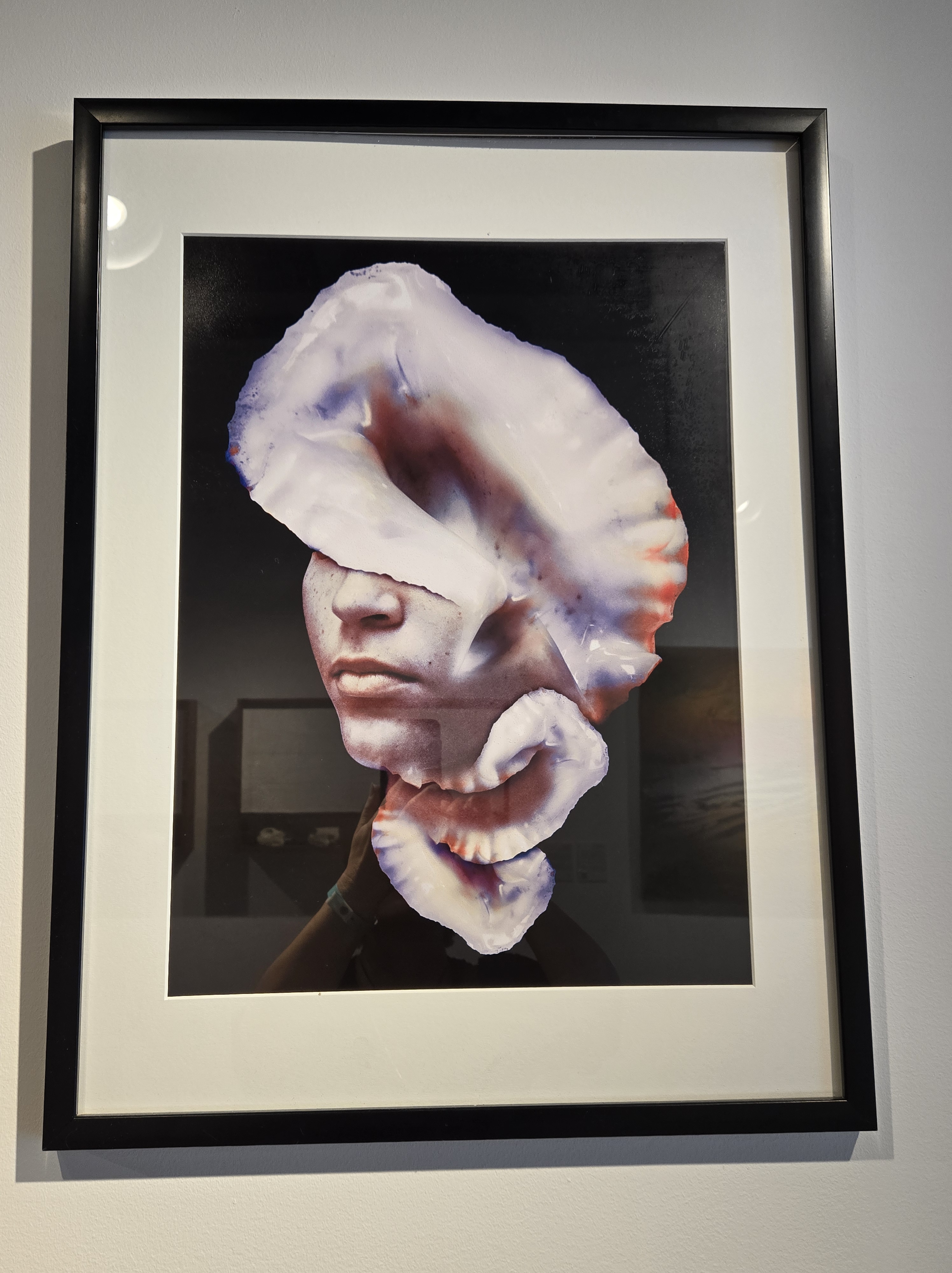
The last piece of art that struck me is a digital collage on paper called Osiris. It shows the melding of a conch shell and a human face. The blending of fiction and reality illustrates the continued influence of the marine environment on Caymanian identity.

After the gallery, we made our way to the Cayman Turtle Center, a sanctuary and breeding facility for the endangered green sea turtle. We opted for the Turtle Adventure, which allows visitors to snorkel with the turtles in a huge lagoon. I brought my GoPro Hero camera along and was glad I did! I’ve seen a few skittish wild turtles in the ocean, but these turtles are habituated to people. I had a few swim right underneath me! It was definitely worth the entry fee. The turtles eat algae, so you don’t need to worry about them biting you, although clumps of algae (sort of gross) float around the lagoon, dislodged from turtle feeding.

The facility also has a turtle breeding program. According to their website, “the turtle release programs have resulted in the growth of the local wild population in the Cayman Islands of the green sea turtle, going from zero nests in 1999 to over 200 nests. Recently, researchers in an independent genetic study using DNA discovered that 90% of all green female turtles nesting in Grand Cayman are genetically related to turtles from the Centre.”

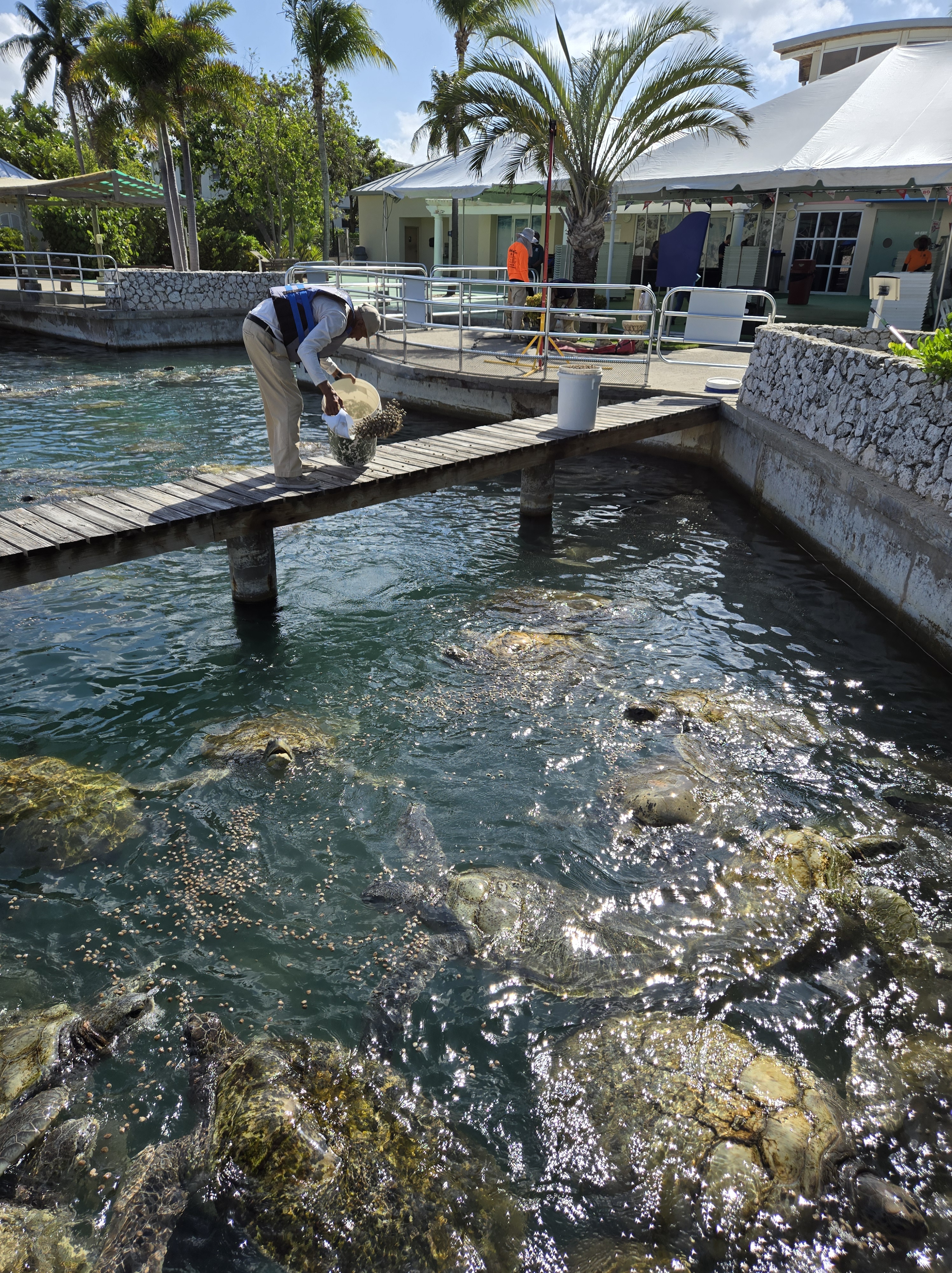
Turtle feeding time!

Russ and I were able to witness turtle feeding time in the breeding bay. These turtles are of reproduction age – typically 16 years old. Some weigh more than 500 pounds! They’re fed pellets and the funny thing is, they squirt water out their nostrils as they inhale them. It’s a sight not to be missed. The Turtle Center was another highlight of our trip, on par with Stingray City.

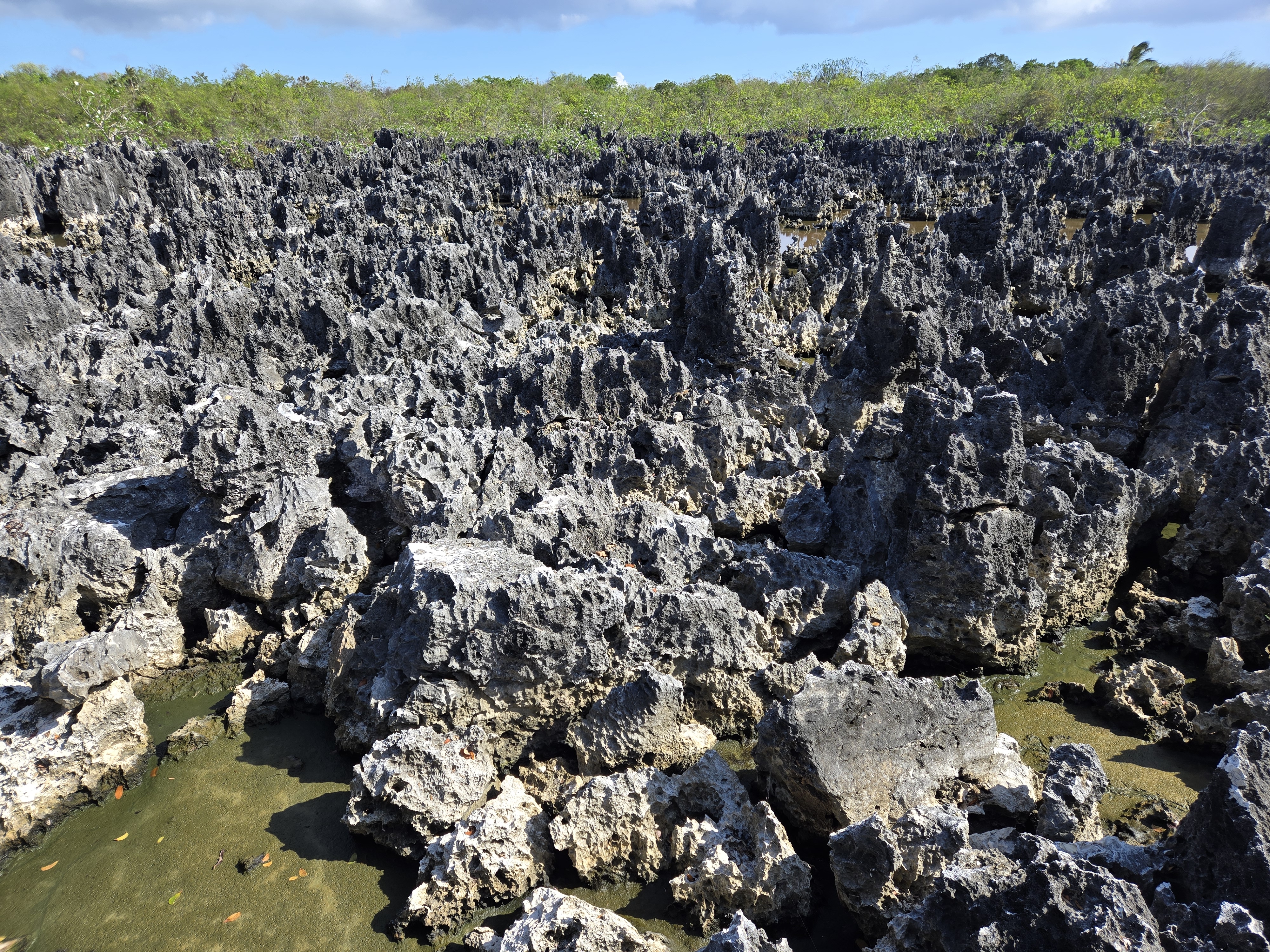
This is Hell.

Not far away is a small town called Hell. It has its own post office and is the size of about half a soccer field. The black craggy rocks that make up Hell are millions of years old and are made of limestone that has been eaten away by algae and ravaged by the elements. It does not look like a place where one would want to spend much time, but you can send postcards to people from Hell and buy T-shirts there.

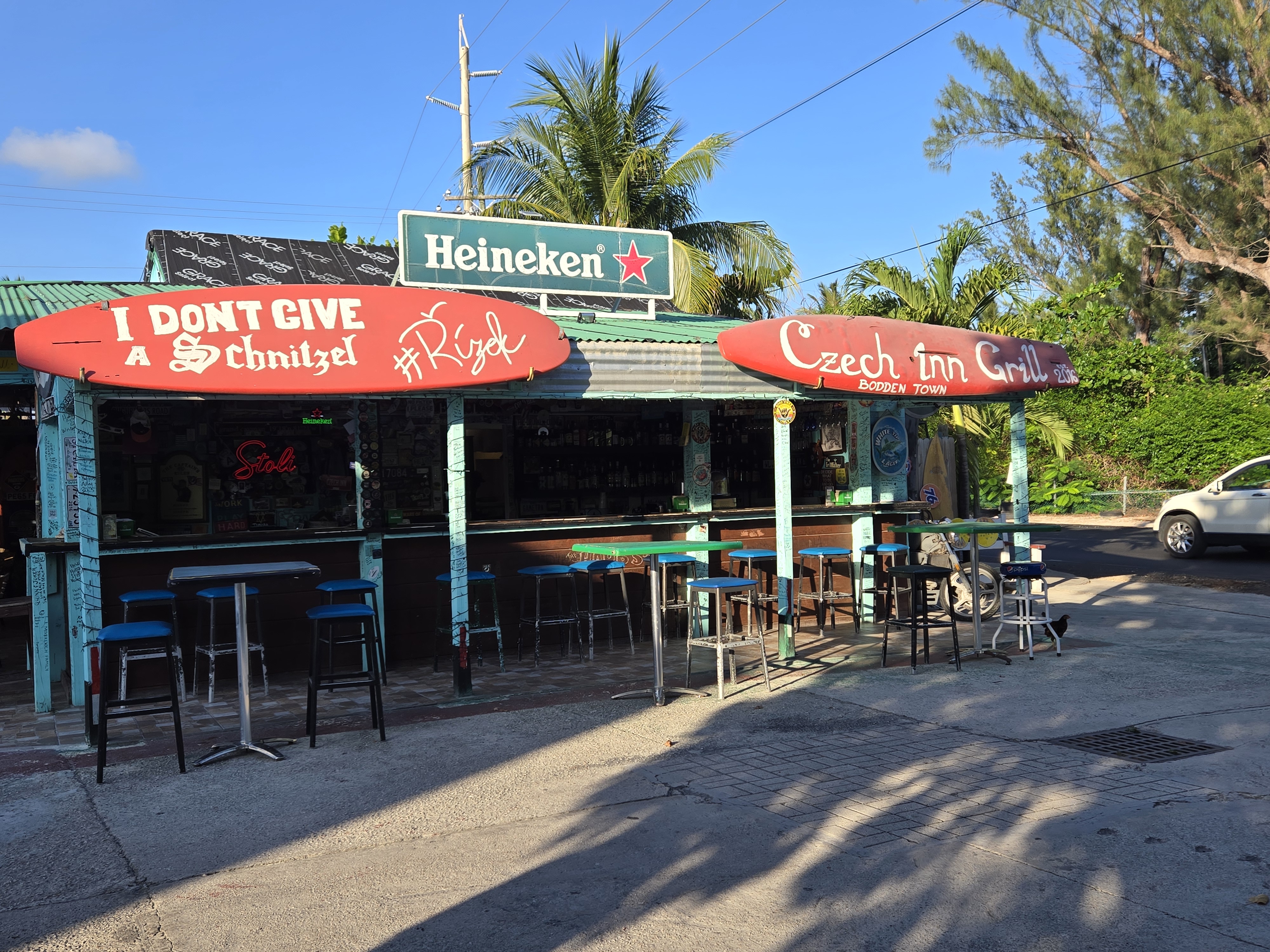
On our drive back to the eastern end of the island, we stopped at a restaurant in Savannah that we saw in a tourist newspaper and heard other resort-goers rave about. It is called the Czech Inn Grill and is operated by an accomplished 4-star chef from Czechoslovakia. It’s mostly an outdoor venue, with walls composed of surf boards. If you’ve ever been to Tom’s Burned Down Café on Madeline Island in Lake Superior, it’s a lot like that.

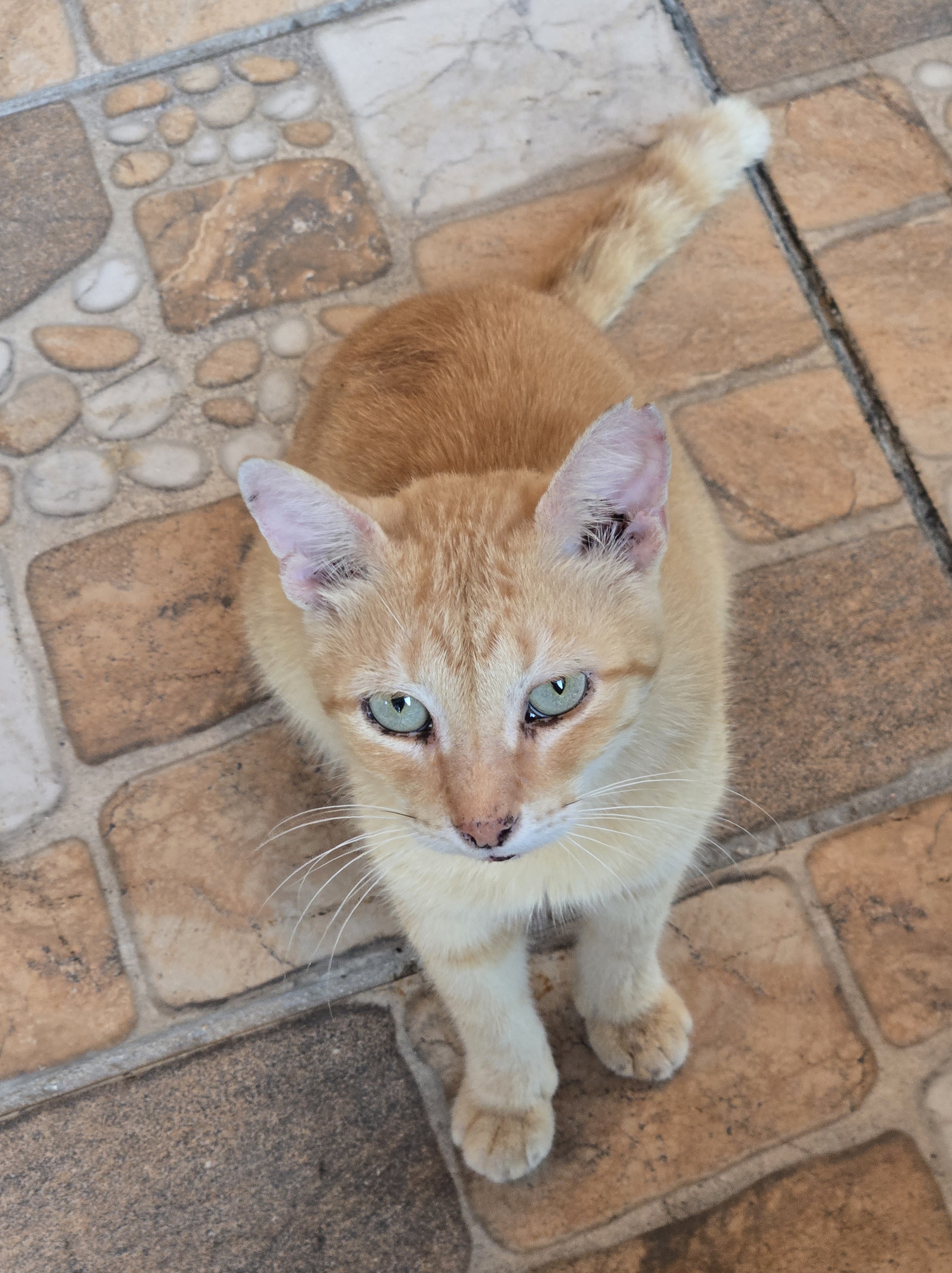
This was my FAVORITE meal of the trip. Every meal we ate on the island was good, but this had the added ambiance of a green-eyed tabby cat and a rooster. It’s not every venue where you can share your meal with two grateful animals. Russ and I both ordered ribs. Russ had Asian ribs, I had Hawaiian ribs with Czech potato salad. They were divine! We arrived early for dinner and once again, were almost the only people there.

The cat, whose name we later discovered was Prince Harry, sat politely by our table, squinting at me in a most appealing manner. How could I not share my bounty with him? He ate the first few offerings, but then deferred to the rooster for several others after the bird figured out what was going on. Later, Prince Harry became more demanding, standing on his hind legs and putting a paw on my thigh to get my attention for more tidbits. I didn’t mind complying.

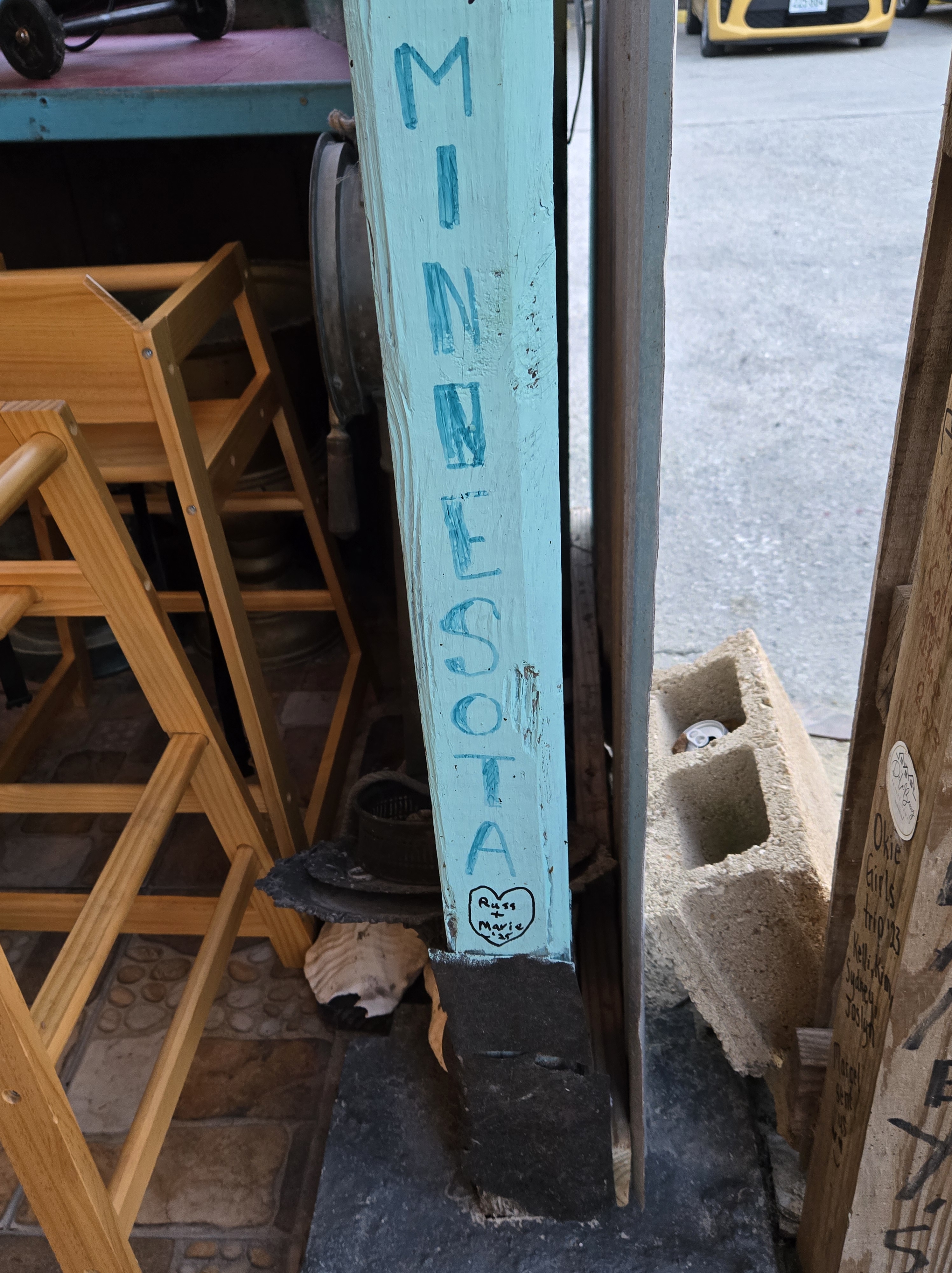
The surf boards and wooden support posts were filled with graffiti – peoples’ names and where they were from. Under “Minnesota” written in large letters near the reception area, we added our names and date with a heart drawn around it in honor of our sixth anniversary. If you ever visit the grill, look for our mark. It was a truly memorable dinner!

Next up: Green parrots and starfish.

Grand Cayman Day 4: Blue Iguanas, Blowholes, a Mansion, and Frigate Birds

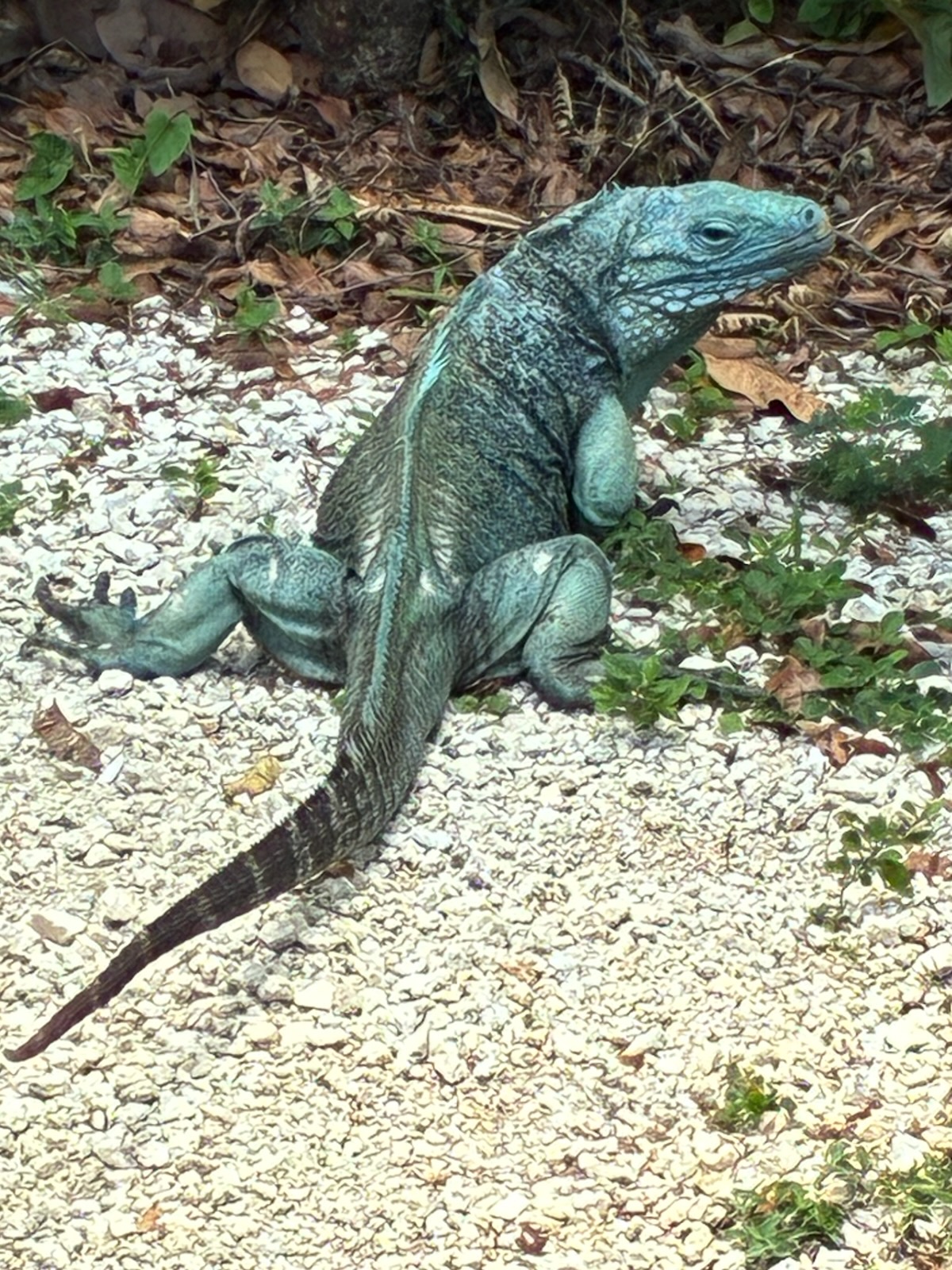
A blue iguana at the Botanic Park. Image by Russ.

Our fourth day on Grand Cayman Island dawned hot and beautiful, just like all the previous days. Our first adventure was a visit to Queen Elizabeth II Botanic Park on the island’s North Side. Besides lush and gorgeous foliage, what drew us to the park was its unique mix of culture, natural history, and endangered blue iguanas.

You heard me: blue iguanas. This special species is only found on Grand Cayman Island. The park has a conservation facility where they breed iguanas – some for release in other parts of the island. If I would have been quicker writing this post, I could have had it done on May 8, which is National Blue Iguana Day on the island. As it was, we were still traveling around the island with no time to write!

Pretty border foliage on the Woodland Trail.

We bought our tickets and then meandered toward the Orchid Boardwalk. Not far down the path, I spied a small humpbacked brown animal that looked somewhat like a prehistoric horse. As it ran into the undergrowth, I realized that I had the good luck to see an elusive agouti. These rodents were introduced to the island years ago and eat fruit, leaves, and roots. That was worth the admission, right there.

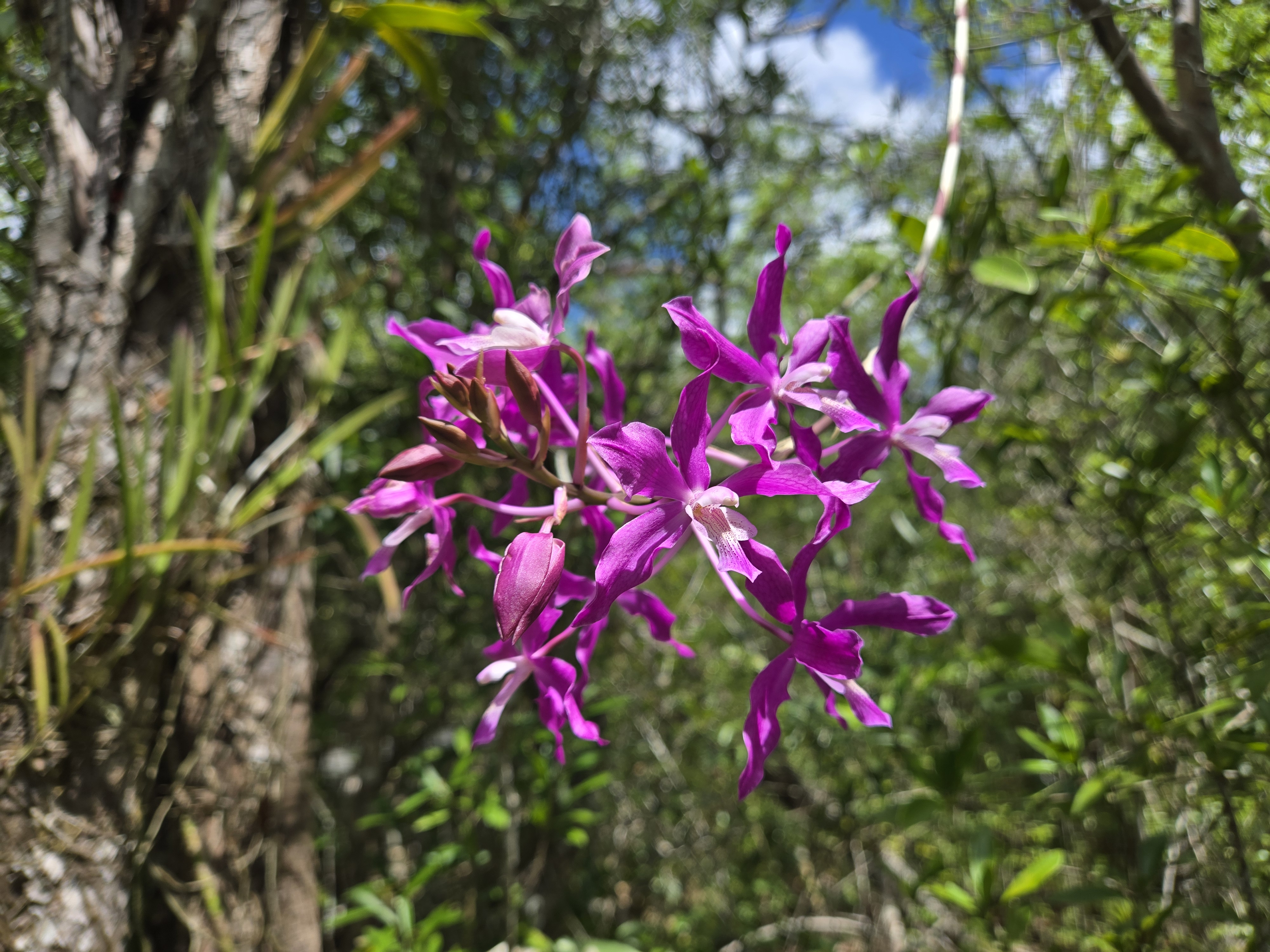
An orchid on the Orchid Boardwalk.

When we arrived and walked toward the park visitor center, a wild blue iguana greeted us on the lawn. We joked that it had been placed there just for us, or that maybe it was a statue. But no, it had moved by the time we finished our visit, so I guess it wasn’t fake.

The park’s Orchid Boardwalk takes you through a jungle of epiphytes (air plants) and orchids, some of which are only found on the island. Our next stop was the Heritage Garden, which sports a traditional homestead and garden. By this time, we were pretty hot, so we hung out in the shade of the home for a while. Across from that was a Xerophytic Garden, which features plants that require little water. We also toured a Lily Pond and a Palm Walk. My favorite was the Color Garden, which offers flowering plants arranged by color.

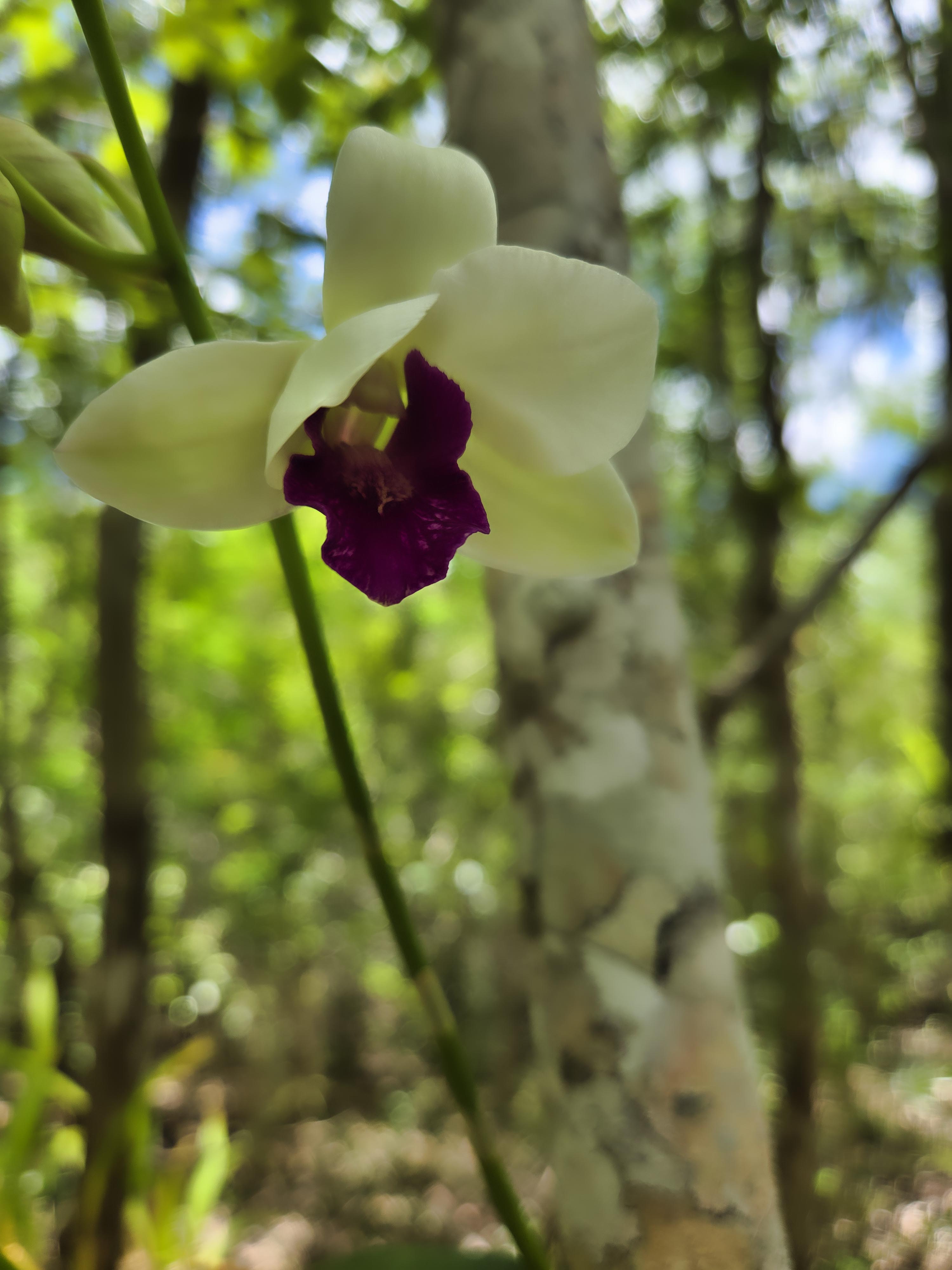
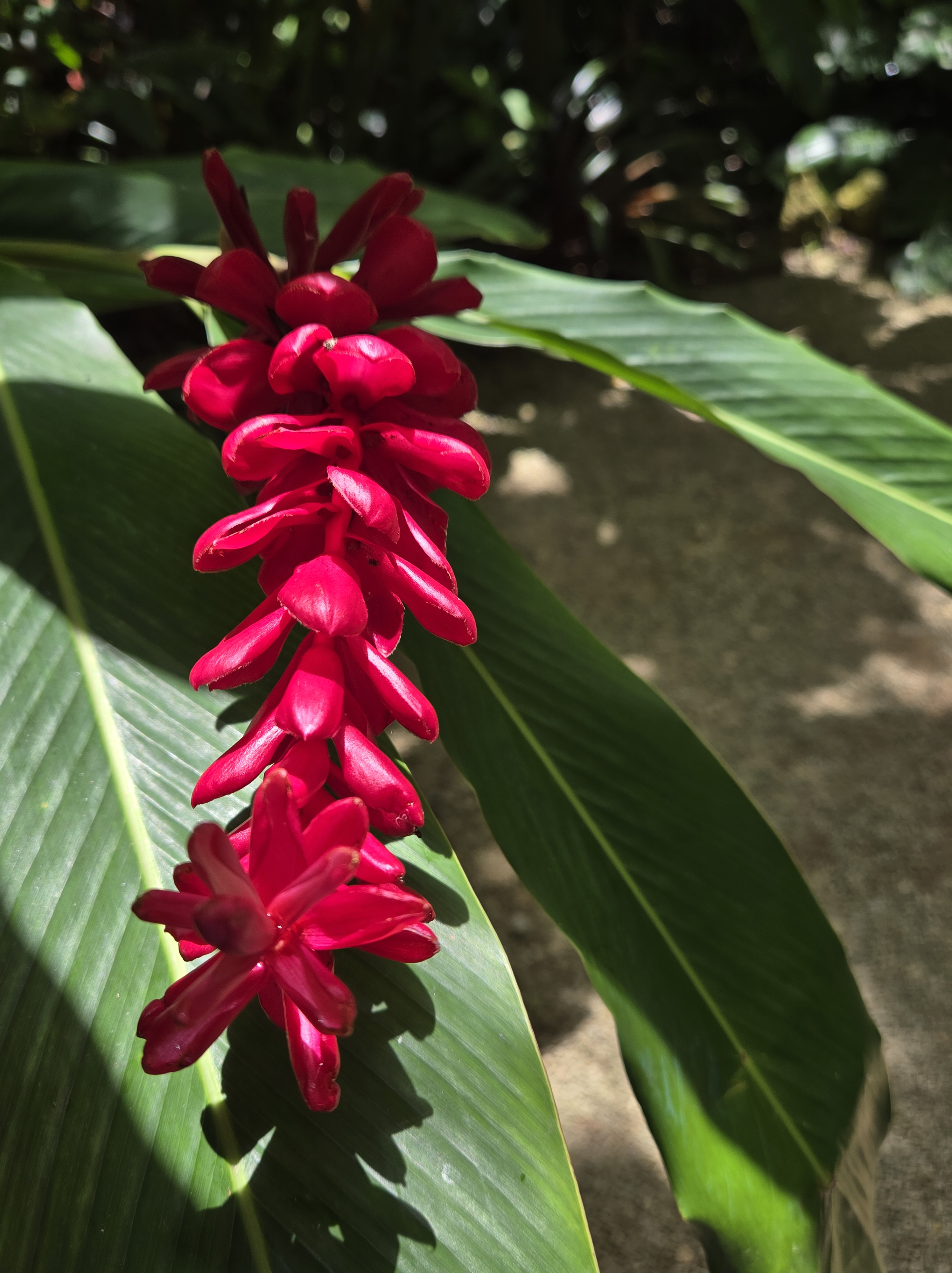
A flower in the Color Garden.

Our final stop after a long (and hot) walk on a woodland trail was the iguana conservation area. Here the blue iguanas are housed in outdoor natural habitats and cages. Most of the captive iguanas were hiding but a large wild iguana wandered the pathways, and Russ was able to get a good picture of it without fencing in the way. From the interpretive signs, we learned that blue iguanas can live for 50 years, that 1,000 have been released into protected areas on the island, and that they only turn blue during mating season. Apparently, it was mating season because many of them were blue.

The Lily Pond in the Botanic Park.

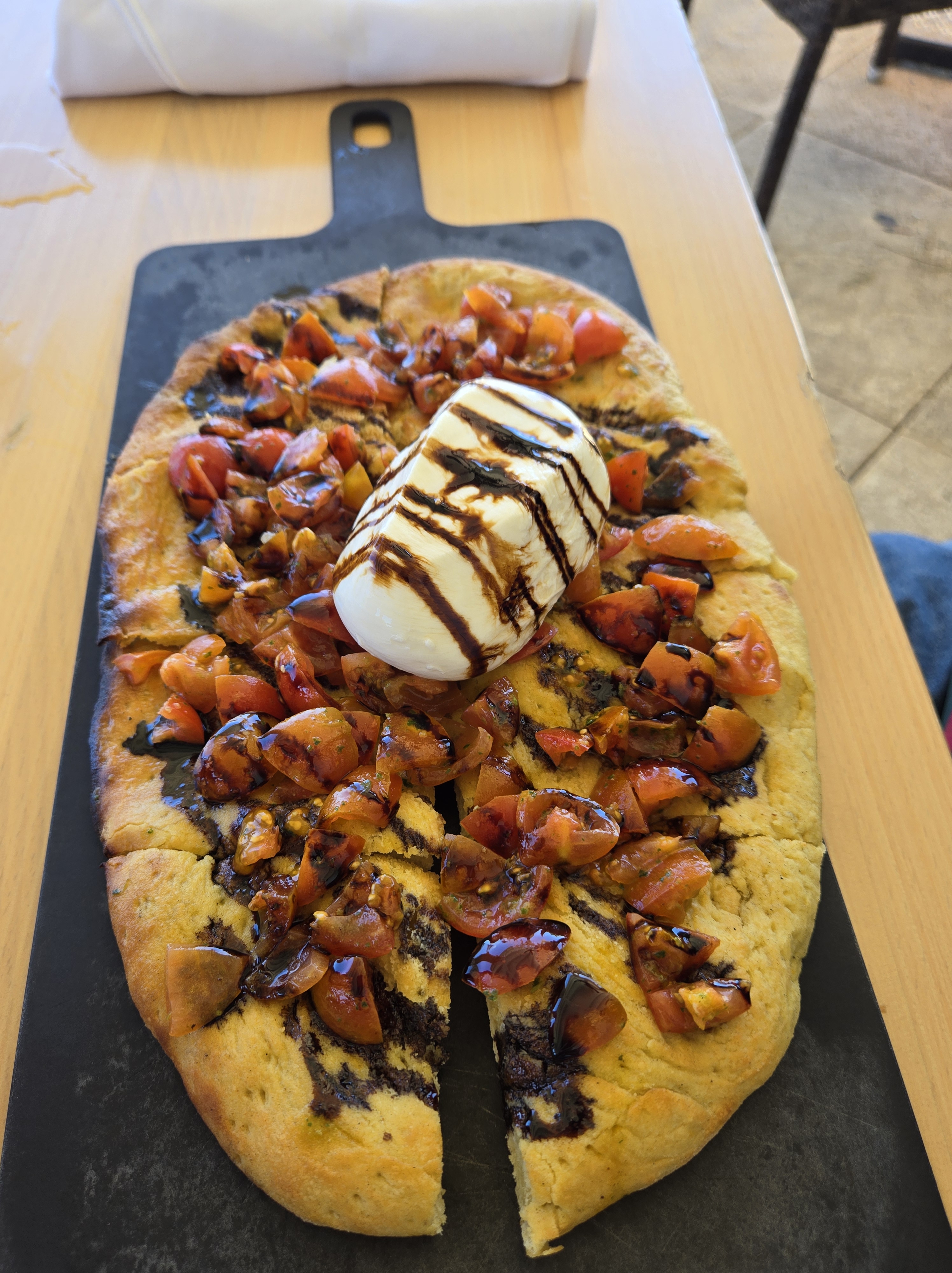
Pedro St. James Mansion was our next destination but before we toured it, we enjoyed lunch and a view of the sea at its Thatch and Barrel Restaurant. Russ had bruschetta burrata flatbread, with tomato, burrata cheese, garlic, and a scotch bonnet pepper-infused balsamic reduction that looked outstanding! The restaurant is known for its locally sourced ingredients and cocktails that use 1780 rum, which is blended onsite. I had a refreshing 1780 colada and a luscious castle burger, which featured onion jam, brie, local red pepper jelly and greens, garlic jalapeno aioli, and truffle fries.

Russ’s flatbread dish from the Thatch and Barrel Restaurant.

Thus fortified, we bought our tickets to the mansion. The docent led us into a multimedia theater for an orientation. We were the only ones enjoying the show! The theater uses creative lighting, wind, water, and vapors to transport viewers into the early lives of Caymanian settlers. After that, we were free to wander the grounds and tour the three-story mansion. You can opt for a guided tour, but we chose self-guided.

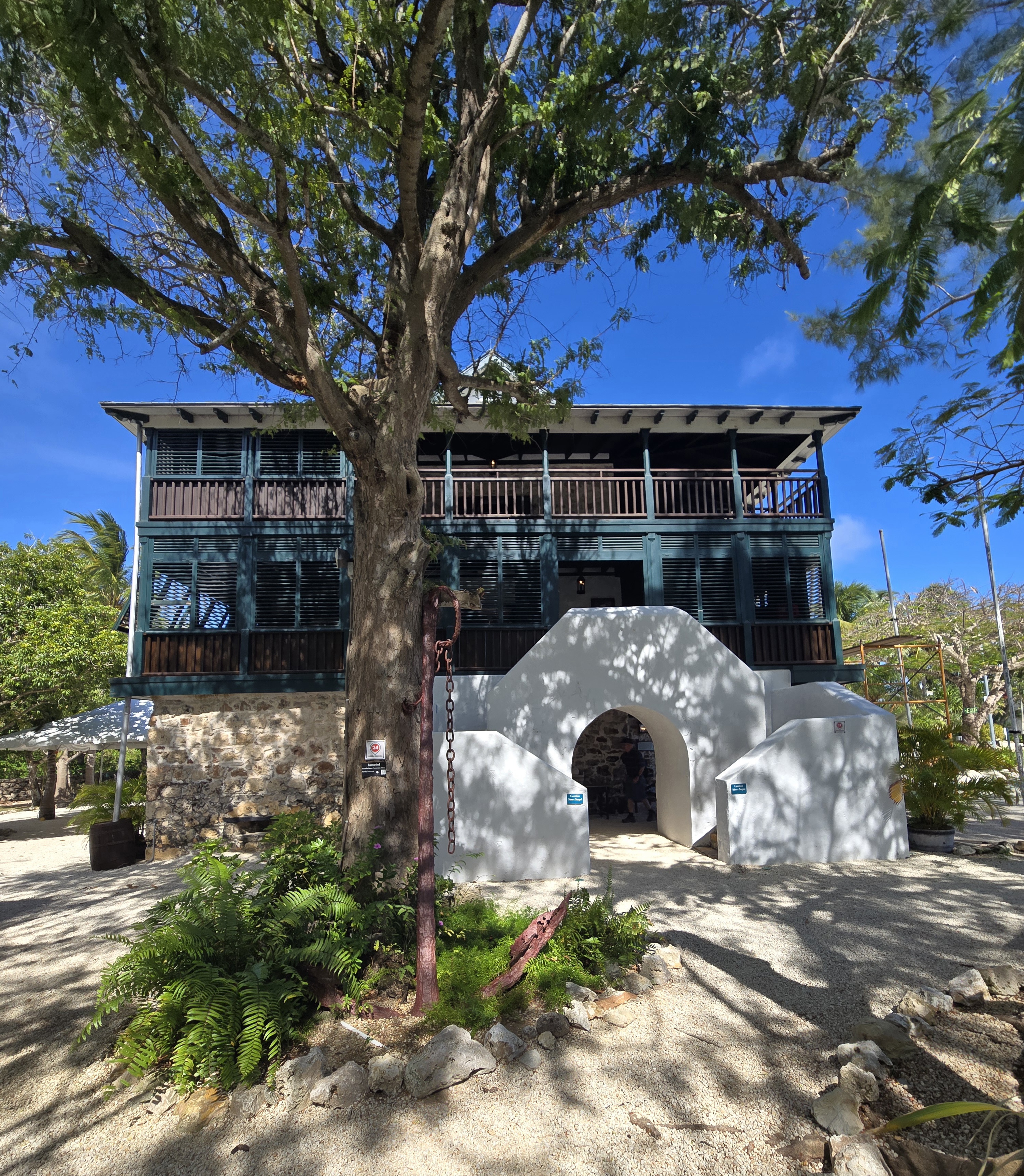
Pedro St. James

Pedro St. James is the oldest surviving stone structure in the islands. Its verandas and shuttered windows reminded me of Earnest Hemingway’s house in Key West. The elaborate construction made it the Caymanian equivalent of a European castle, so locals often refer to it as Pedro Castle. The mansion has had its ups and downs and has seen its share of historic events. The first island parliament was held inside, and a proclamation ending slavery was read from its front stairs (somewhat ironic, since the mansion was built with slave labor). Once again, we were the only people touring the mansion.

There’s also an interesting International Scuba Diving Hall of Fame at Pedro St. James. It’s worth a look.

On the way out, I bought a small bottle of the 1780 rum to bring home. I’m here to tell you, it’s gone all ready! I’ve never tasted a rum so smooth – dark and rich, almost root beer-y. If you get the chance, buy this rum.

On our way back to our resort, we stopped at the Blowholes. These are holes in the rock along the ocean shore where the water sprays high into the air. There are only a few blowholes, but they were fun to see; kind of like the Grand Cayman version of Old Faithful.

A blowhole blowing.

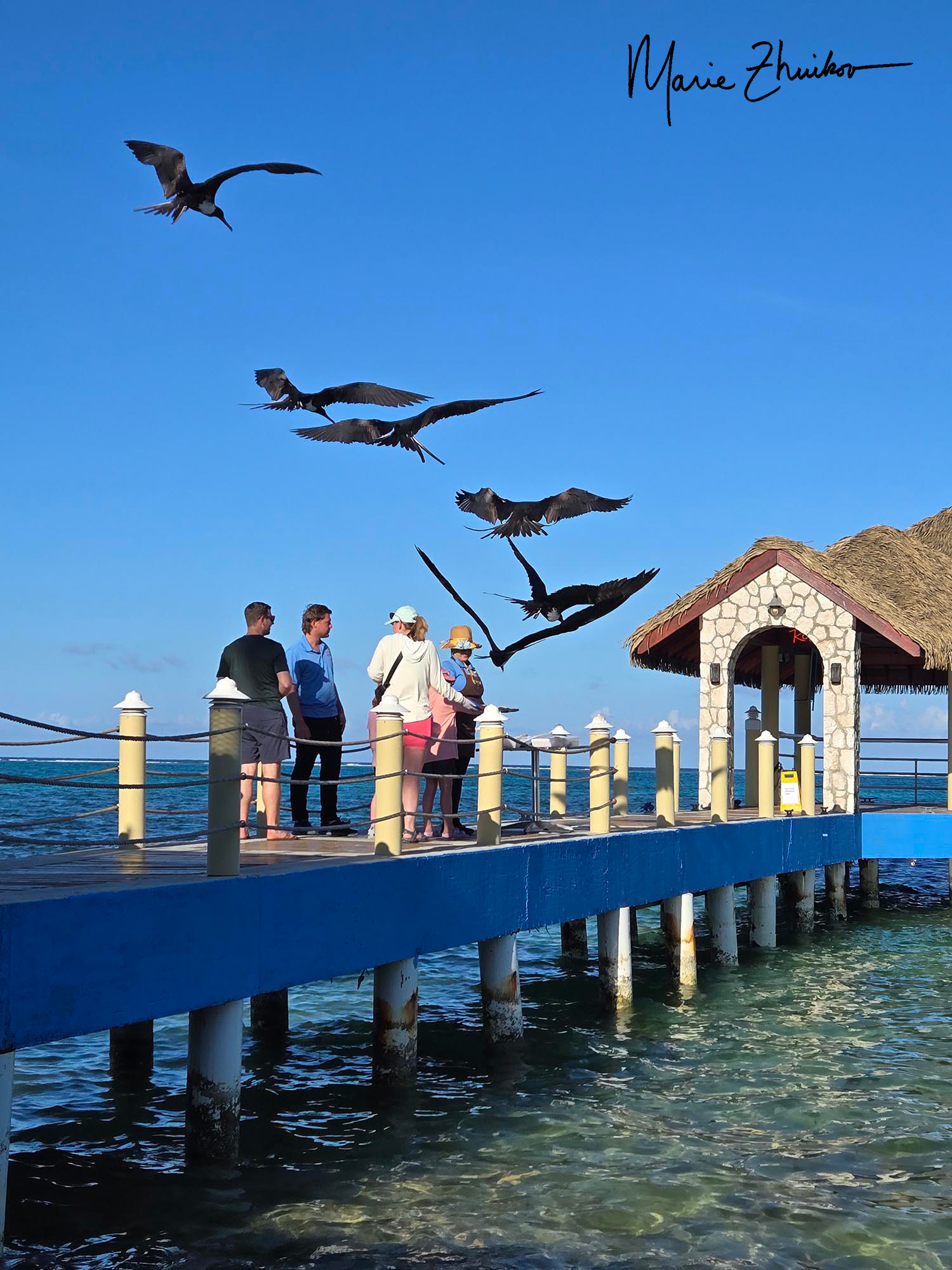
We happened to be passing Tukka Restaurant (where we ate the previous day) at 5 p.m., when they feed the frigatebirds. We hung out in hammocks on the shore and watched the large and acrobatic black birds swoop down for restaurant scraps. Recycling at its finest!

Frigatebirds hover, awaiting handouts.

We cooked our own dinner that night in our resort room kitchen. We purchased king mackerel steaks, which I had never cooked before. But I found a simple recipe online and they came out pretty good – reminded me of a cross between tuna and shark – a firm, oily meat.

Next up: Art, Turtles, Hell, and Leaving our Mark

Grand Cayman Island Day 2: Crystal Caves and Lionfish

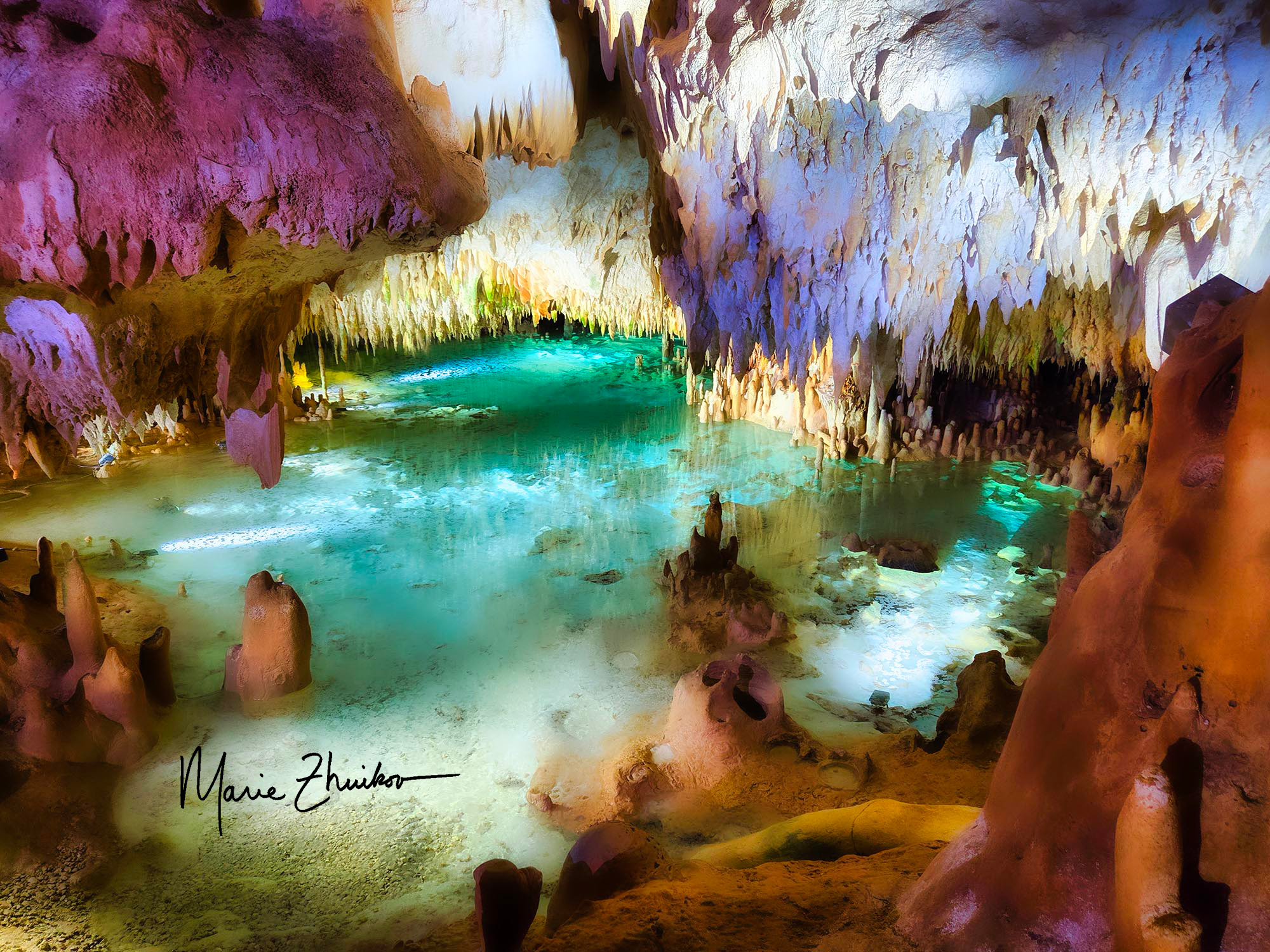
A soft focus image of Lake Cave at Crystal Caves.

After foraging for food at the grocery store, we spent the afternoon of our second day at one of the main attractions on the East End/North Side of Grand Cayman Island: Crystal Caves. Most of the island is limestone and the caves were formed over millions of years from water dripping through the rocks, creating stalactites and stalagmites. In the past, people used the caves for water and for shelter during hurricanes. They were also rumored pirate hangouts.

The guided tours last 1-1/2 hours and need to be prebooked. Ours began with the manager providing an orientation. Then we loaded into two vans for a short bumpy ride to the caves. Three caves are open for tours. Our first stop was Roots Cave, which features long tree roots draping from the ceiling. The roots have grown over the years as the trees above search for water in the cave.

Open Ceiling Cave. Note the ropes on the right that people used to use to enter the cave.

Our second cave was Open Ceiling Cave, which, as you’ve no doubt deduced, has a big hole in the ceiling. The third was my favorite from a photography standpoint. Lake Cave features a small, crystal-clear body of water (more like a pond) that has filtered through the rock.

One of the caves (I can’t recall which) had some fruit bats hanging from the ceiling. I felt bad that we disturbed their daily slumber, but it was cool to see them. During all the other cave tours I’ve been on in different locales the cave temperatures have been cool. These were hot, so be prepared. If you work up a thirst, there’s a small restaurant and gift shop at the cave site.

Russ and I were so hot and sweaty afterward that once we returned to the resort, we jumped into the pool. There’s nothing that a banana daquiri from a swim up bar can’t cure!

Lake Cave

For supper, we dined at a dive bar. An honest-to-goodness dive bar run by scuba divers. We chose Eagle Rays Dive Bar and Grill because they are known for featuring lionfish on their menu. We were also drawn by its casual atmosphere and relaxing ocean views.

Lionfish (and other invasive species) have popped up in my blog before. (See this guest post from 2020 by my friend Sharon.) These are a beautiful but venomous fish native to the Indian Ocean and west Pacific. It’s thought that people who no longer wanted lionfish in their aquariums, released them into the Caribbean Sea and the Atlantic, and now they have become invasive.

The good news is that, when prepared properly, lionfish are safe and good to eat! Island divers spear the fish, which are purchased by another restaurant and Eagle Rays. Rays claims to be the only place on Grand Cayman “that regularly serves everyone’s favorite marine pest.” Russ and I usually eat supper early, so we were able to get a table without a reservation. In fact, we were among the only people there, which ended up being a common and mysterious occurrence during this trip.

Lionfish tacos from Eagle Ray’s Dive Bar

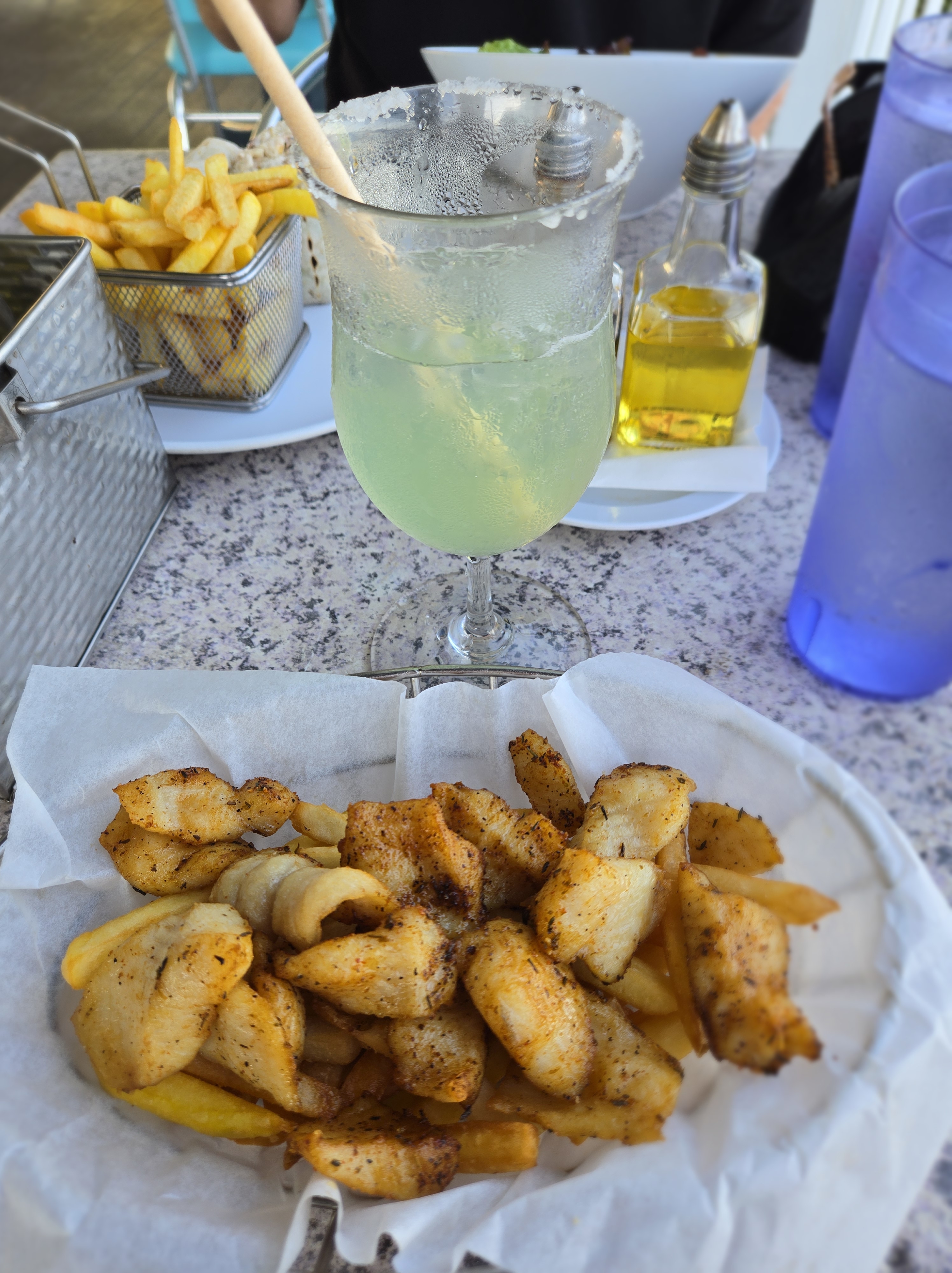
Ray’s specializes in lionfish tacos, which Russ ordered. I can’t eat taco shells (wheat and corn), so they made me a special order of grilled lionfish and chips (which isn’t on the menu). Russ was very happy with his tacos and my dish was also delicious. Lionfish is a white meat, which to this Minnesotan, tastes a lot like our state delicacy of walleye.

Lionfish and chips (plus a margarita!)

As we enjoyed our meal in the sea breeze, I uttered our trip slogan once again: “Can’t do this in Duluth!”

Next up: GoPro, Snorkeling, and Stingrays

Grand Cayman Island: The Third Time’s the Charm

Mimi’s Bar and Grill at Morritt’s Resort

I’ve been quiet for a while. Why? I’ve been meandering!

With its turquoise waters and abundant sea life, Grand Cayman Island had beckoned me for years. Russ and I have tried three times to travel to this isle in the Caribbean Sea south of Cuba. The first time, the British government closed the island due to COVID, so we had to cancel. The second time, we were able to make a lodging reservation, but we couldn’t get a flight there (probably due to COVID).

We decided to try one more time and keep our fingers crossed. It did indeed come to pass, but not without challenges. Despite my best efforts to book us flights that departed/arrived at civilized hours, after I made our reservations, the airline changed its schedules and foiled my plans. We ended up needing to awaken at 3 a.m. to leave and then return around midnight. Because of this, we booked a hotel room at the Holiday Inn Express and Suites in Minneapolis (near the Mall of America) through Expedia for before and after our trip, and left our car at the hotel, which had cheaper parking than the airport. The place had great reviews and ratings, so I thought we were safe. I received confirmations for all our reservations, and we were set!

A few days before our departure, I had a question about the parking arrangements and called the hotel for information. My Cayman-dreaming heart filled with dread when the reservation person said they couldn’t find our outbound reservation. They only had our return one. They suggested I contact Expedia to sort out the mess.

I contacted Expedia and they were great. They called the Holiday Inn but were unable to work things out with the reservation person. They asked to speak with a manager but were told no manager was available for three days. We were leaving in two days, so that was no good. Expedia said they’d refund our money for the outbound reservation and that we’d have to contact the hotel directly to redo that reservation. So, I did. Luckily, they still had room, but now it was going to cost us $50 more. However, they’d upgrade us to a room with more floor space to make up for it.

This seemed like extortion to me, but I wasn’t going to argue. The success of our trip meant too much for that. But, as you can see, I’m not above calling out the hotel’s name in the blog post to warn others. I was glad we found out about the issue with enough time to rectify it so that we didn’t arrive in Minneapolis and find we had no place to stay! (We could have stayed with some friends or relatives, but I didn’t want to subject them to our early departure and late arrival.)

A ruddy turnstone eyes our food.

This snafu left me wondering what else would go wrong, but thankfully, nothing did. Everything else went smoothly and we arrived in Grand Cayman to 90-degree temps and 70% humidity. That was quite a shock to our Minnesota systems!

We stayed at Morritt’s Resort on the East End of the island. Despite being away from the thick of the action, we found plenty to do nearby as we gained confidence driving on the “wrong” side of the road in our rental car.

We enjoyed supper at the dock bar, watching tropical fish in the sea and shorebirds flit around the dock as the sun set. It was then I uttered, “Can’t do this in Duluth,” which was to become the slogan for the rest of our trip.

A school of tarpons gather off the dock at sunset.

Next up: Crystal Caves and Lionfish.

The resort cats enjoy their supper.