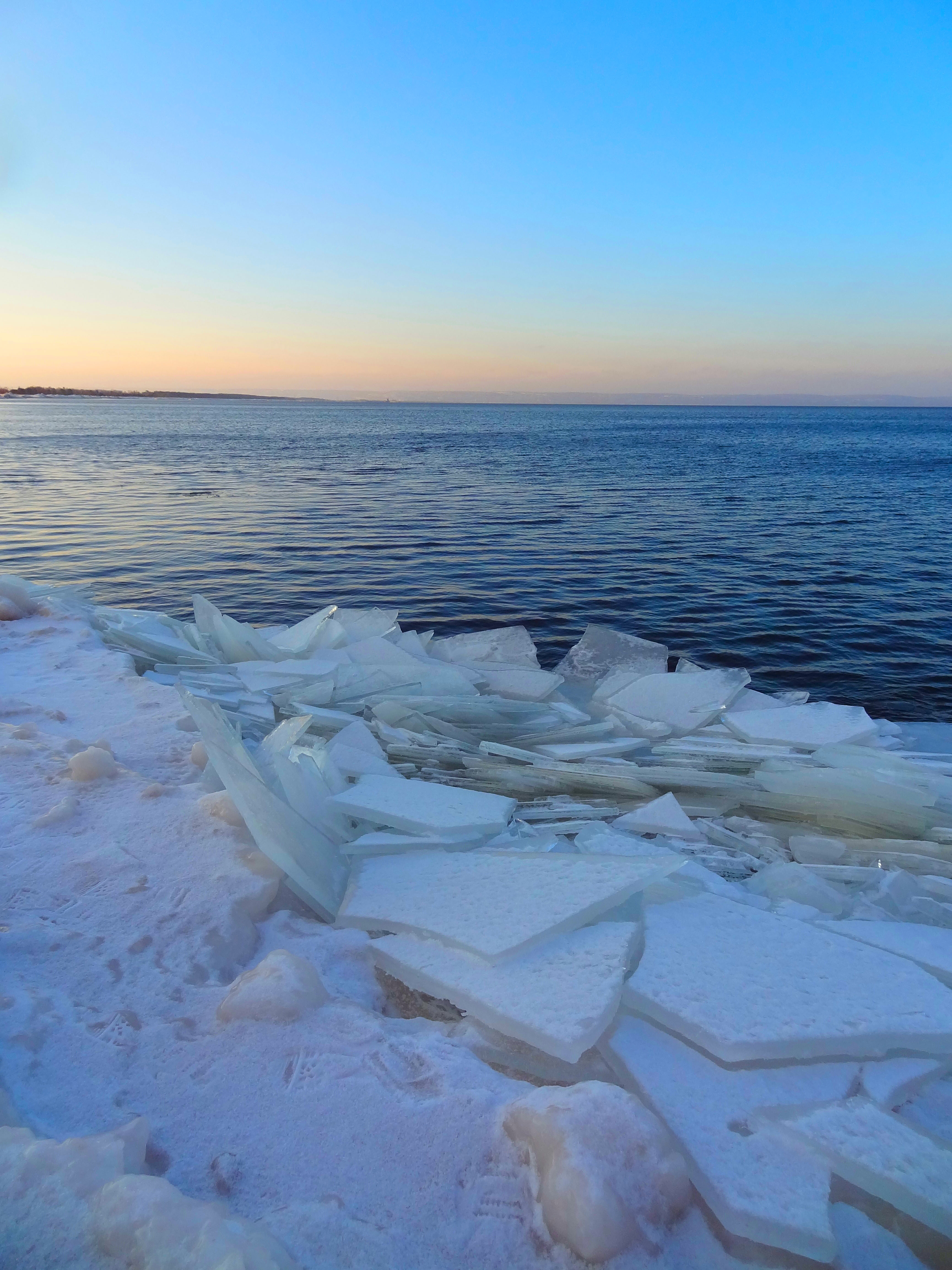
Iceout is happening.
In the North, we stand on the shore in spring and yearn, with a visceral longing, for a break in the smooth white face of the lakes. All winter, they have been a study of white, defined by the absence of blue.
As my acquaintance, former National Geographic magazine photographer and writer, Jeff Rennicke says so well, winter iceover is like an “annual sensory deprivation experience—the specter of negative space—a long, white poem of silent syllables.”
Now, that silence has been broken. As I stand on the frozen grass of our cabin lakeshore, air bubbles underneath the ice gurgle and emit otherworldly moans like the cries of a mystical animal. Blowing wind shifts the ice and I watch cracks form in the thin nearshore skim.
As Rennicke says, soon the ice will crinkle and clash, ringing like bells. Leads of open water will scroll across the blank white page like exuberant cursive. The lakes will awaken, announcing again the spin of the planets, the truth of the changing seasons.
No, the world hasn’t frozen permanently. Spring is coming once again to the North. And it is written in the iceout.
 Marie's Meanderings