
Now, we’re continuing Russ’s and my epic trip to Ireland and Scotland. After spending a week in Ireland we flew to Aberdeen, Scotland. Our goal was Gardenstown, a coastal fishing village next door to where I stayed in Scotland eight years ago when I visited Crovie. I wanted to spend more time there and show it to Russ. I chose Gardenstown over Crovie because we weren’t renting a car this time and we wanted to be closer to a grocery store. Gardenstown sports a couple of convenience stores and “The Wee Shoppie,” a grocery store that offers a great selection of food despite being “wee.”
The cab ride from the Aberdeen Airport to Gardenstown was pricey (around $100) but to us it was worth it. By using cabs and public transport throughout our trip, we saved money versus renting a car. Our plans didn’t always work out due to unforeseen circumstances but overall, it went pretty slick. We also didn’t have the stress involved with navigating Ireland and Scotland’s narrow, winding roads where the locals drive very fast. Another reason was because the last time I was in Scotland, I had a car crash on my way to the airport in Edinburgh. (Read that saga here.) Gardenstown can also be reached by bus, but the ride is long, and we didn’t want to spend that much time getting to our destination.
Besides, if we rented a car or took a bus, we wouldn’t be privy to more taxi driver wisdom! On our ride we learned that Elvis is of Scottish descent. (Our driver had visited Graceland and brought the appropriate color tartan to lay at his grave.) We also learned that “You can always be sure of your mother, but not so much your father,” when it comes to ancestry. I suppose in many cases, that’s true! Our driver said he identified with his mother’s Stuart Clan for this reason.

This got us into a conversation about my link to Robert the Bruce, first king of Scotland. Our driver told us that there’s a statue of The Bruce in Aberdeen. It shows the king on a horse, holding papers in his outstretched, upraised hand. The charter is a declaration he signed in 1319 that gave the city his lands (Forest of Stocket) in appreciation for their support of him. This charter also resulted in the creation of the Aberdeen’s Common Good Fund, which is still used for community projects today. It stands outside the revamped Marischal College, the City Council’s headquarters. I’ve seen a lot of photos of Robert the Bruce statues, but this one was new to me. Our driver’s Stuart Clan supported Robert the Bruce, so we were like best buds after that conversation!

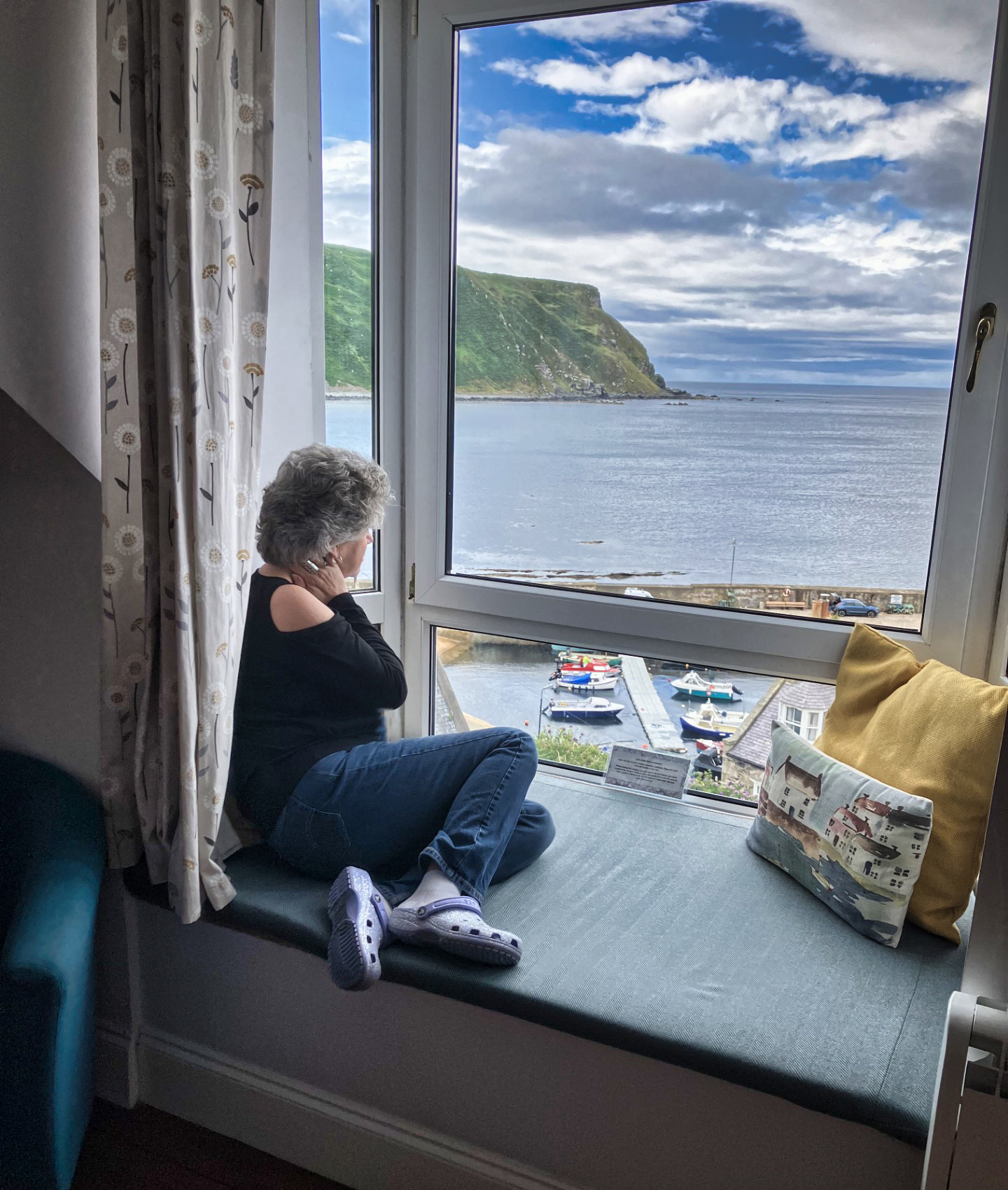
He dropped us off at our Gardenstown AirBnB, which featured a full kitchen, fireplace, and views of the harbor. It was a little tricky to find, since it required a walk up a narrow set of stairs, but if you read the access instructions thoroughly, you should have an easier time than we did! We also had trouble accessing the lock box but a quick call to our gracious host fixed that problem.

We dropped off our luggage and then made the short walk to the Wee Shoppie. We were famished from not having any lunch. While we shopped, fog rolled in from the North Sea and a drizzle began. It was perfect weather to cook a hearty pasta meal.
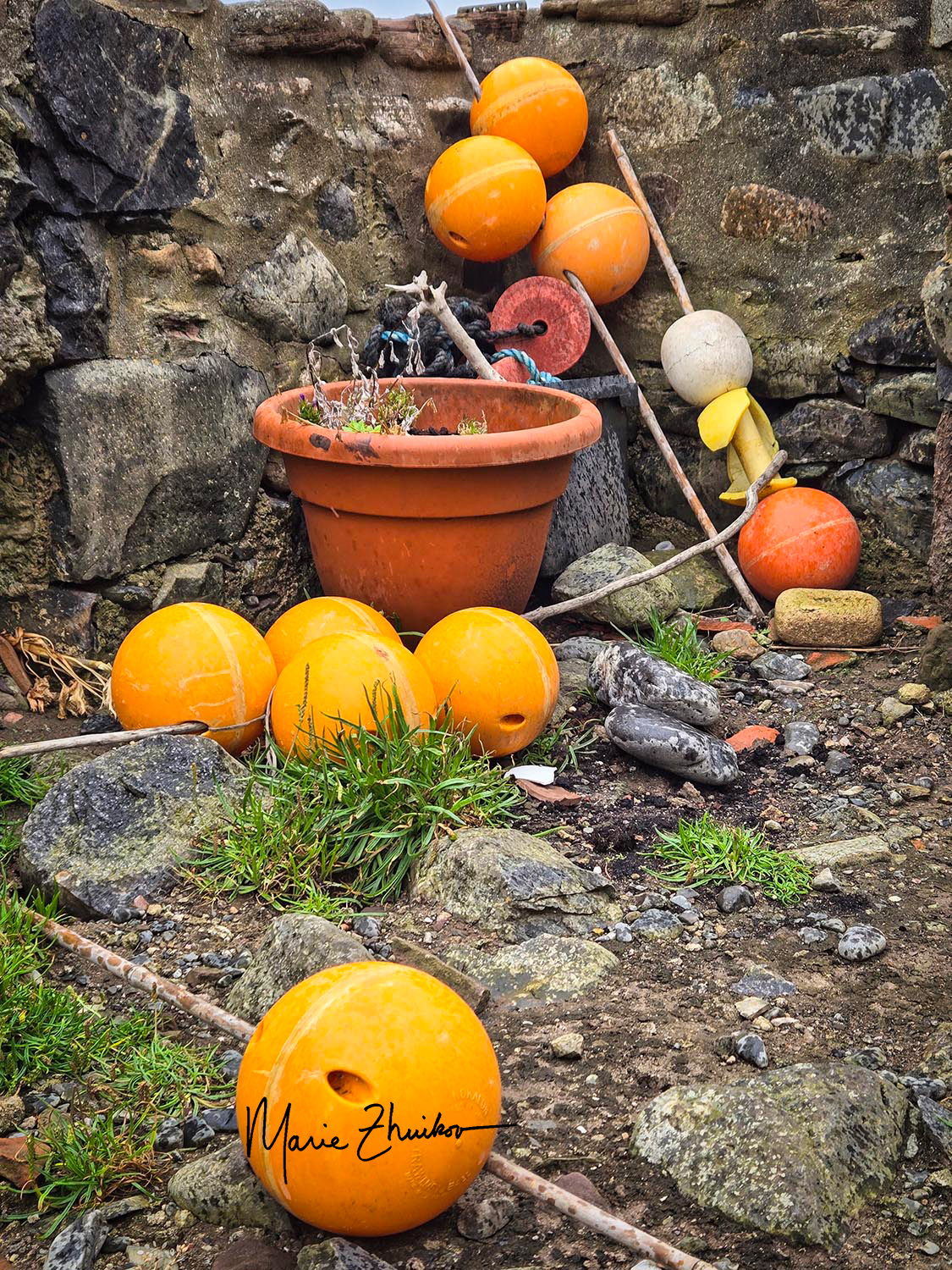
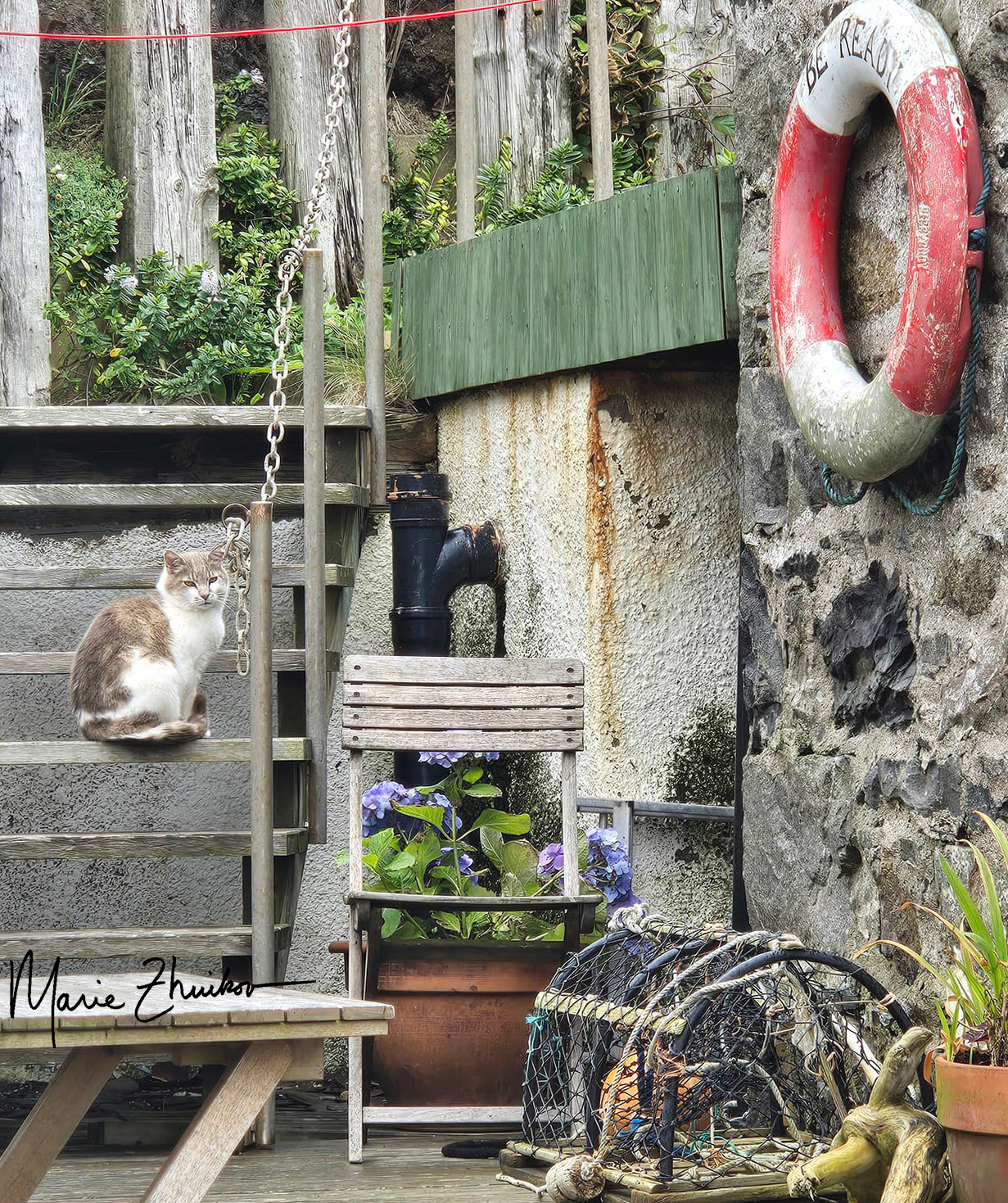
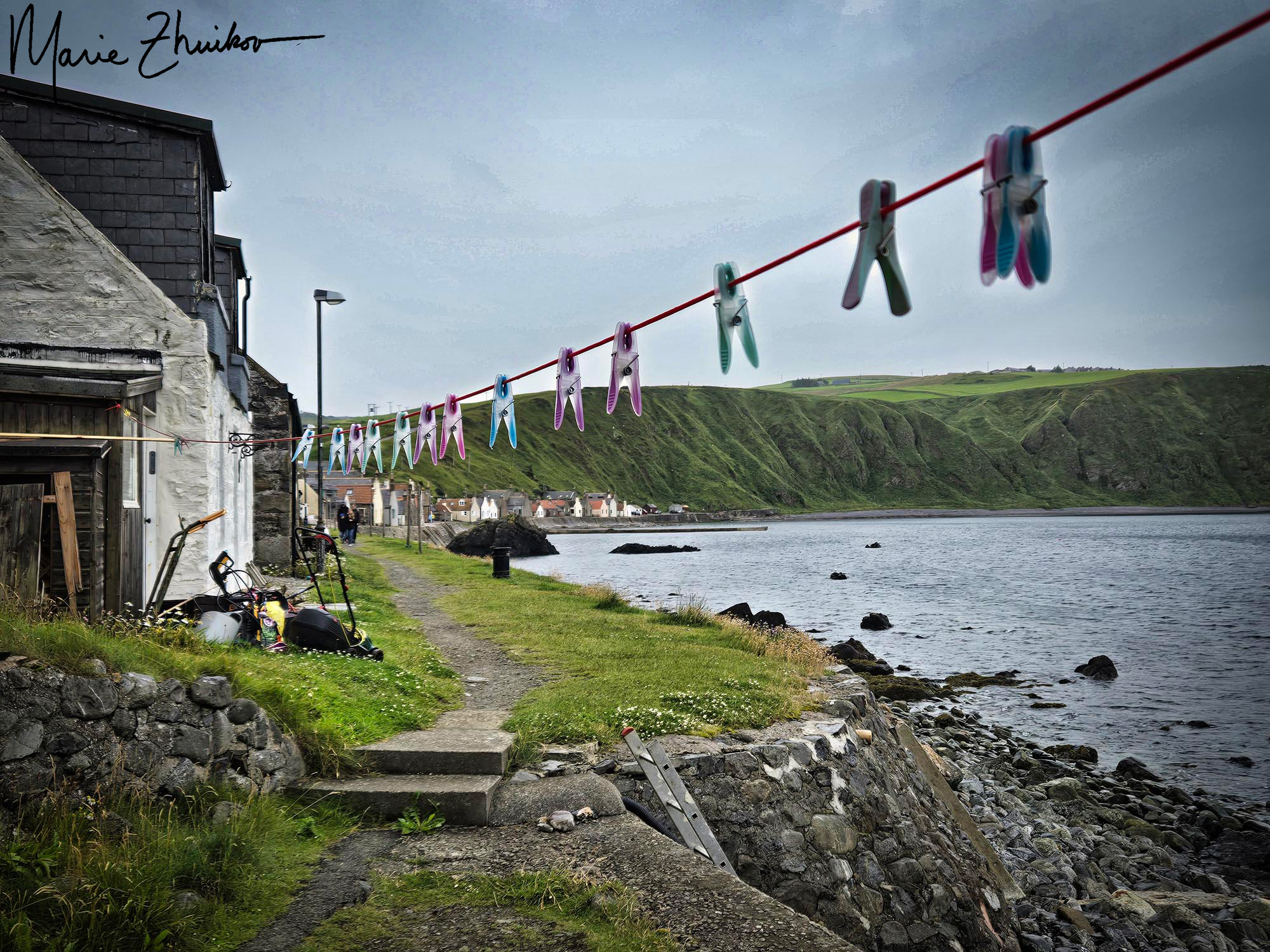
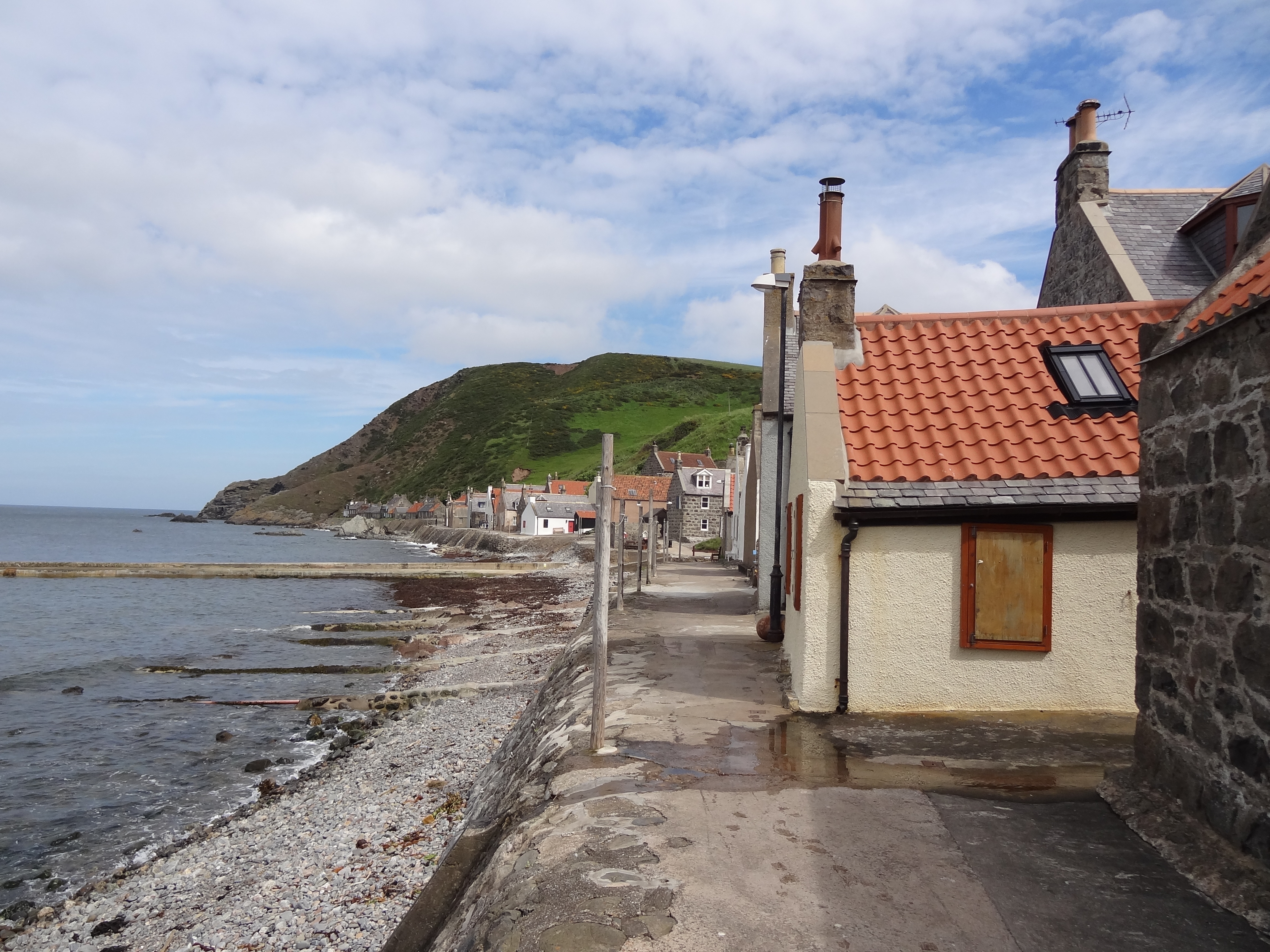
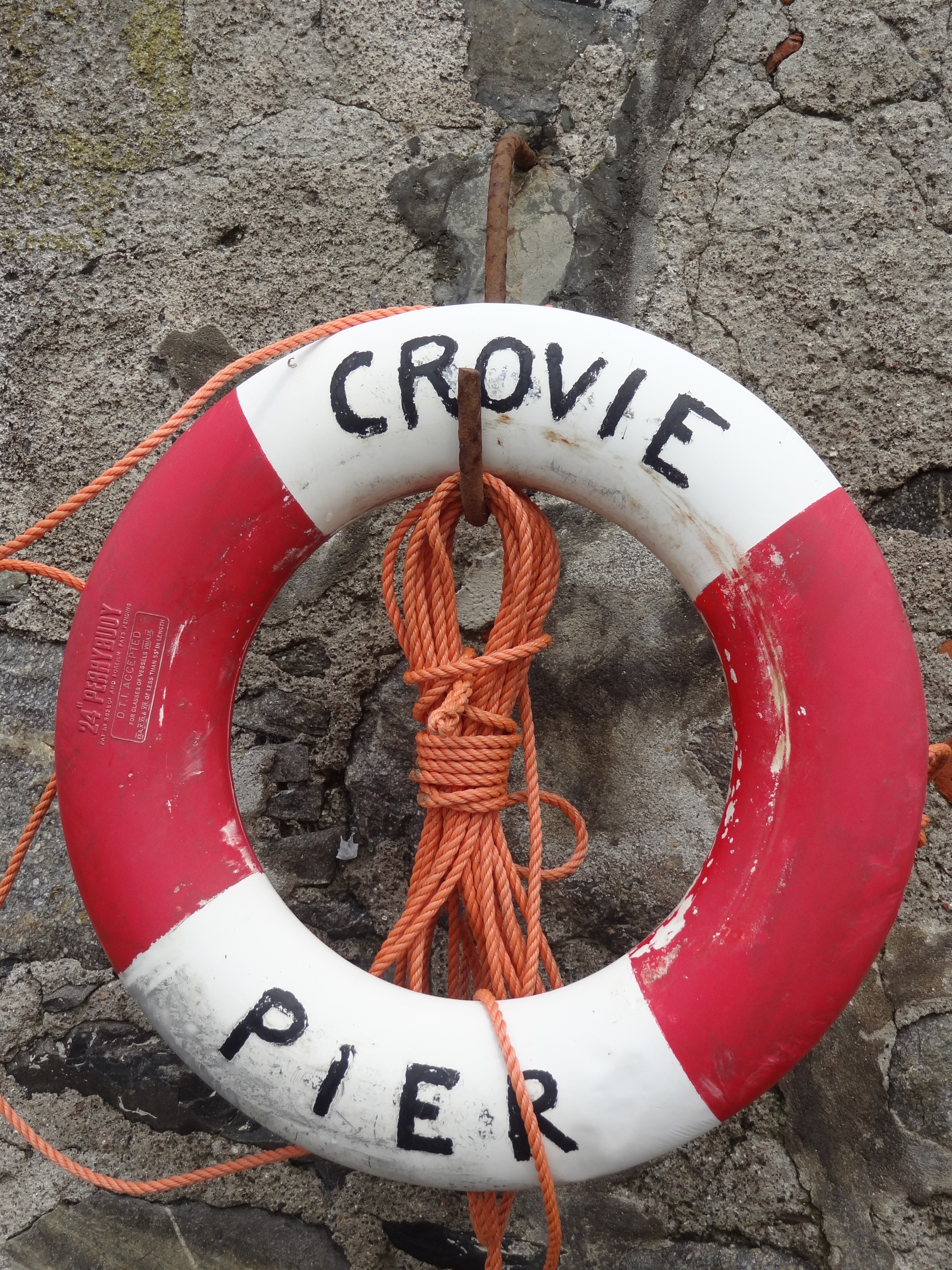
The next day, after the rain stopped, we hiked to Crovie. The rental cottage where I stayed before (Crovie #13) was still there. Crovie is also an historic fishing village, formed during the clearances when the British drove the Scots off their lands after the Battle of Culloden. It’s so picturesque, as you can no doubt tell from the images that go along with this post. Both Gardenstown and Crovie are on the Moray Coast, which is in northeast Scotland and spans from Fraserburgh to Inverness, a hundred miles along the coast.

We stopped back in Gardenstown for lunch and then hiked the opposite direction along the beach and up to the graveyard and ruins of an old church on a hill. The trail had suffered from some erosion since I was last on it, but we managed to get up the hill fine. Once we were atop it and nearing the church, however, I let down my guard. I rolled my right ankle, heard an ominous “snap,” and fell to the ground.
Two years ago, I broke that ankle (also hearing a snap) during a kickboxing workout. I have high arches, so am prone to this type of injury. Luckily, I just broke off the very tip of my tibia on the outside of my ankle bone that time and did not need surgery or a cast.

When I heard the snap this time, I immediately knew I had rebroken the same spot. Thankfully, I was able to stand and walk. With the help of one of Russ’s hiking poles I hobbled to the church and sat on a bench while Russ explored. I kept my ankle elevated, but already it began to resemble a goose egg.
I pondered our predicament. We were on a hillside in the middle of nowhere. We didn’t know it then, but there were no clinics in Gardenstown. There was no way I was going back down the eroded trail. I knew there was a cart path out to the paved road that led back to Gardenstown. It would be a longer walk, but a smoother one. We could call for emergency help, but that seemed excessive since I could still walk, and the fracture probably wasn’t that bad.
Once Russ returned, we decided we would walk the road back to town. Of course, at that point, it began to rain. There’s nothing like hobbling through the rain with a broken ankle. Even walking on the smooth road was taking our lives in our hands, however. I’ve mentioned that the roads are narrow and winding. They also have blind curves, small shoulders, and are lined with hedges, which make it hard to get out of the way of vehicles. At one point, a farm tractor pulling a trailer roared around a corner, narrowly missing us. We thought we were goners! The driver probably pegged us as crazy.
After two soggy and slow miles, we began the steep descent into Gardenstown, which is built on a hillside. We stopped at a gas station along the way, hoping they’d have an ace bandage in stock, but no luck. Once we made it back to our AirBnB, bedraggled and cold, I sat on the couch while Russ went to the Wee Shoppie for a bag of frozen peas to place on my swelling.
During his trip, he noticed an ankle brace in a window of an osteopath’s shop. The shop was closed but had open hours the next day and a phone number for appointments. We called and left a message. The next day the lady osteopath called us back and was able to work me in between her other appointments.
Alas, the ankle brace box in her window was just for show. It was empty. But she had an expired ace bandage that she offered me for free. I never knew that ace bandages expired. Even so, it seemed to work just fine, and it made me feel much more supported when I walked. Thank you, osteopath lady!
Through internet searches, we learned there was a clinic in the nearby village of Banff, but I really didn’t want to spend hours of our vacation getting medical care, especially since I was getting around okay.
In need of pampering, Russ and I visited the Garden Arms hotel that night for supper. I had a haggis/black pudding burger with bacon. Nothing like a bit of suet and lamb heart to make things right!
Next: Laying low in Gardenstown and a visit to Banff
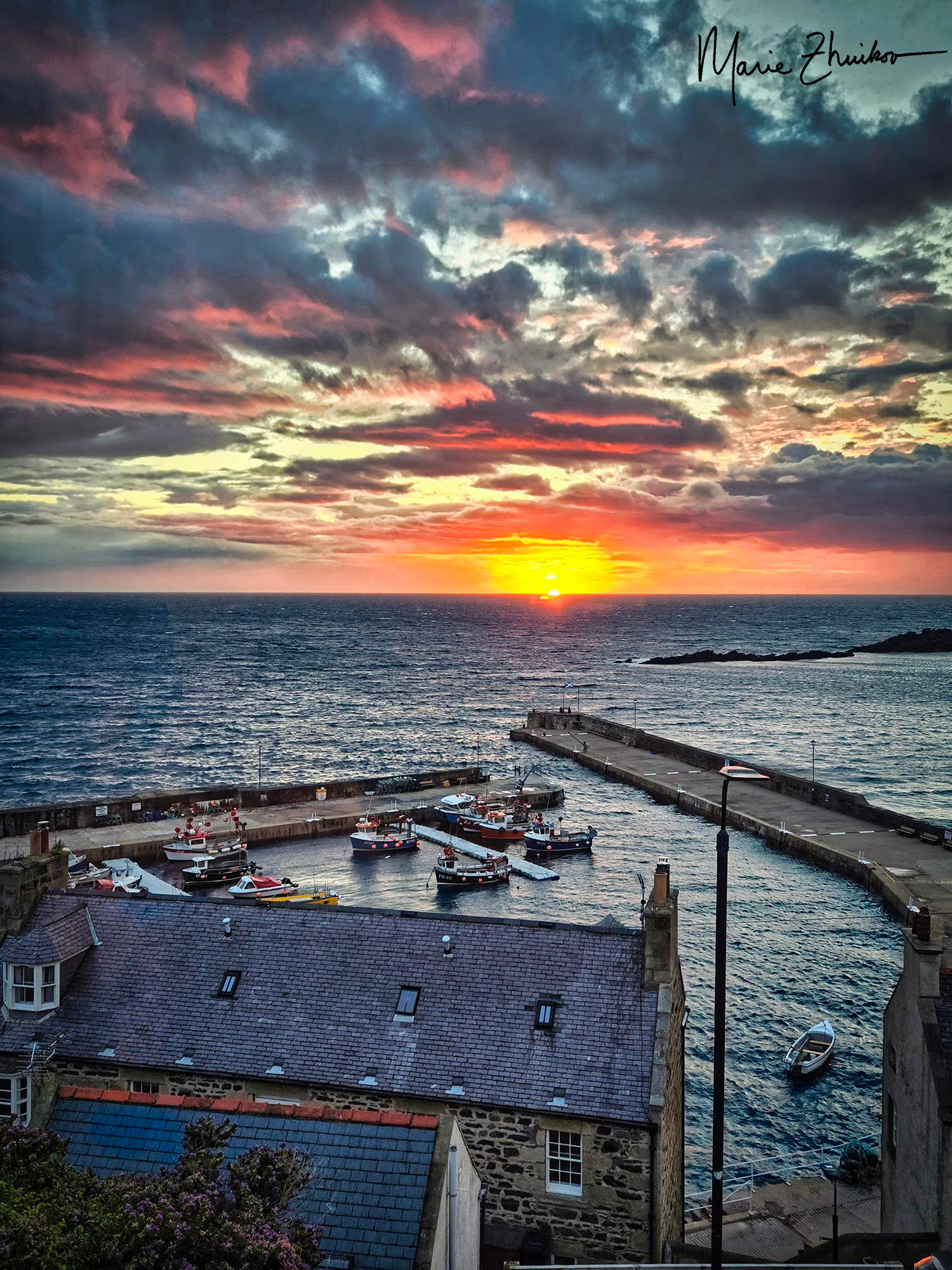

 Our abode was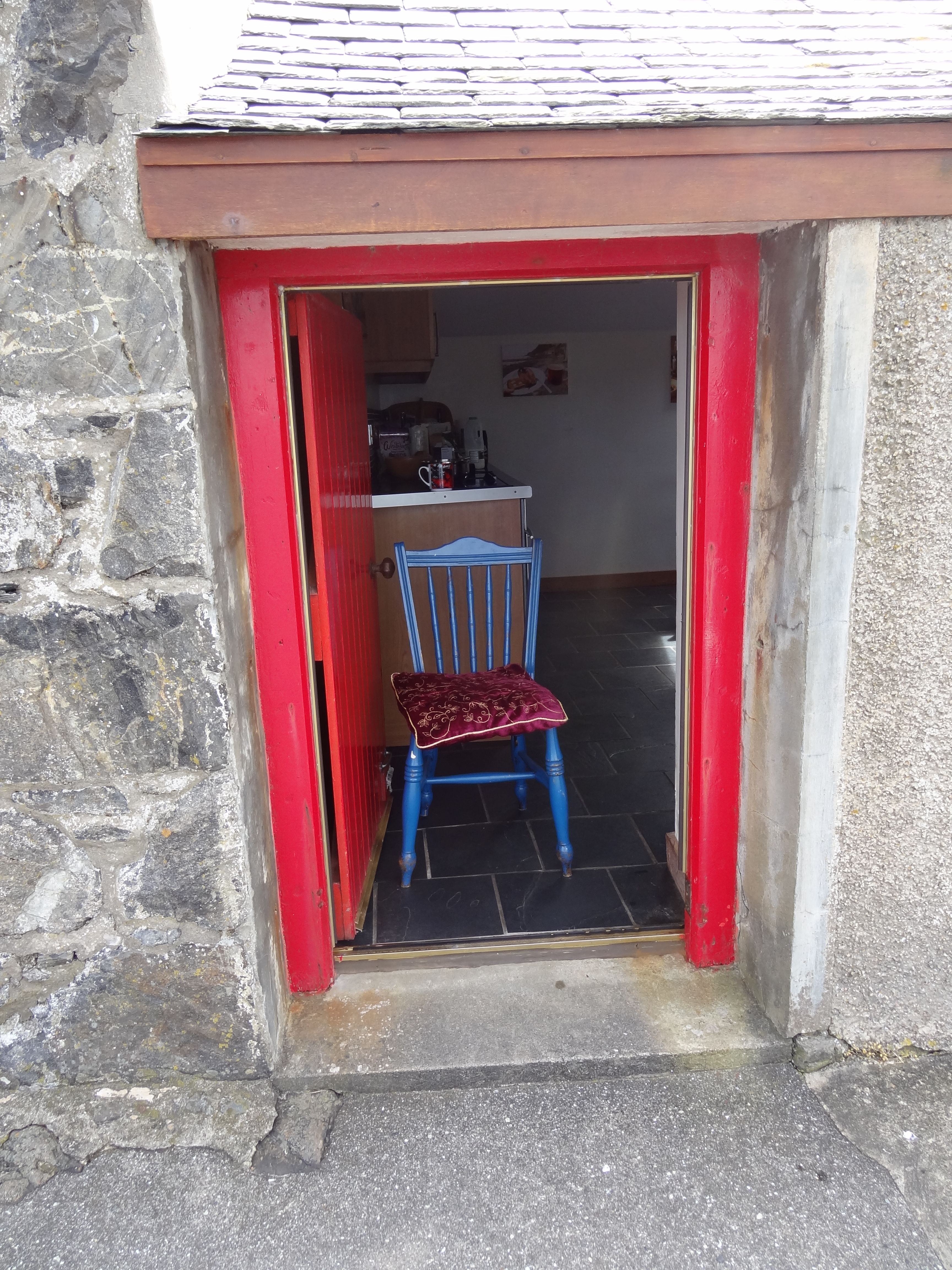
 Marie's Meanderings