On a bright, warm morning, we boarded a chartered bus to the Palace of Versailles during our Road Scholar tour. We were met there by our local guide, Aurora, and armed guards. I’m not sure whether there are always armed guards at the Versailles entrance, but it might have had something to do with a U.S. president visiting the palace a few days later.
In the 1600s, Versailles was a hunting lodge for the royal family until Louie the 14th decided to turn it into a palace with gardens and fountains. Three generations of royalty lived there until the French Revolution in 1789. Louie the 14th fancied himself a “Sun King”—the center of the kingdom and universe. As such, images of the sun decorated the palace gates and many other parts of the palace.
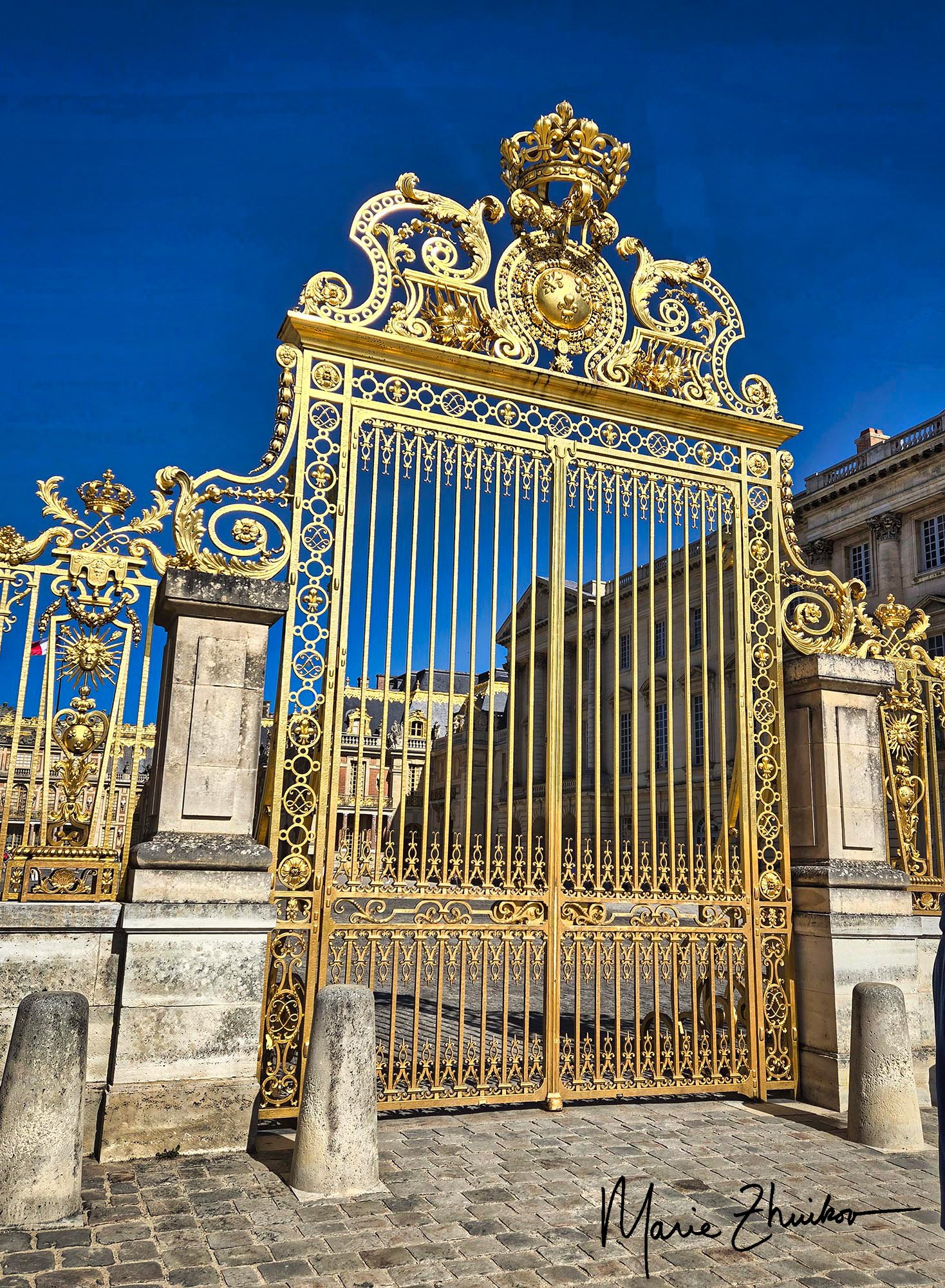
The Sun King didn’t want any shade in the front courtyard, so tourists lining up for tickets are forced to bake while they wait to enter. We had group tickets, which involved a shorter line, but we still got a good feel for the heat of the former king’s symbol. The gilded main gate and fences around the courtyard were impressive.
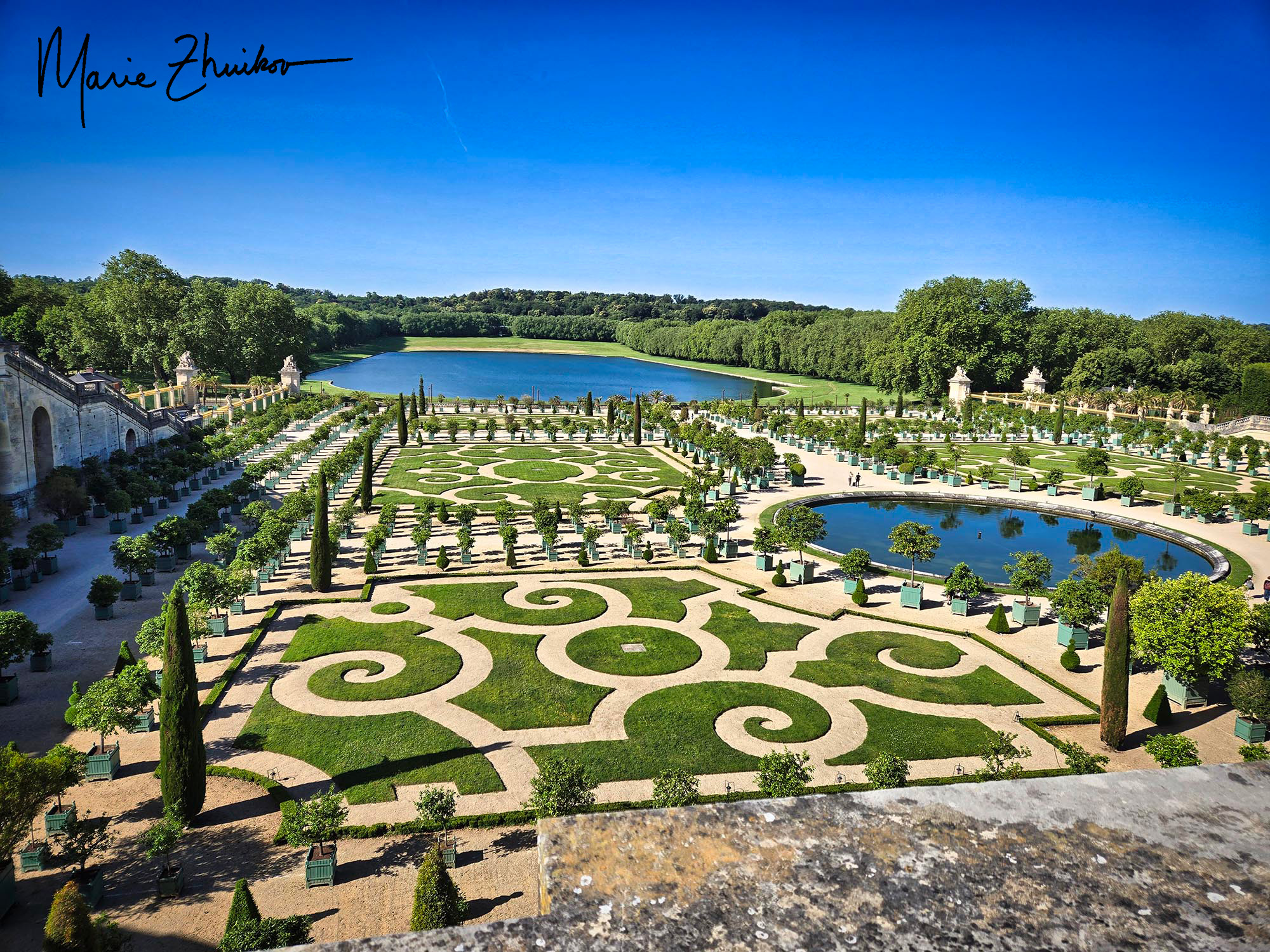
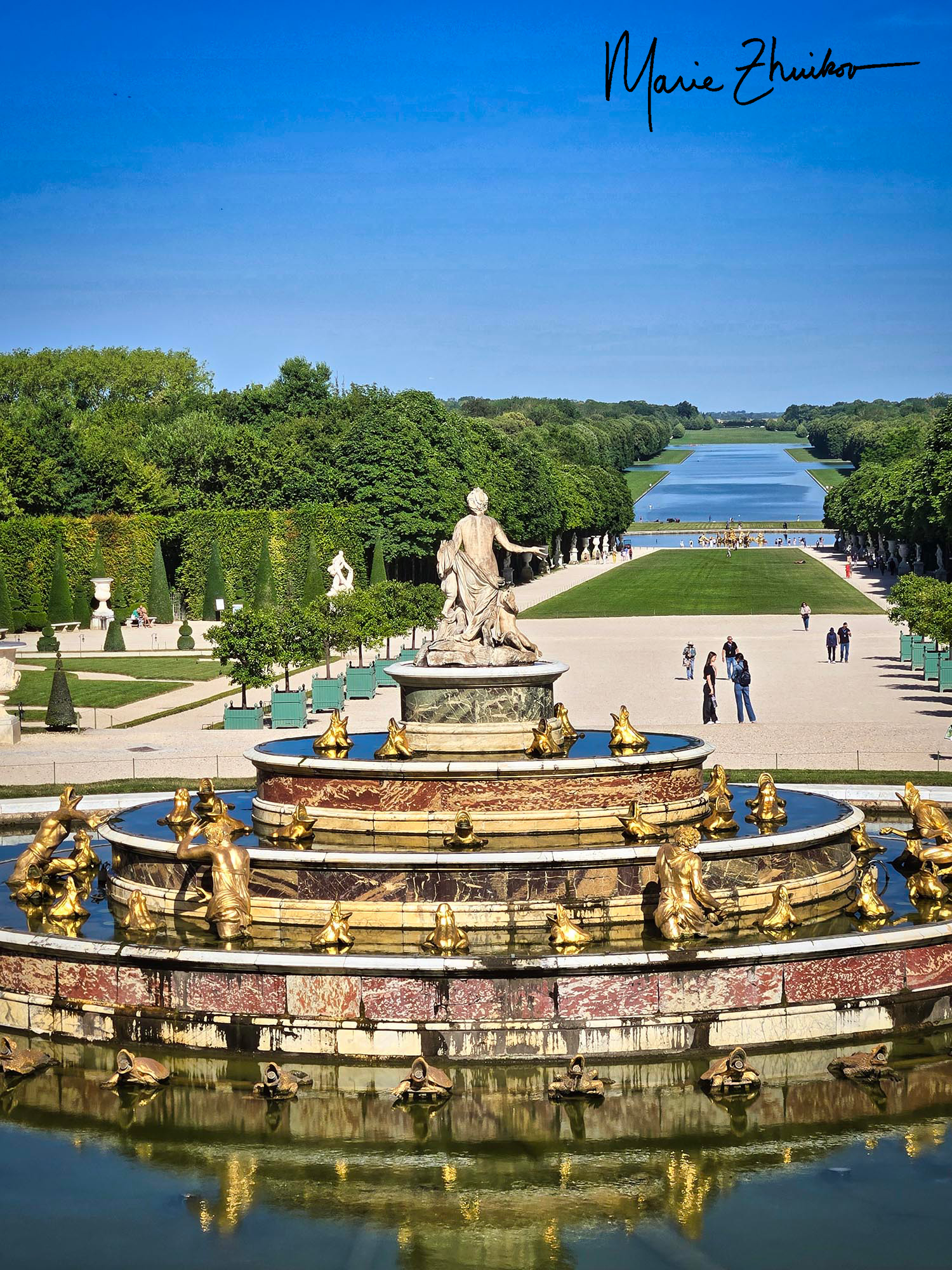
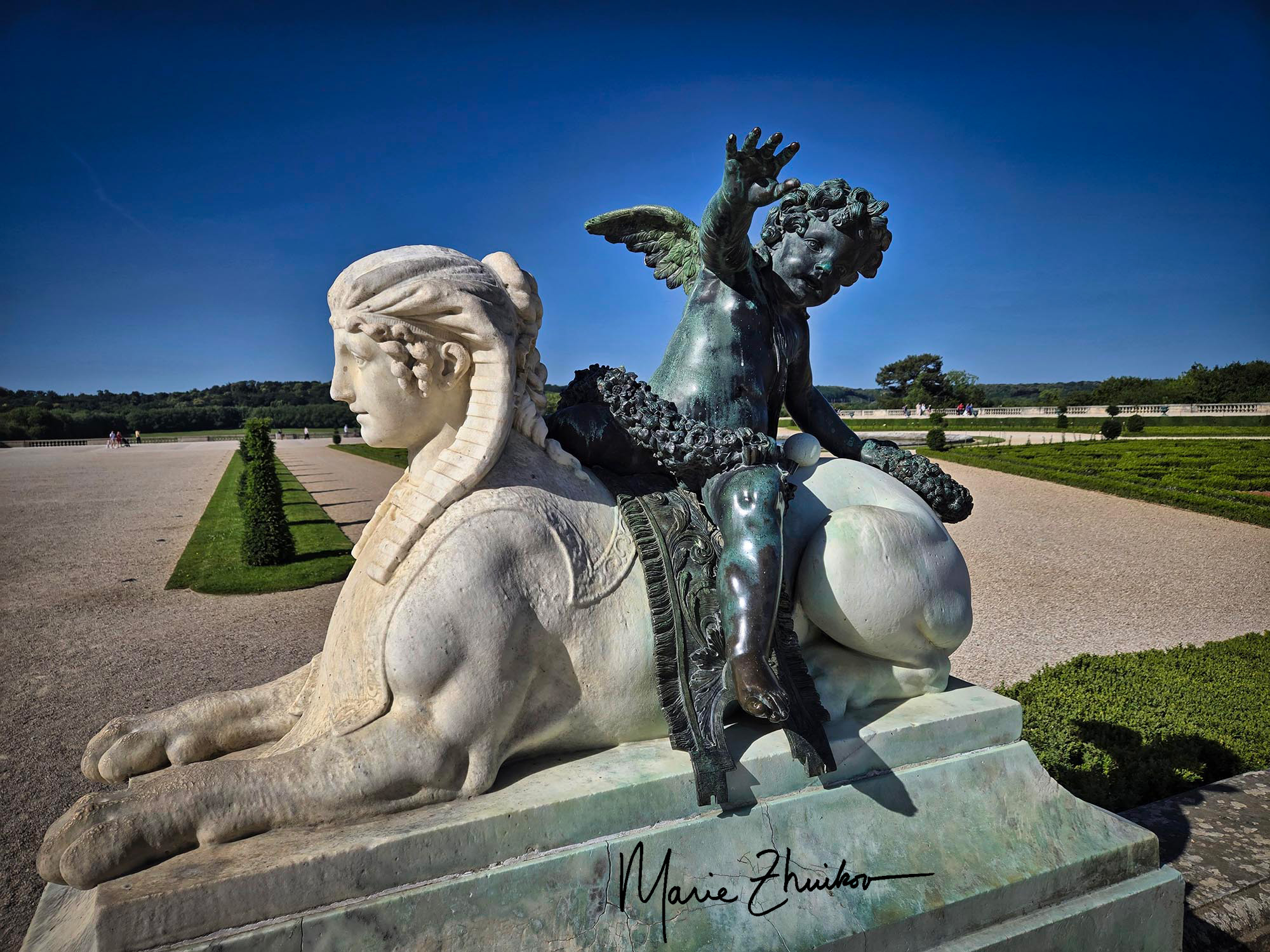
We toured the gardens first. The fountains weren’t on while we were there, but they were still impressive, along with the grand canal. Due to time constraints, we couldn’t see any of the side gardens, which was disappointing.
Many years ago, I toured the Russian Summer Palace, Peterhof, outside St. Petersburg. The design was inspired by Versailles. We spent many hours in the gardens and palace there. The French won’t like me saying this: although Versailles is impressive, I think the Russians went a step above. Peterhof was truly spectacular.
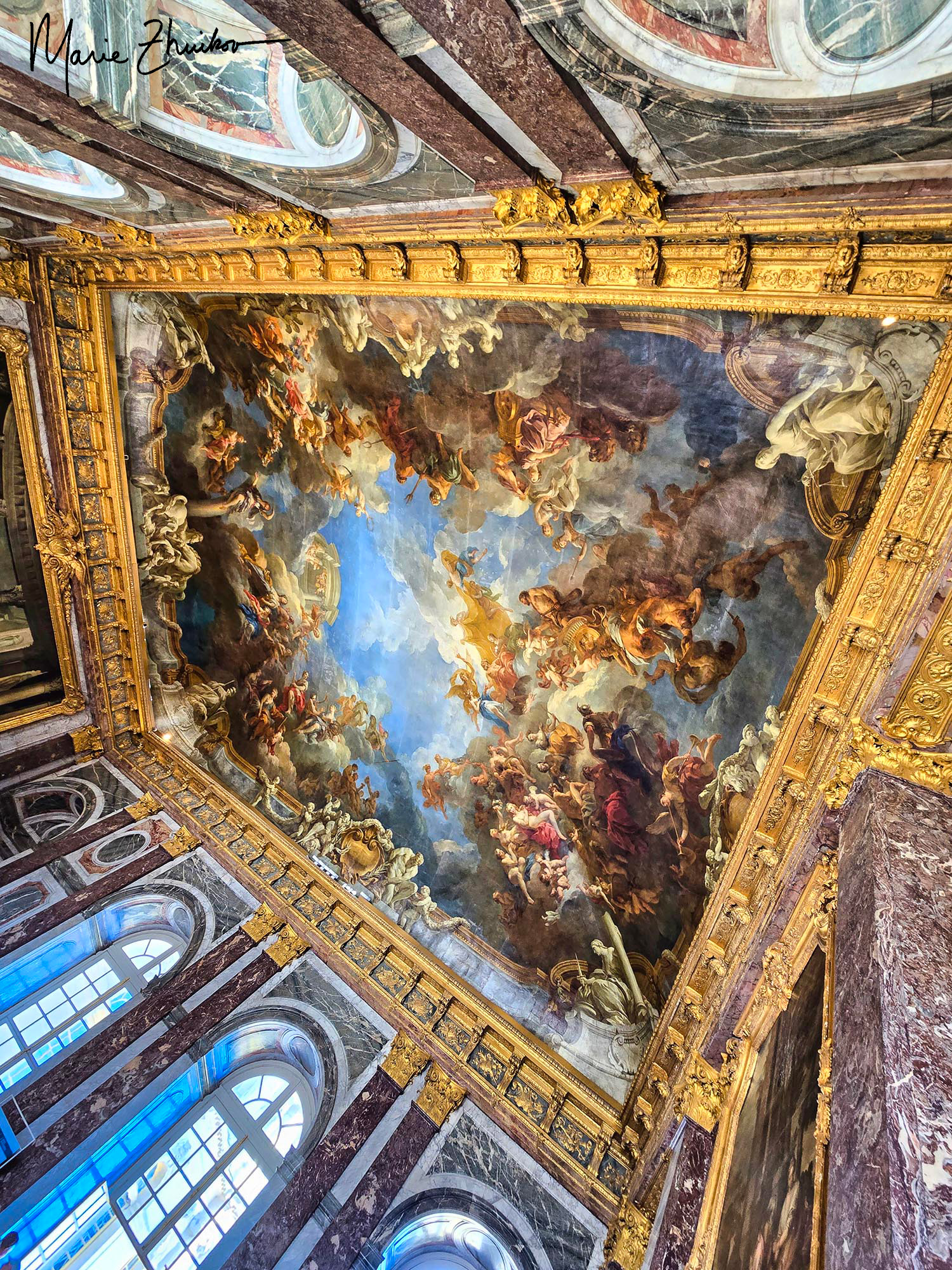
Once inside the palace, we toured the Hercules Drawing Room. With its marble walls and ornately painted ceiling, this is where parties were held. Next was the Royal Chapel where Louis the 16th married Marie Antoinette. Following that, we went to the King’s Apartments, where we saw the king’s bed. Between the king’s and queen’s apartments is the famous Hall of Mirrors. I’ve watched movies about Marie Antoinette, and the 250-foot hall is as impressive in real life as it is on screen. The Queen’s Apartments hold a bust of Marie Antoinette, and her bed. Our tour ended outside in the Royal Courtyard, which also lacks trees.
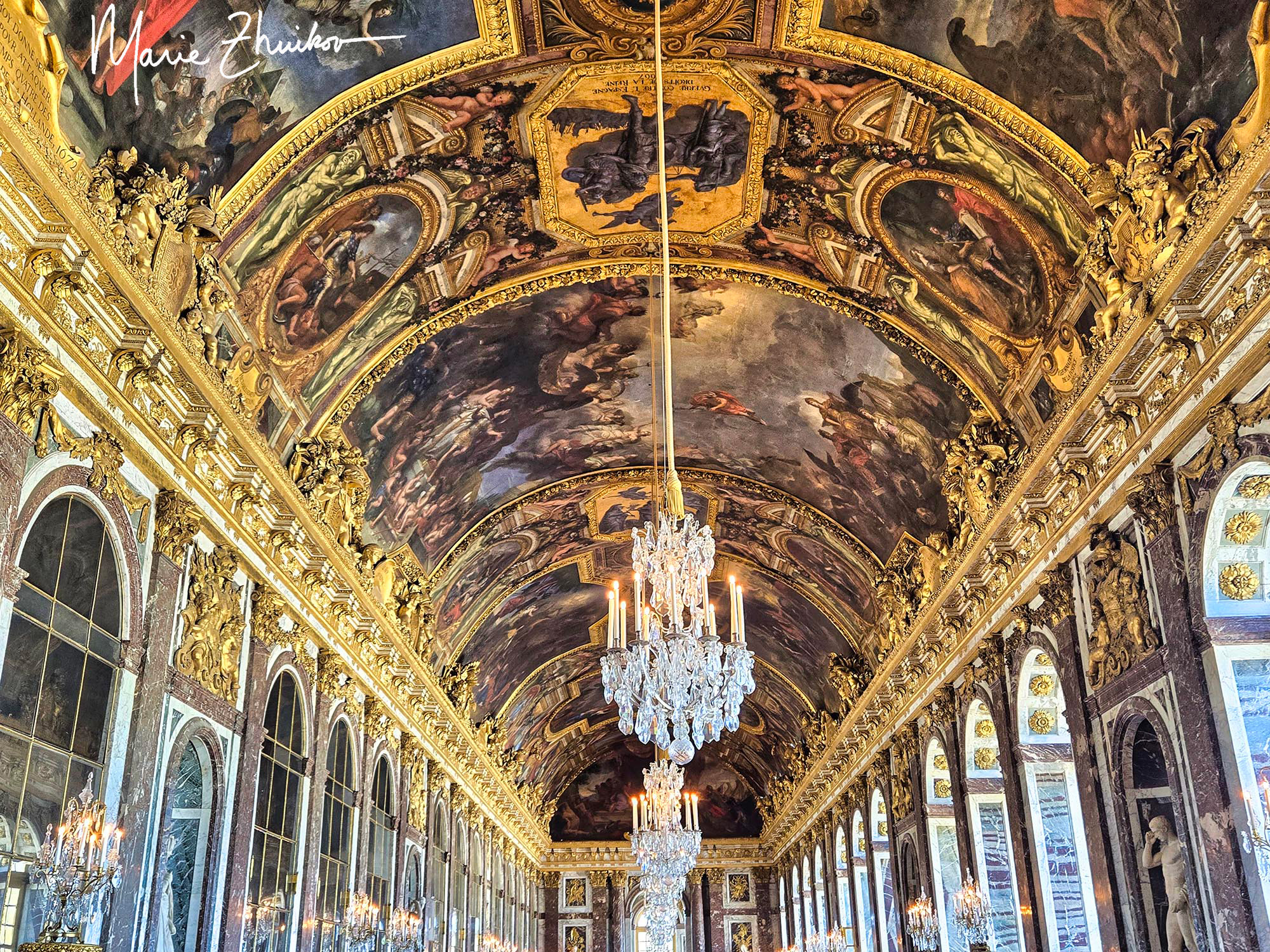
The chance to see Versailles was a highlight of our tour, but so many other tourists jostling us and fighting for good photos marred the experience. You’ll notice that many of my photos in this post are of the upper parts of rooms. That’s because the lower levels are filled to capacity with throngs of tourists (like myself!) The French government is trying to preserve key tourist sites by introducing quotas, but it seems like more restrictive ones are needed at Versailles.
We parted with guide Aurora and our bus took us back to Paris, where we visited the Museum d’Orsay. The huge building used to be a railway station but now houses collections of paintings, sculptures, and decorative objects. The works cover 1848-1914 and include artists such as Renoir, Van Gogh, and Monet.
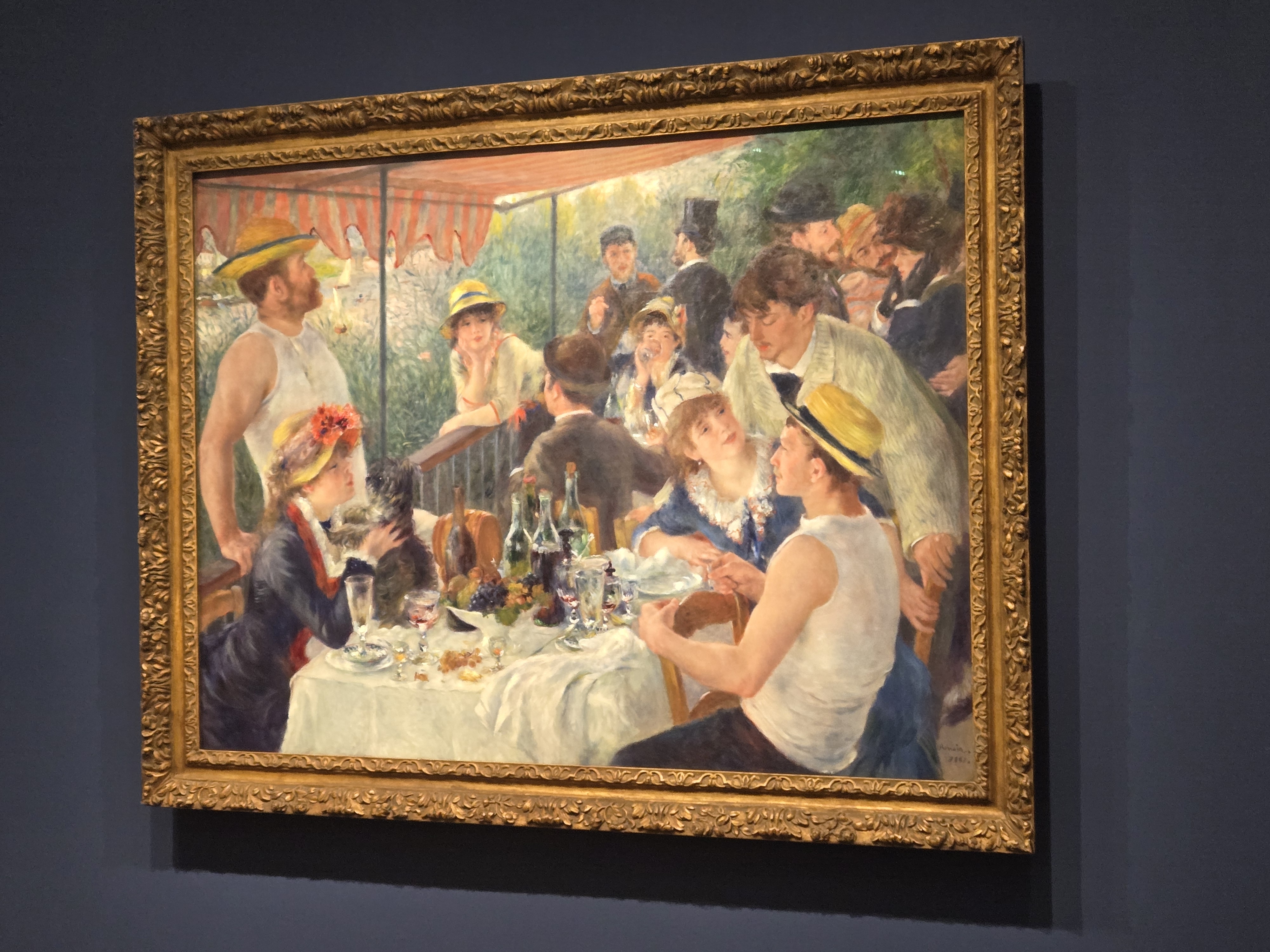
The museum was also crowded, but not quite as much as Versailles. I found that people-watching was almost as captivating as the artwork. Instagrammers dressed to the nines vied for the best selfies next to famous paintings or sculptures. One woman couldn’t get the selfie she wanted and stood in front of Van Gogh’s self-portrait, making ugly faces to show her displeasure.
Dinner was on our own. Russ and I made a reservation at a restaurant a short walk away, which was one of Ernest Hemingway’s hangouts. Brasserie Lipp is a Paris institution that offers traditional French cuisine. Our waiter told us they haven’t changed how they operate since the 1920s.
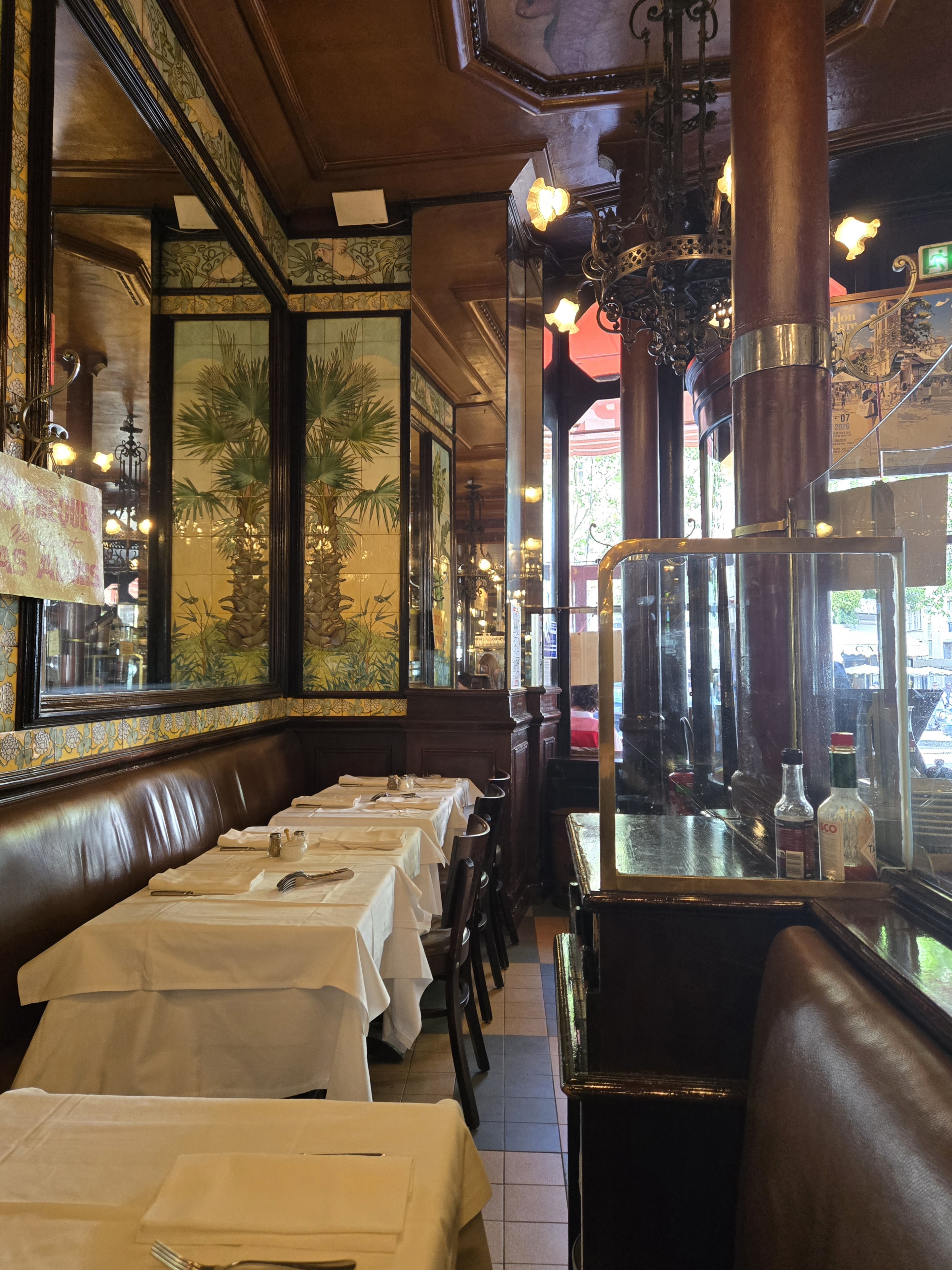
If you go, though, please note that proper attire is required. We missed that info when we made our reservation. Once we arrived, we were met by a sign that said men cannot wear shorts into the restaurant. Guess what Russ was wearing? We pled our case to a waiter. Russ must have looked respectable enough because they let him in. 😊
I ordered a St. Germain spritz, smoked (Scottish) salmon and blinis. (Blinis are like small crepes.) For dessert, we split a rhum baba, which is a rum-soaked cake. It was all very good! Our waiter was excellent, resupplying my blinis before I could even ask, and seeming to read my mind in general. I’ve never had that experience at a restaurant before. (I felt like I was in an episode of The Bear!)
As we ate, I could imagine Hemingway and his friends looking at the same tiles on the walls and enjoying the wonderful food. In his 1964 memoir A Moveable Feast, Hemingway fondly recalled visiting the brasserie, where he would order a cold liter of beer and warm potato salad, immersing himself in the lively atmosphere of the Left Bank.
After supper, we braved the subway by ourselves and made it back to our hotel with no problems. I was very proud of us!
Next up: Monet’s Gardens and Rouen