France Day 4: D-Day Beaches, Apple Brandy, Bayeux

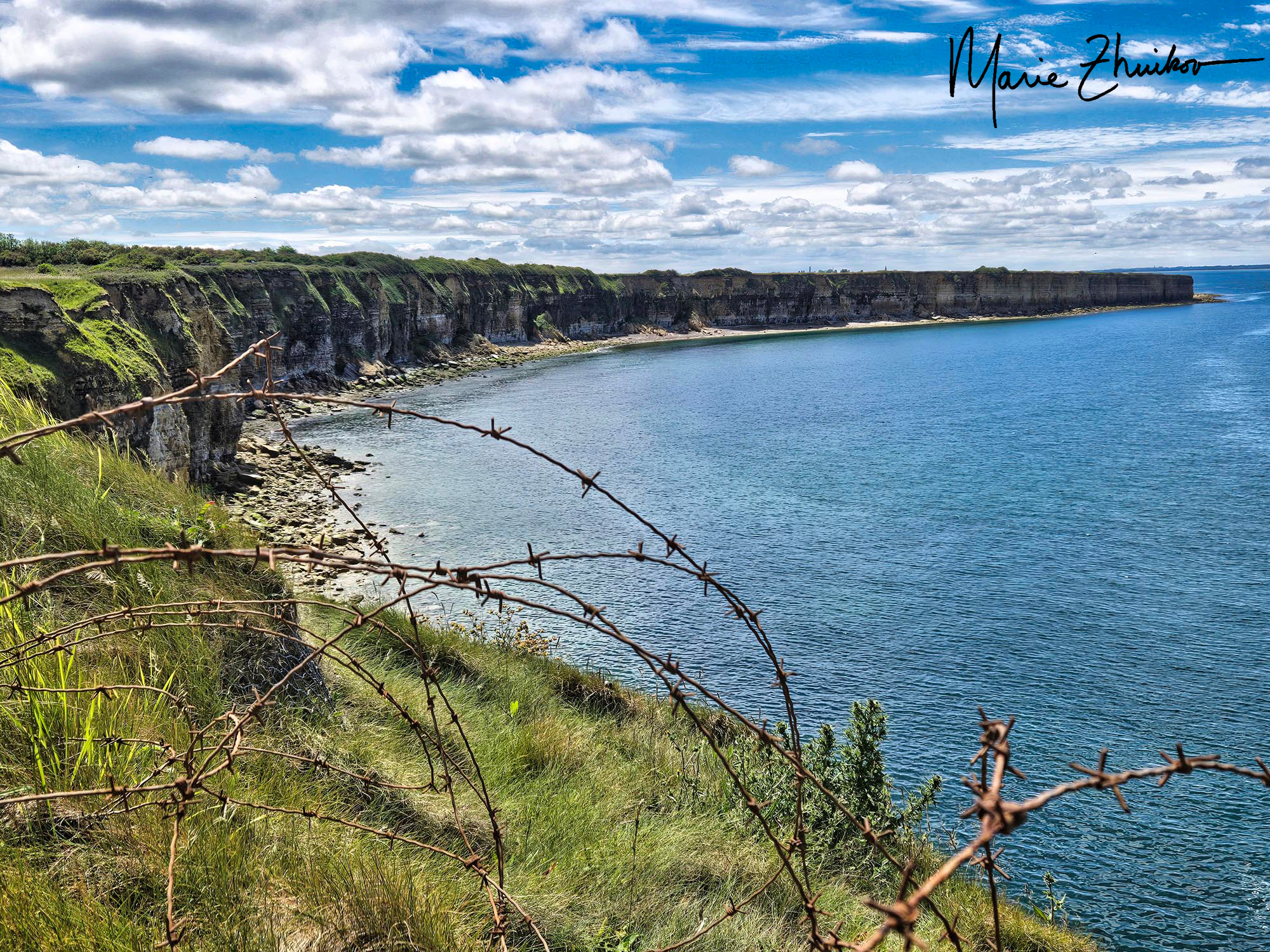
Pointe du Hoc, Omaha Beach, Normandy

The next day of our Road Scholar trip took us from our base in Bayeux on a bus ride to the beaches of Normandy. The beaches used to be a vacation area, but due to WWII, are forever known as places of conflict and, ultimately, victory for the Allies.

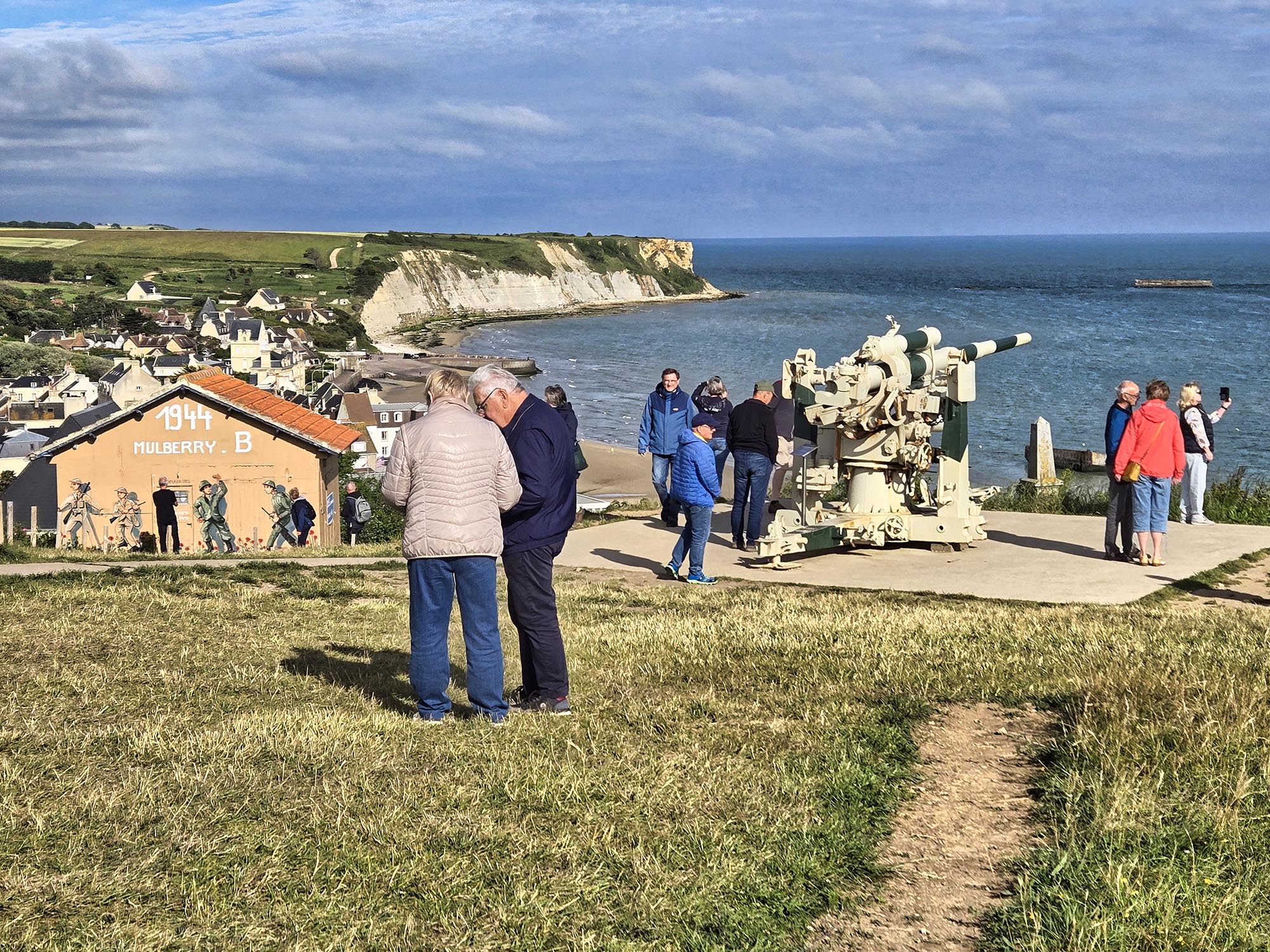
Our first stop was a bluff above Omaha Beach. This is where most of the casualties occurred, earning it the nickname of bloody beach. We viewed the remnants of an artificial harbor known as Mulberry A. Our local guide explained that the floating breakwaters, pontoons, and piers for the harbor were secretly built over six months in England and then towed across the English Channel. The components were put into place to protect Allied supply ships from storms and enemy fire while allowing them to dock and unload cargo close to the shore.
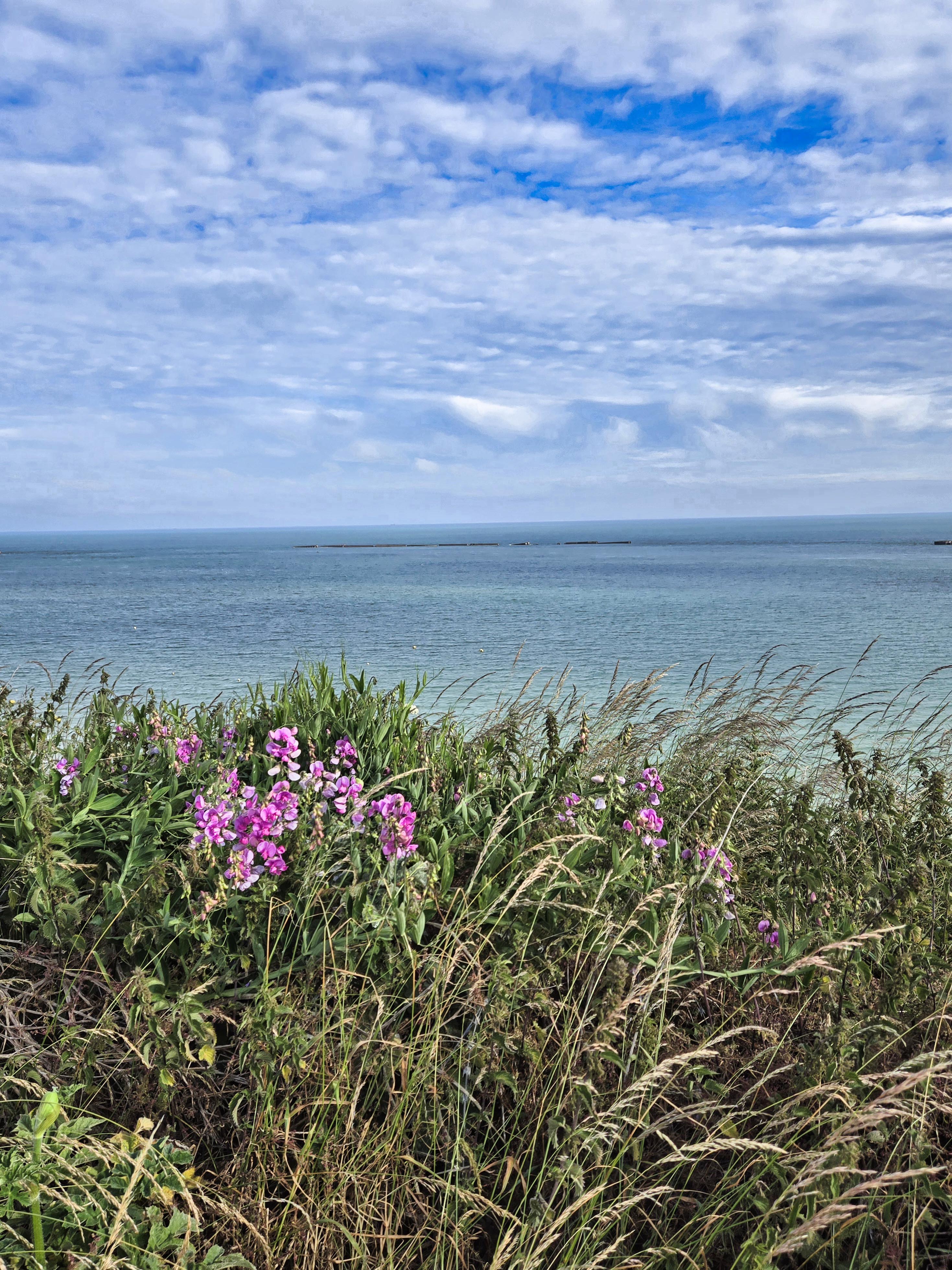
Part of the artificial harbor offshore at Omaha Beach.

Mulberry A was built soon after the June 6, 1944, D-Day landings. However, a violent storm on June 19–22, 1944, damaged the four-mile-long harbor severely, forcing the Allied forces to rely on open-beach landings on Omaha Beach for the rest of the campaign. Another artificial harbor was built at Gold Beach (Mulberry B), and it lasted longer.

There really wasn’t that much left of the harbor – just thin broken lines of concrete offshore. Although the view may have been unimpressive, the thought of all the effort and planning that went into constructing them was impactful.

The American Cemetery was our next stop. More than 9,000 soldiers are buried on immaculate grounds. We walked the grounds and visited another bluff that overlooks Omaha Beach. As we gazed at the now-peaceful scene, it was hard to imagine the violence that occurred on D-Day.

Our group then gathered around the “Spirit of American Youth” statue for a ceremony. One of our tour members, David, did the honors of laying a bouquet of flowers at the base of the statue. David is a U.S. Army veteran. During WWII, his father was stationed in Scotland in the Navy. He was part of a highly classified small team of men who worked on a top-secret project that involved developing reconnaissance film used in preparation for D-Day. David said he was thrilled and humbled to be part of the ceremony and to celebrate his father’s contribution.
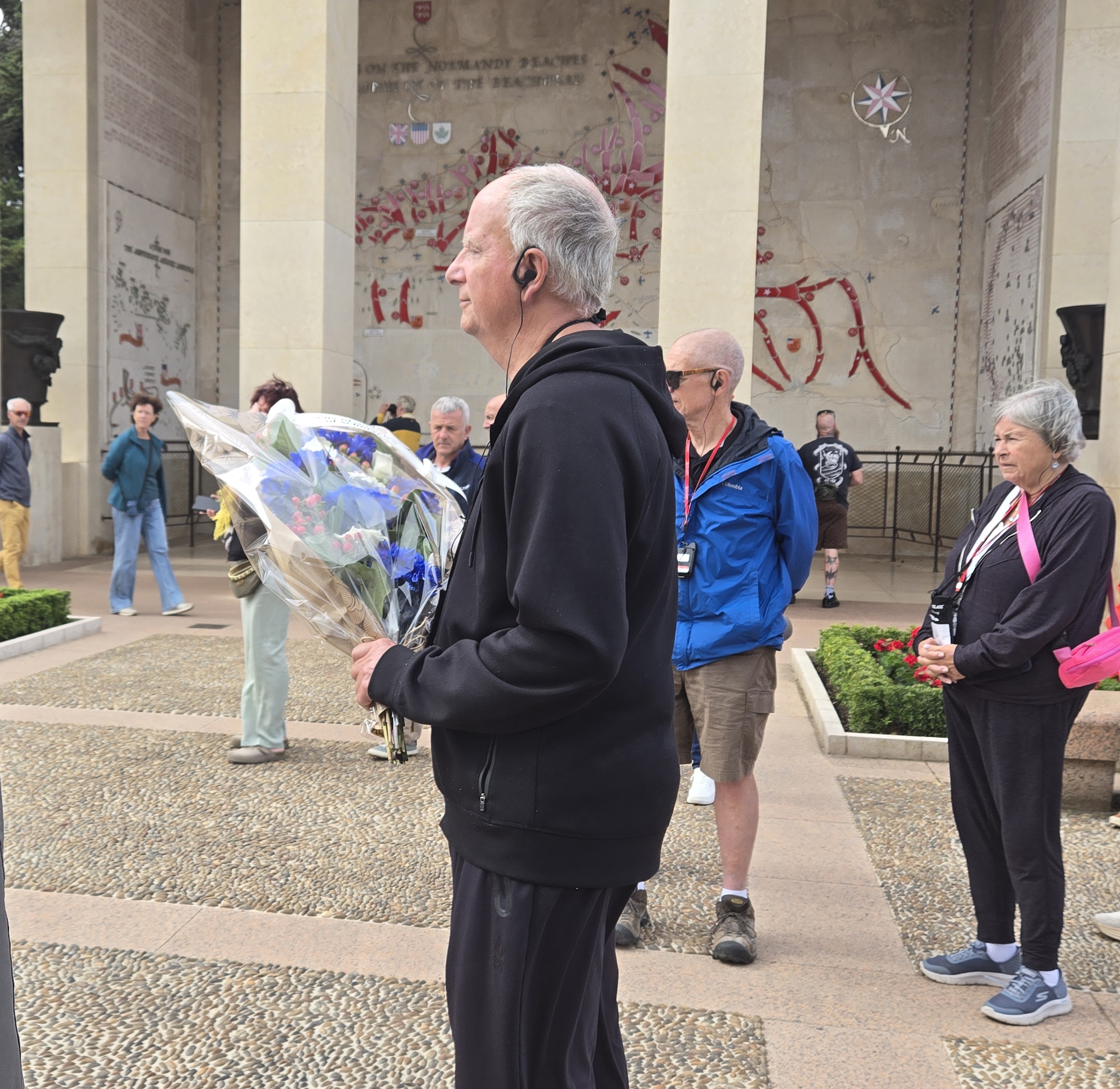
David at the American D-Day Cemetery ceremony.

I don’t have any direct connection to D-Day, but as the bugle call of Taps played, even I teared up by the end. David’s wife Robin videoed the ceremony (except for the Taps part). You can watch it on YouTube. (Link provided with permission.)

One thing to note if you visit, is that no eating is allowed in the cemetery. Somehow, I missed that memo. I took out a granola bar because I was getting hangry. One of the cemetery staff members saw me, got a horrified look on her face, and indicated in French that I should put my granola bar away.
A view of Omaha Beach from the bluff.

Omaha Beach was next on our agenda. We were able to walk the sands. I took off my shoes and felt the cool ocean while our guide explained that the beach has five ravines that allow access past the bluffs to the interior. These were the focus of the troops on D-Day. The bluffs above the beach and the ravines were full of machine gun and mortar nests.

Imagine being an inexperienced soldier dropped onto a beach under enemy fire and having to climb the bluffs. More than 4,000 soldiers were killed and wounded on D-Day, many of whom drowned after being hit. Any beachy enjoyment I felt faded as our guide described the happenings of that fateful day.
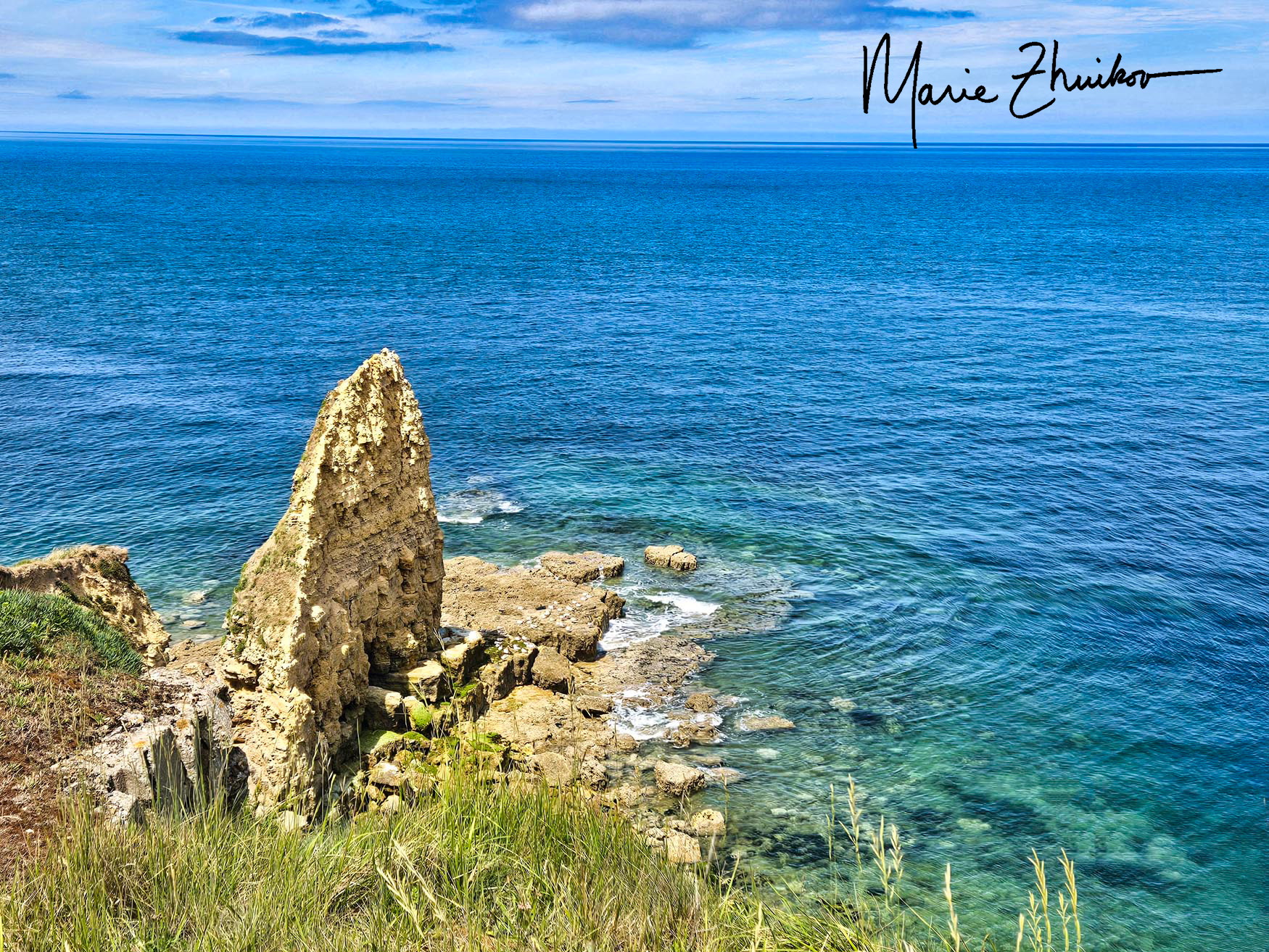
A rock formation at Pointe du Hoc.

Next, we visited Pointe du Hoc, which features a German “pillbox” observation bunker that we could go inside. These concrete guard houses made of reinforced concrete were home to several soldiers. The narrow openings (loopholes) toward the sea allowed the soldiers to fire on the enemy.  The path to the pillbox was pocked by several deep craters where bombs impacted.
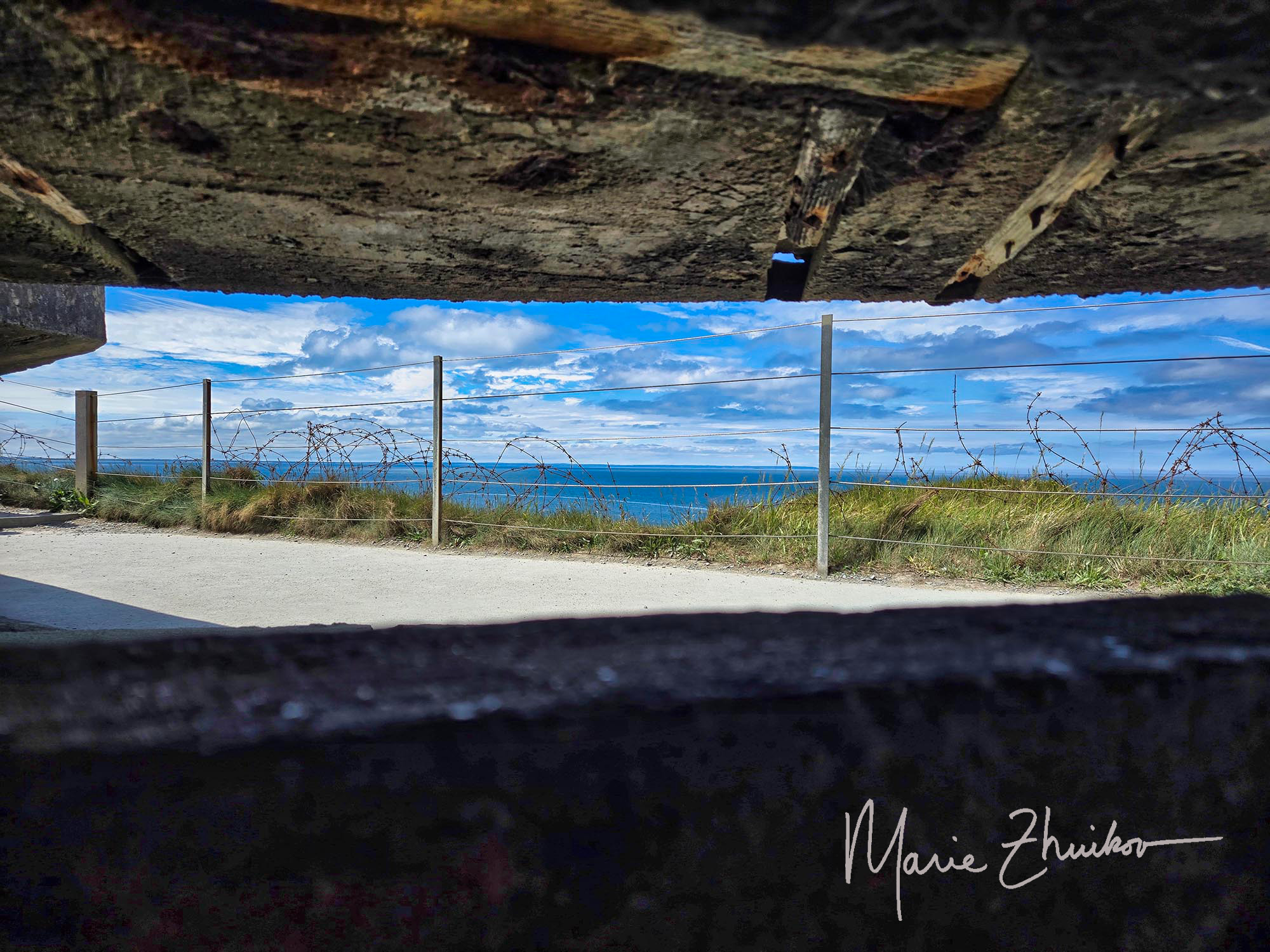
The view from inside the German observation bunker.

After all the heaviness, I guess it was time for a drink! Our next stop was Chateau d’Englesqueville to sample Normandy’s renowned calvados apple brandy and regional cheeses. But first, owner Bernard Lebrec showed us his farm’s monument, which honors American soldiers who fought in Normandy during WWII. It’s thought to be the first erected in France.
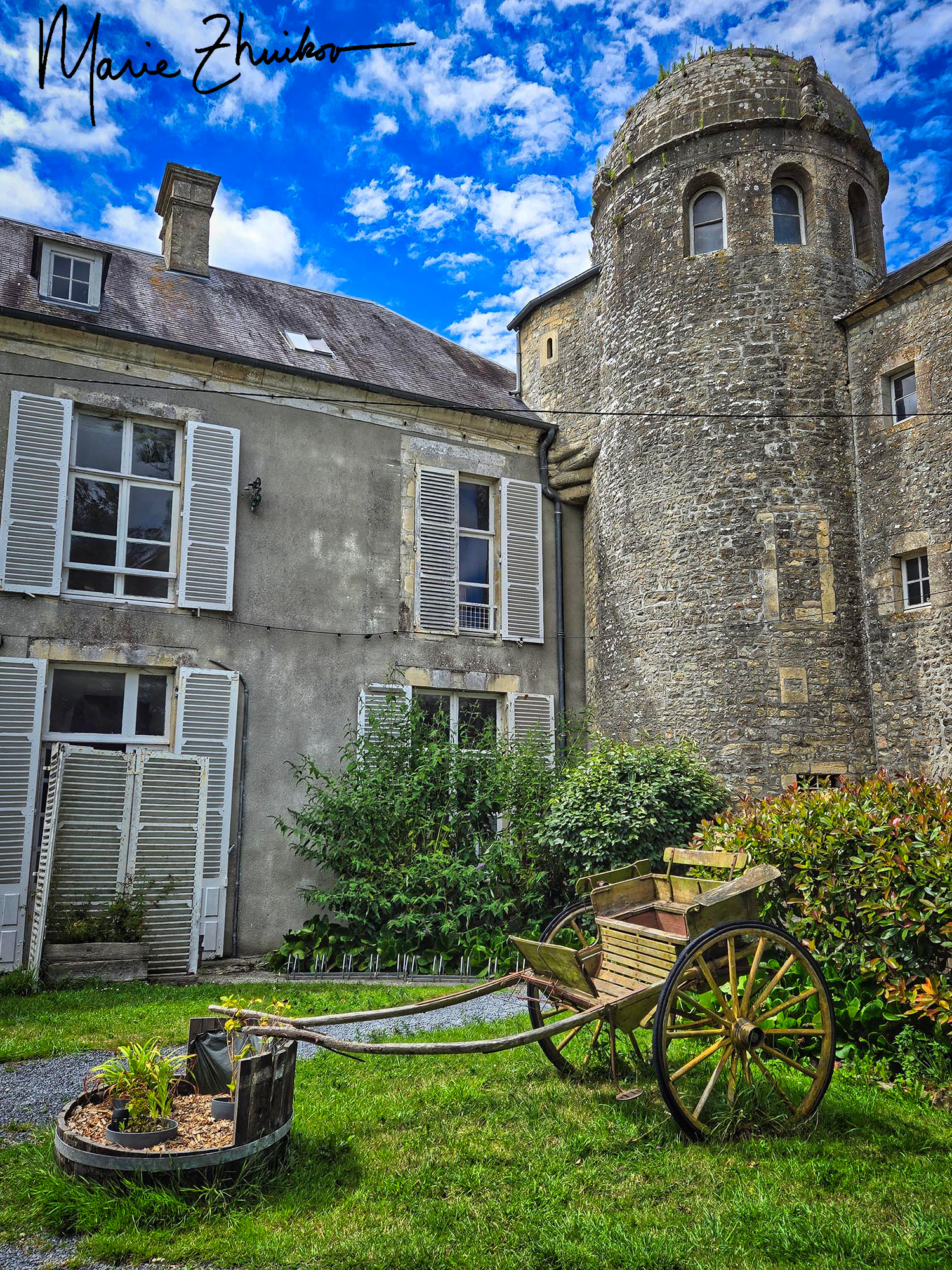
The 14th century tower at Chateau d’Englesqueville.

Bernard (with cider stains on his shirt) explained that Germans took over the farm at first, but after D-Day, Americans (the 147th Combat Battalion) used the farm as their headquarters and built an airfield across the way. The house (chateau) was built in the 17th Century, and the farm buildings still sport a tower from the 14th Century.
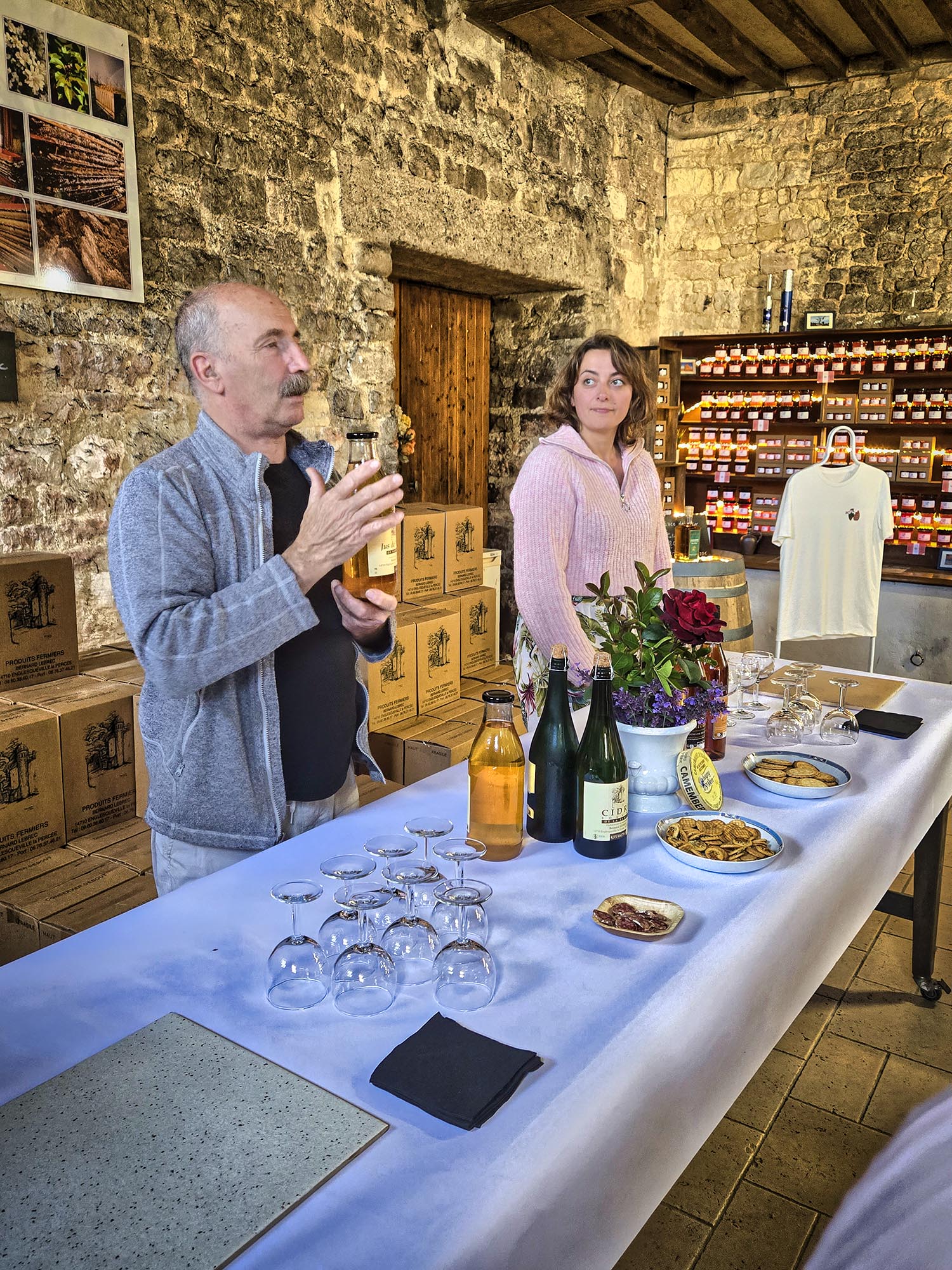
Bernard tells us about calvados while his daughter Marie watches.

The charming Bernard then invited us inside for a tasting. His daughter Marie helped (an easy name for me to remember), along with their two English cream retrievers. The calvados was 84 proof – really strong! It tasted like French moonshine to me. I preferred the aperitif, which was milder, and bought a small bottle to bring home. We also bought some of their apple jellies: plain, vanilla, and cinnamon. By now, the aperitif is long gone, but we’re still working on the jellies.

Besides calvados, Normandy is known for flax, dairy, lace, wheat, artichokes, apples, pears, and seafood. It’s like the Wisconsin of France.

The chateau also offers a restaurant run by Bernard’s nephew. Restaurant L’Ephemere was closed when we visited, but looked like a nice place. Travel author Rick Steves says, it’s a “laid-back, all outdoors, tres French, well-run café-restaurant serving delicious meals, salads, or just drinks with a smile.”
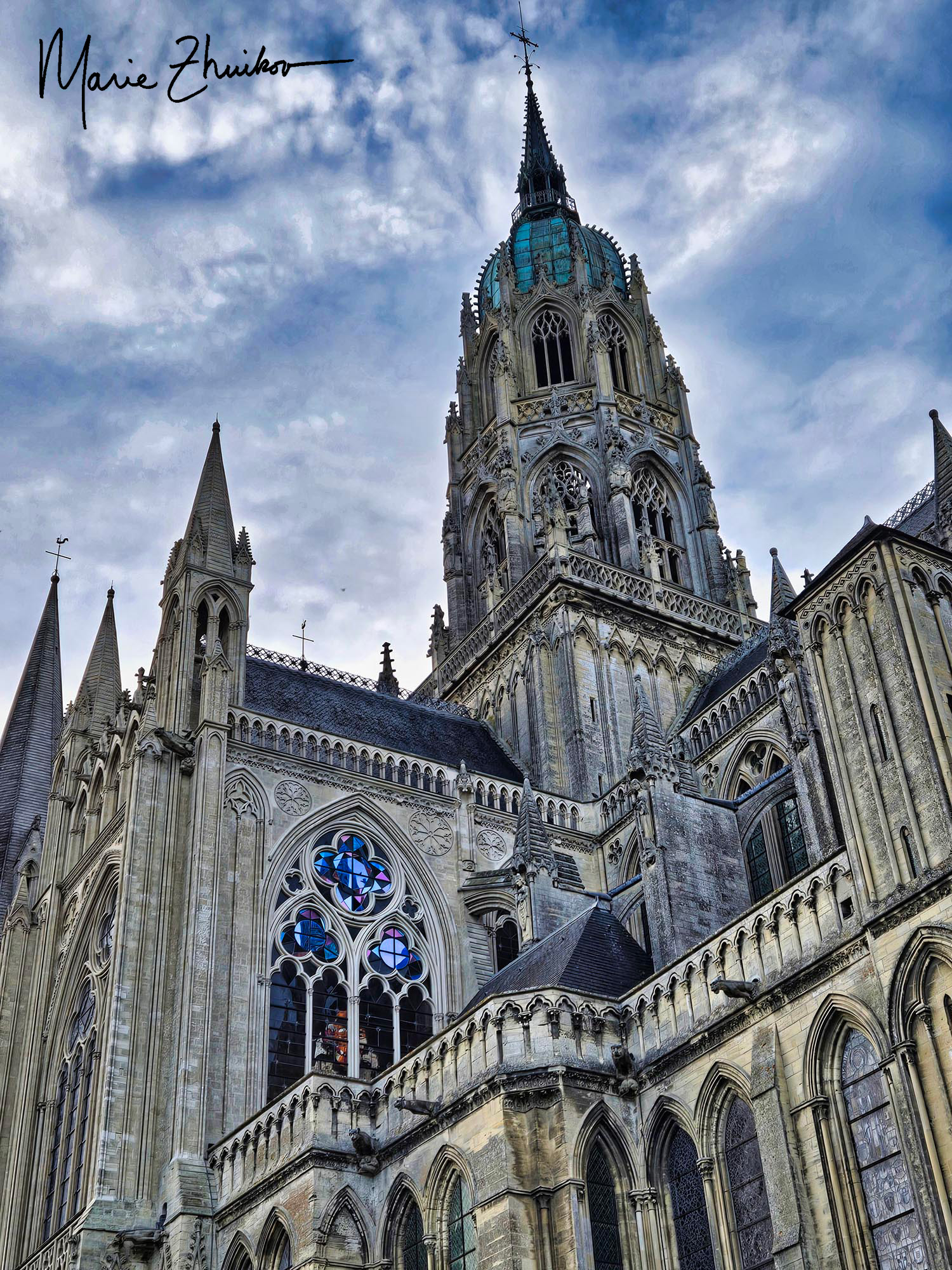
Cathedral of Our Lady of Bayeux

Our bus took us back to Bayeux, where we had time to meander around the town. We walked to the Cathedral of Our Lady of Bayeux, which was consecrated on July 14, 1077, in the presence of William the Conqueror, making it a site of great historical importance. It is believed that the famous Bayeux Tapestry, which depicts the Norman Conquest of England, was originally housed in the cathedral. The tapestry was later moved to a nearby museum. We couldn’t see it, however, because the museum is undergoing renovations and the tapestry has been temporarily relocated to England.
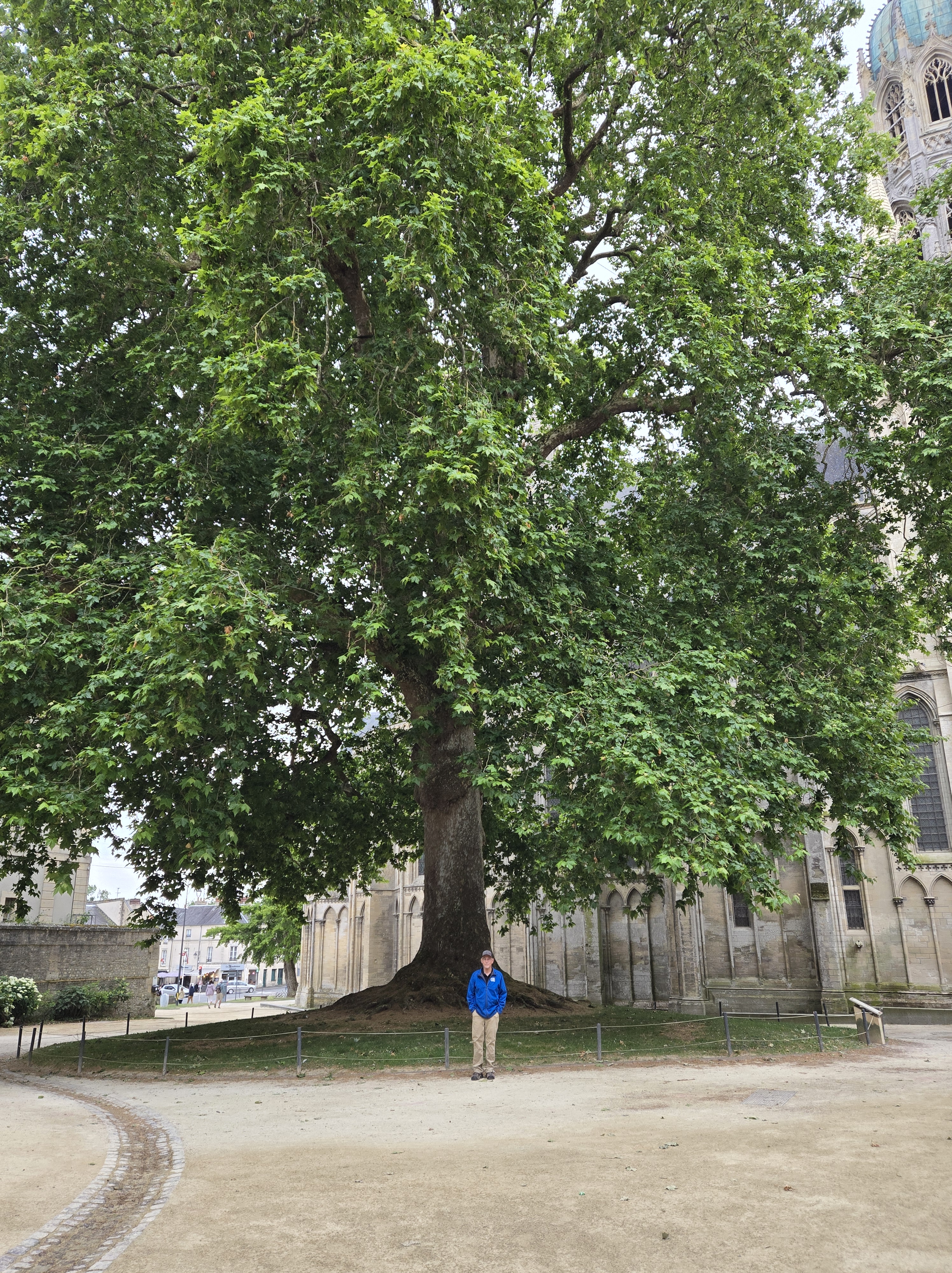
Russ by the Bayeux Liberty Tree, which was planted in 1797.

Behind the cathedral stands a HUGE “Liberty Tree.” These trees were planted across France after the Revolution to celebrate the end of the monarchy. The scale and age of the Plane Tree (species) was difficult to comprehend. (See the photo above with a teeny tiny Russ beside the tree.)

The town is known for its creperies. The most popular one (Le Moulin de la Galette) was booked solid during our stay, so we could not eat there. But we walked past it, and it was hopping! The restaurant is housed in a charming former oil and flour mill along the Aure River that has been transformed. An outdoor terrace allows guests to savor their meals while enjoying picturesque views of the river and historic buildings in Old Bayeux.

We kept following the river on a paved trail that led to a boardwalk across a wetland. The boardwalk offered a great view of the cathedral, and I took a few photos.
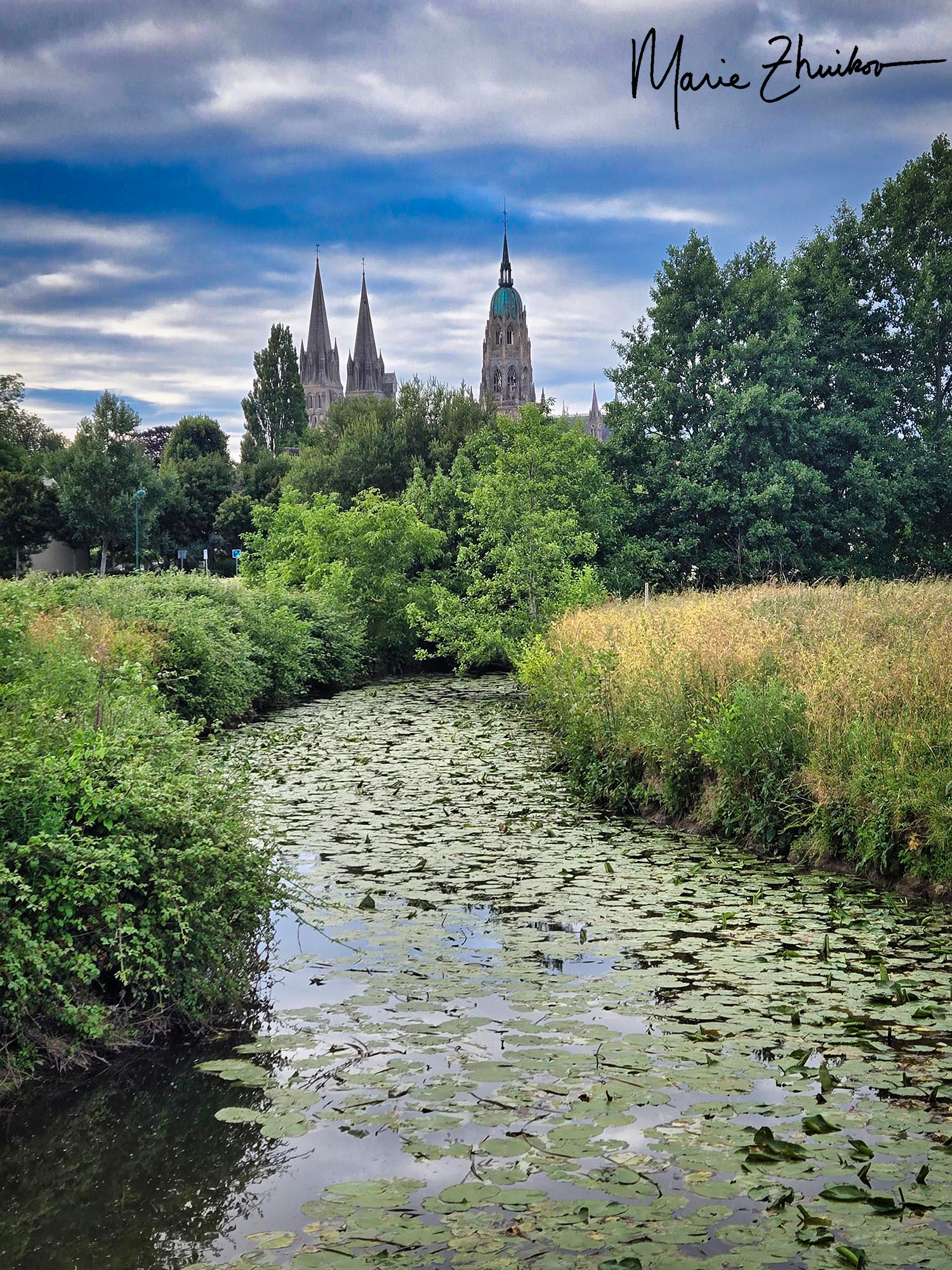
The Bayeux cathedral as seen from the river boardwalk.

Our Plan B for a crepe dinner was Au Louis d’Or. On the sidewalk, we dined all frescos for dinner on galettes (savory crepes made from buckwheat) with crepes for dessert. With camembert cheese, apples, and sausage, my galette was pure Normandy. My dessert crepe was filled with chestnut cream. Both were outstanding, and the price was very reasonable.
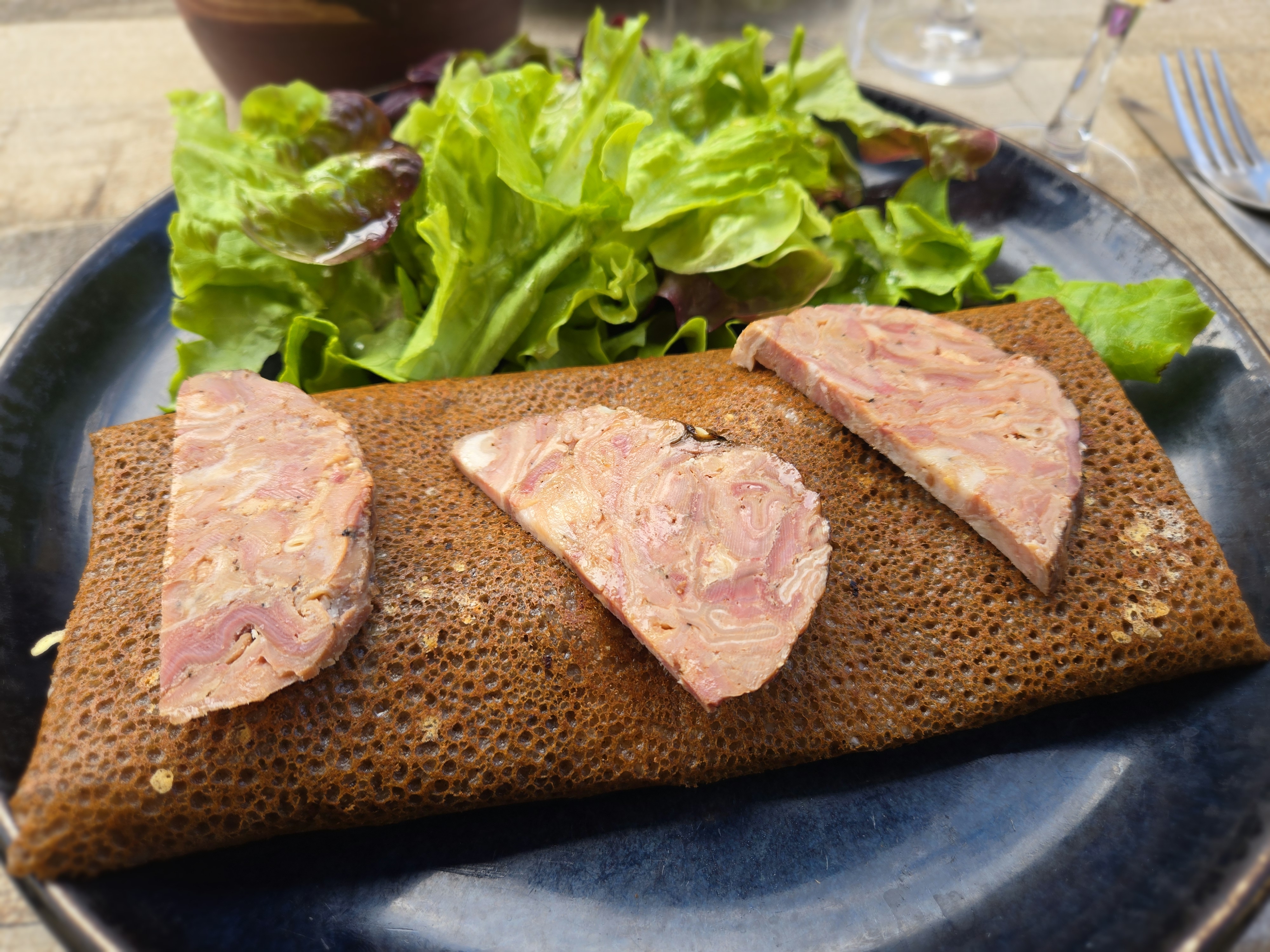
My Normandy galette

Whew! And so, Day 4 of 6 of our tour came to a close. We really enjoyed being in a smaller French town after the crowds of Paris. I would love to revisit Bayeux someday, perhaps once the tapestry returns. I’m not much for following military history, but I gained a greater appreciation for the machinations of WWII and the sacrifices of the soldiers after seeing the D-Day beaches and cemetery.

Next Up: Mont St. Michel and another great dinner in Bayeux
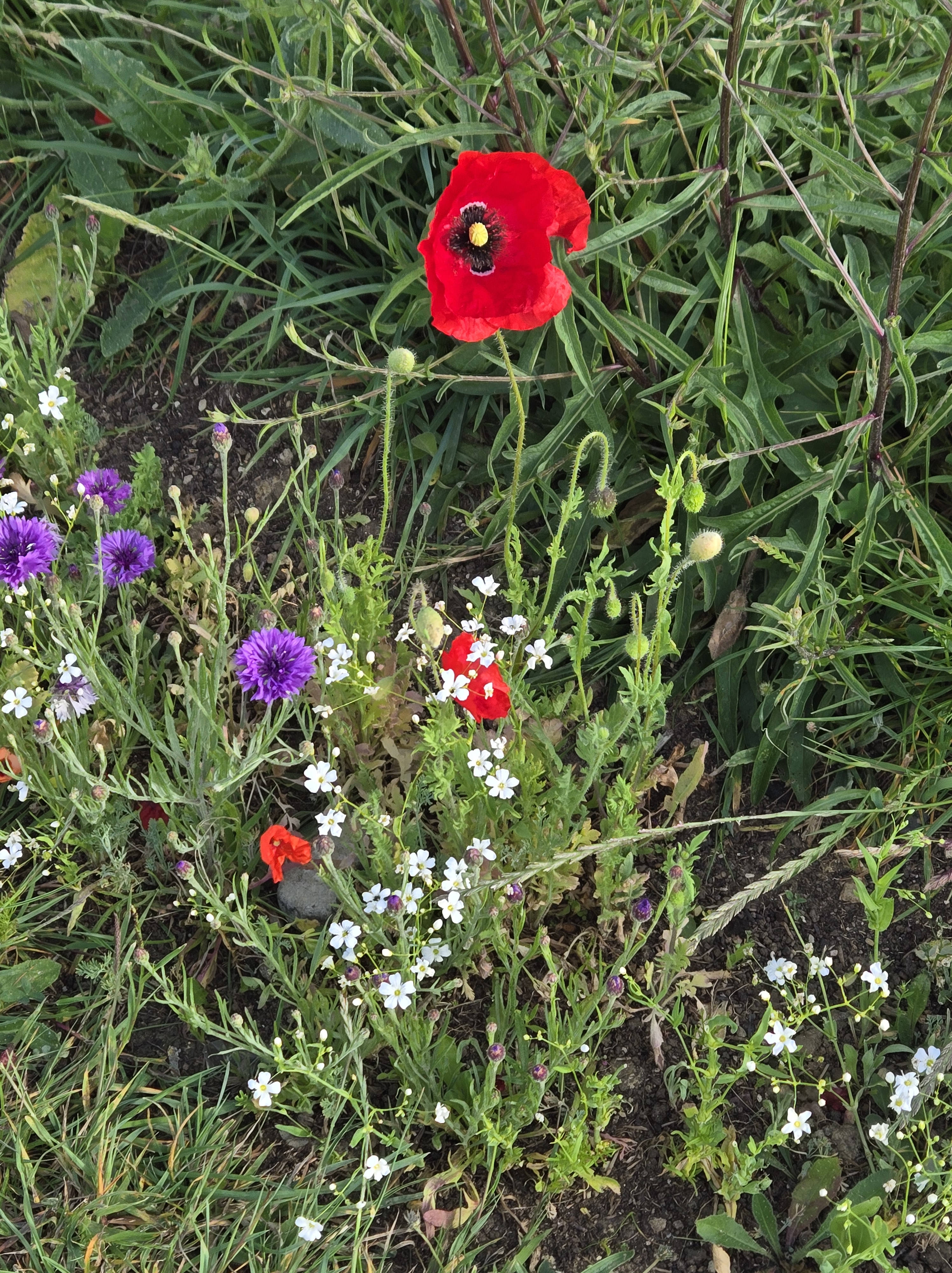
Poppies and Forget-me-Nots at Pointe du Noc

Connecting with Family History in Guilford, Maine

The Piscataquis River in Guilford at sunset.

As you may recall, for our epic New England Road Trip, in October Russ and I flew from our home in Duluth, Minnesota, to New York to visit Russ’s family members there and in Connecticut, and then drove north, exploring sites connected with my mother’s ancestors. Guilford, in the Maine Highlands, was the culmination of our trip and was the spot I’d been wanting to visit for over 15 years, ever since I did an internet search on my Herring ancestors and discovered that Robert Herring (my great-grandfather to the fifth power on my mother’s side) was one of the founders of Guilford.

As if that weren’t enough, Guilford was the original home of the Burt’s Bees brand of personal care products infused with honey and beeswax. That company has since moved away and changed owners. Now, Guilford is home to a company that makes many of those cotton-tipped nose swabs that we all became too familiar with during the COVID epidemic.

Back when I made my discovery fifteen years ago, I was so excited that I wrote a history about Gilford’s founding and sent it to their historical society. I see that it has since ended up in the University of Maine’s Digital Commons! (“Early Town History: A Tale of Three Roberts.”)

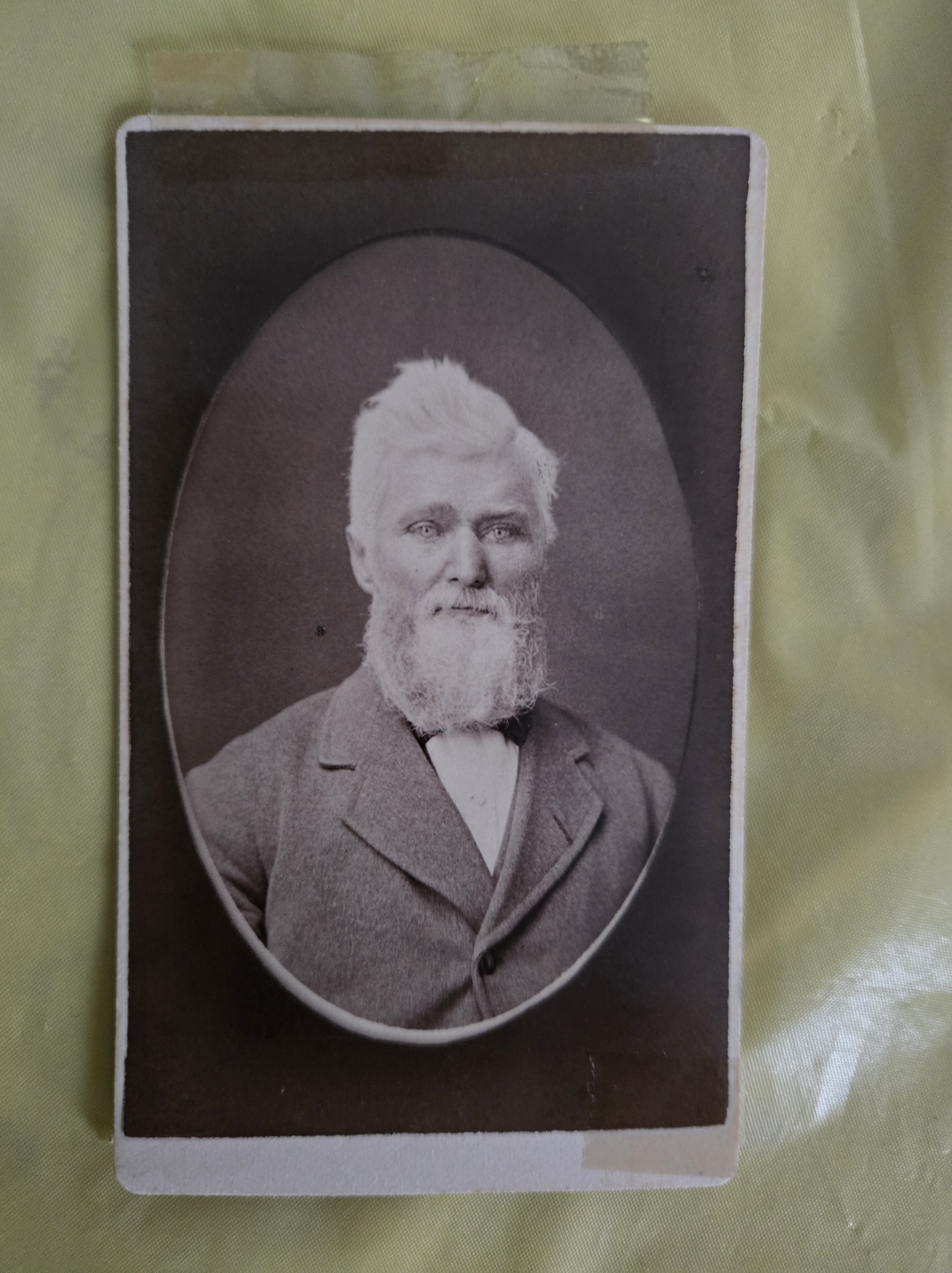
A photo of Robert Herring. On the back, it says “Robert Herring the 1st,” so I assume this is Benjamin Herring’s son Robert, who was the privateer-turned- deacon. The photo was taken in nearby Dover, Maine. (Now known as Dover-Foxcroft.)

Privateers and a Deacon

My mother and her sisters compiled an extensive genealogy for our family before the era of computers. In it, they documented Robert Herring, his father Benjamin Herring, who was born in Gloucester, Massachusetts, in 1727, and his father Robert Herring, who immigrated from England in the early 1700s. But my mother and her sisters didn’t know about the family’s role in founding Guilford.

I found these ancestors interesting because Benjamin Herring was a Revolutionary War privateer who was buried at sea off Cape Sable Island, Nova Scotia. According to info I found on Wiki-Tree, Benjamin was the captain, and his ship’s name was the Princeton. His son Robert was also a privateer, but according to research by one of my California cousins, he gave up that life, became a deacon in the Baptist Church, and headed inland with his cousin Robert Low to found Guilford. Robert Herring’s son, Robert Lowe Herring, and his family followed soon after.

(There’s some question about whether there was an “e” on the end of Robert Low’s name. I’m leaving it off to minimize confusion with Robert Lowe Herring. But I’m pretty sure that RLH is named after his relative Robert Low.)

Brian and Cindy Woodworth.

I let the Guilford Historical Society know about our trip, and their president and treasurer, Brian and Cindy Woodworth, were good enough to notify other Herring relatives and to open the museum for us during our two-day stay.

Before our museum visit, we had a delightful chat with some cousins, who are related to the original Bennett settlers of Guilford and to the Herrings. We met at the Guilford Bed and Breakfast, where we were staying. They gave me copies of helpful information about the Herrings and privateers.

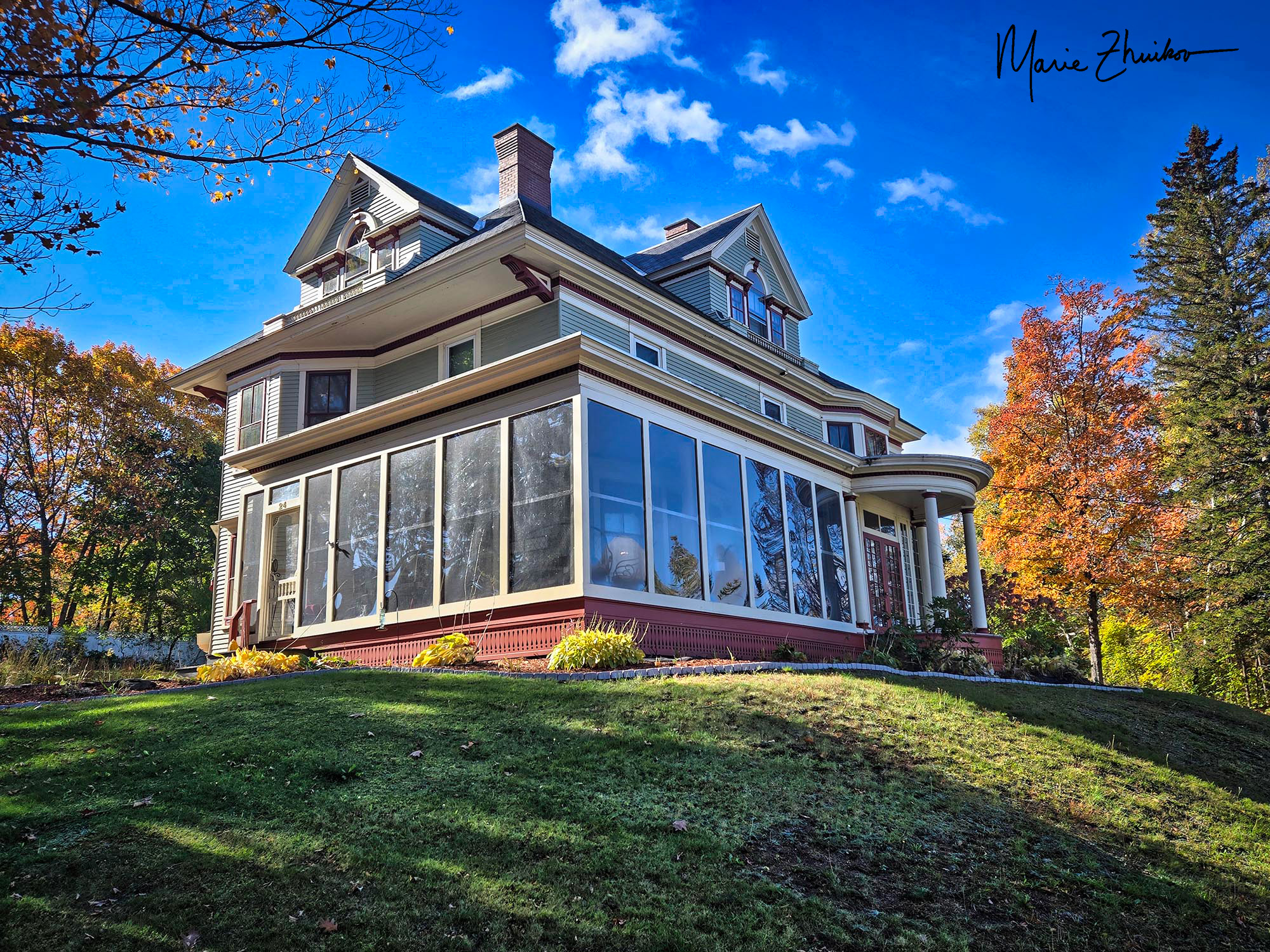
By the way, if you ever stay in Guilford, the Bed and Breakfast is the place to go! The colonial Victorian is run by John and Lisa McNamara, new transplants from Georgia. They’re also active members of the historical society and the community. They spoiled us with homemade gourmet breakfasts made to order. In the evenings, we enjoyed a cocktail in the inn’s Hummingbird Lounge when we weren’t curled up with a book in front of the library fireplace.

The Guilford Bed and Breakfast

We ate other meals at the Red Maple Inn. If you want a taste of “real backwoods Maine” and superb service, that’s the place!

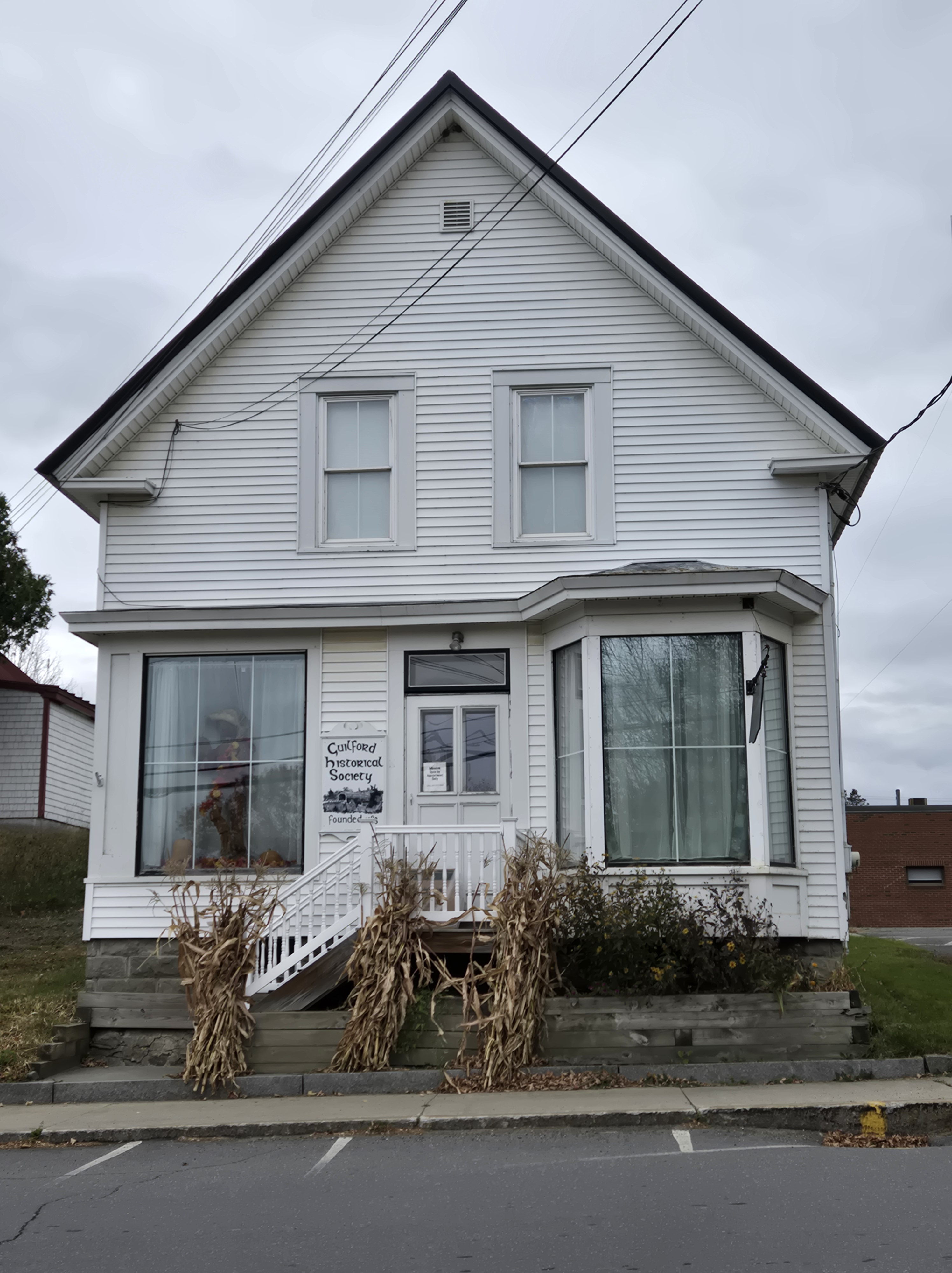
Guilford Historical Society Museum

During our museum visit with Brian and Cindy, we were excited to meet a Herring cousin. She and I compared genealogical charts and figured out how we might be related. We were also happy to see the “mother’s chair” at the museum. When Robert Lowe Herring brought his family from New Gloucester, Maine, to Guilford via ox cart, this was the chair his wife, Mary (Polly) Wagg, sat on for the week-long trip. The chair was then passed down through the family and later donated to the historical society. I got to actually touch this piece of history!

The Herring “Mother’s Chair”

My newfound cousin showed us Herring photos that I had not seen before. Afterward, she drove with us to the cemetery in town and showed us where some Herring graves were located. Then we parted. Russ and I drove to Guilford Center and toured the cemetery and Baptist church there. This is where the family first settled. We also drove across Lowe’s Bridge, a covered bridge named after Robert Low), and past Herring Brothers Meats store, which the family owns. We even took a walk along the Piscataquis River where Robert Lowe Herring built a sawmill. (I learned the hard way from locals that the river’s name is pronounced pis-CAT-a-qwis not PIS-cat-a-qwis.)

Lowe’s Bridge in Guilford. It’s been rebuilt a time or two due to flooding.

Both Robert Lowe Herring and his father had eleven children each. Robert Lowe Herring died in 1847, about a year after from the heartbreak of seeing his youngest son, Alvin, die in a tree-felling accident.

Historical accounts (Sprague’s Journal of Maine History) say that Robert Lowe Herring was “well-fitted for pioneer work. Robust in mind and body, no combination of obstacles and hard labor changed his course once he determined upon the accomplishment of a certain purpose. He enjoyed overcoming difficulties-the greater they were, the greater his satisfaction when they were surmounted. The sight of suffering, in man or beast, moved him to tears. No one was ever turned from his door unwarmed or unfed. No neighbor in difficulty or distress ever appealed to him in vain for aid.”

I found another good story about Robert Lowe Herring in the History of Piscataquis County. It involves his neighbor, Ephriam Andrews. This poor neighbor was “afflicted with a morbid and partially insane state of mind . . . Although surrounded with good neighbors, he would drive his plow team all day with an axe on his shoulder, fearing that some of them would take his life.” Ephriam was a Revolutionary War veteran, so it could be that his mental health issues stemmed from that experience.

Ephriam’s sons regarded him as dangerous. They “prepared a small cage and shut him in. But he was marvelously ingenious in contriving and making escapes. They would capture him and force him back, and this would aggravate his insanity and rage.”

The breaking point came one spring in 1814 when Ephriam escaped. His sons surrounded him, trying to recage him. “He had armed himself with a small axe, and brandishing it, bade them stand off at their peril. But his youngest son, Samuel, then about fourteen years old, not believing that he would strike, daringly pressed up. The enraged father struck him a full blow in the face with the edge of the axe – nearly a fatal stroke.”

Ephriam was then jailed. His son recovered but carried an ugly scar the rest of his life. After being released from jail, Ephriam’s wife left him. The one person he seemed to trust was Robert Lowe Herring. Ephriam gave him all his property, and Robert let him live with him and his family. The arrangement seemed to work.

“There he had a good home, lived in listless ease, and sought his own entertainments. . . He died suddenly on his ninetieth birthday in Mr. Herring’s house.”

Can you imagine having a would-be axe murderer living in your house?! It says a lot about Robert’s character that Ephriam trusted him and that no more physical harm ensued, even though Ephriam’s “evil spirit would at times return.”

Ancient Family History

One of my Guilford cousins directed me to a book in the museum (Connor Genealogy) that contained information about Herring ancient history. This info was compiled by Menzies Herring, a family genealogist who lived in Massachusetts years ago, and Jerome Campbell Herring. Menzies used to mail questionnaires to Herring relatives across the country and perhaps that’s where he learned the history. 

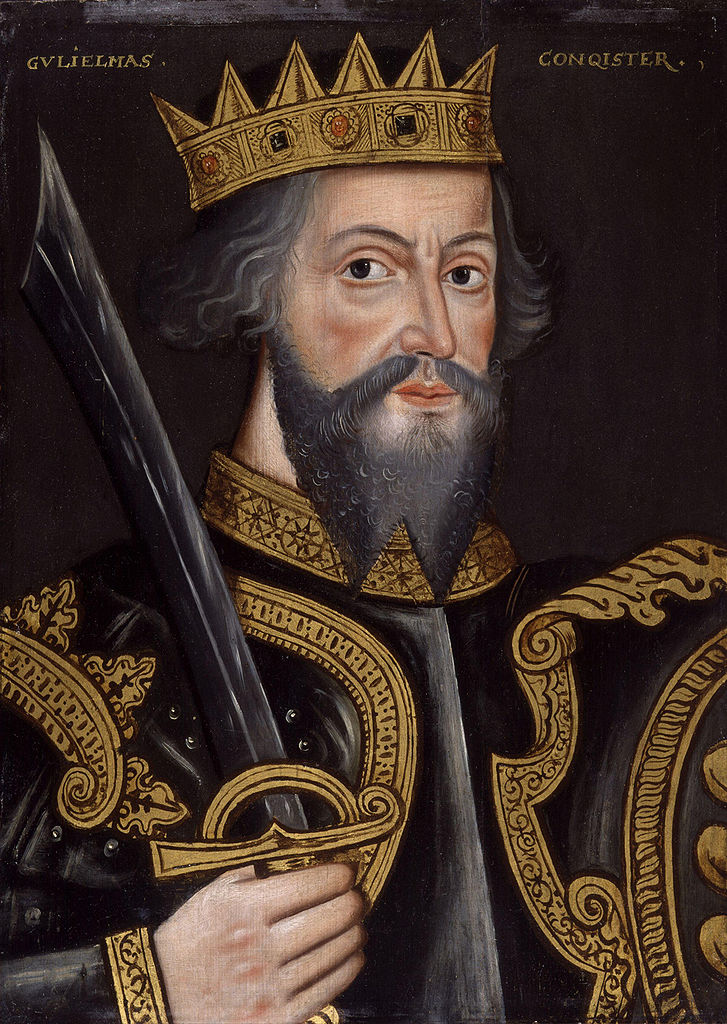
William the Conqueror image courtesy of History on the Net.

The family supposedly originated in Denmark. (My note: possibly in a town with a name that sounds like “herring,” which could either be Herning or Hjørring). They became Viking raiders and eventually settled in Normandy. A Herring ancestor was a “commander” in the Norman Navy under Rollo, the Norman chief who became the first Duke of Normandy. As such, this Herring was given the Norman title of Viscount. Generations later, another Viscount Herring supported William the Conqueror, who sailed from Normandy and overthrew the English King Harold II during the Battle of Hastings in 1066. Viscount Herring then remained in England to help William hold onto his new kingdom. He was then given the English title of Baronet.

That’s where the ancient history stops. It agrees with my genetic testing, which indicates Nordic ancestry in the distant past and then more recent ancestry from France and the British Isles. In recent research, I have found a number of Herrings on the British Peerage website; however, it appears that the records only go back to the early 1600s. These Herrings are associated with Lambeth Palace in London, and one Herring (Thomas Edward) was even the Archbishop of Canterbury (head of the church in England). Looks like I’ll need to do some sleuthing!

The Herrings in Minnesota

Getting back to the Maine Herrings, my branch of them ended up in Minnesota after Robert Lowe Herring’s daughter, Charlotte, married William Weymouth. They migrated with their daughter, Olive, to Ripon, Wisconsin, perhaps for the opportunity of timber or their own farmland. Olive married a Mainer named John Andrew Potter, and they were one of the pioneer founding families of Springfield, Minnesota, where my mother was born a few generations later. The family was known for their Hereford cattle breeding operation, and they owned the Potter Stockyards in Springfield.

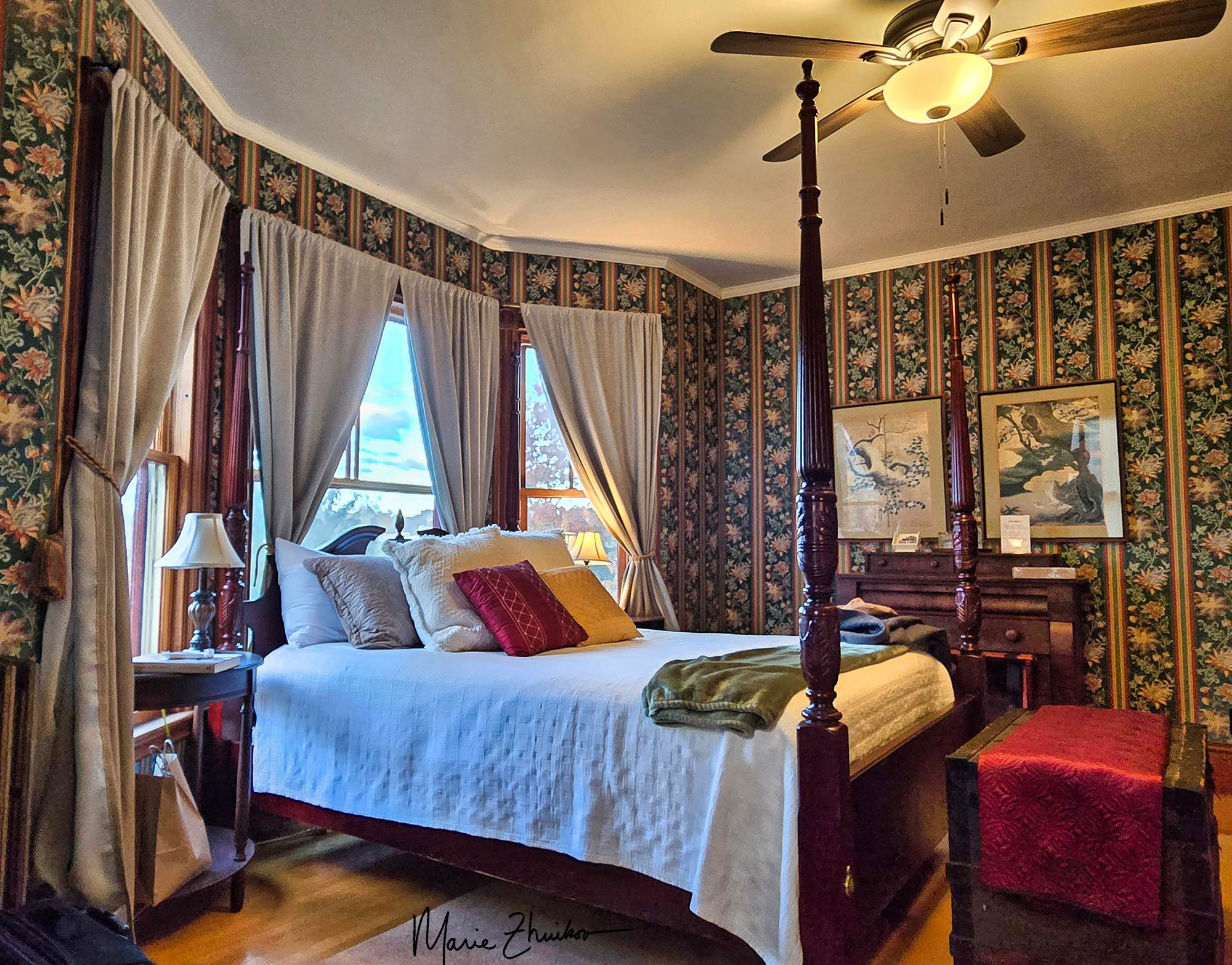
Our bedroom at the Guilford Bed and Breakfast

I don’t know if we’ll ever have the chance to return to Guilford, but I was so thankful for this opportunity to connect more with my family’s history and to meet “new” relatives. After two days in Guilford, we drove to Bangor and then flew home. This eleven-day trip was epic on so many levels, and I’m a different person because of it.

Conclusion

I felt the most “at home” in Maine. That’s probably because the landscape is similar to Minnesota’s. It’s wilder and has more “natural” nature than states like Connecticut or Vermont. The land just “is” and doesn’t seem like it’s been specially preserved as natural. However, Maine and its kind people have a hardscrabble existence. Piscataquis County has the least densely populated area in Maine, just over 17,000 people (only 3.9 people per square mile), although it’s the size of Connecticut. Social challenges like drugs and poverty show in the houses and the people. There’s an underlying feel that the state is more like one portrayed in a Stephen King novel than a cozy seaside mystery novel.

I enjoyed reconnecting with Russ’s relatives and seeing sites related to his family. He feels a bit bad that his family didn’t found a bunch of towns like mine did, but I remind him that my ancestors made it here about a hundred years earlier than his. There were more opportunities to found towns then.

Seeing the sites involved in the beginning of our country has driven home the values that went into the conflicts. I’ve vowed to do what I can to uphold those values and continue the legacies my ancestors began.

This trip also brought a whole new meaning to my traditional holiday dish of pickled herring. (For some strange reason, Russ doesn’t share my delight in this culinary delicacy.) I have an enhanced appreciation for it now that I know more about my Herring ancestors.

That’s it. The trip’s done, finally! But the effects will reverberate for years to come, I’m sure.

The Guilford Historical Society Museum