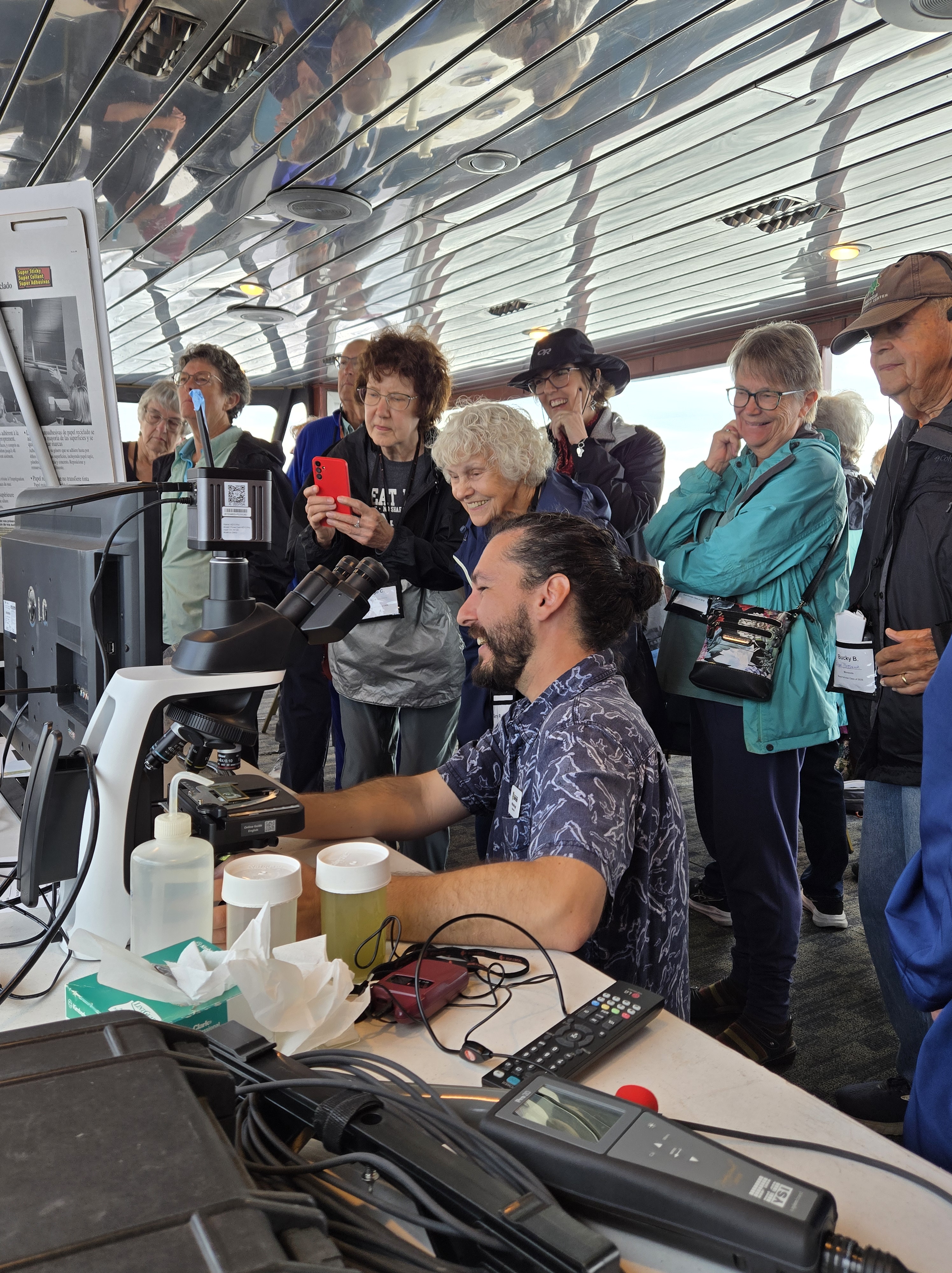
Road Scholars view microscopic zooplankton and algae from Lake Superior on a computer screen aboard a boat.
Well, my initiation as a Road Scholar trip leader is over! As you may recall, I was hired this summer to lead two trips of people ages 50+ along the shores of Lake Superior. Each trip lasted about five days. We hiked in state parks, canoed down a wild river, heard from local experts, and plied Lake Superior’s waters on a science mission.
During the first trip, an experienced co-leader showed me the ropes. In the second trip, different people supported me each day, but leadership was up to me. Due to the excellent orientation I received during my first trip, I felt fairly confident leading the second one. But I still messed up a few times. The mistakes were minor, and I’d like to think they involved issues that the scholar tourists didn’t notice.
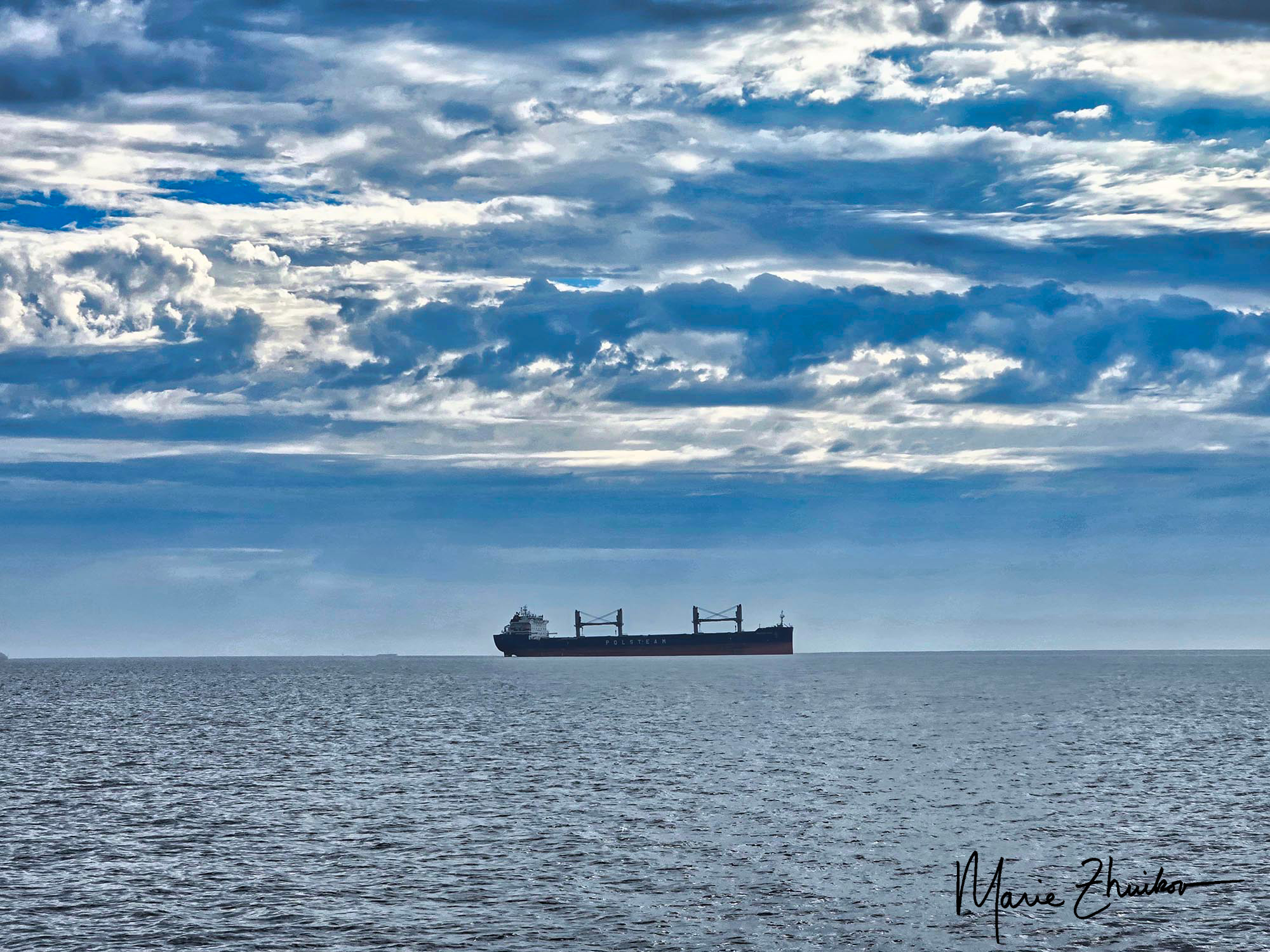
An ocean-going ship at anchor in Lake Superior.
The weather was wonderful and so was the clientele. Their ages ranged from mid-fifties to mid-eighties. I was impressed by their curiosity, enthusiasm, intellect, and good attitudes despite physical challenges. Even though the program was rated as moderate to hard, some scholars had recently replaced joints or used a cane to get around. We had some falls (which resulted in only minor scrapes), and some difficulty getting people out of canoes and kayaks at a tricky landing, but I’m happy to say that everyone completed the trip otherwise unscathed.
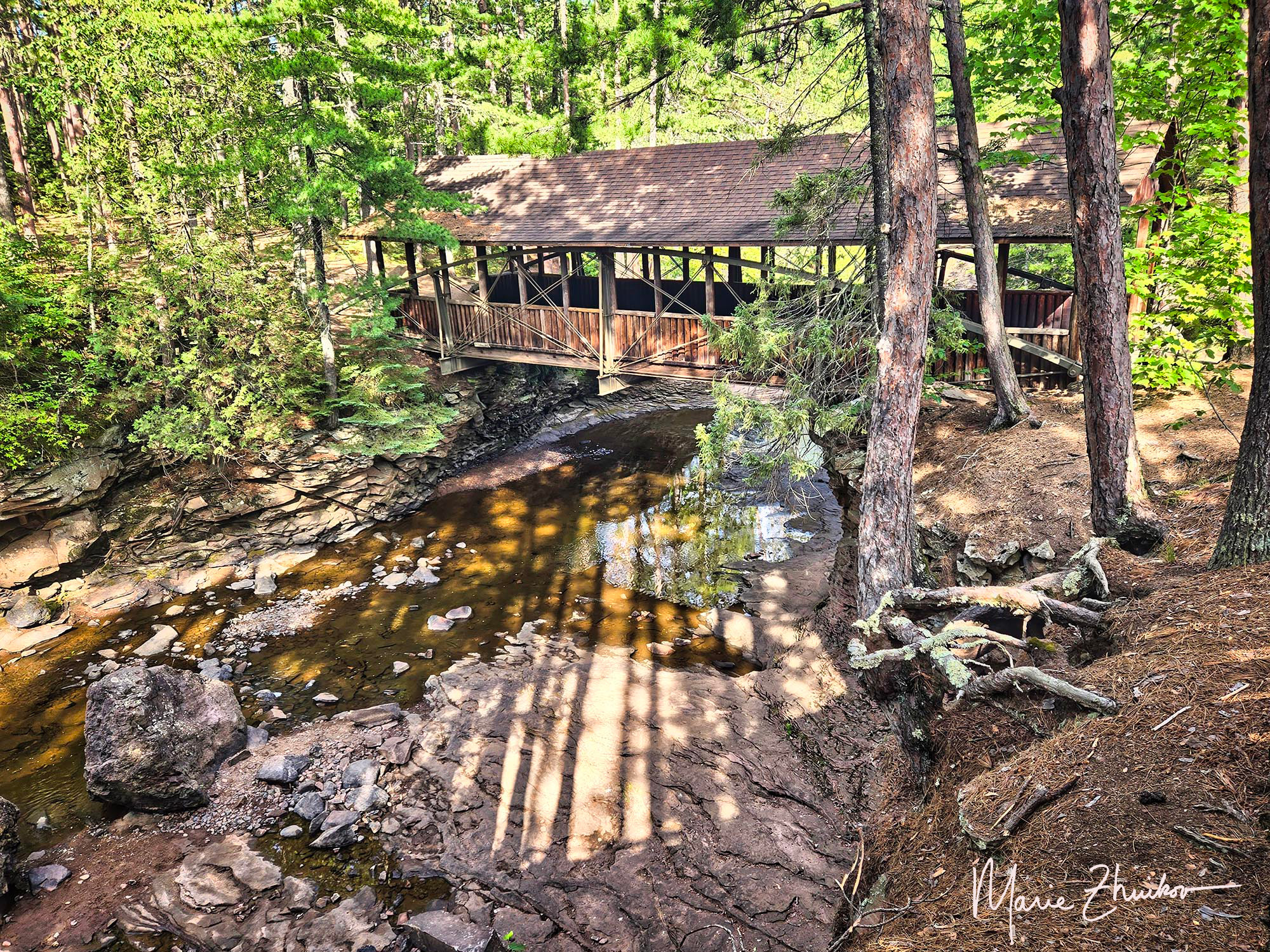
The Amnicon River, Wisconsin
On the other hand, I was exhausted! By the end, I was glad not to wake up to an alarm every morning and to return to my routine. But I immensely enjoyed showing the scholars this part of the world. Topics included geology, botany, aquatic science, Native culture, and maritime history. I’d like to think they all left with greater appreciation for Lake Superior and the communities that surround it. As I mentioned to them, they probably know more than most locals now. If I’m able, I’d be willing to do it again next year, especially now that I know what I’m doing and would have a year to recover. 😊
Between the two trips, I discovered I had Lyme disease thanks to a deer tick I picked up during my recent stay in Brule, Wisconsin, which added to my exhaustion. But the antibiotics for it soon had me feeling more like myself.
I’m including some of my favorite images from the trips with this post.
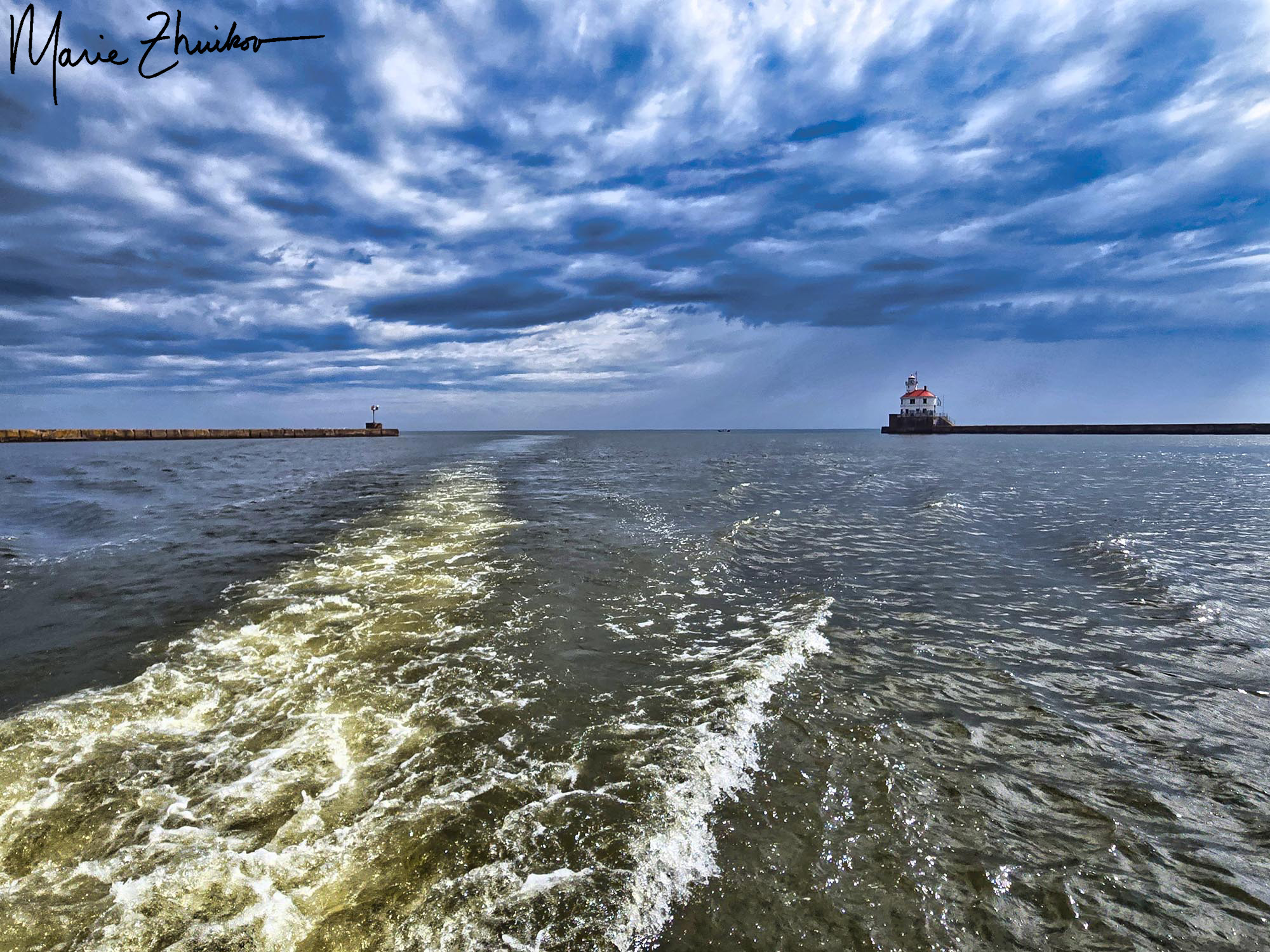
The Superior Ship Canal entry as seen from the back of a boat
Disclaimer: The views in this article are my own. They do not represent views of the official Road Scholar Program.
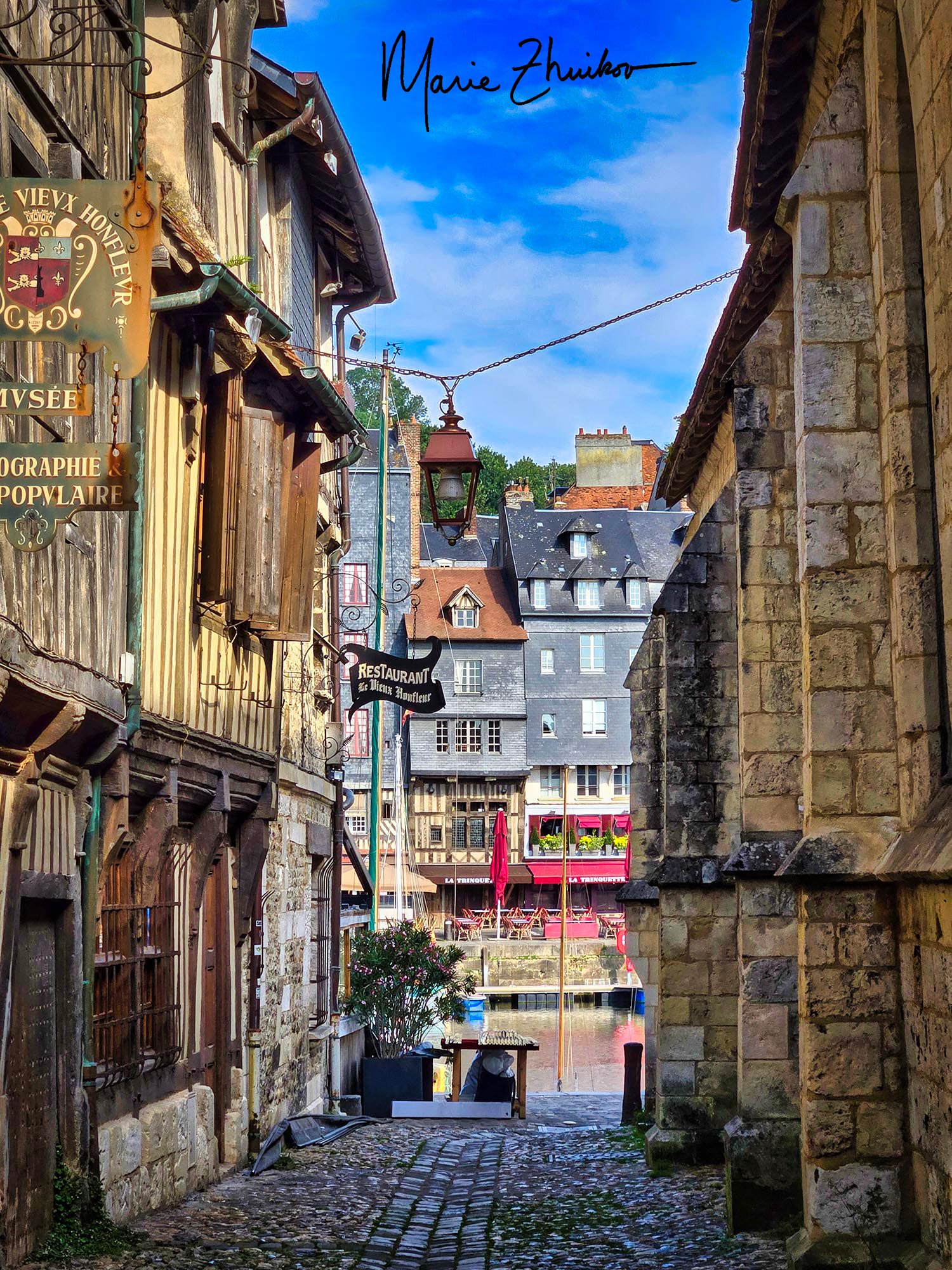
The final full day of our Road Scholar trip took us from Bayeux to the town of Honfleur, which is where the Seine empties into the sea. It’s known for its all-wooden churches (no nails!), picturesque streets, and harbor.
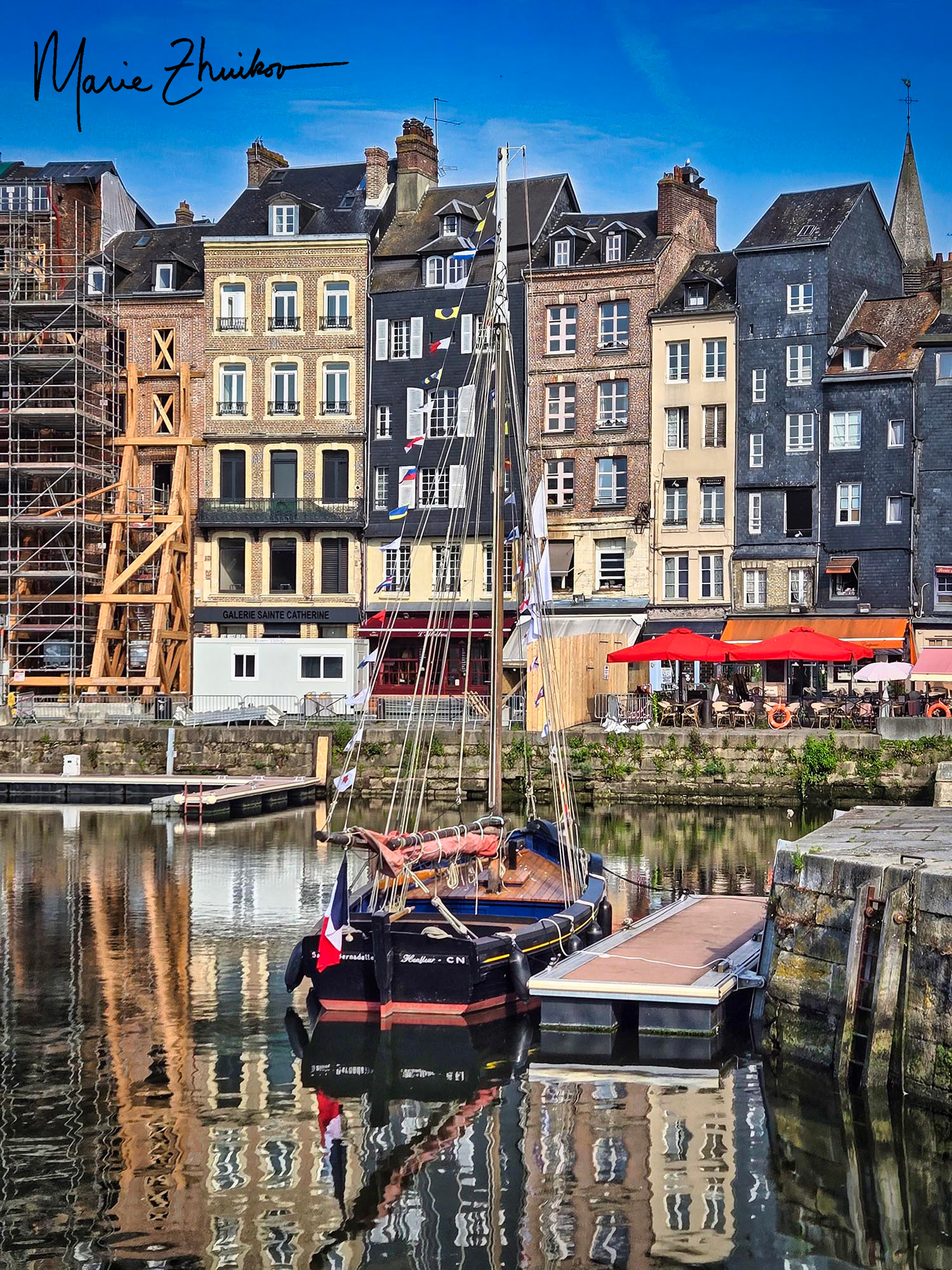
As we walked the streets in the morning light, I could easily see why painters like Eugene Boudin and Monet were drawn here. The ancient buildings ooze with character, and the harbor provides wonderful reflections of the ships.
A harbor scene — one of my favorites!
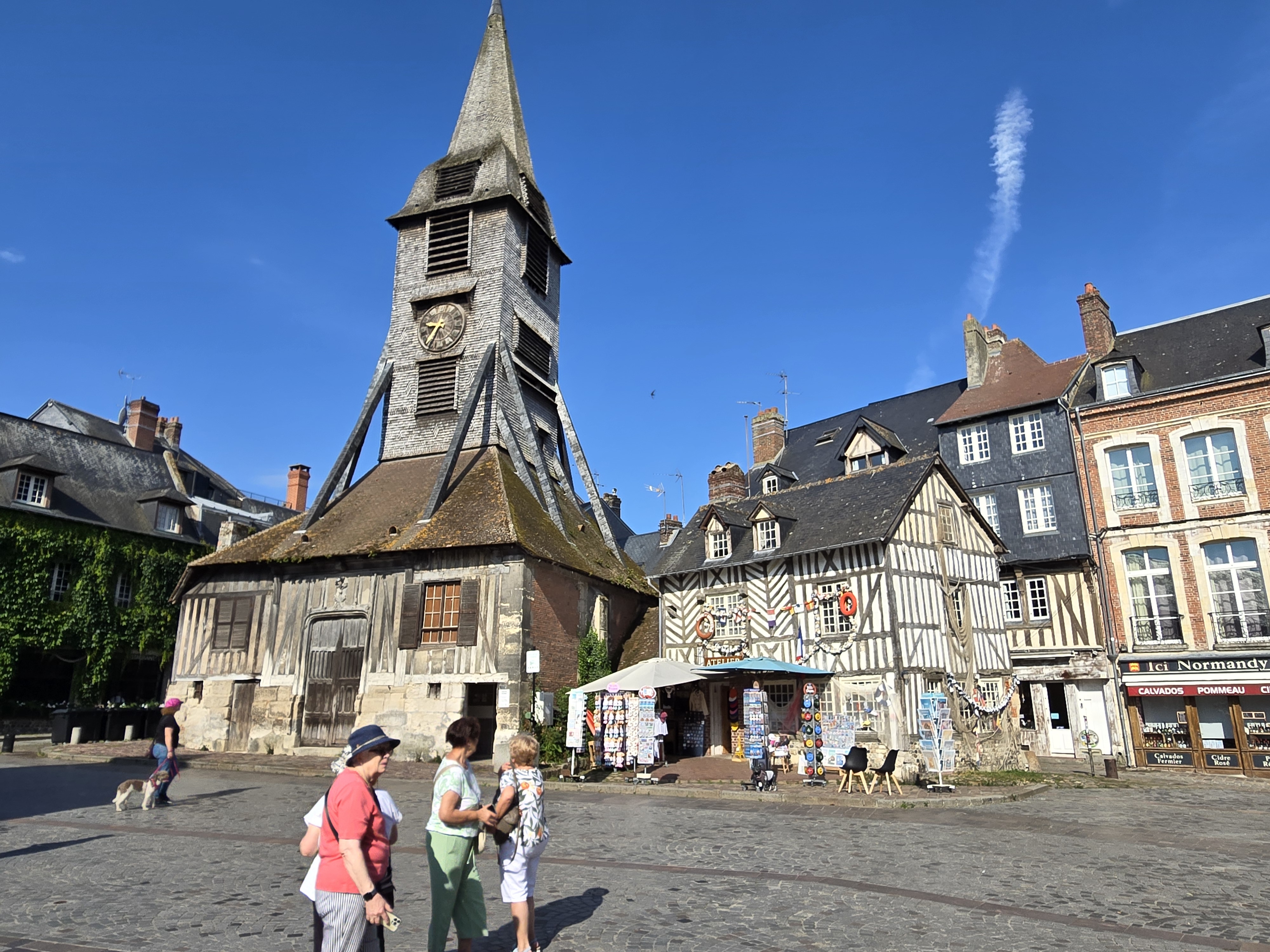
We visited one of the wooden churches, Sint-Catharina Kerk, and spent some time inside. Joan of Arc was also memorialized here with a statue.
Sint-Catharina Kerk(on the left)
After our walk, we visited the Musee Eugene Boudin, which is housed in a 19th-century chapel with two modern extensions, offering views over Honfleur and the Seine. Boudin was the town’s most famous painter. Besides Boudin’s works, the museum houses other impressionists such as Monet and Jongkind.
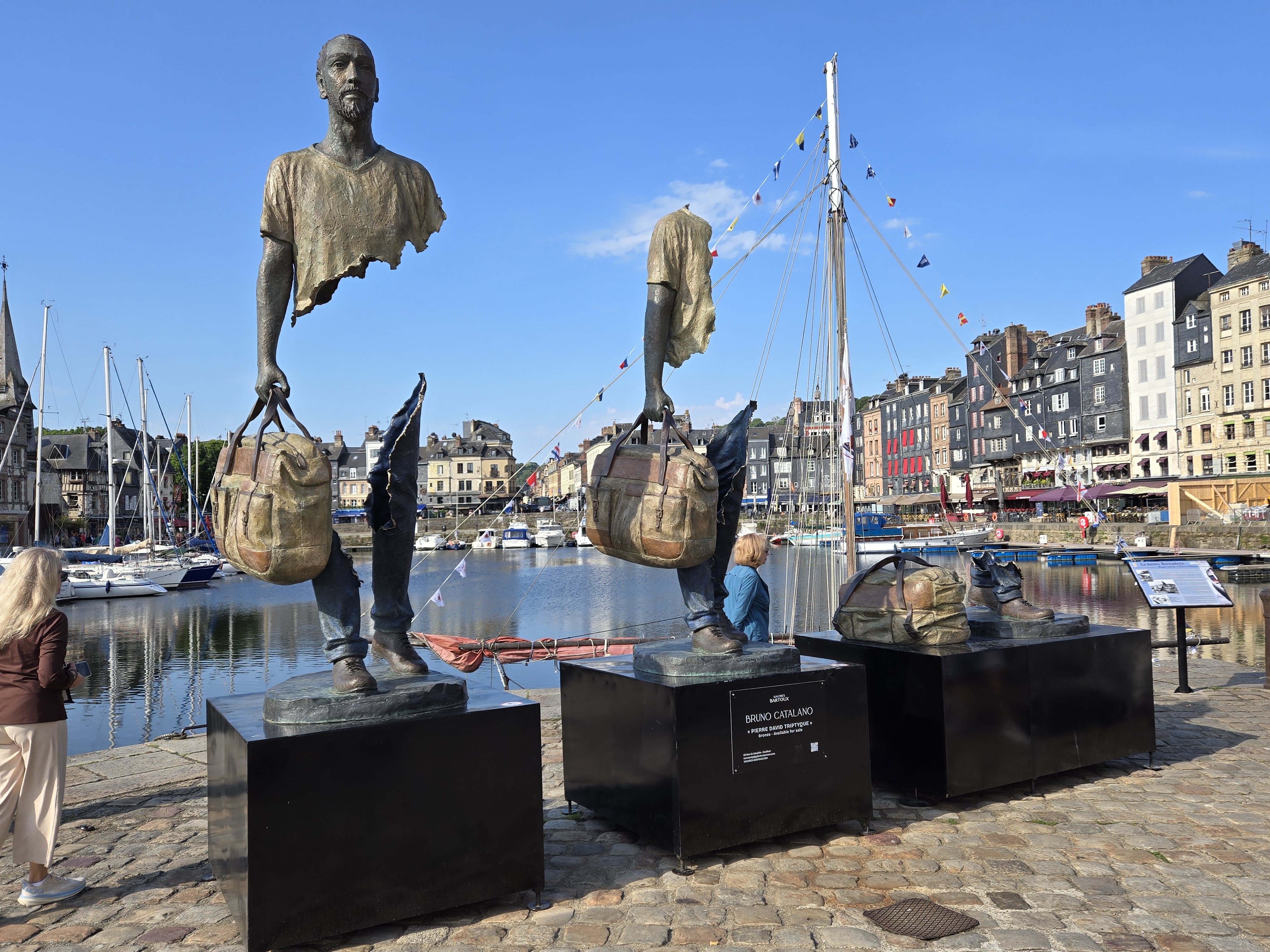
On our way to the restaurant where we would share a farewell lunch with the group, we passed some cool statues – have you ever seen the partial statues that provide optical illusions? There was a series of those.
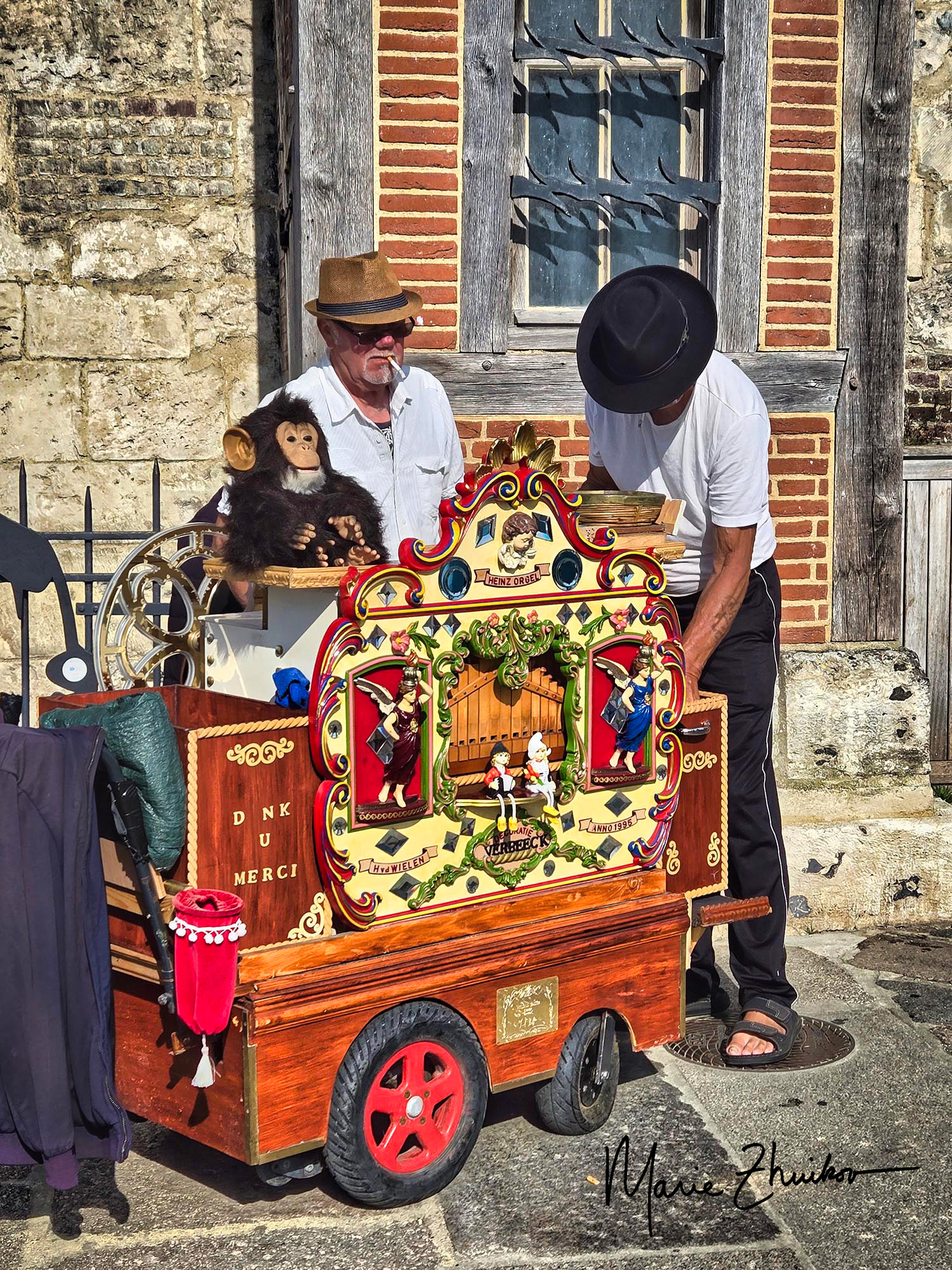
We also passed two men who sported fedoras and smoked hand-rolled cigarettes. They were setting up their hurdy-gurdy as a tourist attraction.
Near them on a harbor wall was a plaque that memorialized Samuel de Champlain. As a Great Lakes person, I took note! Lake Champlain in Vermont is named after him, and the plaque commemorated his departure point in Honfleur and his role in establishing “New France” in Quebec, Canada. Honfleur’s location on the Seine made it a key port for launching French voyages into the St. Lawrence and beyond.
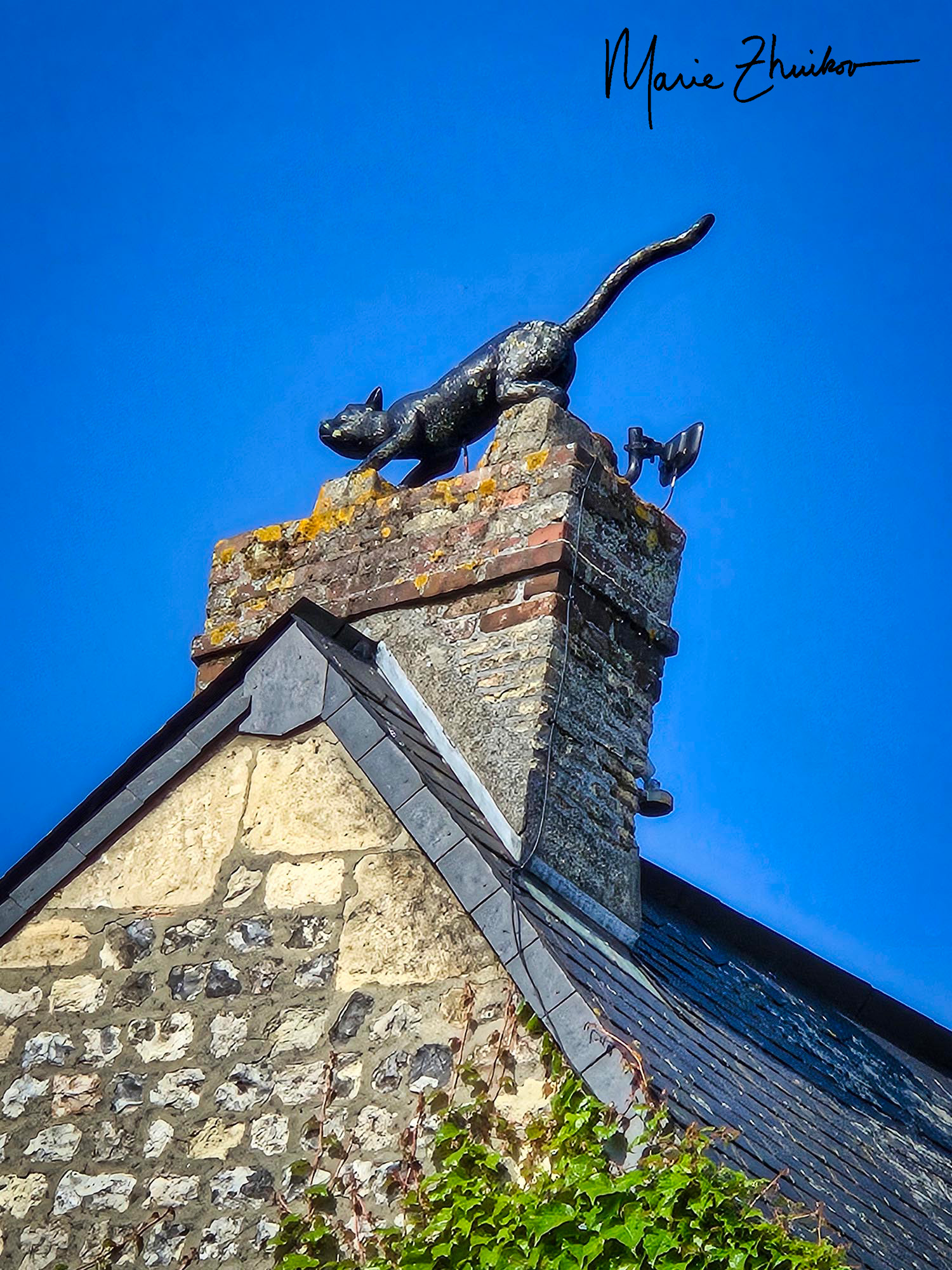
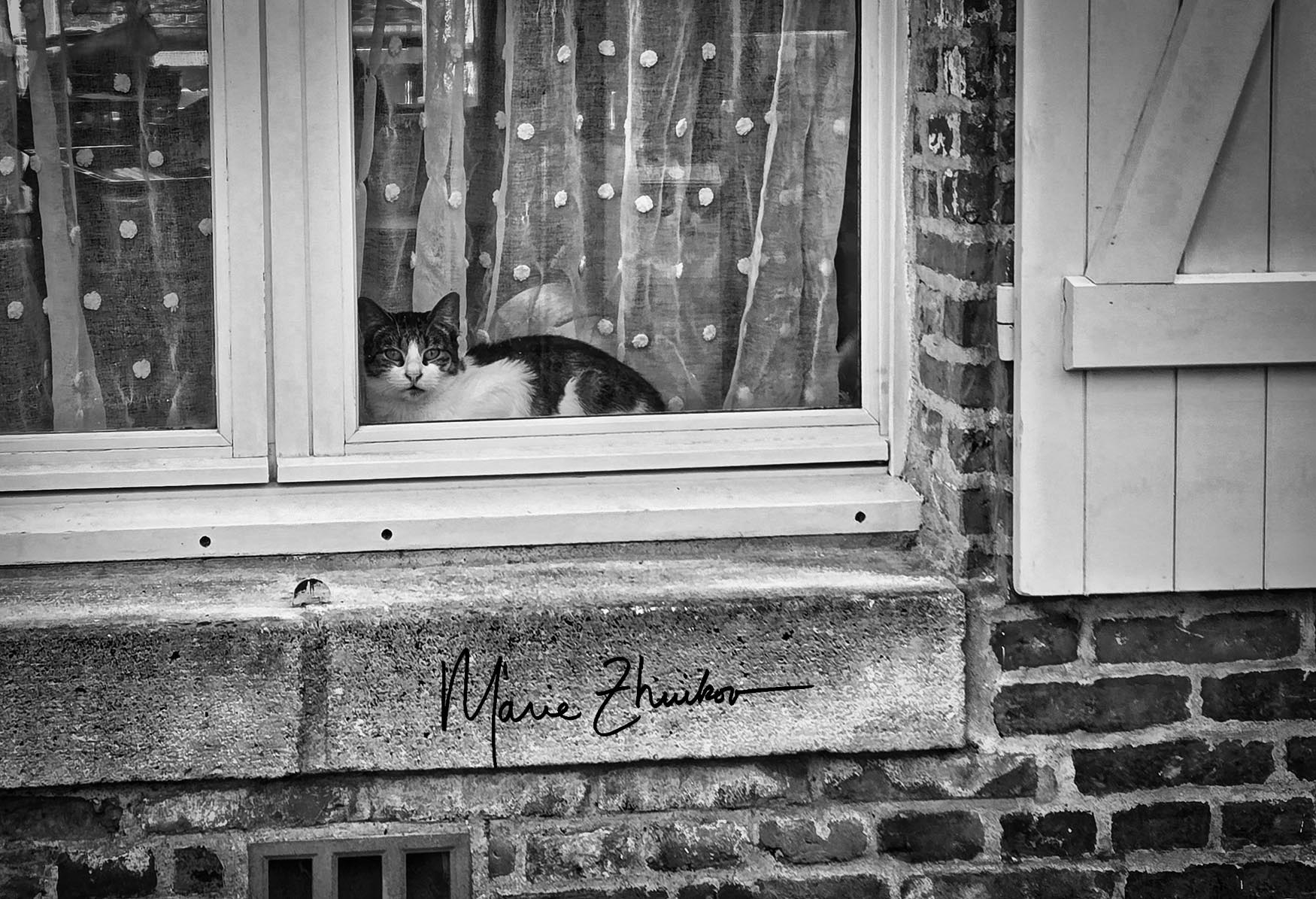
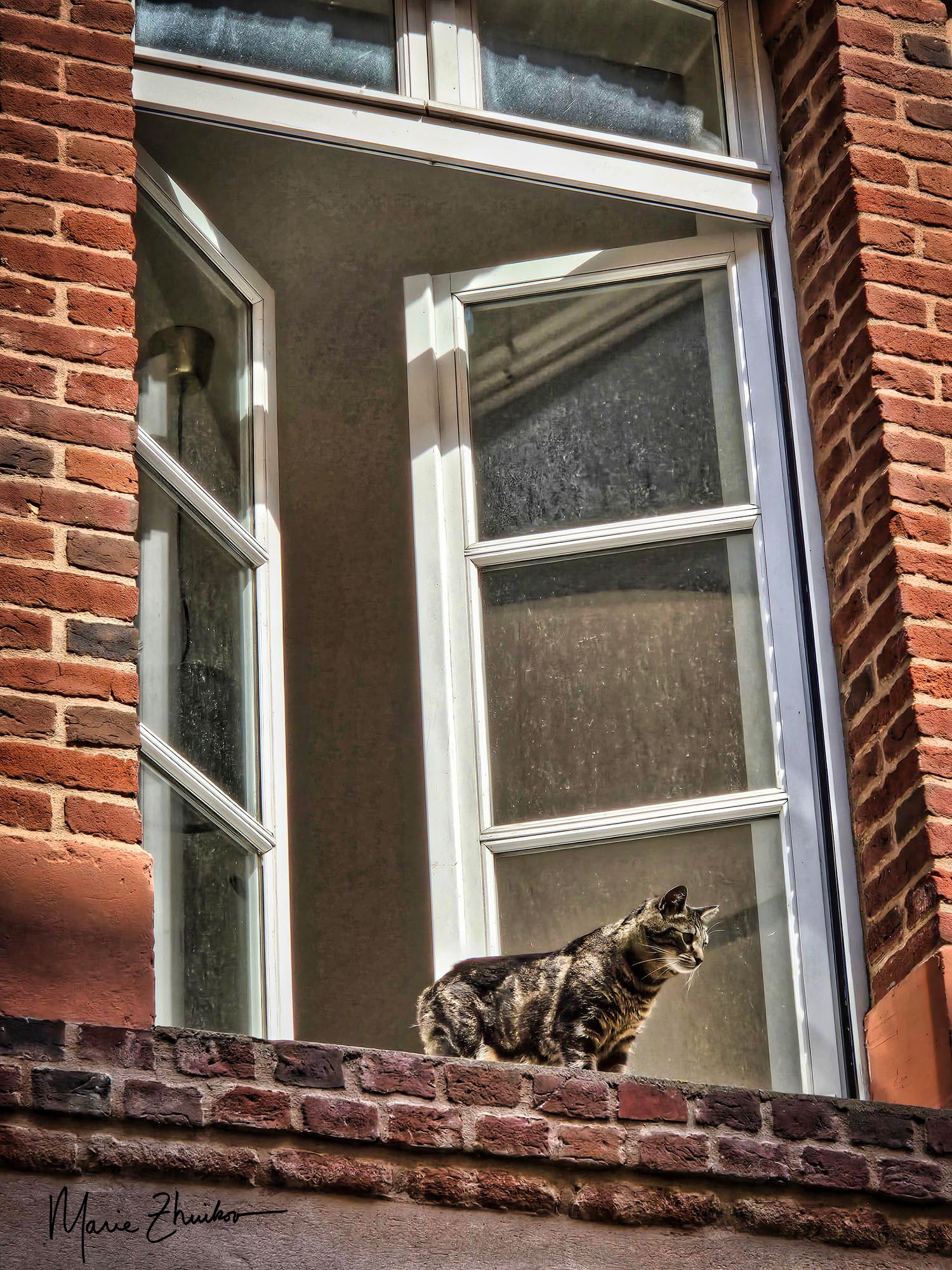
The city also seemed home to many cats, who provided me with some photo opportunities.
A chimney cat
A window cat.
Another window cat!
I would have loved to have spent more time here, but alas, the time for our departure was nearing. At our farewell lunch, our group exchanged contact information, and we said our goodbyes. We met a lot of nice people in our group and plan to keep in touch with a few.
We were very happy with our experience and would definitely consider booking another Road Scholar trip in the future, especially if it’s in a country where we don’t know the language and would be hesitant to drive.
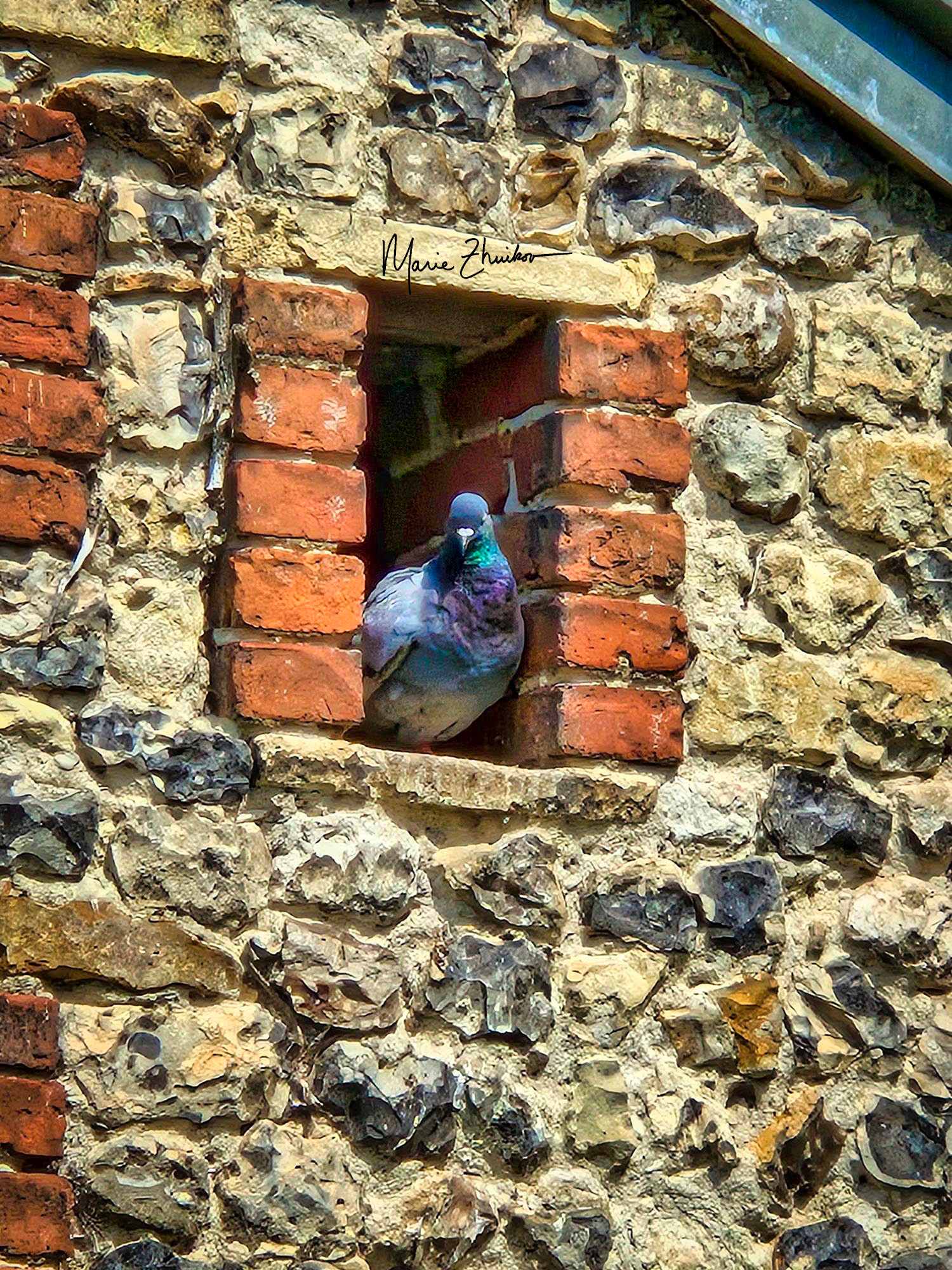
A handsome Honfleur pigeon
Not that Road Scholar had anything to do with this, but the weather during our tour was divine: sunshine and no rain. The first rain came in the evening after we had returned to Paris, where our group would catch flights home the next day.
One thing to know if you travel to France is that there’s a lack of public restrooms, especially in Paris. You either need to go into a cafe and buy something so you can use their facilities, or just saunter in and act like you belong there and use them. Even our tour bus didn’t have a bathroom!
I feel like perhaps it was a mistake that we left France. Immediately afterward, the country experienced heat waves that left at least 40 people dead, wildfires that devastated communities in the southwest part of the country, and France’s first incidence of Ebola. Would things have been different if we had stayed? I guess I’ll never know. 😊 But I feel for the country and hope the many trials end soon.
Reflecting on this journey, I am grateful for the unforgettable experiences, the friendships made, the chance to glimpse the country of my ancestors, and the beauty discovered each day. Though France faced great challenges after our departure, the memories and connections from our trip will remain with us.
As this chapter closes, I look forward to future travels and new adventures, carrying with me the spirit of discovery and appreciation that this journey inspired.
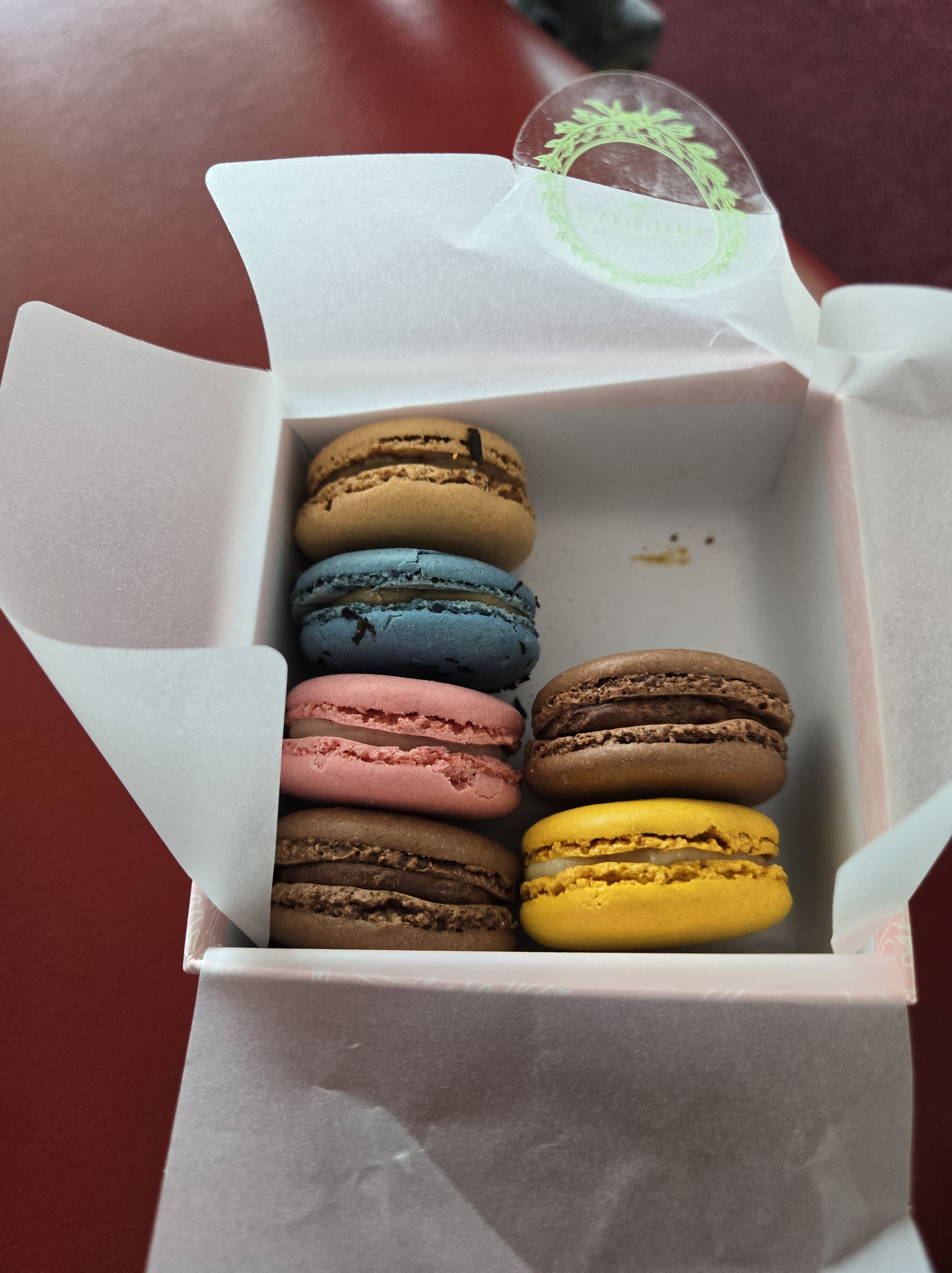
Some macrons that we bought at the airport. Two are mysteriously missing.
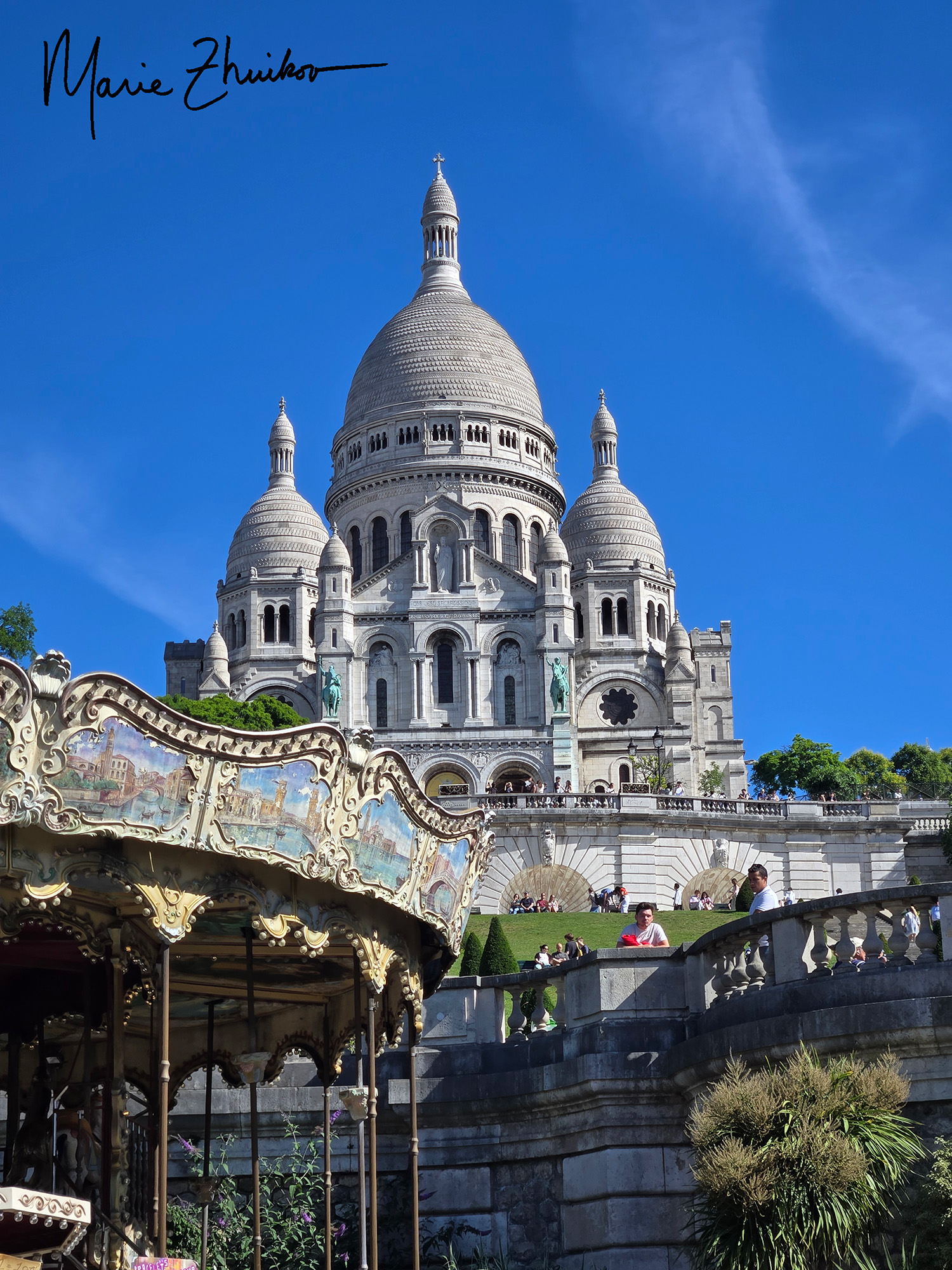
The Sacre Couer Basilica and part of a merry-go-round in Montmartre, Paris
Russ and I meandered across the ocean to France for a six-day tour through Road Scholar. In case you missed the explanation in my previous post, Road Scholar is a nonprofit travel organization for older adults. We learned about the organization from our parents, who took trips when it used to be called Elderhostel. This was our first trip with them, and it was a great experience!
We decided to go with a tour company instead of making arrangements ourselves since this was a location with language and cultural differences, crazy traffic, and crowds. Besides, we needed a break from planning.
After arriving in Paris, we met our tour guide, Christine, at the airport. She was from England but now lives in France. She had arranged for a van driver to take us and another couple on the tour to our hotel, which was in the 9th District (Arrondissement). We had time to unpack before meeting the others in our group of sixteen in the lobby for orientation. Everyone was from the U.S. There were a couple of single people and one couple who were dating. The others were all related in some way, either through marriage or blood.
Other than dinner at a restaurant a short walk away, that was it for this partial day, so I’m not counting it. Our next full day began at a civilized time to help with our jet lag, which was much appreciated. After breakfast, which featured crème brulee (we’re definitely not in Minnesota anymore), we were off!
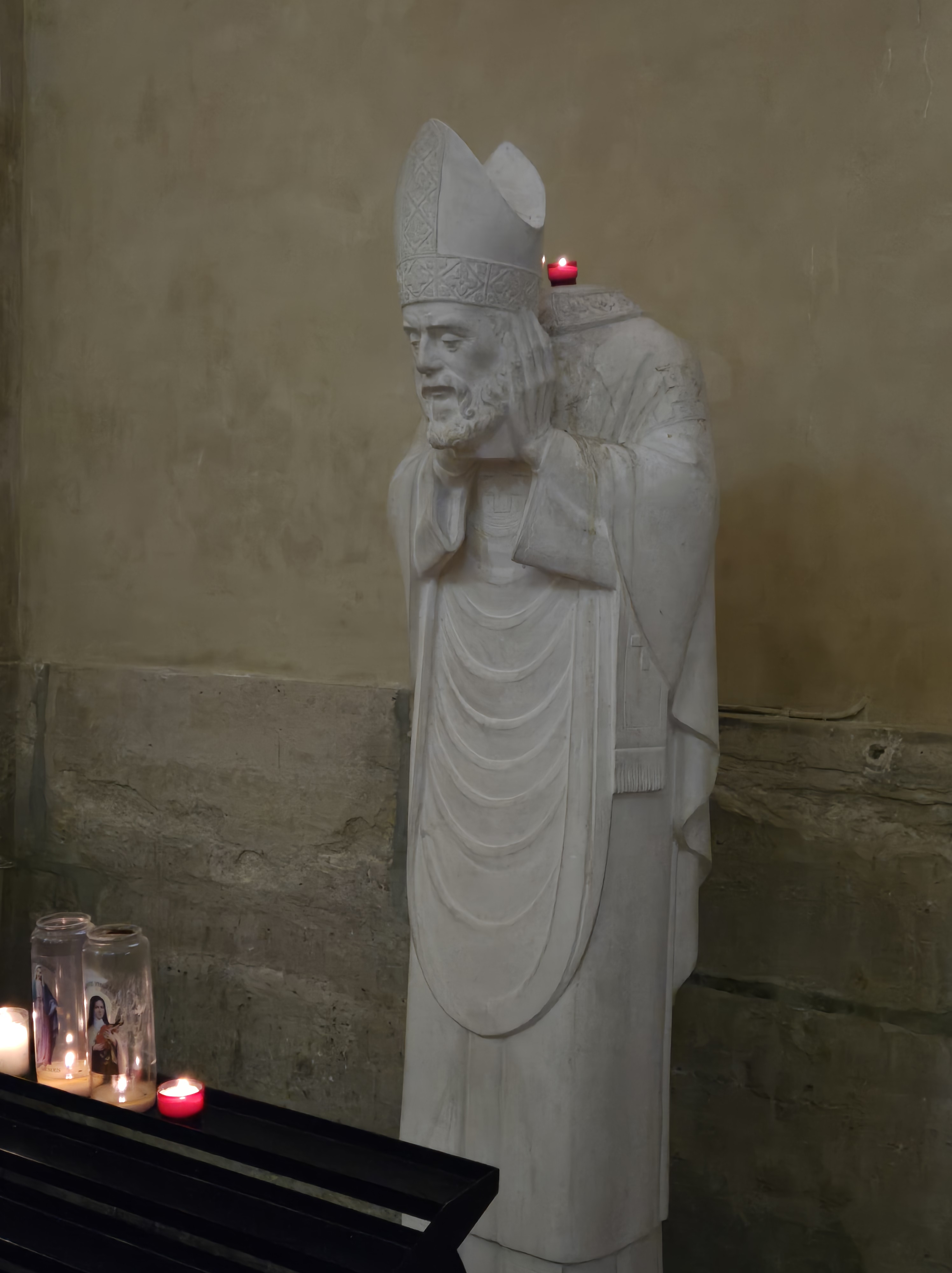
St. Denis and his headin the Notre Dame de MontmartreCathedral.
With the help of our Paris guide, Aurora, we navigated the Paris Metro (subway) to travel to Montmartre, the historic neighborhood made famous by past artists like Renoir and Picasso. It continues to be popular with artists and writers today. In Roman times, it was called the Mount of Mars. Temples to Mars and Mercury were built on the hill. The Christian era gave the neighborhood the name it has today, which translates to “Mount of the Martyrs, when Saint Denis, the first bishop of Paris, was martyred there around 250 AD.
According to legend, he was beheaded in front of the temple of Mars, then carried his head six kilometers to the site of the Basilica of Saint-Denis, where he was buried. A chapel called the Martyrium (“chapel of martyrs”) was built nearby, and the neighborhood’s name came to reflect its role as a site of Christian martyrdom.
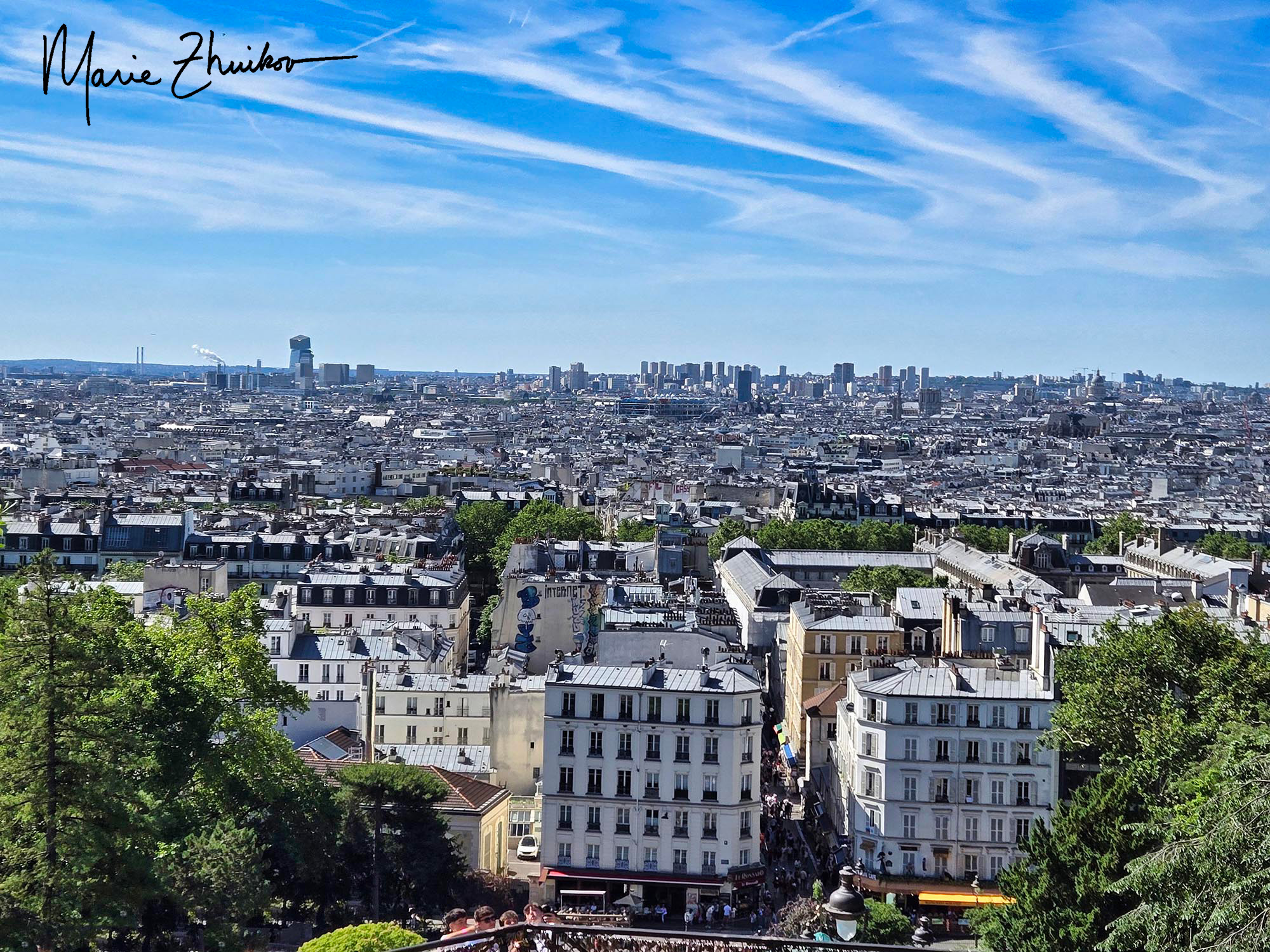
We did not visit St. Denis’ basilica, but we did see two others there. One was the Sacre Coeur, which is perched atop the hill. To see the great views of Paris from this location, visitors must either walk up 400 steps or take a funicular (incline tram) to the top. While some in our group walked up the stairs, most opted for the funicular. Russ and I rode it just for the novelty.
The line was long, however. Our intrepid guide, Aurora, gained permission from the tram operator for our group to move up in line, although she must have played a medical card because she asked a couple of our members to exaggerate their disabilities as we walked to the front of the line. 😊 (One man in our group had a recent knee replacement; another had had a stroke and walked with a tilted limp, although both kept pace with the group admirably the rest of the time, even so.) It worked. The crowd parted for us like the proverbial Red Sea.
View of Paris from the Montmartre neighborhood
At the top, we enjoyed the view of Paris and our first glimpse of the Eiffel Tower. A short walk took us to Notre Dame de Montmarte, which is the oldest church in Paris. Aurora told us a story about how it was saved by the artists, most of whom weren’t religious, because they realized the structure’s historical significance. We toured the interior, where I noticed a statue of a man carrying his head, which could only have been good old St. Denis.
One thing I figured out before our trip is that there are A LOT of cathedrals in France named Notre Dame. The name isn’t reserved just for THE Notre Dame Cathedral. It translates to the Virgin Mary, and she’s a big thing in France, so there are many cathedrals named for her.
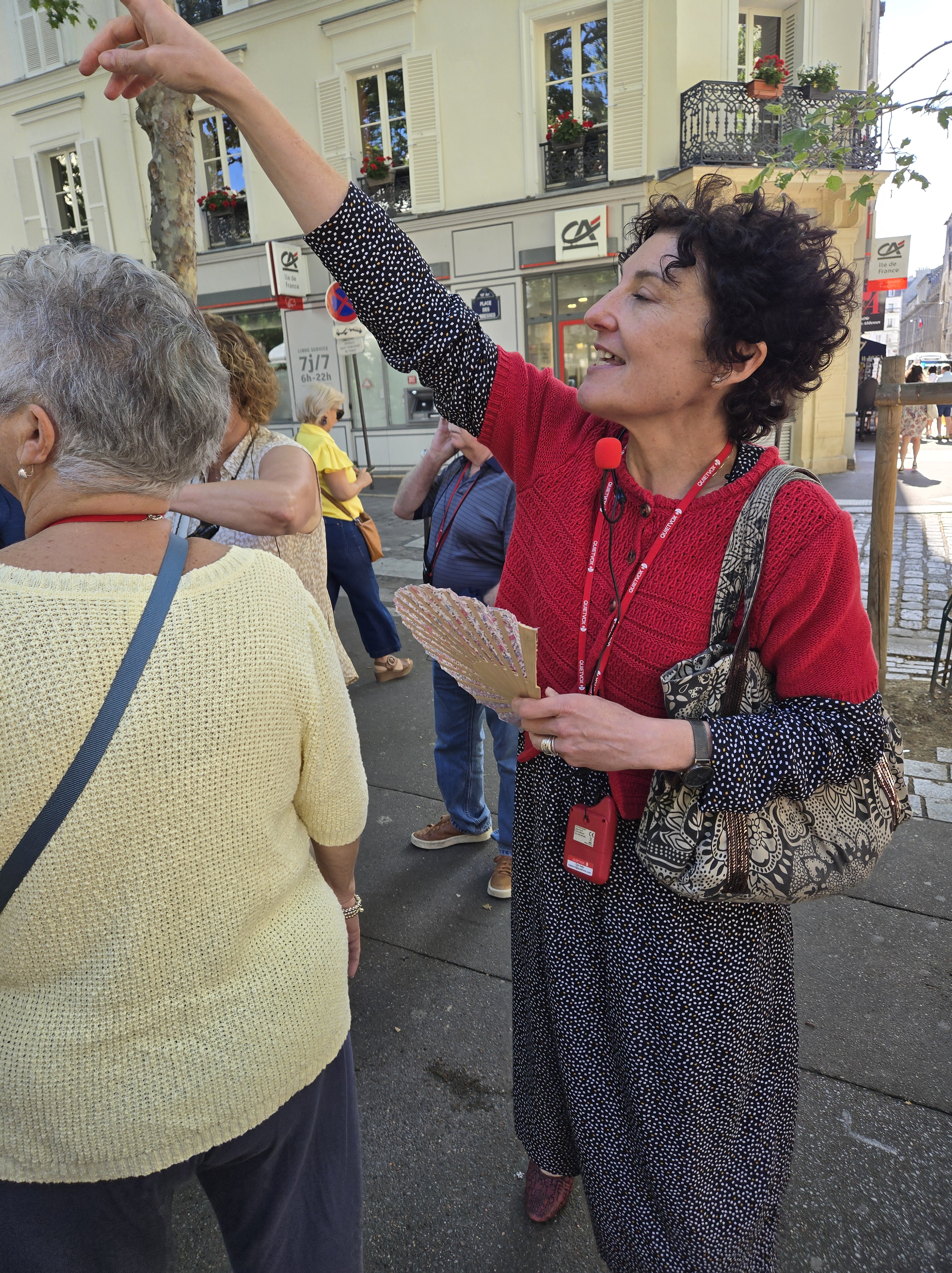
Aurora, our wonderful Paris and Versailles guide
As we walked through the cobblestone side streets, Auora explained that for centuries, gypsum was mined from the hill, giving rise to the “plaster of Paris” industry.
After some free time to shop, we walked back down the hill and took the subway to the heart of Paris, or the Île de la Cite, the island where Paris was first founded in the Iron Age by a Celtic tribe.
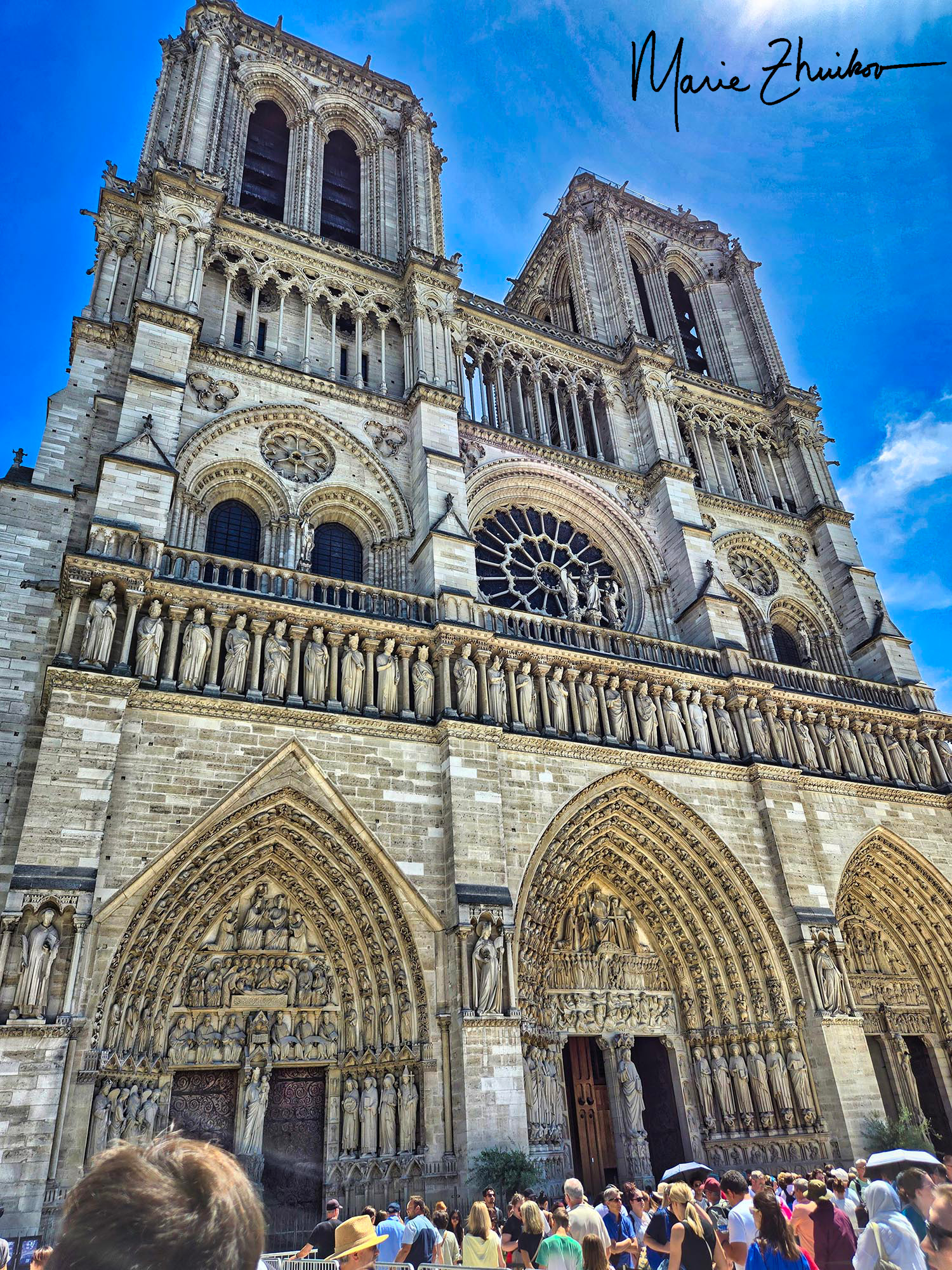
Norte Dame Cathedral
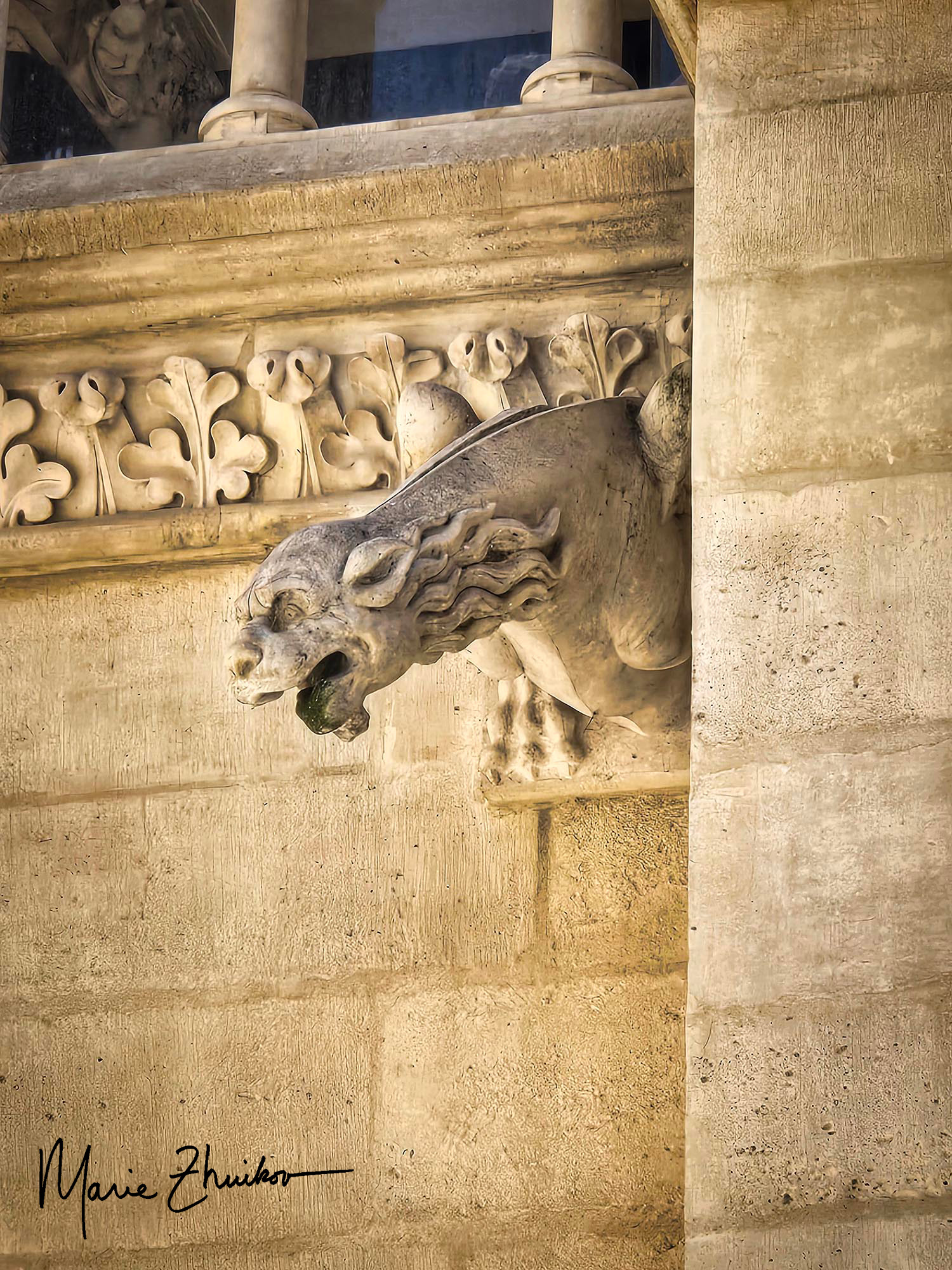
There, we saw THE Notre Dame Cathedral. It’s still undergoing repairs from the fire that damaged it in 2019, but the front looked great. Statues of many kings line the walls of the outside. Aurora told us that many of the statues were beheaded during the French Revolution when the monarchy fell out of favor. The heads were repaired in the 1840s. The cathedral houses holy relics, including the crown of thorns and pieces of the cross. We had the option to go inside, but the line was so long, and we were hungry, so we opted to eat lunch nearby instead.
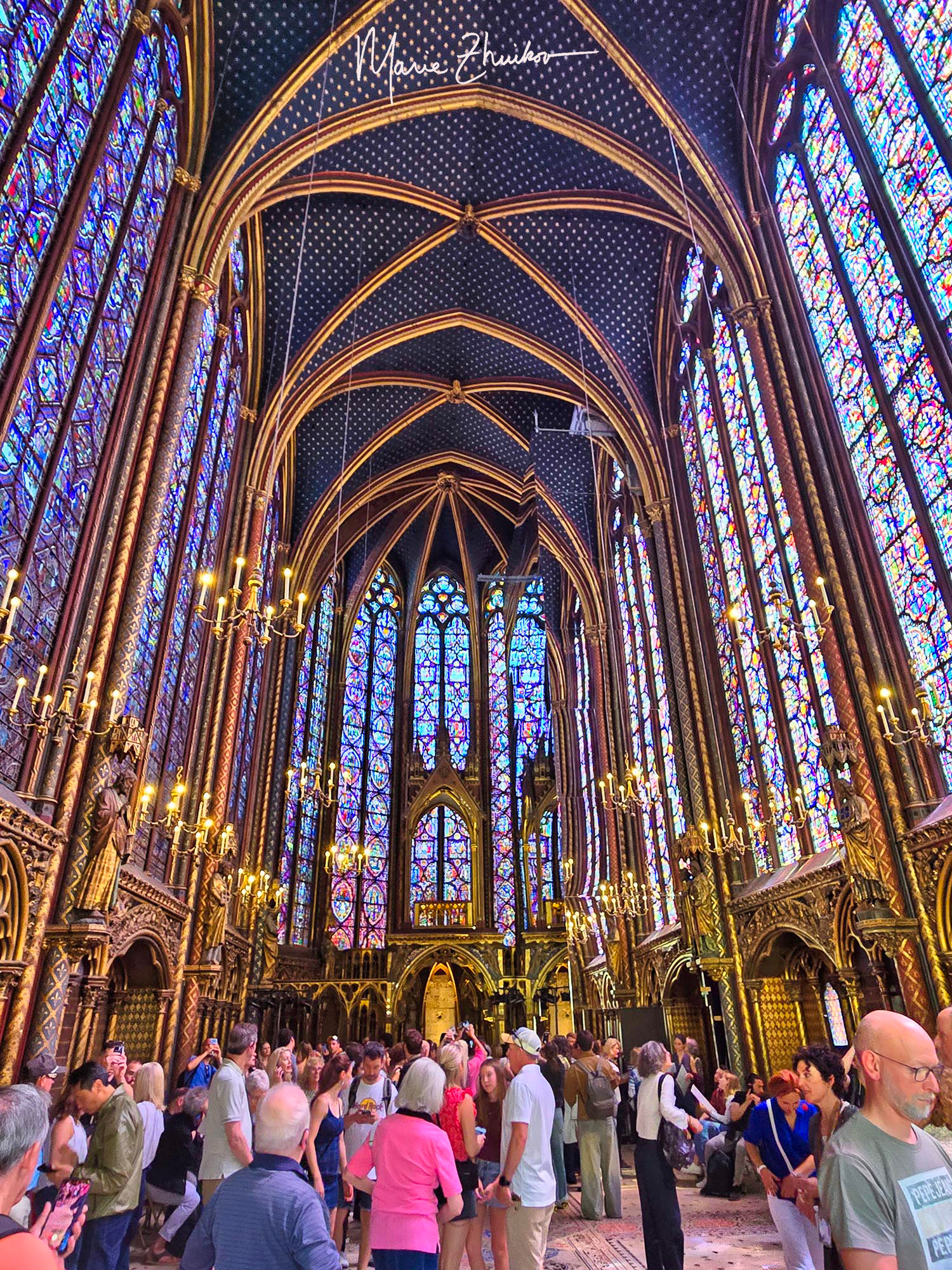
Sainte-ChapelleCathedral
Our next stop on the Île de la Cite was Sainte-Chapelle, which offers an excellent example of Gothic architecture. Aurora told us it only took 6-8 years to build, which is amazing given its ornateness. King Louis IX wanted it to house the religious relics he acquired from the holy land at great cost (half the country’s GNP) – the same relics that are now in Notre Dame. He acquired them to elevate Paris and France’s status as a center of Christianity in medieval Europe.
Sainte-Chapelle has upper and lower chapels. Aurora said that 70 percent of the stained glass in the upper chapel is original. The windows depict bible stories and the king’s coronation. Being surrounded by the slender columns of glass made me feel like I was in a large jewelry box. Of all the cathedrals we saw on this trip, Sainte-Chappelle was the most impressive.
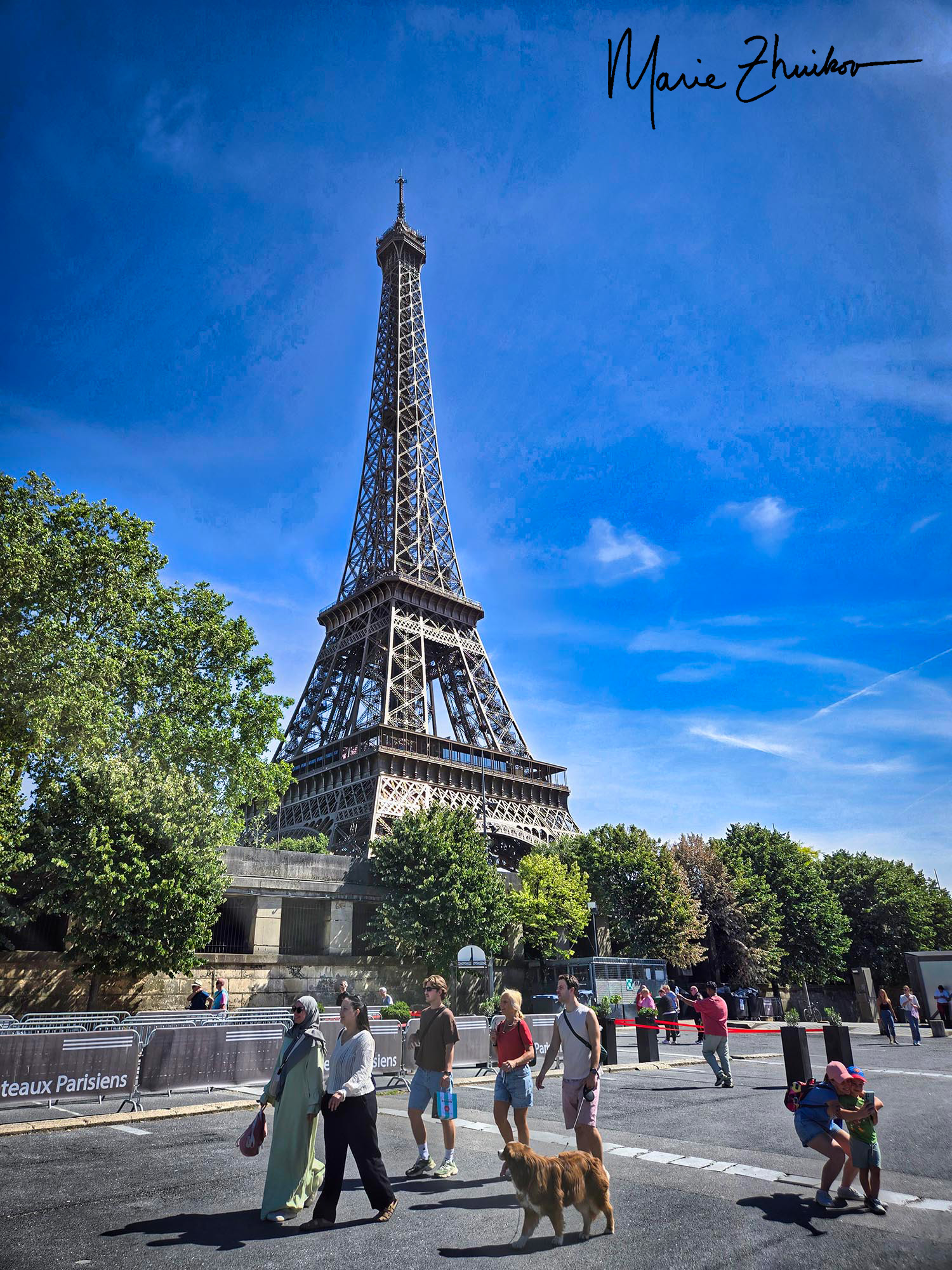
Next on our agenda was a boat tour of the Seine River. On the way, we passed the Eiffel Tower, which we were excited to see. I never realized that it is painted brown! (I thought it was black.) Although before our trip we had wanted to go to the top of the tower, once we were in Paris, it didn’t seem as important, so we did not do that typical tourist experience.
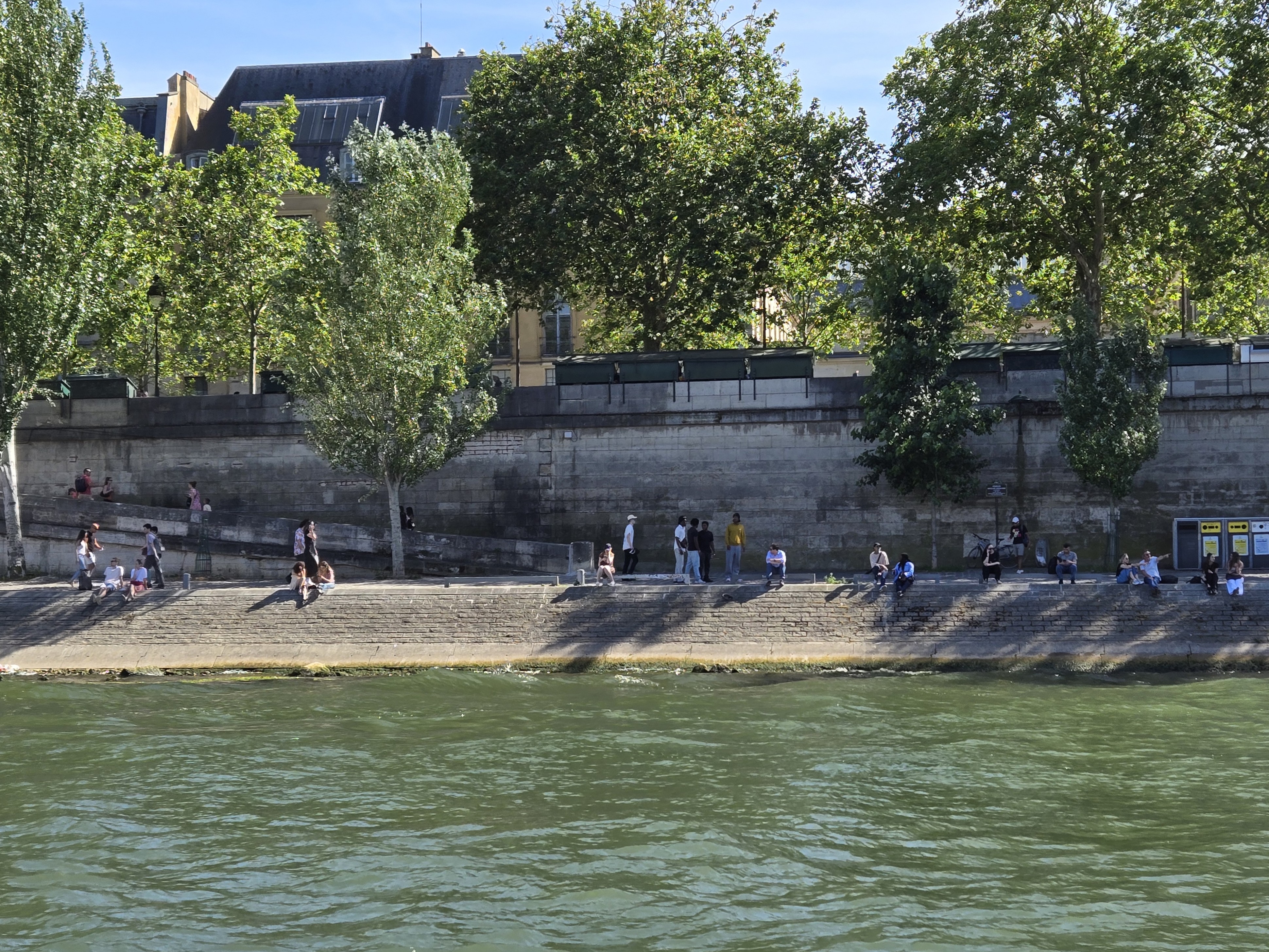
During our boat ride, I was impressed by the number of people hanging out along the river. Parisians (and tourists, I suppose) really like the Seine! That was good to see. As the tour progressed, we passed the Golden Flame. Originally built in 1989 as The Flame of Liberty, a symbol of friendship between France and America, after Diana Princess of Wales’ fatal car crash in the tunnel beneath it, the monument became a de facto shrine to her.
People hanging out along the Seine
Later, we drove through that same tunnel. I was surprised by how short it was. But I guess if conditions are right (or wrong), tragedy can happen anywhere. I can still remember arriving home after a week in the wilderness and hearing about her death on television. We were about the same age and in similar places in life emotionally, so I took her death hard. Although the Golden Flame isn’t officially her shrine, I’m glad she’s being remembered anyway.
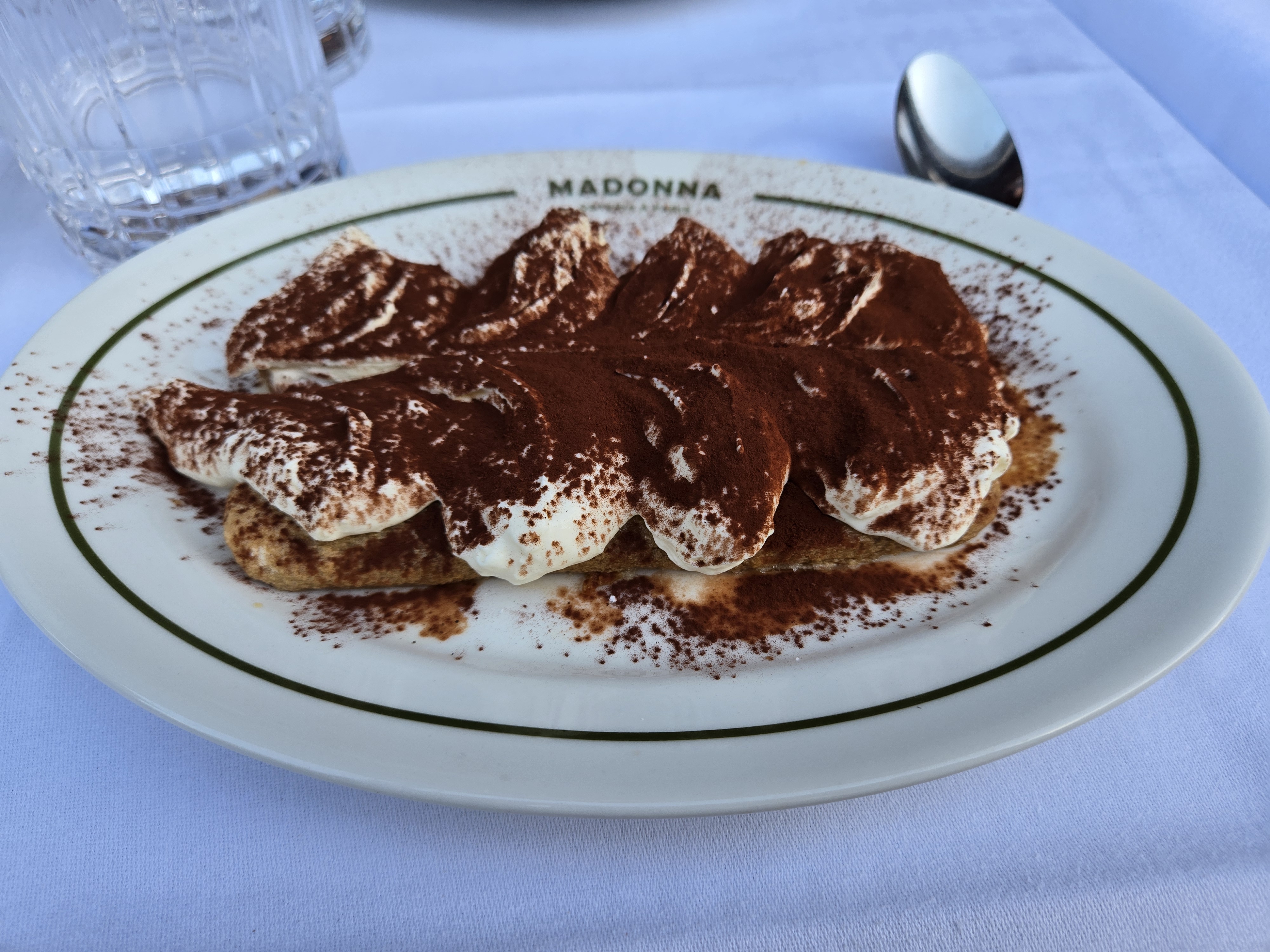
After the boat ride, a private bus took us back to our hotel. Dinner was on our own. Since we were in France, you’d think we’d opt for French food. But we had French food the night before, so we chose a Mediterranean restaurant across the street called Madonna. An excellent choice! Seated alfresco, I had sea bream (a whole fish) that was baked in a salt crust with anise, and an eggplant dish on the side. I have cooked fish this way at home and had never seen it on a restaurant menu before, so I was excited to try it. What I didn’t know was that our waiter would fillet the fish before our eyes. He freed it from its salty crust, cut it, and deboned it. You’d think the fish would be salty, but that’s not the case. Only a bit of salt slowly infuses into the fish as it cooks. The result was moist and wonderful.
My memorable tirimisu
I also made our waiter work his magic for dessert. I ordered the tiramisu, which is prepared at the table. Two rum-soaked ladyfinger cookies arrived on a plate. He poured espresso over them, then topped them with heaps of whipped cream. A sprinkle of cocoa completed the dish. Somehow, it tasted better after having watched the process.
Looking back on our first full day in France, I am struck by the blend of history, beauty, and small delights that set the tone for our trip. From the soaring cathedrals and storied streets of Paris to the pleasures of fine cuisine, every moment offered a fresh perspective on this remarkable city. As we settled in for the night, full of good food and new experiences, we were already looking forward to the adventures still to come. France had welcomed us with open arms, and our journey was off to an unforgettable start.