The lure is more than scenery, varied vistas and magnificent lookout points; it is the consciousness of being at the threshold of the unknown. – Sigurd Olson, Listening Point
Finding a good view of the landscape in Minnesota is a challenge. So many trees and shrubs block the way. You have to work to see an unencumbered horizon – climb a rock ledge, climb a tree, climb a tower.
Duluth is an exception. Growing up here, I always knew where I was. The skinny, long city is built on the side of a hill on the shores of Lake Superior. You are either looking at the hill or the lake. Even with all the trees, you can tell where you were.
When I moved to the flatland of Minneapolis for college, I lost those landmarks and had a hard time orienting. Finally, in frustration, I took an elevator to the top of the fifty-seven-story IDS building in downtown. From that viewpoint, I could see the horizon and the major landmarks: the Mississippi River, the University of Minnesota, the Metrodome, and I finally began to sense the landscape despite all the trees.
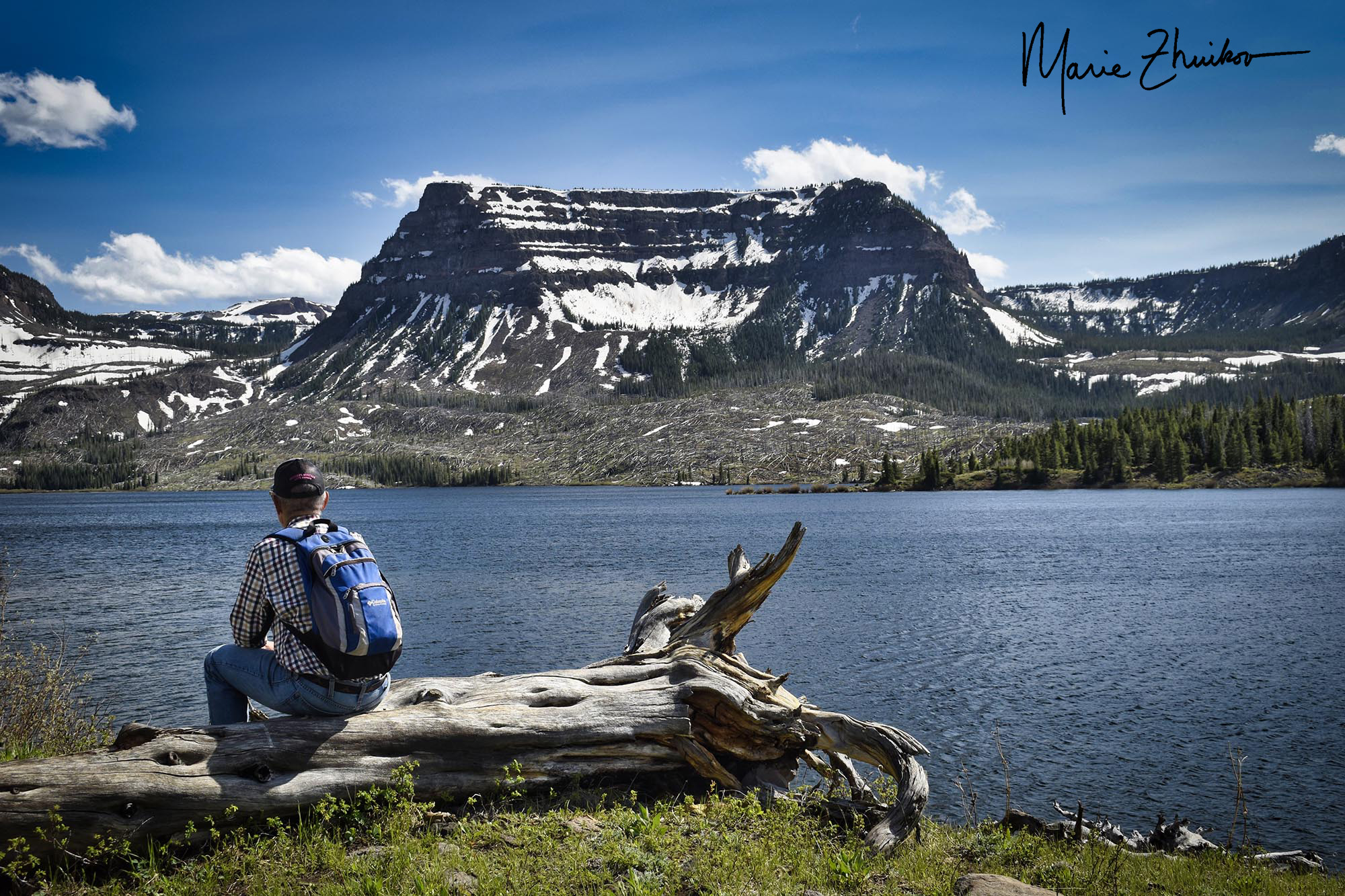
Trappers Lake, Flat Tops Wilderness. Image by Russ.
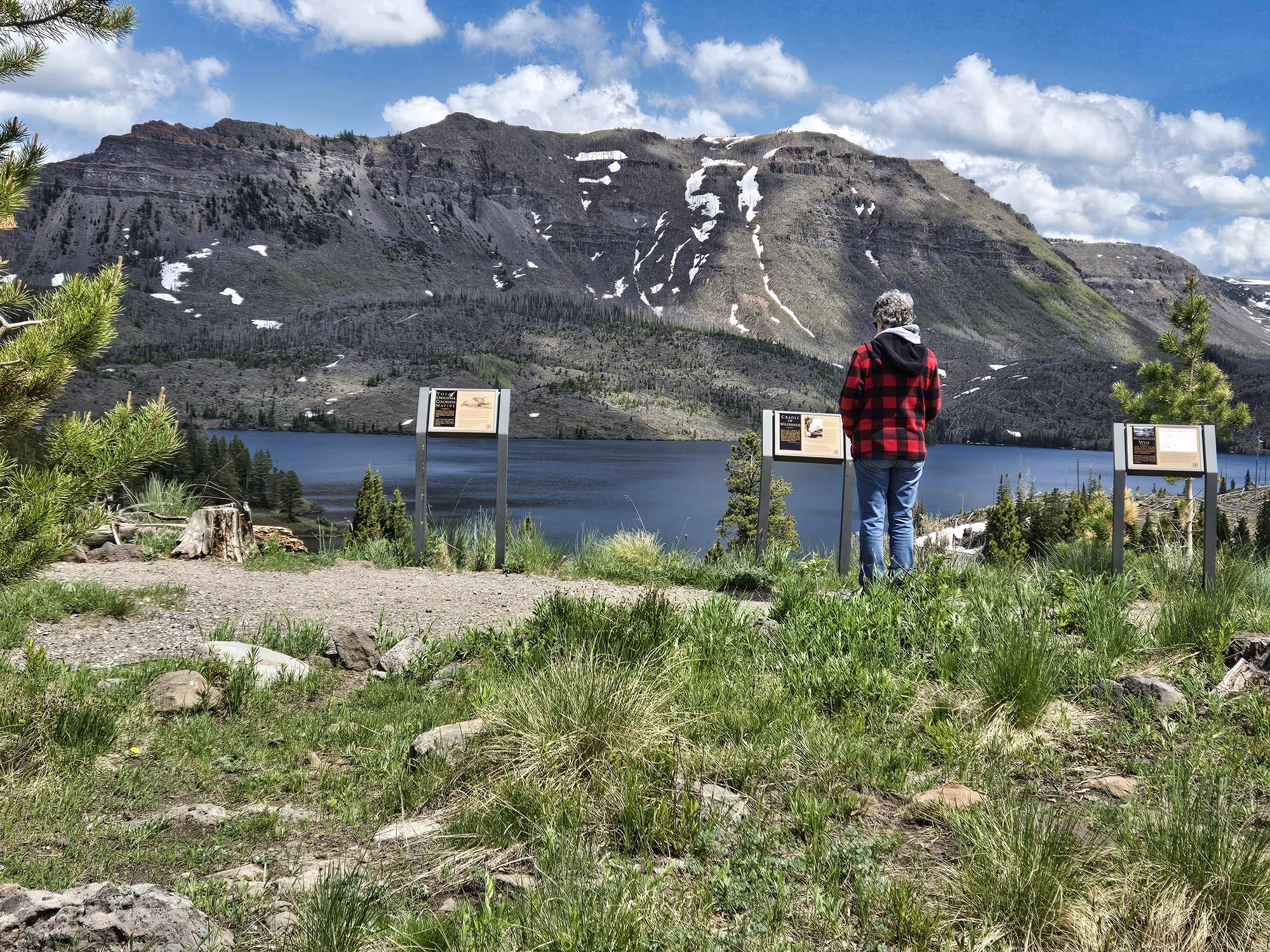
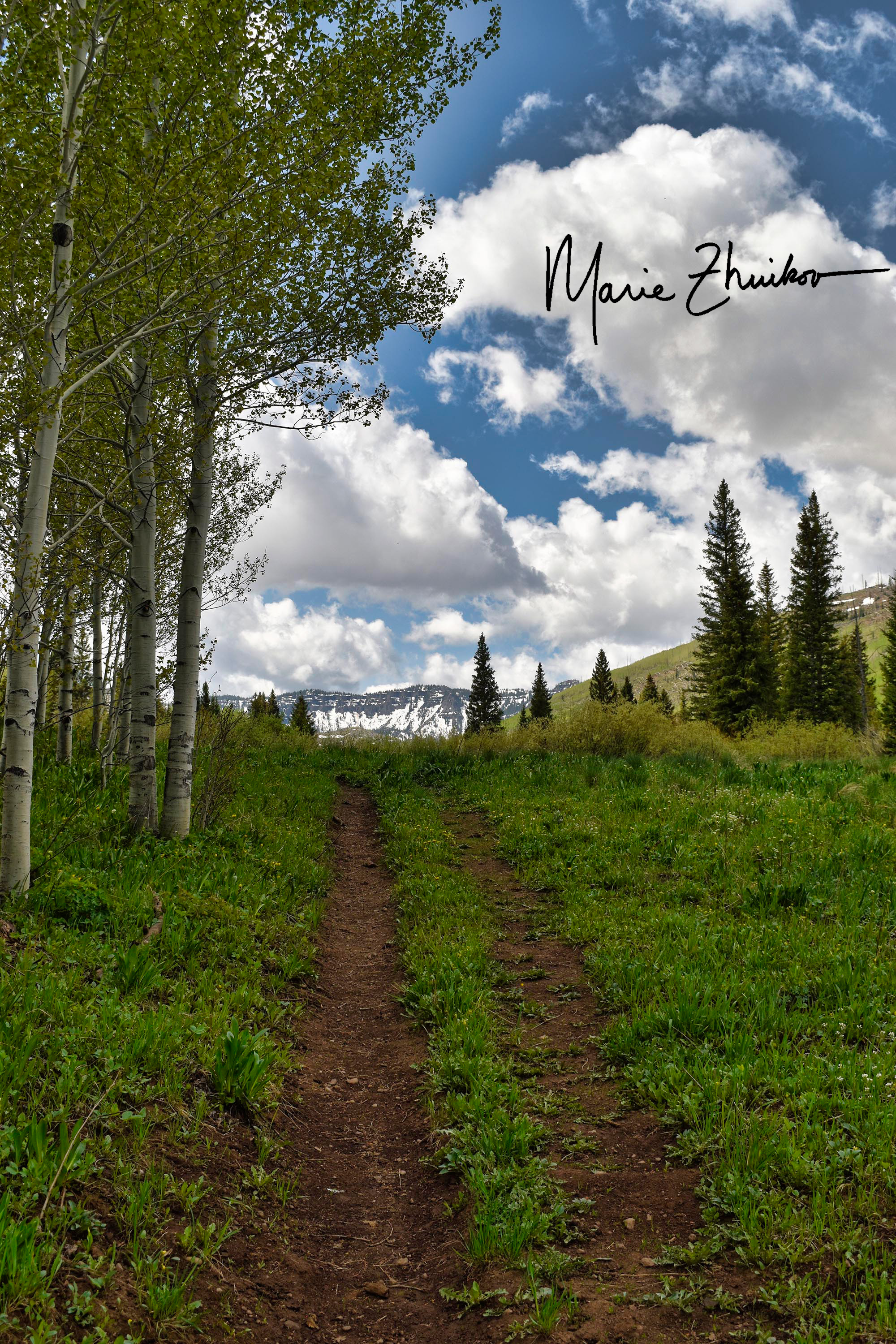
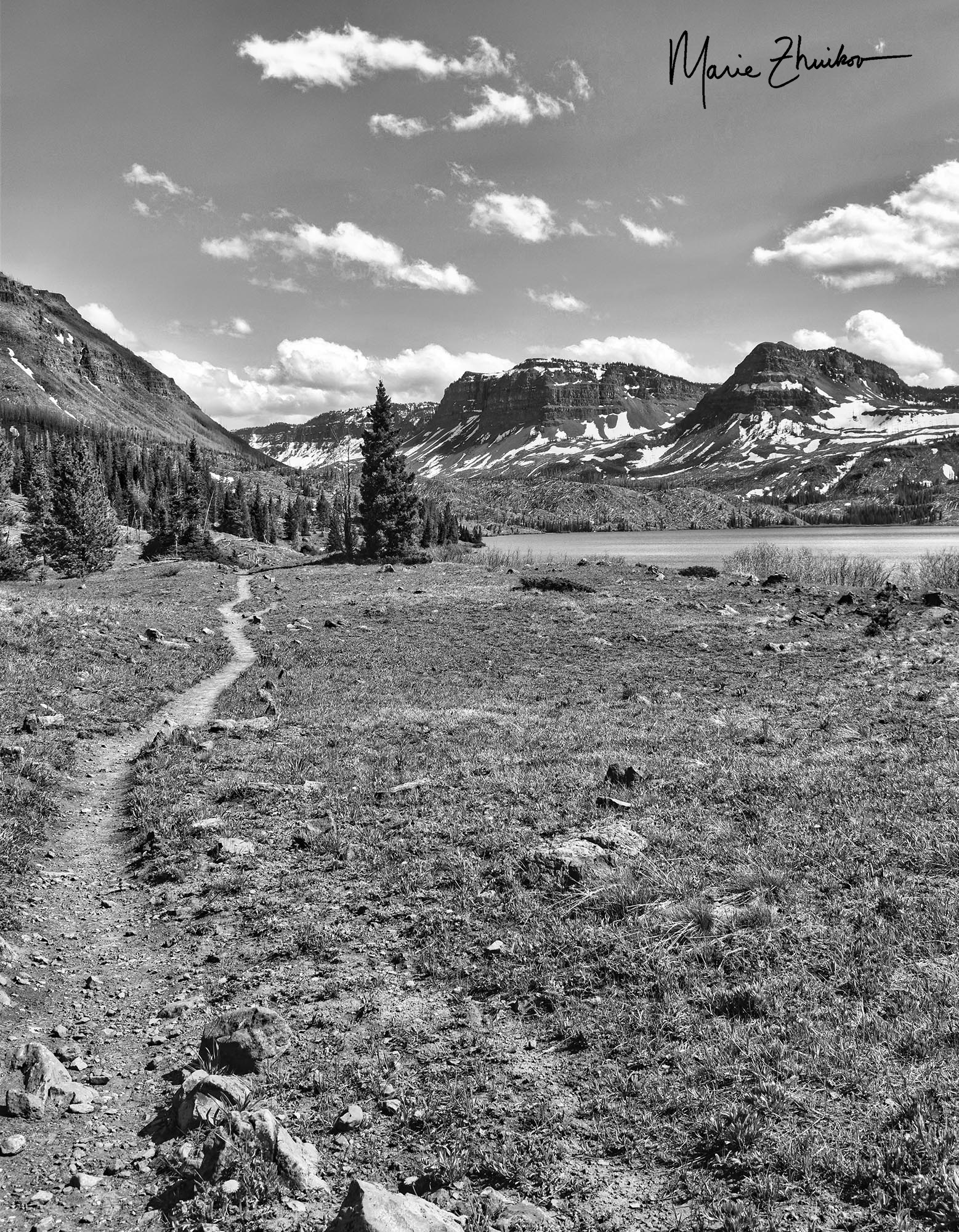
Russ and I recently meandered to a place where the views come easy: Denver, Boulder, and the Flat Top Wilderness of Colorado. Walk down any trail and you’ll see mountains, lakes, valleys, ridges. I adore the feeling of looking a long way without any houses dotting the landscape. Sleeping in our little Scamp trailer at 9,000 feet, the only ones in a campground with no water, we were as alone and as much a part of the wilderness as we have ever been.
Big Fish Trail, Flat Tops Wilderness
Although in our homes we have all the modern conveniences and comforts, it’s hard to be truly happy without a connection to nature. In those far horizons, wherever they might be, is a partial answer to the hunger and unrest within us.
To paraphrase Sigurd Olson from Listening Point, “Some find their wilderness in the grandeur of snow-capped peaks and high flowering meadows. To mountain people, this is the primeval on a noble scale, a timelessness and immensity they seem to find nowhere else. They come down from the hills refreshed and ready once more for life among their kind.”
We are back among our kind now, refreshed and ready for whatever life may bring.
…For the first time in my life I had failed to work for the joy of knowing the wilderness; had not given it a chance to become a part of me. –Sigurd Olson, “The Singing Wilderness”
Garretts Point Campsite
After our delightful stay on the Duckfoot Islands, we headed back toward the houseboat base. Our goal was Garretts Point, another sandy campsite in a protected cove. This was Garrett’s idea, for obvious reasons.
He successfully piloted us out into the lake. Then I decided to give houseboat driving another try. The first time I did it, my steering wasn’t so bad, despite the wind. There was less wind on this day, but my steering was much worse. I almost did a 180 with the boat! Luckily, we were in the middle of the lake, without any obstacles. That was one reason why I chose this stretch to try again.
The campsite rubber duckie
As I zigzagged down our route, I figured out my problem. I’m used to steering a sailboat with a rudder. For that, you turn the rudder in the opposite direction you want the boat to go. Not so with a houseboat. To turn right, you turn the wheel to the right. I kept wanting to do the opposite. Also, you’re steering from near the front of the boat and the motor is in the back. That’s weird, too.
Despite all this, we successfully reached the Brule Narrows again and Garrett took over. The rest of our trip to Garretts Point in a light rain was uneventful. The site is sandy, but the beach is not as big as the one at the Duckfoot Islands. The fire ring is circled by nine stately red pines. We were greeted by a sparkly rubber duckie that someone had left on a rock by the fire ring.
Garrett was excited to arrive, and we took an obligatory picture of him standing behind the official campsite sign. Russ explored in the kayak and found a huge beaver house nearby. The beaver visited us that night as we sat around the fire.
I spent most of my time reading, but I also had a chance to explore my feelings. It didn’t seem right to be able to access these rustic locations without working very hard. Sure, driving the boat was stressful, but I wouldn’t call it physical labor. I’m used to canoeing for days and sleeping on the ground. This just seemed way too easy, like we didn’t earn it. It felt surreal to sit in my fluffy bathrobe next to a rocky campsite with scraggly jack pines and the chatter of a red squirrel.

The bell on our boat
Northwoods writer Sigurd Olson had these same feelings when he flew into Quetico National Park in Canada in a seaplane. In his book, “The Singing Wilderness,” he described the switch from civilization so quickly to the wilderness as “violent” and a psychological shock. While flying into the wilderness was what he had dreamed of doing, it didn’t allow him time to adjust and to soak in the wilderness ambiance.
He wrote, “Yes, I had been on a flight, had gone far into the lake country, had taken a few trout and enjoyed myself, but inside I was still a little out of breath and somewhat baffled by what I had done.”
We had another restful night and got up early in the morning so that we could drive the houseboat back to base by 9 a.m. so that somebody else could use it. In no time at all, we were back to the base. The houseboat guys came out to us when we were in the bay to pilot the boat into the dock.
As it turns out, we arrived in the nick of time. As we were clearing our gear out of the boat, we heard on the radio that the wind had switched and picked up speed. The base issued a no-travel advisory. We were glad we didn’t get stuck out there because Garrett had a plane to catch back to New York City. Whew!
I was glad to have had the houseboat experience, but I know that the next time I visit these northern border lakes it will be with a paddle and a pack so that like Olson, I can, “feel the rocks under my feet, breathe the scent of balsam and spruce under the sun, feel the wetness of spray and muskeg, be part of the wilderness itself.”
Last winter, a rabbit lived in our backyard, sheltering under our neighbor’s shed. We’d awaken in the morning, shuffle downstairs and take a look out our window on the landing where we could see the back yard. More often than not, there she crouched, a brown cottontail, nibbling what grass wasn’t already covered by snow.
Since both of our dogs died, we’ve been petless. We saw this rabbit so much, it just seemed natural to start becoming a little attached. I began leaving her offerings of dried orchard grass, remnants of our deceased guinea pig. I also initiated a naming contest for the bunny on Facebook. My friend June won with the moniker of “Tater Tot.” It fit – the shape and coloring were approximately right.
Tator Tot survived the winter and this spring we noticed several Tiny Tots scampering around the backyard – her children, no doubt. They didn’t seem to be doing any damage to my hostas, just hiding under them instead of eating them, so we welcomed these new additions to the yard.
I suspect that Tator Tot eventually left our yard for the forest at the end of our road. We sometimes saw a rabbit fitting her description during our woods walks. Her Tiny Tots hung around for several weeks and then seemed to disappear. I hope they, too, found their way to the forest. But they could have easily been eaten by a neighborhood cat or a fox.
I rather miss these foster pets. They were easy to take care of. No fuss, no muss.
I recently read Linda LeGarde Grover’s book “Gichigami Hearts.” LeGarde is a former neighbor of mine; we grew up in on the same street on the other side of Duluth. Her book offers a Native American perspective of our old neighborhood. In one chapter, “Rabbits Watching Over Onigamiising,” she describes how seeing rabbits reminds her of the Native spiritual being, Nanaboozhoo. Now, if you’ve read my book, “Eye of the Wolf,” you know that Nanaboozhoo is a trickster – part rabbit, part human. He embodies the best and the worst of humans and the supernatural.
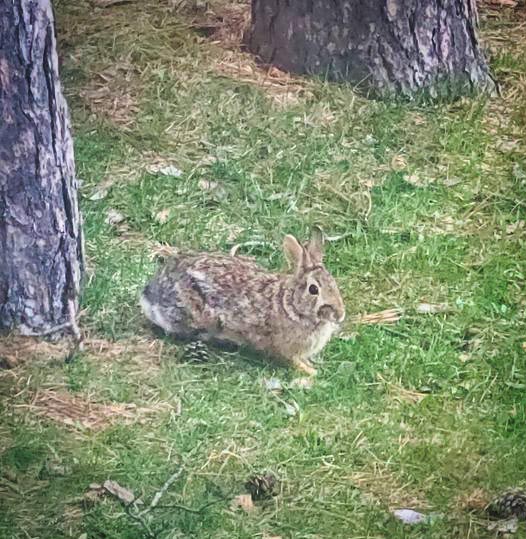
Tator Tot
LeGarde’s backyard bunnies savored her tulips, necessitating a change the next spring to planting marigolds, which she says the “rabbits nibbled on, but not much.” LeGarde writes that planting different flowers rather than trying to eradicate the bunnies was a good compromise. “We are all here to live our lives . . . We know from traditional teachings that all animals are important to the earth, that no animal is ranked higher or lower than any other in the eyes of the Creator, and that all have a contribution to make.”
She recounted a conversation she had with a friend about seeing rabbits on clear nights in the moonlight in winter, sitting with their legs folded under them like a cat – like they were waiting for something. LeGarde’s friend told her, “When we see them like that at night it is because the rabbits are watching over us, over a sleeping world and our dreams.”
Here in the north, we have two kinds of rabbits: cottontails like Tator Tot and snowshoe hares, which are larger and turn white in winter. Rabbits in the moonlight reminded me of one of my favorite chapters in northland author Sigurd Olson’s book, “The Singing Wilderness,” about the Boundary Waters Canoe Area Wilderness. It’s the chapter called “Moon Madness,” where he recounts seeing hares on his moonlight walks.
“If, when the moon is bright, you station yourself near a good rabbit swamp and stay quiet, you may see it, but you will need patience and endurance, for the night must be cold and still. Soon they begin to emerge, ghostly shadows with no spot of color except the black of their eyes. Down the converging trails they come, running and chasing one another up and down the runways, cavorting crazily in the light.”
Olson concluded that moonlight “made animals and men forget for a little while the seriousness of living; that there were moments when life could be good and play the natural outlet for energy.”
It’s comforting to think of rabbits or hares cavorting crazily in the darkness or quietly keeping watch. I never saw Tator Tot or the Tiny Tots at night because I was, well, sleeping. Perhaps I never saw them because the magic they worked was so effective.
When I emerged from my office building in Superior yesterday evening, I was thinking about all this. As I walked, who scampered across the parking lot pavement not ten feet from me? A big fluffy cottontail. She looked suspiciously like Tator Tot.



 Marie's Meanderings