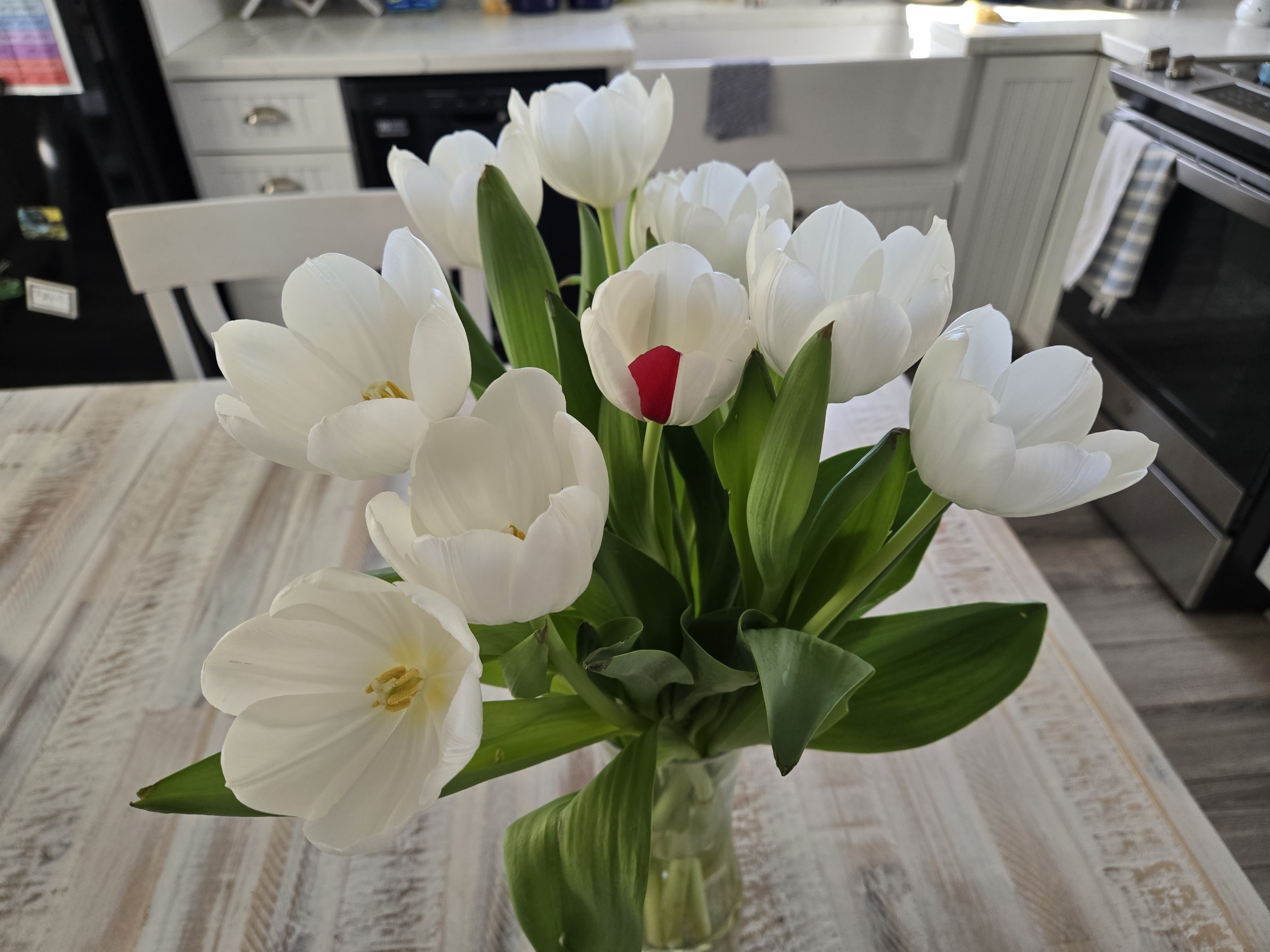
We bought nine white tulips last week to bring a bit of spring into the house. About a foot of snow still lies on the ground here in northern Minnesota, but the increasing sunshine has us impatient for winter to leave.
Once we brought them home and arranged them in a vase, I noticed that the tulip flowers were hiding inside their green leaf sheaths like the heads of shy turtles. But after a few days, they began to grow and emerge. One had a tinge of red to it, so I was curious to see what it would look like as the flower opened more. The fresh bouquet looked gorgeous as big white and fluffy snowflakes fell outside. Outdoors, spring had hidden its face once more.
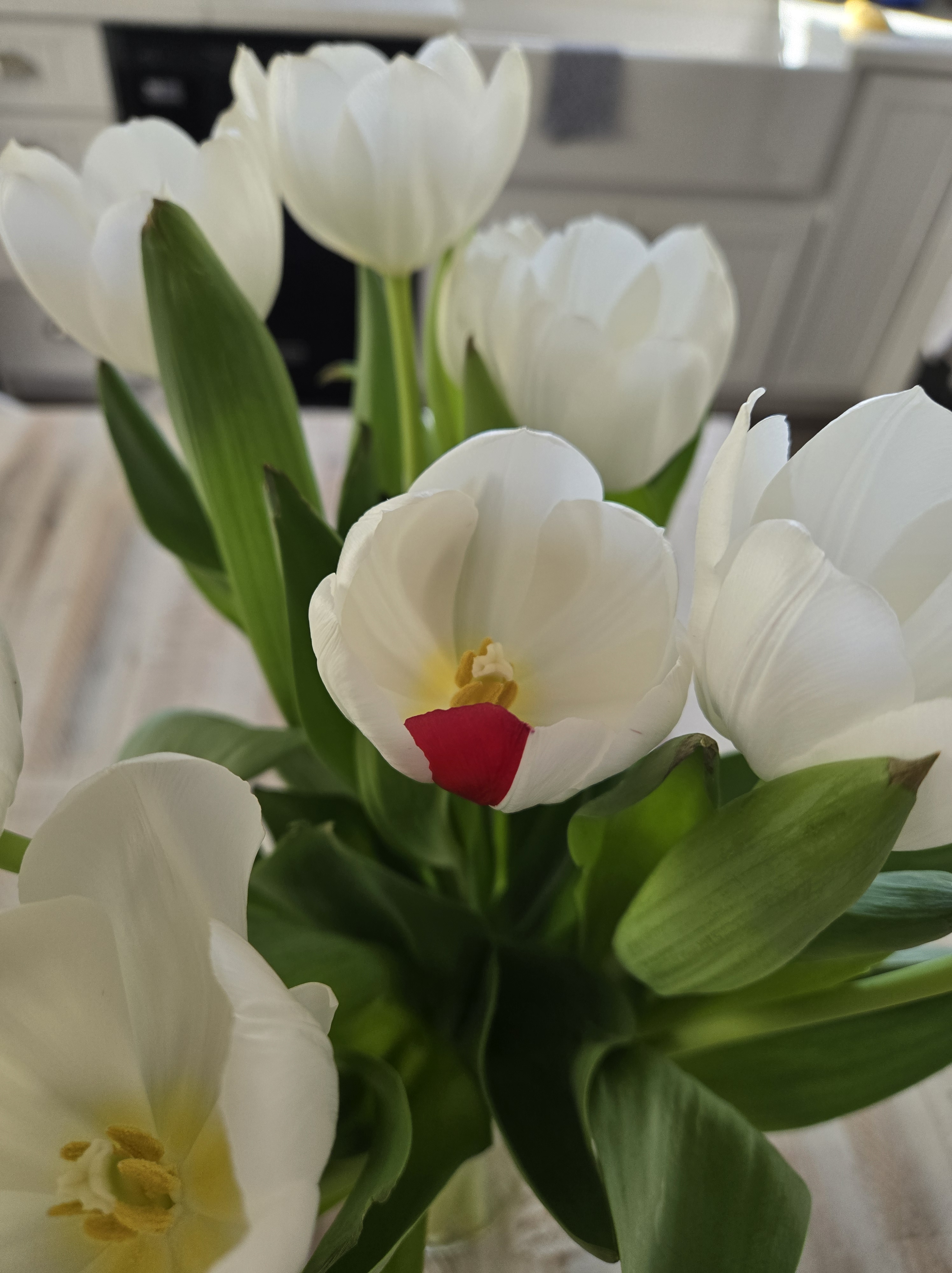
A few more days later, the flower fully opened, and I was surprised to see that half of one petal was a deep ruby red. I was expecting an inner ring of red or something—not this. I asked my friends if they’d ever seen anything like that. None had, but some said we must be lucky, that it was like finding a four-leaf clover.
I turned to the ever-useful internet and discovered that this phenomenon is called sectorial chimera. Sectorial means that only one section of the flower is affected. Chimera means changeable or mixed. In scientific terms, it means that the flower has a mix of genetic tissues. My tulip was a white tulip that also contained red tulip genes. For some reason, the redness was expressed in a single petal. In a way, my friend was correct. Like a four-leafed-clover, this tulip was a unique genetic mutation.
There’s some info also on the internet that symbolically, the white flower represents purity and peace, and the red petal, a streak of hidden passion. “Together, they convey a deep emotional connection and the beauty of love in all its forms.”
I just wanted a sense of spring but received so much more from a simple grocery store bouquet!
 Marie's Meanderings