
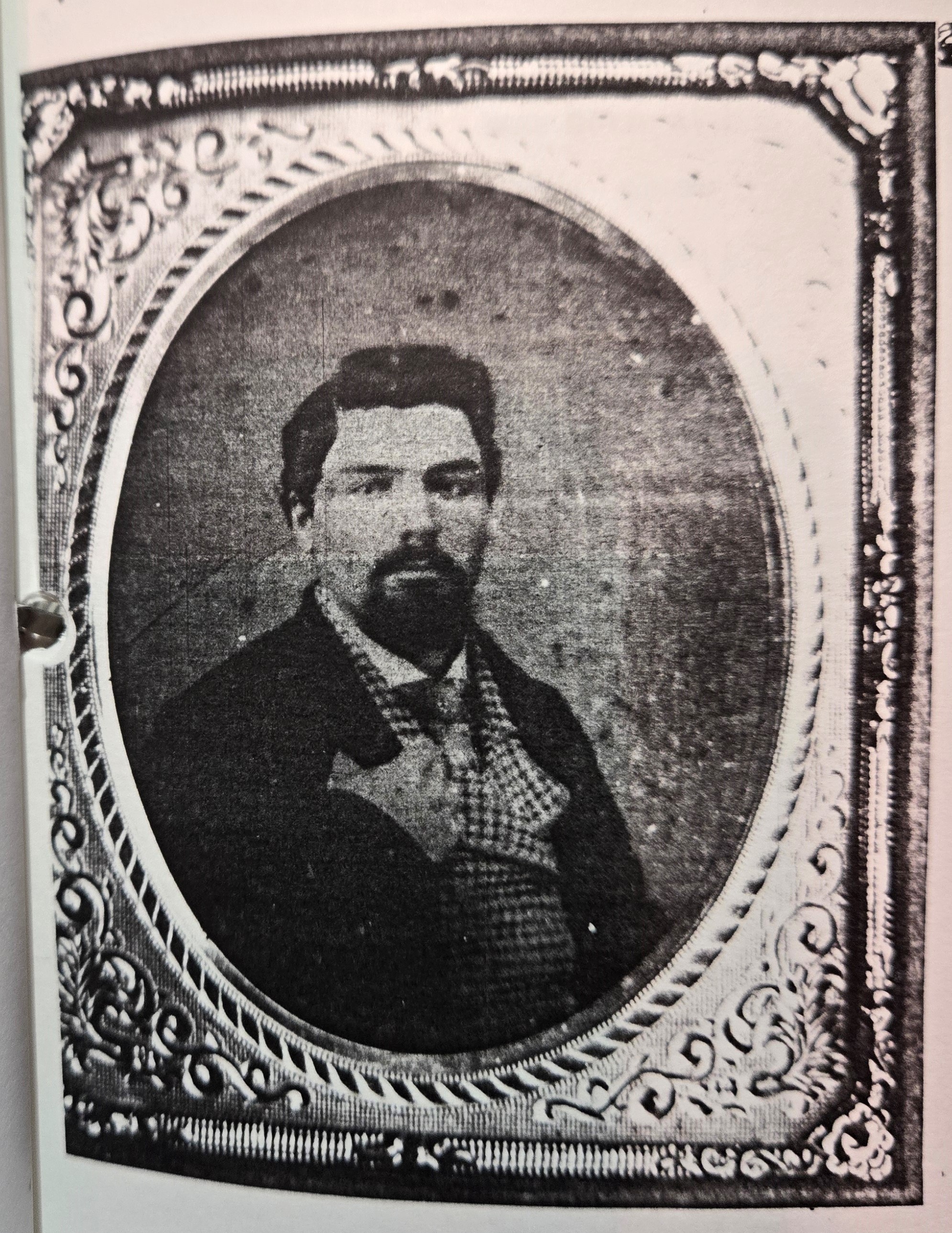
I became sidetracked from writing about our Epic New England Road Trip by my previous PSA post about author scams, but now I’m back on the road, so to speak. Our next stop was Lexington, Massachusetts. A few years ago, I discovered that one of my relatives was Captain John Parker, who was the head of the Lexington militia during the battle when the Revolutionary War began on April 19, 1775.
We booked a private walking tour of the Lexington Green from the Lexington Visitors Center, which is located near the green. As our costumed guide led us on our tour in light rain, he made sure we understood that the Americans who fought in the battle weren’t actual minutemen, as is often said. Minutemen were highly trained; the people who fought on the historic green were militia – more like regular folks with weapons. The term minutemen had more cachet, so I guess those references are a historic case of propaganda.
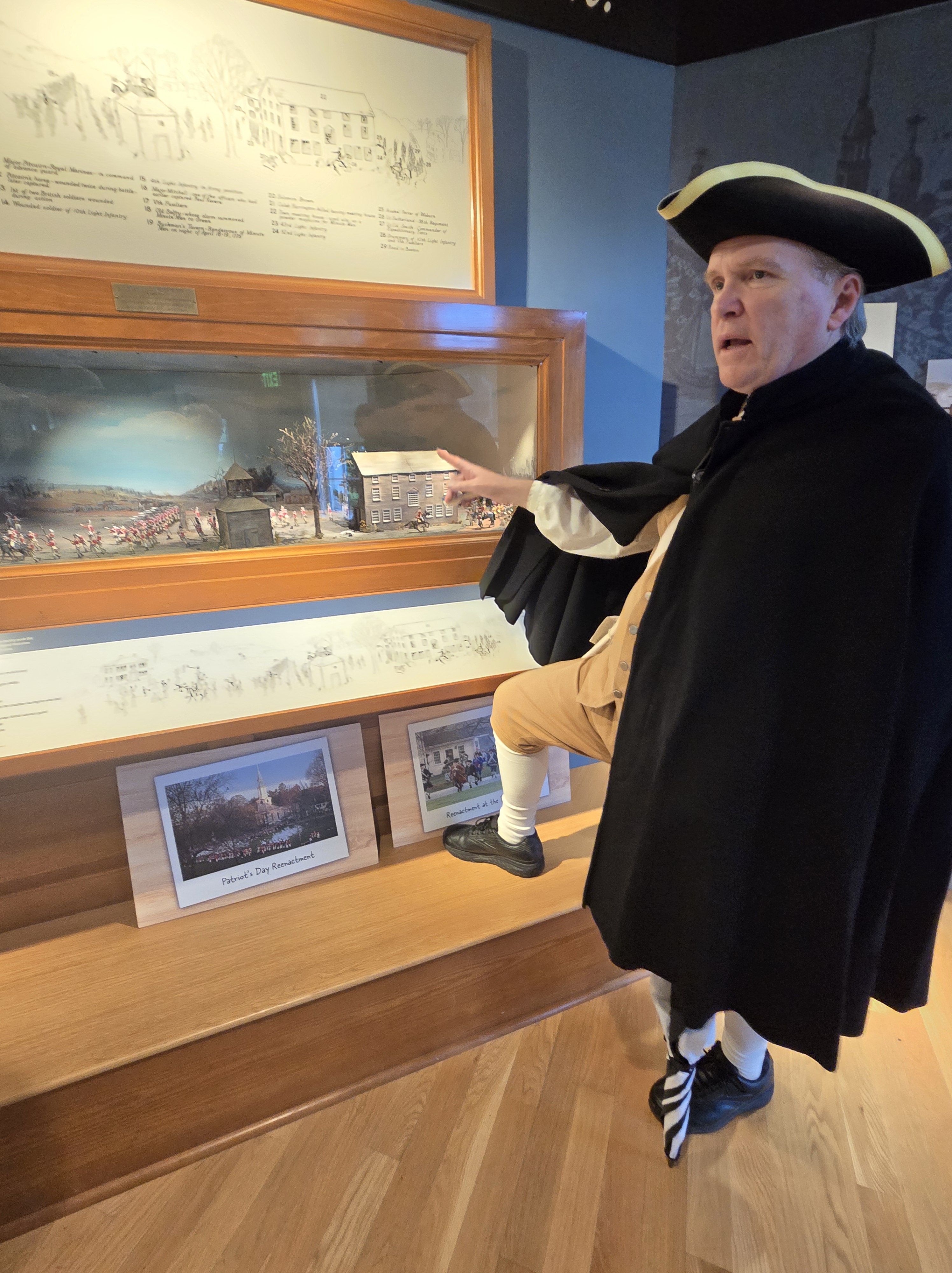
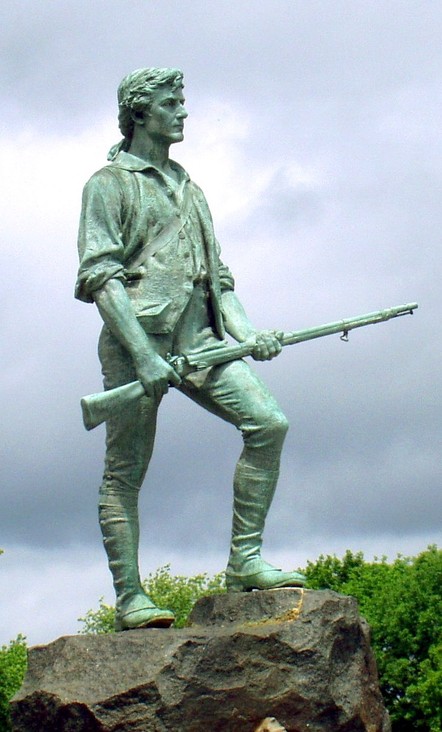
He led us to the Minuteman statue, which is modeled after John Parker. Our guide said that Parker was a wheelwright and farmer who was in his 40s and suffered from tuberculosis. He lived only a few more months after the battle. In contrast, the statue depicts a young, healthy man in his 20s or 30s. Yet another form of propaganda, but maybe Parker wouldn’t have minded this more robust version of himself??
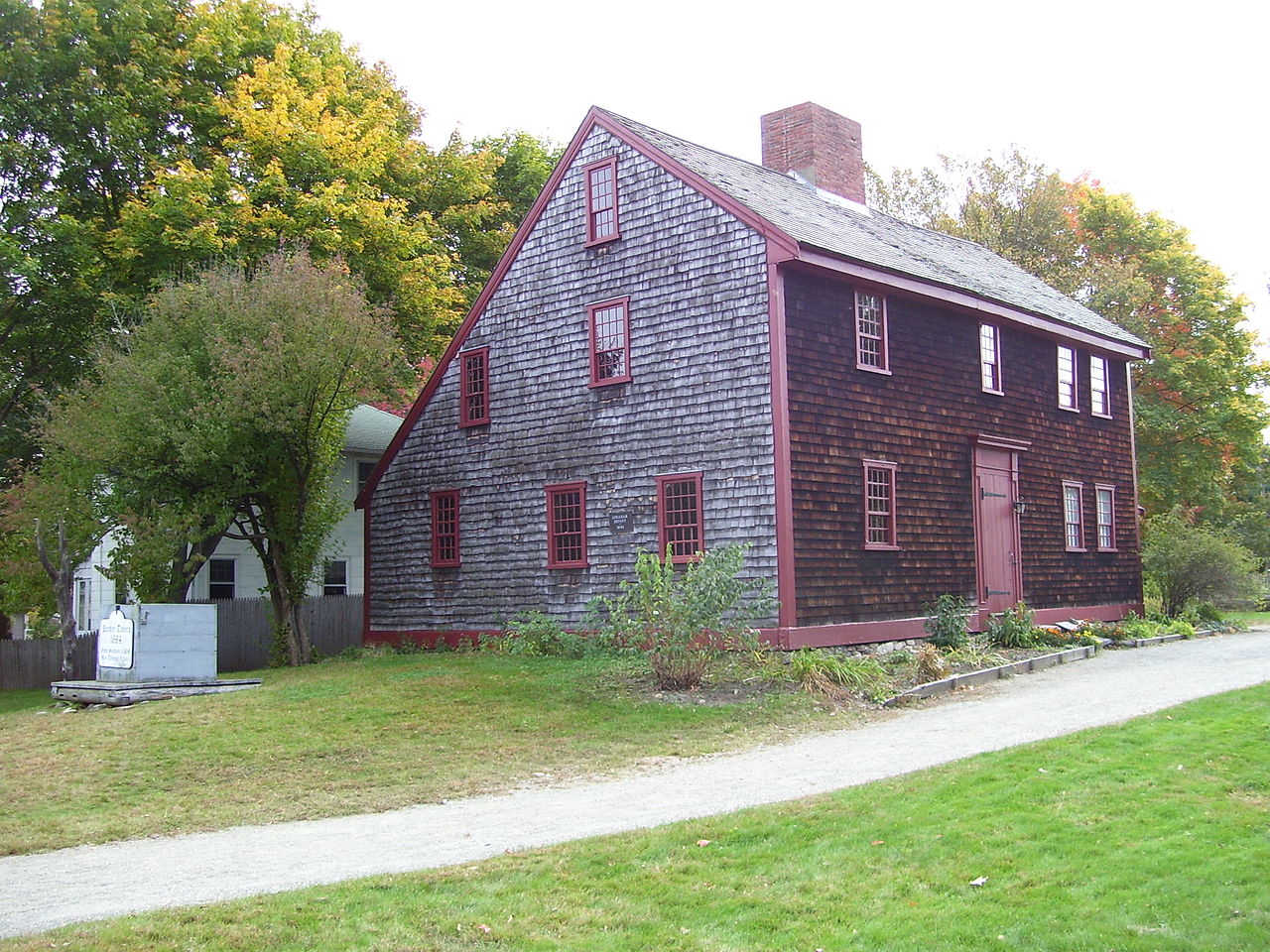
John Parker’s cousin Jonas was killed in the battle, along with 7 others who are buried on the green. A quarter of the Lexington militiamen were related to Parker by blood or where his in-laws. At least one of the houses near the green still has a bullet hole in the door from the battle. Our guide said the door is preserved for the history it shows.

John’s famous quote, “Stand your ground. Don’t fire unless fired upon. But if they mean to have a war, let it begin here,” is inscribed on a boulder near where the militia stood during the battle on the green.
Information about the battle itself is plentiful on the web, so I won’t go into it here. A good source is the National Archives, which offers a short slideshow with an overview of the Battle of Lexington and Concord. The main thing is that those involved didn’t realize the significance of their actions. It was the beginning of the American Revolution, which later inspired the revolutions in France and Russia. The gunfire on the Lexington Battle Green was truly the “shots heard ’round’ the world!”
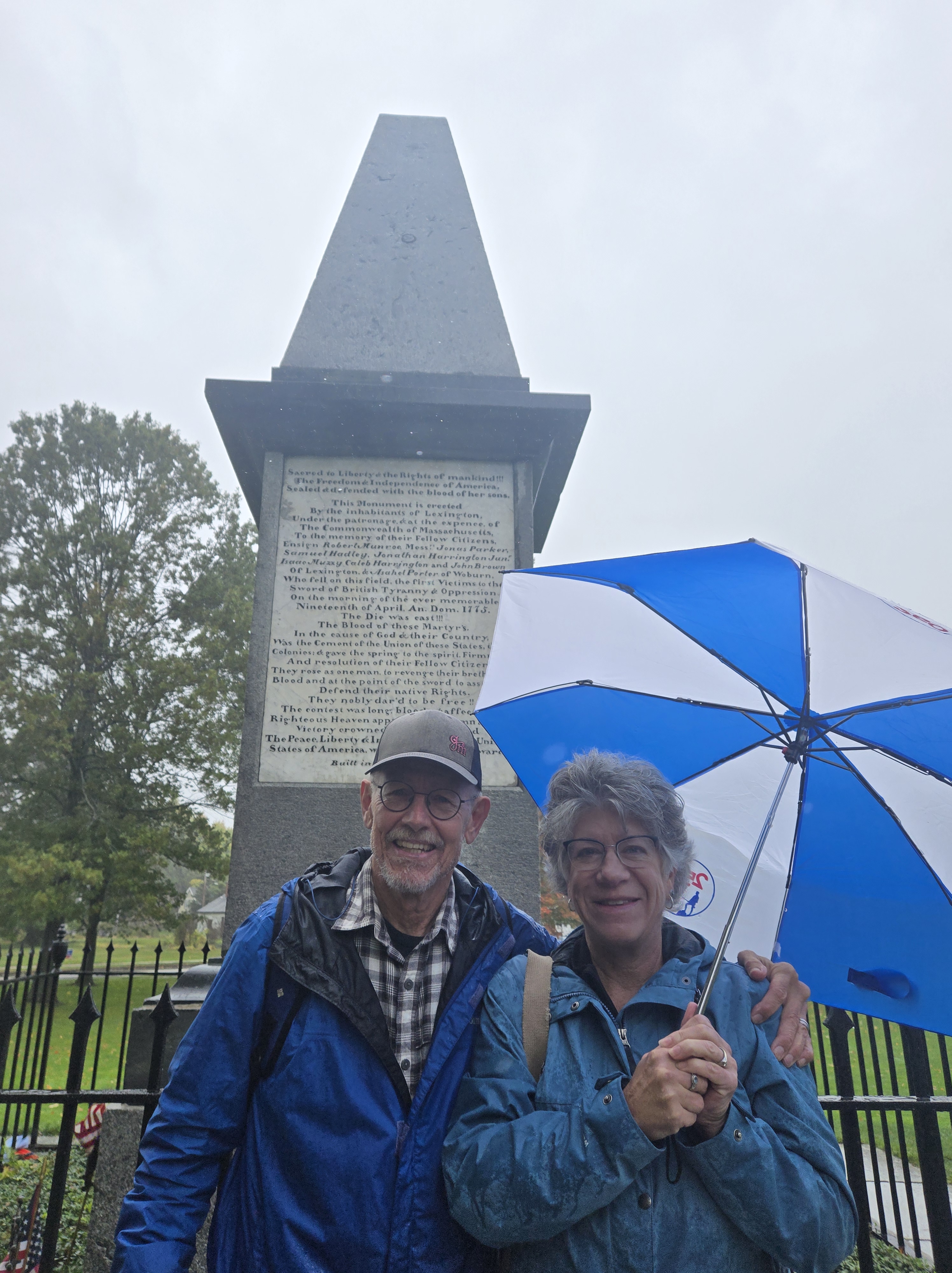
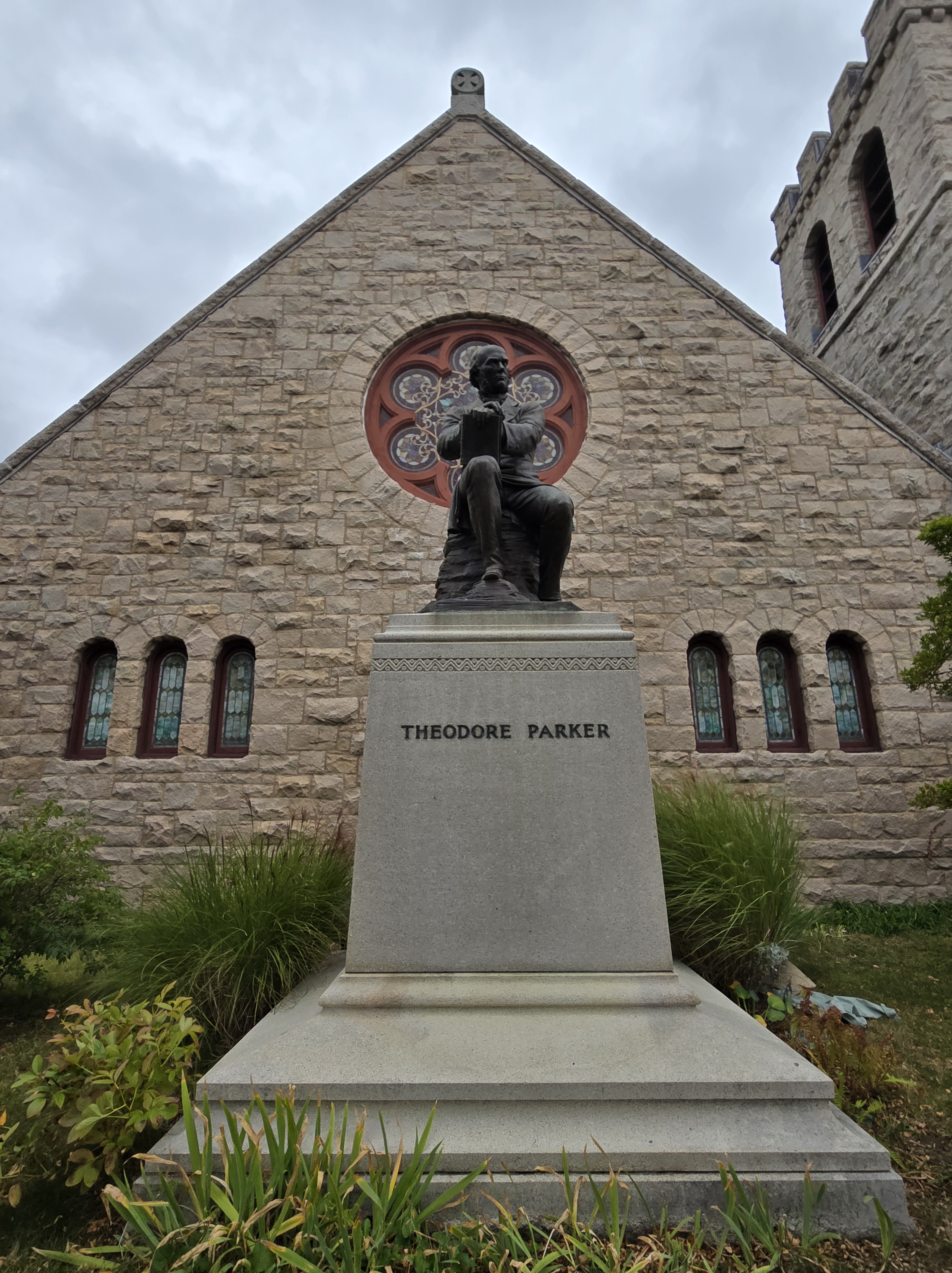
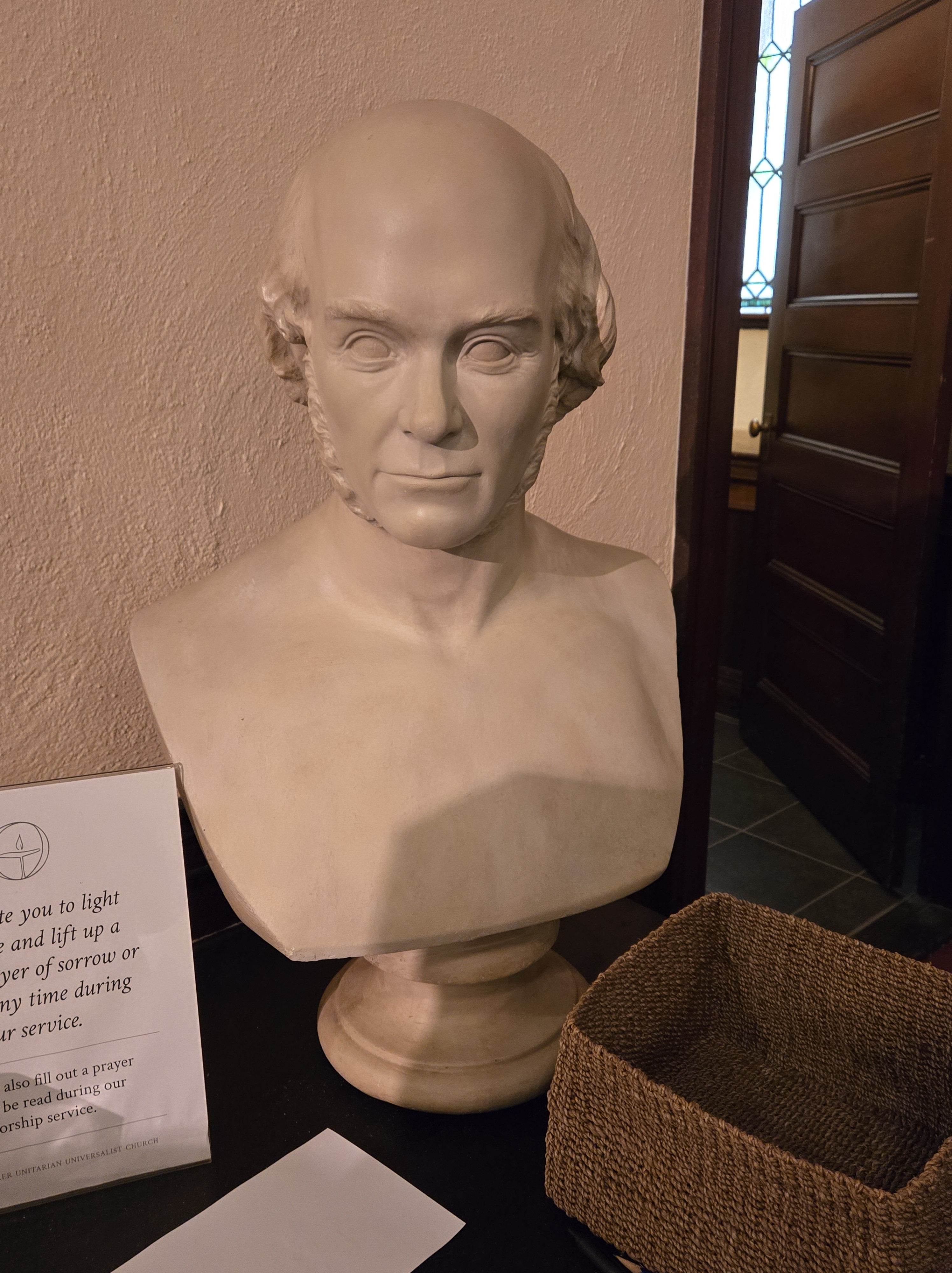
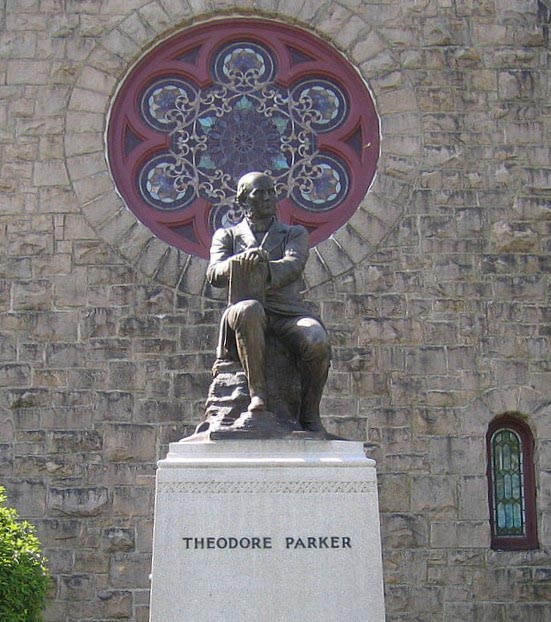
John Parker was Theodore Parker’s grandfather (the minister whom I described in my previous trip post). My family and I share a common ancestor with them: Congregational Church Deacon Thomas Parker, who immigrated from England in 1635.
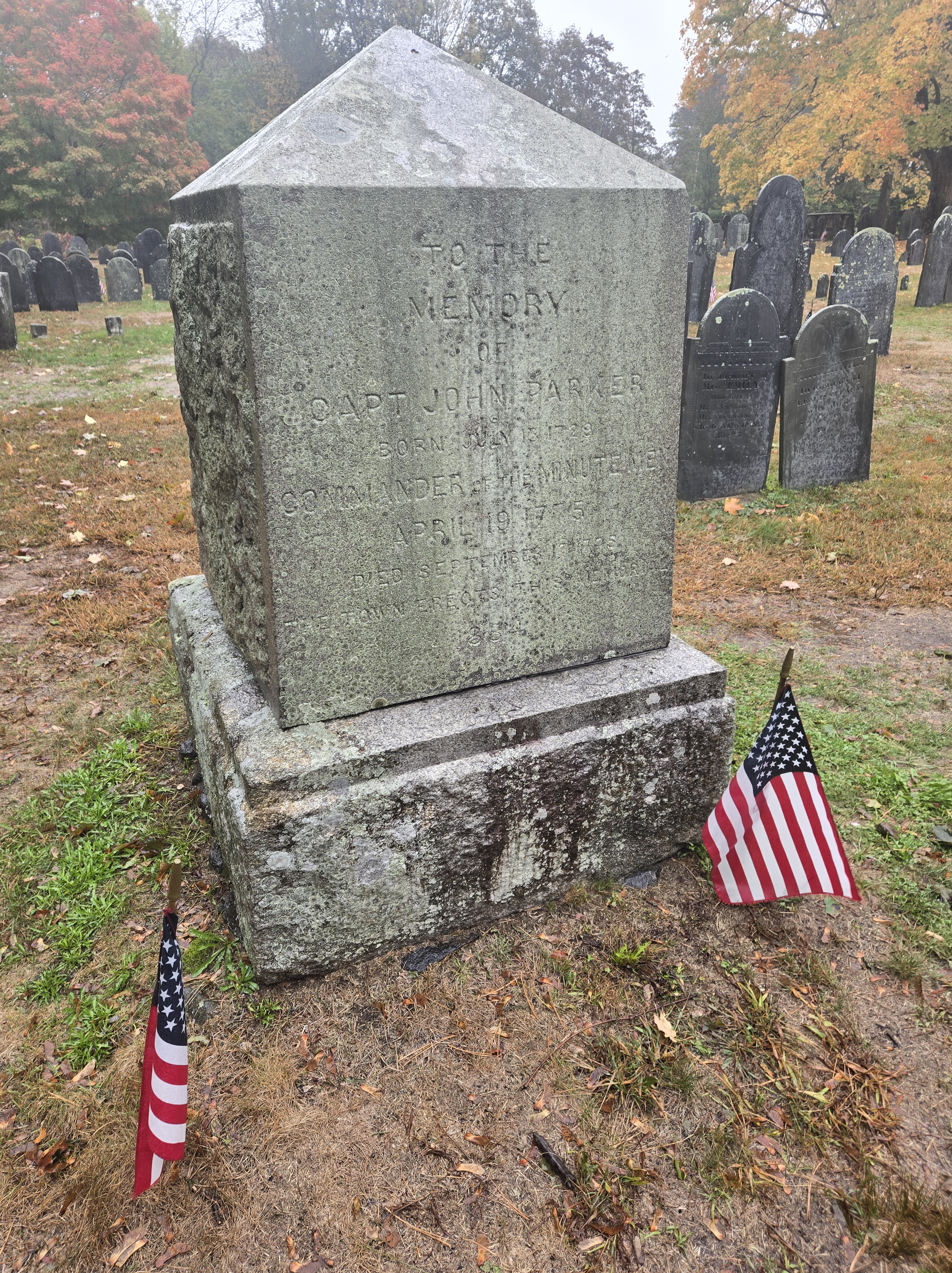
Despite using umbrellas and wearing raincoats, Russ and I were rather cold and miserable. I think our guide took pity and gave us a quicker tour than usual. After visiting the green, we made our way to a nearby cemetery (behind a Unitarian Church) where there’s a headstone for John Parker. There is some question about whether his body lies there or on his farmland two miles away.
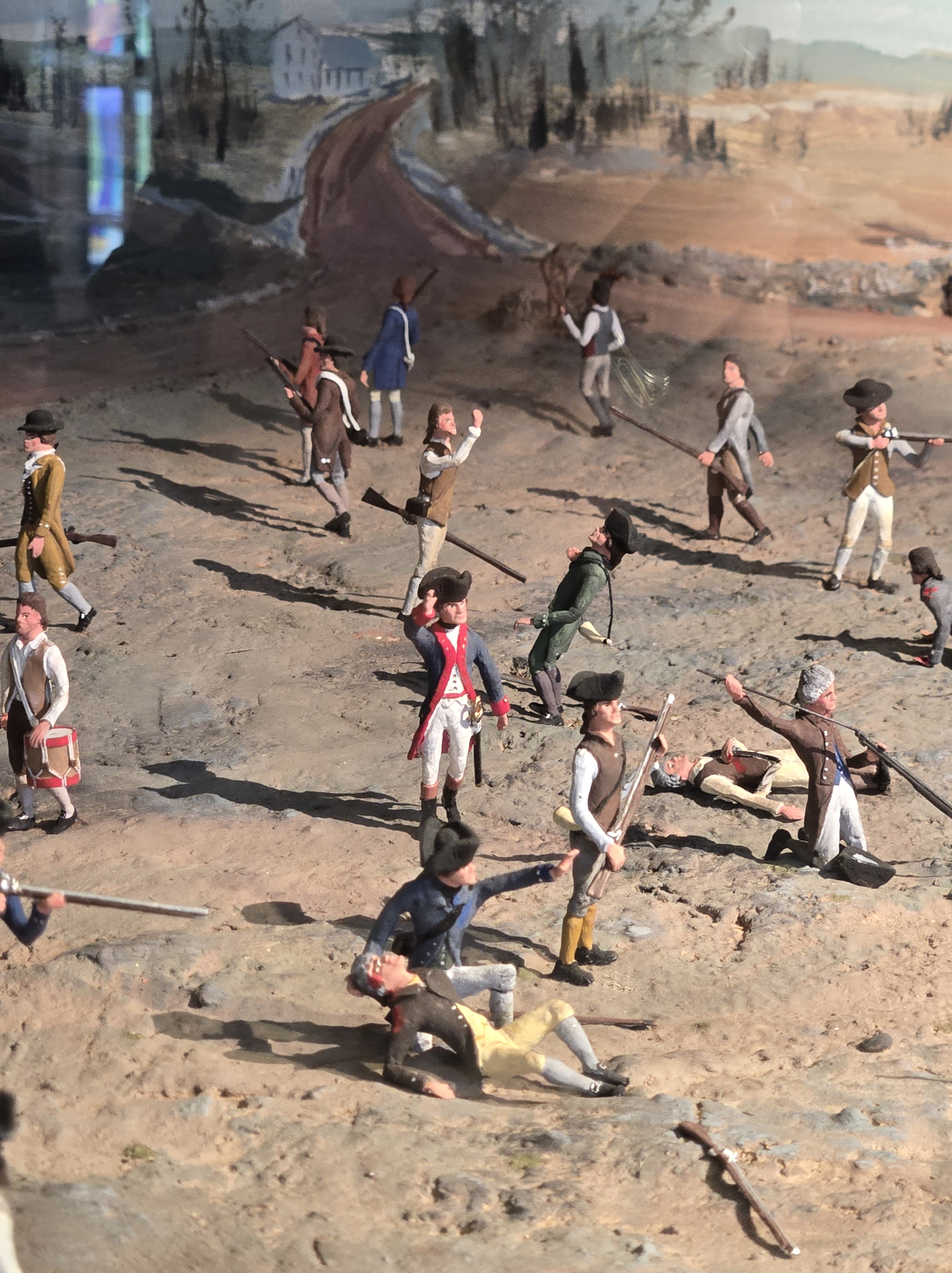
After that, we made our way back to the visitor center, which offers a museum about the battle. It features a diorama of the battle scene, complete with a figurine of Capn Parker, which was cool to see. The center also has books and other interpretive materials and souvenirs for sale. (Parker is also mentioned in the Ken Burns documentary, “The American Revolution,” which we recently watched and recommend.)
The nearby town of Concord also offers interpretive facilities, but we focused on Lexington due to my family connection. When we were done, we made our soggy way to eat lunch at the Town Meeting Bistro, which is inside the Inn at Hastings Park. The décor looks like you’ve stepped into a town meeting hall: plain wooden tables, wooden wingback chairs, and a large fireplace.
I am a clam chowder aficionado. Throughout our trip, I sampled chowders everywhere we went. I am happy to say that the bistro’s chowder wins my best chowder award! (It even beat Maine clam chowder.) Theirs featured applewood bacon, quahog clams, and new potatoes. It was creamy and divine. My only complaint was that I couldn’t get a larger bowl of it!
Our lunch hit the spot and took the chill out of our bones. We had planned to visit Walden Pond and the town of Salem later in the day, but the weather discouraged us. We returned to our hotel to change into dry clothes and curl up with a good book.
Next up: Waterbury, Vermont


 Marie's Meanderings