Wandering Wisconsin Point

The Superior ship canal and Wisconsin Point lighthouse.

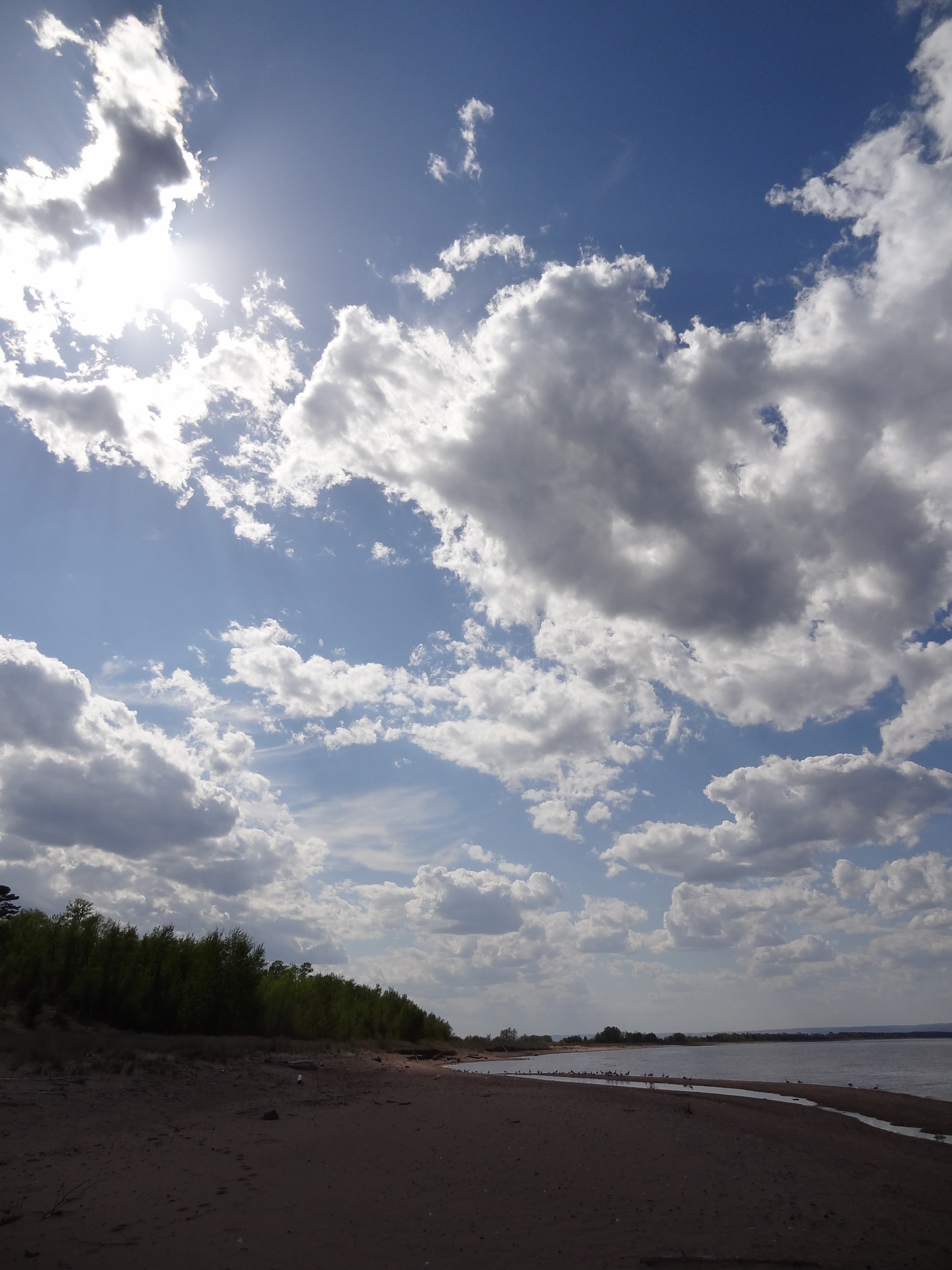
Russ and I visited a windswept peninsula near Superior, Wisconsin, last weekend. We wanted to check on how the prescribed burn area was rejuvenating after the burn I helped with last fall. As we approached Wisconsin Point, the steady roar of Lake Superior on one side and the more muted lap of Allouez Bay on the other created a backdrop of sound. Once, the Ojibwe lived there, but now the point is mainly a recreational area. It’s known for its towering pine forest and the distant flash of its lighthouse.

The prescribed burn area on Wisconsin Point.

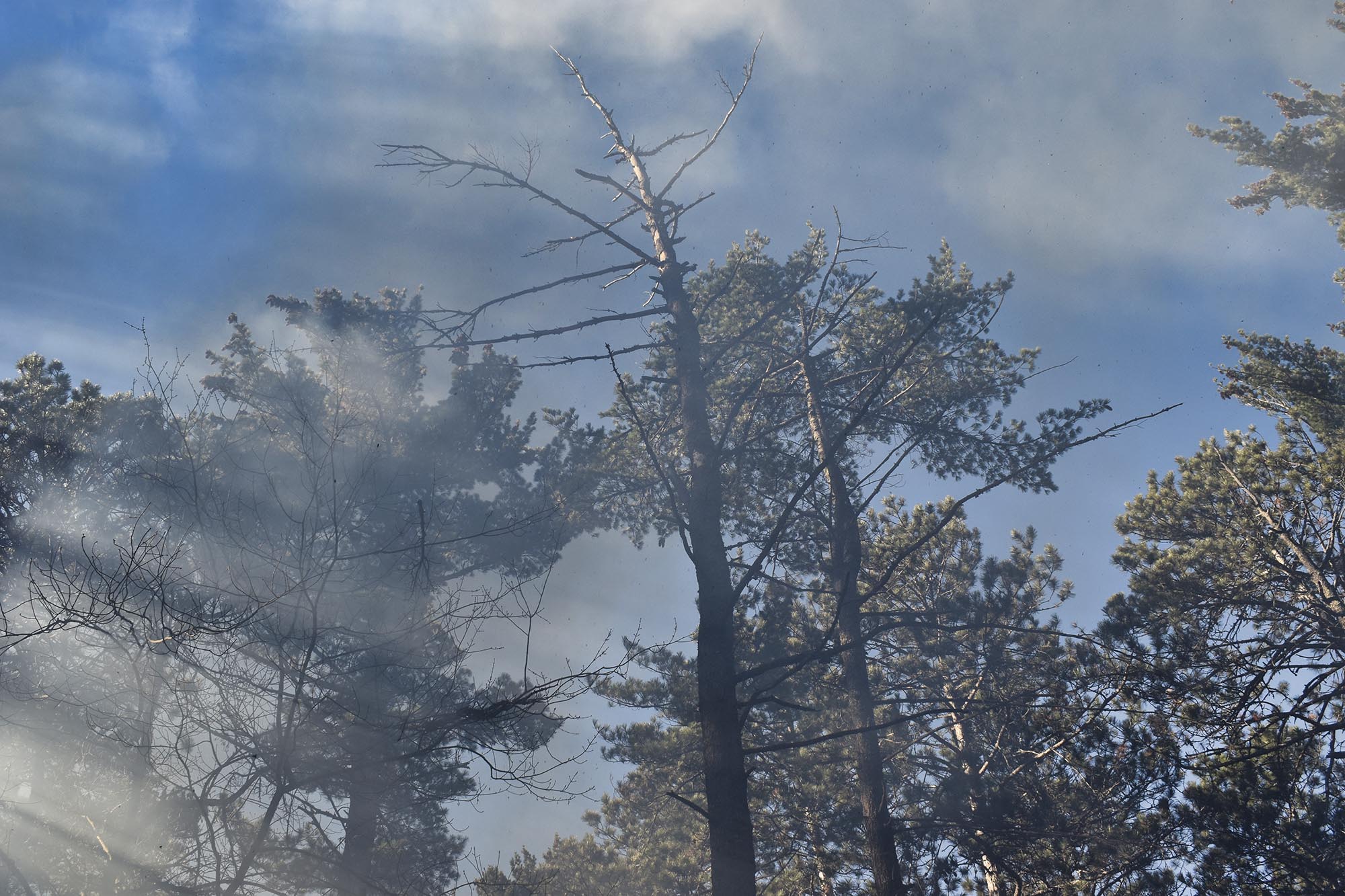
In the burn area, the air still held a faint, smoky tang, but plants seemed to be coming back well, even with our chilly spring. Bright green grass sprouted bravely through ashen soil, and I ran my fingers over the bark at the base of some trees, rough and blackened but still sturdy. The large trees seemed little worse for wear—did you know that the rugged bark of red pines is fire-resistant? The trees need fire to regenerate, so they have adapted to it. That’s one reason for the prescribed burn: to encourage red pine regeneration. The point’s white pines, their needles soft and fragrant, are doing fine, but the red pines remain sparse. On our walk, we spotted an eagle’s nest, a massive tangle of sticks perched high above, and heard the sharp calls of the birds echoing through the canopy.

Bear Creek Trail, Wisconsin Point

Wisconsin Point also sports a relatively new nonmotorized trail that I haven’t had a chance to hike yet. The Bear Creek Trail begins near Hwy 53 and parallels Moccasin Mike Road to Wisconsin Point. Once on the point, it crosses Wisconsin Point Road, enters a wooded upland, and then a marsh for a total of 2.3 miles. It ends at the first parking lot on the point and sports a gravel surface, wooden bridges, and an impressive floating boardwalk over the marsh. Along the way, a pagoda provides a scenic view of the lake and the bay. Although the weather was a blustery 45 degrees, the forest provided shelter and warmth.

The pagoda on Bear Creek Trail

As we crossed the marsh, we noticed a beaver lodge and heard a Sora waterbird call. Soras are also known as Carolina Crakes. They’re brown and white, about the size of a chicken, but with longer legs perfect for wading in the shallows. Although the birds are common throughout the U.S., they are relatively rare in Wisconsin because they require large and healthy wetlands for habitat, and we all know what humans like to do to wetlands. (Drain them!)

A wetland along the Beaver Creek Trail, complete with beaver lodge.

Our visit to Wisconsin Point was both invigorating and enlightening. Seeing the resilience of the landscape, from the recovering burn area to the thriving wildlife, was a reminder of nature’s ability to adapt and flourish. The combination of ecological restoration, immersive natural experiences, and unique wildlife sightings makes Wisconsin Point a destination delights the senses and invites return in every season.

Returning Good Fire to the Land

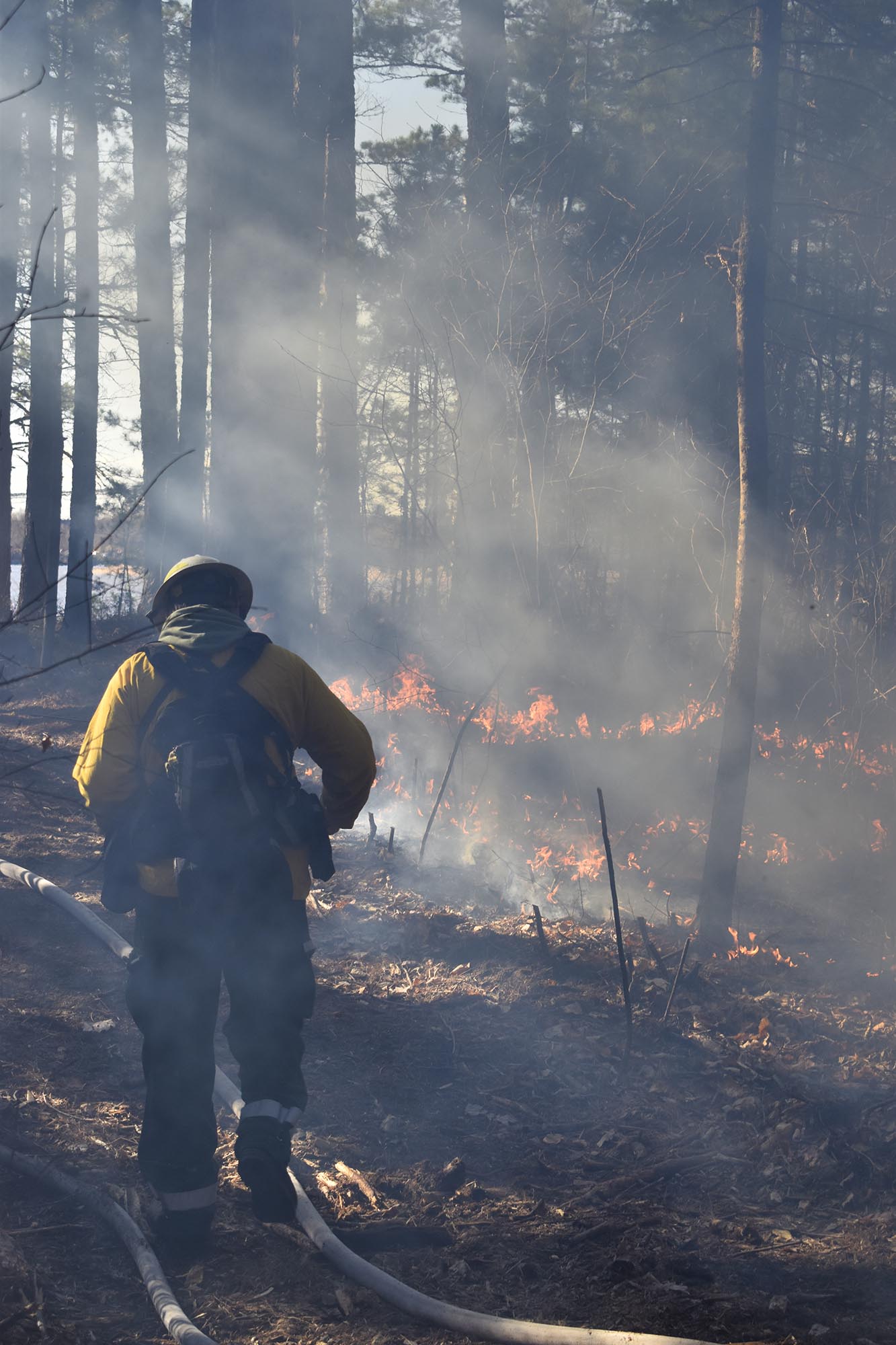
A fire crew member monitors the Nov 2025 cultural prescribed burn on Wisconsin Point.

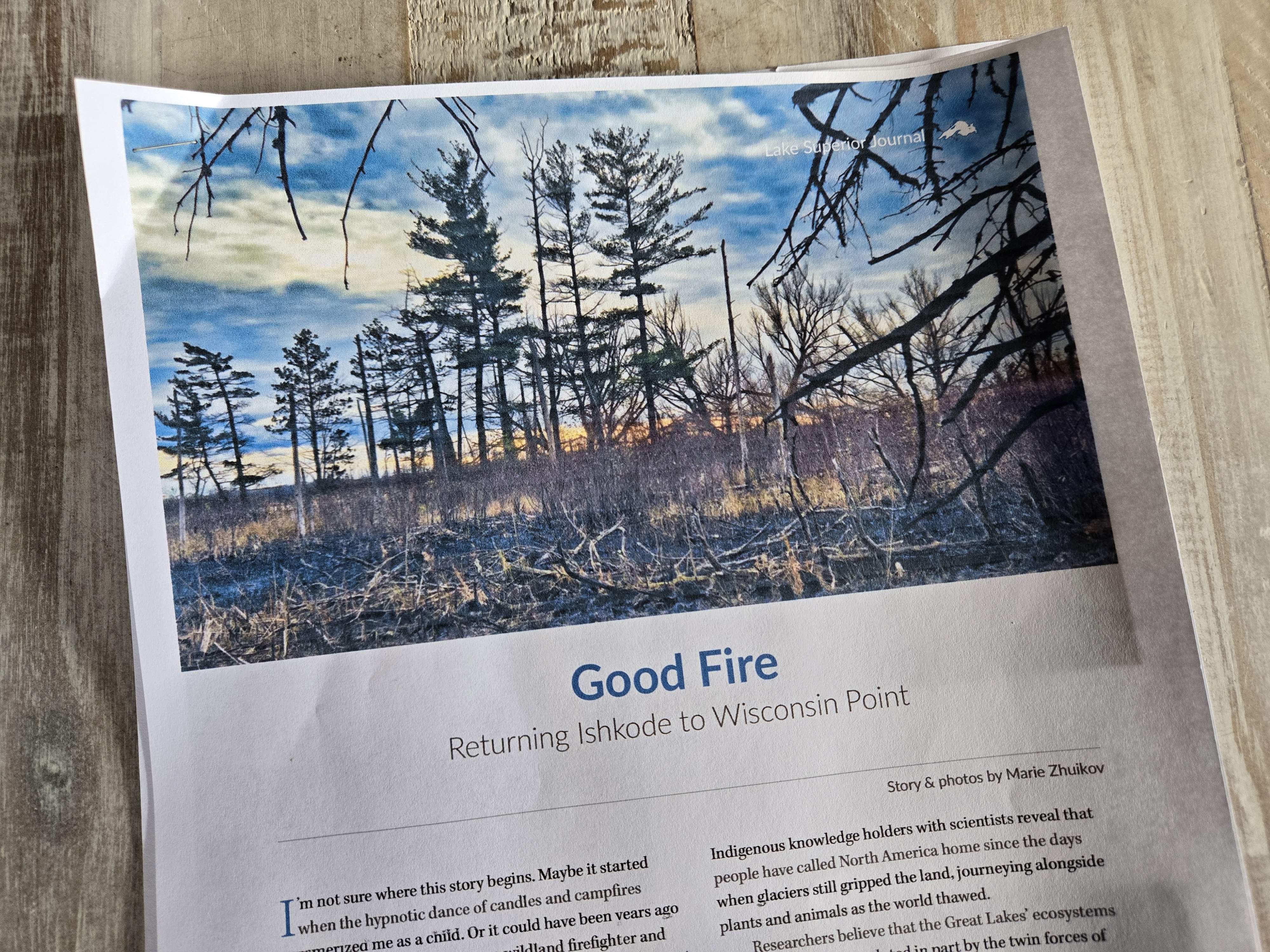
A story of mine appeared in the April/May 2026 issue of Lake Superior Magazine. It covers a project I’m involved with that’s designed to bring back the Ojibwe tradition of prescribed burning on Wisconsin Point, a long sandspit on Lake Superior. The Ojibwe once lived in the red and white pine woods there until they were moved to reservations in the mid-1800s. Before then, they would set small, controlled fires to keep brush down, encourage plants like blueberries, and help red pines sprout. They call these fires “Ishkode,” or good fire.

I first heard about this practice a few years ago while I was still working as a science communicator for Wisconsin Sea Grant. The organization funded research that studied tree rings and fire scars on Wisconsin Point and its neighboring sandspit, Minnesota Point. I reported on the project by writing articles, news releases, and producing a podcast.

Last year, a few months before I retired, I heard that the Ishkode group was looking for help with communications. I immediately volunteered, and you can read about the results in my article. I’m happy to say that last fall, Ishkode successfully returned to the point for the first time in 159 years. And nobody got hurt! More patchwork burns are planned in the future.

As a result, I was approached by a different group that’s working to bring Ojibwe fire practices back to Minnesota Point. Although the two points are separated by a short span of water, they are different politically and socially. Not only are they in different states, but Wisconsin Point is uninhabited, whereas more than 100 homes line Minnesota Point, many of which are beachfront mansions. Wisconsin Point is owned by the City of Superior and the Fond du Lac Tribe. Minnesota Point is a mix of private, city, and state Department of Natural Resources property. There’s even an airport near the end of it.

Both fire projects are led by Fond du Lac tribal members. Except for those folks and me, most of the rest of the people involved in each project are different. Because of its complexity, the Minnesota Point group is much larger (about 40 people). I began helping them this winter and finally have everyone’s names and affiliations down.

Our goal is to conduct a prescribed burn on Minnesota Point this spring. It will be the first time in 180 years that a burn has occurred there. Things are falling into place nicely, and so far, public reception has been good.

I’m happy to have a hand in returning a missing piece of the ecosystem to the shores of Lake Superior. As one of our group members said, the burns will help the choked forests breathe again. These points aren’t the only places where the Ojibwe used to burn. Evidence can be found all around the lake.

For more information, check out my article in the print version of the magazine, or check the Wisconsin Point Ishkode webpage.

Smoke from the prescribed fire drifts through the pines on Wisconsin Point. The fire will help the beleaguered red pine population regenerate.

The World’s Largest Freshwater Sandbar

Barkers & WI Point 047

Even though Wisconsin Point on Lake Superior is not truly part of “the world’s largest freshwater sandbar,” it’s still pretty.

It’s a common local point of pride in Duluth to say that Minnesota Point (a.k.a. Park Point) and Wisconsin Point form the “World’s Largest Freshwater Sandbar.” I am sorry to burst the community bubble but . . . NOT.

Way back so many years ago I can’t even find it on the Internet, Duluth sent a delegation of kayakers to Lake Baikal in Russia. They returned with tales of a sandbar or two on this freshwater lake that were even larger than MN/WI points. Maybe I was the only one who listened then because local tourism organizations and media outlets continued to refer to our sandbar as the “world’s largest.”

A couple of years ago (2014), I decided to fact-check the claim because I was editing a government report that repeated it. Lo and behold, I found a provincial park in Canada that claimed the same thing (Sandbanks Provincial Park).

I also asked several scientific types who are in the know about such things and received a response from a researcher at the University of Minnesota Duluth’s Large Lakes Observatory. Prof. Ted Ozersky did some Google Map comparisons and found that Jarki Island at the northernmost tip of Lake Baikal sports a sandbar that is 18 kilometers long. MN/WI points are 16 km long.

He also found a series of long sandbars on Proval Bay along the eastern shore of Lake Baikal that collectively stretch for 40 km.

So, in the document I was editing, I changed the wording to MN/WI points as comprising “one of the largest freshwater sandbars in the world.”

The issue arose again just last week when a fellow blogger made the “world’s largest” claim in his post. Why? Because he saw it elsewhere on the Web.

I figure it’s high time to get definitive news out on the Web that, alas, Minnesota and Wisconsin Points ARE NOT the largest freshwater sandbar in the world. Even the park in Canada has downgraded their claim to say instead that they have the “world’s largest baymouth barrier dune formation.”

In short, it’s okay to say that MN/WI points are the largest freshwater sandbar in the country, or one of the largest freshwater sandbars in the world, but not “THE largest freshwater sandbar in the world.”

Class dismissed.

Happy International Migratory Bird Day from a Recovering Birder

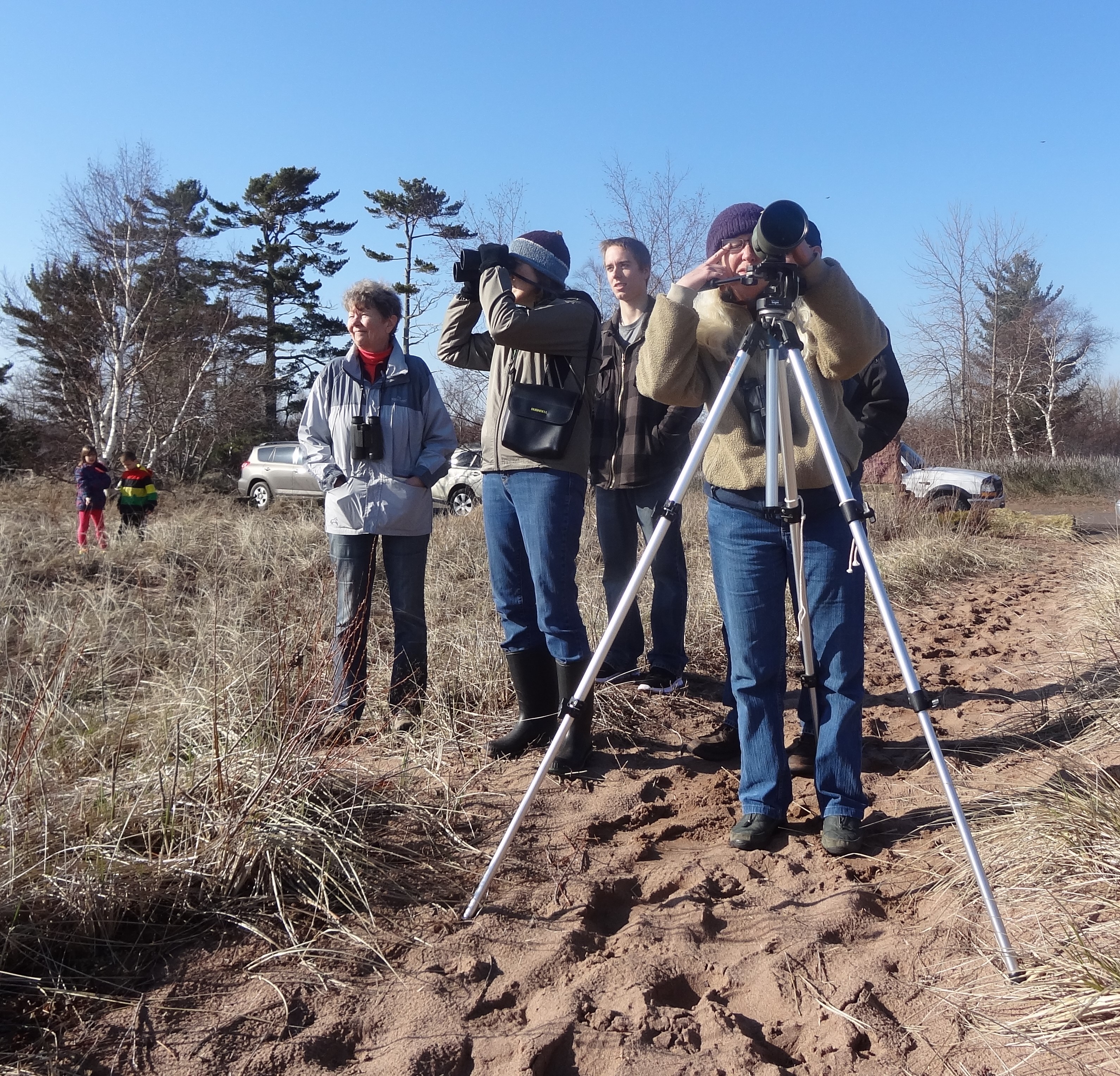
Birders on the shore of Lake Superior, Wisconsin Point.

Birders on the shore of Lake Superior, Wisconsin Point.

No, I’m not writing about Mother’s Day, but about a lesser known and newer commemorative event that celebrates birds. Yesterday, I participated in the second annual International Migratory Bird Day, held in Superior, Wis.

White pines on Wisconsin Point.

White pines on Wisconsin Point.

I haven’t been to a birding event in years, partly on purpose and partly due to other demands in my life. I like to think of myself as a recovering birder. I took up bird watching in seventh grade and was active in the birding community through my twenties – even participating for a year on the Audubon Expedition Institute, where I travelled across the country in a yellow school bus for a year with 24 other people interested in birding and the environment for master’s degree studies.

It was during that experience that I overdosed on birding. I came to realize that people stopped looking at birds once they had identified them. I rebelled against the obsession to name everything with feathers that I saw or heard. I rebelled against using eyesight aids like spotting scopes and binoculars – wanting to view the birds instead as part of their surroundings.

But I still feel an affinity with birds. My upcoming novel is about them, after all, and this event seemed a good excuse to get outside on a rare warm spring day. We met at Wisconsin Point, a long sandbar just outside the city. A small group of us spent three hours birding. We didn’t see very many birds but there were bald eagles, chickadees, scaups, red headed ducks, lots of blue jays passing through, and the requisite ring-billed gulls. I do admit to looking through a spotting scope (and the world did not end!), but I tried to keep it to a minimum to allow others the opportunity. After birding, we went to a local inn to listen to some presentations about migration.

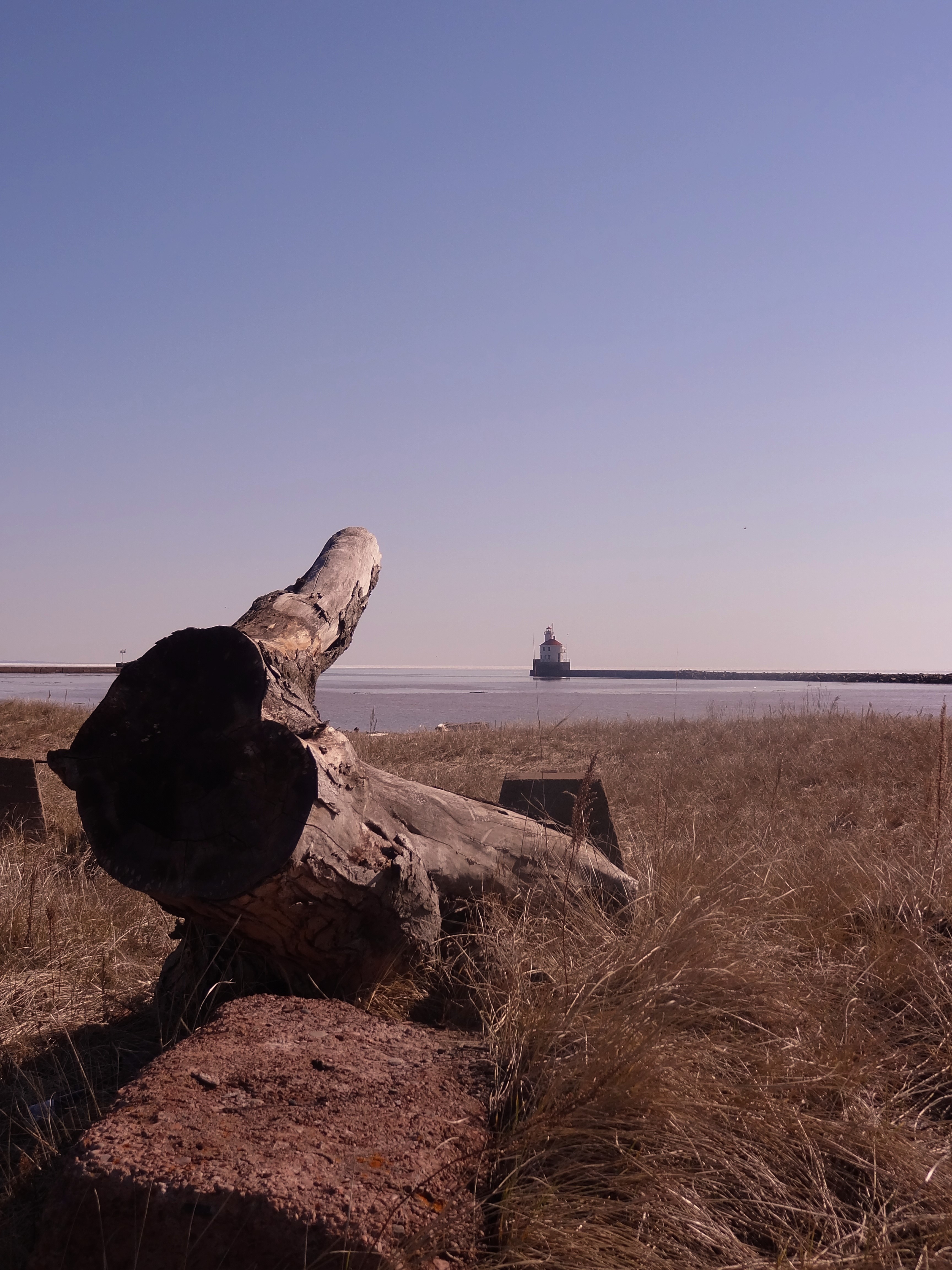
My camera isn’t built for bird pictures, but I do love the lighthouse and the white pines on the point, so I thought I’d share photos of them with you.

Wisconsin Point Lighthouse

The Wisconsin Point Lighthouse.

Wisconsin Point Lighthouse and log