In Which I get Paid to Work in a Bar

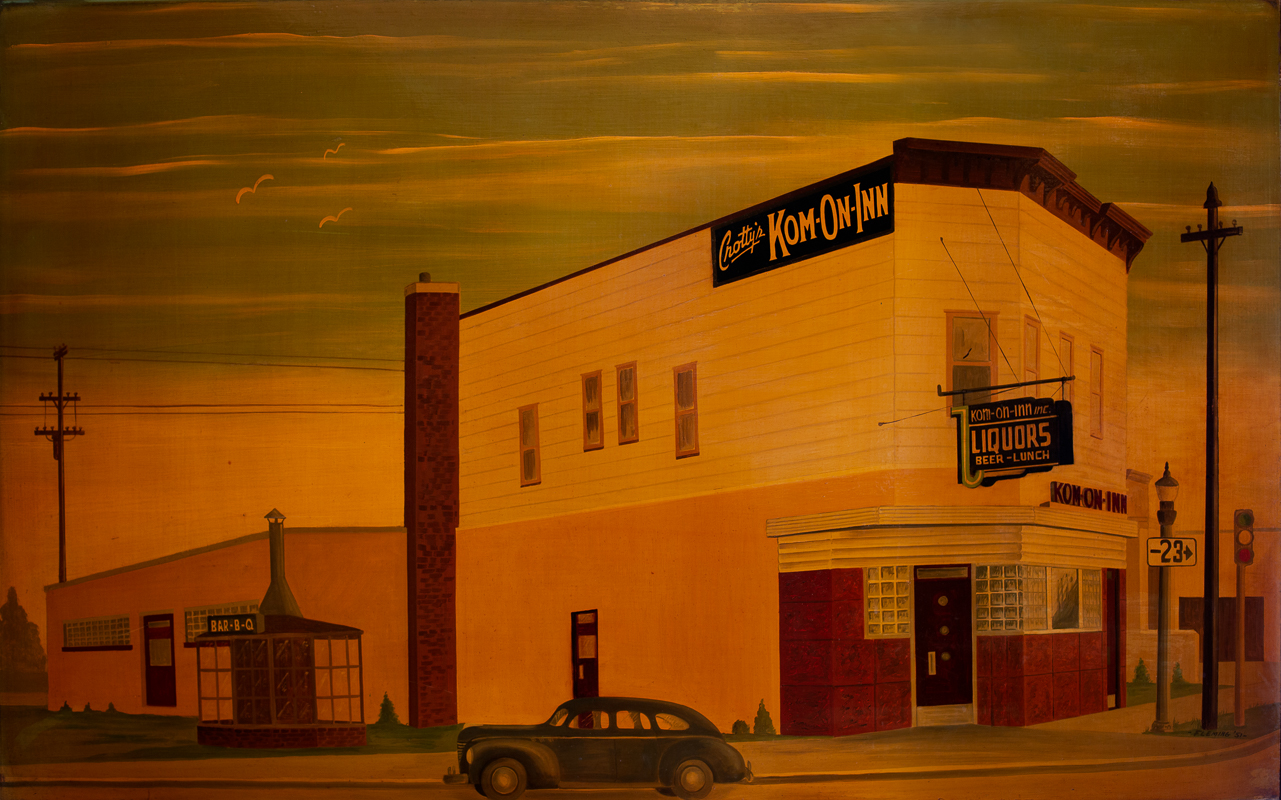
The Kom-on-Inn in West Duluth. Image courtesy of Jennifer Webb, University of Minnesota Duluth

I recently worked in a bar. Not as a bartender, though. I didn’t even drink! I was there to view art and explore how it relates to community and the restoration of the St. Louis River, which flows along the border of Minnesota and northwest Wisconsin. You can view my resulting story on Wisconsin Sea Grant’s “Unsalted” blog here.

Marie Goes Wild Ricing

Me, happily ricing, unaware of what lies ahead. Image credit: Wisconsin Sea Grant

I had a chance to harvest wild rice in the St. Louis River near Duluth recently for work. It wasn’t the first time I’d been ricing, but it’s the most memorable.

You can read about my little adventure on the Wisconsin Sea Grant blog through this link. Enjoy, and happy meandering!

Say Hello to the Great Lakes!

MKEmag_ad3

I’m psyched that a photo of Lake Superior I took while on vacation last year is being used by my employer for ads that will soon appear in “Milwaukee Magazine” and the Milwaukee Airport. The ads are designed to increase awareness and appreciation for the Great Lakes.

I took this photo from the top of Spar Island during a sailing trip last year. (Read about it and see more photos in my blog post about the trip, “Wilderness Sailing in Canada, eh?“)

We need to do all we can to protect this source of life for so many!

Why Sea Grant is a Kick-Ass Program (And Not Just Because I Work There)

Wi Point Ladies 2016 003We interrupt all these dreams of Aruba to insert some harsh (but hopefully entertaining and educational) reality. You may recall from my recent pancake recipe posting that President Trump has zeroed out the National Sea Grant Program that I work for in his proposed budget for 2018.
If that weren’t worrisome enough, he just recently he proposed drastic cuts to Sea Grant and other environmental and health and human services programs in 2017 in order to find funds to build the wall between Mexico and the U.S. You remember his beloved wall, don’t you? The one that Mexico was supposed to pay for (and like it)?

If Congress grants his request, Sea Grant would be gone – maybe as soon as May or August of this year, and I will be out of a job.

Maybe you’re wondering what a “Sea Grant” is. Sea Grant is a kick-ass program that funnels federal money from the National Oceanic and Atmospheric Administration to universities in 33 states across the U.S. The money goes to university researchers for water studies and to people like me who let taxpayers know about the research results through the media and through other local communications outlets.

Our staff and researchers also develop tools that people can use for things like growing fish, protecting their towns from a messed-up climate, keeping invasive animals and plants out of their local lake, fixing up polluted swimming beaches, making seafood safe to eat and water safe to drink.

UWI_SeaGrant_logo_cyanI work as a writer for the Sea Grant program in Wisconsin. Why is there an ocean program in Wisconsin, you ask? Because the Great Lakes are the freshwater equivalent of oceans (Sweetwater Seas). As water sources for millions of people and home to one of the world’s largest economies, it makes sense to pay attention to the Great Lakes and to put money into understanding them and protecting them.

Nationally, Sea Grant has been around for over fifty years. The federal dollars ($67.3 million) that come into the states are matched by the universities.

One reason it’s a kick-ass program is that in 2015 alone, the work done nationally with these dollars led to an 854% economic return on investment (Turned $67.3 million into $575 million in the communities in which we work). I bet none of President Trump’s business ventures have provided such a huge impact. Seems like a bad idea to cut such a successful program.

We’ve restored over 127,000 acres of degraded ecosystems. We trained almost 2,000 people how to keep seafood safe to eat. We offered about 900 classes to people living on coastlines on how to improve their community’s resilience to storms. We also supported training and funding for 2,000 students who are the next generation of water scientists.

In Wisconsin alone, our programs save lives. Our Sea Caves Watch program, which warns kayakers about wave conditions in the Apostle Islands National Lakeshore has prevented deaths. Since it went online about seven years ago, no deaths have happened. Before, there was about one death every year. Seven people might not seem like a lot – but every person counts!

Last year, a boater who saw our video about “ghost nets” (abandoned nets lost in the lake) and how to get out of them without capsizing, remembered what the video said when his boat got into a tangle. He credits Wisconsin Sea Grant for saving his life.

In Wisconsin, we also fund a program that helps children who are going through rough times by getting them into the water and taking pictures. The underwater photography program has changed the lives of many of them, and their photos are good enough to be in public displays and even a book. Read the children’s testimonials in the book. They will make you cry!

We find cures to fish diseases. We created over 5,000 jobs during the past two years. We helped almost 12,000 anglers or aquaculture people. We helped find out what was causing the steel pilings in the Duluth-Superior Harbor to corrode (and won a national award for it). Through our sister program, the Water Resources Institute, we are changing how the state warns people about the chemical strontium in their drinking water.

If I lose my job, I can’t take any more nice vacations and write about them for your benefit. I also will be so busy finding a job that I won’t be able to write my blog any more, or my fiction.

So, if you give a rip, please email your Congressperson right away. Tell them to reject the Administration’s proposal in the Fiscal Year 2017 Security Supplemental that would cut the National Sea Grant College Program by $30 million. Also, please ask them to reject the Administration’s Fiscal Year 2018 proposal to zero out and terminate the Sea Grant program (for all the reasons I’ve just mentioned).

I had an interesting discussion with someone at my church about President Trump. She said she was finding it very hard to love him in a spiritual sort of way. I told her that I don’t like what Trump stands for, but I do like that he’s making us fight for what’s important. It’s definitely not politics as usual.

The only weapons I have to fight this with are my words. I hope you will join your words with mine to preserve a program that makes much more sense for this country than a wall with Mexico. For more information, please see the Sea Grant Association’s website (FY 2017 and FY 2018 documents).

Thank you for your support. Now back to our regularly scheduled programming.

The Music of Nature

LS Podcast Logo
Nature isn’t just what we see. It encompasses all our senses. Think of the vanilla essence of Ponderosa Pines, the rough grains of sandstone, and the sound of a dolphin’s exhale as it surfaces. We’re so used to the visual it’s challenging to remember other senses, especially in environmental and scientific work. I recently learned there’s a field that specializes in sound and the environment. It’s called acoustic ecology.

Acoustic ecology explores the relationship between living beings and the environment through sound. This can take many forms, from delving into what a forest sounded like 70 years ago when different species of birds lived there, to the affect of car alarms on the urban environment.

On a blustery day this past October I had the chance to talk with an acoustic ecologist. Chris Bocast is a talented musician who specializes in the field. He just finished producing a podcast about Lake Superior for our joint employer, Wisconsin Sea Grant. The series isn’t an example of acoustic ecology per se, but it does show how sound can illustrate environmental topics.

Because I’ve worked around Lake Superior for many years, Chris wanted to include me in the series. And of course, I couldn’t let him get away without covering the St. Louis River Estuary, too.

We met during a Sea Grant conference in downtown Duluth. For the interview we walked next door to the historic Greysolon Plaza Hotel. We sat in the hotel’s ornate and quiet mezzanine lounge.

In the middle of our conversation, Chris asked, “What’s the function of an estuary in an ideal ecosystem?” I replied that I happened to have written a poem about that, and darned if the poem didn’t make it into the series. It’s “Two Sisters” from my last entry.

Click here to listen to the Lake Superior podcast series. My poem can be found near the end of program #7 (Superior’s Sister).

The piano-based ambient music Chris created for the podcasts is unnamed. He told me it’s designed to evoke a sense of the pristine. I don’t know about you, but I could bliss out on his music all day.