I had the chance to meander to Stockton Island, one of several islands in the Apostle Islands National Lakeshore in Lake Superior a couple of weeks ago. I was there to cover what the National Park Service is doing to make their facilities on the island more accessible to disabled people. I’ll be writing a story about that for work, but I also got a tour of the island by former park ranger, Neil Howk, who gave us (there were about 8 of us) the skinny on the history of black bears on the island.

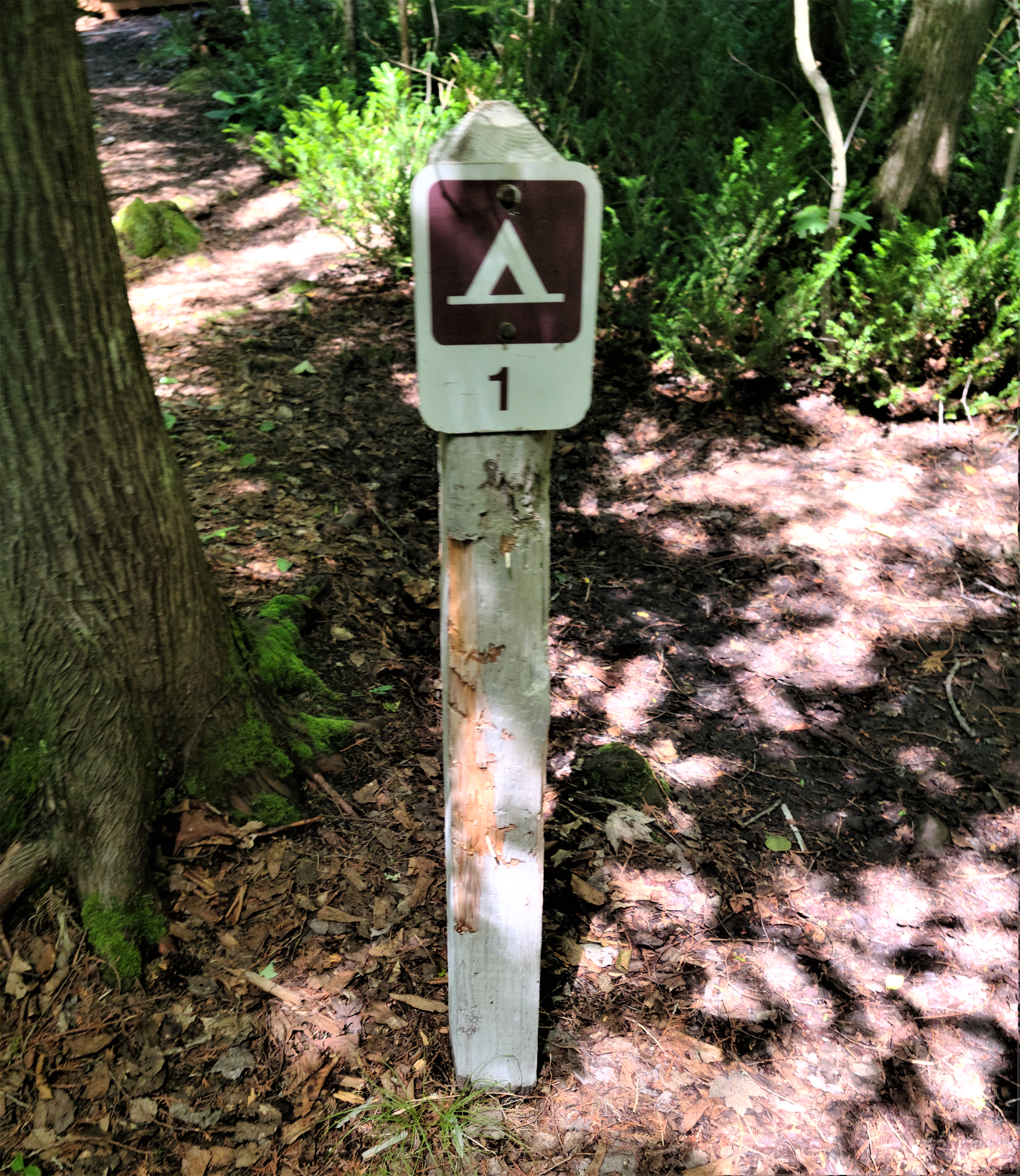
Neil worked for many years in the Lakeshore and is now on the board of the Friends of the Apostle Islands, which organized the tour on a sunny, breezy Friday. Neil took us on a short hike on the trail that leads through the campground on Stockton Island to the signpost for campsite number 4. We took a sharp right and began bushwhacking into the woods. Neil knew there was a bear den nearby.

After not too much whacking or getting whacked by tree branches, we came to a deadfall – a tree that had been blown over by wind. Neil said the bear had made its den among the tree roots, which provided a fairly snug place to spend the winter.
He felt okay taking us to this location because: 1) It’s not winter, so no bear will be actively hibernating there, and 2) Bears usually only use a hibernation site once, so disclosing its location should not endanger the privacy of any bears (except if another one ends up using it!)
Besides overwintering in dens in rocks or tree roots, black bears have also been known to hibernate inside hollow trees and even in eagle’s nests. I did not know the eagle’s nest thing. I also learned many other new bear trivia, such as: bears don’t poop all winter. Neil said they eat grass in spring to get their bowels going again.
Also, cannibalism is normal for bears. Males will sometimes eat cubs – presumably ones that aren’t related to them, in order to bring females into estrus sooner so that they can procreate with them. And bears will also eat meat (besides the berries, ants, and other things that bears are known to consume). Neil said that deer fawns and chipmunks are among their favored meaty fare.
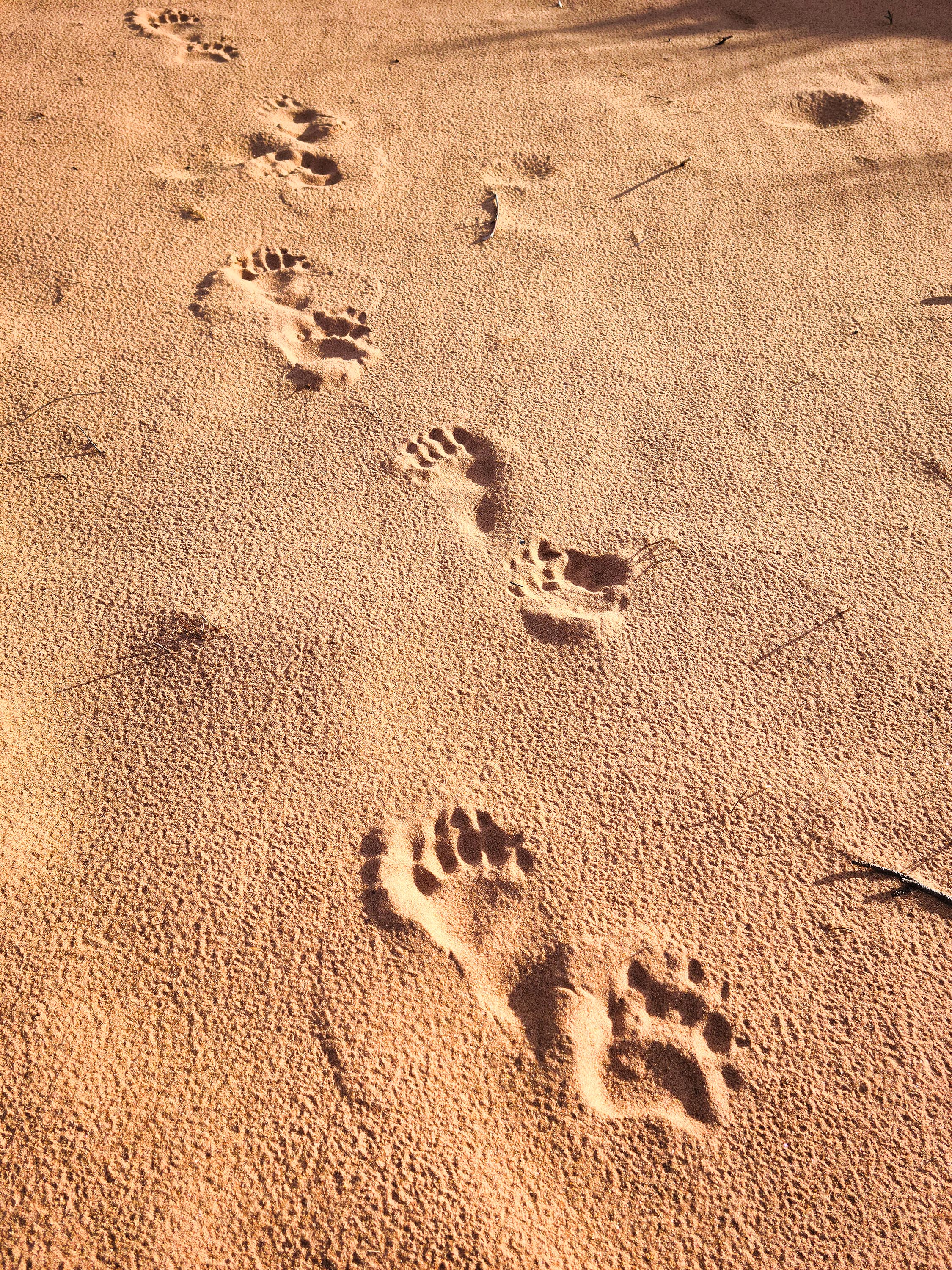
Another fact that Neil conveyed is that when bears were first counted on Stockton Island – sorry, I’m not sure when that began – there were only a couple. But now there are 20 known to live there. I can attest to their presence. On my several trips there, I’ve seen many bear tracks on the island’s beaches. (I’ll try to dig up some of my photos of those for this post.)
One memory that emerged during the tour came from a trip I made to Russia many years ago. One of my former husband’s relatives bragged about a bear he had shot. Granted, this relative liked his vodka and ended up chasing one of my young sons around the picnic table where we were eating – he was a rather scary, imposing figure, somewhat bearish. At some point, he showed us photos of his triumphant hunt. From the snow in the photo and the location, it became obvious that he had shot a hibernating bear. So much for sportsmanship, but I guess maybe they do things differently in Russia!
Anyway, I learned some things I didn’t know about bears from this tour, and I hope you did, too.


One thing for sure about bears is that they are not to be messed with. Were you nervous while there?
No, not nervous. There were a lot of other people around. But when I was there in the past in the off-season with few other people and lots of bear tracks around, I was a bit nervous.
I learned some interesting things about bears by reading this!
I’ve never seen bear tracks. Didn’t know they would gnaw on signs either. I learned new things about bears.
Glad to hear you feel enlightened about bears! Yeah, something about those campground signs makes them good scratching/biting posts for bears.
Really fascinating, and you made me chuckle a few times. Decades ago (never mind how many), Stockton was great for tying up a boat on the dock, or bobbing in a sailboat in the bay overnight. We kids would ramble on paths through the wood, bear-unaware…and lucky!
It’s great that they’re considering accessibility. The Apostles & Superior are treasures to be protected and shared!
Hi Liz – you are lucky to have been able to spend some time on Stockton Island and its surroundings. It’s quite impressive what the park service and the Friends group are doing to make the island and park more accessible. Glad to have elicited a chuckle or two!
I love bears, and carefully respect them.
Yes – always respect the bears! They can run much faster than we can. 🙂
We have plenty of black bears where I live in Colorado. Fortunately we didn’t have any at our house this summer. I’ve never heard of hibernating in an eagle’s nest!
Hi Eilene and welcome to my blog! Yes, a bear hibernating in an eagle’s nest was a new one on me. He also said that once a bear hibernated inside a hollow tree that could only be reached through a hole that was 15 feet up. The bear had a tracking collar and it took the biologists a long time to figure out that the bear was inside the tree!