In preparation for a trip to Ireland and Scotland that Russ and I are planning, I was rummaging around in a genealogy book that my mother and her sisters prepared about the side of my family that has U.K. roots. I was looking for Irish names. I came up empty. Thanks to family lore and 23 & Me, I know I have Irish blood but I’m not sure where it came from.
As I rummaged around in the book, I came across a pamphlet written in 1877 by Willard Parker (Detroit, MI) that I had noted before but never spent much time reading. It was about my Great (to the 4th power) Grandfather Caleb Parker. He was born in 1760 in Shrewsbury, MA, to Stephen Parker Jr. and Abigail Wright.
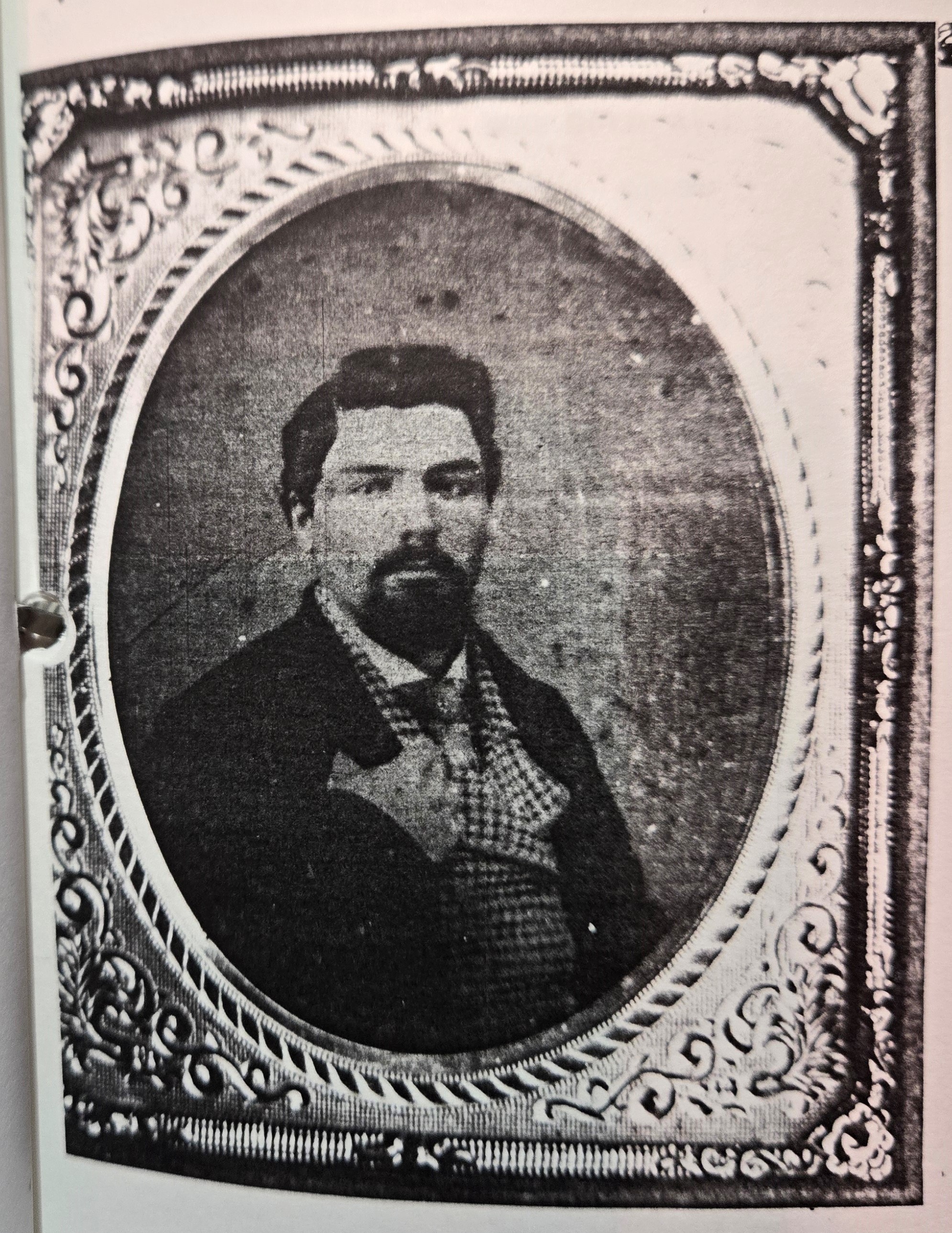
The surname of Parker originated in France. In essence, it means “park-keeper” and is an occupational name describing a gamekeeper. Could this be why I like “Lady Chatterley’s Lover” so much? (The book’s main character is a gamekeeper.) The name was introduced into England after the Norman (Viking/French) invasion in 1066.
Caleb’s original name was Nathaniel, but his parents changed that along the way to honor his brother Caleb who died in the French and Indian War in 1755 or 1756. The soldier was never heard from by the family. I suspect Nathaniel must have been very young when his name change happened. The French and Indian War ended in 1763 when Nathaniel was three, so maybe his parents changed his name during that time, once they gave up hope of Caleb the elder’s return.
Caleb/Nathaniel married a woman named Thankful Pratt of Shrewsbury in 1782 when he was 22 years old. He was a soldier in the late part of the Revolutionary War. While in the army fighting under George Washington, he acquired a taste for military life and in 1793 (after he had moved to Vermont), the governor appointed him captain of the Vermont Militia.
Militia fighters were also known as minute men because they had to be ready to drop everything they were doing at home with only a minute’s notice when needed for battle. They are immortalized in Longfellow’s poem, “Paul Revere’s Ride.”
About six years later, Caleb resigned his commission and moved to Stukley, an eastern township of Lower Canada, not far over the Vermont border. He died there in 1826. His wife, Thankful, lived 23 more years, dying in Stukley in 1849.
The couple had 11 children who met various fates. One was killed by a falling tree. One was a founder of Stukley township. The writer of the pamphlet said that Caleb’s “descendants have been mostly tillers of the soil. If there have been but few distinguished men among them, I may say, in all truthfulness, that honesty, industry, temperance and Christian character have been the prevailing characteristics of the son and daughters” of Caleb. “These qualities have been inherited from our emigrant ancestor [Thomas Parker], whose descendants in New England are not unworthy to rank honorably with those among whom they dwell.”
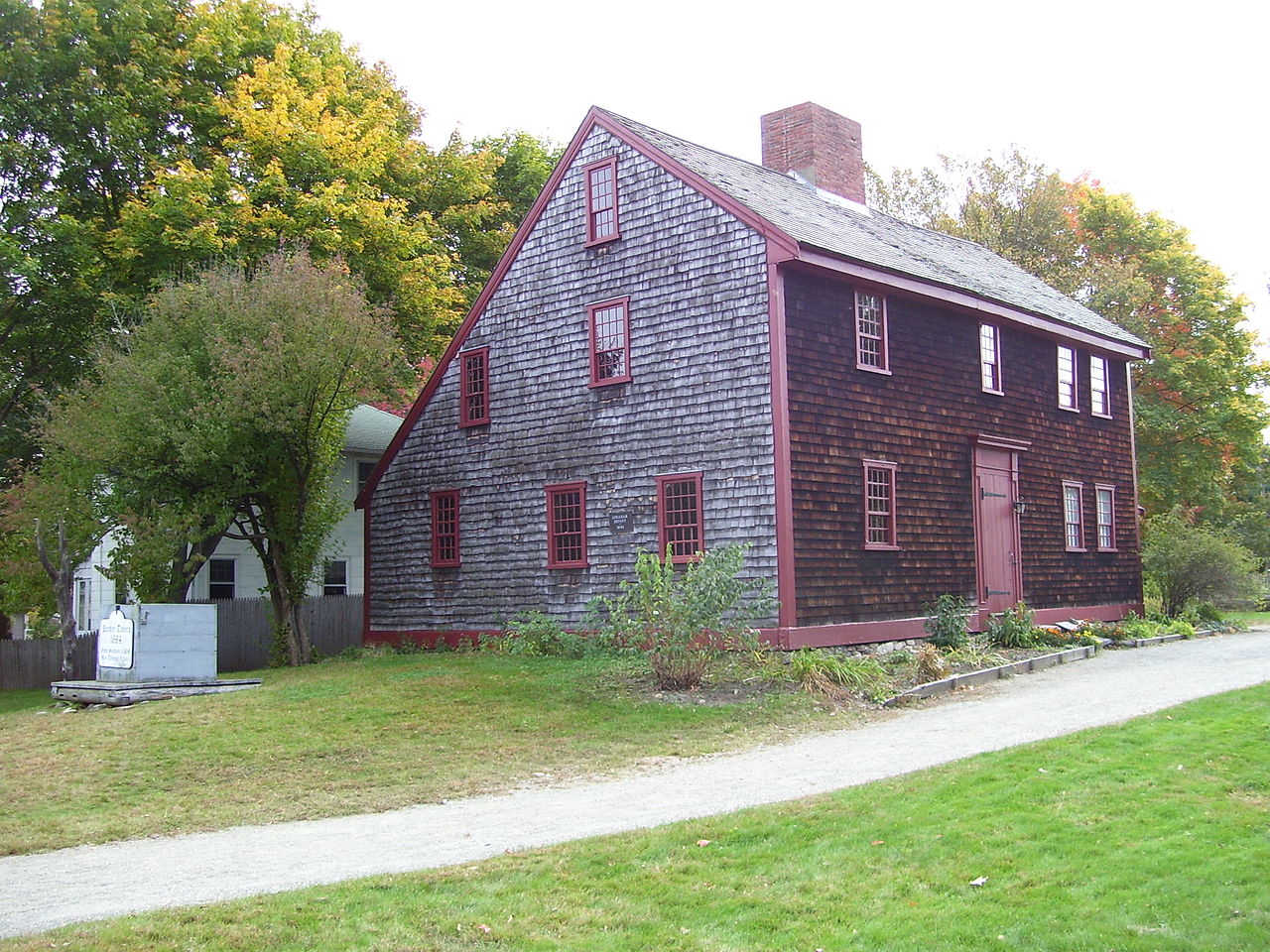
Thomas Parker, Caleb’s grandfather, came from England originally, sailing on the ship “Susan & Ellen” in 1635. I was surprised to discover that he has his own Wikipedia entry! Thomas was a Congregational Church deacon and had a large family with his wife, Amy Aylesworth. He founded Reading, MA. I also discovered that the oldest surviving building in Reading is named after the family. The Parker Tavern was owned and operated by Thomas’s great grandson Ephriam and it has been turned into a museum. I’m thinking a trip to Reading, MA, is in order someday!
If I were more talented with graphics, I would make a genealogical chart for you, but my skills do not lie in that direction. I did scribble one out with pen and paper for my reference, though, to try and keep everyone’s name straight.
My line of the family is descended from Thomas’s son Nathaniel Parker. But Thomas had another son (I’m unclear whether his name was Hananiah or Thomas) who had some notable descendants. One is John Parker who was another minute man like Caleb. John led the Lexington, MA, militia in 1775. In fact, he was a model minute man. A sculptor used his likeness for the famous Lexington Minuteman statue that stands on the Lexington Battle Green.
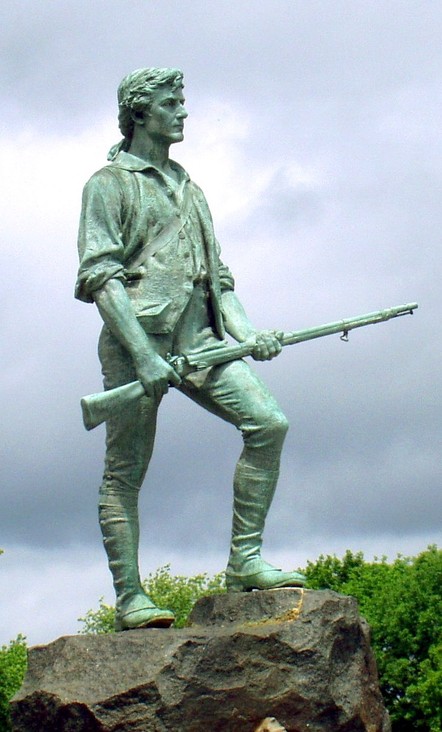
John led the fight against the British in the battle of Lexington on the day the Revolutionary War began. The militia suffered lopsided losses to the British (8 militia killed, 10 wounded to only one British soldier wounded). One of Parker’s men, many years later, recalled Parker’s orders on the Lexington Green: “Stand your ground. Don’t fire unless fired upon, but if they mean to have a war, let it begin here.”
During the skirmish, John witnessed his cousin Jonas Parker killed during a British bayonet charge. Later that day he rallied his men to attack the British returning to Boston in an ambush known as “Parker’s Revenge.”
John is featured as a character in the book and movie called “April Morning,” which is about the beginning of the Revolutionary War. The book is mandatory reading in many a U.S. classroom.
Sounds like I will also need to visit Lexington in addition to Reading some day! I can’t believe that a relative of mine was involved in the very beginning of the Revolutionary War. If I had known that earlier, I would have paid a lot more attention to my American History class in school.
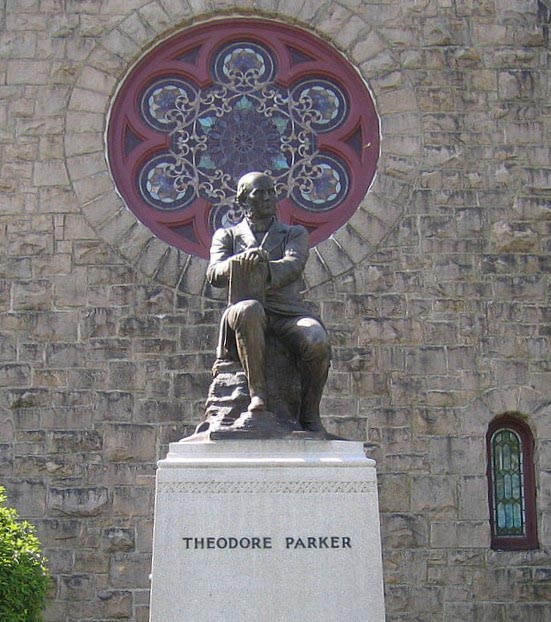
The other notable descendant is Theodore Parker. John was his grandfather. Theodore was a noted Unitarian minister and abolitionist. Just out of Harvard Divinity School, Theodore preached at a church in the Boston neighborhood of West Roxbury. That church still stands today as the Theodore Parker Unitarian Church with a statue of Theodore on its grounds. But eventually, he left after being kicked out of the Boston Unitarian brotherhood for his “radical” views on abolishing slavery and other religious matters. He also believed outrageous things such as women should be allowed to vote, and to become doctors, lawyers, and (gasp!) even ministers.

Theodore is credited for famous quotes later shortened and used by President Lincoln and Martin Luther King. The phrases are, “a government of the people, by the people and for the people” and “the arc of the moral universe is long but it bends toward justice.” The former was used by Abraham Lincoln in the Gettysburg Address and the latter by Martin Luther King.
By coincidence, I’m a Unitarian! (Or perhaps it’s not a coincidence?)
Those Parkers were quite a bunch. It’s not every day that a person discovers their ancestors have their own Wikipedia pages, movies, statues, and a tavern and a church named for them! Plus, I learned that they founded two towns. I don’t think my mother and her sisters knew any of this because they never mentioned it.
Although my search for Irish ancestors was unsuccessful, I learned more than I ever dreamed about my family and their role in shaping early America.
 Marie's Meanderings
Well, you may not have found any Irish connections, but you have had the luck of the Irish in finding out about some very distinguished ancestors!
Hi Helen! Yes, I was amazed by what a little internet sleuthing could do.
Very cool! You lifted a page and in this instance, found multitudes.
So true! I just kept uncovering more and more. I was like, why didn’t anyone ever tell me this? You’d think this kind of lore would be passed down thorough the generations, but perhaps some connections were lost when my ancestors moved from New England to Minnesota a few generations ago.
Wikipedia can be astonishingly helpful.
Yeah, I make sure I donate $$ to them every once in a while.
Well, look what you found! That what’s so cool about family history – it IS history. It all seems to matter more when you know how the ancestors fit into it all.
Yes, suddenly, I feel so much more connected to the USA!
You have quite the storied ancestral background. Rev. Parker is particularly interesting.
I find it ironic that his views that got him kicked out of the church are now some of the main foundations of it. Nice to see him vindicated by the long moral arc of the universe.
The good Reverend was many years ahead of his time.
Very interesting. I can layout the name of your ancestors if you send me your sketch. I’ll try to follow the format of your sketch. you can email me at Gil-stearns@comcast.net
Wow, what a nice offer! I will definitely consider it. My writing’s a mess though. I would need to clean it up! 🙂
Family history can be so interesting.
Pingback: Theodore Parker Unitarian Church | Marie's Meanderings