Last week, I had the privilege of hearing a nationally known poet read at a local college. Kimiko Hahn was flown out from New York City by the college’s English Department to be part of its annual Rose Warner Reading Series. The college brings in a poet for a day who performs a morning reading and discussion with local high school students and an evening reading for the public. After the morning reading, the students break into groups where a “Northland Writer of Distinction” talks to them about writing and how to find their voice through it.
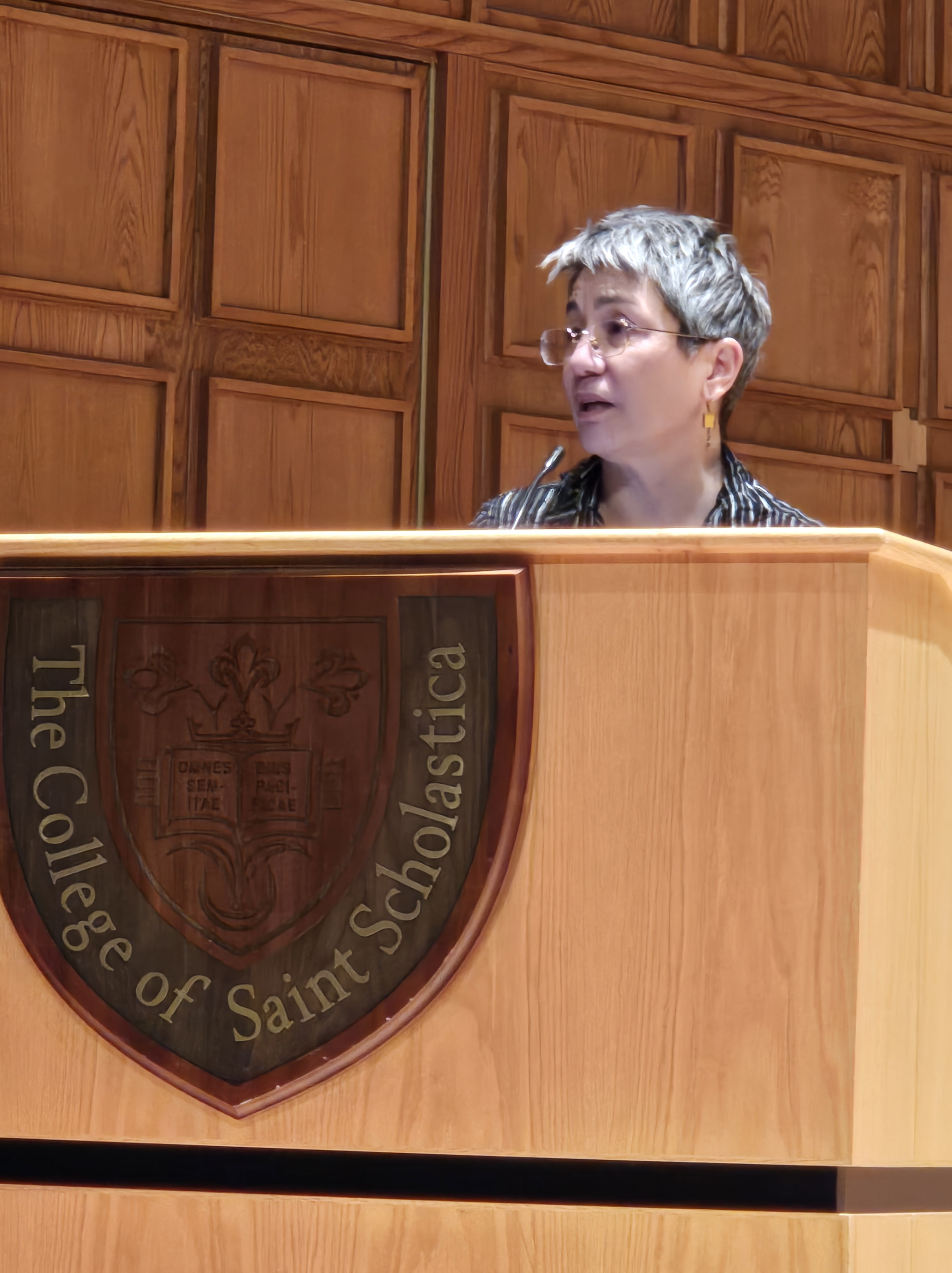
I was one of three so-called writers of distinction. The other two were Sheila Packa, a former Duluth Poet Laureate, and Nick Trelstad, a published poet and high school English teacher. Having never done this event before, I was a bit nervous. Both the other writers were repeaters; they were also both wearing plaid. I had not received that memo! But now I know in case I get invited back.
I was not familiar with Hahn’s poetry, so I was looking forward to hearing her read for the students. Hahn’s mother died in a tragic car accident, so many of the poems she read in her soothing voice were about that. She also read political poems. But, since I am a science communicator, the ones that caught my attention most were pieces she wrote based on science stories in the New York Times. Hahn commented that she’s bad at science but is fascinated by it, especially entomology (bug science). She often takes a science news story and makes it into poetry. She does this through typical fashion but also using a technique called erasure poetry.
This was a new one on me. In erasure poetry, which began in 1965, writers take an existing text – like a newspaper story or the Declaration of Independence – and blackout or erase words to create a poem. Sometimes they leave the words in their original formatting (with lots of blank space in between) or sometimes they reformat them. Visual artists use the technique, too. Hahn read the students her poem, “Erasing Love.” Then she asked them to figure out what original article’s topic was. Several students mentioned that it was a science or medical story, but I think everyone was surprised when Hahn said it was about a giant fish called an oarfish and that the professor studying it had the last name of Love. (At the end of her poem, she links to the original article.) I enjoy creating found poems (like this one based on Chinese scooter instructions) so I’m definitely going to try erasure poetry sometime soon.
Hahn’s poems delved into grief, love, and science, often containing subtle and not-so-subtle humor. She said she gains inspiration from writing prompts and that she writes as an outlet for her opinions and rambunctiousness. Her reading persona is not rambunctious, but during the q & a afterward, more of her personality shone through.
Then the students were split into groups with their respective local writer. Hahn was a tough act to follow! For my presentation, I told the students about my professional and creative writing careers. The students were from the same high school that I went to, and I wanted to show them that a career in writing is possible. I described my books and talked about how this blog helped me find my voice. I read them two posts that offer good examples of opinion writing, which I can’t do either in my day job or my novels. These were “The Jayme Closs Case and the Importance of News Headlines,” and “The Christmas City of the North Parade: Socially Sanctioned Child Abuse or Festive Community Event?”
There was no clock in the room. For the first group of students I spoke with, I blathered on about myself for so long, I ran out of time to read the Jayme Closs story, but I made up for that with the second group.
A few writer nerds were in the audience and asked good questions. After my talk, one girl introduced me to Dark Romance. If you haven’t heard of it, either, Dark Romance features kink and violence – darker themes that don’t sound all that romantic to me. I don’t think I’ll be pursuing it in any way.
My main points to the students were to write what they enjoy without worrying about what other people will think, to practice, and get feedback from people they trust. Of course, I encouraged them to start blogs since it’s a good way to practice and to get feedback from a supportive community.
Have you found that your blog is a good way to develop your writing voice?
 Marie's Meanderings
What a great opportunity! By the way, I’m excited about your book launch. I have it on my paper calendar and in my phone calendar. The artwork announcing it in the LSW newsletter is awesome!
Thanks, Vickie. I’m looking forward to the launch. Should be a great conversation with Carol. Zenith Bookstore did the artwork for it. I like how Carol and I look so woodsy. Will be posting it here soon.
You must have been nervous, doing that for the first time, but it sounds as though you enjoyed the interaction with the students….worrying – to me – that a young person was attracted to ‘Dark Romance’.
Yes, the Dark Romance student worried me a bit, too. She seemed too young for that stuff. Yuk!
I have never heard of erasure poetry. By the name, I thought it wouldn’t be interesting or ‘poetic’, but her poem is beautiful and filled with so much emotion. Thanks for introducing it. Maggie
Glad to have introduced you to a new poetic form, Maggie! It looks really fun to play around with.
I have never heard of erasure poetry either. It sounds very interesting. It is great that you took the time to be involved in this event. Sharing insight with students of any age is a good thing.
I felt sooo old talking to these kids! But it was fun.
Good for you for sharing with students! I learned about two new things – erasure poetry and dark romance. You make a good teacher, Marie.
Hi Jo Nell. Sorry for the delay in responding. For some reason, Word Press sent your comment into my spam folder! The nerve. Glad to hear I’m not the only one for whom those things were new. Hope you are doing well.
Sounds like a fun day! And yes, blogging helps me to show up to the page more often, especially when blogging “with” people who’s goal is to play and not critique!
I hear ya about the playing part. Thanks for reading, Liz! I always enjoy your stories.
Thank you (waves a cheery hello across the Blog-o-Sphere)! ☃️
Marie waves back!
That’s so cool you were part of the event and got to share skills with the attendees. I enjoyed the erasure poem, the scooter found poem and the Jayme story. Totally agree with you on how the media misrepresented it. And such a shame her parents were killed. I hope the perp got a life sentence.
Yes, he received life without parole. One of the students asked me if Jayme got the $50,000 reward money. I found out she received half of it for saving herself.
I’ve encountered a few examples of erasure poetry in the past but have not thought of it until you mentioned it here. I’ll take another look at the style.
Erasure poetry looks fun to play around with. I hope you check it out!