If you have been reading this blog for about two years and have an excellent memory, you may recall this previous post about my search for Irish ancestor names in my genealogy before our trip to Ireland in 2024. I was unsuccessful in that quest, but I found colonial American treasure instead.
The first “treasure” was information about my direct ancestor, Caleb Parker. He was born in Shrewsbury, MA, in 1760, and was originally named Nathanial but was renamed by his parents after his presumed-dead-in-war brother. Caleb served under George Washington late in the Revolutionary War. Later, he was head of the Vermont militia. After he resigned his commission, he and his family moved to and founded Stukley, an eastern township of Lower Canada, not far over the Vermont border. Caleb died there in 1826.
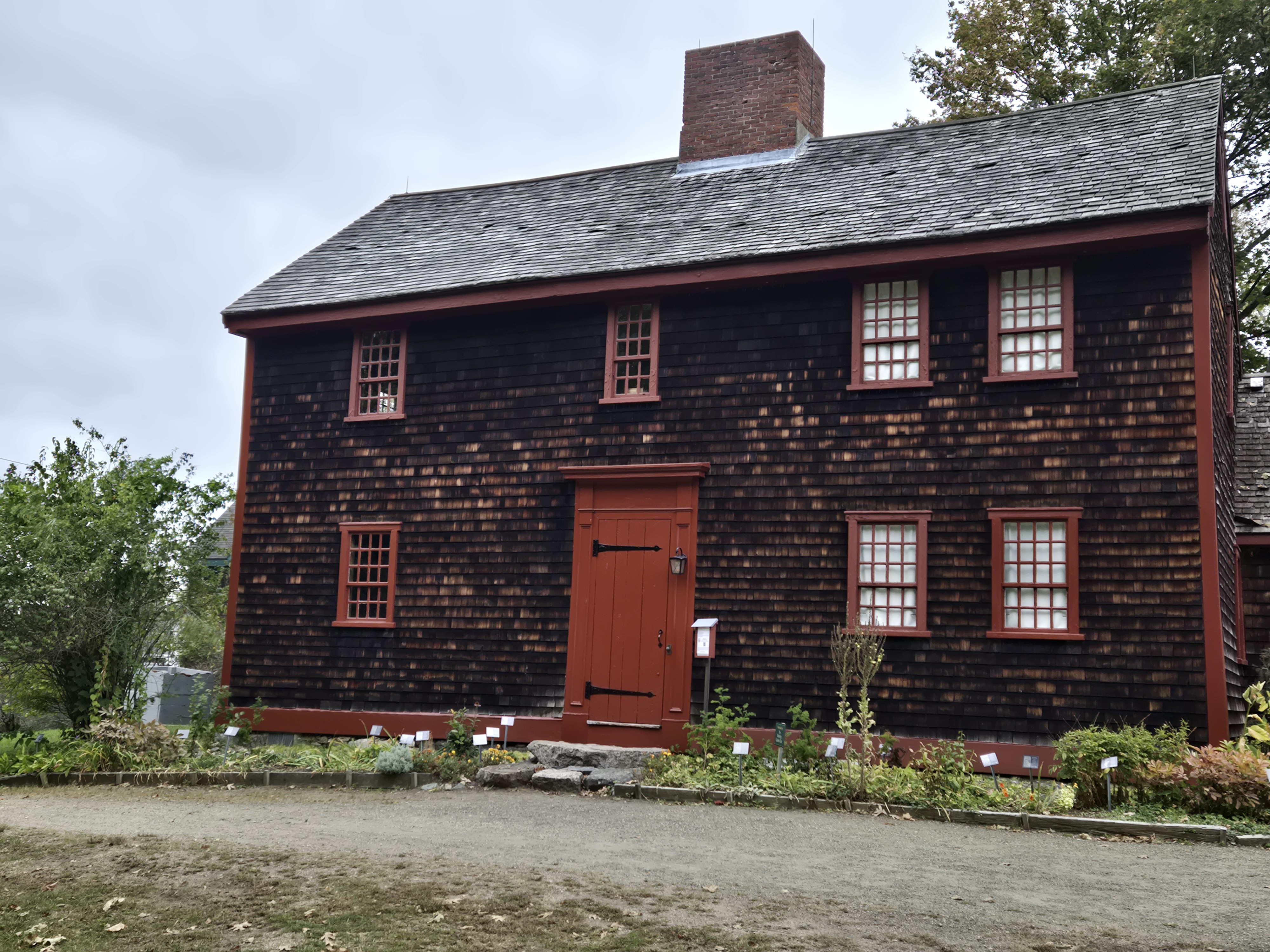
That, in itself was pretty cool, but in following Caleb’s line back in time, I discovered that his grandfather, Thomas Parker, a Congregational Church deacon, immigrated from England and founded Reading, Massachusetts. I also found that the oldest surviving building in Reading is named after the family. The Parker Tavern was owned and operated by Thomas’s great-grandson Ephriam (who would have been a cousin of sorts to Caleb), and it has been turned into a museum. I vowed to visit it one day.
Well, that day came during our New England Road Trip. The first part of our trip was all about Russ and his family. The next part was all about MEEEE! (and my ancestors.) We left Russ’s relatives in Andover, Connecticut, and drove to Massachusetts. Our first stop that Sunday morning was to attend a church service at Theodore Parker Unitarian Church. More on that in the next post.
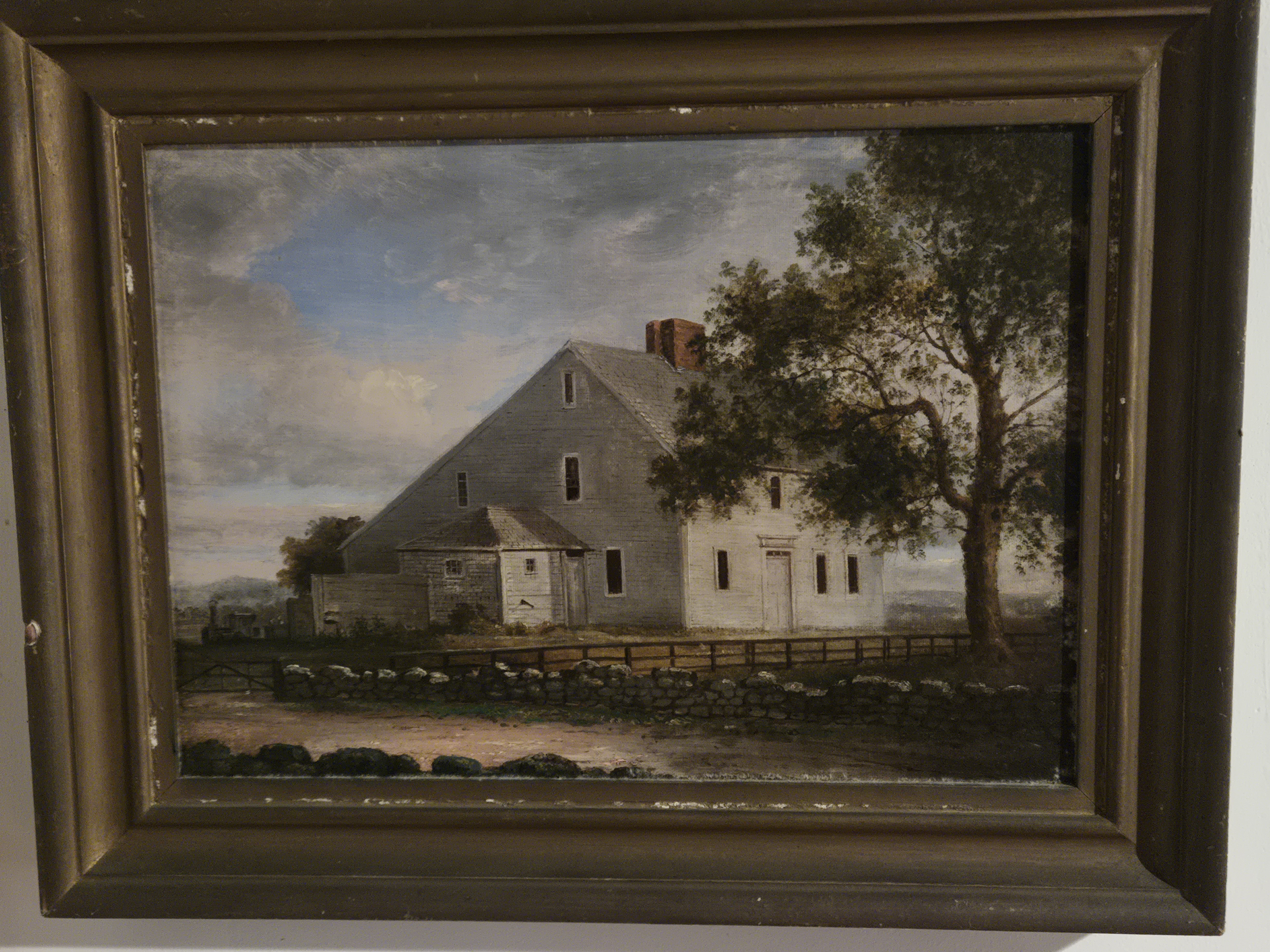
Our second stop was the Parker Tavern in Reading. The tavern is on the National Register of Historical Places. It has been turned into a museum and is open Sunday afternoons from May to October. Due to our recent education about the importance of taverns at the Strong-Porter Homestead in Connecticut, we knew taverns were vital to colonial communities. They served as gathering places where information was exchanged and they provided food and lodging for travelers. As such, they were instrumental in the spread of revolutionary ideas, ultimately becoming hotbeds for political debate and organizing that led to the American Revolution. If you’re an Outlander fan, you’ll be familiar with this concept because characters in the books/movies are often shown scheming in taverns. Although the series is fiction, this depiction is based on truth.
Because they were such important spots, not just anyone could run a tavern. Managers needed to be in good standing in the community. Often, they were people associated with the local church, be they the ministers themselves or relatives of ministers. Given that Ephriam was from a ministerial family, it makes sense he was a tavern owner.
Like the colonial homesteads we visited the previous day, the Parker Tavern is a saltbox building, and it was built in the late 1600s. Besides providing lodging for travelers, the tavern also served as a jail of sorts. The docent told us that Sir Archibald Campbell, a lieutenant general for the British, was kept at the tavern from June 1776 to January 1777. He was a wealthy Scot who owned a lot of land in that country. At the time of his capture, he commanded the 71st Regiment of Foot, Fraser’s Highlanders. (For Outlander fans, another commander was Simon Fraser of Lovat.)
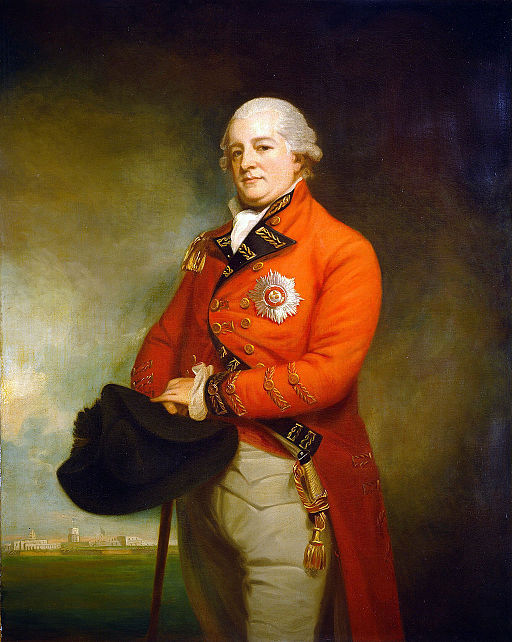
Campbell was captured after a battle aboard a ship in Boston Harbor. At first, he was in solitary confinement in the Concord jail. But after complaining to his superiors, who brought Campbell’s plight to the attention of George Washington, he was moved to the tavern for more humane living conditions.
In researching for this blog post, I discovered that Wikipedia says that the tavern was owned by the jailer. Ephriam Parker owned the tavern from 1770 to 1785, which is during the time that Campbell would have been there. The docent told us that Campbell was thankful for the amenities the tavern provided and enjoyed his stay there, as much as a prisoner can enjoy his “jail.” He wasn’t alone, however. According to a Daily Times Chronicle story (Woburn, MA), he housed about twenty-five of his servants in a tented area on the grounds and possibly on nearby Scotland Hill to comply with the army’s prison requirements.
The same newspaper story states that Ephriam and his son were part of the 4th Company of Minutemen, which took part in the battle of Lexington and Concord in April 1775 that began the Revolutionary War.
After his stay at the Parker Tavern, Campbell was released to “freedom” within the confines of Concord. In May of 1778, he was finally totally freed in an exchange for Ethan Allen. He later became the governor of Georgia, Jamaica, and Madras. His tomb lies in Westminster Abbey.
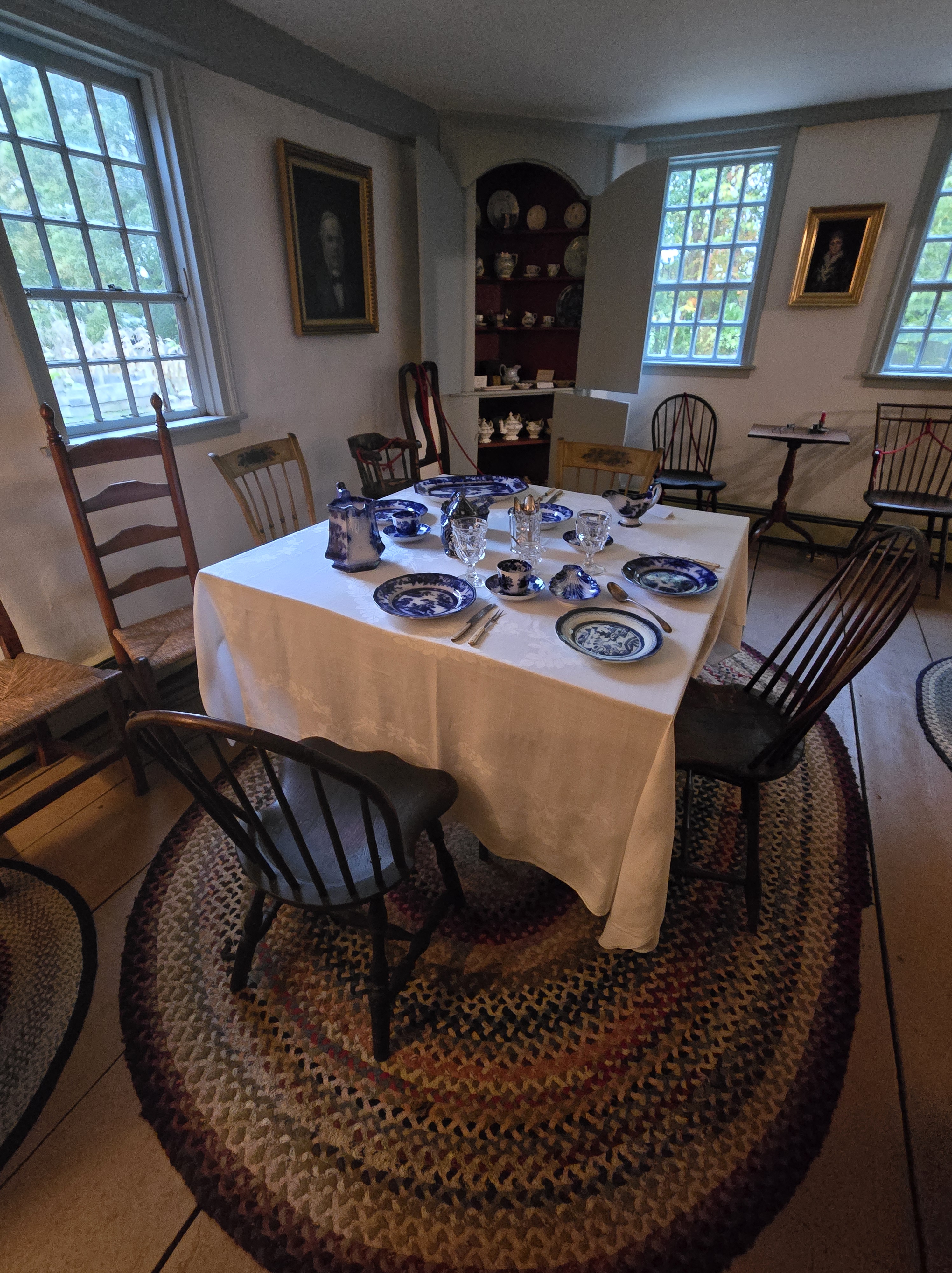
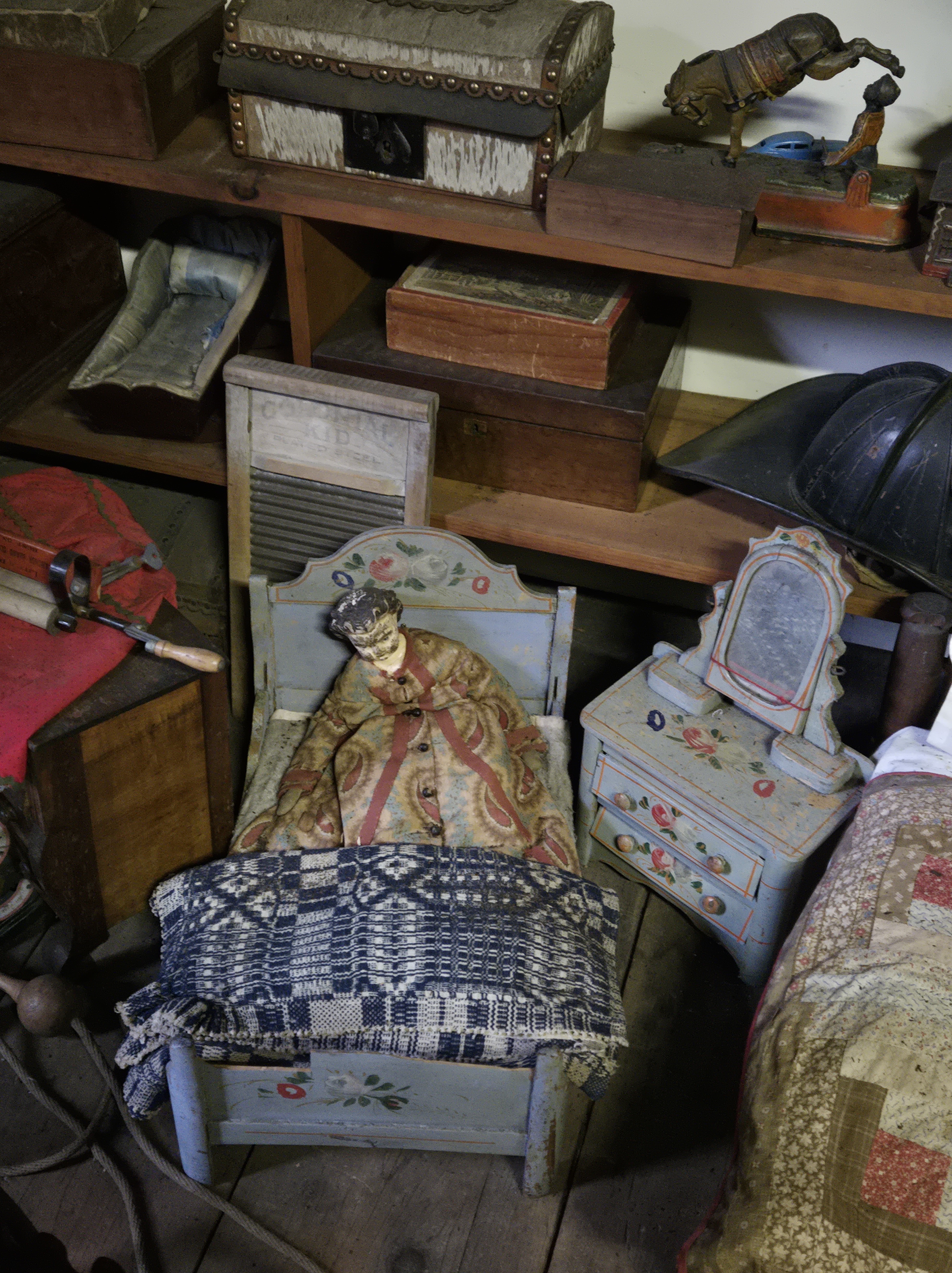
The tavern museum is filled with antiques and an interesting display of shoe-making equipment. (I think Ephriam was a cobbler in addition to all his other jobs.) The docent explained that shoemaking used to be a cottage industry and that many homeowners participated in this side business.
Touring the museum is free; however, we chose to support it by joining the antiquarian society that runs it. To find out more about the tavern and to see more images, visit their Facebook page.
We left the tavern with our heads stuffed full of information and with a greater appreciation for the role of such buildings in the foundation of our country. Later, we toured the town to get a feel for it, and walked the graveyard where Thomas Parker is buried. We didn’t find his grave, but we saw some great examples of Puritan gravestones and their distinctive three-lobed shape, symbolic carvings like the “death’s head” or winged skull, and inscriptions that reflect their beliefs about death and eternity.
Next up: Theodore Parker Church
For previous posts about our New England trip, view:
The Nathan Hale and Strong-Porter Homesteads
 Marie's Meanderings
Fascinating family history and how fortunate to visit a museum tied to it.
Thanks for reading, Diana! Yes, it’s not every day you find a museum devoted to a branch of your family. I was so glad the visit worked out. Plus, I learned even more when I wrote the post, but there’s nothing like a first-hand visit.
The Campbell connection is fascinating. Was the jail still intact when you visited the tavern?
From my understanding, the tavern didn’t have a jail cell in it when Campbell was there. The tavern itself functioned as a jail. Yes, his stay there was a fascinating side highlight that I just had to pursue!
What an amazing experience for you! Just wonderful!
Thanks for reading all my recent posts, Lori! It was cool to see the influence my ancestors and relatives had on the town and to walk where they walked.
I can only imagine! You inspire me to do more!
That’s a lot of wonderful history about this particular tavern and tavern in general (and yes, I’m a fan of the Outlander books). I wasn’t aware of the need to be a model citizen to own one. But it makes sense. I expect there were some “low-life dives” in many places, too.😉
Hi Eilene, the historian who taught us about taverns also mentioned that they were so important, some commonwealths passed laws that every town needed to have one. Tavern owners also couldn’t do business on a Sunday. If they did, they could have their tavern certification taken away! But you’re right, I suppose there were some “uncertified” taverns, as well.
Love this: you’ll be familiar with this concept because characters in the books/movies are often shown scheming in taverns. Right away I thought of the bar scene in the original Star Wars movie! And lots of scenes in cowboy bars! And Rick’s in Casablanca!
Oh yes, I didn’t think about the Star Wars bar, but so true! It’s fun to think that the American Revolution evolved in bars.
I enjoyed reading about the history. That doll is definitely creepy!
It seems like there’s always at least one creepy doll in this old places!
Pingback: Theodore Parker Unitarian Church | Marie's Meanderings