Artist’s Point, Grand Marais MN

When last we met, Russ and I were in Grand Marais along the shores of Lake Superior for an afternoon photo reception at their local health facility. We decided to stay overnight after the reception and take a little photo expedition the next morning to a scenic spot on the harbor.

As we ate supper at the Gunflint Tavern, I came up with the bright idea to do a reconnaissance mission to the spot to prepare for the next day’s shot. I hadn’t been to Artist’s Point in several years and wanted a refresher. The sun was still up so we’d be able to see okay to walk along the break walls and rocky coast.

I must admit that I had a glass of wine with supper and then for dessert, a brandy old fashioned cocktail. Although the food at the tavern was lovely, that cocktail was truly memorable! A brandy old fashioned is made with muddled (smashed) maraschino cherries and orange slices. (For a photo, see this post.)

I don’t know what kind of cherries the tavern used, but they took the drink to a whole new level! They were dark maroon and tasted divine. I know they weren’t Amaro-soaked cherries because I’ve had those before. I wish I had asked our waitress what they were, but I didn’t.

Thus fortified, and wearing high-heeled boots, I ventured with Russ to the harbor. I didn’t even have my Nikon along (that was back at our inn), only my cell phone.

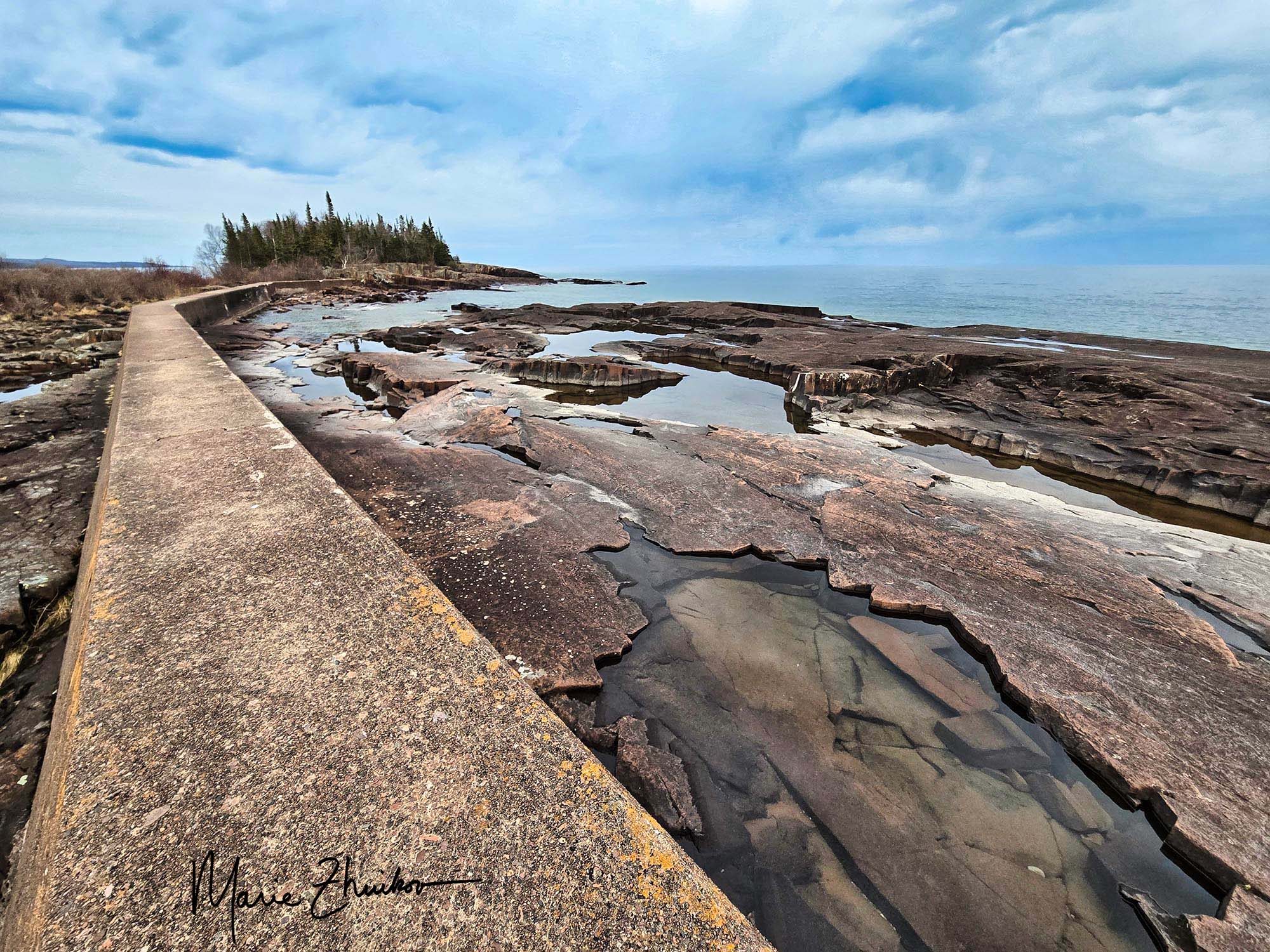
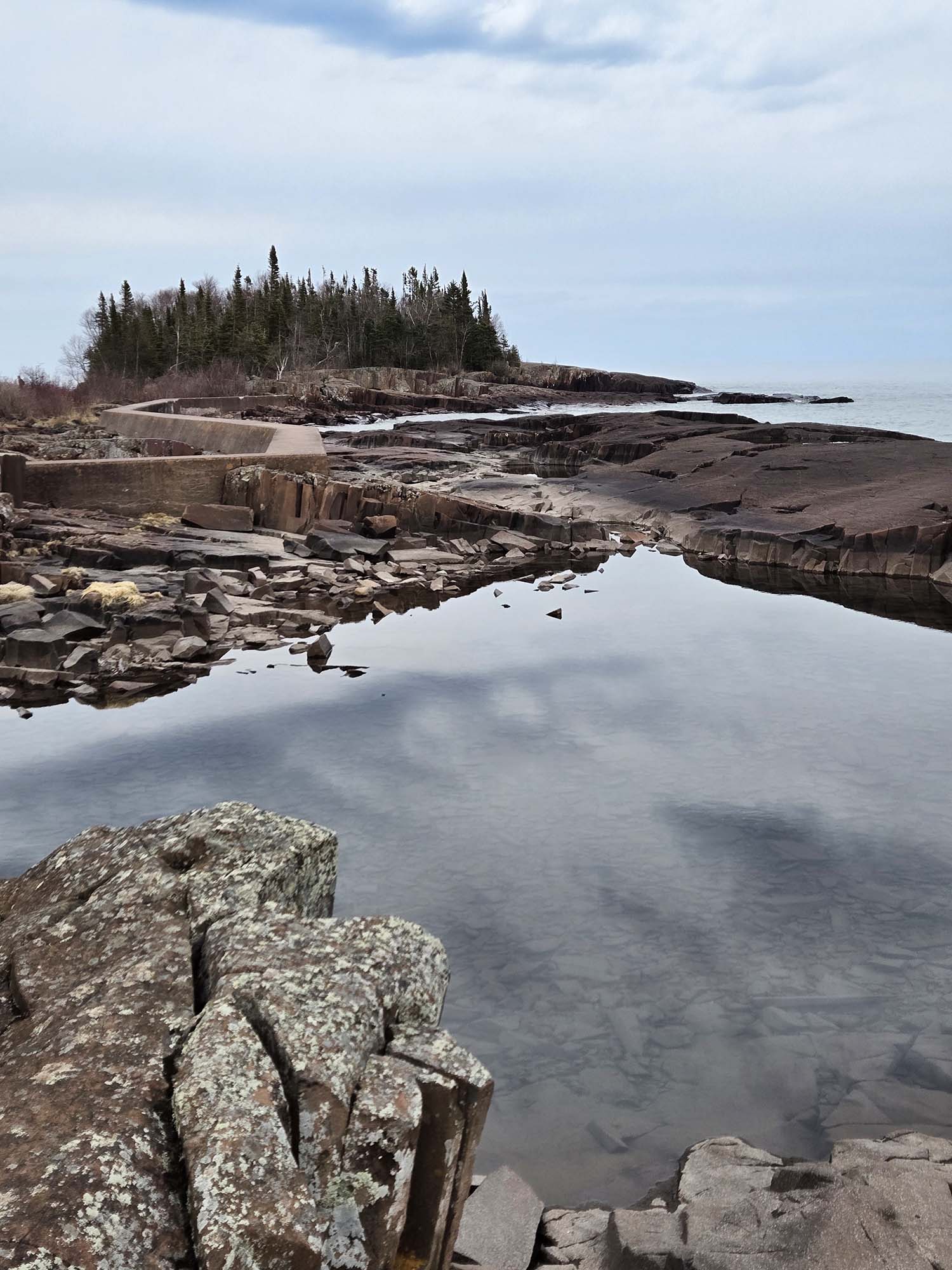
I clambered up on the break wall, but Russ refused. He’d had a drink with dinner, too, and didn’t trust his balance enough to join me. I, however, found that my dessert made me not really care that I was up on a rocky wall in high heels. Plus, the views! I immediately became inspired and started snapping away on my phone, wandering this way and that for the best views.

What was intended as a simple reconnaissance turned into a photo shoot in its own right. Here’s a gallery of my results.
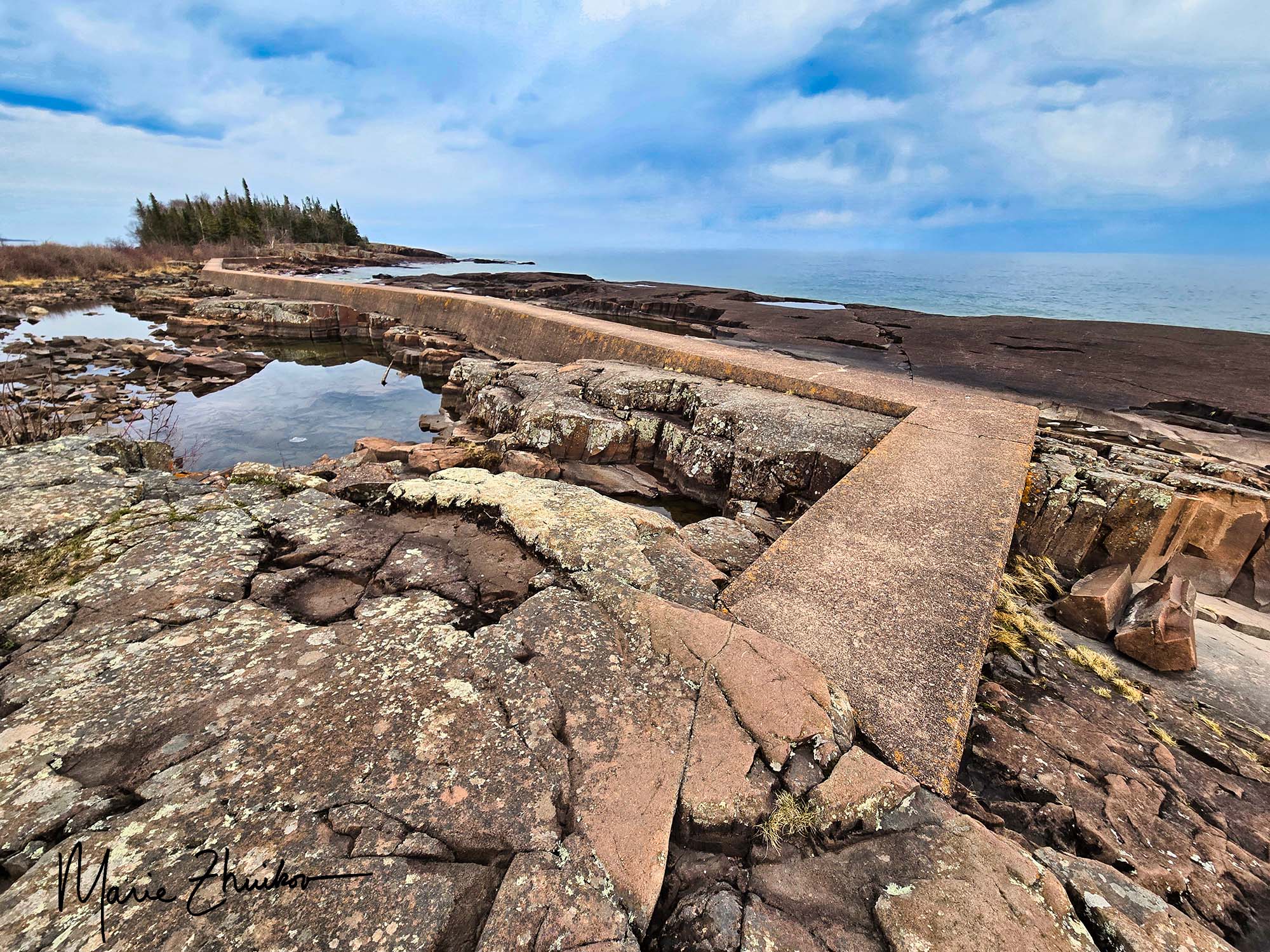
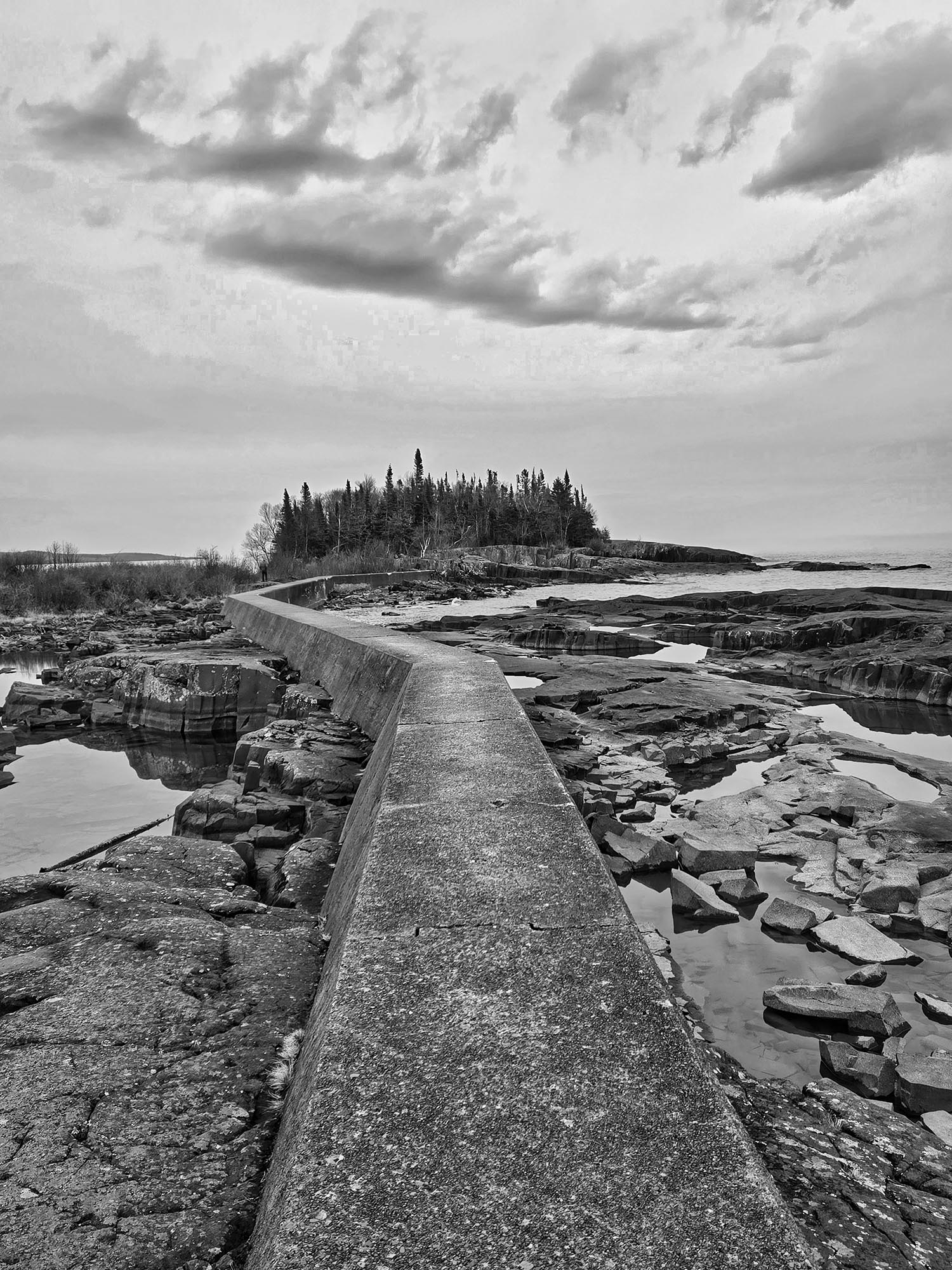
I clambered off with wall none the worse for wear and we headed to our inn for a rousing card game. We slumbered until Civil Dawn – that time just before the sun rises. In our case, that was 5:30 a.m., much earlier than we usually wake.

We quickly dressed in gear appropriate for temperatures in the mid-40s. I gathered my tripod and camera and we drove down the hill a short way to Artist’s Point. The area is named for its picturesque views. Painters can often be found there.

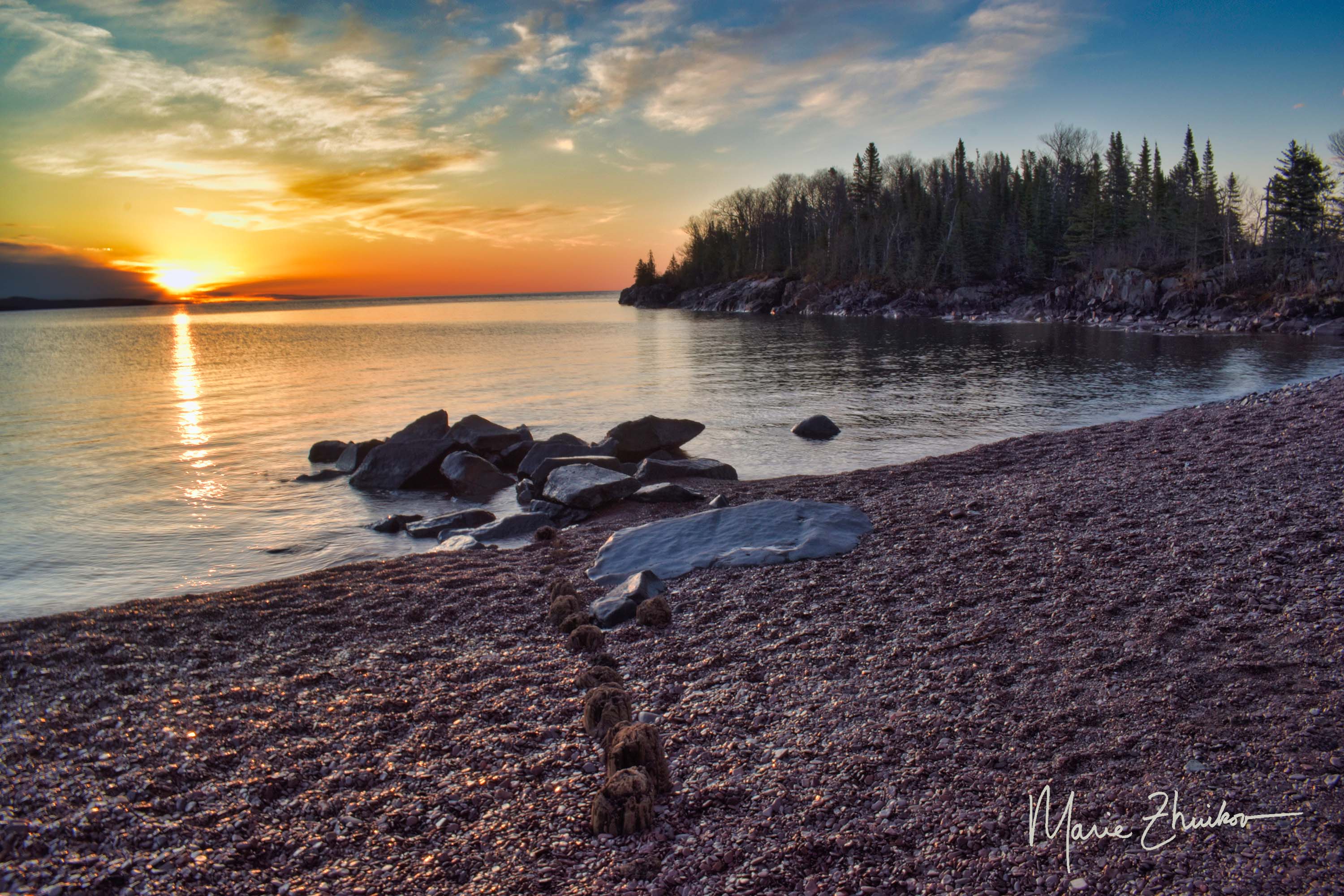
The sky over Lake Superior began turning a light orange as the sun prepared to make its appearance. Songbirds were singing, mallards quacking. Shorebirds flitted from rock to rock in front of me on the beach. The air was calm.

The sun wasn’t rising close to the island where I hoped it would be, so I set up my tripod on the beach and started taking photos. As the sunrise progressed, I found some large rocks and old wooden pilings that made for an interesting foreground. I crouched for the best angle.
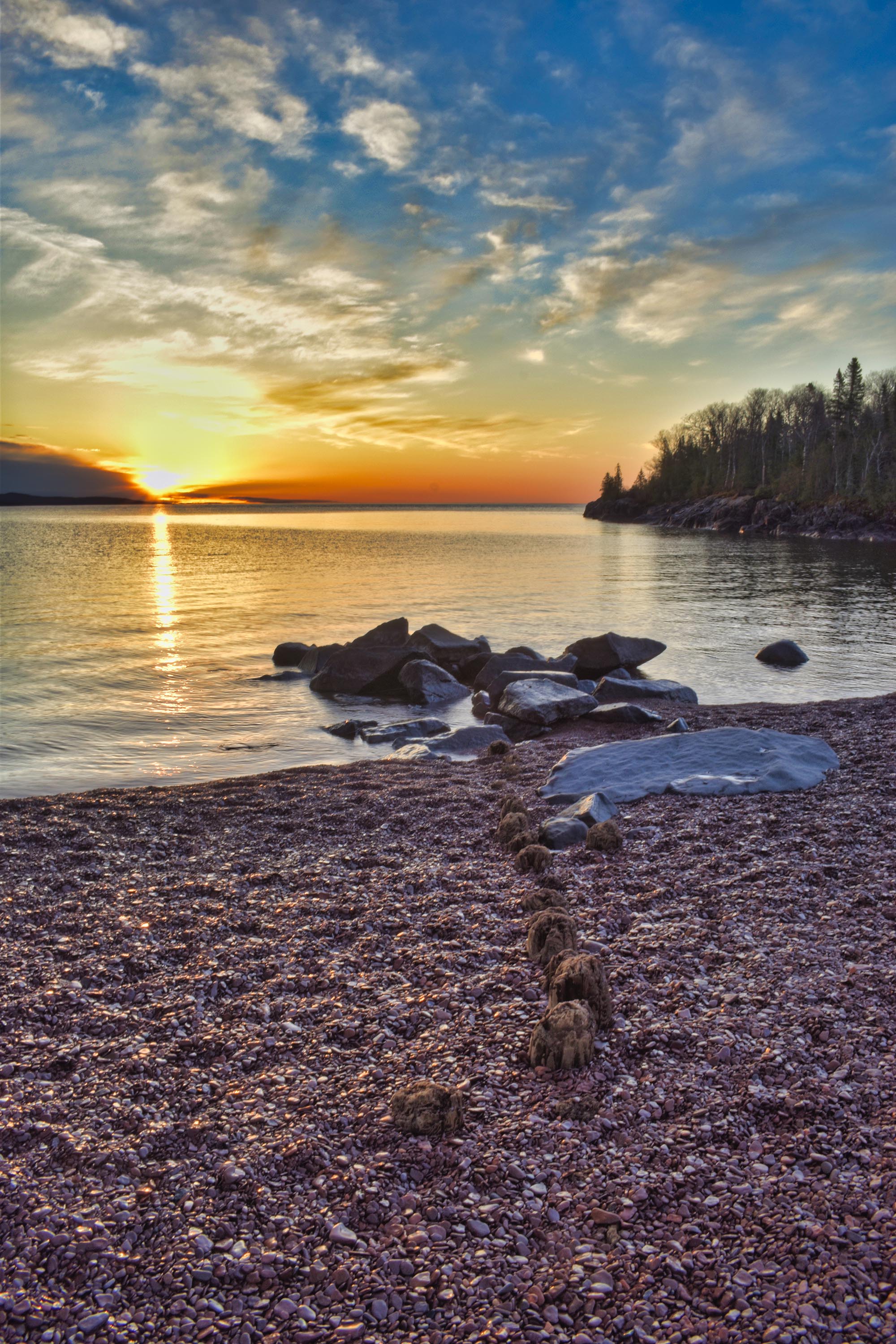
I stepped away from my camera a few times to enjoy the sunrise in its own right, without a viewfinder in front of it.

Then I made my way out to the point and the break wall. Russ stayed back again. By this time, the sun climbed higher, but it was too bright for a good photo against the island. Instead, I focused my efforts in the opposite direction — on the lighthouse in the harbor, which was lit by the reflection of the rising sun. As I shot, a gray fishing boat left for the deeps of the lake with a raucous chorus of gulls following in hopes of sharing the bounty to come.

As I was finishing, I noticed a man off to the side on the harbor shore. Was he a photographer, too? Was he seeing something I wasn’t? (Every photographer’s nightmare!)

Then I noticed he wasn’t holding a camera, but a fishing rod. Just an angler out catching breakfast before work.

My cold fingers told me it was time to stop taking photos, so I clambered off the wall and met up with Russ. We returned to our cozy inn, peaceful, inspired. Happy.

Catching a Wave

Catching a Wave. Image by Marie Zhuikov

You may recall that a few weeks ago I left my “photo babies” at a medical facility in Grand Marais, Minnesota, along the shores of Lake Superior. (For a refresher, read this post.)

Russ and I were able to visit my babies earlier this week at an afternoon reception for the photographers and artists whose works are featured on the walls of the facility. I was excited to visit my images and see where they were hung. They seemed well cared for and happy in their new surroundings. My four large images were together on one wall and the other smaller ones lined a different wall farther down the hallway.

For a while, I stood near my images, a fly on the wall listening to peoples’ comments about my photos. Hearing their compliments and theories was fun. Meeting members of the medical facility board and the other artists was an added benefit.

This was my first reception, so I wasn’t sure what to expect. We struck up conversations with several photographers who proudly took us on hallway tours of their works. There were a couple ladies from Duluth who I hadn’t met before.

When I was in the reception room enjoying snacks and a PowerPoint show of the images, several reception-goers approached me, wanting an explanation of how I took one of my photos. We walked back to where the large images hung and stopped in front of “Catching a Wave.”

Before I told the three ladies how I got the shot of a wave splashing off a rock on Madeline Island in Lake Superior, I wanted to hear their theories. All of them thought I used a tripod and that I took multiple shots.

Surprise crossed their faces when I told them I just sat on a rock with my feet dangling over the water and hand-held my Nikon. I took the image when I was on the island for my first-ever photography class. This image was from a class outing in a park along the lakeshore where we roamed. I thought it would be fun to try and “catch a wave” with my camera.

As I sat on the rock, I pushed the shutter in the moments after a wave hit the rock and sprayed. I only took a couple of shots, not even bothering to look at what I had in the field because it was hard to see my playback viewer in the sunshine. Instead, I hiked down the trail to the next viewshed.

But when I returned to my room after our class outing, I knew something was different with the rock splash photos when I scrolled through them on my camera. “What the heck?” I recall saying to myself. My wonder turned to pleasure after I downloaded the images to my computer and took a closer look. I’d caught the wave perfectly in two of them!

The ladies at the show pointed out a couple things about the photo that I hadn’t noticed before, plus some patterns in my other photos that I had not seen. Then we walked down the hall to view their images and they described the trials and tribulations involved in taking their shots.

Once the reception was over, Russ and I headed out to a local restaurant for supper. We planned to stay overnight and wake at dawn the next morning so that I could have a photo outing at a scenic spot on the town’s harbor before we left for the two-hour drive home. We may have been there for the photo reception, but why not turn it into a photo expedition, too?

As it turns out, that was a capital idea! I’ll share those images in my next post, but here’s a sneak peek:

Artist’s Point Sunrise, Grand Marais, Minnesota. Image by Marie Zhuikov

To see a slide show of the other photos I took during my Madeline Island photography class, please visit this post. If you’re interested in purchasing “Catching a Wave,” it’s available on canvas (24” x 36”) for $150. Since I took the class and that image as part of my day job, profits will be donated to the Wisconsin Sea Grant Program, which provides research and education programs about lakes Superior and Michigan. To see my other work, please visit my photography webpage.

If I Were a Real Photographer . . .

In my workaday world where I drive around, sit at my desk, eat, and sometimes sleep, I often run across photo opportunities that I don’t have the time or energy to pursue. I’ll be driving down Duluth’s hillside and see the sun shining in an interesting pattern on Lake Superior, but I have a work meeting to get to, so don’t have time to stop. Or, I’ll be walking into the grocery store and there’s a spectacular sunset but I’m on mission, so bye-bye sunset. Or, darn, I don’t have my fancy camera with me, just my cell phone, so I won’t take the shot.

Often at these times, I’ll sadly joke with myself, saying, “If I were a real photographer, I’d find a way to take that photo.” I can’t count how many times I’ve thought that over the years. My hope is that once I retire, I’ll have more time to follow up on these photo opportunities, but that’s about a year off.

This morning at our cabin, one of those moments happened again. I’d been awake in bed since 5:30 a.m. It was now an hour later, and sleep was not returning. From bed, I could see the lake, its far shore lit golden by the rising sun, water as smooth as glass with winter’s ice only recently melted.

Lying there, I thought, “If I were a real photographer I’d get outside and take that photo.” But I was cozy and drowsy. Outside, it was probably only 40 degrees.

But the spectacular shoreline lighting was only going to last a little while. It would be a shame to miss this opportunity. All I needed to do was get out of bed . . .

Beside me, Russ slumbered peacefully. I didn’t want any movements I might make to wake him . . .

Then, I thought about what fun it would be to actually be a real photographer this morning. Sure, I only had my cell phone, but that was better than nothing.

I hopped out of bed, donned my light blue fuzzy bathrobe, grabbed my phone, and jumped into my big Sorrel boots. As I headed outside, I could see the light fading from one section of the far shore. It wouldn’t be long before the bare trees were a drab brown once again across the whole thing.

As I neared our small beach, a duck farther down the lake took off in startled flight. That might have had something to do with it seeing a blue monstrosity emerge on shore!

I raised my phone and fired off a few shots, walking along the shoreline to gain a better vantage. The sun lingered for a few more minutes, enough time to take a few good images. I especially liked one with some reeds in the foreground.

Phone lowered, I stood for a while, drinking in the view directly with my eyes. All was still and quiet.

I turned to walk back the few yards it would take to get to the cabin. After a couple steps, I was stopped by the sound of something crashing through underbrush in the neighbor’s yard. I recognized two dogs, Kamikaze spaniels, as I like to think of them, headed right toward me! One sported black spots, the other brownish-red.

I knew from previous encounters with their master on the road, the dogs running beside his ATV for exercise, that they were nice dogs with a lot of energy. Whenever they pass a driveway, they head down it, circle the yard with noses to the ground and meet their master back on the road.

Still, to ensure they were forewarned of my presence, I greeted them with, “Hi dogs, hi dogs!”

Unlike the duck, the dogs took no notice of me and sped right past. One rounded the far corner of the cabin and headed back to the road, while the other took a detour around our boathouse and then ran through the forest, rejoining its buddy.

In all, I was only outside this morning for a few minutes, but a lot happened. As I opened the cabin door, I felt a bit more like a real photographer.

My morning’s work.

Lake Superior Skink Soup

Cullen Skink soup, homemade bread and tea served at the Laird’s Kitchen in Delgatie Castle (2016).

I know what you’re thinking – that is an unappetizing name for a soup! But there’s a reason behind it.

Back in 2016, when my friend Sharon and I traveled to Scotland, we became acquainted with Scotland’s version of chowder, thanks to some friendly people in a café in Gardenstown. The soup is called Cullen Skink and they said the best place to find it was Delgatie Castle, which was not too far away.

We took them up on the advice and ate lunch at the café in the basement and then toured the pinkish castle. We tried the soup, which is made with smoked haddock, potatoes, and onions – thus, a very white dish. It was served with homemade white bread slathered with butter. More whiteness!

Delgatie Castle, Scotland, where I had my first Cullen Skink.

The soup was very creamy and good. I am a chowderholic, so I loved it. The café is also known for its scones, which were lovely. The soup was invented in the Scottish town of Cullen. It was created from deprivation and want. The skink part of the name is usually reserved for soups in Scotland with ingredients like a shank of beef or ham. Having none of these on hand, smoked fish was used instead, but the name of “skink” stuck to it.

Cullen Skink has been described by The Guardian newspaper as “smokier and more assertive than American chowder, heartier than classical French bisque.” I agree.

The Scottish are proud of their skink, holding an annual Cullen Skink World Championships competition. The most recent event was just a couple of weeks ago in a hotel in Aberlour.

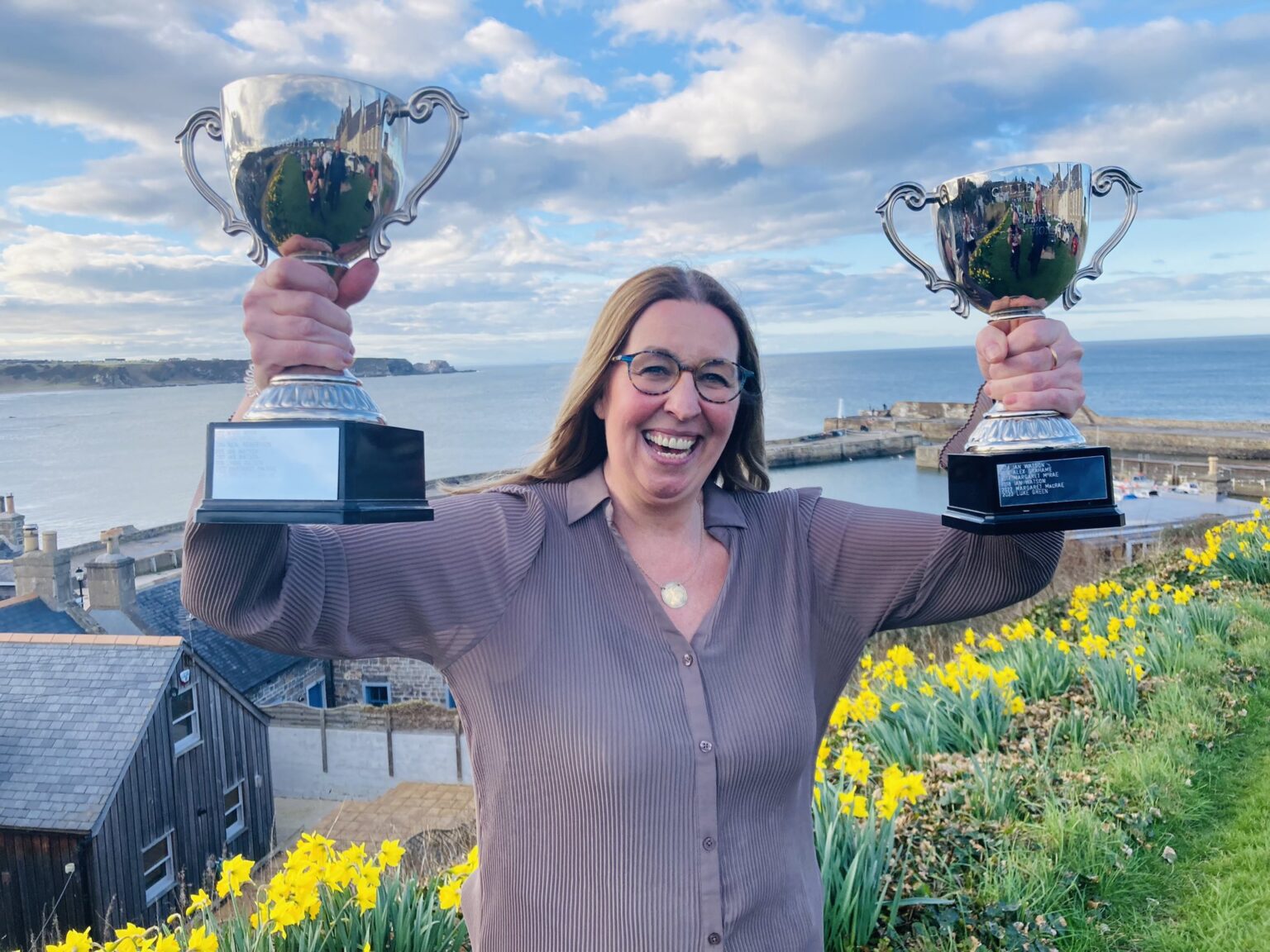
Kellie Spooner, excited winner of the 2024 Cullen Skink World Championships. Image courtesy of NE Scotland BBC.

During our trip, Sharon found a recipe in a travel guide and took a photo of it. I recently came across the image and decided to follow up on my long-ago plans to make the soup at home. The only problem is that smoked haddock is impossible to find in my neck of the woods. So, true to the original nature of Cullen Skink, I had to make do with what was at hand, and that was a Lake Superior smoked whitefish.

To make the soup even more white, I substituted white pepper for black pepper. For the milk, I used Carnation brand evaporated milk because it was on sale. But I had forgotten I can’t have it due to my intolerance to corn and any ingredients derived from corn. Carnation contains dextrose, which is derived from corn.

I had migraines for two days as I ate the soup and its leftovers, until I figured out the culprit. So, if you have a corn intolerance, keep that in mind! The generic brand of evaporated milk at my store is free of dextrose, so I will use that next time.

If you want to introduce a bit of color into the soup, I suggest using B-sized (new) red potatoes and not peeling them. The parsley also adds color.

I forgot to soak the smoked fish overnight in the milk beforehand, but it still came out tasting great! If you love chowder but are looking for something different, this is the soup for you.

Here’s my version, which I have named Lake Superior Skink to honor the fish from Lake Superior that I used. If you use a local fish species, feel free to call this recipe your own geographic version of skink. For instance, a version containing catfish could be called Mississippi River Skink. Yet another appetizing name!

For a another version of chowder, see my steelhead and clam chowder recipe.

Lake Superior Skink

(Inspired by Scottish Cullen Skink Soup)

Lake Superior Skink with red potatoes

Serves 4, wheat- and corn-free, gluten-free

2 Tablespoons butter
1 onion, diced
2 pints evaporated milk (approx. 3 cans) or whole milk
1-1/2 lbs potatoes, peeled and diced
1 lb smoked Lake Superior whitefish or lake trout
2 teaspoons dried parsley
sea salt and white pepper, to taste
lite sour cream

Soak fish in milk overnight to infuse extra smoky flavor into the broth.

Melt butter in a pan, add the onion and cook gently for 7-8 minutes until it is soft but not browned. Pour in the milk and bring to a simmer. Poach the smoked fish for 3-4 minutes until it is cooked and will flake easily.

Carefully lift the fish out onto a plate and leave it to cool slightly. Add the diced potatoes and simmer for about 20 minutes until soft. Blend some of the potatoes with a stick blender to thicken the soup a little. If you have a regular blender, put about a quarter of the soup into it, blend, then return to the pan.

When the fish is cool enough to handle, break it into flakes, discarding the skin and bones. Return the fish to the pan and stir in the parsley and spices. When serving, add sour cream as desired.

In Which I get Paid to Work in a Bar

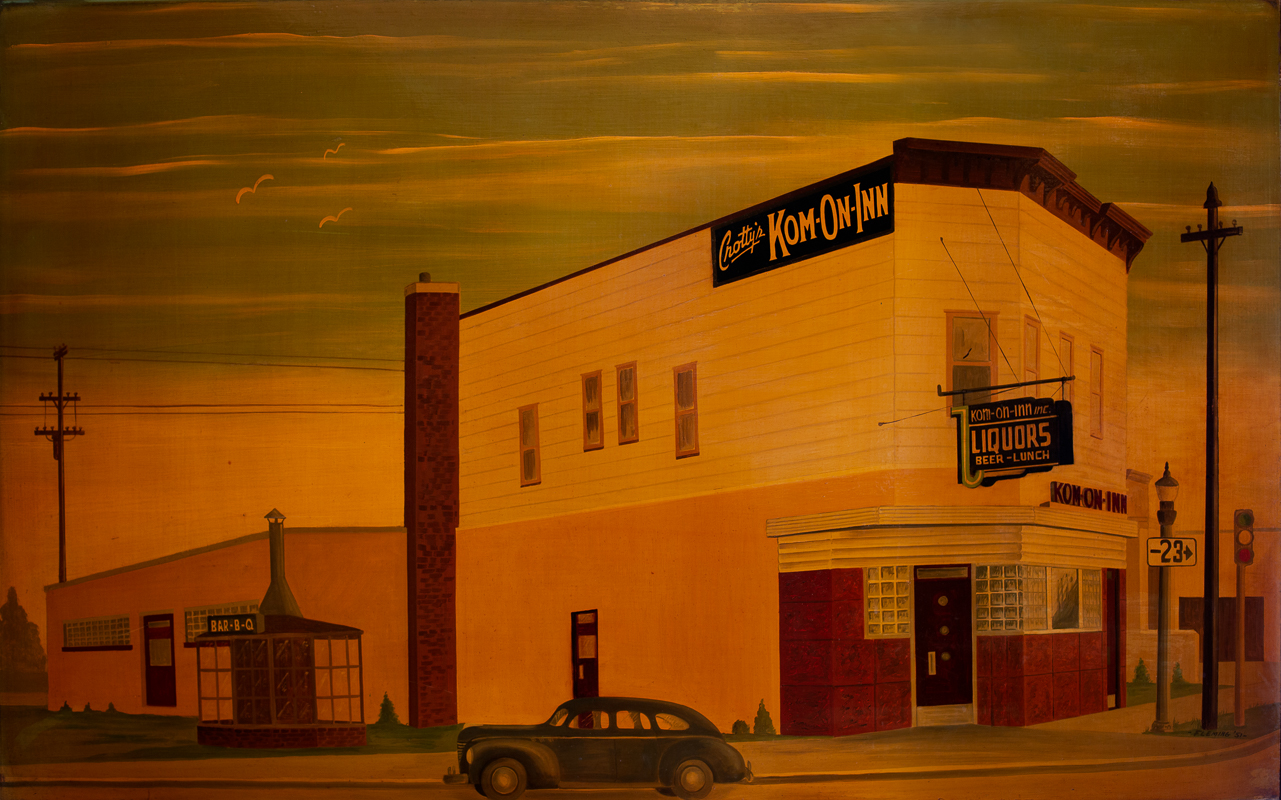
The Kom-on-Inn in West Duluth. Image courtesy of Jennifer Webb, University of Minnesota Duluth

I recently worked in a bar. Not as a bartender, though. I didn’t even drink! I was there to view art and explore how it relates to community and the restoration of the St. Louis River, which flows along the border of Minnesota and northwest Wisconsin. You can view my resulting story on Wisconsin Sea Grant’s “Unsalted” blog here.

“Meander North” Book Interview

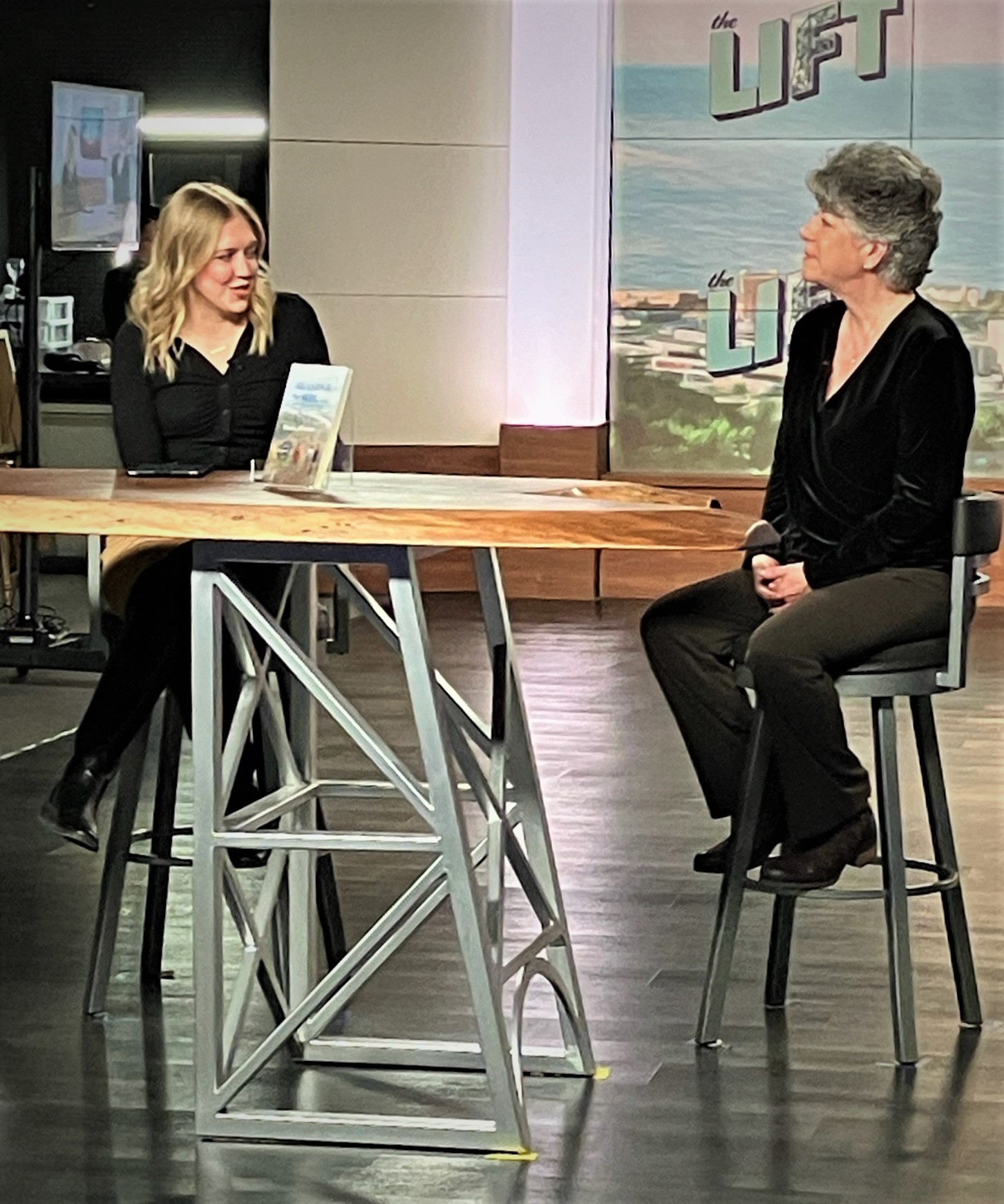
“The Lift” host Baihly Warfield interviews me about my blog-based book.

I was interviewed on local TV about my blog memoir, “Meander North,” the other day. It was a live interview, so was rather nerve-wracking. I’m not complaining, though! I appreciate every bit of free publicity and the interview seemed to go well. I had another live interview for work a few weeks beforehand, so I had some practice. You can watch the hoopla here.

For more information about my book, please visit my website.

Battling for Security

Will this post be about a quest for emotional security? No! It’s all about web site security.

I recently completed several frustrating weeks of time (on and off) to get my author and photography website deemed “secure” with an SSL certificate. What is it? SSL stands for Secure Sockets Layer, which is “an encryption-based internet security protocol.” An SSL certificate is a digital certificate that authenticates a website’s identity and enables an encrypted connection.

I’d put off buying the certificate because the need for it strikes me as a money-grab by web hosting companies – rather like the kind of security a person receives from payoffs to the Mob. 😊

But now, many web browsers won’t even let people access “unsecure” (or insecure?) websites without going through a lot of clicking acrobatics. My analytics have also been dropping, so I decided to splurge and get the SSL certificate.

I didn’t want to hassle with coding it, so I purchased a more expensive option where I wouldn’t have to deal with that. I thought I could just buy the certificate and that would be it, but NO. I waited several days, and nothing changed with my website. It still came up as unsecure in my browser.

So, I called my web hosting company and asked for help. In a minor miracle, I was actually able to talk to a real person. As an added bonus, he had a sense of humor and he appreciated my humor. All was good. Except for the fact that my website was built on a platform that was too old for the fancy SSL certificate where I didn’t have to do any coding.

Mind you, my web site is only 10 years old, but in technology years, that’s ancient. As a result, the humorous tech guy gave me a partial refund and signed me up for the less-expensive-but-needs-coding certificate. He was also nice enough to add some of the needed code to my site. He said it should begin working within 48 hours.

It didn’t. I won’t bore you with the details, but the fix involved two more phone conversations with my web hosting platform and one hour-long online chat with my domain-name-holding company. Said company had to do a backdoor end-run special code to make the certificate work. It wasn’t something I could have ever done myself.

The process was a pain in the butt and took a good five hours of my life, but anyone who cares to visit my site can now do so with a sense of internet security. I am happy about that. What I am not happy about is that I will have to do this every year!

It might be time for a new web site, but I think I’m gonna eke the rest of my money’s worth out of this one, first. 😊

Missing my (Photo) Babies

About a week ago, we drove north along the shore of Lake Superior to Grand Marais, Minnesota. We carried a precious cargo: a dozen landscape images I took, printed out on canvas, metal and paper. They had been accepted for my first public exhibit at a local health facility in the town.

I was excited by this opportunity to share my hobby with an audience. Once we arrived, we were met by the organizer who helped us unload. He also showed us where the images would be hung. We left my works with him and headed home on our two-hour drive.

After a half-hour cruising past pine trees along the rugged landscape of Lake Superior, I began feeling like I’d left something important behind me in Grand Marais. The feeling nagged until I acknowledged it and searched my psyche for its source.

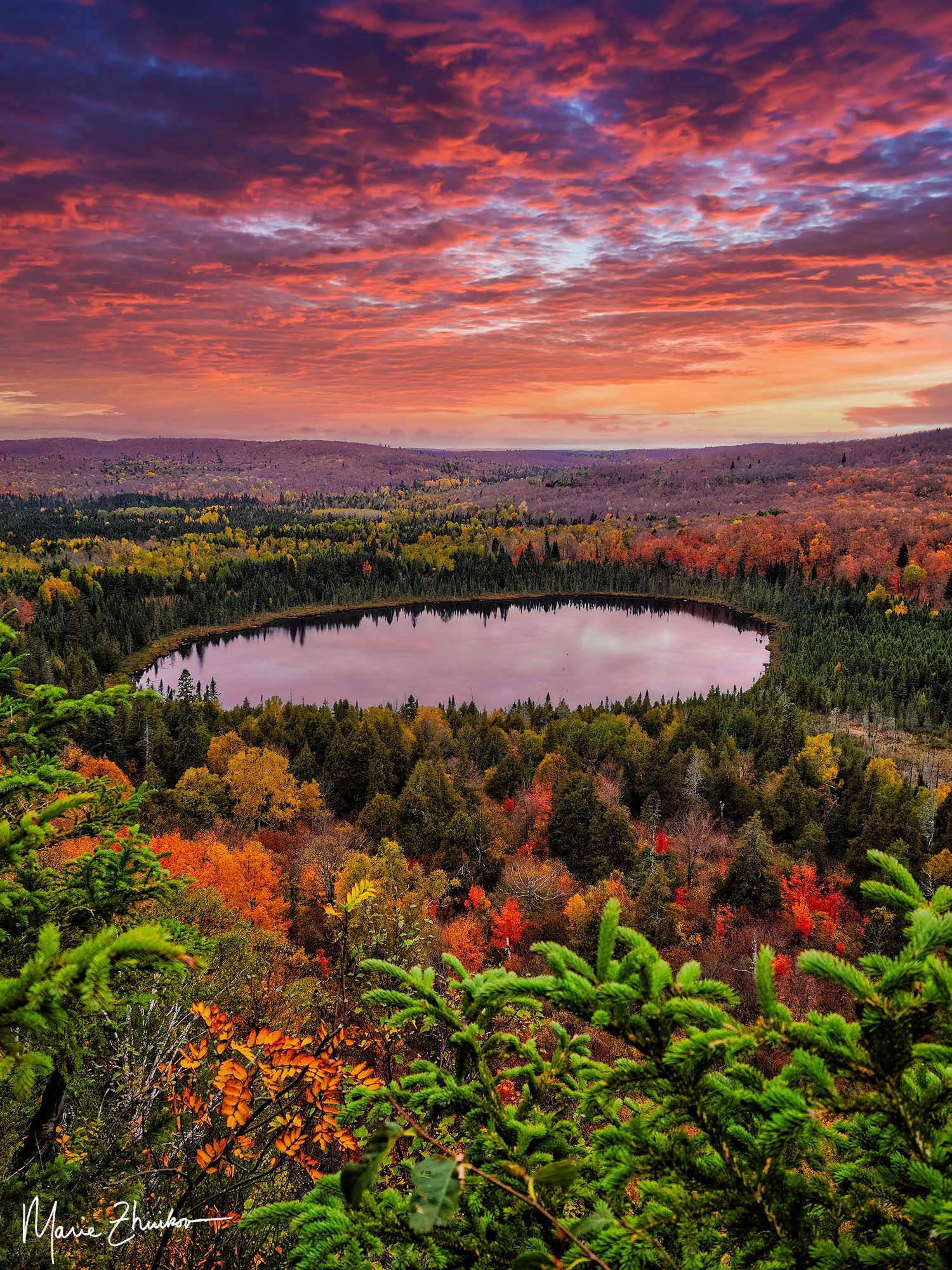
One of the babies I left in Grand Marais, MN. This is Oberg Lake in northern Minnesota.

It didn’t take long for me to realize the important things I left behind were my photos! The feeling was similar to when I dropped both of my children off at college. I turned to Russ and said, “My babies! We left my babies back there!”

He looked at me quizzically, but Russ is a quick study and soon smiled.

I did not expect that feeling. I didn’t realize I was so attached to the images, many of which have hung in my home for several months. It’s not that I don’t trust the exhibitor, it’s more I feel like I’ve left part of me in Grand Marais. Of course, the feeling isn’t as strong as what I have for my human babies, but it kept coming back over the course of the next few days. Russ got used to hearing me blurt sporadically, “My babies, I miss my babies!”

As with dropping my children off to college, I hope this is a one-time thing that will get better with time. But it’s made me wonder if other photographers experience this when they let their images out of their sight. I’d appreciate hearing any impressions you wish to share.

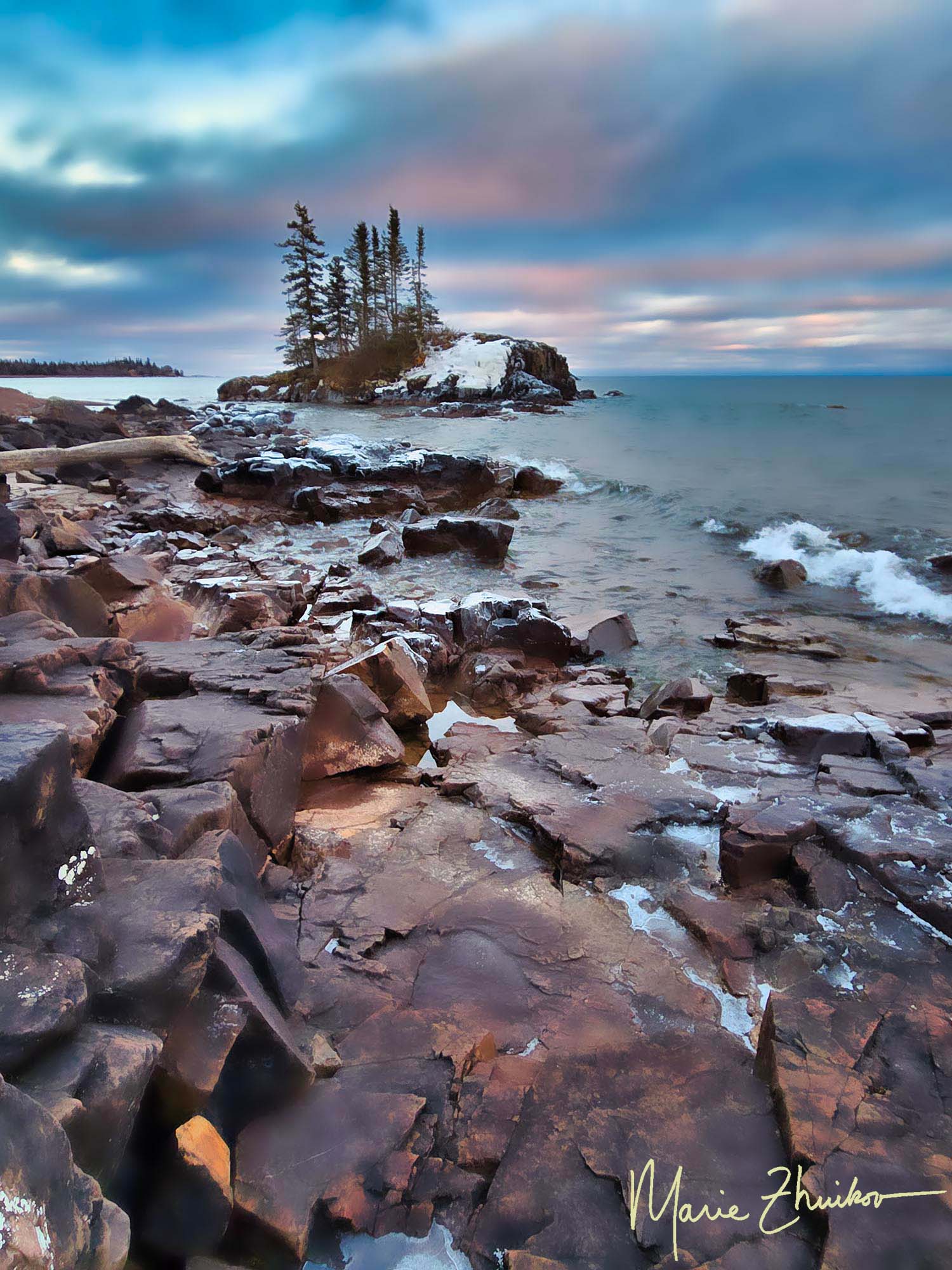
Tombolo Island, Lake Superior

“The world today is sick to its thin blood for lack of elemental things, for fire before the hands, for water welling from the earth, for air, for the dear earth itself underfoot. In my world of rock and water these elemental presences lived and had their being, and under their arch there moved an incomparable pageant of nature and the year.”

― Slightly modified quote from Henry Beston, The Outermost House

The Minute Men and the Minister

In preparation for a trip to Ireland and Scotland that Russ and I are planning, I was rummaging around in a genealogy book that my mother and her sisters prepared about the side of my family that has U.K. roots. I was looking for Irish names. I came up empty. Thanks to family lore and 23 & Me, I know I have Irish blood but I’m not sure where it came from.

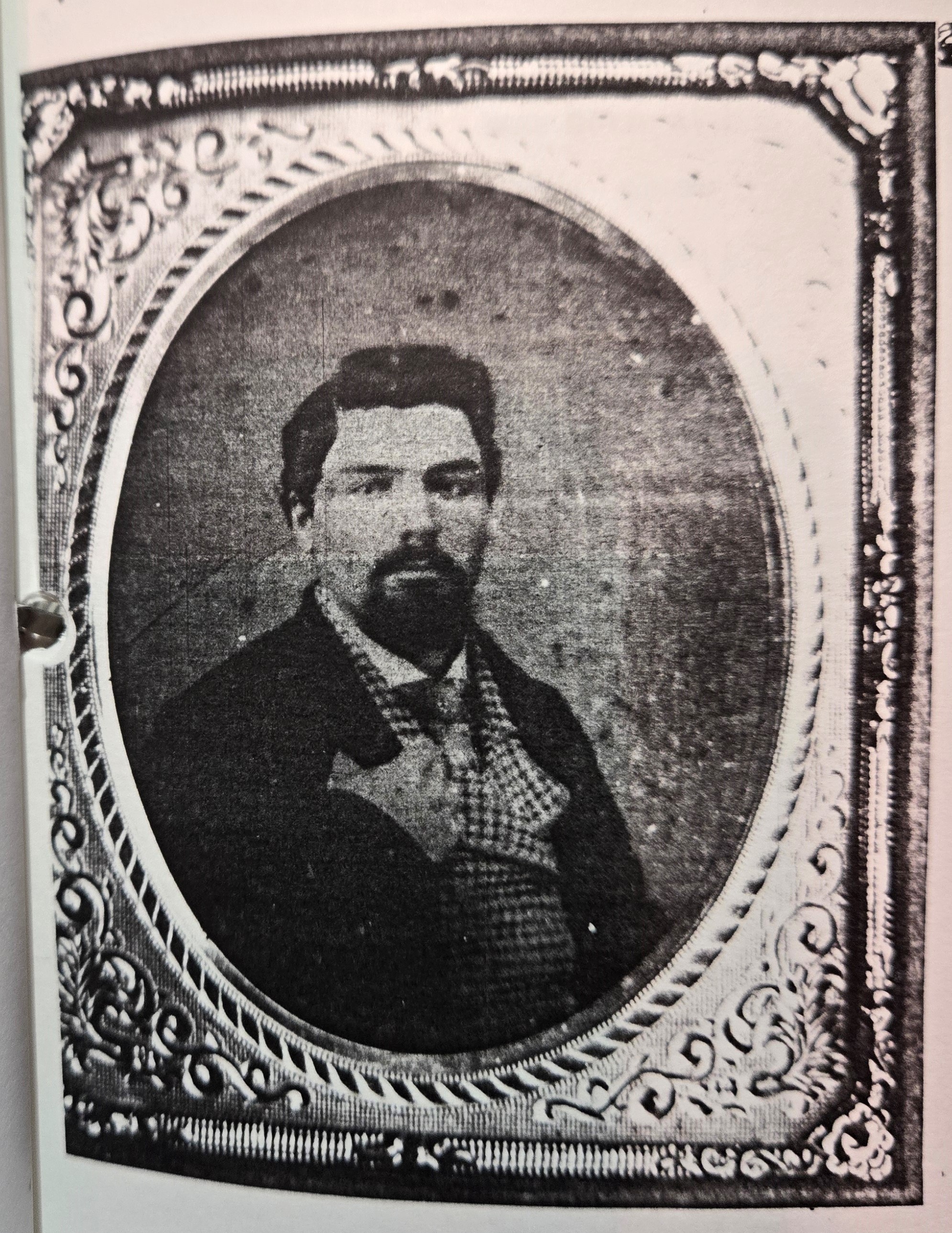
As I rummaged around in the book, I came across a pamphlet written in 1877 by Willard Parker (Detroit, MI) that I had noted before but never spent much time reading. It was about my Great (to the 4th power) Grandfather Caleb Parker. He was born in 1760 in Shrewsbury, MA, to Stephen Parker Jr. and Abigail Wright.

Caleb Parker

The surname of Parker originated in France. In essence, it means “park-keeper” and is an occupational name describing a gamekeeper. Could this be why I like “Lady Chatterley’s Lover” so much? (The book’s main character is a gamekeeper.) The name was introduced into England after the Norman (Viking/French) invasion in 1066.

Caleb’s original name was Nathaniel, but his parents changed that along the way to honor his brother Caleb who died in the French and Indian War in 1755 or 1756. The soldier was never heard from by the family. I suspect Nathaniel must have been very young when his name change happened. The French and Indian War ended in 1763 when Nathaniel was three, so maybe his parents changed his name during that time, once they gave up hope of Caleb the elder’s return.

Caleb/Nathaniel married a woman named Thankful Pratt of Shrewsbury in 1782 when he was 22 years old. He was a soldier in the late part of the Revolutionary War. While in the army fighting under George Washington, he acquired a taste for military life and in 1793 (after he had moved to Vermont), the governor appointed him captain of the Vermont Militia.

Militia fighters were also known as minute men because they had to be ready to drop everything they were doing at home with only a minute’s notice when needed for battle. They are immortalized in Longfellow’s poem, “Paul Revere’s Ride.”

About six years later, Caleb resigned his commission and moved to Stukley, an eastern township of Lower Canada, not far over the Vermont border. He died there in 1826. His wife, Thankful, lived 23 more years, dying in Stukley in 1849.

The couple had 11 children who met various fates. One was killed by a falling tree. One was a founder of Stukley township. The writer of the pamphlet said that Caleb’s “descendants have been mostly tillers of the soil. If there have been but few distinguished men among them, I may say, in all truthfulness, that honesty, industry, temperance and Christian character have been the prevailing characteristics of the son and daughters” of Caleb. “These qualities have been inherited from our emigrant ancestor [Thomas Parker], whose descendants in New England are not unworthy to rank honorably with those among whom they dwell.”

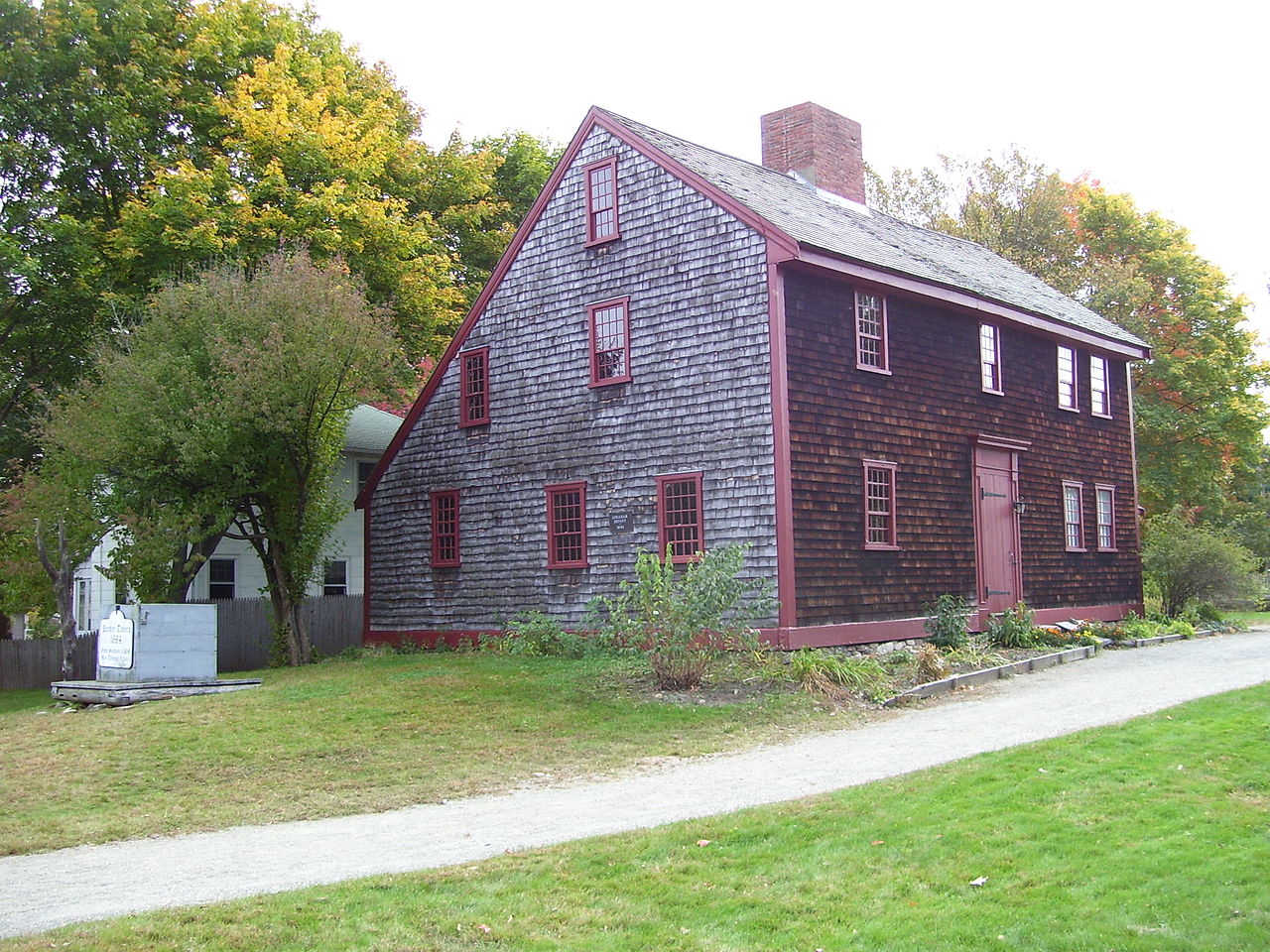
Parker Tavern image: By Swampyank at English Wikipedia, CC BY-SA 3.0

Thomas Parker, Caleb’s grandfather, came from England originally, sailing on the ship “Susan & Ellen” in 1635. I was surprised to discover that he has his own Wikipedia entry! Thomas was a Congregational Church deacon and had a large family with his wife, Amy Aylesworth. He founded Reading, MA. I also discovered that the oldest surviving building in Reading is named after the family. The Parker Tavern was owned and operated by Thomas’s great grandson Ephriam and it has been turned into a museum. I’m thinking a trip to Reading, MA, is in order someday!

If I were more talented with graphics, I would make a genealogical chart for you, but my skills do not lie in that direction. I did scribble one out with pen and paper for my reference, though, to try and keep everyone’s name straight.

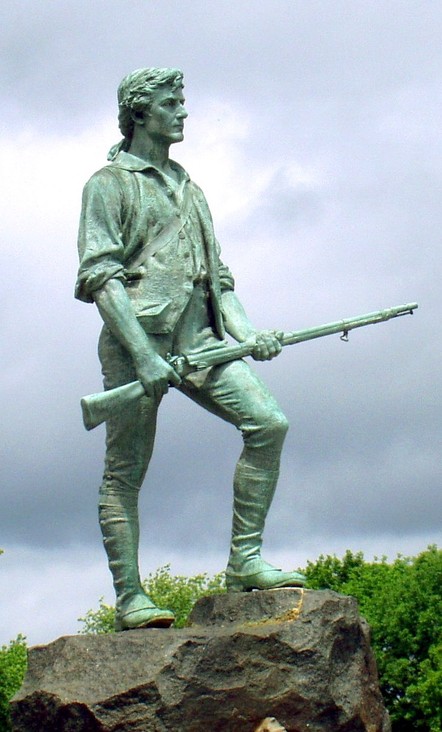
My line of the family is descended from Thomas’s son Nathaniel Parker. But Thomas had another son (I’m unclear whether his name was Hananiah or Thomas) who had some notable descendants. One is John Parker who was another minute man like Caleb. John led the Lexington, MA, militia in 1775. In fact, he was a model minute man. A sculptor used his likeness for the famous Lexington Minuteman statue that stands on the Lexington Battle Green.

The Minute Man statue on the Lexington Green. It’s based on militia captain John Parker.

John led the fight against the British in the battle of Lexington on the day the Revolutionary War began. The militia suffered lopsided losses to the British (8 militia killed, 10 wounded to only one British soldier wounded). One of Parker’s men, many years later, recalled Parker’s orders on the Lexington Green: “Stand your ground. Don’t fire unless fired upon, but if they mean to have a war, let it begin here.”

During the skirmish, John witnessed his cousin Jonas Parker killed during a British bayonet charge. Later that day he rallied his men to attack the British returning to Boston in an ambush known as “Parker’s Revenge.”

John is featured as a character in the book and movie called “April Morning,” which is about the beginning of the Revolutionary War. The book is mandatory reading in many a U.S. classroom.

Sounds like I will also need to visit Lexington in addition to Reading some day! I can’t believe that a relative of mine was involved in the very beginning of the Revolutionary War. If I had known that earlier, I would have paid a lot more attention to my American History class in school.

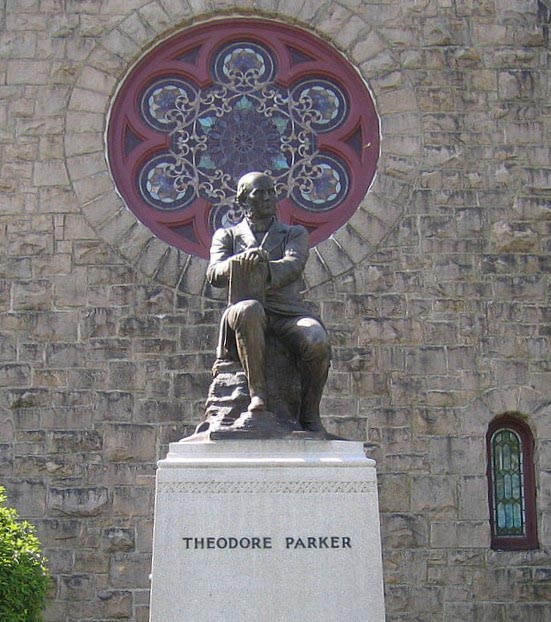
The other notable descendant is Theodore Parker. John was his grandfather. Theodore was a noted Unitarian minister and abolitionist. Just out of Harvard Divinity School, Theodore preached at a church in the Boston neighborhood of West Roxbury. That church still stands today as the Theodore Parker Unitarian Church with a statue of Theodore on its grounds. But eventually, he left after being kicked out of the Boston Unitarian brotherhood for his “radical” views on abolishing slavery and other religious matters. He also believed outrageous things such as women should be allowed to vote, and to become doctors, lawyers, and (gasp!) even ministers.

Reverend Theodore Parker

Theodore is credited for famous quotes later shortened and used by President Lincoln and Martin Luther King. The phrases are, “a government of the people, by the people and for the people” and “the arc of the moral universe is long but it bends toward justice.” The former was used by Abraham Lincoln in the Gettysburg Address and the latter by Martin Luther King.

By coincidence, I’m a Unitarian! (Or perhaps it’s not a coincidence?)

Those Parkers were quite a bunch. It’s not every day that a person discovers their ancestors have their own Wikipedia pages, movies, statues, and a tavern and a church named for them! Plus, I learned that they founded two towns. I don’t think my mother and her sisters knew any of this because they never mentioned it.

Although my search for Irish ancestors was unsuccessful, I learned more than I ever dreamed about my family and their role in shaping early America.

Theodore Parker’s statue in front of the Theodore Parker Church, a Unitarian parish in West Roxbury, Massachusetts. Photo by By Biruitorul (talk) – Biruitorul (talk), Public Domain