Niagara Cave


Our tour guide points out some fossils inside the wedding chapel in Niagara Cave.

I have been neglecting this beloved blog – been meandering around too much. But that means I have plenty to write about when time allows.

When last we met, Russ and I were “Lingering in Lanesboro,” a picturesque town in southern Minnesota. As you may recall, our camping trip was HOT with temps in the 90s. On one of these sweltering days, we opted for the natural air conditioning provided by a cave.

Niagara Cave is in Harmony, Minnesota, about 15 miles south of Lanesboro. I’d been there before but this was a first for Russ. The limestone cavern is a cool 48 degrees and it offers a half-mile of passageways sculpted by water. The one-hour group tour goes out and back, so visitors hike a full mile, 120 feet below the surface. There are a lot of stairs (550 total) to ascend and descend, so if you have trouble with those, you might want to take that into consideration.

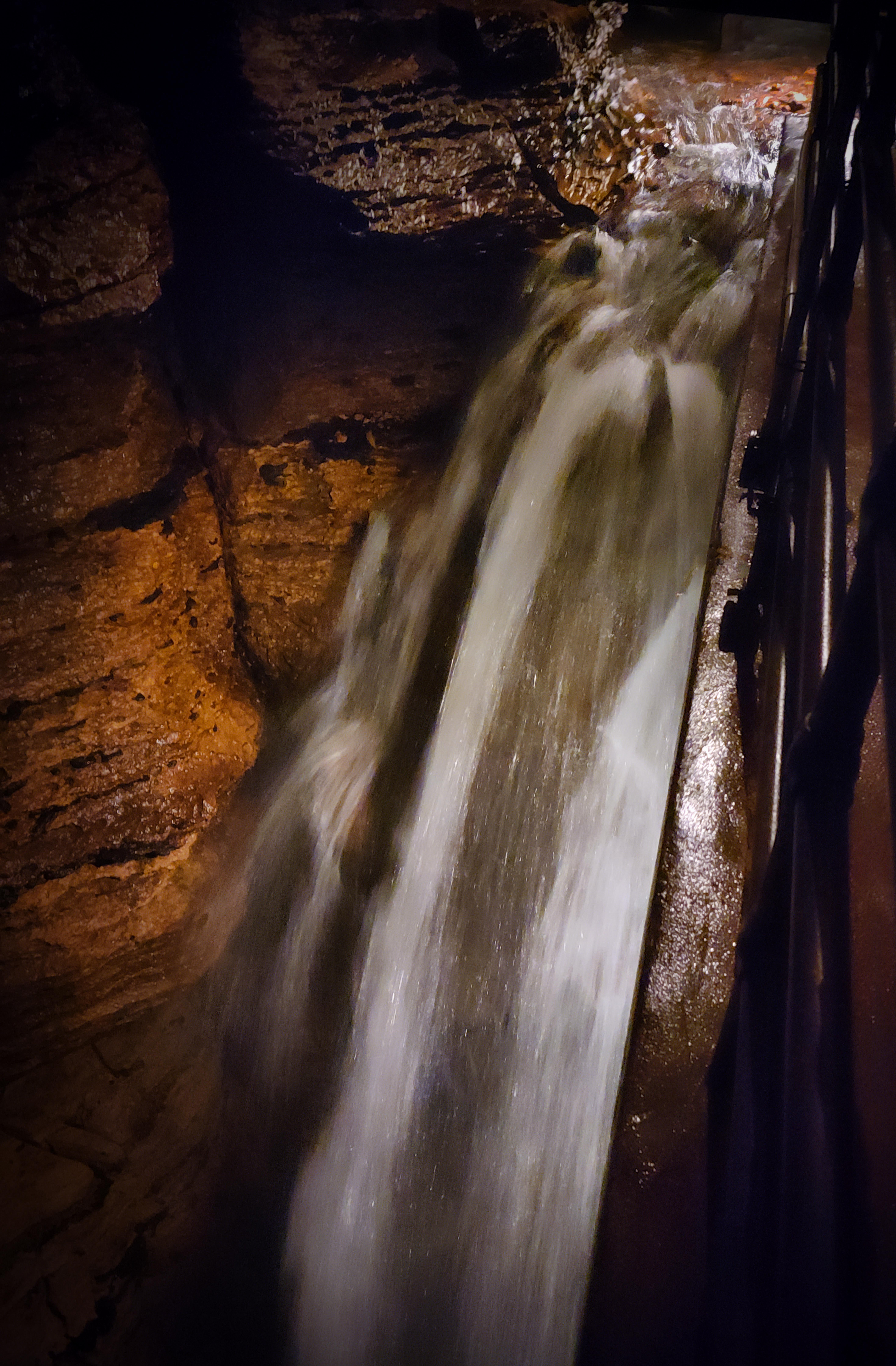
The underground stream that carved the cave is (thankfully) only running through part of the cave these days. It forms a subterranean waterfall that drops an impressive 60 feet; kind of like the Niagara Falls of caves – thus the cave’s name. As if that wasn’t enough, there’s even a tiny wedding chapel where you could tie the knot, if so inclined.

Fossils from prehistoric plants and animals dot the walls and geologic features like stalactites, stalagmites, and flow stone are on view.

The waterfall is my favorite feature. I’d never seen a cave with one before I came here, although there are other caves with waterfalls in the U.S.

The falls in Niagara Cave.

Lingering in Lanesboro

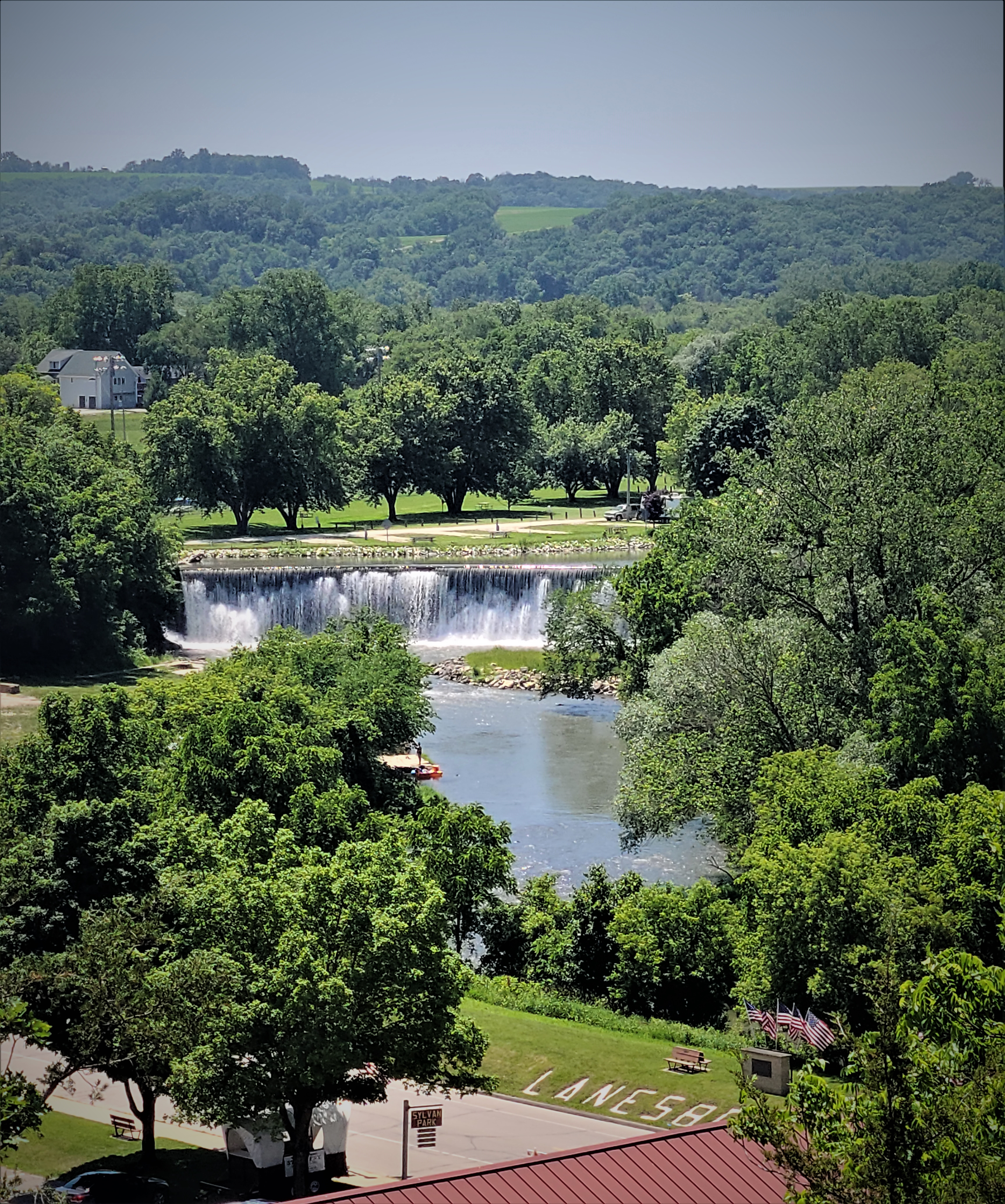
The town of Lanesboro, MN, as viewed from the hill in town.

Russ and I meandered with our Scamp trailer to Lanesboro, Minnesota, a small town not far from the Iowa border. I almost lived in Lanesboro, once, back when I was working for Mayo Clinic, which is a bit north of it. (But then Duluth and the call of Lake Superior won out and my family stayed in Duluth.)

Lanesboro is set in a limestone valley cut by the Root River. It hosts live theater, art galleries, and museums — as if all the creative people from the surrounding flat farmland tumbled into the valley and decided to stay. Had I lived there, I’m sure I would have felt at home. As it is, at least I get to visit it occasionally.

What attracted us weren’t the numerous bed and breakfast inns (Lanesboro is known as Minnesota’s Bed and Breakfast Capitol) or the rhubarb (also known as Minnesota’s Rhubarb Capitol), but Lanesboro’s bike trail.

The Root River Bike Trail runs right through the community. The forty-two-mile-long trail saved this little town from becoming a ghost of itself over thirty years ago when the trail was built by the state on an abandoned railroad bed.

We Scamped just outside of town at the Eagle Cliff Campground. As we drove to the campground in the evening, fireflies were out in full force, lighting up the roadside ditches and the forest edges. When we arrived, the campground hosts moved us to an upgraded site (pull-through with full hook-ups to water/electric/sewer) at no extra cost because a family reunion was going on in the site next to the one we originally signed up for. With that, we could already tell it was a well-run facility and the rest of our trip confirmed that good first impression.

That first night, we ate a quick and simple meal of scrambled eggs and Spam. In case you’re not aware, the home of Spam (a ground pork canned meat product) is not far away from Lanesboro, in Austin, Minnesota. We like to use it when camping because it’s tasty and easy. Since we were so close to its birthplace, we had to make sure we brought it along on this particular trip. Someday, I’d love to go to the Spam Museum, but we didn’t have time on this trip.

We stayed at the campground for four nights. Our first day, we bicycled from the town of Whalen to Peterson. Access to the Root River trail in Whalen was available via a short bike ride through the campground and down the quiet local highway. It was twenty miles from the campground to Peterson and back.

The Root River Bike Trail

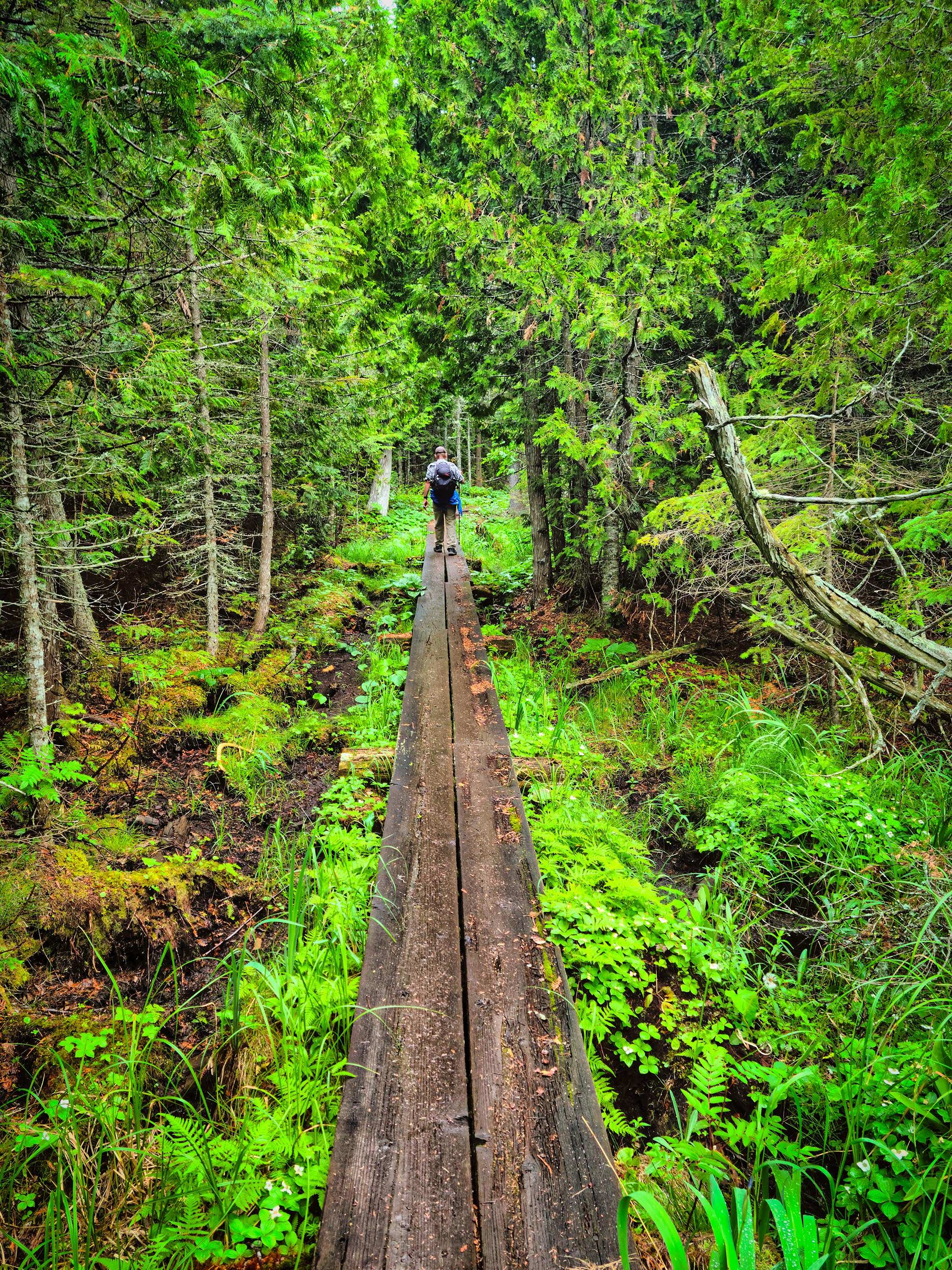

One thing I love about the Root River Trail is that it’s well shaded. Trees line most of it, providing welcome relief, especially when temps were in the 80s like they were for us. The trail is also in good shape. Hardly any potholes or tree root bumps were to be found. The trail follows the river and is relatively flat. Quaint farms and cornfields line the parts that aren’t forested. Yet another thing I like is that the trail is free to use, unlike some of the trails Russ and I bike up north.

A variety of birds flitted across in front of us or called from the trees. We saw orioles and cardinals, heard catbirds, cowbirds and house wrens. At our campground, a pair of eagles were nesting nearby, and we watched black vultures circle around the bluffs that surround the valley. We also heard a rooster or two as we biked past farmsteads.

The area must have had a good amount of rain this season – everything was green and smelled verdant – like a newly mowed lawn.


A barn seen along the trail.

A note of caution: wild parsnip plants line the trail – you don’t want to come in contact with those. I also found out the hard way that stinging nettles can be found along the trail. My legs got a brief dose while I was taking the photo of the barn found in this post. Dedicated photographer that I am, I stood in them just long enough to get the photo. My legs stung, but not for long. The movement of biking and the fact that I wasn’t in the nettles long helped, I think. I just gritted my teeth and ignored the pain!

When we reached Peterson, we rested at a picnic table set up for bikers in town. We took the requisite tourist photos next to the town’s large welcome sign gnome. As we rehydrated, we were treated to the sight of a man driving a motorcycle with his German shepherd in the sidecar. They drove past us twice before we decided it was time to bike back to our campground.

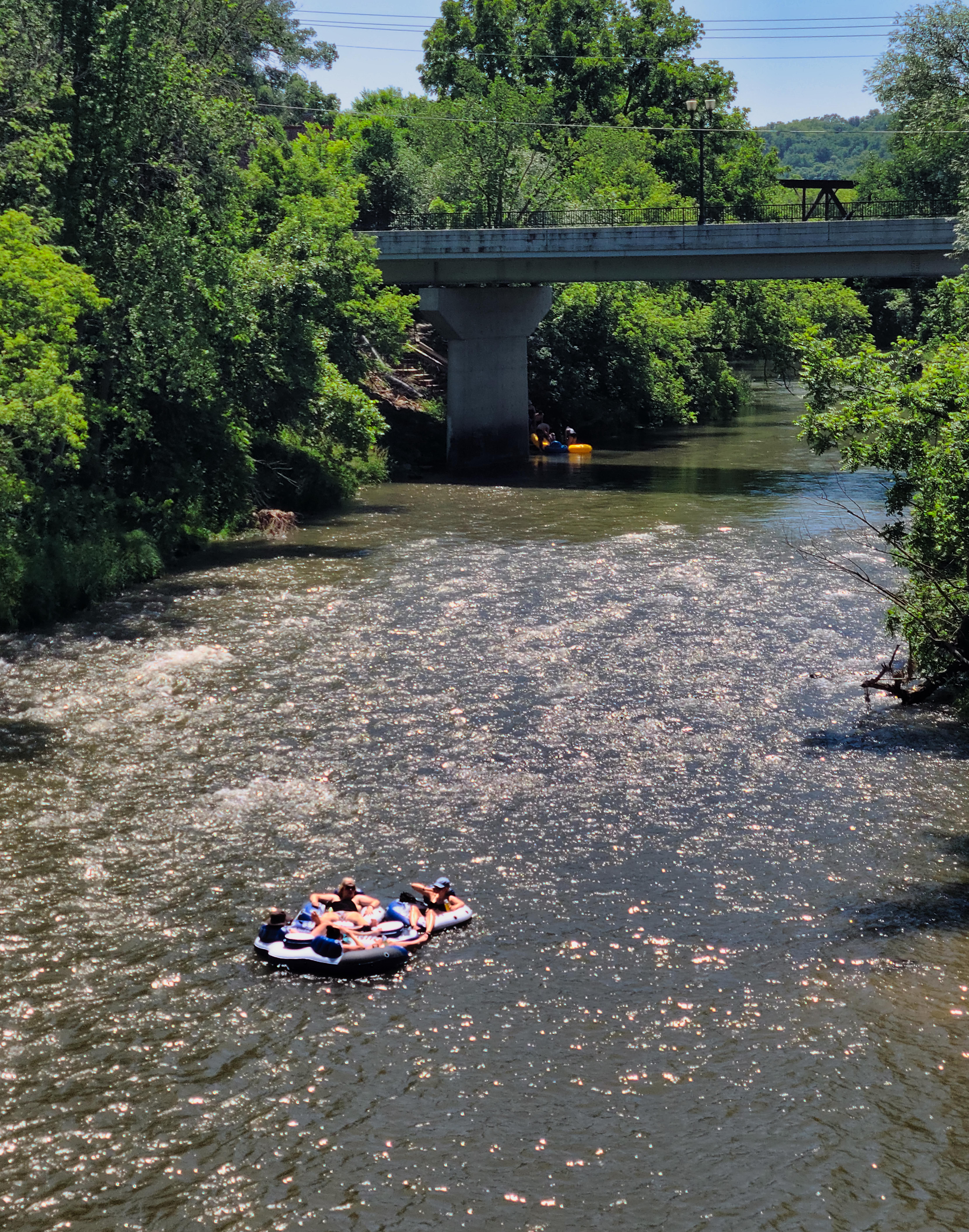
Tubers on the Root River

The temperatures climbed into the 90s the next two days, so we opted for cooler forms of entertainment. One day, we visited Niagara Cave in Harmony, Minnesota, about fifteen miles south of Lanesboro. I’ll write more about that in a separate post. The next day we went tubing down the river. The campground offered a shuttle service and tubes at a reasonable cost. They drove us to a drop-off spot, and it took us about two hours to tube back to the campground. We just hopped out of the river at the campground landing and brought our tubes back to the office. It worked out pretty slick. The only thing that gave me pause is the lack of instruction by the shuttle driver. He just made some joke about hoping we all had our wills updated and then dropped us off. (!!)

There’s really not much to tubing other than avoiding strainers (trees that lean into the river – you can get stuck in them) and to wear sunscreen. I was so hot and sweaty when I applied my sunscreen, it must not have worked. I looked like a lobster the next day and am in the delightful peeling process now.

The river was murky but cool and refreshing. I enjoyed getting to know the river better. I saw three fish jump, lots of red-winged blackbirds and vultures, and we passed a Canada goose nesting area complete with goose families.

The final morning of our trip, the temps dropped into the 80s again, so we hit the bike trail. We drove into Lanesboro and began from the trailhead near the bass pond. We pedaled west toward the town of Fountain, turning back at the trail junction (where it joins the Harmony-Preston Trail). On our return, we stopped at the Old Barn Resort for lunch – an interesting historical site connected to the Allis Chalmers Machinery Company. Lots of cliff swallows nest under the barn’s eves.

The shrimp mango rice bowl from Pedal Pushers Cafe in Lanesboro.

Another great place to eat is Pedal Pushers Café in Lanesboro. We stopped there on one of the hot days after hitting the gift shops and walking around the town. The food at the café is locally sourced and very good!

If you’re ever looking for a quaint Minnesota getaway, put the Lanesboro area on your list. You’ll be glad you did. We came home refreshed and sunburnt, but happy.

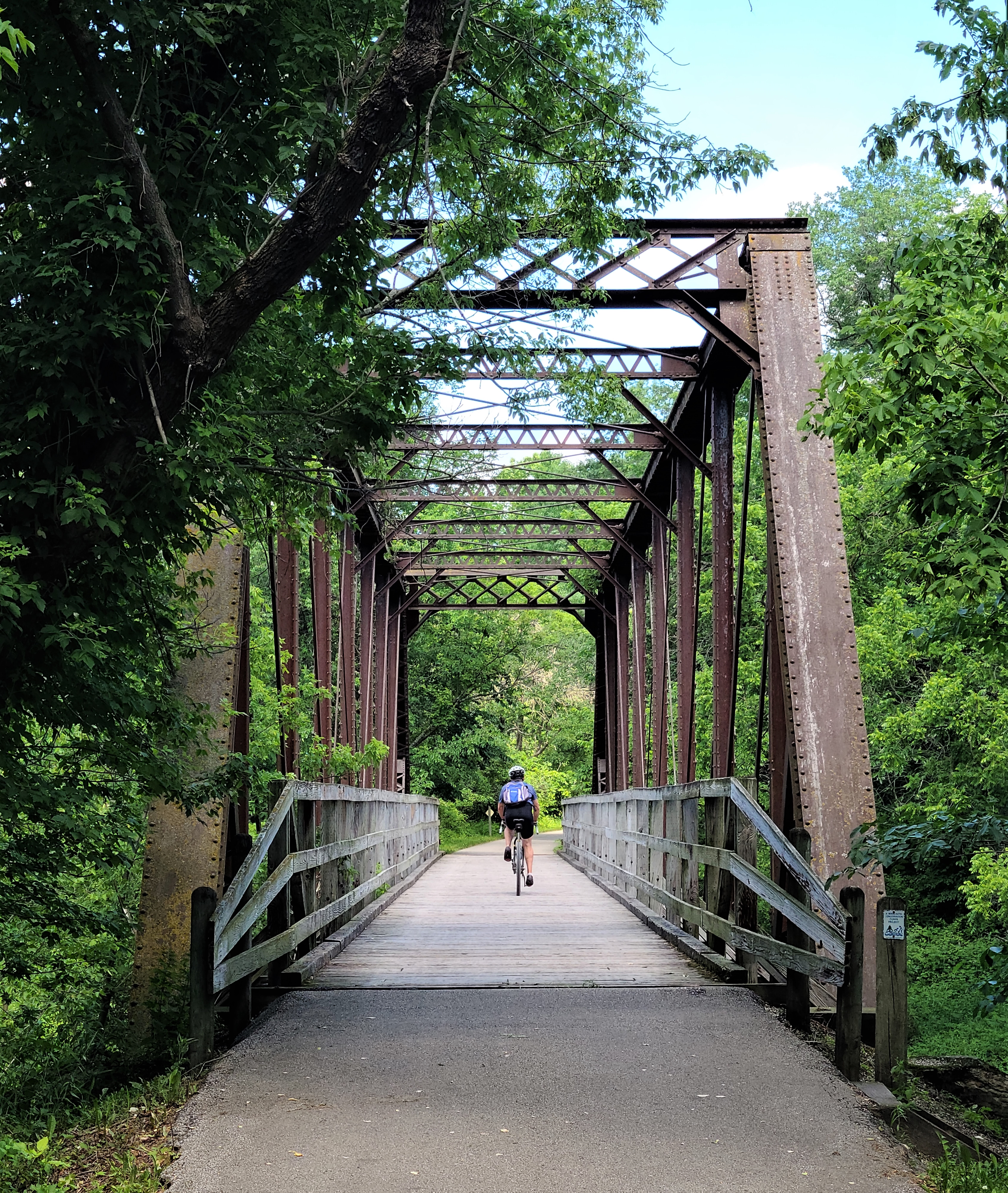
A bridge on the trail between Lanesboro and Fountain.

When a Member of your Writer’s Group Dies

James O. Phillips

In mid-April of this year, the Tunnel Fire engulfed more than 16,000 acres northeast of Flagstaff, Arizona, prompting the evacuation of more than 700 homes. One of those homes was that of Jim Phillips, a long-time member of the speculative fiction writers’ group of which I’ve been a part about fifteen years. Jim joined the group when he used to live in Duluth, Minnesota, and was a member of Lake Superior Writers. After he retired, he moved to Arizona, where he lived alone with two cats for at least half a dozen years. His nearest relatives lived several states away.

After the evacuation ended, a neighbor noticed that Jim’s Jeep was in the same spot it had been before the evacuation. Concerned, the neighbor apparently called the police to do a welfare check on Jim. They found him dead of “natural causes.” He had been dead for several days.

It was during this time we were supposed to have our monthly Zoom meeting to discuss our writing. We hadn’t heard from Jim about his availability for the meeting, so we delayed it until we learned more about his status. It just seemed weird to have a meeting without him.

We were aware of the evacuation and thought maybe he left his home so fast, he forgot to take his phone charger or something. That would be like him. My emails and texts to him remained unanswered, which was unlike him.

There are two other women in our group besides me, Linda and Lacey. Linda is retired and had a bit more time on her hands to investigate what was going on with Jim. Lacey has her own blog (Lacey’s Late-night Editing) and wrote a post that goes into detail about the events, should you be curious.

Linda doggedly tracked down information about Jim and called me when Russ and I were on vacation in Yosemite National Park to deliver the sad news. I was shocked, to say the least. We knew Jim had some health issues, but he had seemed fine the month before when we met via Zoom.

Like I told an acquaintance recently, Jim just “up and died on us with no warning.” It was disconcerting, and it took me several days to get out of my funk, even though I was surrounded by the unsurpassed natural beauty of the park. I found comfort in that beauty.

I’ve become a fan of Spotify and its various music mixes. A song called, “Resist the Urge” by Matt Sweeney popped up in my Daily Mix during vacation. Although I don’t agree with the song’s encouragement not to grieve someone’s death (you need to feel all the feels!), I do like the lyrics that say, “If you need reminders, look around at what is huge and wild and there you’ll see the way . . . I may not be there bodily, but in the wind, I’m here.”

Jim enjoyed hiking and getting out in nature. He often regaled us with tales of his hikes around Arizona. I felt he would approve my turning to nature to grieve. There wasn’t even a funeral for him that we could attend to share our grief. Not even an obituary we could find online. However, Jim started a speculative fiction group in Arizona and a member wrote a post about him (with Linda and Jim’s sister’s assistance). It’s fitting and such a good remembrance of him.

I especially appreciated this comment in the post: “The writing communities of Duluth and Flagstaff will fondly remember Jim for his scientific curiosity, love of all things science fiction and horror, his wicked sense of humor, his keen editorial eye, and his promotion of the Oxford comma.”

Our writers’ group at the Grand Canyon, 2017. From left: Linda, me, Jim, Lacey, Lacey’s husband Ivan and baby.

Since we couldn’t attend a public funeral, my writer’s group decided to hold a ceremony of our own. Last weekend, we gathered in Willmar, Minnesota, (the halfway point between all of us geographically). We had lunch together and then made our way to a state park north of town, where we hiked a short way on a trail (“Trail J,” for Jim). We found a small grove of oak trees and ventured off the trail to sit among them. I’m sure Jim would have approved of the location.

We shared our collective memories and feelings about Jim. We all were grateful for the visit we paid him a few years ago in Flagstaff, where we all gathered for several days. We visited the Grand Canyon and met with the writer’s group he had organized there.

As Lacey so aptly said in her blog post, losing a writing friend is different from losing a “regular” friend:

There is a part of me, a deep and essential part of me, that these three — now only two — people know more intimately than anyone else in my life. To share your writing with another, especially in its formative stages, requires a great deal of vulnerability. And from that vulnerability comes a trust that rivals the trust I have in my husband, my best friend, or my mom. Because time and again, they have proved themselves worthy to be allowed into my inner landscape, the world of my mind that is shared only sporadically with those I share my “real life” with.

Losing one of the few people who I consistently trusted with that part of myself is no small thing. And grieving it is no small task, especially when it is tied up so closely with the very thing I have turned to throughout my life to process everything else. But it’s the only way forward.

Jim provided a unique viewpoint on our writing that no one else will be able to match. Besides that, he was just an all-around good person. Even though he died alone with his cats, the ripples from his death reverberate through our lives, and it’s going to take some time to recover.

I couldn’t write any fiction for about six weeks after his death. When I did try, my output was only half of normal.

I’m okay with that. It’s going to take time to get over this.

When we met in Willmar, we didn’t bring any writing to critique. We’re saving that for our next meeting in August, when Lacey will be in Duluth (from her home in South Dakota). I suspect this meeting will be difficult without Jim, but we know he would want us to continue forward. He’d want us to keep writing. The WORST thing we could do is stop writing.

So, we will keep moving forward, keep putting words to paper. Keep hoping they are worthy.

We’ll miss you, Jim.

A Family Tradition Returns

The beginning of the Pramann Family in the United States. Johanna is in the center row on the left. Her husband Johan must no longer have been living at this time. Her son, Henry and his bride Margaret, are in the center row, right. Their multiple children make up the rest of the photo. My grandfather is the dapper dark-haired boy in the back row, second in from the left. Otherwise, it’s kind of a rough-looking bunch! I like that they included their bird in the photo (see cage in background).

Every two years during the second Sunday in June, members related to my father’s side of the family gather south of St. Cloud, Minnesota, and celebrate our relatedness. The Pramann Family Picnic began in central Minnesota in 1957, one hundred years after the original family farmstead was founded. (1857, which was one year before Minnesota gained statehood. The picnic was begun on the centennial on purpose.)

The “founding couple” (my great-great-grandparents Johan and Johanna Pramann) immigrated from Othfresen Germany. It’s speculated that they left, even though Johan’s family were the major landholders in the area, because Johan would not inherit the land because he was not the oldest son. Apparently, there was a tradition that the oldest son inherited the land and the younger sons were given money to build a house in town. Maybe that wasn’t good enough for Johan, so he came to the United States to seek his own land, with his wife and a foster daughter (Augusta, age six) in tow.

My grandfather, John Pramann

They spent seven weeks on the ocean and finally arrived in New Orleans, taking a boat up the Mississippi River. They disembarked in St. Paul, loaded their meager belongings on an ox cart, and walked beside the cart (the cart was small and there was no room to sit!) 77 miles to St. Cloud, Minnesota, where they stayed with some friends. That must have been a long trip.

Eventually, they settled in Fair Haven and had one son named Henry, who was my great-grandfather. Johan and Johanna were fairly successful farmers in spite of bad times, such as blizzards, fires, and grasshopper plagues.

Henry met his wife Margaret after she immigrated from Switzerland. They had seven boys and three girls. My grandfather John was their second son and was born in the family’s log cabin.

At our family reunion, those gathered usually identify themselves by which of the second-generation American children of Henry and Margaret they are related to. All I need to say is that I’m “John’s granddaughter” and the relative I’m speaking with can visualize where I fit in the family tree.

According to a biography that my Aunt Marguerite wrote, John was a good student. He went to the country school nearby and “remained in the top eighth grade for three years, he said, ‘until I learned all the teacher could teach me.’” With his older brother set to inherit the land, he realized the farm did not hold much of a future, so he went into town to get business training. That’s why my family aren’t farmers.

John moved to Minneapolis and worked for a hardware wholesale company (Janney, Semple, Hill and Co.) for two years and attended an evangelical church there (as did his two sisters) where he met his future bride Louise, “a blue-eyed young woman whose family attended the church and who was employed as secretary to the president of Metropolitan National Bank.”

My grandmother, Louise (Bonsack) Pramann

They moved to St. Cloud, which is about fifteen miles north of Fair Haven, where my grandfather eventually worked as a banker and insurance agent. He built their house with his own hands, but alas, it is not standing anymore. The neighborhood was demolished for a parking lot. Somewhere along the line, they switched religions from evangelical to Methodist, although I guess they are closely related.

One thing perhaps a bit unusual about this side of the family is that they had their own cemetery and church. In 1873, the Pramanns donated some farmland to the Evangelical Association so they could build the church and cemetery. A church was built in 1880 and was known as Gethsemane. The church was officially incorporated in 1887. Services were held there regularly every three or four weeks in the afternoon until 1920. The church is no longer standing. Henry and Margaret are buried in the cemetery, as are Johan and Johanna.

The Pramann Family Picnic was delayed by the pandemic. We hadn’t gathered since 2018, so I was keen to continue the tradition when it returned this year. About one hundred of us gathered in the city park picnic shelter in Fairhaven, Minnesota, last weekend. Everyone brought a dish to share and their own silverware and plates. I brought potato salad made from my mother’s recipe (with black olives, mustard, hard-boiled eggs, vinegar and dill). She often used to make it for these occasions. Families tend to sit together, but also mill around and talk to other relatives they haven’t seen in a while. Most live locally or elsewhere in Minnesota, but sometimes relatives from out-of-state attend. (Pramanns live in New York, Louisiana, and the West Coast.)

After dessert (ice cream is a family tradition and must be served!), a family meeting ensues, conducted according to Robert’s Rule of Order, where minutes from the previous family meeting are read and approved. There’s a treasurer’s report, new family picnic organizers are elected, and various family members are recognized for their youth or age. In the past, people have verbally noted new deaths and births, but this time, everyone was encouraged to write those down on a special form so the family tree could be updated later.

The picnics originally were held at the homestead farm. Then they moved to the city park in Annandale, Minnesota, and then to Fair Haven. In the past, the group sung hymns and pledged allegiance to the flag, but now we just eat, talk and meet.

The Pramann homestead farm outside of Fair Haven, MN, as it looks today.

The weather can be unsettled in this part of the country in June. As a child, I remember my family packing up and leaving one picnic early when the sky turned a sickly green from an oncoming tornado. For last week’s picnic, Russ and I drove through an unexpected rainstorm on the way.

I had never seen the cemetery and church site, or the original homestead before (that I can remember), so, when the chance came to visit them during the picnic, I was eager. A cousin led us on the car ride north of town and down a gravel road to the sites.

The trees were the first thing I noticed about the small cemetery. Several pines tower over it, one with graceful twisting limbs. These trees feed on the bones of my ancestors.

The Gethsemane (Pramann Family) Cemetary, Fair Haven, MN.

Headstones bearing the name Pramann and other surnames from Gethsemane churchgoers dot the ground. Some markers are written in German. Some are so old the writing had eroded away. Some are so modern their occupants haven’t died yet. Farmland surrounds the cemetery and the Pramann homestead is visible a short way down the road.

Several other relatives arrived at the cemetery after us and regaled us with old family stories. One, that I recall hearing before, involved “how Johanna fed the Indians.” The story was written by my grandfather John (in “Some Facts on the Genealogy of the American Branch of the Pramann Family” – Jan. 1964), but basically, Johanna was home alone one day, cooking. A group of Native Americans – probably Dakota (Sioux) – arrived and asked for something to eat. According to my grandfather’s account, “She placed the large kettle on the floor, where the group sat and ate potatoes and even unbaked dough. After finishing their eating, they left, but a few days later, a whole venison was left on their doorstep.” The couple thought it might have been left in thanks for the food Johanna had provided.

Thankfully, their interactions with the natives were peaceful, or I might not be here to write this blog.

My grandfather John was interested in genealogy and was instrumental is beginning the Pramann Family reunion. My aunt found this prayer in his papers, which he must have recited for one of the reunions. Although dated and patriarchal, I think it sums up the thankfulness that many immigrant families must feel on coming to the United States.

We thank thee, our heavenly father, for the foresight of our forefathers in migrating to this free county where we can worship as we wish. In thy sight we are all equal regardless of nationality, color, creed, or church affiliation.

Lord Jesus, as thou “didst break the bread and bless the loaves by Galilee” bless our food and pour thy heavenly benediction upon us, receive our thanks and keep us all in perfect unity with each other and with thee.

Amen

The Pramann Family Picnic meeting commences in the Fair Haven city park picnic shelter, 2022.

Trillions of Trilliums

Great white trilliums, Trillium grandiflorum

When Russ alerted me to the presence of trillium wildflowers as we cycled along the Munger Trail near Duluth, I leapt off my bike, dug my phone camera out of the seat pack, and haphazardly laid my bike on the shoulder as I scampered to get a closer look at the white beauties.

Russ was probably having a minor heart attack at my treatment of my bike, but the sight was worth a little equipment abuse. You see, trillium blooms only last for a short window of time each spring. Because I’ve missed seeing them the past few years, I didn’t want to miss the spectacle this year.

The flower’s three white petals make it easy to recognize. Sometimes they turn pink when stressed by cold or aging. They don’t have a scent, but for me they epitomize the North and the glories of living life here. They grow in maple or beech forests in eastern North America, as far west as Minnesota. It’s also the official symbol of Ontario Canada.

A pink trillium, which means that it’s stressed out.

This is one flower species best left alone in its natural habitat. If you want some for your garden, make sure you purchase cultivated trilliums, not wild ones that have been dug up. There’s some controversy over whether there are actual cultivated trilliums. If anyone knows a reputable source, let me know!

Trilliums sprout from bulbs and take seven to ten years to bloom in the wild. So, think twice or even three times before you go picking that pretty white flower. It’s really better just to take photos and enjoy them that way.

I took a few pictures of the flowers along the trail, then we continued our ride. Eventually, we turned around and took a bit of a different route back.

After being so excited to see a few trilliums, imagine how excited I was on our return trip to see whole hillsides covered with them! To get close enough for photos, I had to scale a ravine and fend off a million mosquitoes. But it was worth it because I saw a pink trillium close-up as well as trillions of trilliums on the hillside. Note: I did not step on any trilliums in the process.

I ended the ride feeling replete with trilliums, and that’s a rare feeling indeed.

Trilliums as far as the eye can see makes for a happy Marie.

Bikes Before the Storm

“Bikes Before the Storm,” taken at Joni’s Beach on Madeline Island in Lake Superior.

A photo I took last summer earned an honorable mention in a national “Coastal Love” contest organized by the National Oceanic and Atmospheric Administration’s Office for Coastal Management. The images chosen celebrate America’s coastlines – both salt and freshwater.

Sailboats moor off the beach and I suspect the bikes were there for boaters to use to get around town after they row ashore in their dinghies. I was on the beach for a sunrise shoot, but as you can see, the sun was not cooperating.

Getting photo honors is a first for me, so I’m pretty psyched. You can see the other winners here: https://coast.noaa.gov/about/photo-contest/.

To see more of my photos, visit my photo collection page.

Marie Does Kickboxing

I’m not sure what got into me last week. I saw an ad on Facebook and signed up for a free kickboxing lesson at a gym within walking distance of my house.

Well, I do sort of know what got into me. At the beginning of this year, I grew aghast at the post-menopausal weight that had crept upon my thighs (and butt!) with little pig’s feet, so, I signed up for Noom, an app that helps you track your food intake, exercise, steps taken, and thought processes around food.

The program has been very helpful and effective. I’ve lost eighteen pounds so far and still have a few more to go. I can tighten my belt three or four more notches than before. Pretty soon I’ll need to buy smaller jeans!

I noticed the gym when it opened a few years ago and joked with my girlfriends that we should try it, but in my mind, I figured the sport was for people younger than those in their late (ahem) fifties. But since losing weight, I’ve been feeling a bit feisty and ready to try something new. Plus, the more weight that comes off, the harder it is to lose because your body becomes more efficient using calories. One of the things Noom suggests to counteract this is to up the intensity of your workouts. Kickboxing would certainly be more intense than walking, biking, and elliptical striding, which is what I’ve been doing.

My main goal with this lesson was not to get broken. Having fun would be a plus.

I just returned from my lesson and I *think* I’m still intact (I’ll know better tomorrow after the stiffness sets in). And, it was FUN. I enjoyed punching the crap out of something without any social consequences. I must have subterranean anger that needs an outlet! Plus, the music was good.

Here’s how it works: The instructor interviews you about your fitness goals, motivations and any injuries you may have. Then it’s time to get moving. There are nine stations. You exercise alone at a station for three minutes. Then there’s a thirty-second interlude where the staff call out different exercises for everyone to do, like holding a plank position or doing mountain-climbers. Then everyone moves to the next station. Instructions for what to do are written on placards at each station. Time is kept by a lighted box on the wall.

Station exercises include sit-ups, kicking a heavy bag, doing uppercut punches on a wrecking ball-type heavy bag, and practicing traditional punches on a speed bag. The exercise I failed miserably at was jump roping. Apparently, jumping is not in my adult repertoire of activities. The activity I was surprised I could do fairly well were sit-ups while holding a medicine ball.

I like that, even though you work out at a station alone, you’re with other people who are working out in the same room. It’s rather like weight-lifting that way. But on the thirty-second interludes between stations, everyone works together doing whatever torture, er… exercise the instructors call out.

At the end, the instructor had me step on a machine that calibrates body composition. It basically said what I already knew – I’m doing pretty good for my age but could lose a few more pounds.

Then, the instructor outlined the three monthly exercise plan options they offer. I chose the cheapest one (because I’m cheap) and was issued my VERY OWN boxing gloves (I chose pink and black), wrapping tape, and heart monitor. I was also able to choose my own boxing superhero name, which will be shown on the public monitor display in the workout room. I chose “Magma” because it starts with M like Marie, plus cuz I’m so hot.

I may regret all this tomorrow when I can’t get out of bed, but for now, I’m feeling pretty darn good, and for a Minnesotan, that’s saying a lot.

Westward Ho! Part 2 – Lake Tahoe

Lower Eagle Falls on its way into Emerald Bay, Lake Tahoe. Fannette Island is in the background.

After Russ and I spent a few days in Yosemite National Park (see Westward Ho! Part 1), we drove north on twisty-turny mountain roads to visit Lake Tahoe, famed for its crystal-clear waters and scenic mountain vistas.

We had a few days there by ourselves before my youngest son and his lady friend arrived to join the fun. The weather cooperated while we were by ourselves – 70 degrees and sunny, which was similar to the weather we experienced in Yosemite, and much different than the rainy, gray weather in our hometown of Duluth. We felt so fortunate to escape and soak up some Vitamin D sunshine for a while. Snow crept in for the latter part of our trip, but it was a mountainesque snow globe kind of snow, much prettier than what we get at home, so we weren’t bothered.

The view out the back window of our condo.

The first thing that struck me was that the forests seemed healthier than those in Yosemite. Yes, there were some burned over areas, but they were few and far between compared to Yosemite. Apparently, the drought wasn’t as severe here.

Our condo in South Tahoe backed up against a National Forest, so we had a view unmarred by evidence of humankind, which was fine by me. Tall ponderosa pines and scattered boulders greeted us each day.

Fannette Island in Emerald Bay

Our first stop was Emerald Bay Vista, just outside of South Tahoe. Wow! What a view. This picturesque bay is probably the most-photographed feature of Lake Tahoe, with its turquoise waters and conical island in the middle. The island is named Fannette Island and it sports a small square stone building at its peak, which was built as a tea house by the people who used to live in Vikingsholm, an impressive Nordic-style house on the shoreline nearby.

We also hiked to Cascade Falls, a waterfall that empties into Cascade Lake, which is not far from Emerald Bay. Despite what the Internet and guidebooks say, the hike is NOT easy (don’t believe them!). Maybe the beginning of the hike is easy, but the trail quickly turns into a strenuous, rock-strewn and up and down experience. The falls themselves weren’t that impressive, but the views of Cascade Lake and Emerald Bay almost made up for it.

The next day, we hiked to Lower and Upper Eagle Lake Falls (the trailhead is near the Emerald Bay vista). The lower falls is right near the highway and if you don’t have a lot of time, I’d suggest you spend it here rather than hiking to the upper falls. At the lower falls, you can walk right up to the top of the waterfall where it spills precariously down the mountainside and into Emerald Bay – super impressive!

The Safari Rose tour boat.

That evening, we took a champagne sunset cruise aboard the Safari Rose, an aging luxury yacht that used to be the company boat for Minnesota’s 3M Corporation (think post-it notes). Its African-themed décor was probably quite the thing back in 1959 when it was built, although it doesn’t really stand the test of time. The outside of the boat looks like it could use some TLC. But, we enjoyed the cruise into Emerald Bay and the chance to see Fannette Island up close.

One tip: get in the line to board the boat early because seating is limited. We did not know this and ended up sharing a table with a very accommodating family of four from California who didn’t mind having a couple old folks sitting with them.

We ended up taking a day cruise later in our stay with my son and his girlfriend on the same boat. The tour narrative included new information, so we feel like it was worth doing it twice to learn new things (plus, we got our own table this time!)

Nevada Beach

A paved bicycle trail runs through the forest in many places, including near our resort. We used it to access Nevada Beach and Round Hill – home to a fifty-year-old closed resort. Its buildings are still intact and provide an interesting diversion among the trees.

One of our last days, we drove around the entire lake. Some of our relatives had raved about the town of King’s Beach on the north end of the lake and said we “had” to see it. Perhaps because it was early in the season (and snowing) many of its attractions were closed. But we found a good gift shop and did our best to support the local economy.

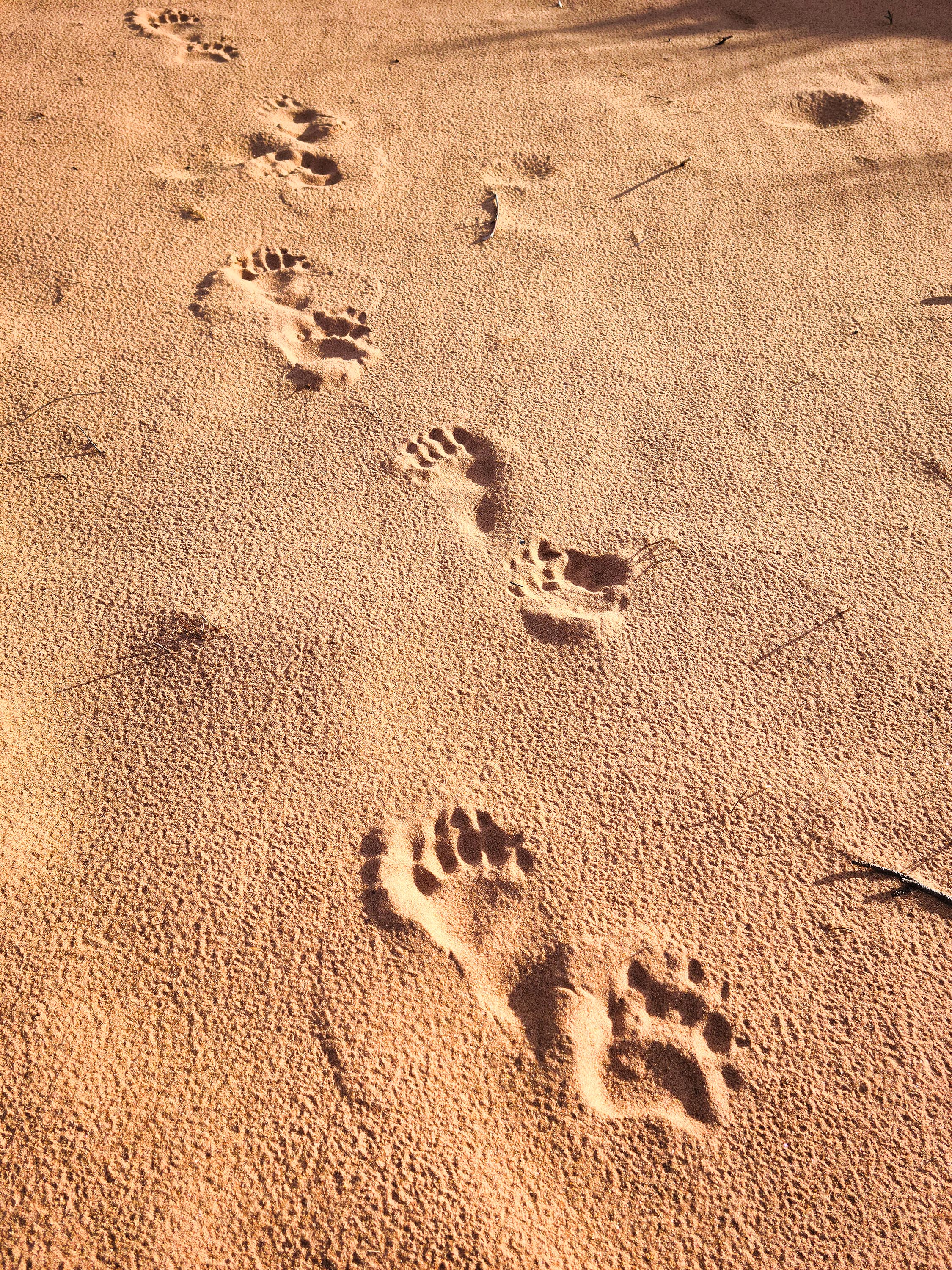
On our very last day, after finding a trail we wanted to hike closed, we ended up walking on the paved bike trail to Baldwin Beach during a gentle snow fall. On our way back to our car, we had the privilege of glimpsing a black bear, which was walking on a large downed tree about 100 feet away from us. Luckily, the bear was afraid of people. As it reared back its head to turn around and hightail it back the other way down the tree, I caught a glimpse of a white ruff of fur on its neck. We were glad the bear was running away from us and not toward us.

After enjoying ten days off, reentry into the workaday world was unpleasant for me, especially because I had a big event to host the day of my return, but I wouldn’t trade this trip for anything. Tahoe is truly beautiful, as I hope my photos will attest.

Cultivating Beauty Within a Family

A few of my photographs are featured in an art show that’s currently on display at my church. The show is open to the public. If you are in Duluth this summer, pop in and take a look! (Unitarian Universalist Church of Duluth, 835 W. College St.) The show will be up until Fall.

This post is a presentation I gave along with other artists for a service today that was centered on the show and the theme of “cultivating beauty.”

The image that started it all (my first image that was critiqued in my photography class). Big Bay State Park, Madeline Island, Lake Superior.

During Christmas when I was a freshman in college, my parents gave me an Instamatic camera. I suspect my mother was the driving force behind this gift, as she had begun dabbling in photography. She was a member of the Duluth Camera Club and was starting to take classes with the likes of Les Blacklock and later, his son Craig.

I had fun with the camera and even used it for a visual communication class I took for my journalism studies. Then, when I graduated college, I graduated cameras. My parents gave me an Olympus 35 mm film camera. My mother showed me how to use it, thinking it would be a great way to document my next adventure, which was grad school through the Audubon Society’s Expedition Institute – a traveling school bus classroom that focused on the outdoors and environmental education.

How that camera survived a 20,000-mile journey across America without a camera bag, I’ll never know. But I used it to capture the beauty of the rugged landscapes we traveled through all those years ago.

Once I got into the workaday world as a science writer, the camera came in handy for stories I needed to cover. Eventually, it malfunctioned and, having to buy a camera by myself this time, I downgraded back to the point-and-shoot type.

After I had children, I noticed that my youngest son was interested in photography. He was only 6 or 7 when we went to Yellowstone. We bought him one of those disposable Kodak cameras so that he could take his own pictures on the trip. He enthusiastically clicked away at geysers and majestic elk. Then, when he went to college, I continued my mother’s tradition and helped him buy a Nikon digital camera, since he was interested in taking a photography class. He loved this beginner-level camera and soon bought his own, more advanced Nikon. He’s since started a side business in portrait photography.

I was interested in getting a more serious camera around that time, so I bought out his part of the original Nikon and it became my own. He showed me how to use it, but my phone camera was so much easier, that Nikon mostly stayed in its bag.

Then came the day when my boss at work suggested I take a photography class instead of the typical writing classes I take every year. She liked the images I was able to capture with my phone and wondered what I could do with more formal training.

I was taken aback by her suggestion. After all, I’m a writer, not a photographer. Taking photos was always just a side dish in my life – something I did while doing something else – never the main course.

The idea stewed during the pandemic until last summer when I felt it might be safer for such an endeavor. I found a week-long sunset photography class through the Madeline Island School for the Arts in Lake Superior. My job deals with communicating water research, so I figured I’d get some photos that would come in handy.

I already knew how to frame a photo, but an F-stop? ISO? What are those?

The class was a crash-course in camera settings. Each day, we offered up one image for critique by the instructor and our classmates. I’d never had an image critiqued before. With trepidation, I submitted my first – it was a greenish photo with pine branches against rocks and water. The instructor said, “This photographer knows what they’re doing. Who took this photo?”

I thought, “I know what I’m doing?” I identified myself and listened to his suggestions for a few improvements, glowing inside all the while. None of the other students had been moved to take a photo of that particular scene, and the instructor discussed how everyone sees beauty differently. He said, “You can take a dozen photographers out to a park and they’ll all come back with different images.”

Maybe there really was something to this photography hobby? Maybe I could be both a writer and a photographer?

I returned home with a big confidence boost, new knowledge of my camera and of the photo editing software. I loved having another way outside of words to capture the grandeur of nature that I see around me. Of course, the camera is much more limited than our eyes, but the photo editing software gets things a bit closer to what our eyes actually see.

I have my mother to thank for getting me started in photography and I am glad that my son continued this family art. I’m excited to participate in the UU Art Show – it’s my first one!

Russ and I recently returned from a trip to California that was centered around photography. My photographer son was along, and we had the chance to meet a distant cousin for the first time. As we discussed our lives with our cousin over breakfast, we discovered that she’s a portrait photographer, too, focusing on babies. On a hunch, I asked her what brand of camera she uses.

My son and I exchanged meaningful looks when she uttered, “It’s a Nikon.”

Westward Ho! Yosemite National Park

The view from the Tunnel View pulloff in Yosemite National Park. Bridalveil Falls is on the right, Half Dome is in the middle and El Capitan is on the left.

The last time I was in Yosemite National Park, it was on fire. I was there to put help put it out. That was 32 years ago (!) when I worked for the Forest Service. (See that story in “Why I Miss Wildland Fire Fighting.”)

I journeyed to the park this time to be a photographer-tourist.

As Russ and I planned a long overdue (due to Covid) vacation to Lake Tahoe, we discussed what to do there. It came to light that Yosemite was within driving distance and that Russ had never been there before. Well, that would never do.

A sequoia near Mariposa Grove.

“You’ve got to see it!” I said. Wise man that he is, we made plans to begin the first few days of our trip in Yosemite and then drive to Tahoe. Thus, began our Westward Ho adventure.

In late April, we flew into Fresno, CA, and then drove about 90 mins to our lodge just outside the park. Our first foray on the day we arrived was to Mariposa Grove, which wasn’t far from the lodge. We eagerly hiked two miles to see the grove, only to be mystified when we discovered it was closed!

How can a grove of ancient sequoia pines be closed, you ask? Well, you’ve got me on that one. There were no signs at the trailhead giving hint of this closure, nor did we see anything obvious online. But after we made it back to the (closed) visitor center near the grove, we did see a small sign that explained the grove was closed until 2023 so that the trail could be rehabbed.

The grove had a fence all around it, which prohibited people from using the trail that runs through it. Thankfully, we were at least able to view the trees from outside the fence on the road that runs past it. Disheartened, we walked back to our car on the road, which was much easier than the trail. Positive points are, we saw a mule deer (see photo) and a cool rock cut alongside the road (see the other photo).

Another closure to be aware of is that Bridalveil Falls – the iconic waterfall that’s the first thing tourists see from the Tunnel View overlook and when they approach the park from the south, is closed. This is another closure that’s not very well publicized by the Park Service. But you can still get close to the base of the falls if you are a bit intrepid.

We spent the next few days driving through the park and doing more hiking. We visited Yosemite Falls, Mirror Lake (an easy two-mile round-trip hike on a closed paved road), Cathedral Beach, and Valley View. Valley View was hard to find because there were no signs that designated it, just so you’re aware. We tried unsuccessfully to find it our first full day but figured it out by the second day. We also ate lunch one day at the historic Ahwahnee Lodge, which is in the park.

Russ’s favorite experience was visiting Yosemite Falls. There’s an upper and lower part of the falls, and he appreciated the aesthetics of the approach as you walk toward the falls. I think mine was Mirror Lake. As you can see from the photos, the reflections of the backside of Half Dome in the water were stellar, and I enjoyed the scenes available along Tenaya Creek.

One thing that struck me was how rough the forest looked. Wildfires had obviously burned all the way into the Yosemite Valley floor. That must have been nerve-wracking for the park service. And many areas on our drive to the park were burned or showed evidence of wind damage. California has been experiencing a drought for the past three years and it sure showed. Perhaps the fire that I worked on so many years ago was only the beginning?

Timber salvage operations were taking place in the burned areas of the valley when we were there, necessitating some traffic disruption. BUT it was Spring, and the waterfalls were full, conveying runoff from the High Sierras. The water-full bounty a glorious sight to see, as John Muir would have said.

I hope you enjoy my photos. Next up: Lake Tahoe or maybe a post about my first art exhibit. I’m not sure which I’ll finish writing first.

As always, please do not use photos that have my signature on them. Others you may use with permission.