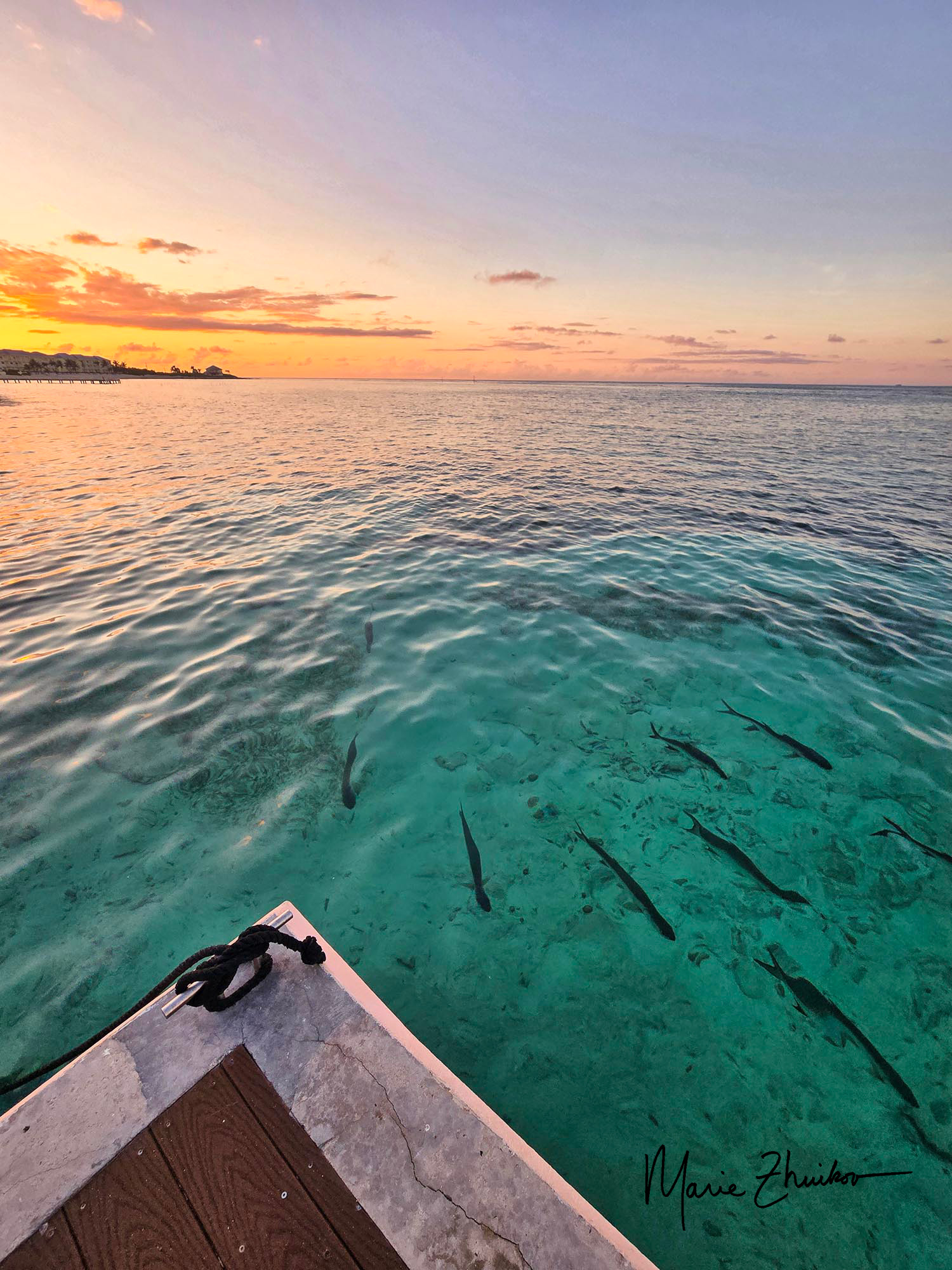
“There’s a sunrise and a sunset every single day, and they’re absolutely free. Don’t miss so many of them.” – Jo Walton
Author: mariezhuikov
Sea Grant is in Trouble Again
The current administration is trying to do away with Sea Grant and other environmental research organizations by cutting them from the federal budget. I am hoping that Sea Grant proved its worth when this happened in 2017 and that Congress will put it back into the budget. I just retired from Sea Grant, so I’m not privy to the latest info, but here’s a repeat of my post from 2017.
I feel for my former colleagues. This is stressful and demoralizing for them. Yet I’m sure they’ll continue their good and important work to understand and keep our waters safe, nevertheless. Sea Grant is still a kick-ass program, even though I don’t work there any more. 🙂
Iceout
Iceout is happening.
In the North, we stand on the shore in spring and yearn, with a visceral longing, for a break in the smooth white face of the lakes. All winter, they have been a study of white, defined by the absence of blue.
As my acquaintance, former National Geographic magazine photographer and writer, Jeff Rennicke says so well, winter iceover is like an “annual sensory deprivation experience—the specter of negative space—a long, white poem of silent syllables.”
Now, that silence has been broken. As I stand on the frozen grass of our cabin lakeshore, air bubbles underneath the ice gurgle and emit otherworldly moans like the cries of a mystical animal. Blowing wind shifts the ice and I watch cracks form in the thin nearshore skim.
As Rennicke says, soon the ice will crinkle and clash, ringing like bells. Leads of open water will scroll across the blank white page like exuberant cursive. The lakes will awaken, announcing again the spin of the planets, the truth of the changing seasons.
No, the world hasn’t frozen permanently. Spring is coming once again to the North. And it is written in the iceout.
Switching a Website from GoDaddy to WordPress
Back when my first novel was published (Eye of the Wolf), I created a website using GoDaddy to promote it. That was over 10 years ago. Since then, the company almost tripled their prices and added an additional cost for a site security certificate. Figuring out how to add that certificate to my site was such a pain (Really bored? Read about that saga here) that I decided to quit GoDaddy before I had to do it again the next year. Besides, they were going to eventually do away with the ancient platform my site was built on, so I’d need to redo my website anyway.
Another drawback was that the GoDaddy platform was too old to integrate my WordPress blog into it. For a while, I had an RSS feed for my blog on my website, but that eventually stopped working. The only thing I could do was provide a weblink.
So, I decided the solution was to bring my website to my blog. Yes, this very WordPress blog! My New Year’s project was to figure out how to integrate them. Supposedly, you can just automatically move a GoDaddy site over to WordPress, but that seemed rather complicated. Other than for my photography pages, my site didn’t have a lot of content. I found it easier to just copy and paste the text from GoDaddy to WordPress.
The most difficult part was transferring my domain name (marieZwrites.com) over to WordPress. That took several phone calls to tech support and a few days of patience. (Patience = not my strong suit.) But it worked. Plus, the best thing is that WordPress doesn’t make customers pay extra for their site security certificate. It automatically comes with whatever package you sign up for. Yay!
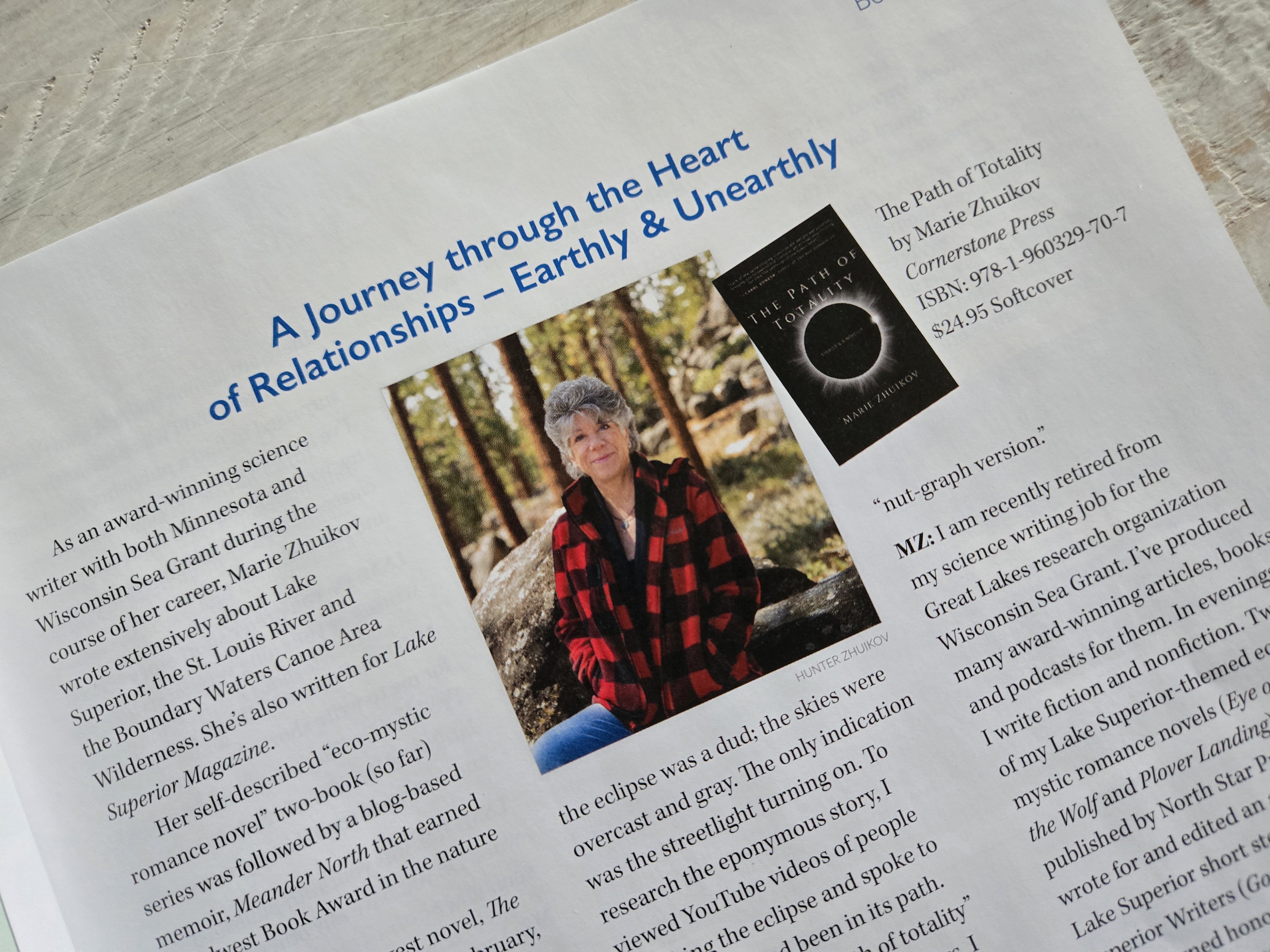
My content about books was the most important because I had a short story collection coming out in February (The Path of Totality), so I needed a web presence to promote it. I put off working on my photography section until I retired from my day job and had more time.
Well, that time was this past week. I’m proud to unveil my new photography pages! The landing page has links to my nature-themed collections and my artist statement. The subpages are organized in “Water,” “Wood,” “Stone,” and “Sky” categories, The Water one has the most content since I am a watery person. I have at least one show set up for this summer, so I thought I should get my photography web presence out there.
If you see a photo that you like, let me know via my Contact page and we’ll work something out. I can also make my photos into puzzles, which have been very popular, or I can put them on yoga mats, tote bags, shower curtains . . . almost anything.
The site’s only been live for a few days, but I’ve already decided to add two more categories: Lighthouses and Travel. Even if that additional file space ends up costing me more through WordPress, it will still be cheaper than my GoDaddy site was. A win-win all around.
The Red-Haired Mummy
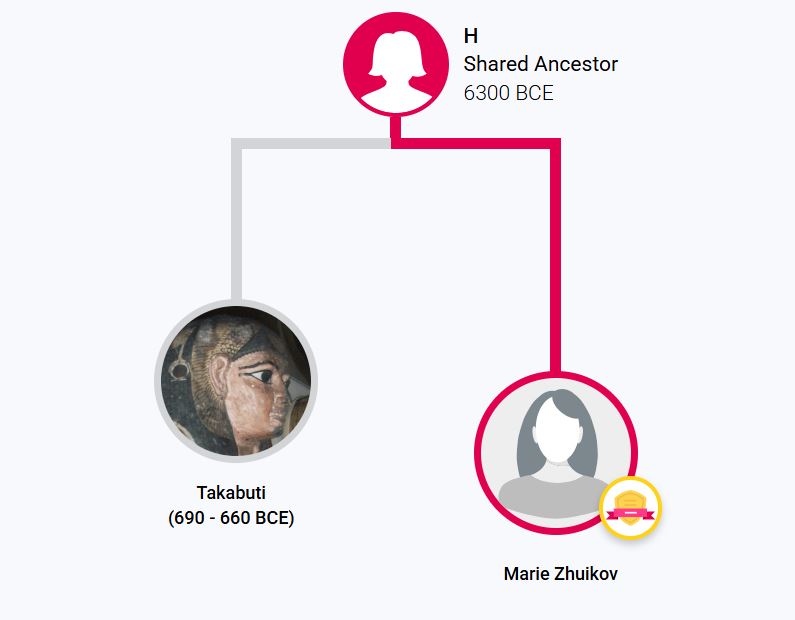
I received notification about new results recently from one of the DNA-testing services that I use. (Note: it is not the beleaguered 23&Me.) Through this service, I had my maternal (mitochondrial) DNA tested. One report offered is called “Notable Connections.” These are “connections based on direct DNA testing or deduced from testing of relatives and should be considered as fun facts.”
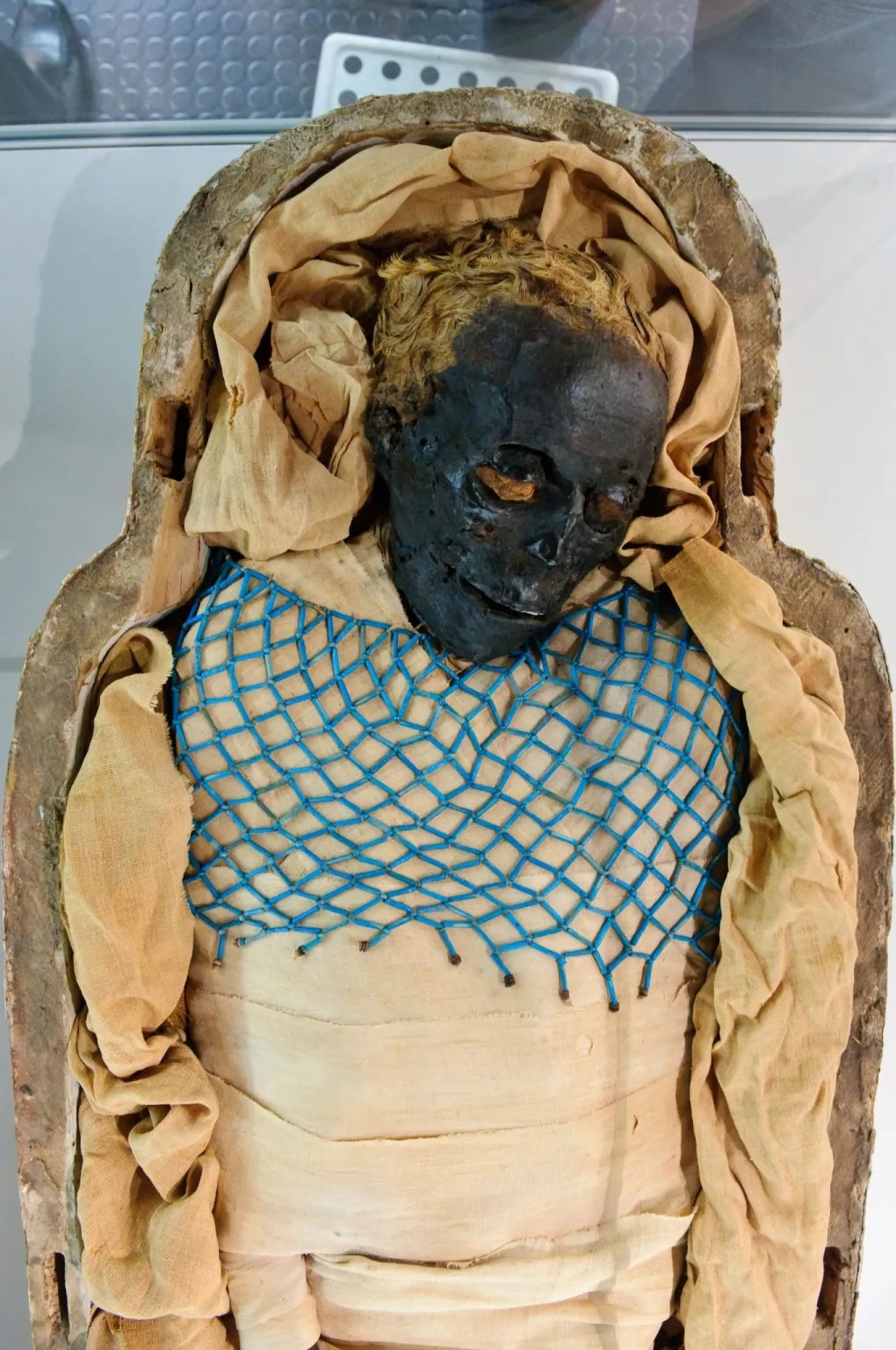
Included in my results were some Swedish and Danish royalty and some poor bronze-age blokes who were dug up in England when modern roads were built. One connection sent shivers through me, however. It was for an Egyptian mummy named Takabuti. Her remains are currently on display at the Ulster Museum in Belfast. We visited that museum this summer! We went there on our first day in Ireland.
I racked my brains trying to remember if we’d seen the mummy. We must have because it’s a major display. But I don’t think we paid her a lot of attention. I mean, I’ve seen King Tut’s mummy, and after that, everything else is small potatoes. I also recall a vague distaste at seeing a dead body on display. However, if I had known I was related to this mummy, you can bet I would’ve taken more notice!
According to the DNA site, Takabuti and I shared a common ancestor 6,300 years ago. She died and was mummified about 2,600 years ago in Thebes, which is now known as Luxor. The striking thing about her is that she has red hair. It has lightened to a golden color now, due to light exposure since she’s been on display. DNA testing on the mummy showed that her mother was European – probably from the Canary Islands or Southern Iberia (Spain and Portugal). Red hair is not uncommon in that part of the world. It’s thought to come from the area’s indigenous peoples who were known as the Guanches. They were believed to have originated in North Africa, specifically the Berber people of the mainland African deserts.
Takabuti was the daughter of a priest of Ammon-Ra, the sun good and the major deity in Egypt (like Zeus was to the Greeks). As such, her family would have lived comfortably and enjoyed the benefits of high status. Later, Takabuti was the mistress of a great house, and held high social standing. Although she wasn’t royalty, she was mummified to expensive royal standards.
Tragically, Takabuti’s life was cut short between the ages of twenty and thirty. Recent scientific analysis revealed she met a violent end while running, killed by an axe blow to her upper left shoulder that was likely instantly fatal. She may have been trying to escape an assailant, possibly during a period of conflict – perhaps at the hands of an Assyrian soldier or someone from her own community. A magic poultice was packed into her wound to help it heal in the afterlife.
How did an Egyptian mummy get to Ireland? The DNA site says that following the Napoleonic Wars, during a period of active trade in Egyptian antiquities (known as Egyptomania), Takabuti was purchased in 1834 by Thomas Greg of Ballymenoch House, Holywood, County Down. (Perhaps, because of her red hair, he thought he was bringing her back to her homeland?) She made history as the first mummy to be unwrapped in Ireland, with this significant event taking place on January 27, 1835, at the Belfast Natural History Society’s museum. The unwrapping generated considerable scientific interest, particularly in Belfast, then the commercial center of the Irish linen industry, which took special note of her fine linen wrappings.
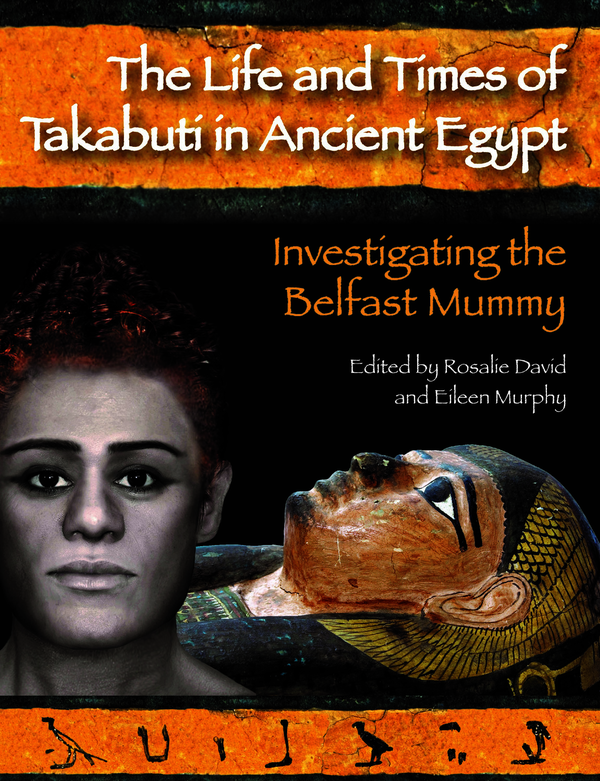
We know so much about Takabuti because she was the subject of intense academic study. Her face has been reconstructed. A book has been written about her, and she’s also been the subject of a short story. I haven’t read that story yet, but plan to soon. (It’s in Matters of Life and Death by Irish/Scottish author Bernard MacLaverty. Yet another retirement project!)
I wonder if her unusual red hair contributed to her high status is Egypt. Although I don’t have red hair, my mother had it. But hers came from her Scottish/Irish ancestry. My relationship to the mummy is a fun link to history. You can bet if I ever visit Belfast again, I’ll stop into the Ulster Museum and pay distant, distant cousin Takabuti proper respects.
Book Author Panel
Note: The time on this graphic is incorrect. The event is beginning at 6 p.m., not 5 p.m.!
Hey, this Thursday at 6 p.m. Central, I’ll be one member of a four-author panel for my publisher, Cornerstone Press. The event is being held at the University of Wisconsin-Stevens Point. If you can’t make it in person, it will also be live streamed and available afterward on their YouTube channel.
I’ll be reading from my speculative fiction short story collection, The Path of Totality. We’ll also be doing a panel discussion and taking questions from the audience.
I’m looking forward to meeting my publisher in person for the first time, along with the other authors!
Bringing a Dulcimer Home
Learning to play the hammered dulcimer is one of the activities on my “Things to do When I’m Retired” list. I love how they sound – rather like someone banging around on the inside of a piano – and I’ve attended several dulcimer festivals over the years, which piqued my interest.
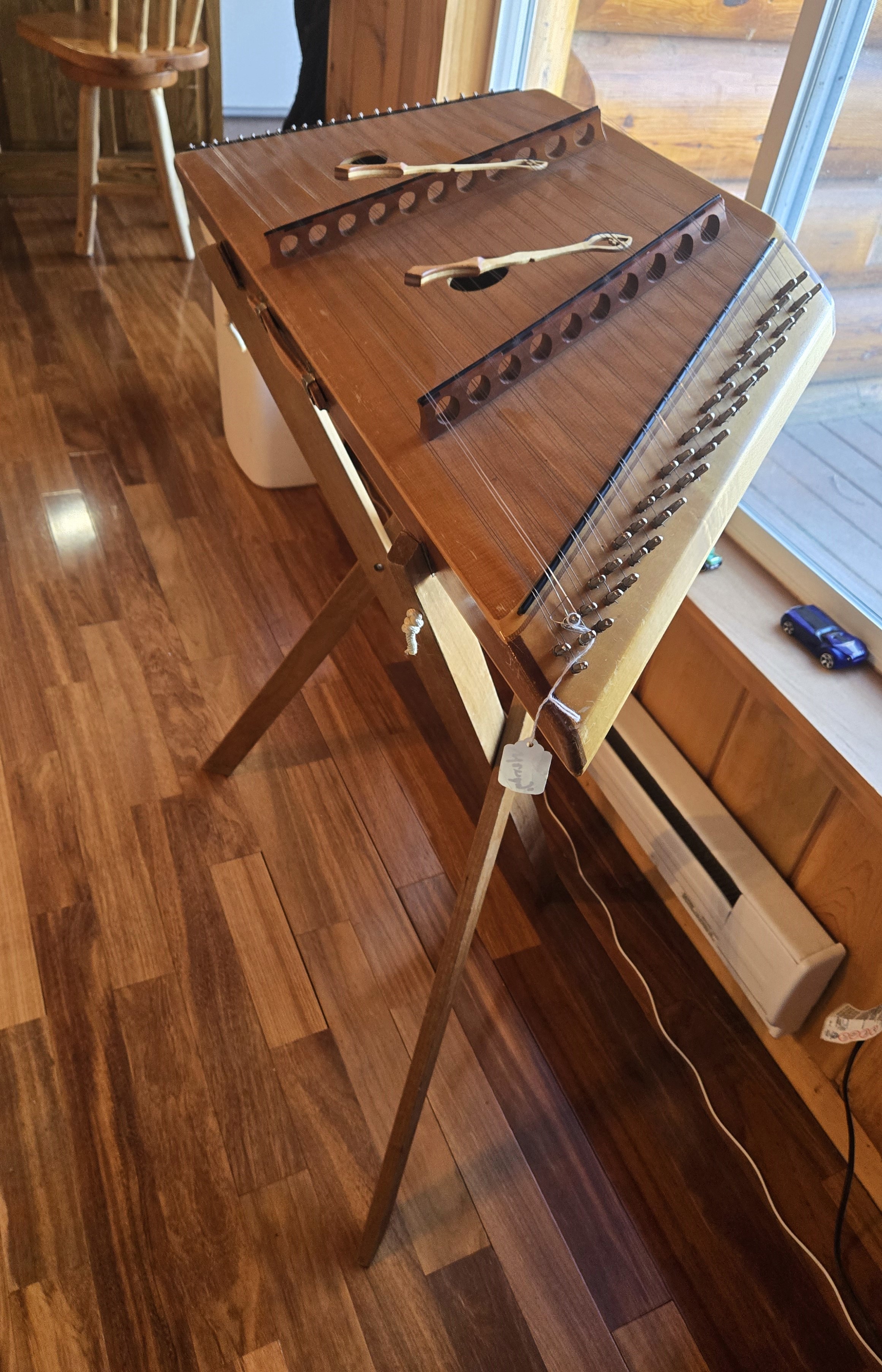
Dulcimers come in various shapes and sizes. Hammered dulcimers differ from the guitar-like mountain dulcimers in that they are larger and are often played on a wooden stand. Instead of plucking the strings, musicians hit them with lightweight mallets that look a bit like wooden spoons. The instrument has ancient roots in Asia and the Middle East, where they’ve been made and played for as long as 5,000 years. Like I alluded to above, hammered dulcimers are considered an ancestor of the piano.
I know a woman in town who teaches the dulcimer. One of the first things I did after my recent retirement was to arrange for a lesson from her. We met at her house where she showed me the secrets to playing this ancient instrument. She had two dulcimers set up side by side in her living room; one for her and one for me. Unlike other instruments that I’ve learned, the notes on the dulcimer don’t follow a linear progression. It’s more like a box, or several boxes.
The instructor taught me how to play scales and gave me a chart that shows where the notes are located on the instrument. As we practiced, two deer wandered by the picture window in front of us at dusk. Were they drawn by the music?
She also taught me how to tune the dulcimer. By the end of the lesson, I had played my first song! It was only “Frere Jacques,” but I was pretty pleased. I rented the instrument from her that I had been playing. It came with a handy carrying case and stand, and was easy to transport to my car.
As I drove home, I felt like my cargo was some grand prize that I’d won at the fair—like a huge teddy bear. I couldn’t believe I had my “own” dulcimer for a month! I set it up in my office and even though it’s been a few days, I still feel a tickle of disbelief and excitement every time I see it.
I’ve been practicing. I don’t have any sheet music, so I’ve been playing songs by ear. I’m not sure I could remember how to read music anymore, anyway. I have “Frere Jacques” mastered and am now working on a favorite song, “Walking in the Air.” I’m just working on the melody for now. That’s all I can handle. It’s coming along.
Although I didn’t have any trouble at the instructor’s house seeing which strings to hit, I’ve had difficulty seeing them at home. My aging eyes aren’t the greatest. But I think finding the proper lighting or changing out some bulbs will help. I’d hate to let that stop me from playing.
Learning a new skill has been fun. Playing the hammered dulcimer is a good alternative to writing. I like that it’s played standing up. That gets me off my butt and onto my feet, which is a good thing. Here’s to not sitting down in retirement!
No More Mondays!
I began counting down workday Mondays about 35 weeks ago. I loved my job as a science writer for Wisconsin Sea Grant, but I disliked waking up earlier than my body wanted on Mondays. Well, as of last week, there will be no more work Mondays for me—unless I get a parttime job, but I don’t think that will be the same.
However, I’m not officially retired yet. I’m on pre-retirement vacation, or as I like to think of it, “permanent vacation.” But I may as well call myself retired, right? I feel very fortunate to be retiring while I’m still functional.
I’ve experienced two days of this permanent vacation and it’s been stressful. There are so many things I want to do! These are things that I’ve put off due to work commitments or new things I want to try. I’ve been keeping a “Things I want to do When I Retire” list for years, and it’s large. I feel like I want to do all of them at the same time! Plus, I had an unexpected one-day deadline come up for some book promo text during my first day off, and that added to the stress.
It’s also taking time for me to adjust to the idea that I can grocery shop during the day instead of the evenings, and that I can run errands without hurrying back to my desk to check work emails.
I don’t really feel retired yet. I wonder how long it will take for that to kick in? We’re hosting a celebration in a few weeks. I hope after that, this will all feel more real. But at least for now, my body is definitely liking waking up at 8 or 9 a.m. vs 7 a.m. Let’s hear it for no more Mondays!
Retired folks out there, how long does it take to actually feel retired?
As an added bonus, here’s a poem I wrote a few years ago about my career. It’s been published in a couple of places.
Lake Superior Auntie
Today, someone called me
one of the Aunties of Lake Superior.
It must be
my gray hair.
I am now venerable,
aged, historic, learned.
No Babe of Lake Superior
anymore.
For twenty-seven years
I’ve worked along its shores,
pouring my female energy
into water issues,
drinking asbestos fibers from the tap,
preserving wilderness,
explaining research,
discovering the secret of paralyzed gulls,
and the mystery of tapioca beads washing ashore—
leftover casings from the zooplankton
Holopedium gibberum.
I’ve promoted the consumption of the lake’s fish,
promoted consumption of the lake’s lamprey
(they’re a delicacy in Portugal, you know),
encouraged boaters to rid their craft of
invasive zebra mussels and plants,
and studied the lake’s wolves and plovers.
Then there’s all the stories, fact sheets,
DVDs, CDs, videos and radio shows….
“Aunties” confers a plethora.
No Grandmother am I, one of only two.
I have been too busy living my small life,
raising sons, skipping rocks, writing words—
watching pink and orange wash from the sky.
The World According to Accordions
I’m aware that I’m jumping the gun. World Accordion Day is May 6, and National Accordion Awareness Month isn’t until June. But I just couldn’t wait to write about our visit to the World of Accordions Museum in Superior, Wisconsin.
I’ve driven past the unassuming building on a busy street corner hundreds of times on my way to work and finally had time to take a peek last weekend. Inside are over 3,000 accordions and probably every ceramic figurine ever made that’s holding an accordion. The museum contains instruments from all over the world: Ireland, Spain, Germany, Scandinavia, etc. —from primitive concertinas to highly embellished accordions from the Vaudeville era that feature abalone. We even noticed a wooden accordion.
The World of Accordions Museum was founded by Helmi Strahl Harrington in 1993. Our tour guide told us that Helmi’s mother was an accordionist who was conscripted in Hitler’s Germany to teach SAS wives to play the accordion. The family escaped to America and Helmi continued the family accordion tradition. She learned how to maintain accordions through a technical college in Red Wing, Minnesota. Although she currently has cancer, she hasn’t let that stop her from teaching accordion students and repairing accordions.
The nonprofit museum also houses a music and files room and a concert hall in what used to be the sanctuary of a former Episcopal Church. Our helpful tour guide said she got hooked on the museum when she came in for a tour. Now, she’s taking lessons and giving the tours herself. She even let us try our hand(s) at playing an accordion.
Due to my dust allergies, I couldn’t spend as much time in the museum as I wanted. My sinuses began to ache! But before we left, one interesting thing we learned was that blond bombshell and actress Mae West was married to an accordionist. His name was Frank Szatkus, whose stage name was Frank Wallace. He agreed to keep their marriage secret to help West’s career. According to Wikipedia, the couple never lived together as husband and wife. When asked, West insisted that they had separate bedrooms, and that soon after their marriage, she sent him away in a show of his own to get rid of him. They married in 1911 and divorced in 1942. Was it because of the accordion?? We may never know.
One of my favorite store chains, Drink Wisconsibly, has made a YouTube video about the museum, which is fun to watch.
The museum has an annual festival in early May, centered around World Accordion Day. They offer workshops, talks, and concerts. Keep your eyes out for info about that. It would be a good excuse to visit if you just can’t get enough of accordions.
Book Giveaway, Libraries, and a Signing
Bookish things have been happening in my world. First, I wanted to let you know that my speculative fiction/magical realism short story collection, The Path of Totality, (POT) is having a giveaway on Goodreads. Three copies will go to some lucky readers in ten days on March 12.
The second thing is something I learned from one of my fellow writers. He clued me into the WorldCat website, which is where you can see what libraries around the world carry certain books. He looked up POT and told me that it was in seven libraries already. Cool! Of course, I then looked it up and my other books. POT is available in libraries in Omaha, NE; Farmington, NM; Charleston, SC; and Orlando, FL. This exercise reminded me that I should donate a copy to my library in Duluth so that they have it.
One surprising thing I discovered is that my first novel, Eye of the Wolf, is available in the National Library of Qatar, in the Middle East. How did that happen?? Another surprising thing is that my second novel, “Plover Landing,” is available in 233 libraries! I think that might be because I offered libraries free rights to a PDF download of it. Since that happened a few years ago, I can’t recall now what service I used for that.
The last bookish thing regards a signing and reading I had yesterday at a new bookstore that opened in Superior, Wisconsin. Foxes and Fireflies Booksellers is run by a woman who’s also a reporter for the local newspaper. Maria Lockwood began the store as a lark. She was reporting on a business startup grant program and as part of that, put in a grant request to open a bookstore as an experiment to see how the process worked. Lo and behold, she was awarded the grant.
Superior hasn’t had a literary independent bookstore in many years, so the community was excited to see Foxes and Fireflies open. The store is very cozy and is filled with neat items. I probably spent any royalties I made during my signing on a cute little fox toy that is destined for our cabin. Oh, the glamorous life of a regional author! Superior writer Vickie Smith featured the bookstore recently on her blog.
Now that I’m on a countdown to retirement for my day job (not my fiction writing), I figure I’ll have more time to read writing trade magazines. I used to subscribe to Writer’s Digest but quit after a while because the copies just kept piling up and it felt too much like work to read them. I’m wondering what writing magazines are your favorites? I’d appreciate recommendations.