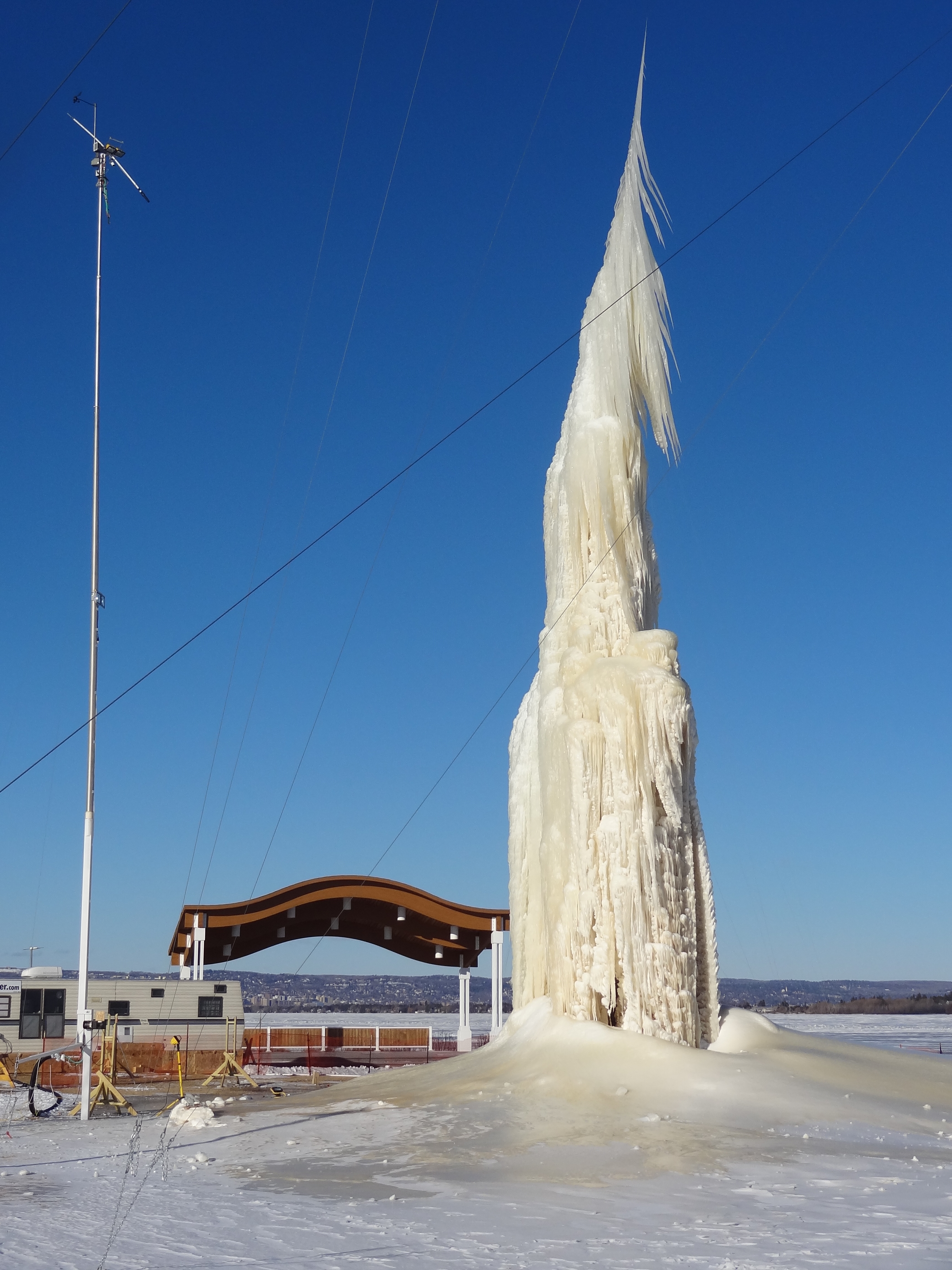
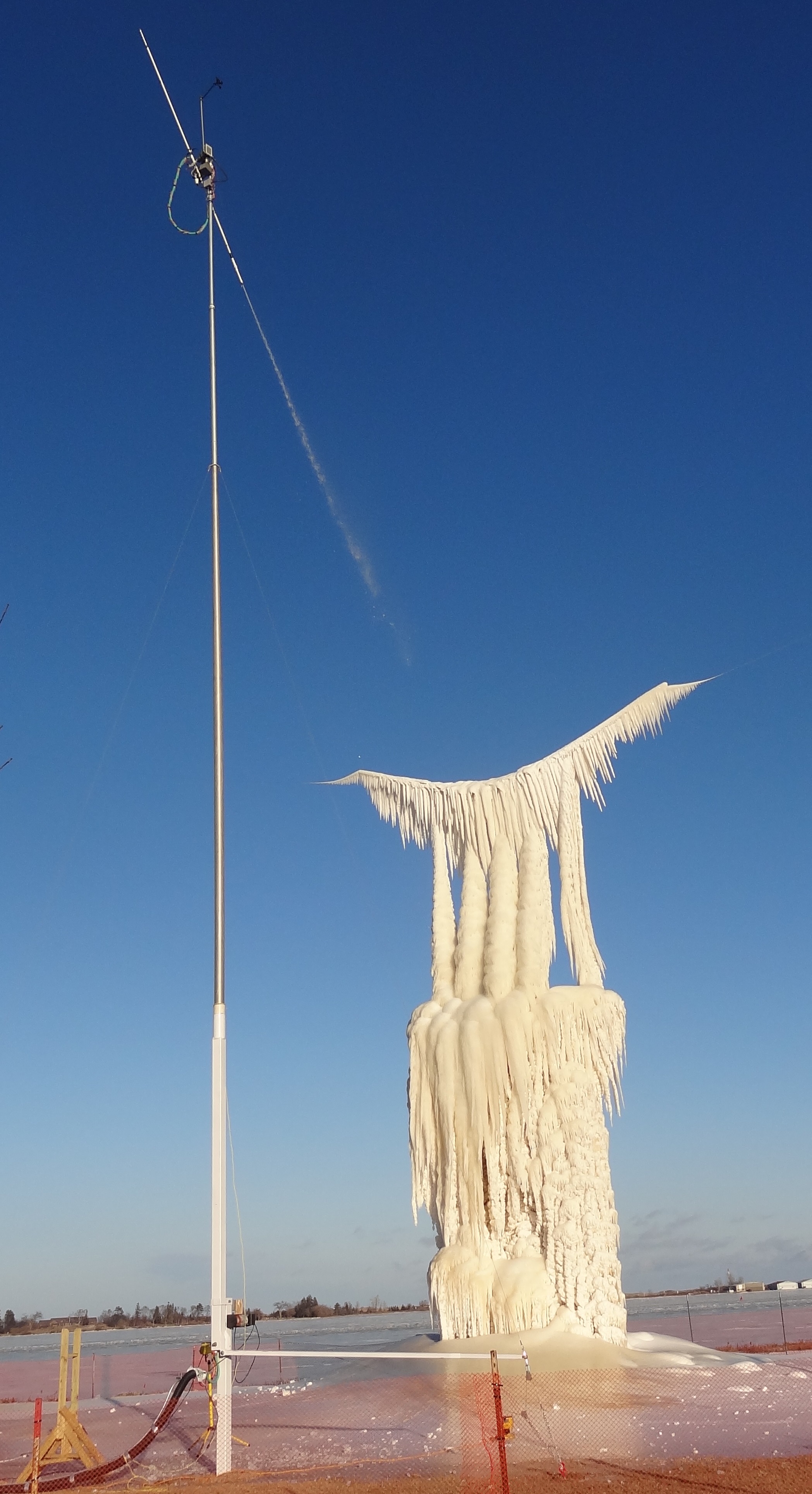
This sight greeted me this morning on the way to the mailbox. The only camera I had on hand to capture it is my crappy old Sony DSC-S500 Cyber Shot. I was glad it was able to show the detail of the spider web. Please have a wonderful day, even if it’s rainy!
Author: mariezhuikov
The Fantasy Suite (er . . . Room)
Have you ever had an empty room in your house? I do, and it’s wonderful! Remember my temporary roommate? Although she moved out over seven months ago, I am still housing her furniture in my spare bedroom. She wasn’t making any concrete progress to find her own apartment (she’s still living with someone else who doesn’t have room for her furniture), so I decided to move her stuff to my garage. [Thank you friend who helped me move it!]
And now I have this echo-y empty room. What to do, what to do? . . . The possibilities are limitless. I don’t need to make it into a bedroom at this point, so I’ve decided to make it into an exercise and yoga room. Why? Because these lyrics of Paul Simon’s song, “You Can Call Me Al” resonate a bit too much with me: “Why am I so soft in the middle / The rest of my life is so hard.”
I’ve already got my yoga mat, hand weights, and stepping stair in there. Now I just need to drag the elliptical strider up from the basement. I figure there’s a greater chance I’ll actually use it if I see it every day. Sure, I could join a fitness center, but as a single mom with aging parents and a needy dog, the demands on my time are varied and great. My fantasy is that now, I’ll be able to just pop into my exercise room instead of making a big production of things by driving somewhere else.
It’s not like I need to lose weight (although dropping ten pounds would not be bad), I just need to get fit again. I sit almost all day at a desk job, which is the hardest thing a person can do to their body. And in the evenings, I often sit some more blogging and writing novels. Unless a person has some form of exercise, the sitting will catch up to them. I have already learned this the hard way in the past, and I’d rather not have those back problems back, thank you.
Maybe I can wire the room with a sound system for exercise-inducing rhythms or New Age yoga music. Add some mood lighting. Put some art on the wall. Here we go. Wish me motivation!
Making Mosses Sexy (The Signature of All Things – Book Review)
I picked up this book because I like Elizabeth Gilbert’s nonfiction (I’ve read “The Last American Man,” “Eat, Pray, Love,” and “Committed”). I haven’t read any of her novels, so I wanted to see what she could do with fiction. Also, I wanted to see how/whether she could make botany interesting. Caution: this review contains spoilers, so if you don’t want to know how the novel ends, it’s best to stop reading now.
The story follows the life of Alma Whittaker, a scientifically inclined child born into a wealthy American family in the 1800s. Alma’s life is so lonely and sterile in the first part of the novel that I began to wonder why I was continuing to read. Finally, when she meets a botanical artist, Ambrose, things look up for her. Gilbert does an admirable job taking readers along with Alma’s joy and hopes/fears at this point, so that when they come crashing down, so do readers’ hearts. I liked how Alma dealt with life’s disappointments by grinding them under her boot heel. That’s a philosophy worth emulating.
Midway through the novel, when Alma is casting about for things to occupy her time, I found myself asking – why doesn’t she try to help someone else for a change? That thought doesn’t come to her at that point and she turns instead to a solitary life of studying mosses. I was thankful to see altruistic motivation finally come to her after her father dies.
So how does Gilbert make botany interesting? She combines it with a life story, sex, and spiritualism. Gilbert uses Alma’s situation to explore the dichotomies between science and the soul, and how a woman can endure a lifetime of sexual frustration, yet still function in the everyday household and business duties required of her.
I want to share a quote from the story that particularly resonated with me: “These are two things I have always observed to be in singular accord: super-celestial thoughts and subterranean conduct.” I have found this to be true, as well. Think of all the televangelists and others in positions of authority who have been brought down by sexual scandals. But I am meandering…
One thing that bothered me is that when Alma was in Tahiti, she did not even think of showing a drawing of the mysterious Tahitian boy to someone. She did mention there were some facial drawings of him that weren’t lewd. Showing one to someone she trusted, like the reverend or the ‘wild boys,’ would have saved her a lot of time trekking around the island. She could have said she found it in Ambrose’s things and was wondering who his friend was. Gilbert didn’t even have Alma consider showing someone a drawing, which bothered me and seemed unrealistic (even for fiction!)
Another thing that bothered me that one of Alma’s major goals in life was to give a man a blowjob. I mean, seriously?! The feminist in me is just so affronted by that. Alma’s character is already so intelligent, capable and self-sacrificing. I would have been much more comfortable if her goal in life was to have a man give HER oral sex. (Smirk.)
The dust jacket description says that events take place at a galloping pace. I wouldn’t say this is true. The pace is more like that of a pachyderm than a horse. Both Alma and her father are so deliberate in their speech and actions that all sides of an issue are explored before action is taken. This is hardly galloping. But the good side of this is that you come to know the characters intimately.
I ended up wanting SOMETHING good to happen for Alma – better than performing a blowjob on a lovely male Tahitian in a cave (which is not bad, but still….) Near the end, there’s another glimmer of hope when she develops her own theory of natural selection. But does she publish it? No. Like the aforementioned slow-moving pachyderm, she has to investigate all sides of her theory, which takes time. She’s not satisfied that it provides the answer to everything everyone would ever want to know about how the world works, so she lets the document sit in a valise under her couch, until it’s too late and Darwin beats her to the punch.
In a Hollywood ending, Alma would have published her theory to great fame and finally be recognized. But since this is not a Hollywood book, it ends with Alma being satisfied that just one person recognizes her for what she is. This was a good ending for the circumstances, and refreshing in some ways, but it’s much too realistic. If I wanted to realism, I would just plod along in my own daily fight for survival and grinding of life’s disappointments under my boot heels. I read to escape or to see characters overcome obstacles and succeed. However, Gilbert did manage to make mosses interesting.
Overall, I give it a mixed review. There’s no question that Gilbert knows her mosses and how the scientific mind works. Her character development is outstanding as is her insight into the human condition. I just had problems with certain aspects of the story that didn’t fit my personal escapist needs.
Saving a Skyrat – Part 2
When my co-worker and I were debating whether to save the listless gull that appeared outside our office last week, she said something like, “Usually, I like to let nature take its course . . .” and I interjected, “But it’s often not nature that causes things like this, it’s humans.” I was remembering a gull I rescued many years ago that had been hit by a car.
As it turns out, although the gull at our office was put in distress by a natural process, the cause probably was us. As you may recall, when I brought the gull to the wildlife rehabilitation group, they said they thought the cause was a Vitamin B deficiency. (To be exact, a Vitamin B1 or thiamine deficiency.) They weren’t sure what was causing it, but suspected it had something to do with the gulls eating dead fish.
Back at the office, that got us thinking, especially after we learned the Wildwoods group had received three other gulls with the same problem that week, and after learning that two other co-workers had seen other gulls exhibiting the same symptoms: wing droop, loss of the ability to fly, and loss of the ability to “speak.”
Being of a scientific bent, we started researching the problem and came up with a paper published in 2009 about herring gulls and other birds in Europe that were dying of a thiamine deficiency. The researchers named the affliction “thiamine deficiency syndrome.”
In the paper, the researchers described the exact symptoms we were seeing: “The general course of this disease in full-grown individuals is difficulty in keeping the wings folded along the side of the body, inability to fly, inability to walk, and death. Other symptoms are tremor and seizures.” They said that the length of time between when a gull loses its ability to fly and death is 10-20 days. Turns out, this was the same paper that the Wildwoods people had discovered last year in an attempt to help more than a dozen gulls with the syndrome.
The researchers attributed the syndrome to “a causative agent(s) acting directly on the affected individual, and/or by insufficient transfer of thiamine between the trophic levels in the food web.” They cited an urgent need for investigation into the cause since bird populations in Europe were declining rapidly.
Putting together what we knew got us thinking: what kind of fish-related problem could cause a thiamine deficiency in gulls? I recalled Minnesota Sea Grant research from years ago about Great Lakes fish being low in Vitamin B1 due to a diet of smelt and alewives. Almost at the same time, my co-worker discovered similar research. Both smelt and alewives contain an enzyme that breaks down thiamine in the fish that eat them, which has caused documented problems in the lake trout, steelhead trout, brown trout, and salmon populations in the Great Lakes.
It makes sense that birds eating fish low in thiamine would become low in thiamine themselves. We didn’t find any research describing this problem in birds the U.S., but we didn’t do an exhaustive search. However, it sure seems like an interesting research project for some enterprising biologist.
It’s ironic that although the gulls are eating what they are supposed to (fish) versus an unhealthy diet of French fries, they are suffering. Remember the debate in the first paragraph about whether the cause is natural vs. human-made? Alewives and smelt are both non-native species introduced by humans into the Great Lakes. So the problem most likely is us, I hate to say.
A local reporter even did a story about the issue, which appeared on the front page of the Sunday Duluth News Tribune. (This story will be available for a week to non-subscribers.)
How is our office gull doing? The wildlife rehab folks report that it perked up after a thiamine shot. It had recovered enough for release the very next day. I am amazed that the solution was so simple, and amazed by what we learned in the process of saving what most folks around here consider as sky vermin.
Saving a Sky Rat
When a co-worker mentioned she spotted a wounded gull near our office yesterday, I knew I was in trouble. I’m a sucker for wanting to save injured wildlife, even if it’s a “sky rat,” which are far too abundant. And besides, we both work for the National Oceanic and Atmospheric Administration, which has a gull as part of its logo. How could we just ignore it? Not to mention that I am the author of a novel about shorebirds. I could hardly be indifferent to its plight or my readers would revolt.
My co-worker (Mary) thought the gull’s wing might be broken and that it seemed listless. When we went outside to look for it, we couldn’t find it, but a short time later when I happened to look out my window, I saw the gull standing dejectedly on our office dock.
I alerted Mary, who in the meantime had called Wildwoods, a nonprofit local wildlife rehabilitation organization, to see if they would take the gull. They said they would, but that we would have to deliver it. They instructed Mary how to handle the gull, so that when it appeared again, she was ready.
Since I am squeamish about handling wild animals (I don’t even like unhooking the fish I catch), and since it was her “find,” I allowed Mary the honor of capturing the bird. She did so easily, and placed it in a box lined with newspaper. Upon this chance for close inspection, she identified it as a ring-billed gull.
Since Wildwoods was located on my way home, I volunteered to transport the bird. When the box was in the office, the bird was quiet. But once it got in my car, the gull started rustling around. I decided to try a classical radio station to soothe the savage beast. It worked!
I found the Wildwoods building and took the bird in. I was surprised at how weightless the box was. Upon inspecting the gull, the Wildwoods workers said they didn’t think it had any broken bones– instead, they suspected its listlessness might due to a Vitamin B deficiency. They said it’s a common problem due to their diets. Who knew birds could get vitamin deficiencies? They planned to give it a shot and to see if that helps.
If I receive any updates on the gull’s progress, I’ll let you know!
The Planet Where They Don’t Give Christmas Presents

“Mars Hubble” by NASA and The Hubble Heritage Team. Licensed under Public domain via Wikimedia Commons.
I wrote this poem about two years ago after a break up with a manfriend. I performed it at a public reading earlier this year. I didn’t know it going in, but the reading was judged. I was just performing the poem for practice. Although I didn’t win, if there had been an applause-o-meter on the premises, I would have won the popular vote based on that.
Caution: this entry contains mild profanity. Read at your own risk. It’s really best not to make me angry. I get my revenge in the most dangerous way: through poetry.
The Planet Where They Don’t Give Christmas Presents
This planet is mainly populated by men
who think it’s OK to date a woman for ten months
and NOT give her a Christmas present.
What is the name of this planet?
Planet Idiot.
Planet Asshole.
Planet I don’t want to live on this planet.
The inhabitants of this planet often
don’t want to spend New Year’s Eve
with their ladyfriend.
Or introduce them to their families.
Or sleep over at her house.
Or play with her dog.
I don’t want to live on this planet.
©2012 Marie Zhuikov
Goodreads Giveaway for “Plover Landing” — One Week Left!
If you’re active on Goodreads and you like paranormal romances, you’ve got a week left to enter to win one of three copies of “Plover Landing.” Click here for more info and to enter the giveaway.
Powerless
![By Arlington County (Downed Power Lines Pole, uploaded by AlbertHerring) [CC-BY-SA-2.0 (http://creativecommons.org/licenses/by-sa/2.0)], via Wikimedia Commons.](https://mariezwrites.com/wp-content/uploads/2014/07/downed_power_lines_pole_7516108670.jpg?w=300&h=300)
By Arlington County (Downed Power Lines Pole, uploaded by AlbertHerring) [CC-BY-SA-2.0 (http://creativecommons.org/licenses/by-sa/2.0)%5D, via Wikimedia Commons.
When a storm took the power out in my neighborhood for ten hours this weekend, I didn’t even have the option of an invigorating zap. Talk about being alone with one’s thoughts. I couldn’t drive anywhere that had power because my garage door opens via electricity, and the double-wide door is too heavy to open manually by myself.
The article, led by Timothy Wilson of the University of Virginia, described the results of eleven studies, which found that when left alone in a room by themselves for six to fifteen minutes, people would rather do mundane tasks than sit and think, and that many preferred to administer electric shocks to themselves given the alternative of being alone with their thoughts.
Sixty-seven percent of men gave themselves at least one shock during the thinking period. On average, study participants zapped themselves 1.47 times in a fifteen-minute interval, not including one “outlier” who administered one hundred ninety shocks to himself. (!)
The authors contend the problem is that thinking is too complicated and our minds are too unruly. Without the training offered by meditation and other techniques, they say that the “untutored mind does not like to be alone with itself.” I think this is true, and it’s something that Elizabeth Gilbert learned in her book, “Eat, Pray, Love.” Since reading her book a few years ago, I’ve been dabbling in some meditation and mind-focusing techniques. But given my peri-menopausal-messed-up-hormonal-state at times, these attempts can be challenging.
But the attempts seemed to have served me well during the power outage. Had I been desperate, I could have biked somewhere, but truth is, I rather enjoyed living without electricity for a while. As if it were all planned, I had plenty of no-cook food available, an 800-page book (“Written in My Own Heart’s Blood” by Diana Gabaldon) and an outdoors painting job to keep me occupied. Sure, I went through Facebook and Email withdrawal, but when the power finally came back on, I found I didn’t miss much.
In fact, unlike the study participants, I wasn’t afraid to sit and think (and better yet, feel!) The lack of distractions helped me piece together an emotional puzzle I’ve been working on for four years. I can’t say that I liked what I discovered, but at least the picture on the puzzle is much clearer.
Dinner on Lake Michigan
My boss commissioned me to write a poem about Lake Michigan for our biennial report. I hesitated a moment before saying yes, not because I have any qualms about getting paid to write poetry (grin), but because I have mixed feelings about Lake Michigan. I know Lake Superior much better — having lived there most of my life. Lake Michigan I’ve only visited about a dozen times. I am sad to say that the pollution and development around that lake depress me.
I agreed to write the poem. I tried to let my feelings come through but have some fun, too. It’s much easier to accept sorrowful topics if there’s humor mixed in. But enough explaining!
Dinner on Lake Michigan
Sitting at a table at the end of the world,
or the end of Door County,
whichever comes first,
I bite into the tender white flesh of the lake.
Before the net,
this fish swam in the shallows
over Petosky stones,
through waving green hair of algae,
above sharp striped shells of zebra mussels;
eating its fill of midges, minnows, shiners, snails,
fingernail clams.
Perhaps it fought rip currents,
avoided dead zones,
dodged ore boats,
resisted shiny lures,
mouthed and spat out cherry pits from across the lake
where you sit
at the end of the world,
or the end of the Old Mission Peninsula,
whichever comes first.
In the sunset, you watch gulls,
the souls of lost sailors, or sky rats — take your pick —
as they skim over lawns cropped like emerald felt to the shore’s edge
where wetlands used to grow in spiky abundance.
You listen to the whistle of the lighthouse,
cutting through the sooty tangerine sky,
across the lake,
over the ferries,
above the lakers,
past the power plant chimneys,
through the dunes,
into the restaurant,
to the table
where I sit
alone
at the end of the world.
©2014 Marie Zhuikov and the University of Wisconsin Sea Grant Institute
A Cross Between Christmas and Childbirth

My books are here! My books are here! It’s so fun to open those boxes and see what’s inside – kind of like a cross between Christmas and childbirth. I don’t think they’ve been distributed to Amazon or Barnes and Noble, etc., yet. So if you can’t wait and you’d like an autographed copy, by all means, feel free to order one from me!
I have copies of both “Plover Landing” and “Eye of the Wolf” available. You can find out more and order them here. I ship them via media mail, which is fairly cheap. Slow, but cheap.
So I’m gearing up for my book launch party tomorrow night and a reading at a local bookstore this weekend. I can’t wait to see everybody and introduce them to “Plover Landing” and the characters within.
Received some great press in a local paper . They called it a “breezy beach read.” Start your summer right and pick one up!