Polar Opposites: A Review of Two Frigid Books

ASHLEY_SHELBY_c-Erica_Hanna

Ashley Shelby by Erica Hanna.
SP station

Bravermanweb

By chance, I read two books about cold climates back-to-back. In some ways they are opposites, but in more ways they are similar, and both are good reads.

The reason why I am spending the fleeting Minnesota summer reading books about cold places is something you’ll have to ask my psychologist (if I had one). Maybe it’s just that it’s “safer” to read cold books during a warm summer. I certainly wouldn’t want to read them during the winter. It’s cold enough here then! That’s the best reason I’ve got for you.

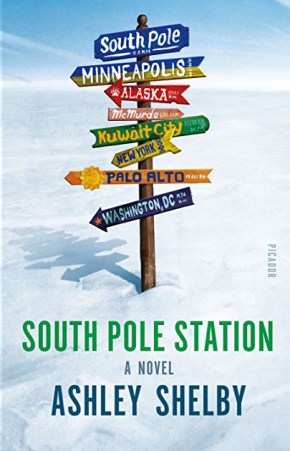
The books are “Welcome to the Goddamn Ice Cube” by Blair Braverman and “South Pole Station” by Ashley Shelby.

Ways the books are opposite: Braverman’s book is nonfiction – a memoir set in northern climes like Norway and Alaska. Shelby’s book is fiction and is set in Antarctica. So we have opposite genres and opposite geography.

Ways the book are similar: They are both written by Midwestern women. Braverman now lives in Wisconsin and Shelby lives in Minnesota. They’re also both about women who have put themselves into challenging situations, socially and physically.

Braverman, a California native, traveled to Norway as a high school exchange student, and later as a folk school student, and still later as a museum curator of sorts in an isolated town there. She also lived on a glacier in Alaska, offering dogsled rides as part of a tourist business.

She chose Norway in high school to pursue her love of cold places, but had a bad experience (well, several bad experiences) with her host family father that made her fear men and question her own mettle. To prove her mettle, she later enrolled in the folk school to learn how to train sled dogs and survive outdoors in the North.

She writes, “What I feared most was men, and what I feared for was my body, and yet my body wanted men, and there was no answer for any of it. No, that wasn’t right. There was an answer for some of it. And that answer, I felt certain, was somewhere in the north, if I would only go and find it.”

The folk school is a community unto itself where she must prove herself and earn the respect of her teachers and fellow students. She learns her crafts well enough to later on get the job in Alaska, which is another isolated community encapsulated by and encamped on a glacier. This is where the book gets its title – the workers refer to the glacier as the “ice cube” and newbies are welcomed to the hard and challenging life on the “goddamn ice cube.”

(As an aside, this reminds me of when I used to work on Isle Royale National Park, which is located on an island in the middle of Lake Superior. We referred to it as “The Rock.”)

It’s here she has her first relationship with a man, but when things start to get difficult between them, he retaliates emotionally and physically, and makes her living situation in the camp very uncomfortable.

Eventually, Braverman makes her way back to Norway again and helps out the keeper of a general store and local historical museum. Much of the book centers around conversations of the shop regulars, who gather for coffee. Even here, Braverman is isolated and feels she must prove her usefulness to the locals.

“South Pole Station” centers on the story of Cooper Gosling, an artist who earns a fellowship to spend time and paint at the South Pole. Like Braverman, Gosling and most of the other characters in “South Pole Station” put themselves in the situation because, as one character aptly states, “We’re all here because of some shit.”

They are fighting personal battles along with elemental battles. Gosling’s battle is with the suicide of her brother. When they were young, they both used to love reading about polar explorers and made up imaginary games centered around their exploits.

Gosling’s battle almost costs her her life when she walks out into the elements in a drunken stupor. But in the end, the polies all gather around her and help her pay homage to her brother at the bottom of the world in a most fitting way.

The author does a great job describing the various social cliques that develop at the South Pole. You have the beakers, who are the scientists, and the nailheads who are the maintenance crew, etc. Like Braverman in her situations, Gosling must earn her place in the social system and in the hearts of the other polies in order to survive.

The books are both interesting reads. I gave them 4 out of 5 stars on Goodreads. And although they are set at opposite ends of the world their major themes are eerily alike.
Author Interview on “Minnesota Reads”

20170803_081113

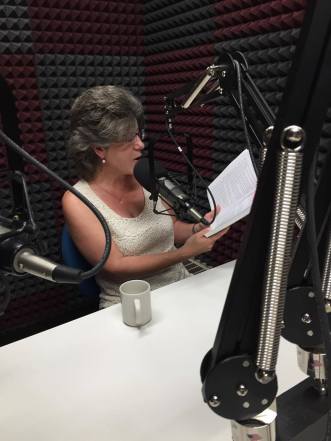
Lisa Johnson, multitasking radio goddess.

I had the good fortune to be in the radio studio last week with Lisa Johnson, host of KUMD’s Minnesota Reads show. We talked about the “Going Coastal” anthology project and Lake Superior Writers, the local writing group that produced it.

I had to leave home for the interview during the time of morning I’m usually just sitting down to eat breakfast. And here Lisa is, multitasking between radio songs, flipping switches, keeping records of what played, and then calming down enough between all that to sound incredibly composed on the air.

I don’t know how she does it! Plus, she reads a lot of books every month for her show about Minnesota authors. Here’s a link to my seven-minute interview. Enjoy.

The Joys of “Going Coastal”

thumbnail_IMG_8808

Six of nine “Going Coastal” authors. From L to R, Evan Sasman, Maxwell Reagan, James Brakken, Judy Budreau, Marie Zhuikov, Eric Chandler. Image by Ryan Swanson.

I’ve been working a lot lately to promote a new anthology of Lake Superior short stories, called “Going Coastal.” I’m finding that promoting a book written by a bunch of other authors versus a book written just by myself is a lot more fun. Having others to share in the workload of doing readings and events is well, way less solitary, and I enjoy helping to promote their writing careers.

We just had an event at a new local bookstore this week. A superb description of it can be found in “Ennyman’s Territory,” a local arts and culture blog written by Ed Newman. His story also includes a link to a recent review of the book.

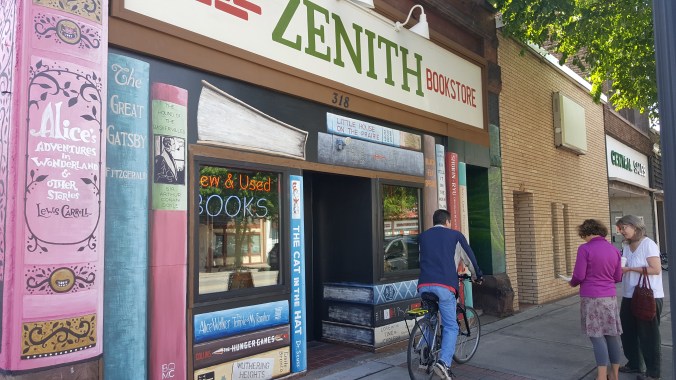
And if you are ever in the Duluth area, stop by our newest independent book store, Zenith Books. If you love to read, you’ll feel right at home there.

20170701_104542

DSC04153Crop

Zenith Book Store owners Angel and Bob Dobrow with a copy of “Going Coastal.”

Free Books!

Going Coastal

If you’re active on Goodreads, a book giveaway is currently open for “Going Coastal.” This book is a collection of short stories about Lake Superior. Authors hail from northeastern Minnesota and northern Wisconsin. (A story by yours truly is included.)

The stories were chosen by a panel of judges during a contest offered by Lake Superior Writers last year. Lake Superior Writers is a nonprofit group with over 200 members that supports the artistic development of writers and fosters a vibrant literary arts community.

“If you like lighthouses, ships, beaches, ghosts, road trips up the shore, history, storms, agates, islands, family drama, and the mystical power of water, you’ll enjoy this book,” said Marty Sozansky, board chair of Lake Superior Writers.

Like the horizon blurs between sky and water, reality and fantasy merge in these tales of human struggle on the edge of one of the world’s largest lakes. Click here to enter the giveaway and the chance to win one of two copies. The giveaway is open until June 24, 2017.

If you don’t win, you can always purchase the book for $12.95 at Fitger’s Bookstore in Duluth and online through North Star Press, Amazon.com, and Barnes and Noble. Sales support Lake Superior Writers.

It’s Christmas on Easter!

20170416_155329

A book project I’ve been working on for about a year-and-a-half is complete! Copies of the book arrived this weekend, so I feel like it’s Christmas even though it’s really Easter.

The book is called “Going Coastal.” It’s an anthology of Lake Superior-inspired short stories written by nine local (northeastern MN and northern WI) authors, including myself. My story, “Water Witch,” is the first short story I’ve ever written, so I feel honored that it’s included.

All of the writers are members of Lake Superior Writers, a local nonprofit group that “supports the artistic development of writers and fosters a vibrant literary arts community.” Proceeds from book sales support this group.

The idea for the anthology started with a conversation I had with the manager of a bookstore in Duluth.  She asked me what I was working on and I told her “short stories.” She said, “You know what customers come in and ask me for? Short stories about Lake Superior. I have to tell them I don’t have any.”

**Bing** Lake Superior Writers has an annual contest. What if we made the contest theme this year about Lake Superior? And what if we were able to find a publisher for the stories? And what if the book could be sold in this bookstore? (And others, of course.)

I’m a board member of the group and brought the idea up at a meeting where we were discussing the contest. The other board members thought it was a great idea, too. And a project was born. After the contest was over and the judges had chosen the winning stories, I started contacting publishers about the project. Several were interested, but I ended up going with North Star Press, the publisher of my novels.

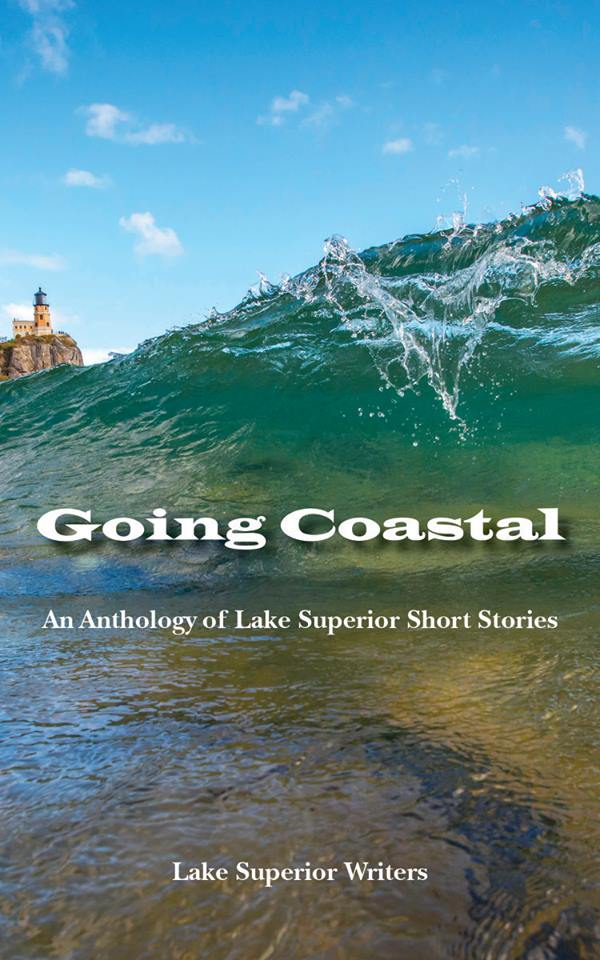
The name of the writing contest was “Going Coastal,” and the board thought that was also a good name for the anthology, and so did the publisher, so it stuck. Then came the need for a cover image. I’m on Facebook probably way more than is healthy for me, and I recalled seeing an image there by a local photographer who often gets into Lake Superior to take his photos. His stunning photo showed the iconic Split Rock Lighthouse seemingly swamped by a large Lake Superior wave. Perfect!

I worked with the authors to edit their stories, and then needed to decide how to organize them in the anthology. I offered the other board members the opportunity to help with this task (which was new to me) but they said I could have the “honor.”

Shoot – how was I ever going to decide? Well, a couple of the stories had Native American themes in them. Some were more mystical than others. A couple focused on ships. A couple others were about rocks. One was about a lighthouse. Another was about a family drama and had a super strong ending. Some stories were short, others were long.

I finally decided to organize them along themes, but I also kept story length in mind and tried to switch that up for variety. Figuring out the story order was as much an art as writing one of the stories itself, and was a fun exercise. I hope it worked.

If you like lighthouses, ships, beaches, ghosts, road trips, history, storms, agates, islands, family drama, and the mystical power of Lake Superior, you’ll enjoy this book.  It costs $12.95 and is available from North Star Press, but also Barnes and Noble and Amazon, which have it as an e-book, too. Take a read!

Anthology authors are Theresa Allison-Price of Superior; James Brakken of Cable; Evan Sasman of Ashland, Johnna Suihkonen of Lakeville; and Judy Budreau, Eric Chandler, Phil Fitzpatrick, Maxwell Reagan and me of Duluth.

We’re having a book launch sponsored by The Bookstore at Fitger’s on Sat., April 29 from 4-6 p.m. in the August Fitger Room on the third floor of Fitger’s Mall (600 E. Superior St., Duluth). There will be free appetizers from The Boat Club Restaurant and a cash bar. Each author (except for one who can’t make it) will read from their story.

Come on out and keep that Christmas spirit going through April!

Wisconsin Public Radio Interview – Holiday Reads

love-books-1Greetings! I had the privilege of being interviewed last week on the local Wisconsin Public Radio affiliate, along with Julie Gard, a poetry professor at the University of Wisconsin-Superior, and Julie Buckles, the public relations person for Northland College in Ashland, Wis.
The show is hosted by Danielle Kaeding, now a full-fledged reporter for KUWS Radio (91.3 FM), who assisted me when she was but a college student and I had a radio show for work. Danielle hosts “Hear Me Out,” an hour-long show every Friday morning. She asked us what books we recommend for holiday gifts and holiday reading. (During all that spare time you have during holiday break – right!?)

In my role on the board of Lake Superior Writers (a local writers’ group), I always like to feature our member writers and other local authors when the topic of books comes up. And this interview was no exception. Between the three of us, we hit many of the most recent books produced locally. I only wish we would have had more time to highlight even more authors.

Our interview is featured in the first half-hour of the show. You can listen here.

Oh, and if you need a little romance during your holiday, don’t forget about my books.

Happy Reading!

Radio Interview About Writing

13931688_10209957610474242_1721626169_o

Me doing my radio thang.

Hello! I was interviewed earlier this month by for a show on the local Wisconsin Public Radio affiliate station, KUWS. The show is called the “Nine O’Clock Meltdown, ” and it’s hosted by “Simply C,” who I met at an open mic poetry reading.

She allowed me gobs of time on her show to talk about my novels, writing, and creativity in general. The file is so large, she had to divide it into two parts so I could post it. Give a listen to find out what I’m up to in my writing life…

Part 1

Part 2

The Power of Collaboration (and how it Relates to the Pitch Perfect Movies)

002

Teague Alexy, collaborator extraordinaire.

I admit it. I’ve watched Pitch Perfect 1 and 2 movies. Pitch Perfect 1 helped me escape from a hard time. The humor is truly funny and the singing – well, it just makes you want to walk around performing acapella and dancing all day. I just watched Pitch Perfect 2 and it’s got me musing about the value of collaboration.

In the movie, one of the lead singers of the “Bella” college acapella group ends up collaborating with one of the newest members to create an original song, which not only impresses her music industry boss, it helps the group win the world acapella competition.

This weekend I was privileged to be part of a book launch and music event that was a collaboration between 10 or so local authors. The lead author/singer (Teague Alexy) could have held the event by himself, but he chose to invite others to participate. He even took a chance on someone like me – a local novelist and poet who he just met a week ago (but we share a publisher.)

He held the event in an independent theater in downtown Duluth. Attendance wasn’t huge –a lot of events competed that night – but I’m sure it was larger than if he had been the only one performing. The range of styles of the authors was refreshing and mind-expanding, and I met several new ones.

Earlier in the day I had a conversation with an established author. We talked about how being an author (even one with a hard cover book published by a state university press) doesn’t mean you will rake in the dough. We agreed that the lifestyle is the reward, not the profit.

The night of the performance, I could have been sitting around home banging away at my computer or doing dishes, but instead I joined a bunch of other writers and we shared our work with an audience. The power of collaboration was evident then, and I’ve seen it at operate many times in the past in my day job, when organizations work together to strengthen the reach of their programs and projects.

I truly believe that organizations that try to protect their turf by outcompeting the competition are missing a great opportunity. I just want to say that if you’re an author, don’t be afraid to share the limelight with others – it will be to your advantage. Likewise if you’re an organization.

It takes a village to make a good book launch. And if enjoying Pitch Perfect 1 & 2 is wrong – if collaborating is wrong – I don’t want to be right.

“H is for Hawk” Book Review: The Value of Animals Apart from Us

A northern goshawk. Image by Norbert Kenntner.

A northern goshawk. Image by Norbert Kenntner.


I gave this memoir five out of five stars on Goodreads not because I agreed with everything in it but because I found it thought provoking and well written. It’s the story of Helen Macdonald, an Englishwoman who is dealing with the death of her father.

To help her get through her grief, Macdonald decides to train one of the most difficult of hawks: the goshawk. She names hers Mabel. She contrasts her experience with that of Terence White, author of the childhood classic, “Sword in the Stone,” and an avid falconer who wrote about his experience in “The Goshawk.” I listened to the audio version of the CD, read by the author in her classic British accent.

So many things to say. Where to begin? To start, it’s ironic that Macdonald chose to deal with death by training an avian killing machine. It’s kind of like dealing with a job loss by helping other people get fired from their jobs over and over again. But this technique worked for Macdonald, who wanted solace by forming an attachment to an animal, and by coming closer to the wild.

However, by the middle of the book, I found myself thinking how unfair it was to burden the bird with the owner’s grief and mental health issues – both for Macdonald’s and White’s goshawks. I mean, they are birds, not people. They are separate beings, but both authors are so caught up in themselves they don’t see this. It’s a lesson I learned years ago from living in the wilderness, and something I suspect most people, who are used to having animals around as pets or for food, don’t have an opportunity to realize.

Macdonald’s attitude of animals being defined in the world by the meanings given to them by humans came to light in a section where she attended an art exhibit about California condors. She says, “I think about what wild animals are in our imaginations and how they are disappearing, not just from the wild but from people’s everyday lives – replaced by images of themselves in print and on screen. The rarer they get, the fewer meanings animals can have. Eventually, rarity is all they are made of. The condor is an icon of extinction . . . How can you love something, how can you fight to protect it if all it means is loss?”

My argument is you fight for endangered animals because they have value apart from us. It’s perhaps the ultimate hubris to think the world revolves around us and our meanings. Most wild animals don’t need us to survive. In fact, they would probably do much better if humans were out of the picture. And why did the condor nearly go extinct in the first place? From human actions (poaching lead poisoning, etc.) It seem so unfair for humans to cause these problems and then to complain that thinking about these animals is depressing. What’s really depressing is what we do to some animals.

Toward the end of the book Macdonald finally realizes that people are more fitting agents for emotional support than animals. While animals provide great solace, they are no substitute for a pair of human arms around you. And she realizes that animals have intrinsic value apart from humans.

She writes, “Of all the lessons I’ve learned in my months with Mabel this is the greatest of all: that there is a world of things out there – rocks and trees, stones and grass, all the things that crawl and run and fly – they are all things in themselves. We make them sensible to us by giving them meanings that shore up our own views of the world.”

Right on. She says she learned with Mabel how to “feel more human once you have known, even in your imagination, what it is like to be not.” She could have ended the book there and I would have been happy but she continued on with White’s story, which at times, overshadowed her own. I could have done without much of the detail of his story and the book would have been stronger for it. I also found myself getting tired near the end from hearing mini dramas about how she was always losing her hawk. But I still gave it five stars, so it these things must not have bothered me too much!

One thing I thought was funny was how, once Macdonald started using antidepressants, she described the hawk as looking much happier, too. I think this was when she was still caught up in the hawk being an extension of herself.

And I was happy to see that Macdonald delved into the “conversation of death” described in Barry Lopez’s book, “Of Wolves and Men.” This is an exchange that happens between wolves and their prey that either triggers a chase or diffuses the hunt. If you’ve read my novel “Eye of the Wolf,” you know that I delved into it, too.

As I was thinking about writing this review, I came across a quote from Henry Beston (“The Outermost House”) that sums up my philosophy and what I think Macdonald was trying to say with her memoir well:

“We need another and a wiser and perhaps a more mystical concept of animals…. For the animal shall not be measured by man. In a world older and more complete than ours they move finished and complete, gifted with extensions of the senses we have lost or never attained, living by voices we shall never hear. They are not brethren, they are not underlings; they are other nations, caught with ourselves in the net of life and time, fellow prisoners of the splendour and travail of the earth.”

Agree? Disagree? Am I some psycho loony? (Smirk.)

Radio Interview About My Books

Hello — Life has been sweeping over me like a tidal wave recently, but I was still able to make time for an interview about my novels on a community radio station. Follow this link to hear my interview yesterday on KUMD’s Minnesota Reads show (and discover why I’m nervous to have my parents read my books).

I was honored to be included in the show, which airs every Thursday morning at 8:15 a.m. Tune in!