“H is for Hawk” Book Review: The Value of Animals Apart from Us

A northern goshawk. Image by Norbert Kenntner.

A northern goshawk. Image by Norbert Kenntner.


I gave this memoir five out of five stars on Goodreads not because I agreed with everything in it but because I found it thought provoking and well written. It’s the story of Helen Macdonald, an Englishwoman who is dealing with the death of her father.

To help her get through her grief, Macdonald decides to train one of the most difficult of hawks: the goshawk. She names hers Mabel. She contrasts her experience with that of Terence White, author of the childhood classic, “Sword in the Stone,” and an avid falconer who wrote about his experience in “The Goshawk.” I listened to the audio version of the CD, read by the author in her classic British accent.

So many things to say. Where to begin? To start, it’s ironic that Macdonald chose to deal with death by training an avian killing machine. It’s kind of like dealing with a job loss by helping other people get fired from their jobs over and over again. But this technique worked for Macdonald, who wanted solace by forming an attachment to an animal, and by coming closer to the wild.

However, by the middle of the book, I found myself thinking how unfair it was to burden the bird with the owner’s grief and mental health issues – both for Macdonald’s and White’s goshawks. I mean, they are birds, not people. They are separate beings, but both authors are so caught up in themselves they don’t see this. It’s a lesson I learned years ago from living in the wilderness, and something I suspect most people, who are used to having animals around as pets or for food, don’t have an opportunity to realize.

Macdonald’s attitude of animals being defined in the world by the meanings given to them by humans came to light in a section where she attended an art exhibit about California condors. She says, “I think about what wild animals are in our imaginations and how they are disappearing, not just from the wild but from people’s everyday lives – replaced by images of themselves in print and on screen. The rarer they get, the fewer meanings animals can have. Eventually, rarity is all they are made of. The condor is an icon of extinction . . . How can you love something, how can you fight to protect it if all it means is loss?”

My argument is you fight for endangered animals because they have value apart from us. It’s perhaps the ultimate hubris to think the world revolves around us and our meanings. Most wild animals don’t need us to survive. In fact, they would probably do much better if humans were out of the picture. And why did the condor nearly go extinct in the first place? From human actions (poaching lead poisoning, etc.) It seem so unfair for humans to cause these problems and then to complain that thinking about these animals is depressing. What’s really depressing is what we do to some animals.

Toward the end of the book Macdonald finally realizes that people are more fitting agents for emotional support than animals. While animals provide great solace, they are no substitute for a pair of human arms around you. And she realizes that animals have intrinsic value apart from humans.

She writes, “Of all the lessons I’ve learned in my months with Mabel this is the greatest of all: that there is a world of things out there – rocks and trees, stones and grass, all the things that crawl and run and fly – they are all things in themselves. We make them sensible to us by giving them meanings that shore up our own views of the world.”

Right on. She says she learned with Mabel how to “feel more human once you have known, even in your imagination, what it is like to be not.” She could have ended the book there and I would have been happy but she continued on with White’s story, which at times, overshadowed her own. I could have done without much of the detail of his story and the book would have been stronger for it. I also found myself getting tired near the end from hearing mini dramas about how she was always losing her hawk. But I still gave it five stars, so it these things must not have bothered me too much!

One thing I thought was funny was how, once Macdonald started using antidepressants, she described the hawk as looking much happier, too. I think this was when she was still caught up in the hawk being an extension of herself.

And I was happy to see that Macdonald delved into the “conversation of death” described in Barry Lopez’s book, “Of Wolves and Men.” This is an exchange that happens between wolves and their prey that either triggers a chase or diffuses the hunt. If you’ve read my novel “Eye of the Wolf,” you know that I delved into it, too.

As I was thinking about writing this review, I came across a quote from Henry Beston (“The Outermost House”) that sums up my philosophy and what I think Macdonald was trying to say with her memoir well:

“We need another and a wiser and perhaps a more mystical concept of animals…. For the animal shall not be measured by man. In a world older and more complete than ours they move finished and complete, gifted with extensions of the senses we have lost or never attained, living by voices we shall never hear. They are not brethren, they are not underlings; they are other nations, caught with ourselves in the net of life and time, fellow prisoners of the splendour and travail of the earth.”

Agree? Disagree? Am I some psycho loony? (Smirk.)

Radio Interview About My Books

Hello — Life has been sweeping over me like a tidal wave recently, but I was still able to make time for an interview about my novels on a community radio station. Follow this link to hear my interview yesterday on KUMD’s Minnesota Reads show (and discover why I’m nervous to have my parents read my books).

I was honored to be included in the show, which airs every Thursday morning at 8:15 a.m. Tune in!

I’m an Isle-ophile. Are You?

St. Martin Island, West Indies.

St. Martin Island, West Indies.

An island doesn’t have to be very far away from shore or very big to accomplish its true work: to surround you with imminent water, and to unhitch you from the grappling hooks of your own life for a while. – Minnesota Author Bill Holm, Eccentric Islands

I love islands. I’ve known of this affliction for quite a while, even before I heard the term for it: isle-ophile. Some of my most intense experiences have happened on islands. I like how islands make me feel and how they make other people behave (unless they are deserted islands, then it’s not so pretty.)

I first got a feel for islands when my parents took us camping. I have hazy young memories of Mackinac Island in Lake Huron; Prince Edward Island in Canada; the U.K.; and Madeline Island, Stockton Island, and Isle Royale in Lake Superior.

My exposure to Isle Royale led me to work there during college for two summers at the rustic resort. Then there was Grand Manan Island off New Brunswick, Newfoundland, Gero Island in Maine, Cumberland Island Georgia, Key Largo Florida (and eventually all the keys), Puerto Rico, Catalina Island in California, Ludlow’s Island in Minnesota, Orcas Island of the San Juan chain in Washington, St. Martin in the West Indies, and Brigantine in New Jersey.

Each place has provided intense experiences — unlike those a person can have on the mainland. Islands have offered: opportunities to form and intensify friendships, crazy experiences with animals, cold refuge from storms, hot refuge from heartbreak, family vacations, work conferences, romantic vacations, and immersions in local culture.

Islands force people to depend on one another more than they do when on the mainland. Usually, you’re more at the whims of nature because you’re in the middle of a body of water. Communication with the outside world is sporadic and takes more effort (although it’s a lot easier now, with computers). You’re living on the edge, but that edge is defined and it’s hard to get lost.

I’m irresistibly drawn to islands. Are you?

Here’s another reason to ponder about why islands draw people, offered by Mr. Holm:

In one way, all islands are female, surrounded by female water. John Fowles, in his book, “Islands,” says, “The domain of the siren had been where sea and land meet; and it is even less for nothing that the siren is female, not male.” Islands are secret places where the unconscious grows conscious, where possibilities mushroom, where imagination never rests. “All isolation . . . is erotic.”

Writing at Dream Speed

The Northeastern Minnesota Book Awards ceremony was held a few days ago in Duluth. I attended in because my novel, Plover Landing, was nominated in the fiction category, and because it’s fun to hob nob with other writers. Although any hope of an award was futile (sniff, small sob), the event always has inspiring speakers (see last year’s blog story), and poet Barton Sutter provides entertaining emceeing.Layout 1

This year’s speaker was Duluth Poet Laureate Jim Johnson, who offered a tongue-in-cheek look at the writing process. Regarding the importance of writing rituals: “The muse can only find you at the same place and same time every day. The first step in writing is to be there . . . . While you are waiting for the muse to appear, you might as well write.”

Is the writing process about hard work or inspiration? “Yes,” is Johnson’s answer. “You can’t write if your ritual doesn’t work right. Don’t skip over the details!” Then he went into a long explanation of the importance of exact paper and pen placement on the desk, having all your pencils sharpened, your computer programs updated, etc.

Is all this preparation and procrastination worth it? “Trust me,” Johnson said. “Something will happen. When it does, it’s magical. The words will come out at dream speed . . . . This is its own reward. Writing isn’t about money, awards, or publication. Sometimes we’re rewarded, sometimes not. The odds are not good.”

DSC02240

The crowd gathers for the Northeastern Minnesota Book Awards presentation.

Basically, he was saying that writers need to trust in whatever process they’ve developed, and that the key is to persevere despite rejections from publishers or awards judges. There’s nothing better than when the words seem to come of their own accord and you get into that “flow.”

Keep flowing, my friends. Keep writing at dream speed.

Author Reading from “Plover Landing”

Layout 1A community radio station, KUMD, featured my most recent novel on their “Women’s Words” show last weekend. My novel is called “Plover Landing” and it’s an eco-mystic romance set in Duluth, Minn., that highlights the plight of an endangered shorebird, the piping plover.

You can listen to the six-something minute show here. My novel is available for sale in the usual places (Amazon, Barnes and Noble, etc.) or you can contact me through my website to receive an autographed copy. My online store isn’t working at the moment, but if you send me a message from my site, we can work something out!

Author Reading from “Eye of the Wolf”

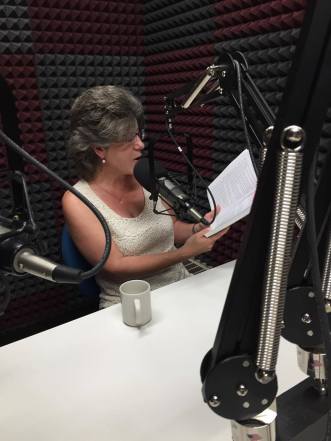
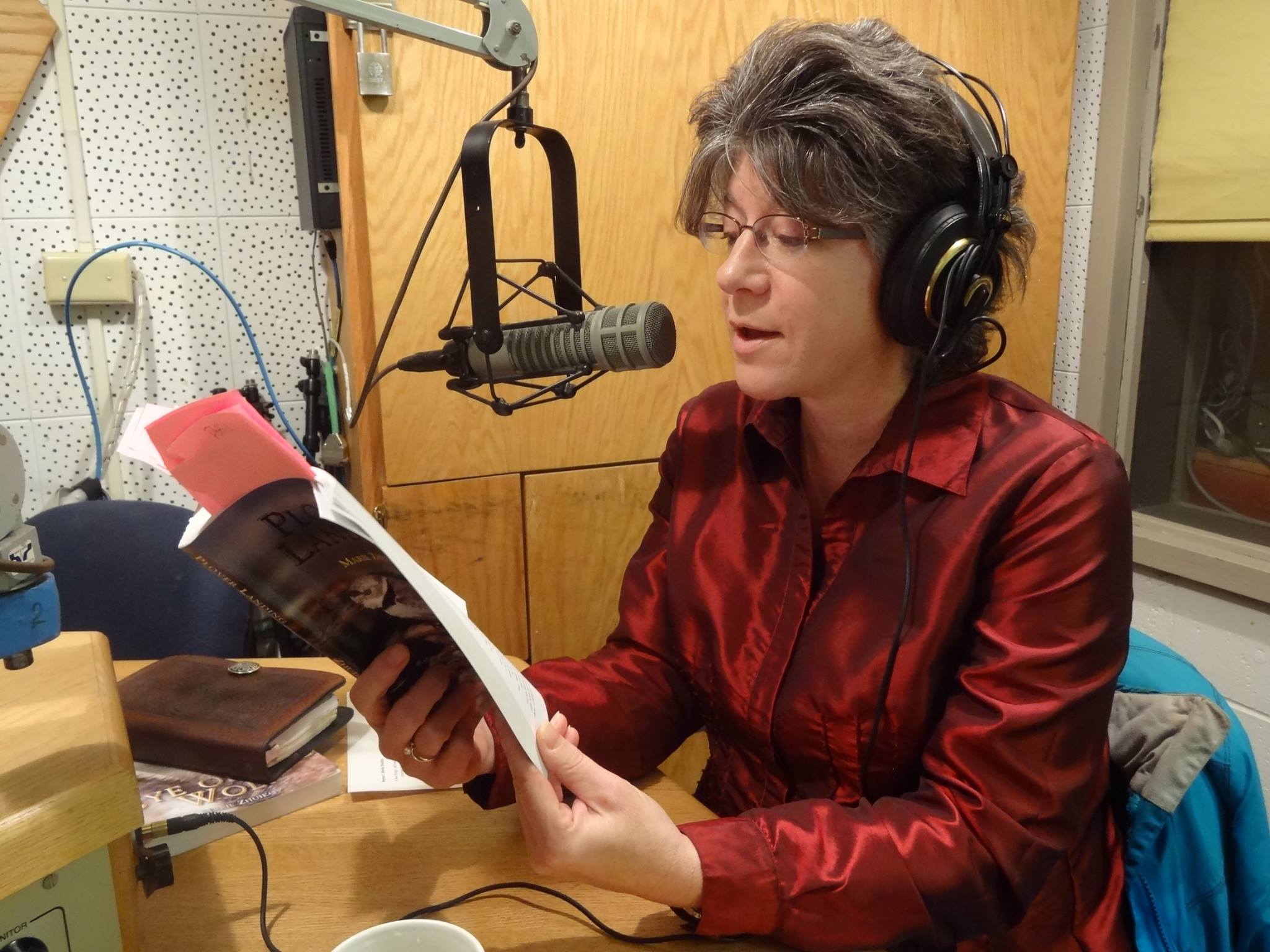
In the sound studio at KUMD Radio.

In the sound studio at KUMD Radio.

I took advantage of the opportunity to be part of a local radio station’s weekly program that features Minnesota women authors. I read excerpts from both of my eco-mystic romance novels, so they’ll be doing two shows about them. The first one featuring “Eye of the Wolf” aired this week on KUMD Radio in Duluth. You can access the six-minute audio file here.

My trip to the station in the basement of the local college was nostalgic. I used to have my own radio show for work called “Listening to the Lake.” I produced the show at that station with the help of their staff. They still have the same sound board I used for my show. These community stations are a great and unique news resource, so if you have one in your town, be sure to support it however you can!

How NOT to Deal With a Bad Relationship: Lessons from “Gone Girl” and “Anna Karenina”

Amy Dunne from "Gone Girl."

Amy Dunne from “Gone Girl.”

Anna Karenina

Anna Karenina


I had the serendipitously synchronistic experience of reading Gillian Flynn’s “Gone Girl” and Leo Tolstoy’s “Anna Karenina” at the same time. Although the stories take place in different eras, I was amazed by the similarity of some parts — especially if you just ignore most of Tolstoy’s ramblings about farming and equality for the peasant class. (I know, how dare I say that. Insert gasp from literary community here.) Both are about bad relationships and various ill-advised ways to deal with them.

In Gone Girl, Amy (the wronged wife) decides to deal with her husband’s infidelity by faking her death and framing him for it. But she still really loves him in her twisted way, so they patch things up (sort of) and resume living together, trying to recapture the magic of their early years. But their situation is not sustainable because it’s based on manipulation and power struggles. And Amy’s husband Nick only buys into it because she leaves him no choice. Especially after she announces she’s pregnant with his child.

(I hope there’s a sequel because something’s going to blow, and it’s going to blow big! Maybe their child will be the instrument of the familial explosion. I can’t imagine a baby raised in such a twisted environment would come out unscathed.)

Anyway, in Anna Karenina, Anna is the one who has an affair, and it’s her husband Karenin who thinks that remaining together in the same house is a good idea. As long as her lover stays away and she keeps things discreet, he’s all right with Anna continuing the affair, but he wants to keep up appearances for the sake of his career and social status. Like Amy, Anna also becomes pregnant. But it’s with her lover’s child, not Karenin’s.

Of course, it’s not a sustainable situation, either, and Anna keeps looking for a solution. She thinks she’s found one when she has a premonition that she will die during childbirth. Yes – that’s the answer – don’t deal with the situation, just die and get out of it! Although she comes close to death, she survives. Then it’s her lover’s turn to think about death, but he botches his suicide and survives also.

In Gone Girl, Amy’s original plan was to commit suicide as a final act of vindictiveness after successfully framing her husband for her death. But ever the narcissist, she decides he’s not worth killing herself over.

In Anna Karenina, Anna does eventually commit suicide as the solution, even though she and her lover Vronsky are at last free of Karenin and living the high life together with their daughter. Why does she do it? Out of vindictiveness and fear. She feels the romantic love between her and Vronsky slipping. He’s actually asserting some independence and (gasp!) doing some manly things without her. She can’t handle it and throws herself under a train – mimicking an incident that happened when they first met. Thus, despite overcoming many societal struggles, their relationship implodes from within.

As mentioned parenthetically already, I expect the relationship in Gone Girl will also implode. But only if the author gets on it and writes a sequel! Does anyone know if a sequel is planned?

I suspect that a creative writing graduate student could make a good thesis topic out of comparing these two novels. And that they could do it much more thoroughly than I. Feel free to use my blog story as an outline and go for it! I just thought it was amazing that these two authors spanning so many years were essentially writing about the same thing: human nature. It apparently hasn’t changed much, although if Gone Girl is any indication, human nature may have gotten even worse.

The Book Signing and the Viola Player

This weekend I had my first book-signing events in the metropolises of Minneapolis and Maple Grove, Minn. One was a reading at a small indie bookstore; the other was a signing event with a bunch of other authors at a big box chain bookstore.

Moon Palace Books in south Minneapolis.

Moon Palace Books in south Minneapolis.

I did the indie bookstore reading first, at Moon Palace Books in south Minneapolis. The audience was intimate and mostly genetically related to myself. (Grin.) But it was fun and I sold a few books. The owner was wonderful and, with thirty bookcases that were only two years old, the place smelled good — like freshly cut lumber.

We were just wrapping up when the Viola Player arrived. Or rather, she swooped in. Judy with the Duluth-Superior Symphony Orchestra (DSSO), is not the type to enter any other way. I experienced her vivaciousness first-hand when I had lunch with her as research for my novel “Plover Landing.” A viola player figures prominently in the story, but I needed to learn more about the life of this type of musician. I brought my plight to the DSSO and they hooked me up with Judy.

I chose the instrument because it’s the one I would have wanted to play if I hadn’t already been a French horn player in the high school band. I just love how it sounds, and the introvert in me loves how it’s a background instrument. From Judy, I learned about the underdog, scrappy culture of violists.

Judy, the vivacious violist.

Judy, the vivacious violist.

I didn’t know she was planning on attending my reading, so her swooping entrance was a surprise. A nice one, however! She even had her viola strapped to her back, and with little coaxing, treated us to several tunes. That’s one reading I won’t soon forget, and I’m sure the bookstore owners will remember it, too.

The big box chain bookstore event was a bust. Hardly anyone attended. If it had been my only event, I would have driven home in the dark of night feeling like the five-hour round trip was not worth it. I learned two lessons from this experience that I would like to share, especially with new authors who are responsible for their own marketing:

  1. If you’re traveling more than an hour or two from home, try to have more than one signing event scheduled to hedge your bets on feeling successful. In other words: Don’t put your book signing eggs all in one basket.
  2. The book signing ain’t over until the viola lady plays!

“Zenith City” Offers a Broader Understanding of Duluth

Zenith_City-210“Zenith City” is a collection of stories by former Duluthian Michael Fedo (cousin of former Duluth Mayor John Fedo). The memoir chronicles his time growing up in Duluth, Minn., in the 1950s and 60s.

I enjoyed reading the book. I recognized Fedo’s references to the city’s inferiority complex (which is turning around, now, thank you, with Duluth being named things like Best Outdoors City, etc.), and Fedo’s references to Duluthians’ relationship with their hills, KDAL Radio, dear old Denfeld High, the Flame Restaurant, and the Pickwick.

However, in many instances, Fedo writes about a Duluth with which I am unfamiliar — one where relatives live next door (my parents were the northernmost transplants of their central- and southern-Minnesota families), where the vices and haunts of downtown were nearby (I grew up in more distant Piedmont Heights), and where folk music was popular (I was born about 15 years too late for that).

But that’s all right. The descriptions gave me a better understanding of the place where I live. I especially enjoyed his reminiscences about Don LaFontaine, the famous movie trailer voiceover actor (think, “In a world where….”), his encounter with Louis Armstrong, and with Bob Dylan’s mother. And because of my exposure to this book, I now intend to read “Babbitt” by Sinclair Lewis, who lived in Duluth for a time. (Also because my home economics-major mother once made and served him dinner when she was working in college for a family who entertained him.)

I noticed two punctuation errors: one where closing quotation marks are missing, another where a sentence ends with both a period and a comma. This surprised me since I’ve come to expect better from the University of Minnesota Press. I don’t know if it’s a sign of their quality slipping or of my editorial eye getting sharper with experience.

The only other thing that gave me pause was the repetition among the stories. For instance, we hear that Fedo worked at the local college radio station at least four times throughout, but I suppose this is an artifact of the book being a compilation of stories that were written for other publications. Just be aware it’s not a seamless memoir written in a singular effort.

Earlier this year, I went to an event by Fedo at Duluth Public Library. He read from many of the stories, and afterwards, he and his wife were generous with their time for a discussion with me, a newbie novelist. They were a class act. I highly recommend this book, even to non-Duluthians.

A Photo From This Morning

My garden statue has been reading for a long time!

My garden statue has been reading for a long time!

This sight greeted me this morning on the way to the mailbox. The only camera I had on hand to capture it is my crappy old Sony DSC-S500 Cyber Shot. I was glad it was able to show the detail of the spider web. Please have a wonderful day, even if it’s rainy!