Cullen Skink and Scones: Adventures in Scotland, Part 2

SCOTLAND! 037

The non-rocky part of the trail to Gardenstown.

We spent our first day at Crovie Cottage #13 on the Moray Coast exploring the small fishing village and hazarding the “Danger! Falling Rocks!” trail that leads along the sea to neighboring Gardenstown. Eventually, we stopped at a café for lunch.

The Tea Pot Cafe is the kind of place where everyone notices when somebody new walks in. Your table neighbors will advise you on menu choices, ask where you’re from, and if you’re lucky, will tell you the best places to visit.

SCOTLAND! 053

The rocky part of the trail.

We were advised to visit Delgatie Castle for the best scones and Cullen skink in the land. Scones need no explanation. Cullen skink, however, is a chowder made from smoked haddock. It was invented in the nearby town of Cullen, and is apparently all the rage. Certain restaurants along the coast even boast chefs who have won Cullen skink soup honors. The “Cullen” part of the name of this dish sounded okay to us. The “skink” part, not so much, but we were game to try it.

026

Delgatie Castle

So, the next day, after a visit to a nearby gannet colony at the Troup Head Nature Reserve, we were off to the castle. Delgatie Castle is no longer inhabited, but is run by an organization. As we approached on the dirt road and the pink tower loomed through the trees, we were stuck by the feeling we were in a fairytale.

Hungry again, we opted to visit the Laird’s Kitchen first and tour the castle later. We were not disappointed by either the scones or the soup, although as you can see from the photo below, the meal was a bit, er . . . white. The bread was homemade and the scones were meltingly hot.

The castle is primitive compared to others I’ve been in but it was interesting to see how the rooms were arranged around the large central tower staircase. There’s also a creepy story in one of the rooms about a monk being buried behind a wall.

So that was our introduction to local fare and Delgatie Castle. Next, it’s on to whisky!

SCOTLAND! 067

Cullen skink soup, homemade bread, and tea – of course.

Dining Our Way to Mad City

20160128_172614

The view of the Wisconsin State Capitol from our table at the Old Fashioned Tavern.

The Mother Ship for my day job is located in Madison, Wis. My coworkers and I recently took a road trip to the “Mad City” for a strategic planning meeting. To make things more fun, we strategically planned our lunch stop to coincide with the Broadway Diner in Baraboo, Wis.

I learned about the Broadway Diner the weekend before during a TV show called “Discover Wisconsin.” Since I am a lifelong Minnesotan who now works for a Wisconsin institution, I have endeavored to learn about my employing state. Discover Wisconsin is one of my secret weapons in this cross-cultural quest.

20160128_114314

Inside the Broadway Diner in Baraboo, Wis.

The show featured eating establishments that use locally sourced ingredients. The Broadway Diner caught my eye because I knew I’d be travelling through the town, and because I’m developing a “thing” for diners. The diner supplies its cheese, eggs and meat from local sources.

The Broadway looks like any respectable diner from New Jersey, with a metallic outside and a tiled, stooled inside. We learned while there that the diner was, in fact, made in New Jersey, and it spent many years in Connecticut as a diner, before it was moved into storage in Cleveland, bought, and moved to its current Wisconsin location.

The food hit our lunch spots, although I had breakfast: potato pancakes with over-easy eggs and sausage. Wonderful. My co-workers enjoyed their wrap sandwiches. For those who are gluten-intolerant, the diner offers gluten-free bread.

Sated, we continued onto our meeting in Madison. After a vigorous afternoon of strategic planning, we converged as a group on The Old Fashioned Tavern and Restaurant in the center of town, directly across from the Wisconsin State Capitol.

20160128_173035

An Old Fashioned.

I treated myself to my first-ever old fashioned. It’s a drink served in a tumbler, which features brandy, cherry and citrus flavors. My first was so good, I had a second.

The Old Fashioned specializes in German cuisine and offers tantalizing appetizers such as spicy pickled eggs, turkey gizzards, and pork hocks. A person can even buy jars of pickled eggs “to go,” if they don’t have time for a sit-down. Fried cheese curds are on the menu, too.

I ate a Wisconsin Burger, which of course, was topped by Wisconsin cheddar cheese. I asked for fried onions instead of the raw onions on the menu, and happily received the correct onion versions.

If you’re ever in or near Madison, try the Broadway Diner and The Old Fashioned. You won’t be sorry. They can even make a strategic planning trip to the Mother Ship enjoyable.

In Which I Learn About Aquaponics (and eat it, too!)

A salad made with aquaponic lettuce. Photo by Moira Harrington.

A salad made with aquaponic lettuce. Photo by Moira Harrington.

Last week, a small cadre of my co-workers and I visited an aquaponics facility in Montello, Wis., to learn more about this intriguing way to grow food. The types of food involved are fish and plants: walleye and tilapia, and just about any type of veggie one can imagine. This alone would be cool, but what’s even more notable is that the water used in the system is recirculated and reused, thanks to the wonders of bacteria and a specialized filter system.

The facility we visited housed joint operations by Nelson and Pade Inc. and the University of Wisconsin-Stevens Point. Nelson and Pade sells aquaponics systems commercially, along with the fishy and veggie fruits of their labor. UW-Stevens Point conducts research into new aquaponics methods.

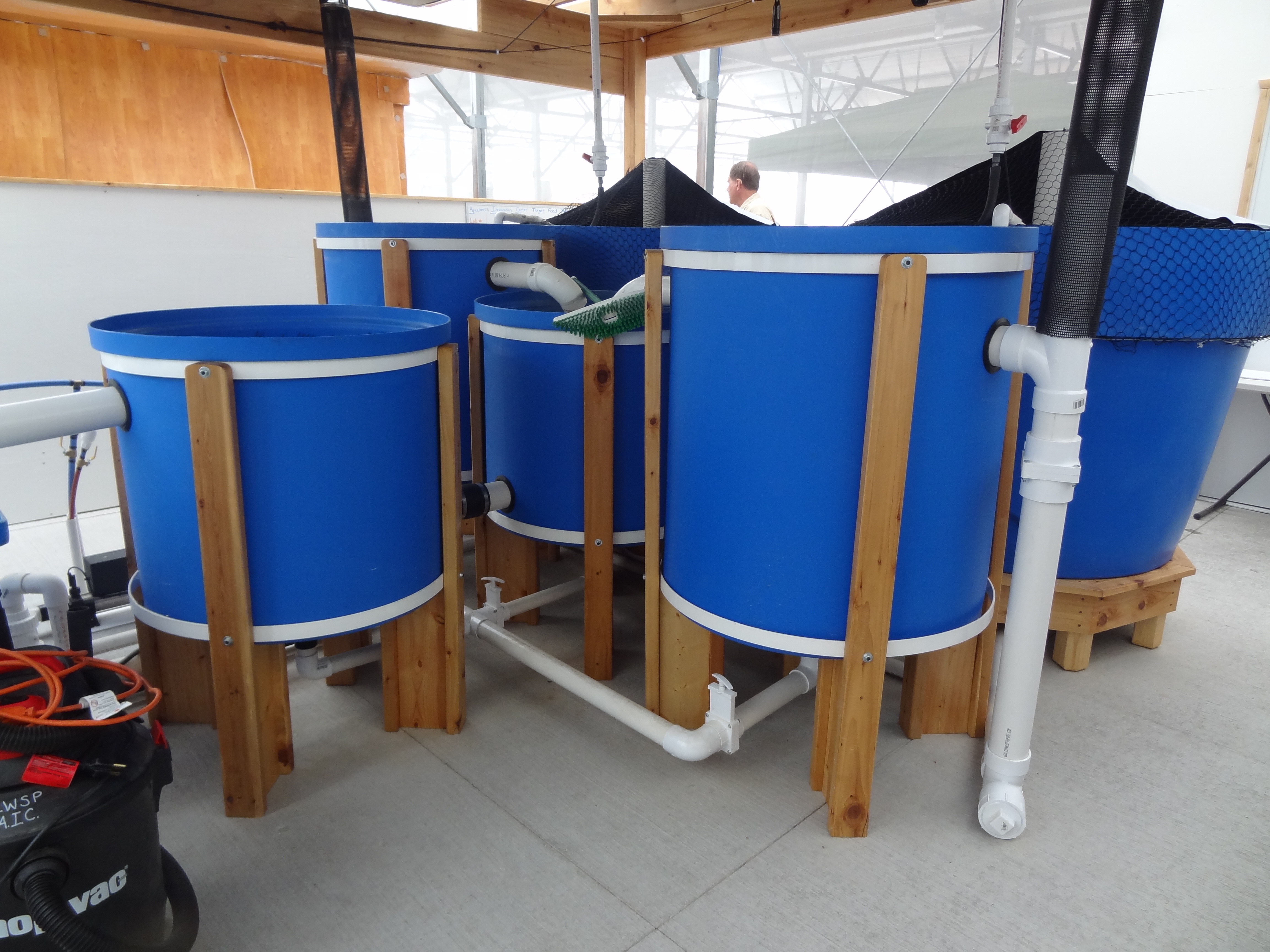
Aquaculture tanks that hold tilapia fish.

Aquaculture tanks that hold tilapia fish.

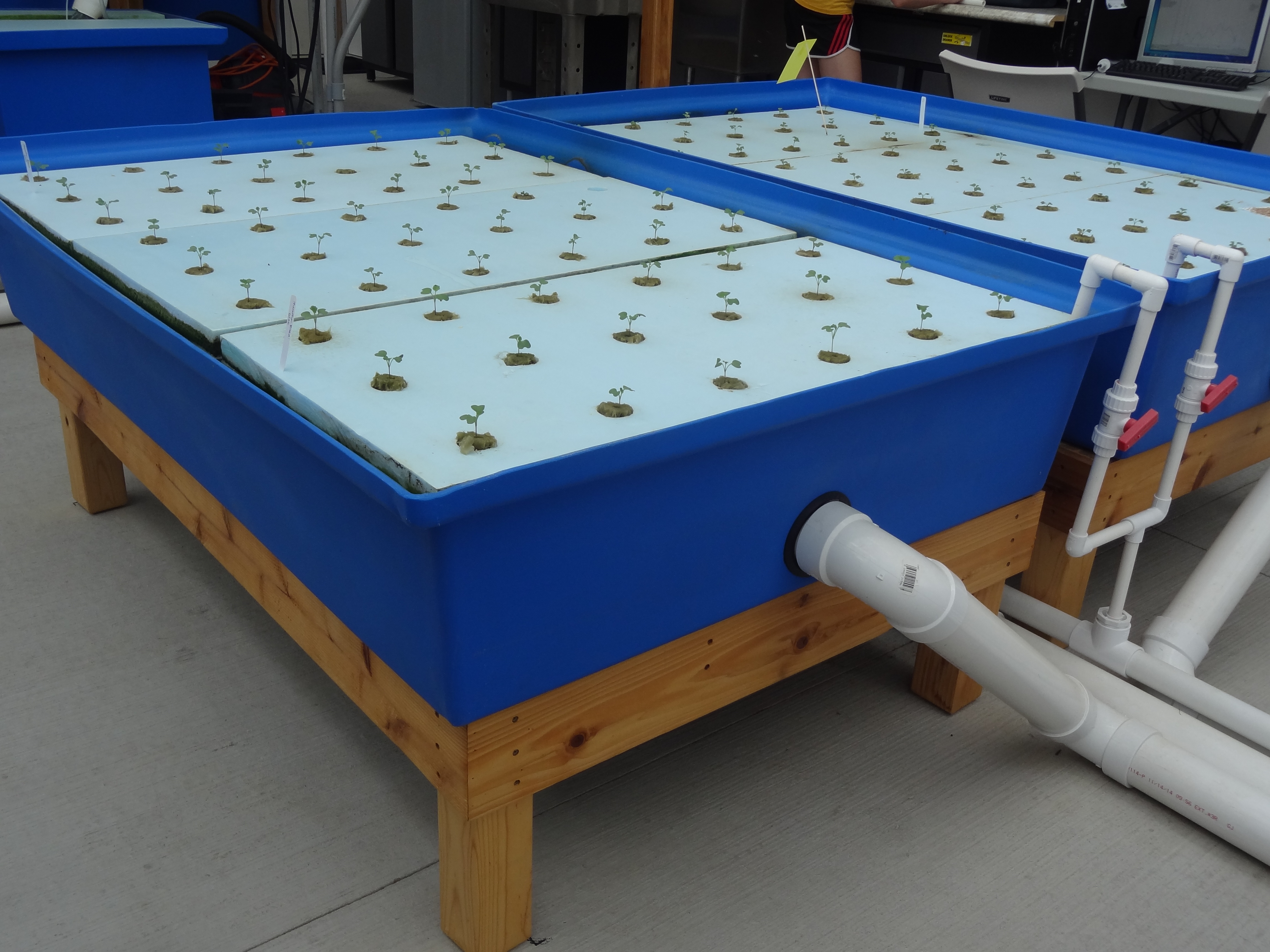
How does aquaponics work? Basically, the fish are grown in aquaculture tanks. The resulting nutrient-rich water from the tanks is filtered through several systems and pumped into plant-growing systems. The plants grow in their own individual base of porous rockwool atop the water in floating platforms. No soil is needed. The plants receive enough nutrients and natural fertilizer from the fish water to grow. The used plant water is then filtered again and recirculated back into the aquaculture tanks.

The goal with aquaponics is to provide a sustainable system for growing high-quality food. Pesticides aren’t used on the plants for fear they will contaminate the water and hurt the fish. Instead, natural methods are used like mites that eat pests.

The plant growing platforms.

The plant growing platforms.

The systems don’t take up much space or use much water after the first set-up, and they produce high volumes of food: ten pounds of plants for every one pound of fish. People can purchase systems small enough to fit in a home or classroom, to those large enough for family farms. My guess is that anyone able to keep fish alive in a home aquarium would be able to do the same thing in an aquaponics system. Sure, the aquarium in this case is a bit more expensive, but the concepts are the same.

To round out the tour, our group ate at a local café where aquaponics lettuce was used in a tasty strawberry walnut salad. It was super good. If you ever get the chance to tour such a facility or eat aquaponics-produced food, go for it!

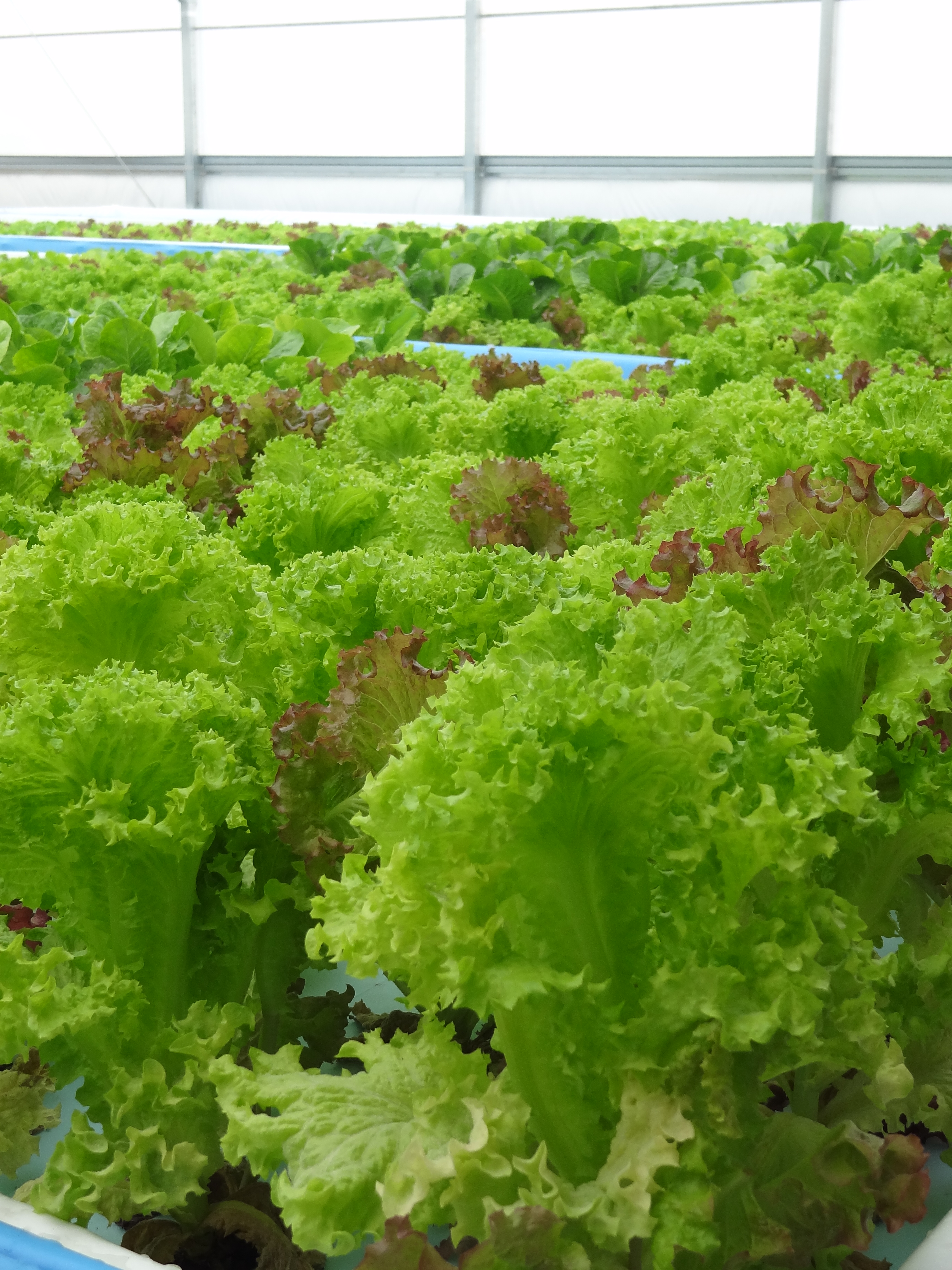
The luscious resulting lettuce.

The luscious resulting lettuce.

Farmers’ Market Find

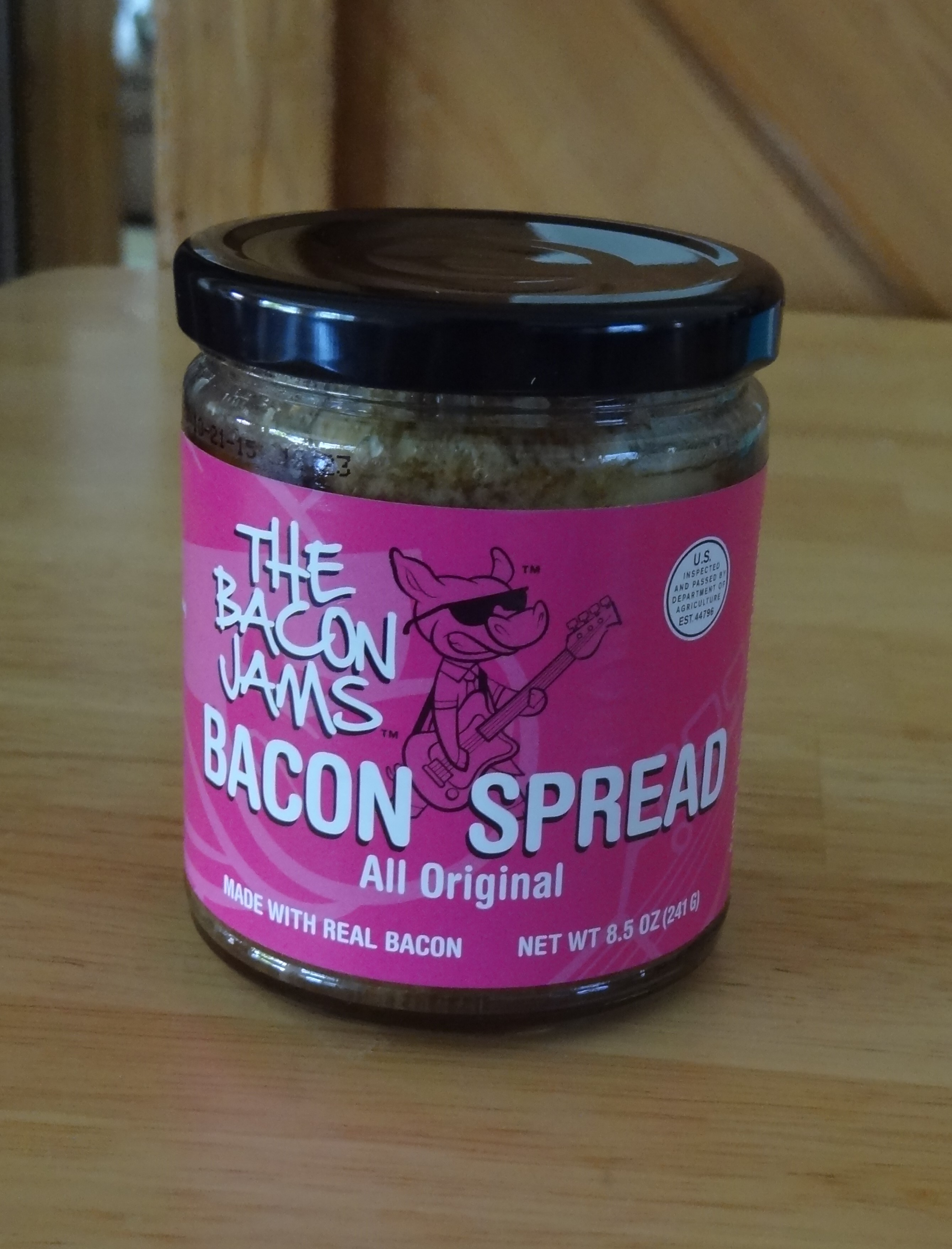
bacon jam spread

I have been quiet for a while because I have been meandering. And what did I find during my jouney? Bacon jam! I made the discovery at a farmers’ market in Brigantine, New Jersey. At $15 a jar, it’s a bit pricey, but as the seller lady said, each jar contains a half pound of bacon. I couldn’t resist. I have a bacon-lover in my family, so the purchase was a foregone conclusion.

It’s made in Pennsylvania and according to the product’s website this bacon spread makes a great topping for scallops, cheese-based appetizers, sandwiches, and as a mix-in for sauces. Although there are different varieties (black pepper, red chili & garlic), I opted for the original, which features just plain bacon.

Who knows what other wonders await in the world?

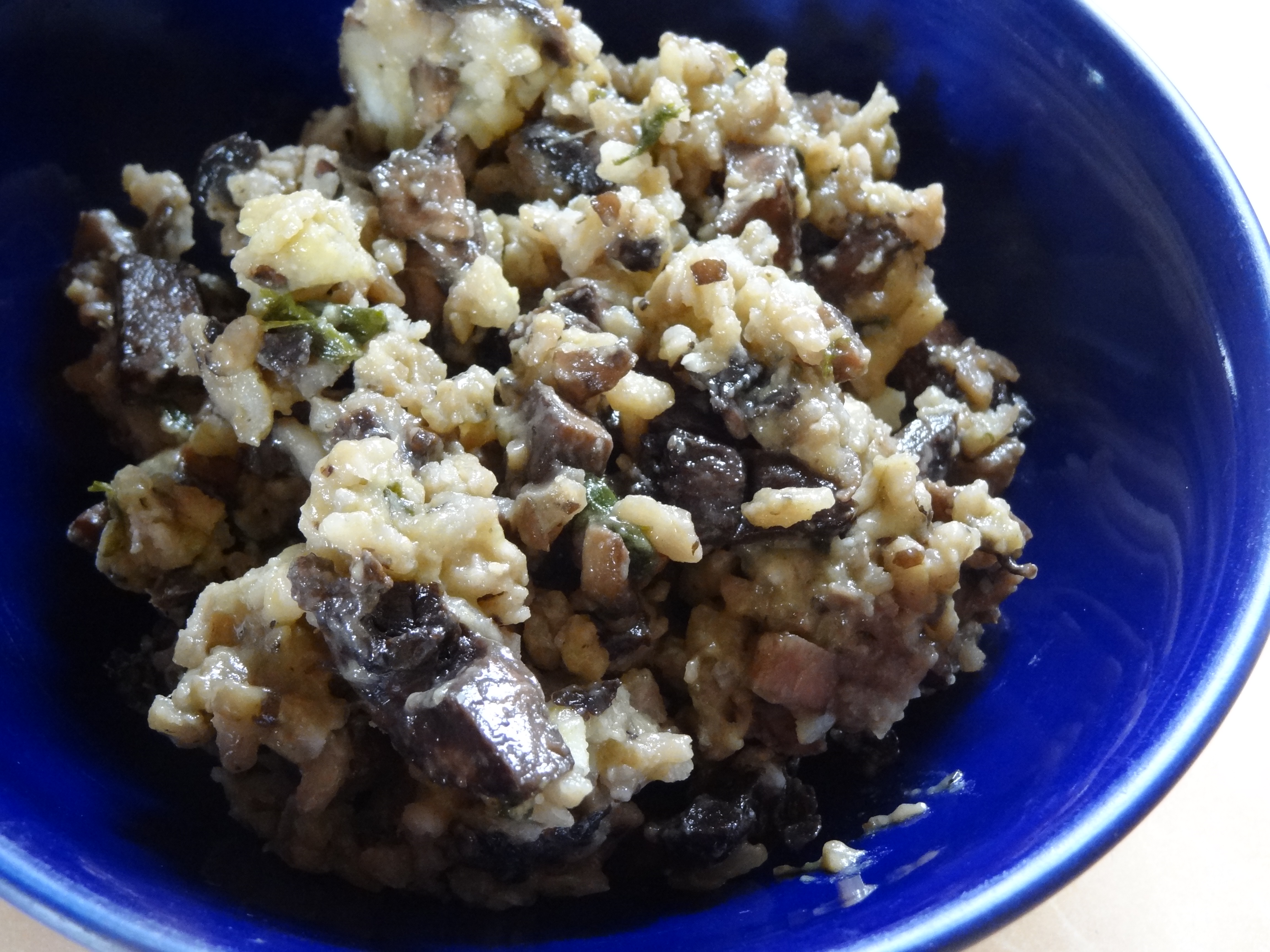
Mushroom and Wild Leek Risotto

DSC02171
I usually don’t blog about recipes, but my first attempt at cooking risotto is an accomplishment I just have to share. The outcome was superb (if I do say so myself) and I learned that creating risotto is not a privilege reserved for exalted chefs in high-end restaurants. I also want to share it because, if you live anywhere near a natural area, you might be able to gather one of the ingredients yourself. (Never fear, however, there is a non-foraging ingredient option.)

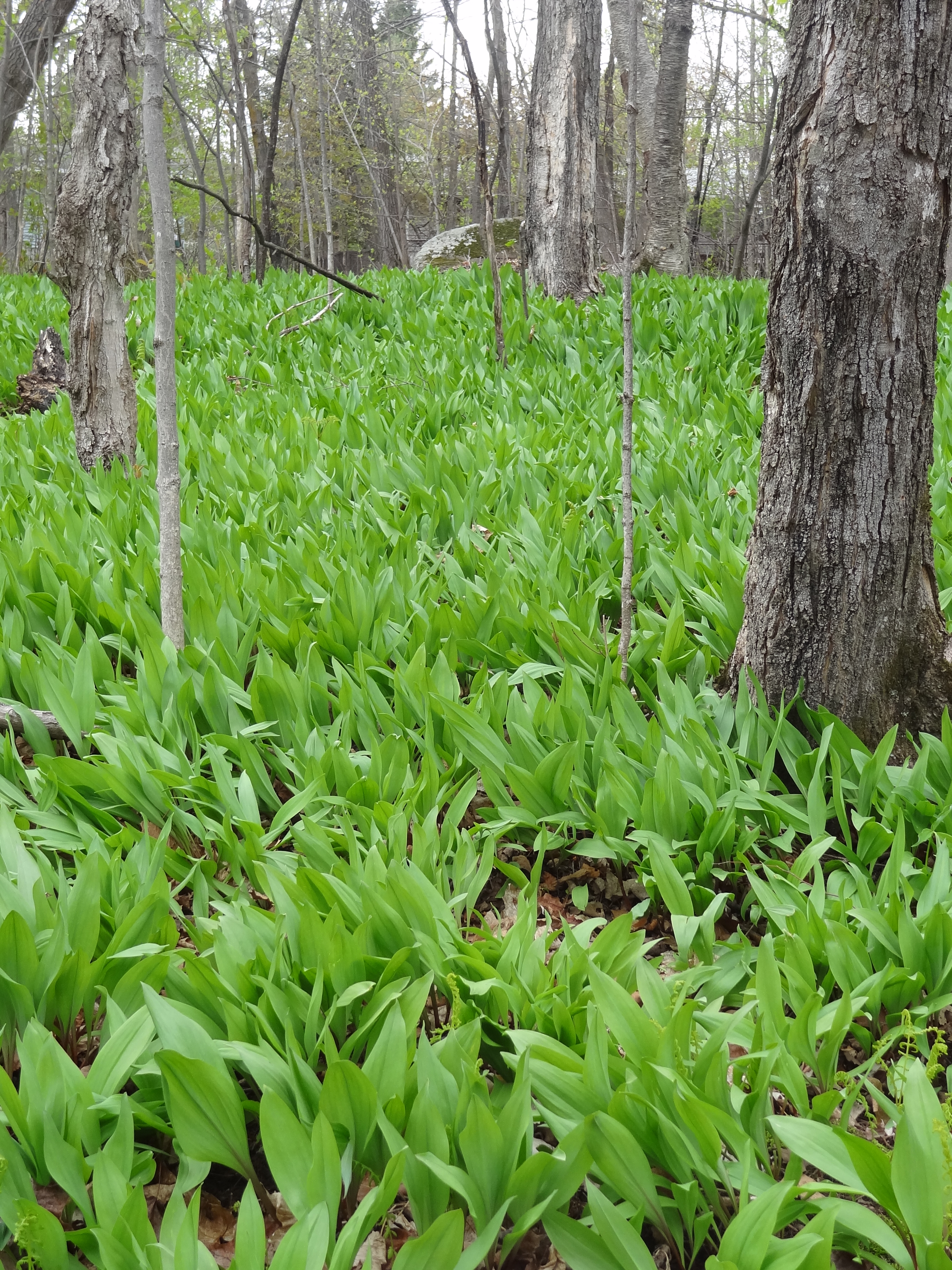
A carpet of wild leeks in my local woods.

A carpet of wild leeks in my local woods.

I wanted to learn how to make risotto because I had a divine offering of it a few months ago in a restaurant. As the daughter of a college home economics major who taught me everything she knows (thanks mom!), I am handy around the kitchen. But risotto seemed daunting – not anything mere mortals could cook.

Alas, I missed that restaurant risotto – had dreams about it – so I decided to give it a shot and searched the internet for recipes. I found one for mushroom risotto, but I changed it a bit to my preferences and to include the wild leeks currently growing in “my” local woods in abundance.

If you live south of Minnesota, you might know wild leeks as ramps. They look like small scallions and have the same oniony taste. Of course, I don’t expect you, dear readers, to scour the woods for an ingredient if you’re not sure what it is. Please only use leeks/ramps if you are sure they are leeks/ramps. You can always use chives or scallions instead. And you don’t have to rip the whole plant from the ground. You can just use the leaves. That way, the plants will regrow next spring.

Obligatory public safety message aside, this recipe turned out great – Nirvana reached! It takes A LOT of mushrooms, though, so be forewarned. This version makes six servings. I am still eating leftovers, which aren’t as good as the freshly cooked batch, but you won’t hear me complaining too loudly.

Mushroom and Wild Leek Risotto

4-1/2 cups chicken broth (or vegetable broth)
4 T olive oil, divided
1 pound Portobello mushrooms, thinly sliced
½ pound white mushrooms, thinly sliced
A handful of wild leek leaves (10-12), coarsely chopped (or 3 T chopped chives)
1-1/2 cups Arborio rice, uncooked
½ cup white cooking wine (or rice cooking wine, white)
1 teaspoon sea salt
Black pepper, to taste
4 T butter
1/3 cup grated Parmesan cheese

Warm the broth in a large saucepan over low heat.

Warm 3 T olive oil in large saucepan over medium-high heat. Sir in the mushrooms and cook until soft, about 4 minutes. Remove the mushrooms and their liquid. Set aside.

Add 1 T olive oil to skillet and stir in the leeks. Cook 1 minute. Add rice, stirring to coat with oil for about 2 minutes. When the rice has taken on a pale golden color, pour in the wine, stirring constantly until the wine is fully absorbed. Add a ½ cup of broth to the rice and stir until the broth is absorbed. Continue adding broth ½ cup at a time, stirring continuously, until the liquid is absorbed and the rice is al dente – about 20 minutes.

Remove from heat, stir in mushrooms and their liquid, butter and parmesan. Season with salt and pepper. Makes 6 servings. Perfect complement for grilled meats and chicken dishes.

Some wild leeks, close up.

Wild leeks, close up.

A Spirited Reflection of One Watershed

SignDuluth, Minn., has a new attraction for tourists and residents alike. What is it? Gin!

Vikre Distillery opened this year in Canal Park, right next to the famed aerial lift bridge. It’s one of several local brewing operations new to town due to the lowering of licensing fees. But it’s the only gin distillery. I recently had the chance to sample their spirits and take a tour courtesy of Caleb Wendel, the distillery’s sales manager. Plus I talked to the co-founder/CEO/distiller, Joel Vikre, a few months ago at a public event. So here’s what I know.

Joel was living in Boston when he and his wife got the idea to open a distillery in Duluth. After all, the area has all the requirements: good water, peat, and a source of grain. Nine months later, his family moved to Duluth and his dream became reality.
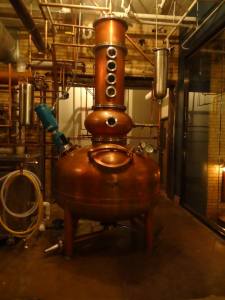
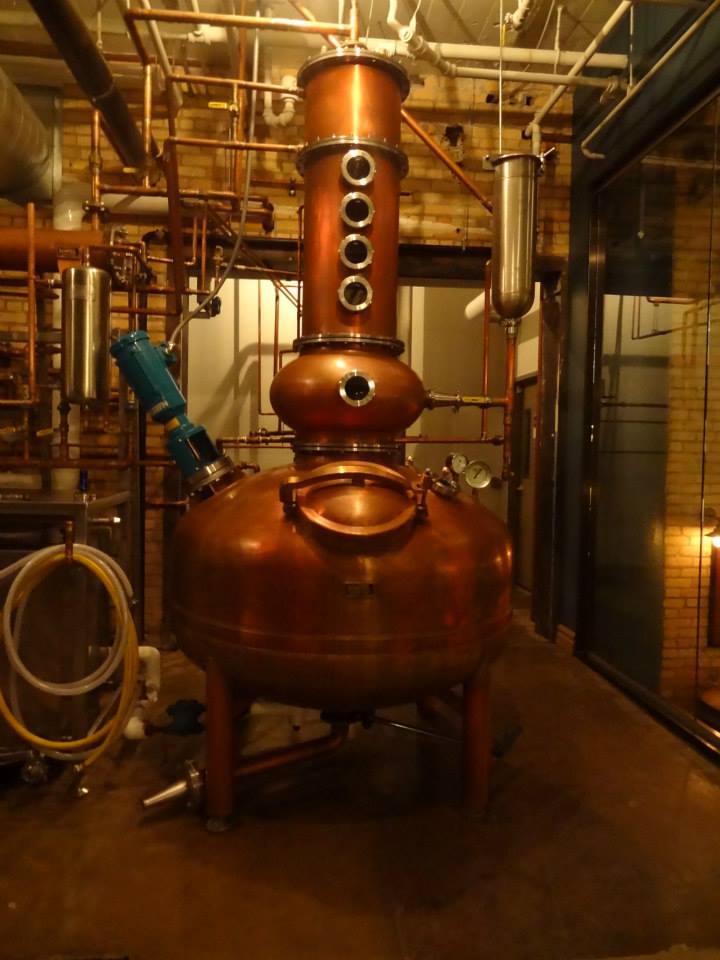
One of the stills.

One of the stills.

Vikre (pronounced veek-ruh) Distillery markets its gin as “A Spirited Reflection of One Watershed.” Producing each bottle takes seven gallons of Lake Superior water combined with barley and various botanicals. Joel explained that, unlike in some distillery operations, no reverse osmosis is required with Duluth water. They just run it through a charcoal filter.

“It’s impossible to overstate the importance of water for our business,” Joel said. “We live in one of the great distillery locations in the world.”

A flight of gin.

A flight of gin.

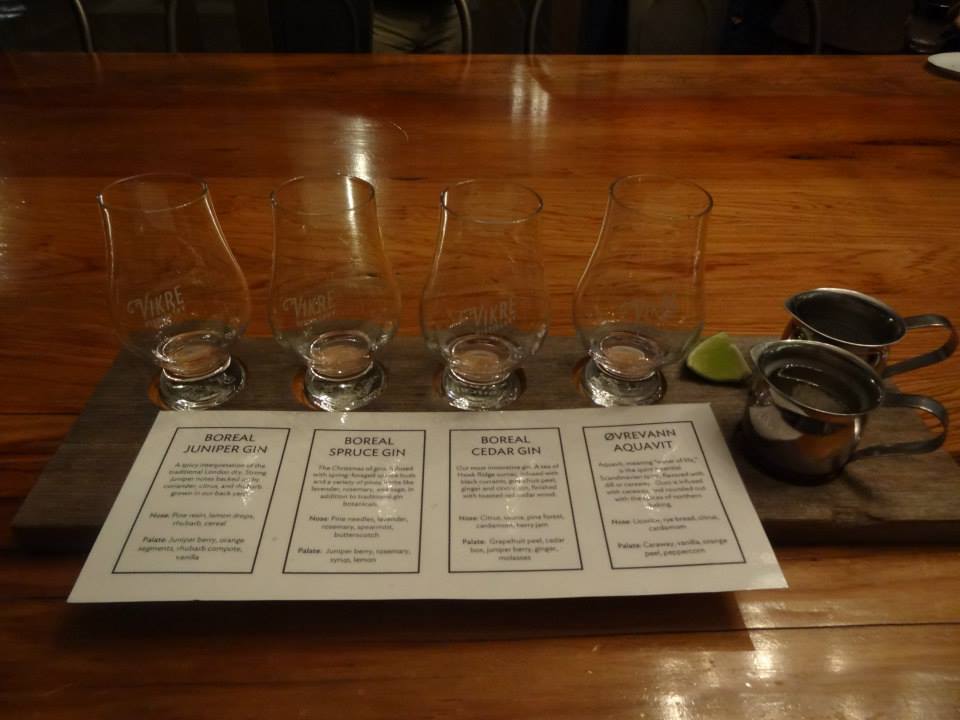
Caleb said their gin is about 90 proof and that it comes in three flavors: the traditional juniper (made with organic juniper berries from a supplier plus a few local ones thrown in for good measure), spruce (made from soft new spruce buds that sprout in spring), and cedar. They also produce aquavit (Mikael Blomkvist’s favorite drink in “The Girl with the Dragon Tattoo” book series), which is flavored with caraway.

The bar at the distillery offers a flight so that you can sample each one. The glasses are presented on a rustic wooden platter along with two small metal pitchers of tonic and soda, and a slice of lime. Unless I heard him wrong, the bartender told me to taste first, then smell the gin, which is different from how one samples wine. But after my first try, I saw (or smelled) why. Gin tastes much better than it smells! If a person smelled it first, they are likely to get scared off by the turpentine-y aroma. Perhaps there’s some more sophisticated reason, but that’s my impression.
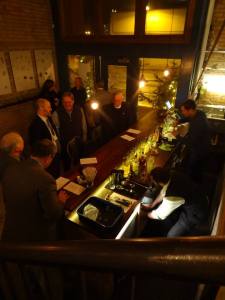
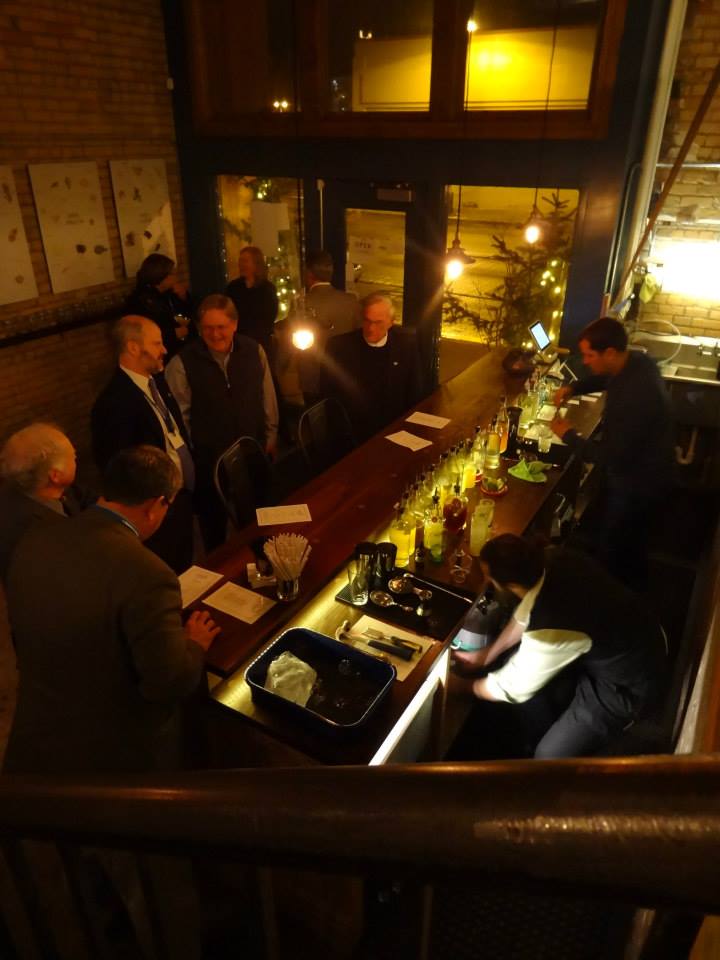
The bar.

The bar.

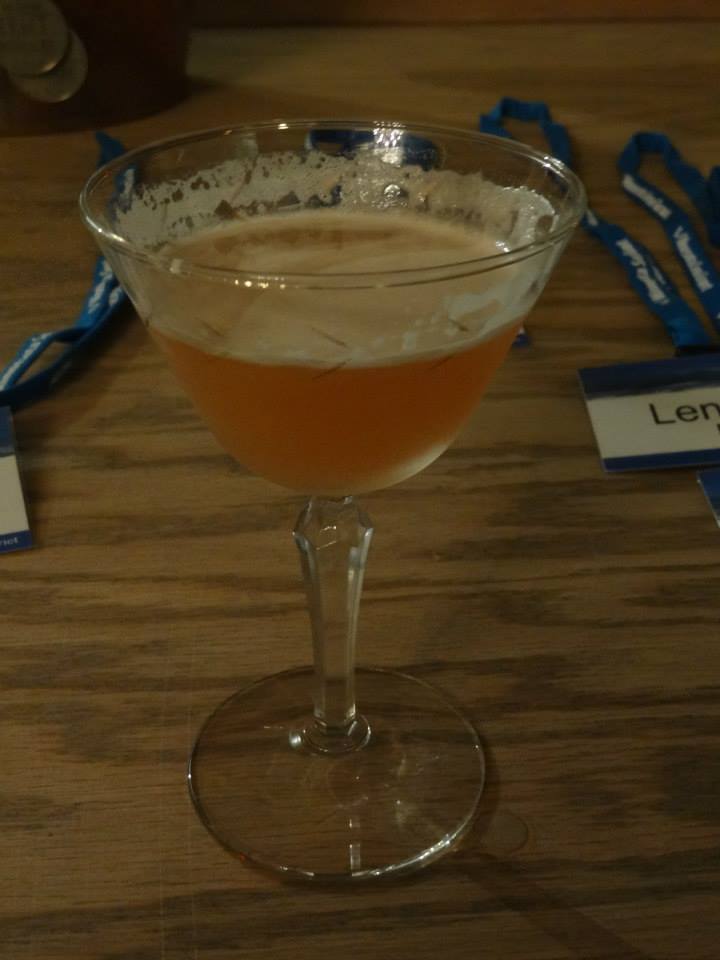
I’m more of a wine and hard cider drinker. In fact, I don’t think I’ve had gin since my college days. But this was good. With its woodsy flavors, my favorite was the juniper gin. The bar also offers mixed drinks made from their products. Because I liked the name, I tried a “Lumbersexual,” which was made of aquavit, orange liquer, lingonberry syrup and lemon.

OMG! It was so good; Nordic and not too sweet, but not too sour, either. The bad news is you can’t buy bottles of their gin at the distillery. Caleb says this is due to distributor laws, but that their products are available “everywhere” locally. I quizzed him about the small liquor store by my house, and sure enough, he said they carried it (which I confirmed later through a purchase). Almost all of their distribution is in Minnesota, but if you look at the handy-dandy map on their website, you will see they also distribute in San Francisco. And Caleb tells me they just received their Wisconsin sales license, so watch for it there.

At $30 per bottle, their gin is not cheap. But it’s worth it knowing where it comes from and to support a local enterprise.
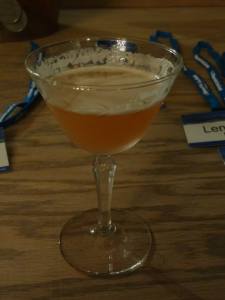
A Lumbersexual.

A Lumbersexual.

Caleb says that whiskey is on the horizon for the distillery. It’s in process now and will be coming not-so-soon (it’s better that way). They also hope to sell their own tonic someday. And for you corn-intolerant people, it’s made with cane sugar, not corn syrup. They do offer a cane-sugar tonic for sale that’s made by a different company, however, along with glasses and other gin-drinking paraphernalia, including clothing.

If you’d like to visit Vikre, be sure to check their website for hours. They are open on a limited basis in winter. The distillery is located in the Paulucci Building. There’s no sign for it on the outside of the building at this point. Look for the sidewalk easel sign instead.

Adventures in Diner Decor

OldManPrayingI embarked on a lunchtime adventure today at work. I forgot to bring food from home, so I decided to visit a nearby bar in Superior, Wis., owned by a friend of a friend. I discovered the bar didn’t serve food. Since I wanted to be able to think and continue working during the afternoon, I opted against a liquid alcohol lunch. I visited a diner a few doors down.

I love diners. They each have distinctive personalities and they’re always very “human”—reflecting the local culture. This one was no different. Mickey Mouse memorabilia provided the main décor theme, with a few other classics thrown in, including the “old man praying with bible and bread” picture (I think it’s called “Grace” or “Daily Bread,” or something like that). An interesting combination, I must say. I remember the old man artwork from my youth. I suspect one set of my grandparents displayed it in their home. I would never have thought to hang him next to Mickey Mouse.

MMouse

A respectable number of people filled the booths. They were older and had the look of locals – casual dress, boots, and warm winter jackets. They looked like people who had been coming to this diner for a long time; people who could go elsewhere – to a franchise eatery or a fast-food restaurant, but they chose this place because it’s familiar and it’s in their neighborhood. They rested in their seats like birds home from a long migration.

The waitress looked like she’d seen better days. She was skinny with graying hair, a hangdog look, and walked with her hands stuck stiffly into her fleece jacket pockets, elbows locked. The food was good, though, as it usually is in such establishments. This diner served breakfast all day, so I got my favorite two eggs over-easy with sausages and hash browns. Hold the toast. What I liked most is that the hash browns were fluffy – not bogged down with grease. It proved to me once and for all that local diners do not survive on their décor alone.


Beer: A Love Story

Woman holding glass of beer over her head

Woman holding glass of beer over her head (Photo credit: Wikipedia)

It’s not my love story; I’m more of a wine person. But I did meet someone who loves beer. A group I’m a member of met at the new Canal Park Brewing Company in Duluth a few days ago. In addition to our group meeting, we got a tour of the on-site brewery by Jeremy, one of the brew masters.

Jeremy is just four days into his job and it shows. Bright-eyed and bushy-faced (he has a sparse beard), he spoke with true enthusiasm. He comes to northern Minnesota from Milwaukee, which, of course, is known for its beer. Jeremy has a good pedigree; he’s done college work in biochemistry and almost has a doctorate in it. It sounded like the only thing standing in his way was some impatience with academic bureaucracy.

He’s done a lot of work with yeast and home brewing, and he worked as a volunteer for a well-known brewery in Milwaukee, the name of which I can’t recall because I was drinking wine at the time. And I’m drinking a nice zinfandel as I write this, which is not helping.

Anyway, this is Jeremy’s first paying job at an official brewery. He showed my group around the temperature-controlled vat room (a cool 53 degrees) and the warmer room where they store the hops. We also got to see the fancy computer panel that he uses to cause various mysterious things to happen to the brews, and the hopper that dispenses the grain so vital for the operation.

So it was the lure of this job that brought him to Duluth, and also . . . you guessed it . . . a woman. His lady friend happens to work for the competition: Fitger’s Brewhouse , just up the shore of Lake Superior a bit.

Seeing someone so obviously well-suited to their job was fun, and it was nice to think that love was an important side-benefit of Jeremy’s move north. Being a fly on the wall during one of his conversations with his lady friend about brewing and what their respective work places are up to would be so interesting. Do they share trade secrets with each other or keep mum for fear of giving the other an advantage?

Although I didn’t drink the beer so can’t comment on it (and you wouldn’t want me to), the food was notable, the wait staff attentive, and they were patient with someone like me who had questions about which entrees are best to eat for someone who can’t tolerate wheat (yet another reason I don’t drink beer, besides the taste). I had a Jaeger burger, which features smoked gouda cheese, black forest ham and sautéed wild mushrooms (without the bun), along with some garlic mashed potatoes.

And Jeremy answered all the questions we threw at him. I could tell he loved the topic of beer and I’m sure he’ll do credit to this profession. So, if you’re ever in Duluth, stop in at the Canal Park Brewing Co. And no, they are not paying me to say that!