Dining in the Dark

20190418_190920

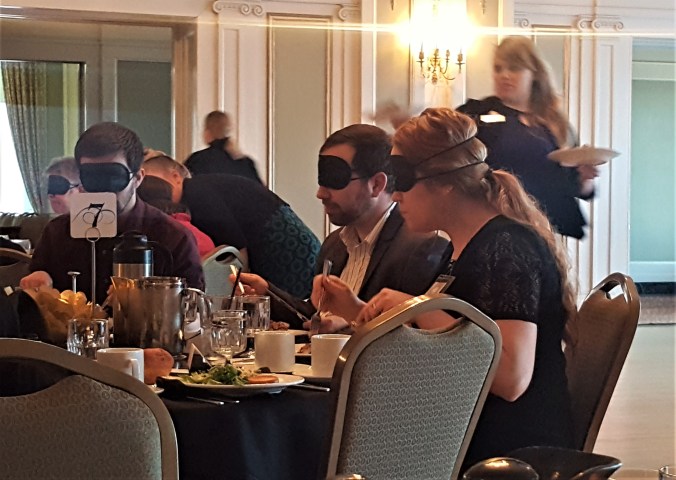
Yesterday, Russ and I paid good money to eat food we couldn’t see. The dinner was a fundraiser for the Lighthouse Center for Vision Loss, a local group that helps people with vision problems. (You may recall that I volunteer for this group by reading the Sunday newspaper aloud over the airwaves once a month.)

The event was hosted by a local TV news personality and the keynote speaker was a man who lost his vision due to retinitis pigmentosa. From him, I learned that blind people make jokes just like the rest of us (imagine that!) and that 66% of visually impaired adults are unemployed.

Another speaker before the dinner was a woman who lost her vision to diabetes. Her best joke was that this was one night when she didn’t have to worry about how awful she eats. (Because everyone else will be blindfolded. Get it? Maybe you had to be there.)

Then two speakers instructed us on how to go about eating when blindfolded. The main tips were: to sit close to the table; put a napkin in your lap or tuck it into your shirt; feel slowly with your hands where your silverware and drinks are first; think of your plate as a clock face and have someone tell you where your food is in relationship to that; use the edge of your fork to circle your meat and determine what size it is; and keep the sharp side of your knife down when cutting meat.

Before the food was brought out, we were instructed to don black blindfolds that were provided near our place settings. Once our plates arrived, I cheated and took mine off so I could tell Russ where his food was on his plate.

I found that cutting meat was the hardest part. I attempted several cuts, but couldn’t tell if my knife was  sharp-side-down or not. I ended up just stabbing a large piece of pork and tearing off pieces with my teeth — not exactly fancy dinner behavior, but hey, it worked. I appreciated the advice about reaching slowly for water glasses and silverware. I am proud to report no spillage or droppage.

Once I mostly emptied my plate, finding the remaining food became more difficult. I can’t imagine having to eat that way all the time. The experience gave me a greater appreciation for the challenges that visually impaired people face and the important work that organizations like the Lighthouse Center do.

Careful! People Might Take you at Your Word

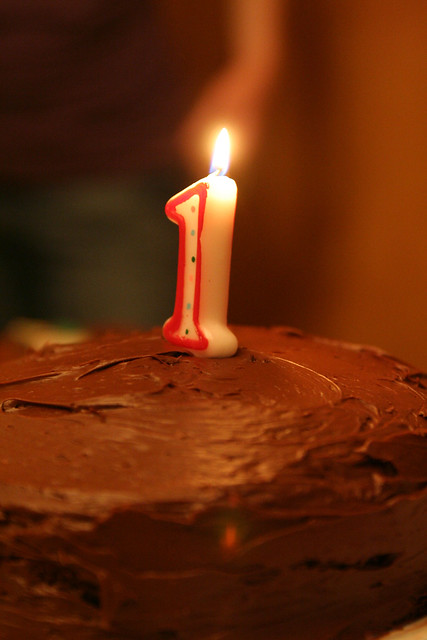
Cake by Chriss

Image by Chriss from Flickr.

An incident is arising in my mind from the mists of time, perhaps because I’ve been planning several events recently. My husband and I had purchased our first house in a Duluth neighborhood. Our son was one, so we decided to hold a combination birthday party and open house for our friends and the neighbors.

On the afternoon of the party, many people showed up. Things were in full swing when a couple from down the street rang the doorbell. We hadn’t met them yet and were happy to see them at our door.

After introductions, the woman said something like, “I’m sorry, we don’t have time to stay, but we just wanted to say hello.” My husband and I expressed our disappointment at this. We chatted a few moments more and then they went on their way.

I was surprised some months later to learn from my mother (who lived in our same city) who in turn learned from one of her friends who was acquainted with the couple, that they were incensed and highly affronted that we didn’t insist they come into the party.

I stared at my mother in disbelief at this news, then started to laugh. Oh the social games people play! I had never run into that behavior before. And I’m sorry, I’m not the type of person to beg people to come to parties if they’ve said they can’t. Imagine that — the couple was angry because we believed what they said.

We lived in the neighborhood for a few years more and never did run into the couple, so we had no chance to smooth things over.

I suppose they had expected us to say, “Nonsense, please come in. We’d love for you to stay!”

Instead, they got, “Oh, sorry to hear that,” and eventually, a goodbye.

In our defense, we were new homeowners, new parents, and unschooled in social mores. But I do hope the experience made those neighbors think twice before they tried this tactic on others. I’m sure there are other people in the world who think people actually mean what they say.

Marriage Advice Learned in a Bar

I attended a bachelorette party recently in a local pub. Two patrons near our table were asked for their advice for the bride. Bernie (a woman) and John had these sage words of wisdom to impart from their 40 years of marriage:

When you wake up each morning, ask yourself what you can do for your spouse today instead of what they can do for you. 

Solastalgia: The Psychological Impact of Environmental Change

DSC05208

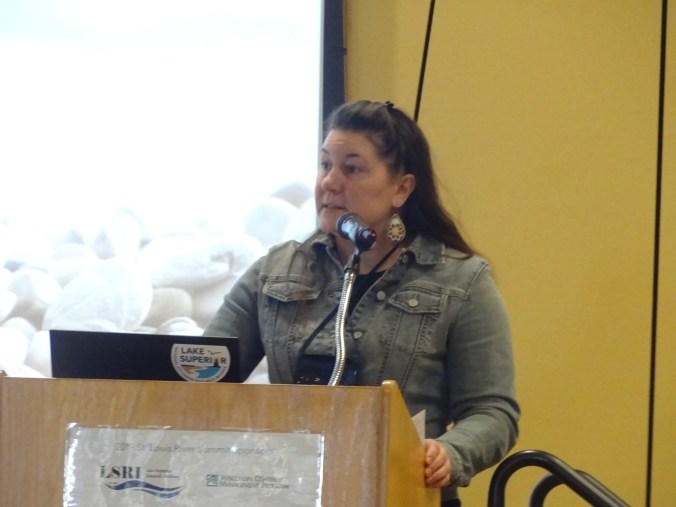
Leah Prussia, College of St. Scholastica.

Earlier this month, I attended the St. Louis River Summit. This science conference about the largest river that empties into Lake Superior (on the U.S. side) has gradually been incorporating more presentations that aren’t as “sciencey” as usual.

One of them caught my interest. Presented by Leah Prussia with the College of St. Scholastica, it was called “Solstalgia: An Intersection of Shared Knowledge.”

“What is solastalgia?” you may ask. Solastalgia is an English term for the mental or emotional distress that people feel from harmful environmental changes. It’s made up of “solace” and “nostalgia.” People feeling solastalgia no longer receive solace from their environment. Due to changes, they feel nostalgia for the way the place used to be. It’s a relatively new word, coined in 2003.

The changes can be from environmental catastrophes, such as volcanoes or floods, or from human-made changes like development or climate change.

DSC05209

St. Scholastica students gathering stories about people’s experiences with solastalgia.

Prussia, a social work professor, had her students at the Summit to collect people’s stories during lunch. I told them the story of a grove of trees near my home where I used to play with other neighborhood kids. I was devastated when the grove was cleared for a new house.

I remember complaining to the neighbor boy about it while we were on the swing set in my back yard. He said I’d get over it. That was almost fifty years ago!

I’m obviously still not over it if I can remember the pain I felt at the change. Have you ever felt solastalgia?


What it’s like to have Cataract Surgery

As the anesthetist wheeled my hospital bed down the hall, I looked up at the rectangles of passing florescent lights overhead, stereotypical of every television hospital scene ever filmed. Maybe it was a side effect of the sedative he gave me, but the thought that I was in a bad TV movie amused me.

I was going into surgery to have my old dirty cloudy eye lens plucked out from my right eye and replaced with an UltraSert lens, corrected for my nearsightedness and with UV and blue light filters! Years of squinting into the sun and just plain living had caught up with me. I’d been seeing haloes around the headlights of oncoming cars for years. Things had gotten so bad recently that I started avoiding driving at night.

This surgery was going to give me a new lease on seeing. My friends who had undergone the procedure told me it was a piece of cake, but I was skeptical about staying awake and having someone rummaging around in my eye innards. It didn’t help that the day before my surgery, news reports came out about a woman who committed suicide because her Lasik surgery went wrong.

At least I was having a different procedure done, but it still gave me pause.

Well, I am still here to say that I’m looking forward to having my other lens replaced later this week. Although I didn’t feel that sedated, I was apparently relaxed enough that they didn’t need to strap my head down to keep it from moving.

The doctor opened my eye with a speculum. They irrigated my eye with a saline solution and that’s about the only thing I felt. The main thing I had to remind myself was not to try to blink or struggle against the speculum.

What did I see? The white light that the doctor used to look into my eye. I saw the light the whole time through the 20-minute procedure. I couldn’t really tell when my old lens was gone and the new one was put in – I always saw light, although I guess from stories I’ve heard, other people see a red light or blackness. There was one point when my sight seemed to take a more internal turn, and I got impressions of things floating around inside my eye. Perhaps that’s when I was lensless.

From the time I got to the outpatient clinic to the time I went home took about 4 hours. You’ll need a friend to drive you home and back later the same day to the clinic for a follow-up exam by your doctor where s/he will check the pressure of your eye and make sure everything’s okay.

DSC05225

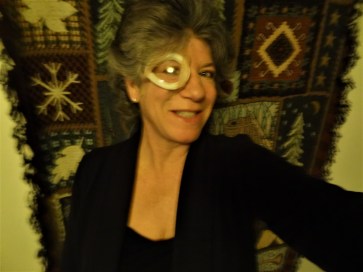
A blurry photo of my fashionable night eye guard that I wore for a week.

Be prepared for a lot of different drops put in your eye. Post-surgery you’ll be on an eye drop regimen that consists of a steroid to keep the swelling down and an antibiotic to prevent infection. At night, you’ll need to wear an eye guard for the first week.

The worst part of the procedure was only having one good eye to work with for two weeks. Although I got a clear lens placed in my eyeglasses over my good eye, I found I couldn’t tolerate wearing my glasses because of the lack of depth perception. So I’ve just been going around with one clear eye and one fuzzy eye. So if you notice any spelling errors in this post, that is why! But I’ve been making due the best I can in the meantime, and I’ve been able to drive all right (20/30 vision in my surgeried eye makes me legal to drive).

I also went out and bought a brand new pair of nonprescription sunglasses — first time I’ve been able to do that in years! The surgery seems to have made my eyes more sensitive to light, and the sunglasses are helpful.

A creepy side effect of the surgery is that, in the right conditions, I can see reflections from the artificial lens in my eye. I can tell that it’s not natural – kind of like having a robot eye. I wasn’t expecting that. But I guess it’s worth it to have better vision.

Anyway, wish me luck on my next surgery, and if you are scheduled to have it – I’m here to attest that it really isn’t so bad. It may even free you from glasses. And no, my doctor is not paying me to say any of this!

The Gauntlet

20190227_082438

Shopping for lotion, I enter the store.

A clerk approaches and asks if I would like a basket.

“Why yes,” I say.

As I walk to the rack that carries my lotion (named Hello Beautiful)

the clerk asks if she can help me find anything.

“It’s right here,” I say proudly, having found my lotion by myself. “Hello Beautiful.”

She triumphantly points to another rack nearby

where lotions sit with the same name and a different label design.

I ponder the new ones, wondering, why can’t they just leave it alone?

Whenever I find something I like, the powers-that-be

change the recipe, change the label, change the scent, change the price.

I put the lotions in my basket.

I walk through the store where another clerk

asks if I’ve found everything I need.

“Yes,” I say.

She leaves, downcast at my satisfaction.

I stand in the checkout line,

almost to the end.

It’s my turn and the cashier looks into my basket, dismayed.

“Oh, don’t you want any spray? It’s twoferone!”

“No thank you.”

She tisk-tisks and rings me up. Asks if I have an email address.

“I don’t like to give that out,” I say.

She give me a look, bags my purchases and starts to hand them to me.

I expect a request for my social security number before she

lets my lotions go, but no.

She has my money and I am free now,

having survived another pass

through the capitalist gauntlet.

The Jayme Closs Case and the Importance of News Headlines

jaymecloss

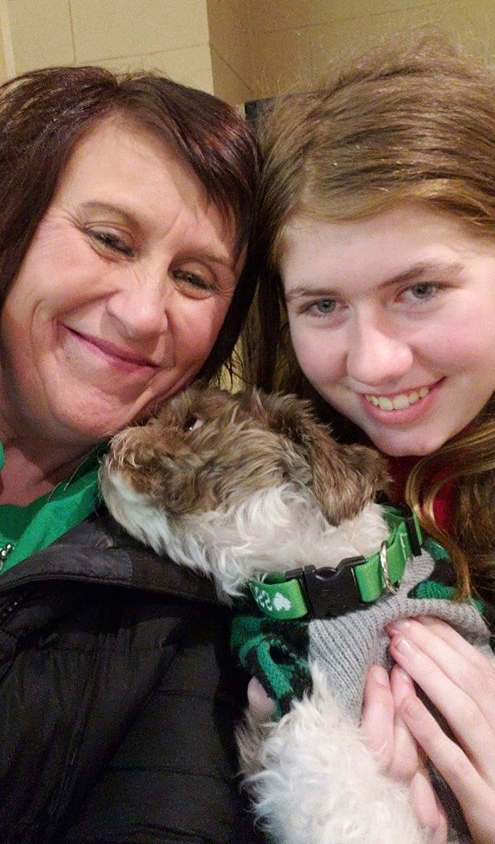
Jayme (right), her aunt, and doggie, safe at home. Credit: Jennifer Smith

I was in the bathroom, putting on my makeup with the door open when the television news story came on about Jayme Closs. She’s the 13-year-old girl who was kidnapped in northern Wisconsin. This was the morning after she was “found.”

The newscasters were going on about how she had been “found alive.” Of course, this was wonderful and superb. News of her kidnapping had filled newspapers and airwaves for weeks, and it seemed that, especially during the holidays, her photo and identifying information appeared often in an attempt to keep public awareness keen.

The reporter on the news show was interviewing Jayme’s aunt over the phone and was asking for details about how Jayme had been found. Since there had been such a major search effort put on for her in the area where she disappeared, I think most people assumed that volunteers or the authorities had found her. Part of the inherent definition of “found” is that it’s something that somebody else does.

Then Jayme’s aunt said that Jayme had escaped from the house where she was held. I popped my head out of the bathroom and walked over to the television. This was new information. This wasn’t just a damsel in distress being found. This was the damsel slaying the dragon and saving herself!

I watched the interview for a few more minutes, but then had to leave for work. During my drive, I heard a radio story about how Jayme had been “found.”

By the time I got to work, the writer in me and the MeToo woman-power feminist in me was dismayed by the passive and inaccurate role these newscasts were putting Jayme in. I wrote this quick post to my recent (personal) Twitter account:

I’m happy and relieved to hear that Jayme Closs is alive! However, it bugs me that the media keeps saying she was “found” alive. She freakin’ escaped her captor and saved herself. #JaymeCloss

I’ve only written a few tweets before then, and I’d never used a hashtag before. I didn’t expect much to come of it.

Holy moly, the thing went viral! As of this writing, my little tweet made 209,000 impressions. It had 4,400 engagements, 2,270 likes, 372 retweets and 78 replies. At one point as I sat watching the stats rise, 20 people per second were viewing it.

That was scarily overwhelming for a person whose most popular tweet to date only had six likes. Handling the comments was also overwhelming. Obviously, many people agreed with my sentiments and said they thought the same thing. Others were upset because they thought I was criticizing law enforcement personnel. I explained I was criticizing the news media, not law enforcement.

Others asked me what words would be better to use instead. I said, “Missing Girl Escapes.” Better yet is the headline I saw a few days ago that said, “She’s the Hero!”

Others jumped on my semantics bandwagon and criticized the use of the word “miracle” in connection with her escape. “It’s called self-preservation and bravery,” one tweeter said.

Then the authorities held their first news conference after her escape and commenters to my tweet started dissing them for the self-congratulatory tone of the event. Yes, these agencies did stellar work in trying to find her, and yes, they found her captor soon after Jayme escaped, but to many, it seemed as if the law enforcement agencies were taking all the credit and not giving enough to Jayme. This incensed one commenter so much that she said she called the sheriff’s office and complained about the way they handled the press conference.

Others criticized me for making a big deal out of word choice when this was such a joyous occasion. All I can say is that words matter. Accuracy matters. I have a journalism background and master’s degree in journalism. Words are part of who I am and I’m not going to apologize for that. And it’s obvious my words struck a chord because a heck of a lot of the commenters agreed with me.

This issue makes me wonder, if Jayme had been a boy, would the news media and the authorities have characterized her escape so passively at first? Comparing headlines (passive vs. active) for kidnap victims who escape would be a good PhD journalism research project to see if gender plays a role. PhD students feel free to steal this idea!

Lately, the news conversation has been about who should get the $50,000 reward in the case. Everyone – even the people who first saw Jayme – are saying the reward should go to Jayme because she saved herself. I think that’s very fitting. Jayme’s parents were both killed by her attacker/kidnapper. She’s going to need all the emotional and financial help she can get in the future. I hope that happens.

But I’m not going to tweet this opinion. 🙂


P.S. If you want to write or donate to Jayme, the address is: Light the Way Home for Jayme, PO Box 539, Rice Lake, WI, 54868.

Old Wood: A Love Story, Part 3

20181217_161210

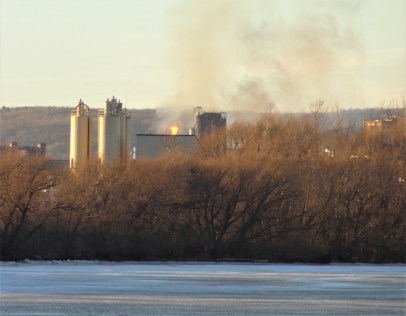
A screenshot of the Globe Elevator fire, courtesy of WDIO-TV.

Sometimes I shiver at the prescience of my past blog posts. Like the time I wrote about the “ice castle” that was being built outside of my office and said, “What could possibly go wrong?” (It collapsed while its creator was talking to a reporter for the New York Times.)

I got the same shiver when I read my 2013 “Old Wood” series about the historic Globe Elevator in Superior. (See Part 1 and Part 2.) The owners were trying to save their wood reclamation business from bankruptcy. The last line of my story was, “These pieces of history should not go up in smoke.”

Guess what? Unfortunately, the old grain elevator, some equipment, and a couple million dollars of wood burned in an accidental fire last month.

dsc05093

The view of the fire from my office window.

The sight of flames and a plume of smoke out my office window alerted me to the fire. My coworkers and I immediately felt the lingering trauma of the Husky Energy Refinery Fire that happened this spring near our office and required a community evacuation. We made frantic calls to assess the danger and whether we should leave again.

Thankfully, no explosive chemicals were involved in this fire, just some really dry and valuable old wood, so we didn’t need to evacuate. The people I interviewed for my previous posts no longer owned the site – others were working to salvage the wood. News reports blame a spark from a piece of equipment for starting the fire, which quickly engulfed the elevator.

Another thing to be thankful for is that the elevator was out on a spit of land in the harbor away from other structures, so there wasn’t much danger of the fire spreading elsewhere. The location did make firefighting a challenge, however, because it was a long way away from a hydrant. Once the flames calmed down enough, fire crews were able to pump water from the harbor to put out the fire.

Anyway, now I’m rather paranoid to write about anything for fear of encouraging mayhem. I learned during Christmas gatherings with my relatives that I am now known as “the cousin in the middle of all the disasters.”

Of course, I know I don’t really have the power to write disasters into existence, but you’ve got to admit, my record is rather uncanny!

The Neighborhood Rezoning Zombie Apocalypse

WalkingDead-963583AMC

Image from The Walking Dead television series, courtesy of AMC.

One of my blog readers warned me it might not be dead, but I didn’t want to hear. I plugged my ears, closed my eyes and started singing (“La la la la la…”)

But he was correct. The rezoning issue for my neighborhood wasn’t dead. It rose, like a zombie, from the Duluth City Planning Department even though the planning commission voted it down. (See Part 1, Part 2, and Part 3 for more info about this six-month-long saga.)

As it turns out, this is common practice in my city. The planning commission actions are just considered “recommendations,” not the final word. I wish someone had explained this to us from the beginning.

Thinking you’ve won a fight only to find you need to fight it all over again is disheartening. It also seems like a waste of effort to have every zoning issue heard by two civic groups. Why even have a planning commission then?

Anyway, once I heard that the proposal to rezone our Duluth residential neighborhood for commercial development was going before the city council, I admit, I tucked my head and legs inside my shell and hid for a while. However, in hiding, I regathered my gumption and eventually fired off yet another letter of protest to the city council. But that, and writing blog posts, didn’t seem like enough.

The city council heard the issue during two meetings. I couldn’t make the first hearing (because it happened while I was being a turtle). The same couple of neighbors who spoke before the planning commission spoke before the council. I decided it would be good to add a new voice for the next meeting, and that voice should be mine. If I was going to come out of my shell, I might as well do it up good.

The city council chambers was packed – standing-room-only. Most people were there for another contentious issue that involved a proposal for a new downtown apartment building that did not have any affordable housing units included. Along with a lack of single-family homes (like those in my neighborhood), a lack of affordable housing is a big issue in our city.

The hearing for the apartment building and other city council issues took 3-1/2 hours. We sat there at 10:30 p.m., boiling in our long johns, awaiting our turn. Once the affordable housing protesters left, a good number of my neighbors remained in the chambers.

I ended up as the first signed up to speak for our issue. When my name was called, I took a big gulp, stood, and did my thing. I was too nervous to speak without notes, so I used those as an aid. They also helped me stay within the three-minute speaking limit. My speech went fine, and I was sure glad once it was over! Several other neighbors also spoke.

The city councilors asked questions and a few explained their positions. In the end, they voted UNANIMOUSLY (7-0) to reject the proposal to rezone my neighborhood. I am so thankful that they listened to us and to the planning commission.

Is the zombie rezoning war over? Not if the planning commissioner has his way. He said he plans to bring it up again in a few years because he wants to see “orderly development” of my neighborhood. We neighbors would rather see no development. We are a neighborhood that works. Like I said in my speech, our neighborhood ain’t broke, and this won’t fix it.

This fight seems to have renewed people’s appreciation for our neighborhood. This Christmas, for the first time, carolers came to my door. Another neighbor made luminaries (ice candles) and placed them all along the road to her house, providing a special festive touch.

The zombie is dead for now, but it seems as if the issue is biding its time, waiting for another chance to strike. I hope we’re ready to rally then.

Let’s have some fun with this. Feel free to comment with your favorite zombie-killing techniques. They could come in handy later!

The Year in Blogging, 2018

OLYMPUS DIGITAL CAMERA

The image from my most popular post of 2018. No, I am not flipping you off! Photo by Jak of the Mast Cells & Collagen Behaving Badly blog.

Traffic to my blog continues to grow slowly. Part of the slowness is because I don’t have a lot of time to visit other blogs and court their owners’ readership of mine. I am too busy living life and writing about it! But at least my readership isn’t shrinking.

In 2018, more than 7,100 people visited my blog and it had over 8,900 views.

Here are the three most popular stories I wrote this year, plus the most popular overall:

#1 Writer’s Bumps: An Endangered Condition? – My, my, my, but many people have mysterious bumps on their hands! I had no idea. I wrote this post as a joke because I thought that the cushioning bump that grows on writers’ middle fingers when they hold a pencil was going out of style in this age of computer keyboards. Apparently not! Almost every day someone finds my story because they are wondering what the heck that thing is on their finger.

#2 Echoes of the Past: A Sneak Peek Into the Hotel Chequamegon – I had the chance to stay in an historic hotel in Ashland, Wisconsin, for a writing contest reading I gave last winter. I wrote a review of my stay. Hardly anyone else has written reviews, so I suspect that’s why people who are interested in the hotel are finding it.

#3 A Visit to the Tallest Waterfall in Minnesota – A friend and I visited High Falls in Grand Portage State Park last winter and lived to tell the tale, which involved slippery footing and some harmless trespassing.

The most popular post during my six years of blogging is one I wrote in 2017 about a bad experience my dog had with his food. It involved some sleuthing and label reading on my part. To think, I almost didn’t write it, but then went ahead because I hoped others might find the information useful. I guess my hunch was correct.

Iams Dog Food Alert!—This story’s popularity is unfortunately because many dogs other than mine have had bad reactions to the sneaky changes this company made in the recipe of their dog food. I wish it wasn’t so popular, but more and more people keep finding it though searches. I am glad the story is providing them with answers, but sorry to hear that their dogs are having problems.

Thank you again for meandering with me, and Happy New Year wherever you may be . . .