Sexual Harassment, Wilderness-Style

Mt Lake

A couple of my crewmates clowning around during a break on a bluff above Mountain Lake in the Boundary Waters Canoe Area Wilderness.

Back in the early 1980s, my first summer job in college was as a volunteer for a U.S. Forest Service trail crew in northern Minnesota. This was the first year the Superior National Forest ran a volunteer program, and I looked forward to spending time in the woods after living in a big city where trees grew out of cement. Our task was to clear several long-neglected hiking trails along the Canadian Border in the Boundary Waters Canoe Area Wilderness.

The experience not only taught me how to use a crosscut saw, but also an effective and rather devious method to counter sexual harassment. (No saws involved, however!) You see, I was the only female crew member. One woman and four men tromping around and living in the wilderness together, 24-9 (twenty-four hours per day for nine-day shifts). You do the math. Between each shift, we had five days to recover.

Because the boundary waters is a federally designated Wilderness, we were not allowed to accomplish our task via any motorized or mechanical means. This meant we carried in all our gear by hiking or canoe. This gear consisted of hand tools such as axes, saws, nippers, and shovels, plus our own food and camping equipment. We tented on lakes near the trail and fixed up the campsites along the way, too – digging new latrine holes and smoothing out the dirt tent pads.

Volunteering had seemed like such a good idea at the time. But after about four days, I started asking, What have I gotten myself into? We hiked for miles each day. It was June and the blackflies, mosquitoes, and ticks were out in full force. I could easily slap twenty mosquitos into my jeans with one swipe. We used government-issue bug dope that could take the varnish off of furniture – slathering it on at least five times per day. I’d also never cut through a tree before, and learning new sawing and chopping skills was challenging.

Portaging a canoe was new, too. The crew decided a good initiation for me was to carry our heavy aluminum canoe (this was before the era of Kevlar) up the 120+ steps on Stairway Portage between Rose and Duncan lakes. I made it, although my legs were shaking quite badly once I reached the end of the portage.

I tried not to let all the challenges discourage me. After all, I was in the outdoors that I loved. I was reading John Muir and Sigurd Olson’s books and was buoyed by their idyllic descriptions of nature. I wanted to help the wilderness.

I wrote this in my journal:

Save this space
for that lone bird
blending with the sky
and hill-green water.
Save it
for that flight.

I did not complain, and in fact, volunteered for extra work like hiking back to camp to collect a forgotten canteen, or going on a reconnaissance hike with our crew leader to assess the next day’s trail work. It looked overwhelming. The trail hadn’t been maintained in years, and massive piles of fallen trees blocked our path. In some instances, it was going to be easier just to reroute the trail instead of trying to cut through the deadfall.

Randy*, our crew leader, was a 225-lb. fair-haired Swede who was at the mercy of his vices of drinking and smoking cigars. Another notable crew member was Peter*, a divorced 29-year-old who worked odd jobs in Minneapolis – everything from dish washing to acting in television commercials. Handsome, but mercurial and insecure, he seemed mature at times, but at others, like he had a chip on his shoulder. His perpetual five-o’clock-shadow gave him the look of a stereotypical prison convict. He was also always sharpening his knife, which gave me the willies.

Our evenings were spent around the campfire. Collectively, the guys had brought enough liquor to fill a whole backpack, which came out at that time. Their conversations, which centered around whisky, wilderness, women, and hopping trains, were punctuated by swearing. “Sh*t” and “motherf**ker” were their favorites. They called the tourists that we came across “peasants,” as if they were the wilderness-poor who could only stay in the boundary waters for a short time, while we were truly rich because we got to stay here for most of the summer. I tended to agree with them on that point.

Because I was a woman, I slept in my own tent. The guys slept two or three together in the other tents. Near the end of our second trip, several of the guys started making comments at night when we were all in our sleeping bags. They’d yell over, half-joking, half-not, “Hey Marie!  What does it feel like to have a c**t? Hey Marie, come over here, I have something I need your help with.” You get the drift.

I had never encountered anything like this before. I can’t remember if I acknowledged their taunts or not. And where was crew leader Randy during all this? I don’t know. Probably asleep, or feigning sleep. By the second or third night, I was finding their comments tiresome.

The next day, after the hard labor of constructing erosion control bars on a steep portage, the guys went skinny dipping while I was in my tent reading.

After a while, they mentioned getting cold and that they were thinking of coming out of the water. Instantly inspired, I made my move. I came out of my tent and sat on a rock not far from the lake, enjoying the view and all that nature had to offer.

With me sitting there in all my femininity, the guys did not have the courage to walk naked out of the water. So I sat, not talking, for a good long time. After their teeth started to chatter, I stayed a few minutes more, then nonchalantly ducked back into my tent.

You know what? The vulgar comments stopped, and I didn’t even need to complain to any authority figures. I only needed to muster a little spunk and show them what it felt like to be vulnerable (and very cold and shriveled) because of their gender.

The gender thing wasn’t all bad, however. One evening before the harassment started, Peter volunteered to heat up water over the fire and help me wash my hair while the other guys were gone fishing. He rinsed the suds out onto the ground instead of into the lake, which was our drinking water. His fingers massaging the luxurious warm water through my hair felt divine.

We had a nice talk around the fire afterwards, during which he asked me out to a play in the nearest small town. I don’t recall my exact answer, but it was probably something non-committal, given that I had a boyfriend of sorts back at college. And then there was all that knife-sharpening he liked to do….

I found out later from the other crew members that Peter had in fact just gotten out of the state prison, so it was probably a good thing that the hair washing didn’t woo me.

The harassment didn’t stop me from eventually working for the Forest Service. I volunteered again as a photojournalist on another ranger district in the same forest during my first summer after college. That eventually led to my hire as the forest public affairs specialist.

During the five years I was a Forest Service employee, I never got harassed by another employee. But that could be because I had a reputation. 🙂

*Names have been changed.

Clearwater Lake

The view from one of our campsites on Clearwater Lake.

My Sons are Immortalized in Plastic


It seems the Mattel Company, makers of the Barbie and Ken dolls, have stolen my sons’ likenesses for their new “Fashionista” Ken Doll line. The “Comeback Camo” Ken Doll and the “Chill in Check” doll look EXACTLY like my boys.

I will not further exploit my sons by posting their actual images to my blog. You’ll just have to believe me that the resemblance is uncanny, even down to the clothing.

I was sort of creeped out when I saw the TV news story about the new doll line the other day. I mean, what are the chances that two out of 15 dolls could double for my offspring? A follow-up question is, what kind of mother am I to give birth to not one, but two cultural stereotypes?

I should be mad that Mattel has taken my sons’ likenesses without their consent. But it’s also rather flattering.

Either way, I know what my sons are getting for Christmas this year!

Elephant of Love

512px-African_Bush_Elephants

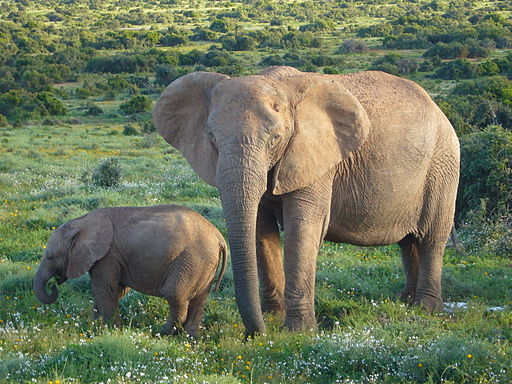
Photo of African elephants by Gorgo, Wikimedia Commons

My youngest graduated high school this month. The milestone has triggered some reminiscing in me. He was the one they had to cut from my belly when he was born eighteen years ago. Before the doctors lifted him out of that airless world, the anesthesiologist said, “Now, you’ll feel like an elephant is sitting on your stomach.”

I was glad for the warning because that’s exactly what it felt like – a deep pressure that I never experienced before and hoped never to again.

Despite his rough start, we both recovered quickly. The nurses were charmed by his big blue eyes and dark hair. They also liked that he was loud. “He’s a good baby,” they said. “He’ll always let you know when he wants something.” They joked that it was hard to keep diapers on him because, “Your baby has no butt!”

My son’s roars and spunky nature garnered him the nickname of “Tigger,” after the bouncy stuffed animal from the Winnie the Pooh books. He met his big brother and seamlessly fit into our small family.

He took his first trip at four months when I had to go to New Orleans for a work meeting. He wasn’t one of those babies who cries on flights. Instead, he smiled at everyone and had all the stewardesses wrapped around his tiny pinky finger by the time we arrived. He got to ride the St. Charles Streetcar and stay at the Inter-Continental Hotel downtown. Pretty good for a little guy.

He was so cute that sometimes I actually welcomed going away to work because it helped me avoid “cuteness overload.” Just to test whether all his cuteness was in my head or not, when he was two, I entered him in a Cute Baby Contest held at a local mall. Turns out, the judges agreed with me. He won first place for his age group for Prettiest Eyes, and second place overall. He could have advanced to more contests, but he did not enjoy the experience, so I spared him. I had the proof I needed by then, anyway.

On the first day of kindergarten, he was so excited, he ran down the street to the school at the end of our block. Soon, he knew the names of everyone in his classroom, and even those of kids from other classes.

The only pause he gave us growing up was his accident-proneness. Once, he wore his Superman pajamas (complete with red cape) and tried to fly off the basement steps onto the concrete floor below. That did not go as he planned. (Concussion.) Another time he tripped in the kitchen and hit his forehead on the corner of a wooden bench. (Stitches required.) Then when we went to Mexico and were eating at a restaurant in the sand on the first night, he turned quickly and ran his face into one of the poles that supported the hammocks. (No stitches, just lots of crying.)

Weird accidents with other kids happened on the playground and in school. There were black eyes, bruised hands, sprained ankles, and innumerable scrapes. Oh, and I mustn’t forget his third-degree arm burns when a classmate mishandled a hot glue gun.

He kept us busy with swimming lessons, baseball games and soccer practices. His transition to high school seemed to go well at first but he had a hard second year. He became quiet, elusive, moody. He rallied in his third year when he was chosen for the varsity soccer team and was required to keep his grades up to play. He finished his senior year as one of three co-captains of the team.

Even though a torn knee ligament sidelined him for part of the season, he earned the title of “most dedicated” player. And when he returned to play, he completed the most beautiful head shot into the net that I have ever seen.

Now, he has a long-term lady friend, a job, and he’s poised on the cusp of a new life stage. We are having a graduation party for him this weekend, and I expect that sometimes during it a certain feeling will overtake me — a deep pressure in my gut that I hoped never to feel again.

But I will be glad to feel it, because this time, it’s the big-assed elephant of love.

Here’s to you, my son.

When is a Bridge a Bong?

St. Louis River Trip 2015 001

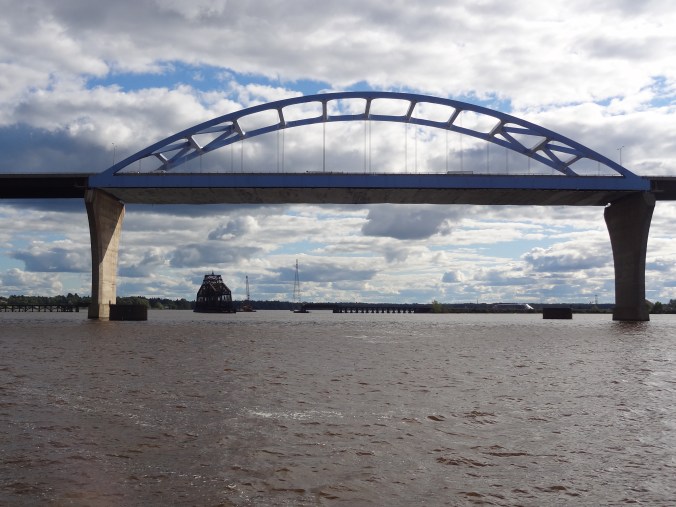
The Bong Bridge as seen from the water.

I was giving directions to an out-of-town acquaintance the other day when I told them they’d need to drive over the Bong Bridge. They looked at me, wide-eyed, and started snickering.

Yes, it’s true. In Duluth-Superior we have a bridge by the name of Bong. The Richard I. Bong Memorial Bridge, to be exact. It’s named after a World War II flying ace, but out-of-towners and the uninitiated don’t know that. The name always provokes some kind of reaction.

I was away at college when the bridge was being built and named in the early 1980s. Whenever I returned home and drove on the freeway down the hill into town, I would notice more bridge pillars in the harbor as it slowly came into being. I can’t recall if there was a lot of controversy about the name, but I assume there must have been some.

Although the name is a nice tribute to a local war hero, the people who thought up the name HAD to know it would get shortened to just “Bong Bridge” or just “Bong” in the local vernacular. After all, we have another bridge that spans the same body of water, which is named after John A. Blatnik. Everybody just calls it the “Blatnik.”

“Take the Blatnik to Superior,” we say. Now we can also say, “Take the Bong to Superior.” Most locals know that won’t get you into trouble with the law.

It’s just such a questionable name. I can’t believe it got through the transportation department’s approval process. But Richard Bong must have had a big fan club that overwhelmed common sense when it came to bridge names.

Bong Museum

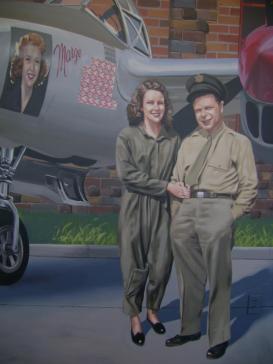
A mural of Richard Bong and his wife Marge from the Bong Museum in Superior.

We even have a Bong Museum. But it doesn’t contain what you think it might. Not even one. I know. I checked.

The name does make the Bong Bridge easy to remember, I’ll say that for it. While it’s confusing having two bridges that start with a “B” in the area, differentiating between them is easy. The Blatnik is the bridge closest to Lake Superior and it’s named for a guy. Then there’s the other bridge farther inland that’s named for drug paraphernalia.

Maybe the name was a good idea, after all?

The Fox is Guarding the Henhouse in America

It was with great dismay that I read about the new U.S. Environmental Protection Agency (EPA) administrator’s removal of nine members of from its scientific review board. The board in question (the Board of Scientific Counselors, or BOSC for short) is one of two that help the agency determine what issues need its attention and funding.

The dismissals hit close to home because I used to be on the BOSC. From 2010-2013 I served as a communications advisor to the EPA on this board.

I know, you’re looking at me and saying, “Really – you?” Yes me. I know I don’t seem like a high-powered research scientist because I am so fun, witty, and seemingly non-scientific. And besides, I get chased by turkeys and attacked by squirrels. But YES, I really was appointed to this influential federal committee not long ago.

The main point I tried to make to the EPA during my tenure was that they didn’t have public communications components to their programs, and that they needed them. I suspect this is one reason why more people aren’t even more upset about some of the changes President Trump has recently made or proposed for the agency. People don’t understand what the agency really does (other than fining corporations for pollution violations), so they don’t understand the significance of Trump’s actions.

Yesterday’s New York Times article says that administrator Pruitt plans on replacing the ousted members with people who represent industries that are regulated by the EPA. Pruitt spokesman, J. P. Freire said, “The administrator believes we should have people on this board who understand the impact of regulations on the regulated community.”

20170508_160717

My favorite name tag mistake of all time came from one of my BOSC meetings. The name tag makers just assumed I was a Ph.D. because everyone else on the committee is a Ph.D. Alas, I am only a “master.”

This almost sounds reasonable, doesn’t it? But think about it. These people will be in a position of power to change things. Maybe they don’t like all the regulations their corporations are subject to. Gee, maybe they could fix that.

Let’s say the EPA is like a bank — a bank made up of natural resources, if you will. Corporations use natural resources to make their products. The EPA is in charge of protecting the health of natural resources – rather like how a bank vault protects the money from bank robbers. Take the vault away, and what do you have? Free money for bank robbers!

Allowing corporations to control the agency that regulates natural resources is like allowing bank robbers on the board of trustees for your bank. I don’t know about you, but this doesn’t sound like a very good idea to me. It’s the old “fox guarding the henhouse” deal.

Write your congressional representatives, please. Write letters to the editor. Bang on a drum. March in the streets. I’m going to.

Then I’m going to take all my money out of the bank and bury it in the back yard.

You Know it’s Bad When the Scientists are Marching

20170422_101727

Marchers for Science in Duluth, Minn.

Last weekend I marched with about 1,200 other people along the shores of Lake Superior in support of science. This was a cause I could easily get behind since I work for a water science research organization (Please refer to my previous post, “Why Sea Grant is a Kick-Ass Program (And Not Just Because I Work There)”).

I walked with a few other Sea Granters and recognized many of the researchers our organization funds among the crowd. It was encouraging seeing so many people upholding the value that science brings to our society and supporting full federal funding for scientific programs.

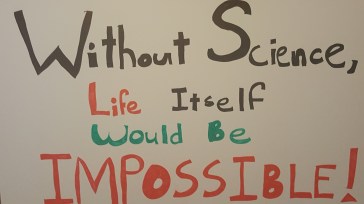
20170422_082249The sign I made for the march said, “Without Science, Life Itself Would be Impossible!” Does that ring a bell with anyone? I wanted something unique, but maybe it was a bit too unique.

I meant it as a play on a terribly blatant propaganda campaign that Monsanto ran in the 1970s in support of the idea of manmade chemicals. Their slogan was, “Without Chemicals, Life Itself Would be Impossible.” It featured a cute Aryan-haired little boy and his doggie. Surely, Monsanto-produced chemicals are just as harmless as this adorable duo. (NOT!)

Monsanto chemicals adI figured only people alive in the 1970s might “get” my sign. I tested a few of my age-appropriate friends as we made our way to the march, but nobody spontaneously recalled the Monsanto campaign. After explaining it, a few remembered, but they did not immediately start applauding my brilliance. I suspect they just thought my sign was saying that medical science is important to human life. That’s okay. My friend had a sign that was as obvious as mine was obtuse. Hers said “Marching for Science.”
You know these events are all about the signs. If you have a boring sign or one that people can’t understand, you might as well stay home.

While sitting on a bench waiting for the march to start, I was mulling over the lameness of my sign when I noticed a TV news crew filming it from afar as it rested on the ground propped up against the bench legs. Maybe it was my sign’s pretty colors or maybe it was the pithy message – anyway, it lured the reporter and cameraman over to our small group. The reporter asked if she could interview us for a story. My friend, her mother, and I readily agreed.

Little did the news crew know, but they had stumbled into a nest of trained media relations professionals. We were able to espouse our key messages and put in a plug for Sea Grant. We ended up being the only ones interviewed for their story. (Which turned out pretty well, given that it was Fox News.)

What didn’t get into the story was my friend Sharon’s explanation about her year-long climate change art project, “Penguins with a Purpose.” She’s a ceramic artist and after the presidential election, decided to put her skills and frustration to use by making large clay penguins to draw attention to one of the issues the president is trying to silence, namely, climate change.

Her goal is to make 100 penguins by the end of the year, which she will sell and donate part of the proceeds to climate science and policy. Each penguin is unique and has a purpose.

She carried one of her heavy penguins for the whole march. We saw dozens of people we knew and had many side conversations along the way. Even though the march took energy, I completed it feeling energized by the crowd.

For now, hopeful noises are coming out of Washington D.C. that my Sea Grant colleagues and I will still have our jobs after next week. It’s sounding like Congress will pass a continuing resolution on the budget for the rest of the year instead of going with President Trump’s plan to fund his wall on the Mexican border with the entire Sea Grant budget (and those of other agencies).

This may just delay the wall-funding issue until the next budget cycle at the end of the year, but it’s comforting to think we’ll have our jobs for a few more months. Thank you to everyone who’s written their Congressperson. Every little bit helps.

20170422_100312

Standing strong for science in Duluth.

Aruban Dreams (Part 1)

DSC03897

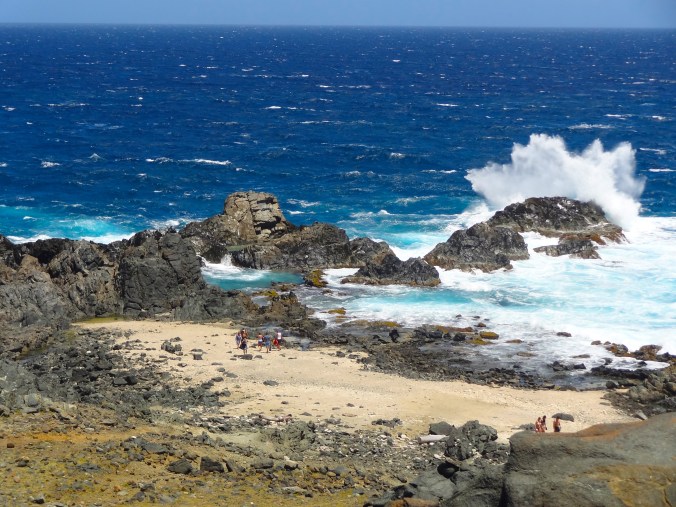
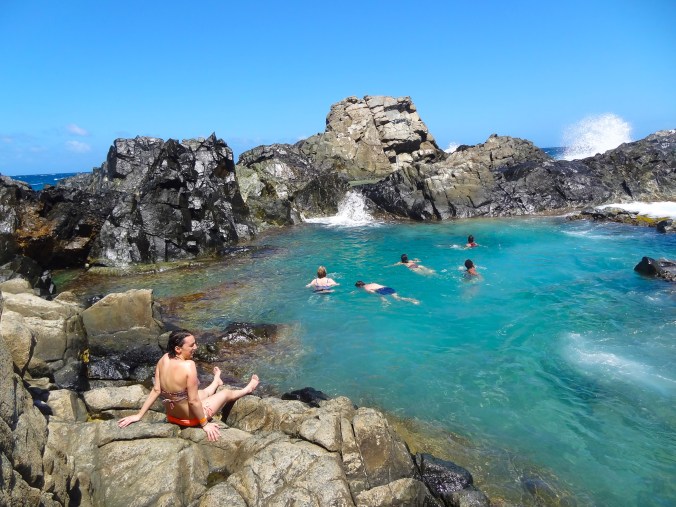
Conchi Natural Pool, Aruba.

A friend and I meandered down much closer to the equator last week to the Dutch isle of Aruba. The trip was my New Year’s Resolution and a chance to indulge my isle-o-philia. All I can say is that if every resolution was this amazing to fulfill, more people would make good on them instead of pooping out three weeks into the New Year. Enough of resolutions to lose weight or exercise more. Bah! People should make pleasurable and dreamy resolutions instead. Remember that for next year.

Our first island adventure was the most perilous undertaking of our week-long trip. We decided to visit the island’s one national park (Arikok National Park) to explore a natural ocean pool and then some caves.

The pool was our first destination. It’s located on the coastline, formed by a ring of high rocks that keep out the waves. Periodically, a wave overtops the rocks and fills the pool with more water. It’s known for good snorkeling, and an upper pool flows into the main pool via a small waterfall. Most people travel there by reserving a Jeep or 4×4 ATV. My friend and I? We decided to walk.

I had read somewhere that it only took a half-hour to hike from the park entrance to the pool. My friend and I didn’t need no stinkin’ 4×4 to get us there. That’s what feet are for. Besides, we wanted to get a feel for what the island is really like.

Heh heh. What the island is like is a desert. Hot. With no shade from the equatorial sun. And there are rattlesnakes. But I am getting ahead of myself.

At the park visitor center the attendant told us it actually takes an hour-and-a-half to hike to the pool. (I figured out later that the info I had read started from a different location – the Shete Entrance.) Plus, we would be walking up a 600-foot mountain on the way there.

My friend and I looked at each other, a bit taken aback. But we are healthy 50-something-year-olds from Minnesota. Above average, and all that. We decided we could do it. We were wearing athletic shoes and sunscreen. Our water bottles were full. We were ready to roll.

Then he told us the pool was closed due to high waves.

My friend and I looked at each other again. This was a more serious setback. But we decided we had come this far, we might as well go see the pool. I encouraged my friend to still bring her swimsuit, just in case conditions were really better at the pool than the attendant thought.

Off among the cacti we went. Unlike what the park map shows, there is no separate hiking trail from the Jeep trail, so we had to make way for all the lazy people who opted for motors. Almost all of them stopped and asked us if we were okay, subtly gloating that they were riding and we were walking. We assured them we were fine. We smiled and waved them on their way.

DSC03888

The “trail” to the pool.

Halfway up the mountain we met a family on their way down. The top of the mountain was as far as they got, and they decided that was enough. Especially after they saw the rattlesnakes (one was alive and rattling a warning four feet away from the family’s mom, the other was dead in the road).

I could feel my friend looking at me questioningly again, but I ignored her, determined not to let a few rattlesnakes deter us.

The view from the top of the mountain was great. It was easy to see how necessary the park is for preserving wild natural space on the 20-mile-long island – houses crowded everywhere but within the park’s borders.

The rest of the trail followed a sloping plateau and then made a steep drop to the ocean. Soon, we were able to see our destination, which made the rest of the hike easier — plus the fact that no rattlesnakes crossed our path.

As we neared the steps leading down to the pool, we could clearly see people swimming in it. Yes, waves were overtopping the protective rocks and washing into the pool, but it didn’t look like a life-threatening situation.

DSC03890My friend and I changed into our suits, thankful that we brought them and that we’d soon be going for a swim. We clambered over the rocks and slid down an algae-covered formation into the pool with half a dozen other people.
It was heaven, punctuated by anxious moments when a wave would wash into the pool. My friend got thrown around a bit by one wave, but I was luckier.

While we were swimming, my mind jumped ahead to the hike back out. I wasn’t looking forward to spending another hour-plus tromping through the desert. All my foot-powered bravado seemed to melt away into the sea. When one of our poolmates mentioned to us that he and his girlfriend had a Jeep with room for two more, I was the first to take him up on the offer.

My friend looked at me again, this time in thankful wonderment. I suspect she couldn’t believe that I changed my mind about the whole foot-powered thing. But heck, we were on vacation, not a forced death march.

So thank you, Bobbie and Samantha from New Jersey, for driving us back out to our car. Along the way, we saw another duo of women walking, and of course, we felt sorry for them. We joked that we should stop and ask them if they were okay.

Blueberry Buttermilk Pancake Distraction

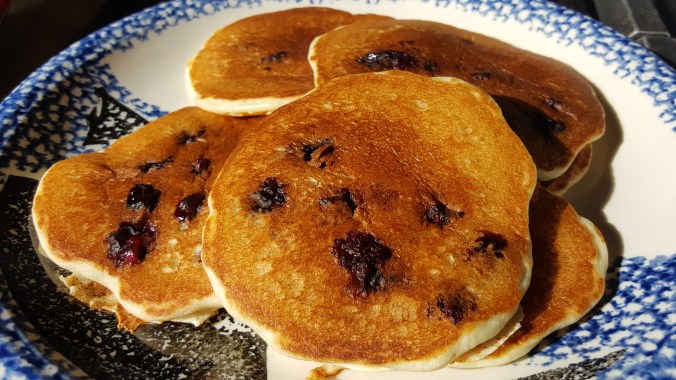
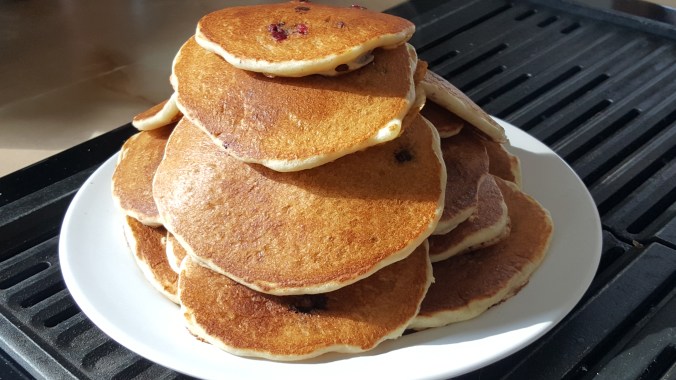
20170304_102544Never mind that President Donald Trump just zeroed out the agency I work for in his proposed federal budget. (I work for the Sea Grant Program under NOAA.) I realized I haven’t shared a recipe lately. Here’s a wheat- and corn-free version of blueberry buttermilk pancakes. I’d much rather think about them than Donald Trump’s budget.
If I let The Donald freak me out too much, he wins. I won’t let him win. But I will tell my friends to write their congressional representatives, and I’m sure I’ll blog more about this situation later. (Oh lucky readers, you!) In the meantime, I’ll cook some luscious pancakes in the sunshine on a weekend morning.

20170304_102057This recipe makes a lot of pancakes – enough for 4-6 people. If you’re sensitive to wheat, make sure to use vanilla extract that contains no grain alcohol. I make mine by soaking several vanilla beans in a bottle of potato vodka for a few weeks. For the gluten-free flour mix, I use Bob’s Red Mill all-purpose gluten-free baking flour.


And if you’re sensitive to corn products, make sure the buttermilk you buy doesn’t have a lot of extra ingredients added to it (like “natural flavor,” which can be secret code for corn syrup). Also, don’t use table salt. It usually has cornstarch added to it to make it flow more smoothly. Use sea salt instead.

Enjoy!

Blueberry Buttermilk Pancakes

2 eggs
2 cups buttermilk
4 T canola oil
1 cup rice flour
1-1/4 cups gluten-free flour mix
2 T cane sugar
½ t cream of tartar
1 t baking soda
1 t sea salt
1 t vanilla
1+ cup blueberries

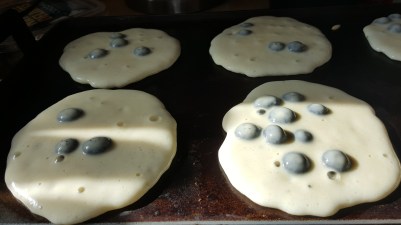
Whisk eggs. Add remaining ingredients (except blueberries) in the order listed and whisk until smooth. Stir in blueberries.

Pour batter onto hot griddle. Turn pancakes as soon as they are puffed and full of bubbles, but before the bubbles break. Bake other side until golden brown.

20170304_1035230

This recipe makes A LOT of pancakes.

That Time I was the Subject of a Federal Whistleblower Complaint

whistleblower

A page in my life story that I’d rather not have repeated, but a page that is interesting, was written back in the 1990s when I was a federal employee. I was working in public affairs for the USDA Forest Service in the Superior National Forest. This particular forest is also home to the Boundary Waters Canoe Area Wilderness (BWCAW), renowned for its canoe routes and primitive character.

As part of my job, I often helped with public meetings, and I wrote and edited documents. At the time, the agency was working on its first-ever management plan for the BWCAW. I wrote some of the background information for the plan and I edited the final version of the document. The plan required public comment, which we gathered by hosting meetings in towns across northern Minnesota. I sent out news releases about the meetings to the media and in general, just tried to ensure that people knew about the opportunity to comment.

Around that same time, I was a board member for our local chapter of the Audubon Society (you know, the environmentalist bird-lovers). I edited their newsletter and helped plan monthly programs. I can’t recall the exact timing of things, but I eventually quit the board because I was just too busy. The problem is, the new editor forgot to take my name off the board member list that was published on the back page of the newsletter.

After a few months, I noticed my name was still listed, and I asked the editor to delete it just for accuracy’s sake. A few more months later, it was still on there. I reminded the editor again, and he took it off.

As it turns out, it was too late. Somewhere during this time, the Audubon newsletter published a story in favor of the new BWCAW plan. Someone in Minnesota who was connected to the Blue Ribbon Coalition (an organization originating out West that advocates for the use of motorized vehicles on public lands) saw the newsletter story and noticed my name on the list of board members.

This person (who shall remain nameless) and the organization he was affiliated with did not like the new wilderness plan because it limited the use of motors in several areas where they had been allowed previously. He, with all the logic of the clueless, came to the conclusion that it was ALL MY FAULT that motors were being restricted in the plan because I was a board member of the Audubon group. He filed a complaint to this effect through the federal Whistleblower Program. He also complained about the manager of the BWCAW in a separate filing.

This was during a time when the Forest Service was getting political heat for not investigating claims. Heh heh, lucky us. Taxpayers got to foot the bill for an investigator to travel from Washington D. C. to Minnesota for several days to investigate us.

In the complaint about me (which I don’t think I ever got to read, but I got told about it by the investigator), the man claimed that my job within the agency put me in a position of power to influence the new rules that were being proposed in the plan, and that because I was a member of Audubon, I had a conflict of interest.

I explained to the investigator that I wasn’t even on the Audubon board when they developed their position in support of the BWCAW plan. I described the oversight that left my name on the back of the newsletter. I also explained my role in writing the plan, which did not include any omnipotent power to make up new rules against the use of motors in the wilderness. (I only WISH I had that type of power.)

Even though I was sure no wrong-doing would be found, being investigated by the feds was not comfortable, which was another outcome I’m sure the Complainer Guy wanted.

In the end, both the wilderness manager and I were found “not guilty,” and we were able to continue about our business. You can bet that we thought harder about how we did our business, but we continued it, nonetheless – savvier about the tactics used by some organizations.

On Being a “Professional Woman”

business_womanMy fair city has a group for women in business called the Professional Women’s Network. It first came to my attention when I was in high school. I was invited to one of their luncheon meetings as part of a program they had to reach out to students.

I’m not sure why I was chosen – I had no interest in business. I wasn’t even a woman yet (grin). But I went with a couple of other invited classmates anyway, because – free lunch!

I recall that the women were all very nice, but I was too young to understand the need for such a group. I decided it just wasn’t my thing.

And I also wondered about the organization’s name. The wording makes it sound like they are all women who are professionals at being women – leading to visions that their meetings are really about sharing hairstyle and clothing tips, swapping recipes, or divulging secrets on how to work their wiles on men.

Over the years, I would chuckle whenever the organization’s name floated into my field of view. If I ever did end up becoming a member, I would advocate for renaming it the Women’s Professional Network.