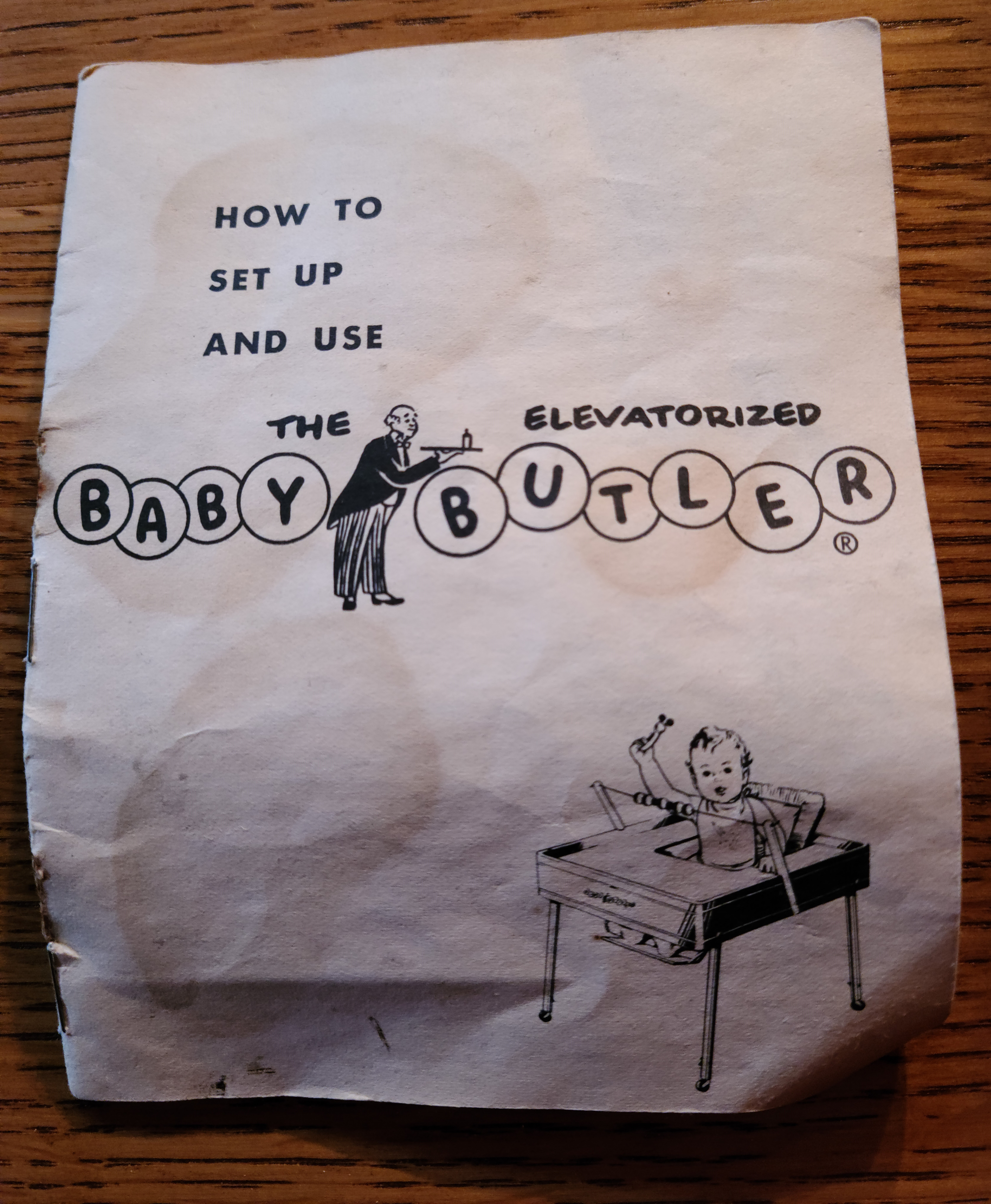
I bet you’re expecting me to write something deep about how to recover from past hurts and abuses. No such luck. I’m writing about getting rid of an antique that I used to be trapped inside as a child: the elevatorized Baby Butler.
Yes, the marketers at Guild Industries really used the word “elevatorized” to describe it. Just what is this curious device, which was manufactured out of oak in the late 1950s and 60s? It’s a combination highchair, bed, and play table for young children.
I’m not quite sure why it’s considered elevatorized – perhaps because the seat is adjustable. Elevators had been common for decades by then. I guess it was just a 1950s marketing buzzword.
When we were growing up, my mother strapped my brothers and I into it for meals. The Baby Butler also came with a blackboard cover for use when the seat was removed – thus, the play table part.
My butler is missing the metal seat. I think I threw it away because I didn’t realize it went with the rest.
I associate the device with conflicting emotions: the comfort of food, and the frustration of feeling trapped. I feel a twinge of sentimentality toward it, but that’s about it — the kind you’d feel toward a jack-in-the-box you played with as a kid. The music was nice, but the “jack” jumping out of it was unpleasant.
I inherited the butler when we moved my parents into an assisted living facility. I’ve kept it about a half-dozen years, thinking I could sell it as an antique. A lot of them are for sale on E-Bay. But when I discovered mine no longer had the seat, and that the green blackboard was marred by a black marker, I slowly came to the realization the Baby Butler needed to go.
Before I tossed it, I read through the instruction booklet, which my parents had also saved. I love how marketers used to write:
Dear Mother and Dad: We take pleasure in welcoming you as one more happy family in our ever-growing circle of Baby Butler friends. . . The new and improved Baby Butler supplies the answer to your needs, and it satisfies the most discriminating tastes with its beauty of styling and workmanship.
Sorry, Guild Industries. I’m no longer part of your circle of friends.
Do you still have relics from your childhood that give you mixed feelings?
If you’re reading this, you survived the year that was 2020. I won’t offer any inane or overused platitudes about this year. We all know how it went. While I did write a few posts about the coronavirus and other 2020 disasters, everyone else was, too. So, I tried to keep my topics unique and personal. My most-popular list reflects that. Here are the five top posts from this year, along with a couple of overall popular posts since I started this blog seven years ago.
But first – a couple of more numbers: views almost doubled again this year, with 27,960. My blog has about 520 followers. Thank you, followers. I value you all!
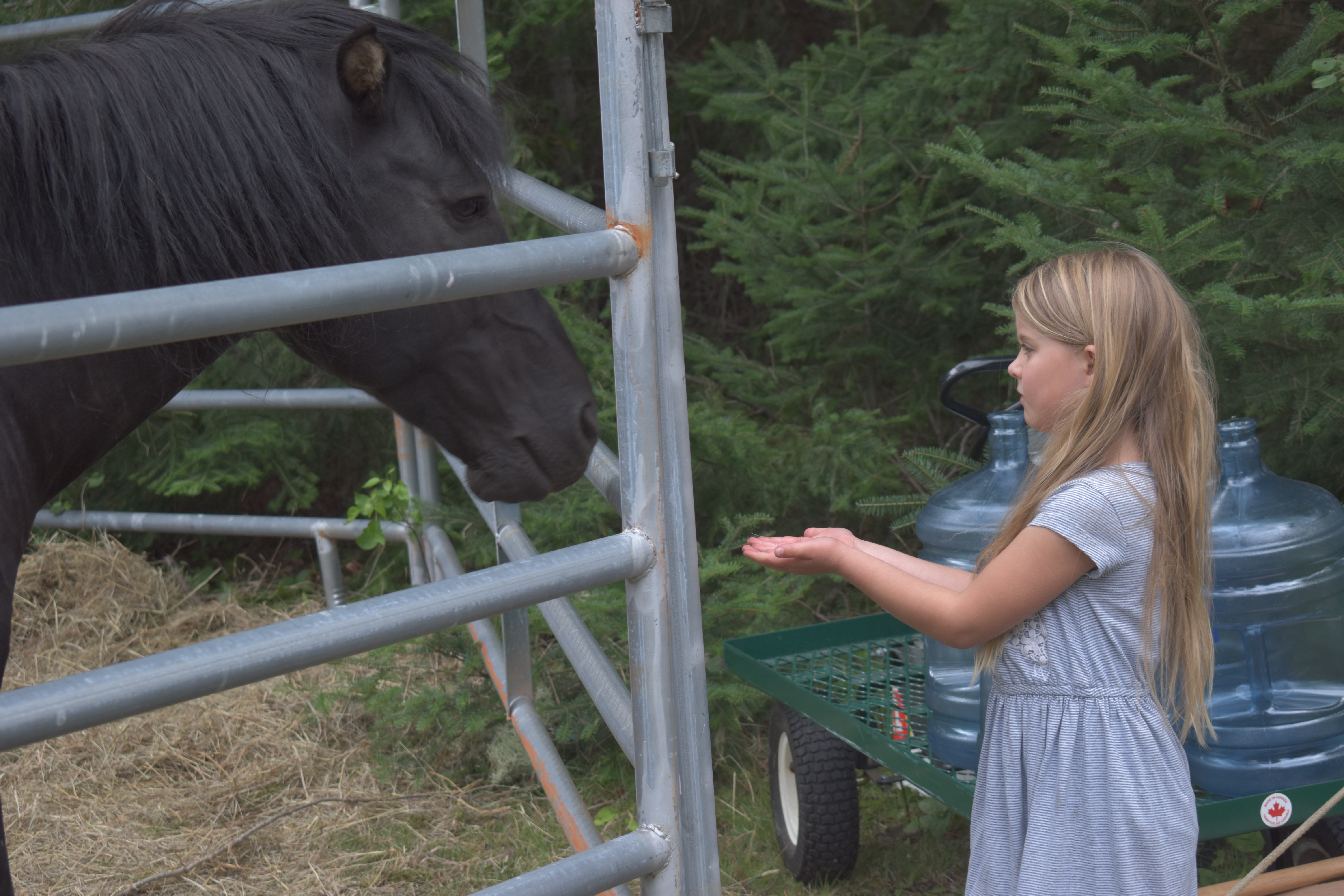
A girl makes friends with an Ojibwe horse at Quetico Provincial Park in Canada.
#1 Revisiting my Horse Mania – This is a relatively recent post (from November) where I reminisce about the love of horses I developed a child. I was able to revisit my passion as I researched and photographed a story in Canada for Lake Superior Magazine about a rare and endangered breed, the Ojibwe horse (also known as Lac La Croix Indian Ponies). My story, “The Horses Nobody Knows” describes how the breed was saved from extinction in the 1970s, and what the horses mean to the Ojibwe people today. The story is only available in the printed magazine (Dec-Jan issue) right now, but the magazine intends to post it online in Feb 2021. I’ll try to remember to post a link here once it’s up.
#2 Bog Birding Bust – This story’s high ranking surprised me because it’s about something that DIDN’T happen. After years of anticipation, I finally went to a local bog that’s a legendary birdwatching site. I hardly saw anything! So, this post was a lesson in the worst time to see birds in the Sax-Zim Bog in northern Minnesota. I guess failure is sometimes much more interesting than success.
#3 That Time I Organized a Sea Lamprey Taste Test – This was a trip down memory lane from when I worked for Minnesota Sea Grant in the late 1990s. We received funding for a demonstration project to determine whether there was an overseas market for a Great Lakes invasive pest – the sea lamprey. To promote the project, I organized a media event, which included a taste test by local luminaries, including the university chancellor, the mayor, etc. The event was a hit – leading to national and international stories. The project was also a hit, until further testing showed the lamprey were too high in mercury for safe consumption. So, it turns out, despite my concerns at the outset, I did a darn good job of promoting something that can contaminate people.
#4 The Many Faces of Buddy – As if this year wasn’t sucky enough, my dog (who was a frequent contributor to this blog) died. To know Buddy was to love him. We still keenly feel his sudden loss.
#5 A Mini-Minnesota Vacation: Lake Vermilion State Park – Despite travel restrictions, Russ and I were able to meander around a bit, close to home in our Scamp trailer. One of the first trips we took was to a new state park in northern Minnesota. Read my post for some pros and cons.
Overall, my blog’s most popular posts continue to be a tongue-in-cheek story I wrote about writer’s bumps (17,300 views this year!) and another about how crappy Iams dog food is.
Best wishes to you all in 2021. May your coronavirus vaccinations come quickly and with few side effects.
Happy holidays, dear readers. I am taking a bit of a break for now. But I will be back soon with “the best” of Marie’s Meanderings list for 2020. Stay safe and well, everyone!
Greetings! I hope all my dear readers made it through Thanksgiving in a healthy and happy way. But if you are getting COVID-isolation crazy and want to let off some steam, I humbly suggest you try the Hallmark Christmas Movie Drinking Game. I heard about this from a coworker and it sounded too fun to pass up.
I got together with two people from my COVID bubble and we watched “Christmas at Grand Valley,” available for streaming from Amazon Prime. In this scintillating saga, which is cast in the Hallmark Movies and Mysteries series, Kelly returns to her Wyoming hometown (from Chicago) and becomes involved in an effort to save the town’s beloved lodge. In the process, she falls for a handsome widower sent to decide the fate of the lodge.
I’m not sure why this movie is considered a mystery. The only inkling of mystery comes in the form of, “WHEN ARE KELLY AND WIDOWER MAN EVER GOING TO KISS?”
Whenever certain things happen on screen, viewers must take a sip of their drink, or two sips, down the whole thing, or take a shot. I *think* (memory is fuzzy) I ended up drinking a whole bottle of wine between supper and the movie. It was great fun, plus I thought up some new rules, which are the ones posted in red.
Happy Holidays everyone!
RULES
Take one drink whenever:
A reference is made to a dead relative
The “Mayor” appears on screen
The main character’s name is related to Christmas (Holly, Nick, etc.)
Anytime someone disses fake Christmas trees
A newcomer partakes in an old family or town tradition
Hot chocolate, apple cider, or eggnog is on screen
A big city person is transplanted to a small town
Christmas caroling, a tree farm, or baking cookies appears
Mistletoe is on screen
A character makes a magic deal with Santa or an angel
Any time you hear “Jingle Bells”
The town is named something Christmas-y
Take two drinks whenever:
Characters experience a ‘near-miss’ kiss
An obvious product advertisement appears
A snowball fight or ice skating happens
An ugly sweater or tie appears
The characters are snowed in
A “Pride and Prejudice” reference is introduced (a character is named Darcy, a place named Pemberly)
Someone with slicked-back hair expresses their hate for Christmas
Finish your drink whenever:
The cynic is filled with the Christmas spirit
It snows on Christmas
Someone selects a Christmas tree
The main characters bake/cook something together, or Christmas-themed food is mentioned
Bad art appears or a literary reference is made
Dissonant architecture appears (for instance, a lighthouse in Wyoming)
Accordion music happens, especially if it’s playing Jingle Bells
Take a shot whenever:
The movie stars Candace Cameron-Bure, Lacey Chabert, or Andrew Walker appear

The moon was too gorgeous to be denied. We went out to greet it on a frozen lake.
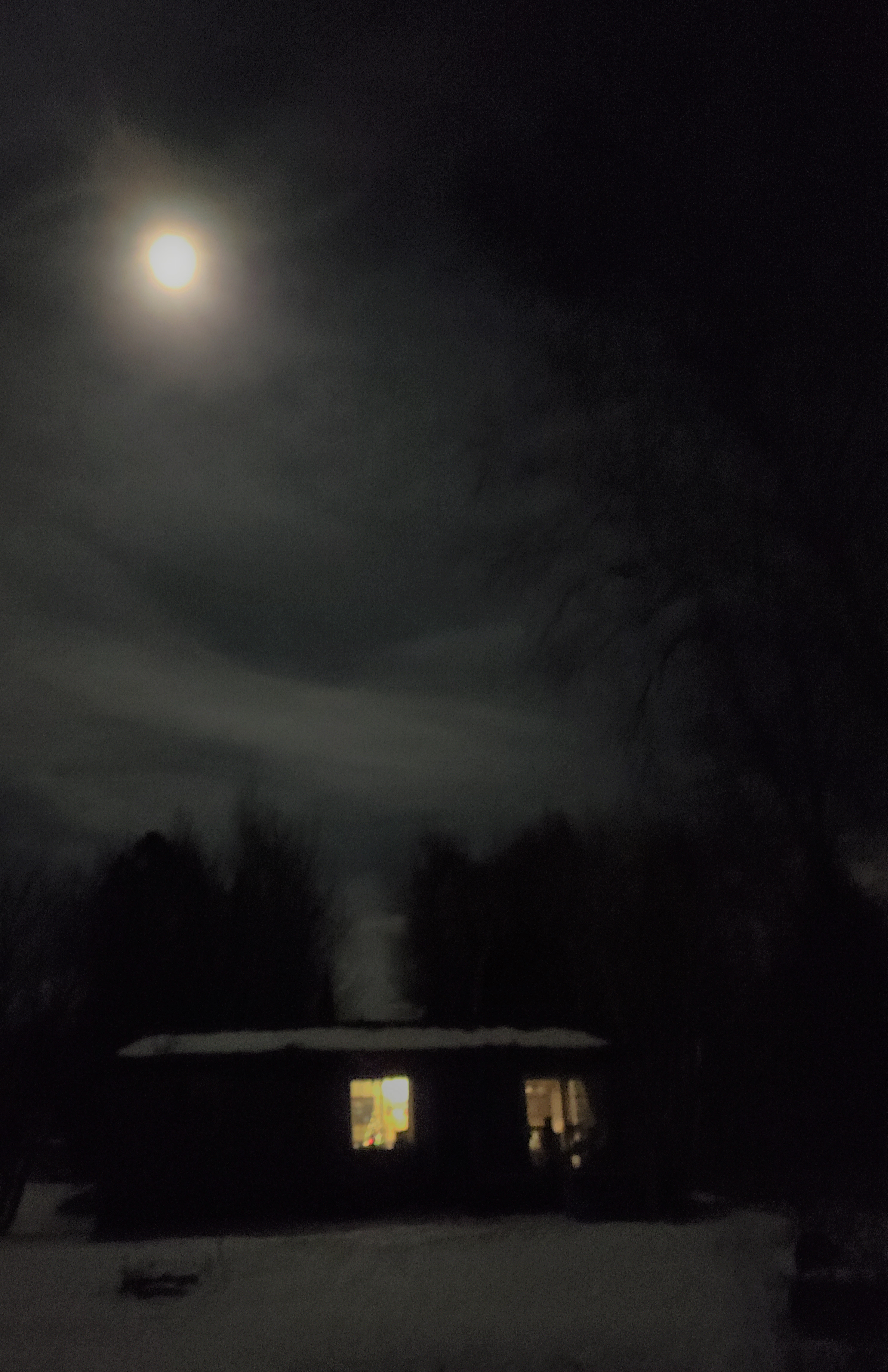
We snowshoed past this cozy cabin with a little Christmas tree in the middle window. You can almost see the tree in in this night-blurry photo. Silent night. Inspiring night….
The New York Times recently published an article about eating invasive species as a means of control. It reminded me of a demonstration project we undertook when I worked at Minnesota Sea Grant in 1996. We received money from The Great Lakes Protection Fund for two years to study the overseas market potential for Great Lakes sea lamprey.
The business end of a lamprey. Image credit: U.S. Environmental Protection Agency
I’m sure many of you are familiar with the story: lamprey, with their penchant for sucking blood, are a parasitic exotic species that entered the Great Lakes and almost wiped out the Great Lakes fishery by the 1940s. This led to a control program coordinated by the Great Lakes Fishery Commission that is ongoing even today. Every year, the commission’s various lamprey control programs cost millions of dollars. Sea lamprey are clearly still an enduring threat.
In the mid-1990s, the commission’s lamprey control program routinely landfilled thousands of female lamprey they trapped. At that same time, lamprey populations in their native countries like Portugal and Spain were becoming decimated due to overfishing and habitat loss. This was an issue because lamprey were/are considered a culinary delicacy in Portugal and Spain. Like the lobster aquariums found in American restaurants, Portuguese restaurants offered tanks of sea lamprey where people could pick their dinners. Exclusive and expensive clubs even formed around lamprey consumption.
Jeff Gunderson, the fisheries and aquaculture specialist with Minnesota Sea Grant at the time, took an idea from a University of Minnesota food professor and the extension leader at Minnesota Sea Grant and turned it into a project to find a use for the excess, unwanted Great Lakes lamprey by seeing if chefs in Portugal and Spain would find them as palatable as their native lamprey. He set up a team that included a professor in Portugal who would conduct market testing, University of Minnesota experts, a NOAA international marketing expert, and a fisheries biologist.
My job was to garner visibility for the project and its results. When Jeff first described the project to me, one of my first questions was whether the lamprey had been tested for mercury. “I don’t want to promote something that’s going to contaminate people,” I recall saying. He assured me the lamprey had been tested and were within U.S. standards. But what I didn’t know at the time was that only a small sample of lamprey were tested. (More to come on this later.)
To figure out my publicity strategy, I consulted a couple of my news reporter friends. I think it was Mike Simonson, the well-known and now dearly departed Superior bureau chief for Wisconsin Public Radio who said, “You gotta have a taste test!”
That sounded like a capital idea, so my first step was to find a local chef willing to cooperate. I approached my favorite restaurant, Bennett’s Bar and Grill, run by Bob Bennett. This “forefather of contemporary cuisine in Duluth” was game.
The Portuguese professor had given me several traditional sea lamprey recipes, at least one of which involved using lamprey blood. Ewww. Anyway, I showed these to Chef Bennett, and we came up with a taste-test plan. He would prepare two traditional recipes and create two of his own. Gunderson talked the original Lou of Lou’s Fish House in Two Harbors into smoking some lamprey for the taste test, as well.
Next, we had to find some brave lamprey consumers. Somehow, I managed to convince the Duluth mayor (Gary Doty) to participate along with the University of Minnesota Duluth chancellor (Kathleen Martin). Several members of our Sea Grant Advisory Committee also agreed as did a freelance graphic designer who worked for us, a congressional office manager and the Minnesota Sea Grant director (Michael McDonald),
We held the lamprey taste test at Bennett’s restaurant, which was on Superior Street in downtown Duluth. Eight intrepid tasters were seated at a long table facing into the room so that reporters could easily see them and ask about their reactions to the food. We gave them a rating form. We also provided an aquarium with several lamprey in it, just to add to the room’s ambiance, and the smoked lamprey and some crackers for snacks.
Simonson was right about the lure of the taste test. We were mobbed by local reporters, both print and broadcast. Reporters from the Twin Cities even made the trip up north for it. The resulting stories went everywhere, even internationally. The Associated Press picked up the print story, and Gunderson said he talked to someone who saw it on a television station in Seattle. The story eventually made it into Newsweek and The New York Times.
Back in my office after the test, I received a phone call from the daughter of a Portuguese immigrant in Boston who saw the news stories and wanted to know how to obtain lamprey. She told me lamprey was a traditional Sunday dinner in Portugal, just like American pot roast. Her father was so excited when he saw the news, he implored her to find out more. I had to give her the disappointing information that lamprey were a regulated invasive species without a commercial source yet.
The highest rated dish was Bennett’s own lamprey stew with garlic mashed potatoes, rated 4.5 out of a possible 5. The smoked lamprey came in second, earning 3.7 out of 5. The taste of the lamprey came out more strongly in the traditional dishes, which did not suit these American taste-testers.
I ate both the lamprey stew and the smoked lamprey. I enjoyed the stew, although the chef forgot to take out the lamprey’s cartilaginous backbone (called a notochord), which made it a bit crunchy for my taste. I bet if he had removed the backbone, the dish’s ratings would have been higher. The smoked lamprey tasted rather like any kind of smoked fish – very good!
The taster’s comments included: “Surprisingly good. Try selling it without telling people what they are eating. It would be better.” And, “I would not order this out, but Bennett’s dishes were by far the best.”
More extensive taste tests were run in Porto, Portugal. Eight restaurants with lamprey-cooking experience, two homemakers and 16 individual taste testers participated in two studies. The restaurant chefs were asked to rate how the lamprey looked while alive, how they cooked compared to Portuguese lamprey, how they smelled/tasted/looked after cooking, how the lamprey tasted to them, and how their clients or family members liked them.
Overall, the Portuguese taste testers enjoyed the strong flavor and firm texture of the lamprey, noting the lamprey had a pleasant “turf” taste and was less soft and fatty than Portuguese lamprey. (A turf taste refers to an earthy flavor, somewhat like mushrooms or liver.) They rated the flavor 4.5 out of 5 – a definite win.
During the second year of the project, more lamprey were shipped to Spain for taste tests. The results weren’t as glowing, perhaps because only frozen and canned Great Lakes lamprey were shipped instead of live wriggly ones. The Spanish testers liked the texture and that some contained eggs. Yes, lamprey are a delicacy in Spain, but lamprey caviar takes it to a whole other level.
The death knell for this innovative program came from subsequent contaminant tests on the lamprey. The Great Lakes lamprey contained mercury levels that were too high to meet European Union standards. They tested at 1.3 ppm for mercury. The EU standard at that time was 0.3 ppm. This information came too late for our taste testers, but hopefully, one meal of lamprey was not detrimental. I certainly didn’t feel any ill effects.
Gunderson summed it up like this: “At least we have an answer to the question that has been debated for nearly 40 years. Yes, Great Lakes lamprey are marketable in Europe. Because of current control programs and experimental programs, a commercial harvest of lamprey would not have been a priority even if mercury levels were acceptable. But given time, a commercial harvest could fit into lamprey control and management. Lamprey are here forever and who knows if the funding for lamprey control will last that long. If funding ever does wane, let’s hope it’s not before mercury levels decline to acceptable levels so that lamprey harvest can be evaluated as part of a low-cost management program.”
That was almost 25 years ago. A Lamprey and Rice Festival is apparently held in Portugal each year, so it still must be popular, but I fear that the people who used to love eating them for Sunday dinner are aging out of this world.
Unfortunately, mercury levels in Great Lakes lamprey are still high. According to a 2018 study by the Great Lakes Indian Fish and Wildlife Commission and the University of Wisconsin, levels in adult lamprey were still beyond that deemed safe for human consumption.
In any event, this project was one of the highlights of my career. It seemed like a win-win idea: The U.S. could rid itself of an expensive invasive species, and European diners could eat a traditional and much longed-for dish. Yes, I promoted something that could have contaminated people. But I did a darn good job of it.
Today would have been Buddy the Wonderdog’s eleventh birthday. I am sorry to say that our beloved companion died on August 21st. It’s taken me a while to be able to write about it.
We had hints of the end five months ago when Buddy had two grand mal seizures, the first in the middle of the night. I had never witnessed a seizure before, so I wasn’t sure what was wrong. Was he just acting out a dream?
Buddy. Image by Amanda Jo Dahl Sales.
In the morning, I made an appointment with the vet who explained what they were. We decided to wait to see if another one happened. If it did, I would put him on anti-seizure meds. She said he could have epilepsy, or he could have eaten something that triggered it, or it could be cancer.
Buddy had a cancerous tumor in his ear, which easily could have spread to his brain or vice versa. I had chosen not to have it taken out previously (along with some skin cancer spots) because Buddy had a heart murmur. There was a risk that if we put him under, he might never wake up. I felt like he would have a better, longer life if we did not do any medical intervention.
His seizures did not return and during the five extra months we had, Buddy got to enjoy summer – swimming in lakes, riding in boats, two walks a day, playing with neighborhood doggie friends. And as you know, he discovered his true passion: fishing. He acted like the seizures never happened. Buddy also got to enjoy having his people with him all day, since I was working at home due to COVID-19 and Russ is retired.
On August 21, Buddy was fine until early afternoon. He was laying on the living room carpet, drifting to sleep when his first seizure happened. The event seemed to scare him more than before, and he stuck with me, wanting to be pet and comforted.
The second seizure happened a couple of hours later as he was drifting to sleep again. After this one, I called the vet’s office and got some anti-seizure meds. I gave him a pill right away, but it takes time for the medicine to build up to effective levels.
Buddy had two more seizures, each more severe. By that time, it was 8 p.m. on a Friday night. The vet was closed, so I called the emergency vet. They told us to bring him in.
Buddy was excited to go for a car ride and happy to hear we were going to the “doggie doctor”—one of his favorite places. He stumbled getting into the car and we noticed during the ride that he seemed to have trouble swallowing or he had a hitch in his breathing.
Due to the virus, we couldn’t go inside the office, but Buddy went without protest. The vet examined him and then called us as we waited in the car. He was pretty sure Buddy had a slow-growing brain tumor. He could treat the seizures with intravenous meds, but that would not fix the underlying problem of the tumor. He also said that Buddy’s bark did not sound normal – as if something in his throat was paralyzed by the seizures.
Things had already been ugly, but I knew they were about to get a lot uglier if we started hooking Buddy up to tubes. Russ and I made the hard decision to euthanize him.
Before the procedure, they brought Buddy out so we could see him one last time. I told Buddy that we loved him and would miss him. I explained what was going to happen. I cried. But Buddy seemed distracted, like he was eager to go back inside. So after a short time, I let him go. He knew what was best, too.
As one of my friends said, “To know Buddy was to love him.” He was such a large, exuberant presence in our lives. I’m still getting over the shock of having him here one day and gone the next. Of course, I’ve second-guessed our decision — should we have spent more time and money on his recovery? Ultimately, I feel like we did the right thing by him. We plan to spread his ashes along his favorite walking trail and his fishing spot in northern Minnesota.
My last photo of Buddy, taken between seizures.
One of my former colleagues recently wrote a story describing a University of Wisconsin-Madison study about the monetary worth of a dog’s life. The researchers surveyed hundreds of dog owners to see what they would be willing to pay for a hypothetical vaccine that would protect their dog from a fatal dog flu. Incorporating additional factors, they were able to come up with the value of $10,000.
We did not spend nearly that much during Buddy’s last day. But if some sort of procedure was available that could have reversed his brain tumor and cured his seizure damage, I would have considered it.
We are still dealing with the emotional cost of his absence. There’s no way to put a monetary value on grief.
Bye bye, big guy.
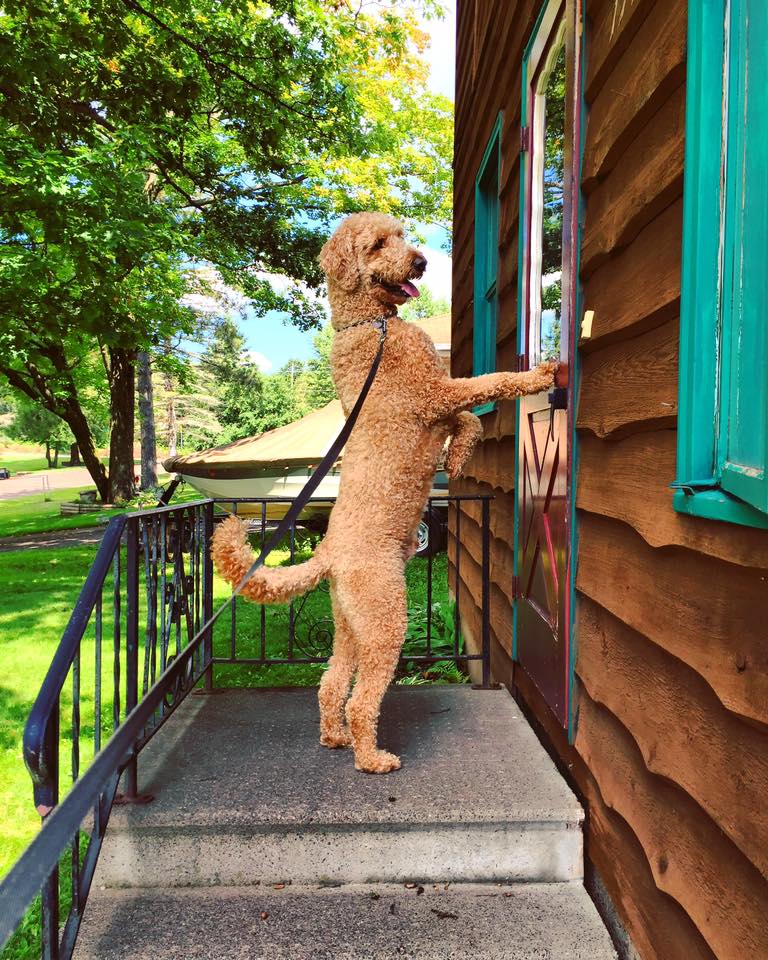
Buddy, the door-to-door salesman. Image by Amanda Jo Dahl-Sales.
In the movie, “A Little Chaos,” which is about the creation of the gardens at the Palace of Versailles, one of the gardeners says gardening is, “an act of faith . . . .God put us first into a garden, and when we lost Eden, we were fated to search and reinvent it again.”
The story is about two gardeners with different approaches to their craft. One (who is a man) wants to dominate nature and instill order on the landscape. The other (who is a woman) wants to work with the landscape and thinks a little chaos is more interesting and natural.
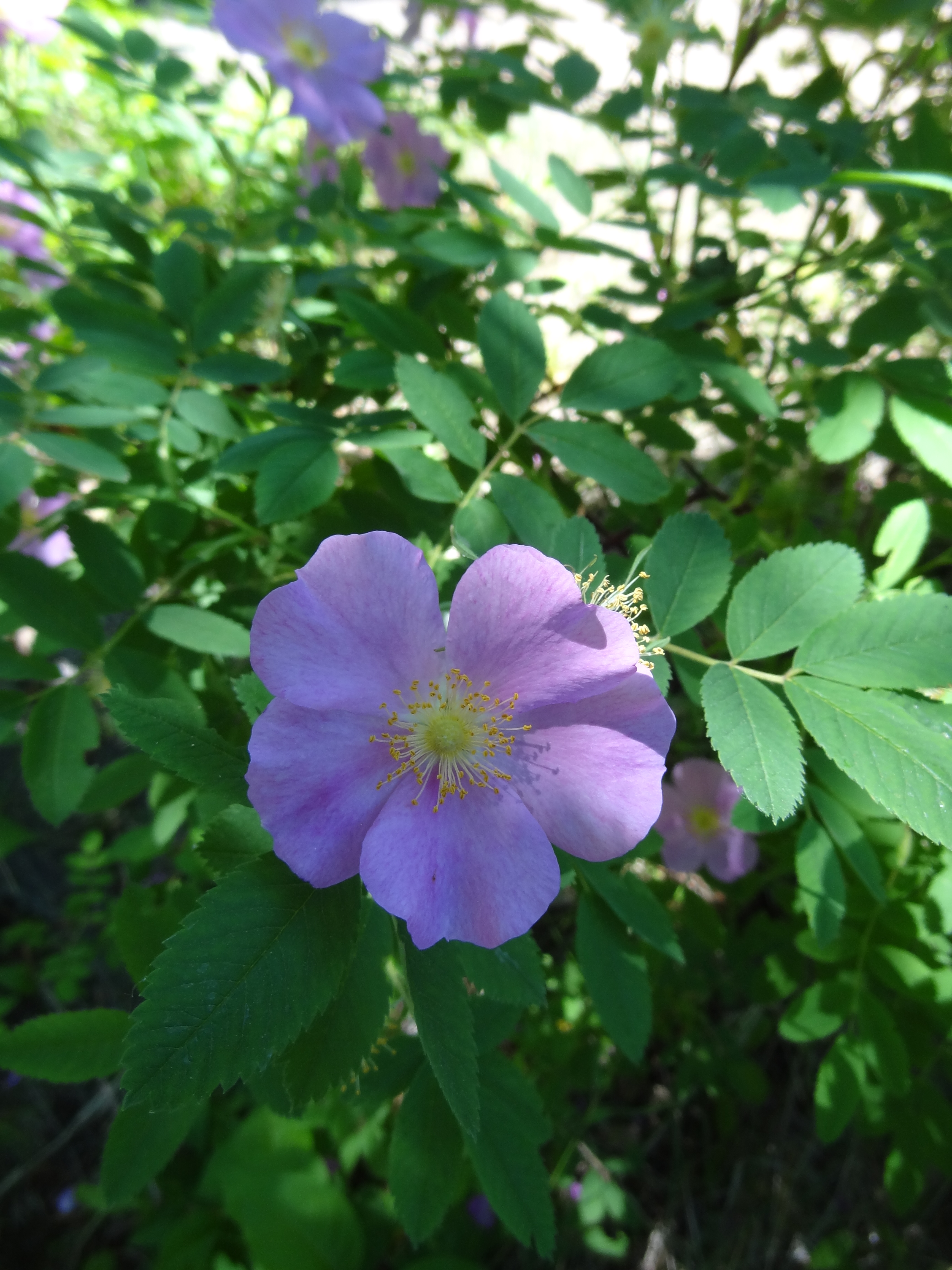
In terms of the flower garden in my front yard, I have tried for years to be like the first gardener – instilling order in my plantings and symmetry in their placements. My garden has a theme of purple flowers: lupine, allium, coneflowers, night sage, iris, phlox, crocus.
My garden’s composition has changed due to my varying degree of attention and the severity of winters, watched over by a statue of a little naked boy who is sitting and reading. Even the statue has faced challenges. I’ve reattached his foot twice and even his head once after various misadventures and mishaps.
Weeds are a never-ending battle. My attempts to recreate an orderly Eden where humans have prime dominion has given way to a philosophy more like the second gardener who welcomes chaos and nature. And who’s to say that Eden didn’t have chaos? I like to think that we come from nature. What is nature if not chaotic?
My garden now sports a mix of cultivated and wild flowers. Some white flowers have crept in with the purple, although the white ones bloom after most of the purple ones are done. I don’t even know the names of the wildflowers, they just started growing with no help. I rather like not knowing their names. This makes me look at these flowers more deeply. If I knew their identities, I would say their names in my head each time I saw them and then immediately look away. Now there is mystery and wonder.
Patches of grass intersperse with the flowers. I could continue to spend time trying to dig up all the grass, but I’d rather spend my time writing or playing. It’s freeing to have given up trying to instill order on the landscape. My garden does not have to be “perfect.”
In the “chaos” movie, the lead gardener at Versailles hires the chaotic gardener because “the gardens are large enough to contain more voices than just my own.” The movie ends with a scene from the woman’s completed garden, which is an outdoor ballroom. The king of France and his court dance in a space where order and chaos intermingle in a triumph of design.
I’m not sure what my neighbors think of my garden. No doubt, some wish I would spend more time controlling it. Perhaps others who drive by simply enjoy the colors. All I know is that, with its colors and a little chaos, it’s Eden enough for me.
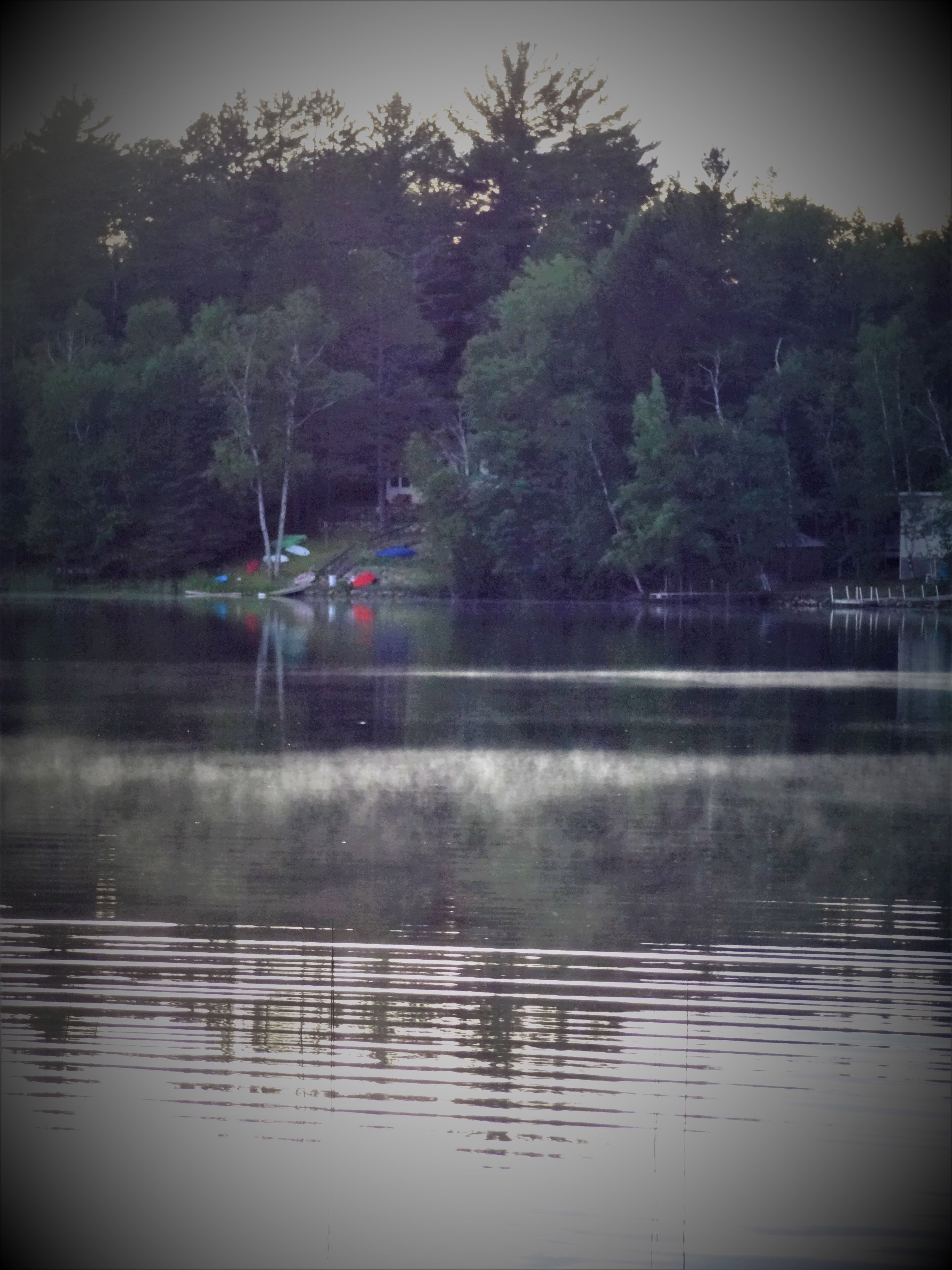
I awaken at 6 a.m., roll over and look at the lake outside the window. The water is smooth as a scrying mirror. The sun peeks over the spruces, encouraging a lake mist to form.
If I were more ambitious, I’d be out paddle boarding right now. Instead, I roll over and shut my eyes, lulled into a doze by the trills of hermit thrushes deep in the forest.
An hour later, I open my eyes to the same scene — the lake still calm, mist still rising.
Although in my book, 7 a.m. is still early to rise, I succumb to the siren call of my standup paddle board. It is early July and the temperature is already 70 degrees outside – one of those days that Minnesotans dream of during February. It would be criminal not to enjoy it.
Russ and the dog are still sleeping, so I quietly get out of bed and don my swimsuit. I tiptoe out into the dew-wet grass toward the boat house – feeling like a teenager headed for an illicit rendezvous. However, I am responsible enough to leave a note on the kitchen table: “Gone paddleboarding!”
Opening the boathouse door, I inhale. There’s nothing like that old boathouse smell – decades of damp, mixed with a little mustiness and a hint of worn wood.
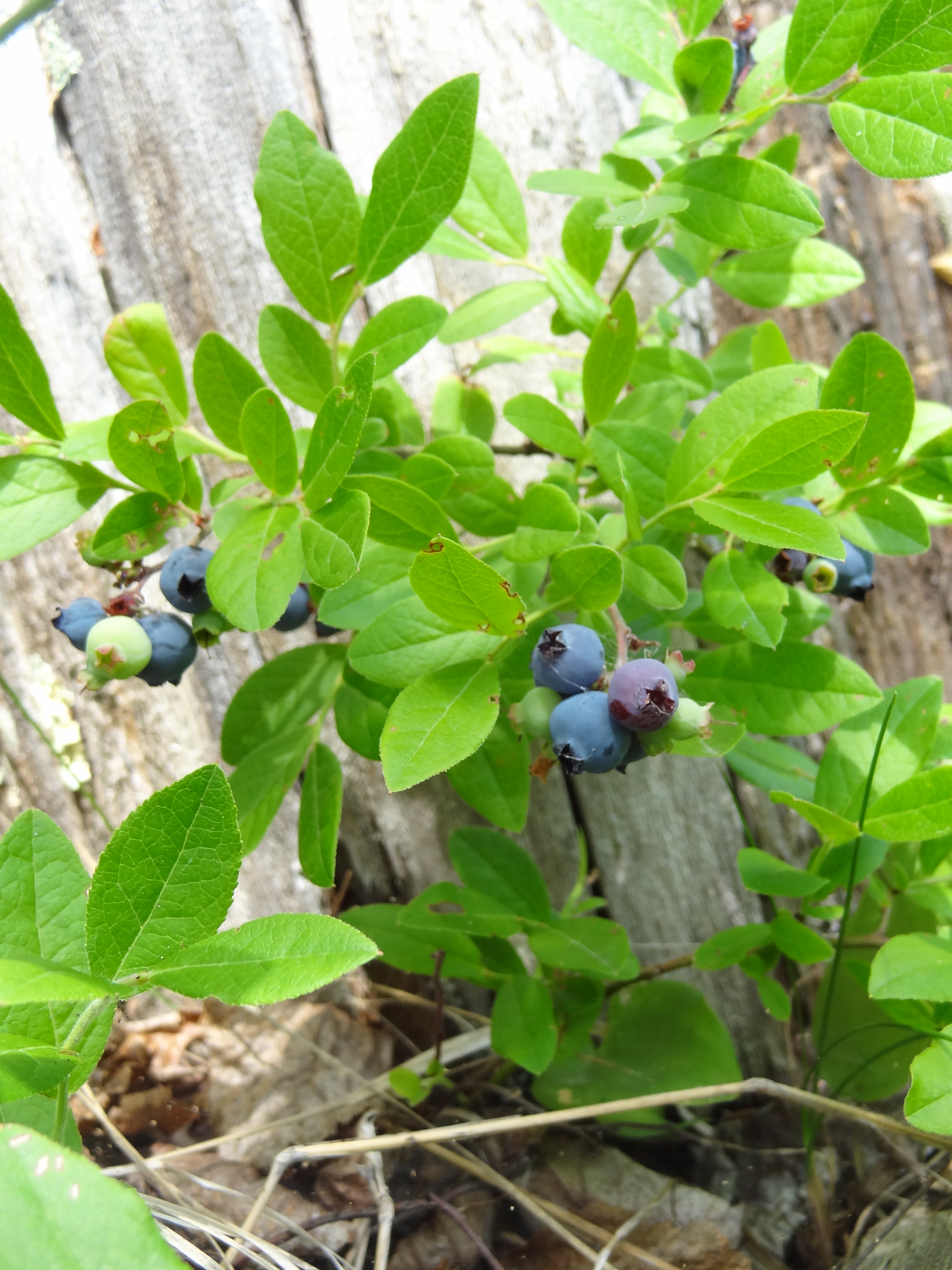
I heft my board and paddle, carefully closing the door so I won’t wake those in the cabin. On my way to the dock, I pass a bunch of blueberry plants covered with small blue sapphires – berries ready for picking. I can’t be distracted, though. They’ll have to wait.
As I settle my board into the water, I giggle inwardly. Hardly typical behavior for someone nearing retirement age, but a quick glance at the lake has told me it will only be me and the loons out there this morning. Life cannot get much better.
I head out in a clockwise direction around the lake. This just seems natural. The night before, a small parade of pontoon boats were all going counterclockwise. We’re living in the northern hemisphere. The toilet water spins clockwise. I figure it’s better not to go against the spin.
My board skims the surface easily. In the clear water below, bluegills rush to hide in the reeds. Water plants stand still and straight as trees. As I paddle, the mist seems an elusive dream. I know I’m in it, but I can’t see it when I arrive. The mist is always just out of reach ahead, playing tricks with my senses.
All of the other cabins are silent, still shuttered for the night. I only see a couple of other ladies, each sitting on shore, enjoying their morning coffee. I wave and they wave back.
My morning idyll is shattered by a pain in the middle of my back, between my shoulder blades. A horse fly or deer fly has found me! As I struggle to paddle into position so that I can safely use my paddle to scratch it off my back, I marvel at how these flies know exactly where to bite where they can’t easily be swatted. It’s like all the babies attend Fly Biting School were the teachers point out the safest places on people and animals to chomp.
Board in position, I carefully balance while lifting my paddle to scratch my back. Success! I don’t fall off my board and the pain disappears, along with the fly. Although a nuisance, these flies need clean water to live. Their presence is an indicator of a healthy environment.
The rest of my paddle is uneventful, if you can call relishing every summer sight and sound uneventful. I arrive back at the dock feeling like I’ve paddled into deep summer.
I am so thankful to be able to enjoy this morning, especially since there are so many people gone from this Earth due to the coronavirus, who will never have the chance to experience such things again. It was worth getting out of bed early.
A view from the Kingsbury Creek Trail, Duluth, MN.
Prepare to be confused and impressed. Russ and I checked out the Kingsbury Creek Hiking Trail near the zoo in Duluth recently. We were confused because so many trails intersect in the area. There’s a mountain bike trail, and the Superior Hiking Trail, a gravel trail, and a footpath. We were aiming for the footpath, and think we found the right one, but since it was our first time on it, I’m not exactly sure.
Whatever trail it was, the scenery was impressive. Quiet pools in the creek attracted Buddy the Wonderdog. Huge white pines evoked awe. If we have to be quarantined, Duluth isn’t such a bad place for it.











 In the movie, “A Little Chaos,” which is about the creation of the gardens at the Palace of Versailles, one of the gardeners says gardening is, “an act of faith . . . .God put us first into a garden, and when we lost Eden, we were fated to search and reinvent it again.”
 I awaken at 6 a.m., roll over and look at the lake outside the window. The water is smooth as a scrying mirror. The sun peeks over the spruces, encouraging a lake mist to form.
 Opening the boathouse door, I inhale. There’s nothing like that old boathouse smell – decades of damp, mixed with a little mustiness and a hint of worn wood.